 Image 1 of 1
-
Drawn to the Holy Caves
Saint Feofil, also known as Theophilus of Kiev, lived in nineteenth-century Kyiv. From his earliest years he displayed an unusual attraction to silence, prayer, and inward watchfulness. While others pursued security or reputation, Feofil sought repentance and communion with God.
He gravitated toward the ancient monastic heart of Kiev, living near the sacred caves whose spiritual legacy had been established centuries earlier by Saint Anthony of the Caves and Saint Theodosius of the Caves. These saints had shaped a tradition of hidden prayer, extreme humility, and hesychastic devotion. Feofil absorbed that spirit deeply.
But his calling would not remain confined to a quiet cell.
Embracing Holy Foolishness
Saint Feofil entered the rare and terrifying vocation of the Fool-for-Christ. In this ancient Eastern path, the saint deliberately adopts outward behavior that appears irrational or shameful in order to annihilate pride and expose spiritual hypocrisy.
Feofil took this cross upon himself completely.
He wandered the streets barefoot. He wore ragged clothing. He spoke in riddles or sudden prophetic warnings. He accepted insults without defense. Children mocked him. Adults laughed or avoided him. Authorities questioned him.
Yet beneath the appearance of madness lived a man in ceaseless prayer.
He slept little. He fasted rigorously. He spent long nights standing before icons in the caves, repeating the Jesus Prayer until dawn. His body bore the marks of harsh asceticism, yet his face often radiated quiet peace.
Those who looked more closely began to see that Feofil possessed extraordinary spiritual discernment. He would stop strangers and speak directly into their hidden struggles. He appeared unexpectedly at moments of crisis. He rebuked pride in the wealthy and comforted the forgotten poor.
His life became a living icon of repentance.
Bearing Reproach for Christ
Saint Feofil endured continual humiliation. He was arrested more than once for disturbing public order. Some clergy misunderstood his vocation. Many dismissed him as unstable.
He never defended himself.
He accepted slander as medicine for the soul. Hunger as communion. Loneliness as companionship with God.
Those who approached him with sincerity discovered a heart overflowing with compassion. He gave away anything he received. If offered food, he passed it to someone poorer. If given coins, he scattered them to children. If praised, he withdrew.
He warned constantly against external religiosity without humility. He reminded people that prayer without repentance is empty. His words were few, but his presence carried authority.
Pilgrims gradually began seeking him out. Some came curious. Others came desperate. Many left transformed.
Saint Feofil eventually reposed peacefully, having poured out every ounce of himself in love for God and neighbor. After his death, testimonies of miracles multiplied, and faithful Christians continued to venerate him as one of Kiev’s hidden treasures.
-
Saint Feofil never sought recognition, yet God glorified His servant through many signs, both during his earthly life and after his repose.
Patron Saint Of:
Spiritual discernment
Deliverance from deception and confusion
Healing of emotional and mental afflictions
Protection from false accusations
Those mocked or misunderstood
Souls struggling with pride or despair
Seekers of authentic repentance
Recorded Miracles and Intercessions
Numerous accounts describe Saint Feofil’s prophetic insight. He frequently revealed unspoken sins or dangers to visitors, leading many to repentance and reconciliation.
Several healings were attributed to his prayers, especially involving nervous disorders, deep depression, and unexplained illnesses. Individuals reported sudden relief after receiving his blessing or praying at his resting place.
One story recounts a merchant who publicly mocked Feofil. Later that same day, the man narrowly escaped a fatal accident. Shaken, he sought out the saint, confessed his pride, and received counsel that permanently altered his life.
Another account tells of a grieving mother whose child lay gravely ill. After praying through the night near Feofil’s burial place, the child recovered unexpectedly, confounding physicians.
Pilgrims to the caves of Kiev still speak of inner peace, clarity of heart, and answered prayers through his intercession, particularly in cases involving spiritual confusion and emotional suffering.
Saint Feofil’s greatest miracle remains his life itself: a living testimony that humility opens the door to divine power.
-
Troparion (Fool-for-Christ tradition, Tone 4)
O blessed servant of Christ, who clothed thyself in humility and bore reproach for the sake of the Kingdom, thou didst confound the wisdom of this world and reveal the power of divine love. Intercede for us, O Saint Feofil, that we may gain repentance and walk in truth.Personal Prayer
Holy Saint Feofil of Kiev, humble Fool-for-Christ and radiant witness of hidden holiness, pray for me. Teach my heart repentance. Deliver me from pride, confusion, and despair. Intercede for my healing, body and soul. Grant me discernment in times of darkness and courage to follow Christ without fear. By thy prayers, may I learn humility and love, now and always. Amen.
-
Q: What is St. Feofil of Kiev known for?
Saint Feofil is known as a Fool-for-Christ who embraced poverty, ridicule, and obscurity to expose pride and call souls to repentance. He is remembered for prophetic insight, deep prayer, and compassion for the suffering.
Q: When is St. Feofil’s feast day?
Saint Feofil (Theophilus) of Kiev is commemorated on October 28 according to the Old (Julian) Calendar, which corresponds to November 10 on the New (Gregorian) Calendar. This dual dating reflects the continued use of different liturgical calendars across Eastern Christian traditions.
Q: Which Christian traditions venerate Saint Feofil of Kiev?
Saint Feofil is primarily venerated within the Eastern Orthodox Church, especially in the Slavic spiritual tradition surrounding Kiev and the caves monastery.
He is not formally listed in Roman Catholic or Maronite calendars, though Byzantine Catholics (such as Ukrainian Greek Catholics) who share Orthodox spirituality often privately honor him.
He is not part of the Coptic or Oriental Catholic traditions.
His veneration remains strongest among Orthodox and Byzantine spiritual communities devoted to the saints of Holy Rus.
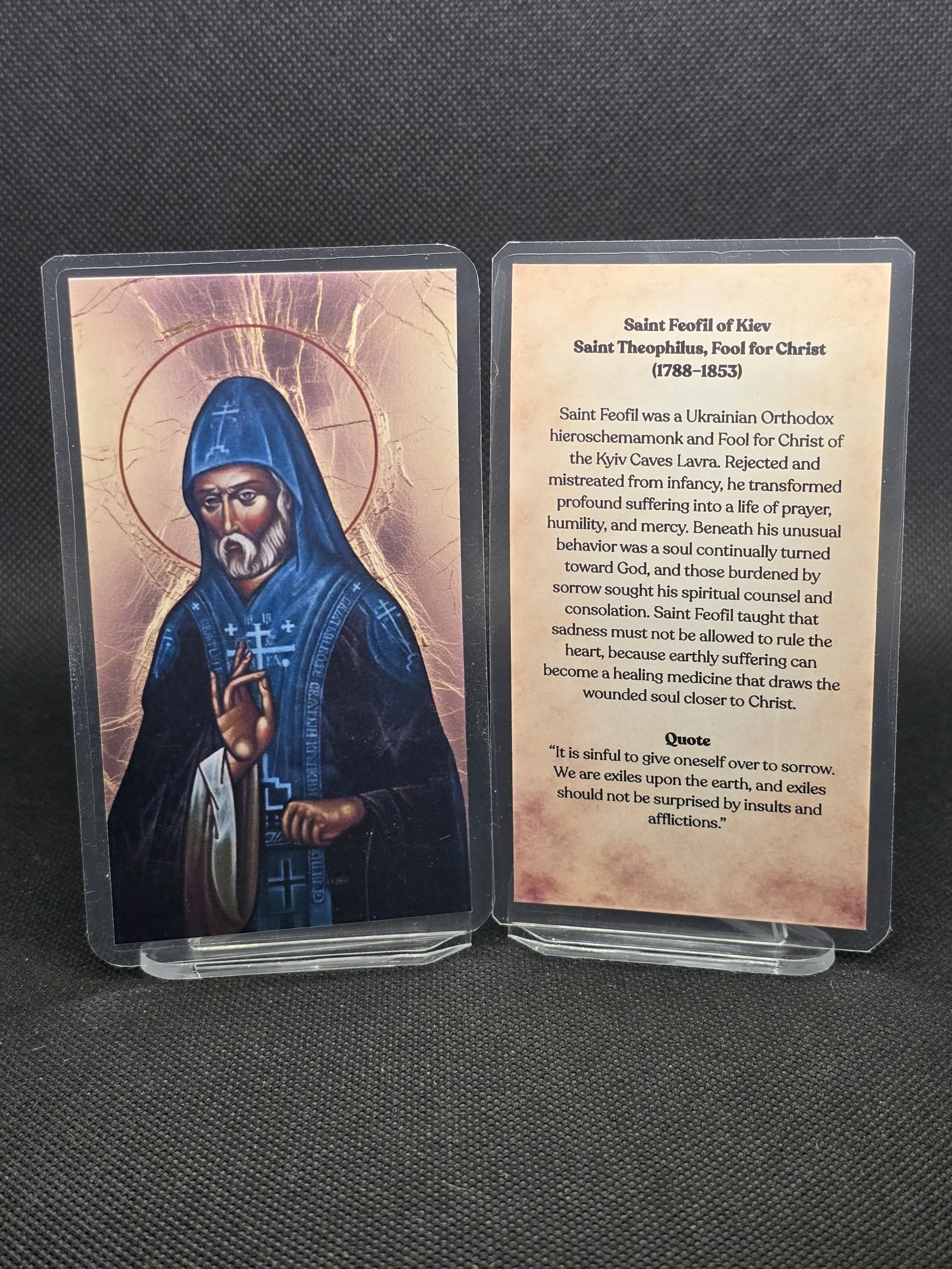
Q: Why is St. Feofil depicted holding a cross in icons?
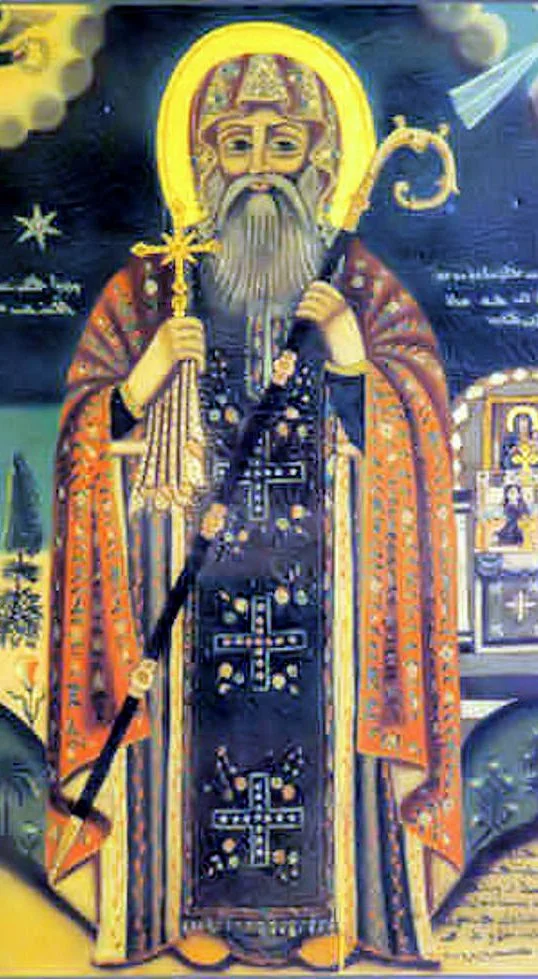
The cross symbolizes his voluntary suffering and complete union with Christ. For Fools-for-Christ, the cross represents bearing public shame for the sake of divine truth and hidden holiness.