The Underground Catholic Newspaper the KGB Could Never Kill
Church History • Soviet Persecution • Catholic Resistance • A Documented Deep Dive
The Underground Newspaper the KGB Could Never Kill
No office. No printing press. No legal existence at all. For seventeen years, a typewritten publication called the Chronicle of the Catholic Church in Lithuania documented Soviet persecution in such precise, checkable detail that the state's entire propaganda apparatus could not make it disappear. This is the full story — including what became of the priest who ran it and the nun who was caught typing it.
At a Glance
- First Issue
- March 19, 1972
- Final Issue
- 1989 • 81 total issues published
- Founder & First Editor
- Fr. Sigitas Tamkevičius, SJ • arrested 1983
- Known Arrests, 1973–1983
- 17 people: 2 priests, 4 nuns, 11 laypeople
- Most Famous Case
- Nijolė Sadūnaitė • arrested Aug. 27, 1974 • 3 years labor camp + 3 years exile
- Method
- Typewriter copies • distributed underground network • no central office
- International Reach
- Smuggled to the West • broadcast back via Voice of America shortwave
- Tamkevičius's Later Life
- Archbishop of Kaunas 1996–2015 • Cardinal, 2019
A Typewriter Against an Empire
The Soviet Union had newspapers, censors, courts, a state broadcasting monopoly, and one of the most extensive internal security services in human history. What it did not have, for seventeen straight years, was the ability to stop a small group of Lithuanian Catholics from typing up the truth and passing it hand to hand until the whole world could read it.
The Chronicle of the Catholic Church in Lithuania is one of the great untold stories of twentieth-century Christian resistance — not because it involved dramatic public confrontation, but because it involved almost the opposite. Its method was deliberately unspectacular: record what actually happened, with names, dates, and places, and make sure the record survived. That simple discipline turned out to be one of the most effective forms of resistance a persecuted Church has ever produced, and it is the subject of an entire chapter of The War Within the Church: Communism, Infiltration, Persecution, Resistance, and the Spiritual Battle for Catholicism. This article lays out the full story in more detail than the book has room for, using the book's research as a foundation and building outward with the documented lives of the people who actually ran it.
Part II
What the Chronicle Actually Was
The Chronicle of the Catholic Church in Lithuania first appeared on March 19, 1972. It was not a manifesto, a call to arms, or a work of polemic. It recorded concrete restrictions on religious life as they actually happened: arrests, searches of homes and parishes, discrimination against believers in schools and workplaces, interference with catechesis, criminal trials of priests and laypeople, harassment campaigns, and petitions from ordinary Catholics whose legal rights under Soviet and international law were being ignored.
That focus on verifiable detail was precisely what made the Chronicle so dangerous to the Soviet state. A government can dismiss a broad political accusation as propaganda without much difficulty. It is far harder to dismiss a record containing a specific priest's name, the date he was interrogated, the article of the criminal code used against him, and the sentence he received — especially once that record starts accumulating issue after issue, year after year, until it becomes a documentary pattern that can be checked against the state's own official claims about religious freedom. The Chronicle turned isolated local acts of coercion into evidence that could be carried beyond Soviet borders and compared, point by point, with what Moscow was telling the world.

Part III
Sigitas Tamkevičius: The Priest Who Started It
The Chronicle needs a face, and the man most responsible for its existence is Sigitas Tamkevičius. Born on November 7, 1938, in the village of Krikštonys in southern Lithuania, he entered the seminary at Kaunas, served the mandatory term in the Soviet army that the state required of seminarians, and was ordained a priest on April 18, 1962. For the next several years he served as a parish vicar in a series of small Lithuanian towns — ordinary parish work, on the surface, in a country where ordinary parish work already meant operating under constant state surveillance.
In 1968, at a moment when the Soviet government had formally outlawed the Jesuit order inside Lithuania, Tamkevičius secretly entered the Society of Jesus anyway. A year later, the state revoked his official priest's license after he signed a petition protesting Soviet restrictions on the Kaunas seminary — a punishment that, in the Soviet system, could mean the end of a man's ability to function publicly as a priest at all. Instead of disappearing, Tamkevičius took work in a metal factory and helped dig land-reclamation ditches, continuing his priestly ministry underground while holding down manual labor that gave him no obvious reason for state suspicion.
It was from inside that underground existence, in 1972, that he began editing the Chronicle of the Catholic Church in Lithuania. He would run it for eleven years before the KGB finally caught up with him.
Part IV
A Network Without a Newsroom
The Chronicle possessed none of the ordinary infrastructure of a newspaper. It had no legal office, no printing plant, no distribution permit, and no public editorial board it could point to if challenged. Its contributors depended entirely on clandestine copying by typewriter, trusted personal contacts, religious sisters and priests willing to carry material between towns, and methods of concealment that had to survive KGB searches and constant surveillance.
The genius of the network, as The War Within the Church documents, was its deliberate discipline about knowledge itself: contributors were structured so that no single person knew the entire operation, and information could move through more than one path if any single channel was compromised. This meant the security services could strike the network hard — and they did, repeatedly, with real arrests and real prison sentences — without ever striking the network's heart. Fr. Sigitas Tamkevičius connected the publication to a broader Lithuanian Catholic resistance that included priests such as Juozas Zdebskis and Alfonsas Svarinskas, underground religious formation, and public defense of believers' legal rights. After Tamkevičius's arrest in 1983, editorial responsibility passed to Fr. Jonas Boruta, and the Chronicle kept appearing. Other known contributors across the years included Petras Plumpa, Gerarda Elena Šuliauskaitė, Bernadeta Mališkaitė, and Kazimieras Ambrasas — a rotating cast of priests, religious, and laypeople who understood that the project mattered more than any individual's continued freedom.
Part V
Nijolė Sadūnaitė: Caught in the Act
If one single case illustrates what the Chronicle actually cost the people who ran it, it is the arrest of Nijolė Sadūnaitė. A priest who had already been arrested twice for his Chronicle work approached her to help with the underground publication and warned her plainly: the only reward for this work would be prison. She agreed anyway. On August 27, 1974, KGB agents stormed her apartment and caught her in the act of typing copies of Issue 11 of the Chronicle.
What followed was months of imprisonment in a KGB basement cell in Vilnius, where interrogators, unable to break her silence through ordinary questioning, threatened to have her committed to a psychiatric hospital — a common Soviet tactic against dissidents whose testimony the state could not otherwise discredit. Checks with two separate psychiatric hospitals in the area turned up nothing to support the threat, and it went nowhere. Her trial before the Supreme Court of the Lithuanian SSR began on June 16, 1975. She was convicted under Article 68 of the Lithuanian SSR criminal code and sentenced to three years of hard labor in a strict-regime camp and three additional years of internal exile. According to the trial record preserved by the Chronicle's own later issues, when the sentence was read, Sadūnaitė asked the court a single question: "Why so little?"
She served her sentence at a labor camp in the Mordovia region and completed her exile in Siberia, returning to Lithuania afterward only to spend years evading renewed KGB surveillance, at one point disguising herself with wigs to visit friends without detection. She later wrote a memoir of her experience, A Radiance in the Gulag: The Catholic Witness of Nijolė Sadūnaitė, recounting torment, torment resisted, and a defiant sense of humor that outlasted both: asked by a fellow prisoner what she was "in for," she once answered that she had sunk a submarine. She died on March 31, 2024, at the age of 85, having spent the last decades of her life as a religious sister, still recognized in Lithuania as one of the defining witnesses of the entire Soviet period.
Part VI
Smuggling the Truth Across the Border
None of this would have mattered if the Chronicle had stayed confined to Lithuania. Its real power depended on getting material past Soviet censorship entirely. Copies and summaries were smuggled abroad, translated, reproduced, and circulated through Catholic and human-rights networks across Western Europe and North America. Some of its contents made it onto Western shortwave radio broadcasts, including Voice of America, which meant that Lithuanians who never held a physical copy of the Chronicle in their hands could still hear its findings read back to them over the airwaves from outside their own country's controlled press.
This international circulation inverted the entire logic of Communist intelligence operations described elsewhere in The War Within the Church. Communist services spent enormous effort using clandestine networks to gather information from inside the Church and shape international perceptions of the regime. Lithuanian Catholics built a clandestine network to do the opposite: gather information about the regime's own persecution and shape international perceptions with verifiable facts. One system depended on secrecy to conceal coercion. The other depended on secrecy to make coercion visible. The Soviet state could control publication far more easily than it could control the accumulated memory and testimony of everyone who had actually witnessed what it did.
Part VII
The Numbers: 81 Issues, 17 Arrests, 17 Years
The Chronicle's own statistics are worth stating plainly, because they are the clearest possible evidence of both the cost of the project and its persistence. Between 1973 and 1983 alone, seventeen people connected to the Chronicle were arrested: two priests, four nuns, and eleven laypeople. Sigitas Tamkevičius, its founding editor, was among those eventually caught, arrested in 1983 and sentenced to a decade that included imprisonment in the Perm and Mordovia labor camps and, at the very end, exile to Siberia before his release in 1988 as Gorbachev's reforms began.
Despite every one of those arrests, the Chronicle never stopped publishing. New issues kept appearing under new editors and new contributors, using the same distributed, low-trust network structure that had protected it from the start. By the time it published its final issue in 1989 — not because the KGB finally succeeded in shutting it down, but because the conditions it existed to document were themselves disappearing — the Chronicle had produced a total of 81 issues across seventeen continuous years. It remains one of the longest-running self-published underground journals in the entire history of the Soviet Union.
Part VIII
Where They Are Now: From KGB Cell to Cardinal's Hat
The ending of this story is the part that makes it worth telling in full rather than as a grim historical footnote. Sigitas Tamkevičius was released from Soviet custody in 1988 as perestroika reforms took hold. Lithuania regained its independence in 1990, and in 1991 Tamkevičius was consecrated a bishop, appointed auxiliary of the Archdiocese of Kaunas. In 1996 he was named Metropolitan Archbishop of Kaunas, a post he held until his retirement in 2015. He went on to chair the Lithuanian Bishops' Conference and received honors from the Lithuanian state for his role in preserving both the Chronicle and Lithuanian national identity under occupation.
On October 5, 2019, Pope Francis made Sigitas Tamkevičius a cardinal of the Catholic Church — the fourth Lithuanian in history to receive the honor. A year earlier, during a papal visit to Lithuania, Pope Francis had walked with Tamkevičius through the former headquarters of the Soviet secret police in Vilnius, now preserved as a museum, where Tamkevičius himself had once been held and interrogated. Asked about the significance of his elevation, Tamkevičius said he believed the honor was meant for everyone who had suffered through those decades, not for him alone: a tribute to fifty years of enforced atheism answered, in the end, not with silence but with a red hat in Rome.
Nijolė Sadūnaitė did not receive that kind of public honor, and by every account she would not have wanted one. She spent her final decades as a religious sister in Vilnius, still shadowed occasionally by old habits of caution, still willing to tell her story to anyone who asked, until her death in March 2024 at the age of 85. Between them, the priest who became a cardinal and the laywoman who became a nun represent the two faces of the Chronicle's real legacy: institutional vindication on one side, quiet, lifelong faithfulness on the other. Neither is more important than the other. Both were made possible by a typewriter, a network of people willing to trust each other with their freedom, and a refusal to let the truth simply disappear.
Part IX
Why This Story Belongs in a Book About Spiritual Warfare
The Chronicle is not, on its surface, a story about intelligence agents infiltrating the hierarchy or secret bishops preserving apostolic succession — the subjects that dominate much of The War Within the Church. It is a story about ordinary lay Catholics and parish priests choosing to record the truth at extraordinary personal cost. The book places it deliberately alongside those other chapters because it illustrates the same underlying theological claim from the opposite direction: if Communist intelligence services understood that controlling the Church required controlling information, then Catholic resistance understood, just as clearly, that preserving the Church required preserving truth.
The book frames this as a battle over witness in the most basic Christian sense of that word. The Soviet state possessed newspapers, censors, courts, and official statistics. The Chronicle possessed people willing to say, with names and dates attached, what they had actually seen. Authoritarian systems function best when each act of persecution feels isolated, deniable, and forgettable to both the victim and the outside world. Recording names and dates connected individual suffering into a pattern that neither the Lithuanian faithful nor the watching world could pretend not to notice. That, more than any single arrest or any single act of heroism, may be the Chronicle's deepest and most lasting achievement.
Part X
What's Inside The War Within the Church
The Chronicle's story is one chapter among thirty-nine in The War Within the Church, which traces the entire arc of Communist persecution of the Catholic Church from Pope Leo XIII's first warnings in 1878, through the postwar assault on Catholic seminaries and hierarchies, the infiltration of Vatican II, the exploitation of the post-conciliar years, and the underground resistance movements — like this one — that quietly outlasted the regimes that tried to crush them. It closes with eight evidence appendices, including a full chronology of the conflict and an Extended Evidence Dossier, so that every claim in the book, including everything summarized in this article, can be traced back to its original source.
Frequently Asked Questions
The Chronicle of the Catholic Church in Lithuania — Q&A
A Typewriter Outlasted an Empire. That's Not a Metaphor. It's What Actually Happened.
Seventeen years, eighty-one issues, seventeen known arrests, and a network that never once let a single arrest become the end of the story. Sigitas Tamkevičius went from a Soviet labor camp to a cardinal's red hat. Nijolė Sadūnaitė went from a KGB basement cell to a lifetime of quiet religious witness. Their story is one of thirty-nine chapters in The War Within the Church — and it is proof, in the most concrete terms possible, that the truth is very hard to kill once enough people decide to keep telling it.
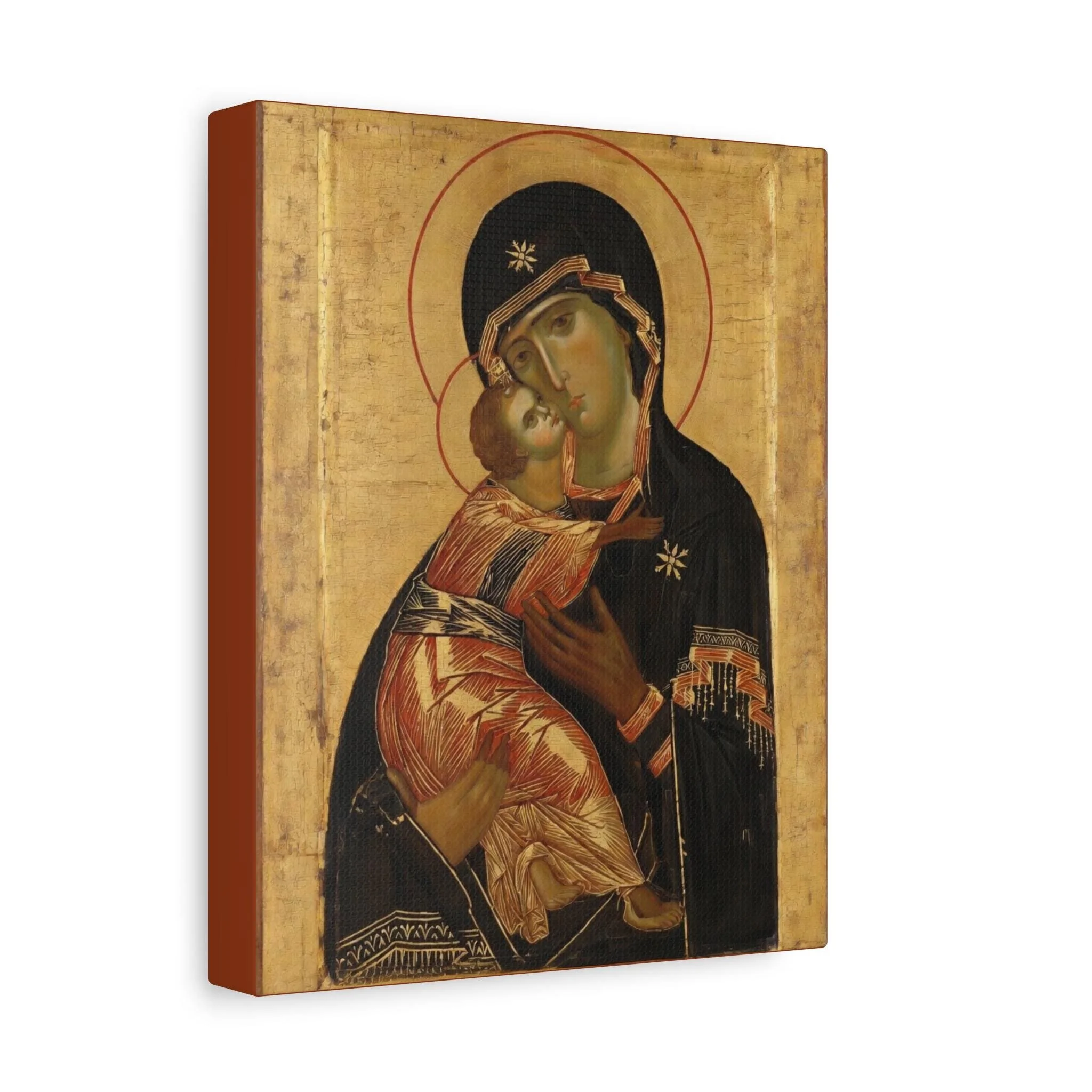
Read the full documented case. Then carry the icon that watched over the hidden believers, and wear the cross that says the fight for the faith never actually ended.
Get The War Within the Church on Amazon →