Coptic Catholic vs Roman Catholic: The Complete Guide — Filioque, Purgatory, Papal Infallibility & More
Coptic Catholic vs. Roman Catholic The Filioque, Purgatory, Papal Infallibility — and Every Other Difference That Matters
Both are fully Catholic. Both recognize the Pope. Yet one celebrates liturgy in a 2,000-year-old rite rooted in Egypt, fasts over 200 days a year, and ordains married men as priests. This is the only guide you will need to understand every difference — and every bond — between these two families of the same faith.
Are Coptic Catholics and Roman Catholics the Same Church?
The question seems simple. Both are Catholic. Both recognize the Bishop of Rome — the Pope — as the visible head of the Church. Both share the same baptism, the same Nicene Creed (with the Filioque), the same core sacramental theology, and the same confession of Christ as Lord. In the most formal sense possible, they are in full communion: a Coptic Catholic and a Roman Catholic are not separated Christians. They are members of the same Church.
And yet they are not the same church. The Catholic Church is not monolithic. It is a communion of twenty-three distinct churches — all in full communion with Rome, all sharing the same faith — but each with its own liturgical rite, its own patriarch or major archbishop, its own canon law, its own saints, its own theological emphases, and its own history stretching back to the apostles. The Coptic Catholic Church is one of these twenty-three. The Roman Catholic Church — also called the Latin Church — is the largest, but it is one among the family.
This matters enormously for understanding what follows. When we compare Coptic Catholics and Roman Catholics, we are not comparing a true believer to a partial one, or a conservative to a liberal, or an Eastern sect to the mainstream. We are comparing two legitimate, fully apostolic, fully Catholic expressions of the same faith — one rooted in Alexandria and the theology of Saint Mark, the other rooted in Rome and the theology of Saints Peter and Paul — that have lived side by side, influenced each other, and occasionally been in deep tension with each other for fifteen hundred years.
The 23 Eastern Catholic Churches
The Coptic Catholic Church is one of twenty-three Eastern Catholic churches in communion with Rome. The others include the Maronite, Melkite, Ukrainian Greek Catholic, Syriac Catholic, Armenian Catholic, Chaldean, and many others. Together with the Latin (Roman) Church, they form the full Catholic Church. Each Eastern Catholic church retains its own rite, patriarch, canon law, and traditions.
Quick Comparison: Coptic Catholic vs. Roman Catholic
Every item in this table will be explored in depth in the sections below.
| Category | Coptic Catholic | Roman (Latin) Catholic |
|---|---|---|
| Church Family | Eastern Catholic (Alexandrian Rite) | Latin Church (Roman Rite) |
| Patriarch / Head | Patriarch of Alexandria (currently Ibrahim Isaac Sidrak) | Pope of Rome (currently Pope Francis) |
| Papal Authority | ✓ Full communion with Rome; accepts papal primacy | ✓ Full communion with Rome; accepts papal primacy |
| Filioque in Creed | ◑ Formally accepted, but Coptic liturgy may use original text | ✓ Fully included in the Nicene Creed as recited |
| Purgatory | ✓ Accepted Catholic doctrine | ✓ Defined dogma |
| Papal Infallibility | ✓ Accepted, but understood within Eastern synodal framework | ✓ Fully accepted; defined at Vatican I (1870) |
| Liturgical Rite | Alexandrian Rite (Liturgy of St. Basil, St. Gregory, St. Cyril) | Roman Rite (Ordinary Form / Extraordinary Form) |
| Liturgical Language | Coptic + Arabic | Latin (historically); local vernacular (since Vatican II) |
| Fasting Days | ~150–210+ days/year (Coptic fasting tradition) | ~40 days (Lent) + Fridays; significantly less demanding |
| Married Priests | ✓ Allowed; parish priests may be married before ordination | ✗ Mandatory celibacy for all priests (with rare exceptions) |
| Calendar | Coptic Calendar (13 months; Christmas = January 7) | Gregorian Calendar (Christmas = December 25) |
| Sacred Images | Icons (flat, hieratic, Coptic style) | Three-dimensional statues and Renaissance-style sacred art |
| Liturgical Sanctuary | Enclosed haikal screen separating altar from nave | Open sanctuary; congregation views altar directly |
| Canon Law | Code of Canons of Eastern Churches (CCEO) | Code of Canon Law (CIC 1983) |
| Immaculate Conception | ✓ Accepted as Catholic dogma | ✓ Defined dogma (1854) |
| Infant Communion | ✓ Yes — baptism, chrismation, and first Eucharist together at infancy | ✗ No — First Communion typically at age 7–8 |
| Chrismation / Confirmation | Given immediately at Baptism (initiatory sequence) | Typically given at adolescence, separate from Baptism |
| Monasticism | Present; linked to Egypt's ancient desert tradition | Strong (Benedictines, Franciscans, Dominicans, etc.) |
The Filioque: The Theological Rift That Changed Christianity
Of all the theological disagreements in Christian history, the Filioque controversy may be the most consequential — and the most misunderstood. It is a single Latin phrase, two words: Filioque, meaning "and the Son." It was added to the Nicene-Constantinopolitan Creed by the Western church to state that the Holy Spirit "proceeds from the Father and the Son" rather than "from the Father" alone. To those unfamiliar with the debate, this can seem impossibly arcane. But it touches the very structure of how Christians understand God — and it is the primary reason the Eastern and Western churches separated in 1054.
The Original Creed
The Nicene-Constantinopolitan Creed, as defined at the First Council of Constantinople in 381 AD, states that the Holy Spirit "proceeds from the Father." This was not accidental phrasing. The Cappadocian Fathers — Basil of Caesarea, Gregory of Nazianzus, Gregory of Nyssa — carefully articulated that the Father alone is the "Monarchy" or single source of divinity within the Trinity. The Son is eternally begotten of the Father; the Spirit is eternally proceeding from the Father. This maintains what Eastern theology calls the monarchia of the Father: one source, one principle, one origin within the Godhead.
How the Filioque Was Added — and Why It Matters
The Filioque was not added by a pope or an ecumenical council. It entered the Latin church gradually, beginning with the Third Council of Toledo in Spain (589 AD), where it was used as an anti-Arian formula to emphasize the equality of the Son with the Father. From Spain it spread through the Frankish church under Charlemagne, who actively promoted it. The popes of Rome — including Pope Leo III, who in 810 AD had the Creed inscribed on silver tablets in its original form without the Filioque — initially resisted the addition. But by the 11th century, Rome had adopted it, and the Great Schism of 1054 with Constantinople ensued.
The objections are theological, procedural, and ecclesiological. Theologically, Eastern Christians argue that making the Son a co-source of the Spirit undermines the Father's monarchy and distorts the inner life of the Trinity. Procedurally, they argue that no single regional church had the authority to alter an Ecumenical Council's creed. Ecclesiologically, the Filioque controversy became inseparable from the question of whether Rome had the jurisdictional authority to make such a unilateral change.
The Eastern Position (Coptic & Orthodox Tradition)
The Holy Spirit proceeds from the Father alone. The Father is the single source and principle of the Godhead. Adding "and the Son" as a co-principle introduces a kind of dual procession that distorts Trinitarian theology and was added without authority. The original Creed must be preserved inviolate.
The Western Position (Roman Catholic)
The Holy Spirit proceeds from the Father and the Son as from a single principle. This was developed by Augustine of Hippo to emphasize the co-equality of the Persons. The Western church holds that the addition clarifies rather than distorts the original faith, and that Rome had theological authority to articulate this development.
Where Coptic Catholics Stand
This is where the Coptic Catholic position becomes genuinely fascinating. The Coptic Catholic Church is in full communion with Rome and therefore formally accepts the Filioque as part of Catholic doctrine. However — and this is crucial — the Eastern Catholic churches were not required by Vatican II's decree Orientalium Ecclesiarum to adopt the Filioque in their own liturgical recitation of the Creed. Pope John Paul II, when visiting Eastern Catholic communities, often recited the Creed in its original form without the Filioque as a sign of respect for Eastern tradition and ecumenical sensitivity. Many Coptic Catholic parishes therefore recite the Creed without the Filioque in their actual liturgical practice, while formally accepting it as Catholic doctrine.
This position — accepting something as true doctrine without necessarily incorporating it into one's own liturgical expression — is a genuine example of how Eastern Catholic churches maintain their theological identity within the larger Catholic communion. It is not hypocrisy or ambiguity; it is a recognition that Catholic unity does not require liturgical uniformity.
"The Catholic Church… does not require the Eastern Churches to change their liturgical texts to include the Filioque, recognizing that the difference reflects a diversity in the legitimate expression of the same faith."
— Vatican Statement on the Filioque, 1995, Pontifical Council for Promoting Christian Unity
Toward Reconciliation
In 1995, the Pontifical Council for Promoting Christian Unity issued a significant document on the Filioque acknowledging that the original Greek form of the Creed — without the addition — remains a legitimate expression of Catholic faith. Pope Francis has increasingly indicated openness to dialogue on this question. The 2025 milestone of the 1,700th anniversary of the Council of Nicaea (325 AD) has accelerated ecumenical conversations about returning to a common Creed — a development that would be theologically momentous and personally meaningful for Coptic Catholics, whose liturgical roots predate the controversy entirely.
Purgatory: Defined Dogma vs. Living Mystery
Purgatory is one of the most frequently misunderstood doctrines in Catholic theology — and the difference between how the Roman and Coptic Catholic traditions approach it reveals something important about the difference between Western juridical theology and Eastern mystical theology more broadly.
The Roman Catholic Doctrine
The Roman Catholic Church formally defines purgatory as a state of purification after death for those who die in God's grace and friendship but still imperfectly purified. In this state, the soul undergoes the cleansing necessary before entering the full beatific vision of God. The doctrine was defined at the Second Council of Lyon (1274), the Council of Florence (1439), and the Council of Trent (1563). The Roman tradition has developed an elaborate theology around purgatory: temporal punishment for sin, the treasury of merit, indulgences, and the practice of offering Masses for the souls of the departed.
The Roman emphasis on purgatory is inseparable from a juridical view of sin and redemption. In this framework, sin incurs a penalty — not just the guilt of the offense but a temporal punishment that must be satisfied either in this life through penance or after death in purgatory. This legal architecture gave rise to the medieval practice of indulgences (the remission of temporal punishment through the Church's treasury of merit), which was, famously, one of the triggers of the Protestant Reformation.
The Coptic Catholic Position
The Coptic Catholic Church accepts purgatory as Catholic doctrine. However, the Coptic theological tradition — shaped by the Alexandrian mystical tradition rather than Augustinian or Thomistic Western theology — approaches the afterlife and the purification of souls with a different vocabulary and emphasis. The Coptic tradition does not typically speak of "temporal punishment" or "satisfying a debt" in the juridical language characteristic of the Latin West. Instead, it speaks of the mercy of God, the continuing power of prayer, and the healing and transformative love of Christ that can work even after death.
The Alexandrian Tradition and the Dead
The Coptic liturgical tradition has always prayed for the dead. The Coptic Orthodox Church — from which the Coptic Catholic tradition inherits its liturgical DNA — holds memorial services for the departed at 3 days, 7 days, 40 days, and one year after death. The Liturgy is regularly offered for the intention of departed souls. This is not the same as the Roman doctrine of purgatory, but it shares the conviction that the living and dead are in communion, and that prayer and the Eucharist can benefit those who have passed from this life.
What the Council of Florence Actually Said
When the Council of Florence (1439) attempted to reunite Eastern and Western churches, the Greek Orthodox delegation raised objections to the Western language about purgatory — not to the practice of praying for the dead, which both sides affirmed, but to the specific Latin framework of "purgatorial fire" and "temporal punishment." The council's final decree on purgatory was deliberately vague on the mechanism of purification precisely to accommodate Eastern sensibilities. This historical precedent is relevant to how Coptic Catholics understand purgatory: they accept the reality of post-mortem purification and the efficacy of prayers for the dead, but they are not required to adopt the full juridical architecture of Latin purgatorial theology.
Indulgences
The Roman Catholic Church continues to teach and practice indulgences — the remission of temporal punishment through the Church's treasury of merit, applicable to the living or the departed. This doctrine and practice is fully developed in Latin Catholic theology. The Coptic Catholic Church, while formally in communion with this teaching, does not have an active tradition of indulgences in the same way. Coptic Catholic piety around the dead centers on the Liturgy, on prayer, and on almsgiving in the name of the departed — practices that predate the formal theology of indulgences by many centuries.
Papal Infallibility: What It Actually Means and How Coptic Catholics Understand It
No Catholic doctrine is more widely misunderstood — by Catholics and non-Catholics alike — than papal infallibility. It is worth beginning with what the doctrine actually says, because almost everything commonly assumed about it is wrong.
What Papal Infallibility Is (and Is Not)
The doctrine of papal infallibility was solemnly defined at the First Vatican Council in 1870. It states that the Pope, when he speaks ex cathedra (literally "from the chair" — meaning in his official capacity as pastor and teacher of all Christians, on a matter of faith and morals, with the clear intention of binding the whole Church) is preserved from error by the Holy Spirit. This is the precise scope of infallibility. It is narrow, specific, and — critically — it has been formally invoked only twice in the history of the Catholic Church: the definition of the Immaculate Conception in 1854 (technically before Vatican I codified the doctrine) and the definition of the Assumption of Mary in 1950. Everything else the Pope says — homilies, encyclicals, interviews, press statements, ordinary teaching — does not fall under the definition of ex cathedra infallibility.
The Three Conditions for a Papal Infallible Definition
1. The Pope must speak in his official capacity — not as a private theologian but as the universal shepherd of the Church.
2. The definition must concern faith or morals — not administrative, political, or disciplinary matters.
3. The Pope must clearly intend to bind the whole Church — to define something as definitively required for belief.
All three conditions must be met simultaneously. In practice, these conditions are almost never met together, which is why the doctrine has been formally exercised so rarely.
The Eastern Catholic Theological Challenge
Eastern Catholic theologians — Coptic Catholic, Melkite, Ukrainian Greek Catholic, and others — have long wrestled with how to understand papal infallibility from within their own theological traditions. The Eastern tradition is fundamentally synodal: truth in the Church is discerned through the consensus of bishops gathered in council, received by the whole Church (a concept called reception). The idea that one bishop — even the first bishop of Rome — could, under any circumstances, define doctrine infallibly for the entire Church without the formal consent of an Ecumenical Council sits uneasily with this ecclesiological framework.
This tension was present at Vatican I itself. A significant minority of bishops at the council — including several Eastern Catholic bishops — voted against the definition of papal infallibility, not because they doubted the Pope's special role but because they feared the definition would make reunion with the Eastern Orthodox churches impossible and would seem to make the Pope an ecclesiastical monarch above the college of bishops. They were, to a significant degree, prophetically correct on both counts.
Vatican II and the Correction: Collegiality
Vatican II (1962–1965) substantially nuanced Vatican I's definition by emphasizing the collegiality of bishops. The Council taught that the infallibility of the Church is primarily located in the college of bishops in union with the Pope — not in the Pope acting in isolation from the episcopate. Lumen Gentium, the council's constitution on the Church, states explicitly that the Pope exercises infallibility in union with the bishops, not apart from them. This collegial understanding is much closer to Eastern Catholic sensibility and opened a genuine space for Eastern Catholic participation in the full life of the Catholic Church without feeling theologically coerced.
How Coptic Catholics Navigate This in Practice
In practice, Coptic Catholics accept the dogma of papal infallibility in its formal sense. However, their theological tradition naturally leads them to emphasize the synodal and collegial dimensions of Church authority — the Patriarch of Alexandria, the Coptic Catholic Holy Synod, the tradition of the Alexandrian Fathers — as the primary living context within which papal authority is exercised. Pope John Paul II's famous phrase — that the Church must breathe with "two lungs," the Eastern and the Western — captures the vision that Coptic Catholics aspire to: a Catholic unity that does not require the Eastern lung to breathe only as the West breathes.
"The Church must breathe with both lungs. It is not enough to have only the Western tradition of the Church; it is necessary to have the Eastern tradition as well."
— Pope John Paul II, Ut Unum Sint, 1995
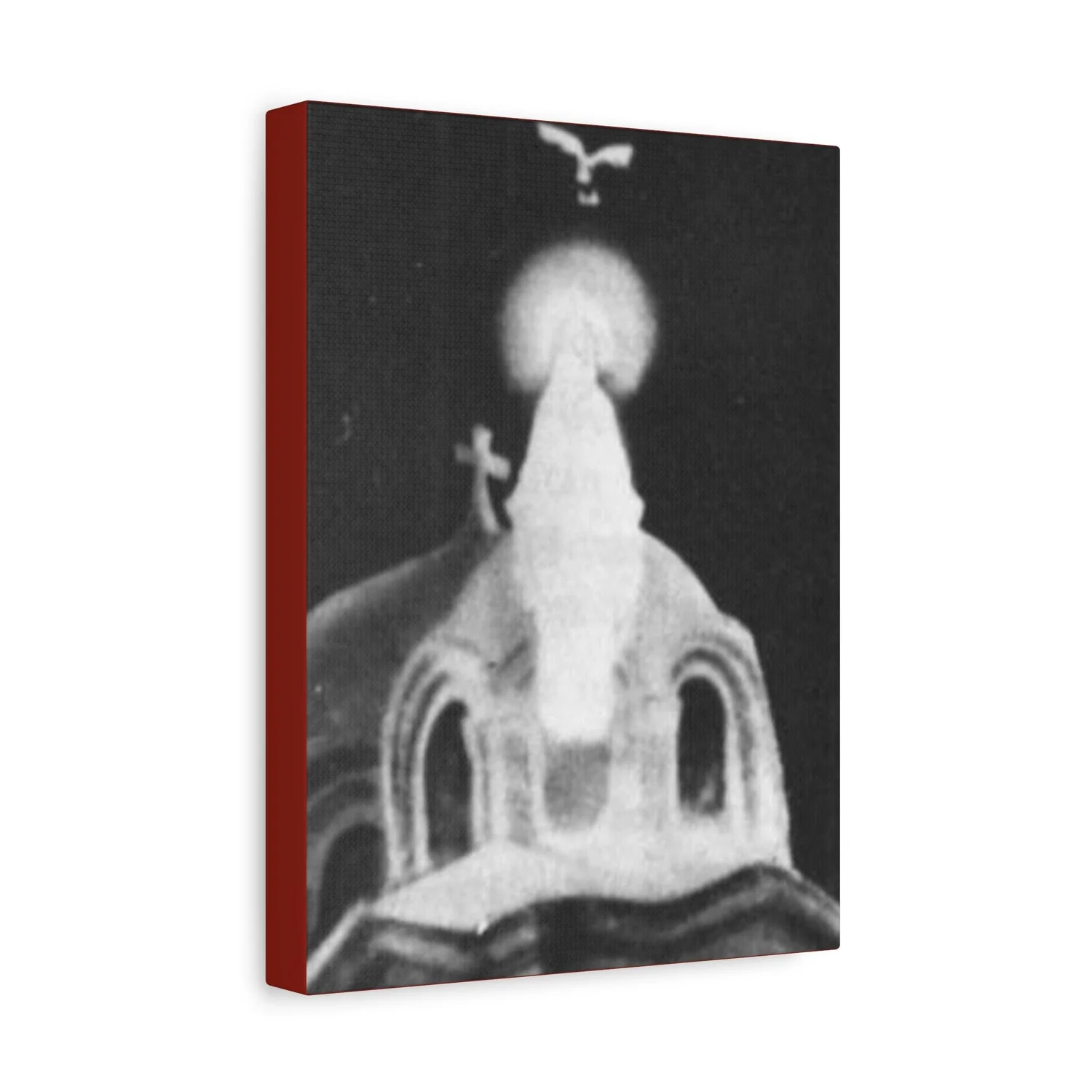
Our Lady of Zeitoun — Sacred Gifts for Coptic Christians
Witnessed by millions in Egypt in 1968 — Orthodox, Catholic, and Muslim alike — Our Lady of Zeitoun is one of the most documented Marian apparitions in history, and one of the few that belongs to no single church.

Liturgy: The Alexandrian Rite vs. The Roman Rite
If you want to understand the difference between Coptic Catholics and Roman Catholics at the deepest possible level, attend their respective Masses. The theological differences — Filioque, purgatory, infallibility — are real and important. But it is in the liturgy that the full weight of the cultural and spiritual difference becomes visceral and undeniable.
The Roman Rite
The Roman Rite in its modern Ordinary Form (post-Vatican II) is a relatively streamlined liturgy typically lasting 45 to 90 minutes. It is celebrated facing the congregation, in the local vernacular language, with the priest at an open altar from which the entire liturgical action is visible to all. Sacred music ranges from Gregorian chant to contemporary hymnody. The architecture of modern Roman Catholic churches varies enormously — from soaring Gothic cathedrals to modernist concrete structures with minimal ornamentation. The Extraordinary Form (Tridentine Mass) is longer, in Latin, and retains some of the more mystical elements that Vatican II's reform removed, but it remains structurally and spiritually quite different from the Alexandrian rite.
The Alexandrian Rite in Coptic Catholic Worship
Walking into a Coptic Catholic liturgy is an experience of total liturgical immersion. The Coptic Catholic Church celebrates the same three divine liturgies as the Coptic Orthodox Church — the Liturgy of Saint Basil (most common), the Liturgy of Saint Gregory the Theologian (used on great feasts), and the Liturgy of Saint Cyril (Mark) — the oldest continuously-used liturgy in the Christian world. The typical Sunday liturgy lasts two to three hours. The language is Coptic and Arabic, with some parishes adding local vernacular for diaspora communities.
The altar is enclosed behind a haikal — a sanctuary screen decorated with icons — and the central act of consecration takes place within this inner sanctuary, partially hidden from the congregation's direct view. This is not obscurantism; it is a theological statement about the mystery of God that cannot be fully comprehended or exposed. Extensive incense is used throughout, filling the church with a fragrant cloud that is simultaneously sensory and spiritual. Deacons chant in Coptic — a sound that, when heard for the first time, seems to arrive from a dimension of time that has no contemporary equivalent.
The Three Sacraments of Initiation Together
One of the most striking liturgical differences between Coptic Catholics and Roman Catholics is the administration of the three sacraments of initiation. In the Roman church, Baptism, Confirmation (Chrismation), and the Eucharist are typically separated by years: Baptism at infancy, Confirmation in adolescence, First Communion around age seven. In the Coptic Catholic Church — as in the Coptic Orthodox, Eastern Orthodox, and most Eastern Catholic churches — all three are administered together at Baptism. An infant is baptized, immediately anointed with chrism (Confirmation), and then given a drop of consecrated Eucharist at the same liturgy. The theological logic is precise: initiation into the Body of Christ is one act. There is no reason to fragment it.
The Three Coptic Catholic Divine Liturgies
Liturgy of Saint Basil: The most commonly celebrated. Used on ordinary Sundays and most feast days. Structurally ancient, with roots in the 4th-century Alexandrian tradition.
Liturgy of Saint Gregory the Theologian: Longer, more elaborate, used on Christmas, Epiphany, and Pascha. Its extended doxologies — addressed directly to the Second Person of the Trinity — give it a uniquely intimate, mystical character.
Liturgy of Saint Cyril (Saint Mark): Generally considered the oldest eucharistic liturgy in continuous use anywhere in Christendom. Used a handful of times per year. Hearing it is a connection to the apostolic church that has few equivalents.
Coptic Chant vs. Gregorian Chant
Both traditions have ancient chant traditions. Roman Catholic Gregorian chant — developed in Western Europe during the medieval period, drawing on Jewish cantillation and early Christian music — is monophonic, smooth, and contemplative. Coptic chant is something else entirely: driven by cymbals (najus), triangles, and a responsorial structure between cantor and congregation, it has a rhythmic vitality that feels simultaneously ancient and alive. The Coptic chant tradition is an oral tradition passed down through generations without full written notation until recently — to hear it is to hear twenty centuries of unbroken transmission in a single room.
Married Priests: One of the Most Practical Differences
For many Catholics encountering Eastern Catholicism for the first time, the possibility of married priests comes as a genuine surprise. In the Latin Church, priestly celibacy is mandatory (with rare exceptions for some converts from Protestant ministry). In the Coptic Catholic Church — as in virtually all Eastern Catholic and Eastern Orthodox churches — a married man may be ordained as a deacon and priest. He cannot marry after ordination, but he need not be celibate before it.
How It Works in the Coptic Catholic Tradition
A man who wishes to become a parish priest in the Coptic Catholic Church may marry before his ordination to the diaconate. After ordination, he must remain with his existing spouse — he may not remarry if his wife dies. Bishops, however, must be celibate in the Coptic tradition, as they are in virtually all Eastern churches: the episcopate is drawn exclusively from monastic clergy. This creates a two-track system that has existed since the early Church: married parish priests who are embedded in family and community life, and celibate monastic clergy who are eligible for episcopal leadership.
Why Does the Roman Church Require Celibacy?
Latin Catholic mandatory celibacy developed gradually over the first millennium and was enforced through several reform councils, including the First and Second Lateran Councils (1123 and 1139 AD). Its theological rationale is rooted in the eschatological sign value of celibacy (pointing toward the kingdom of heaven where "they neither marry nor are given in marriage") and practical arguments about the priest's undivided commitment to his flock. The Eastern Catholic and Eastern Orthodox traditions honor celibacy as a spiritual calling — monasticism is deeply revered in Coptic tradition — but they do not impose it as a condition for parish priesthood, arguing that the apostles themselves were mostly married, and that the local community is better served by a priest who shares the human experience of marriage and family.
"For the sake of the Kingdom of Heaven there are those who make themselves celibate… Let the one who is able to receive this receive it."
— Matthew 19:12, the scriptural foundation both sides cite in the celibacy debateA Live Debate in the Roman Church
The question of married priests in the Latin Church is no longer purely theoretical. The 2019 Synod on the Amazon produced a recommendation — not adopted by Pope Francis in his final document — to allow the ordination of viri probati (proven, married men) in regions with severe priest shortages. The existence of married Coptic Catholic, Melkite, and Ukrainian Greek Catholic priests in full communion with Rome already demonstrates that Catholic unity does not require Latin celibacy discipline. This is a theological point that Eastern Catholics themselves have made in Roman synods for decades.
Free Eastern Christian Marriage Resources
Both Coptic Catholic and Roman Catholic theology understand marriage as a sacrament — a holy mystery in which two people become a living icon of Christ's love for his Church. Our free marriage resources draw on the deep wells of both Eastern and Western Christian wisdom to strengthen your marriage through prayer, theology, and the lives of the saints.
Access Free Marriage Resources →Fasting: 210 Days vs. 40 — The Biggest Practical Difference
No single practical difference between Coptic Catholic and Roman Catholic life is more striking than fasting. If you sat a devout Coptic Catholic and a devout Roman Catholic down and asked them to describe their fasting practices, you would receive two answers so different that you might doubt they were members of the same Church.
Roman Catholic Fasting Today
The Roman Catholic fasting discipline, as it currently stands under the 1983 Code of Canon Law, is extremely modest by historical and global Christian standards. Catholics aged 18 to 59 are obliged to fast (one full meal and two smaller meals that together do not equal one full meal) on two days per year: Ash Wednesday and Good Friday. Catholics 14 and older are bound to abstain from meat on Fridays during Lent and on those same two fast days. The broader Lenten season (40 days) is a time of prayer, fasting, and almsgiving, but there is no universal obligation beyond those two specific fast days. In practice, many Roman Catholics observe little or no additional fasting beyond these minimal requirements.
Coptic Catholic Fasting
The Coptic Catholic Church observes fasting traditions derived from the Coptic Orthodox tradition — fasting periods that, for those who observe them all, total more than 200 days per year. During these periods, the practice is to abstain from all animal products (meat, fish, dairy, eggs) until after the morning liturgy — which typically means no food until midday or later. This is not extreme asceticism for its own sake; it is a discipline that has been woven into the liturgical calendar since the early centuries of Egyptian Christianity. The major Coptic fasting periods include:
The Major Coptic Catholic Fasting Periods
The Great Lent (55 days): The most intensive fast, preceding Pascha. 55 days compared to the Roman 40.
The Apostles' Fast (variable): Following Pentecost, varies by year but usually at least 15 days.
The Fast of the Virgin Mary (15 days, August): One of the most beloved fasts, ending with the Feast of the Dormition.
The Advent Fast (43 days): Begins November 25 — significantly longer than the Roman 4-week Advent.
The Fast of Nineveh (3 days): Commemorating Jonah's call to the Ninevites — observed in the middle of winter.
Wednesday and Friday fasts (year-round): Every Wednesday (betrayal) and Friday (crucifixion) is a fasting day.
The difference in fasting discipline between Coptic Catholic and Roman Catholic is not a matter of either tradition being more or less devout. It reflects genuinely different theologies of asceticism and different understandings of how the body participates in the spiritual life. The Coptic tradition inherited from the Desert Fathers an understanding that bodily fasting and liturgical prayer are inseparable instruments of theosis — the transformation of the entire human person into the likeness of God. The Roman tradition has generally moved, particularly since Vatican II, toward emphasizing fasting as a disposition of the heart rather than a bodily discipline, though there are significant renewal movements within Roman Catholicism recovering a more demanding ascetical tradition.
The Coptic Calendar: Christmas in January, Thirteen Months
The Coptic calendar is one of the oldest continuously-used liturgical calendars on earth. It is based on the ancient Egyptian civil calendar — the same calendar that the pharaohs used, reformulated by Sosigenes of Alexandria — and counts years from the Era of the Martyrs, beginning with the reign of Diocletian (284 AD), whose persecution of Egyptian Christians was so severe that the Coptic church named its entire calendar after the martyrs he produced.
The Coptic year consists of thirteen months: twelve months of thirty days each, plus a short thirteenth month of five days (six in a Coptic leap year). The calendar is approximately seven to eight years behind the Gregorian calendar. Christmas in the Coptic tradition falls on 29 Kiahk — equivalent to January 7 in the Gregorian calendar in the 21st century — rather than December 25. Easter (Pascha) is calculated differently from both the Roman and Eastern Orthodox methods, resulting in a date that sometimes coincides with one or the other, and sometimes stands alone.
The Roman Catholic Church uses the Gregorian calendar, introduced by Pope Gregory XIII in 1582 as a reform of the Julian calendar. Most Roman Catholics celebrate Christmas on December 25, Easter on its Western-calculated date, and organize their entire liturgical year around this Gregorian framework. The difference in calendars means that Coptic Catholic Christmas falls roughly two weeks after Roman Catholic Christmas — a practical reality that affects Coptic Catholic families in predominantly Roman Catholic or secular Western contexts, who may find themselves celebrating Christmas twice or navigating two different holiday schedules.
Icons vs. Statues: Two Visual Theologies
Walk into a Roman Catholic church of any era and you are likely to encounter three-dimensional statues: a marble Madonna, a plaster Saint Francis, a gilded tabernacle. Walk into a Coptic Catholic church and you will find something entirely different: flat, two-dimensional images painted in the ancient Coptic iconographic style, gold-ground panels, faces with enormous eyes and elongated forms, bodies that seem to exist outside of physical space and time. These are not two different tastes in decoration. They reflect two different theologies of sacred imagery.
The Coptic Icon Tradition
Coptic iconography is one of the oldest visual traditions in Christendom. Its flat, hieratic style predates the Byzantine icon tradition and carries its own theological language. The large eyes of Coptic saints are the eyes that have learned to see God. The frontal posture is not primitive art — it is a deliberate theological statement: the saint faces you, fully present, in an encounter that transcends perspective and physical depth. The gold ground is not decoration; it is the light of the divine realm in which the saint now lives. The lack of shadow and three-dimensional modeling is a refusal to place holy figures in the passing world of light and shadow that characterizes fallen nature.
The Eastern Christian tradition's preference for the icon over the statue is rooted in the theology of the Incarnation and the seventh Ecumenical Council (Nicaea II, 787 AD), which defined the veneration of icons as theologically legitimate precisely because God had become visible in the flesh of Christ. The flat image honors the mystery of this visibility without reducing the holy to the merely physical. A statue, critics of Western sacred art argue, risks making the saint appear as a physical object rather than a window into the divine realm.
The Roman Catholic Tradition of Sacred Art
The Roman Catholic tradition of sacred art exploded in three-dimensional and representational richness during the Renaissance and Baroque periods. Michelangelo's Pietà, Bernini's Ecstasy of Saint Teresa, the soaring Gothic cathedrals of Northern Europe — these represent a theology of beauty that seeks to draw the viewer into the divine through overwhelming aesthetic experience. The Latin theological tradition — rooted in Aristotelian realism and the Thomistic synthesis — was generally comfortable with three-dimensional representation, seeing the physical beauty of the world as a legitimate vehicle for divine encounter. This produced some of the greatest art in human history. It also, Eastern critics would say, sometimes confused the vehicle with the destination.
Vatican II and Eastern Sacred Art
The Second Vatican Council's decree Orientalium Ecclesiarum explicitly instructed Eastern Catholic churches to preserve their own liturgical and artistic traditions rather than Latinize them. This means Coptic Catholic churches are encouraged to maintain and deepen their iconographic tradition rather than importing Roman Catholic statuary. The modern Coptic Catholic Church has increasingly embraced this instruction, viewing the recovery of authentic Alexandrian visual theology as part of its identity and mission.
Mary: Theotokos, Our Lady of Zeitoun, and the Mother of Light
Both Coptic Catholics and Roman Catholics have an intense and theologically rich devotion to the Virgin Mary. In this they are alike. But the character of Marian devotion — its vocabulary, its emotional texture, its specific titles and practices — differs in ways worth exploring.
Theotokos: The Title That Started a War
The title Theotokos — God-Bearer, or Mother of God — was the central battleground of the Council of Ephesus in 431 AD, where Cyril of Alexandria successfully defended its use against Nestorius of Constantinople. For Coptic Christians, this title is not merely devotional. It is the crystallized form of their Christology: Mary is called Theotokos because the One she bore is truly God. The title guards the unity of Christ's person. To deny it — as Nestorius effectively did by insisting she was only Christotokos (Christ-bearer) — was to split Christ in two. Both Coptic Catholics and Roman Catholics use the title Theotokos, though it is far more liturgically prominent and emotionally central in Coptic Catholic worship.
Additional Coptic Marian Titles
In the Coptic tradition, Mary is called not only Theotokos but also Tenagion (the All-Holy), Mother of Light, Queen of the Angels, and numerous other titles that appear in the ancient Coptic hymns. The Theotokia — hymns to the Theotokos — are sung at the conclusion of each hour of the Agpeya (the Coptic Liturgy of the Hours) and constitute a complete Marian theology in musical form. The emotional intimacy of Coptic Marian devotion, shaped by the African and Egyptian love of the maternal and the mystical, gives it a warmth and urgency that distinguishes it from much of contemporary Western Marian piety.
Our Lady of Zeitoun: The Apparition That Belongs to Everyone
The 1968 Marian apparition at Zeitoun, Egypt holds a special place in Coptic Catholic piety precisely because it transcends denominational boundaries. The Virgin appeared in light above a Coptic Orthodox church and was seen by millions — Orthodox, Catholic, Muslim, secular. She issued no messages, made no requests, and aligned herself with no single church. She simply appeared, and Egypt saw her. The Coptic Catholic Church venerates Our Lady of Zeitoun with the same devotion as the Coptic Orthodox — and the Roman Catholic Church, while it has not formally issued a verdict on Zeitoun's authenticity, regards it with respect. Our Lady of Zeitoun is, in a profound way, a figure that stands at the intersection of East and West, Catholic and Orthodox, Christian and Muslim — which is perhaps exactly what you would expect of the Mother of God appearing over the largest Christian community in the Islamic world.
The Immaculate Conception
The Roman Catholic dogma of the Immaculate Conception — that Mary was conceived without original sin, preserved by a singular grace of God in view of her Son's merits — was formally defined by Pope Pius IX in 1854. The Coptic Catholic Church accepts this as Catholic dogma. The theological content — Mary's unique holiness, her preservation from sin, her role as the New Eve — is deeply consonant with Coptic Marian theology, even if the specific technical language of "original sin" in its Augustinian formulation is not native to the Alexandrian tradition.
Sacraments and Canon Law: Different Books, Same Mysteries
Seven Sacraments in Both
Both the Coptic Catholic and Roman Catholic churches recognize the same seven sacraments: Baptism, Chrismation (Confirmation), the Eucharist, Penance, Holy Orders, Matrimony, and the Anointing of the Sick. In this they are in full agreement. The Real Presence of Christ in the Eucharist is affirmed by both, though the Coptic tradition does not use the Latin scholastic language of "transubstantiation" — preferring to affirm the mystery without the Aristotelian philosophical analysis that the Latin tradition codified.
CCEO vs. CIC: Two Codes of Canon Law
The Coptic Catholic Church is governed by the Code of Canons of the Eastern Churches (CCEO), promulgated by Pope John Paul II in 1990. The Roman Catholic Church is governed by the Code of Canon Law (CIC), promulgated in 1983. These are two distinct legal codes — though both are ultimately subject to the Pope's authority — and they differ in significant ways. The CCEO generally gives Eastern Catholic patriarchs and synods greater autonomy than the CIC gives to Latin bishops. Marriage law, tribunal procedures, and norms for sacramental life differ between the two codes. A Coptic Catholic marriage, for instance, is regulated by CCEO norms, which differ from the CIC in how impediments, dispensations, and mixed marriages are handled.
Confession and the Father of Confession
Both traditions hold sacramental Confession (Penance) as a genuine encounter with the mercy of God through priestly absolution. The Coptic Catholic tradition — inheriting the Desert Father practice — places particular emphasis on having a personal "Father of Confession": one specific priest who serves as an ongoing spiritual director and confessor across years and decades. This relationship is considered nearly essential to serious Christian life in the Coptic tradition. The Roman Catholic tradition has formal structures of spiritual direction and sacramental confession, but the specific intense personal bond of the Father-of-Confession relationship as practiced in Coptic parishes is a distinctive feature of the Eastern tradition.
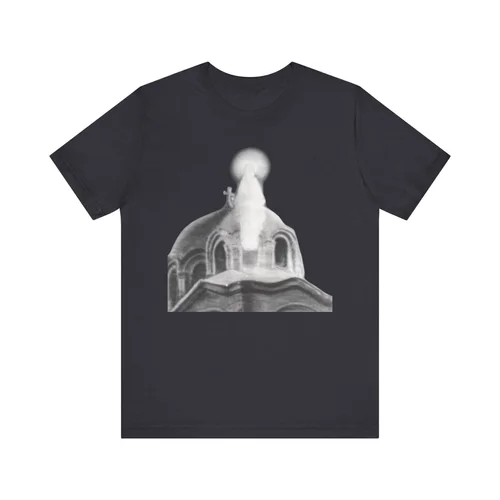
Wear the Prayer — The Jesus Prayer Shirt
"Lord Jesus Christ, Son of God, have mercy on me, a sinner." This prayer belongs to every Christian in the apostolic tradition — Eastern, Western, Coptic, Byzantine. Wear it.
Frequently Asked Questions
Yes and no — depending on what you mean. The Coptic Catholic Church is part of the Catholic Church and is in full communion with the Pope of Rome. In that sense, yes. But "Roman Catholic" technically refers to the Latin Church — the Western, Roman-Rite church that is the largest of the twenty-three churches that make up the Catholic communion. The Coptic Catholic Church is not the Latin Church. It has its own patriarch, its own liturgical rite (the Alexandrian Rite), its own canon law (CCEO), and its own history and identity that are distinct from the Roman Church. A Coptic Catholic is fully Catholic, but is not Roman Catholic in the technical sense.
The Filioque is the phrase "and the Son" added by the Western church to the Nicene Creed, so that it reads that the Holy Spirit "proceeds from the Father and the Son" rather than "from the Father" alone. It matters because it touches the theology of the Trinity — specifically, whether the Father alone is the single source (monarchy) of divinity within the Godhead, or whether the Son shares in that source. The Eastern tradition (Orthodox and originally Eastern Catholic) argues the addition distorts Trinitarian theology and was inserted without authority. The Roman Catholic Church defends it as a legitimate theological development. The Coptic Catholic Church formally accepts the Filioque as Catholic doctrine but may not include it in liturgical recitation of the Creed, following Vatican guidance on respecting Eastern liturgical traditions.
Yes — the Coptic Catholic Church accepts purgatory as Catholic doctrine by virtue of its communion with Rome. However, the Coptic theological approach to purgatory is shaped by the Eastern mystical tradition rather than the Western juridical framework. The Coptic tradition does not typically speak of "temporal punishment" or "indulgences" in the way the Latin West does. Instead, it emphasizes the mercy of God, the continuing efficacy of prayer and the Eucharist for the departed, and the healing love of Christ that works in souls even after death. The Coptic liturgical tradition has always prayed for the dead — this predates the formal Latin doctrine of purgatory by many centuries.
Yes, formally. The Coptic Catholic Church accepts papal infallibility as defined at Vatican I (1870) — the doctrine that the Pope, when speaking ex cathedra on matters of faith and morals with the clear intention of binding the whole Church, is preserved from error. However, Eastern Catholic theology has always understood this within a collegial and synodal framework, emphasizing that the Pope exercises infallibility in union with the college of bishops, not independently of them. Vatican II's teaching on collegiality brought Roman Catholic ecclesiology significantly closer to Eastern Catholic sensibility. In practice, Coptic Catholics experience papal authority primarily as a bond of communion rather than as an ongoing mechanism of doctrinal governance.
Yes — a man who is already married may be ordained as a Coptic Catholic priest. He must be married before his ordination to the diaconate; he cannot marry after ordination. If his wife dies, he may not remarry. Bishops in the Coptic Catholic tradition must be celibate monks, as in virtually all Eastern churches. This means the Coptic Catholic Church has both married parish clergy and celibate monastic clergy who are eligible for the episcopate. This is the same pattern as the Coptic Orthodox, Eastern Orthodox, Melkite, Ukrainian Greek Catholic, and most other Eastern churches. It differs from the Latin Catholic rule of mandatory celibacy for all priests.
Very different in experience, though theologically both are valid Catholic Eucharists. The Coptic Catholic liturgy is typically 2–3 hours long (compared to 45–90 minutes for a Roman Mass). It uses the Coptic language and Arabic rather than Latin or the local vernacular. The altar is enclosed behind a sanctuary screen (haikal) decorated with icons rather than being open and visible. Coptic chant — driven by cymbals and responsorial patterns — replaces Western-style hymnody. Infants receive all three sacraments of initiation (Baptism, Chrismation, Eucharist) together, rather than separated by years as in the Roman tradition. The incense is heavier and more continuous. The theological structure — Liturgy of the Word, Liturgy of the Eucharist — is the same, but the experiential world is completely different.
Coptic Catholics who observe the full Coptic fasting tradition fast approximately 150–210+ days per year — abstaining from all animal products until after the morning liturgy on those days. This compares to the Roman Catholic obligation of full fasting on just two days per year (Ash Wednesday and Good Friday) with Friday abstinence from meat during Lent. The difference is enormous. The Coptic fasting tradition is an inheritance from the Egyptian Desert Fathers and is considered integral to the spiritual life, not merely a disciplinary rule. Roman Catholicism has moved significantly away from demanding bodily fasting since Vatican II, though there are renewal movements recovering more rigorous ascetical practices.
Coptic Catholics traditionally celebrate the Nativity of Christ on 29 Kiahk in the Coptic calendar, which corresponds to January 7 in the Gregorian calendar in the 21st century. This is the same date as Eastern Orthodox Christmas (for churches using the Julian calendar). Roman Catholics celebrate Christmas on December 25 (Gregorian). Coptic Catholic diaspora communities outside Egypt may sometimes observe a dual celebration, or may adopt December 25 for practical reasons, but January 7 remains the traditional Coptic Christmas date.
Technically, yes — because both are in full communion with Rome, and the CCEO permits Eastern Catholic churches to administer the sacraments to members of other Catholic churches. However, in practice this depends on the specific parish and its local policy. A Roman Catholic attending a Coptic Catholic liturgy should approach communion with humility and ask the local clergy. The Coptic Catholic tradition also expects communicants to be fasting before receiving — typically since midnight or early morning — which is a more demanding requirement than is typical in most Roman Catholic parishes today.
The Coptic Catholic Church inherits the Alexandrian visual theology, which uses two-dimensional icons rather than three-dimensional statues. The icon tradition is rooted in the theology of the Seventh Ecumenical Council (Nicaea II, 787 AD), which defined icons as windows into the divine realm — the flat, gold-ground image is not trying to reproduce physical reality but to make the spiritual world visible. The large eyes, frontal posture, and lack of shadows are all deliberate theological choices. The Roman Catholic tradition — shaped by medieval and Renaissance Western art — uses three-dimensional statues and naturalistic sacred art, which reflects a different (but also legitimate) theology of beauty and Incarnation. Vatican II instructed Eastern Catholic churches to preserve their own artistic traditions.
The Code of Canons of the Eastern Churches (CCEO), promulgated in 1990, is the canon law governing all twenty-three Eastern Catholic churches, including the Coptic Catholic Church. The Code of Canon Law (CIC), promulgated in 1983, governs the Latin (Roman) Church. Both are ultimately under the Pope's authority, but they are two distinct legal codes with different norms. The CCEO generally grants Eastern Catholic patriarchs and synods greater autonomy, reflects Eastern sacramental theology (e.g., on infant Communion), and has different rules for marriage, ordination, and church governance. A Coptic Catholic marriage case would be governed by CCEO norms, not CIC norms.
The Coptic Catholic Church's path to Roman communion was gradual and complex. Individual Coptic Christians had contact with Rome from the medieval period, and in 1741, a Coptic bishop named Amba Athanasius formally entered union with Rome. However, a stable church structure took time to develop. The Coptic Catholic Patriarchate of Alexandria was formally established by Pope Leo XIII in 1895, giving the community an official institutional home. The church remained small through the 19th and 20th centuries — never exceeding a few hundred thousand members — partly due to its minority status within a predominantly Coptic Orthodox Egyptian Christian community, and partly due to the social and political pressures of life under Ottoman and then Egyptian national rule.
The Coptic Orthodox Church formally acknowledged the apparitions at Zeitoun (1968–1971) as authentic. The Coptic Catholic Church venerates Our Lady of Zeitoun with equal devotion. The Roman Catholic Church has not issued a formal verdict on Zeitoun's authenticity — it would need to go through the standard Marian apparition investigation process — but it regards the apparition with respect and has not discouraged devotion to it. Given that the apparitions were witnessed by millions of people, photographed, filmed, and reported by the Egyptian government, Zeitoun presents the unusual case of a Marian apparition that has overwhelming secular and documentary evidence and does not depend on the testimony of private visionaries.
Yes. Because both churches are in full Catholic communion, a Roman Catholic may transfer their canonical enrollment to the Coptic Catholic Church (or any other Eastern Catholic church) without converting — they are already Catholic. The process involves a formal request for transfer, typically requiring the approval of the competent authority in the Eastern Catholic church you wish to join. In practice, this is relatively rare but does occur, particularly for those who marry into Coptic Catholic families or who feel drawn to the Eastern liturgical tradition. You should speak with both your current Latin rite pastor and the Coptic Catholic parish you wish to join.
Explore the Full Eastern Catholic & Eastern Christian Tradition
The Coptic Catholic Church is one of twenty-three Eastern Catholic churches — each with its own ancient rite, its own saints, and its own history. We are working to bring these traditions to life through handmade prayer cards, saint biographies, and resources for the whole Eastern Christian world.
Browse the Prayer Card Directory