Greek Byzantine Catholic Church: The Complete History — From Bessarion to the Cathedral of the Holy Trinity
The Complete Guide
Greek Byzantine Catholic Church: The Complete History — From Bessarion to the Cathedral of the Holy Trinity
The story of the smallest Eastern Catholic church in Europe — six thousand faithful in Athens keeping alive the most ancient dream in Christendom: Greeks and Rome in one communion
There is something genuinely paradoxical about the Greek Byzantine Catholic Church. It is a church that celebrates the Byzantine Divine Liturgy in Greek — the very language in which Christianity was first written down, the language of the New Testament, the language of the Church Fathers who shaped the theology of both East and West. It exists in Greece, the country that gave the world the philosophical and linguistic foundation of all Christian theology. And it numbers approximately six thousand faithful.
It is, in short, one of the tiniest Eastern Catholic churches in the world — operating in the country where you might expect it to be largest, using the language that belongs to the whole of Christian history, and doing so as a quiet, persistent minority in a nation where the Greek Orthodox Church claims over 90% of the population as its own and regards the very existence of a Byzantine-rite Catholic community with a hostility that has never entirely softened.
But the Greek Byzantine Catholic Church is not merely a curiosity. It is the living institutional expression of a dream that has animated Greek Christian thought for nearly a thousand years: the dream that the division between Eastern and Western Christianity — the Great Schism of 1054, the wound at the center of the Christian world — might be healed. Every liturgy celebrated in the Holy Trinity Cathedral in Athens is an act of theological witness, a claim that it is possible to be fully Byzantine and fully Catholic, that the two identities are not in conflict but in complementary relationship, that the division is not permanent. That dream, and the small community that embodies it, is what this article is about.
The Great Paradox: Greek Christians and Rome
To understand the Greek Byzantine Catholic Church, you need to hold in mind a peculiarity of Christian history that most Western Christians have never had reason to consider: Greece — the nation most associated with Eastern Orthodoxy, whose state church is the Orthodox Church of Greece, whose monasteries on Mount Athos represent the peak of Eastern monastic tradition — has a relationship with Rome that is far older and far more complex than the simple East-West division might suggest.
In the first centuries of Christianity, the Church of Rome and the Church of Antioch were both Greek-speaking churches. The New Testament was written in Greek. The earliest Church Fathers — Ignatius of Antioch, Clement of Rome, Justin Martyr — wrote in Greek. The first seven Ecumenical Councils that both East and West recognize as authoritative were conducted in Greek. The creed recited in every Mass and every Divine Liturgy was formulated in Greek at Nicaea (325 AD) and Constantinople (381 AD). Greek was not the language of Eastern Christianity alone — it was the language of Christianity, period, for its first millennium.
The Great Schism of 1054 was not, therefore, a simple East-West break that had always been inevitable. It was a rupture between two parts of a single Christian civilization that had been, for centuries, genuinely one — sharing theology, sharing liturgy, sharing saints, sharing the Greek language as the medium of their common faith. The dream of reunion is not a modern ecumenical novelty. It is a recovery of something that was once real.
The Greek Byzantine Catholic Church exists as the institutional expression of that recovery project — the particular church within the Catholic communion that is specifically Greek, specifically Byzantine, and specifically committed to the proposition that the separation need not be permanent.
The Deep Roots: Antioch, Byzantium, and the First Christians
The Byzantine liturgical tradition — the tradition that the Greek Byzantine Catholic Church uses today — traces its roots to two cities that shaped the whole of early Christianity: Antioch and Constantinople.
Antioch, on the Orontes River in what is now southern Turkey, was the place where the disciples were first called Christians (Acts 11:26), where Paul began his apostolic journeys, and where tradition places Saint Peter as the first bishop before his journey to Rome. The theological and liturgical tradition that developed in Antioch — richly Semitic in its roots, deeply engaged with the Greek philosophical tradition, and focused on the mystery of the Incarnation — became one of the foundational streams of all Eastern Christian worship. The Divine Liturgy that is celebrated in every Byzantine Catholic church today has Antiochene roots going back to the very beginning of Christianity.
Constantinople — the New Rome, the city of Constantine, the capital of the Byzantine Empire from 330 AD to 1453 AD — gave the liturgical tradition its imperial grandeur and its universal reach. When the Byzantine Empire spread its culture and faith across the Balkans, Russia, and the eastern Mediterranean, it spread the Constantinople liturgy with it. By the medieval period, the “Byzantine Rite” — the Constantinopolitan form of the Divine Liturgy — had become the standard form of worship for all the Eastern Orthodox churches and for all the Eastern Catholic churches that trace their heritage to those Orthodox churches. The Melkite Greek Catholic Church, the Ukrainian Greek Catholic Church, and the Ruthenian Byzantine Catholic Church all share this same Byzantine heritage.
The Greek people, as the heirs of both Antiochene theology and Byzantine culture, are thus not strangers to either Rome or to the Eastern tradition. They invented both — or rather, both developed within the Greek-speaking Christian civilization that the Byzantine Empire sustained for a thousand years. The Greek Byzantine Catholic Church’s use of the Byzantine Rite in Greek is not an exotic accommodation. It is a return to the original form.
The Great Schism (1054): How East and West Divided
The formal break between Rome and Constantinople — the event historians call the “Great Schism” — occurred in July 1054, when Cardinal Humbert, the papal legate, placed a bull of excommunication on the altar of the Hagia Sophia in Constantinople, and Patriarch Michael Cerularius responded with a counter-excommunication. The mutual anathemas were not lifted until 1965, when Pope Paul VI and Patriarch Athenagoras simultaneously nullified them in a remarkable act of reconciliation.
But the Schism of 1054 was not a sudden break. It was the culmination of centuries of growing estrangement — theological, cultural, linguistic, and political — between the Latin West and the Greek East. The theological differences that had accumulated included the Filioque controversy (whether the Holy Spirit proceeds from the Father alone, as the Eastern tradition maintains, or from the Father and the Son, as the West had added to the Nicene Creed); differences over papal authority and jurisdiction; and differences in liturgical practice, clerical discipline, and canonical structure. The sack of Constantinople by the Fourth Crusade in 1204 — when Catholic Crusaders looted the churches and palaces of the Byzantine capital, desecrated the Hagia Sophia, and established a Latin Empire in the heart of the Greek Christian world — made any reconciliation vastly more difficult and left a wound in Eastern Christian memory that has never fully healed.
For the Greek people specifically, the Schism had a particular intensity. The Hagia Sophia — Holy Wisdom, the greatest church in Christendom for nearly a thousand years — was the place where the excommunication was placed. The Byzantine Emperors, the Ecumenical Patriarchs, the monks of Mount Athos: these were the Greek institutional leaders whose decisions about Rome shaped the entire Orthodox world’s relationship with the Catholic Church. When Greek Christians made choices about unity or division, they were making choices for all of Eastern Christianity.
The Greek Byzantine Catholic Church exists to answer — in institutional form, through lived community — the question that Cardinal Bessarion posed at the Council of Florence in 1439: “What valid justification will we have to present before God for an evil as great as that of our division, since it was to get rid of it and unite us all that Christ came on earth, became man, gave himself up to be crucified?”
Six thousand faithful in Athens and Giannitsa are that answer’s most current form.
The Councils of Union: Lyon (1274) and Florence (1439)
The history of attempts to heal the Great Schism is, in many ways, the pre-history of the Greek Byzantine Catholic Church. The dream of reunion motivated some of the greatest figures in Greek Christian intellectual history, produced two Ecumenical Councils that declared a union of East and West, and ultimately failed — but left behind a tradition of Greek Catholic thought that the 19th and 20th-century church would draw upon.
The Second Council of Lyon (1274)
The first major reunion council came at Lyon in 1274, where the Byzantine Emperor Michael VIII Palaiologos sent ambassadors to negotiate a union with Pope Gregory X. The motivation was nakedly political: Michael needed papal support to defend his empire against Charles of Anjou, who was threatening to recapture Constantinople for the Latin West. The theological negotiations were genuine, but the union — proclaimed in Lyon — never had popular or clerical support in Constantinople. When Michael died in 1282, his son immediately repudiated it. The Second Council of Lyon produced what one scholar called the first generation of Greek “unionists” — Enotiki — who kept the dream alive even as the official church repudiated it.
The Council of Florence (1439): The Greatest Attempt
The Council of Florence was the most serious attempt at Christian reunion between East and West in the entire medieval period. The Byzantine Empire was in its final agony — reduced to the city of Constantinople itself, surrounded by Ottoman armies, the Emperor knowing that without Western military aid, the city would fall. Emperor John VIII Palaiologos arrived in Italy with a delegation of approximately 700 people: the Patriarch of Constantinople, twenty metropolitans, and the leading theologians of the Byzantine world.
After nearly two years of intense theological debate — on the Filioque, on purgatory, on the Eucharist, on papal primacy — a decree of union was signed on July 6, 1439, in Florence Cathedral. It was signed by the Pope, the Emperor, and virtually all the Greek bishops present. Only one Greek bishop, Mark of Ephesus, refused to sign — and he returned to Constantinople as a hero of Orthodox resistance, while the bishops who had signed found their agreement repudiated by the monks, the people, and the clergy who had stayed behind.
The union of Florence never took effect in the Eastern churches. Constantinople fell to the Ottomans in 1453 — the Western military aid the union was supposed to secure had never come in sufficient force. The Ottoman sultans, recognizing that the Orthodox hierarchy’s opposition to union was the surest barrier against Western interference in their new Christian subjects, appointed anti-unionist Patriarchs and suppressed the unionists. The union died on the vine.
But Florence produced something that would matter for centuries afterward: a tradition of Greek Catholic thought, a line of Greek intellectuals and clergy who had genuinely believed in the union and who had paid for that belief with exile or marginalization. And it produced Bessarion. For context on how similar union councils shaped other Eastern Catholic traditions, see our history of the Hungarian Greek Catholic Church and the Bulgarian Greek Catholic Church.
Cardinal Bessarion: The Greatest Greek Champion of Union
Bessarion of Nicaea (1403–1472) is the most intellectually significant figure in the entire history of Greek Catholic thought — a Byzantine bishop who became a Roman Cardinal, one of the greatest scholars of the Italian Renaissance, the man who did more than anyone to bring Byzantine Greek manuscripts and learning to the West, and the most powerful Greek voice for the union of the churches in the fifteenth century. He is listed as a notable Greek Byzantine Catholic in the church’s own roster of historical figures, and his legacy permeates the entire project of Greek-Roman reunion.
Born in Trebizond, educated in Constantinople and in the Peloponnese, he became Metropolitan of Nicaea in 1437 — one of the senior bishops of the Byzantine church. He traveled to Italy as part of the Byzantine delegation to the Council of Florence, where he became one of the most effective advocates for union, engaging the Latin theologians in their own scholastic framework while defending the legitimacy of the Greek theological tradition. When the union was signed, he was the leader of the pro-union party among the Greek bishops.
He could not return to Constantinople after Florence. The anti-union party was too strong, and the Patriarch who had signed the decree too hated. In 1440, Pope Eugene IV appointed Bessarion a Roman Cardinal — making him, at that point, the only Greek to hold that rank and the highest-ranking Eastern Christian in the Catholic Church. He spent the rest of his life in Rome and in Italy, building a library of Greek manuscripts that he eventually donated to Venice (where they became the founding collection of the Biblioteca Marciana), and working tirelessly both for a Crusade to save Constantinople and for the cause of Greek-Latin intellectual exchange.
Greek Cardinal, Council of Florence (1439): Cardinal Bessarion (1403–1472)
Metropolitan of Nicaea, Roman Cardinal, Renaissance scholar, and the greatest intellectual champion of Greek-Roman reunion. Donated his vast library of Greek manuscripts to Venice. His question at Florence — “What valid justification will we have before God for our division?” — remains the theological foundation of the Greek Byzantine Catholic vocation.Last Byzantine Emperor, fell 1453: Constantine XI Palaiologos
The last Emperor of Byzantium — who died defending Constantinople on May 29, 1453 — is listed as a notable Greek Byzantine Catholic, having accepted the union of Florence. His death in the fallen city is the symbol of the price the Greek people paid for a union that the West’s military response never fulfilled. The Ottomans conquered the church that had chosen Rome.


Greeks Under Ottoman Rule: Individual Catholics, No Byzantine Structure
After the fall of Constantinople in 1453, Greek Christians found themselves under Ottoman Muslim rule with their ecclesiastical structure intact — the Ottomans recognized the Ecumenical Patriarchate as the administrative head of all Christian Orthodox subjects of the empire (the Rum millet) — but with the dreams of Florence definitively buried. The Ottoman policy was clear: the Patriarchate was useful as an intermediary, and the Patriarchate’s anti-unionist stance was also useful as a barrier against Western Catholic influence in Ottoman territory. The union was not coming back.
But individual Greeks did enter communion with Rome throughout the Ottoman period, generally through contact with Venetian traders and colonies in the Aegean and eastern Mediterranean. The Venetian Republic, a Catholic maritime power, controlled a network of islands and port cities in the Greek world — Crete until 1669, Corfu and the Ionian islands until 1797, various Aegean islands, and significant quarters in Constantinople itself. Through this Venetian network, Greeks who wished to maintain Catholic communion could do so — but almost always by adopting the Latin Rite rather than maintaining the Byzantine one. There was no Byzantine-rite structure for Greek Catholics; if you became Catholic, you became Latin Catholic.
This meant that for centuries, there were Greek Catholics — people of Greek ethnicity and culture who were in communion with Rome — but no Greek Byzantine Catholic Church as such. The dream of a distinctly Greek, distinctly Byzantine Catholic communion had to wait for the 19th century and the deliberate missionary effort to create it. The same pattern played out differently for the Melkite Greek Catholics in the Arab world, who maintained their Byzantine heritage through union with Rome from 1724 onward.
Father John Marangos and the First Mission (1826)
The immediate precursor of the Greek Byzantine Catholic Church was the mission of Father John Marangos — a Jesuit priest, also known as Jean-Hyacinthe Marangos — who began working among the Orthodox Christians of Constantinople in 1826 and became the first person to seriously and systematically attempt to build a Greek Byzantine Catholic community in the modern era.
Marangos was a Latin-rite priest, but he worked specifically among Greek Orthodox Christians rather than the Latin Catholic population of Constantinople. He managed the construction of a small community in the Ottoman capital — a fragile but genuine nucleus of Greeks who were open to the idea of Catholic communion while maintaining their Eastern heritage. In 1878, he moved on to Athens, where he died in 1885 after founding a church there. In addition to his Constantinople work, he also won over two small villages in Thrace to the Catholic faith — the villages of Malgara and Daudeli — which would prove crucial to the church’s later institutional development.
The significance of Marangos is that he demonstrated, in concrete pastoral terms, what had until then been only a theoretical possibility: that Greek Orthodox Christians could become Catholic without abandoning their Greek identity. His converts in Thrace and Constantinople were the seeds from which the institutional church would grow in the following generation.
The Church of Malgara (1880s): The First Byzantine Rite Building
It was not until the 1880s that the first church specifically designed for Greek Catholics who followed the Byzantine Rite was built — in the village of Malgara in Thrace. This was the first physical building of what would become the Greek Byzantine Catholic Church, and it stood in the village that Father Marangos had won over to the Catholic faith two decades earlier. Before the end of the 19th century, two more such churches were built: one in Constantinople and one in Chalcedon (on the Asian shore of the Bosporus, directly across from Constantinople).
These three buildings — small, scattered across the Ottoman Empire, serving tiny communities — were the architectural foundation of a church that had not yet been formally organized as a canonical institution. The communities that used them were Greek Catholics of the Byzantine Rite, but they had no bishop, no exarchate, no formal structure. They existed in a canonical limbo, ministered to by priests under the jurisdiction of the Apostolic Delegation in Constantinople.
The man who built the Malgara church, Father Isaias Papadopoulos, would go on to be the first bishop of the church. The physical act of building — creating a Byzantine space for Greek Catholic worship, in a village in Thrace, at a time when such a thing had almost never existed in the history of the modern church — was itself a theological act. It said: this combination is possible. Greeks can have a Byzantine church and be in communion with Rome. The stone and wood of the building in Malgara made the claim visible.
The Assumptionist Fathers in Constantinople (1895)
In 1895, the French Assumptionist Fathers — the Augustinians of the Assumption — began a mission in Constantinople that gave the nascent Greek Byzantine Catholic community its most important institutional support. The Assumptionists were distinguished among Catholic religious orders for their serious scholarly engagement with the Eastern churches; their studies of Eastern Christian theology, liturgy, and history were among the most rigorous produced in Western Catholicism in the late 19th century.
In Constantinople, they founded a seminary and two small Byzantine Catholic parishes, bringing not only pastoral presence but intellectual depth. By 1910 — just before the formal establishment of the church — there were approximately 1,000 Greek Byzantine Catholic worshipers in the Ottoman Empire, served by 12 priests, 10 of whom were Assumptionists. This was a small but organized community: large enough to justify a formal canonical structure, educated enough to articulate its own identity, and possessed of a theological formation that could sustain it through the turbulent decades to come.
The Assumptionist contribution to the early Greek Byzantine Catholic Church cannot be overstated. They were, in effect, the church’s first real institutional infrastructure — providing clergy, education, and theological formation for a community that would otherwise have had almost no resources of its own.
Isaias Papadopoulos: The First Bishop (1911)
The formal founding of the Greek Byzantine Catholic Church as a canonical institution came on June 11, 1911, when Pope Pius X created the Ordinariate for the Greeks in the Ottoman Empire. On June 28 of the same year, he named Father Isaias Papadopoulos — the Thracian-born Greek priest who had built the original church in Malgara — as its first bishop.
The date and the choice matter. Papadopoulos was a native Greek — not a Latin missionary, not a foreign priest sent to minister to a reluctant population, but a Greek who had himself converted from Orthodoxy to Catholicism while retaining the Byzantine Rite, built a church in his own village with his own hands, and spent his ministry demonstrating that Greek Byzantine Catholic identity was a genuine and sustainable way of being Christian. When Rome gave the community its first bishop, it gave them one of their own.
The Ordinariate — which would later become an Apostolic Exarchate — was headquartered in Constantinople, the traditional center of Greek ecclesiastical life and the city where the Assumptionist mission had built its small community. With a bishop, a structure, and a small but organized community, the particular church of Greek Byzantine Catholics had been formally born.
Father John Marangos (Jesuit, 1826–1885) — First missionary to Greek Orthodox Christians in Constantinople and Thrace; won Malgara and Daudeli villages to the Catholic faith; founded church in Athens.
Father Isaias Papadopoulos (Greek priest) — Built the first Byzantine Rite church for Greek Catholics in Malgara, Thrace (1880s); appointed first bishop of the Ordinariate by Pope Pius X on June 28, 1911.
The Assumptionist Fathers (from 1895) — Founded a seminary and two parishes in Constantinople; provided 10 of the 12 priests serving the community by 1910; gave the early church its intellectual and institutional backbone.
The Population Exchange (1923): From Constantinople to Athens
The disaster that reshaped the entire Greek world in the 1920s also completely transformed the Greek Byzantine Catholic Church. The Greco-Turkish War (1919–1922) — a catastrophic conflict that ended with the Greek military defeat and the burning of Smyrna — led to one of the largest forced population movements in modern European history: the Greco-Turkish population exchange of 1923, in which approximately 1.5 million Orthodox Christians were expelled from Turkey to Greece and approximately 500,000 Muslims were expelled from Greece to Turkey.
For the Greek Byzantine Catholic community, this was a total displacement. The two Thracian villages — Malgara and its neighbor Daudeli — whose conversion by Father Marangos had been the original seed of the church, were in territory that became Turkish. Their Greek Catholic populations packed what they could carry and relocated to Giannitsa, a town in Macedonia in northern Greece. That community exists in Giannitsa to this day — one of the two main concentrations of Greek Byzantine Catholics in Greece, descended from the Thracian converts of the 1880s who had been uprooted by war and forced exchange but had kept their faith across the displacement.
In Constantinople (now Istanbul), the exchange also effectively ended the Byzantine Catholic presence. The Greek Catholic bishop who had succeeded Papadopoulos — George Calavassy — moved the exarchate’s headquarters to Athens in 1922, following the Greek Catholic community of Constantinople as it emigrated or fled. The Sisters of the Pammakaristos, founded in Constantinople in 1920, relocated to Athens as well. In 1923, the Ordinariate was raised to the rank of Apostolic Exarchate, formally recognizing that Athens — not Constantinople — was now the church’s home.
Bishop George Calavassy and the Athens Exarchate (1922–1957)
George Calavassy (1881–1957) was the foundational figure of the Greek Byzantine Catholic Church in its modern form. He served as Apostolic Exarch for thirty-five years — first in Constantinople, then in Athens — overseeing the community through the displacement of 1922-1923, two world wars, a brutal German occupation, and a devastating civil war, and building the institutional infrastructure that has sustained the church ever since.
Born in Constantinople in 1881, Calavassy was named Apostolic Exarch in 1920, succeeding Isaias Papadopoulos, and immediately faced the enormous task of overseeing the immigration of virtually the entire Byzantine Catholic community of Constantinople to Athens — a complete relocation of a church from one country and culture to another, accomplished in the midst of a military and humanitarian catastrophe. His move to Athens in 1922 and the raising of the Ordinariate to Apostolic Exarchate status in 1923 are the institutional expressions of that displacement.
His most important long-term act was the founding of the Sisters of the Congregation of the Pammakaristos Theotokos (1920/1932) — a religious congregation of women whose institutional presence became the practical backbone of the Greek Byzantine Catholic Church for the rest of the twentieth century. His sister Mother Irene was the community’s first superior. Under her leadership and that of her successors, the Sisters founded a nursery and primary school in Athens, developed educational institutions that attracted Orthodox families as well as Catholic ones, established a hospital that became one of the best in Athens, opened homes for children with special needs and for the elderly, and created a students’ residence. When Calavassy founded the Hospital of Divine Providence in 1944 — in the middle of the German occupation — it was under the Sisters’ direction, and they ran it until the Greek state took it over in 1994.
ONE Magazine, describing the Exarchate in the 1970s, noted that the community of priests and sisters was working to prove “that, though they were in full communion with the Church of Rome, they were proud of their Byzantine Greek heritage.” The charitable works — open to all Greeks regardless of confession — were the proof. An Orthodox family whose child was treated at the Hospital of Divine Providence, whose son attended the school, whose elderly parent lived in the home: these encounters were the daily, practical form of the church’s ecumenical witness.
The Pammakaristos Sisters: The Church’s Backbone
The Sisters of the Congregation of the Pammakaristos Theotokos — named for the “All-Blessed” (Pammakaristos) Mother of God, one of the most beloved of all Byzantine Marian titles — are the most important single institution in the history of the Greek Byzantine Catholic Church. Founded in 1920 by Bishop Calavassy and established formally in 1932, they have been the institutional continuity of the church through every crisis, change, and transition of the past century.
The name itself is theologically significant. The Pammakaristos — the All-Blessed Theotokos — was the titular saint of one of the most important churches in Constantinople, a 13th-century Byzantine building that had served as the seat of the Ecumenical Patriarchate for a period after the Ottoman conquest. By naming their congregation for this Marian title, the Sisters were placing themselves within the specifically Byzantine Marian tradition — the tradition that gave Christianity the title “Theotokos” (God-bearer), defined at the Council of Ephesus in 431 AD — while being fully Catholic.
Over the decades, the Pammakaristos Sisters operated: a nursery and primary school in Athens; a hospital (the Hospital of Divine Providence, 1944–1994); a home for children with special needs; a home for the elderly; a female students’ residence; and a house of prayer in the Kifisia area of Athens. All of these institutions were open to Greeks of all confessions — and all of them served as points of genuine encounter between the Greek Catholic community and the wider Orthodox world that surrounded it.
By the early 2000s, the Pammakaristos Sisters were aging. CNEWA reported that “the median age is rising” and there were “no new members” joining. The congregation that had been the institutional backbone of the church for eighty years was facing the demographic challenge that confronts many religious congregations in Western and European societies: a population that ages without replenishment.


The Cargèse Community: Greeks in Corsica Since 1676
One of the most unusual chapters in the entire story of Greek Byzantine Catholicism involves a village on the western coast of Corsica: Cargèse, where a community of Greek Catholics has preserved the Byzantine Rite for over three hundred and fifty years.
In 1675, approximately 730 Greek colonists from the town of Oitylo on the Mani Peninsula of the Greek Peloponnese — seeking to escape Ottoman taxation and the feuding that plagued their region — negotiated with the Republic of Genoa (which then controlled Corsica) for permission to settle on the island. They departed from Oitylo in October 1675 and arrived in Corsica in March 1676, settling in a place called Paomia near the Gulf of Sagone. As part of their agreement, they pledged loyalty to Genoa and recognized the spiritual authority of the Pope — but were permitted to retain the Byzantine Rite as prescribed by the Holy See.
The colony had a turbulent early history: conflicts with Corsican locals who resented the Greek newcomers, abandonment of the Paomia site, years of insecurity and partial emigration to Sardinia and elsewhere. By the end of the 18th century, the surviving Greek families were settled in Cargèse, where they remain today. The village has, famously, two churches facing each other across a small valley: one built by the Greek colonists who retained the Byzantine Rite, and one built by the descendants of Greek colonists who adopted the Latin Rite (and by native Corsicans). The two churches, facing each other across a few hundred meters, are a physical map of the Greek Catholic community’s internal division between those who kept the Eastern heritage and those who fully assimilated to the Western form of their Catholic faith.
Cargèse is not under the jurisdiction of the Greek Byzantine Catholic Church — it has its own complex history and is pastorally served by a priest from Athens who visits several times a year. But it represents the longest continuous Greek Byzantine Catholic community in the world outside of Greece itself, maintained without interruption since 1676 through revolution, French annexation of Corsica, two World Wars, and the profound secularization of French society.
The Istanbul Story: A Church in Decline
The Apostolic Exarchate of Constantinople — established in 1932 when the original exarchate was divided into a Greek portion and a Turkish portion — is, by the early 21st century, essentially defunct. The last resident Greek Catholic priest in Constantinople (Istanbul) died in 1997 and was not replaced. There is a single Greek Catholic parish building in Istanbul, but regular services are no longer celebrated there by a resident Greek Catholic priest. The building is reportedly used occasionally for services by Chaldean Catholic refugees — Eastern Christians from Iraq who have found their way to Istanbul — a poignant irony in which the house built for one displaced community serves another.
The decline of the Istanbul Greek Catholic community is part of the broader story of the disappearance of the Greek population from Istanbul in the 20th century. The Greek community of Constantinople — which had been one of the city’s most significant minorities since the Byzantine period — was systematically reduced through a series of hostile actions: the 1923 population exchange (which exempted Constantinople but created a hostile atmosphere), the 1955 Istanbul Pogrom (in which mobs destroyed Greek, Armenian, and Jewish property across the city), and the 1964 expulsion of Greek citizens from Turkey. By the 1990s, the Greek community of Istanbul had shrunk from hundreds of thousands to a few thousand elderly people. The Greek Catholic community — always a tiny minority within that minority — essentially vanished with them.
The Apostolic Exarchate of Constantinople technically still exists as a canonical entity. But it is, as Siris blogger Brandon Watson put it, “now almost defunct — it is a single parish that has not had even a priest since 1997.” Its continued formal existence is a statement of hope — that the community that once worshiped in Hagia Sophia’s shadow might one day be renewed — rather than a description of current reality.
Living as Byzantine Catholics in the Most Orthodox Country
The Greek Orthodox Church’s attitude toward the Greek Byzantine Catholic Church has been, throughout its history, one of consistent hostility. CNEWA states bluntly that “the Greek Orthodox Church remains very hostile to the very idea of the existence of this church, which it views as a gratuitous creation of the Catholic Church in Orthodox territory.”
This hostility has practical consequences. The Greek Byzantine Catholic Church is small enough that it has generally been unable to build new churches; many of its faithful worship in chapels rather than dedicated church buildings. The appointment of new exarchs has been made “over the strong objections of the Orthodox Archbishop of Athens” — as in 1975, when Bishop Printesis was appointed despite formal Orthodox opposition. The church’s very existence as a Byzantine-rite institution in Greece raises the accusation of “proselytism” — the Greek Orthodox charge that any Catholic activity among Orthodox Christians is an illegitimate encroachment on their flock, regardless of whether it involves coercion or merely the offering of an alternative.
The Greek Byzantine Catholic Church’s response to this has been primarily through charitable and social works open to all, regardless of confession. The hospital, the schools, the homes for the elderly and the disabled: these were the church’s way of demonstrating that it was not an enemy of Greek society but a servant of it. By serving Orthodox Greeks alongside Catholic ones, the Pammakaristos Sisters and the exarchate built a claim to belonging in Greek civic life that theological argument alone could never have achieved.
One remarkable expression of this ecumenical orientation: since 1968, the Catholic Church in Greece has calculated Easter according to the Julian calendar — the same calendar as the Orthodox Church of Greece — so that Catholic and Orthodox Easter coincide every year. This was a deliberate gesture of solidarity, acknowledging that in Greece, the Paschal feast is a national as well as a religious event, and that Christian unity is better served by celebrating it together than by marking different dates on the calendar.
The Church Today: Athens, Giannitsa, and the Exarchate
The Greek Byzantine Catholic Church today is a small but active community centered in two locations: Athens and Giannitsa, Macedonia. Its membership numbers approximately 6,000 in Greece (and 16 in Turkey, clustered around the single Istanbul parish), served by approximately 11 priests. The Cathedral of the Holy Trinity in Athens — completed in 1962, the first Byzantine Rite Catholic church built in Greece in centuries — is the church’s liturgical and administrative center.
The Apostolic Exarchate is led by Bishop Manuel Nin Güell, O.S.B., a Spanish Benedictine monk who was appointed in 2016 and who previously served as rector of the Pontifical Greek College in Rome. (In January 2026 he was transferred to serve as abbot of the Abbey of Santa Maria di Grottaferrata near Rome — the Italian Byzantine Catholic monastery — so a new exarch appointment is anticipated.) His Benedictine background and Greek linguistic formation made him an unusual and fitting choice for a community that exists at the intersection of Eastern and Western Christianity.
The exarchate publishes Katholiki, a Catholic newspaper printed every two weeks, and runs a Catholic bookstore in the center of Athens. The Pammakaristos Sisters continue their work, though with diminishing numbers. The institutions founded by Bishop Calavassy in the 1930s and 1940s — the school, the home for the elderly, the residence for students — continue to operate.
An important development in recent decades has been the arrival of Eastern Catholic immigrants from other traditions. CNEWA notes that “thousands of Chaldean, Ukrainian and Romanian Eastern Catholics have arrived in Greece, swelling the ranks of the faithful to much larger numbers.” The Holy Trinity Cathedral in Athens on a given Sunday may host the Byzantine Liturgy in Greek, Arabic (for Chaldean Catholics), and Ukrainian — three languages, three Eastern Catholic traditions, one cathedral. The Greek Byzantine Catholic Exarchate has, in effect, become the pastoral home for all Eastern Catholics in Greece, serving a community far larger and more diverse than the original Thracian and Constantinople converts who founded it.
Jurisdiction: Apostolic Exarchate of Greece (Holy See; Dicastery for Eastern Churches)
Cathedral: Holy Trinity Cathedral, Athens
Faithful: ~6,000 in Greece, ~16 in Turkey
Clergy: ~11 priests
Liturgical Languages: Koine Greek and Modern Greek
Rite: Byzantine
Notable Institutions: Hospital of Divine Providence (1944–1994, now state-run); Pammakaristos Sisters; Katholiki newspaper (since 1936)
Notable Historical Connection: The Cargèse community in Corsica (since 1676), not under exarchate jurisdiction but historically linked
The Liturgy: Divine Liturgy in Greek
The Greek Byzantine Catholic Church celebrates the Byzantine Divine Liturgy in Koine Greek (the ancient Greek of the New Testament and the early Church Fathers) and Modern Greek — the only Eastern Catholic church that uses Greek as its primary liturgical language. This is both historically appropriate and theologically significant.
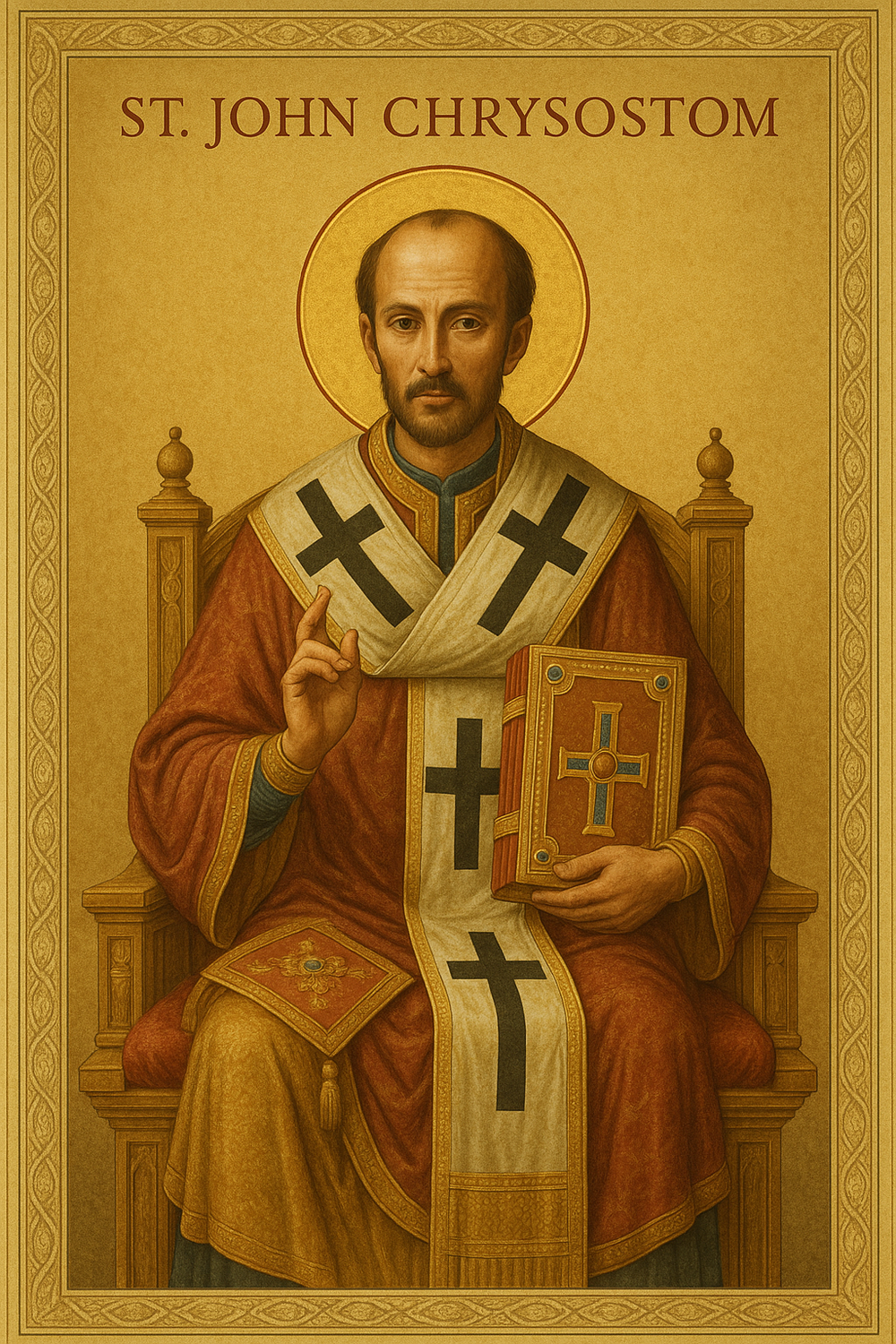
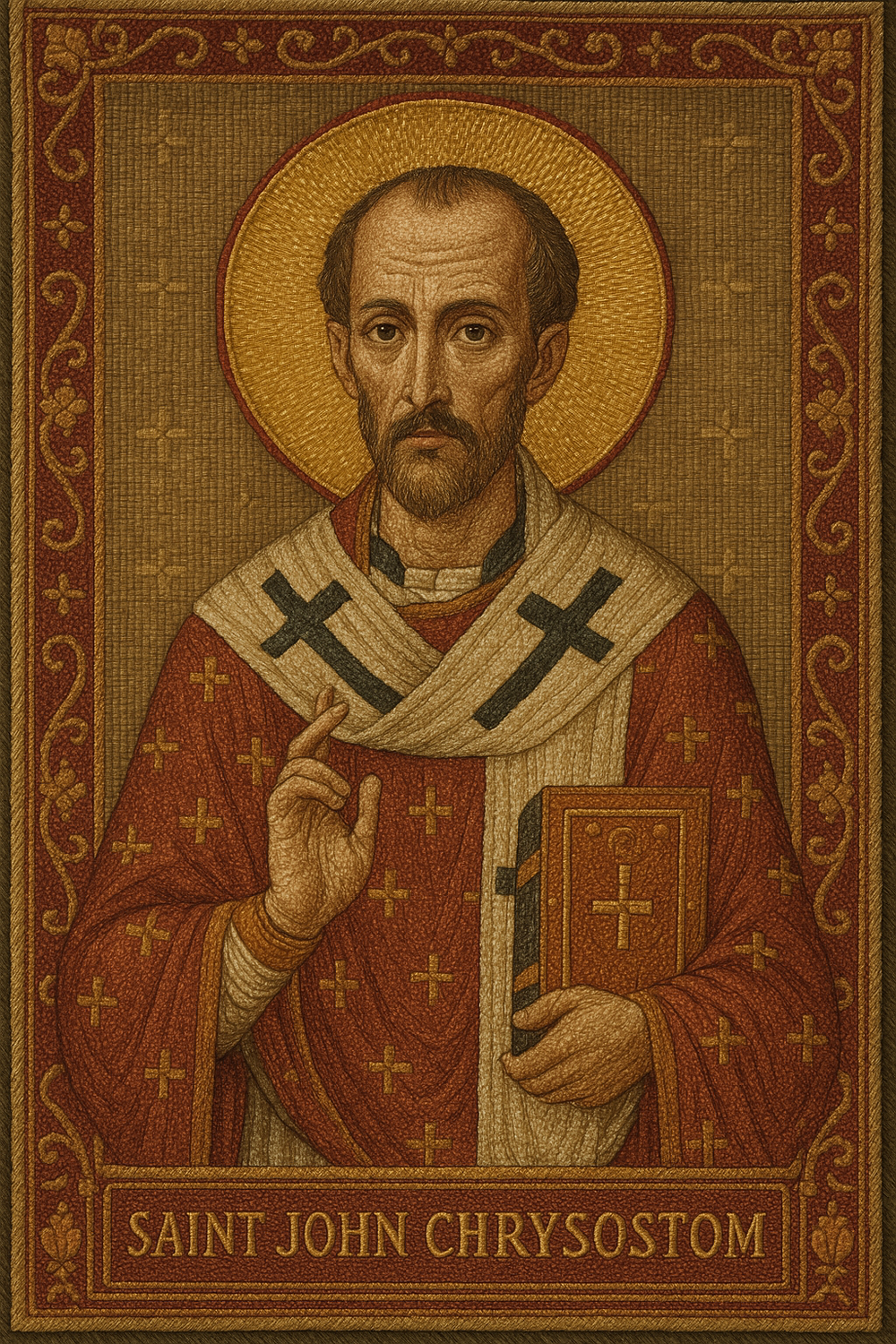
The Byzantine liturgy was originally composed in Greek. The Divine Liturgy of Saint John Chrysostom — the standard liturgy celebrated by virtually all Byzantine-rite churches — was first celebrated in Greek in Constantinople in the late 4th and early 5th centuries. When other Byzantine churches translated the liturgy into Slavonic, Arabic, Romanian, Georgian, or other vernacular languages, they were adapting a liturgy that was originally Greek. The Greek Byzantine Catholic Church alone celebrates it in the language in which it was first composed.
| Feature | Greek Byzantine Catholic Practice |
|---|---|
| Liturgical Languages | Koine Greek and Modern Greek |
| Divine Liturgy | Liturgy of Saint John Chrysostom (standard); Saint Basil (great feasts & Lent); Pre-Sanctified Gifts (Lent weekdays) |
| Eucharistic Bread | Leavened prosphora (not unleavened wafers) |
| Communion | Both kinds administered by spoon (intinction) |
| Clergy | In practice, all current priests are celibate; Eastern canonical tradition permits married men to be ordained |
| Filioque | Not inserted in the Nicene Creed (preserving the original Greek text) |
| Easter Calendar | Since 1968, calculated by Julian calendar (coinciding with Orthodox Easter) |
| Cathedral | Holy Trinity Cathedral, Athens (completed 1962) |
| Relationship with Rome | Full communion; recognizes papal primacy; governed by Code of Canons of the Eastern Churches (CCEO) |
| Notable Historical Figures | Cardinal Bessarion, Constantine XI Palaiologos (last Byzantine Emperor), Isidore of Kiev, Gregory III of Constantinople |
A distinctive feature of the church’s self-understanding is its explicitly ecumenical orientation — not as a barrier to ecumenism but as a demonstration of it. The Greek Byzantine Catholic Church does not regard itself as an alternative to the Greek Orthodox Church but as a bridge toward its reunion with Rome. Every Divine Liturgy celebrated in the Holy Trinity Cathedral is, in a sense, an argument: that the Byzantine tradition and Catholic communion are not incompatible, that the choice between East and West need not be made, that the dream of Bessarion at Florence — “What justification will we have before God for our division?” — is still worth pursuing. The differences between the Byzantine Divine Liturgy and the Roman Catholic Mass illuminate why this claim carries such weight.
Greek Byzantine Catholic Prayer Cards
The Eastern Church carries handcrafted prayer cards for the Greek Byzantine Catholic tradition — each one made by hand and prayed over throughout the creation process in Austin, Texas. If you are Greek Byzantine Catholic, or drawn to this tradition through its remarkable history, these cards are made for you.
Frequently Asked Questions
Explore the Eastern Catholic World
The Greek Byzantine Catholic Church is one of many ancient traditions in the family of Eastern Catholic churches. Explore their histories and distinctive traditions.
Melkite Greek Catholic Church
The Arabic-speaking Byzantine Catholics of Antioch — millions strong in the Middle East and diaspora, in full union with Rome since 1724.
Read the history →Ukrainian Greek Catholic Church
The largest Eastern Catholic church — its history of persecution under Soviet communism and its survival as a witness to faith.
Read the history →Hungarian Greek Catholic Church
The Byzantine Catholics of the Carpathian Mountains — their remarkable history from the Union of Uzhhorod to the modern metropolitanate.
Read the history →Bulgarian Greek Catholic Church
From Tsar Boris to the Eparchy of Saint John XXIII — the Byzantine Catholics of Bulgaria and their century of perseverance.
Read the history →What Is Byzantine Catholic?
A complete introduction to the Byzantine Catholic tradition — what it means to be fully Eastern and fully in communion with Rome.
Read the guide →Exploring Eastern Catholic Churches
A guide to the full family of Eastern Catholic churches — their rites, languages, histories, and places in the Catholic communion.
Read the guide →Six thousand people in Athens and Giannitsa, celebrating the Divine Liturgy in the oldest Christian language, in communion with Rome, asking the question Bessarion asked at Florence in 1439. “What justification will we have before God for an evil as great as our division?” The Greek Byzantine Catholic Church’s answer is: this one. Come and see. The dream is still alive.
Browse Greek Byzantine Catholic Prayer Cards → Free Eastern Christian Marriage Books →As an Amazon Associate, The Eastern Church earns from qualifying purchases.