The Eucharist and the Eternal Sacrifice of Christ: The Cross, Eternity, and the Mystery of the Eucharist - Full Book Free
The Eucharist and the
Eternal Sacrifice of Christ
The Cross, Eternity, and the Mystery of the Eucharist
A Gift to All Who Seek to Understand the Eucharist
This book was written not to explain the Eucharist away, but to stand in awe of it. It exists for every Christian who has sensed that the Eucharist is more than a symbol or a remembrance — and wants to understand why the Church has always spoken of it with such gravity, such reverence, and such uncompromising clarity. It is offered here, completely free.
If you would like a physical copy — to read slowly, annotate in the margins, share with a study group, or work through in your own time — it is available on Amazon. The physical edition is ideal for personal theological study, parish reading groups, or anyone who wants to sit with these reflections away from a screen.
📖 Get the Physical Copy on AmazonTwo free resources for couples seeking a Christ-centered marriage: Intentional Love (a Catholic 8-week workbook) and The Marriage Habit (a 30-day guide to building daily habits of love) — both available to read free at The Eastern Church.
Why This Book Was Written
The Eucharist is not difficult for people to understand because it is unclear. From the start, we have always been very clear on exactly what and Who the Eucharist is. It is difficult not because it is unclear, but because it is real.
From the beginning, the Church has spoken plainly about what the Eucharist is. It is the Body and Blood of our Lord and Savior, Jesus Christ, the Son of the Heavenly Father, the Most High God. It is not symbolic. It is not a representation. It is not a reminder. It is our Lord Jesus Christ Himself, truly present and truly received by the faithful in the Eucharist. This confession has remained the immovable center of the Church’s life, even as the languages used to describe it have shifted through the centuries.
Just as steady is the Church’s refusal to tame this mystery or force it into something we can control. It has never sought an explanation for Christ’s presence that would ultimately explain the mystery away. The Cross is not an object to be taken apart and analyzed; to dissect the sacrifice is to lose the heart of the gift. Instead, the Church directs our gaze elsewhere, teaching us how to stand before what is given, how to receive it with reverence, and how to let our entire lives become a response to it.
The aim of this book is to remain within that same ancient tradition, not to explain the mystery away, but to stand in awe of the mystery.
This book does not attempt to explain the Eucharist away, nor does it seek to define what the Church has purposefully left undefined. There is no desire here to make this mystery feel safer or to shrink it down to fit the narrow expectations of modern thought. Instead, these pages lean into the mystery, not with the intent to control it, but with the humble aim of honoring it as it truly is.
Christians whose ways of worship are through apostolic succession confess that the sacrifice of the Cross occurred once for all. They also confess that the Eucharist is a true participation in the very moment of the sacrifice on the Cross. They do not say that Christ is crucified again, and they do not say that the Cross is merely remembered. This care in language is born of necessity, for they are describing a mystery that is not a metaphor, but a physical reality. These confessions are not poetic expressions. They are statements the Church has guarded with great care, precisely because they cannot be flattened into simple categories without distortion.
A single conviction anchors everything written in these pages. The Eucharist is the real presence of our Lord and Savior Jesus Christ; when the Church receives it, the faithful are not merely recalling a past event, but are drawn into the reality of the sacrifice itself. Because God is not bound by time, the self-offering of Christ is never sealed away in the past. Instead, the faithful encounter Christ in the fullness of His offering—a sacrifice that already holds the knowledge of every sin committed and every mercy bestowed. The Cross is finished, but it is never absent. The Church stands forever at its foot, and in that eternal moment of offering, the faithful are given the profound honor of receiving Him there.
This truth has always lived first in the Church’s prayer, long before it was ever captured in text. In the liturgy, both East and West speak of what is given today, of what is offered now, and of what remains an eternal reality. The Church offers no apology for this language, nor does it attempt to soften its impact. It speaks this way quite simply because she knows it to be true.
For this reason, this book relies on Scripture, the early Church Fathers, and the shared apostolic inheritance of the Church before the schism. It does not enter later debates where language and emphasis diverge. It remains with what Catholic and Orthodox Christians have always confessed together. Rather than avoiding difficulty, these pages seek to remain anchored in the Eucharistic mystery as it was shared before our divisions began.
In the final chapters, we look at visible signs such as Eucharistic miracles and relics. We do not use these as tools of argument or absolute proof, for the Church has never treated them as such. Instead, we see them as quiet witnesses allowed by God, physical signs allowed by God that direct our attention back to the central mystery held by the Universal Church from the beginning.
This book does not try to untangle the later theological debates or the different rules that grew as the Church spread through the centuries. Instead, it speaks from an older, shared language—the inheritance of Scripture and the early Fathers. This is the place where East and West confessed the same faith before our languages began to diverge. These reflections are not meant to replace the actual life of the Church, nor are they a private theory. They are simply a way of standing before what the Church has always received. Long before our definitions became rigid, Saint Ignatius of Antioch called the Eucharist 'the flesh of our Savior,' a mystery to be approached with awe. I invite you to read this within the worship of your own tradition, where this mystery is not just a thought, but a gift lived every day.
The Claim This Book Makes
At the center of our faith stands the Cross of our Lord and Savior Jesus Christ. We confess that this sacrifice occurred once for all, that it was completed in history, and that it accomplished the redemption of the world. At the same time, we confess something equally bold. This same sacrifice is not sealed away in the past. In the Eucharist, we do not merely remember what Christ did. We physically encounter Him in the moment of the Cross.
This book is written from a single, steady conviction. The Eucharist is the real, physical, and literal presence of Jesus Christ. When we receive it, we are not merely looking back at the sacrifice of the Cross as an event lost to history. Instead, we are brought into the actual reality of that sacrifice, at the exact moment in time it happened. This does not happen because time is being reversed or because the event is being repeated. Rather, it happens because what was offered in that moment stands eternally present before God and His cosmic power. This is no metaphor, or is it just emotional language meant to stir the heart. It is a literal claim rooted in the ancient way the Church understands God, time, and the saving work of Christ.
God is not subject to time as creation is subject to time. He created time while He stands outside of it. Scripture reveals God as eternal, unchanging, and present to all moments at once. The saving work of Christ, offered by the eternal Son to the Eternal Father, is not confined to a single point in time in the same way human created events are confined. The Cross occurred in history, but it is not limited by history. It was an act that touched all time, all creation, and all reality. Now and forever.
The Church has always spoken with this level of conviction, even while choosing her words with extreme care. We are firm in confessing that Christ is not crucified again, yet we just as firmly refuse to call the Eucharist a mere symbolic remembrance. Instead, we use words like participation, communion, and presence. These terms were not chosen by accident; they were selected to protect the reality of our faith. They allow us to speak of what is true without trying to dismantle a mystery that cannot be reduced without being lost entirely.
The Gospels themselves point toward the cosmic scope of the Cross. As recorded in the Gospel of Matthew, darkness fell over the land from the sixth hour until the ninth. This darkness was not a natural eclipse. The Crucifixion took place during Passover, at the full moon, when such an event is impossible. From the beginning, we have understood this not as an astronomical curiosity, but as a sign. Reality itself stood as a witness to what was taking place. The death of Christ was not a private execution or a local tragedy. It was a cosmic event. The order of creation responded because the Creator was offering Himself within it. Creation did not simply observe the Cross. It was forever changed by it.
If the Cross truly touched all of reality, then it cannot be treated as something that exists only behind us in time. And if the Eucharist is truly the Body and Blood of Christ, then receiving it cannot be understood as symbolic participation to remember a moment in the distant past. We encounter Christ in His self-offering for the sins of the world, an offering eternally present to God and complete once for all. That offering already contained the full knowledge of every sin that would ever be committed and every mercy that would ever be given. The Cross is finished, but it is not absent.
This understanding was never a later theological invention; it has always lived first in the heart of our prayer. In the liturgy, the voices of both East and West speak of a gift given today, an offering made now, and a reality that remains always. This is not a matter of poetic excess or empty metaphor. Every word is deliberate. The Church speaks in the present tense quite simply because she knows these things to be true.
This book makes no attempt to explain how these things are possible, nor does it seek to analyze the mechanics of sacrifice or the nature of eternity. Instead, it asks a different and perhaps more vital question: what if our words have always been more accurate than we realize? What if the Church’s language has always operated on the assumption that the Cross stands outside of time, and that the Eucharist literally places us before Christ in the very moment of His self-offering?
The chapters that follow explore this question carefully and within the boundaries of what Catholic and Orthodox Christians already confess together. Scripture and the shared inheritance of the early Church provide the foundation. Later debates are not entered. Visible signs, including the Eucharistic miracles that point directly to the moment of the Cross, and directly to the Glory of God, are addressed only after the theological ground has been firmly laid. They are treated as witnesses, not proofs.
When we receive the Eucharist, we are receiving the real Body and Blood of Jesus Christ. We are not receiving a symbol, and we are not only receiving the effects of something that happened long ago. We are receiving Christ Himself in the very moment of His self-offering on the Cross. The sacrifice of Christ is finished and complete, yet it is not confined to the past. Because God is not bound by time, the offering of the Son stands present to every moment throughout time and space. When we receive the Eucharist, we are brought into that moment, not by imagination, but in physical reality. When we confess that during our service that Heaven and Earth meet and come together, that the Angels are serving at the altar with the priests, that even though we may not have eyes to see, this is very literal.
God knew from the first moment of creation every sin that Christ would bear when He offered Himself. Nothing was hidden from Him. Every sin of every person, including sins not yet committed within human history, was present to that sacrifice. In this sense, the Cross already contained the full weight of human sin when it occurred. It does not change, and it does not repeat.
Even so, we still live within the boundaries of time, where we must choose how we will live and whether we will turn toward sin. Our sins are real acts, freely chosen, yet they are among the very burdens Christ carried. When we fall, we are not causing Him to suffer a second time; rather, we are choosing to hand ourselves over to what He has already borne for us. When we resist temptation, we are refusing to add to that weight. A sin freely avoided is a sin He did not need to carry, even though He bore the full weight of every sin in perfect, eternal knowledge.
None of this diminishes the Cross; instead, it reveals its true weight. When we receive the Eucharist, we stand at the foot of the Cross at the very moment our sins were known, taken up, and forgiven. How we live matters deeply, not because the sacrifice is incomplete, but because it was completed with each of us fully known.
This book argues that a person receiving the Eucharist is doing far more than recalling what Christ once did or receiving the effects of a past event. They are encountering Christ in the actual moment He bore human sin. Because God is not bound by time, the moment Christ carried the sins of the world is not locked in the history books; it stands eternally present before God and all creation. In the Eucharist, the faithful are brought into communion with Christ in that same moment. There, their sins are fully known, received by Him, and taken up in His one, finished sacrifice. Christ is not crucified again, nor is His suffering repeated. The act is complete, yet it remains eternally present. In those rare instances where miracles have been permitted, the evidence points back to this reality. We find the same blood type across centuries, matching the Shroud of Turin, and human heart tissue under extreme stress, consistent with the physical agony of the Cross.


Before we can speak of the Cross or the Eucharist, we must first speak of God. This is not because God requires our explanation, but because we so often carry hidden assumptions about Him. Many of the struggles people have with the Eucharist do not actually stem from the mystery itself; instead, they grow from a quiet habit of imagining God as if He were bound by time in the same way we are. To better understand the Eucharist, we need to make sure we do not have God confined in a box in our minds, but instead understand He is bigger than any box, including a box made of time and space.
We confess the eternal God, the living God, the God who is the Ancient of Days. Scripture does not present God as moving from moment to moment, waiting for events to unfold or reacting to what has already happened. God reveals Himself as “I AM.” Not as one who was, not as one who will be, but as the One who is. This is not a poetic title. It is a revelation of how God exists.
When we say that God is eternal, we are not saying that God has existed for a very long time. We are saying that God is not measured by time at all. Time belongs to creation. God does not live within it. All moments are present to Him. Nothing comes as a surprise. Nothing is forgotten. Nothing fades into the past.
This is the reason the Universal Church confesses that God does not change. Change is the mark of created beings who must move from a state of lack toward fulfillment. God, however, lacks nothing. He is fullness itself. He does not evolve into something He was not before, nor does He grow, diminish, or adapt to circumstances. He simply is, existing fully and eternally in a way that our minds can hardly grasp.
Because God is eternal, His knowledge is not something He gains. He does not look ahead to see what will happen. He does not look back to remember what has already occurred. All things are immediately present to Him. Past and future are categories that belong to us, not to God.
This truth matters deeply for how we understand salvation. When God acts within time, that action is not lost to Him once it has occurred, nor does it recede into a distant past. What God does in history remains present to Him eternally. This does not mean the action repeats; it means the action abides. It remains what it is simply because God remains who He is.
We see this already in the Incarnation. When the Son of God took flesh, He entered time without ceasing to be eternal. He did not leave eternity behind, but rather brought eternity into time. While He lived a human life, suffered, died, and rose again within the limits of history, none of this altered His divine nature. The eternal Word did not become temporal; instead, He united time to Himself.
The Cross must be understood in the same way.
The Crucifixion occurred at a specific moment in history. It took place under Pontius Pilate on a specific day in time. We do not deny this reality, nor do we attempt to spiritualize it away. Yet we also refuse to treat it as a moment that has simply passed and is now absent. Because the One who offered Himself on the Cross is eternal, His act of self-offering cannot be confined in the same way that created, human actions are confined.
This does not mean that Christ is suffering endlessly. The suffering belongs to a moment in time. The offering belongs to all eternity. What Christ gave on the Cross remains what He has given. His love did not expire when His pain ended.
This is precisely why Scripture can speak of the Lamb slain from the foundation of the world without falling into contradiction. It is why we can confess that Christ offered Himself once for all, yet simultaneously speak of His offering as eternally present and effective. Eternity does not erase history; instead, it gathers it into the presence of God. The moment of the Cross is not deleted by the passage of time, but is held forever in the divine Now.
When we say that the Cross stands outside of time, we are not introducing a new idea; we are simply taking seriously what we already confess about the nature of God. If God is eternal, then the saving work He accomplished in the flesh cannot be treated as a mere object of the past that we point to from a distance. Instead, it must be a reality into which we ourselves can be brought.
This is the holy ground upon which the Eucharist rests.
Without this, the Eucharist can only be reduced to memory or symbol. With this, the language of the Church becomes clear. The Eucharist is not a reenactment. It is not a repetition. It is not a mental return to something absent. It is communion with what remains present to the Living God.
The Church has never attempted to explain how eternity touches time. It has never needed to. It simply confesses that it does. It teaches us how to stand before what is given, how to receive it, and how to live in response to it.
Only when this is understood can we speak rightly about the Cross, the Eucharist, and what it means to stand at the foot of an offering that is finished, eternal, and still present.
Before the Church speaks of the Cross, and before she dares to speak of the Eucharist, she first teaches the faithful how to speak at all. Not every truth is handled in the same way, for not every reality can be approached with the same kind of language. Some things can be described directly, measured, and defined without loss, but other things can only be guarded. The mystery of God belongs to the latter.
From the beginning, the Church has known that careless speech can do real harm. This is not because words possess an inherent power of their own, but because they shape how the faithful approach the gifts they are given. When language becomes overly precise in matters that exceed human comprehension, it does not clarify the mystery; it only obscures it. The Church learned early on that to explain too much is often to explain incorrectly. Silence, restraint, and careful wording are not evasions of the truth; they are acts of fidelity to it.
This is why the Church has never attempted to describe God exhaustively. Scripture itself models this restraint, as God reveals Himself not through a definition, but through the declaration 'I AM.' When the prophets speak, they use image, paradox, and a sense of reverent distance. Even when Moses asks to see God’s glory, he is permitted only a glimpse, and even that is mediated. Revelation is always given in the measure it can be received, never in a way that overwhelms the soul.
This same posture governs how the Church speaks of the saving work of our Lord and Savior Jesus Christ. The Cross is proclaimed boldly, yet it is never dissected. The Church confesses what has been done without claiming to comprehend the way eternity holds it. She names the truth, but she refuses to flatten it. This is not a matter of intellectual caution; it is an act of spiritual sobriety.
The apostolic Christian tradition has always preserved this instinct clearly. It speaks of God primarily by acknowledging the limits of our own understanding, defining Him not by comparing Him to ourselves, but by recognizing how different He is from anything we know. When we say God is infinite, we are really saying He is not limited. When we call Him immortal, we are saying He is not subject to death. By clearing away these human boundaries, the Church does not move further from God; instead, she draws closer to the truth of His overwhelming presence. But this restraint is not unique to the East. The West, too, has guarded the mystery, even when developing careful theological language. When the Church defines, it does so to protect reality from reduction, not to replace mystery with explanation. Doctrine is a boundary, not a blueprint.
This is especially true when the Church speaks of the Eucharist. From the earliest centuries, it has confessed the real presence of Christ without attempting to explain the exact way that presence occurs. It named what is given, rather than the process by which it is given. When more precise language developed in later years, it did so defensively, as a way to protect the truth from being denied rather than a way to make it fully transparent. Even then, the Church resisted the temptation to turn a holy mystery into a mere method.
This restraint is not accidental. The Church knows that the Eucharist is not an object to be examined, but a Person to be received. Language that encourages analysis over reverence subtly reshapes the posture of the faithful. What is meant to be encountered becomes something to be evaluated. What is meant to inspire fear of God becomes something manageable. The Church speaks carefully because it knows what is at stake.
The same discipline governs how the Church speaks about time, eternity, and sacrifice. When the Church says that Christ was offered once for all, it does not mean that the Cross is absent. When it says that the Eucharist is a true participation in that sacrifice, it does not mean that Christ suffers again. These statements are held together without explanation because explanation would demand an explanation that does not belong to us still in the physical world.
The Church does not resolve the tension between “once” and “always.” It inhabits it. It prays within it. It teaches the faithful how to live within it. This is not an ambiguity. It is obedience to reality as it has been revealed.
Modern habits of thought often struggle here. We are trained to believe that clarity requires exhaustiveness and that true understanding requires disassembly. The Church, however, has never shared this assumption. It has always known that mystery is not the absence of truth; rather, it is the presence of a truth too full to be contained by human minds.
This is why the Church has never been embarrassed by mystery. It has never treated it as a problem to be solved. Mystery is not what remains after explanation fails. It is what remains because an explanation is insufficient. The Eucharist is not mysterious because we lack information. It is mysterious because what is given exceeds the limits created for human understanding.
To speak carefully is not to speak timidly. The Church speaks boldly where revelation has spoken, confessing the real presence of Christ without qualification and the finality of the Cross without hesitation. What the Church refuses to do is collapse these truths into something smaller than they are by pretending to see what has not been shown.
This discipline prepares us for what follows. Before we can speak rightly about the Cross as an eternal offering, and before we can understand what it means to participate in that offering through the Eucharist, we must first learn to respect the limits of language. Not because the truth is fragile, but because we are.
The Church teaches us how to stand before mystery without trying to master it. Only by adopting this posture can we begin to see why the Cross, once offered, is not absent. We begin to understand why eternity does not erase history, and why the Eucharist is neither a repetition nor a mere memory, but a true encounter.
What follows does not abandon this restraint. It depends upon it.
When the Church confesses that Christ was offered once for all, it is not making a poetic claim. It is stating something precise, guarded, and absolute. The sacrifice of the Cross occurred a single time in history. It is not repeated, renewed, or returned to as if it were incomplete. Christ does not suffer again, nor is He offered again. This confession is never softened in any area of the Church’s life; instead, it is proclaimed plainly in Scripture, affirmed consistently in doctrine, and preserved carefully in prayer.
At the same time, the Church has never spoken of this once-for-all offering as though it were fragile or temporary. It has never treated the Cross as something that loses its reality once the moment of suffering passes. The finality of the sacrifice does not mean its disappearance; rather, the Cross is finished, but it is not undone. It is complete, but it is not absent.
This is where modern habits of thought often struggle. We tend to assume that what occurs once must then belong entirely to the past, sealed off from the present and inaccessible except by memory. This assumption, however, comes from how created events behave within time, not from how divine action is held within eternity. The Church has never applied ordinary human logic to the saving work of Christ without remainder, for it has always been known that something miraculous is taking place here.
Scripture itself insists on holding both truths together. It does not allow us to choose between the historical reality of the Cross and its eternal presence, nor does it present them as a contradiction to be solved. Instead, the Biblical witness presents the sacrifice of Christ as an event that occurred once in our time, yet remains forever before the Father. To let go of one is to lose the other; to emphasize the 'once' at the expense of the 'always' is to turn a living mystery into a dead historical fact.
The Church has never tried to explain how this can be so.It has never attempted to diagram the relationship between the historical moment of the Crucifixion and its abiding reality before God. It simply confesses what has been revealed. The offering is complete. The offering remains. These are not competing claims. They describe the same reality from different angles.
What Christ offers on the Cross is not merely a moment of pain. It is a self-offering of love. Suffering belongs to time. Love does not. The suffering of Christ truly ended. His body is no longer subject to death. But the love with which He offered Himself does not pass away. Love does not diminish when the moment of sacrifice concludes. What is given in love remains given.
This is why the Church speaks of the Cross with such gravity.It does not treat it as an event whose meaning must be constantly reconstructed. It does not speak as though its power depends on our remembering it correctly. The Cross stands as what it is because Christ offered Himself freely and fully. Its effectiveness does not depend on human recollection. It depends on divine faithfulness.
When Christ moved toward the Cross, He did not do so blindly, nor did He discover the weight of human sin only as it unfolded. He offered Himself with full knowledge of exactly what He would endure. Nothing was hidden from Him; no betrayal surprised Him, and no failure of love emerged later to catch Him unaware. The offering was made in the full light of truth, which is precisely why it could be made once for all. Nothing needed to be added later, and nothing required correction or supplementation.
This does not mean that human history ceased to matter once the Cross occurred; rather, it means that human history was gathered into that offering. Our lives still unfold within the constraints of time. We still choose, we still sin, and we still repent. Yet none of this stands outside the knowledge with which Christ offered Himself. The Cross does not wait upon future information, for it already contains the full truth of everything it bears.
The Church has always been careful here. It does not say that sin is unreal because it has been borne. It does not say that human freedom is meaningless because God foreknows. It holds these realities together without collapsing them into one another. The Cross reveals the seriousness of sin precisely because it reveals the cost of the love God has for us. Nothing trivial could ever require such an offering.
For this reason, the Cross cannot be treated as a closed chapter of history. It is not an artifact of the past, studied from a safe distance. It is the axis upon which salvation turns. It is the place where God has acted definitively within time in a way that is not undone by time’s passing. The Church does not live after the Cross as though it were finished business.It lives under it, shaped by it, and judged by it.
To confess that Christ was offered once for all is not to confine the Cross to the past. It is to confess that nothing more is needed and nothing more will be given. The offering lacks nothing. It does not expire. It does not diminish. It stands complete, sufficient, and wholly effective.
Only when this is understood can we begin to speak rightly about how this once-for-all offering relates to eternity, and why the Church dares to say that what was completed in history remains present before God. The Cross is finished. And yet it stands.
What follows does not soften this claim. It deepens it.
If the Church confesses that Christ was offered once for all, it must also confess that this offering is not lost to the past. The finality of the Cross does not imply its disappearance. What was accomplished in history does not cease to exist simply because the moment has passed. This distinction is essential, and it can only be understood if we are willing to think carefully about the difference between created action and divine action.
Created actions unfold within time. They begin, they occur, and they conclude. Once completed, they recede into the past and remain accessible only through memory, record, or consequence. Human actions do not abide by themselves. They leave traces, but they do not remain present as actions. Time carries them away.
Divine action does not behave this way.
When God acts within creation, He does so without ceasing to be eternal. His actions are not absorbed into time and then lost to Him. What God does in history remains present to Him eternally, not as a repeated act, but as an abiding reality. This is not because time is ignored, but because time is held. God does not move through moments. Moments are present to Him.
The Cross occurred in history. The Church does not spiritualize this away. Christ was crucified under Pontius Pilate, at a particular hour, on a particular day. The suffering was real. The death was real. The body was laid in the tomb. These are not symbols. They are events.
And yet, the One who offered Himself in that moment is the eternal Son.
Because Christ is eternal, His self-offering cannot be treated as a purely temporal action that vanishes once completed. The suffering ended. The offering did not expire. What was given in love remains given. Eternity does not erase history. It gathers it. Long before later distinctions hardened, Saint Irenaeus of Lyons spoke of this same reality when he taught that the Eucharist unites what is earthly and what is heavenly, and that through what is offered, creation itself is taken up and destined for resurrection. The saving work of Christ does not bypass matter, nor does it abandon history. It heals, gathers, and glorifies what God has made.
This is why the Church speaks of the Cross with both finality and immediacy. It does not suggest that Christ is still suffering, nor that the sacrifice is ongoing in the sense of a repetition; yet, it refuses to speak as though the Cross were sealed away in the past, detached from the present life of God. The Cross stands before the Father as what it truly is: the full self-offering of the Son, complete, sufficient, and eternally present.
The language of Scripture reflects this tension without resolving it. Christ dies once. And yet He is spoken of as eternally offered. The Lamb is slain, and yet He stands. The sacrifice is finished, and yet it is effective now. Scripture does not attempt to reconcile these statements by explanation. It presents them together as truth.
The Church has followed the same path, never trying to make eternity intelligible by reducing it to duration. Eternity is not endless time, nor is it time extended or perfected; rather, eternity is the mode of God’s own life. To say that the Cross stands within eternity is not to say that it lasts a very long time. It is to say that it is fully present to God, without loss, without decay, and without distance.
This distinction matters deeply. If the Cross were only a past event, its relationship to the present would depend entirely on memory, interpretation, or psychological engagement. Its power would be mediated by our own recollection. The Church, however, has never spoken this way. It speaks instead as though the Cross retains its reality independent of our awareness. The Cross does not depend on us to remain real; it depends on God.
At the same time, the Church does not collapse eternity into immediacy. It does not claim that all moments are interchangeable or that history is irrelevant; rather, it maintains that what happened on the Cross happened once. The Incarnation occurred at a specific time, and salvation unfolded within history. Eternity does not flatten time; it holds it without erasing its order.
This is why the Church resists both extremes. It does not treat the Cross as a distant memory, nor does it treat it as an endlessly repeated act. It confesses something more difficult and more faithful: that the Cross is finished and yet present, completed and yet abiding.
To speak this way requires restraint. It requires refusing the temptation to explain how eternity relates to time in mechanical terms. The Church does not offer diagrams where God has given mystery. It teaches the faithful instead how to stand before what has been revealed without attempting to master it.
The Cross stands at the center of history, not because it can be revisited, but because it cannot be escaped. It is the definitive act by which God has acted within time, and it remains definitive because it is held within eternity. Nothing precedes it. Nothing surpasses it. Nothing corrects it.
Only when this is understood can we begin to ask how human beings, who live within time, may encounter what is eternally present to God. The Church does not rush to answer this question. It first insists that the Cross be understood as both finished and abiding, not as a puzzle to be solved, but as a reality to be received.
What follows will not diminish the finality of the Cross. It will not soften the seriousness of time. It will move forward only because this foundation has been laid.
The Cross is not behind us. It is not repeated before us. It stands forever.


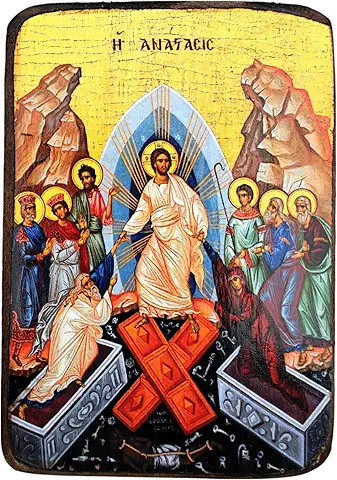
Before the Cross is raised in history, the Gospels present an event that does not explain what is to come, but reveals how it must be seen. Jesus takes Peter, James, and John up the mountain, and there He is transfigured before them. His face shines. His garments become radiant. What was revealed is not something new in Christ, but something ordinarily hidden from human sight.
The Church has never understood the Transfiguration as a temporary change in Jesus. Christ does not become something He was not. Rather, the veil is lifted. The glory that belongs to Him eternally is permitted to be seen, not because it can be grasped, but because it must be witnessed. The disciples are not given understanding. They are given eyes to see.
This distinction matters. The Transfiguration is not an explanation of Christ’s identity. It is a revelation of His reality. The light that shines from Him is not temporary. It does not descend upon Him from elsewhere. It proceeds from Him because He is who He is. The Church has always insisted on this point. What is revealed on the mountain is not added glory, but unveiled glory.
Standing with Christ are Moses and Elijah. The Law and the Prophets appear not as ideas recalled from the past, but as persons present. Scripture does not explain how this meeting occurs, and the Church has never attempted to supply what is not given. What matters is that time does not prevent their presence. Those who belong to God are not confined to the moment in which they lived when they stand before Him.
This moment quietly reshapes how the faithful are meant to understand history. Moses lived centuries before the Incarnation. Elijah was taken up long before the Passion. And yet they stand with Christ, speaking with Him. The past is not sealed away. It is gathered. The future is not inaccessible. It is already known. All stands before God without confusion or collapse.
The Transfiguration does not remove the coming suffering, nor does it replace the Cross. In fact, the Gospels are clear that Christ speaks with Moses and Elijah about the exodus He is about to endure. Glory does not distract from sacrifice; instead, it reveals its depth. The One who will be humiliated is the One who is eternally glorious. The Church has always insisted that these truths must never be separated.
This revelation is given not to comfort the disciples, but to steady them. They are permitted to see glory so that they will not misunderstand the Cross when it comes. What will soon appear as defeat is not failure. What will appear as weakness is not loss. The Transfiguration teaches the Church how to look without concluding too quickly.
Peter’s desire to remain on the mountain is understandable, and the Church has never ridiculed it. He sees something true and wishes to remain with it. But the voice from the cloud does not invite explanation or preservation. It commands attention. “This is my beloved Son. Listen to Him.” The disciples are not told to stay. They are told to follow.
This moment reveals something essential about how God gives Himself. Revelation is not given so that it can be controlled or prolonged. It is given so that it can be trusted. The disciples do not carry the light down the mountain. They carry the memory of what was shown. The Church does the same.
The Transfiguration is not a puzzle. It is not a spectacle. It is a disclosure. Christ allows His glory to be seen so that the faithful will know that what unfolds in time does not exhaust what is real. The Cross will be real. The suffering will be real. But they will not tell the whole story.
For the Church, this moment becomes a key. It teaches how to speak about Christ without reducing Him to what can be observed. It teaches how to hold together suffering and glory without forcing a resolution. It teaches that God reveals what is necessary, not what is manageable.
Only with this vision in place can the Church later speak rightly about how what is eternal touches what is temporal. The Transfiguration does not explain eternity. It reveals that eternity is already present, even when it is hidden.
What follows will not leave the mountain behind. It will carry its light quietly forward, not as an answer, but as a way of seeing.
The presence of Moses and Elijah on the mountain is not incidental. The Gospels do not include them as symbols or literary devices. They are named because they matter, and because their presence reveals something the Church must learn how to see.
Moses and Elijah do not stand beside Christ as mere representatives of ideas; they stand as persons. The Law and the Prophets are not recalled as ancient texts, but are present as lives gathered into the presence of God. Scripture does not tell us that the disciples remember Moses or imagine Elijah; it tells us that they are there, in person, showing a glimpse of the power over time and space our Lord Jesus Christ and His Father have.
This matters because it quietly overturns a purely chronological way of thinking about reality. Moses lived centuries before the Incarnation. Elijah was taken up long before the Cross. And yet neither time nor death prevents their presence with Christ. They were not summoned from the past. They were not projected forward. They stand where Christ stands because they belong to God.
The Church has always understood this moment as a revelation of how God holds His people. Those who belong to Him are not lost to time. They are not sealed away by history. They are present to Him, alive in Him, and capable of communion with what He is doing, even when it unfolds within time.
What Moses and Elijah speak with Christ about is also significant. They speak of what is to come. They speak of His suffering. The Cross has not yet occurred in history, and yet it is already the subject of conversation. This does not mean that the Cross happens early. It means that what unfolds in time is already fully known within the life of God.
Here again, the Church refuses to explain what Scripture reveals. It does not ask how Moses and Elijah can speak of something not yet completed in history.It receives the truth quietly: God’s saving work is not hidden from those who stand in His presence. What is future to us is not future to Him.
This moment also reveals something essential about presence itself. Moses and Elijah are not everywhere, nor have they faded into a distant, spiritual past. They are present where Christ is present. Having been fully alive in their own specific moments of history, they are now found standing with Christ in His.
The Church has always taken this seriously. Presence, in the biblical sense, is not mere awareness. It is participation. To be present to God is not to observe Him from a distance, but to stand before Him as one known and received. Moses and Elijah do not observe Christ’s glory. They share in the moment He permits to be revealed.
This sheds quiet light on how the Church later speaks about the saints. The saints are not memories preserved by devotion. They are living members of the Body, present to God, and capable of communion because God is capable of holding persons beyond time without dissolving them. The Transfiguration reveals this not as doctrine, but as fact.
At the same time, Moses and Elijah do not replace the disciples. Peter, James, and John remain themselves. They are not lifted out of time. They are not granted comprehension. They are permitted to see, and then they are led back down the mountain. Revelation does not remove them from their place in history. It prepares them to endure it.
This distinction is important. God does not gather all things into eternity by erasing difference. He gathers without flattening. Moses remains Moses. Elijah remains Elijah. The disciples remain disciples. Christ alone stands at the center. Presence does not collapse identity. It completes it.
The Church has always read this moment as a promise, but not an escape. It does not suggest that suffering can be bypassed. It reveals that suffering does not tell the whole truth. Those who belong to God are not confined to what can be seen unfolding in time. Their lives are held within a larger reality that remains hidden until God chooses to reveal it.
This understanding prepares the Church to speak carefully later about how communion with God is possible without leaving time behind. The Transfiguration does not instruct the faithful to seek visions. It teaches them how to trust what cannot yet be seen.
Moses and Elijah do not linger in the Gospel narrative. They appear, they speak, and they vanish. Scripture does not explain their departure. It does not need to. Their presence has already done its work. The disciples have seen that time does not govern God, that death does not sever communion, and that what belongs to God can stand present even when history has not yet caught up.
The Church carries this vision forward quietly. It does not attempt to recreate the mountain.It remembers what was shown.It allows it to shape how it understands presence, communion, and the way God gathers His people into what He is doing.
Only after this vision has been given can the Church begin to speak about how what is eternally present to God may be encountered by those who still live within time. The mountain does not explain this. It prepares the eyes to see it.
What follows does not abandon the mystery revealed here. It moves forward only because this vision has been granted, and because the Church has learned, slowly, how to receive it without trying to possess it.
When the Church turns to the Eucharist,it does not begin with explanation. It begins with words. Not its own words, but the words of Christ Himself. On the night He was betrayed, He took bread, gave thanks, broke it, and gave it to His disciples, saying, “This is my body.” Over the cup, He spoke again: “This is my blood.” The Church has never treated these words as unclear.
From the beginning, the Church received them as they were spoken. It did not soften them. It did not translate them into metaphor. It did not treat them as symbolic shorthand for something else. It received them as a declaration. Christ did not say, “This represents my body.” He did not say, “This reminds you of my blood.” He spoke plainly, this was not a parable and the Church has always believed that He meant what He said.
This belief did not arise from later theological development. It is present in the earliest Christian life. The faithful gathered not to recall Christ abstractly, but to receive Him. They worshiped what was given. They guarded it. They spoke of it with fear of God. The seriousness with which the Eucharist was treated long preceded any attempt to explain how it could be so.
Long before later theological language developed, Saint Cyril of Jerusalem instructed the newly baptized with the same directness and reverence. He warned them not to judge what they received by what their senses perceived, but to accept with full assurance that what appears as bread and wine is truly the Body and Blood of Christ. He did not offer theories or mechanisms. He assumed the reality of the gift and formed the posture of those who approached it, teaching them to receive not with curiosity, but with faith and fear of God.
The Church has always known that something decisive is happening here. Christ does not merely speak about His body and blood. He gives them. He does not point forward symbolically. He offers Himself. These words are not detached from the Cross. They are spoken in its shadow. The self-offering that will be completed in history is already being given sacramentally. The Church does not divide these moments.It receives them together.
This is why the Eucharist has never been treated as an idea. It is not a teaching to be grasped. It is a gift to be received. The Church has never placed the burden of comprehension on the faithful.It has placed the burden of reverence. To receive Christ literally is not first a matter of understanding. It is a matter of posture.
At the same time, the Church has always been careful with the language. It does not claim to see what is hidden. It does not describe what exceeds human sight. It confesses what has been given. When it says that the bread becomes the Body of Christ and the wine becomes His Blood, it is naming a reality, not explaining a process. The mystery remains what it is.
This careful restraint is not hesitation. It is fidelity. The Church knows that to over-explain the Eucharist is to risk turning encounter into analysis. The words of Christ are allowed to stand with their full force precisely because they are not reduced.
The Eucharist is therefore not received as something added to the Cross, nor as something detached from it. Christ does not give a different body or a different blood. He gives Himself. The One who speaks is the One who will offer Himself fully. The Church does not need to decide how these moments relate.It knows that they do.
For this reason, the Eucharist has always been surrounded by reverence. From the beginning, the faithful fasted before receiving. They examined themselves. They approached with fear and love. These practices were not imposed because the Eucharist was uncertain. They arose because it was known to be real.
The Church has never treated the Eucharist casually. Even when language varied between East and West, this seriousness remained constant. The faithful worshiped Christ present. They guarded what was given. They spoke carefully because they knew they were standing before something that could not be mastered.
“This is my body.” These words do not ask permission. They do not invite reinterpretation. They declare a reality that the Church receives in obedience. Christ gives Himself. The Church receives Him. Everything else follows from this.
The Church does not attempt to make these words safer.It allows them to remain unsettling. If Christ is truly present, then the Eucharist cannot be ordinary. If Christ gives Himself fully, then reception cannot be casual. The mystery does not threaten faith. It demands honesty.
Only after this confession is firmly held can the Church begin to speak about what it means to participate in what is given without repeating what has already been completed.It does not rush to that question.It first allows Christ’s words to stand.
What follows will not dilute this confession. It will depend entirely upon it.
When the Church speaks of the Eucharist as a true participation in the sacrifice of Christ, it does so carefully and deliberately. This language is not chosen to soften the reality of the Cross, nor to avoid its finality. It is chosen precisely to protect both truths at once: that Christ was offered once for all, and that this offering is not absent from the life of the Church.
The Church has never said that Christ is sacrificed again. It has never taught that the suffering of the Cross is repeated, extended, or re-enacted. The wounds of Christ are not reopened. His death is not prolonged. His offering is complete. To suggest otherwise would be to deny what Scripture proclaims and what the Church has guarded without compromise.
At the same time, the Church has never accepted the idea that the Eucharist is only a remembrance of something no longer present.It has consistently rejected any language that would turn the Cross into a distant object, accessed only by memory or imagination. Between repetition and reduction, the Church has chosen a different word: participation.
This word does not describe a mechanism. It does not explain how the eternal touches the temporal. It names a reality without dissecting it. Participation means that what is complete is not distant, and what is finished is not unavailable. It means that the faithful are not placed outside the saving work of Christ as observers, but are brought into relation with it as receivers.
The Church uses this language because it already belongs to how it speaks about God. To participate in God’s life has never meant to divide or multiply Him. It means to receive what is given without exhausting it. The life of God is not diminished by being shared. The offering of Christ is not diminished by being encountered.
This distinction matters deeply. If the Eucharist were a repetition, it would imply that the Cross lacked something. If it were only a remembrance, it would imply that the Cross no longer stands. The Church accepts neither implication.It confesses instead that the Cross is complete and that the faithful are given a real share in its reality, not by reenactment, but by communion.
The Church does not attempt to explain how this participation occurs. It has never needed to. Explanation would require mastery, and mastery does not belong to the faithful. What belongs to them is reception. The Church teaches the faithful how to approach, how to prepare, how to repent, and how to receive.It does not promise comprehension. It promises encounter.
This is why the Eucharist has always been treated with seriousness. If participation is real, then posture matters. Fasting, confession, and examination of conscience are not rituals layered on later. They arise naturally from the claim that what is received is Christ Himself, offered once for all and not abstracted from that offering. Participation is not casual. It is costly, not because it adds to the Cross, but because it places the faithful honestly before it.
The Church has always resisted language that would make the Eucharist safer than it is. It has refused to turn participation into metaphor, and it has refused to turn finality into distance. This language holds the faithful in tension, not to confuse them, but to keep them from false certainty. The Church knows that to domesticate the mystery is to lose the reality of the One who stands at the center of the Altar.
Participation does not mean control. It does not mean access on our terms. It means being drawn into what already is, without altering it and without standing apart from it. The faithful do not bring something new to the offering of Christ. They bring themselves, fully known, fully seen, and fully responsible for how they live in relation to what has been given.
The Church does not resolve this mystery. It leans into it.That it is not absent. The Church teaches us to do the same. Long before later distinctions hardened, St. John Chrysostom spoke in this same register when he reminded the faithful that what is offered upon the altar is not another sacrifice, but the very same offering of Christ, approached with fear and awe, as heaven and earth stand together and the Church is drawn into what has already been given.
Only after this can the Church begin to speak about how sin and forgiveness are encountered in light of what has already been completed.It does not rush there.It allows the weight of participation to settle first.
What follows does not undo the finality of the Cross. It reveals what it means to live honestly before it.

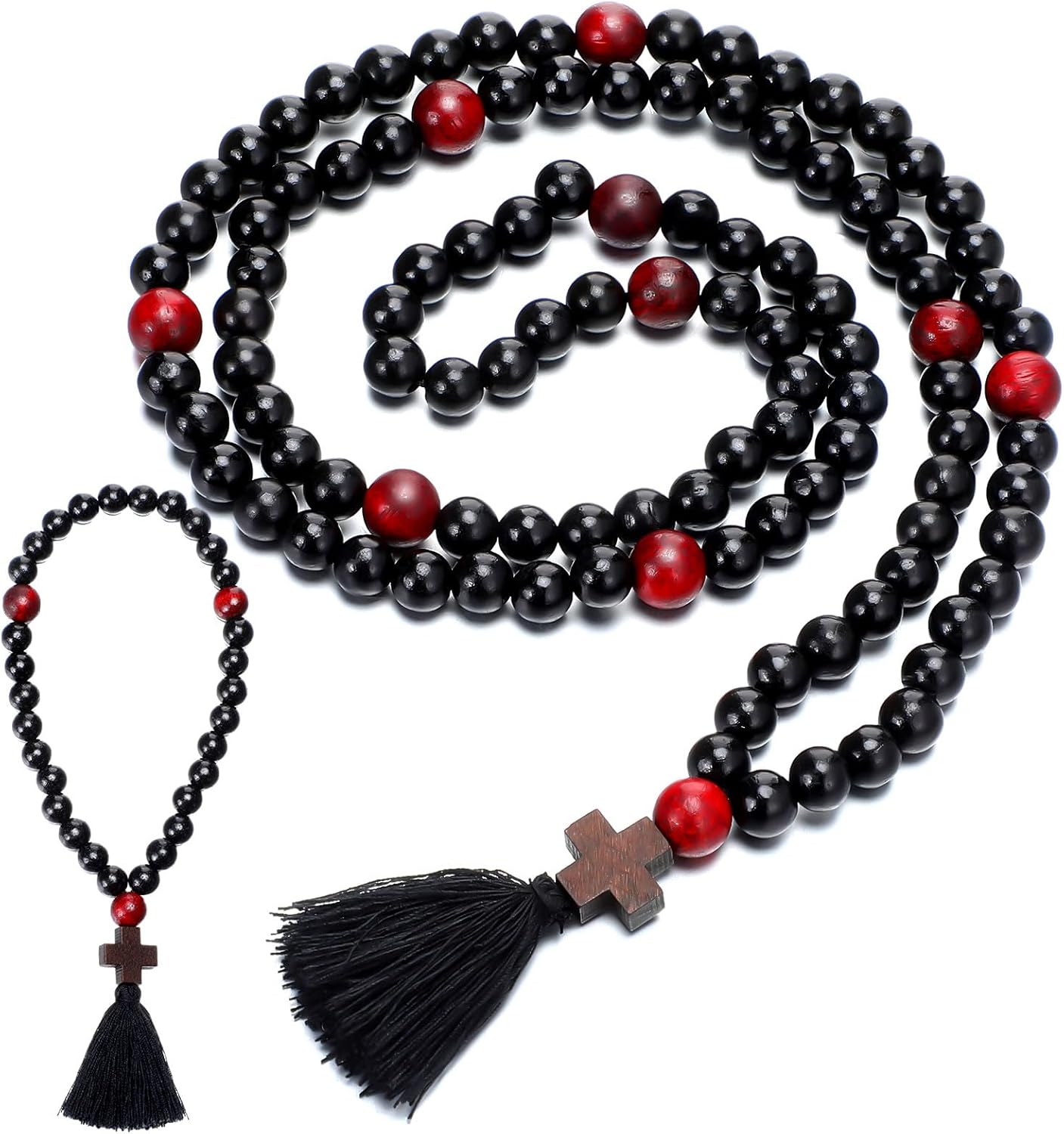

The Church does not speak of forgiveness as a concept detached from reality. It does not treat it as an idea applied from a distance, nor as a feeling that arises within the human heart once enough time has passed. Forgiveness, as the Church confesses it, is encountered. It is received in the presence of Christ, not inferred from doctrine or assumed by optimism.
This distinction matters, because the Church has never taught that forgiveness floats freely, independent of the saving work of Christ. Forgiveness is not a general condition applied evenly across time. It is the fruit of a specific act, offered once for all, and made present by the same Christ who bore sin in its fullness. To speak of forgiveness apart from encounter is to speak of something the Church does not recognize.
Sin, likewise, is never treated abstractly. The Church does not deny its reality, nor does it minimize its seriousness. Sin is not an illusion created by guilt or culture. Sin has always been understood as “missing the mark”. It is the real misuse of human freedom, freely chosen within time. Every sin is personal. Every sin is known to God. And every sin stands in relation to the Cross, not because it alters the sacrifice, but because it was already borne within it.
Christ did not bear sin as an undefined mass. He bore the real sins of real people throughout history, fully known. Nothing was hidden from Him as He offered Himself. No act of rebellion surprised Him. No failure of love emerged later. The offering of the Son to the Father contained the full truth of human sin as it would unfold across history.
At the same time, the Church has never concluded from this that sin is therefore inconsequential. God’s foreknowledge does not dissolve human responsibility. The fact that Christ bore all sin does not render sin unreal; instead, it reveals its weight. The cost of forgiveness is not minimized by being known in advance. It is intensified.
Forgiveness is therefore not encountered by denial, nor by abstraction; it is encountered where truth is faced. The Church has always taught that forgiveness requires honesty, not explanation. Repentance is not an attempt to undo what has been done. It is an act of standing truthfully before what has already been carried.
Long before the Church learned to speak about repentance in analytical or juridical terms, Saint Ephrem the Syrian gave voice to this same posture through prayer and hymn. He did not describe repentance as a technique or a sequence of acts, but as the soul standing uncovered before the mercy and holiness of God. His words preserve the seriousness of truth without despair and the nearness of mercy without presumption, reminding the faithful that repentance is not fear-driven, but love that refuses to hide from what is real.
This is why the Church does not speak of forgiveness as something we grant ourselves. Forgiveness is given by Christ, because it belongs to His offering. To encounter forgiveness is to encounter Him as He offered Himself fully, with nothing hidden and nothing withheld.
The Church has always been careful here. It does not say that forgiveness waits to be earned. It does not say that it must be deserved. But neither does it say that it can be assumed without encounter. Forgiveness is not automatic in the sense of being impersonal. It is given personally, because Christ gives Himself personally, to each of us.
This is why the Church has always joined forgiveness to confession. It does so not because God needs to be informed, and not because the Cross needs to be activated, but because the human person must be placed truthfully before what is real. Confession is not a transaction; it is an act of truth. It is the refusal to stand at a distance from what Christ has already taken up.
Forgiveness does not change the Cross. It changes us. It does not add something new to the offering of Christ. It brings the sinner into relation with what is already complete. The Church has never taught that forgiveness is a process that unfolds over time in God. It is a gift that must be received in time by those who live within it.
This is why the Church has never treated forgiveness casually. It does not cheapen it by separating it from repentance, and it does not burden it by making it conditional upon perfection.It places it where it belongs: in encounter with Christ, who has already given Himself fully for the sins of the world.
Forgiveness is not an idea we accept. It is a reality we stand within. Where Christ is encountered truthfully, forgiveness is present. Where truth is refused, forgiveness remains real, but unreceived.
The Church does not invent this seriousness; it receives it from the Cross itself. Christ has done everything necessary for forgiveness, and nothing remains to be added. What remains is the question of where we will stand in relation to what has already been given.
What follows does not lessen this truth; it deepens it. There is a detail that belongs here, and it must be approached with restraint.
In a small number of rare instances, when God has permitted what is ordinarily hidden to become visible, the blood that has been identified has been reported as AB-negative, a type known in medicine as a universal receiver. The Church does not assign theological meaning to blood type. It has never taught that biological characteristics explain salvation, and nothing here depends upon such a claim. However, some may see the fact of the blood type always being AB-, the universal receiver, and see how God, in all His glory, used this as a way to point to the cross for future generations. God would have known it would be thousands of years before humans knew about, and how to understand different blood types. So this could be interpreted by some, as the Heavenly Father showing us again, that Christ is real, and He receives our sin. He, our Lord Jesus Christ, is the true Universal Receiver.
What matters is not explanation, but wonder and awe of our Heavenly Father.
Scripture consistently speaks of Christ as the One who receives. He receives sin. He receives the weight of human failure. He receives what is given, not by deflection or dilution, but by taking it into himself.
Forgiveness, then, is not the removal of reality, but its encounter. It is the sinner standing before the One who has already taken upon himself the full truth of what is given. Forgiveness is encountered where sin has already been received and carried, not where it has been denied, minimized, or abstracted.
The Church does not draw conclusions from such details. It does not build doctrine upon them. It allows them to remain what they are: mysterious, unexplained, and resistant to reduction.
Forgiveness is not an idea we accept. It is a Person who receives us fully.
The Church has always been careful to speak of mercy without diminishing the finality of the Cross. It refuses both distortions: the idea that mercy requires Christ to suffer again, and the idea that mercy can be detached from the sacrifice by which it was given. Mercy is real because the Cross is complete. It does not reopen what has been finished, and it does not bypass what has been finished.
Christ does not suffer again when sinners repent. He is not wounded anew by human failure. The Church has never taught this, nor has it permitted language that implies it. To suggest that Christ must be re-crucified by later sin is to misunderstand both the Cross and mercy itself. The suffering of Christ belongs to time; His offering does not. What He gave was given fully, knowingly, and without remainder.
At the same time, the Church has never treated mercy as inconsequential. The Church has never taught this, nor has it permitted language that implies it. The fact that Christ bore sin once for all does not render sin harmless. It renders forgiveness possible. Mercy is not cheap because it is complete. It is costly precisely because nothing more can be added to it.
This is why the Church has always rejected language that speaks as though Christ’s sacrifice must be “activated” repeatedly by human action. The Cross does not wait upon repentance to become effective. It is effective because Christ offered Himself fully. Repentance does not complete the Cross; it places the sinner truthfully before it.
Mercy, then, is not a process that unfolds in God. God does not move from wrath to compassion. He does not gradually forgive. He does not require persuasion. The Church has always confessed that God’s mercy is not reactive. It is given. It is established. It stands. What changes is not God’s posture, but ours before Him.
When the Church speaks of forgiveness being received again and again,it is not implying repetition in God. It is speaking of repetition in us. We live within time. We fall repeatedly. We return repeatedly. The mercy we encounter is not new because the sacrifice is not new. It is encountered repeatedly because we are.
This distinction protects the seriousness of both sin and mercy. Sin is not dismissed as irrelevant, and mercy is not treated as an indulgence. The Church does not say that sin does not matter because it has been forgiven.It says that sin matters because it has been borne. Mercy does not erase truth. It reveals it.
For this reason, the Church has never treated repentance as a formality. Repentance is not a ritual apology offered to satisfy a requirement. It is a turning of the will toward what is already true. To repent is to refuse distance. It is to step out of concealment and stand where forgiveness is given.
The Church does not teach that repentance causes mercy; it teaches that repentance encounters mercy. This distinction is essential. Mercy is not a product of human effort, but a reality received through human honesty. Christ has already given Himself fully, and nothing we do adds to the sufficiency of that gift. Our response does not complete the sacrifice; it determines whether we stand truthfully before it.
This is why the Church has never spoken of forgiveness as something automatic in the sense of being impersonal. Mercy is always personal because Christ is personal. He does not forgive in the abstract. He gives Himself. To encounter mercy is to encounter Him as He is, not as we imagine Him to be.
The Church has also been careful not to weaponize this seriousness. It does not teach repentance in order to frighten the faithful. It teaches it because truth matters. The Cross is not fragile. Mercy does not need protection. What needs protection is the human heart’s tendency to distance itself from what is real.
Mercy without re-crucifixion is not leniency; it is fidelity. It is the refusal to diminish the Cross by suggesting it must be supplemented, and the refusal to diminish sin by suggesting it costs nothing. The Church holds these truths together because both have been given. What is offered in the mystery of the altar is the same reality that was accomplished once and for all.
Christ has done everything necessary for mercy. Nothing remains undone. What remains is the question of whether we will live as though this is true.
The Church does not hurry past this question. It allows it to remain, not as an accusation, but as an invitation to stand honestly before what has already been accomplished.
What follows will not soften this posture. It will turn, finally, to witnesses—those moments when God has permitted the veil to be lifted, not to explain the mystery, but to point back to it.
The Church has never believed that the Eucharist requires visible signs in order to be real. From the beginning,it has confessed the real presence of Christ on the strength of His own words and the life of prayer received from the apostles. The Eucharist is believed because it has been given, received, worshiped, and guarded. Nothing needs to be added to it. Nothing needs to be made visible for it to be what it already is.
For this reason, the Church has always spoken carefully about miracles.It has never treated them as foundations of faith, nor as explanations of mystery. It does not seek them, require them, or depend upon them. When visible signs occur, they are not received as corrections to what the Church believes, but as witnesses permitted by God. They do not replace faith. They do not explain what cannot be explained. They point back to what has already been confessed.
This ordering matters. The Eucharist itself is an amazing miracle we get to participate in, but bf the Eucharist needed miracles to be true, then the ordinary celebration of the sacrament would be deficient. The Church has never accepted this. Every Eucharist is already a miracle. Bread and wine become the Body and Blood of Christ. Heaven and earth meet. The faithful receive the living Lord. Nothing more astonishing can be said than this. The absence of visible signs does not diminish the reality. It protects it.
Why, then, does God sometimes permit the veil to be lifted?
Scripture shows that God does not reveal Himself indiscriminately. When He permits something to be seen, it is never for curiosity, entertainment or spectacle. The burning bush is not explained. The cloud on Sinai is not dissected. The Transfiguration is not explained with science. Revelation is always measured. God gives what is necessary, not what would make mystery manageable.
The same pattern governs Eucharistic miracles. They do not occur constantly, and they do not occur evenly across time. They appear at moments of confusion, doubt, neglect, or crisis. They arise not when faith is strong and confident, but when it is thin, strained, or reduced. They are not rewards for belief. They are mercies permitted for weakness.
Even then, what is shown is never complete. God does not place the Eucharist on display. He does not render the mystery transparent. What He permits to be seen is partial, controlled, and deeply unsettling. The veil is lifted just enough to disturb complacency, never enough to eliminate the necessity of faith.
This restraint is deliberate. If the Eucharist could be explained by what is seen, it would no longer require reverence. If it could be proven by visibility, it would no longer demand trust. God does not offer such clarity, because clarity of that kind would distort the posture of reception. The Eucharist is not an object of study; it is an encounter with the Living God.
For this reason, the Church has always insisted that visible signs do not add to the Eucharist. Christ is no more present when something extraordinary is seen than when nothing is seen at all. The difference is not in the gift. It is in the perception of the one who receives it. The miracle does not increase Christ’s presence; it exposes our failure to recognize it.
The Church has therefore refused to treat miracles as explanations .It does not ask how such signs occur, nor does it attempt to map them onto sacramental theology as mechanisms. To do so would be to misunderstand their purpose. A witness is not an explanation. A sign is not a system. God does not offer diagrams when He gives Himself.
What visible signs do is bear witness to consistency. When God permits the veil to be lifted, what is revealed does not contradict what the Church already confesses. It does not introduce a new Christ or a different sacrifice. It does not alter the meaning of the Eucharist. It corresponds to it. What becomes visible aligns with what has always been prayed.
The Church receives such signs with an exacting and guarded restraint. It does not rush to publicize them. It does not elevate them to doctrine .It allows them to be known without allowing them to dominate. They are always subordinate to the altar. They never replace the sacrament. They point back to it.
There is also a deeper discipline at work. The Church knows that the desire to see can easily become a desire to control. If the mystery could be held up, examined, and contained, then the faithful would no longer need to learn how to stand before it. The Church protects the faithful from this temptation by refusing to let visibility become the measure of truth.
This restraint prepares us to see rightly when something is shown.
When the veil is lifted, the question is not whether something new has occurred. The question is what has been revealed about what has already been given. The Church maintains a rigid posture toward such signs: it receives them not as answers, but as witnesses; not as proofs, but as reminders; not as explanations, but as disclosures permitted by God for a time.
The Eucharist does not become miraculous when something is seen. It is already miraculous beyond comprehension. What changes is not the reality of Christ’s presence, but the impossibility of ignoring it. God does not lift the veil to explain the mystery. He lifts it to call the faithful back to reverence.
Only with this discipline firmly in place can we speak about the visible witnesses that have been permitted in the Church’s life. Without it, such signs would distort faith rather than serve it. With it, they may be received for what they are: moments when God allows what is always true to become briefly, unsettlingly visible.
What follows does not present miracles as proofs. It presents them as witnesses—consistent, sober, and profoundly aligned with the Church’s confession that the sacrifice of Christ, once offered, stands eternally present before God, and is given to the faithful not as memory or symbol, but as living encounter.
The Church has never believed that the Eucharist requires confirmation by what can be seen. From the beginning,it has confessed the real presence of Christ not because it could be demonstrated, but because it was given. The Eucharist was worshiped before it was described, guarded before it was analyzed, received before it was defended. Faith did not emerge from evidence; evidence emerged only because faith already existed. The altar did not wait for witnesses in order to be true.
For this reason, the Church has always spoken of extraordinary Eucharistic signs with reserve.It has never treated them as foundations of belief, nor as explanations of the mystery, nor as a higher form of Eucharist. It does not seek them, demand them, or multiply them. When they occur,it receives them slowly, tests them carefully, and then places them back under the authority of the altar. The Eucharist does not become more real when something visible appears. Nothing is added to Christ by visibility. And yet, there have been moments in the Church’s life when God has permitted what is ordinarily veiled to become briefly, and disturbingly, seen.
What compels attention is not the drama of any single event, but the fact that when such moments are permitted, they do not speak in conflicting voices. They do not scatter in meaning, nor do they reflect the imagination of the cultures in which they occur. Across centuries, across continents, across rites that developed independently and often without contact, what has been reported does not drift. The manifestations do not evolve with theology or conform to local symbolism. What appears, when appearance is allowed, remains relentlessly consistent.
In cases that have been examined under ecclesial authority, what becomes visible is not imagery and not suggestion, but human tissue. Not bone, not skin, not arbitrary flesh, but tissue identified repeatedly as cardiac in nature. The condition of that tissue is not peaceful. It bears markers associated with extreme physiological stress. It is not presented as decayed or inert. In several cases, it has been described as bearing characteristics associated with life rather than death. Where blood has been identified, it has not appeared in endless variation, but has been reported with the same blood type, again and again, across unrelated cases.
This detail matters precisely because the Church has never assigned it meaning on her own authority. It has not proclaimed symbolism where God has not spoken. It has not declared intention where it has received only observation. And yet, the consistency remains. The blood type reported in multiple investigated Eucharistic miracles has been AB- a relatively uncommon type appearing not once, but repeatedly, without coordination, without expectation, and without doctrinal prompting.
This same blood type has been identified in another witness the Church has never treated as doctrine and yet has never dismissed: the burial cloth traditionally associated with the Crucifixion. The Church has never required belief in the Shroud, nor used it to define the Eucharist.It has simply allowed it to remain what it is a silent object that refuses to explain itself, yet refuses to disappear. The convergence is not proclaimed by the Church. It simply stands.
The point is not that these things explain one another. The point is that they do not contradict one another. What has been permitted to be seen in Eucharistic miracles does not introduce a different Christ from the one associated with the Passion. It does not suggest a peaceful abstraction or a symbolic reminder. It does not resemble a corpse, nor does it resemble a glorified body at rest. What appears corresponds to bearing to strain, to offering under weight, to life given at cost.
The Church has always insisted, without exception, that Christ does not suffer again. The Passion is not reopened. The Crucifixion is not repeated as a new event within time. Christ is risen. His death is finished. The wounds are not inflicted anew. And yet the Church has never spoken as though the Cross were merely past and gone, sealed away behind history as something God must remember from a distance. It has guarded a more severe confession: that the self-offering of Christ, once accomplished, does not become absent. What was given is not withdrawn. What was offered remains an objective and unmoving fact.
This is why the Church’s language has always held two truths together without resolving the tension. The sacrifice is once for all. And it stands eternally before God. Not as repetition. Not as memory. As reality. The Eucharist does not recreate the Cross, but neither does it merely recall it. It gives Christ Himself, whole and entire, inseparable from the act by which He gave Himself for the life of the world.
This is the point at which the witnesses permitted by God become difficult to treat as incidental.
If what becomes visible, when visibility is allowed, consistently corresponds to heart tissue under extreme stress; if the blood that appears repeatedly bears the same characteristics across centuries and continents; if these manifestations do not vary according to culture, devotion, or theological fashion; if they do not suggest rest, abstraction, or detachment, but bearing and offering then the coherence presses upon the faithful with quiet severity. These signs do not interpret themselves, but they align with unsettling precision to the Church’s claim that the Eucharist places the faithful into communion with Christ not apart from His sacrifice, but within His self-offering.
The heart is not an incidental organ in this context. In Scripture and in human understanding, the heart is where the self is yielded, where love costs something, where life is poured out. When the phenomenon reveals cardiac tissue under the weight of agony, the witness does not shout. It does not argue. It simply occupies the space between the sign and the reality, refusing to be anything other than a record of what was given.
The Church did not learn how to speak about the Eucharist from these signs.It had been praying this way long before any such witnesses were known. The liturgy already presumed it. The faithful already knelt before it. These moments did not generate doctrine. They exposed the depth of doctrine already confessed.
This is why the Church has never encouraged the faithful to pursue such signs. It has never allowed them to be treated as ends in themselves. It has always forced the gaze back to the altar, insisting that the ordinary Eucharist lacks nothing. What is given in every valid celebration is already the fullness of Christ. No miracle can expand upon a Presence that is already complete.
And yet, once such witnesses are known, neutrality becomes difficult. The Eucharist can no longer be treated as thin, symbolic, or safely contained within memory. If what is permitted to appear corresponds so narrowly, so consistently, and so severely with the Church’s confession of Christ’s self-offering, then the question is not whether these signs explain the sacrament. The question is whether the Eucharist has ever been as small as some have dared to imagine.
The Eucharist does not become something new when the veil is lifted. What becomes new is the impossibility of pretending that nothing decisive is taking place. If the sacrifice of Christ truly stands beyond the limits of time, if what was offered once remains eternally present before God, then participation in the Eucharist is not a devotional glance backward nor a symbolic reenactment. It is communion with the living Christ in the act by which He gave Himself for the world.
These witnesses do not announce that truth. They stand beside it, silent and severe, leaving the faithful to decide whether the Church has been exaggerating or whether it has been telling the truth all along.

If this book has done its work, it has not left you with a new argument. It has left you with a new perspective, and hopefully, a deeper love for what the Eucharist really is.
Most Christians grow up thinking of the Cross as something that happened once, long ago. It is holy, necessary, and saving, but it remains 'back then.' Some picture it as history, as a finished scene with a date attached to it. We might revere it. But we keep it where our minds keep most things: in the past, where it stays silent and remote.
The Eucharist refuses that separation.
The Church has never spoken of the Cross as a relic trapped inside time. It has spoken of it as an eternal offering accomplished once in history, and yet standing forever before God. This is not poetry. It is the nature of divine reality. God is not trapped in the timeline the way we are. He is not moving through moments hoping to catch up. He holds all moments. He sees the end from the beginning. He knows every sin before it is committed, every wound before it is inflicted, every grief before it is felt, and every repentance before it is spoken. And in that eternal knowledge, the sacrifice of Christ does not fade into memory. It remains present.
That is what makes the Eucharist so frighteningly real.
When the priest says, “This is My Body,” Christ does not symbolically recall Himself. He gives Himself. When the chalice is lifted, it is not a reminder of Blood. It is the Blood of the covenant. When you approach the altar, you are not visiting a holy idea. You are entering a holy reality where Christ is present.
This is why the Church insists that the Eucharist is not a repetition of the sacrifice, but a participation in the one sacrifice. The Cross does not happen again. It does not need to. Its power is not limited by time because the One who offered Himself is eternal. A single act of divine self-giving holds more weight than an infinite number of human failures. The offering of the Son is not small. It is not fragile. It is not exhausted. It stands.
And because it stands, you can stand there too.
This is where your life becomes unavoidably personal.
If the Cross is only an event in the past, then your sins today are separated from it by centuries. Forgiveness becomes an idea you accept. But if the Cross is eternally present, then your sins today are known there. They are carried there. They are answered there. Repentance is an encounter. Confession is truth spoken in the presence of the Crucified. Communion is the living Christ placing Himself into your hands.
This is not meant to make you afraid of the Eucharist in the wrong way. It is meant to make you afraid of approaching it casually.
A cheap, casual, distracted Communion is a contradiction. It is not simply “missing the moment.” It is standing before the furnace of divine love and treating it like an ornament. The Eucharist is not God’s way of keeping religion alive. It is God’s way of giving Himself.
So what does this mean, practically?
It means that when you walk into a church, you are not walking into a room where people are thinking about God. You are walking into the presence of the Lamb who was slain and yet lives.
It means that when the Liturgy begins, you are not watching a ceremony. You are stepping into the place where heaven and earth literally meet.
It means that when the priest speaks the words of institution, you should hear them not as narrative but as mysterious reality. The Church is not reenacting the Last Supper. It is participating in it.
It means that when you receive Communion, you should receive as if you are receiving the most real thing you will touch all week, because you are.
And it means that your entire spiritual life changes when you stop treating the Cross as a past event and begin living as if it is an eternal reality that you can actually enter.
The saints understood this.
The Eastern fathers spoke of the Liturgy as participation in heavenly worship. The Western mystics spoke of the Mass as the sacrifice of Calvary made present. The Church did not invent these ideas later. It lived them from the beginning, because it was given a sacrament that is too real to fit inside ordinary categories.
This is why the Eucharist has always been at the center.
Not because it is the highest symbol.
Because it is the highest reality.
If God is Love, then the Cross is Love revealed in full. And if the Eucharist is the real presence of Christ, then it is Love given, Love offered not from a distance, but into your mouth, into your body, into your life. This is not a religious metaphor. It is a divine moment between you and your Creator. God does not merely forgive you. He feeds you.
So where does that leave you?
It leaves you with a choice that is both simple and demanding.
You can continue to live as if the Cross is back then and Communion is routine.
Or you can let the truth reshape your posture.
You can begin to approach the altar as the place where the eternal sacrifice stands open.
You can begin to confess your sins as if you are placing them into the hands that were pierced.
You can begin to receive the Eucharist as if you are receiving the living Christ in His self-offering, because you are.
And you can begin to live the rest of your life as a response.
Because if the Eucharist is always now, then worship is not confined to church.
If the Cross is outside of time, then forgiveness is not merely an idea you accept, it is a life you enter.
If Christ is truly present, then you are never simply going through motions.
You are standing before the deepest mystery in existence: the God who loved you enough to suffer, and who loves you enough to remain.
In the end, the greatest danger is not that you will fail to understand this mystery. The greatest danger is that you will become familiar with it.
Do not.
Let it remain what it is: terrifying, beautiful, and real.
And when you approach the Eucharist, approach with reverence—not because you are worthy, but because He is holy.
The Cross stands.
The Lamb lives.
The Eucharist is always now.
And Christ is still giving Himself—until the end of the age.
The Church does not end her confession of the Eucharist with explanation.It ends it with reception. Everything that has been said in the life of the Church about the Eucharist, about the Cross, about time and eternity, exists for this purpose alone: that the faithful may receive Christ truthfully and live accordingly.
The Eucharist is not an idea that invites agreement. It is a reality that demands a response. When we receive the Eucharist, we do not receive a teaching about Christ. We receive Christ Himself, as He offered Himself fully to the Father for the life of the world. This offering is complete, finished, and lacking nothing. It does not need to be repeated, supplemented, or explained away. It stands before God in its fullness.
Because this is so, the Church has always insisted that the Eucharist be approached with reverence, preparation, and honesty. These are not customs layered on later. They arise directly from what the Eucharist is. To receive Christ literally is to place oneself before the truth of His self-offering. Nothing in the Christian life is untouched by that encounter.
The Cross is not distant from us because it occurred in history. It is not inaccessible because time has passed. The saving work of Christ is not a memory that fades, nor a symbol that points elsewhere. It is a living reality, held within eternity, made present to us because Christ Himself is present. When we receive the Eucharist, we are not stepping back into the past. We are being drawn into what is eternally real.
This does not remove us from time. We still live within it. We still choose, repent, fall, and rise. But our lives are no longer isolated from the Cross. They are lived in relation to it. The Eucharist places our days, our failures, our obedience, and our repentance within the reality of Christ’s offering, not as additions to it, but as responses to it.
The Church does not teach this to burden the faithful.It teaches it to free them from illusion. The illusion that sin is small. The illusion that repentance is optional. The illusion that the Eucharist is ordinary. When the Eucharist is seen for what it truly is, casualness becomes impossible, not because of fear, but because of truth.
Nothing in this book asks the reader to accept a new doctrine. Nothing here stands outside what the Church has already confessed, prayed, and guarded. What has been offered is a way of seeing more clearly what has always been present. The mystery has not been reduced. It has been allowed to remain what it is.
The Church does not ask us to master the Eucharist.It asks us to receive it.It does not invite us to solve the Cross.It invites us to stand before it.It does not promise comfort apart from truth.It promises Christ Himself.
This is why the Eucharist stands at the center of the Church’s life. It is not one devotion among others. It is not one mystery alongside many. It is the place where heaven and earth meet, where time and eternity are not opposed, and where the finished work of Christ is given to us as life.
To receive the Eucharist is to stand within the eternal gift God has given to the world. The Church has always known this.It has spoken it plainly.It has refused to explain it away.It has lived from it.
This book exists only to help the reader stand there more honestly.
Get the Physical Copy
The physical edition of The Eucharist and the Eternal Sacrifice of Christ is ideal for personal theological study, parish reading groups, or anyone who wants to sit with these reflections slowly — making notes, returning to passages, and sharing with others.
📖 Order on AmazonPerfect for individual study, small groups, and parish reading circles.
The Cross Outside of Time
"Jesus Christ is the same yesterday and today and forever."
— Hebrews 13:8
The Eucharist is always now. The Cross stands. The Lamb lives. Christ is truly present — not as a memory, not as a symbol, but as the Living Lord who has given Himself once for all and whose offering remains eternally present to God and to every soul who dares to approach the altar with reverence.
Walk it intentionally. Walk it faithfully. Stand before it honestly. And let it remain what it is: terrifying, beautiful, and real.
Ideal for personal study, small groups, and parish reading circles.