Saint Athanasius of Brest: Orthodox Hegumen, Defender of the Faith and Martyr of 1648
An Orthodox abbot who opposed the Union of Brest and was killed in 1648
At a Glance
- Born
- About 1595 to 1597 (UNCERTAIN), probably near Brest, now Belarus
- Died
- September 5, 1648, at or near Brest. A few accounts give another date
- Titles
- Venerable Martyr, hegumen (abbot) of the Brest monastery
- Feast
- September 5 (Julian calendar, September 18 on the civil calendar)
- Veneration
- Orthodox saint. No Catholic canonization or Roman feast is documented
- Patronage
- No official patronage found. He is remembered for steadfastness under pressure
- Who Was Saint Athanasius of Brest?
- Early Life and Family
- Vocation and the Turn to Monastic Life
- Abbot of Brest and Defender of Orthodox Rights
- Trials and Historical Context
- Death and Relics
- Traditions and Devotion
- The Diariush and Other Writings
- Relics and Places of Veneration
- Athanasius and the Eastern Churches
- Frequently Asked Questions
Who Was Saint Athanasius of Brest?
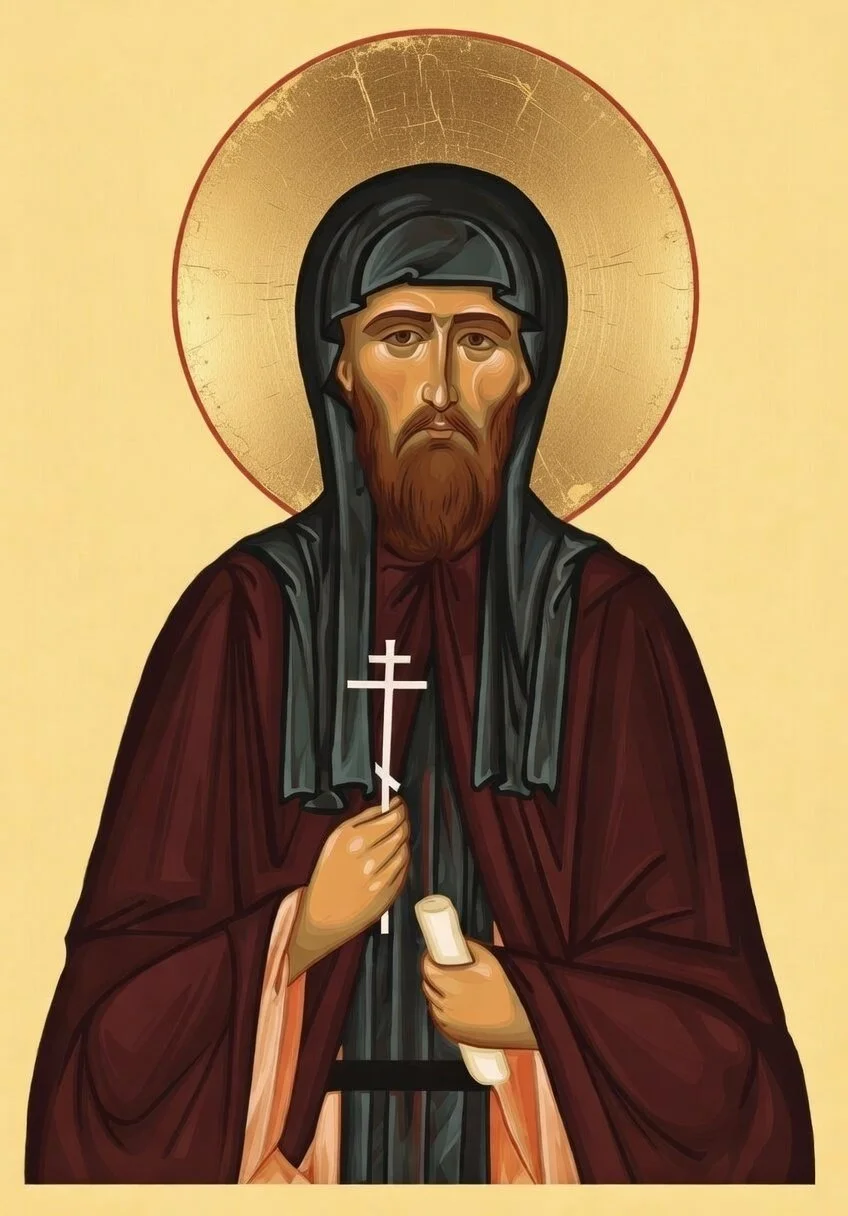
Saint Athanasius of Brest, whose family name was Filippovich, was an Orthodox monk, priest and abbot in the Polish-Lithuanian Commonwealth in the seventeenth century. He led the monastery of Saint Simeon the Stylite in Brest and spent years defending the rights of Orthodox monasteries and churches after the Union of Brest of 1596.
He was a hard and uncompromising man. He wrote petitions, appeared at the Warsaw diet, was arrested more than once and was even disciplined by Orthodox bishops who feared his methods. In 1648, in the chaos of the Khmelnytsky Uprising, he was arrested again and killed near Brest. Orthodox Christians honor him as a monastic martyr.
This article tries to be fair. His Orthodox sainthood is well established. His birth date, the exact manner of his death and some devotional stories are UNCERTAIN or belong to TRADITION. He is not a Catholic saint, and his writings contain harsh judgments about Rome that Catholic readers should know about and that we should not hide.
Early Life and Family
Athanasius was born into an Orthodox family in the western lands of the Commonwealth, in the region of Brest, now in Belarus. His birth is placed between about 1595 and 1597, with some scholars suggesting an earlier date. The exact year, his birthplace and the names of his parents are UNCERTAIN.
Accounts of his family differ. Some biographies call them poor and of minor noble rank, while a cautious scholarly encyclopedia suggests a family of townspeople or craftsmen. The more careful view is that we do not know. He grew up in a time of deep division, since the Union of Brest was made in 1596, around the time of his birth.
Under that union, much of the church hierarchy of the Kyiv Metropolia entered communion with Rome while keeping Eastern worship. Many monks, laypeople and church brotherhoods refused it. Athanasius grew up in that divided world. He appears to have had a solid education in the Scriptures, Church history and languages, and he worked as a teacher and tutor before becoming a monk.
Vocation and the Turn to Monastic Life
There was no conversion from another faith. Athanasius was raised Orthodox and stayed Orthodox. His religious vocation became formal in 1627, when he was tonsured a monk at the Holy Spirit Monastery in Vilnius. He then lived in other Orthodox monasteries, including Kutein near Orsha and Mezhyhirya near Kyiv.
In 1632 he was ordained a hieromonk, a monk who is also a priest, and given a post at the monastery of Duboy near Pinsk. In 1636 that monastery was handed over to the Jesuits. He took this as an attack on Orthodox monastic life, and it hardened his stance against the Union.
After that he went to the monastery of Kupiatychi, which held a much loved icon of the Mother of God. In 1637 he made a hard journey to Moscow to seek help for the monastery church and was received by the tsar. He returned in 1638 with material help. These years shaped his conviction that prayer and public action belonged together.
Abbot of Brest and Defender of Orthodox Rights
Athanasius became hegumen, or abbot, of the monastery of Saint Simeon the Stylite in Brest. One scholarly source places this in 1640, while some shorter biographies say 1638, so the start date is UNCERTAIN. His work was to protect Orthodox worship, monastery property and the legal rights of the Orthodox brotherhood of Brest.
In 1641 he obtained a royal confirmation of the brotherhood's rights from King Wladyslaw IV, but high officials refused to seal it, so it had no legal force. He kept campaigning. At the Warsaw diet of 1643 he handed out appeals asking for protection of Orthodox Christians and for the end of the Union of Brest.
He did not found a new order or a great institution. His lasting work was the defense of existing communities, and his writing. He believed that the Union was a source of persecution and disorder. His words were forceful and often confrontational, and they were written by an active participant who wanted to persuade the authorities and not by a neutral observer.
Trials and Historical Context
The Union of Brest divided Christians who shared the same Byzantine worship. For its Catholic supporters it was a restoration of communion with Rome that kept the Eastern rite. For its Orthodox opponents it was an unlawful change forced on their Church. Both sides fought over buildings, monasteries and royal favor, and the law of the Commonwealth often favored one side.
Athanasius also troubled his own Church. After his protests at the diet of 1643, Orthodox bishops, worried about the results, had him held and for a time removed from his clerical status. After an examination in Kyiv he was cleared and restored by Metropolitan Peter Mohyla, and he returned to Brest. He was imprisoned again in 1645 in a politically sensitive case and kept writing while in custody.
In 1648 the Khmelnytsky Uprising made Orthodox clergy suspect. He was arrested on suspicion of ties to the Cossacks. A scholarly source says the claims of direct contact were not proved. Some short biographies speak of a formal trial and sentence, but this is UNCERTAIN and has been disputed. The evidence supports arrest and a violent death, not every procedural detail.
Death and Relics
He was killed in September 1648, traditionally in the night between September 4 and 5, near Brest. The standard Orthodox account says he was taken from prison to a military camp, then into a wood outside the town, where men tried to make him give up his protests against the Union. They are said to have tortured him and shot him. A few sources give another date for his death, so it should not be treated as perfectly settled.
The details differ among the sources. Some say he was buried while still alive and some speak of further violence. A scholarly encyclopedia notes only that injuries found on his remains led people to suppose this. Because the monks who preserved the story did not see the execution, these details are UNCERTAIN and partly TRADITION.
Monks reportedly found his grave on May 1, 1649, and buried him in the monastery church on May 8. A 1658 letter to the tsar already called his remains incorrupt, and the relics were formally uncovered in 1666 according to one authoritative source. Sources disagree about other relic dates, and a fire at the monastery in the early nineteenth century damaged the shrine. The present location of every fragment is UNCERTAIN.
Traditions and Devotion
Orthodox devotion to him stresses faithfulness under pressure, courage when questioned and loyalty to the inherited faith. Several stories come down in the tradition, and we mark them as such. We cannot test them as history, but they show how the Church remembered him.
One is a vision attributed to him after the loss of the Duboy monastery, in which people who had harmed Orthodoxy appeared suffering. Another is his sense that the Mother of God, through the Kupiatychi icon, guided him to appeal for help. A third says the man who shot him asked his forgiveness and received his blessing. All of these belong to TRADITION.
Healings at his relics are also reported. One notable record is a silver reliquary given in 1857 by a man who believed his son had been healed there. That shows real devotion, but it is a devotional claim and not a medically proven miracle. The Church sings a troparion and kontakion to him, and he is also remembered with the Belarusian saints.
The Diariush and Other Writings
His main writing is the Diariush, often translated Diary or a Record of True Events. It collects autobiography, letters, royal privileges, petitions and arguments, including material from his time in prison. It is a rare first person voice from a seventeenth century Orthodox monk caught up in the conflicts of his day.
Titles attributed to his prison period include writings on the Roman Church, on the foundation of the Church and a preparation for judgment. They criticize papal claims and the results of the Union. A memorial he gave to the king in 1645 is said to have been lost in the nineteenth century. Manuscript copies survive in Russian collections.
The Diariush must be read critically. Athanasius wrote to persuade and to defend his cause, and his judgments about Catholics and Greek Catholics are evidence of his convictions, not a fair picture of everyone involved. A responsible biography neither hides his harsh words nor uses them to promote hostility toward Christians today.
Relics and Places of Veneration
Brest, now in Belarus, is the chief place tied to his life. His relics were first kept in the monastery church of Saint Simeon the Stylite there. They were honored at the monastery for generations, and devotion to him grew within a decade of his death according to early letters.
After the fire at the monastery in the early nineteenth century, surviving fragments were gathered and placed in reliquaries. Some accounts say part of his relics went to other cities, including Saint Petersburg. We could not verify where every part is kept today, and anyone planning a pilgrimage should ask the local Orthodox church for current information.
His story is also kept alive in the Orthodox calendar. September 5 on the Julian calendar is his chief day, and July 20 recalls his relics. He is named among the Belarusian saints, whose joint commemoration was set up in the Russian Church in 1984. His memory stays strongest among Orthodox Christians in Belarus and Ukraine.
Holy Athanasius, faithful abbot and martyr, you stayed true to Christ under pressure and under threat. Pray for all who are questioned for their faith, and for all who are tempted to give up what they know is true. Ask the Lord to give us courage with gentleness, and to heal the wounds between Christians who share one Baptism. Pray for us, that we may stay faithful to the end. Amen.
This is a short original prayer for private use. It is not an official liturgical text.
Athanasius and the Eastern Churches
For Orthodox Christians he stands for firm loyalty to their inherited Church in a time of political pressure. His life shows how brotherhoods, monasteries and petitions kept Orthodox life alive in the Commonwealth, and his writings give a direct view of what Orthodox Christians feared after the Union of Brest.
For Eastern Catholics his story matters in another way. The Union of Brest is the foundation of the Ruthenian Greek Catholic tradition, and the conflict around Athanasius shows how painful its beginnings were. Catholic histories see the Union as a return to communion with Rome. Orthodox accounts, like his, saw it as a threat. Both views are needed to understand the history.
We should be plain. No Catholic beatification, canonization or Roman feast for him was found, and no Vatican text commends his cult. He is a saint of the Orthodox Church, not of both Churches. His importance for Catholics is historical and ecumenical. He also wrote harshly about Rome, and we can honor his faith without sharing his hostility.
Frequently Asked Questions
Ask His Prayers
Saint Athanasius spent his life defending the faith he had received, and gave his life for it. We can ask his prayers for all who are pressed for their faith, and for the healing of the wounds that still divide Christians who share a common inheritance.
View Prayer Card