The Eastern Church · Complete Hagiography
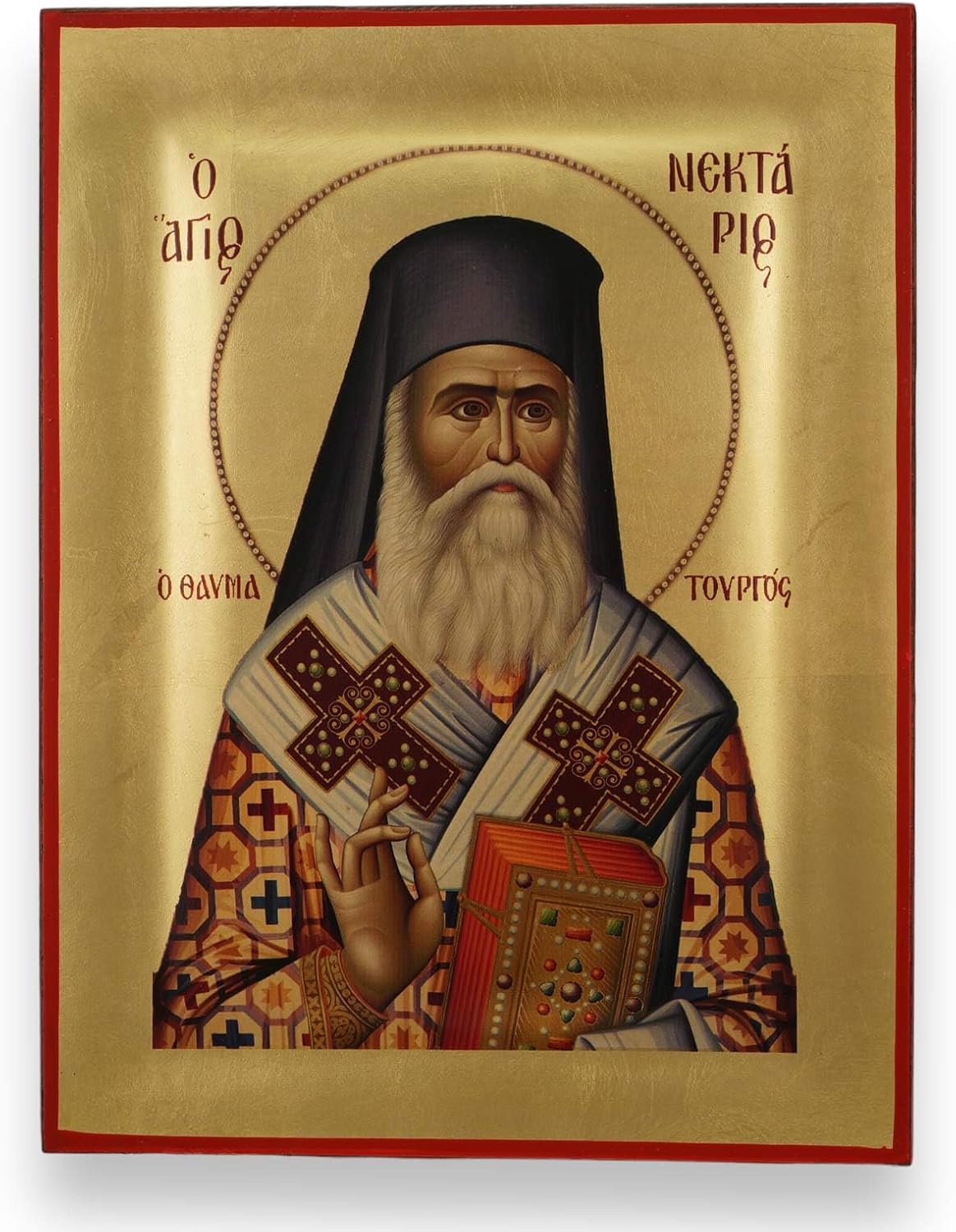
Saint Nektarios of Aegina
Metropolitan, Wonderworker, Healer of the Sick
"The humble man is never offended, because he has not the weakness of pride."
Contents
- I. A World in Transition
- II. Born in Thrace
- III. The Letter to Christ
- IV. Chios and Holy Orders
- V. Rise in Alexandria
- VI. The Great Injustice
- VII. Wandering and Waiting
- VIII. The Rizarios School
- IX. His Writings and Theology
- X. Holy Trinity Monastery, Aegina
- XI. The Final Years
- XII. Death and Immediate Miracles
- XIII. Spiritual Teachings
- XIV. Miracles and the Healing Ministry
- XV. From Death to Altar
- XVI. Liturgical Texts and Prayers
- XVII. Relics and Pilgrimage
- XVIII. Theology of Suffering
- XIX. Complete Timeline
- XX. Bibliography
A World in Transition: The Church in the Nineteenth Century
The nineteenth century was an age of rupture and rebirth for the Orthodox Church. The centuries-long twilight of the Ottoman Empire, which had held the Christian peoples of the East in legal subjugation since 1453, was cracking at its foundations. Greek independence was won in 1830 after a decade of war; Bulgaria, Serbia, and Romania followed in the decades ahead. Across the Balkans and Anatolia, Orthodox Christians who had for four centuries lived as a millet—a tolerated but subordinate religious community under Turkish law—were awakening to new national and ecclesiastical identities. The question of what the Orthodox Church would be in a post-Ottoman world was urgent and unresolved.
The Ecumenical Patriarchate of Constantinople, whose Phanariot bishops had for centuries wielded enormous civil and religious power under the Ottomans, found itself suddenly diminished as new national churches declared autocephaly. The Greek Church severed its formal dependence on Constantinople in 1833. The Bulgarian Exarchate was established in 1870 without the Patriarchate's blessing, producing a schism that would last until 1945. In Egypt, the ancient Patriarchate of Alexandria—one of the five great sees of antiquity, the see of Athanasius and Cyril—had declined to a shadow of its former grandeur, its flock dwindled by centuries of Islamic dominance to a tiny remnant, its hierarchy reduced at times to a single bishop in a great desert city.
Into this churning world, a boy was born in the Thracian town of Silivri in 1846 who would become, more than any other modern figure, the face of Orthodox holiness to the ordinary faithful. He would not resolve the political crises of his age. He would not become a patriarch. He would not write a systematic theology that reshaped the academy. What he would do is live the Gospel with such naked completeness—bearing calumny without complaint, serving the poor without reserve, praying without ceasing until prayer became his very breath—that after his death, his name would become synonymous with mercy, healing, and intercession in the mind of millions of Orthodox Christians across the world.
His name was Anastasios Kefalas. The Church would call him Nektarios, which in Greek means nektar of the gods—the sweet drink of immortality. The name proved prophetic.
The world into which Nektarios was born was also one of profound intellectual ferment within Orthodoxy itself. The Philokalia—that great anthology of hesychast prayer compiled by Saints Nikodemos of the Holy Mountain and Makarios of Corinth—had been published in Venice in 1782, inaugurating a renaissance of interior, contemplative spirituality that spread from Mount Athos through Russia and into the Greek world. The Jesus Prayer—Kyrie Iēsou Christe, Yie tou Theou, eleison me ton hamartolon, "Lord Jesus Christ, Son of God, have mercy on me, a sinner"—was being recovered by ordinary Christians as the heartbeat of daily life. The movement of nepsis, watchfulness of the heart, was alive again.
At the same time, the secular winds of the Enlightenment blew hard across Greece. The new Greek state looked westward for its models of education, law, and public life. The University of Athens, founded in 1837, was shaped by German academic models. Greek intellectuals debated whether their identity was primarily ancient Hellenic or Byzantine Christian. The Church itself was caught between those who wanted it to modernize and rationalize and those who understood that Orthodoxy's genius lay precisely in its refusal of reduction—in its insistence that theology is doxology, that doctrine is prayer, that knowing God means becoming like God.
It is against this backdrop—a Church navigating political dissolution and intellectual challenge, a people awakening to new nationhood while clinging to ancient faith—that the life of Nektarios of Aegina must be understood. He was not an anachronism. He was Orthodoxy's answer to the age: not an argument but a life, not a system but a person, not a program but a presence.
Born in Thrace: The Child Anastasios
Anastasios Kefalas was born on November 1, 1846, in the town of Silivri—ancient Selymbria—a coastal settlement on the northern shore of the Sea of Marmara, some sixty kilometers west of Constantinople in the province of Thrace. The town was Greek in its cultural character, as were most of the coastal settlements of this region, though it lay deep within Ottoman territory. The Church of Silivri was a community that had survived centuries of subordination with its liturgy and its saints intact.
His father was Dimos Kefalas, a man of modest but honest means; his mother was Maria, née Alexiou. Nektarios was one of seven children. The family was poor in the way that Mediterranean rural families of the era were poor—not destitute, but pressed, with no margin for illness or misfortune. What they had in abundance was faith. The household was a praying household. The icons on the family's walls were not decorations but presences. The liturgical calendar shaped the family's time. The memory of the saints was kept alive in daily conversation.
From earliest childhood, young Anastasios displayed an unusual spiritual seriousness. According to witnesses gathered during his canonization process, he showed from boyhood a marked inclination toward prayer, fasting, and the service of those in need. He was known to give away food from his own portion to beggars and to spend time in the church beyond what feast days required. This was not—as hagiography sometimes presents such childhood piety—mere obedience or convention. Those who knew him as a boy recalled a child who seemed genuinely drawn toward God, for whom religion was not performance but encounter.
His early education was received in the local school at Silivri, where the curriculum was shaped by the Church's educational tradition—the Greek language, the psalms, sacred history, the lives of the saints. He was a capable and attentive student. But Silivri could not hold him. The ambition that burned in him was not social or economic—it was spiritual and intellectual. He wanted to learn more, to understand more deeply the faith he loved, to prepare himself for service to the Church. That ambition would drive him, painfully and circuitously, through years of poverty and struggle before it found its resolution.
When Anastasios was fourteen years old, around 1860, his family sent him to Constantinople—the great imperial city, still nominally the Ottoman capital but in truth a cosmopolitan world capital where Greeks, Turks, Armenians, Jews, Franks, and dozens of other communities lived in proximity. Constantinople was the seat of the Ecumenical Patriarchate, the center of the Greek commercial world, and a city of both immense opportunity and overwhelming challenge for a poor boy from the provinces.
Silivri Today
The birthplace of Saint Nektarios, known today as Silivri, lies within the boundaries of metropolitan Istanbul in Turkey. A church marking his birthplace stands in the town. Silivri remains a site of pilgrimage for Orthodox Christians, particularly Greeks, who visit to venerate the memory of the saint who was born there.
The feast of Saint Nektarios is observed on November 9, the day of his death in 1920. In Silivri, the memory of this most beloved of modern Greek saints is maintained by the small remaining Orthodox community and by pilgrims who come from Greece, Cyprus, and around the world.
The Letter to Christ: Constantinople and the Hunger for Learning
In Constantinople, Anastasios found work as a laborer in a tobacco shop. He was young, uneducated beyond the basics, and without connections in the city. The work was hard and the wages meager. But the city's libraries, bookshops, and churches were open to him, and in them he found what no wage could purchase: access to the world of ideas, to theological literature, to the great tradition of the Church's intellectual heritage. He read voraciously. He prayed constantly. He served at the Divine Liturgy whenever the opportunity arose.
The famous episode of the letter stands as one of the most touching testimonies to the character of the young Anastasios. Desperate for books—for the theological works he needed to pursue his education—and possessing no money whatsoever, he wrote a letter. But the letter was not addressed to a patron, a wealthy merchant, or a bishop. The letter was addressed to Christ Himself.
The letter, written in the hand of a boy who had addressed his deepest need not to any earthly power but to the Lord of all things, was discovered by a merchant named Zafiriou for whom the young Anastasios worked. Moved beyond words by what he found, the merchant did not expose or mock the child's simplicity. Instead, he quietly arranged for books and supplies to be provided. The letter—and the response it elicited—has become one of the most beloved episodes in the entire hagiographic tradition of Saint Nektarios, and is regularly cited as evidence of a character formed entirely on the axis of prayer and trust rather than calculation and strategy.
In Constantinople, the young Anastasios was also deepening his formation through contact with the intellectual and ecclesiastical world of the Phanar—the neighborhood surrounding the Ecumenical Patriarchate. The Patriarchate maintained schools and educational institutions, and through these, the young man from Silivri was able to supplement his self-education with more formal instruction. He was encountering the full breadth of the Orthodox theological tradition: the Cappadocian Fathers, the Liturgy of Saint John Chrysostom, the mystical theology of Dionysios the Areopagite, the ascetic writings collected in the Philokalia.
He remained in Constantinople for several years, working and studying, before the next chapter of his formation took him to the island of Chios—an island with a distinguished tradition of Greek Orthodox learning that would prove formative for the young man who was still, in the eyes of the world, merely a poor laborer from the provinces of Thrace.
Chios, Athens, and Holy Orders
The island of Chios, lying close to the coast of Asia Minor in the northern Aegean, had been for centuries a center of Greek learning and commerce. Its schools maintained a tradition of classical and theological education that attracted students from across the Greek world. It was to Chios that the young Anastasios Kefalas came in the 1860s to pursue formal education at the school known as the Plakidion, attached to the historic Nea Moni monastery—one of the great Byzantine monasteries of Greece, founded in the eleventh century under the patronage of Constantine IX Monomachos.
At Chios, Anastasios found what he had been seeking: a structured educational environment, theological mentors, and a community of learning that took seriously both intellectual rigor and spiritual formation. He proved an exceptional student. His natural intelligence, sharpened by years of independent reading, made him stand out among his peers. But those who observed him in these years remembered not his academic gifts primarily but his seriousness of prayer, his fasting, his charity, and a quality that would mark him all his life: a complete absence of pride despite conspicuous gifts.
In 1876, at the age of thirty, Anastasios was ordained as a deacon by the Metropolitan of Chios. At ordination he received the monastic name Nektarios—a name drawn from the ancient Greek word for the divine drink of immortality, nektar, sweetened by the Christian association with the grace of God poured out for eternal life. He was ordained priest the same year, remaining in Chios and serving with distinction in parish ministry.
But Chios, too, would prove insufficient for the intellectual and spiritual ambitions that drove him. The young priest Nektarios aspired to a university education in theology, and the University of Athens offered the most comprehensive theological faculty in the Greek world. Around 1882, he made the journey to Athens to enroll in the Theological School of the University of Athens, where he would spend several years in formal academic theological study.
The Name Nektarios
The name Nektarios derives from the Greek nektar, the mythological drink of the Olympian gods that conferred immortality. In the Christian monastic tradition, names given at tonsure or ordination carry spiritual significance. The name Nektarios—given to Anastasios Kefalas at his diaconal ordination—proved prophetic: this was a man who would bring the sweetness of divine grace to all he encountered, and whose memory and intercession the Church continues to taste as a spiritual sweetness beyond death.
At the University of Athens, Father Nektarios excelled. He graduated in 1885 with a degree in theology, having distinguished himself in patristics, dogmatic theology, and biblical studies. He was now a priest of the Greek Church, academically formed, spiritually deep, and approaching forty—an age at which most men's trajectories are set. His trajectory was about to be redirected in a wholly unexpected way.
Following his graduation from Athens, Father Nektarios traveled to Egypt, where the ancient Patriarchate of Alexandria was in search of clergy capable of serving its small but committed Greek Orthodox community. It was in Alexandria that the next and perhaps most decisive chapter of his life would begin—and where both his greatest ecclesiastical elevation and his bitterest humiliation would occur within the space of four years.
Rise in Alexandria: Metropolitan of Pentapolis
The Patriarchate of Alexandria in the 1880s was an institution at once ancient and precarious. Its lineage stretched back to the Apostle Mark himself, whose tradition held that he brought the Gospel to Egypt in the first century and established the Church there. The great Alexandrian theological school—the Didaskaleion—had produced Clement, Origen, Athanasius the Great, and Cyril of Alexandria. The bishops of Alexandria had played decisive roles at Nicaea, Constantinople, and Ephesus. But centuries of Islamic dominance had reduced the Greek Orthodox population of Egypt to a small community of merchants and professionals, mostly recent immigrants from Greece and the Aegean islands.
Father Nektarios arrived in Alexandria and came quickly to the attention of Patriarch Sophronius IV, who ruled the see from 1870 to 1899. Sophronius was an energetic and reform-minded patriarch who recognized in the new priest from Greece exactly the qualities the Alexandrian Church needed: theological education, personal holiness, genuine pastoral warmth, and a gift for preaching that moved both the learned and the unlettered. He attached Father Nektarios closely to his own household and chancellery.
In January 1889, Patriarch Sophronius IV consecrated Nektarios as a bishop, giving him the ancient but largely titular see of Pentapolis—the region of five cities in ancient Libya (modern eastern Libya/Cyrenaica) that had been a significant Christian region in antiquity, the homeland of Saint Cyril of Alexandria's theological adversary Nestorius and of the philosopher-bishop Synesios of Cyrene. The see had no active diocese or resident population by the nineteenth century; the title was an honorific designation used to provide an episcopal rank for clergy serving in the Patriarchate's administration. But the consecration was genuine, the rank was real, and Nektarios was now Metropolitan of Pentapolis—one of the most ancient episcopal titles in the Christian world.
In Alexandria, Bishop Nektarios flourished. He preached to great effect in the Greek churches of the city, drawing congregations that overflowed into the streets. His sermons were theologically substantial—he never preached down to his congregation—but accessible, warm, and alive with practical wisdom. His confessional was sought by Greeks of every social class. His reputation for holiness spread beyond the Greek community to the city at large.
He also continued to write during these years in Alexandria—theological treatises, devotional works, and the beginning of the hymnic compositions that would eventually fill multiple volumes. He was simultaneously a pastor, a scholar, a preacher, and a bishop, and he excelled at all of them. Those who knew him in Alexandria later testified that they had never encountered a man in whom such intellectual gifts were so completely integrated with genuine humility and love.
The period from 1885 to 1890 was, by every external measure, the zenith of Nektarios's official ecclesiastical career. He was a bishop of the ancient Church of Alexandria, trusted by the Patriarch, beloved by the faithful, and recognized across the Greek Orthodox world as a man of exceptional gifts and exemplary holiness. No one who knew him in Alexandria in 1889 could have predicted that within a year, he would be stripped of everything—his position, his residence, his income, his reputation—and expelled from Egypt on the basis of calumnies he was too humble to refute.


The Great Injustice: Slander, Dismissal, and Silence
In 1890, something happened in Alexandria that changed the entire trajectory of Nektarios's life. To this day, the full details of what occurred remain somewhat opaque—not because the facts are truly uncertain, but because Nektarios himself never publicly defended himself against his accusers, never wrote a full account of what was done to him, and asked those who loved him not to pursue the matter. What is known is this: anonymous letters were sent to the Ecumenical Patriarchate in Constantinople—and apparently also to Patriarch Sophronius himself—accusing Bishop Nektarios of Pentapolis of plotting to replace the Patriarch, of spreading slanders against Sophronius, and of seeking to position himself for the Patriarchal throne of Alexandria.
The charges were almost certainly fabricated. The character of Nektarios—his consistent humility, his disdain for ecclesiastical politics, his established record of complete loyalty to Sophronius—made the accusations implausible on their face to anyone who knew him. But calumny operates by speed and anonymity. The letters were effective precisely because Nektarios, faced with them, refused to defend himself or to name his accusers. Whether out of spiritual principle—the principle of bearing injustice silently as a participation in the Cross—or out of genuine humility that could not conceive of aggressively pursuing his own vindication, Nektarios offered no defense.
The result was catastrophic. In early 1890, Patriarch Sophronius IV, apparently convinced or at least unsettled by the anonymous accusations, stripped Nektarios of his administrative duties in Alexandria and effectively expelled him from Egypt. According to the account preserved in his canonization documents, Nektarios was handed enough money for travel expenses to the Greek port of Patras and dismissed. He had no income, no official position, and no clear destination. He was forty-three years old, a consecrated bishop of the Church, and he had been turned out of the household he had served faithfully for five years on the basis of charges he knew to be false and had refused to contest.
What gives this episode its theological weight in the story of Saint Nektarios is not merely that he suffered unjustly—many people suffer unjustly—but the manner in which he suffered. He did not become bitter. He did not pursue legal redress through ecclesiastical channels, though such channels existed. He did not write angry letters to his friends. He did not, apparently, speak ill of those who had destroyed his position. He continued to celebrate the Divine Liturgy. He continued to pray. He continued to serve. Those who encountered him in the months after his expulsion from Egypt found not a broken man but one who had, in some fashion that those around him could not quite explain, made peace with his circumstances in a way that transcended mere stoicism.
The theological tradition of Eastern Christianity has a word for this quality: apatheia—not the cold indifference of the Stoic, but the spiritual freedom of the person whose passions no longer tyrannize their will, who can receive both honor and dishonor, both elevation and abasement, with the same fundamental stillness. This is a fruit of genuine prayer, of genuine humility, of a life truly ordered toward God rather than toward self-preservation. In Nektarios's response to his expulsion from Alexandria, this quality was on display in its fullest form.
The calumny against Nektarios was eventually recognized for what it was. Patriarch Sophronius IV, shortly before his death, apparently expressed regret for what had been done. But the recognition came too late to restore what had been taken from Nektarios—and Nektarios himself never asked for restoration. The injustice was real, the wound was real, and the saint bore it entirely silently, never seeking an accounting from those who had wronged him.
Wandering and Waiting: The Years of Exile in Euboea
After his expulsion from Alexandria, Nektarios returned to Greece—specifically to the large island of Euboea, just north and east of Athens, where the Holy Synod of Greece assigned him as a traveling preacher. The assignment was not nothing: a traveling preacher served an important function in the Greek Church, bringing the Gospel to communities that had insufficient clergy and providing homiletical enrichment to parishes whose own priests lacked Nektarios's gifts. But for a consecrated bishop—a Metropolitan of one of the five ancient patriarchal sees—it was a significant diminishment, and those who knew his situation understood it as such.
Nektarios served in Euboea from 1891 to 1894 with the same wholehearted dedication he had brought to every previous ministry. He preached through the towns and villages of the island, often walking to communities that could not easily be reached by other means. He heard confessions, celebrated the Divine Liturgy, catechized children, and visited the sick. He continued to write. He continued to pray. Those who heard him preach in the villages of Euboea retained the memory for the rest of their lives—here was a bishop of the ancient Church traveling on foot through their towns, sleeping in whatever accommodation was offered, asking nothing for himself, giving everything he had to the people he served.
The years in Euboea were also years of spiritual deepening for Nektarios. Stripped of institutional position, freed from the demands of hierarchical administration, he was thrown back entirely upon the resources of prayer, Scripture, and the Fathers. The library he carried was in his memory as much as in any books he owned. The office he exercised was not metropolitan but shepherd—and he discovered, in this diminished and wandering ministry, something that the grandeur of Alexandria had not given him: direct, unmediated contact with ordinary Greek Christians in their poverty, their illness, their grief, and their faith.
It was also during these years that Nektarios was increasingly sought as a spiritual father—a pneumatikos, in the Orthodox tradition, a confessor empowered not only to hear confession but to offer ongoing spiritual guidance and counsel. The role of the spiritual father is central to Orthodox Christianity. It is not a formal institutional office but a charism—a gift recognized by the community of the faithful, earned through prayer and suffering, exercised through discernment. Those who came to Nektarios in Euboea for spiritual direction found in him a guide of rare gifts: one who could see clearly into the movements of the human heart, who spoke with directness untempered by harshness, and who communicated—in every encounter, in every word—the unconditional mercy of God.
The wandering years ended in 1894 when the Holy Synod of Greece offered Nektarios the directorship of the Rizarios Ecclesiastical School in Athens. The appointment was a recognition of his exceptional gifts as a teacher and theologian—but it was also, in ecclesiastical terms, a curious assignment for a bishop. The Rizarios School was an institution, not a diocese. Its director was an administrator and educator, not a ruling bishop. Nektarios accepted the post without complaint and without comment on its incongruity, and in doing so demonstrated once again the quality that ran through his entire life like a golden thread: he served wherever he was placed, without regard to whether the placement honored or diminished his rank.
The Rizarios Ecclesiastical School: Teacher and Director
The Rizarios Ecclesiastical School had been founded in Athens in 1844 through the bequest of the Rizarios brothers—wealthy Greek merchants whose philanthropy had endowed an institution for the theological education of the Greek clergy. By the 1890s, the school was an established and respected institution, but it needed renewal. Its academic standards were adequate but uninspiring; its spiritual formation of students was insufficient; its library needed expansion. Bishop Nektarios was appointed its director in 1894 and served in that capacity until 1908—fourteen years that would prove transformative for an entire generation of Greek clergy.
As an educator, Nektarios combined qualities rarely found together. He was a rigorous scholar who demanded intellectual seriousness from his students and would not accept lazy or superficial work in theology. He was deeply familiar with the full range of the patristic tradition and expected his students to engage with it directly rather than through secondary summaries. At the same time, he was a warm and personally present teacher who knew his students by name, took interest in their individual circumstances, and was available to them for pastoral conversation at almost any hour.
He transformed the Rizarios School's curriculum to give greater weight to patristics, liturgical theology, and the practice of prayer. He insisted that theological education was not merely academic formation but spiritual formation—that a priest who could expound the theology of the Trinity but who did not pray the Jesus Prayer was not yet complete. He brought to the Rizarios School the same integration of head and heart, of intellectual precision and contemplative depth, that characterized his own theological personality.
His students at the Rizarios School remembered him decades later with a uniformity of testimony that is striking. They remembered him arriving first in the chapel each morning for Orthros, remaining longest in prayer, distributing food from his own table to poor students, walking through the dormitories at night to check on the sick, and maintaining through all the demands of administration a personal stillness and gentleness that seemed unshakeable. More than one alumnus of the Rizarios School later testified that Nektarios had changed their understanding of what a priest was—not an official performing functions but a person transparently alive with God.
The fourteen years at the Rizarios School were also tremendously productive for Nektarios as a writer and theologian. It was during this period that he produced many of his most significant works, developed his theology of the Theotokos to its fullest expression in the Theotokarion, and wrote the devotional and ascetic works that would shape Orthodox spirituality in Greece and beyond. We will examine his writings in detail in the following section.
His tenure at the Rizarios School ended in 1908, not by his own choice but through a combination of ecclesiastical intrigues that once again deprived him of a position he had filled with exceptional distinction. The pattern that had played out in Alexandria repeated itself in Athens: those who found his holiness uncomfortable, or who resented his authority and influence with students, worked to undermine him. Once again, Nektarios made no public defense of himself. He accepted the end of his directorship with the same composure he had brought to his expulsion from Egypt, and turned toward the last and most fruitful chapter of his life: the island of Aegina.
His Writings and Theology: The Mind of a Saint
Nektarios of Aegina was one of the most productive theological and devotional writers of modern Greek Orthodoxy. His works fill multiple volumes and range from systematic theological treatises to intimate devotional poetry. He wrote in an era before the digital amplification of even minor religious texts, which means that his vast output—produced in the margins of an active ministry, often without access to major library resources—represents an extraordinary feat of sustained intellectual effort powered by prayer and inner fire. To read through his writings is to encounter a mind that is genuinely erudite without being academic, mystically deep without being obscurantist, and pastorally practical without being shallow.
His major theological works include a substantial Study of the Holy Trinity (Meletē peri tēs Hagias Triados), in which he engages the full patristic tradition on the nature of the triune God with both precision and warmth. This is not a dry scholastic exercise but a theological meditation that moves between argument and doxology, between the careful definition of terms and the sudden eruption of prayer. His approach to Trinitarian theology owes most to the Cappadocian Fathers—Basil the Great, Gregory the Theologian, and Gregory of Nyssa—and to the synthesis developed by John of Damascus in the eighth century.
He produced an important apologetic treatise, An Historical Study Concerning the Causes of the Schism Between the Eastern and Western Churches, in which he examines the Great Schism of 1054 with scholarly rigor and ecumenical fairness. This work, written at a time when Greek Orthodox theology was often polemical toward Rome, is notable for its measured tone and its insistence on distinguishing theological from political factors in the rupture between East and West.
His most beloved work among ordinary Greek Christians is the Theotokarion—a vast collection of hymns in honor of the Theotokos, the Virgin Mary, Mother of God. The Theotokarion was not an academic project but an act of devotion: Nektarios composed these hymns over many years as prayers, as offerings, as love letters to the Mother of God. The collection contains hundreds of hymns structured according to the eight tones of Byzantine liturgical music, covering every aspect of Orthodox Marian theology and spirituality—the Annunciation, the Nativity, the Dormition, the intercession of the Theotokos, her role as protection of the faithful, her presence at Golgotha and at Pentecost.
The Theotokarion is still sung in Greek Orthodox monasteries and parishes throughout the world. Its hymns have the quality of all great liturgical poetry: they are theologically precise without being cold, emotionally rich without being sentimental, and accessible to the simplest believer without condescending to them. Nektarios composed them at night, after his official duties were finished, kneeling before the icon of the Theotokos with tears on his face—at least so those who knew him testified.
Among his ascetic and devotional writings, the most widely read is The Path to Happiness (Hodos pros tēn eudaimonian), a practical guide to the Christian life addressed to ordinary readers. This work is characteristic of Nektarios's pastoral genius: it is accessible and warm, grounded in daily life, and yet theologically substantial. Its vision of happiness is resolutely Christocentric—not the happiness of comfort or achievement, but the blessedness of the Beatitudes, the joy that is discovered precisely through the kenotic self-emptying that Christ models and invites.
He also wrote extensively on the immortality of the soul, on Christian ethics, on the sacramental life of the Church, and on the theology of priesthood. His collected letters of spiritual direction—written to nuns, monks, priests, and laypeople who sought his guidance—constitute a rich pastoral theology in epistolary form, comparable in some respects to the spiritual letters of the Desert Fathers preserved in the Apophthegmata Patrum.
What unifies all of Nektarios's writing is a single theological conviction: that holiness is not an elite achievement for exceptional souls but the universal vocation of the baptized. God has destined every human person for theosis—deification, participation in the divine nature (2 Peter 1:4). The entire structure of the Church's sacramental and ascetic life exists to facilitate this transformation. The Liturgy, the fasts, the prayer rule, the acts of charity, the bearing of suffering—all of these are means by which the image of God in the human person is progressively restored, deepened, clarified, until it shines with the uncreated light that radiates from the saints whose faces we venerate in icons.

Holy Trinity Monastery, Aegina: The Desert in the Aegean
The island of Aegina lies in the Saronic Gulf, some thirty kilometers from the port of Piraeus. It is a small island—about eighty square kilometers—with a landscape of pine forests, olive groves, and rocky hills crowned by the magnificent fifth-century B.C. Temple of Aphaia, one of the best-preserved ancient Greek temples. Its principal town, also called Aegina, had been briefly the capital of newly independent Greece in 1828. By the turn of the twentieth century, it was a quiet island of fishermen, farmers, and a modest religious community.
Nektarios had made his first visit to Aegina in 1904, drawn there by a community of women who wished to live a monastic life but lacked guidance, resources, and a canonical structure. There was on the island the ruins of a small convent—the Convent of Holy Trinity—that had been abandoned for decades. Nektarios saw in these ruins and in these women the seed of a genuine monastic community, and he committed himself to helping them establish one.
From 1904 until his death in 1920, the establishment and nurturing of the Holy Trinity Monastery on Aegina was the great work of Nektarios's later life. He traveled regularly from Athens to Aegina—even during his years as director of the Rizarios School—to oversee construction, to serve as spiritual father to the growing community of nuns, to celebrate the Divine Liturgy, and to pray. After his departure from the Rizarios School in 1908, he moved to Aegina permanently, living in a simple cell adjacent to the monastery.
Holy Trinity Monastery, Aegina
Location: On a hillside above the town of Aegina, surrounded by pines and olive trees, with views toward the Saronic Gulf and the Peloponnese coast.
Founded: Formally established by Bishop Nektarios beginning in 1904; he served as its spiritual father until his death in 1920.
Community: A community of nuns following the rules of Orthodox monastic life, living under the spiritual guidance of Nektarios and his successors.
Today: Holy Trinity Monastery is the primary pilgrimage site for veneration of Saint Nektarios. His relics rest in the monastery church. Tens of thousands of pilgrims visit annually, many seeking intercession for healing from cancer and serious illness.
Life at the monastery was austere by any standard. Nektarios himself set the tone: he rose before dawn for prayer, ate little, slept on a hard surface, worked with his hands in the monastery garden, and spent hours each day in the confessional and in individual spiritual conversations with the nuns and with visitors who came from the mainland seeking his counsel. He insisted on this manual labor as a spiritual discipline—the monks and nuns of the desert tradition had always combined prayer with work, and the combination was not incidental but essential to the formation of the whole person.
The monastic community that formed around Nektarios on Aegina was, by all accounts, a genuine spiritual family. The nuns who lived under his guidance testified to a quality of peace and mutual love in the community that they attributed entirely to the character and prayer of their spiritual father. He was strict where strictness served love, gentle where gentleness served truth, and always, in the memory of those who knew him, available—present to each person he encountered as if that person were the only one in the world at that moment.
The cell that Nektarios occupied at Aegina was famously bare. A simple wooden bed. A small desk. Books. Icons. A prayer rope. Those who visited him in his cell in the last years of his life often commented that the room seemed filled with a kind of light that could not be attributed to the windows. Whether this was a physical phenomenon or a perception conditioned by the holiness of the man, the testimony is consistent: to enter the cell of Nektarios was to enter a place of unusual peace.
The Final Years: Illness, Fidelity, and the Approach of Death
In his last years on Aegina, Nektarios was increasingly afflicted by illness. The prostate disease that would eventually kill him had been present and painful for several years before his death, and those close to him understood that he was enduring significant physical suffering with the same interior quiet he had always brought to exterior adversity. He did not complain. He did not ask for sympathy. He reduced his activities only when illness made continuation physically impossible, and resumed them as soon as the worst had passed.
He continued to write. He continued to celebrate the Divine Liturgy when his health permitted, and those who worshiped with him in these final years recalled liturgies of unusual solemnity and depth—the prayer of a man who was fully aware that each celebration might be his last, and who brought to the altar a quality of attention and love that made the familiar words newly luminous. He continued to receive visitors seeking spiritual counsel, often receiving them while lying in his cell, too ill to rise.
The letters he wrote in his final years are among the most moving documents in the hagiographic record. They are addressed to nuns under his spiritual direction, to former students at the Rizarios School, to priests seeking guidance, to laypeople in the grip of illness, bereavement, or spiritual crisis. They are consistently practical, warm, and anchored in the theological certainties that had sustained him through a lifetime of difficulty: that God is good, that suffering is transformative rather than merely destructive, that the soul that clings to God in the darkness will be brought through into light.
In September 1920, Nektarios was transported from Aegina to Athens for surgery at the Aretaion Hospital—a hospital operated by the University of Athens medical school. The surgery was for his prostate condition, and it was serious. He was seventy-three years old, weakened by years of illness and asceticism, and those who accompanied him from Aegina apparently understood that the journey might be final. He understood this too, and was, by all accounts, entirely at peace with the possibility.
He was admitted to a ward of the Aretaion Hospital and placed in a bed alongside other patients, some of them poor and suffering severely. Those who were present in the hospital during his brief stay there recorded a figure who seemed—even in the extremity of his own illness—more concerned with the condition of the other patients than with his own. He was seen praying over other sick men in the ward, laying his hands on them in blessing, and engaging the hospital's poorest patients with the same quality of personal attention he had always given to everyone he encountered.
Death and the Immediate Miracles
Nektarios of Aegina died in the Aretaion Hospital in Athens on November 9, 1920. He was seventy-three years old. His death was quiet—those who were present described a man who died in the manner of the saints of the ancient Church, peacefully, with a prayer on his lips. The nuns of the Holy Trinity Monastery on Aegina, who had been notified by telegram, rushed to Athens and arrived to find their spiritual father at rest, his face bearing an expression of extraordinary peace.
The first miracle occurred before his body was even removed from the hospital. The man in the adjacent bed—paralyzed, bedridden, seemingly without hope of recovery—was a poor patient whose name has been preserved in some accounts as Kosmas. When the nurses moved Nektarios's body to prepare it for transport, they removed his undergarment—a simple monk's garment—and set it aside. Whether through inadvertence or some providential arrangement, the garment was placed on the paralyzed man in the adjacent bed. Within moments, according to witnesses, he sat up. Within hours, he was walking. The nurses and doctors of the Aretaion Hospital witnessed this occurrence and could not explain it by any medical account they possessed.
The body of Saint Nektarios was transported to Aegina for burial. The funeral cortege moving through the streets of Athens and then by boat across the Saronic Gulf was accompanied by large crowds, many of whom had known him personally—former students of the Rizarios School, laypeople he had counseled, poor people he had fed. The funeral on Aegina was, by all accounts, both a liturgy of mourning and a celebration. Those who knew him best wept, but wept with a grief already mixed with joy, already tinged with the certainty that the man they were burying had not simply died but had passed through death into the fullness of the life for which he had always been reaching.
His body was interred in the church of the Holy Trinity Monastery. Almost immediately, the reports of miracles at his tomb began—healings of the sick, particularly those suffering from cancer and other serious illnesses, answered prayers, phenomena of light and fragrance observed near his grave. The flow of pilgrims to Aegina, which had been modest during his lifetime, expanded rapidly in the years after his death as word spread of miraculous interventions attributed to his intercession.
His body was discovered to be incorrupt when examined in subsequent years—a phenomenon that Orthodox Christianity, following a long tradition, regards as a sign of holiness. Incorruption in the Eastern tradition is not understood as the simple absence of decomposition but as a physical manifestation of the transformed state of a body that had been thoroughly penetrated by divine grace through a lifetime of prayer and asceticism. The incorrupt remains of Saint Nektarios exuded a fragrance that many witnesses compared to myrrh—a phenomenon associated in Orthodox hagiography with the presence of sanctity.
Spiritual Teachings: The Wisdom of a Life
The spiritual teachings of Saint Nektarios form a coherent and practically organized body of Christian wisdom grounded in the Eastern Orthodox theological tradition and shaped by a lifetime of personal prayer, pastoral experience, and suffering borne in faith. What follows is a catalog of his major teachings as they have been preserved in his writings, his letters, and the witness of those who knew him.
Miracles and the Healing Ministry of Saint Nektarios
Saint Nektarios of Aegina has become, in the century since his death, one of the most invoked miracle-workers in the entire Orthodox world—and particularly among those who suffer from cancer, serious illness, and conditions that medicine has declared incurable or terminal. The number of documented healings attributed to his intercession runs into the thousands. The shrine at Holy Trinity Monastery on Aegina receives tens of thousands of pilgrims each year, many of them carrying medical documentation of diseases that have inexplicably resolved following prayer to Saint Nektarios. The collection of ex-votos at the monastery—the small silver plaques depicting healed body parts, the crutches and walking frames left behind by those who no longer needed them, the letters of testimony from physicians and patients—constitutes one of the largest such collections in the Orthodox world.
The association of Saint Nektarios with healing from cancer in particular deserves careful examination. It appears to have originated with the circumstances of his death at the Aretaion Hospital and the immediate miracle of the paralyzed patient healed by his garment. News of this miracle spread rapidly through the Greek world, and those who were themselves suffering from serious illness—conditions regarded as untreatable—began to direct their prayers particularly to this newly departed saint whose power had been so dramatically demonstrated at the moment of his death. The pattern reinforced itself as healings were reported: those who heard of a healing prayed, and some of them were also healed, and their testimonies brought others, and the cycle of intercession and healing extended outward from Aegina across Greece and eventually across the entire Orthodox diaspora.
Among the most frequently cited categories of miraculous healing attributed to Saint Nektarios are: the healing of cancer at various stages and in various forms, with numerous documented cases in which tumors have disappeared or reduced to non-dangerous levels following prayer and anointing with oil from the saint's lamp; the restoration of mobility to those paralyzed by stroke or accident; the healing of severe mental illness, including psychosis and severe depression, in cases where medical treatment had been either unavailable or ineffective; the healing of blindness and severe visual impairment; and the resolution of infertility in couples who had been told by physicians that natural conception was impossible.
A particularly striking category of healing associated with Saint Nektarios involves those suffering from conditions that their physicians had certified as terminal. Multiple cases have been preserved in the canonization documentation and in subsequent hagiographic literature of individuals given weeks or months to live whose conditions resolved completely following prayer at the shrine on Aegina or following the application of oil from his lamp or a portion of his relics. These cases have been examined by medical professionals as part of the canonization process and in subsequent hagiographic research, and the consistent finding is that the resolutions are medically inexplicable.
Contemporary testimonies of healing attributed to Saint Nektarios continue to be gathered by the monastery on Aegina and by Orthodox communities around the world. The range of those who have reported healings is striking in its breadth: Greek fishermen and American businessmen, Romanian peasants and Australian doctors, Serbian mothers and Cypriot children. The veneration of Saint Nektarios has spread far beyond the boundaries of the Greek Orthodox world to encompass virtually every branch of Eastern Christianity, and healings attributed to his intercession have been reported from every continent where Orthodox Christians live.
The theological framework within which Orthodox Christianity understands these healings is important to set out clearly. Orthodox theology does not regard miraculous healing as the suspension of natural law by divine fiat—a kind of divine interference in an otherwise closed natural order. Rather, it understands healing miracles as moments in which the deeper order of reality—the order of the Kingdom of God, in which all things are being restored to wholeness in Christ—breaks through visibly into the surface of ordinary experience. The saints are those who, through their union with Christ, have been most fully incorporated into this deeper order. Their intercession is effective not because they have special powers independent of God but because they participate most fully in the life of the God who is Himself the healer of every disease.
From Death to Altar: The Path to Canonization
The formal canonization of a saint in the Orthodox Church is not—as in the Roman Catholic process—a lengthy, multi-stage juridical procedure requiring documented miracles and the passage of decades or centuries. Orthodox canonization is more accurately described as the formal recognition by the Church of a holiness that the people of God have already discerned and are already venerating. The Church canonizes not to create saints but to acknowledge what God has already done—to ratify the popular recognition of sanctity with the Church's official imprimatur.
In the case of Nektarios of Aegina, the popular recognition was immediate and overwhelming. Within years of his death in 1920, pilgrims were flowing to Aegina from across the Greek world and beyond. The miracles attributed to his intercession were being reported and documented. His tomb was venerated with the devotion traditionally given to the relics of saints. Icons of Nektarios appeared in Greek Orthodox churches. His feast day—November 9, the day of his death—was being observed by communities that had not waited for official permission.
The Ecumenical Patriarchate of Constantinople, under Patriarch Athenagoras I, formally canonized Nektarios of Aegina on April 20, 1961—forty-one years after his death. The canonization decree pronounced him a saint and hierarch of the Orthodox Church, established November 9 as his feast day in the liturgical calendar, and authorized the composition and use of liturgical texts in his honor. The ceremony of canonization, conducted at the Phanar in Constantinople, was attended by representatives of the Orthodox churches from around the world and by large numbers of the Greek faithful.
| Tradition / Church | Feast Day | Designation |
|---|---|---|
| Ecumenical Patriarchate of Constantinople | November 9 | Saint Nektarios of Aegina, Hierarch and Wonderworker |
| Greek Orthodox Church | November 9 | Saint Nektarios, Metropolitan of Pentapolis and Wonderworker of Aegina |
| Church of Cyprus | November 9 | Saint Nektarios of Aegina |
| Russian Orthodox Church Outside Russia | November 9 (O.S.) / November 22 (N.S.) | Saint Nektarios of Pentapolis |
| Antiochian Orthodox Christian Archdiocese | November 9 | Saint Nektarios, Bishop of Pentapolis |
| Orthodox Church in America | November 9 | Saint Nektarios of Aegina, Wonderworker |
| Romanian Orthodox Church | November 9 | Sfântul Nectarie din Eghina |
| Serbian Orthodox Church | November 9 | Свети Нектарије Егински (Sveti Nektarije Eginski) |
The canonization of Nektarios was significant not only for the Greek Orthodox world but for the broader Christian world as a testimony to the living reality of sanctity in the modern era. Nektarios had died in 1920—within living memory of many who attended his canonization in 1961. This was not a medieval figure sanitized by centuries of hagiographic distance but a man whom people alive in 1961 had known personally—had confessed to, had received counsel from, had seen in the monastery kitchen or walking the roads of Aegina. His canonization said, in effect, that holiness of this quality was not an artifact of a more devout past but a present reality, accessible in the twentieth century, possible in the world of hospitals and telegrams and university examinations.
Liturgical Texts and Prayers
The liturgical texts composed in honor of Saint Nektarios reflect the theological categories in which Orthodox hymnography consistently expresses the significance of the saints: the saint as icon of Christ, as vessel of divine grace, as intercessor for the faithful, as model of the Christian life. They are drawn from the official liturgical tradition of the Greek Orthodox Church and are used in parishes and monasteries throughout the Orthodox world.
O Nektarios, our Father, pastor and teacher of Aegina,
entreat the Master of all
to grant peace to the world
and to our souls great mercy.
and been enriched with works of healing,
thou art glorified, O Nektarios,
as a vessel of the Holy Spirit.
Wherefore we all cry aloud to thee:
Save those who flee to thine intercessions
from every affliction,
O Hierarch of Christ.
thou who didst bear calumny in silence and suffering with joy,
thou who dost intercede for all who call upon thee,
especially those who suffer from grievous illness:
look down upon us in our need,
and intercede before the Throne of the Most High
for the healing of our bodies and the salvation of our souls.
Ask Christ our God, whom thou didst love so perfectly in this life,
to have mercy upon us and to grant us
whatever is for our true good,
that we too may glorify the Father, the Son, and the Holy Spirit,
now and ever and unto the ages of ages. Amen.
thou hast been made a physician to those who suffer,
stretching forth thy hand in blessing to the sick
and commanding their diseases to depart.
Wherefore all who have tasted of thy mercy cry aloud:
Rejoice, O Nektarios, vessel of divine healing!
Rejoice, thou who didst bear the Cross of calumny with joy!
Rejoice, most radiant lamp of the island of Aegina!
Rejoice, thou whose prayer rises before the Throne like fragrant incense!
Rejoice, O Nektarios, wonderworker and hierarch!
Relics, Pilgrimage, and the Living Shrine
The relics of Saint Nektarios rest in the church of the Holy Trinity Monastery on the island of Aegina, and this monastery has become one of the most visited pilgrimage sites in the Orthodox world. The holy relics—his skull, portions of his bones, and various secondary relics including vestments and personal items—are kept in a silver reliquary and brought out for veneration by pilgrims. Those who make the pilgrimage to Aegina describe the experience in remarkably consistent terms: the sense of peace that descends as one approaches the monastery, the quality of the silence inside the church, and the palpable sense of a presence that is more than the sum of the stonework and the icons.
The monastery itself has grown considerably since the days when Nektarios walked its paths and tended its garden. The community of nuns that he founded continues to live there, following the rule of monastic life that he established. They maintain the church, receive pilgrims, distribute holy oil blessed at the saint's relics, answer the vast correspondence that arrives from around the world seeking intercession for the sick, and continue the tradition of prayer that Nektarios established more than a century ago.
Pilgrim's Guide: Holy Trinity Monastery, Aegina
Location: Holy Trinity Monastery (Iera Moni Agias Triados), on the hill above the town of Aegina, island of Aegina, Saronic Gulf, Greece.
Reaching Aegina: Ferry or hydrofoil from the port of Piraeus, Athens. Journey time approximately 1 hour by hydrofoil, 1.5–2 hours by standard ferry. Ferries and hydrofoils operate multiple times daily.
From the port: The monastery is accessible by taxi from the port of Aegina town (approximately 10 minutes) or by local bus. The walk from town is also manageable for those physically able.
Visiting hours: The monastery is open to pilgrims during daylight hours. Divine Liturgy is celebrated daily. Hours may vary; pilgrims are advised to contact the monastery directly for current information.
The relics: The relics of Saint Nektarios are enshrined in the monastery church and available for veneration by pilgrims. Holy oil blessed at his relics is distributed to pilgrims and may also be ordered by post for those unable to visit in person.
Feast day: November 9 is the principal feast of Saint Nektarios. The monastery receives its largest pilgrimage attendance around this date, with special services celebrated through the night of November 8–9.
Note for pilgrims: The monastery is an active monastic community. Pilgrims are asked to dress modestly (shoulders and knees covered), to maintain silence within the church, and to conduct themselves with the respect appropriate to a holy place.
Holy oil blessed at the relics of Saint Nektarios is one of the most widely distributed sacramental substances in the Orthodox world. The monastery distributes it by the thousands of small bottles annually, sending it to Orthodox communities on every inhabited continent. Those who have used this oil in prayers for the sick—anointing the sick person with it, placing a few drops in water given to drink, or simply holding the bottle in prayer—have reported healings in numbers that are impossible to document comprehensively but that constitute a massive informal archive of miraculous intercession.
Secondary relics—portions of his vestments, small fragments of his relics—have been distributed to Orthodox churches around the world, so that the healing ministry of Saint Nektarios radiates outward from Aegina to parishes in America, Australia, Europe, Africa, and Asia. Wherever Orthodox Christians gather, the name of Nektarios is invoked over the sick. Wherever someone receives a cancer diagnosis, or faces surgery, or lies in a hospital bed without hope of recovery from medical means alone, the icon of Nektarios of Aegina is more likely than not to be brought and placed before them.
Theology of Suffering, Healing, and the Living Legacy
The life and continuing intercession of Saint Nektarios raise theological questions that deserve direct examination. Why is this man, above all the saints of his century, so particularly associated with healing from cancer and serious illness? What does his life as a whole say to the Church and to the world about the nature of Christian holiness, the meaning of unjust suffering, and the relationship between the visible and invisible dimensions of the Church's life?
The association with healing begins with the pattern of Nektarios's own life. He was a man who suffered—not once, not briefly, but steadily, across decades. The calumnies that destroyed his position in Alexandria were the most dramatic form of his suffering, but they were accompanied by chronic physical illness, poverty, repeated ecclesiastical humiliation, and the daily suffering of a person of deep sensibility who spent his life in close contact with others' pain. He was, in the technical vocabulary of Eastern ascetic theology, a pathophoros—a bearer of suffering—in the fullest sense.
But this suffering did not destroy him or deform him. It was transfigured. Those who knew Nektarios consistently reported that what struck them most was not his learning or his gifts but his joy—a steady, quiet, undemonstrative joy that persisted through every reversal and every illness and every injustice. This joy was not cheerfulness or optimism in the ordinary sense. It was a theological reality: the joy of a person who had, through years of prayer and suffering borne in faith, come to experience in a direct and unmediated way the truth of the Resurrection—that death and destruction do not have the last word, that the darkness is not the end, that all things are being gathered into the light of the One who is himself the Resurrection and the Life.
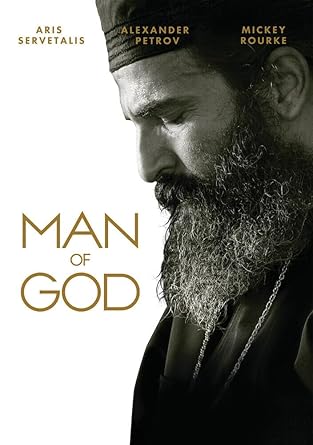
The film Man of God (2021), directed by Yelena Popovic and featuring Aris Servetalis in a celebrated performance as Nektarios, brought the story of this saint to an international audience for the first time. The film won awards at festivals across Europe and generated significant interest in Nektarios among Christians and non-Christians alike who had not previously encountered his story. Its portrayal of his response to the injustice done to him in Alexandria—the patient, prayerful bearing of calumny without bitterness or self-justification—struck audiences across cultural and religious boundaries as a testimony to something genuine and rare in human experience.
The living legacy of Saint Nektarios is inseparable from the continuing reality of his intercession. For Orthodox Christians, the saints are not historical figures whose example we admire from a distance. They are living members of the Body of Christ who have passed through death into the fuller life of the Kingdom, and who continue to pray for those still on the road. The veneration of saints in Eastern Christianity is not a sentimentalized memory of the dead but an affirmation of the Church's unity across the boundary of death—a boundary that, in Christ, has been overcome.
In this sense, to pray to Saint Nektarios is to affirm the Resurrection. It is to act on the conviction that death is not the end, that the man who lived and suffered and prayed in Silivri, Constantinople, Chios, Athens, Alexandria, and Aegina is still alive—more fully alive, in fact, than he was in the flesh—and that his prayers, offered before the Throne of God in which he now dwells, carry weight for those of us still navigating the darkness of this life. The thousands of healings attributed to his intercession are, for the Orthodox tradition, not isolated supernatural events but confirmations of this theological truth: the Body of Christ is one, death does not divide it, and the love that animated Nektarios in this life continues to radiate from him in the life to come.