Christian Mysticism Explained: Catholic, Orthodox, and Eastern Christian Paths to Union With God
Christian Mysticism Explained
Catholic, Orthodox, and Eastern Christian Paths to Union With God — the complete guide
What Is Christian Mysticism?
Christian mysticism is not a fringe movement, a medieval curiosity, or a borrowed spirituality. It is one of the oldest, most continuous, and most transformative traditions in the life of the Church — stretching from the desert caves of Egypt in the third century to monasteries alive today on Mount Athos, in the Carmelite convents of Spain, and in the hearts of ordinary believers the world over.
At its simplest, mysticism in Christianity means the pursuit of direct union with God — not merely believing in God from a distance, not merely following rules about God, but actually encountering Him, being transformed by His presence, and participating in the very life of the Trinity. The word comes from the Greek mystikos, meaning hidden or secret — not in the sense of forbidden knowledge, but in the sense of that intimate, interior encounter with God that cannot be manufactured, only received.
Throughout Christian history, from the earliest centuries to the present day, there have been believers — farmers and emperors, monks and mystics, mothers and martyrs — who sought a deeper encounter with God through silence, contemplation, purification of the heart, and unceasing prayer. These believers did not invent a new religion. They sought the deepest possible living of the one they already had.
The Central Claim of This Article
Christian mysticism is not a special gift reserved for extraordinary saints. It is the normal path of every baptized Christian who wants to move from knowing about God to actually knowing God. The great mystics are not another species — they are simply people who took the Gospel at its word.
This article covers every major stream of Christian mysticism: Eastern Orthodox, Roman Catholic, and Eastern Catholic. It explains the theology behind it, introduces the greatest mystics who lived it, addresses the most common misconceptions, and gives you a map for the journey itself. It is written for serious learners — whether you are a lifelong Christian, a curious newcomer, or someone who has found secular mindfulness insufficient and suspects that the real thing lies in this ancient tradition.
This is the hub article for understanding the whole landscape. From here, every concept links to a deeper study.
What Does "Mystic" Mean in Christianity?
Popular culture has nearly destroyed the word. Say "mystic" in most rooms today and people will picture incense smoke, vague spirituality, or someone staring at crystals. This is almost the exact opposite of what the word means in its Christian context.
In Christianity, a mystic is simply a person who seeks and attains — through God's grace — a direct, transforming encounter with God. Not visions. Not unusual phenomena. Not hidden secrets. The goal is nothing other than what the Gospel itself promises: to know God, to be transformed into His likeness, to love as He loves, and to enter into communion with the Holy Trinity.
Key Terms
Theosis: The Eastern Christian term for union with God — becoming by grace what God is by nature.
Unio Mystica: The Western term for mystical union — the soul's bridal union with Christ.
Hesychasm: The Eastern practice of interior stillness as the path to prayer of the heart.
Contemplation: The Western term for a simple, loving gaze on God beyond words or concepts.
The mystics themselves are often the most insistent on this point. St. Teresa of Ávila, one of history's greatest Christian mystics, spent enormous effort distinguishing genuine prayer from imagination, genuine union from heightened emotion. St. John of the Cross systematically warned against seeking extraordinary spiritual experiences. What they sought — and what they found — was not experiences but God Himself.
The Biblical Foundation
Christian mysticism does not drop from the sky. It is rooted in Scripture at every point, and this is crucial to understand — the mystical tradition did not import Greek philosophy into Christianity. It drew out what was already present in the revelation of Christ.
Consider the biblical encounters that form the foundation:
- Moses on Sinai — entering the thick darkness where God was, seeing God "face to face" while veiled in cloud. This became the foundational image for apophatic mysticism: God encountered in the darkness beyond all concepts.
- Elijah in the wilderness — God not in the great wind, not in the earthquake, not in the fire, but in the "still small voice" (or in Hebrew, qol demamah daqah: the voice of fine silence). This is the proto-text of hesychasm.
- Paul caught up to the third heaven — describing an experience of the divine presence that transcended ordinary consciousness and could not even be put into words (2 Corinthians 12).
- Jesus praying alone through the night — the Son of God Himself practicing contemplative solitude, demonstrating that interior prayer is not an add-on to Christian life but its very source.
- The High Priestly Prayer of John 17 — "That they may all be one, as You, Father, are in Me, and I in You; that they also may be one in Us." This is the clearest New Testament statement of mystical union as the goal of Christian life.
- Peter in 2 Peter 1:4 — "partakers of the divine nature." This single phrase is the anchor of Eastern mystical theology.
Mysticism in Christianity is therefore not an exotic addition. It is the serious pursuit of what baptism initiates and the Eucharist sustains: actual participation in the life of God.
The Three Stages of the Spiritual Life
Before exploring the different traditions, you need a map. Both Eastern and Western Christian mysticism, despite their real differences in approach, share the same three-stage framework for the journey of the soul toward God. Understanding this structure transforms the whole article from a history lesson into a practical path.
This framework — called the threefold way or the three ages of the spiritual life — was articulated in different terminology by Origen, Pseudo-Dionysius, Evagrius Ponticus, John of the Cross, and virtually every major Christian mystic across both East and West. It is not a rigid ladder but a living grammar of the interior life.
The purification of the soul from passions, sin, and disordered attachments. This is not punishment but surgery — the removal of everything that blocks the light of God from shining through the soul. It involves repentance, fasting, vigilance over thoughts, and the slow taming of desire.
East: Praxis (the active life). West: The Purgative Way. Key figures: Evagrius Ponticus, John Climacus, John of the Cross.
The mind begins to be filled with divine light. Prayer deepens. Scripture opens like a book that was always locked. The soul begins to perceive the presence of God woven through creation and through the interior life. This is not a reward — it is grace responding to the opened vessel.
East: Theoria (vision of God). West: The Illuminative Way. Key figures: Gregory of Nyssa, Bernard of Clairvaux, Hildegard of Bingen.
The final stage — becoming a true "partaker of the divine nature" (2 Pet. 1:4). This does not mean the soul becomes God (pantheism) but that it shares in God's life so completely that the distinction between creature and Creator, while remaining, is flooded with divine presence. East calls this theosis. West calls it the Unio Mystica.
East: Theosis / Deification. West: The Unitive Way. Key figures: Gregory Palamas, Teresa of Ávila, Symeon the New Theologian.
These stages are not strictly sequential — one does not "graduate" from purgation and never return. The great mystics describe a spiral: purification deepens as union draws nearer. Even at the heights of mystical union, St. John of the Cross writes of fresh encounters with darkness and purgation that carry the soul yet deeper. The framework is a map, not a checklist.
The soul that is purified does not become special. It becomes transparent — and what shines through it is not its own light.
— Traditional Teaching
One practical observation: the great mystics of both East and West insist that you do not need to be in a monastery to travel this path. A mother using the Jesus Prayer while folding laundry is in the first stage. A construction worker whose silence has become prayerful attention is in the second. A grandmother whose face radiates a peace she cannot explain is in the third. The monastery is a school for this. It is not its only home.
Mysticism in the Early Church: The Desert Fathers
All roads in Christian mysticism lead back to the Egyptian desert of the third and fourth centuries. This is the common source from which both Eastern and Western mystical traditions draw their deepest water.
Beginning in earnest after the Edict of Milan in 313 AD — when Christian martyrdom under Rome ended — thousands of men and women departed into the desert wastes of Egypt, Syria, and Palestine. They were not fleeing the world out of cowardice. They were pursuing something they saw more clearly than most: that the deepest battle in human existence is interior, and the desert was the arena where that battle could be fought without distraction.
The great fathers of this movement included:
- St. Anthony the Great (251–356) — The father of monasticism. Athanasius of Alexandria wrote his life and spread the movement across the known world. Anthony battled demons not with violence but with prayer, humility, and the name of Christ.
- St. Macarius of Egypt (300–391) — One of the most influential teachers of prayer in the entire Christian tradition, whose writings on the indwelling of the Holy Spirit and the transformation of the heart remain essential reading.
- Evagrius Ponticus (345–399) — The great intellectual systematizer of desert spirituality. He developed the first taxonomy of the eight "logismoi" (troubling thoughts) that would later become the Western Seven Deadly Sins. His framework for the stages of spiritual life shaped every subsequent mystic.
- Amma Syncletica — One of the Desert Mothers, whose wisdom sayings are preserved alongside those of the Fathers. "If you live in a community, do not change your place. For this will harm you a great deal."
- St. John Cassian (360–435) — The crucial bridge figure who carried the desert tradition from East to West, bringing the spirituality of Egypt to Gaul and founding the first Western monasteries, establishing the link that would eventually produce the Benedictine, Cistercian, and Carmelite traditions.
The Desert Fathers were not philosophers. Most were illiterate. Their wisdom was not theoretical — it was forged in the furnace of years in silence with God. The Apophthegmata Patrum (Sayings of the Desert Fathers) contains hundreds of their teachings, and almost every one is practical, urgent, and aimed at the transformation of the heart.
The Central Desert Teaching
The desert fathers taught that the enemy of the soul is not the world outside but the logismoi — the stream of thoughts, passions, and images that arise within and drag the mind from God. The whole project of the spiritual life is the nepsis (watchfulness) — learning to notice what is happening inside and redirect the heart toward God. This is the root of both hesychasm and Western contemplative practice.
Eastern Christian Mysticism
The Eastern Christian mystical tradition — developed primarily in the Orthodox Church but preserved equally in the Eastern Catholic Churches — is one of the most coherent, sophisticated, and practically developed spiritual traditions in the history of religion. Its central category is theosis: the transformation of the human person through genuine participation in God's divine life.
Hesychasm: The Way of Inner Stillness
The word hesychia means stillness, quiet, or tranquility — not the absence of activity but a quality of interior peace so profound that the mind can rest in God without distraction. Hesychasm is the name given to the Eastern Christian practice of seeking this inner stillness as the ground of unceasing prayer.
Hesychasm is not a technique. It is a way of life. Its goal is not to achieve mental blankness or emptiness (this is a common confusion with Buddhist meditation) but to move the nous — the deep faculty of spiritual perception — out of the head and into the heart, where it can rest in the living presence of God.
The hesychast tradition reached its formal theological articulation in the fourteenth century through St. Gregory Palamas, but its roots run back through John Climacus, Macarius of Egypt, and the earliest Desert Fathers. It is still practiced today in the monasteries of Mount Athos, and in the hearts of ordinary believers who have taken up the Jesus Prayer.
The Jesus Prayer
The great practical tool of Eastern mysticism is the Jesus Prayer:
"Lord Jesus Christ, Son of God, have mercy on me, a sinner."
— The Jesus Prayer
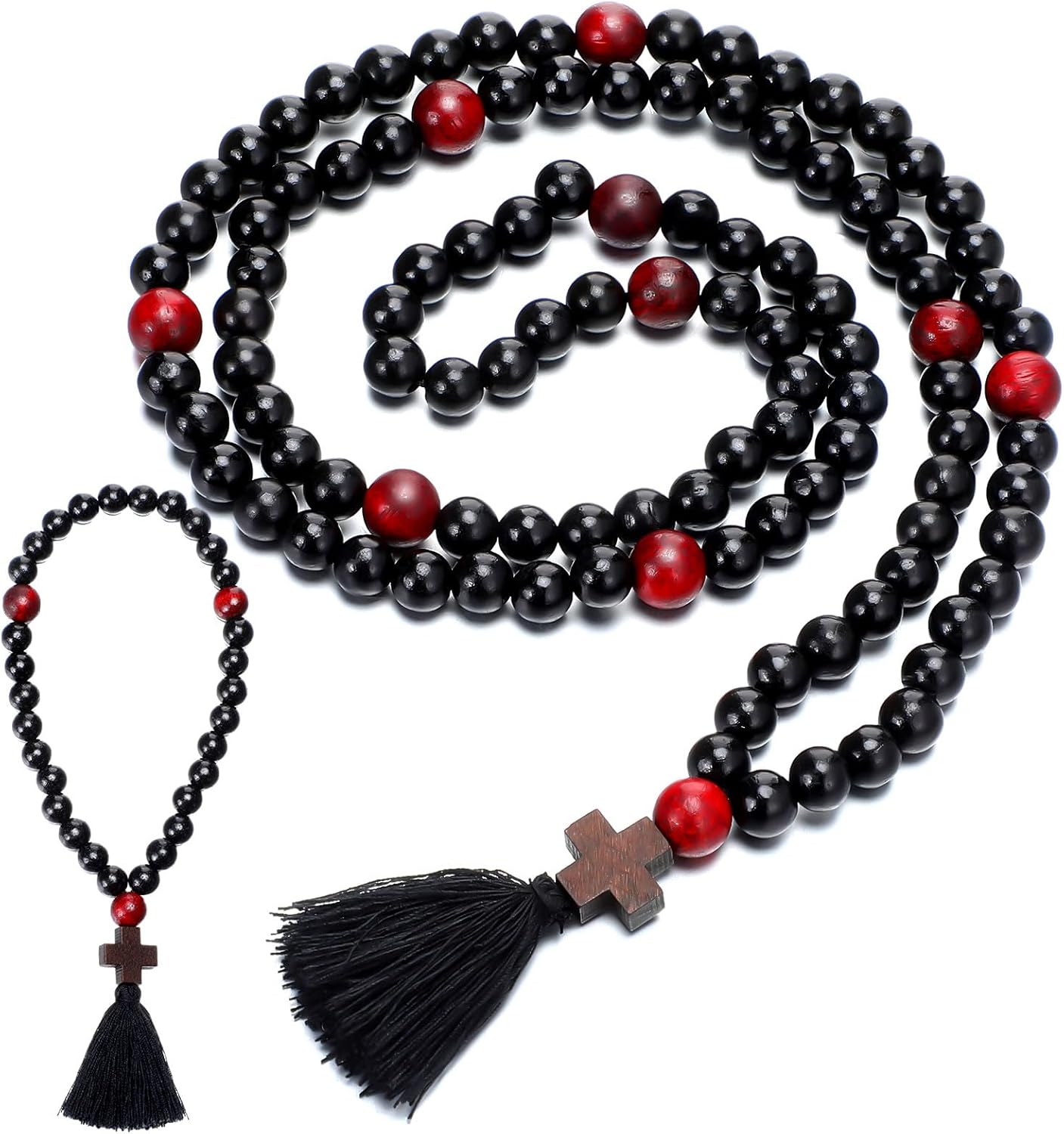
This prayer, drawn from the prayer of the blind man Bartimaeus (Mark 10:47) and the parable of the Pharisee and the Publican (Luke 18:13), is to Eastern Christianity what the Rosary is to Western Catholicism — though its method of use is different. The goal is not merely to repeat the prayer verbally, but to bring it down into the heart until it becomes the spontaneous, continuous rhythm of the soul's breathing toward God.
The classic account of this practice in the modern era is the anonymous nineteenth-century Russian text The Way of a Pilgrim — an account of a Russian peasant who hears the Pauline command to "pray without ceasing" and sets out to discover how it is done. His journey through Russia, learning the Jesus Prayer from a starets (spiritual father), remains one of the most beloved books in all of Christian literature.
Tools for the Journey: Prayer Ropes

Theosis: Participation in Divine Life
The central category of Eastern Christian mysticism is theosis — sometimes translated as "deification" or "divinization." It is grounded in 2 Peter 1:4 ("partakers of the divine nature") and in Athanasius of Alexandria's famous formulation: "God became man so that man might become God."
Theosis does not mean the human being merges into God or ceases to exist as a creature. It means that through grace, through the sacraments, through prayer and purification, the human person becomes so suffused with divine life that they are genuinely transformed — not merely forgiven or legally justified, but actually changed in their nature by the indwelling of the Holy Spirit.
This is why the Eastern Christian tradition places such emphasis on the Transfiguration of Christ as the central icon of salvation. On Mount Tabor, the disciples saw Christ's human body radiating with uncreated divine light. Eastern theology teaches that this same light — the Taboric light, the uncreated energies of God — is what the mystic seeks to receive and the saint manifests in their very body. The incorrupt relics of the saints, venerated in both Orthodox and Eastern Catholic Churches, are understood as a bodily witness to the reality of theosis.
Key Eastern Figures
The Eastern tradition offers an unbroken lineage of mystical teachers from the desert to the present day. Among the most important:
- St. Symeon the New Theologian (949–1022) — One of the most daring mystical writers in the Eastern tradition, he insisted on the possibility — indeed the necessity — of conscious experience of the Holy Spirit. He was nicknamed "the New Theologian" because only two others in the Eastern tradition had received this title: St. John the Evangelist and St. Gregory Nazianzen.
- St. Gregory Palamas (1296–1357) — The greatest systematic theologian of Eastern mysticism, whose defense of the Athonite hesychasts against the rationalist objections of Barlaam of Calabria established the theological foundations of Orthodox mysticism for all subsequent centuries.
- St. Isaac the Syrian (7th century) — A bishop who retreated into solitude after only five months in office, whose writings on prayer, tears, and the love of God remain incomparable in their depth and beauty.
- St. Seraphim of Sarov (1754–1833) — Perhaps the most beloved Russian saint, whose radiant face was witnessed by disciples glowing with the uncreated light, and whose simple teaching — "Acquire a peaceful spirit, and around you thousands will be saved" — summarizes the social dimension of theosis.
- Elder Sophrony Sakharov (1896–1993) — The twentieth-century bridge between Athonite hesychasm and the modern Western world, disciple of the remarkable Elder Silouan, whose We Shall See Him As He Is and His Life Is Mine introduce Eastern mysticism to contemporary readers with extraordinary power.
- Elder Paisios of Mount Athos (1924–1994) and Elder Porphyrios (1906–1991) — Modern Greek monks whose reputations for holiness, spiritual discernment, and miraculous intercession have made them among the most widely venerated saints of the twentieth century.
The Essence–Energies Distinction: How a Finite Human Can Meet the Infinite God
There is a profound theological problem at the heart of Christian mysticism that most popular treatments ignore entirely. It is this: if God is absolutely transcendent — utterly beyond all human knowing, all human experience, infinitely above all creatures — then how can any human being genuinely unite with Him? If we cannot know God's essence, in what sense can union with God be real rather than merely psychological?
This question was answered definitively in the Eastern tradition by St. Gregory Palamas in the fourteenth century, in what is called the Essence–Energies Distinction.
The Palamite Distinction: A Simple Summary
God's Essence (what God is in Himself — His inner being, His "ousia") is absolutely transcendent and cannot be directly known or participated in by any creature. To claim direct access to God's essence would be to claim to become God in an absolute sense — which is impossible and theologically incoherent.
God's Energies (His activities, His outward presence and operation in the world — His love, His light, His life as experienced by creatures) are truly and fully God — not a lesser God, not a created intermediary — but God as He genuinely communicates Himself to creatures.
Union with God therefore means genuine union with His Energies — which is genuine union with God Himself. We do not know what God is, but we truly meet Him.
Why does this matter for understanding mysticism? Because it does two crucial things simultaneously. First, it preserves the absolute transcendence of God — no mystic can claim to have become God or to have exhausted the divine mystery. Second, it guarantees that mystical union is real — not a psychological state, not an imaginative projection, but genuine contact with the living God.
This distinction also provides the theological foundation for understanding the uncreated light witnessed on Mount Tabor and reported by hesychast mystics: what they see is not a created light, not a physical phenomenon, not a hallucination — but the divine Energies themselves, the same radiance that shone from Christ's transfigured body.
The Essence–Energies distinction is the single theological concept most frequently missing from popular treatments of Christian mysticism — and its absence is what allows the confusion with New Age pantheism (the claim that "we are all God") to persist. Eastern mysticism is not pantheism. Theosis preserves the distinction between Creator and creature even in the heights of union — but fills that space with genuine divine life.
The Nous: The Eye of the Soul
One of the most important concepts in Eastern Christian mysticism — and one of the most consistently misunderstood — is the nous (Greek: νοῦς).
In contemporary English, we use "heart" to mean the seat of emotion, and "mind" to mean the rational intellect. Neither of these is what the Eastern tradition means by nous. The nous is something deeper than both: it is the faculty of direct spiritual perception, the "eye of the soul," the capacity of the human person to apprehend God immediately — not through logical reasoning, not through emotional feeling, but through a direct, silent beholding.
Discursive Reasoning
The Ratio / Dianoia
This is the ordinary analytical mind: the faculty that argues, compares, deduces, and constructs theological propositions. It is a good and necessary gift. Theology begins here.
But the ratio cannot perceive God directly, any more than an ear can see a painting. It can describe the door, but it cannot open it.
Direct Spiritual Perception
The Nous / Intellectus
This is the deeper faculty: the capacity for direct, non-discursive apprehension of truth — and ultimately, of God Himself. It is what the mystics mean by "the heart" when they speak of bringing prayer there.
Hesychasm is the practice of "the descent of the mind into the heart" — bringing the scattered, verbal, restless analytical mind down into the stillness of the nous, where it can rest in God without words.
The Eastern fathers teach that the nous, in its original created condition, was oriented directly toward God — seeing Him clearly and resting in Him perpetually. The Fall disrupted this orientation. The nous became darkened, scattered, and imprisoned in the ceaseless activity of the rational mind and the pull of the passions. The whole work of the mystical life — prayer, fasting, watchfulness, the Jesus Prayer, the guidance of a spiritual father — is the restoration of the nous to its original, God-directed clarity.
This concept has a partial parallel in the Western tradition. The medieval Scholastics distinguished between the ratio (discursive reason) and the intellectus (intuitive intelligence). Thomas Aquinas himself acknowledged that the highest human knowing of God transcends logical argument. The Rhineland mystic Meister Eckhart's concept of the Fünklein ("little spark" of the soul) that is never separated from God points to the same reality. But the Eastern tradition developed this insight with the greatest systematic depth and practical application.
Western Catholic Mysticism
Roman Catholicism possesses one of the richest mystical heritages in all of Christianity — a tradition that stretches from the early Church through the medieval flowering of contemplative theology, the Spanish Carmelites of the sixteenth century, and on to the twentieth-century revival of contemplative prayer. While it shares the same desert roots as Eastern mysticism, it developed its own distinct emphases, vocabulary, and methods.
Where Eastern mysticism tends toward the apophatic (the silence beyond words, the divine darkness, the purification of the nous), Western Catholic mysticism has historically placed greater emphasis on the affections — the will, the heart moved by love, the imaginative meditation on the humanity of Christ. This is not a contradiction but a complementarity: two traditions that climbed the same mountain by different paths.
Pseudo-Dionysius: The Bridge Between East and West
The single most important intellectual figure in the development of Western mystical theology is also the most mysterious: Pseudo-Dionysius the Areopagite, a Syrian theologian of the late fifth century who wrote under the pseudonym of St. Paul's Athenian convert (Acts 17:34).
Dionysius introduced the classical apophatic tradition — the theology of unknowing — into both Eastern and Western Christianity. His Mystical Theology is one of the shortest and most influential texts in Christian history. In it, he describes Moses ascending into the "divine darkness" on Sinai as the paradigm of mystical theology: as Moses ascended, he left behind all images, all concepts, all sensory and intellectual support, until he encountered God in the dazzling darkness beyond all knowing.
Dionysius's influence on the West was transmitted primarily through John Scotus Eriugena's Latin translation in the ninth century, and then through the profound medieval mystical tradition that grew from it — Thomas Aquinas, Bonaventure, Meister Eckhart, John of the Cross, and ultimately the anonymous fourteenth-century English text The Cloud of Unknowing.
Bernard of Clairvaux and the Wound of Love
St. Bernard of Clairvaux (1090–1153) represents one of the most distinctive and beautiful streams of Western mysticism: the tradition of nuptial mysticism, grounded in a reading of the Song of Songs as a dialogue between the soul and Christ the divine Bridegroom.
Bernard preached 86 sermons on the Song of Songs — never finishing it, dying before he reached the third chapter — and in them established a vocabulary of mystical union as spiritual marriage that would define Western Catholic mysticism for centuries. His emphasis is always on love: the soul's longing for God, God's infinitely prior love for the soul, the wound of love that draws the contemplative deeper into union.
This is the tradition that would bloom in the Spanish Carmelites four centuries later, in Teresa's "spiritual marriage" and John of the Cross's "living flame of love."
Teresa of Ávila and John of the Cross: The Carmelite Summit
The sixteenth-century Spanish Carmelites represent the most systematic and psychologically acute account of the mystical journey in the Western tradition. St. Teresa of Ávila (1515–1582) and St. John of the Cross (1542–1591) were not only mystics but reformers, poets, and — in Teresa's case — one of the great organizational geniuses in the history of the Church.
Teresa's Interior Castle describes the soul as a castle with seven mansions or dwelling places, the innermost being the place of divine union. The journey through the mansions corresponds to the purgative, illuminative, and unitive stages, described with extraordinary psychological precision from lived experience.
John of the Cross gave the Western tradition its most penetrating analysis of the Dark Night of the Soul — the painful and terrifying experience of spiritual desolation that characterizes the transition from illumination to union. In the dark night, all consolations are withdrawn, all felt sense of God disappears, and the soul is purified at a depth impossible to achieve through conscious effort. John's teaching on this subject is the most psychologically honest account in all of spiritual literature — and perhaps the most important for modern Western Christians who encounter it.
Acquired vs. Infused Contemplation: The Great Western Debate
One of the most important — and most consistently ignored — theological debates within Western mysticism is the question of whether contemplation can be acquired through spiritual practice, or whether it is always entirely infused as a free gift of God.
The Carmelite tradition, particularly John of the Cross, tended toward the view that genuine contemplation (as distinct from structured meditation) is always infused — purely a gift of grace that the soul can only receive by emptying itself of all its own activity and waiting on God. You cannot manufacture it. You can only make yourself receptive.
The Jesuit tradition, following Ignatius of Loyola's Spiritual Exercises, tended toward a greater emphasis on the soul's active cooperation with grace — structured forms of imaginative meditation and discursive prayer that could be systematically practiced.
The debate continues. Its practical importance is significant: it addresses whether someone can simply "learn to contemplate" through a course or method, or whether they must first pass through a genuine purgation that changes what they are at depth. Most serious teachers of prayer in both traditions hold that both elements are real — that the soul must cooperate actively and yet can never force or manufacture divine union.
Other Major Western Figures
- Hildegard of Bingen (1098–1179) — Abbess, theologian, composer, and visionary, one of the most remarkable figures in medieval history, whose theological writings describe an experience of a living divine light that pervades all creation.
- Francis of Assisi (1181–1226) — The most beloved mystic of the West for many, whose mysticism was characteristically incarnational: finding God in the crucified Christ, in lepers, in "Brother Sun and Sister Moon." He received the stigmata — the wounds of Christ in his own body — as a bodily expression of mystical union.
- Bonaventure (1221–1274) — The Franciscan theologian whose The Journey of the Mind to God (Itinerarium Mentis in Deum) is one of the most elegant accounts of the contemplative ascent in Western literature.
- Thomas Merton (1915–1968) — The twentieth-century Trappist monk whose books — beginning with the autobiography The Seven Storey Mountain — introduced millions of modern Westerners to the contemplative tradition. Merton's later writing built explicit bridges between Western mysticism and both Eastern Christianity and Asian spiritual traditions, making him perhaps the most important figure for the contemporary renewal of contemplative spirituality.
The Rhineland Mystics: The Overlooked Bridge
Between the medieval flowering of Scholastic theology and the Spanish Carmelite summit of the sixteenth century, there arose in the Germanic lands a school of mystical theology of extraordinary depth and daring — the Rhineland Mystics. They are less well known than Teresa and John of the Cross, but they are theologically among the most sophisticated mystical writers in the Christian tradition, and they are the figures most frequently encountered first by people coming from secular mindfulness or New Age backgrounds.
Meister Eckhart (c. 1260–1328)
The Dominican friar Meister Eckhart is the most controversial and the most philosophically daring of the Rhineland mystics. His German sermons and Latin treatises describe the mystical life in terms that can sound shockingly bold: the soul's return to its "ground" in God, the birth of the Word in the soul, the Abgeschiedenheit (detachment) that empties the soul of everything that is not God so that God can fill it entirely.
Some of Eckhart's formulations were condemned by Pope John XXII in 1329, though Eckhart himself submitted his writings to the Church's judgment before his death. The theological controversy around him is real — but so is his depth. Modern scholarship has substantially rehabilitated his work, and his influence on subsequent Western mysticism (from Tauler and Ruusbroec to the anonymous author of Theologia Germanica) was immense.
Jan van Ruusbroec (1293–1381)
The Flemish mystic Ruusbroec corrected what he saw as the potentially problematic quietism in some strands of the Rhineland tradition, insisting that mystical union is not a static absorption into God but a dynamic loving exchange — an eternal flowing out from God in activity and flowing back to God in contemplation. His The Spiritual Espousals is one of the masterworks of mystical literature.
Henry Suso and John Tauler
Eckhart's disciples — Henry Suso (1295–1366), whose lyrical Little Book of Eternal Wisdom has been called "the most beautiful mystical text of the Middle Ages," and John Tauler (1300–1361), whose practical sermons on the interior life influenced Martin Luther and generations of both Catholic and Protestant readers — complete the Rhineland school and demonstrate its pastoral, not merely speculative, character.
Why do the Rhineland mystics matter for this article? Because they are the figures most likely to be encountered by people who arrive at Christian mysticism from the outside — through philosophy, literature, or New Age searching. Their theological depth, their bold language, and their engagement with fundamental questions about the soul and God make them simultaneously the most accessible and the most easily misread of the Christian mystics. Understanding them correctly is therefore practically important.
Apophatic vs. Kataphatic Theology: The Key to Understanding East and West
This is arguably the single most important intellectual framework for understanding why Eastern and Western Christian mysticism feel so different — and the one most consistently absent from popular treatments of the subject. Once you grasp this distinction, the whole comparison between traditions becomes clear.
The Way of Affirmation
Kataphatic Theology
Also called via positiva — the positive way. God is described and approached through positive affirmations: God is love, God is light, God is beauty, God is good. The soul approaches Him through beauty, through the sacred humanity of Christ, through meditation on Scripture and creation, through acts of love.
This is the dominant mode in Western Catholic mysticism: Bernard meditating on the Song of Songs; Francis seeing God in all creatures; Teresa imagining herself present at scenes from the Gospel; Ignatius making his detailed composition of place in meditation on the Passion.
The Way of Negation
Apophatic Theology
Also called via negativa — the negative way. God utterly transcends all human concepts and categories. Every positive description of God, while useful at lower stages, must ultimately be stripped away. God is not "good" in any sense we understand. He is not even "being" as we understand it. He is beyond all affirmations.
The Eastern tradition, and the mystical strand in the West running from Pseudo-Dionysius through the Cloud of Unknowing to John of the Cross, is primarily apophatic: the soul ascends into the divine darkness, the cloud of unknowing, the silence beyond all words.
The critical point — missed by almost all popular treatments — is that these are not opposing theologies but complementary stages. The great mystics of both traditions taught that kataphatic theology is the beginning: you must first fill yourself with true images and concepts of God before you can profitably let them go. The apophatic empties what the kataphatic filled. Trying to skip directly to the apophatic without the kataphatic foundation leads to an empty, hollow "spirituality of nothing" — which is not Christian mysticism at all, but a subtle spiritual trap.
Gregory of Nyssa put it this way: Moses first saw God in the burning bush (light, kataphatic), then through the pillar of cloud (transition), then in the thick darkness on Sinai (apophatic). These are not three different Gods — they are three stages of the same encounter.
This framework also explains the apparent paradox in Western mysticism: why does John of the Cross, who wrote some of the most beautiful love poetry in the Spanish language about his love for God, also write that the soul must let go of all images, feelings, and concepts of God? Because he understands that the images and feelings are necessary scaffolding — but when God Himself comes to fill the house, the scaffolding must come down.
Do Eastern Catholics Practice Mysticism?
This is a question that deserves more than a footnote — and it is one that most treatments of Christian mysticism completely overlook. The answer is yes, fully and deeply, and in a way that reveals the remarkable breadth of the Catholic Church.
The Eastern Catholic Churches — those communities in full communion with Rome but preserving Eastern liturgical rites, spirituality, and theological traditions — include:
- The Ukrainian Greek Catholic Church — the largest Eastern Catholic Church, preserving the Byzantine rite in full.
- The Maronite Church — rooted in the Antiochene tradition, preserving elements of Syriac mysticism including the tradition of St. Isaac the Syrian.
- The Melkite Greek Catholic Church — preserving the full Byzantine-Greek rite including hesychasm and the Jesus Prayer.
- The Coptic Catholic Church, the Chaldean Catholic Church, the Syro-Malabar Church — each preserving their own ancient liturgical and mystical traditions.
Eastern Catholics practice hesychasm, the Jesus Prayer, theosis, desert spirituality, and the full Eastern mystical tradition. They read the Philokalia. They venerate Gregory Palamas. They understand the goal of the Christian life as theosis in exactly the same sense as their Orthodox counterparts.
What is unique about the Eastern Catholic position is that it makes visible the unity between East and West that both sides often forget: the mystical tradition is one, even where the theological articulations differ. An Eastern Catholic monk on Mount Lebanon praying the Jesus Prayer in the hesychast tradition, and a Carmelite nun in Avila praying from her cell in the Interior Castle, are climbing the same mountain — and they recognize each other, when they encounter one another, as fellow travelers.
The Liturgy as the Primary Mystical School
One of the most important corrections this article must make to popular understandings of Christian mysticism is this: mysticism in Christianity is not, first and foremost, a private spiritual practice. It is rooted in the public worship of the Church.
This point is insisted upon by every serious teacher in both traditions, and it separates Christian mysticism decisively from New Age spirituality, secular mindfulness, and the various DIY contemplative approaches that have proliferated in recent decades.
Maximus the Confessor on the Liturgy
St. Maximus the Confessor (580–662), in his remarkable work Mystagogy (a theological commentary on the Divine Liturgy), described the entire liturgical action as a cosmic mystical event — each element of the liturgy enacting and communicating the mystery of salvation and the participation of humanity in divine life. For Maximus, to participate attentively in the Divine Liturgy was not preparation for mysticism — it was mysticism.
In the Eastern tradition, the Divine Liturgy — the ancient Eucharistic rite attributed in its current form to St. John Chrysostom — is understood as a genuine participation in the heavenly worship, the liturgy of the angels around the throne of God. When the faithful receive Holy Communion, they are not merely receiving a symbol — they are receiving the body and blood of the eternal Son of God, the very source of divine life.
In the Western tradition, the same theology of the Mass has been articulated in different vocabulary. The Council of Trent, the documents of Vatican II (particularly Sacrosanctum Concilium), and the great liturgical theologians of the twentieth century all insist that the Mass is the "source and summit" of the Christian life — including its mystical dimension.
The practical implication is significant: genuine Christian mysticism cannot be practiced as an individual spiritual technique disconnected from the sacramental life of the Church. The Jesus Prayer practiced apart from the Eucharist becomes a spiritual exercise. Practiced as an extension of and preparation for liturgical worship, it becomes what it is meant to be: the inhalation between the great breaths of the Divine Liturgy.
This is why the greatest hesychasts — including St. Seraphim of Sarov — attended the Divine Liturgy daily when they were in community, and why every great Western contemplative was deeply rooted in the sacramental life of the Church. The mystical tradition is not a private club with the sacraments as an optional add-on. It is the flowering of a sacramental life fully lived.
The Tools of the Mystic: A Practical Comparison
Both Eastern and Western mystical traditions have developed concrete, embodied practices and tools to support the interior journey. These are not techniques for generating spiritual experience — they are ascetic structures, forms of spiritual discipline that create the conditions in which God can work.
| Tool / Practice | Eastern Christian | Western Catholic | How It Works Today |
|---|---|---|---|
| Prayer Beads | Chotki (prayer rope, 33–300 knots) or Lestovka — used to count repetitions of the Jesus Prayer | Rosary — vocal prayers and mysteries of Christ's life; designed to carry the mind from vocal prayer into contemplative silence | Both train the wandering mind to return consistently to the heart. The goal in both cases is not the beads but the attention they anchor. |
| Posture & Breath | Hesychast practice: seated, chin to chest, controlled breathing coordinated with the Jesus Prayer — described in detail by Nikephoros the Monk (13th c.) and Gregory Palamas | Carmelite "prayer of recollection" — gathering the scattered senses inward; Ignatian "composition of place" — using imagination to center the mind | Both acknowledge the psychosomatic unity of the human person. The body is a participant in prayer, not an obstacle to it. Even a brief pause, a conscious breath, and the silent prayer of the name of Jesus can become the whole practice for a person in an ordinary working day. |
| Sacred Reading | Philokalia — the great anthology of Eastern mystical texts, compiled by St. Nikodimos of the Holy Mountain; Ladder of Divine Ascent (John Climacus) | Lectio Divina — slow, prayerful reading of Scripture or spiritual texts in four movements: reading, meditation, prayer, contemplation | Both traditions insist that reading spiritual texts is itself a prayerful act — not information gathering but allowing the Word of God to re-form the interior life. |
| Sacramental Anchor | Regular reception of the Eucharist in the Divine Liturgy; sacramental Confession as purification of the nous | Regular Mass attendance and Eucharistic reception; Confession (Sacrament of Reconciliation) as purification of conscience | Never self-constructed ("DIY"). Always ecclesial, always sacramental. The mystic without the sacraments is a river without banks. |
| Spiritual Guide | Gerontas / Starets (Elder) — essential for the hesychast tradition; the Elder discerns spirits, corrects prelest (spiritual delusion), and gives the heart a safe path | Spiritual Director — a trained guide who accompanies the soul in its progress, helping to discern movements of consolation and desolation | Both traditions insist: do not attempt the mystical path without guidance. The history of both East and West is full of warnings about the dangers of the solitary path. A trusted priest, confessor, or spiritual director is not optional — it is the safety net. |
| Fasting & Vigil | Regular fasting periods (Wednesday, Friday, and four major fasting seasons); all-night vigil prayers on feast days | Fasting and abstinence (Fridays, Lent); the Divine Office (Liturgy of the Hours) as the structuring of time in prayer | Asceticism is not self-punishment. It is the systematic weakening of the passions that cloud the nous — giving the soul traction for prayer. |
⚠ A Necessary Warning: Prelest / Spiritual Delusion
Both the Eastern tradition (prelest) and the Western tradition (illusion, ilusión) contain extensive warnings about the very real spiritual danger of seeking mystical experience for its own sake, without proper guidance and sacramental grounding. Attempting to force contemplative states, seeking visions or locutions as a goal, or bypassing the sacraments and a spiritual guide in the mystical life has historically led to severe spiritual harm. Every great mystic, without exception, insists: find a guide, root your life in the sacraments, and seek God — not His gifts.
Female Mystics: The Forgotten Giants
Any treatment of Christian mysticism that focuses primarily on male figures is not only historically incomplete — it misses some of the tradition's greatest voices. Women have been among the most important, most creative, and most influential mystics in the history of Christianity, even in traditions where their institutional role was limited.
In the Eastern Tradition
St. Mary of Egypt (c. 344–421) is one of the most radical mystical figures in all of Christian history. A former prostitute in Alexandria who was converted by a miraculous experience at the Holy Sepulchre in Jerusalem, she retreated alone into the Jordanian desert where she lived for forty-seven years in total solitude, prayer, and penance. When she was finally encountered by the monk Zosimas, she was levitating at prayer, her body sustained by the Eucharist he brought her. Her life became a paradigm of the most extreme form of Eastern mystical asceticism — the transformation of a life of complete self-abandonment into one of complete self-gift to God.
The Desert Mothers — Amma Syncletica, Amma Sarah, Amma Theodora — are among the earliest recorded spiritual teachers in Christianity, their sayings preserved alongside those of the male Desert Fathers in the Apophthegmata Patrum. Amma Syncletica's saying that "there is an asceticism which is determined by the enemy and his disciples practice it" — warning against excessive, self-willed austerity — is as psychologically acute as anything in the tradition.
In the Western Tradition
St. Hildegard of Bingen (1098–1179) — abbess, theologian, composer, natural scientist, and visionary — represents a breadth of mystical giftedness almost unparalleled. Her three great visionary works (Scivias, Liber Vitae Meritorum, and Liber Divinorum Operum) describe an experience she called the "living light" — a luminous presence that illuminated her interior vision and through which she perceived divine truth.
St. Mechthild of Magdeburg (1207–1282), a Beguine mystic whose Flowing Light of the Godhead is written in a poetic, rapturous style that anticipates both John of the Cross and the Rhineland tradition.
St. Julian of Norwich (1342–c. 1416) — the English anchoress who received a series of visions during a near-death illness at age thirty, and spent the next twenty years contemplating their meaning. Her Revelations of Divine Love is the first book in the English language known to have been written by a woman, and contains some of the most theologically profound and psychologically tender mystical writing in any tradition. Her assurance — "All shall be well, and all shall be well, and all manner of thing shall be well" — has comforted believers for six centuries.
St. Catherine of Siena (1347–1380) — a Dominican tertiary who, despite having no formal theological education, wrote the mystical treatise The Dialogue (dictated in ecstasy), corresponded with popes and princes, and played a decisive role in ending the Avignon papacy. She is a Doctor of the Church — one of only four women to receive this title.
St. Teresa of Ávila — already discussed above — was not only the greatest female mystic of the Catholic tradition but arguably the greatest systematic psychologist of prayer in the entire Christian heritage, male or female. The Interior Castle remains the most precise map of contemplative prayer ever produced.
A Cloud of Witnesses
Below are twelve of the most important Christian mystics across both traditions — with the key insight each contributed and a word of their wisdom that still has power to stop a reader in their tracks.
Eastern — Desert
St. Isaac the Syrian
c. 613 – c. 700 AD
Mastered: The Theology of Divine Mercy & Tears of Repentance
"This life has been given to you for repentance; do not waste it in vain pursuits."
Eastern — Byzantine
St. Symeon the New Theologian
949 – 1022 AD
Mastered: The Conscious Experience of the Holy Spirit
"Do not say it is impossible to receive the Spirit of God. Do not say it is possible to be saved without Him."
Eastern — Athonite
St. Gregory Palamas
1296 – 1357 AD
Mastered: The Theology of Uncreated Light & Divine Energies
"The light of Tabor is not created — it is the very glory of God made visible to purified human eyes."
Eastern — Russian
St. Seraphim of Sarov
1754 – 1833 AD
Mastered: The Embodied Manifestation of Theosis
"Acquire a peaceful spirit, and around you thousands will be saved."
Eastern — Modern
Elder Sophrony Sakharov
1896 – 1993 AD
Mastered: The Bridge between Athonite Hesychasm & the Modern West
"To pray for all as for yourself — this is the beginning of the great love which is commanded of us."
Eastern — Ladder Tradition
St. John Climacus
c. 579 – 649 AD
Mastered: The Systematic Ascent of the Soul — The Ladder of Divine Ascent
"Prayer is the mirror of spiritual progress."
Western — Rhineland
Meister Eckhart
c. 1260 – 1328 AD
Mastered: The Apophatic Mysticism of the Soul's Ground in God
"The eye through which I see God is the same eye through which God sees me."
Western — Cistercian
St. Bernard of Clairvaux
1090 – 1153 AD
Mastered: Nuptial Mysticism — the Soul's Bridal Union with Christ
"You wish to see God? Remove the beam from your eye first. Then the vision comes as a gift."
Western — Carmelite
St. Teresa of Ávila
1515 – 1582 AD
Mastered: The Interior Castle — Systematic Psychology of the Mystical Journey
"Prayer is not a matter of thinking a great deal, but of loving a great deal."
Western — Carmelite
St. John of the Cross
1542 – 1591 AD
Mastered: The Dark Night of the Soul — Purification beyond Consolation
"To come to what you know not, you must go by a way you know not."
Western — English
St. Julian of Norwich
1342 – c. 1416 AD
Mastered: The Theology of Divine Love in Human Suffering
"All shall be well, and all shall be well, and all manner of thing shall be well."
Western — Modern
Thomas Merton
1915 – 1968 AD
Mastered: The Renewal of Western Contemplation for the Modern World
"The biggest human temptation is to settle for too little."


East and West: Key Differences
The differences between Eastern and Western Christian mysticism are real — but they are differences of emphasis, vocabulary, and approach, not of ultimate goal. Both seek union with the same God. Both are rooted in the same Scriptures. Both descend from the same desert tradition. Understanding the differences enriches both.
| Feature | Eastern Christian Mysticism | Western Catholic Mysticism |
|---|---|---|
| Primary Goal | Theosis — Deification / Transfiguration of the whole person, body and soul | Unio Mystica — Bridal union of the soul with Christ; participation in Trinitarian love |
| Dominant Mode | Primarily apophatic — the silence, stillness, and divine darkness beyond all concepts and images | Primarily kataphatic — engaging images, affections, and meditation on the sacred humanity of Christ — with apophatic culmination |
| Key Faculty | The Nous — the spiritual intellect, the eye of the soul, which perceives God directly | The Will and the Affections — love as the faculty of union; the loving attention that rests in God |
| Central Icon | The Transfiguration — Christ's body radiating uncreated divine light on Mount Tabor | The Passion and the Cross — the suffering love of the crucified Christ as the path of union |
| View of the Body | Psychosomatic — the body participates in theosis; bodily posture and breath are used in prayer; incorrupt relics testify to bodily deification | Sacramental — the body is honored through the humanity of Christ; affective imagination engages the bodily senses in meditation |
| The Darkness | "Dazzling darkness" (gnophos) — the tradition of Pseudo-Dionysius and Gregory of Nyssa; God encountered beyond all light | "Dark Night of the Soul" (San Juanist) — the withdrawal of consolations as a purgative gift; the passive night of the spirit |
| Key Practices | Hesychasm, Jesus Prayer, watchfulness of thoughts (nepsis), Divine Liturgy, fasting | Lectio Divina, contemplative prayer, the Divine Office, Ignatian Exercises, Rosary, Eucharistic Adoration |
| Key Texts | Philokalia, Ladder of Divine Ascent, Way of a Pilgrim, Homilies of Macarius | Interior Castle, Dark Night of the Soul, Cloud of Unknowing, Imitation of Christ |
| Theological Anchor | Essence–Energies distinction (Palamas); uncreated divine light as the content of mystical experience | Infused vs. acquired contemplation; the theological virtues as the means of union |
The theologian Vladimir Lossky, one of the great twentieth-century Orthodox thinkers, wrote that mysticism and theology in Eastern Christianity are not two separate disciplines — mystical experience is the source of theology, and theology is the articulation of mystical experience. Western Christianity largely shares this conviction, though it has sometimes developed theology more independently of direct mystical experience — a divergence that has occasionally produced excellent theology and occasionally thin spirituality.
Common Misconceptions: Clearing the Static
The word "mysticism" carries more misleading baggage than almost any other term in religious discourse. Before you can understand what Christian mysticism is, you must clear away what it is not.
Misconception 1: Mysticism is visions, apparitions, and extraordinary phenomena
This is probably the most common misunderstanding. When people hear "Christian mysticism," they often think of levitation, stigmata, ecstasies, and dramatic visions. These things do sometimes appear in the lives of mystics — but they are not the point. They are not the goal. Every great mystic in the tradition, from Teresa of Ávila to Gregory Palamas, insists that genuine union with God does not require — and is far more excellent than — any extraordinary phenomenon. Teresa explicitly ranks the highest stages of prayer as less flashy and more purely interior than the lower stages where visions may appear.
Misconception 2: Christian mysticism is pantheism — "we are all God"
This is the New Age conflation that the Essence–Energies distinction specifically addresses. Theosis in Eastern Christianity is not the absorption of the self into a divine "All" in which individual identity dissolves. It is the transformation of the human person through genuine participation in the divine life — while the distinction between Creator and creature remains real and permanent. You are not God. You can, through grace, share in God's life.
Misconception 3: Christian mysticism is Gnosticism — the body is evil and must be escaped
Christian mysticism does not seek escape from the body or from physical creation. Quite the opposite: the Eastern doctrine of theosis explicitly includes the body — the incorrupt relics of the saints, the bodily transformation of the Transfiguration, the resurrection of the body as the final state of salvation. Western mysticism, particularly the Franciscan tradition, is deeply affirmative of creation as bearing the traces of God.
Misconception 4: Mysticism is quietism — passive, inactive, world-denying
Some of the most extraordinarily active figures in Christian history were mystics. Catherine of Siena corresponded with popes and negotiated the end of the Avignon papacy. Teresa of Ávila founded seventeen convents. Seraphim of Sarov attracted thousands of pilgrims even during years of reclusion. Mother Teresa of Calcutta, who struggled with decades of interior spiritual darkness, ran an organization serving the poorest of the poor across the world. The fruits of mystical union are not withdrawal — they are the overflow of divine love into action.
Misconception 5: Mysticism is elitist — only for monks and nuns with special gifts
The Desert Fathers were mostly illiterate peasants and shepherds. Seraphim of Sarov began as a simple monk. The greatest English mystic, Julian of Norwich, never left her anchorhold. The narrator of The Way of a Pilgrim is a homeless wanderer with a withered arm. God does not distribute the capacity for union according to education, social standing, or extraordinary natural gifts. He distributes it according to desire, humility, and grace.
Mystical Union vs. Private Revelation: A Crucial Distinction
One of the most frequently overlooked distinctions in popular treatments of Christian mysticism — and one of the most practically important — is the difference between mystical union and private revelation.
Private revelation refers to specific supernatural communications given to individuals: visions (seeing with the inner or outer eye), locutions (hearing interior or exterior words from God or the saints), apparitions, stigmata, prophetic knowledge of events, and similar phenomena. The Catholic Church has an elaborate apparatus for evaluating these claims. Significant private revelations — Lourdes, Fatima, Guadalupe — have been formally approved as "worthy of belief," though such belief is never required of Catholics.
Mystical union — the direct, transforming encounter with God in the depth of prayer — is something different. It does not necessarily involve any of these phenomena. It is not an experience of a specific message from God but an encounter with God Himself in the silence beyond all messages.
St. Teresa of Ávila was famously explicit about this distinction. In the Interior Castle, she places the highest forms of mystical union — the "seventh mansion" of the spiritual marriage — above and beyond the locutions, visions, and raptures that can occur in the middle mansions. The highest prayer, for Teresa, is the simplest: a direct, imageless, wordless union of the soul with the Trinity. Visions, she says, are a gift — but they can also be a trap for those who seek them as an end in themselves.
John of the Cross goes further still. In the Ascent of Mount Carmel, he counsels his readers to refuse visions and locutions as a general rule — not because they are necessarily false, but because seeking them diverts the soul from the higher path of pure faith, which is the only faculty adequate to union with God.
This distinction matters enormously for contemporary Christians. Much popular Catholic and charismatic spirituality is deeply concerned with private revelation — seeking messages, signs, and supernatural experiences. The mystical tradition gently but firmly redirects this: what God most wants to give you is not a message about the future. It is Himself, in the present, in the prayer of the heart.
Why Christian Mysticism Matters Today
There is a spiritual hunger in the modern world that institutional Christianity has often failed to feed — and that failure has consequences. Millions of people are leaving Western churches not because they are anti-religious but because they are starving for the very thing those churches carry in their own tradition, and have forgotten to offer.
The sociologist Christian Smith coined the term "Moralistic Therapeutic Deism" to describe what many young Americans actually believe: a God who wants us to be good and feel happy, who is available in emergencies, but who does not demand or offer anything more. This is not the Gospel. It is not even interesting. And the people who have grown up with it know, in their bones, that something is missing — even if they cannot name what it is.
What is missing is exactly what the mystical tradition offers: the actual encounter with the living God. Not a comfortable affirmation of your choices. Not a motivational framework with religious vocabulary. The terrifying, beautiful, transforming presence of the One who is Being Itself, who loved you into existence, and who offers to fill you with divine life if you will let Him.
This is why the secular mindfulness movement, the popularity of Eastern meditation, the explosion of interest in "spirituality" among people who have left organized religion — all of this represents an enormous, unfed hunger for what Christianity actually possesses. The mindfulness app is the symptom of a diagnosis that the Jesus Prayer was treating for twelve centuries before the smartphone existed.
The Science, Very Briefly
Neuroscience research on contemplative prayer has shown measurable changes in brain structure and function associated with long-term contemplative practice: growth in gray matter in areas associated with attention and self-awareness, reduced cortisol levels, increased emotional regulation, and enhanced capacity for compassion. These findings are genuinely interesting — but they are not the reason to pursue Christian mysticism. The reason to pursue Christian mysticism is that God is real, He became flesh, and He invites you to know Him. The neuroscience is, at most, a footnote on the margins of that invitation.
The mystical tradition also speaks directly to the specific spiritual condition of contemporary Western life: its distractedness, its exhaustion, its isolation, its performative religiosity that never touches the deep. The tradition does not offer techniques for self-improvement. It offers something far more costly and far more magnificent: transformation.
And it insists, with the quiet certainty of fourteen centuries of lived experience, that this transformation is available to every human being who desires it — not only to monks, not only to saints, not only to those with extraordinary natural gifts. The invitation is addressed to you.


Historical Timeline: Twelve Centuries of Living Tradition
Anthony the Great — The Father of Monasticism
The Egyptian Desert movement begins in earnest. The common root of all Christian mysticism.
Evagrius Ponticus — The First Systematic Desert Theologian
Develops the first taxonomy of thoughts and stages of prayer. Shapes every subsequent mystic.
John Cassian — The Desert Tradition Moves West
Brings Eastern desert spirituality to Gaul, founding the first Western monasteries and planting the seed of the Benedictine and Cistercian traditions.
Pseudo-Dionysius the Areopagite — The Apophatic Master
Introduces the theology of divine darkness and the via negativa that will shape both Eastern and Western mysticism for a thousand years.
St. John Climacus — The Ladder of Divine Ascent
Abbot of Sinai produces the most influential practical guide to the mystical life in the Eastern tradition — still read in every Orthodox monastery during Great Lent.
Symeon the New Theologian — The Theologian of Direct Experience
Insists on the possibility and necessity of conscious experience of the Holy Spirit. His hymns remain some of the most rapturous mystical texts in any language.
Bernard of Clairvaux — Nuptial Mysticism Blooms in the West
The Cistercian tradition of bridal mysticism, the Song of Songs, and mystical love establishes itself as a dominant strand of Western Catholic contemplation.
The Rhineland Mystics — Eckhart, Tauler, Ruusbroec, Suso
The most philosophically daring mystical school of medieval Catholicism bridges apophatic theology and popular vernacular spirituality.
Gregory Palamas — The Hesychast Controversy and Its Resolution
The Palamite synthesis of Essence–Energies becomes the definitive theological framework for Eastern Christian mysticism.
Teresa of Ávila & John of the Cross — The Carmelite Summit
The most systematically precise and psychologically acute accounts of the mystical journey in the Western tradition. Both declared Doctors of the Church.
Seraphim of Sarov & The Way of a Pilgrim
Eastern mysticism reaches a popular synthesis: the Jesus Prayer tradition accessible to ordinary laypeople. Seraphim's conversation with Motovilov on the acquisition of the Holy Spirit becomes a classic text.
Thomas Merton, Elder Sophrony, the Philokalia Translation
East and West begin to hear each other with new depth. The English translation of the Philokalia (1979–1995) and Merton's contemplative writings make both traditions available to the modern world as never before.
Recommended Reading
These are the books that will take you from a reader of this article to a student of the living tradition. Each is annotated to help you find the right starting point for where you are.
-
The Philokalia (Volumes 1–4)
Where to start: Volume 1. The foundational anthology of Eastern hesychast spirituality, compiled by St. Nikodimos of the Holy Mountain and St. Makarios of Corinth. The most important text in Eastern Christian mysticism after the Bible. Begin with the texts of Evagrius Ponticus and the Sayings of the Desert Fathers.
-
The Interior Castle — St. Teresa of Ávila
The most complete and psychologically precise map of the mystical journey in the Western tradition. Indispensable. Start here if you are coming from a Western Catholic background.
-
Dark Night of the Soul — St. John of the Cross
The definitive treatment of the most difficult and most necessary stage of the mystical journey. Most honest account of spiritual desolation in the literature. Read after the Interior Castle, or during a difficult spiritual period.
-
The Way of a Pilgrim
The anonymous nineteenth-century Russian account of learning the Jesus Prayer. The most accessible entry point into Eastern mysticism for a Western reader. Readable in an afternoon; livable over a lifetime.
-
The Ladder of Divine Ascent — St. John Climacus
Thirty "rungs" of the spiritual life, from renunciation to hesychia to perfect love. Still read in every Orthodox monastery during Lent. Extraordinarily practical, sometimes startling, always profound.
-
His Life Is Mine — Elder Sophrony Sakharov
The most accessible introduction to Athonite hesychasm for the modern reader. Elder Sophrony writes with extraordinary clarity and warmth about the interior life, the Jesus Prayer, and the path of theosis for ordinary people.
-
The Cloud of Unknowing (Anonymous, 14th century)
The great English apophatic mystical text. Written by an unknown English mystic, it describes the practice of "naked intent toward God" beyond all images and concepts, in the "cloud of unknowing" between the soul and God. Pairs beautifully with John of the Cross.
-
Contemplative Prayer — Thomas Merton
Merton's most focused and mature treatment of the contemplative life. Written toward the end of his life, it draws on both Western Catholic and Eastern Orthodox sources. Ideal for modern Western readers approaching the tradition for the first time.
-
The Way of Modern Christian Mysticism: Practical Prayer and Contemplative Practices for Union with God
In this transformative book, you'll discover the timeless wisdom of Catholic and Orthodox saints, mystics, and contemplatives, brought into clear, practical steps for the modern believer. Whether you are brand new to Christian mysticism or seeking to deepen your spiritual journey, this book will lead you into the quiet, radiant presence of God. An ideal starting point for contemporary readers.
Frequently Asked Questions
What is Christian mysticism?
Christian mysticism is the tradition within Christianity that seeks direct, transforming union with God through prayer, purification, and contemplation. It is not a fringe movement but one of the oldest and most continuous spiritual traditions in the Church. It does not pursue visions or extraordinary phenomena — it pursues God Himself, in the silence and depth of the interior life.
Is mysticism part of Christianity?
Yes, deeply and organically. Christian mysticism is rooted in the Scriptures (Moses on Sinai, Paul caught up to the third heaven, Jesus praying alone through the night, 2 Peter 1:4 promising participation in the divine nature), was developed by the earliest desert monastics in the third and fourth centuries, and has been a continuous and recognized tradition in both Eastern and Western Christianity ever since. It is not borrowed from other religions — it flowered from the Gospel itself.
Do Catholics practice mysticism?
Yes. Roman Catholicism has one of the richest mystical traditions in the world. Its greatest mystical doctors — Teresa of Ávila and John of the Cross — are both declared Doctors of the Church. The Carmelite, Cistercian, Benedictine, and Dominican traditions all carry deep mystical heritage. The Second Vatican Council described the Church's liturgy as the "source and summit" of Christian life — which includes its contemplative dimension.
Do Orthodox Christians practice mysticism?
Orthodox Christianity is perhaps the tradition in which the mystical dimension has most consistently remained central and explicit. The theology of theosis — the transformation of the human person through participation in the divine life — is understood as the goal of every Christian's life, not a specialty for spiritual elites. The hesychast tradition, the Jesus Prayer, and the theology of St. Gregory Palamas are all normative expressions of Orthodox spirituality rather than optional extras.
What is the difference between Eastern and Western Christian mysticism?
The primary difference is one of emphasis, vocabulary, and approach. Eastern mysticism emphasizes theosis (deification), the Nous, the Essence–Energies distinction, hesychasm, and the silence of the heart. Western mysticism emphasizes the will, the affections, imaginative meditation on the sacred humanity of Christ, and the stages of the interior castle. Both share the same three-stage structure of purgation, illumination, and union, and both flow from the same desert tradition. They are two paths up the same mountain.
What is theosis?
Theosis (or deification) is the Eastern Christian term for the goal of the spiritual life: the genuine transformation of the human person through participation in God's divine life. Rooted in 2 Peter 1:4 ("partakers of the divine nature") and Athanasius of Alexandria's dictum "God became man that man might become God," theosis does not mean the human person merges into God or loses their individuality. It means they are so filled with divine life — through the sacraments, prayer, and ascetic practice — that their humanity is fully restored and elevated to its created potential as an image of God.
What is hesychasm?
Hesychasm is the Eastern Christian tradition of interior prayer centered on stillness (hesychia). Its goal is to bring the nous (the spiritual intellect) down from the scattered activity of the analytical mind into the deep quiet of the heart, where it can rest in the presence of God. The Jesus Prayer ("Lord Jesus Christ, Son of God, have mercy on me, a sinner") is its central practice. It was formally defended as orthodox theology by St. Gregory Palamas in the fourteenth century and remains the living heart of Eastern Christian contemplative life. For a full treatment, see our dedicated article on hesychasm.
What is the dark night of the soul?
The "dark night of the soul" is a term from St. John of the Cross describing the painful withdrawal of all spiritual consolations and felt sense of God's presence that typically marks the transition from illumination to union. It is not depression — though it can be confused with it. It is an active divine purgation working in the depths of the soul at a level the conscious mind cannot reach through effort. John describes both an "active night" (what the soul does to cooperate) and a "passive night" (what God does in the soul without its conscious cooperation). Its purpose is complete surrender to God, burning away the last attachments to self that keep the soul from full union.
Can ordinary Christians practice mystical prayer?
Yes. This is insisted upon by every serious teacher in the tradition. The mystical path is the normal path of Christian life fully lived — not a specialty reserved for monks, nuns, or those with extraordinary gifts. The Desert Fathers were mostly illiterate peasants. The wandering narrator of The Way of a Pilgrim was a homeless layman with a withered arm. The goal is the same for everyone; the form of life through which it is pursued varies. A parent using the Jesus Prayer while cooking, a nurse offering small acts of service as silent prayer, a student practicing lectio divina for ten minutes each morning — all of these are genuine entries into the mystical tradition.