 Image 1 of 1
The 350 Maronite Martyrs, also known as the 350 Monks, Disciples of Saint Maron, hold a sacred place in the history of the Maronite Catholic Church. Martyred in the year 517, these monks are remembered as the first great body of martyrs belonging to the developing Maronite community. Their feast is celebrated in the Maronite Church on July 31.
Their story begins with the monastery of Beth Maron, also called the Monastery of Saint Maron, near the ancient Syrian city of Apamea. After the death of Saint Maron, his disciples continued his ascetical way of prayer, fasting, solitude, and complete devotion to Christ. Beth Maron eventually became the center of a large federation of monasteries and one of the foundations from which the Maronite Church developed.
The monks remained faithful to the teaching of the Council of Chalcedon, held in 451. The Council confessed that Jesus Christ is truly God and truly man, one divine Person possessing both a divine nature and a human nature without confusion, separation, or division. At a time when this teaching was fiercely disputed throughout the Christian East, the monks of Saint Maron openly defended the Chalcedonian faith.
In 517, a peaceful company of Maronite monks was traveling through Byzantine Syria on a mission connected with the Church. According to the surviving historical account, they were journeying toward the cell or shrine of Saint Simeon the Stylite when armed opponents ambushed them. Three hundred and fifty monks were killed, others were wounded, and even some who sought refuge at the holy altars were slain. Monasteries were also attacked and burned during the violence.
The massacre was not forgotten or preserved only through oral tradition. The surviving monks and leaders of the monasteries sent a formal appeal to Pope Saint Hormisdas, describing the persecution and the deaths of the 350 monks. Their appeal, written near the end of 517, is preserved as Letter 139 of the ancient Collectio Avellana. Pope Hormisdas answered them on February 10, 518, praising their perseverance and consoling the community in its suffering. His response is preserved as Letter 140.
These ancient letters provide a remarkable connection between the early Maronite community and the Church of Rome. The monks appealed to the pope as the successor of Saint Peter and asked him to defend the faith, the teachings of the Church Fathers, and the authority of the Council of Chalcedon. Their testimony reveals a community willing to suffer rather than abandon what it believed the universal Church had faithfully received concerning Jesus Christ.
The 350 Maronite Martyrs were not soldiers or political conquerors. They were monks whose weapons were prayer, fasting, fidelity, and the confession of Christ. Their martyrdom became part of the spiritual foundation of the Maronite Church, whose history would continue to be marked by persecution, migration, sacrifice, and unwavering trust in God.
Their witness speaks powerfully to Christians who feel pressured to hide their faith, compromise the truth, or remain silent out of fear. The 350 Martyrs remind the faithful that authentic Christian unity cannot be built by abandoning truth, and that fidelity to Christ may require courage, suffering, and great personal sacrifice.
They are especially meaningful intercessors for persecuted Christians, Maronite families, priests, monks, religious communities, missionaries, and anyone seeking courage to remain faithful during hostility or spiritual trial. They may also be invoked for the protection of the Church, perseverance in the Catholic faith, unity among Christians, strength during persecution, and courage when obedience to Christ carries a personal cost.
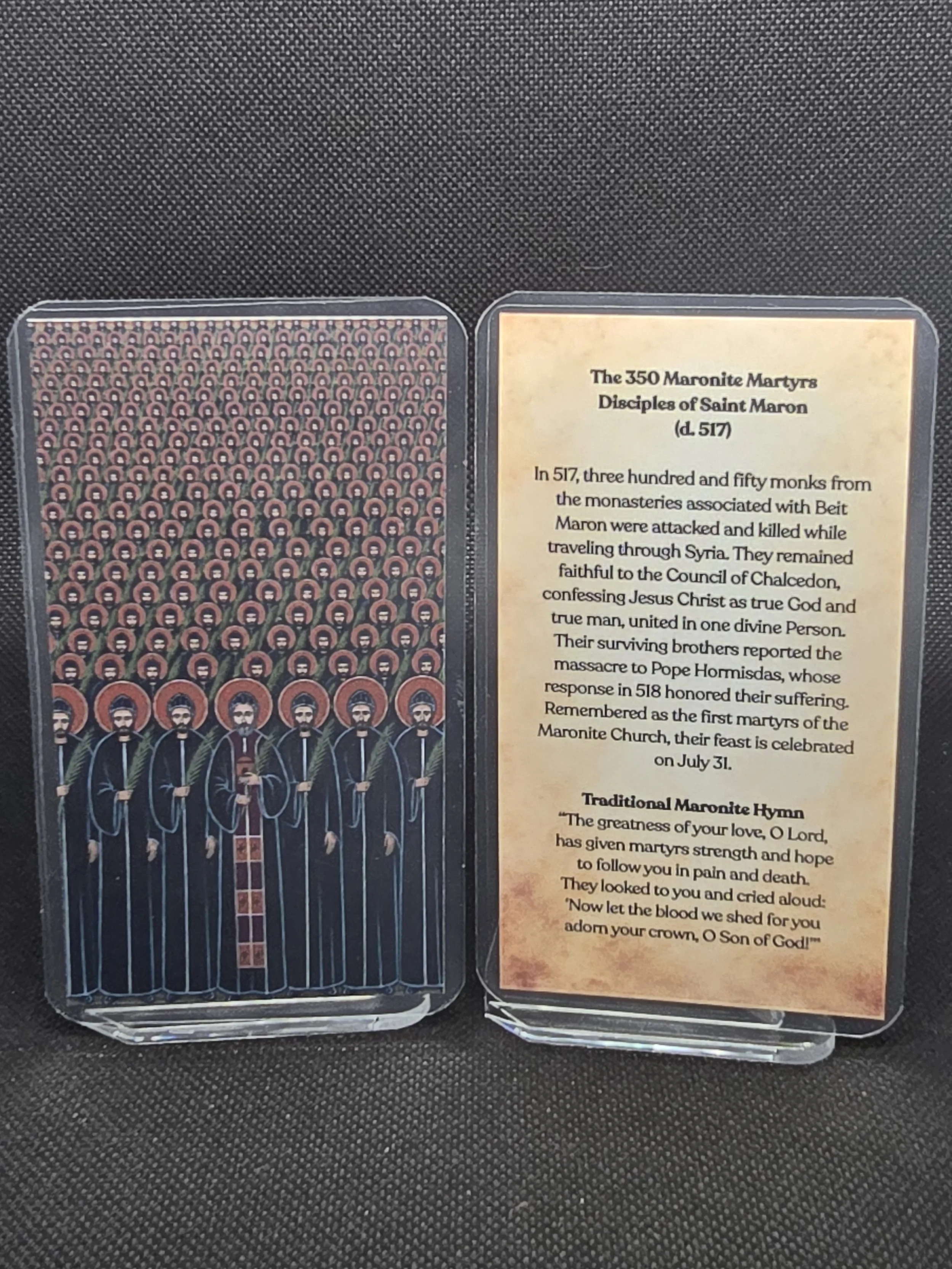
This prayer card depicts the vast company of the 350 Monks of Saint Maron, each crowned with the halo of martyrdom. The visible monks carry palm branches, the ancient Christian symbol of victory through suffering and death. The reverse of the card presents their history together with a traditional Maronite hymn honoring their sacrifice.
Each prayer card is handmade to order in Austin, Texas. It is printed on museum-quality photo paper and double laminated for durability. Throughout the process, the 350 Maronite Martyrs are honored, their intercession is sought, and prayers are intentionally offered for the person who will receive the card.
These are not commercially mass-produced devotional cards. Each card is created slowly and reverently because every person, intention, and prayer matters.
Maronite Catholic Church
July 31
The 350 Maronite Martyrs, the 350 Monks, the 350 Martyrs Disciples of Saint Maron, the Disciples of Saint Maroun, and the First Martyrs of the Maronite Church
Persecuted Christians, courage under persecution, fidelity to Christ, protection of the Church, Maronite families, priests and monks, religious communities, missionaries, perseverance during spiritual trials, Christian unity, and strength when pressured to compromise the faith.
The 350 Maronite Martyrs, also known as the 350 Monks, Disciples of Saint Maron, hold a sacred place in the history of the Maronite Catholic Church. Martyred in the year 517, these monks are remembered as the first great body of martyrs belonging to the developing Maronite community. Their feast is celebrated in the Maronite Church on July 31.
Their story begins with the monastery of Beth Maron, also called the Monastery of Saint Maron, near the ancient Syrian city of Apamea. After the death of Saint Maron, his disciples continued his ascetical way of prayer, fasting, solitude, and complete devotion to Christ. Beth Maron eventually became the center of a large federation of monasteries and one of the foundations from which the Maronite Church developed.
The monks remained faithful to the teaching of the Council of Chalcedon, held in 451. The Council confessed that Jesus Christ is truly God and truly man, one divine Person possessing both a divine nature and a human nature without confusion, separation, or division. At a time when this teaching was fiercely disputed throughout the Christian East, the monks of Saint Maron openly defended the Chalcedonian faith.
In 517, a peaceful company of Maronite monks was traveling through Byzantine Syria on a mission connected with the Church. According to the surviving historical account, they were journeying toward the cell or shrine of Saint Simeon the Stylite when armed opponents ambushed them. Three hundred and fifty monks were killed, others were wounded, and even some who sought refuge at the holy altars were slain. Monasteries were also attacked and burned during the violence.
The massacre was not forgotten or preserved only through oral tradition. The surviving monks and leaders of the monasteries sent a formal appeal to Pope Saint Hormisdas, describing the persecution and the deaths of the 350 monks. Their appeal, written near the end of 517, is preserved as Letter 139 of the ancient Collectio Avellana. Pope Hormisdas answered them on February 10, 518, praising their perseverance and consoling the community in its suffering. His response is preserved as Letter 140.
These ancient letters provide a remarkable connection between the early Maronite community and the Church of Rome. The monks appealed to the pope as the successor of Saint Peter and asked him to defend the faith, the teachings of the Church Fathers, and the authority of the Council of Chalcedon. Their testimony reveals a community willing to suffer rather than abandon what it believed the universal Church had faithfully received concerning Jesus Christ.
The 350 Maronite Martyrs were not soldiers or political conquerors. They were monks whose weapons were prayer, fasting, fidelity, and the confession of Christ. Their martyrdom became part of the spiritual foundation of the Maronite Church, whose history would continue to be marked by persecution, migration, sacrifice, and unwavering trust in God.
Their witness speaks powerfully to Christians who feel pressured to hide their faith, compromise the truth, or remain silent out of fear. The 350 Martyrs remind the faithful that authentic Christian unity cannot be built by abandoning truth, and that fidelity to Christ may require courage, suffering, and great personal sacrifice.
They are especially meaningful intercessors for persecuted Christians, Maronite families, priests, monks, religious communities, missionaries, and anyone seeking courage to remain faithful during hostility or spiritual trial. They may also be invoked for the protection of the Church, perseverance in the Catholic faith, unity among Christians, strength during persecution, and courage when obedience to Christ carries a personal cost.
This prayer card depicts the vast company of the 350 Monks of Saint Maron, each crowned with the halo of martyrdom. The visible monks carry palm branches, the ancient Christian symbol of victory through suffering and death. The reverse of the card presents their history together with a traditional Maronite hymn honoring their sacrifice.
Each prayer card is handmade to order in Austin, Texas. It is printed on museum-quality photo paper and double laminated for durability. Throughout the process, the 350 Maronite Martyrs are honored, their intercession is sought, and prayers are intentionally offered for the person who will receive the card.
These are not commercially mass-produced devotional cards. Each card is created slowly and reverently because every person, intention, and prayer matters.
Maronite Catholic Church
July 31
The 350 Maronite Martyrs, the 350 Monks, the 350 Martyrs Disciples of Saint Maron, the Disciples of Saint Maroun, and the First Martyrs of the Maronite Church
Persecuted Christians, courage under persecution, fidelity to Christ, protection of the Church, Maronite families, priests and monks, religious communities, missionaries, perseverance during spiritual trials, Christian unity, and strength when pressured to compromise the faith.