Bring the full heritage of Egyptian Christianity into your home, prayer corner or church with this complete collection of Coptic saints. It gathers the founders of the Church of Alexandria, the Desert Fathers and Mothers, the martyrs and popes, and the wonders of Egypt in a single bundle, with no repeats.
This is the complete Coptic collection in one bundle: the founders, Desert Fathers, martyrs, popes and wonders of Egypt.
This bundle includes 29 different handmade prayer cards, one of each saint listed below.
The 29 cards in this bundle
- Saint Mark the Evangelist: Author of the second Gospel and companion of Peter and Paul, honored by the Coptic Church as founder and first bishop of Alexandria.
- Saint Athanasius of Alexandria: The bishop who defended Christ's full divinity at and after Nicaea. He was exiled five times and slandered, and he wrote the life of Saint Anthony.
- Saint Cyril of Alexandria: Patriarch of Alexandria (about 376 to 444) and defender of Christ's true nature at the Council of Ephesus, remembered as a father of the undivided Church.
- Saint Shenouda the Archimandrite: The head of the White Monastery in Upper Egypt (about 347 to 466), a stern and eloquent Coptic father of monastic discipline. Feast: July 20 in the Coptic calendar.
- Saint Anthony the Great: The father of Christian monasticism, born around 251 in Egypt, who grew holy through silence, solitude and spiritual battle.
- Saint Pachomius the Great: The father of communal monasticism, born around 292 in Upper Egypt, who turned solitary asceticism into a shared life of prayer, obedience and charity.
- Saint Paul of Thebes: The third century Egyptian hermit remembered as the first Desert Father, who lived nearly ninety years alone in the wilderness. Feast: January 15.
- Abba Paul the Simple: A fourth century Desert Father known for childlike humility and unusual spiritual insight, remembered by those who feel betrayed, spiritually attacked or worn down by jealousy.
- Saint Macarius the Great of Egypt: A foundational Desert Father of Scetis in Wadi El-Natrun, associated with Saint Anthony, who endured persecution in the Arian controversy.
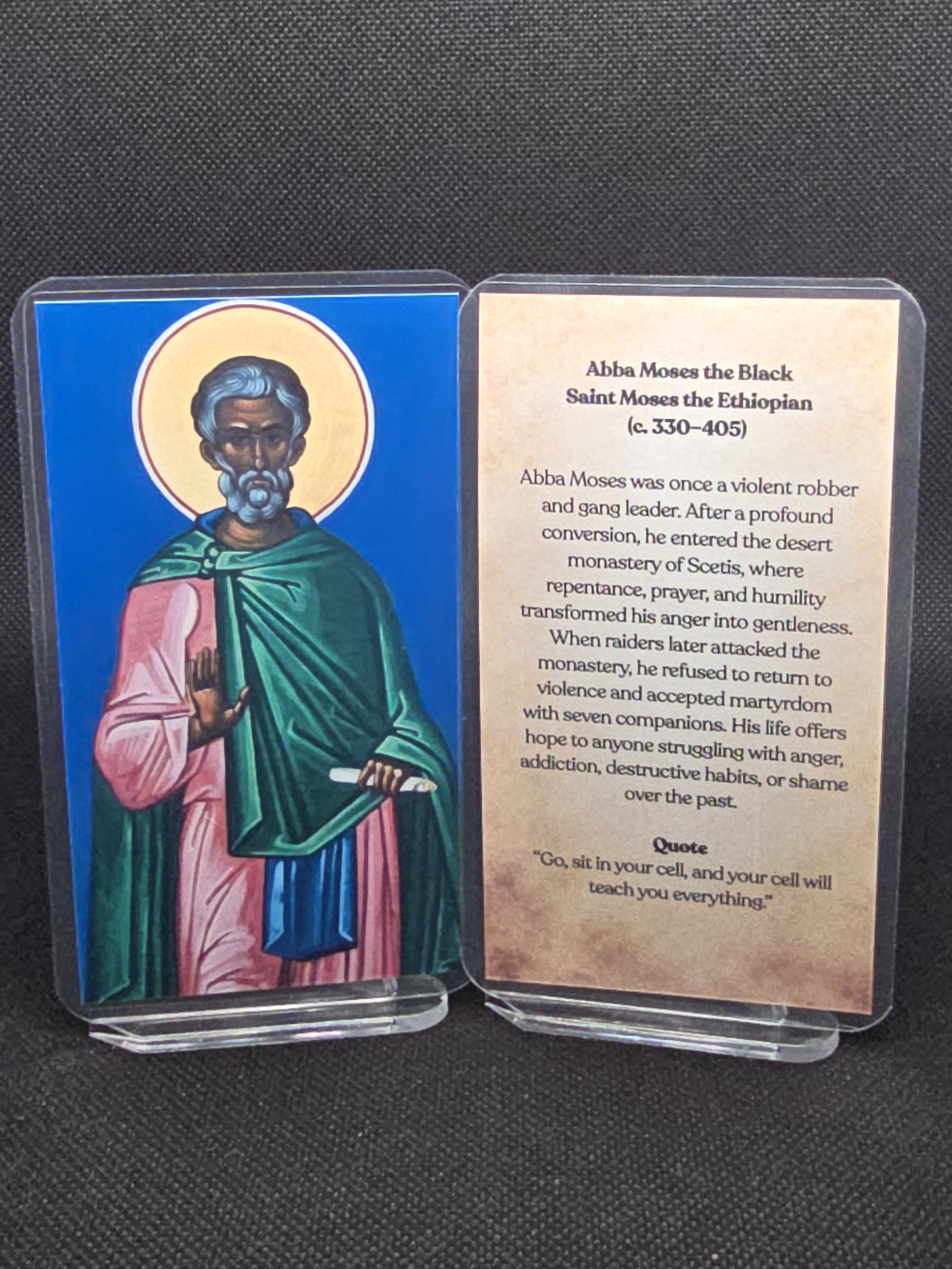
- Abba Moses the Black: A former slave and gang leader in fourth century Egypt who stumbled into a monastery while fleeing capture and became one of the great Desert Fathers, fighting anger through fasting, humility and prayer.
- Abba Poemen the Great: A beloved Desert Father whose name means shepherd. He guided thousands through anger, pride and judgment and became known for healing relationships through humility and mercy.
- Saint Arsenius the Great: A learned Roman deacon who tutored the sons of the emperor, then left the palace for the Egyptian desert to become a teacher of silence and repentance.
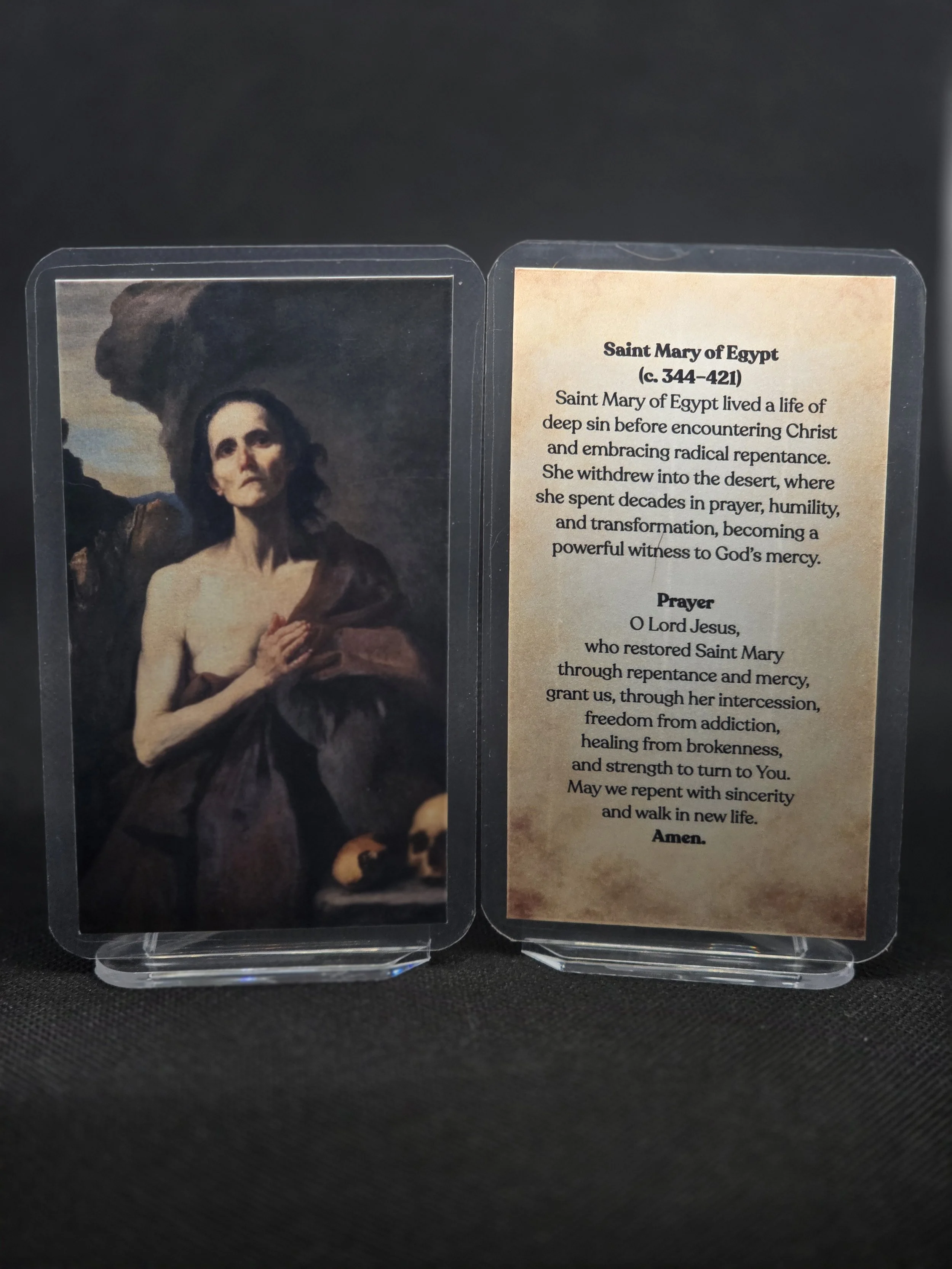
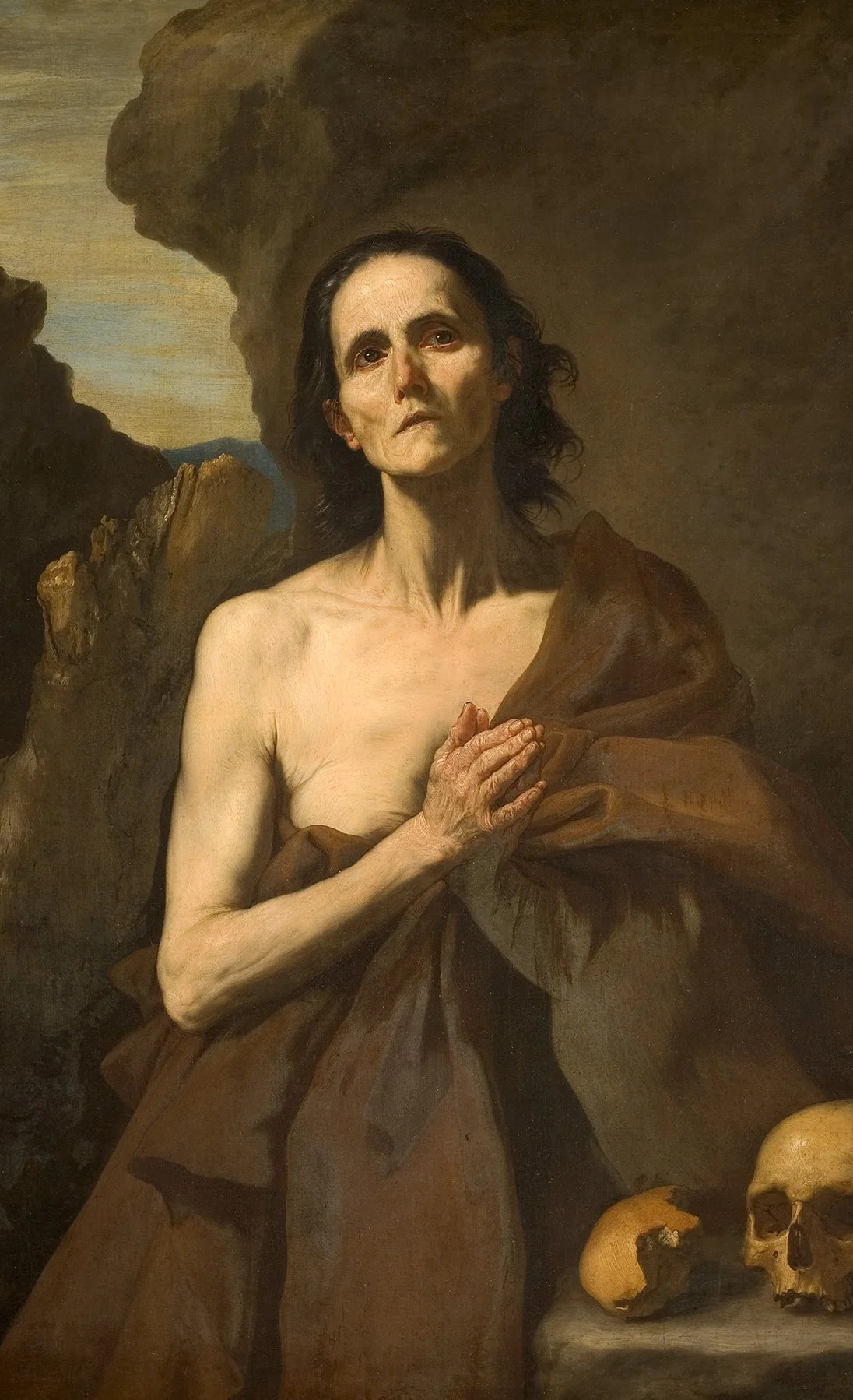
- Saint Mary of Egypt: A fifth century penitent who lived recklessly in Alexandria for seventeen years until a church door in Jerusalem stopped her. She spent the rest of her life in the desert.
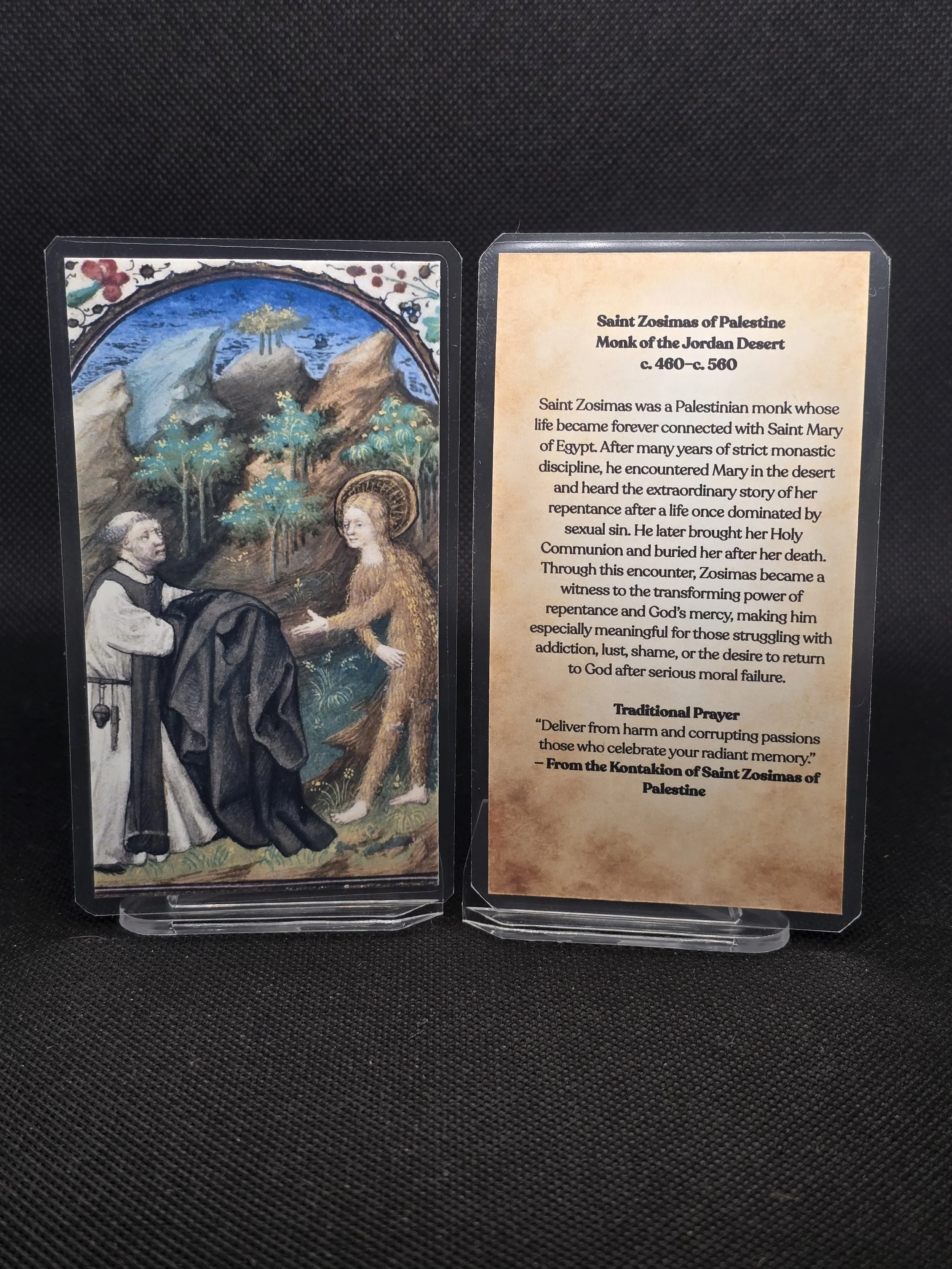
- Saint Zosimas of Palestine: The sixth century monk who met Saint Mary of Egypt in the desert and witnessed her transformation. Feast: April 4.
- Saint Menas (Mar Mina): A soldier who laid down his weapons to follow Christ and was executed under Diocletian, deeply loved in the Coptic Church. Feast: November 11 in the Coptic calendar.
- Saint Bishoy: One of the great Desert Fathers of Egypt, born around 320, called "the Perfect Man" by the Coptic Church and remembered for his monastery in Wadi El Natroun.
- Saint Abanoub: One of the youngest martyrs of the Coptic Church, a twelve year old who refused to worship idols under Diocletian.
- Saint Abd el-Masih al-Manahry: A quiet government clerk in Egypt, martyred in the early twentieth century and quickly remembered across the country as a wonderworker.
- Pope Cyril VI of Alexandria: The 116th Pope of the Coptic Orthodox Church (1902 to 1971), a monk and hermit before he became patriarch, remembered for simplicity and prayer.
- Saint Philopater Mercurius (Abu Sefein): A third century soldier martyred under Decius, called Abu Sefein, the Father of Two Swords, and loved across Egypt as a warrior saint. Feast: Hathor 25.
- Saint George (Mor Girgis): The soldier and martyr executed under Diocletian, loved across Eastern Orthodox, Oriental Orthodox and Catholic traditions. In the Syriac world he is called Mor Girgis. Feast: April 23.
- Saint Isidora of Tabenna: A Coptic nun of fourth century Egypt who hid her holiness behind deliberate humiliation, letting her sisters treat her as a fool and servant.
- Amma Theodula of the Desert: A spiritual mother among the Desert Fathers and Mothers of early Egypt, whose holiness grew through quiet, unseen endurance. She is remembered by those who suffer without an audience.
- Timothy of Antinoë & Maura of Antinoë: A young Egyptian couple of the third century, married only weeks, when Timothy was arrested for refusing to surrender the Scriptures under Diocletian.
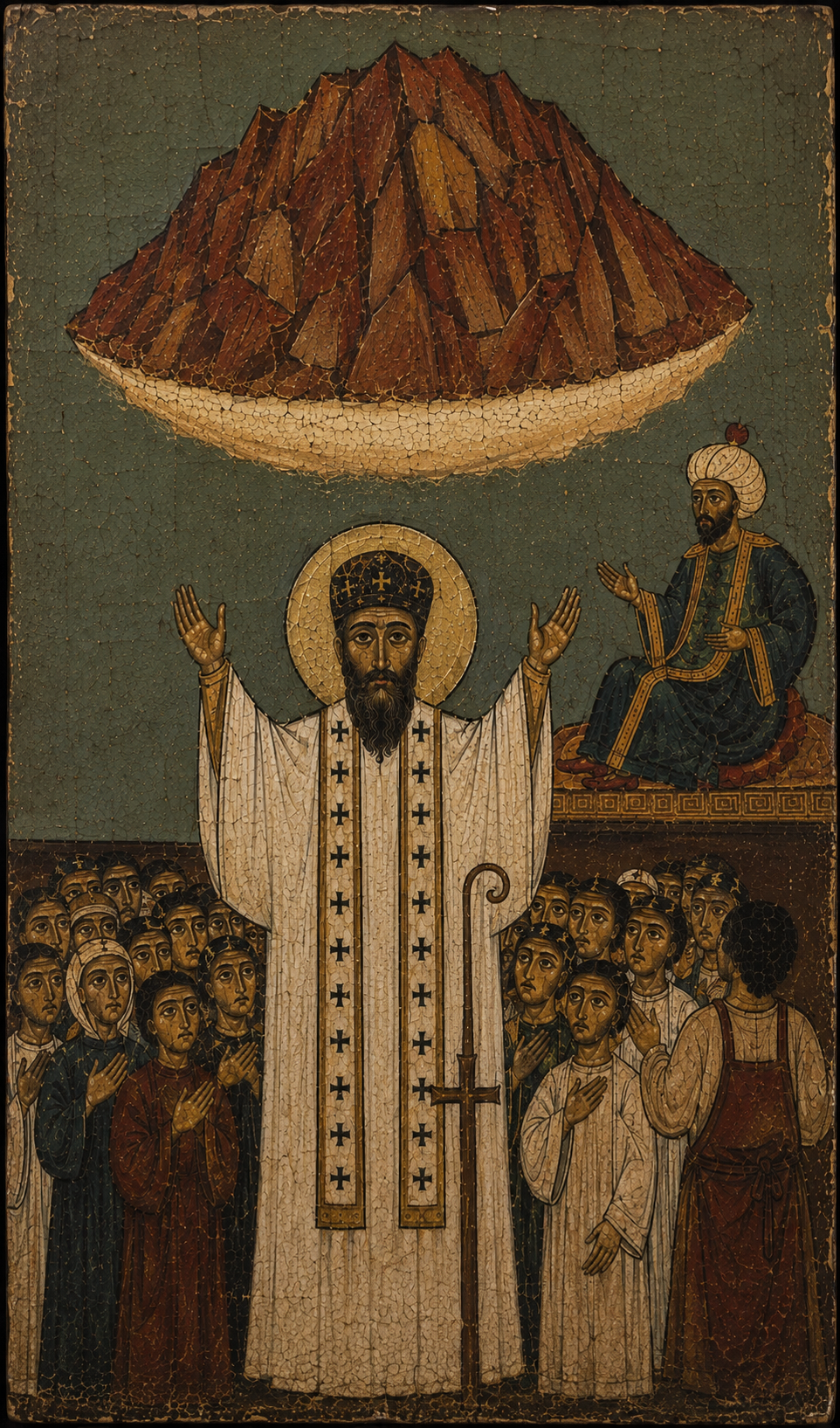
- Saint Simon the Tanner: The hidden, one-eyed Coptic craftsman whose prayers the Church remembers in the moving of Mokattam Mountain, during Pope Abraam's patriarchate (975 to 978).
- Miracle of Mokattam Mountain: The Coptic account of the mountain above Cairo moving through the prayer of the Christian community in the late tenth century, answering Caliph al-Mu'izz's challenge about faith like a mustard seed.
- Our Lady of Zeitoun: Mary's luminous appearance above Saint Mary's Coptic Church in Cairo, beginning April 2, 1968, seen by great crowds over three years.
- Saint Maurice and the Theban Legion: Roman soldiers who chose obedience to Christ over obedience to empire under Maximian. Feast: September 22.
- Saint Catherine of Alexandria: A brilliant young Alexandrian who defended the faith before pagan philosophers and an emperor, honored as a patron of students and scholars.
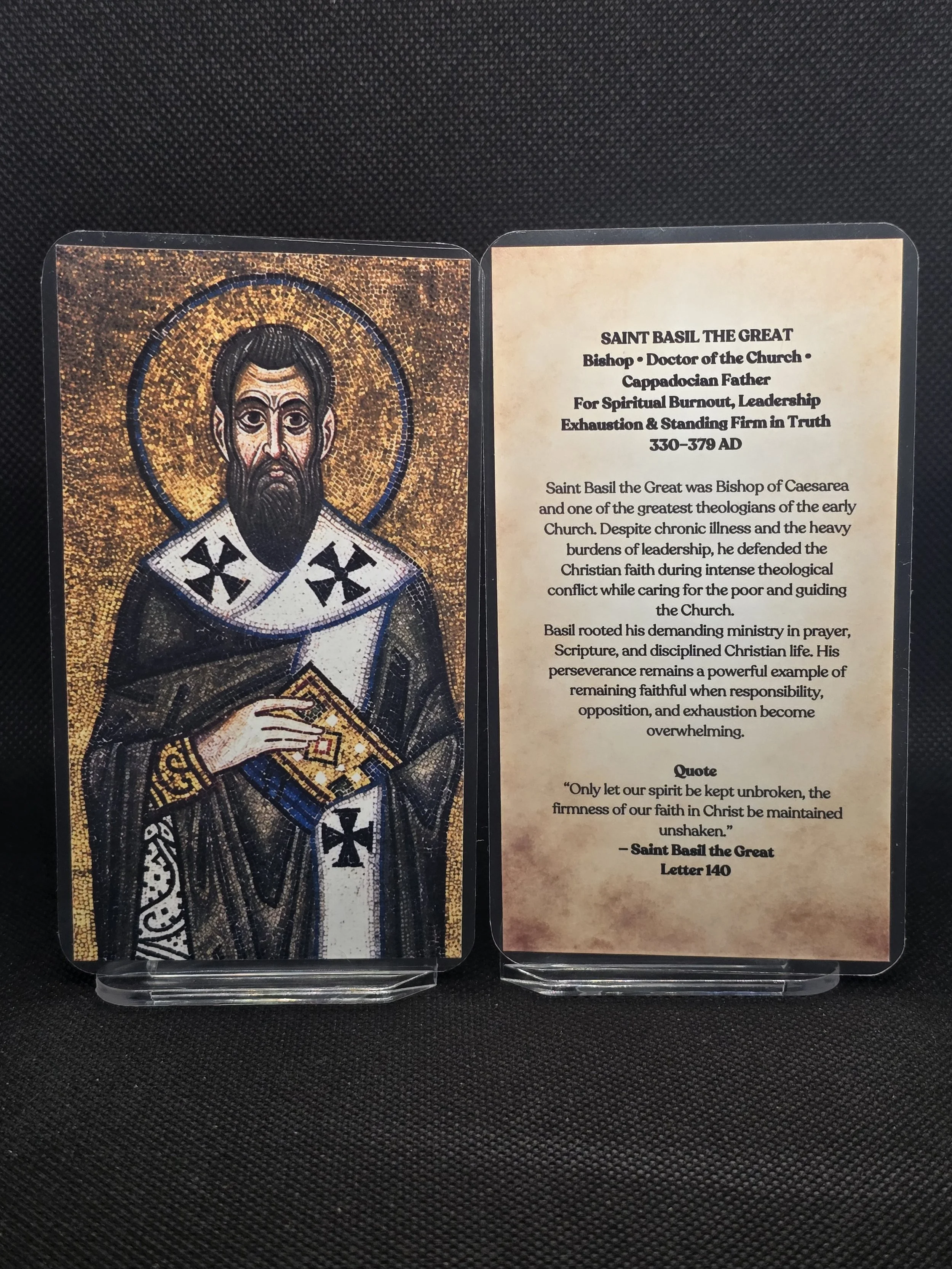
Each card features sacred artwork on the front and a short biography with a prayer on the back. Every card is handmade and laminated in Austin, Texas, and a prayer is said for the person who will receive it.
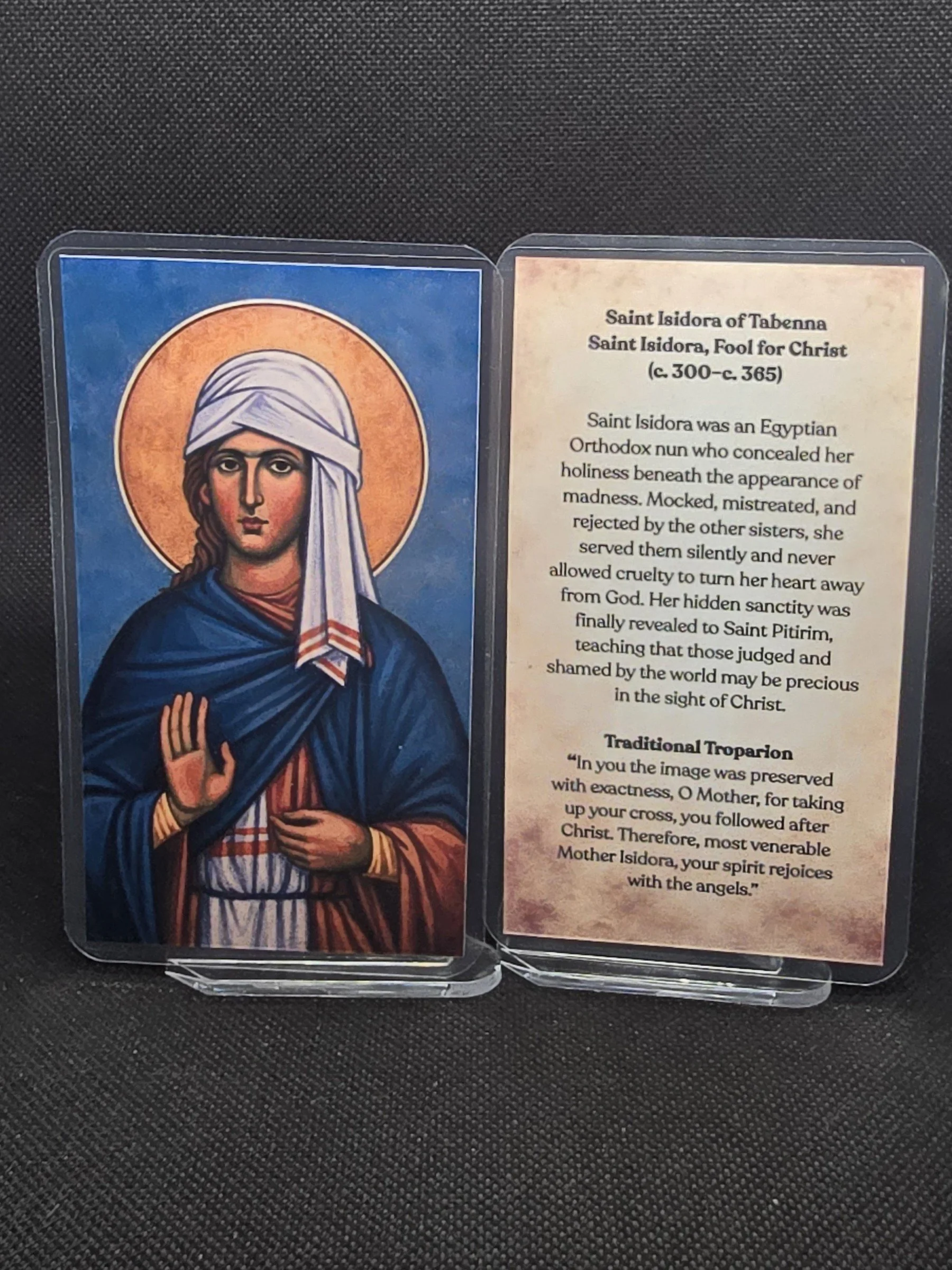 Image 1 of 29
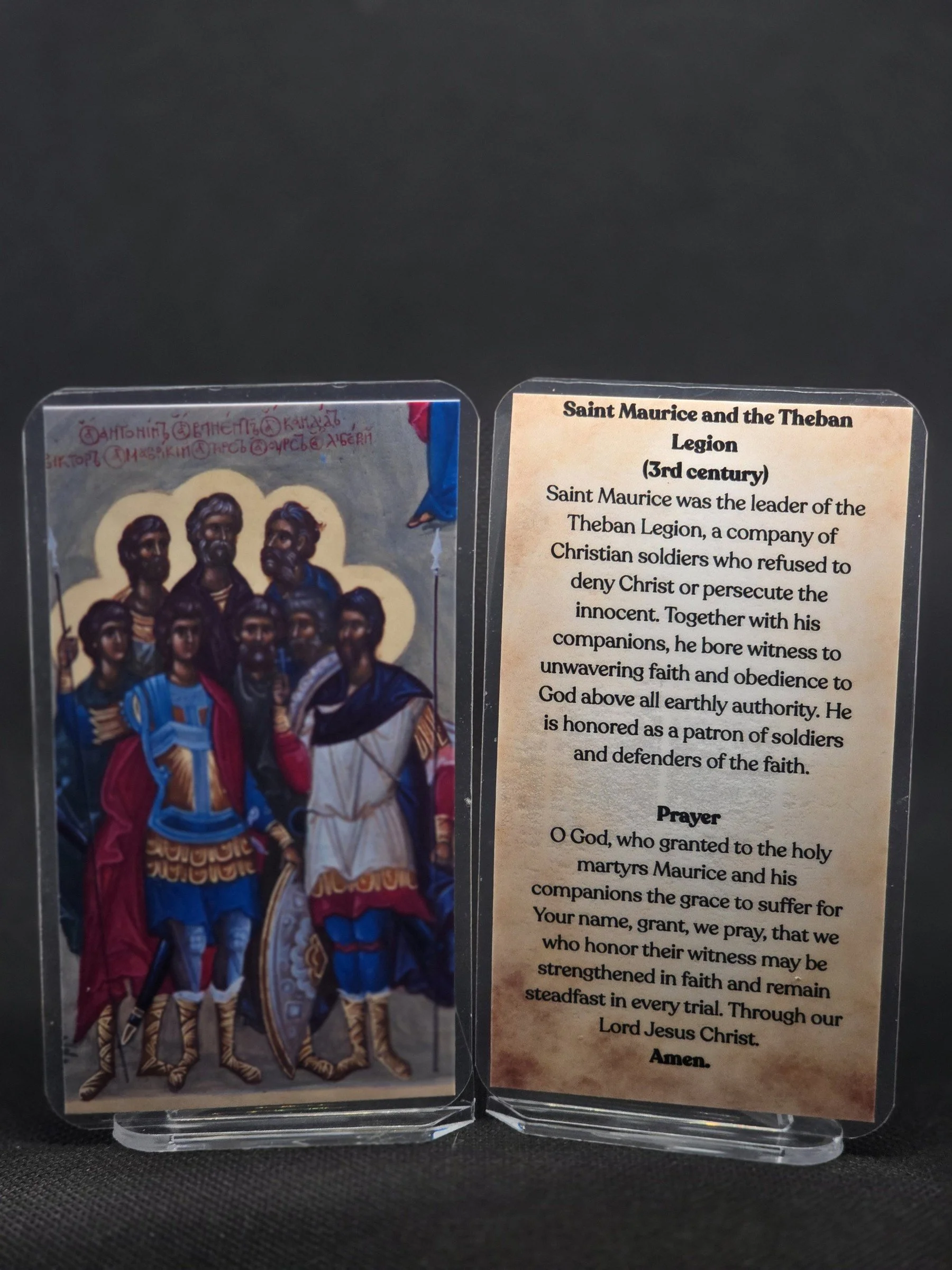 Image 2 of 29
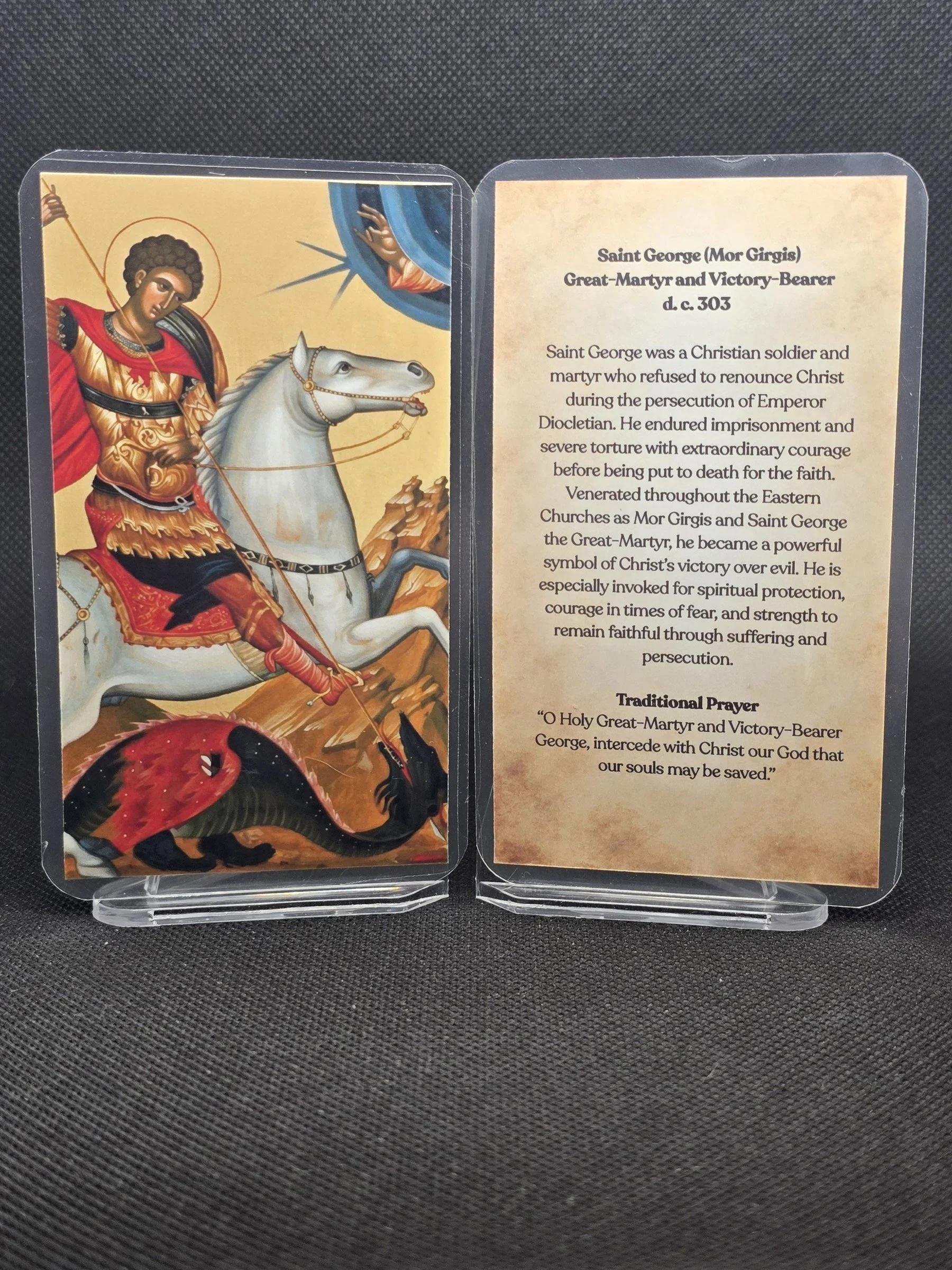 Image 3 of 29
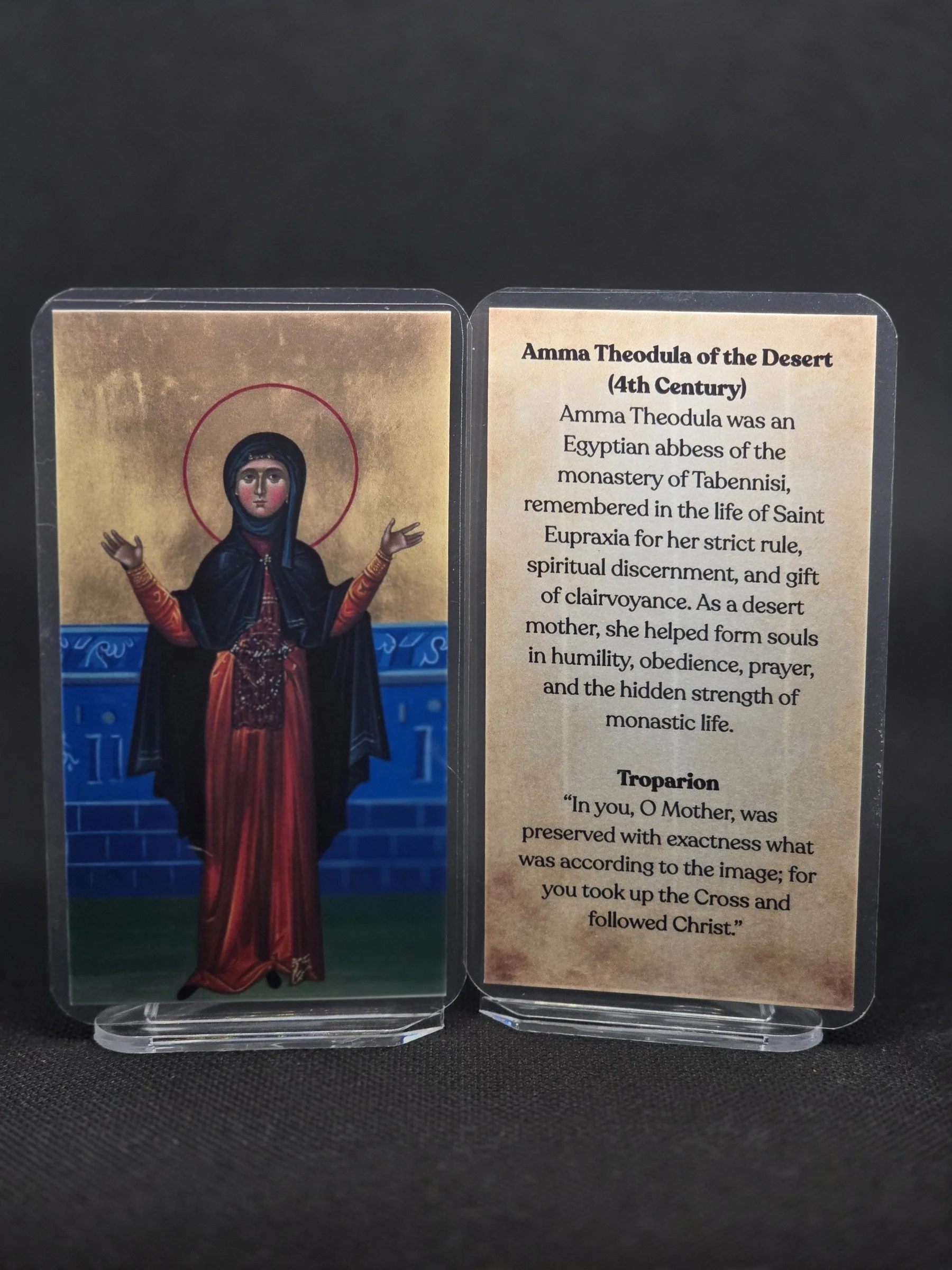 Image 4 of 29
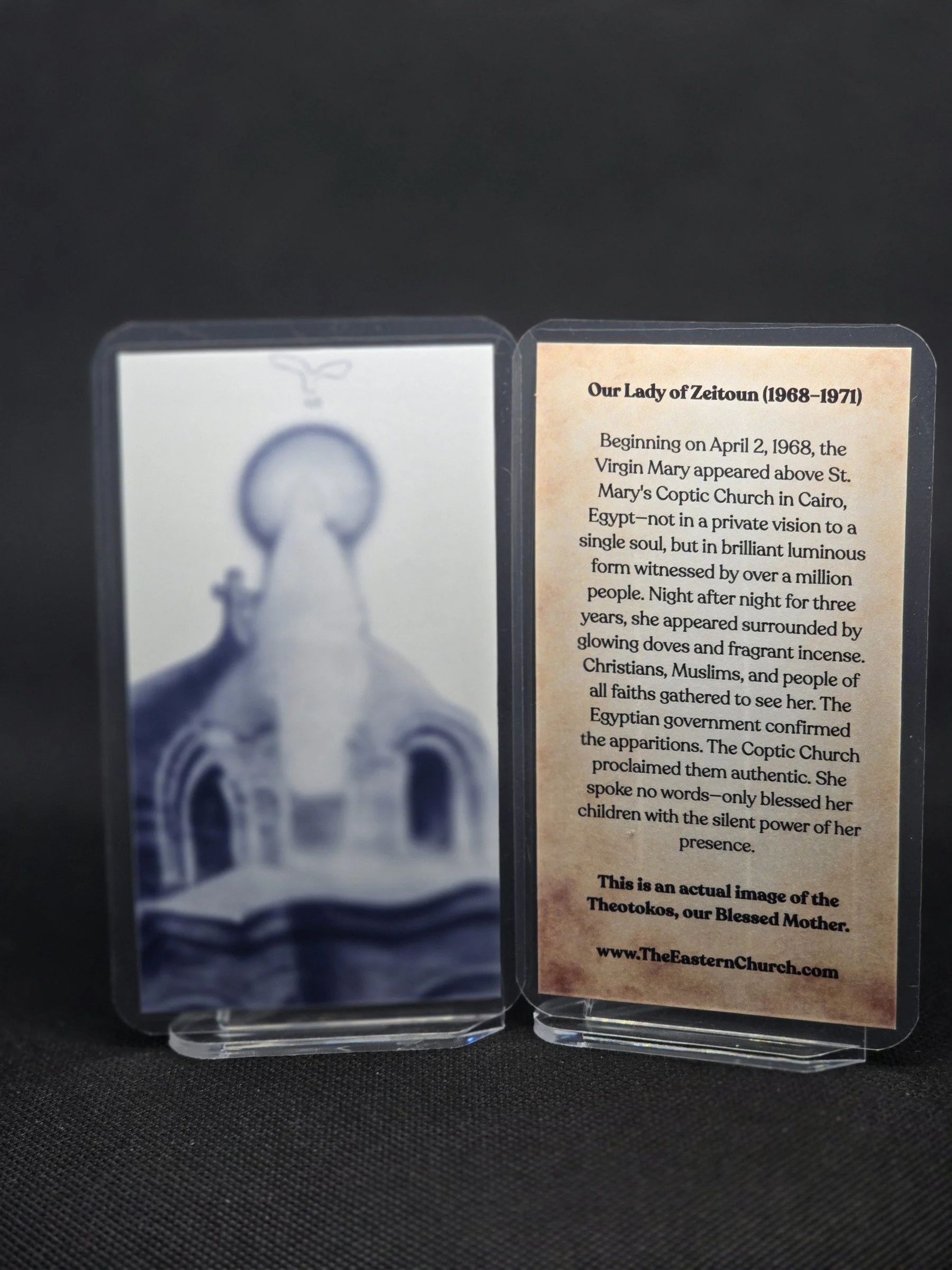 Image 5 of 29
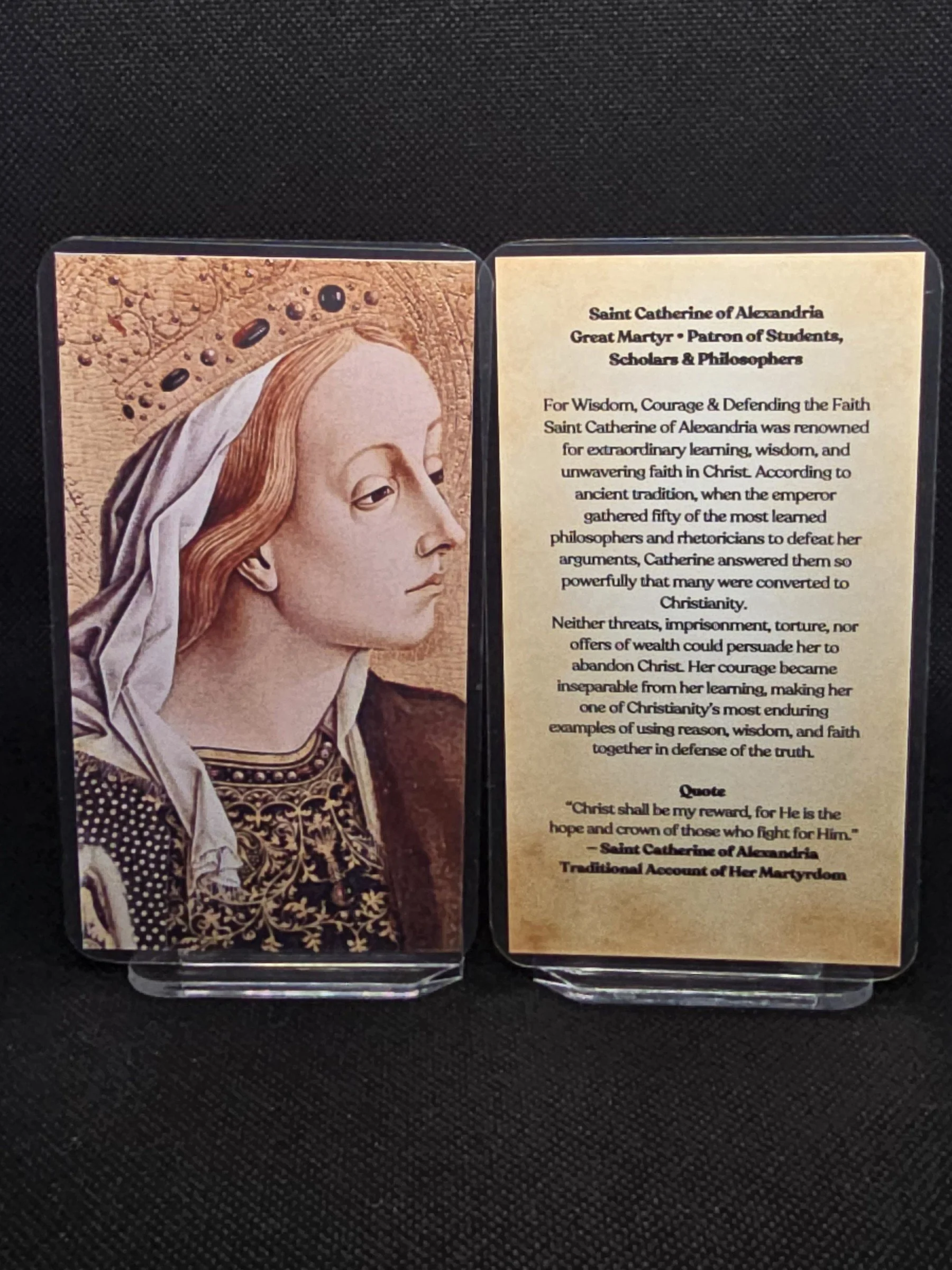 Image 6 of 29
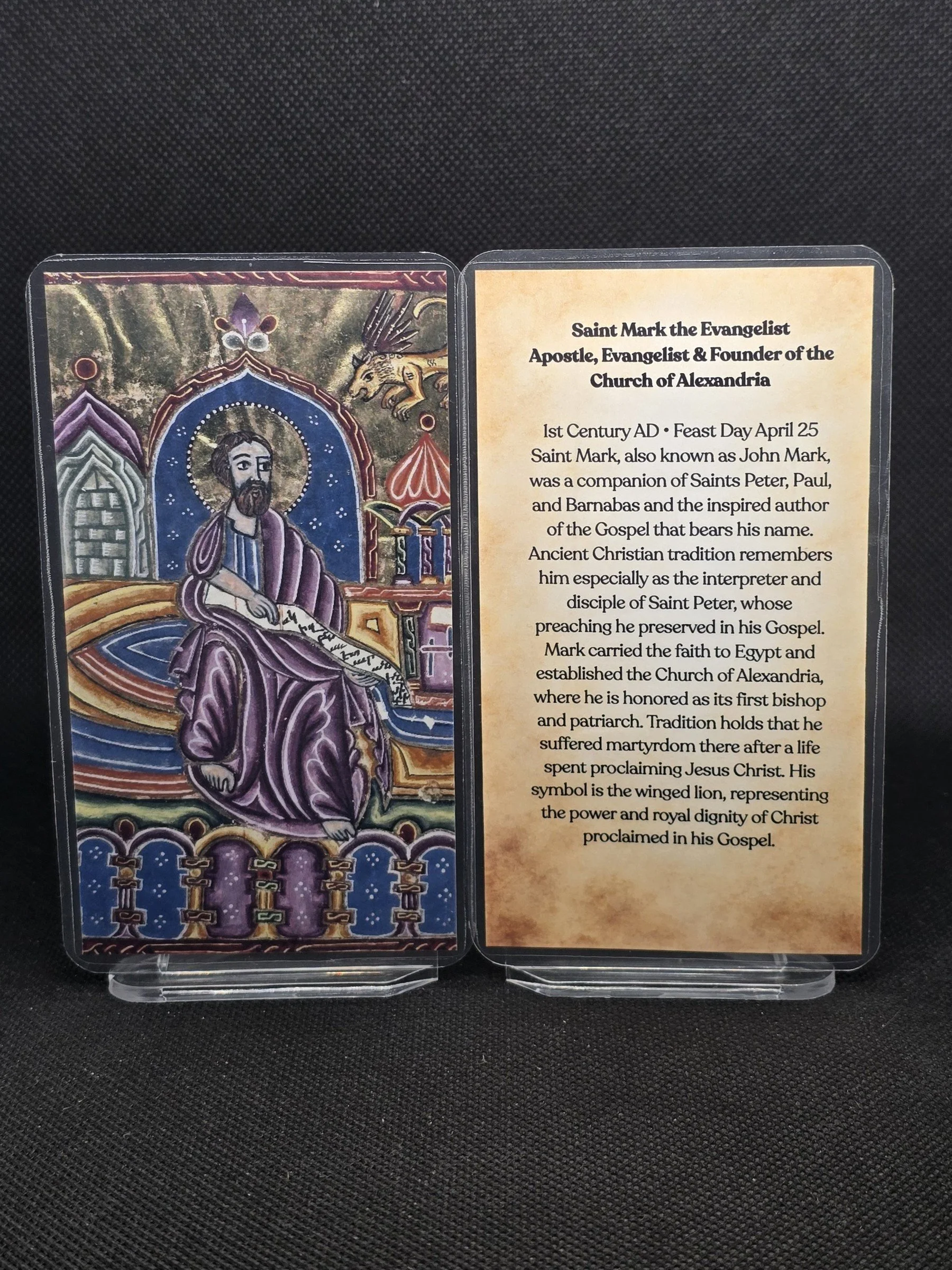 Image 7 of 29
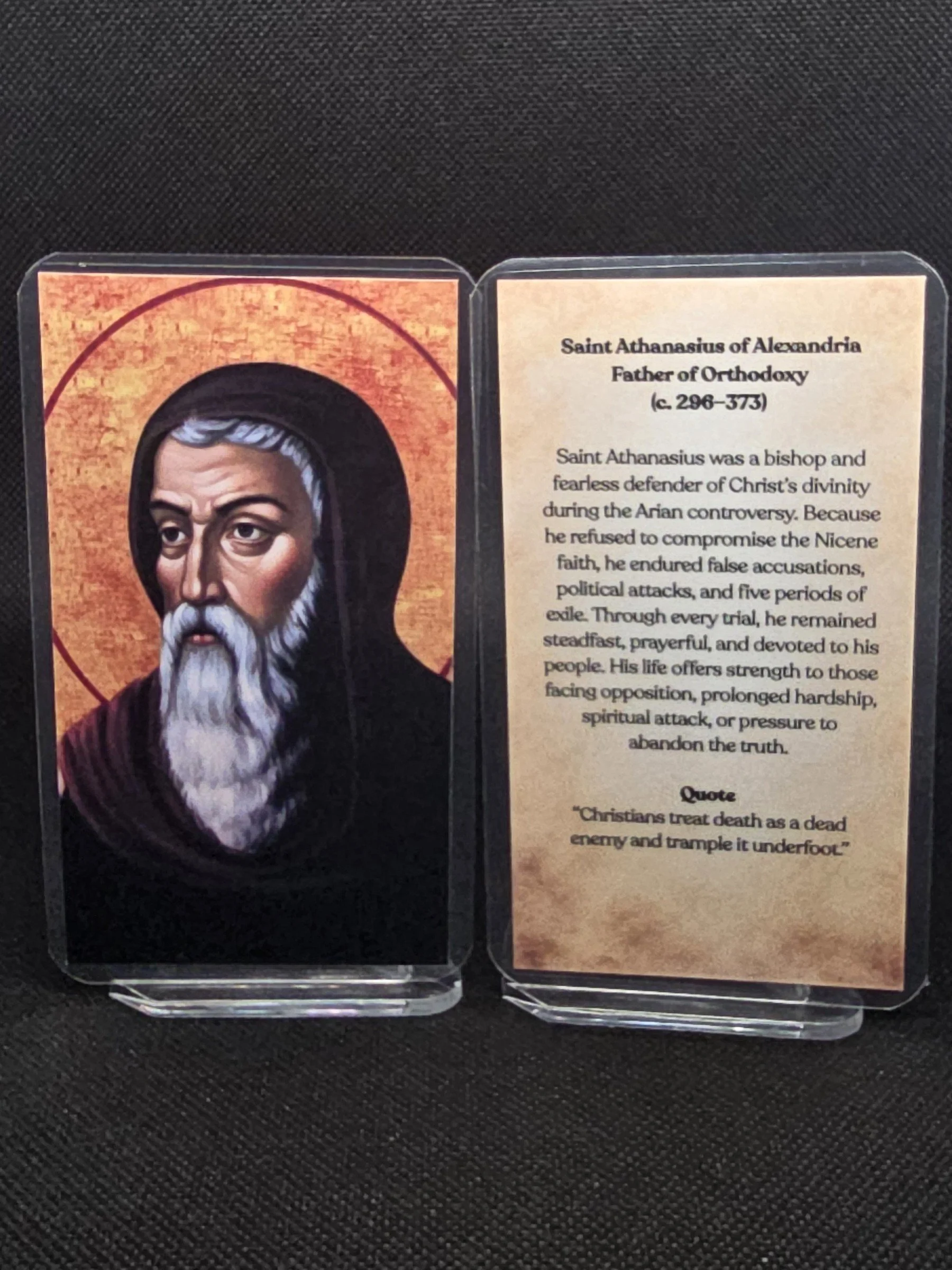 Image 8 of 29
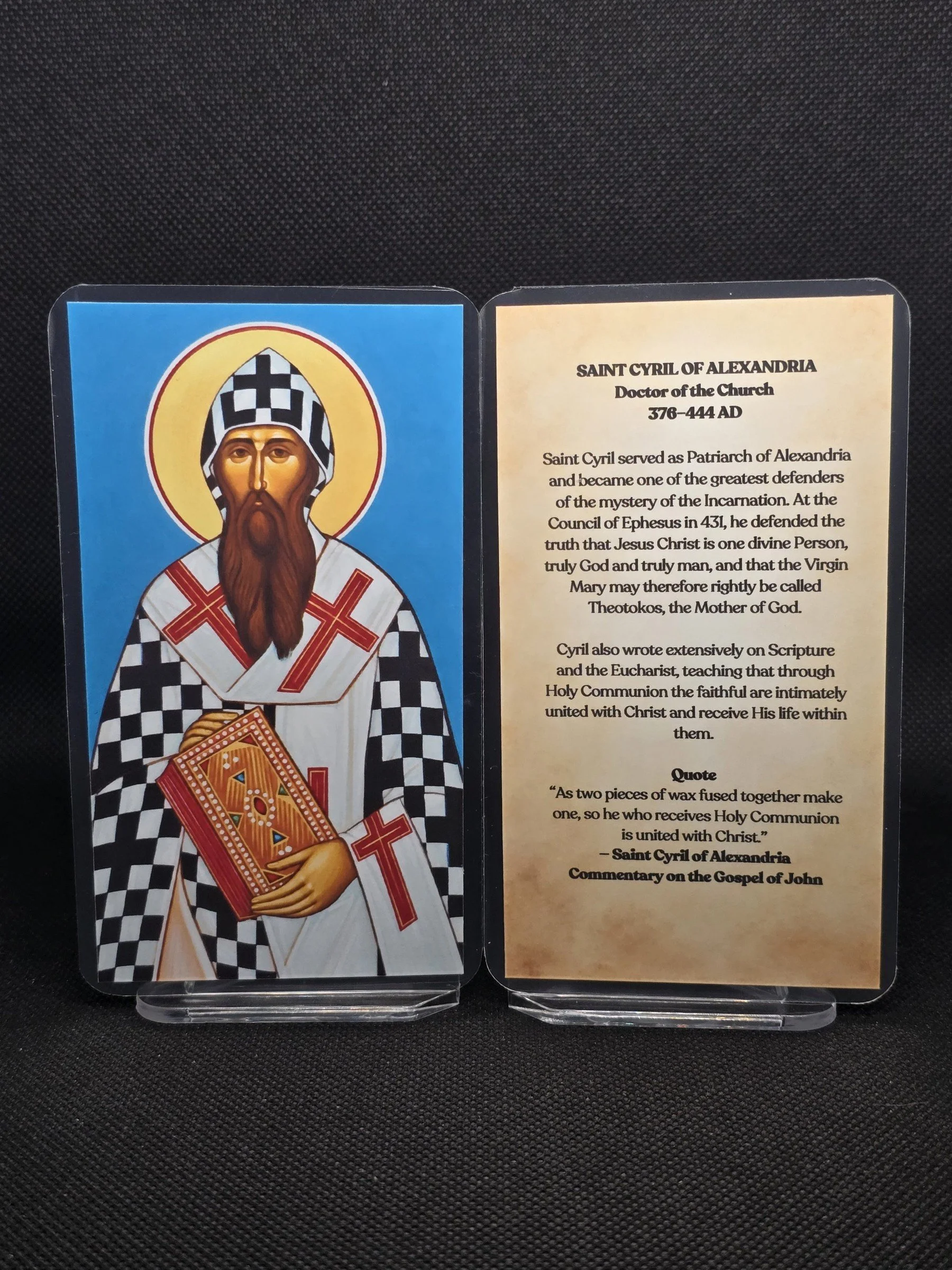 Image 9 of 29
 Image 10 of 29
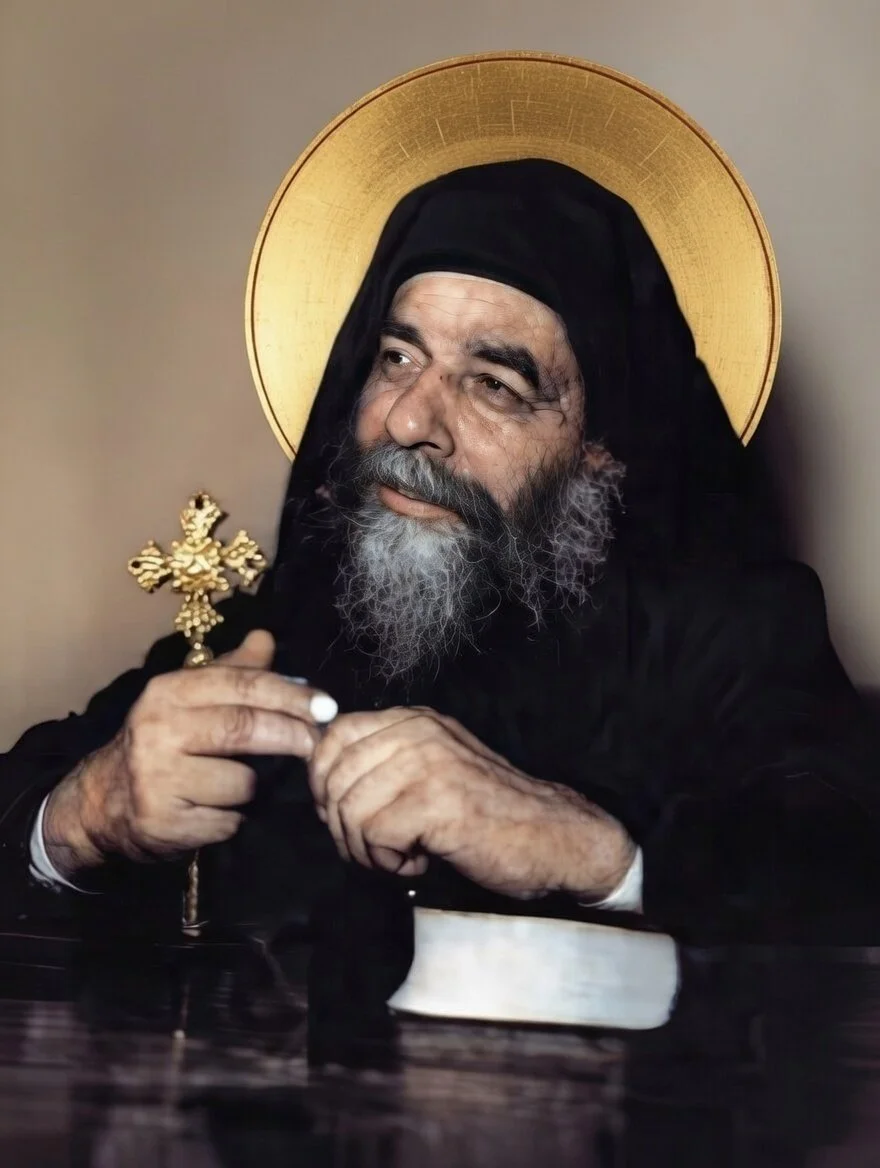 Image 11 of 29
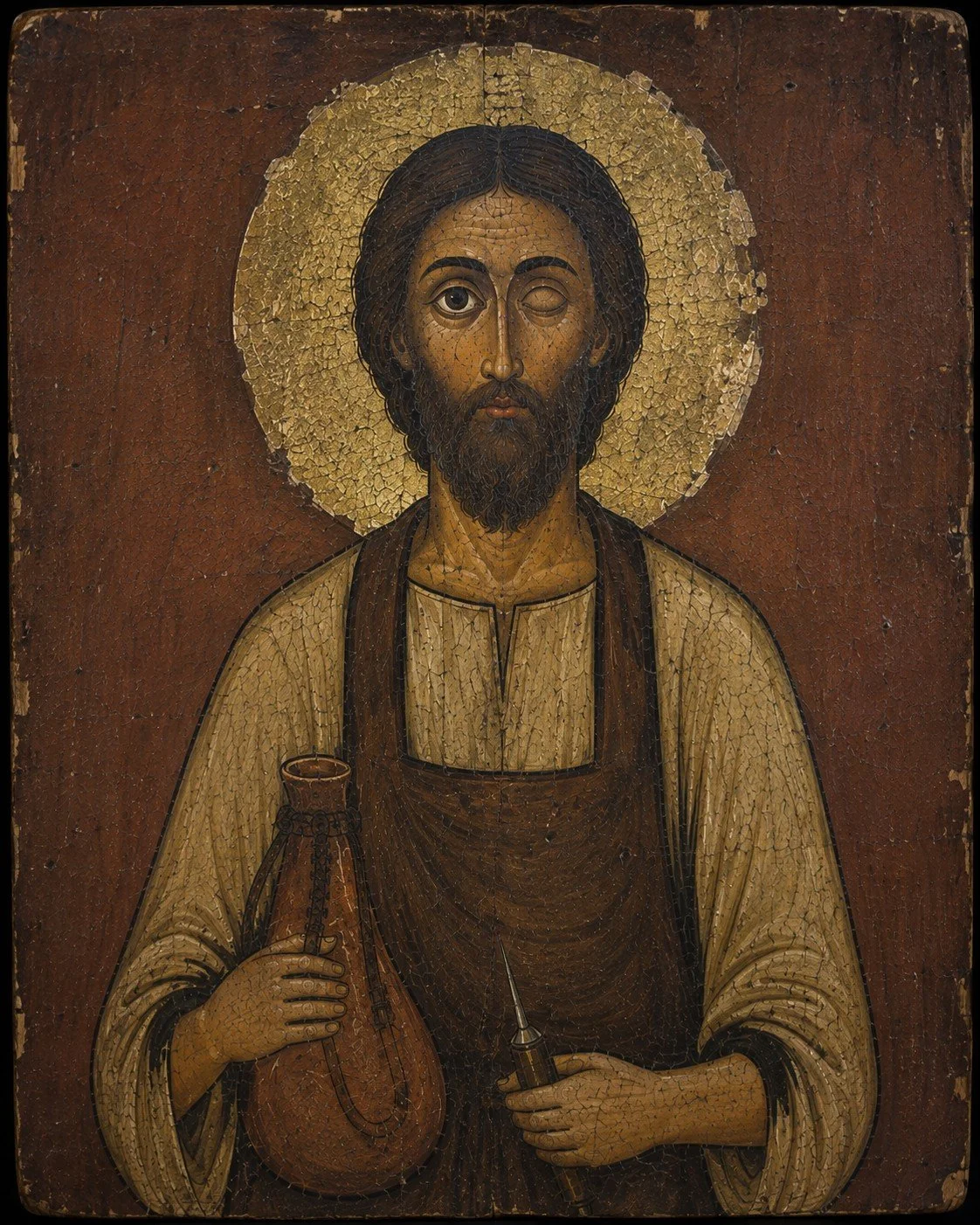 Image 12 of 29
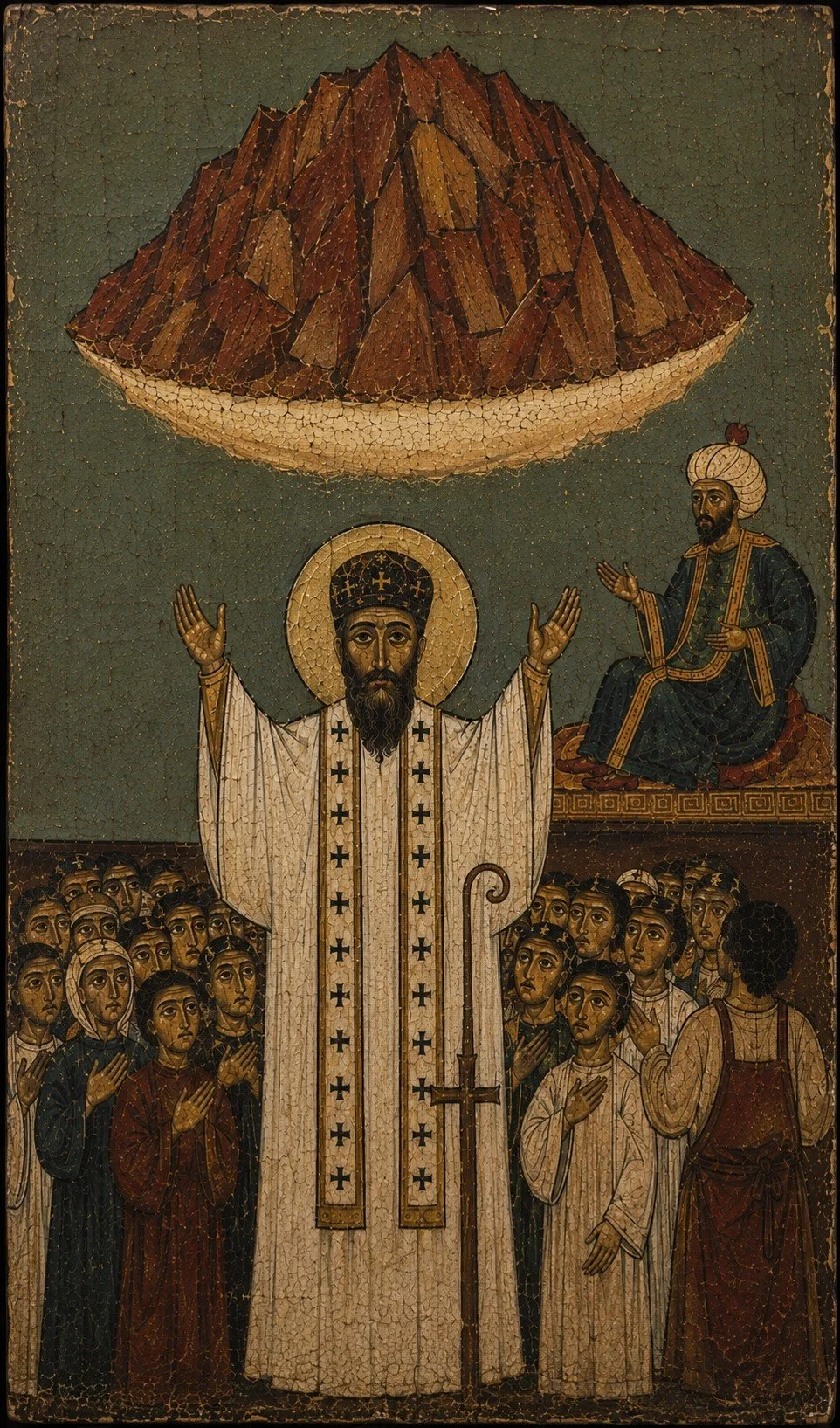 Image 13 of 29
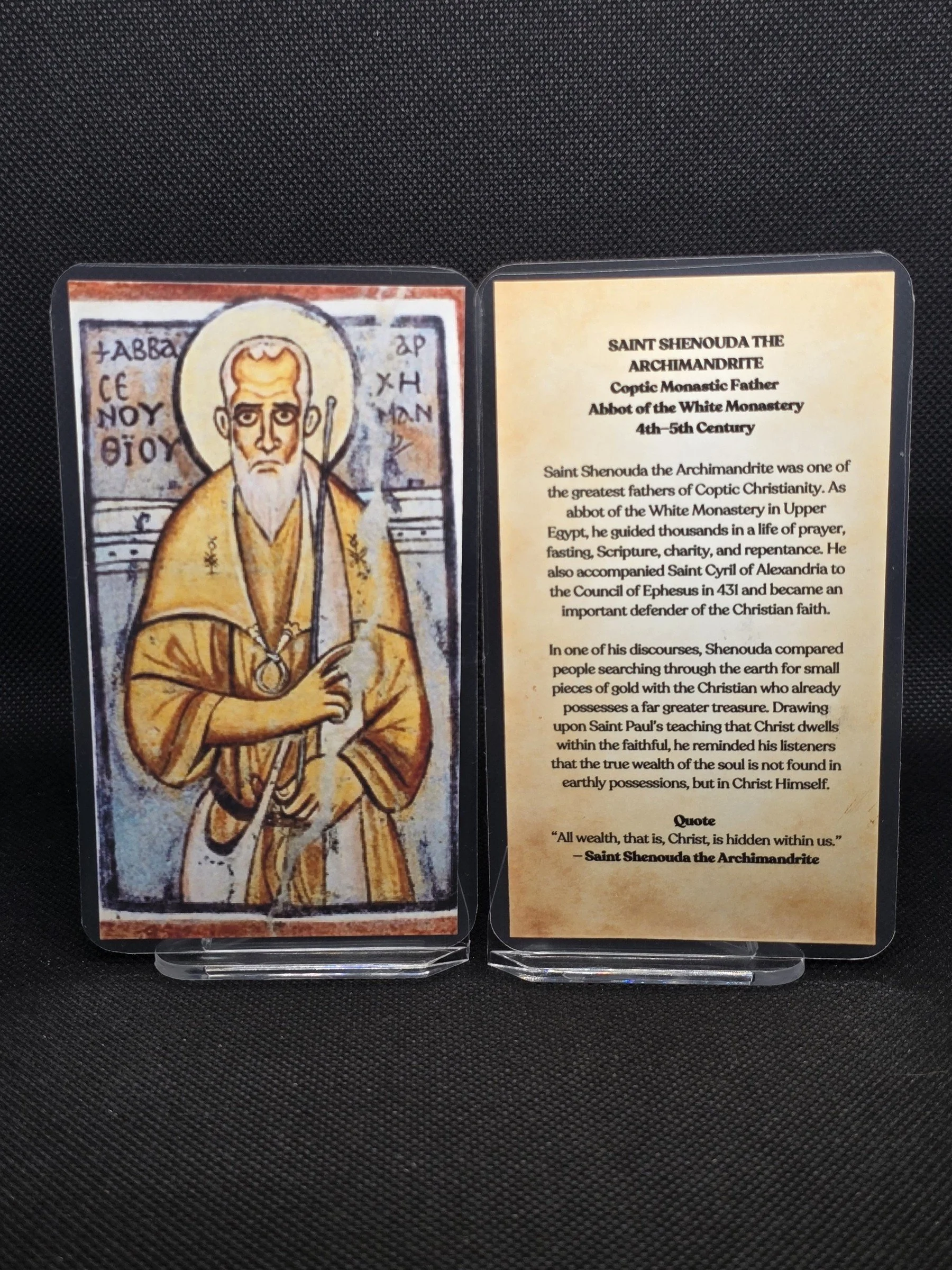 Image 14 of 29
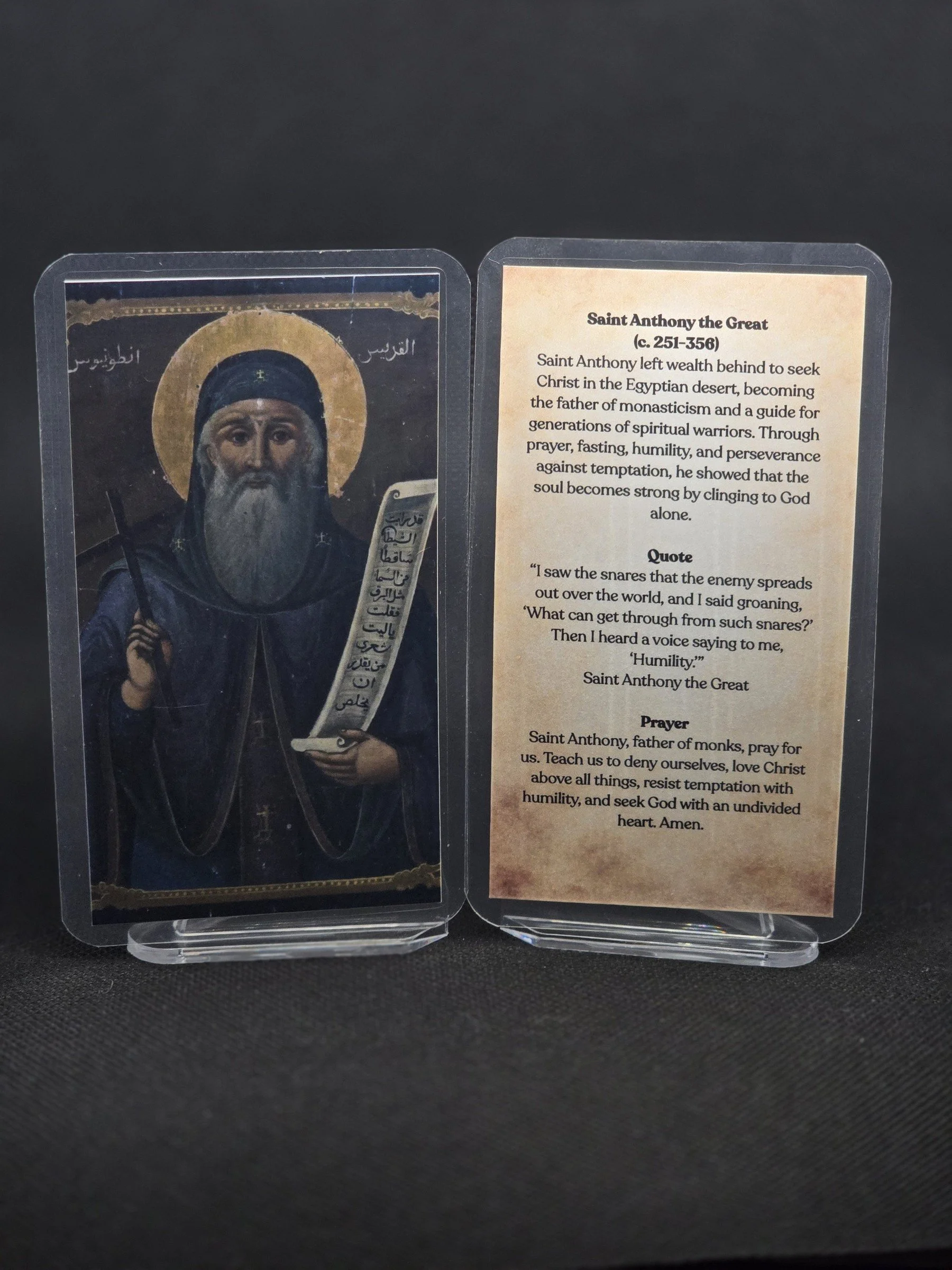 Image 15 of 29
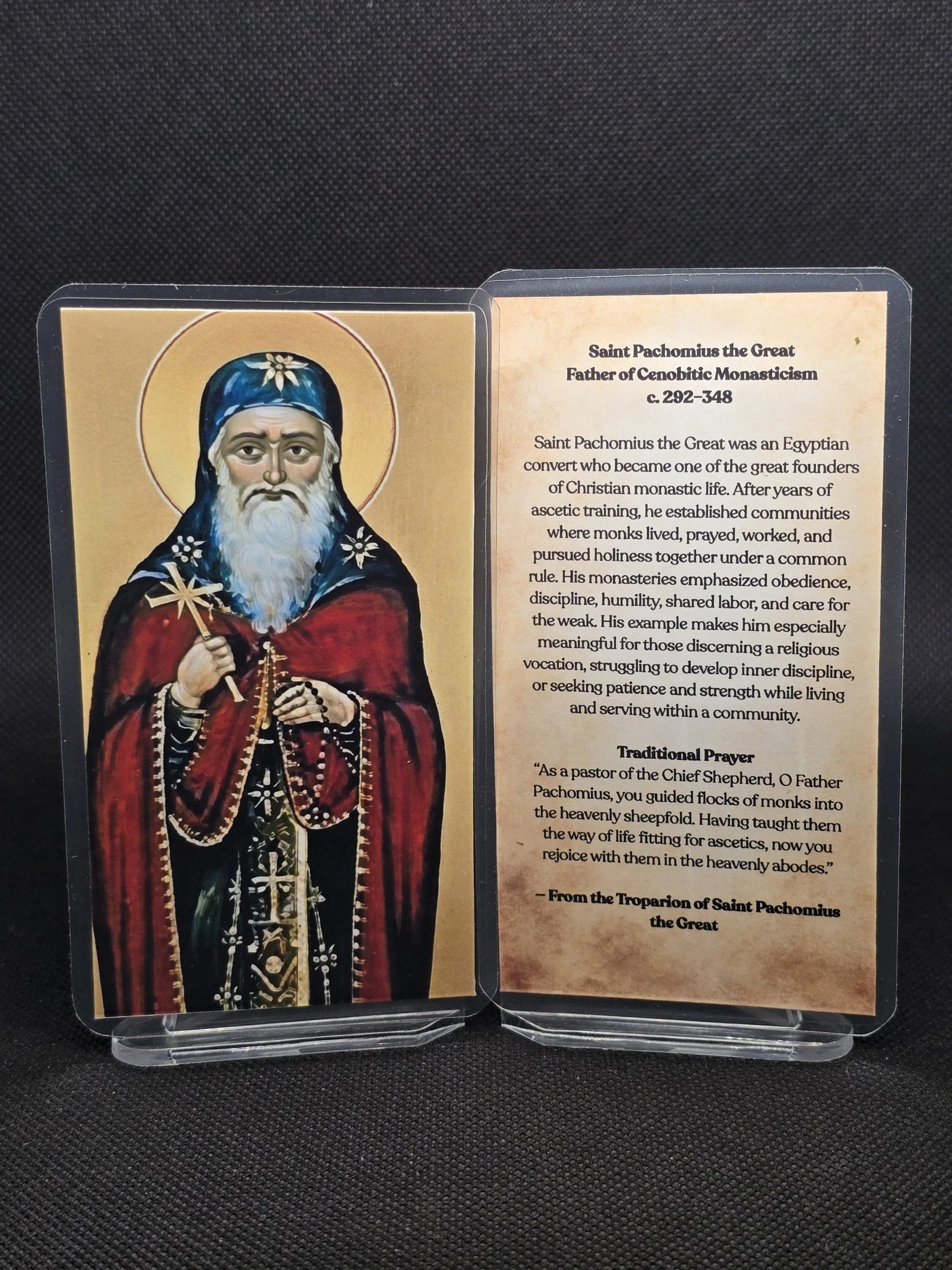 Image 16 of 29
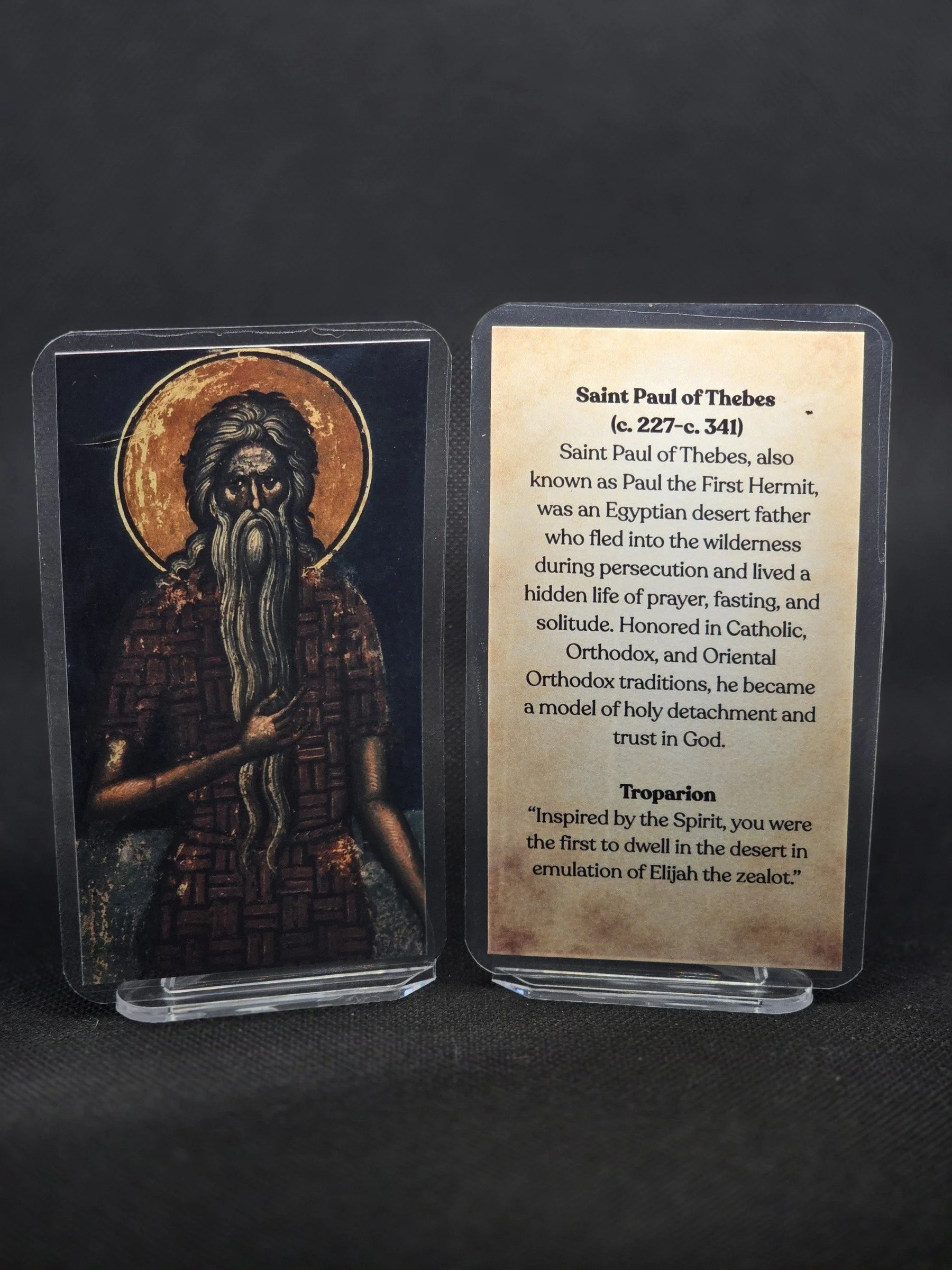 Image 17 of 29
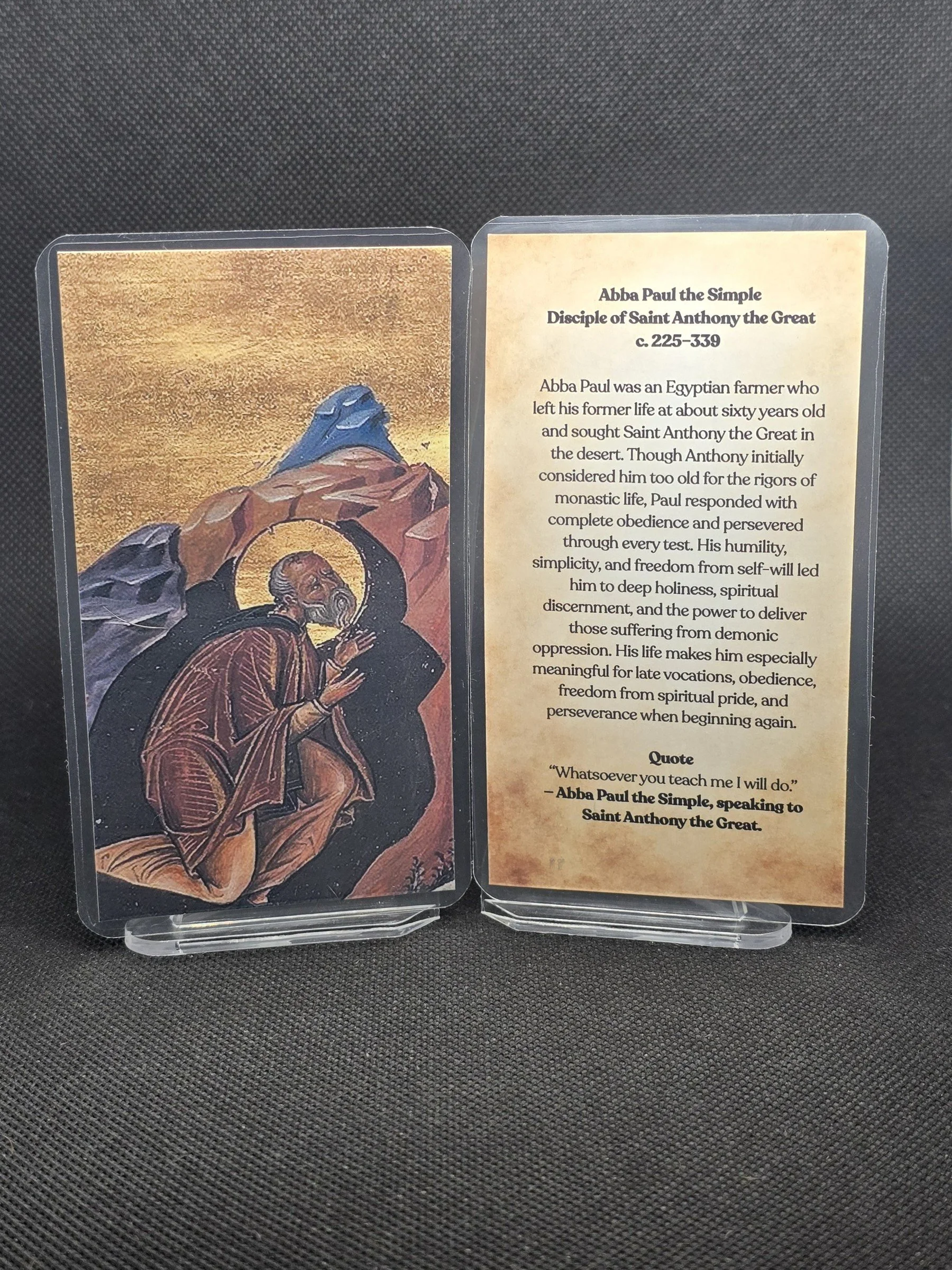 Image 18 of 29
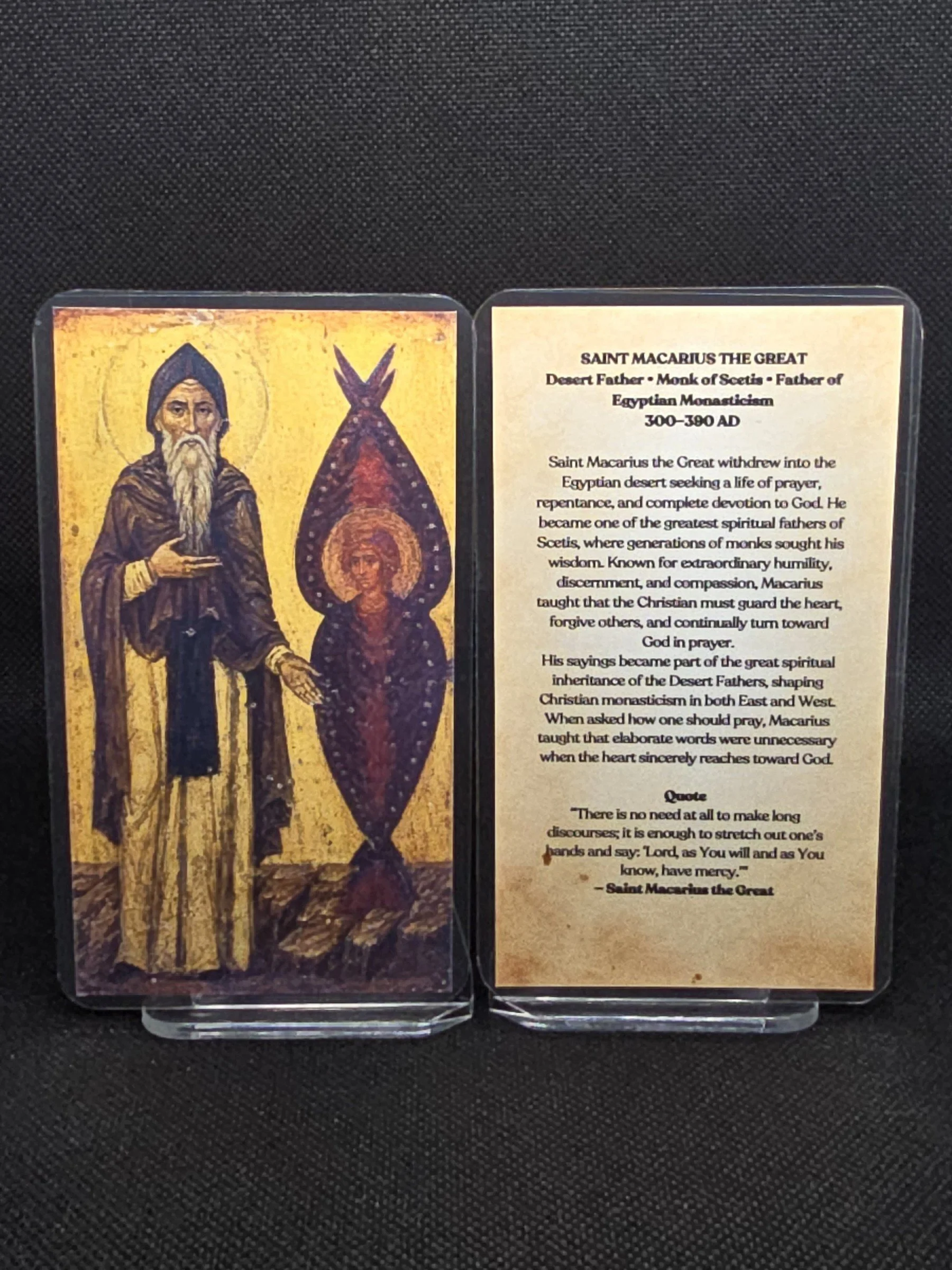 Image 19 of 29
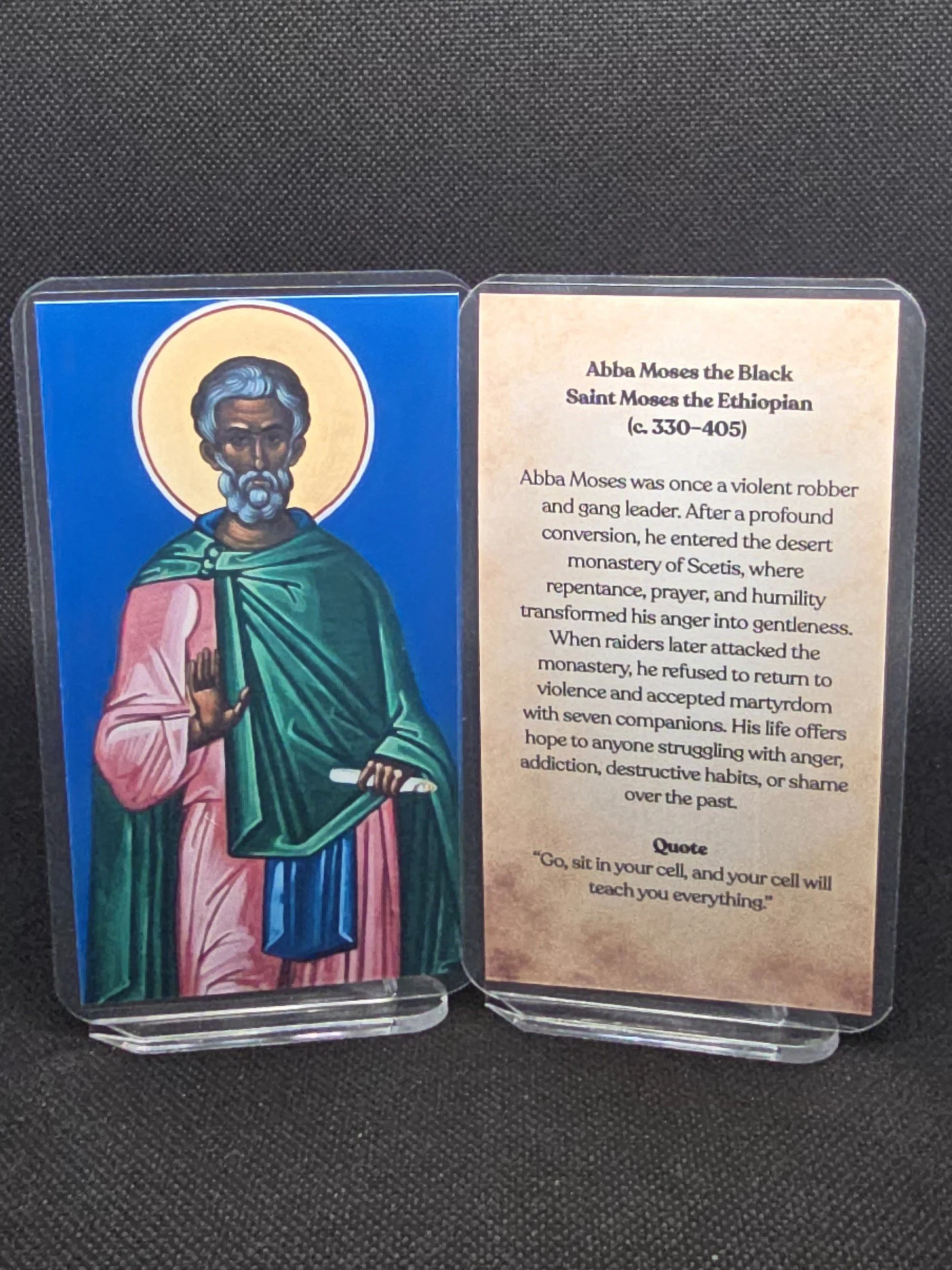 Image 20 of 29
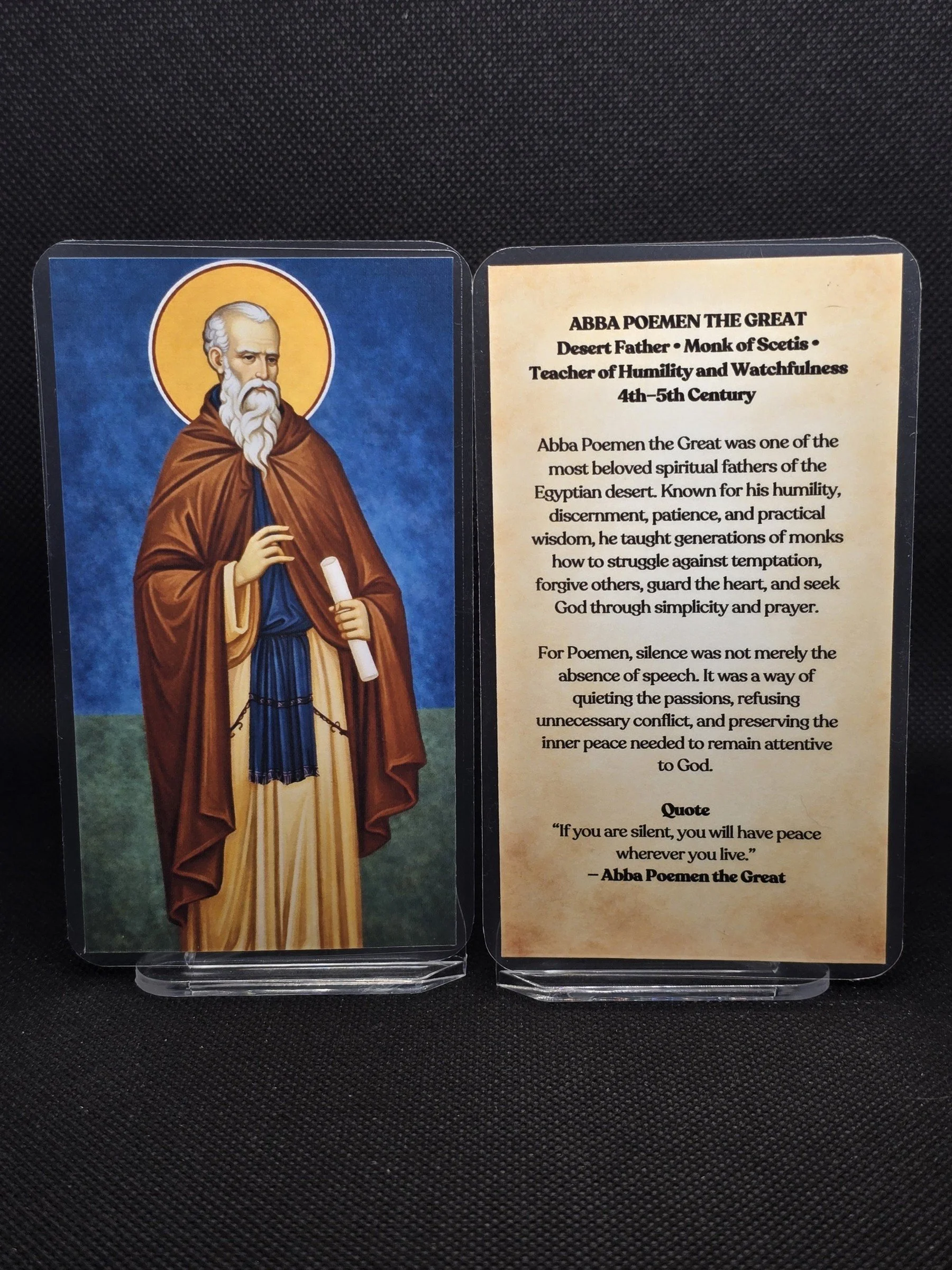 Image 21 of 29
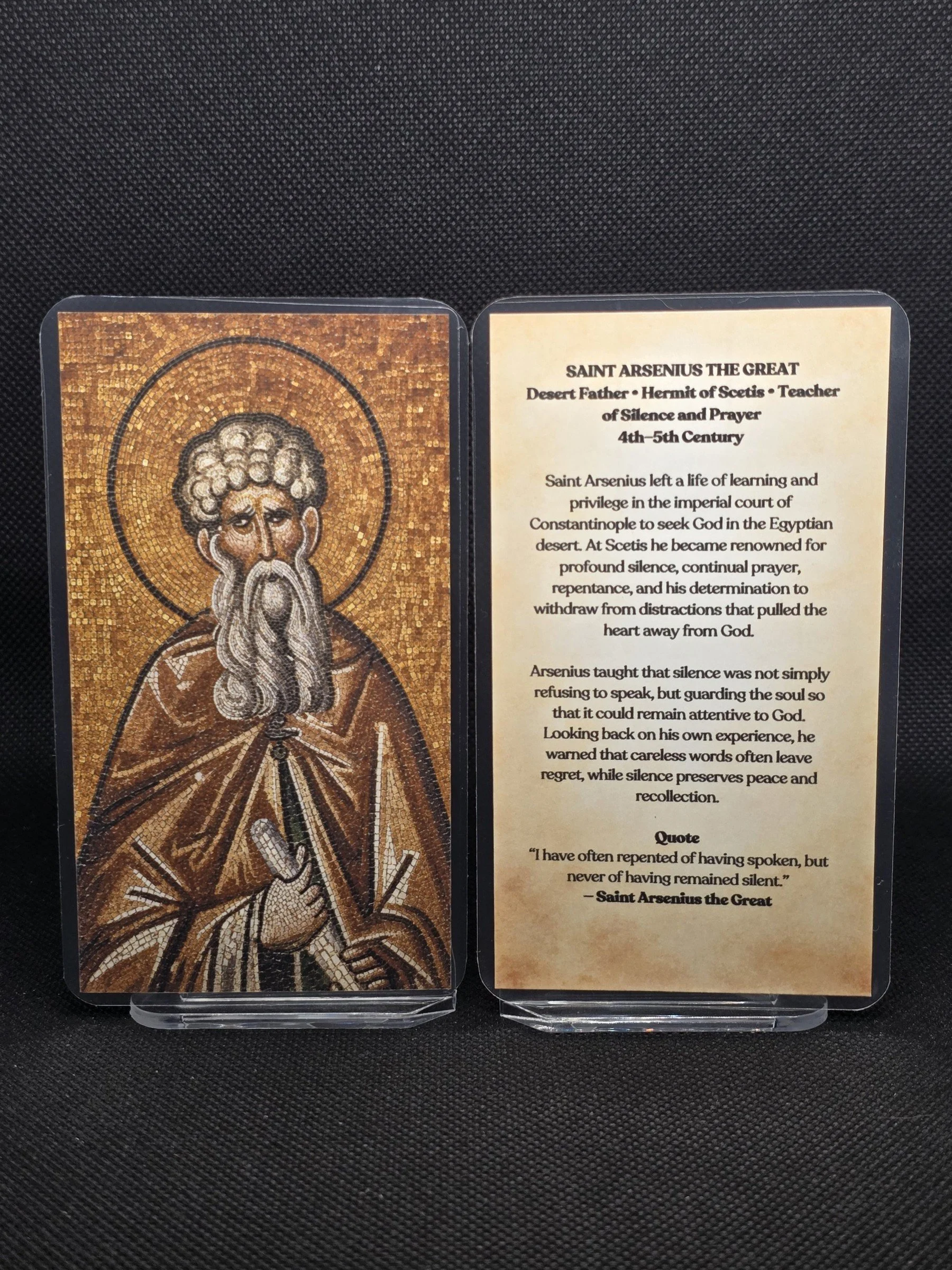 Image 22 of 29
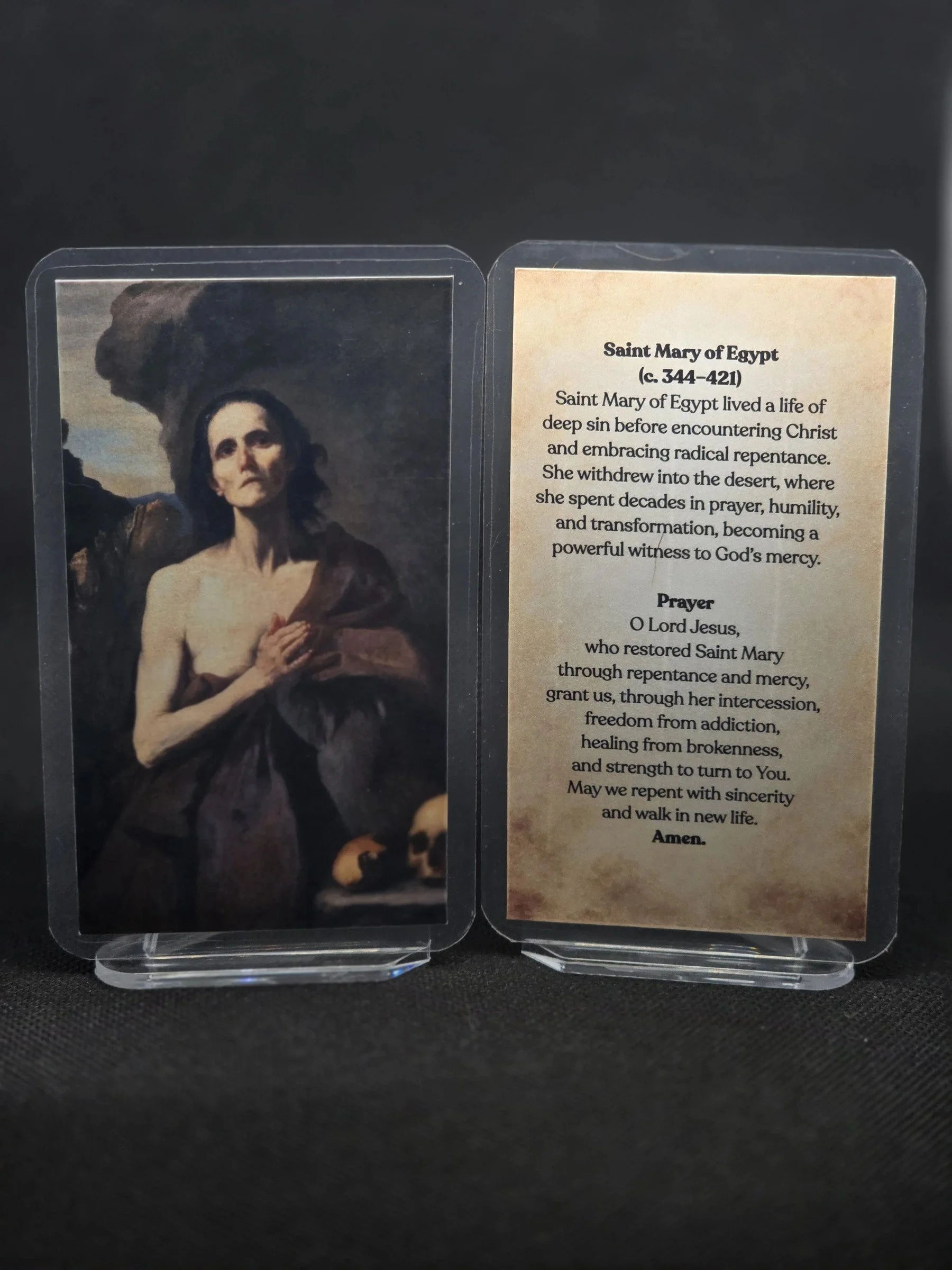 Image 23 of 29
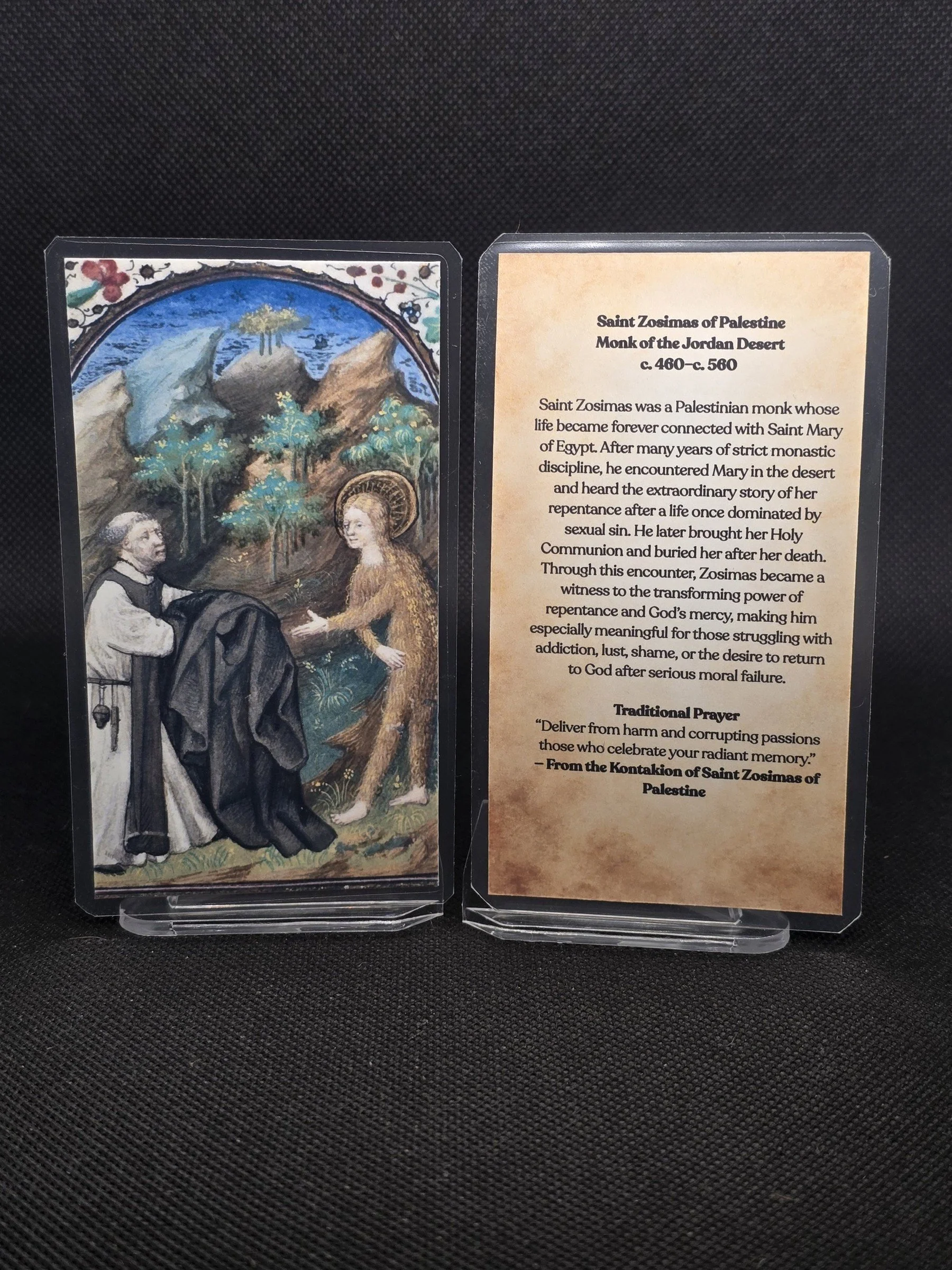 Image 24 of 29
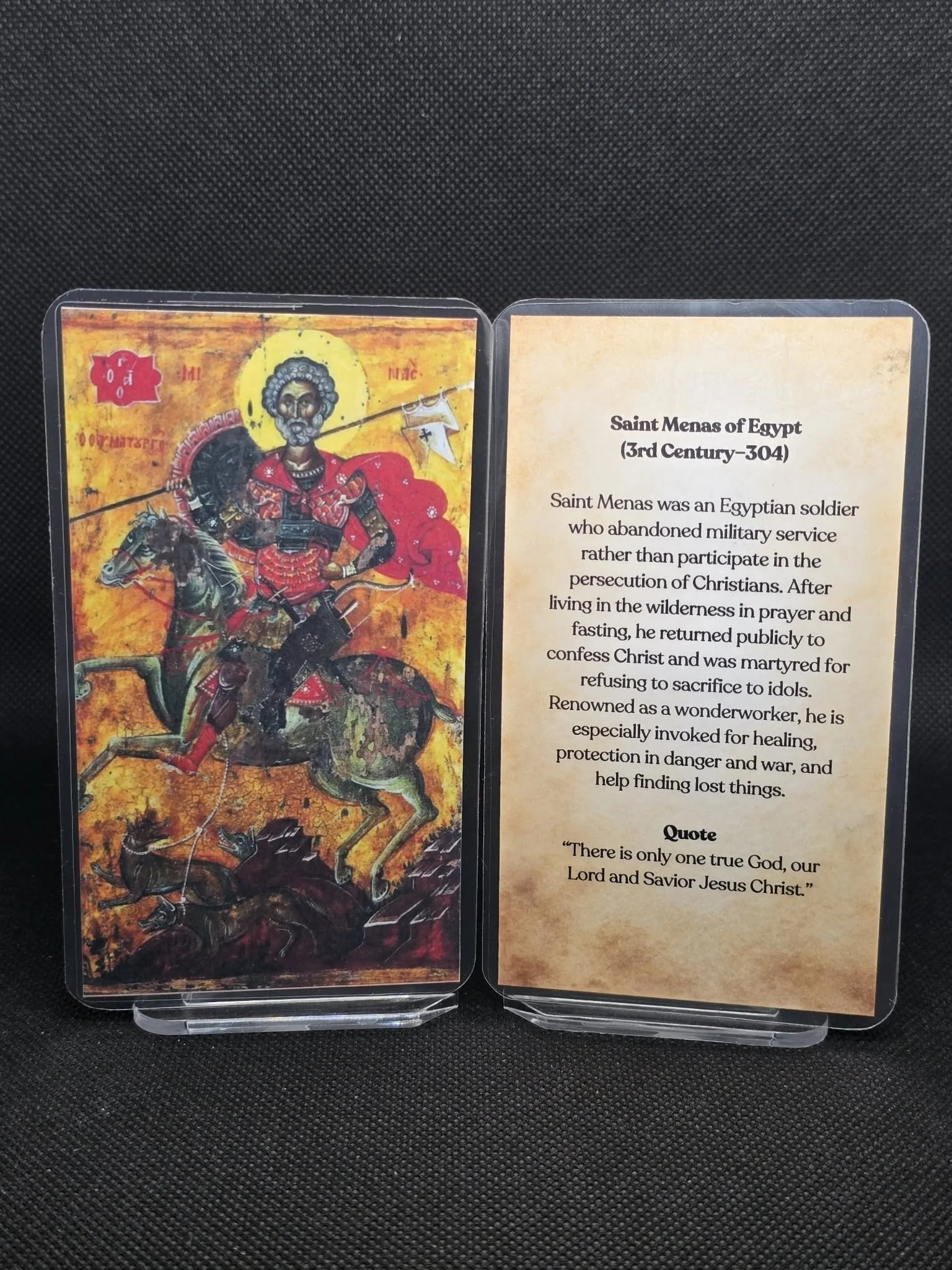 Image 25 of 29
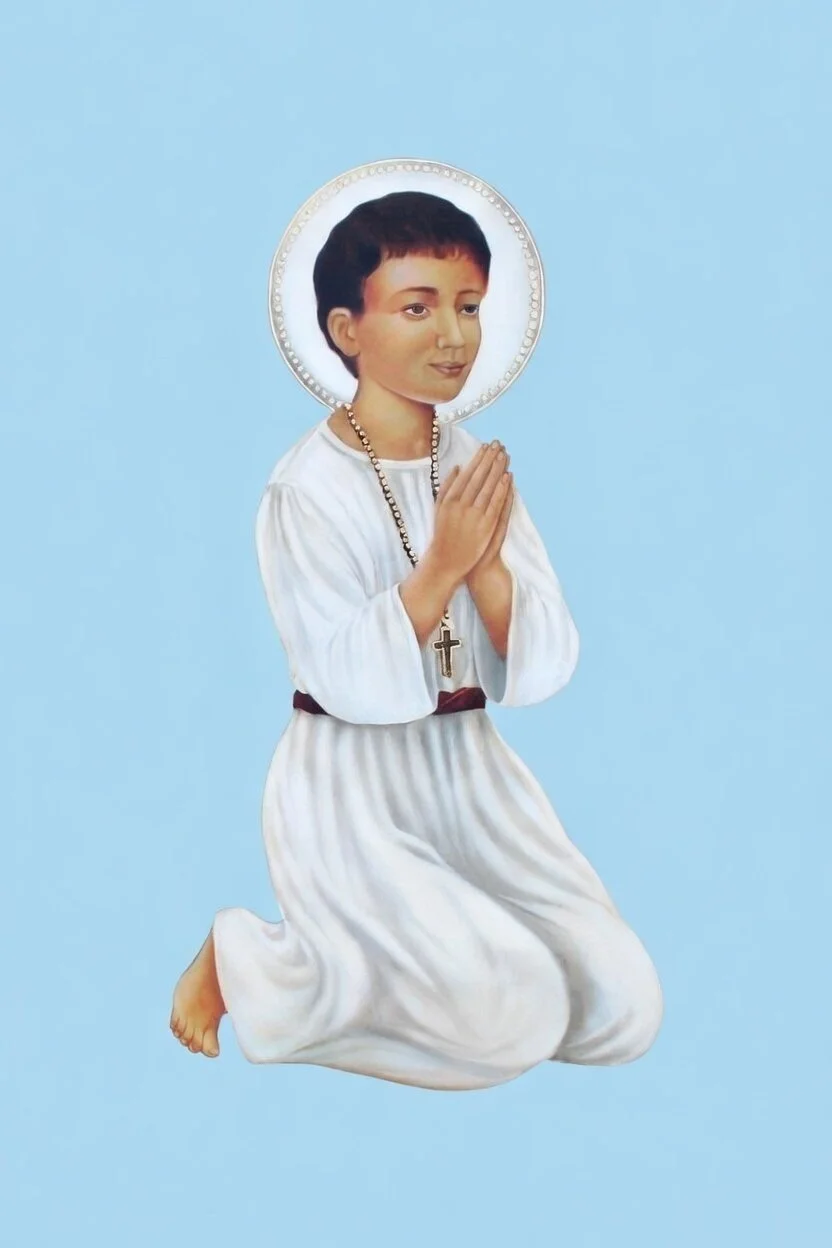 Image 26 of 29
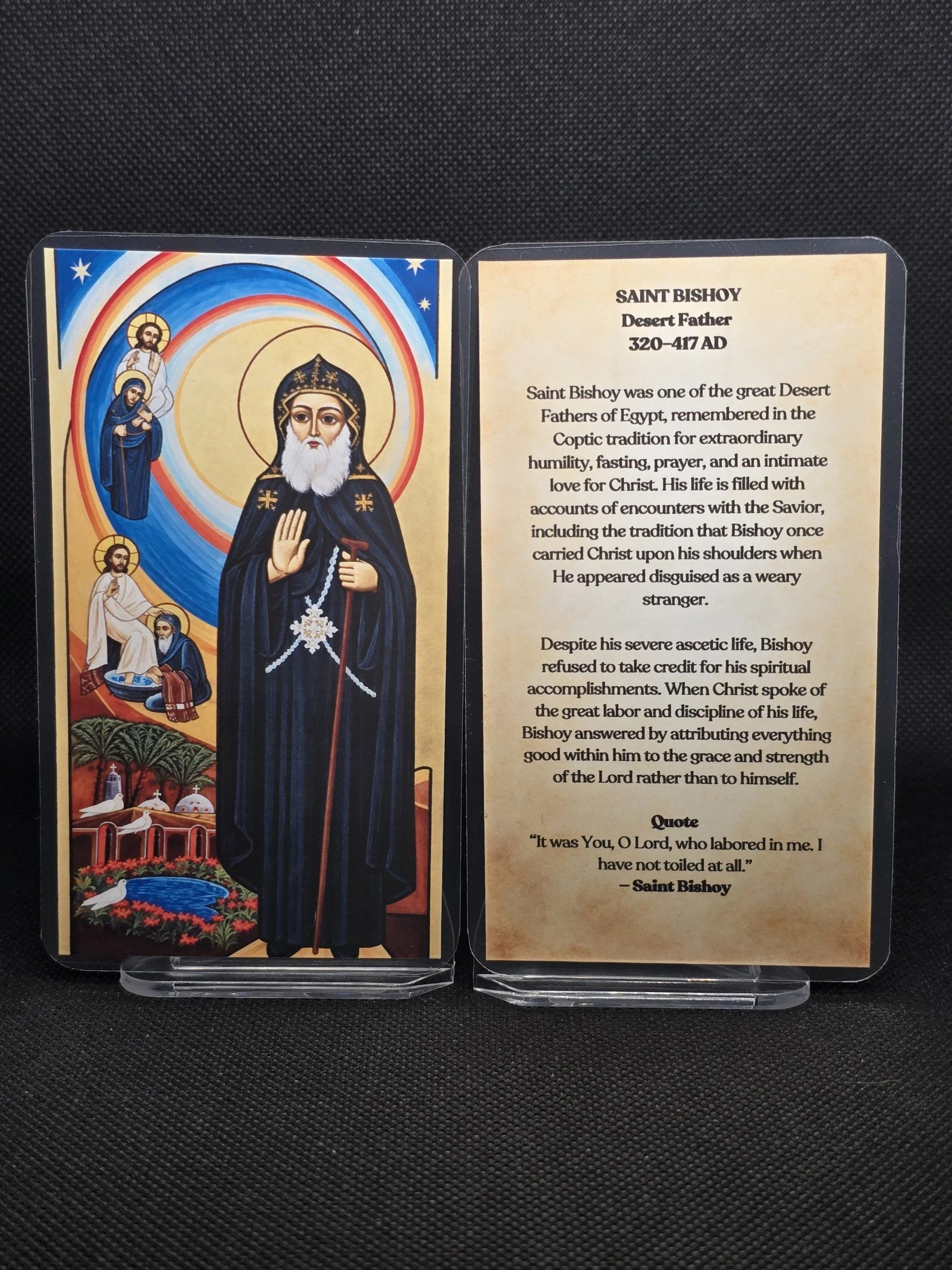 Image 27 of 29
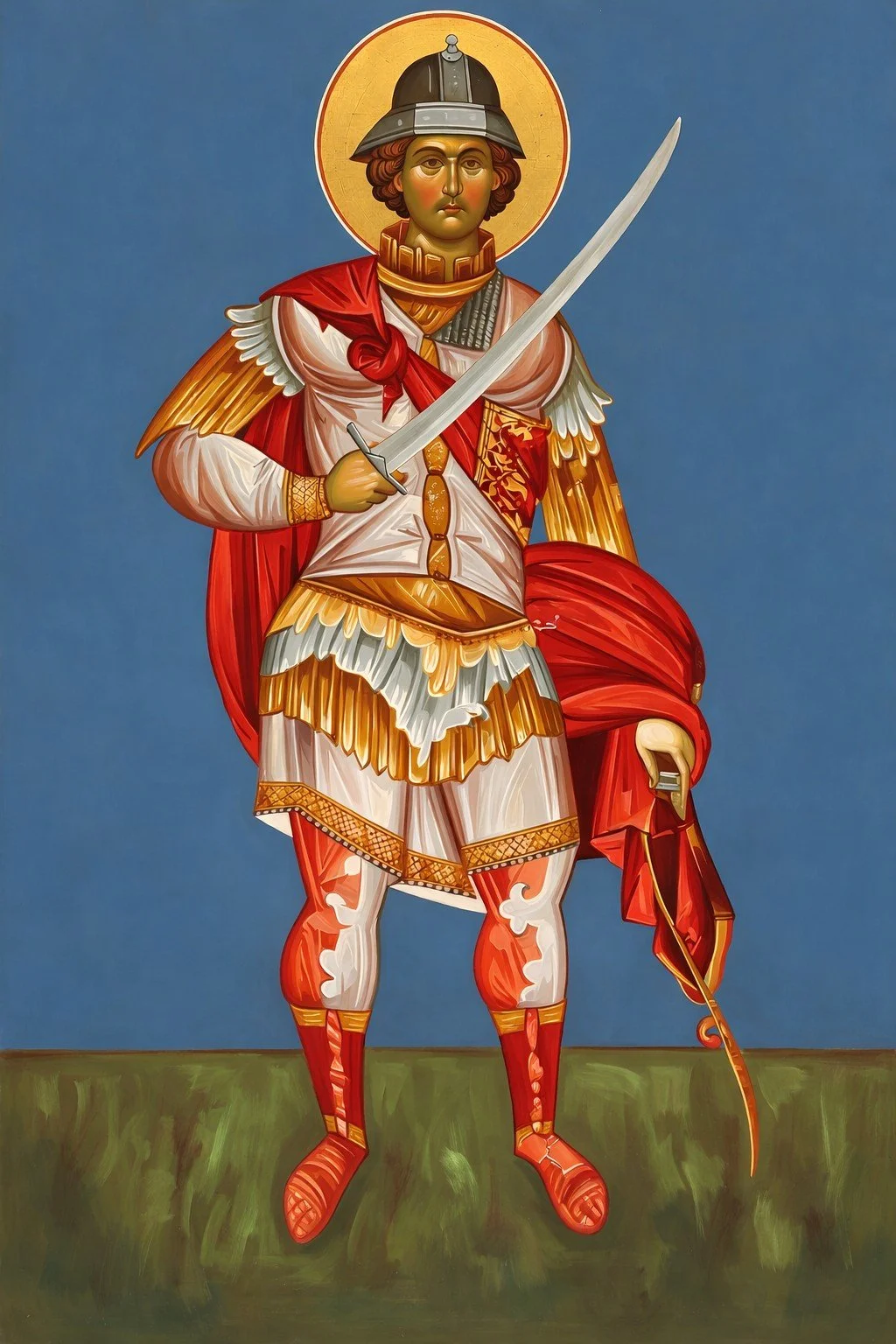 Image 28 of 29
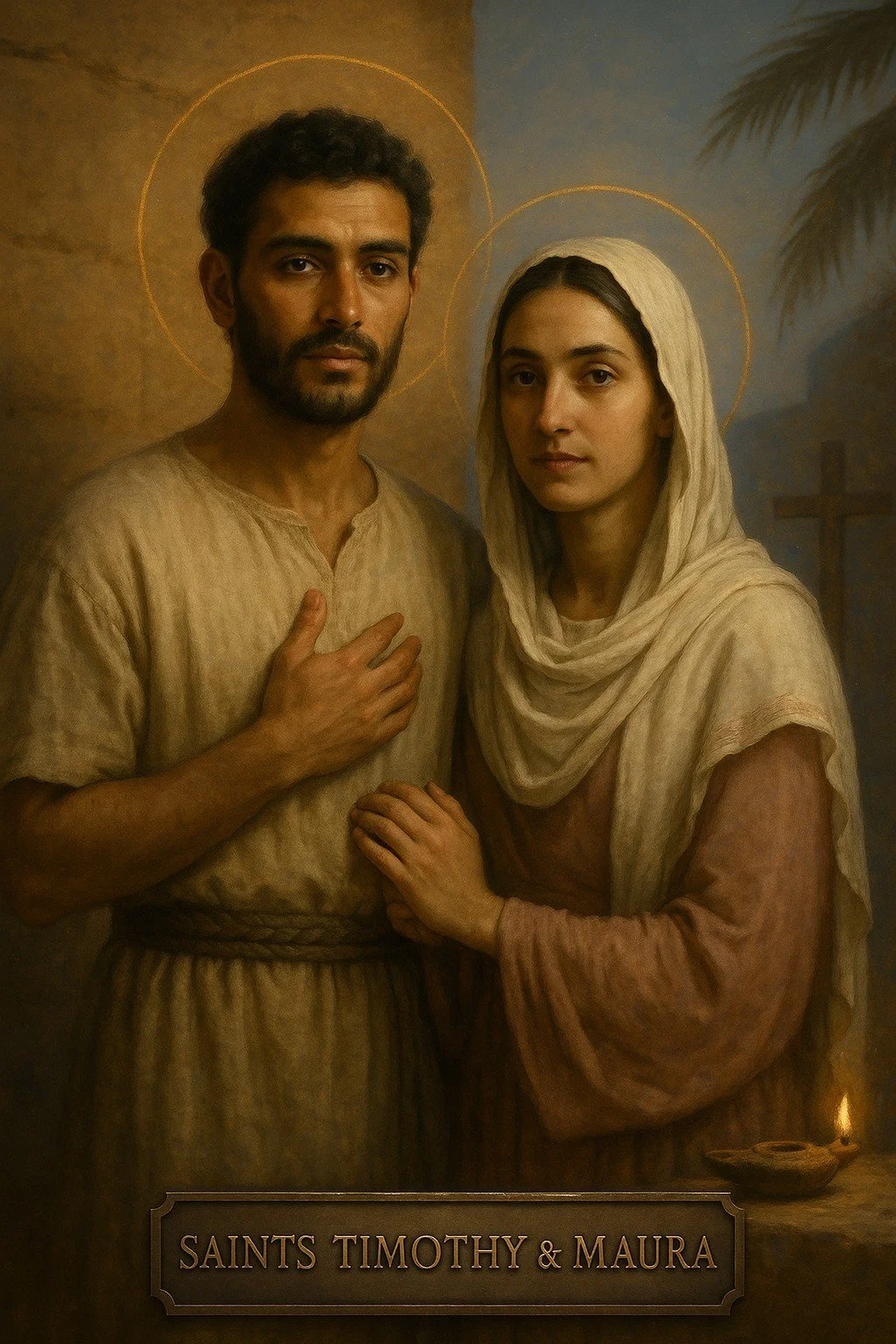 Image 29 of 29