Handmade Catholic and Orthodox prayer cards honoring the soldiers, generals, and defenders who carried their faith into battle — from the Roman legions to the Vietnam War, spanning nearly two thousand years of military witness.
Each card features a full-color icon on the front. On the back: a short historical biography of the saint — who they were, what they served, and why the faithful pray to them — followed by a prayer addressed directly to that saint for courage, protection, and strength or an inspirational quote from their life. Cards are standard holy card size (2.5" × 4.25"), handmade in Austin, Texas.
The figures in this collection:
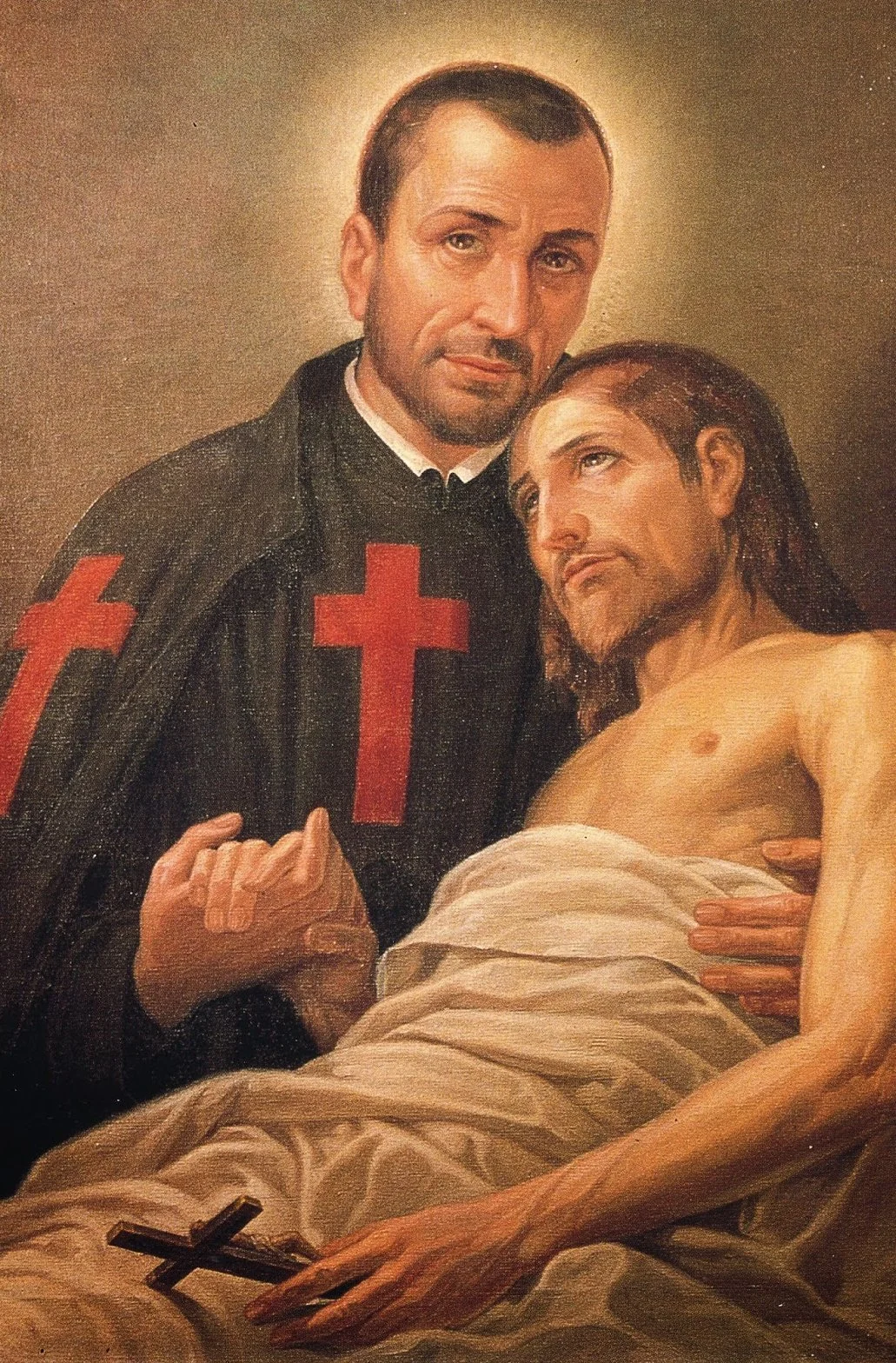
Saint Michael the Archangel — Commander of the heavenly armies and leader of the angels who cast down Satan, the universal patron of soldiers, police officers, and all who stand as defenders against evil. Invoked for centuries at the close of Mass and carried by soldiers of every era as the patron who never loses a battle.
Saint George — A Roman soldier martyred for his faith around 303 AD, remembered in legend for slaying a dragon to save a princess. Before the dragon, he was a decorated officer in the Roman army who refused Emperor Diocletian's order to renounce Christ, enduring torture rather than deny his faith. The most widely venerated military saint in the Christian world, patron of soldiers, knights, and armies across both East and West.
Saint Sebastian — A captain in the Roman Praetorian Guard, secretly Christian, who used his position to encourage imprisoned believers. Discovered, shot with arrows, and left for dead, he survived, confronted the emperor over the persecution of Christians, and was martyred a second time by clubbing. One of the most iconic patrons of soldiers and, because of his survival of the arrows, also invoked against plague and sudden illness.
Saint Maurice — Commander of the Theban Legion, an entire Roman legion of Christian soldiers stationed in Egypt and sent to Gaul under orders to suppress a Christian uprising. Rather than disobey their conscience, the legion refused, and Maurice led them in accepting martyrdom together instead of turning on fellow believers. Patron of soldiers, infantry, and those who face orders in conflict with their faith.
Saints Adrian and Natalia — Adrian was a Roman military officer assigned to guard imprisoned Christians awaiting execution and was so moved by their courage under torture that he declared himself a Christian on the spot, joining them in martyrdom. His wife Natalia, who had been secretly Christian all along, stood by him through his imprisonment, ministered to him in his final hours, and preserved the memory of his witness afterward.
Saints Eustace and Theopista — Eustace was a celebrated Roman general, a favorite of the emperor, who while hunting saw a stag with a crucifix shining between its antlers and heard the voice of Christ calling him to conversion. He and his wife Theopista were baptized along with their sons, later lost everything in a series of trials reminiscent of Job, and were ultimately martyred together rather than offer pagan sacrifice.
Saint Menas (Mar Mina) — A Roman soldier stationed in Egypt who left military service to live as a hermit in the desert, choosing solitude and prayer over rank and pay. He was discovered practicing his Christian faith during a public festival, refused to recant, and was martyred around 296 AD. One of the most beloved military martyrs of the Coptic tradition, with a shrine that became a major pilgrimage site for centuries.
Saint Longinus — Traditionally identified as the Roman centurion who pierced the side of Christ at the Crucifixion with a spear, and who, according to tradition, was so moved by the earthquake and the events he witnessed that he declared, "Truly this was the Son of God." He later converted fully, left the army, and was martyred for his faith.
Saint Demetrios of Thessaloniki — A Roman military officer and one of the most venerated warrior-saints of the Byzantine world, martyred after openly preaching Christianity to the citizens of Thessaloniki against imperial orders. He is credited in tradition with repeatedly defending the city from siege even after his death, and soldiers throughout the Eastern Christian world have invoked him before battle for over a thousand years.
Saint Theodore of Amasea (Tiro) — Known as "the Recruit," a young Roman soldier newly enlisted when he was ordered to worship pagan gods. He refused, and in response burned down a pagan temple in protest, for which he was tortured and martyred. One of the great warrior-martyrs of the early Byzantine Church, often paired in icons with the other Saint Theodore.
Saint Theodore Stratelates — Known as "the General," a Roman military commander distinct from Theodore Tiro, celebrated for both his battlefield leadership and, according to tradition, for slaying a dragon terrorizing his home region before his eventual martyrdom for the faith. Venerated across the Byzantine world as a model of courage in both war and witness.
Saint Philopater Mercurius Abu Sefein — Known as "the Two-Sworded," a Roman soldier of Coptic Egypt said to have been given a second sword by Saint Michael the Archangel to defeat the enemies of the empire in battle. He later refused to sacrifice to pagan gods and was martyred for his faith, becoming one of the most deeply venerated warrior-saints across the entire Coptic tradition.
Saint Martin of Tours — A Roman soldier who, while still a young cavalryman, famously cut his military cloak in half with his sword to share it with a freezing beggar at the gates of Amiens, then dreamed that night of Christ wearing the half-cloak. He later left the army as one of history's earliest recorded conscientious objectors, declaring he was a soldier of Christ and could no longer fight, and became one of the most beloved bishops and monastic founders of the early Western Church.
Saint Ignatius of Loyola — A Spanish soldier and courtier wounded badly in the leg by a cannonball at the Siege of Pamplona in 1521. His long, painful recovery, filled with spiritual reading he had access to only by accident, led to a profound conversion that turned a career soldier into a mystic. He went on to found the Society of Jesus, bringing military discipline, obedience, and strategy directly into the spiritual life of the Church.
Saint Joan of Arc — The French peasant girl who, guided from age thirteen by visions of Saint Michael, Saint Catherine, and Saint Margaret, convinced the royal court to give her command of French forces during the darkest years of the Hundred Years' War. She led the army to the decisive relief of Orléans and the coronation of the king before being captured, put on trial, and burned at the stake at nineteen. Patron of soldiers and of France itself.
Eight American servicemen, Civil War through Vietnam, all currently under formal investigation by the Catholic Church for sainthood:
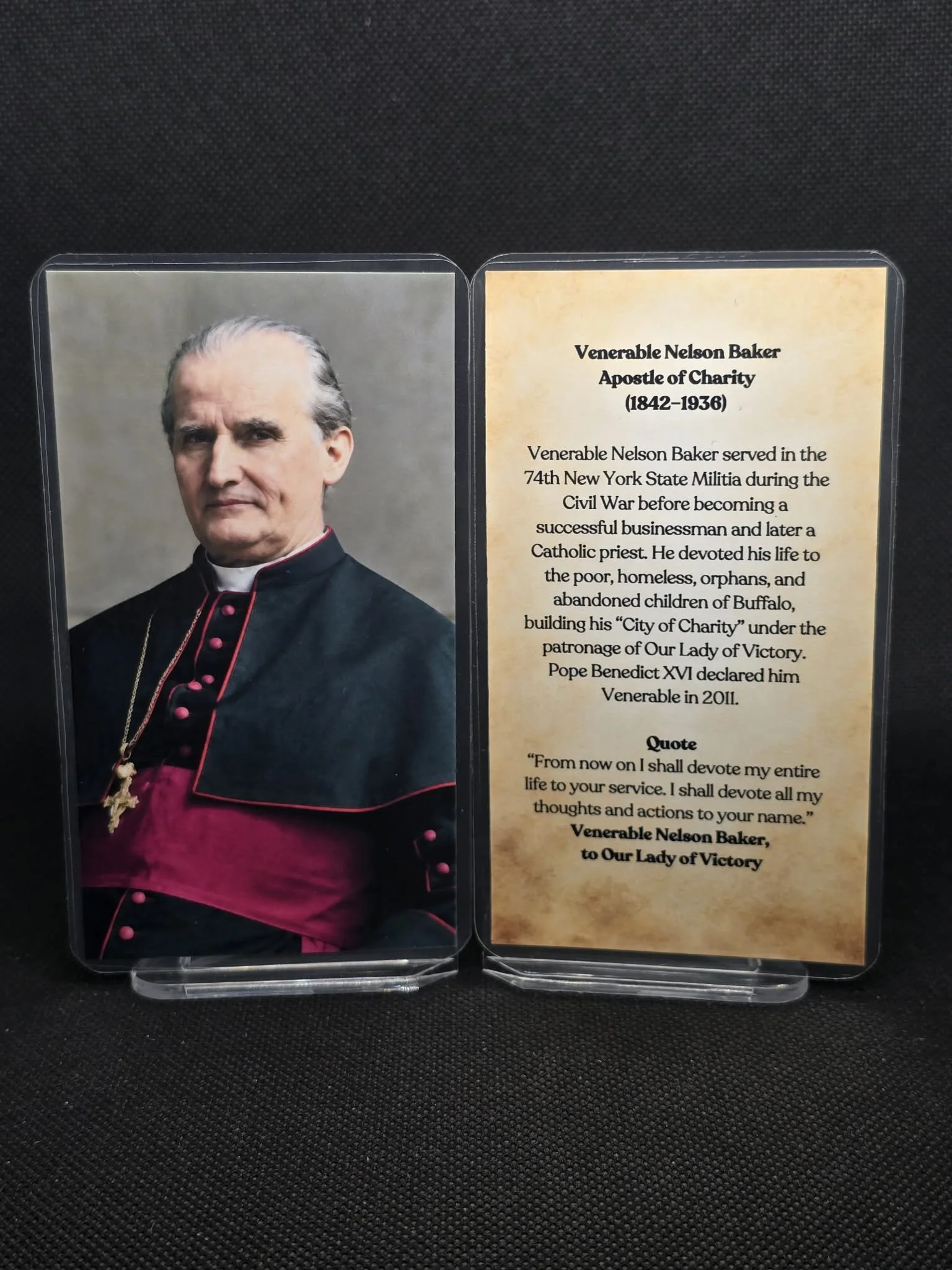
Venerable Nelson Baker — A Civil War militiaman who served through the Gettysburg Campaign and the New York Draft Riots, then came home, built a successful business, and entered the priesthood at twenty-seven. He spent the rest of his life building an entire "City of Charity" outside Buffalo, an orphanage, an infant home, and a basilica, insisting every time it succeeded that Our Lady of Victory, not he, deserved the credit. Declared Venerable in 2011; his cause now awaits a confirmed miracle.
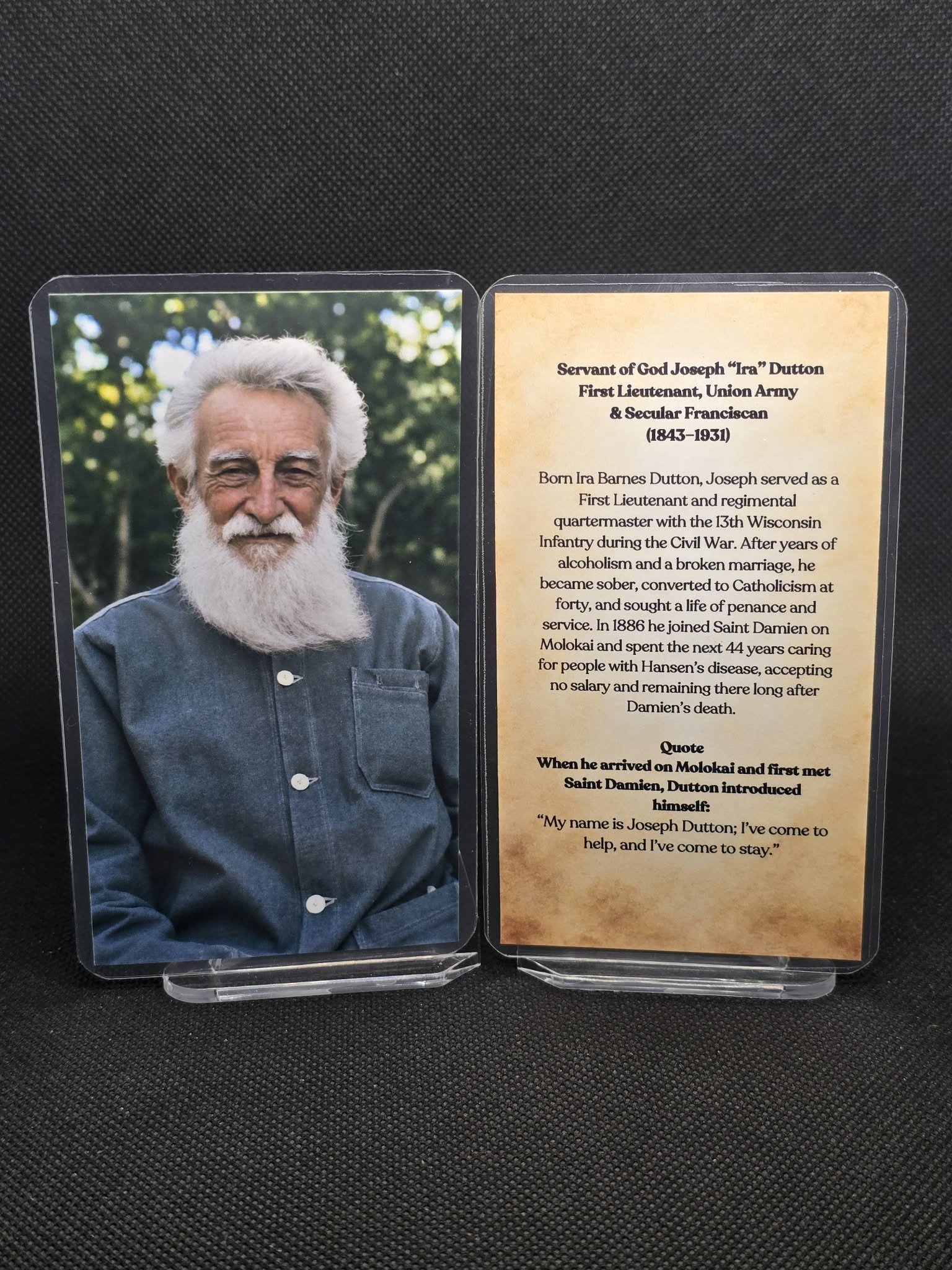
Servant of God Joseph "Ira" Dutton — A Civil War veteran and regimental quartermaster who, after a failed marriage and years of heavy drinking, converted to Catholicism at forty and briefly sought a monk's silence before discovering his true calling was action, not withdrawal. He spent the next forty-four years serving alongside Saint Damien of Molokai in a Hawaiian leper colony, taking no salary, and never once contracting the disease himself.
Servant of God Bernard John Quinn — A WWI Army chaplain gassed in the trenches of France who came home determined to build a parish for Brooklyn's Black Catholics, whom the diocese had largely overlooked. He founded Saint Peter Claver Church and an orphanage for Black children that the Ku Klux Klan burned to the ground twice; he rebuilt it twice, the second time in brick and concrete specifically so it could not be destroyed again.
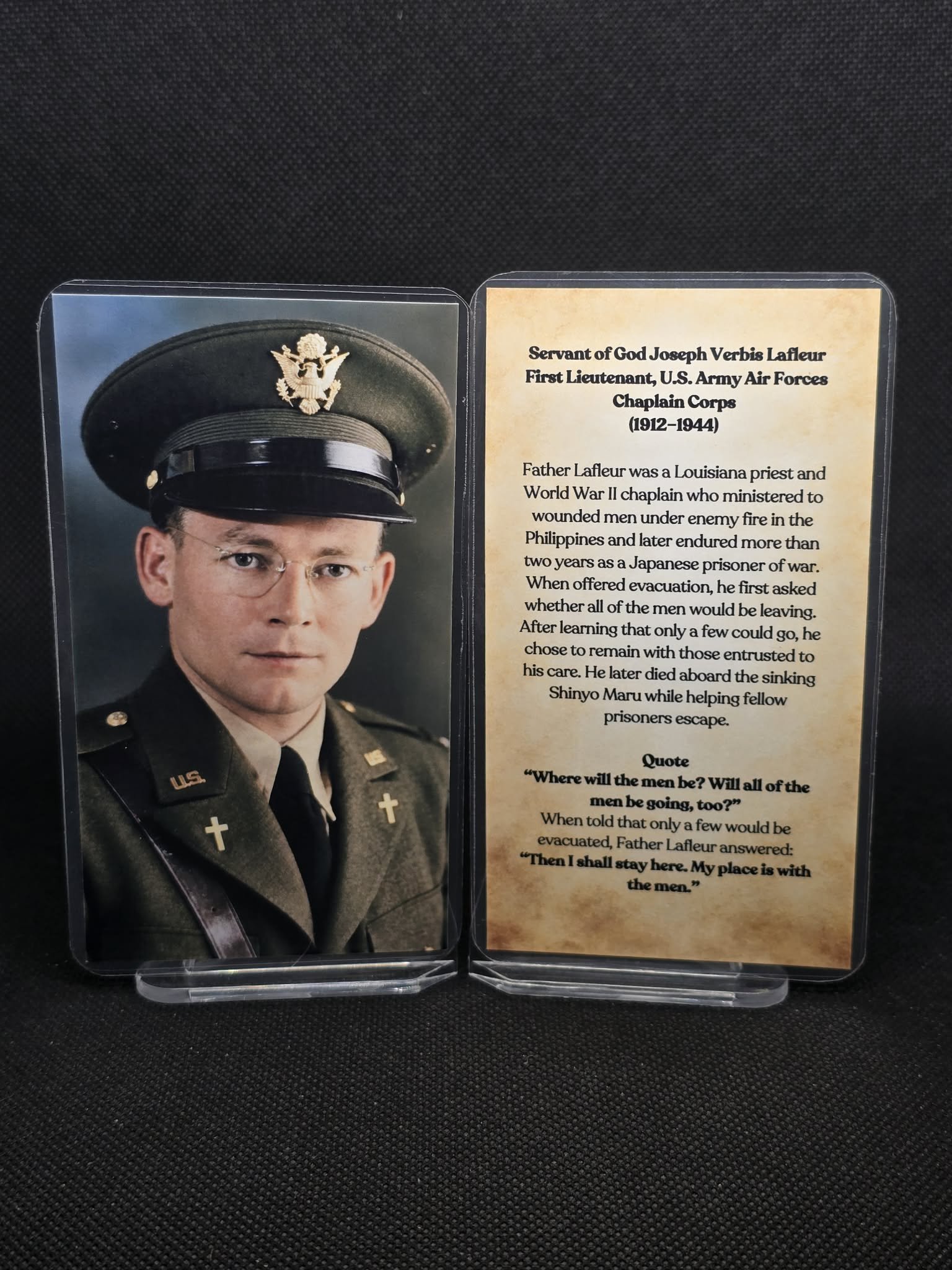
Servant of God Joseph Verbis Lafleur — A WWII Army Air Corps chaplain who moved through Japanese bombing at Clark Field to reach the wounded rather than take cover, then refused evacuation, telling his commanders his place was with the men. Captured and held nearly two and a half years as a POW, he traded his own eyeglasses to help fellow prisoners and died in 1944 helping other men escape the sinking Japanese prison ship Shinyo Maru after giving up his own chance to get out first.
Servant of God Brother Marinus LaRue — A WWII and Korean War Merchant Marine captain who, given a cargo ship built for twelve passengers, evacuated roughly 14,000 Korean refugees under fire and through mined waters without losing a single life, the voyage still remembered as the "Ship of Miracles." Four years later, at the height of his fame, he quietly left the sea entirely to become a Benedictine monk, spending the next forty-seven years washing dishes and ringing the monastery bell for prayer.
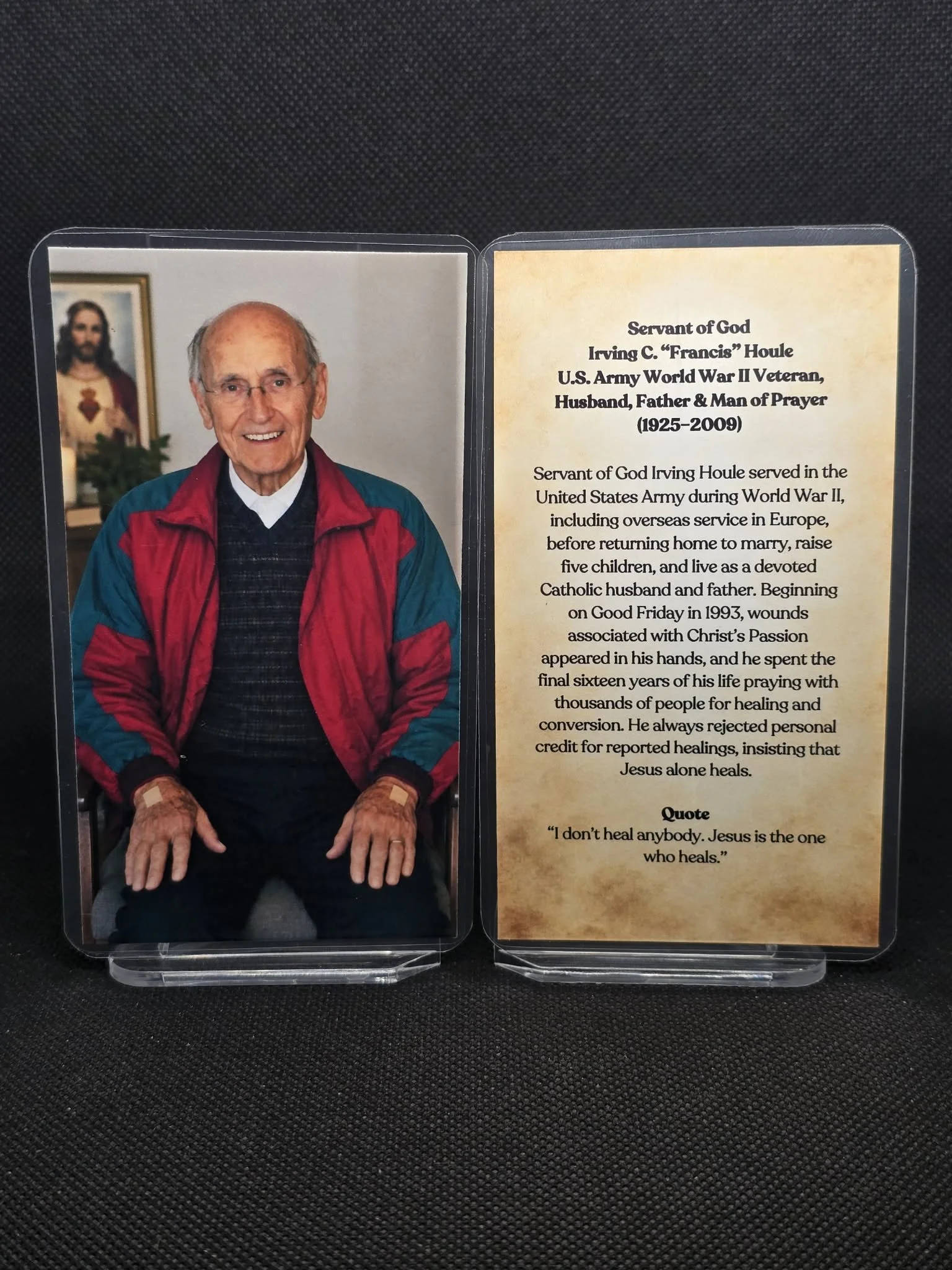
Servant of God Irving "Francis" Houle — A WWII Army veteran of the European campaign who came home, married, raised five children, and spent decades as an ordinary factory plant manager in Michigan's Upper Peninsula. On Good Friday 1993, at sixty-seven, he began bearing the wounds of Christ's Passion every night and spent his final sixteen years praying individually over tens of thousands of pilgrims, always insisting the healing came from God and not from him.
Venerable Emil Kapaun — A United States Army chaplain from a Kansas farm who repeatedly exposed himself to enemy fire to reach wounded soldiers during the Korean War, then chose capture over abandoning men who could not walk out of the collapsing position at Unsan. In a North Korean POW camp he stole food for starving prisoners, resisted Communist indoctrination at real personal risk, and died in captivity in 1951 after refusing to let fellow prisoners risk themselves protecting him. Posthumously awarded the Medal of Honor in 2013; declared Venerable in 2025.
Servant of God Vincent Capodanno — "The Grunt Padre," a Maryknoll missionary priest turned Navy chaplain who insisted on living in the field alongside the ordinary Marines he served in Vietnam rather than staying near safer command posts. Already wounded and repeatedly refusing medical aid so others could be treated first, he was killed by machine-gun fire in 1967 while rushing to help a wounded corpsman under fire. Posthumously awarded the Medal of Honor.
Handmade with Prayer and Purpose
These are not mass-produced cards. Each one is individually made, prayed over, and venerated before shipping — a tradition maintained to ensure your cards are not just art pieces, but sacred keepsakes. Made with high-quality photo paper laminated to double thickness, built to last a lifetime, not printed on cardboard like commercial prayer cards.
Details:
Each card includes a prayer, scripture, or reflection tied to the saint depicted
Suitable for gifting, parish groups, home altars, or daily reflection
Handmade to order in Austin, Texas
Why People Love These Cards:
Spans nearly two thousand years, from the Roman legions to the Vietnam War
Honors both Catholic and Orthodox military saints together
Includes eight American servicemen currently under formal Church investigation for canonization, alongside the Church's ancient warrior-martyrs
A meaningful gift for active-duty service members, veterans, police officers, and first responders
Deeply rooted in authentic Christian history and devotion
Made with intentional prayer, not automation
Handmade Catholic and Orthodox prayer cards honoring the soldiers, generals, and defenders who carried their faith into battle — from the Roman legions to the Vietnam War, spanning nearly two thousand years of military witness.
Each card features a full-color icon on the front. On the back: a short historical biography of the saint — who they were, what they served, and why the faithful pray to them — followed by a prayer addressed directly to that saint for courage, protection, and strength or an inspirational quote from their life. Cards are standard holy card size (2.5" × 4.25"), handmade in Austin, Texas.
The figures in this collection:
Saint Michael the Archangel — Commander of the heavenly armies and leader of the angels who cast down Satan, the universal patron of soldiers, police officers, and all who stand as defenders against evil. Invoked for centuries at the close of Mass and carried by soldiers of every era as the patron who never loses a battle.
Saint George — A Roman soldier martyred for his faith around 303 AD, remembered in legend for slaying a dragon to save a princess. Before the dragon, he was a decorated officer in the Roman army who refused Emperor Diocletian's order to renounce Christ, enduring torture rather than deny his faith. The most widely venerated military saint in the Christian world, patron of soldiers, knights, and armies across both East and West.
Saint Sebastian — A captain in the Roman Praetorian Guard, secretly Christian, who used his position to encourage imprisoned believers. Discovered, shot with arrows, and left for dead, he survived, confronted the emperor over the persecution of Christians, and was martyred a second time by clubbing. One of the most iconic patrons of soldiers and, because of his survival of the arrows, also invoked against plague and sudden illness.
Saint Maurice — Commander of the Theban Legion, an entire Roman legion of Christian soldiers stationed in Egypt and sent to Gaul under orders to suppress a Christian uprising. Rather than disobey their conscience, the legion refused, and Maurice led them in accepting martyrdom together instead of turning on fellow believers. Patron of soldiers, infantry, and those who face orders in conflict with their faith.
Saints Adrian and Natalia — Adrian was a Roman military officer assigned to guard imprisoned Christians awaiting execution and was so moved by their courage under torture that he declared himself a Christian on the spot, joining them in martyrdom. His wife Natalia, who had been secretly Christian all along, stood by him through his imprisonment, ministered to him in his final hours, and preserved the memory of his witness afterward.
Saints Eustace and Theopista — Eustace was a celebrated Roman general, a favorite of the emperor, who while hunting saw a stag with a crucifix shining between its antlers and heard the voice of Christ calling him to conversion. He and his wife Theopista were baptized along with their sons, later lost everything in a series of trials reminiscent of Job, and were ultimately martyred together rather than offer pagan sacrifice.
Saint Menas (Mar Mina) — A Roman soldier stationed in Egypt who left military service to live as a hermit in the desert, choosing solitude and prayer over rank and pay. He was discovered practicing his Christian faith during a public festival, refused to recant, and was martyred around 296 AD. One of the most beloved military martyrs of the Coptic tradition, with a shrine that became a major pilgrimage site for centuries.
Saint Longinus — Traditionally identified as the Roman centurion who pierced the side of Christ at the Crucifixion with a spear, and who, according to tradition, was so moved by the earthquake and the events he witnessed that he declared, "Truly this was the Son of God." He later converted fully, left the army, and was martyred for his faith.
Saint Demetrios of Thessaloniki — A Roman military officer and one of the most venerated warrior-saints of the Byzantine world, martyred after openly preaching Christianity to the citizens of Thessaloniki against imperial orders. He is credited in tradition with repeatedly defending the city from siege even after his death, and soldiers throughout the Eastern Christian world have invoked him before battle for over a thousand years.
Saint Theodore of Amasea (Tiro) — Known as "the Recruit," a young Roman soldier newly enlisted when he was ordered to worship pagan gods. He refused, and in response burned down a pagan temple in protest, for which he was tortured and martyred. One of the great warrior-martyrs of the early Byzantine Church, often paired in icons with the other Saint Theodore.
Saint Theodore Stratelates — Known as "the General," a Roman military commander distinct from Theodore Tiro, celebrated for both his battlefield leadership and, according to tradition, for slaying a dragon terrorizing his home region before his eventual martyrdom for the faith. Venerated across the Byzantine world as a model of courage in both war and witness.
Saint Philopater Mercurius Abu Sefein — Known as "the Two-Sworded," a Roman soldier of Coptic Egypt said to have been given a second sword by Saint Michael the Archangel to defeat the enemies of the empire in battle. He later refused to sacrifice to pagan gods and was martyred for his faith, becoming one of the most deeply venerated warrior-saints across the entire Coptic tradition.
Saint Martin of Tours — A Roman soldier who, while still a young cavalryman, famously cut his military cloak in half with his sword to share it with a freezing beggar at the gates of Amiens, then dreamed that night of Christ wearing the half-cloak. He later left the army as one of history's earliest recorded conscientious objectors, declaring he was a soldier of Christ and could no longer fight, and became one of the most beloved bishops and monastic founders of the early Western Church.
Saint Ignatius of Loyola — A Spanish soldier and courtier wounded badly in the leg by a cannonball at the Siege of Pamplona in 1521. His long, painful recovery, filled with spiritual reading he had access to only by accident, led to a profound conversion that turned a career soldier into a mystic. He went on to found the Society of Jesus, bringing military discipline, obedience, and strategy directly into the spiritual life of the Church.
Saint Joan of Arc — The French peasant girl who, guided from age thirteen by visions of Saint Michael, Saint Catherine, and Saint Margaret, convinced the royal court to give her command of French forces during the darkest years of the Hundred Years' War. She led the army to the decisive relief of Orléans and the coronation of the king before being captured, put on trial, and burned at the stake at nineteen. Patron of soldiers and of France itself.
Eight American servicemen, Civil War through Vietnam, all currently under formal investigation by the Catholic Church for sainthood:
Venerable Nelson Baker — A Civil War militiaman who served through the Gettysburg Campaign and the New York Draft Riots, then came home, built a successful business, and entered the priesthood at twenty-seven. He spent the rest of his life building an entire "City of Charity" outside Buffalo, an orphanage, an infant home, and a basilica, insisting every time it succeeded that Our Lady of Victory, not he, deserved the credit. Declared Venerable in 2011; his cause now awaits a confirmed miracle.
Servant of God Joseph "Ira" Dutton — A Civil War veteran and regimental quartermaster who, after a failed marriage and years of heavy drinking, converted to Catholicism at forty and briefly sought a monk's silence before discovering his true calling was action, not withdrawal. He spent the next forty-four years serving alongside Saint Damien of Molokai in a Hawaiian leper colony, taking no salary, and never once contracting the disease himself.
Servant of God Bernard John Quinn — A WWI Army chaplain gassed in the trenches of France who came home determined to build a parish for Brooklyn's Black Catholics, whom the diocese had largely overlooked. He founded Saint Peter Claver Church and an orphanage for Black children that the Ku Klux Klan burned to the ground twice; he rebuilt it twice, the second time in brick and concrete specifically so it could not be destroyed again.
Servant of God Joseph Verbis Lafleur — A WWII Army Air Corps chaplain who moved through Japanese bombing at Clark Field to reach the wounded rather than take cover, then refused evacuation, telling his commanders his place was with the men. Captured and held nearly two and a half years as a POW, he traded his own eyeglasses to help fellow prisoners and died in 1944 helping other men escape the sinking Japanese prison ship Shinyo Maru after giving up his own chance to get out first.
Servant of God Brother Marinus LaRue — A WWII and Korean War Merchant Marine captain who, given a cargo ship built for twelve passengers, evacuated roughly 14,000 Korean refugees under fire and through mined waters without losing a single life, the voyage still remembered as the "Ship of Miracles." Four years later, at the height of his fame, he quietly left the sea entirely to become a Benedictine monk, spending the next forty-seven years washing dishes and ringing the monastery bell for prayer.
Servant of God Irving "Francis" Houle — A WWII Army veteran of the European campaign who came home, married, raised five children, and spent decades as an ordinary factory plant manager in Michigan's Upper Peninsula. On Good Friday 1993, at sixty-seven, he began bearing the wounds of Christ's Passion every night and spent his final sixteen years praying individually over tens of thousands of pilgrims, always insisting the healing came from God and not from him.
Venerable Emil Kapaun — A United States Army chaplain from a Kansas farm who repeatedly exposed himself to enemy fire to reach wounded soldiers during the Korean War, then chose capture over abandoning men who could not walk out of the collapsing position at Unsan. In a North Korean POW camp he stole food for starving prisoners, resisted Communist indoctrination at real personal risk, and died in captivity in 1951 after refusing to let fellow prisoners risk themselves protecting him. Posthumously awarded the Medal of Honor in 2013; declared Venerable in 2025.
Servant of God Vincent Capodanno — "The Grunt Padre," a Maryknoll missionary priest turned Navy chaplain who insisted on living in the field alongside the ordinary Marines he served in Vietnam rather than staying near safer command posts. Already wounded and repeatedly refusing medical aid so others could be treated first, he was killed by machine-gun fire in 1967 while rushing to help a wounded corpsman under fire. Posthumously awarded the Medal of Honor.
Handmade with Prayer and Purpose
These are not mass-produced cards. Each one is individually made, prayed over, and venerated before shipping — a tradition maintained to ensure your cards are not just art pieces, but sacred keepsakes. Made with high-quality photo paper laminated to double thickness, built to last a lifetime, not printed on cardboard like commercial prayer cards.
Details:
Each card includes a prayer, scripture, or reflection tied to the saint depicted
Suitable for gifting, parish groups, home altars, or daily reflection
Handmade to order in Austin, Texas
Why People Love These Cards:
Spans nearly two thousand years, from the Roman legions to the Vietnam War
Honors both Catholic and Orthodox military saints together
Includes eight American servicemen currently under formal Church investigation for canonization, alongside the Church's ancient warrior-martyrs
A meaningful gift for active-duty service members, veterans, police officers, and first responders
Deeply rooted in authentic Christian history and devotion
Made with intentional prayer, not automation
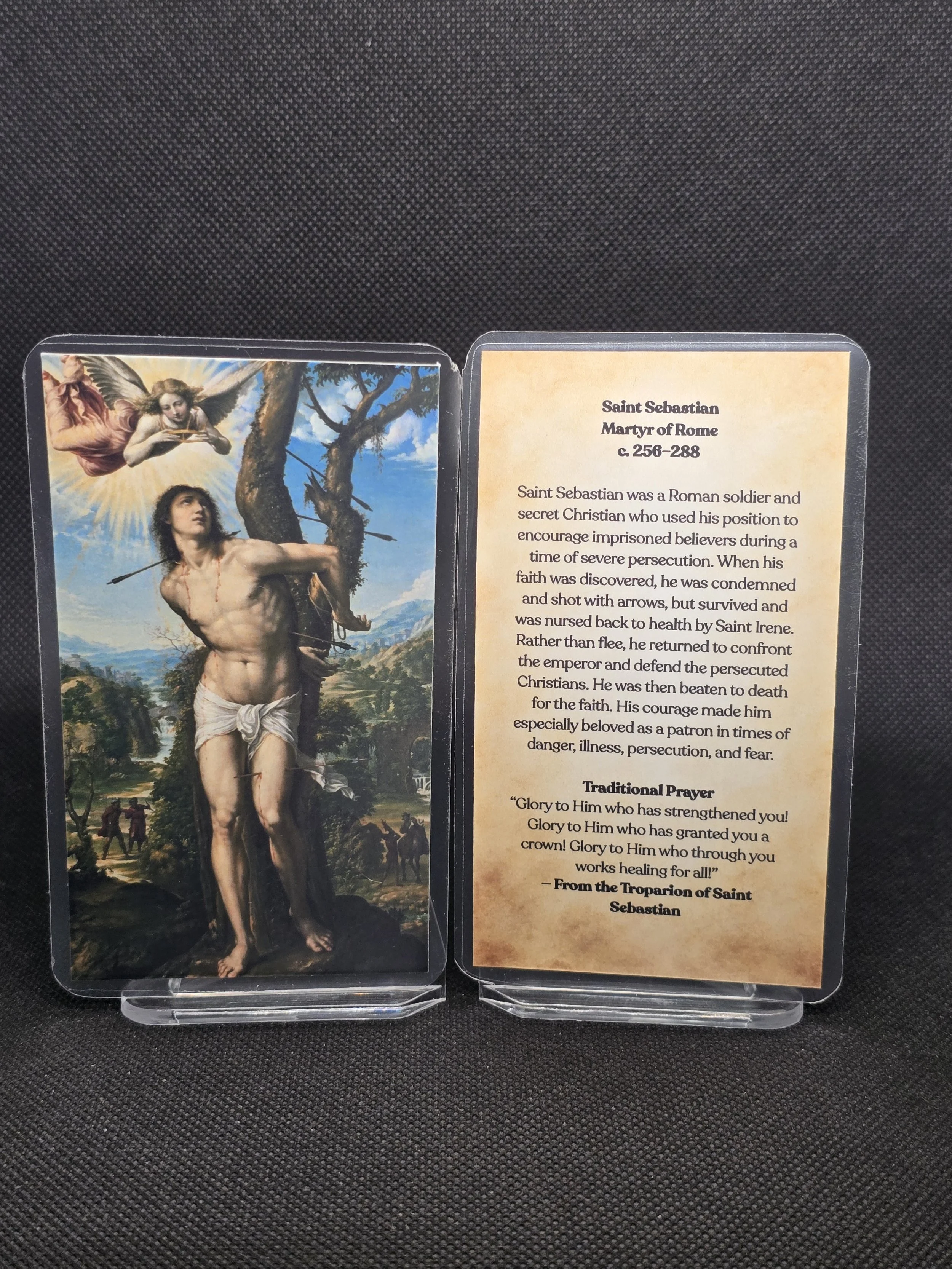 Image 1 of 23
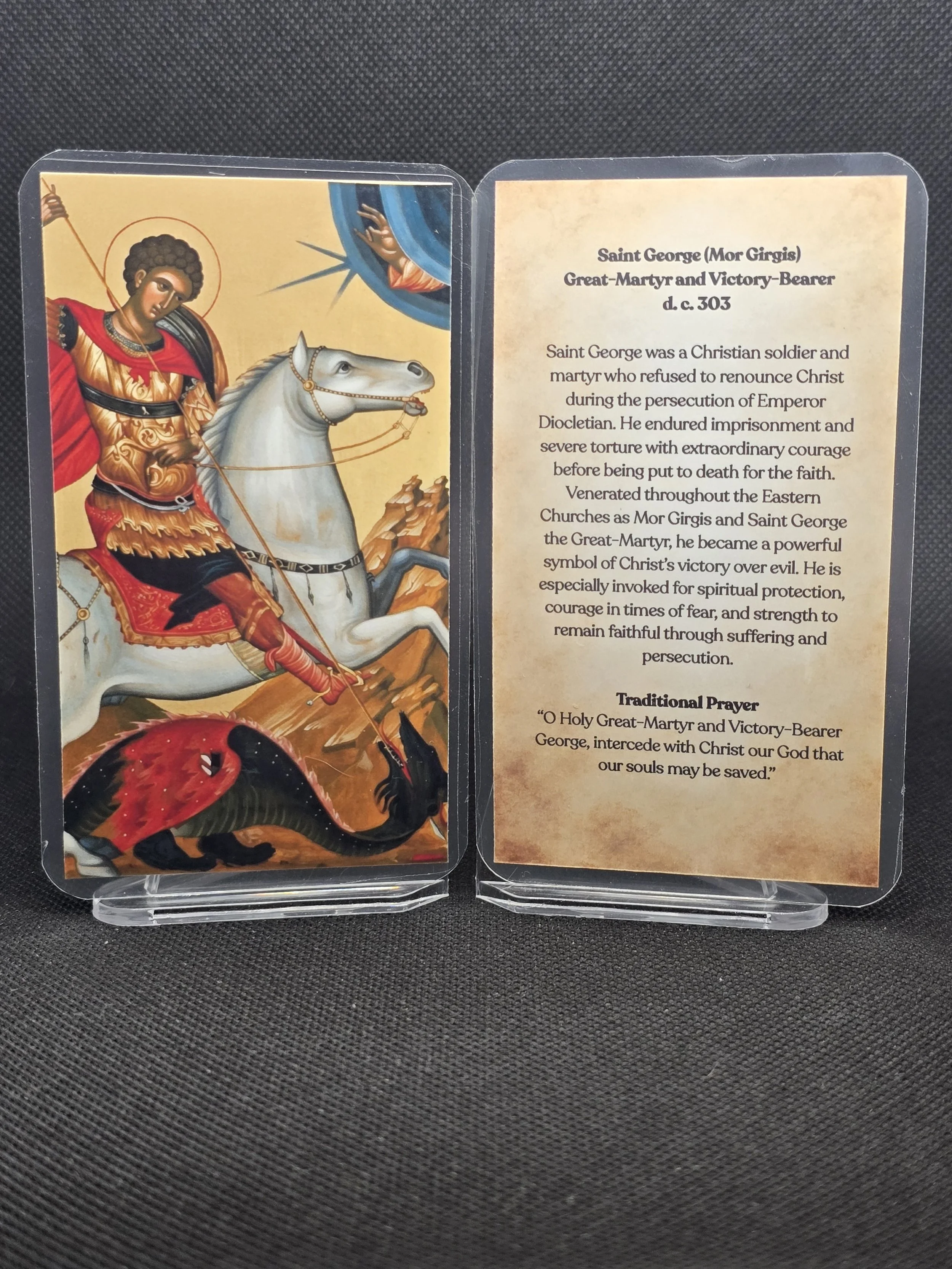 Image 2 of 23
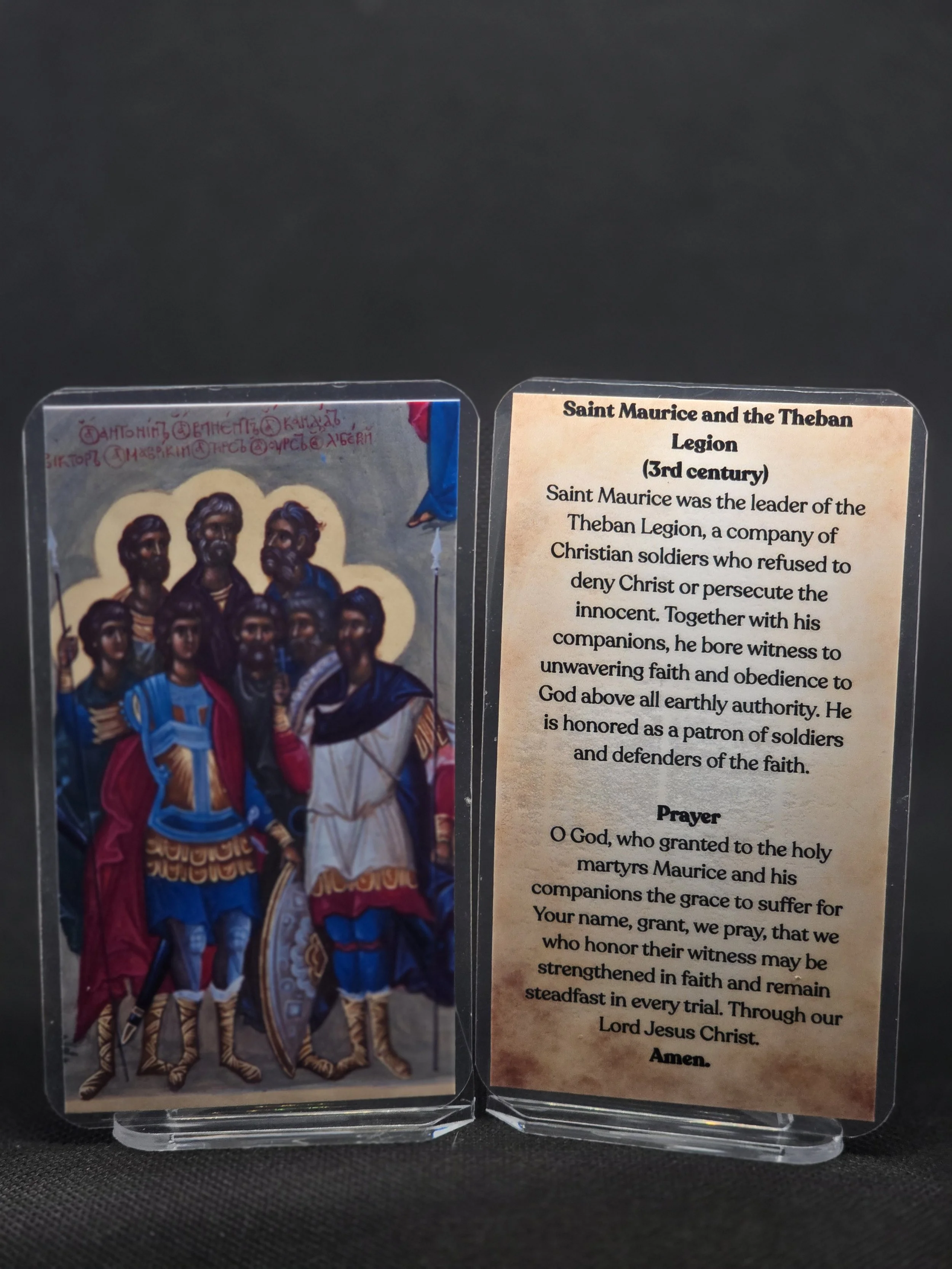 Image 3 of 23
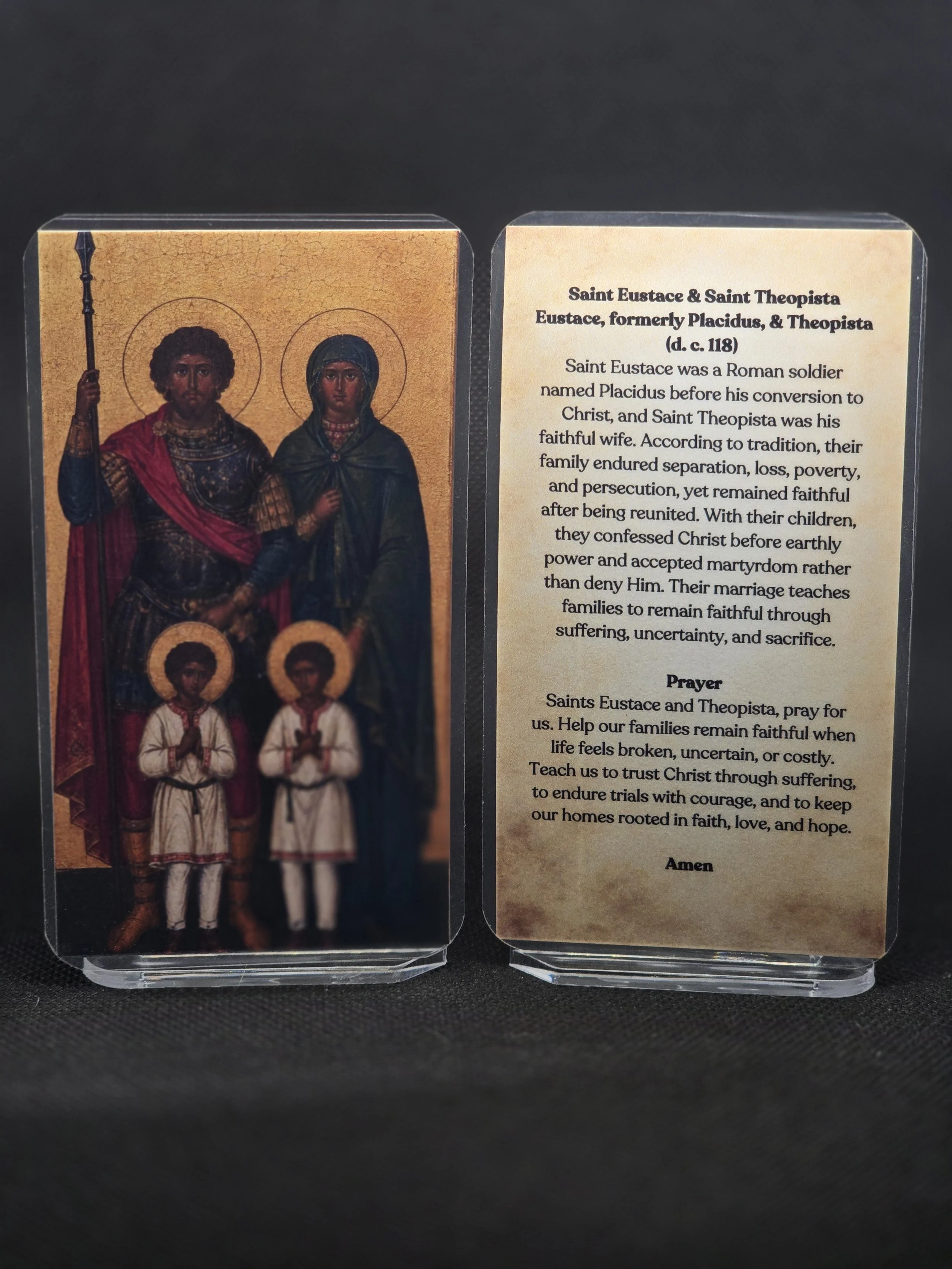 Image 4 of 23
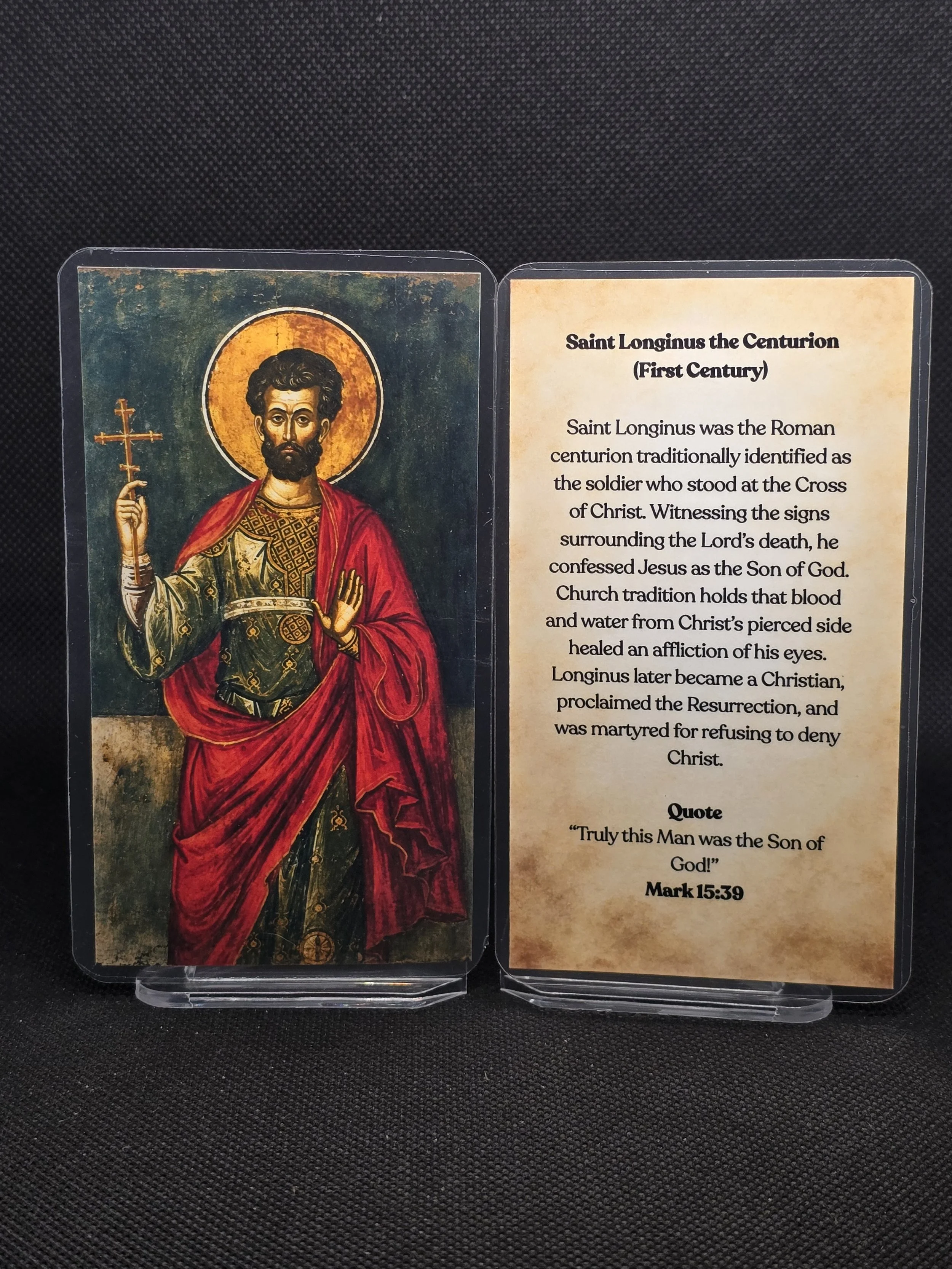 Image 5 of 23
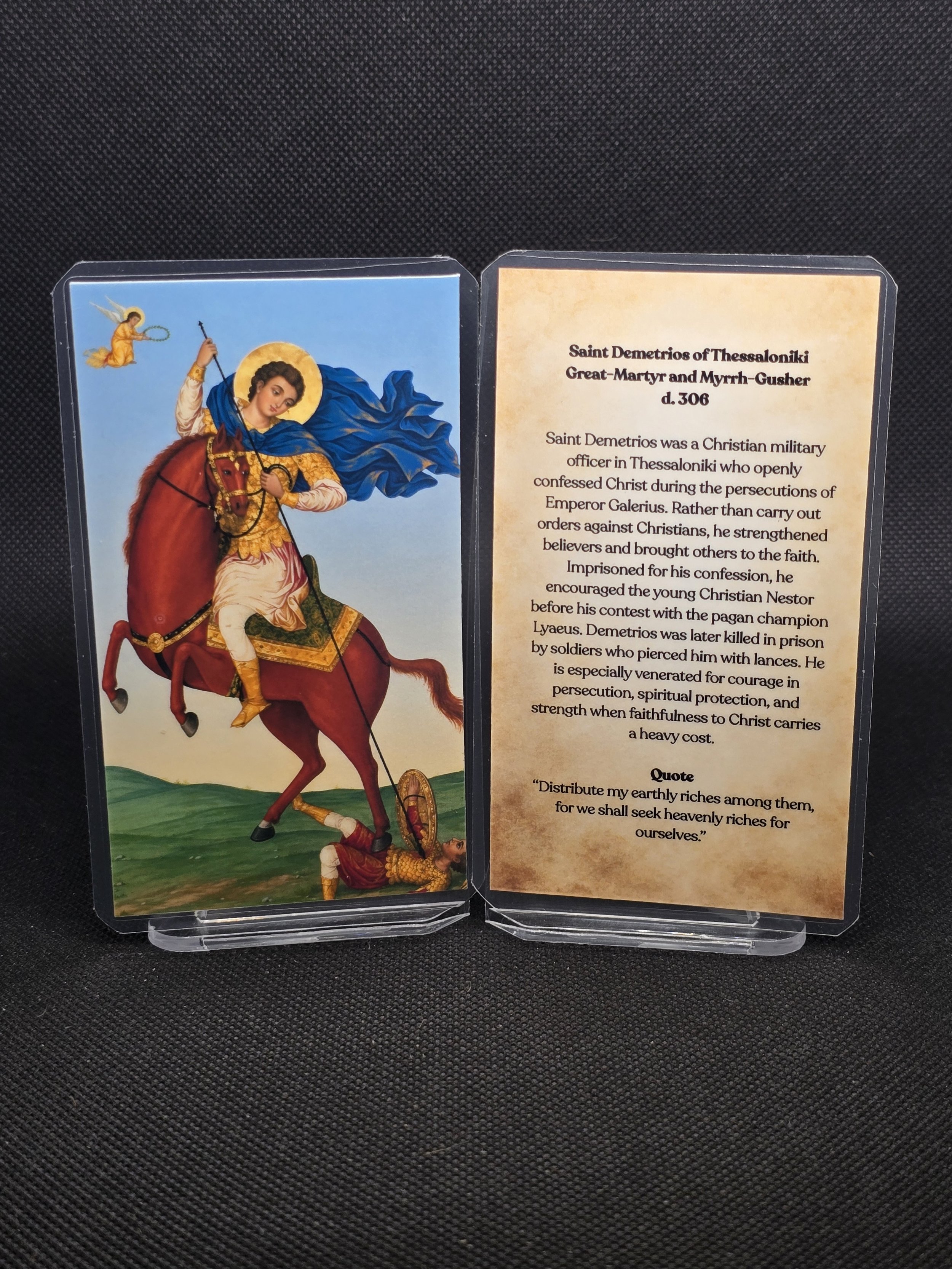 Image 6 of 23
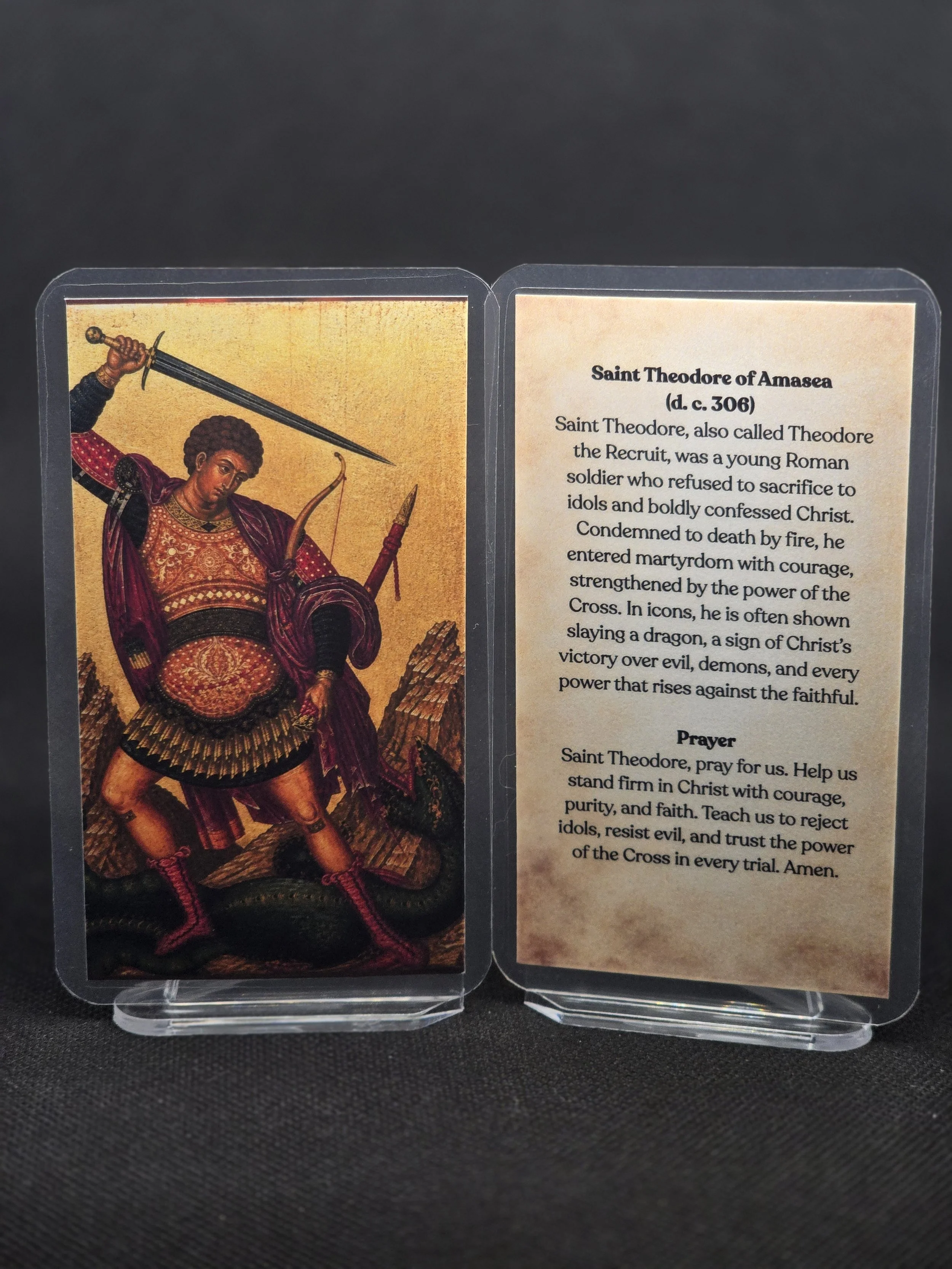 Image 7 of 23
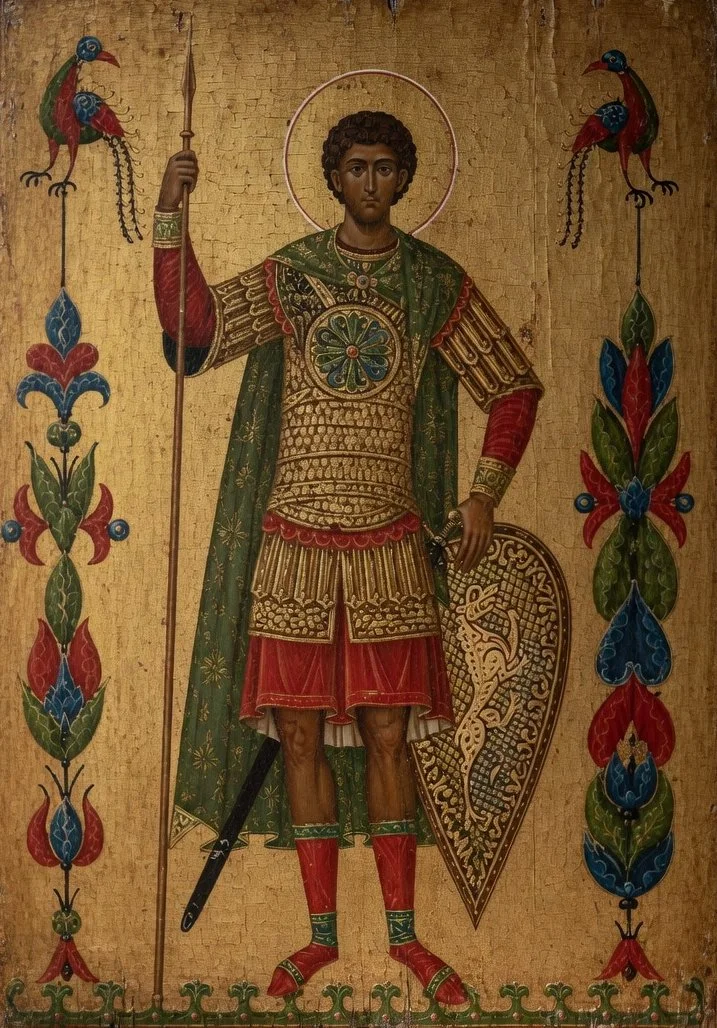 Image 8 of 23
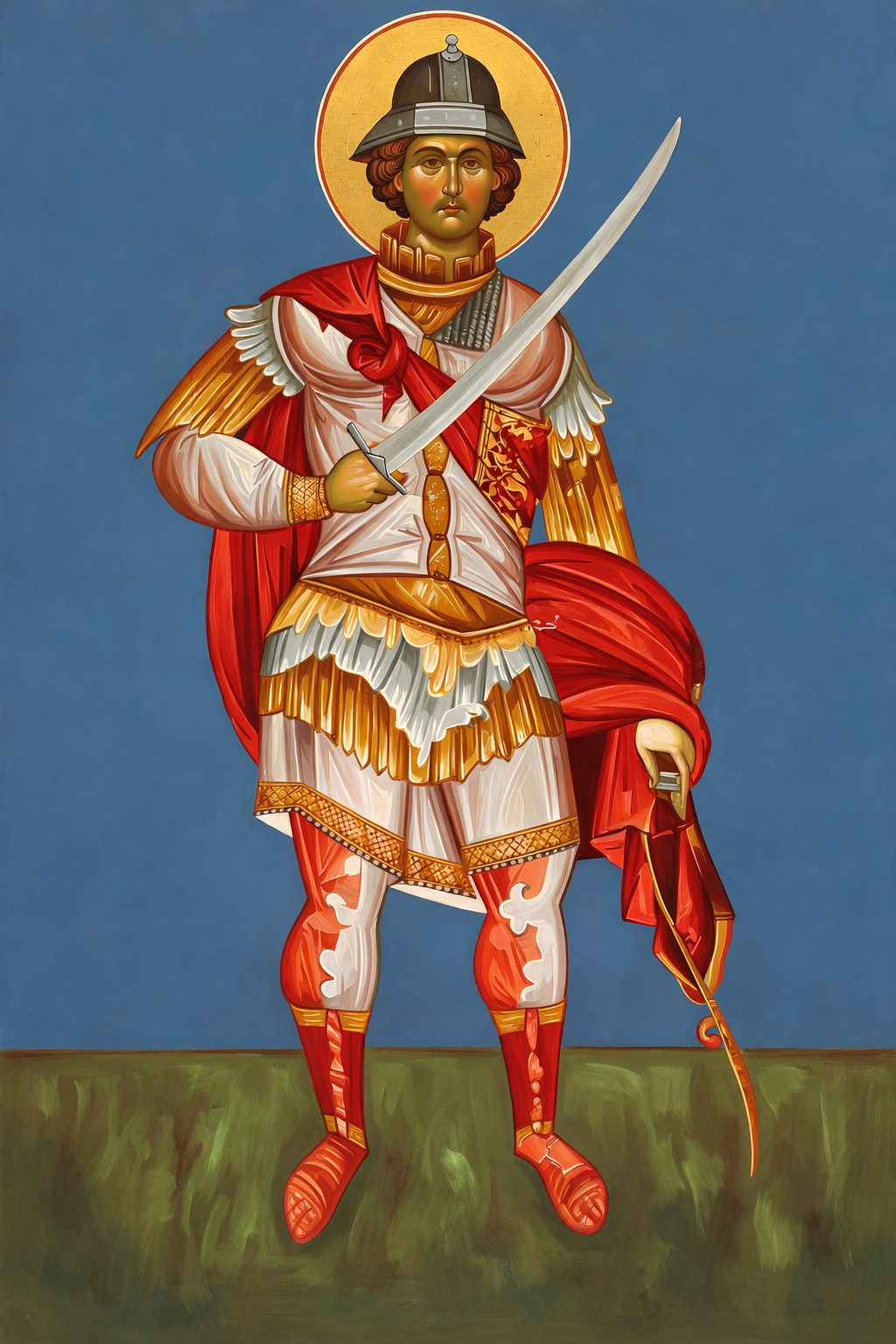 Image 9 of 23
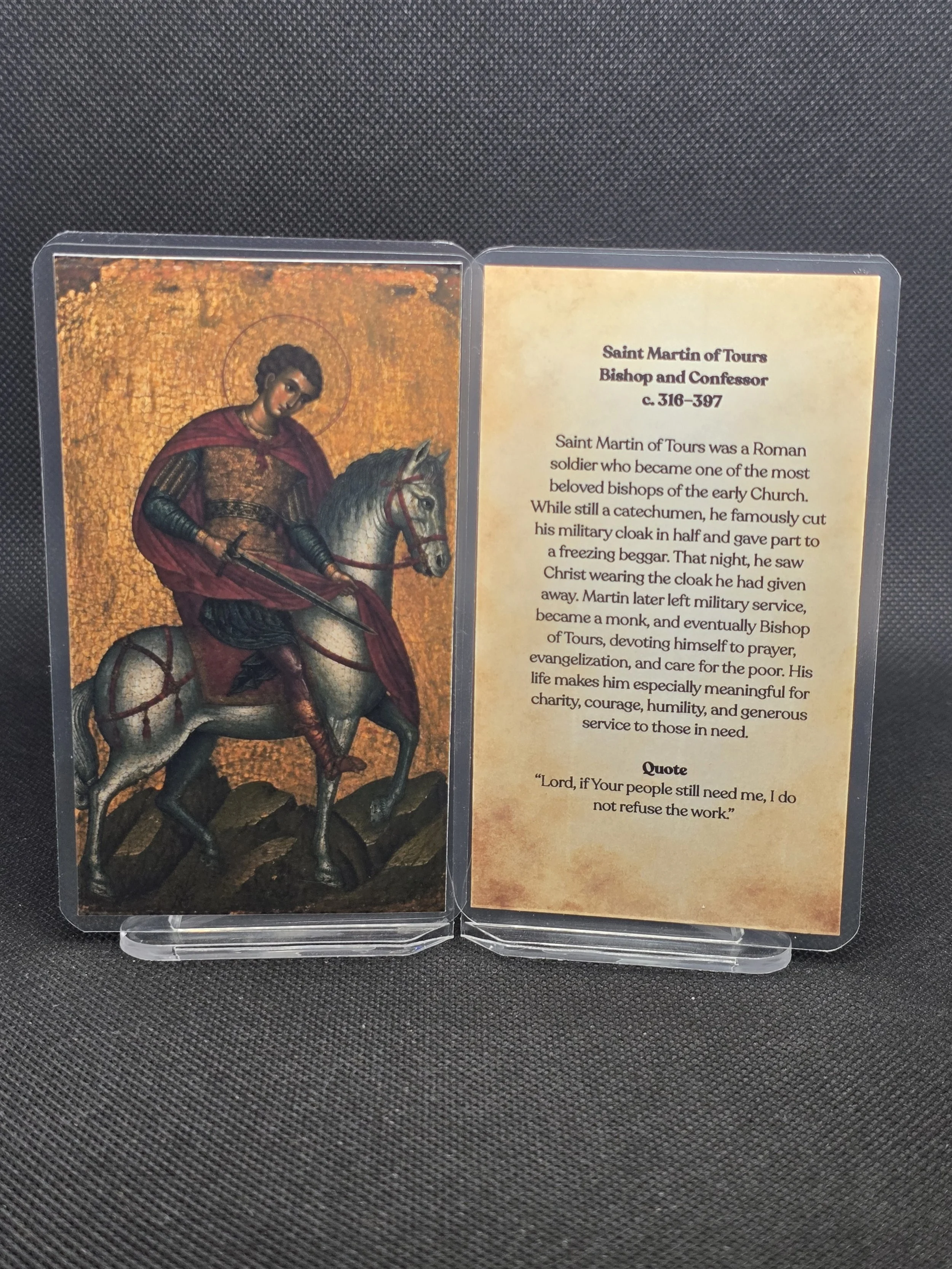 Image 10 of 23
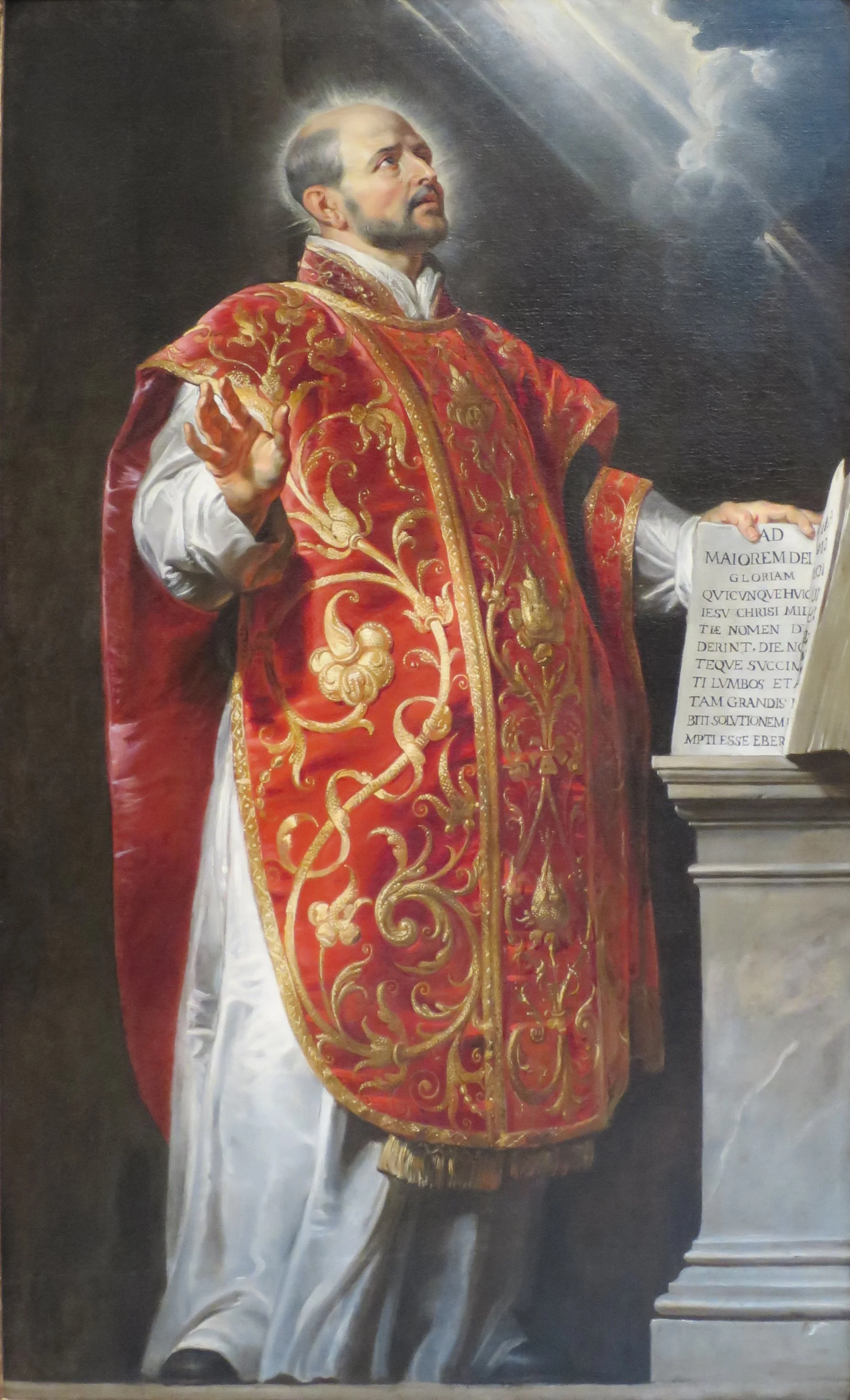 Image 11 of 23
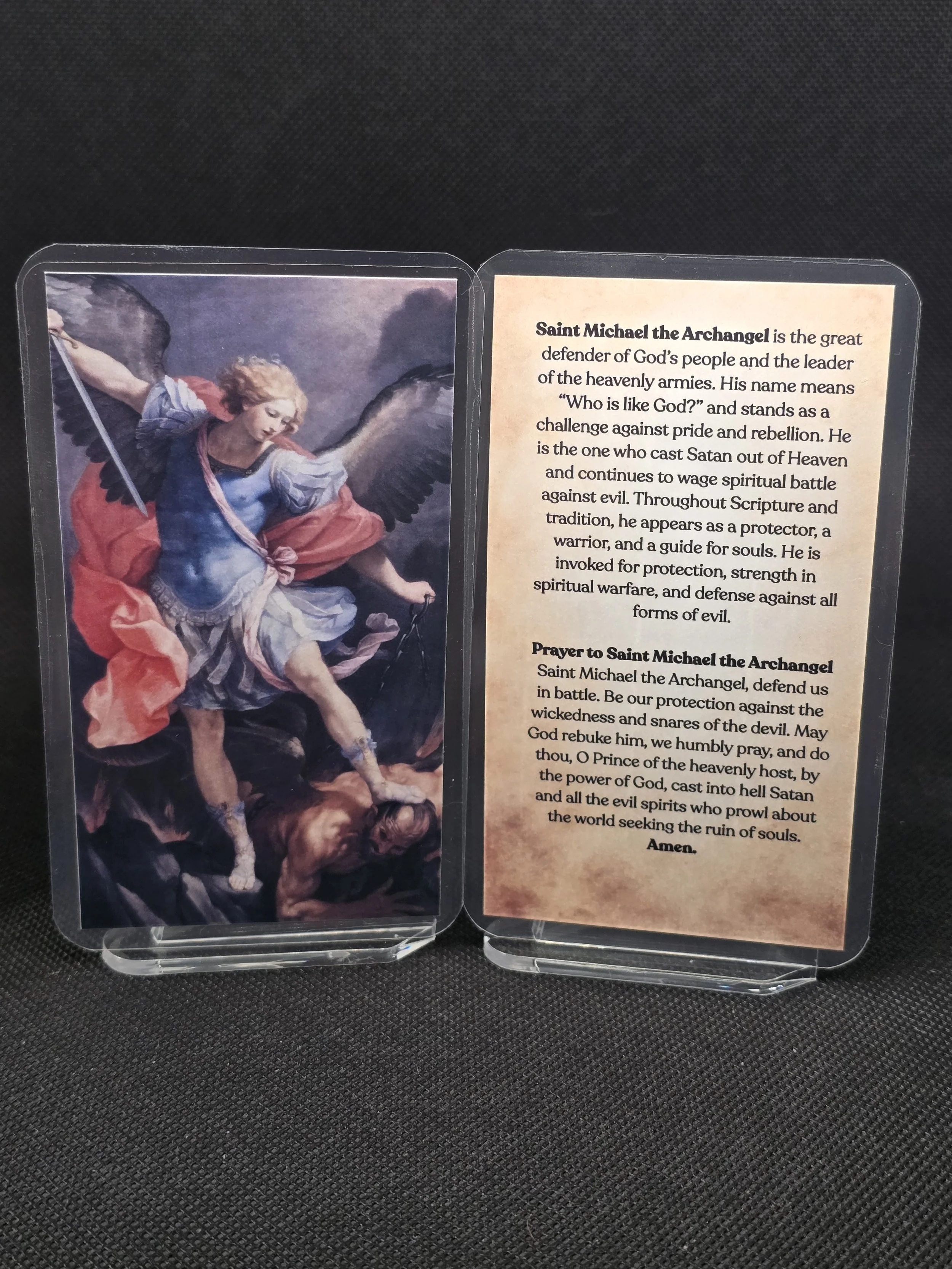 Image 12 of 23
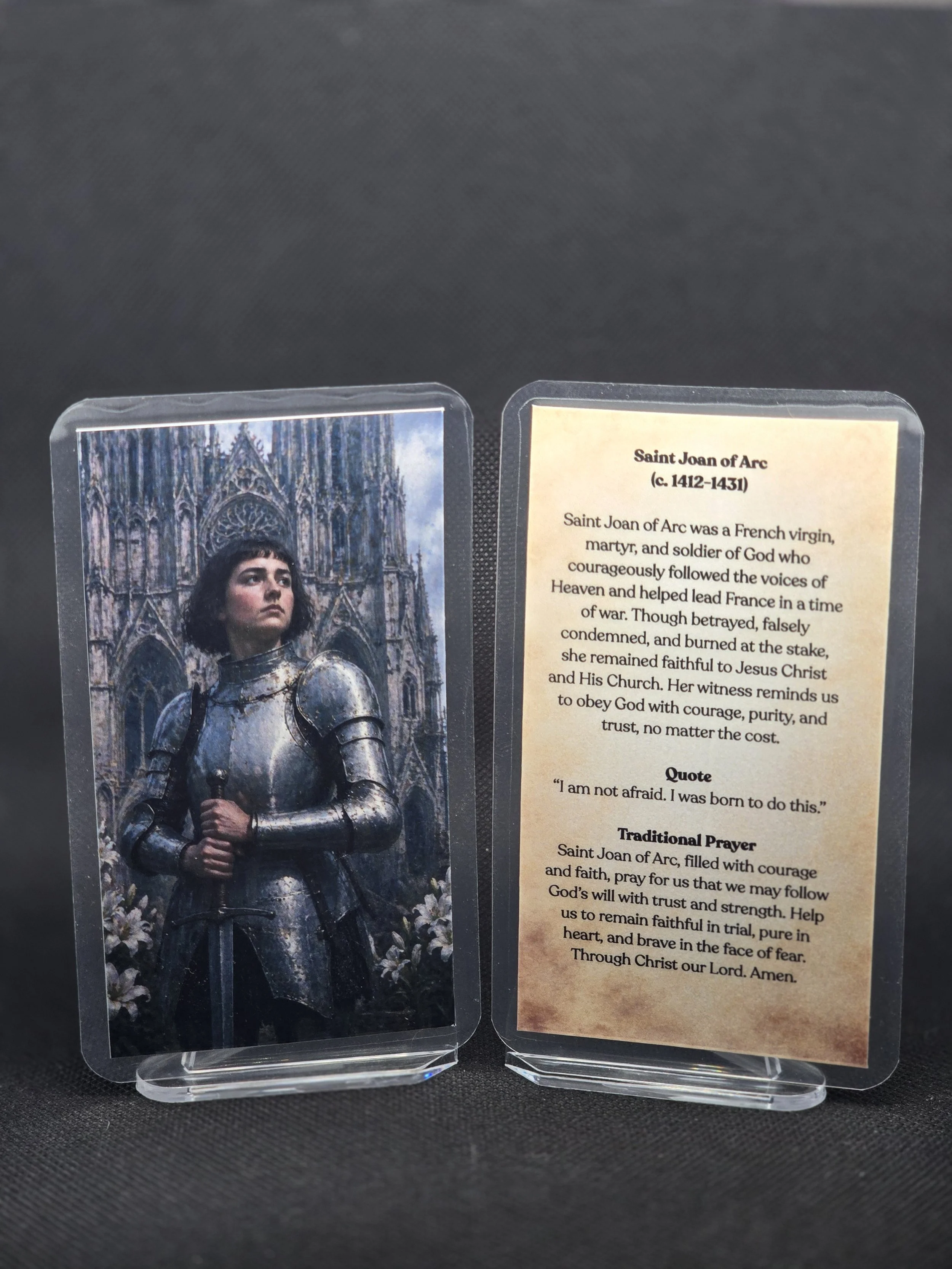 Image 13 of 23
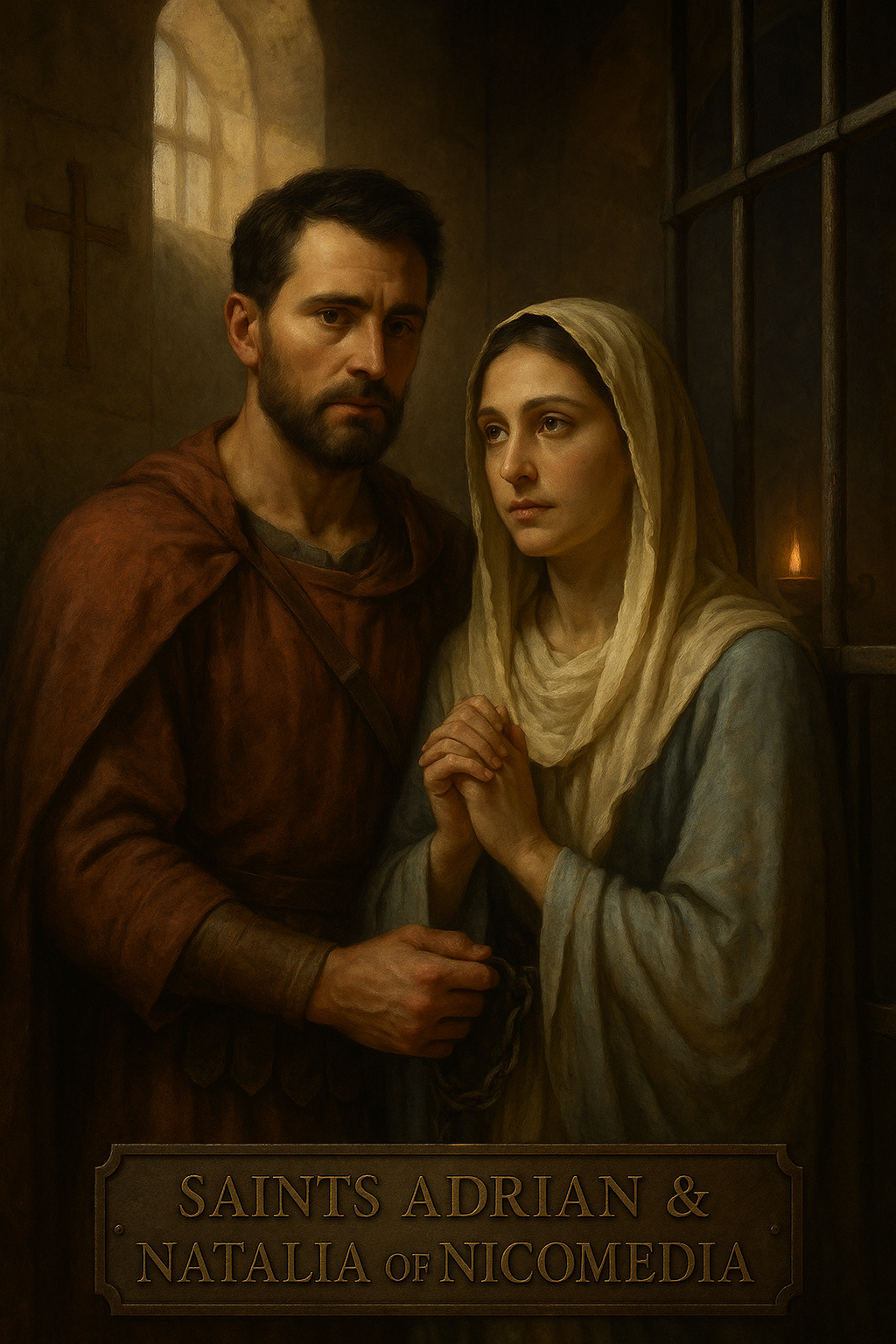 Image 14 of 23
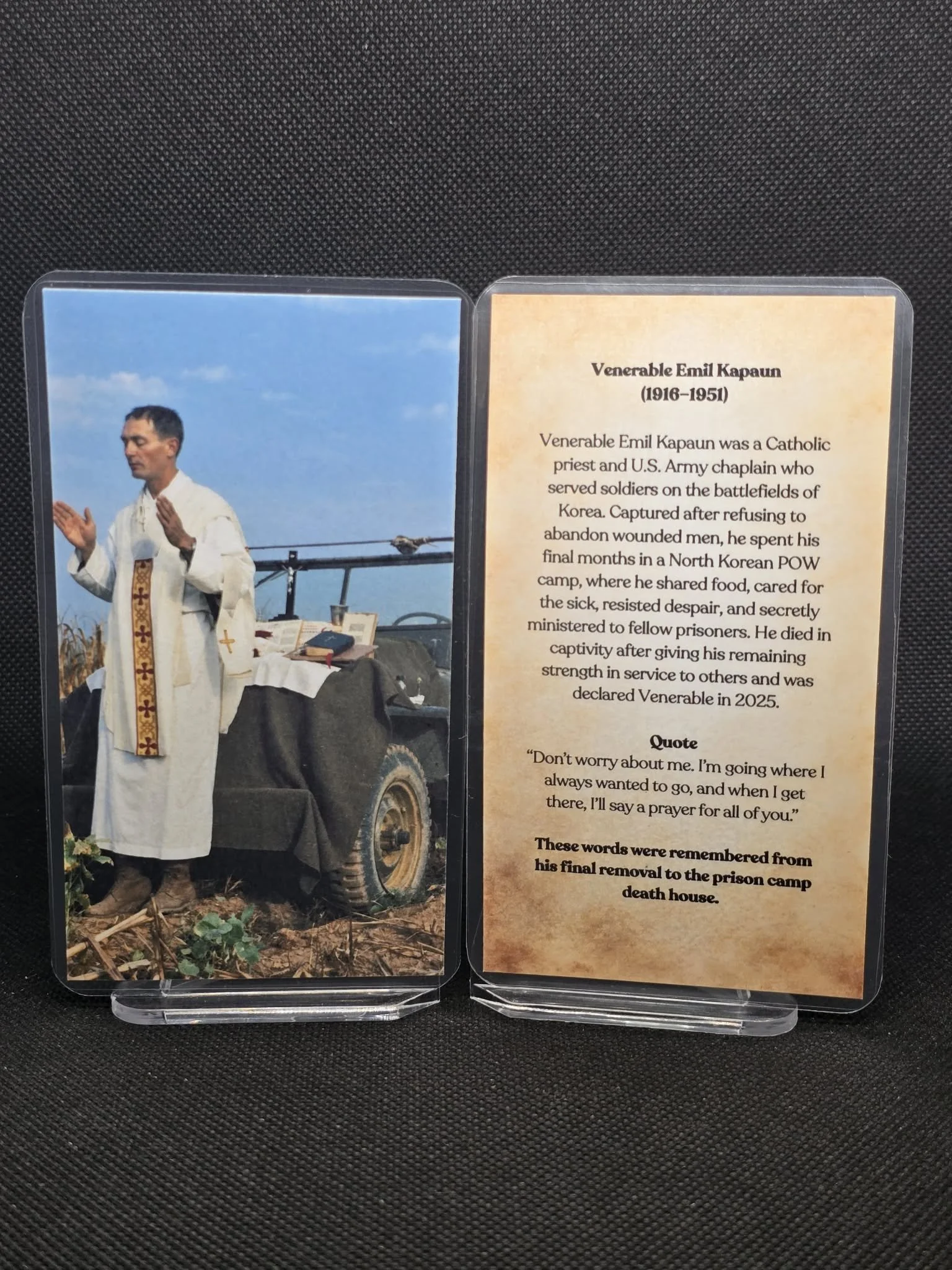 Image 15 of 23
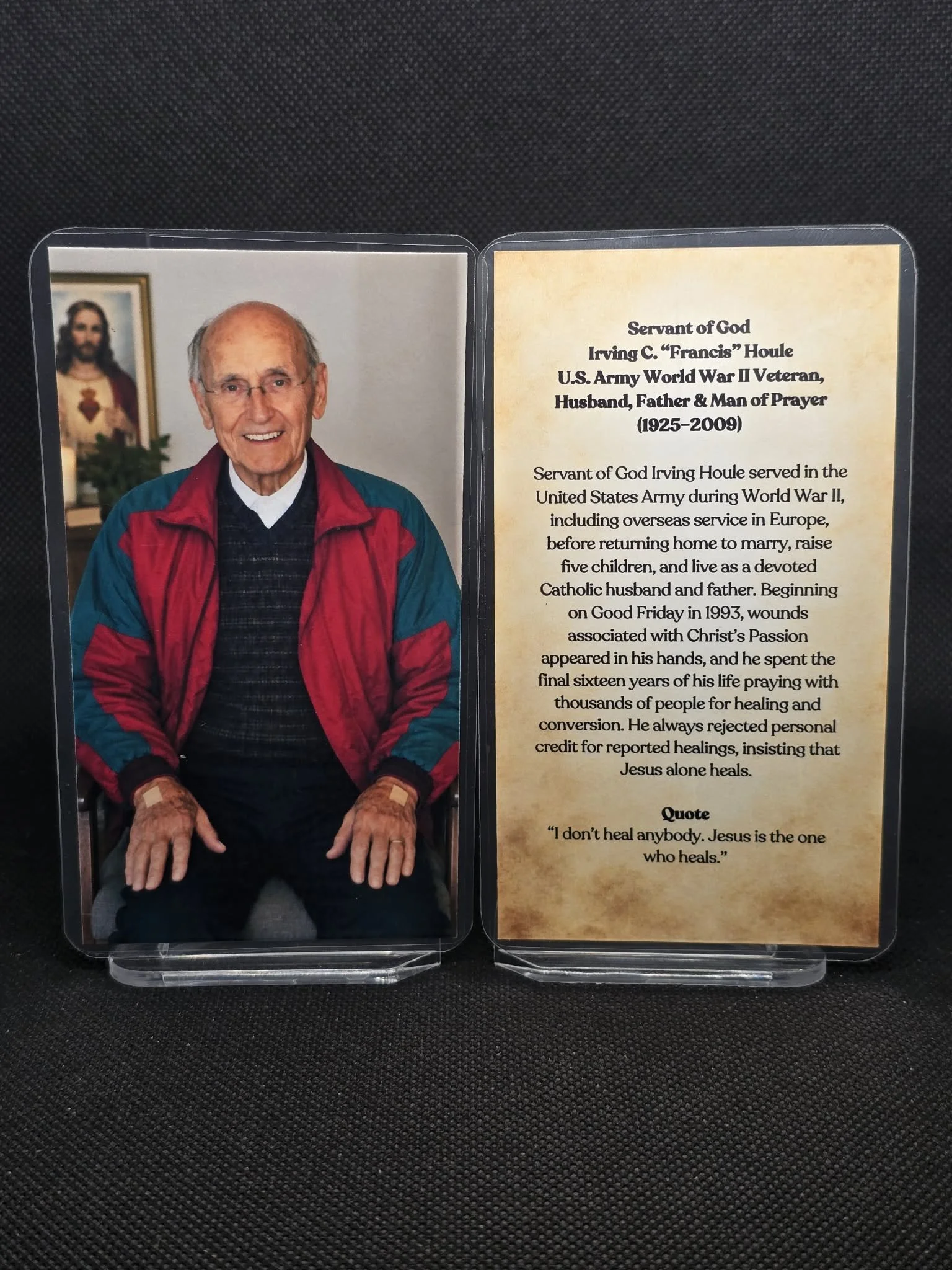 Image 16 of 23
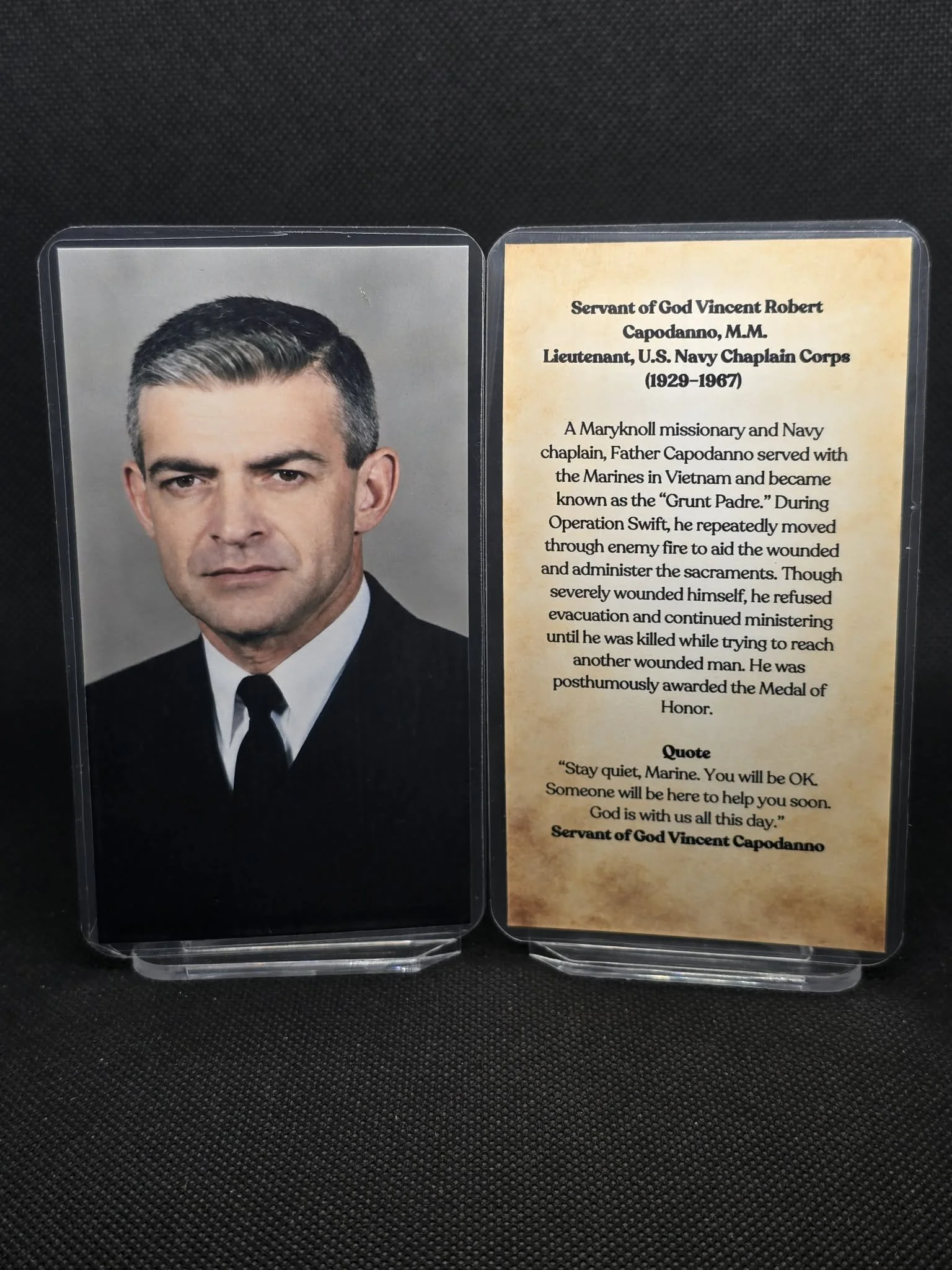 Image 17 of 23
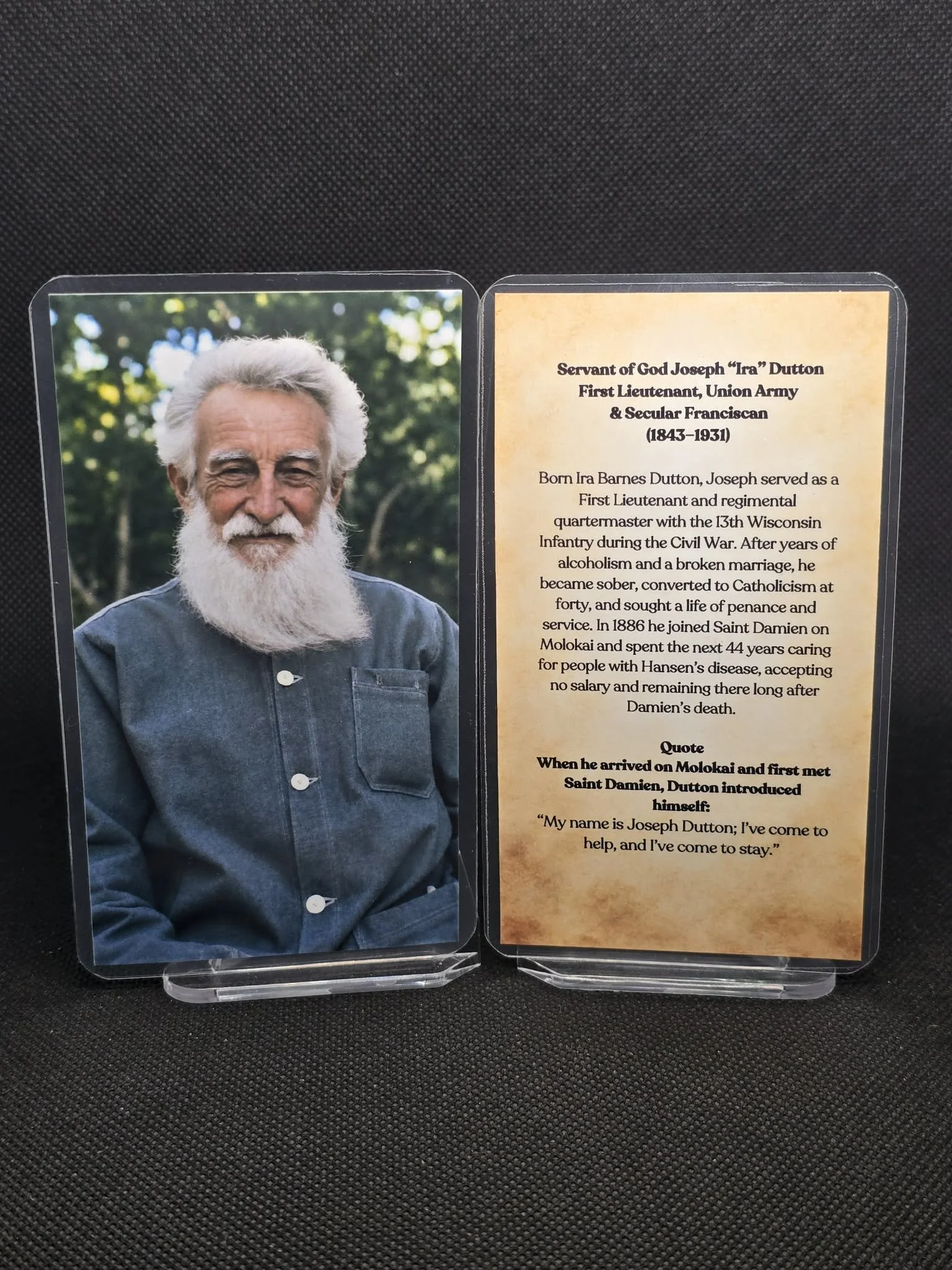 Image 18 of 23
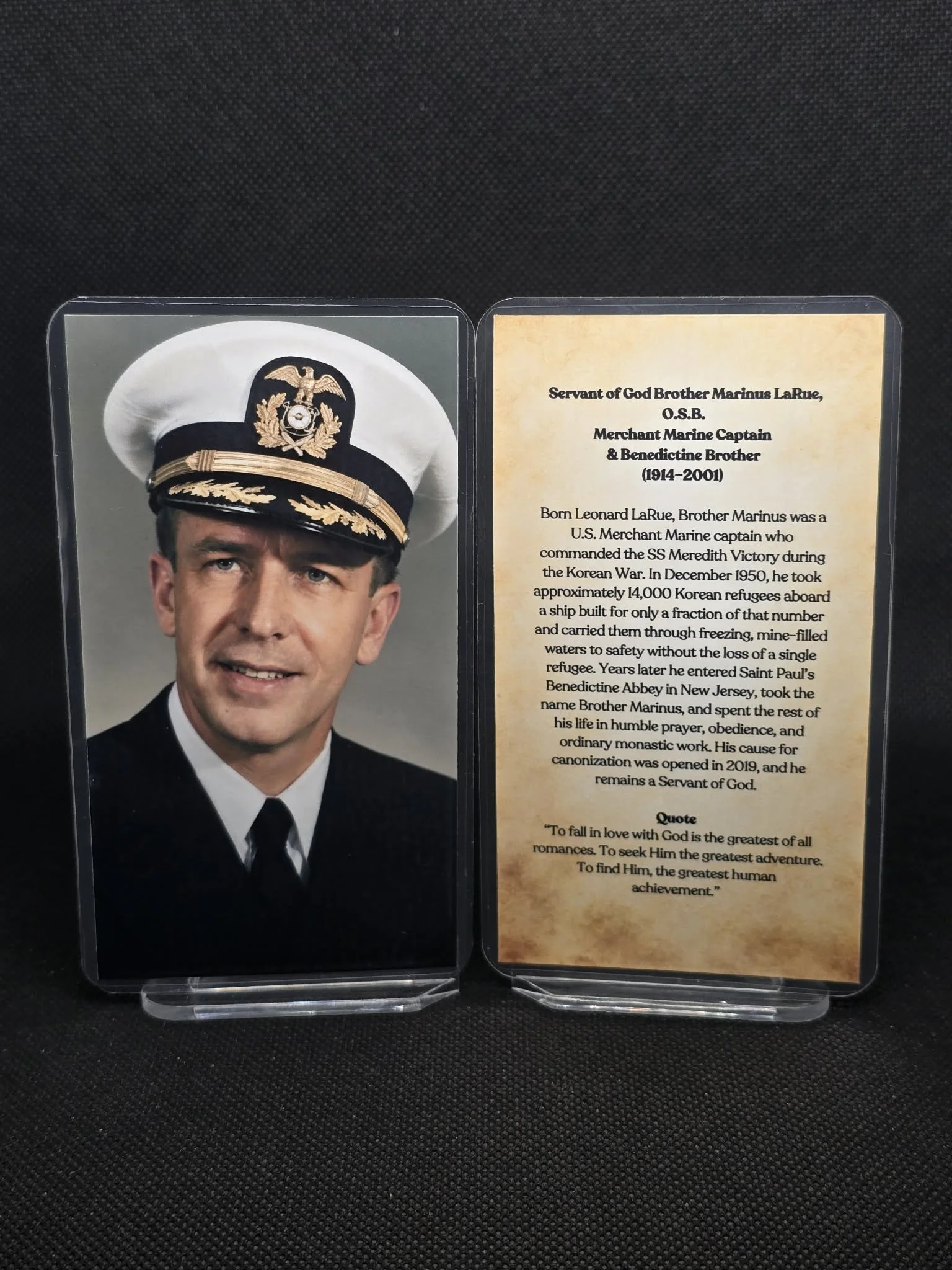 Image 19 of 23
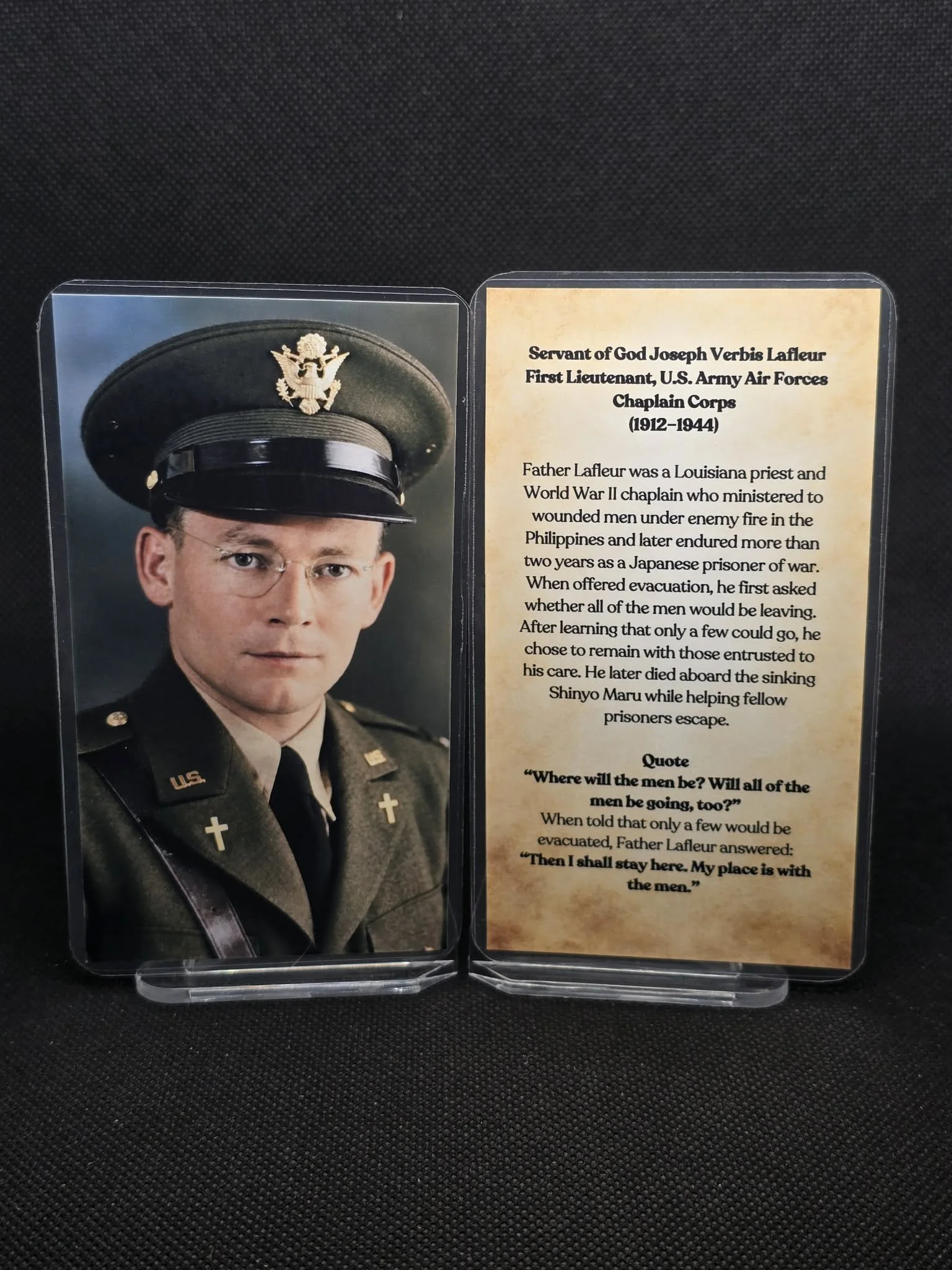 Image 20 of 23
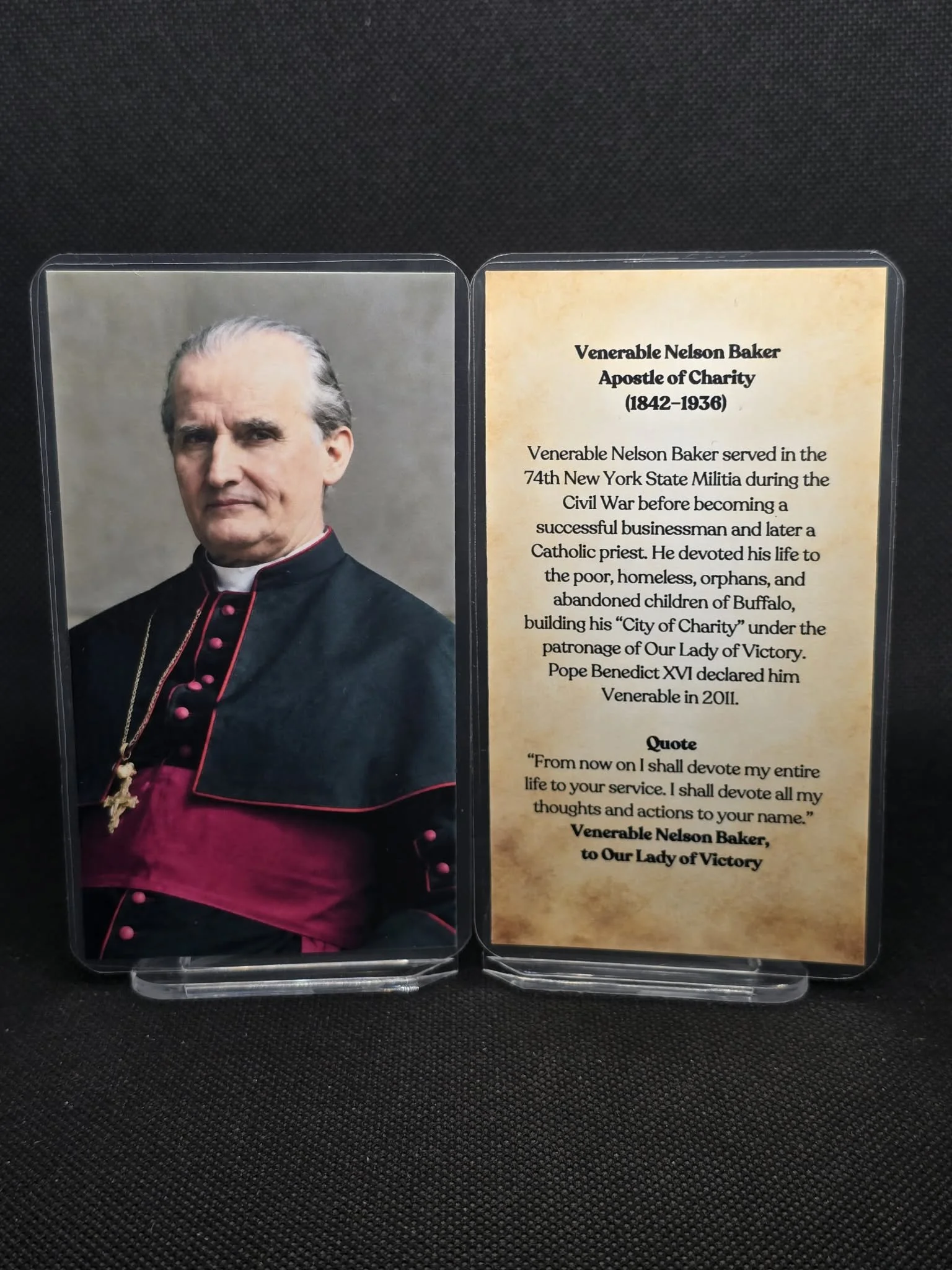 Image 21 of 23
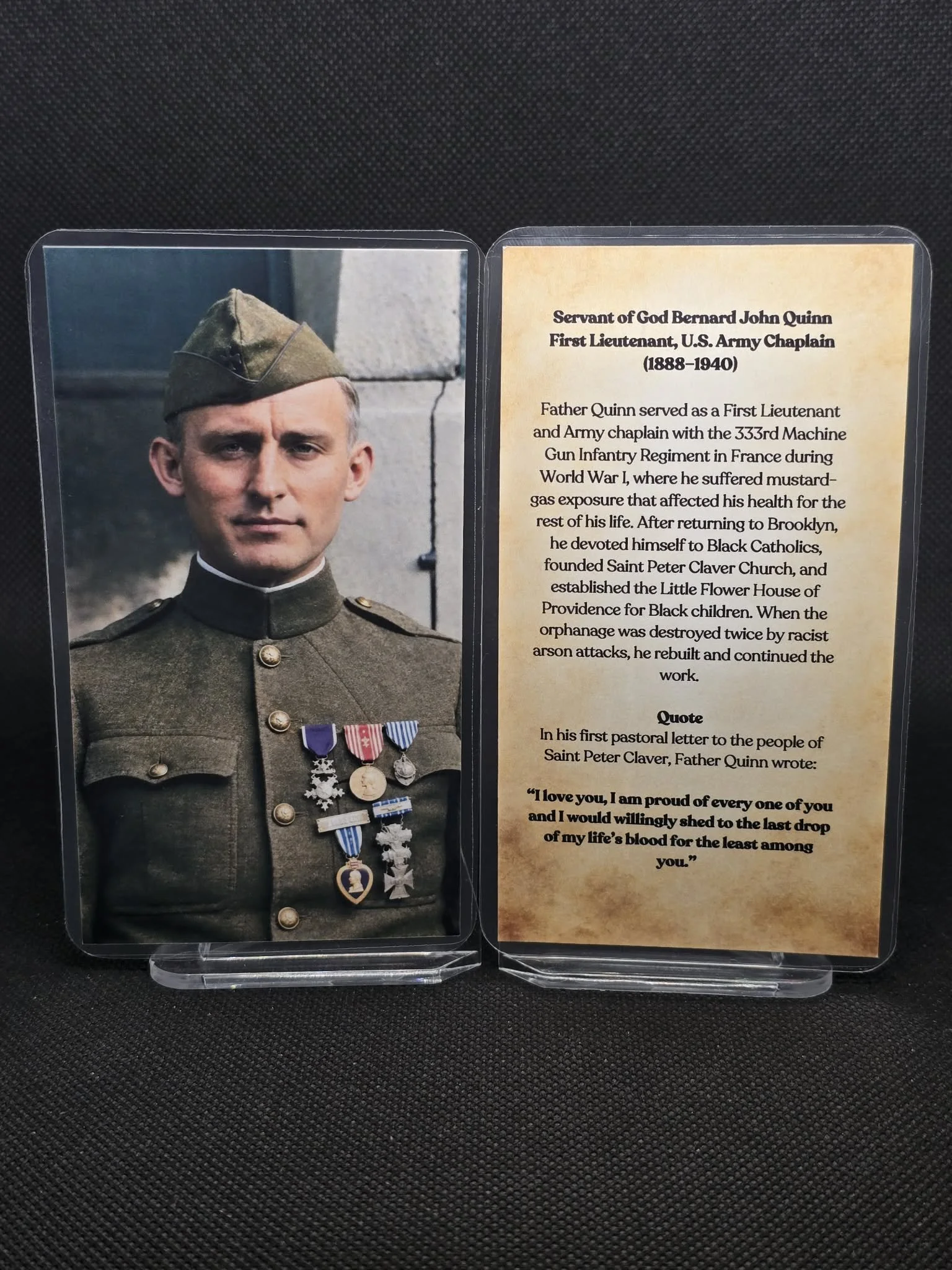 Image 22 of 23
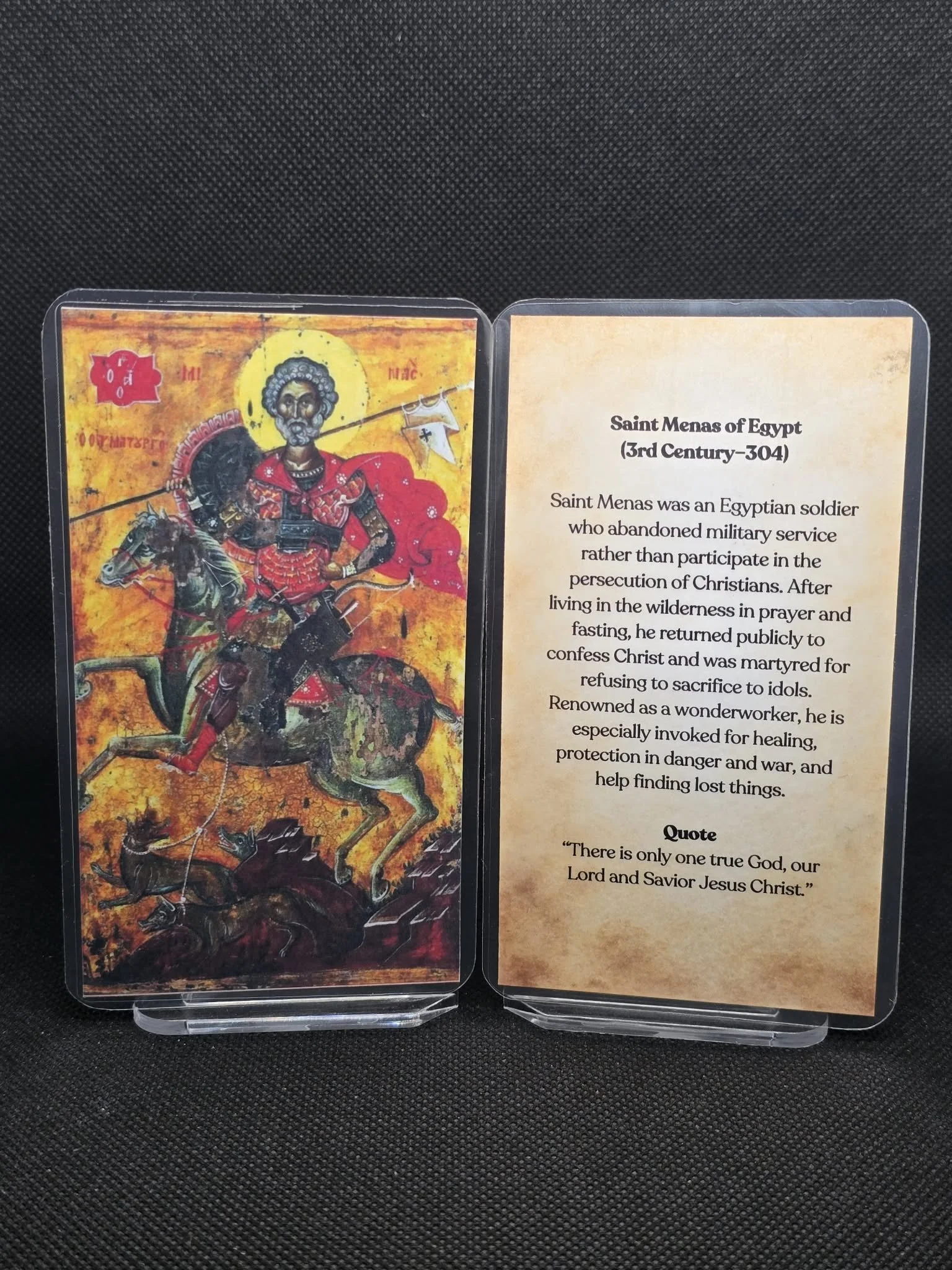 Image 23 of 23