 Image 1 of 1
Our Lady of Iveron | Panagia Portaitissa | The Gate-Keeper of Mount Athos
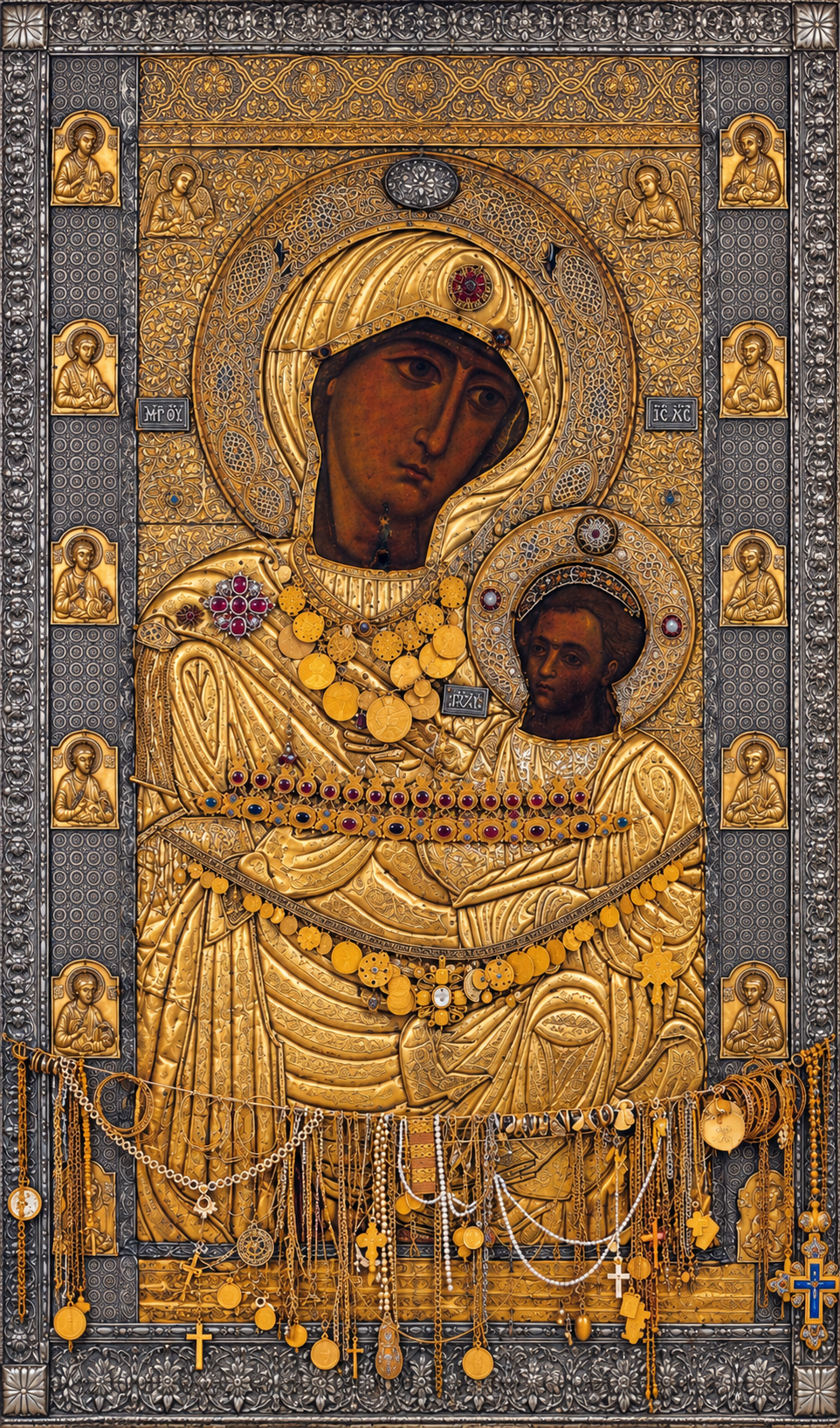
This prayer card features an image of the original wonderworking icon of Our Lady of Iveron, known in the Christian East as the Panagia Portaitissa, or Mother of God the Gate-Keeper, which is preserved at Iviron Monastery on Mount Athos, Greece. It is one of the most revered icons of the Theotokos on the Holy Mountain and has been honored by generations of monks and pilgrims.
According to ancient Orthodox tradition, the icon belonged to a devout Christian widow near Nicaea during the reign of the iconoclast Emperor Theophilus in the ninth century. When imperial soldiers came to destroy sacred images, one of them struck the icon of the Mother of God. Tradition recounts that blood flowed from the wounded image. Fearing its destruction, the widow entrusted the icon to the sea, where it miraculously remained upright upon the water and disappeared from sight.
Years later, the monks of Iviron Monastery on Mount Athos saw a pillar of light rising from the sea and discovered the icon standing upon the waters. After prayer, the monk Gabriel the Iberian was instructed by the Theotokos to approach it. According to the tradition preserved by the Church, Gabriel walked upon the water and carried the holy icon back to the monastery.
The monks initially placed the icon within the monastery church, but it repeatedly appeared near the monastery gate. The Mother of God revealed that she did not wish merely to be guarded by the monks, but rather wished to be their Guardian. A chapel was therefore established for the icon near the gate, giving rise to the name Portaitissa, meaning “Gate-Keeper.” The icon has remained closely associated with Iviron Monastery ever since and is regarded as a spiritual guardian of the monastery and the Holy Mountain.
One of the most recognizable features of the original icon is the mark upon the face of the Theotokos. This wound forms part of the sacred tradition surrounding the icon and is preserved in copies of the Iveron Mother of God throughout the Orthodox world. The image depicts the Theotokos holding Christ, who raises His right hand in blessing while holding a scroll in His left.
The original Portaitissa continues to be honored at Iviron Monastery today. Each year on Bright Tuesday, the monks carry the wonderworking icon in solemn procession, a living Athonite tradition that continues centuries after its arrival on the Holy Mountain. The Mount Athos Center identifies this procession as one of the most important Paschal icon processions of Mount Athos.
Traditional Commemoration: Bright Tuesday, with additional commemorations associated with the Iveron Icon on February 12, March 31, and October 13.
Our Lady of Iveron is especially invoked for protection, help in danger, the safeguarding of homes and families, healing, and the intercession of the Mother of God. The title Gate-Keeper has made this icon particularly meaningful for Christians asking the Theotokos to guard their homes, families, churches, and communities.
Each prayer card is handmade in Austin, Texas and made to order. The card measures approximately 2.5" × 4.25" and is printed on premium photo paper and double laminated for durability. Each card is individually prepared rather than taken from mass-produced shelf stock, and prayer accompanies the work of making it.
This card is especially significant because the image on the front is not a modern artistic interpretation of the Iveron icon. It is an image of the original wonderworking Portaitissa preserved at Iviron Monastery on Mount Athos.
Our Lady of Iveron | Panagia Portaitissa | The Gate-Keeper of Mount Athos
This prayer card features an image of the original wonderworking icon of Our Lady of Iveron, known in the Christian East as the Panagia Portaitissa, or Mother of God the Gate-Keeper, which is preserved at Iviron Monastery on Mount Athos, Greece. It is one of the most revered icons of the Theotokos on the Holy Mountain and has been honored by generations of monks and pilgrims.
According to ancient Orthodox tradition, the icon belonged to a devout Christian widow near Nicaea during the reign of the iconoclast Emperor Theophilus in the ninth century. When imperial soldiers came to destroy sacred images, one of them struck the icon of the Mother of God. Tradition recounts that blood flowed from the wounded image. Fearing its destruction, the widow entrusted the icon to the sea, where it miraculously remained upright upon the water and disappeared from sight.
Years later, the monks of Iviron Monastery on Mount Athos saw a pillar of light rising from the sea and discovered the icon standing upon the waters. After prayer, the monk Gabriel the Iberian was instructed by the Theotokos to approach it. According to the tradition preserved by the Church, Gabriel walked upon the water and carried the holy icon back to the monastery.
The monks initially placed the icon within the monastery church, but it repeatedly appeared near the monastery gate. The Mother of God revealed that she did not wish merely to be guarded by the monks, but rather wished to be their Guardian. A chapel was therefore established for the icon near the gate, giving rise to the name Portaitissa, meaning “Gate-Keeper.” The icon has remained closely associated with Iviron Monastery ever since and is regarded as a spiritual guardian of the monastery and the Holy Mountain.
One of the most recognizable features of the original icon is the mark upon the face of the Theotokos. This wound forms part of the sacred tradition surrounding the icon and is preserved in copies of the Iveron Mother of God throughout the Orthodox world. The image depicts the Theotokos holding Christ, who raises His right hand in blessing while holding a scroll in His left.
The original Portaitissa continues to be honored at Iviron Monastery today. Each year on Bright Tuesday, the monks carry the wonderworking icon in solemn procession, a living Athonite tradition that continues centuries after its arrival on the Holy Mountain. The Mount Athos Center identifies this procession as one of the most important Paschal icon processions of Mount Athos.
Traditional Commemoration: Bright Tuesday, with additional commemorations associated with the Iveron Icon on February 12, March 31, and October 13.
Our Lady of Iveron is especially invoked for protection, help in danger, the safeguarding of homes and families, healing, and the intercession of the Mother of God. The title Gate-Keeper has made this icon particularly meaningful for Christians asking the Theotokos to guard their homes, families, churches, and communities.
Each prayer card is handmade in Austin, Texas and made to order. The card measures approximately 2.5" × 4.25" and is printed on premium photo paper and double laminated for durability. Each card is individually prepared rather than taken from mass-produced shelf stock, and prayer accompanies the work of making it.
This card is especially significant because the image on the front is not a modern artistic interpretation of the Iveron icon. It is an image of the original wonderworking Portaitissa preserved at Iviron Monastery on Mount Athos.