 Image 1 of 1
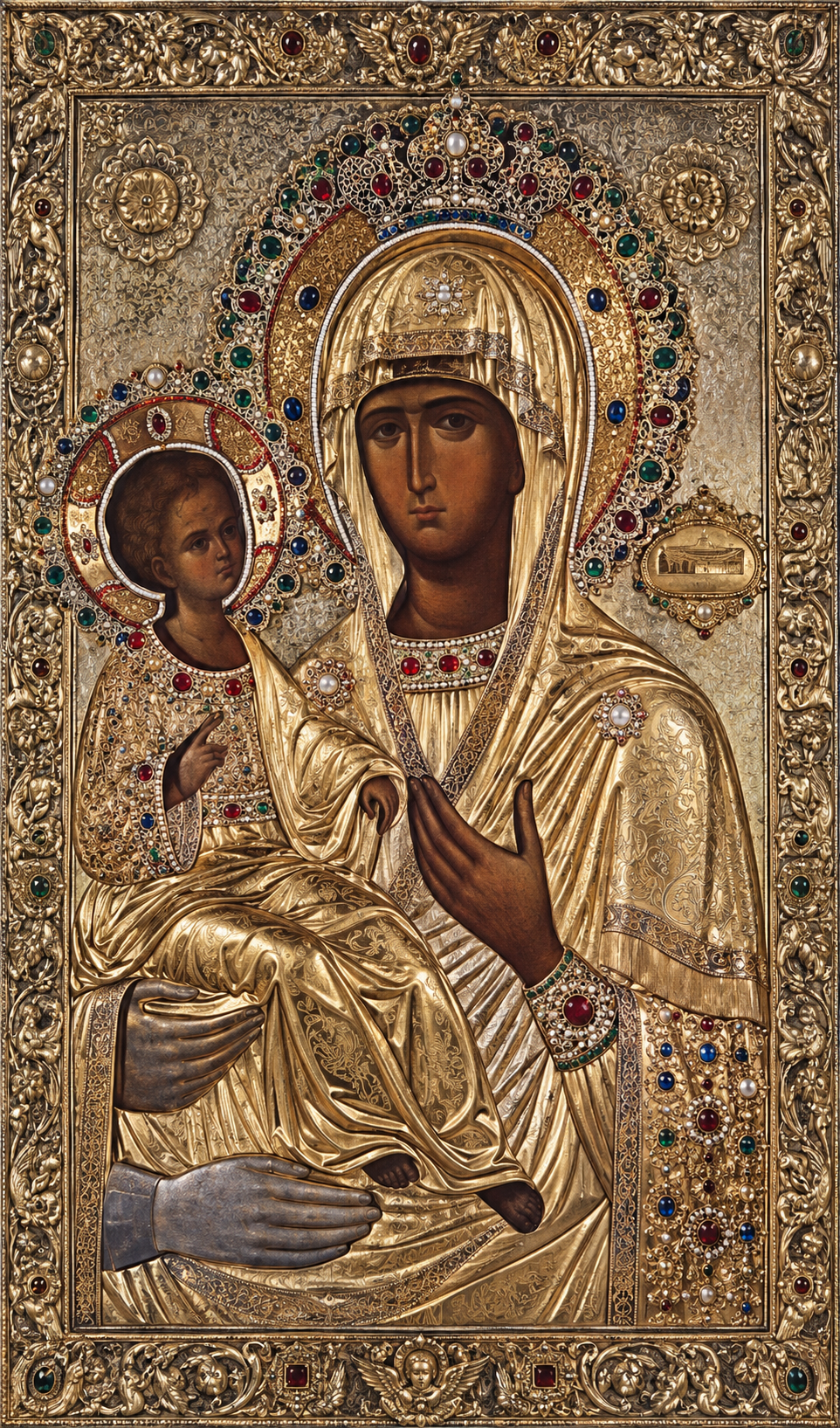
Panagia Tricherousa | Three-Handed Theotokos | Our Lady of Three Hands
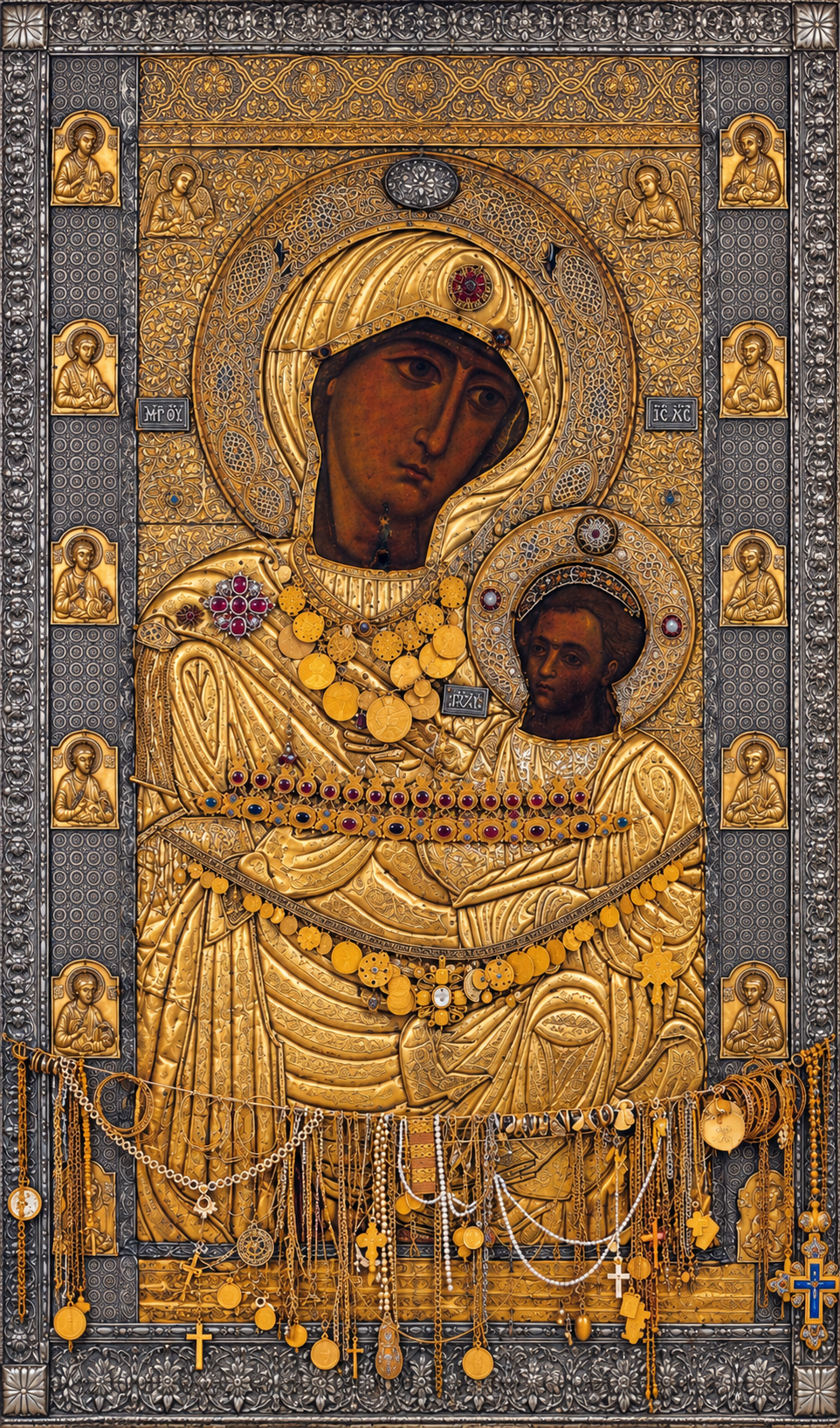
The Panagia Tricherousa, meaning the Three-Handed Theotokos, is one of the most distinctive and beloved wonderworking icons of the Mother of God in the Orthodox Christian tradition. The icon is especially associated with Saint John of Damascus, one of Christianity's great defenders of holy icons, and today the revered Tricherousa is preserved at Hilandar Monastery on Mount Athos, Greece.
According to ancient Church tradition, Saint John of Damascus courageously defended the veneration of sacred images during the Byzantine Iconoclast controversy of the eighth century. His enemies falsely accused him of treason before the Caliph of Damascus, and as punishment his right hand was cut off.
Saint John recovered his severed hand and prayed fervently before an icon of the Mother of God, asking the Theotokos to heal the hand he had used to write in defense of the Christian faith. After prolonged prayer, he fell asleep and received a vision of the Mother of God promising him healing. When he awoke, his hand had been miraculously restored, with only a mark remaining as testimony to what had taken place.
In thanksgiving for the miracle, Saint John placed a silver representation of his healed hand upon the icon. This votive offering became the famous “third hand,” and the icon became known as Tricherousa, or Of the Three Hands. The third hand therefore does not represent a third physical hand belonging to the Theotokos. It is a permanent testimony to Saint John's healing and his gratitude for the intercession of the Mother of God.
Saint John later entered the Monastery of Saint Sabbas the Sanctified near Jerusalem, where the icon was preserved. According to tradition, it was later given to Saint Sava of Serbia and eventually came to Hilandar Monastery on Mount Athos.
Another remarkable tradition developed after the icon arrived at Hilandar. During a period of disagreement among the monks over the election of an abbot, the Tricherousa was repeatedly found occupying the abbot's place within the monastery church. The monks understood this as a sign that the Theotokos herself wished to be regarded as their spiritual superior and protectress. The icon has therefore held a place of extraordinary honor in the life of Hilandar for centuries.
The original wonderworking Tricherousa is still preserved at Hilandar Monastery, one of the twenty ruling monasteries of Mount Athos. Hilandar describes the icon as its most sacred possession and honors the Most Holy Theotokos Tricherousa as the monastery's patroness.
Traditional Commemorations: June 28 in Greek usage and July 12 in Slavic usage.
The Panagia Tricherousa is especially meaningful for those seeking the intercession of the Theotokos for healing, injuries or illnesses of the hands and arms, protection, strength during persecution or false accusation, faithfulness to Christian truth, artists, writers, craftsmen, and all who work with their hands.
Each prayer card is handmade in Austin, Texas and made to order. The card measures approximately 2.5" × 4.25" and is printed on premium photo paper and double laminated for durability. Each card is individually prepared rather than taken from mass-produced shelf stock, and prayer accompanies the work of making it.
A meaningful devotional card for personal prayer, prayer corners, Bibles, Eastern Christian devotion, gifts for those seeking healing, and anyone devoted to the Most Holy Theotokos under her miraculous title Panagia Tricherousa.
Panagia Tricherousa | Three-Handed Theotokos | Our Lady of Three Hands
The Panagia Tricherousa, meaning the Three-Handed Theotokos, is one of the most distinctive and beloved wonderworking icons of the Mother of God in the Orthodox Christian tradition. The icon is especially associated with Saint John of Damascus, one of Christianity's great defenders of holy icons, and today the revered Tricherousa is preserved at Hilandar Monastery on Mount Athos, Greece.
According to ancient Church tradition, Saint John of Damascus courageously defended the veneration of sacred images during the Byzantine Iconoclast controversy of the eighth century. His enemies falsely accused him of treason before the Caliph of Damascus, and as punishment his right hand was cut off.
Saint John recovered his severed hand and prayed fervently before an icon of the Mother of God, asking the Theotokos to heal the hand he had used to write in defense of the Christian faith. After prolonged prayer, he fell asleep and received a vision of the Mother of God promising him healing. When he awoke, his hand had been miraculously restored, with only a mark remaining as testimony to what had taken place.
In thanksgiving for the miracle, Saint John placed a silver representation of his healed hand upon the icon. This votive offering became the famous “third hand,” and the icon became known as Tricherousa, or Of the Three Hands. The third hand therefore does not represent a third physical hand belonging to the Theotokos. It is a permanent testimony to Saint John's healing and his gratitude for the intercession of the Mother of God.
Saint John later entered the Monastery of Saint Sabbas the Sanctified near Jerusalem, where the icon was preserved. According to tradition, it was later given to Saint Sava of Serbia and eventually came to Hilandar Monastery on Mount Athos.
Another remarkable tradition developed after the icon arrived at Hilandar. During a period of disagreement among the monks over the election of an abbot, the Tricherousa was repeatedly found occupying the abbot's place within the monastery church. The monks understood this as a sign that the Theotokos herself wished to be regarded as their spiritual superior and protectress. The icon has therefore held a place of extraordinary honor in the life of Hilandar for centuries.
The original wonderworking Tricherousa is still preserved at Hilandar Monastery, one of the twenty ruling monasteries of Mount Athos. Hilandar describes the icon as its most sacred possession and honors the Most Holy Theotokos Tricherousa as the monastery's patroness.
Traditional Commemorations: June 28 in Greek usage and July 12 in Slavic usage.
The Panagia Tricherousa is especially meaningful for those seeking the intercession of the Theotokos for healing, injuries or illnesses of the hands and arms, protection, strength during persecution or false accusation, faithfulness to Christian truth, artists, writers, craftsmen, and all who work with their hands.
Each prayer card is handmade in Austin, Texas and made to order. The card measures approximately 2.5" × 4.25" and is printed on premium photo paper and double laminated for durability. Each card is individually prepared rather than taken from mass-produced shelf stock, and prayer accompanies the work of making it.
A meaningful devotional card for personal prayer, prayer corners, Bibles, Eastern Christian devotion, gifts for those seeking healing, and anyone devoted to the Most Holy Theotokos under her miraculous title Panagia Tricherousa.