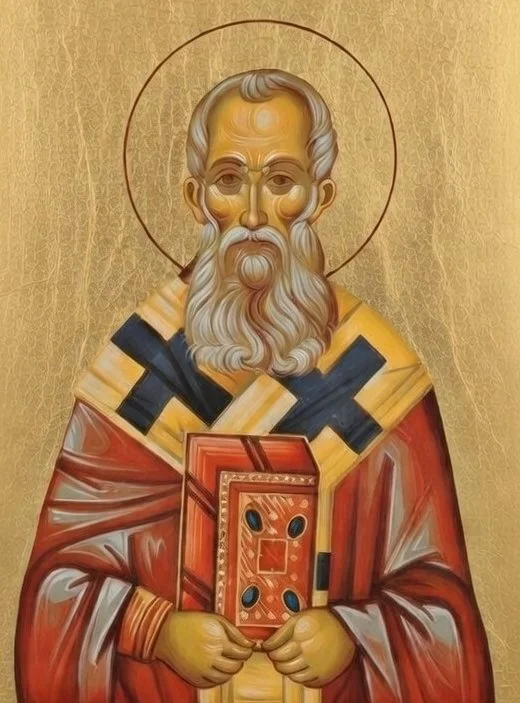
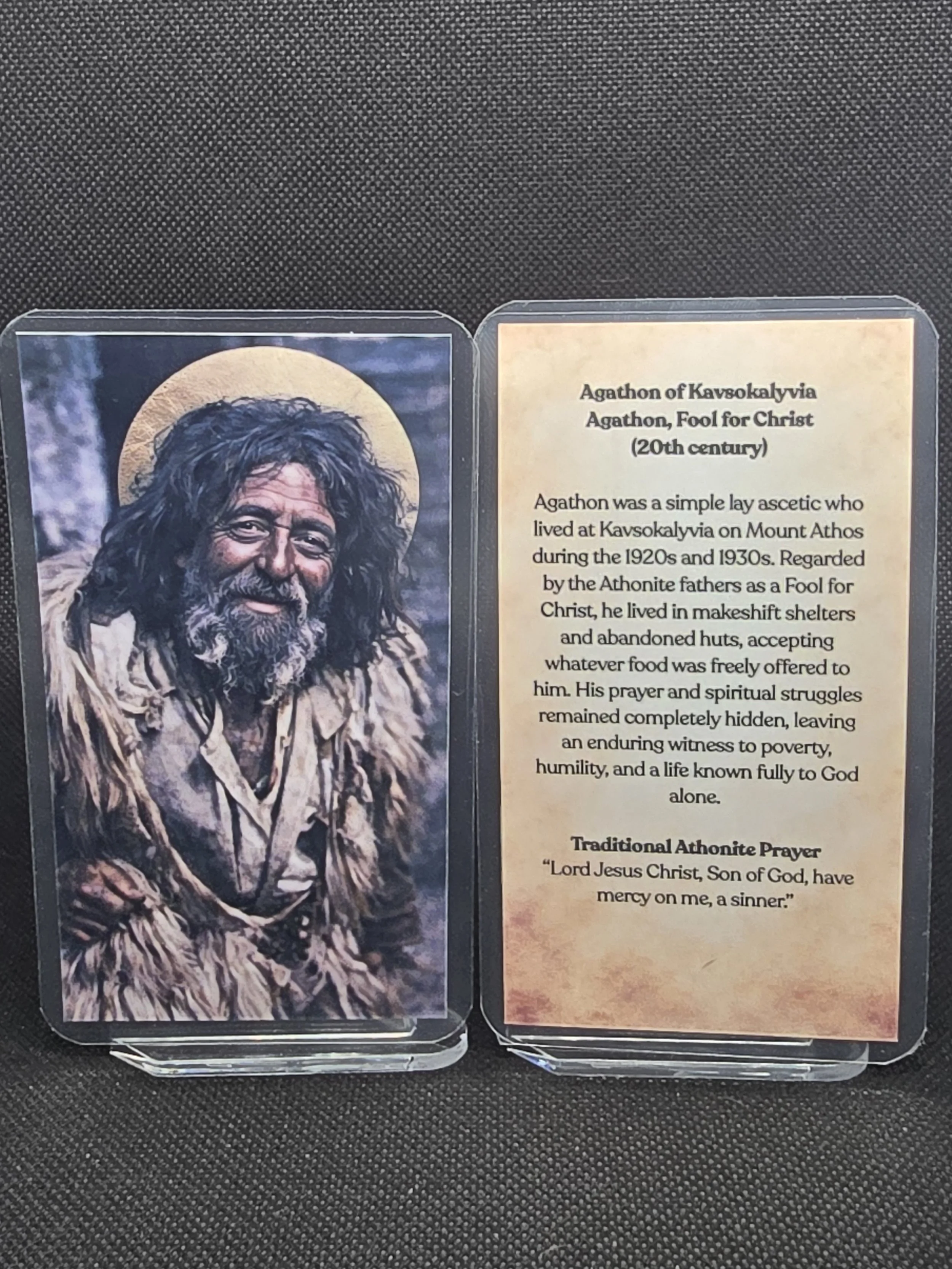
 Image 1 of 1
Saint Agathon of Kavsokalyvia Prayer Card – Patron for Anxiety Relief, Spiritual Burnout & Inner Obedience
-
Drawn to the Desert of Athos
Saint Agathon lived as an ascetic on Mount Athos, the sacred monastic peninsula of Greece that has sheltered generations of hermits and prayer warriors. From his youth, Agathon felt a powerful calling toward silence and repentance. He did not seek learning, reputation, or comfort. He sought God alone.
Eventually he settled in the remote skete of Kavsokalyvia, a harsh and windswept region perched on cliffs above the sea. The name itself means “burned huts,” recalling the earlier saint Maximos Kavsokalyvites, who burned his shelters to avoid attachment to earthly things.
Agathon followed that same spirit of radical detachment.
He lived in extreme simplicity. His cell contained almost nothing. His food was sparse. His clothing worn thin. He labored with his hands and spent long hours standing in prayer, repeating the Jesus Prayer until it became the rhythm of his breath.
A Life Hidden in Prayer
Saint Agathon was not a preacher. He did not write books. He rarely spoke unless necessary.
Instead, he practiced the ancient hesychastic tradition: guarding the heart, invoking the Name of Jesus, and keeping watch over the soul.
Night after night he remained awake in prayer. He fasted rigorously. He endured sickness without complaint. His entire existence became one continuous offering to God.
Other monks noticed something unusual about him.
Though outwardly simple, Agathon carried deep spiritual authority. Visitors seeking counsel often left with peace they could not explain. Those suffering from despair or spiritual confusion felt clarity return after speaking with him. He seemed to perceive struggles before they were spoken.
He never claimed gifts. He only prayed.
Bearing Illness With Thanksgiving
Late in life, Saint Agathon endured prolonged physical illness. His body weakened, but his spirit grew luminous. Rather than ask for healing, he thanked God for the suffering, saying it taught him humility and dependence on Christ.
He continued to receive visitors even while frail, offering brief words of encouragement and praying quietly over the sick.
Those who witnessed his final years said his cell felt filled with peace.
He reposed gently, having poured out his strength for others in hidden intercession.
After his death, monks and pilgrims began reporting healings and deliverance through his prayers, especially for those suffering spiritually or physically.
Saint Agathon’s legacy is simple and terrifyingly beautiful: a life completely emptied so Christ could fill it.
-
Saint Agathon of Kavsokalyvia is especially sought by those facing serious illness, spiritual oppression, and overwhelming inner turmoil.
Patron Saint Of:
Healing from serious illness and chronic disease
Deliverance from demonic oppression and spiritual attacks
Inner peace during anxiety, despair, and darkness
Hesychastic prayer
Monastic perseverance
Souls seeking repentance
Those longing for deeper union with Christ
Recorded Miracles and Intercessions
Several pilgrims to Mount Athos testified that after asking Saint Agathon’s intercession, long-standing illnesses unexpectedly improved or disappeared, particularly in cases involving nervous disorders and chronic pain.
Monks reported that individuals suffering from intense spiritual oppression experienced sudden relief after praying at his cell or invoking his name.
There are accounts of people overwhelmed by anxiety or despair who felt immediate peace after asking Saint Agathon to pray for them, describing a lifting of heaviness that had lasted for years.
Others speak of renewed faith during moments of spiritual dryness, attributing their restoration to his intercession.
Saint Agathon’s miracles reflect his life: quiet, personal, and deeply interior. He does not draw attention. He brings souls back to stillness.
-
Troparion (Athonite Tradition)
O blessed Agathon, lover of silence and hidden struggler of Mount Athos, thou didst offer thy life as prayer before God. Intercede for us, that we may receive healing, deliverance, and peace of soul through Christ our God.Personal Prayer
Holy Saint Agathon of Kavsokalyvia, humble servant of Christ and hidden healer of souls, pray for me. Intercede for my illness, my anxiety, and my spiritual battles. Deliver me from darkness and grant me inner peace. Teach me repentance, stillness, and trust in God’s mercy. By thy prayers, may I be strengthened in body and soul. Amen.
-
Q: What is St. Agathon of Kavsokalyvia known for?
Saint Agathon is known as a hesychast monk of Mount Athos who lived in deep silence and prayer. He is especially remembered for interceding for healing from serious illness, deliverance from spiritual oppression, and inner peace during anxiety.
Q: When is St. Agathon’s feast day?
Saint Agathon of Kavsokalyvia is commemorated on January 8 according to the Old (Julian) Calendar, which corresponds to January 21 on the New (Gregorian) Calendar.
Q: Which Christian traditions venerate Saint Agathon of Kavsokalyvia?
Saint Agathon is venerated within the Eastern Orthodox Church, particularly among Athonite and Greek spiritual communities. Byzantine Catholics who share Orthodox devotional life may honor him privately. He is not formally listed in Roman Catholic, Maronite, or Coptic calendars.
Q: Why is Saint Agathon closely associated with inner peace and spiritual healing?
Unlike many saints remembered for public preaching or dramatic miracles, Saint Agathon spent nearly his entire life in silence and interior prayer. His holiness was forged through stillness. Because he conquered anxiety and suffering through continual communion with Christ, the faithful turn to him today when seeking peace in the heart and freedom from spiritual turmoil.