 Image 1 of 1
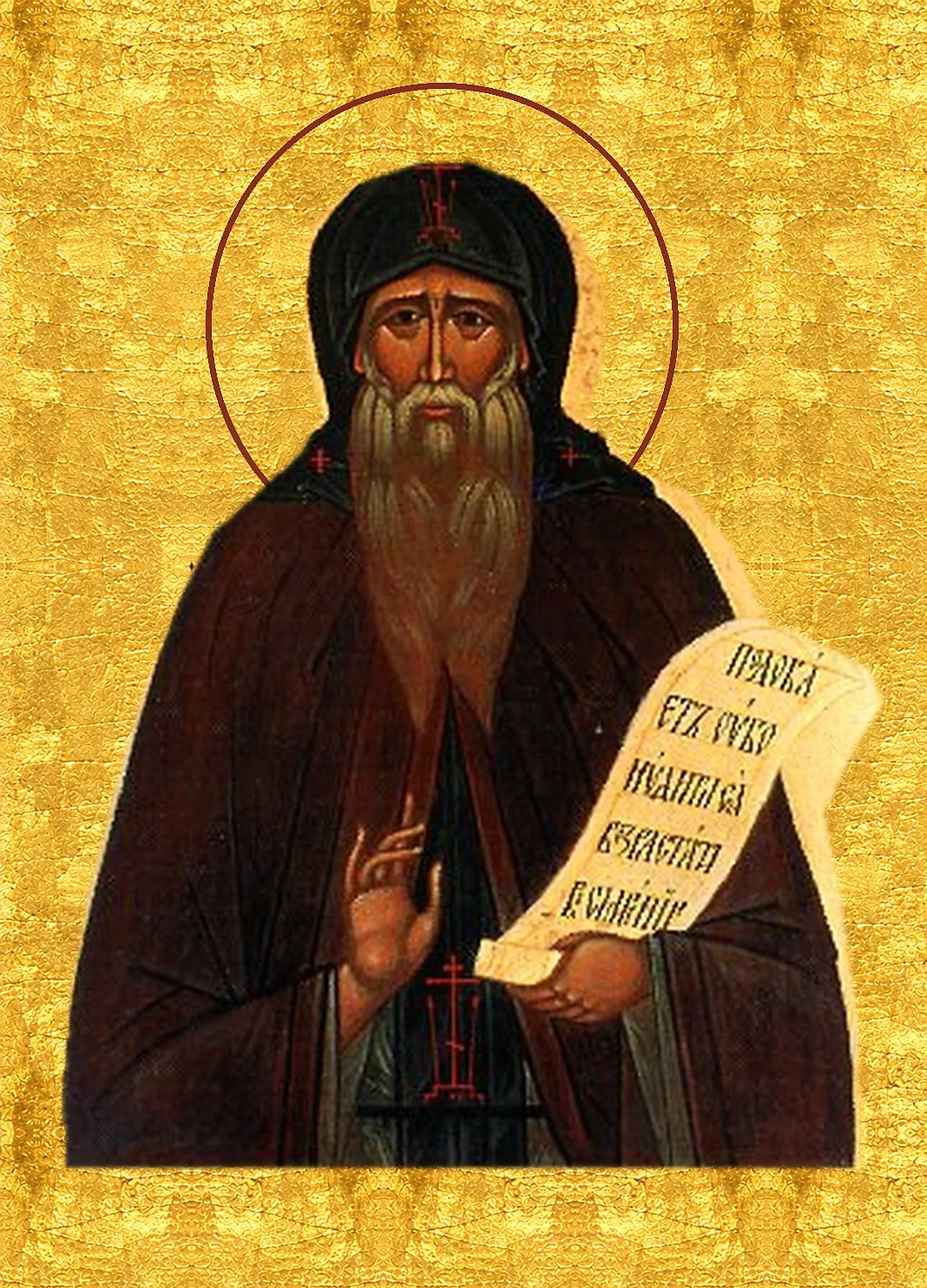
Saint Ambrose of Optina Prayer Card – For Anxiety, Chronic Illness, Spiritual Guidance & Trust in God
Saint Ambrose of Optina was one of the greatest spiritual elders of nineteenth-century Russia, a monk whose extraordinary wisdom drew peasants, intellectuals, writers, clergy, families, and people carrying every imaginable spiritual burden to the small monastery of Optina. Despite living for decades with serious physical illness and weakness, he spent much of each day listening to others, answering letters, hearing confessions, resolving practical problems, comforting the suffering, and helping people discover how to follow Christ in the circumstances actually given to them.
His spirituality was remarkably practical. Saint Ambrose taught people not to become consumed by complicated speculation, constant worry, judgment of others, or endless attempts to control the future. Instead, he continually returned them to humility, prayer, simplicity, patience, repentance, and confidence in the Providence of God.
Saint Ambrose of Optina is especially meaningful for people struggling with anxiety, chronic illness, difficult decisions, spiritual confusion, discouragement, family problems, excessive worry, or the desire to find peace without escaping the responsibilities of everyday life. His life demonstrates that profound holiness can grow even within physical weakness and that spiritual wisdom is often expressed through surprisingly simple advice.
Each prayer card measures 2.5" x 4.25", is handmade in Austin, Texas, printed on museum-quality photo paper rather than ordinary cardstock, and double laminated for durability. Every card is made to order and prepared prayerfully, with the recipient and their intentions brought before Christ while asking Saint Ambrose of Optina to intercede for their needs.
THE LIFE & STORY OF SAINT AMBROSE OF OPTINA
Saint Ambrose was born Alexander Mikhailovich Grenkov in the Tambov region of Russia in 1812. He grew up in a deeply religious family connected with the clergy and eventually entered the Tambov Theological Seminary, where his intelligence, quick wit, and ability with language made him one of the stronger students in his class.
Nothing about the young Alexander immediately suggested the frail, deeply contemplative elder he would later become. He possessed a lively personality, enjoyed conversation, and could entertain others with humor and clever observations. The same quick mind would later become one of his greatest gifts as a spiritual father, allowing him to understand complicated situations rapidly and respond in language ordinary people could remember.
Yet his path toward monasticism began through illness.
THE PROMISE HE ALMOST FORGOT
About a year before completing seminary, Alexander became seriously ill. Fearing death, he promised God that if he recovered, he would become a monk.
He survived, but after recovering he did not immediately fulfill the promise. He graduated, worked as a tutor, and later became a teacher in a parish school. The ordinary possibilities of life remained attractive enough that the promise made during illness gradually receded into the background.
Alexander's delay makes his story surprisingly relatable. His vocation did not unfold through perfect certainty or immediate obedience, and there was a period when he knew what he had promised God without yet finding the courage to act upon it.
Eventually that tension became impossible to ignore.
“GO TO OPTINA”
In 1839, Alexander and a friend visited the hermit Father Hilarion seeking guidance about their lives. Alexander was told to go to Optina Pustyn, the monastery that would become inseparable from his name.
Even then, he hesitated.
According to the traditional account of his life, Alexander attended an evening gathering where his wit and jokes entertained everyone around him. His companions enjoyed themselves, but Alexander went home deeply dissatisfied with himself. The contrast between the life he was living and the promise he had made became increasingly clear.
Soon afterward, he left his teaching position and went to Optina.
He would remain connected with the monastery for the rest of his life.
OPTINA PUSTYN
Optina Pustyn became one of the most important centers of Russian Orthodox spiritual life during the nineteenth century. The monastery became famous particularly for its elders, experienced monks who offered spiritual direction not only to other monks but also to enormous numbers of laypeople.
People traveled great distances to speak with an Optina elder about prayer, temptation, marriage, grief, family conflict, vocation, illness, fear, repentance, business problems, and ordinary decisions.
Saint Ambrose entered this tradition at precisely the period when Optina's spiritual influence was spreading throughout Russia.
He was formed under two particularly important elders, Saint Leonid of Optina and Saint Macarius of Optina. Through them he inherited a tradition of spiritual direction rooted deeply in Scripture, the Fathers of the Church, prayer, humility, and careful attention to the individual person standing before him.
BECOMING AMBROSE
Alexander received the monastic tonsure in 1842 and was given the name Ambrose, in honor of Saint Ambrose of Milan. He was ordained to the priesthood several years later.
His future might have appeared to be opening normally, but serious illness soon changed nearly everything.
Ambrose became so sick that Holy Unction was administered to him because those around him believed he might die. He survived, but his health never completely recovered.
For much of the remainder of his life, Saint Ambrose lived with physical weakness, recurring illness, and periods in which ordinary monastic responsibilities became impossible.
The illness that might have appeared to end his usefulness instead helped shape the ministry for which he became famous.
A SAINT WHO LIVED WITH CHRONIC ILLNESS
Saint Ambrose's holiness did not develop because his body became strong again. Physical weakness became part of his daily reality, and eventually he sometimes needed a cane simply to walk.
His poor health prevented him from carrying out many of the normal duties expected of a priest and monk. Yet it also placed him increasingly within his cell, where people began coming to him for spiritual guidance.
Instead of serving God through the active life he might have imagined, Ambrose became a spiritual father from within physical limitation.
This makes him especially meaningful for people living with chronic illness, disability, fatigue, or a body that no longer allows them to accomplish everything they once expected of themselves.
Saint Ambrose demonstrates that physical limitation does not mean spiritual uselessness.
THE PHILOKALIC TRADITION AT OPTINA
Under Saint Macarius, Ambrose became involved in Optina's important work of publishing and translating the writings of the Church Fathers. He helped with correspondence and with preparation of patristic works for publication, including material connected with Saint John Climacus and The Ladder of Divine Ascent.
This work placed Ambrose deeply within the spiritual tradition that had flowed through the Desert Fathers, the great ascetical writers, and the revival of patristic spirituality associated with Saint Paisius Velichkovsky.
His later advice therefore did not arise merely from personal cleverness or psychological intuition. Behind his simple sayings stood years of immersion in Scripture, patristic teaching, monastic experience, and prayer.
One reason his counsel became so powerful was precisely because he could translate profound spiritual principles into language that an ordinary person could remember.
BECOMING AN ELDER
After the death of Saint Macarius in 1860, Saint Ambrose gradually emerged as Optina's principal spiritual elder.
People began arriving from across Russia.
They brought theological questions, marriages in crisis, vocational confusion, fear, grief, business problems, illness, temptation, family arguments, spiritual doubt, and countless ordinary worries.
Ambrose did not treat everyday problems as beneath spiritual attention. He understood that the spiritual life is lived precisely within the circumstances that occupy a person's heart.
A famous story illustrates this beautifully. When someone questioned why the great elder would spend time advising a peasant woman about caring for her turkeys, Ambrose explained that the woman's whole life was bound up with those animals and that the peace of her soul mattered just as much as the supposedly more important problems brought by educated visitors.
A SPIRITUAL FATHER TO EVERYONE
Saint Ambrose's ability to adapt himself to the person before him became one of his defining characteristics. He could discuss serious theology with intellectuals and then immediately turn his full attention toward the domestic concern of an ordinary villager.
This was not inconsistency. It reflected his conviction that spiritual direction must address the actual person rather than an imaginary ideal Christian.
He did not give everyone the same rule because everyone did not carry the same circumstances, weaknesses, responsibilities, or spiritual maturity.
His counsel could be humorous, direct, gentle, corrective, or extremely simple. The goal was not to impress the person receiving advice but to help that person take the next faithful step toward Christ.
HIS INCREDIBLE DAILY SCHEDULE
Despite his poor health, Saint Ambrose maintained an extraordinary ministry of spiritual direction. His day began early with prayer, after which he dictated responses to the enormous correspondence arriving from people seeking his guidance.
Visitors often began waiting for him while he was still eating breakfast.
He might spend hours receiving people before lunch, pause briefly, and then begin again. After a short afternoon rest he returned to visitors, ate in the evening, and frequently continued receiving people until late at night.
The routine would have exhausted a physically strong person.
Ambrose often maintained it while seriously ill.
His life therefore gives an unusually concrete meaning to sacrificial spiritual fatherhood. He offered not merely ideas to people but time, attention, patience, and what little physical strength he possessed.
LETTERS OF SPIRITUAL GUIDANCE
Not everyone could travel to Optina, so Ambrose also guided enormous numbers of people through correspondence. His letters addressed anxiety, family relationships, prayer, temptations, pride, grief, illness, obedience, Providence, marriage, repentance, and the difficulty of living peacefully with other people.
One theme appears repeatedly in his spiritual counsel: people frequently imagine that peace will arrive when their external circumstances finally become ideal.
Ambrose challenged that assumption.
A different house, different job, different community, different family situation, or different set of difficulties does not automatically produce peace. The deeper work involves learning to live according to God's commandments and seeking peace within the circumstances that Providence presently allows.
This teaching makes Saint Ambrose particularly relevant to modern anxiety.
FOR ANXIETY AND OVERTHINKING
Saint Ambrose repeatedly encouraged people not to exhaust themselves trying to calculate every possible future outcome. His advice often returned to prayer, simplicity, and trust in God.
One saying attributed to him beautifully captures the approach: “Living a simple life is the best. Don't think too hard about anything. Pray to God. The Lord will arrange everything.”
This does not mean Christians should refuse to plan or ignore genuine responsibilities. Ambrose himself dealt constantly with complicated practical problems.
His warning concerned the kind of thinking that stops being useful and becomes an endless attempt to control what cannot actually be controlled.
For someone whose mind constantly asks what might happen, what might go wrong, or whether every possible choice has been analyzed sufficiently, Saint Ambrose offers a spirituality of responsible action combined with surrender to Providence.
SIMPLICITY
Another saying closely associated with Saint Ambrose teaches that where there is simplicity there are many angels, while cunning or excessive cleverness drives simplicity away.
His meaning was not that Christians should become unintelligent. Ambrose himself was highly intelligent, educated, widely read, and capable of discussing difficult theological questions.
The simplicity he praised was the opposite of manipulation, constant calculation, spiritual pretension, and the need to make everything more complicated than necessary.
A simple heart tells the truth, repents when wrong, prays when afraid, fulfills the duty immediately before it, and trusts God with what remains beyond its control.
FOR DIFFICULT DECISIONS
People continually came to Ambrose wanting him to tell them what to do. His reputation for discernment made him one of the most sought-after spiritual fathers in Russia.
Yet his counsel did not teach people to become dependent upon dramatic signs or constant predictions of the future. He repeatedly directed people toward prayer, humility, the commandments of Christ, patristic wisdom, and the duties already present in their lives.
A Saint Ambrose of Optina prayer card can therefore be especially meaningful for someone facing a major decision involving vocation, employment, marriage, family, relocation, or another uncertain path.
His spirituality encourages discernment without panic.
FOR CHRONIC ILLNESS
Ambrose spent much of his adult life physically weak. His poor health restricted his movement, interrupted ordinary monastic responsibilities, and forced him to live differently from the vigorous monk he might once have imagined becoming.
Yet some of the greatest work of his life occurred precisely during those years.
People living with chronic illness often struggle not only with pain or fatigue but with the feeling that their usefulness has diminished. Plans change, productivity decreases, social life contracts, and responsibilities that once seemed simple become difficult.
Saint Ambrose's life challenges the idea that human worth can be measured by physical productivity.
His weakened body became the place from which thousands of people received spiritual help.
HUMOR AND HOLINESS
Saint Ambrose was known for humor, short rhymes, memorable sayings, and an ability to communicate difficult spiritual truths without unnecessary heaviness.
This aspect of his personality mattered.
Spiritual seriousness did not require constant gloom. Ambrose could expose pride or foolishness with a brief humorous phrase that a visitor would remember long after leaving Optina.
His humor also made him approachable. People could bring embarrassing failures, ordinary worries, or seemingly insignificant concerns without feeling that every conversation had to become a solemn theological lecture.
The wisdom of the Desert Fathers frequently worked in a similar way, using short sayings that revealed the heart more effectively than a long argument.
DOSTOEVSKY COMES TO OPTINA
One of the most famous visitors to Saint Ambrose was Fyodor Dostoevsky.
In 1878, Dostoevsky came to Optina after the devastating death of his young son Alyosha. The novelist was grieving deeply and spent time with the monks, including Elder Ambrose.
The visit left a profound impression upon him.
Soon afterward Dostoevsky began writing The Brothers Karamazov, in which the spiritual elder Zosima became one of the novel's most memorable characters.
Saint Ambrose is widely recognized as one of the important real-life inspirations behind Zosima, although Dostoevsky's fictional elder was not simply a direct portrait of a single historical person.
This connection makes Ambrose one of the relatively rare saints whose spiritual personality entered directly into one of the great works of world literature.
TOLSTOY AND OTHER INTELLECTUALS
Leo Tolstoy also visited Saint Ambrose at Optina multiple times. Like other Russian intellectuals of the period, he was fascinated by the spiritual authority found among the Optina elders.
Ambrose's visitors therefore ranged across nearly every level of Russian society.
Poor villagers stood in the same spiritual line as famous writers and educated members of the upper classes.
The elder's attention was not determined by social importance. The peasant woman's worry could deserve the same careful attention as the intellectual's philosophical crisis.
SHAMORDINO CONVENT
In 1884, Saint Ambrose founded the women's monastery at Shamordino near Optina.
The convent reflected his concern for people who might otherwise be excluded from monastic life because of poverty or physical weakness. Many convents struggled financially and depended upon women who could bring personal resources with them.
Ambrose wanted a community in which women without money could also pursue monastic life.
The monastery welcomed poor and sick women, including some who would have found admission elsewhere extremely difficult.
Shamordino therefore became another expression of the same spirituality visible in Ambrose's personal ministry. A person's value before God was not determined by wealth, health, education, or social usefulness.
HIS FINAL YEARS
Near the end of his life, Saint Ambrose traveled to Shamordino to address problems within the community. His health deteriorated so badly that he was unable to return to Optina.
Even while increasingly weak, he continued receiving people and offering spiritual guidance.
The elder who had spent decades listening to the burdens of others did not retire into complete isolation when his own body began failing more seriously. He continued serving as long as he was able.
Saint Ambrose died at Shamordino in 1891.
Large crowds gathered for his funeral and burial at Optina, testimony to the enormous number of people whose lives had been touched by the sickly monk who had once believed illness might prevent him from doing anything useful.
THE OPTINA ELDERS
Saint Ambrose belongs to the remarkable spiritual lineage now known as the Optina Elders. These monks helped revive the tradition of spiritual eldership within nineteenth-century Russian Orthodoxy and became influential far beyond the walls of their monastery.
Their spirituality drew heavily upon Scripture, the Desert Fathers, the Philokalic tradition, the Jesus Prayer, repentance, humility, obedience, and careful discernment of the human heart.
Ambrose became perhaps the most famous of the Optina elders because of the extraordinary breadth of his spiritual ministry and the number of people who preserved memories of his advice.
The Russian Orthodox Church formally glorified Saint Ambrose in 1988, and the Optina Elders were later recognized together for universal veneration.
HIS RELICS AT OPTINA
Saint Ambrose's relics are venerated at Optina Monastery together with those of the other holy elders.
The monastery suffered enormously following the Russian Revolution and the suppression of monastic life under the Soviet regime, but Optina was eventually restored and again became a functioning monastery and destination for pilgrims.
The return of the elders' relics and restoration of monastic life brought renewed attention to the spiritual tradition Ambrose had helped embody.
Today his writings, sayings, letters, and stories continue circulating far beyond Russia.
THE QUOTE
One of the teachings most closely associated with Saint Ambrose summarizes his approach to anxiety and excessive complication:
“Living a simple life is the best. Don't think too hard about anything. Pray to God. The Lord will arrange everything.”
The statement does not encourage laziness or irresponsibility. Saint Ambrose himself spent exhausting days answering letters, receiving visitors, resolving problems, guiding monasteries, and helping people make concrete decisions.
His simplicity consisted in doing what love and obedience required while refusing to pretend that everything depended upon his own ability to predict and control the future.
For someone carrying anxiety or constant mental overactivity, that distinction can be profoundly freeing.
AN OFFICIAL ORTHODOX PRAYER TO SAINT AMBROSE
The Orthodox Church's troparion to Saint Ambrose directly asks for his prayers and remembers the characteristics that made his spiritual ministry so beloved:
“We come to you, as to a fountain of healing, O Father Ambrose. For you guide us truly on the path of salvation, protecting us from troubles and misfortunes by your prayers, and comforting us in our physical and spiritual sorrows. Above all, you taught with humility, patience, and love. As our fervent intercessor, entreat Christ the Lover of mankind that our souls may be saved.”
This prayer makes Saint Ambrose especially appropriate for those seeking spiritual guidance, healing, consolation during illness, protection during difficulty, and greater humility and patience.
FOR SOMEONE WHO NEEDS SPIRITUAL GUIDANCE
A Saint Ambrose of Optina prayer card can make a meaningful gift for someone who feels spiritually stuck or does not know what their next step should be.
His entire mature life was spent helping people move from confusion toward faithful action.
Ambrose rarely solved spiritual problems by making them more complicated. He returned people toward prayer, repentance, humility, trust in God, the teachings of the Fathers, and the ordinary responsibilities already placed before them.
For someone searching endlessly for the perfect spiritual answer, his life offers the possibility that holiness may begin with faithfully doing the simple good already visible.
FOR SOMEONE WHO WORRIES CONSTANTLY
Saint Ambrose understood how easily people can convince themselves that peace depends upon arranging every external circumstance correctly.
His letters repeatedly challenged that assumption.
A person may imagine that peace will arrive after changing jobs, moving homes, escaping a difficult relationship, resolving every uncertainty, or finally obtaining complete control over the future.
Some external circumstances genuinely do need to change, but Ambrose taught that lasting peace cannot depend entirely upon them.
The Christian ultimately learns to seek peace through God rather than waiting for the world to become perfectly manageable.
FOR THOSE WHO FEEL USELESS BECAUSE OF ILLNESS
Ambrose's physical weakness makes him particularly powerful for someone whose illness has changed the way they understand their own value.
The young monk might reasonably have assumed that serious sickness had destroyed his ability to serve God as he intended.
Instead, his weakness redirected his vocation.
The man unable to carry out many ordinary monastic duties became the elder to whom thousands turned for help.
His life does not promise that illness will disappear. It demonstrates something different: illness does not place a person outside the possibility of holiness, service, wisdom, love, or a meaningful vocation.
FAQ
Who was Saint Ambrose of Optina? Saint Ambrose of Optina was a nineteenth-century Russian Orthodox monk, priest, and spiritual elder who became famous for his wisdom, discernment, compassion, humor, and ability to guide both monks and laypeople. He lived from 1812 to 1891 and spent most of his monastic life connected with Optina Pustyn.
What was Saint Ambrose of Optina's birth name? He was born Alexander Mikhailovich Grenkov. He received the name Ambrose after entering monastic life at Optina.
Why is Saint Ambrose called an Optina Elder? Optina Pustyn became famous for experienced spiritual fathers known as elders or startsy. These monks offered spiritual guidance to people from every level of Russian society, and Ambrose became one of the most renowned members of this tradition.
Was Saint Ambrose chronically ill? Yes. Serious illness began early in his monastic life and affected him for decades. At one point he became so sick that Holy Unction was administered because death seemed near, yet he survived and continued serving despite persistent physical weakness.
Is Saint Ambrose meaningful for people with chronic illness? His life can be especially meaningful for someone whose health has limited their activity or changed their plans. Much of his greatest spiritual work took place while he was physically weak, demonstrating that illness does not eliminate a person's ability to serve God or others.
Why is Saint Ambrose associated with anxiety and overthinking? His spiritual counsel frequently emphasized simplicity, prayer, humility, and trust in God's Providence rather than endless mental calculation. He warned people against trying to obtain peace solely by controlling external circumstances.
Did Saint Ambrose meet Dostoevsky? Yes. Fyodor Dostoevsky visited Optina and met Saint Ambrose in 1878 after the death of his young son Alyosha. The visit deeply affected Dostoevsky during the period leading into his work on The Brothers Karamazov.
Was Saint Ambrose the model for Elder Zosima? Saint Ambrose is regarded as one of the important real-life inspirations behind Elder Zosima in The Brothers Karamazov. Zosima is a fictional character rather than a simple portrait of Ambrose, but Dostoevsky's encounter with Optina and its elders significantly influenced the novel.
Did Leo Tolstoy meet Saint Ambrose? Yes. Tolstoy visited Saint Ambrose at Optina multiple times and was among the many prominent Russian intellectuals drawn to the monastery's spiritual elders.
Did Saint Ambrose write books? He left a large body of spiritual correspondence rather than a conventional theological treatise. His letters and counsels have been collected and published and continue to be read for their practical guidance on prayer, humility, Providence, suffering, relationships, and the spiritual life.
Did Saint Ambrose help publish the Church Fathers? Yes. During his years under Saint Macarius of Optina, Ambrose assisted with correspondence and the preparation of patristic texts connected with Optina's important publishing work.
What was Shamordino Convent? Shamordino was a women's monastic community founded under Saint Ambrose's guidance. It became notable for welcoming women who were poor, sick, or otherwise unable to bring the financial resources often expected by impoverished monasteries of the period.
What did Saint Ambrose teach about simplicity? He encouraged people to avoid unnecessary complication, manipulation, excessive calculation, and constant worry. His spirituality emphasized prayer, humility, honest repentance, ordinary duties, and confidence in God's Providence.
Can Saint Ambrose be asked to pray for anxiety? Christians may ask Saint Ambrose to intercede for any need. His teachings about simplicity, peace, trust in Providence, and freedom from excessive worry make him especially meaningful for those struggling with anxiety or constant overthinking.
Can Saint Ambrose be asked to pray for illness? Yes. The Orthodox troparion to Saint Ambrose explicitly remembers him as one who comforts people in physical and spiritual sorrows. His own decades of illness also give his life particular resonance for those carrying health problems.
Who would this Saint Ambrose of Optina prayer card make a meaningful gift for? It is especially fitting for someone facing chronic illness, anxiety, difficult decisions, spiritual confusion, family problems, discouragement, or a period of uncertainty. It is also meaningful for Orthodox Christians, readers of Dostoevsky, people interested in the Optina Elders, and anyone seeking a simpler and more trusting spiritual life.
THE MAIN MESSAGE OF SAINT AMBROSE OF OPTINA'S LIFE
Saint Ambrose of Optina spent much of his life inside a body that did not cooperate with his plans. Illness limited his strength, yet those limitations became part of the circumstances through which his greatest vocation emerged.
From his small cell at Optina, he entered the lives of thousands of people. He answered letters, received visitors, counseled families, comforted the grieving, corrected the proud, encouraged the sick, advised monks and nuns, spoke with great writers, and listened carefully to ordinary people whose worries might have appeared insignificant to someone else.
His wisdom was profound precisely because it became simple. Pray. Repent. Do not judge. Do not make everything unnecessarily complicated. Fulfill the duty immediately before you, and entrust what remains beyond your control to God.
For someone living with anxiety, physical weakness, uncertainty, or the exhausting desire to understand everything before taking another step, Saint Ambrose offers a different way to live. Peace does not require knowing the entire future. Sometimes the next faithful step is enough.