 Image 1 of 1
Saint Basil of Ostrog Prayer Card - For Healing, Serious Illness & Impossible Situations
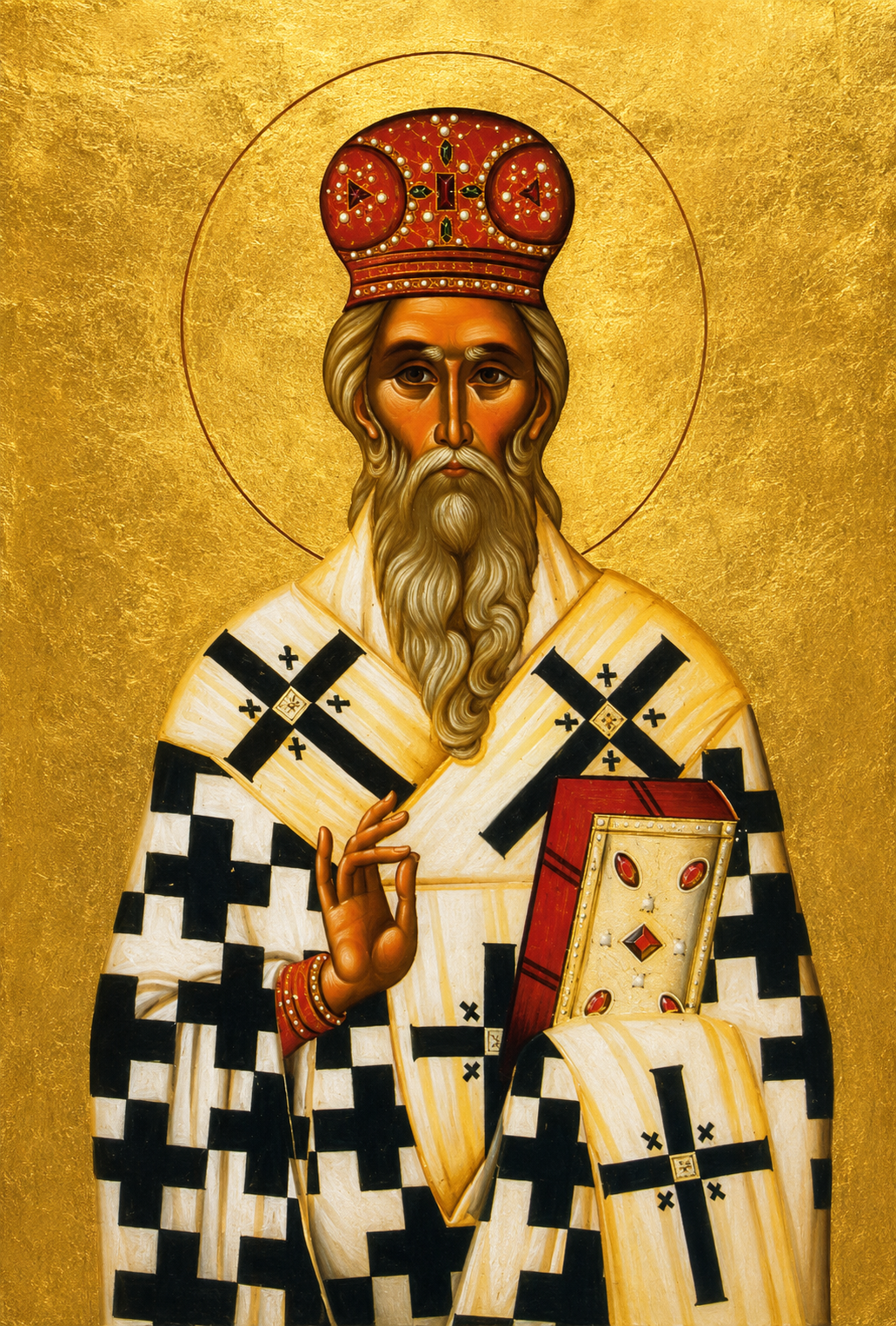
Saint Basil of Ostrog, known in Serbian as Sveti Vasilije Ostroški, is one of the most beloved wonderworking saints of the Serbian Orthodox Church. A seventeenth-century monk, ascetic, bishop, defender of the Orthodox faith, and spiritual father of the people of Herzegovina and Montenegro, Saint Basil spent the final years of his life in prayer within the cliffs of Ostrog. His incorrupt relics remain there today, drawing pilgrims who seek his intercession for healing, suffering, spiritual distress, family difficulties, and situations that appear to have no human solution. The official monastery tradition describes him specifically as a great wonderworker and healer of those who approach God through his prayers.
Saint Basil is especially meaningful for anyone facing serious illness, chronic disease, a frightening diagnosis, physical pain, mental suffering, family crisis, or an apparently impossible situation. For centuries, pilgrims have traveled to Ostrog asking God for mercy through his intercession, and accounts of healing became so closely associated with his shrine that the monastery itself describes the hermitage containing his relics as a place where the sick seek healing of both soul and body.
His life also speaks powerfully to Christians trying to remain faithful during circumstances they cannot control. Saint Basil lived during a period of severe political instability, Ottoman rule, religious pressure, conflict, poverty, and danger. He did not find holiness because his surroundings became peaceful. He became holy while carrying episcopal responsibility, protecting Orthodox Christian life, serving a suffering people, traveling between monasteries and distant Orthodox lands, and finally withdrawing more deeply into prayer without abandoning responsibility for those entrusted to him.
Saint Basil is therefore not merely a saint to invoke when someone wants a miracle. His life teaches what faith looks like when circumstances remain difficult, when a person must persevere without knowing how the situation will end, and when prayer becomes the one place where fear can be surrendered to God. The healing traditions surrounding him are inseparable from a life already shaped by fasting, sacrifice, mercy, pastoral responsibility, and complete dependence upon Christ.
This prayer card is created for those facing cancer, serious illness, chronic pain, hospitalization, surgery, mental or emotional suffering, family emergencies, spiritual oppression, financial or practical crises, and other situations that feel beyond human strength. It is equally fitting for caregivers, physicians, nurses, parents praying for children, family members keeping vigil beside the sick, and Christians simply asking for the faith to endure when they cannot see what God is doing.
Saint Basil is traditionally honored as a hierarch, ascetic, wonderworker, healer, and defender of the Orthodox faith. His association with healing is not merely a modern devotional invention, because the official Ostrog Monastery tradition explicitly identifies him as an intercessor and healer for the suffering and sick who seek God's help through his prayers.
Each card is handmade in Austin, TX and created to order. We do not keep stock, because every prayer card is treated as a unique devotional offering. They are printed on museum-quality photo paper, not cardstock, and every card is made slowly during prayer with intentional reverence for the saint and for the person who will receive it. Names are lifted before Christ, intentions are held carefully, and each piece is handled multiple times in prayerful silence, asking God for mercy and asking Saint Basil to intercede for the soul it is being made for. This is devotional craftsmanship shaped with patience, care, and spiritual responsibility because every soul and every prayer matters.
THE LIFE & STORY
Saint Basil of Ostrog was born Stojan Jovanović in the village of Mrkonjići in Popovo Polje, Herzegovina. The official Ostrog Monastery tradition places his birth in 1610 and names his parents as Petar and Ana, describing them as devout Orthodox Christians who raised their son within a life of prayer, reverence, charity, and participation in the worship of the Church.
Stojan grew up in a poor and difficult environment where families worked hard simply to maintain ordinary life. The monastery's Life of Saint Basil remembers his parents as people who showed compassion toward the poor even while possessing little themselves, and it presents the young Stojan as serious, generous, prayerful, and deeply attracted to the life of the Church.
This background matters because Saint Basil's later fame as a bishop and wonderworker can easily obscure the simplicity from which his spiritual life grew. He was not raised amid security and abundance and then invited to admire suffering from a distance. Poverty, political instability, and danger formed part of the world he knew from childhood, while charity and faith were taught within that same world.
According to the monastery tradition, concern for Stojan's safety eventually led his parents to send him to the Monastery of Zavala, where he received spiritual formation and education. He later continued his monastic path at Tvrdoš Monastery, one of the important Orthodox centers of Herzegovina. There he eventually received monastic tonsure and the name Basil, or Vasilije.
His monastic vocation developed into ordained ministry, first through the diaconate and priesthood and eventually through service as an archimandrite. Saint Basil also spent time on Mount Athos, drawing from the ancient spiritual inheritance of Orthodox monasticism, and the Serbian ecclesiastical tradition records a journey to Russia as well.
These travels are important because Saint Basil belonged to a much wider Orthodox world than the narrow geography of the cliffs where his relics would eventually rest. His spiritual formation connected Herzegovina and Montenegro with Mount Athos, the Serbian Patriarchate, and the larger Orthodox Christian world, allowing him to bring that inheritance back into a region suffering under political and religious pressure.
Saint Basil eventually became a bishop, serving the Orthodox faithful of Herzegovina during an exceptionally difficult period. Official Serbian sources place his elevation to episcopal ministry in the seventeenth century, and by the middle of that century he was responsible for the eastern and western portions of the Herzegovinian ecclesiastical territory.
The office did not provide him with comfort or security. His people lived under Ottoman rule, while religious pressures and attempts to draw Orthodox Christians away from their traditional ecclesial life complicated an already unstable political environment. Saint Basil had to combine pastoral care, monastic discipline, ecclesiastical leadership, diplomacy, and personal asceticism while protecting a flock whose ordinary Christian life was constantly vulnerable.
This makes Saint Basil especially meaningful for Christians who imagine that deep prayer requires circumstances to become quiet first. Saint Basil's life suggests almost the opposite because prayer became necessary precisely because life was not quiet. His asceticism did not remove him from his responsibilities as bishop, and the official monastery Life explicitly emphasizes that his life of prayer at Ostrog did not separate him from pastoral care or his episcopal duties.
Around the middle of the seventeenth century, Saint Basil moved into the region around present-day Nikšić and ultimately came to Ostrog. There, within a dramatic cliff landscape, an existing hermitage became the center of the monastic community most closely associated with his name. He devoted his possessions and labor to strengthening the monastery while continuing his work as a bishop and pastor.
Ostrog was suited to the spiritual world Saint Basil had embraced because the monastery was not built around comfort. The upper sanctuary rises within the mountain itself, and the saint's life there joined extreme simplicity with intense prayer. Yet even in this retreat, his concern remained directed outward toward the spiritual survival and moral strengthening of his people.
The official Life presents Saint Basil's vision of monastic life as something that could strengthen an entire people. A monastery was not merely a private refuge for those seeking solitude. It could become a place where prayer, worship, moral formation, charity, cultural memory, and Christian identity were protected when everything around them was unstable.
Saint Basil spent the final years of his life at Ostrog in intense ascetic prayer while continuing to serve his diocese. He reposed in the Lord in 1671 and was buried at the Upper Monastery. Serbian Orthodox sources preserve his date of repose as April 29 according to the Julian calendar, corresponding to May 12 on the current civil Gregorian calendar.
The story, however, did not end at his burial.
According to the official tradition of Ostrog Monastery, seven years after Saint Basil's repose he appeared repeatedly in a dream to Abbot Raphael of the Monastery of Saint Luke and directed that his grave be opened. After prayer and fasting, the monks opened the tomb and found Saint Basil's body incorrupt and fragrant. His relics were then placed in a reliquary for veneration within the monastery.
The relics remain at Ostrog, where Saint Basil's body continues to be venerated by pilgrims. The monastery itself identifies the incorrupt state of his relics as one of the signs associated with his sanctity and describes the shrine as a continuing place of prayer and reported healing.
HEALING, MIRACLES & IMPOSSIBLE SITUATIONS
Saint Basil of Ostrog's title as a Wonderworker is central to his veneration. The official Ostrog Monastery tradition does not treat miracle stories as a peripheral addition to his reputation but explicitly presents his continuing intercession as one of the defining features of devotion to him.
The monastery preserves accounts of people seeking his intercession for illnesses affecting both body and mind. Its own description of the shrine refers to sufferers coming with various physical and mental afflictions and seeking the mercy of God through Saint Basil's prayers.
This makes Saint Basil particularly meaningful for a family facing a diagnosis that has changed everything. Serious illness often creates a world in which ordinary plans disappear almost instantly, medical appointments replace routines, fear enters conversations, and everyone begins measuring time differently. The sick person suffers physically, while those who love that person often suffer from helplessness because they cannot carry the illness themselves.
Christian devotion to Saint Basil does not require pretending that medical care is unnecessary or that every sick person will receive the physical healing being requested. Orthodox prayer places the illness honestly before God while asking for mercy, healing when it is His will, strength when suffering continues, wisdom for physicians, consolation for families, repentance, peace, and ultimately salvation.
For this reason, Saint Basil is especially appropriate for someone undergoing chemotherapy, surgery, long hospitalization, treatment for chronic illness, rehabilitation, or a medical condition for which doctors have not yet found an answer. The saint's healing tradition allows the Christian to pray boldly for a miracle without turning prayer into a demand that God act according to a particular timetable.
His intercession is also meaningful in situations that are not strictly medical. People often reach a point where the phrase impossible situation becomes the only language that seems adequate. A marriage may be collapsing, a family member may be trapped in destructive behavior, a person may face a legal or financial crisis, or circumstances may have become so complicated that no ordinary solution appears sufficient.
Saint Basil's life speaks into those moments because his own earthly ministry was carried out under pressures he could not simply remove. Political domination, religious conflict, poverty, danger, and instability were not problems he solved once and then moved beyond. He continued serving Christ within them.
Seeking his intercession therefore means more than asking for circumstances to change. It also means asking for the grace to remain Christian while waiting for them to change.
That distinction is important because sometimes the first miracle is not the disappearance of the crisis. Sometimes it is the return of hope, the courage to endure another day, reconciliation inside a frightened family, unexpected help, freedom from despair, or the ability to pray when fear previously made prayer impossible.
THE INCORRUPT RELICS OF SAINT BASIL
The relics of Saint Basil are among the central reasons Ostrog became such an important place of pilgrimage. According to the monastery's official Life, his grave was opened seven years after his repose following repeated visionary appearances to an abbot, and the monks found his body incorrupt and fragrant before placing it in a reliquary for veneration.
The official monastery continues to describe Saint Basil's body as incorrupt and preserved at the Upper Monastery. His relics rest within the small church built into the cliff, where pilgrims approach them in prayer and ask his intercession before God.
Orthodox veneration of relics does not mean that the physical remains of a saint are treated as magical objects. The Christian understanding begins with the Incarnation and Resurrection because the human body is created by God, sanctified through Christian life, and destined for resurrection. A saint's relics are therefore honored because that body belonged to a person whose entire life became an offering to Christ.
In Saint Basil's case, the preservation of his relics became inseparable from the continuing traditions of prayer and healing at Ostrog. Pilgrims do not travel there simply because an unusual physical phenomenon exists. They travel because generations of Christians have experienced the saint as a powerful intercessor and because the monastery remains a place of Divine Liturgy, confession, prayer, fasting, pilgrimage, and sacramental Christian life.
The official Life also preserves the striking tradition that a grapevine grew from the rocky place connected with Saint Basil's repose despite the apparent absence of ordinary soil. The vine became another beloved part of Ostrog's memory of the saint and his final years within the mountain.
OSTROG MONASTERY & PILGRIMAGE
Ostrog Monastery is located in present-day Montenegro and remains the monastery most closely identified with Saint Basil. The official monastery describes itself as the most visited monastery in Montenegro, and its life continues to revolve around worship, pilgrimage, hospitality, confession, charitable work, and devotion to Saint Basil.
The physical setting is unlike most Christian shrines because the Upper Monastery appears embedded within the face of the mountain. Pilgrims ascend toward the small churches and the shrine containing Saint Basil's relics, making the journey itself part of the devotional experience.
For centuries, Ostrog has attracted people carrying petitions for healing, family members, children, work, danger, suffering, and spiritual conversion. Historical research published by the Metropolitanate of Montenegro and the Littoral records extensive pilgrimage to Saint Basil's relics and reports that even Catholics and Muslims were among those who historically visited the shrine.
That detail helps explain why Saint Basil's reputation as a wonderworker reaches beyond a narrow cultural circle. He remains unmistakably a Serbian Orthodox saint and Orthodox bishop, but the human needs brought to his shrine are universal: sickness, fear, grief, children, family, hope, and the desire to know that God has not forgotten us.
A person does not need to travel to Montenegro in order to ask Saint Basil's intercession. Pilgrimage has particular spiritual value because the body participates in prayer through travel, effort, fasting, waiting, and entering a holy place, but the communion of saints is not limited by geography. A Christian praying in a bedroom, hospital, parish church, or home prayer corner can ask the same saint to intercede before Christ.
This prayer card can therefore become a small connection with the great shrine at Ostrog, especially for someone who may never be able to travel there. It is not a substitute for the monastery or for sacramental life, but it can serve as a physical reminder of the saint whose relics continue to be venerated within those cliffs.
FAITH UNDER PRESSURE
Saint Basil's life unfolded during a period when Orthodox Christian identity in his region could not be taken for granted. Ottoman political domination, war, religious competition, attempts at ecclesiastical union, poverty, and social instability placed enormous pressure on the Church and the people whom Saint Basil served.
His response was not simply defensive anger. The official monastery tradition emphasizes his conviction that a people would ultimately be preserved through strengthened faith, moral life, religious formation, and spiritual culture. His solution was therefore pastoral and ascetical as well as institutional.
This gives Saint Basil special meaning for Christians who feel that the faith is weakening within their own families. The circumstances may be entirely different from seventeenth-century Herzegovina, but the spiritual problem is recognizable because beliefs disappear when nobody intentionally teaches, practices, protects, and hands them forward.
A Christian household cannot assume that children will absorb faith automatically. Prayer must be seen, the liturgy must be attended, forgiveness must be practiced, Scripture and the saints must be known, and the home must contain signs that Christ is not merely a Sunday subject but the center of life.
Saint Basil built and strengthened a monastery because spiritual life needs places where it can survive. Modern families may have to build smaller forms of the same thing through a prayer corner, regular feast days, meals blessed together, fasting according to their church's discipline, conversations about faith, service to the poor, and a household rhythm that continually returns to Christ.
His life therefore becomes a challenge as well as a consolation. It is easy to admire saints who preserved the faith under pressure, but their example eventually asks what we are preserving now for those who will come after us.
HUMILITY, ASCETICISM & SERVICE
Saint Basil's reputation for miracles can overshadow the ordinary spiritual disciplines that preceded them. Long before pilgrims traveled to his relics, he had already spent decades learning prayer, fasting, obedience, pastoral responsibility, generosity, and the difficult balance between solitude and service.
The official Life emphasizes that even as a bishop he remained deeply shaped by monasticism. He traveled to Mount Athos, lived ascetically, and ultimately spent his final years in intense prayer at Ostrog without abandoning responsibility for his flock.
This combination is important because Christians sometimes divide the spiritual life into two competing possibilities. One person wants contemplation and silence, while another believes active service is what really matters. Saint Basil's life suggests that deep prayer and active responsibility can strengthen one another when both are directed toward God.
His withdrawal into the mountain was not contempt for people. It was the source from which he could continue serving them.
For a parent, caregiver, priest, deacon, teacher, business owner, or anyone whose life involves constant responsibility, Saint Basil offers a reminder that interior prayer cannot simply be postponed until responsibility disappears. If prayer waits for a life without interruptions, it may never begin.
The challenge is instead to create places where the soul returns repeatedly to God, even if those places are much smaller than a monastic cave. A few minutes in a prayer corner, the Jesus Prayer while working, Scripture before the household wakes, or quiet thanksgiving at the end of the day can become ways of refusing to allow external responsibility to empty the interior life.
SAINT BASIL & THOSE WHO SUFFER
The official Ostrog tradition describes Saint Basil particularly as a helper and healer of the suffering. This makes him an especially appropriate saint for people whose illness or hardship has lasted long enough that encouragement itself has become difficult to receive.
Long suffering changes a person differently from a short emergency. At the beginning of a crisis, there may be adrenaline, plans, appointments, and many people asking how they can help. Months or years later, the suffering can become quieter and lonelier because everyone else has returned to ordinary life while the sick person has not.
Saint Basil's intercession can be especially meaningful there because pilgrimage to Ostrog has been shaped by people who bring long-standing needs, not merely sudden emergencies. The Christian can continue asking for healing while also asking for freedom from bitterness, despair, isolation, and the fear that suffering has made life spiritually useless.
Christianity does not teach that suffering is automatically good simply because it exists. Christ healed the sick, received those who were desperate, and showed compassion toward human pain. At the same time, the Cross means that suffering can become a place where love, faithfulness, sacrifice, and communion with Christ are revealed in ways we would never have chosen for ourselves.
For caregivers, Saint Basil's life can also become a source of encouragement because healing ministry is not limited to miraculous recovery. Bringing food, changing bedding, driving someone to appointments, listening to fear for the hundredth time, helping with medication, sitting beside a hospital bed, and praying when the sick person is too exhausted to pray can all become acts of mercy.
This prayer card is therefore not only for the person who is ill. It can be equally meaningful for the person who refuses to leave them alone.
PRAYERS
A simple traditional invocation may be prayed frequently: Holy Father Basil of Ostrog, pray to God for us. This short prayer can be used throughout the day, especially when anxiety makes longer prayer difficult or when a family is waiting for medical results, preparing for surgery, or keeping vigil beside someone who is suffering.
The Orthodox Church also honors Saint Basil with a traditional Troparion and Kontakion. His Troparion remembers how he gave himself to God through prayer, fasting, ascetic struggle, and pastoral service, while also commemorating the preservation of his incorrupt body and asking for his prayers before Christ.
A brief portion of that traditional hymn expresses the heart of the devotion by asking Saint Basil to “pray to Christ God for the salvation of our souls.” The petition keeps the theology clear because Saint Basil is not the source of healing or salvation. Christians ask him to intercede, while every grace comes from God.
Those praying for serious illness may invoke Saint Basil while naming the person directly before Christ. The prayer does not need complicated language because the need itself can be offered to God honestly, including the diagnosis, pain, fear, treatment, doctors, family members, and uncertainty about what comes next.
Those praying during an impossible situation can use the same traditional invocation while asking for whatever God knows is truly needed. Sometimes that may mean an unexpected opening or dramatic change, while at other times the answer may come through endurance, reconciliation, wisdom, practical help, or the grace to remain faithful through circumstances that cannot immediately be changed.
This card is especially fitting for a bedside table, hospital room, prayer corner, Bible, wallet, caregiver's bag, medical appointment folder, desk, or anywhere a person needs a physical reminder to turn fear toward prayer and place what cannot be controlled into the hands of God.
FAQ
Who is Saint Basil of Ostrog?
Saint Basil of Ostrog was a seventeenth-century Serbian Orthodox monk, bishop, ascetic, and wonderworker who served the Orthodox faithful of Herzegovina and spent his final years at Ostrog Monastery in present-day Montenegro. He was born as Stojan Jovanović in 1610 and reposed in 1671.
What is Saint Basil of Ostrog known for?
Saint Basil is especially known for his ascetic life, episcopal service, defense of Orthodox Christianity, incorrupt relics, and the extensive tradition of healings and miracles associated with his intercession. Ostrog Monastery continues to identify him as a great wonderworker and healer.
Is Saint Basil of Ostrog an Orthodox saint?
Yes. Saint Basil of Ostrog is specifically a saint of the Serbian Orthodox Church and is also venerated throughout the wider Eastern Orthodox world. He is one of the most revered saints within Serbian Orthodox devotion.
Is Saint Basil of Ostrog Catholic?
Saint Basil lived in the seventeenth century, long after the historical division between the Orthodox and Catholic Churches, and he belongs specifically to the Serbian Orthodox tradition. He should therefore be identified as a Serbian Orthodox saint rather than a universally shared pre-schism saint.
What does the name Vasilije Ostroški mean?
Vasilije Ostroški is the Serbian form of Basil of Ostrog. English-language sources commonly use Saint Basil of Ostrog, while Serbian Christians know him as Sveti Vasilije Ostroški.
What is Saint Basil of Ostrog the patron saint of?
Orthodox traditions do not always use narrowly defined patronage categories in the same way modern Western devotional lists do. Saint Basil is most securely described as a renowned wonderworker and intercessor for the sick and suffering, because the official Ostrog tradition explicitly connects his shrine and relics with prayer for healing.
Is Saint Basil of Ostrog a healing saint?
Yes. Healing is one of the strongest established devotional associations with Saint Basil. The official Ostrog Monastery account calls him a helper and healer of the suffering and preserves the longstanding tradition of people seeking bodily and spiritual healing through his intercession.
Can I pray to Saint Basil of Ostrog for cancer?
Yes. Cancer is not a special historical patronage assigned uniquely to Saint Basil, but his longstanding association with serious illness and healing makes him an appropriate intercessor for someone with cancer. Christians may ask his prayers while also pursuing appropriate medical treatment and placing the entire situation before God.
Can I pray to Saint Basil for chronic illness?
Yes. Saint Basil is especially meaningful for people enduring serious or prolonged suffering because devotion at Ostrog has long centered upon prayer for those who are sick and afflicted. His intercession can be sought for healing, endurance, peace, and strength during long treatment.
Can I pray to Saint Basil before surgery?
Yes. A person preparing for surgery may ask Saint Basil to intercede for the patient, surgeons, nurses, anesthesiologists, family members, and everyone involved in the procedure. His healing tradition makes the card especially appropriate for a hospital stay or medical appointment.
Is Saint Basil of Ostrog good to pray to for impossible situations?
Yes, although “patron saint of impossible cases” is better understood as a modern devotional description rather than a formal historical title. His reputation as a powerful wonderworker and the many needs brought to Ostrog make him a natural intercessor when circumstances appear beyond ordinary human help.
Can I pray to Saint Basil for mental illness or emotional suffering?
Yes. The official monastery tradition explicitly refers to people with both bodily and mental afflictions seeking God's mercy at his shrine. Christians may therefore ask Saint Basil's intercession for those suffering psychologically while also seeking appropriate professional and medical care.
Can I pray to Saint Basil for my family?
Yes. Christians may ask any saint to intercede for family needs, and Saint Basil's pastoral care for suffering people makes him especially meaningful during illness, conflict, fear, or crisis. Family protection and reconciliation are best presented as devotional applications of his intercession rather than as exclusive official patronages.
Can I give this prayer card to someone who is sick?
Yes. Saint Basil's established association with healing makes this an especially appropriate devotional gift for someone facing illness, surgery, hospitalization, chronic pain, rehabilitation, or a serious diagnosis. It can also be given to a caregiver or family member praying for someone who is ill.
Can I give this card to someone in the hospital?
Yes. The card is small enough to keep near a hospital bed, in a Bible, wallet, or medical folder and can provide a reminder to pray during treatment. Saint Basil is particularly fitting because healing and care for the suffering are central to his modern devotion.
Where was Saint Basil of Ostrog born?
He was born in the village of Mrkonjići in Popovo Polje, Herzegovina, in 1610 according to the official Serbian Orthodox and Ostrog Monastery tradition. His birth name was Stojan Jovanović.
Who were Saint Basil's parents?
The monastery tradition names his parents as Petar and Ana and remembers them as devout Orthodox Christians. Saint Basil's childhood is described as deeply influenced by their prayer, charity, and reverence for the Church.
What was Saint Basil's birth name?
His birth name was Stojan Jovanović. He received the monastic name Basil, or Vasilije, when he entered monastic life.
Where did Saint Basil become a monk?
His early formation was connected with Zavala Monastery, and he later continued his monastic life at Tvrdoš Monastery, where he received the name Basil and eventually entered ordained ministry.
Did Saint Basil of Ostrog visit Mount Athos?
Yes. Serbian Orthodox sources record that Saint Basil spent time on Mount Athos as part of his spiritual formation. This connected his monastic life with the wider ascetic tradition of Eastern Orthodoxy.
Did Saint Basil travel to Russia?
Yes. Official Serbian sources preserve a tradition of Saint Basil traveling to Russia before returning to his episcopal work in Herzegovina. One ecclesiastical account notes that he returned with books, church items, and resources that were also used to help the poor.
Was Saint Basil a bishop?
Yes. Saint Basil served as a bishop and metropolitan responsible for Orthodox Christians in Herzegovina and surrounding regions. His episcopal ministry took place during a difficult period of Ottoman rule and religious pressure.
Why did Saint Basil go to Ostrog?
Saint Basil eventually moved to Ostrog amid the religious and political difficulties facing his region. There he strengthened the monastic community and used the monastery as a center of prayer and pastoral service while continuing his episcopal responsibilities.
Did Saint Basil found Ostrog Monastery?
It is more accurate to describe Saint Basil as the great renewing founder and spiritual father of the Ostrog community rather than simply saying no Christian presence existed there before him. The monastery tradition credits him with transforming and strengthening the existing hermitage into the spiritual center that became inseparable from his name.
Where is Ostrog Monastery?
Ostrog Monastery is located in present-day Montenegro, in the region between the modern cities of Nikšić and Danilovgrad. It is the monastery most closely associated with Saint Basil and remains an active Serbian Orthodox pilgrimage site.
Where are Saint Basil of Ostrog's relics?
His relics remain at the Upper Monastery of Ostrog in Montenegro. They are preserved within the church built into the cliff and continue to be venerated by pilgrims.
Are Saint Basil's relics incorrupt?
According to the official tradition of Ostrog Monastery, yes. His tomb was opened seven years after his repose, and his body was found incorrupt and fragrant before being transferred into a reliquary for veneration.
How long after Saint Basil's death were his relics uncovered?
The monastery tradition states that his grave was opened seven years after his repose following repeated appearances in a dream to an abbot. The monks prepared through prayer and fasting before opening the tomb.
Are miracles still associated with Saint Basil of Ostrog?
Yes. The official Ostrog Monastery maintains a dedicated account of miracles and describes Saint Basil's intercession as continuing to be associated with healings and help for the afflicted. These claims belong to the living devotional testimony of the Orthodox Church and should be understood in that religious context.
Do people make pilgrimages to Saint Basil of Ostrog?
Yes. Ostrog remains a major pilgrimage center, and the monastery's official website identifies it as the most visited monastery in Montenegro. Historical church sources also describe large numbers of pilgrims traveling there to venerate Saint Basil.
Do only Orthodox Christians visit Ostrog?
Historically, no. Research published by the Metropolitanate of Montenegro and the Littoral records Catholic and Muslim visitors among those who came to Saint Basil's shrine as well as Orthodox pilgrims. Saint Basil himself nevertheless remains specifically a Serbian Orthodox saint.
When did Saint Basil of Ostrog die?
Saint Basil reposed in 1671 at Ostrog. Serbian Orthodox sources give the date as April 29 according to the Julian calendar, which corresponds to May 12 on the modern civil Gregorian calendar.
When is Saint Basil of Ostrog's feast day?
The Serbian Orthodox Church celebrates Saint Basil of Ostrog on May 12 according to the civil Gregorian calendar, corresponding to April 29 on the Julian church calendar. Orthodox jurisdictions using the revised calendar may display the commemoration as April 29.
Why do I see both April 29 and May 12 for Saint Basil?
The difference comes from the use of different calendars rather than from two different feast days. April 29 on the Julian calendar presently corresponds to May 12 on the Gregorian civil calendar, which is why Serbian Orthodox Christians commonly celebrate Saint Basil on May 12.
What does Saint Basil teach about suffering?
Saint Basil's life shows that holiness does not require circumstances to become easy. He served the Church during political oppression, religious pressure, poverty, and instability while maintaining a deep life of prayer and pastoral responsibility.
What does Saint Basil teach about prayer?
His life demonstrates that prayer and responsibility do not have to compete. Even during his intense ascetic life at Ostrog, he continued caring for his flock and fulfilling his duties as a bishop, showing that contemplation can become the source of active Christian service.
What does Saint Basil teach about healing?
Devotion to Saint Basil points first toward Christ as the source of healing. The saint is asked to intercede, while the Church prays for God's mercy upon the whole person, including the body, mind, soul, family, and whatever suffering surrounds the illness.
What is the main message of Saint Basil of Ostrog's life?
Saint Basil's life teaches that faith can remain strong even when circumstances do not become easy. A poor child of Herzegovina became a monk, priest, bishop, ascetic, and spiritual father who served a suffering Church without abandoning prayer or hope. His incorrupt relics at Ostrog became the center of a vast healing tradition, and generations of Christians continue to approach him asking for intercession when sickness, fear, or impossible circumstances have brought them to the limits of their own strength.
Saint Basil of Ostrog, known in Serbian as Sveti Vasilije Ostroški, is one of the most beloved wonderworking saints of the Serbian Orthodox Church. A seventeenth-century monk, ascetic, bishop, defender of the Orthodox faith, and spiritual father of the people of Herzegovina and Montenegro, Saint Basil spent the final years of his life in prayer within the cliffs of Ostrog. His incorrupt relics remain there today, drawing pilgrims who seek his intercession for healing, suffering, spiritual distress, family difficulties, and situations that appear to have no human solution. The official monastery tradition describes him specifically as a great wonderworker and healer of those who approach God through his prayers.
Saint Basil is especially meaningful for anyone facing serious illness, chronic disease, a frightening diagnosis, physical pain, mental suffering, family crisis, or an apparently impossible situation. For centuries, pilgrims have traveled to Ostrog asking God for mercy through his intercession, and accounts of healing became so closely associated with his shrine that the monastery itself describes the hermitage containing his relics as a place where the sick seek healing of both soul and body.
His life also speaks powerfully to Christians trying to remain faithful during circumstances they cannot control. Saint Basil lived during a period of severe political instability, Ottoman rule, religious pressure, conflict, poverty, and danger. He did not find holiness because his surroundings became peaceful. He became holy while carrying episcopal responsibility, protecting Orthodox Christian life, serving a suffering people, traveling between monasteries and distant Orthodox lands, and finally withdrawing more deeply into prayer without abandoning responsibility for those entrusted to him.
Saint Basil is therefore not merely a saint to invoke when someone wants a miracle. His life teaches what faith looks like when circumstances remain difficult, when a person must persevere without knowing how the situation will end, and when prayer becomes the one place where fear can be surrendered to God. The healing traditions surrounding him are inseparable from a life already shaped by fasting, sacrifice, mercy, pastoral responsibility, and complete dependence upon Christ.
This prayer card is created for those facing cancer, serious illness, chronic pain, hospitalization, surgery, mental or emotional suffering, family emergencies, spiritual oppression, financial or practical crises, and other situations that feel beyond human strength. It is equally fitting for caregivers, physicians, nurses, parents praying for children, family members keeping vigil beside the sick, and Christians simply asking for the faith to endure when they cannot see what God is doing.
Saint Basil is traditionally honored as a hierarch, ascetic, wonderworker, healer, and defender of the Orthodox faith. His association with healing is not merely a modern devotional invention, because the official Ostrog Monastery tradition explicitly identifies him as an intercessor and healer for the suffering and sick who seek God's help through his prayers.
Each card is handmade in Austin, TX and created to order. We do not keep stock, because every prayer card is treated as a unique devotional offering. They are printed on museum-quality photo paper, not cardstock, and every card is made slowly during prayer with intentional reverence for the saint and for the person who will receive it. Names are lifted before Christ, intentions are held carefully, and each piece is handled multiple times in prayerful silence, asking God for mercy and asking Saint Basil to intercede for the soul it is being made for. This is devotional craftsmanship shaped with patience, care, and spiritual responsibility because every soul and every prayer matters.
THE LIFE & STORY
Saint Basil of Ostrog was born Stojan Jovanović in the village of Mrkonjići in Popovo Polje, Herzegovina. The official Ostrog Monastery tradition places his birth in 1610 and names his parents as Petar and Ana, describing them as devout Orthodox Christians who raised their son within a life of prayer, reverence, charity, and participation in the worship of the Church.
Stojan grew up in a poor and difficult environment where families worked hard simply to maintain ordinary life. The monastery's Life of Saint Basil remembers his parents as people who showed compassion toward the poor even while possessing little themselves, and it presents the young Stojan as serious, generous, prayerful, and deeply attracted to the life of the Church.
This background matters because Saint Basil's later fame as a bishop and wonderworker can easily obscure the simplicity from which his spiritual life grew. He was not raised amid security and abundance and then invited to admire suffering from a distance. Poverty, political instability, and danger formed part of the world he knew from childhood, while charity and faith were taught within that same world.
According to the monastery tradition, concern for Stojan's safety eventually led his parents to send him to the Monastery of Zavala, where he received spiritual formation and education. He later continued his monastic path at Tvrdoš Monastery, one of the important Orthodox centers of Herzegovina. There he eventually received monastic tonsure and the name Basil, or Vasilije.
His monastic vocation developed into ordained ministry, first through the diaconate and priesthood and eventually through service as an archimandrite. Saint Basil also spent time on Mount Athos, drawing from the ancient spiritual inheritance of Orthodox monasticism, and the Serbian ecclesiastical tradition records a journey to Russia as well.
These travels are important because Saint Basil belonged to a much wider Orthodox world than the narrow geography of the cliffs where his relics would eventually rest. His spiritual formation connected Herzegovina and Montenegro with Mount Athos, the Serbian Patriarchate, and the larger Orthodox Christian world, allowing him to bring that inheritance back into a region suffering under political and religious pressure.
Saint Basil eventually became a bishop, serving the Orthodox faithful of Herzegovina during an exceptionally difficult period. Official Serbian sources place his elevation to episcopal ministry in the seventeenth century, and by the middle of that century he was responsible for the eastern and western portions of the Herzegovinian ecclesiastical territory.
The office did not provide him with comfort or security. His people lived under Ottoman rule, while religious pressures and attempts to draw Orthodox Christians away from their traditional ecclesial life complicated an already unstable political environment. Saint Basil had to combine pastoral care, monastic discipline, ecclesiastical leadership, diplomacy, and personal asceticism while protecting a flock whose ordinary Christian life was constantly vulnerable.
This makes Saint Basil especially meaningful for Christians who imagine that deep prayer requires circumstances to become quiet first. Saint Basil's life suggests almost the opposite because prayer became necessary precisely because life was not quiet. His asceticism did not remove him from his responsibilities as bishop, and the official monastery Life explicitly emphasizes that his life of prayer at Ostrog did not separate him from pastoral care or his episcopal duties.
Around the middle of the seventeenth century, Saint Basil moved into the region around present-day Nikšić and ultimately came to Ostrog. There, within a dramatic cliff landscape, an existing hermitage became the center of the monastic community most closely associated with his name. He devoted his possessions and labor to strengthening the monastery while continuing his work as a bishop and pastor.
Ostrog was suited to the spiritual world Saint Basil had embraced because the monastery was not built around comfort. The upper sanctuary rises within the mountain itself, and the saint's life there joined extreme simplicity with intense prayer. Yet even in this retreat, his concern remained directed outward toward the spiritual survival and moral strengthening of his people.
The official Life presents Saint Basil's vision of monastic life as something that could strengthen an entire people. A monastery was not merely a private refuge for those seeking solitude. It could become a place where prayer, worship, moral formation, charity, cultural memory, and Christian identity were protected when everything around them was unstable.
Saint Basil spent the final years of his life at Ostrog in intense ascetic prayer while continuing to serve his diocese. He reposed in the Lord in 1671 and was buried at the Upper Monastery. Serbian Orthodox sources preserve his date of repose as April 29 according to the Julian calendar, corresponding to May 12 on the current civil Gregorian calendar.
The story, however, did not end at his burial.
According to the official tradition of Ostrog Monastery, seven years after Saint Basil's repose he appeared repeatedly in a dream to Abbot Raphael of the Monastery of Saint Luke and directed that his grave be opened. After prayer and fasting, the monks opened the tomb and found Saint Basil's body incorrupt and fragrant. His relics were then placed in a reliquary for veneration within the monastery.
The relics remain at Ostrog, where Saint Basil's body continues to be venerated by pilgrims. The monastery itself identifies the incorrupt state of his relics as one of the signs associated with his sanctity and describes the shrine as a continuing place of prayer and reported healing.
HEALING, MIRACLES & IMPOSSIBLE SITUATIONS
Saint Basil of Ostrog's title as a Wonderworker is central to his veneration. The official Ostrog Monastery tradition does not treat miracle stories as a peripheral addition to his reputation but explicitly presents his continuing intercession as one of the defining features of devotion to him.
The monastery preserves accounts of people seeking his intercession for illnesses affecting both body and mind. Its own description of the shrine refers to sufferers coming with various physical and mental afflictions and seeking the mercy of God through Saint Basil's prayers.
This makes Saint Basil particularly meaningful for a family facing a diagnosis that has changed everything. Serious illness often creates a world in which ordinary plans disappear almost instantly, medical appointments replace routines, fear enters conversations, and everyone begins measuring time differently. The sick person suffers physically, while those who love that person often suffer from helplessness because they cannot carry the illness themselves.
Christian devotion to Saint Basil does not require pretending that medical care is unnecessary or that every sick person will receive the physical healing being requested. Orthodox prayer places the illness honestly before God while asking for mercy, healing when it is His will, strength when suffering continues, wisdom for physicians, consolation for families, repentance, peace, and ultimately salvation.
For this reason, Saint Basil is especially appropriate for someone undergoing chemotherapy, surgery, long hospitalization, treatment for chronic illness, rehabilitation, or a medical condition for which doctors have not yet found an answer. The saint's healing tradition allows the Christian to pray boldly for a miracle without turning prayer into a demand that God act according to a particular timetable.
His intercession is also meaningful in situations that are not strictly medical. People often reach a point where the phrase impossible situation becomes the only language that seems adequate. A marriage may be collapsing, a family member may be trapped in destructive behavior, a person may face a legal or financial crisis, or circumstances may have become so complicated that no ordinary solution appears sufficient.
Saint Basil's life speaks into those moments because his own earthly ministry was carried out under pressures he could not simply remove. Political domination, religious conflict, poverty, danger, and instability were not problems he solved once and then moved beyond. He continued serving Christ within them.
Seeking his intercession therefore means more than asking for circumstances to change. It also means asking for the grace to remain Christian while waiting for them to change.
That distinction is important because sometimes the first miracle is not the disappearance of the crisis. Sometimes it is the return of hope, the courage to endure another day, reconciliation inside a frightened family, unexpected help, freedom from despair, or the ability to pray when fear previously made prayer impossible.
THE INCORRUPT RELICS OF SAINT BASIL
The relics of Saint Basil are among the central reasons Ostrog became such an important place of pilgrimage. According to the monastery's official Life, his grave was opened seven years after his repose following repeated visionary appearances to an abbot, and the monks found his body incorrupt and fragrant before placing it in a reliquary for veneration.
The official monastery continues to describe Saint Basil's body as incorrupt and preserved at the Upper Monastery. His relics rest within the small church built into the cliff, where pilgrims approach them in prayer and ask his intercession before God.
Orthodox veneration of relics does not mean that the physical remains of a saint are treated as magical objects. The Christian understanding begins with the Incarnation and Resurrection because the human body is created by God, sanctified through Christian life, and destined for resurrection. A saint's relics are therefore honored because that body belonged to a person whose entire life became an offering to Christ.
In Saint Basil's case, the preservation of his relics became inseparable from the continuing traditions of prayer and healing at Ostrog. Pilgrims do not travel there simply because an unusual physical phenomenon exists. They travel because generations of Christians have experienced the saint as a powerful intercessor and because the monastery remains a place of Divine Liturgy, confession, prayer, fasting, pilgrimage, and sacramental Christian life.
The official Life also preserves the striking tradition that a grapevine grew from the rocky place connected with Saint Basil's repose despite the apparent absence of ordinary soil. The vine became another beloved part of Ostrog's memory of the saint and his final years within the mountain.
OSTROG MONASTERY & PILGRIMAGE
Ostrog Monastery is located in present-day Montenegro and remains the monastery most closely identified with Saint Basil. The official monastery describes itself as the most visited monastery in Montenegro, and its life continues to revolve around worship, pilgrimage, hospitality, confession, charitable work, and devotion to Saint Basil.
The physical setting is unlike most Christian shrines because the Upper Monastery appears embedded within the face of the mountain. Pilgrims ascend toward the small churches and the shrine containing Saint Basil's relics, making the journey itself part of the devotional experience.
For centuries, Ostrog has attracted people carrying petitions for healing, family members, children, work, danger, suffering, and spiritual conversion. Historical research published by the Metropolitanate of Montenegro and the Littoral records extensive pilgrimage to Saint Basil's relics and reports that even Catholics and Muslims were among those who historically visited the shrine.
That detail helps explain why Saint Basil's reputation as a wonderworker reaches beyond a narrow cultural circle. He remains unmistakably a Serbian Orthodox saint and Orthodox bishop, but the human needs brought to his shrine are universal: sickness, fear, grief, children, family, hope, and the desire to know that God has not forgotten us.
A person does not need to travel to Montenegro in order to ask Saint Basil's intercession. Pilgrimage has particular spiritual value because the body participates in prayer through travel, effort, fasting, waiting, and entering a holy place, but the communion of saints is not limited by geography. A Christian praying in a bedroom, hospital, parish church, or home prayer corner can ask the same saint to intercede before Christ.
This prayer card can therefore become a small connection with the great shrine at Ostrog, especially for someone who may never be able to travel there. It is not a substitute for the monastery or for sacramental life, but it can serve as a physical reminder of the saint whose relics continue to be venerated within those cliffs.
FAITH UNDER PRESSURE
Saint Basil's life unfolded during a period when Orthodox Christian identity in his region could not be taken for granted. Ottoman political domination, war, religious competition, attempts at ecclesiastical union, poverty, and social instability placed enormous pressure on the Church and the people whom Saint Basil served.
His response was not simply defensive anger. The official monastery tradition emphasizes his conviction that a people would ultimately be preserved through strengthened faith, moral life, religious formation, and spiritual culture. His solution was therefore pastoral and ascetical as well as institutional.
This gives Saint Basil special meaning for Christians who feel that the faith is weakening within their own families. The circumstances may be entirely different from seventeenth-century Herzegovina, but the spiritual problem is recognizable because beliefs disappear when nobody intentionally teaches, practices, protects, and hands them forward.
A Christian household cannot assume that children will absorb faith automatically. Prayer must be seen, the liturgy must be attended, forgiveness must be practiced, Scripture and the saints must be known, and the home must contain signs that Christ is not merely a Sunday subject but the center of life.
Saint Basil built and strengthened a monastery because spiritual life needs places where it can survive. Modern families may have to build smaller forms of the same thing through a prayer corner, regular feast days, meals blessed together, fasting according to their church's discipline, conversations about faith, service to the poor, and a household rhythm that continually returns to Christ.
His life therefore becomes a challenge as well as a consolation. It is easy to admire saints who preserved the faith under pressure, but their example eventually asks what we are preserving now for those who will come after us.
HUMILITY, ASCETICISM & SERVICE
Saint Basil's reputation for miracles can overshadow the ordinary spiritual disciplines that preceded them. Long before pilgrims traveled to his relics, he had already spent decades learning prayer, fasting, obedience, pastoral responsibility, generosity, and the difficult balance between solitude and service.
The official Life emphasizes that even as a bishop he remained deeply shaped by monasticism. He traveled to Mount Athos, lived ascetically, and ultimately spent his final years in intense prayer at Ostrog without abandoning responsibility for his flock.
This combination is important because Christians sometimes divide the spiritual life into two competing possibilities. One person wants contemplation and silence, while another believes active service is what really matters. Saint Basil's life suggests that deep prayer and active responsibility can strengthen one another when both are directed toward God.
His withdrawal into the mountain was not contempt for people. It was the source from which he could continue serving them.
For a parent, caregiver, priest, deacon, teacher, business owner, or anyone whose life involves constant responsibility, Saint Basil offers a reminder that interior prayer cannot simply be postponed until responsibility disappears. If prayer waits for a life without interruptions, it may never begin.
The challenge is instead to create places where the soul returns repeatedly to God, even if those places are much smaller than a monastic cave. A few minutes in a prayer corner, the Jesus Prayer while working, Scripture before the household wakes, or quiet thanksgiving at the end of the day can become ways of refusing to allow external responsibility to empty the interior life.
SAINT BASIL & THOSE WHO SUFFER
The official Ostrog tradition describes Saint Basil particularly as a helper and healer of the suffering. This makes him an especially appropriate saint for people whose illness or hardship has lasted long enough that encouragement itself has become difficult to receive.
Long suffering changes a person differently from a short emergency. At the beginning of a crisis, there may be adrenaline, plans, appointments, and many people asking how they can help. Months or years later, the suffering can become quieter and lonelier because everyone else has returned to ordinary life while the sick person has not.
Saint Basil's intercession can be especially meaningful there because pilgrimage to Ostrog has been shaped by people who bring long-standing needs, not merely sudden emergencies. The Christian can continue asking for healing while also asking for freedom from bitterness, despair, isolation, and the fear that suffering has made life spiritually useless.
Christianity does not teach that suffering is automatically good simply because it exists. Christ healed the sick, received those who were desperate, and showed compassion toward human pain. At the same time, the Cross means that suffering can become a place where love, faithfulness, sacrifice, and communion with Christ are revealed in ways we would never have chosen for ourselves.
For caregivers, Saint Basil's life can also become a source of encouragement because healing ministry is not limited to miraculous recovery. Bringing food, changing bedding, driving someone to appointments, listening to fear for the hundredth time, helping with medication, sitting beside a hospital bed, and praying when the sick person is too exhausted to pray can all become acts of mercy.
This prayer card is therefore not only for the person who is ill. It can be equally meaningful for the person who refuses to leave them alone.
PRAYERS
A simple traditional invocation may be prayed frequently: Holy Father Basil of Ostrog, pray to God for us. This short prayer can be used throughout the day, especially when anxiety makes longer prayer difficult or when a family is waiting for medical results, preparing for surgery, or keeping vigil beside someone who is suffering.
The Orthodox Church also honors Saint Basil with a traditional Troparion and Kontakion. His Troparion remembers how he gave himself to God through prayer, fasting, ascetic struggle, and pastoral service, while also commemorating the preservation of his incorrupt body and asking for his prayers before Christ.
A brief portion of that traditional hymn expresses the heart of the devotion by asking Saint Basil to “pray to Christ God for the salvation of our souls.” The petition keeps the theology clear because Saint Basil is not the source of healing or salvation. Christians ask him to intercede, while every grace comes from God.
Those praying for serious illness may invoke Saint Basil while naming the person directly before Christ. The prayer does not need complicated language because the need itself can be offered to God honestly, including the diagnosis, pain, fear, treatment, doctors, family members, and uncertainty about what comes next.
Those praying during an impossible situation can use the same traditional invocation while asking for whatever God knows is truly needed. Sometimes that may mean an unexpected opening or dramatic change, while at other times the answer may come through endurance, reconciliation, wisdom, practical help, or the grace to remain faithful through circumstances that cannot immediately be changed.
This card is especially fitting for a bedside table, hospital room, prayer corner, Bible, wallet, caregiver's bag, medical appointment folder, desk, or anywhere a person needs a physical reminder to turn fear toward prayer and place what cannot be controlled into the hands of God.
FAQ
Who is Saint Basil of Ostrog?
Saint Basil of Ostrog was a seventeenth-century Serbian Orthodox monk, bishop, ascetic, and wonderworker who served the Orthodox faithful of Herzegovina and spent his final years at Ostrog Monastery in present-day Montenegro. He was born as Stojan Jovanović in 1610 and reposed in 1671.
What is Saint Basil of Ostrog known for?
Saint Basil is especially known for his ascetic life, episcopal service, defense of Orthodox Christianity, incorrupt relics, and the extensive tradition of healings and miracles associated with his intercession. Ostrog Monastery continues to identify him as a great wonderworker and healer.
Is Saint Basil of Ostrog an Orthodox saint?
Yes. Saint Basil of Ostrog is specifically a saint of the Serbian Orthodox Church and is also venerated throughout the wider Eastern Orthodox world. He is one of the most revered saints within Serbian Orthodox devotion.
Is Saint Basil of Ostrog Catholic?
Saint Basil lived in the seventeenth century, long after the historical division between the Orthodox and Catholic Churches, and he belongs specifically to the Serbian Orthodox tradition. He should therefore be identified as a Serbian Orthodox saint rather than a universally shared pre-schism saint.
What does the name Vasilije Ostroški mean?
Vasilije Ostroški is the Serbian form of Basil of Ostrog. English-language sources commonly use Saint Basil of Ostrog, while Serbian Christians know him as Sveti Vasilije Ostroški.
What is Saint Basil of Ostrog the patron saint of?
Orthodox traditions do not always use narrowly defined patronage categories in the same way modern Western devotional lists do. Saint Basil is most securely described as a renowned wonderworker and intercessor for the sick and suffering, because the official Ostrog tradition explicitly connects his shrine and relics with prayer for healing.
Is Saint Basil of Ostrog a healing saint?
Yes. Healing is one of the strongest established devotional associations with Saint Basil. The official Ostrog Monastery account calls him a helper and healer of the suffering and preserves the longstanding tradition of people seeking bodily and spiritual healing through his intercession.
Can I pray to Saint Basil of Ostrog for cancer?
Yes. Cancer is not a special historical patronage assigned uniquely to Saint Basil, but his longstanding association with serious illness and healing makes him an appropriate intercessor for someone with cancer. Christians may ask his prayers while also pursuing appropriate medical treatment and placing the entire situation before God.
Can I pray to Saint Basil for chronic illness?
Yes. Saint Basil is especially meaningful for people enduring serious or prolonged suffering because devotion at Ostrog has long centered upon prayer for those who are sick and afflicted. His intercession can be sought for healing, endurance, peace, and strength during long treatment.
Can I pray to Saint Basil before surgery?
Yes. A person preparing for surgery may ask Saint Basil to intercede for the patient, surgeons, nurses, anesthesiologists, family members, and everyone involved in the procedure. His healing tradition makes the card especially appropriate for a hospital stay or medical appointment.
Is Saint Basil of Ostrog good to pray to for impossible situations?
Yes, although “patron saint of impossible cases” is better understood as a modern devotional description rather than a formal historical title. His reputation as a powerful wonderworker and the many needs brought to Ostrog make him a natural intercessor when circumstances appear beyond ordinary human help.
Can I pray to Saint Basil for mental illness or emotional suffering?
Yes. The official monastery tradition explicitly refers to people with both bodily and mental afflictions seeking God's mercy at his shrine. Christians may therefore ask Saint Basil's intercession for those suffering psychologically while also seeking appropriate professional and medical care.
Can I pray to Saint Basil for my family?
Yes. Christians may ask any saint to intercede for family needs, and Saint Basil's pastoral care for suffering people makes him especially meaningful during illness, conflict, fear, or crisis. Family protection and reconciliation are best presented as devotional applications of his intercession rather than as exclusive official patronages.
Can I give this prayer card to someone who is sick?
Yes. Saint Basil's established association with healing makes this an especially appropriate devotional gift for someone facing illness, surgery, hospitalization, chronic pain, rehabilitation, or a serious diagnosis. It can also be given to a caregiver or family member praying for someone who is ill.
Can I give this card to someone in the hospital?
Yes. The card is small enough to keep near a hospital bed, in a Bible, wallet, or medical folder and can provide a reminder to pray during treatment. Saint Basil is particularly fitting because healing and care for the suffering are central to his modern devotion.
Where was Saint Basil of Ostrog born?
He was born in the village of Mrkonjići in Popovo Polje, Herzegovina, in 1610 according to the official Serbian Orthodox and Ostrog Monastery tradition. His birth name was Stojan Jovanović.
Who were Saint Basil's parents?
The monastery tradition names his parents as Petar and Ana and remembers them as devout Orthodox Christians. Saint Basil's childhood is described as deeply influenced by their prayer, charity, and reverence for the Church.
What was Saint Basil's birth name?
His birth name was Stojan Jovanović. He received the monastic name Basil, or Vasilije, when he entered monastic life.
Where did Saint Basil become a monk?
His early formation was connected with Zavala Monastery, and he later continued his monastic life at Tvrdoš Monastery, where he received the name Basil and eventually entered ordained ministry.
Did Saint Basil of Ostrog visit Mount Athos?
Yes. Serbian Orthodox sources record that Saint Basil spent time on Mount Athos as part of his spiritual formation. This connected his monastic life with the wider ascetic tradition of Eastern Orthodoxy.
Did Saint Basil travel to Russia?
Yes. Official Serbian sources preserve a tradition of Saint Basil traveling to Russia before returning to his episcopal work in Herzegovina. One ecclesiastical account notes that he returned with books, church items, and resources that were also used to help the poor.
Was Saint Basil a bishop?
Yes. Saint Basil served as a bishop and metropolitan responsible for Orthodox Christians in Herzegovina and surrounding regions. His episcopal ministry took place during a difficult period of Ottoman rule and religious pressure.
Why did Saint Basil go to Ostrog?
Saint Basil eventually moved to Ostrog amid the religious and political difficulties facing his region. There he strengthened the monastic community and used the monastery as a center of prayer and pastoral service while continuing his episcopal responsibilities.
Did Saint Basil found Ostrog Monastery?
It is more accurate to describe Saint Basil as the great renewing founder and spiritual father of the Ostrog community rather than simply saying no Christian presence existed there before him. The monastery tradition credits him with transforming and strengthening the existing hermitage into the spiritual center that became inseparable from his name.
Where is Ostrog Monastery?
Ostrog Monastery is located in present-day Montenegro, in the region between the modern cities of Nikšić and Danilovgrad. It is the monastery most closely associated with Saint Basil and remains an active Serbian Orthodox pilgrimage site.
Where are Saint Basil of Ostrog's relics?
His relics remain at the Upper Monastery of Ostrog in Montenegro. They are preserved within the church built into the cliff and continue to be venerated by pilgrims.
Are Saint Basil's relics incorrupt?
According to the official tradition of Ostrog Monastery, yes. His tomb was opened seven years after his repose, and his body was found incorrupt and fragrant before being transferred into a reliquary for veneration.
How long after Saint Basil's death were his relics uncovered?
The monastery tradition states that his grave was opened seven years after his repose following repeated appearances in a dream to an abbot. The monks prepared through prayer and fasting before opening the tomb.
Are miracles still associated with Saint Basil of Ostrog?
Yes. The official Ostrog Monastery maintains a dedicated account of miracles and describes Saint Basil's intercession as continuing to be associated with healings and help for the afflicted. These claims belong to the living devotional testimony of the Orthodox Church and should be understood in that religious context.
Do people make pilgrimages to Saint Basil of Ostrog?
Yes. Ostrog remains a major pilgrimage center, and the monastery's official website identifies it as the most visited monastery in Montenegro. Historical church sources also describe large numbers of pilgrims traveling there to venerate Saint Basil.
Do only Orthodox Christians visit Ostrog?
Historically, no. Research published by the Metropolitanate of Montenegro and the Littoral records Catholic and Muslim visitors among those who came to Saint Basil's shrine as well as Orthodox pilgrims. Saint Basil himself nevertheless remains specifically a Serbian Orthodox saint.
When did Saint Basil of Ostrog die?
Saint Basil reposed in 1671 at Ostrog. Serbian Orthodox sources give the date as April 29 according to the Julian calendar, which corresponds to May 12 on the modern civil Gregorian calendar.
When is Saint Basil of Ostrog's feast day?
The Serbian Orthodox Church celebrates Saint Basil of Ostrog on May 12 according to the civil Gregorian calendar, corresponding to April 29 on the Julian church calendar. Orthodox jurisdictions using the revised calendar may display the commemoration as April 29.
Why do I see both April 29 and May 12 for Saint Basil?
The difference comes from the use of different calendars rather than from two different feast days. April 29 on the Julian calendar presently corresponds to May 12 on the Gregorian civil calendar, which is why Serbian Orthodox Christians commonly celebrate Saint Basil on May 12.
What does Saint Basil teach about suffering?
Saint Basil's life shows that holiness does not require circumstances to become easy. He served the Church during political oppression, religious pressure, poverty, and instability while maintaining a deep life of prayer and pastoral responsibility.
What does Saint Basil teach about prayer?
His life demonstrates that prayer and responsibility do not have to compete. Even during his intense ascetic life at Ostrog, he continued caring for his flock and fulfilling his duties as a bishop, showing that contemplation can become the source of active Christian service.
What does Saint Basil teach about healing?
Devotion to Saint Basil points first toward Christ as the source of healing. The saint is asked to intercede, while the Church prays for God's mercy upon the whole person, including the body, mind, soul, family, and whatever suffering surrounds the illness.
What is the main message of Saint Basil of Ostrog's life?
Saint Basil's life teaches that faith can remain strong even when circumstances do not become easy. A poor child of Herzegovina became a monk, priest, bishop, ascetic, and spiritual father who served a suffering Church without abandoning prayer or hope. His incorrupt relics at Ostrog became the center of a vast healing tradition, and generations of Christians continue to approach him asking for intercession when sickness, fear, or impossible circumstances have brought them to the limits of their own strength.