 Image 1 of 1
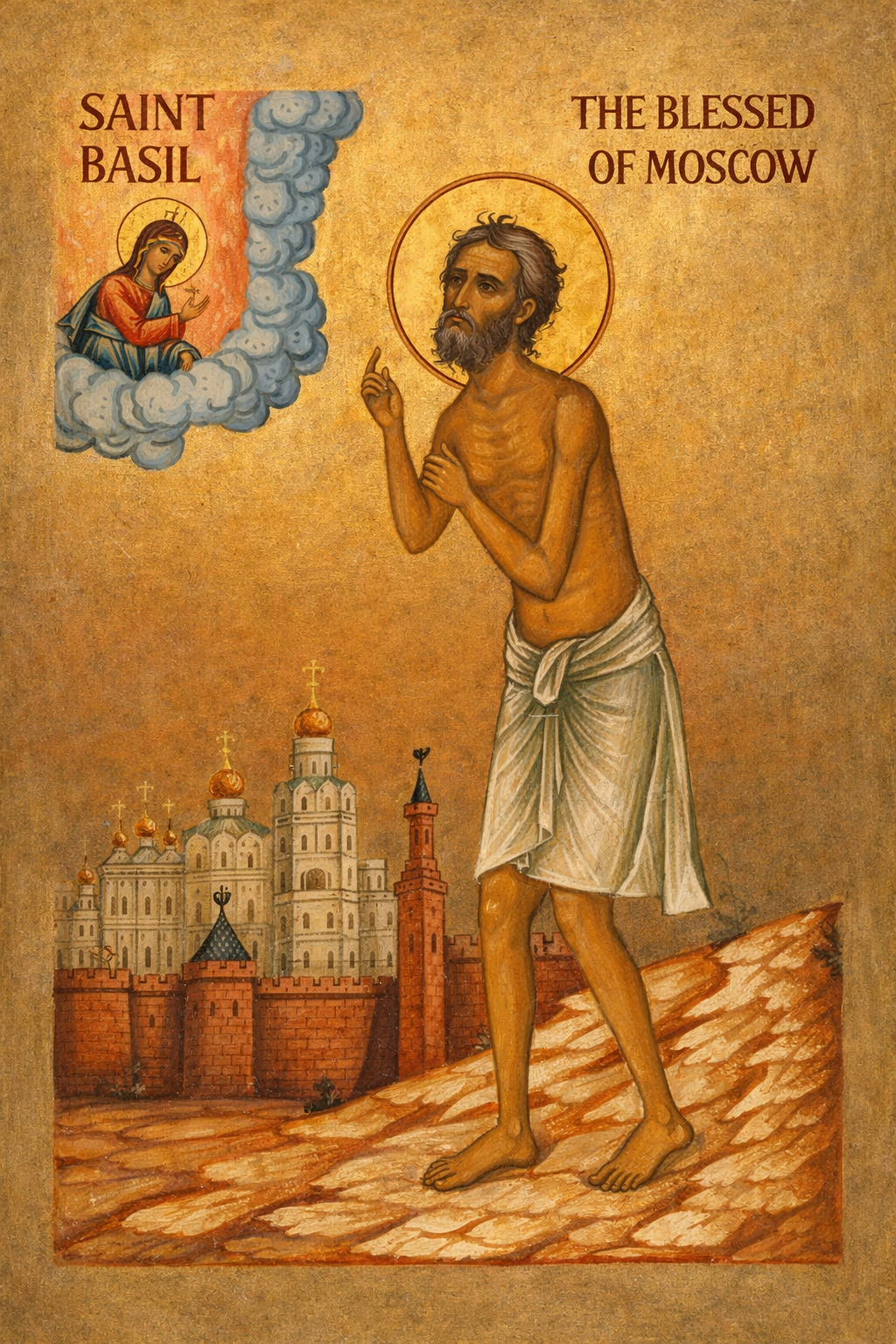
Basil the Blessed of Moscow Prayer Card – Patron for Mental Distress, Social Rejection & Courage to Speak Truth Without Fear
-
A Saint Who Refused Comfort
Saint Basil was born in the early sixteenth century near Moscow to poor but devout parents. As a child, he apprenticed as a shoemaker, where his unusual spiritual sensitivity first became evident. Even then, Basil seemed to perceive hidden truths, once predicting the sudden death of a customer who mocked him.
As a young man, Basil abandoned ordinary life entirely.
He chose holy foolishness.
He gave away his possessions. He wandered Moscow barefoot, even in winter. He wore little clothing. He slept wherever he could. He accepted insults, beatings, and ridicule without protest.
People called him mad.
He called it freedom.
Basil had chosen to die to the world so Christ could live through him.
Holy Foolishness and Spiritual Sight
Saint Basil appeared unpredictable, sometimes behaving strangely in public places. Yet beneath this outward disorder lived profound spiritual clarity.
He exposed hypocrisy.
He rebuked greed.
He comforted the poor.
He perceived sins people tried to hide.
He gave away alms secretly, often throwing coins through windows at night so struggling families would not know their benefactor.
He also confronted merchants who cheated customers and wealthy citizens who ignored the suffering around them.
Basil’s madness was intentional.
It stripped away false appearances and forced truth into the open.
At night, he withdrew to hidden places to pray for Moscow. His life became a continual offering for a city weighed down by injustice and fear.
Confronting Ivan the Terrible
Saint Basil lived during the reign of Ivan the Terrible and became famous for rebuking the ruler openly.
On one occasion, Basil confronted Ivan during a church service, accusing him of thinking about building palaces instead of praying. On another, Basil refused gifts from the tsar, declaring that wealth gained through bloodshed could not be blessed.
Yet Ivan respected him.
When Basil reposed, Ivan himself carried his coffin.
The barefoot fool had become the conscience of an empire.
Protector of the City
Saint Basil is remembered not only for prophetic rebuke, but also for quiet compassion. He cared deeply for widows, beggars, and abandoned children. He absorbed the sorrow of others without complaint.
Those suffering emotional anguish found peace in his presence.
Those facing poverty received unexpected help.
Those threatened by danger found shelter through his prayers.
After his death, Moscow honored him by building the famous cathedral that bears his name, a visible testimony to the invisible power of his intercession.
-
Saint Basil the Blessed is especially sought by those facing disaster, illness, and emotional collapse.
Patron Saint Of:
Protection from disaster, fire, and sudden danger
Healing from physical illness, especially blindness
Peace during emotional or spiritual crisis
The poor and homeless
Families in distress
Souls battling despair
Those seeking repentance and courage
Recorded Miracles and Intercessions
Saint Basil foretold fires and invasions, allowing people to prepare and escape harm.
He is credited with protecting neighborhoods of Moscow through prayer during times of danger.
Many accounts speak of healing from illness, including restoration of sight, after invoking his intercession.
Local tradition preserves stories of families receiving unexpected provision after praying to Saint Basil during severe hardship.
Others describe sudden peace during emotional breakdowns or moments of overwhelming fear.
His miracles are not theatrical.
They are practical rescues: danger diverted, bodies strengthened, hearts steadied when everything feels lost.
Saint Basil works quietly, but decisively.
-
Personal Prayer
Holy Saint Basil the Blessed, fearless Fool-for-Christ and protector of the suffering, pray for me. Intercede for my illness, my fears, and the burdens of my heart. Shield me from sudden danger and bring peace where anxiety reigns. Teach me humility and courage rooted in God’s mercy. By thy prayers, may weakness be clothed with grace and despair give way to hope through Christ our Lord. Amen. goes here
-
Q: What is Saint Basil the Blessed known for?
Saint Basil is known as a Fool-for-Christ who rebuked Ivan the Terrible, protected Moscow through prayer, healed illness including blindness, and comforted the poor. He is especially remembered for protection from disaster, healing, and restoring peace during emotional crisis.
Q: When is Saint Basil the Blessed’s feast day?
Saint Basil the Blessed is commemorated on August 2 (Old Style) / August 15 (New Style).
Q: Which Christian traditions venerate Saint Basil the Blessed?
Saint Basil is venerated within the Eastern Orthodox Church, particularly in Russian spiritual tradition centered around Moscow.
Q: Why is Saint Basil depicted holding a cross in icons?
Saint Basil is shown holding a cross because his entire life was a living crucifixion of pride. The cross represents his fearless confession of Christ, his willingness to suffer humiliation for truth, and his role as a spiritual martyr who carried the burdens of his city through repentance and prayer.