 Image 1 of 1
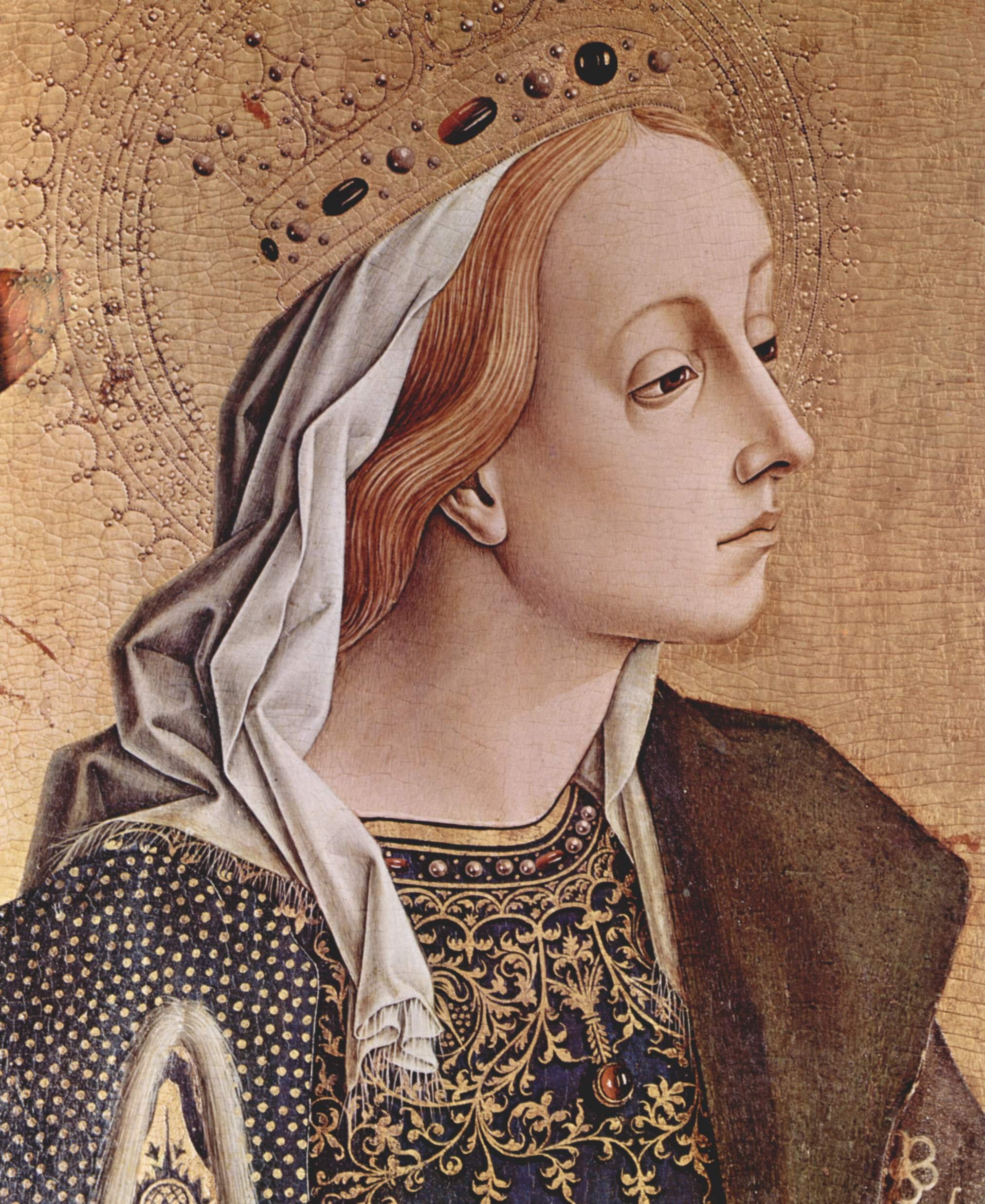
Saint Catherine of Alexandria Prayer Card – For Students, Wisdom, Courage & Defending the Faith
Saint Catherine of Alexandria, the Holy Great Martyr and All-Wise Catherine, is one of the most celebrated women of the ancient Christian tradition. Remembered as a brilliant young Christian from Alexandria who defended the faith before pagan philosophers and an emperor, she became an enduring symbol of the union between intellectual wisdom and fearless devotion to Jesus Christ. Eastern Christianity honors her as a Great Martyr, while generations of Christians have sought her intercession for students, scholars, teachers, those defending the faith, and anyone who needs courage when faithfulness comes at a cost.
Saint Catherine is especially meaningful for Christians who are intelligent, educated, curious, or drawn toward serious study but do not want knowledge to pull them away from God. Her story presents learning itself as something that can be placed in the service of Christ. According to the ancient tradition surrounding her life, Catherine was exceptionally educated in philosophy, literature, rhetoric, medicine, and the learning available in Alexandria, one of the intellectual centers of the ancient world.
Her story is therefore not one of faith defeating reason. It is the story of reason being illuminated by faith. Catherine did not abandon thought when she became a Christian. She brought her intellect with her and used it to defend what she believed was true.
This makes Saint Catherine especially meaningful for students struggling academically, college students trying to preserve their faith, scholars seeking wisdom, teachers responsible for forming others, young Christians facing intellectual challenges to Christianity, and anyone who feels intimidated when asked to explain what they believe.
She is equally powerful for people who know the truth but are afraid to say it. Catherine's tradition portrays a young woman standing before political power, intellectual opposition, threats, imprisonment, torture, and death without surrendering Christ. Her courage did not come from being physically powerful or politically protected. It came from believing that truth remained true regardless of who opposed it.
Saint Catherine is also deeply meaningful for women seeking an example of Christian strength that is neither passive nor dependent upon worldly approval. Her tradition remembers a woman who was educated, articulate, courageous, independent in judgment, uncompromising in faith, and entirely devoted to Christ. She did not diminish her intelligence to appear holy, nor did she sacrifice holiness to prove her intelligence.
This prayer card is created for students, scholars, teachers, professors, writers, apologists, catechists, converts, young women, those preparing for examinations, Christians facing intellectual doubts, people defending their faith, those experiencing persecution or ridicule for Christianity, and anyone asking God for the wisdom and courage to remain faithful under pressure.
Saint Catherine's traditional devotional associations include students, scholars, philosophers, teachers, education, learning, unmarried women, young women, Christian apologetics, courage under persecution, and those seeking wisdom. She is also one of the most important female Great Martyrs honored throughout Eastern Christianity.
Each card is handmade in Austin, TX and created to order. We do not keep stock, because every prayer card is treated as a unique devotional offering. They are printed on museum-quality photo paper, not cardstock. Every card is made slowly, during prayer, with intentional reverence for the saint or holy image and for the person who will receive it. Names are lifted before Christ. Intentions are held carefully. Each piece is handled multiple times in prayerful silence, asking God for mercy and asking the saint to intercede for the soul it is being made for. This is not production work. It is devotional craftsmanship shaped with patience, care, and spiritual responsibility, because every soul and every prayer matters.
THE LIFE & STORY
Saint Catherine lived in Alexandria, Egypt, during the period of Roman persecution of Christians in the early fourth century. Alexandria was one of the greatest intellectual centers of the ancient Mediterranean world, famous for philosophy, literature, medicine, theology, and education. Christian tradition remembers Catherine as coming from a prominent family and possessing an education extraordinary for her age.
The details of Saint Catherine's life come primarily through the hagiographic tradition of the Church rather than contemporary Roman biographies, so some individual episodes cannot be independently reconstructed with certainty. The Church's tradition, however, consistently remembers the same central figure: an exceptionally learned young Christian woman of Alexandria who confessed Christ publicly, overcame pagan philosophers in debate, converted others through her witness, suffered torture, and ultimately accepted martyrdom rather than deny her faith.
According to the traditional Life, Catherine was renowned for both intelligence and beauty. She had studied the major fields of learning available to an educated person of her time and was unwilling to marry simply because society expected it of her. She wanted a husband who could surpass her in wisdom, dignity, and virtue.
Christian tradition tells that Catherine eventually encountered a Christian spiritual elder who spoke to her about a Bridegroom greater than any earthly ruler or philosopher: Jesus Christ.
The elder's teaching led Catherine toward Christianity. Later devotional tradition describes visions involving the Mother of God and the Christ Child through which Catherine came to understand that intellectual achievement alone could not give the soul its highest beauty. What she ultimately sought could only be found through conversion and union with Christ. This became the origin of the traditional imagery of Catherine as a bride of Christ.
After receiving Christian instruction and Baptism according to tradition, Catherine's extraordinary education did not disappear from her story. It became one of the principal instruments of her witness.
At the time, Christians were suffering persecution under imperial authority. Catherine refused to participate quietly in pagan worship merely to protect herself. According to her Life, she confronted the ruler responsible for the persecution and challenged the worship of idols.
The emperor initially attempted to answer Catherine through argument. When he could not overcome her reasoning, tradition says that he summoned fifty highly educated philosophers and rhetoricians to debate her publicly.
The setting could hardly have been more intimidating. Catherine was a young Christian woman standing alone against a group of professional intellectuals selected specifically to defeat her argument and humiliate her faith.
Yet the tradition says that Catherine was not overcome.
Instead, she reasoned with the philosophers about God, creation, truth, the inadequacy of pagan worship, and the identity of Jesus Christ. Her opponents gradually found themselves unable to answer her.
The story reaches its remarkable conclusion when the philosophers themselves become convinced by Catherine's witness. Rather than simply losing a debate, they confess Christ.
The emperor responded with rage. According to the tradition preserved by the Greek Orthodox Church, the philosophers were condemned to death by fire after refusing to renounce their new faith. Catherine encouraged them to remain faithful, assuring them that their martyrdom would become their Baptism into Christ.
This episode makes Saint Catherine far more than a patron of academic success.
Her Christian understanding of wisdom was not about defeating opponents for the pleasure of being right. Her wisdom led people toward Christ.
That distinction matters deeply for Christians involved in apologetics, theology, online debate, education, and evangelization. Knowledge can become another form of pride. Catherine's traditional example shows intellectual ability being used for something higher: helping another person discover truth.
The emperor then attempted a different strategy.
If Catherine could not be defeated intellectually, perhaps she could be persuaded through power, wealth, status, or marriage. Traditional accounts say that he offered her extraordinary privileges if she would abandon Christianity.
She refused.
For Catherine, Christ was not one value among many competing values. He was the center against which everything else had to be measured. Wealth, security, reputation, marriage, political favor, and even survival could not take His place.
The refusal enraged the emperor, and Catherine was imprisoned and tortured.
Yet her imprisonment did not silence her witness.
According to tradition, people who encountered Catherine during her captivity were themselves drawn toward Christianity. Among them was the emperor's wife, traditionally called the Empress Augusta, together with the military officer Porphyrius and numerous soldiers.
They visited Catherine in prison and became convinced of the truth of Christianity. The emperor's attempt to isolate Catherine therefore produced the opposite result. Even imprisonment became a place of evangelization.
The emperor discovered their conversion and ordered them executed.
Catherine was then subjected to the instrument that would become permanently associated with her name: the breaking wheel.
According to the martyrdom tradition, a device consisting of spiked wheels was constructed to tear her body apart. When Catherine was brought before it, however, the mechanism was miraculously destroyed before it could kill her.
This episode gave rise to one of the most recognizable symbols in Christian art: the Catherine wheel.
Icons and Western sacred art frequently depict Saint Catherine beside a broken wheel. It is not simply an instrument of torture. It represents the failure of worldly violence to force the conscience to deny Christ.
Unable to break her faith, the authorities finally sentenced Catherine to beheading.
She accepted martyrdom rather than apostasy.
Later tradition tells that at her execution a milk-like substance rather than blood flowed from her body, another symbolic testimony to her purity. The tradition further holds that angels carried her body to Mount Sinai, where her relics were eventually discovered.
The great monastery beneath Mount Sinai, originally founded in the sixth century and associated with the biblical Burning Bush, eventually became inseparably connected with Saint Catherine. Her holy relics remain enshrined there today, and the monastery officially identifies her as its patron saint.
The monastery that bears her name is one of Christianity's extraordinary surviving links with the ancient Church. Its continuous monastic life stretches back more than seventeen centuries, and its collections preserve some of the world's most important ancient Christian manuscripts and icons. Saint Catherine's relics rest within this living center of Eastern Christian prayer.
Her influence eventually spread far beyond Egypt and Sinai. Churches were dedicated to her throughout the Christian world, and devotion to her became especially strong among students, universities, scholars, philosophers, young women, and those seeking wisdom.
Yet at the center of all these traditions remains something simpler.
Catherine believed that truth was worth more than safety.
She possessed education but placed it beneath Christ. She possessed intelligence but refused intellectual pride. She could reason with philosophers but was willing to die rather than turn Christianity into merely an interesting theory.
That is why her life still speaks so powerfully to Christians today.
WISDOM, EDUCATION & COURAGE
Saint Catherine is one of Christianity's most natural intercessors for students and those pursuing knowledge.
Her traditional Life emphasizes an unusually broad education. She did not regard intellectual development as an enemy of holiness. Instead, the knowledge she had acquired became useful when she was called upon to defend Christianity.
For students, this creates an important model.
The purpose of education is not merely to obtain grades, credentials, income, or status. Knowledge should ultimately train a person to recognize truth, reject falsehood, serve others, and understand creation more deeply.
This makes Saint Catherine especially fitting for students beginning college, preparing for examinations, struggling through difficult courses, attending graduate school, pursuing medicine or law, writing dissertations, studying theology, or trying to remain Christian in academic environments where faith may sometimes be dismissed.
She is also meaningful for students suffering from fear of failure.
Catherine's example shifts the question from “Am I intelligent enough?” toward something deeper: “Will I faithfully use the mind God has given me?”
Christian wisdom does not require every person to become a brilliant philosopher. It requires the faithful use of whatever gifts have been received.
Saint Catherine is equally important for teachers and professors. Teaching possesses enormous spiritual weight because education shapes the way another person learns to understand reality. Knowledge can form a person toward truth or train that person merely to repeat whatever a culture currently rewards.
Catherine's life therefore speaks to teachers who want their work to be more than information transfer. Education can become an act of service when intellectual honesty, humility, discipline, and genuine love of truth are placed at its center.
She is also one of the most meaningful saints for Christian apologetics.
According to tradition, Catherine stood before some of the most educated thinkers available to the imperial court and defended Christianity intelligently.
Yet the purpose of apologetics in her story was conversion rather than humiliation.
That distinction is especially important today. Christians can easily become addicted to winning arguments, collecting rhetorical victories, mocking opponents, or proving themselves intellectually superior.
Saint Catherine represents something better.
The Christian does not defend truth because another human being is the enemy. The Christian defends truth because the other person is worth leading toward Christ.
Her traditional debate with the philosophers ends not with Catherine celebrating their defeat but with the philosophers becoming her brothers in Christ.
This makes her a particularly important patron for theologians, catechists, writers, Christian educators, podcasters, evangelists, and anyone explaining Christianity publicly.
COURAGE UNDER PERSECUTION
Saint Catherine's wisdom cannot be separated from her courage.
Knowledge would have meant very little if she had abandoned everything she believed the moment it became dangerous.
The decisive moments of her story come when intellectual conviction becomes costly.
She confronted imperial authority. She refused pagan worship. She rejected attempts to buy her loyalty. She endured imprisonment. She watched others suffer because they had accepted the faith she proclaimed. Finally, she faced her own execution.
Courage therefore means something very specific in Catherine's life.
It does not mean never feeling fear.
It means refusing to let fear decide what is true.
This makes Saint Catherine especially meaningful for young Christians who are afraid to admit publicly that they believe in Christ. The social consequences may be incomparably smaller than martyrdom, but the interior struggle can still be real.
A student may fear being considered unintelligent. A professor may fear professional ridicule. A teenager may fear losing friends. A worker may fear becoming socially isolated. A Christian may remain silent simply because being open about faith feels uncomfortable.
Saint Catherine reminds the Christian that the approval of other people cannot become the measure of truth.
Her example is also especially powerful for women experiencing pressure to compromise their beliefs in order to gain acceptance, security, status, or a relationship.
According to her tradition, Catherine was repeatedly offered ways to escape suffering. She chose Christ instead.
This does not mean Christians should seek conflict or martyrdom. It means that there must eventually be something within the soul that cannot be purchased.
SAINT CATHERINE AND WOMEN SEEKING WISDOM
Saint Catherine became one of the great female intellectual figures of Christian sacred tradition.
Her story directly contradicts the idea that holiness in women requires intellectual passivity. Catherine's intelligence forms a central part of her hagiography.
She studies.
She reasons.
She questions.
She speaks publicly.
She recognizes weak arguments.
She answers philosophers.
She teaches.
She persuades.
And through all of this, she remains completely devoted to Christ.
Her example is therefore particularly meaningful for girls and women studying science, medicine, law, philosophy, theology, literature, education, and other intellectually demanding fields.
Christianity does not ask a woman to choose between a strong mind and a holy life.
Saint Catherine represents the opposite possibility: a strong mind becoming an instrument of holiness.
Her story also teaches that intelligence itself must remain humble.
Knowledge can easily produce vanity. Intellectual achievement can become another method of measuring ourselves against other people.
Catherine's tradition places her learning under Christ. Her wisdom does not terminate in herself.
This makes her a powerful intercessor not only for people who want to become smarter, but for those who want to become wise.
The two are not always the same.
THE CATHERINE WHEEL
The wheel is Saint Catherine's most recognizable symbol.
According to the martyrdom tradition, the emperor ordered the construction of a terrible instrument made with spiked wheels designed to tear Catherine apart. Before it could accomplish its purpose, the device was miraculously destroyed.
Christian art therefore shows Catherine beside a wheel, often broken.
Over time, the design became so closely associated with her that a wheel with radiating spokes became known simply as a Catherine wheel.
The symbol carries a deeper meaning than the details of an ancient torture device.
The wheel represents everything that threatened to crush Catherine but failed to possess her soul.
Power failed.
Threats failed.
Pain failed.
Intellectual intimidation failed.
Promises of wealth failed.
The fear of death failed.
Christ remained.
For someone undergoing a season when circumstances feel overwhelming, the broken wheel can therefore become an image of Christian perseverance. The forces surrounding a person may be very real, but they are not greater than God.
SAINT CATHERINE'S MONASTERY & HER RELICS
The relics of Saint Catherine are enshrined at the Holy Monastery of the God-Trodden Mount Sinai, commonly called Saint Catherine's Monastery. The monastery stands near the traditional site of the Burning Bush and Mount Sinai, where Moses received the commandments.
Saint Catherine's Monastery is among the oldest continuously inhabited Christian monasteries in the world. Its spiritual and cultural inheritance includes ancient icons, manuscripts, liturgical treasures, and a monastic community whose roots reach back to late antiquity.
The monastery preserves and venerates Saint Catherine's relics. On special occasions they are brought forth for pilgrims, and the monastery's own account notes the custom of giving pilgrims a ring associated with devotion to the saint.
The location is remarkably fitting for the saint remembered for wisdom.
Catherine's relics rest at Sinai, the mountain forever associated with divine revelation and the giving of God's law.
The saint who used learning to defend divine truth became patron of one of Christianity's greatest repositories of ancient spiritual learning.
PRAYERS
A simple traditional invocation may be prayed:
Holy Great Martyr Catherine, pray to God for us.
The Byzantine Church honors Saint Catherine with hymns that praise her wisdom, courage, martyrdom, and ability to lead unbelievers toward Christ. Her traditional Troparion describes her virtues as light that enlightened the pagan sages and remembers how her witness brought others to faith.
A short traditional invocation especially fitting before study or an examination is:
Holy Great Martyr Catherine, intercede for us before Christ our God.
Students may keep the card in a Bible, textbook, notebook, backpack, desk, dormitory prayer corner, or study area as a reminder that the Christian pursuit of knowledge should always remain a pursuit of truth.
Those defending the faith may invoke Saint Catherine before difficult conversations, asking through her intercession for wisdom without arrogance, courage without hostility, and words capable of leading others closer to Christ.
Those suffering ridicule or pressure because of Christianity may also turn to the Great Martyr who remained faithful when disagreement became persecution.
This prayer card is especially fitting for students beginning a new school year, high school graduates, college students, graduate students, teachers, professors, doctors, lawyers, writers, theologians, catechists, converts, young women, and Christians learning how to explain and defend their faith.
FAQ
Who is Saint Catherine of Alexandria?
Saint Catherine of Alexandria is an early Christian virgin and martyr traditionally associated with Alexandria, Egypt, in the early fourth century. Christian tradition remembers her for extraordinary learning, her conversion to Christianity, her defense of the faith before philosophers and imperial authorities, and her martyrdom rather than renounce Christ.
Why is Saint Catherine called a Great Martyr?
In Eastern Christianity, the title Great Martyr is given to certain martyrs whose extraordinary suffering, courage, miracles, and widespread veneration hold a particularly prominent place in the Church's tradition. Catherine is commonly called the Holy Great Martyr Catherine or Great Martyr Katherine of Alexandria.
Is Saint Catherine of Alexandria an Orthodox saint?
Yes. Saint Catherine is one of the most beloved Great Martyrs of the Eastern Orthodox Church. Greek Orthodox tradition commonly calls her the Holy Great Martyr and Most Wise Katherine of Alexandria.
Is Saint Catherine of Alexandria a Catholic saint?
Yes. Saint Catherine lived centuries before the separation between the Eastern and Western Churches and is honored in both Catholic and Orthodox Christianity. The Roman Catholic calendar commemorates her on November 25.
Is Saint Catherine an Eastern Catholic saint?
Yes. Eastern Catholic Churches that share Byzantine and other ancient Eastern traditions venerate Saint Catherine as part of the common heritage of the early Church. She lived centuries before the later divisions between Eastern Orthodox and Catholic Christians.
What is Saint Catherine of Alexandria the patron saint of?
Saint Catherine has long been associated with students, scholars, philosophers, education, learning, teachers, young women, and those seeking wisdom. Her traditional life also makes her an especially fitting intercessor for Christian apologists and anyone who must defend the faith courageously.
Is Saint Catherine a patron saint of students?
Yes. Saint Catherine has a longstanding association with students and scholars because Christian tradition remembers her as extraordinarily educated and capable of defending Christianity before leading philosophers of her time.
Can I pray to Saint Catherine before a test or exam?
Yes. Students have long sought the intercession of saints associated with learning and wisdom, and Catherine is especially fitting because education forms such a central part of her traditional life. Her example also reminds students that education should seek wisdom and truth rather than grades alone.
Is Saint Catherine good for college students?
Yes. She is particularly appropriate for college and university students because her story brings Christian faith into direct conversation with philosophy, education, intellectual challenge, and public pressure.
Can I give this prayer card as a graduation gift?
Yes. A Saint Catherine of Alexandria prayer card is especially appropriate for a high school, college, graduate school, medical school, law school, or other academic graduation. Her association with wisdom and education makes the card meaningful at the beginning of a new intellectual or professional vocation.
Is Saint Catherine a patron saint of philosophers?
Saint Catherine has traditionally been associated with philosophers because her martyrdom story describes her successfully defending Christianity against a group of prominent pagan philosophers summoned to debate her.
Why is Saint Catherine associated with apologetics?
According to Christian tradition, Catherine defended Christianity intellectually before the imperial court and reasoned with philosophers who had been summoned to defeat her. The philosophers were ultimately converted by her witness, making her an especially meaningful saint for those who explain and defend the Christian faith.
Is Saint Catherine a good saint for Christian writers and teachers?
Yes. Her traditional life combines education, communication, reasoning, courage, and evangelization. She is therefore especially meaningful for teachers, catechists, theologians, authors, speakers, and others whose vocation involves communicating truth.
Why is Saint Catherine good for women and girls?
Saint Catherine is remembered as a young woman whose intelligence, education, courage, chastity, and Christian conviction could not be controlled by social pressure or political authority. She offers a particularly strong Christian example for women seeking both intellectual excellence and holiness.
Was Saint Catherine highly educated?
According to her traditional Life, yes. She is remembered as exceptionally educated in the intellectual disciplines available in Alexandria and as capable of debating some of the empire's most accomplished philosophers.
Did Saint Catherine really debate fifty philosophers?
The traditional martyrdom account says that the emperor assembled fifty philosophers or orators to defeat Catherine in debate. According to the tradition, Catherine persuaded them of the truth of Christianity, and they subsequently accepted martyrdom rather than renounce Christ.
Did the fifty philosophers become Christians?
According to the traditional Life of Saint Catherine, yes. After hearing Catherine's defense of Christianity, the philosophers confessed Christ and were condemned to death.
What is the Catherine wheel?
The Catherine wheel is the spiked breaking wheel traditionally associated with Saint Catherine's attempted execution. According to her martyrdom story, the device was miraculously destroyed before it could kill her.
Why is Saint Catherine shown with a wheel?
The wheel is the instrument of torture traditionally prepared for her. Because the device failed to kill Catherine, a broken wheel became one of her principal symbols in both Eastern and Western Christian art.
How did Saint Catherine of Alexandria die?
According to Christian tradition, Catherine was eventually beheaded after torture and imprisonment failed to make her renounce Christianity.
Was Saint Catherine married?
Saint Catherine is traditionally honored as a virgin martyr. Devotional tradition also uses bridal imagery to describe her complete dedication to Christ, portraying Christ as her heavenly Bridegroom.
What is the mystical marriage of Saint Catherine?
Later Christian tradition tells of Catherine experiencing a vision involving the Virgin Mary and Christ Child, expressing her conversion and complete spiritual dedication to Jesus Christ. This is the origin of artistic depictions of the mystical marriage of Saint Catherine.
Is Saint Catherine of Alexandria the same person as Saint Catherine of Siena?
No. They are two completely different saints. Saint Catherine of Alexandria was an early Christian martyr traditionally placed in the early fourth century in Egypt. Saint Catherine of Siena was a fourteenth-century Italian Dominican tertiary, mystic, writer, and Doctor of the Church.
Where are Saint Catherine of Alexandria's relics?
Her relics are venerated at Saint Catherine's Monastery at Mount Sinai in Egypt. The monastery officially identifies Saint Catherine as its patron and preserves her relics for the veneration of pilgrims.
Why is Saint Catherine connected with Mount Sinai?
According to Christian tradition, angels carried Saint Catherine's body to Mount Sinai after her martyrdom. Her relics were later associated with the monastic community there, which eventually became universally known as Saint Catherine's Monastery.
Is Saint Catherine's Monastery still active?
Yes. Saint Catherine's Monastery at Sinai remains an active Orthodox monastery and describes itself as the oldest continuously inhabited Christian monastery, with a history extending for more than seventeen centuries.
When is Saint Catherine of Alexandria's feast day?
Saint Catherine is celebrated on November 25 in Greek Orthodox and Roman Catholic usage. The Orthodox Church in America and some traditions commemorate the Great Martyr Katherine on November 24.
Why are there two feast dates for Saint Catherine?
The difference results from liturgical tradition rather than from disagreement about the saint herself. Greek Orthodox and Roman Catholic calendars commonly commemorate her on November 25, while the Russian tradition and calendars derived from it may observe her on November 24.
How historically certain is Saint Catherine's story?
Saint Catherine has been venerated throughout Christianity for many centuries, but the detailed narrative of her life comes principally through later hagiographic tradition rather than surviving contemporary records from the time of her martyrdom. For that reason, specific episodes such as the fifty philosophers, the breaking wheel, and angels carrying her body to Sinai should be presented as Christian tradition rather than as independently documented Roman history.
Does that mean Saint Catherine was not real?
The limitations of surviving contemporary documentation do not erase the ancient and extraordinarily widespread Christian veneration of Saint Catherine. It means only that responsible historical writing should distinguish the Church's traditional account from details that can be independently verified through contemporary historical records.
Can I give this card to someone struggling with doubts about Christianity?
Yes. Saint Catherine is particularly fitting for someone working through intellectual questions about Christianity because her tradition emphasizes a faith willing to encounter philosophical objections rather than flee from them.
Can I give this card to someone being mocked for their faith?
Yes. Catherine is one of Christianity's great examples of remaining faithful when belief becomes socially and politically costly. Her prayer card can be especially meaningful for a student or adult who feels isolated because of Christian convictions.
Can I give this card to a teacher or professor?
Yes. Saint Catherine's association with education, wisdom, philosophy, and the faithful use of knowledge makes this an especially appropriate devotional gift for teachers, professors, tutors, catechists, and other educators.
Can I give this card to someone studying medicine, law, science, or theology?
Yes. Saint Catherine is not limited to one academic discipline. Her traditional association is with learning and wisdom broadly, making the card fitting for students pursuing medicine, law, science, mathematics, philosophy, theology, literature, education, and other demanding areas of study.
What does Saint Catherine teach about intelligence?
Saint Catherine's tradition teaches that intelligence is a gift rather than an identity. Learning becomes most fruitful when placed in the service of truth, humility, love, and God. Her story presents intellectual excellence not as an alternative to holiness but as something that can itself become an offering to Christ.
What does Saint Catherine teach about defending the faith?
She teaches that Christian apologetics should seek truth and conversion rather than humiliation. According to her traditional Life, the philosophers who opposed her eventually became Christians. The goal was not merely for Catherine to win an argument but for other souls to encounter Christ.
What is the main message of Saint Catherine of Alexandria's life?
Saint Catherine's life teaches that faith and intelligence belong together. Knowledge does not have to lead away from Christ, and courage does not require abandoning reason. Catherine studied deeply, thought seriously, defended Christianity intelligently, refused to sell her convictions for safety or status, and ultimately gave her life rather than deny Christ. She remains a powerful witness for every Christian who wants not merely to be educated, but to become wise.
Saint Catherine of Alexandria, the Holy Great Martyr and All-Wise Catherine, is one of the most celebrated women of the ancient Christian tradition. Remembered as a brilliant young Christian from Alexandria who defended the faith before pagan philosophers and an emperor, she became an enduring symbol of the union between intellectual wisdom and fearless devotion to Jesus Christ. Eastern Christianity honors her as a Great Martyr, while generations of Christians have sought her intercession for students, scholars, teachers, those defending the faith, and anyone who needs courage when faithfulness comes at a cost.
Saint Catherine is especially meaningful for Christians who are intelligent, educated, curious, or drawn toward serious study but do not want knowledge to pull them away from God. Her story presents learning itself as something that can be placed in the service of Christ. According to the ancient tradition surrounding her life, Catherine was exceptionally educated in philosophy, literature, rhetoric, medicine, and the learning available in Alexandria, one of the intellectual centers of the ancient world.
Her story is therefore not one of faith defeating reason. It is the story of reason being illuminated by faith. Catherine did not abandon thought when she became a Christian. She brought her intellect with her and used it to defend what she believed was true.
This makes Saint Catherine especially meaningful for students struggling academically, college students trying to preserve their faith, scholars seeking wisdom, teachers responsible for forming others, young Christians facing intellectual challenges to Christianity, and anyone who feels intimidated when asked to explain what they believe.
She is equally powerful for people who know the truth but are afraid to say it. Catherine's tradition portrays a young woman standing before political power, intellectual opposition, threats, imprisonment, torture, and death without surrendering Christ. Her courage did not come from being physically powerful or politically protected. It came from believing that truth remained true regardless of who opposed it.
Saint Catherine is also deeply meaningful for women seeking an example of Christian strength that is neither passive nor dependent upon worldly approval. Her tradition remembers a woman who was educated, articulate, courageous, independent in judgment, uncompromising in faith, and entirely devoted to Christ. She did not diminish her intelligence to appear holy, nor did she sacrifice holiness to prove her intelligence.
This prayer card is created for students, scholars, teachers, professors, writers, apologists, catechists, converts, young women, those preparing for examinations, Christians facing intellectual doubts, people defending their faith, those experiencing persecution or ridicule for Christianity, and anyone asking God for the wisdom and courage to remain faithful under pressure.
Saint Catherine's traditional devotional associations include students, scholars, philosophers, teachers, education, learning, unmarried women, young women, Christian apologetics, courage under persecution, and those seeking wisdom. She is also one of the most important female Great Martyrs honored throughout Eastern Christianity.
Each card is handmade in Austin, TX and created to order. We do not keep stock, because every prayer card is treated as a unique devotional offering. They are printed on museum-quality photo paper, not cardstock. Every card is made slowly, during prayer, with intentional reverence for the saint or holy image and for the person who will receive it. Names are lifted before Christ. Intentions are held carefully. Each piece is handled multiple times in prayerful silence, asking God for mercy and asking the saint to intercede for the soul it is being made for. This is not production work. It is devotional craftsmanship shaped with patience, care, and spiritual responsibility, because every soul and every prayer matters.
THE LIFE & STORY
Saint Catherine lived in Alexandria, Egypt, during the period of Roman persecution of Christians in the early fourth century. Alexandria was one of the greatest intellectual centers of the ancient Mediterranean world, famous for philosophy, literature, medicine, theology, and education. Christian tradition remembers Catherine as coming from a prominent family and possessing an education extraordinary for her age.
The details of Saint Catherine's life come primarily through the hagiographic tradition of the Church rather than contemporary Roman biographies, so some individual episodes cannot be independently reconstructed with certainty. The Church's tradition, however, consistently remembers the same central figure: an exceptionally learned young Christian woman of Alexandria who confessed Christ publicly, overcame pagan philosophers in debate, converted others through her witness, suffered torture, and ultimately accepted martyrdom rather than deny her faith.
According to the traditional Life, Catherine was renowned for both intelligence and beauty. She had studied the major fields of learning available to an educated person of her time and was unwilling to marry simply because society expected it of her. She wanted a husband who could surpass her in wisdom, dignity, and virtue.
Christian tradition tells that Catherine eventually encountered a Christian spiritual elder who spoke to her about a Bridegroom greater than any earthly ruler or philosopher: Jesus Christ.
The elder's teaching led Catherine toward Christianity. Later devotional tradition describes visions involving the Mother of God and the Christ Child through which Catherine came to understand that intellectual achievement alone could not give the soul its highest beauty. What she ultimately sought could only be found through conversion and union with Christ. This became the origin of the traditional imagery of Catherine as a bride of Christ.
After receiving Christian instruction and Baptism according to tradition, Catherine's extraordinary education did not disappear from her story. It became one of the principal instruments of her witness.
At the time, Christians were suffering persecution under imperial authority. Catherine refused to participate quietly in pagan worship merely to protect herself. According to her Life, she confronted the ruler responsible for the persecution and challenged the worship of idols.
The emperor initially attempted to answer Catherine through argument. When he could not overcome her reasoning, tradition says that he summoned fifty highly educated philosophers and rhetoricians to debate her publicly.
The setting could hardly have been more intimidating. Catherine was a young Christian woman standing alone against a group of professional intellectuals selected specifically to defeat her argument and humiliate her faith.
Yet the tradition says that Catherine was not overcome.
Instead, she reasoned with the philosophers about God, creation, truth, the inadequacy of pagan worship, and the identity of Jesus Christ. Her opponents gradually found themselves unable to answer her.
The story reaches its remarkable conclusion when the philosophers themselves become convinced by Catherine's witness. Rather than simply losing a debate, they confess Christ.
The emperor responded with rage. According to the tradition preserved by the Greek Orthodox Church, the philosophers were condemned to death by fire after refusing to renounce their new faith. Catherine encouraged them to remain faithful, assuring them that their martyrdom would become their Baptism into Christ.
This episode makes Saint Catherine far more than a patron of academic success.
Her Christian understanding of wisdom was not about defeating opponents for the pleasure of being right. Her wisdom led people toward Christ.
That distinction matters deeply for Christians involved in apologetics, theology, online debate, education, and evangelization. Knowledge can become another form of pride. Catherine's traditional example shows intellectual ability being used for something higher: helping another person discover truth.
The emperor then attempted a different strategy.
If Catherine could not be defeated intellectually, perhaps she could be persuaded through power, wealth, status, or marriage. Traditional accounts say that he offered her extraordinary privileges if she would abandon Christianity.
She refused.
For Catherine, Christ was not one value among many competing values. He was the center against which everything else had to be measured. Wealth, security, reputation, marriage, political favor, and even survival could not take His place.
The refusal enraged the emperor, and Catherine was imprisoned and tortured.
Yet her imprisonment did not silence her witness.
According to tradition, people who encountered Catherine during her captivity were themselves drawn toward Christianity. Among them was the emperor's wife, traditionally called the Empress Augusta, together with the military officer Porphyrius and numerous soldiers.
They visited Catherine in prison and became convinced of the truth of Christianity. The emperor's attempt to isolate Catherine therefore produced the opposite result. Even imprisonment became a place of evangelization.
The emperor discovered their conversion and ordered them executed.
Catherine was then subjected to the instrument that would become permanently associated with her name: the breaking wheel.
According to the martyrdom tradition, a device consisting of spiked wheels was constructed to tear her body apart. When Catherine was brought before it, however, the mechanism was miraculously destroyed before it could kill her.
This episode gave rise to one of the most recognizable symbols in Christian art: the Catherine wheel.
Icons and Western sacred art frequently depict Saint Catherine beside a broken wheel. It is not simply an instrument of torture. It represents the failure of worldly violence to force the conscience to deny Christ.
Unable to break her faith, the authorities finally sentenced Catherine to beheading.
She accepted martyrdom rather than apostasy.
Later tradition tells that at her execution a milk-like substance rather than blood flowed from her body, another symbolic testimony to her purity. The tradition further holds that angels carried her body to Mount Sinai, where her relics were eventually discovered.
The great monastery beneath Mount Sinai, originally founded in the sixth century and associated with the biblical Burning Bush, eventually became inseparably connected with Saint Catherine. Her holy relics remain enshrined there today, and the monastery officially identifies her as its patron saint.
The monastery that bears her name is one of Christianity's extraordinary surviving links with the ancient Church. Its continuous monastic life stretches back more than seventeen centuries, and its collections preserve some of the world's most important ancient Christian manuscripts and icons. Saint Catherine's relics rest within this living center of Eastern Christian prayer.
Her influence eventually spread far beyond Egypt and Sinai. Churches were dedicated to her throughout the Christian world, and devotion to her became especially strong among students, universities, scholars, philosophers, young women, and those seeking wisdom.
Yet at the center of all these traditions remains something simpler.
Catherine believed that truth was worth more than safety.
She possessed education but placed it beneath Christ. She possessed intelligence but refused intellectual pride. She could reason with philosophers but was willing to die rather than turn Christianity into merely an interesting theory.
That is why her life still speaks so powerfully to Christians today.
WISDOM, EDUCATION & COURAGE
Saint Catherine is one of Christianity's most natural intercessors for students and those pursuing knowledge.
Her traditional Life emphasizes an unusually broad education. She did not regard intellectual development as an enemy of holiness. Instead, the knowledge she had acquired became useful when she was called upon to defend Christianity.
For students, this creates an important model.
The purpose of education is not merely to obtain grades, credentials, income, or status. Knowledge should ultimately train a person to recognize truth, reject falsehood, serve others, and understand creation more deeply.
This makes Saint Catherine especially fitting for students beginning college, preparing for examinations, struggling through difficult courses, attending graduate school, pursuing medicine or law, writing dissertations, studying theology, or trying to remain Christian in academic environments where faith may sometimes be dismissed.
She is also meaningful for students suffering from fear of failure.
Catherine's example shifts the question from “Am I intelligent enough?” toward something deeper: “Will I faithfully use the mind God has given me?”
Christian wisdom does not require every person to become a brilliant philosopher. It requires the faithful use of whatever gifts have been received.
Saint Catherine is equally important for teachers and professors. Teaching possesses enormous spiritual weight because education shapes the way another person learns to understand reality. Knowledge can form a person toward truth or train that person merely to repeat whatever a culture currently rewards.
Catherine's life therefore speaks to teachers who want their work to be more than information transfer. Education can become an act of service when intellectual honesty, humility, discipline, and genuine love of truth are placed at its center.
She is also one of the most meaningful saints for Christian apologetics.
According to tradition, Catherine stood before some of the most educated thinkers available to the imperial court and defended Christianity intelligently.
Yet the purpose of apologetics in her story was conversion rather than humiliation.
That distinction is especially important today. Christians can easily become addicted to winning arguments, collecting rhetorical victories, mocking opponents, or proving themselves intellectually superior.
Saint Catherine represents something better.
The Christian does not defend truth because another human being is the enemy. The Christian defends truth because the other person is worth leading toward Christ.
Her traditional debate with the philosophers ends not with Catherine celebrating their defeat but with the philosophers becoming her brothers in Christ.
This makes her a particularly important patron for theologians, catechists, writers, Christian educators, podcasters, evangelists, and anyone explaining Christianity publicly.
COURAGE UNDER PERSECUTION
Saint Catherine's wisdom cannot be separated from her courage.
Knowledge would have meant very little if she had abandoned everything she believed the moment it became dangerous.
The decisive moments of her story come when intellectual conviction becomes costly.
She confronted imperial authority. She refused pagan worship. She rejected attempts to buy her loyalty. She endured imprisonment. She watched others suffer because they had accepted the faith she proclaimed. Finally, she faced her own execution.
Courage therefore means something very specific in Catherine's life.
It does not mean never feeling fear.
It means refusing to let fear decide what is true.
This makes Saint Catherine especially meaningful for young Christians who are afraid to admit publicly that they believe in Christ. The social consequences may be incomparably smaller than martyrdom, but the interior struggle can still be real.
A student may fear being considered unintelligent. A professor may fear professional ridicule. A teenager may fear losing friends. A worker may fear becoming socially isolated. A Christian may remain silent simply because being open about faith feels uncomfortable.
Saint Catherine reminds the Christian that the approval of other people cannot become the measure of truth.
Her example is also especially powerful for women experiencing pressure to compromise their beliefs in order to gain acceptance, security, status, or a relationship.
According to her tradition, Catherine was repeatedly offered ways to escape suffering. She chose Christ instead.
This does not mean Christians should seek conflict or martyrdom. It means that there must eventually be something within the soul that cannot be purchased.
SAINT CATHERINE AND WOMEN SEEKING WISDOM
Saint Catherine became one of the great female intellectual figures of Christian sacred tradition.
Her story directly contradicts the idea that holiness in women requires intellectual passivity. Catherine's intelligence forms a central part of her hagiography.
She studies.
She reasons.
She questions.
She speaks publicly.
She recognizes weak arguments.
She answers philosophers.
She teaches.
She persuades.
And through all of this, she remains completely devoted to Christ.
Her example is therefore particularly meaningful for girls and women studying science, medicine, law, philosophy, theology, literature, education, and other intellectually demanding fields.
Christianity does not ask a woman to choose between a strong mind and a holy life.
Saint Catherine represents the opposite possibility: a strong mind becoming an instrument of holiness.
Her story also teaches that intelligence itself must remain humble.
Knowledge can easily produce vanity. Intellectual achievement can become another method of measuring ourselves against other people.
Catherine's tradition places her learning under Christ. Her wisdom does not terminate in herself.
This makes her a powerful intercessor not only for people who want to become smarter, but for those who want to become wise.
The two are not always the same.
THE CATHERINE WHEEL
The wheel is Saint Catherine's most recognizable symbol.
According to the martyrdom tradition, the emperor ordered the construction of a terrible instrument made with spiked wheels designed to tear Catherine apart. Before it could accomplish its purpose, the device was miraculously destroyed.
Christian art therefore shows Catherine beside a wheel, often broken.
Over time, the design became so closely associated with her that a wheel with radiating spokes became known simply as a Catherine wheel.
The symbol carries a deeper meaning than the details of an ancient torture device.
The wheel represents everything that threatened to crush Catherine but failed to possess her soul.
Power failed.
Threats failed.
Pain failed.
Intellectual intimidation failed.
Promises of wealth failed.
The fear of death failed.
Christ remained.
For someone undergoing a season when circumstances feel overwhelming, the broken wheel can therefore become an image of Christian perseverance. The forces surrounding a person may be very real, but they are not greater than God.
SAINT CATHERINE'S MONASTERY & HER RELICS
The relics of Saint Catherine are enshrined at the Holy Monastery of the God-Trodden Mount Sinai, commonly called Saint Catherine's Monastery. The monastery stands near the traditional site of the Burning Bush and Mount Sinai, where Moses received the commandments.
Saint Catherine's Monastery is among the oldest continuously inhabited Christian monasteries in the world. Its spiritual and cultural inheritance includes ancient icons, manuscripts, liturgical treasures, and a monastic community whose roots reach back to late antiquity.
The monastery preserves and venerates Saint Catherine's relics. On special occasions they are brought forth for pilgrims, and the monastery's own account notes the custom of giving pilgrims a ring associated with devotion to the saint.
The location is remarkably fitting for the saint remembered for wisdom.
Catherine's relics rest at Sinai, the mountain forever associated with divine revelation and the giving of God's law.
The saint who used learning to defend divine truth became patron of one of Christianity's greatest repositories of ancient spiritual learning.
PRAYERS
A simple traditional invocation may be prayed:
Holy Great Martyr Catherine, pray to God for us.
The Byzantine Church honors Saint Catherine with hymns that praise her wisdom, courage, martyrdom, and ability to lead unbelievers toward Christ. Her traditional Troparion describes her virtues as light that enlightened the pagan sages and remembers how her witness brought others to faith.
A short traditional invocation especially fitting before study or an examination is:
Holy Great Martyr Catherine, intercede for us before Christ our God.
Students may keep the card in a Bible, textbook, notebook, backpack, desk, dormitory prayer corner, or study area as a reminder that the Christian pursuit of knowledge should always remain a pursuit of truth.
Those defending the faith may invoke Saint Catherine before difficult conversations, asking through her intercession for wisdom without arrogance, courage without hostility, and words capable of leading others closer to Christ.
Those suffering ridicule or pressure because of Christianity may also turn to the Great Martyr who remained faithful when disagreement became persecution.
This prayer card is especially fitting for students beginning a new school year, high school graduates, college students, graduate students, teachers, professors, doctors, lawyers, writers, theologians, catechists, converts, young women, and Christians learning how to explain and defend their faith.
FAQ
Who is Saint Catherine of Alexandria?
Saint Catherine of Alexandria is an early Christian virgin and martyr traditionally associated with Alexandria, Egypt, in the early fourth century. Christian tradition remembers her for extraordinary learning, her conversion to Christianity, her defense of the faith before philosophers and imperial authorities, and her martyrdom rather than renounce Christ.
Why is Saint Catherine called a Great Martyr?
In Eastern Christianity, the title Great Martyr is given to certain martyrs whose extraordinary suffering, courage, miracles, and widespread veneration hold a particularly prominent place in the Church's tradition. Catherine is commonly called the Holy Great Martyr Catherine or Great Martyr Katherine of Alexandria.
Is Saint Catherine of Alexandria an Orthodox saint?
Yes. Saint Catherine is one of the most beloved Great Martyrs of the Eastern Orthodox Church. Greek Orthodox tradition commonly calls her the Holy Great Martyr and Most Wise Katherine of Alexandria.
Is Saint Catherine of Alexandria a Catholic saint?
Yes. Saint Catherine lived centuries before the separation between the Eastern and Western Churches and is honored in both Catholic and Orthodox Christianity. The Roman Catholic calendar commemorates her on November 25.
Is Saint Catherine an Eastern Catholic saint?
Yes. Eastern Catholic Churches that share Byzantine and other ancient Eastern traditions venerate Saint Catherine as part of the common heritage of the early Church. She lived centuries before the later divisions between Eastern Orthodox and Catholic Christians.
What is Saint Catherine of Alexandria the patron saint of?
Saint Catherine has long been associated with students, scholars, philosophers, education, learning, teachers, young women, and those seeking wisdom. Her traditional life also makes her an especially fitting intercessor for Christian apologists and anyone who must defend the faith courageously.
Is Saint Catherine a patron saint of students?
Yes. Saint Catherine has a longstanding association with students and scholars because Christian tradition remembers her as extraordinarily educated and capable of defending Christianity before leading philosophers of her time.
Can I pray to Saint Catherine before a test or exam?
Yes. Students have long sought the intercession of saints associated with learning and wisdom, and Catherine is especially fitting because education forms such a central part of her traditional life. Her example also reminds students that education should seek wisdom and truth rather than grades alone.
Is Saint Catherine good for college students?
Yes. She is particularly appropriate for college and university students because her story brings Christian faith into direct conversation with philosophy, education, intellectual challenge, and public pressure.
Can I give this prayer card as a graduation gift?
Yes. A Saint Catherine of Alexandria prayer card is especially appropriate for a high school, college, graduate school, medical school, law school, or other academic graduation. Her association with wisdom and education makes the card meaningful at the beginning of a new intellectual or professional vocation.
Is Saint Catherine a patron saint of philosophers?
Saint Catherine has traditionally been associated with philosophers because her martyrdom story describes her successfully defending Christianity against a group of prominent pagan philosophers summoned to debate her.
Why is Saint Catherine associated with apologetics?
According to Christian tradition, Catherine defended Christianity intellectually before the imperial court and reasoned with philosophers who had been summoned to defeat her. The philosophers were ultimately converted by her witness, making her an especially meaningful saint for those who explain and defend the Christian faith.
Is Saint Catherine a good saint for Christian writers and teachers?
Yes. Her traditional life combines education, communication, reasoning, courage, and evangelization. She is therefore especially meaningful for teachers, catechists, theologians, authors, speakers, and others whose vocation involves communicating truth.
Why is Saint Catherine good for women and girls?
Saint Catherine is remembered as a young woman whose intelligence, education, courage, chastity, and Christian conviction could not be controlled by social pressure or political authority. She offers a particularly strong Christian example for women seeking both intellectual excellence and holiness.
Was Saint Catherine highly educated?
According to her traditional Life, yes. She is remembered as exceptionally educated in the intellectual disciplines available in Alexandria and as capable of debating some of the empire's most accomplished philosophers.
Did Saint Catherine really debate fifty philosophers?
The traditional martyrdom account says that the emperor assembled fifty philosophers or orators to defeat Catherine in debate. According to the tradition, Catherine persuaded them of the truth of Christianity, and they subsequently accepted martyrdom rather than renounce Christ.
Did the fifty philosophers become Christians?
According to the traditional Life of Saint Catherine, yes. After hearing Catherine's defense of Christianity, the philosophers confessed Christ and were condemned to death.
What is the Catherine wheel?
The Catherine wheel is the spiked breaking wheel traditionally associated with Saint Catherine's attempted execution. According to her martyrdom story, the device was miraculously destroyed before it could kill her.
Why is Saint Catherine shown with a wheel?
The wheel is the instrument of torture traditionally prepared for her. Because the device failed to kill Catherine, a broken wheel became one of her principal symbols in both Eastern and Western Christian art.
How did Saint Catherine of Alexandria die?
According to Christian tradition, Catherine was eventually beheaded after torture and imprisonment failed to make her renounce Christianity.
Was Saint Catherine married?
Saint Catherine is traditionally honored as a virgin martyr. Devotional tradition also uses bridal imagery to describe her complete dedication to Christ, portraying Christ as her heavenly Bridegroom.
What is the mystical marriage of Saint Catherine?
Later Christian tradition tells of Catherine experiencing a vision involving the Virgin Mary and Christ Child, expressing her conversion and complete spiritual dedication to Jesus Christ. This is the origin of artistic depictions of the mystical marriage of Saint Catherine.
Is Saint Catherine of Alexandria the same person as Saint Catherine of Siena?
No. They are two completely different saints. Saint Catherine of Alexandria was an early Christian martyr traditionally placed in the early fourth century in Egypt. Saint Catherine of Siena was a fourteenth-century Italian Dominican tertiary, mystic, writer, and Doctor of the Church.
Where are Saint Catherine of Alexandria's relics?
Her relics are venerated at Saint Catherine's Monastery at Mount Sinai in Egypt. The monastery officially identifies Saint Catherine as its patron and preserves her relics for the veneration of pilgrims.
Why is Saint Catherine connected with Mount Sinai?
According to Christian tradition, angels carried Saint Catherine's body to Mount Sinai after her martyrdom. Her relics were later associated with the monastic community there, which eventually became universally known as Saint Catherine's Monastery.
Is Saint Catherine's Monastery still active?
Yes. Saint Catherine's Monastery at Sinai remains an active Orthodox monastery and describes itself as the oldest continuously inhabited Christian monastery, with a history extending for more than seventeen centuries.
When is Saint Catherine of Alexandria's feast day?
Saint Catherine is celebrated on November 25 in Greek Orthodox and Roman Catholic usage. The Orthodox Church in America and some traditions commemorate the Great Martyr Katherine on November 24.
Why are there two feast dates for Saint Catherine?
The difference results from liturgical tradition rather than from disagreement about the saint herself. Greek Orthodox and Roman Catholic calendars commonly commemorate her on November 25, while the Russian tradition and calendars derived from it may observe her on November 24.
How historically certain is Saint Catherine's story?
Saint Catherine has been venerated throughout Christianity for many centuries, but the detailed narrative of her life comes principally through later hagiographic tradition rather than surviving contemporary records from the time of her martyrdom. For that reason, specific episodes such as the fifty philosophers, the breaking wheel, and angels carrying her body to Sinai should be presented as Christian tradition rather than as independently documented Roman history.
Does that mean Saint Catherine was not real?
The limitations of surviving contemporary documentation do not erase the ancient and extraordinarily widespread Christian veneration of Saint Catherine. It means only that responsible historical writing should distinguish the Church's traditional account from details that can be independently verified through contemporary historical records.
Can I give this card to someone struggling with doubts about Christianity?
Yes. Saint Catherine is particularly fitting for someone working through intellectual questions about Christianity because her tradition emphasizes a faith willing to encounter philosophical objections rather than flee from them.
Can I give this card to someone being mocked for their faith?
Yes. Catherine is one of Christianity's great examples of remaining faithful when belief becomes socially and politically costly. Her prayer card can be especially meaningful for a student or adult who feels isolated because of Christian convictions.
Can I give this card to a teacher or professor?
Yes. Saint Catherine's association with education, wisdom, philosophy, and the faithful use of knowledge makes this an especially appropriate devotional gift for teachers, professors, tutors, catechists, and other educators.
Can I give this card to someone studying medicine, law, science, or theology?
Yes. Saint Catherine is not limited to one academic discipline. Her traditional association is with learning and wisdom broadly, making the card fitting for students pursuing medicine, law, science, mathematics, philosophy, theology, literature, education, and other demanding areas of study.
What does Saint Catherine teach about intelligence?
Saint Catherine's tradition teaches that intelligence is a gift rather than an identity. Learning becomes most fruitful when placed in the service of truth, humility, love, and God. Her story presents intellectual excellence not as an alternative to holiness but as something that can itself become an offering to Christ.
What does Saint Catherine teach about defending the faith?
She teaches that Christian apologetics should seek truth and conversion rather than humiliation. According to her traditional Life, the philosophers who opposed her eventually became Christians. The goal was not merely for Catherine to win an argument but for other souls to encounter Christ.
What is the main message of Saint Catherine of Alexandria's life?
Saint Catherine's life teaches that faith and intelligence belong together. Knowledge does not have to lead away from Christ, and courage does not require abandoning reason. Catherine studied deeply, thought seriously, defended Christianity intelligently, refused to sell her convictions for safety or status, and ultimately gave her life rather than deny Christ. She remains a powerful witness for every Christian who wants not merely to be educated, but to become wise.