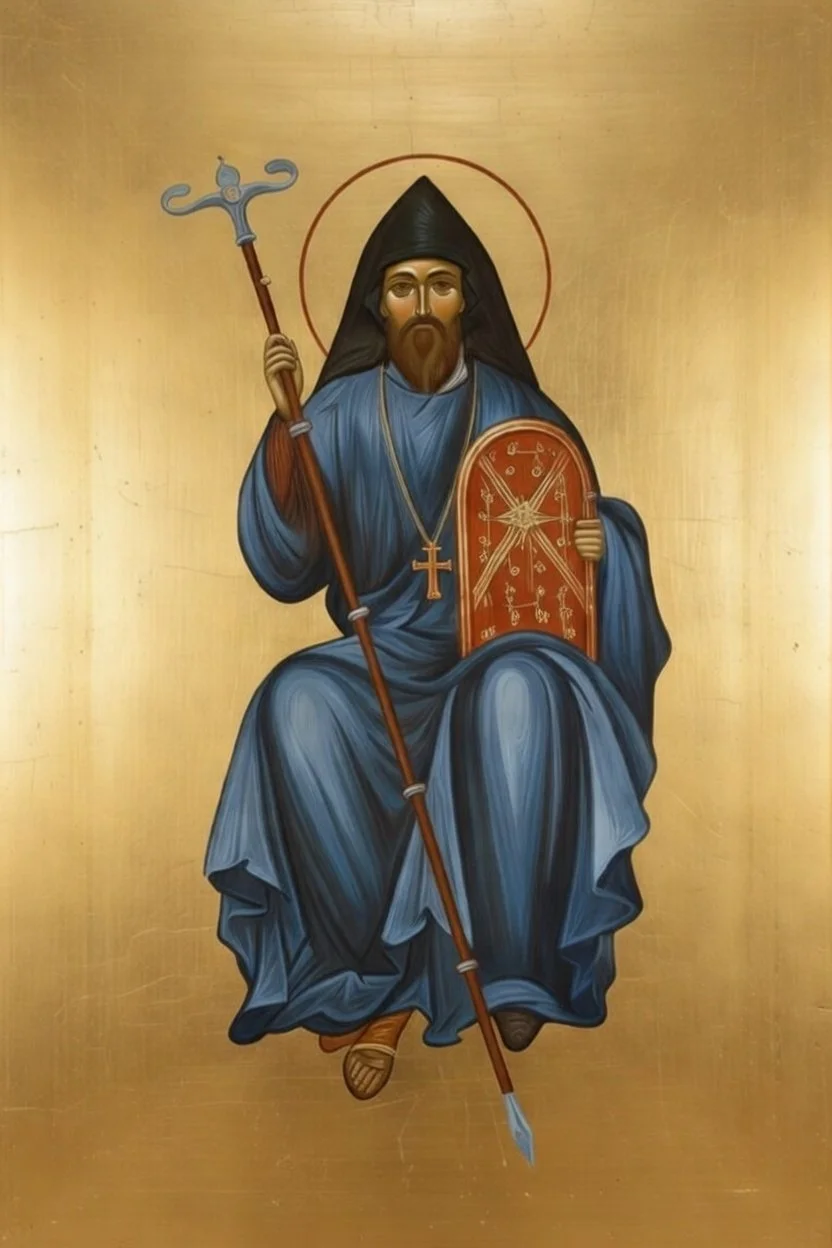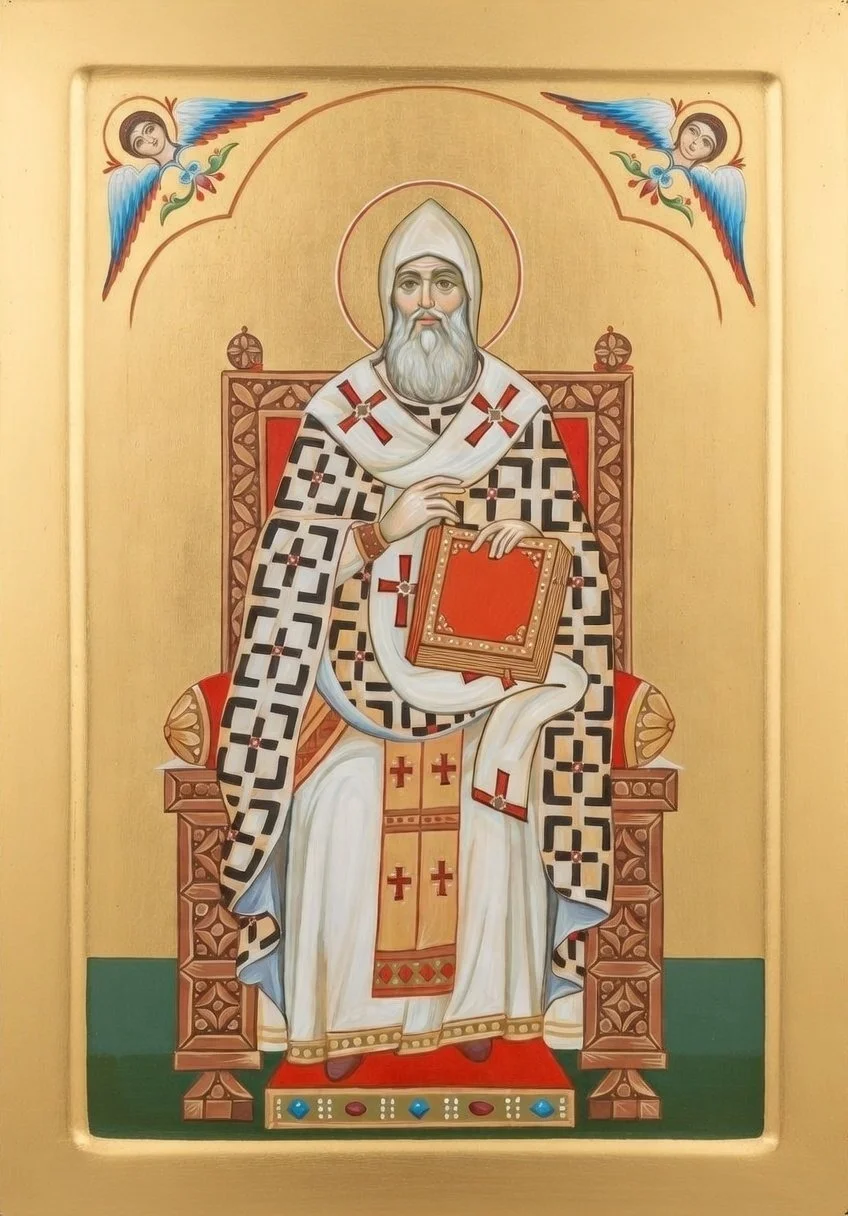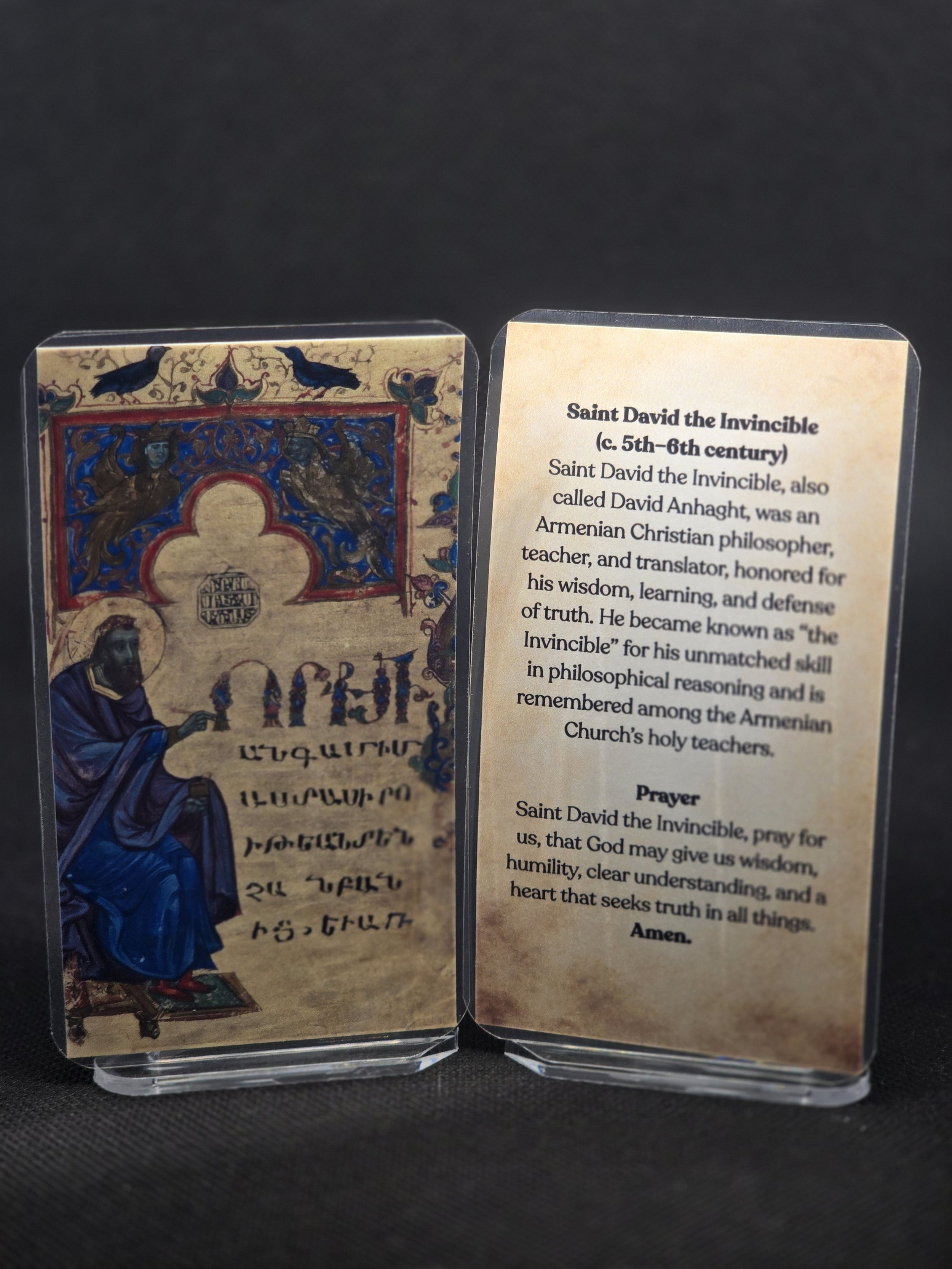
Saint David the Invincible Prayer Card

$3.00

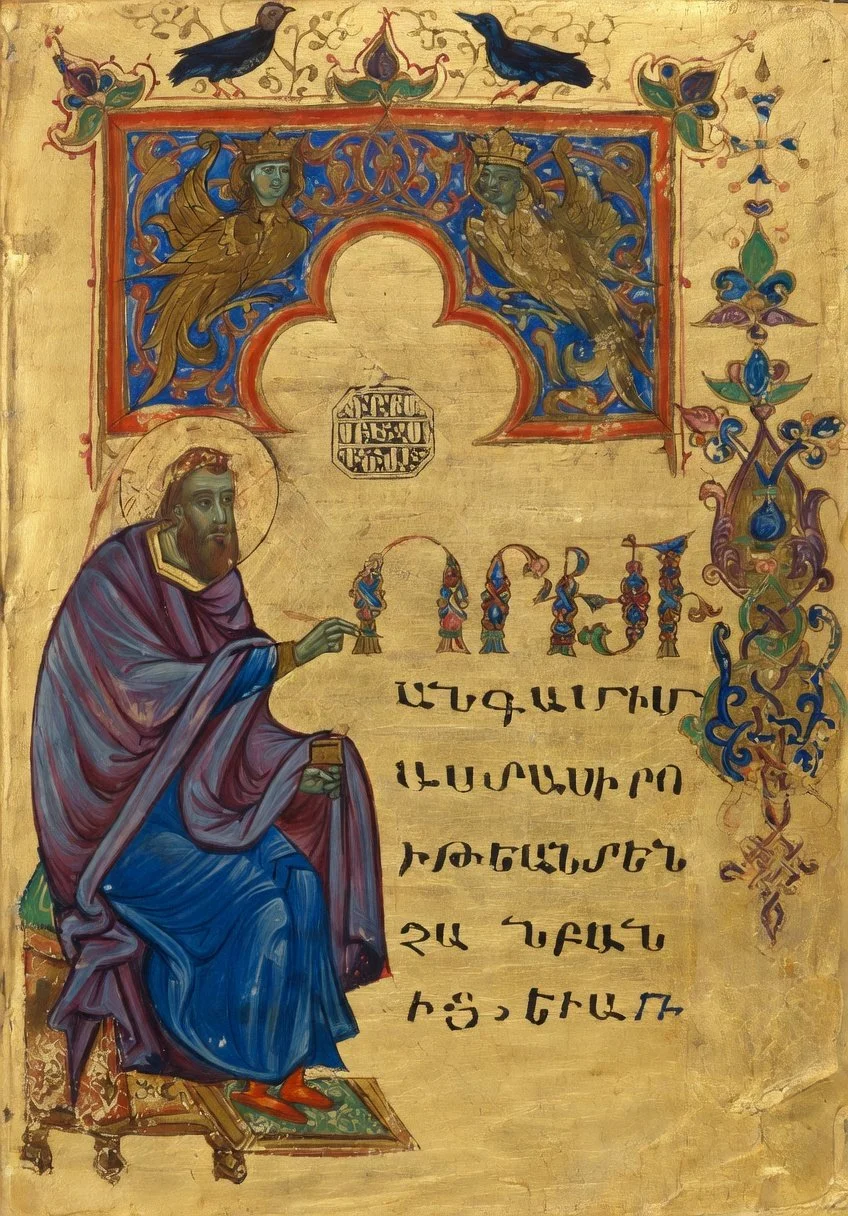
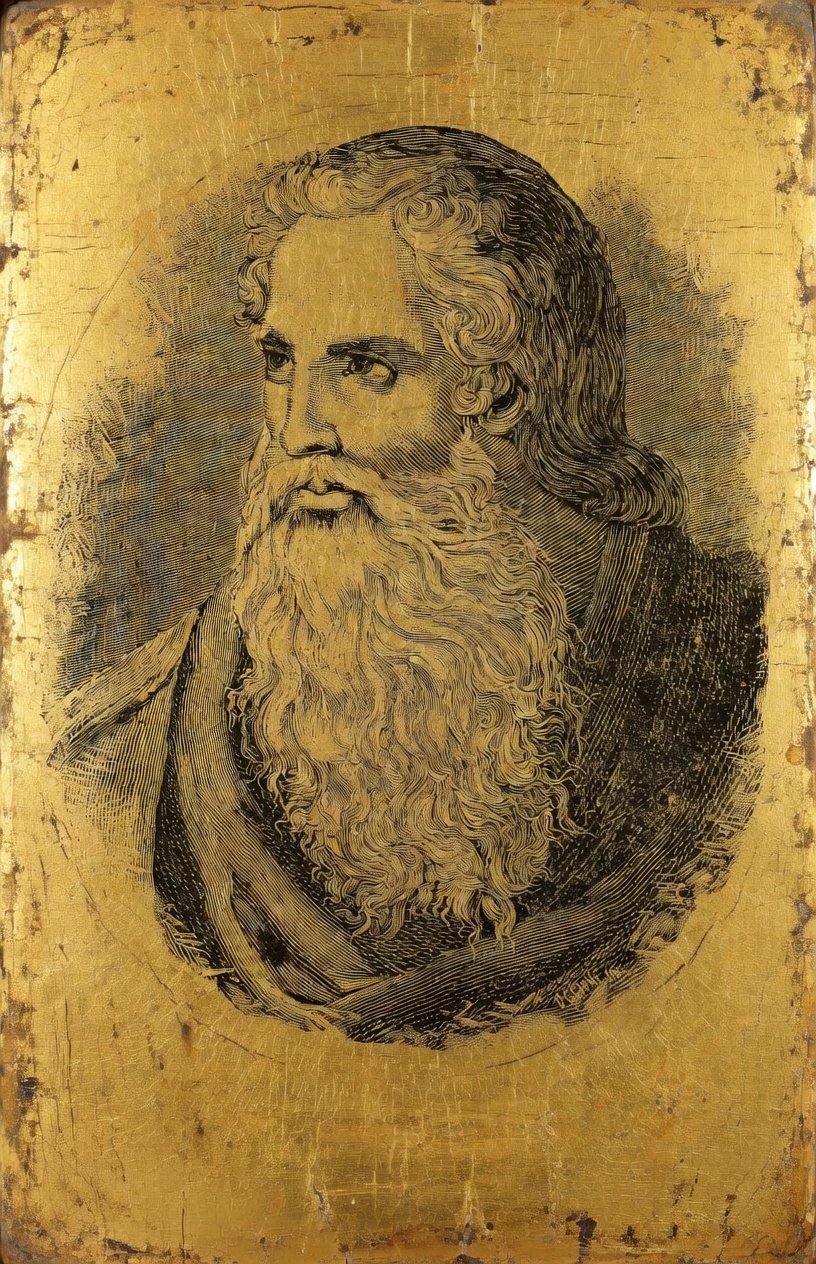
Saint David the Invincible is one of the great philosopher-saints of the Armenian Church, especially sought by those praying for clarity of thought, strength in intellectual struggle, and perseverance in the search for truth.

He lived during the early centuries of Armenian Christianity and became known not for military victory, but for a different kind of strength. His title, “the Invincible,” does not refer to battle, but to the power of truth over error. He was a master of philosophy, logic, and reasoning, trained in the classical traditions and devoted to understanding reality through both intellect and faith.

David studied in centers of learning influenced by Greek philosophy, particularly the works of Aristotle and Plato, and brought that knowledge into harmony with Christian belief. He taught that truth is not divided. What is true in reason and what is true in faith ultimately lead to the same source.

His life represents the union of mind and soul, showing that intellectual discipline, when ordered toward God, becomes a path to holiness. He did not pursue knowledge for pride, but for understanding, and not for argument, but for truth.

He is commemorated in the Armenian Church among the holy translators and teachers who shaped the intellectual foundation of the faith.

People turn to Saint David the Invincible when they are struggling to think clearly, when they are overwhelmed by confusion or doubt, or when they are seeking truth in a world filled with competing voices. He reminds us that truth is not something we create, but something we discover and receive.

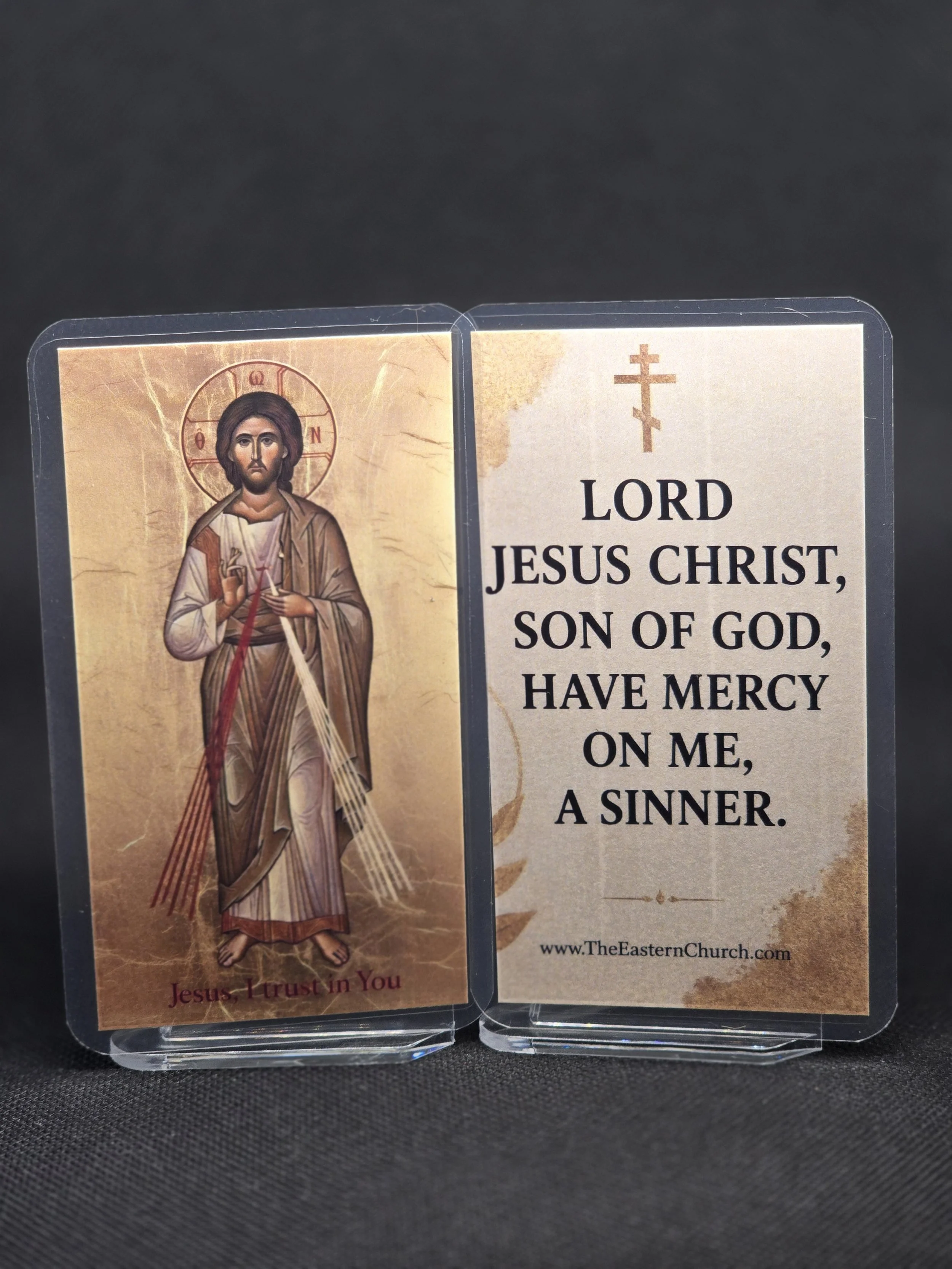
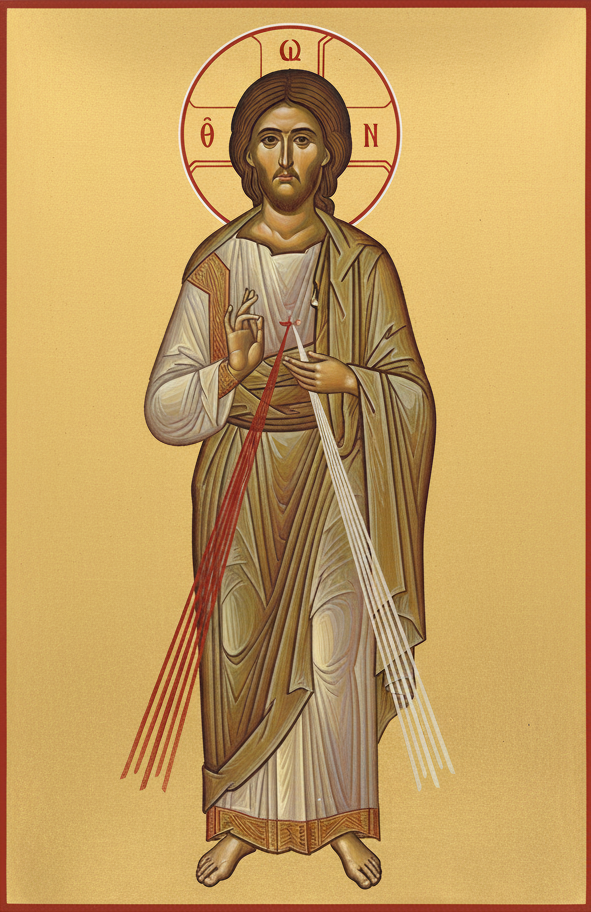
This handmade prayer card honors his wisdom and perseverance with museum-quality craftsmanship, created for prayer in moments of study, reflection, and intellectual struggle. It is not merely devotional art. It is a reminder that truth, when pursued faithfully, cannot be overcome.

Saint David the Invincible is one of the great philosopher-saints of the Armenian Church, especially sought by those praying for clarity of thought, strength in intellectual struggle, and perseverance in the search for truth.

He lived during the early centuries of Armenian Christianity and became known not for military victory, but for a different kind of strength. His title, “the Invincible,” does not refer to battle, but to the power of truth over error. He was a master of philosophy, logic, and reasoning, trained in the classical traditions and devoted to understanding reality through both intellect and faith.

David studied in centers of learning influenced by Greek philosophy, particularly the works of Aristotle and Plato, and brought that knowledge into harmony with Christian belief. He taught that truth is not divided. What is true in reason and what is true in faith ultimately lead to the same source.

His life represents the union of mind and soul, showing that intellectual discipline, when ordered toward God, becomes a path to holiness. He did not pursue knowledge for pride, but for understanding, and not for argument, but for truth.

He is commemorated in the Armenian Church among the holy translators and teachers who shaped the intellectual foundation of the faith.

People turn to Saint David the Invincible when they are struggling to think clearly, when they are overwhelmed by confusion or doubt, or when they are seeking truth in a world filled with competing voices. He reminds us that truth is not something we create, but something we discover and receive.

This handmade prayer card honors his wisdom and perseverance with museum-quality craftsmanship, created for prayer in moments of study, reflection, and intellectual struggle. It is not merely devotional art. It is a reminder that truth, when pursued faithfully, cannot be overcome.

  • Saint David the Invincible lived during the early centuries of Armenian Christianity and became one of its most important philosophical figures. Though exact details of his life are limited, he is traditionally associated with the generation of scholars influenced by the Armenian translation movement, which brought classical learning into the life of the Church.

    He studied philosophy in centers shaped by Greek thought, where he engaged deeply with the works of Aristotle and Plato. Rather than rejecting this knowledge, David integrated it, showing how reason and faith are not opposed, but aligned.

    He became known as a teacher of logic and philosophy, helping others think clearly, argue truthfully, and pursue wisdom with discipline. His title, “the Invincible,” reflects his reputation for defending truth through reason and clarity, rather than force.

    David’s work contributed to the intellectual life of the Armenian Church, helping form a tradition where faith was not only believed, but understood. He stands as a witness that the pursuit of knowledge, when directed toward God, becomes a form of devotion.

  • Saint David the Invincible is honored not for dramatic recorded miracles, but for the enduring impact of his teaching and intellectual clarity.

    He is a powerful intercessor for:

    • Clarity of thought and understanding

    • Students, scholars, and teachers

    • Discernment in confusion or doubt

    • Strength in intellectual and spiritual struggle

    • Wisdom in study and decision-making

    He is especially sought by those engaged in learning, teaching, or seeking truth in difficult or complex situations.

  • O Lord Jesus Christ,
    who granted Your servant Saint David
    clarity of mind and strength in truth,

    grant us understanding when we are confused,
    wisdom when we seek what is right,
    and perseverance when the search is difficult.

    Through his intercession,
    help us to think clearly,
    to seek truth with humility,
    and to use knowledge for Your glory.

    May our minds be guided by Your light
    and our hearts remain faithful to You.

    Amen.

  • Q: What is Saint David the Invincible known for?
    Saint David the Invincible is known as a philosopher and teacher who defended truth through reason, earning the title “the Invincible” for his intellectual strength and clarity.

    Q: When is Saint David the Invincible’s feast day?
    He is commemorated in the Armenian Church among the holy translators and teachers who helped shape the intellectual tradition of the faith.

    Q: Which Christian traditions venerate Saint David the Invincible?
    He is venerated in the Armenian Apostolic Church and the Armenian Catholic Church as a philosopher-saint and teacher of wisdom.

    Q: Why is he called “the Invincible”?
    He is called “the Invincible” not because of physical battle, but because of his ability to defend truth through reason, clarity, and intellectual discipline.