 Image 1 of 2
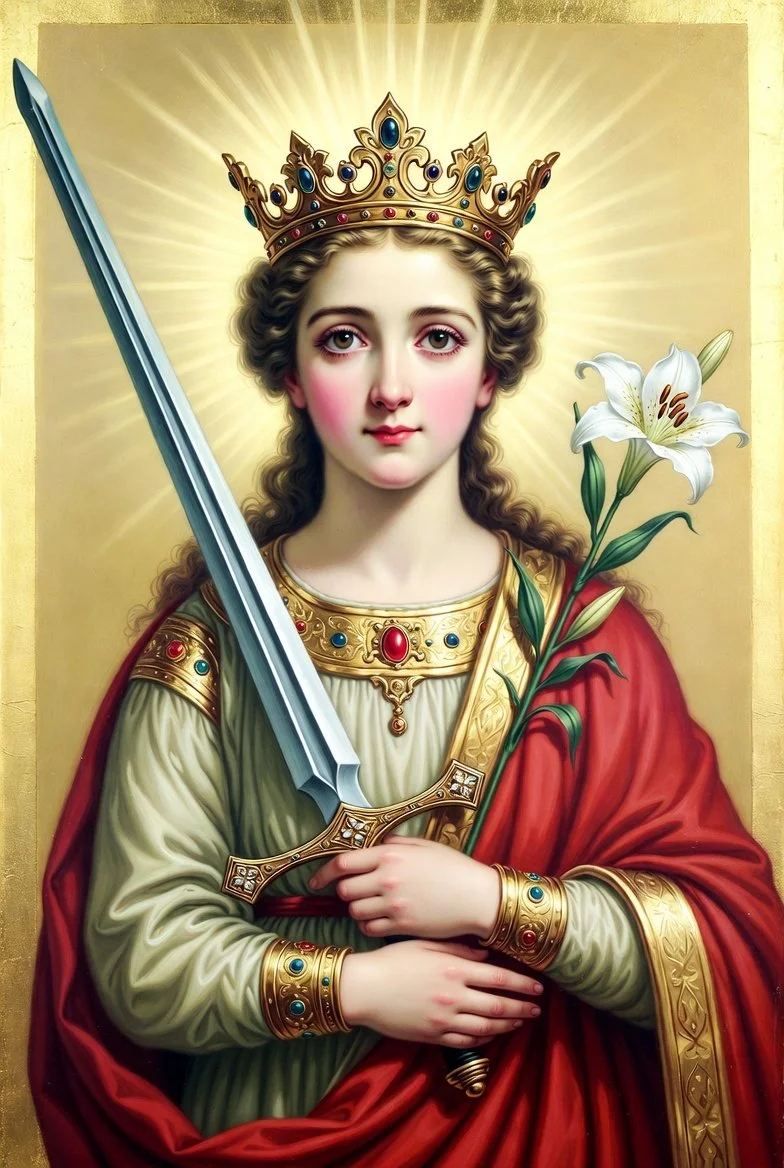 Image 2 of 2
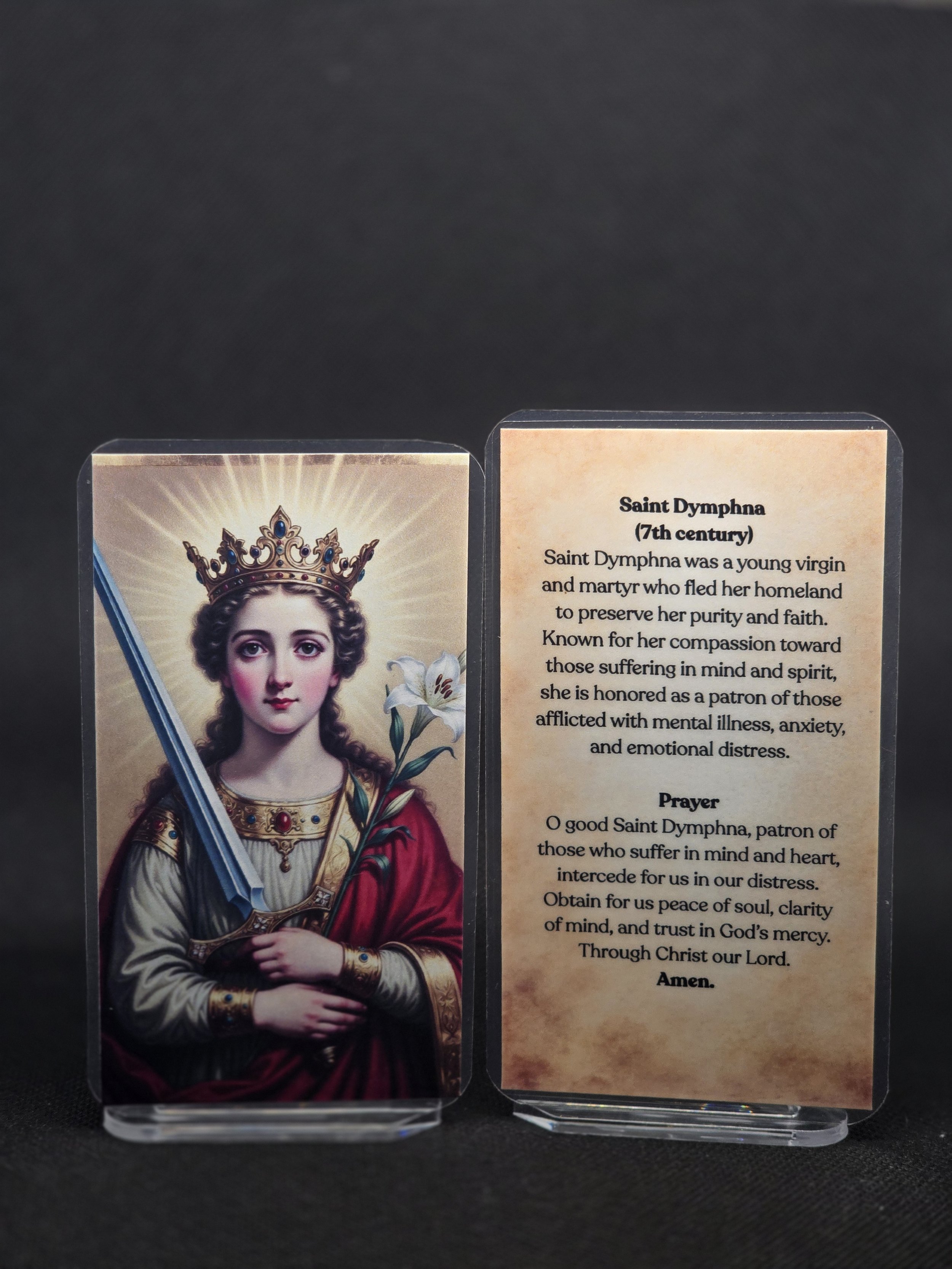
Saint Dymphna Prayer Card – Patron for Anxiety, Mental Illness & Emotional Trauma
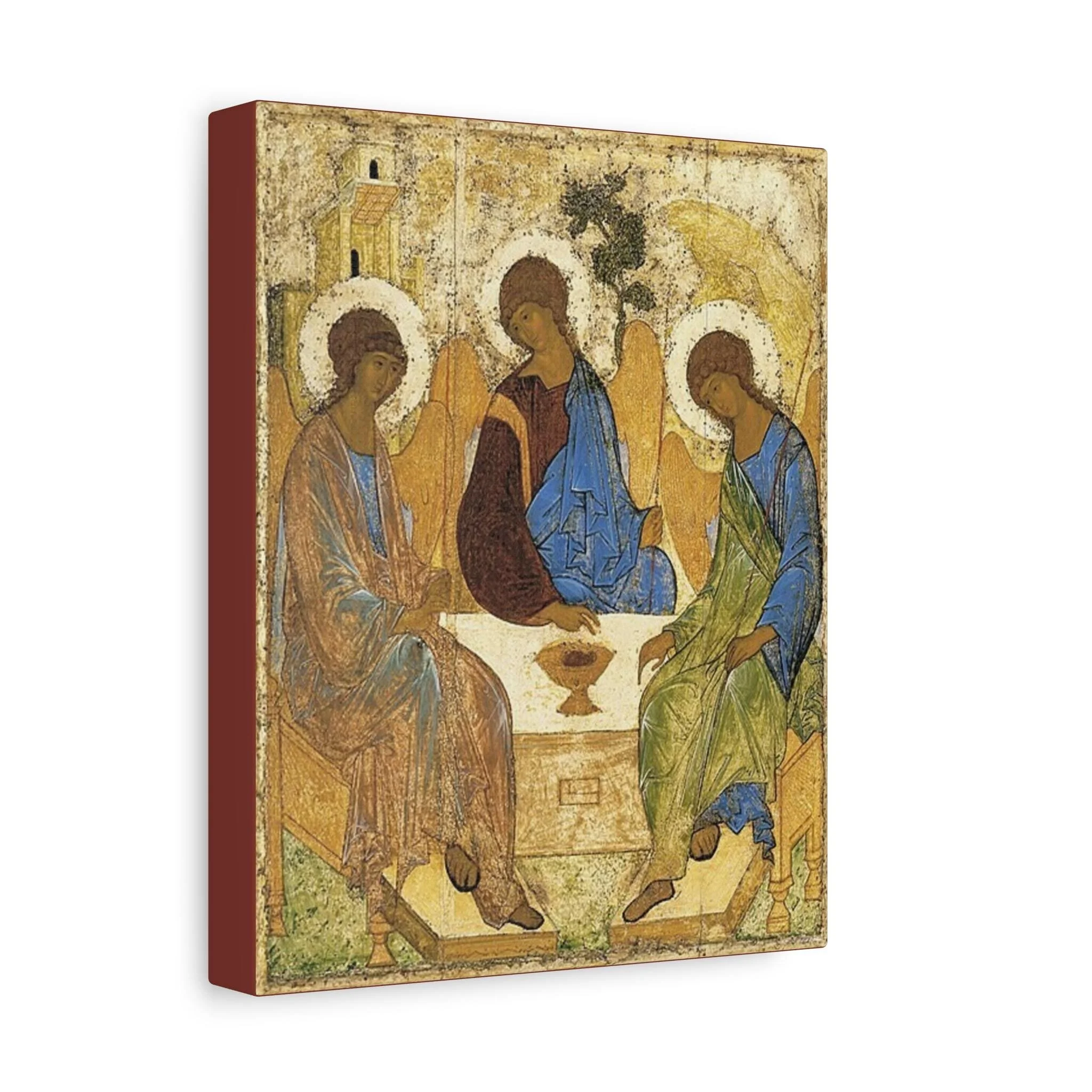
-
Saint Dymphna lived in seventh-century Ireland, born into royalty and raised in Christian faith by her mother. After her mother’s death, Dymphna’s father spiraled into grief so profound it fractured his emotional stability.
He sought comfort in control.
He demanded what no father should.
Dymphna refused.
She vowed herself to Christ and fled her homeland with the help of a priest named Gerebern. Together they crossed the sea and settled quietly in Belgium, hoping anonymity would bring peace.
For a time, it did.
Dymphna lived simply, caring for the poor and praying daily. She believed she had escaped the danger behind her.
She was wrong.
Her father eventually found her. When confronted, Dymphna stood firm. She refused to return with him or submit to his demands. In a moment of rage and emotional collapse, he killed both Gerebern and Dymphna.
She was still a teenager.
Her martyrdom shocked the region. Almost immediately, people began praying at the site of her death. Reports of mental and emotional healing followed. Over time, the town of Geel became internationally known as a refuge for those suffering psychological illness, inspired directly by devotion to Saint Dymphna.
Families began caring for the mentally afflicted in their homes rather than isolating them.
Compassion replaced confinement.
Dymphna changed how mental illness was seen.
Not as a curse.
As a suffering deserving love.
-
Saint Dymphna is remembered as a protector of wounded minds and traumatized hearts.
She is especially beloved by those living with invisible suffering.
Patron Saint Of:
Anxiety and panic attacks
Mental illness and emotional instability
Depression and despair
PTSD and trauma recovery
Intrusive thoughts
Families caring for mentally ill loved ones
Nervous disorders and inner unrest
Miracles and Ongoing Intercession
For centuries, pilgrims have traveled to Geel seeking Dymphna’s intercession. Many testify to emotional stabilization, reduced anxiety, and renewed clarity after prayer.
Parents speak of children finding calm after years of distress.
Adults describe panic subsiding.
Others share stories of deep trauma slowly releasing its grip.Her miracles arrive gently.
They come as breathing slowing after panic.
They come as thoughts quieting.
They come as safety returning to fragile nervous systems.
They come as hope entering places long ruled by fear.Saint Dymphna does not rush healing.
She walks with it.
-
Traditional Prayer
Holy Saint Dymphna, virgin and martyr, protector of those suffering in mind and heart, pray for us. Obtain for us peace of soul, strength in distress, and healing through Christ our Lord. Amen.
Personal Prayer
Holy Saint Dymphna, gentle guardian of troubled minds, pray for me.
You knew fear.
You knew trauma.
You knew what it was to run for safety.I bring you my anxiety.
I bring you my racing thoughts.
I bring you the places in my mind that feel unsafe.Intercede for me.
If panic rises, calm my breathing.
If depression weighs on me, restore light.
If trauma echoes in my body, ask Christ to quiet it.Saint Dymphna, you protected the vulnerable even in death.
Protect me now.
Stand beside me when my emotions feel overwhelming.
Stand beside me when intrusive thoughts appear.
Stand beside me while healing unfolds slowly.If someone I love suffers mentally, hold them in your prayers.
If I feel exhausted from caregiving, renew my strength.
If hope feels thin, remind me that Christ is near.By your intercession, may Christ stabilize my mind, soften my memories, and bring peace to every wounded place.
Amen.
-
Q: What is Saint Dymphna known for?
She is known as the patron saint of mental illness, anxiety, and emotional trauma, and for inspiring compassionate care for the psychologically afflicted.Q: When is Saint Dymphna’s feast day?
Her feast is celebrated on May 15.Q: Which Christian traditions venerate Saint Dymphna?
She is honored primarily in Roman Catholic devotion and deeply respected by Eastern Catholics for her intercession in mental and emotional suffering.Q: Why do people pray to Saint Dymphna for anxiety or mental illness?
Because her life was shaped by trauma and fear, and her intercession has long been associated with peace of mind, emotional healing, and protection for those suffering psychologically.