 Image 1 of 1
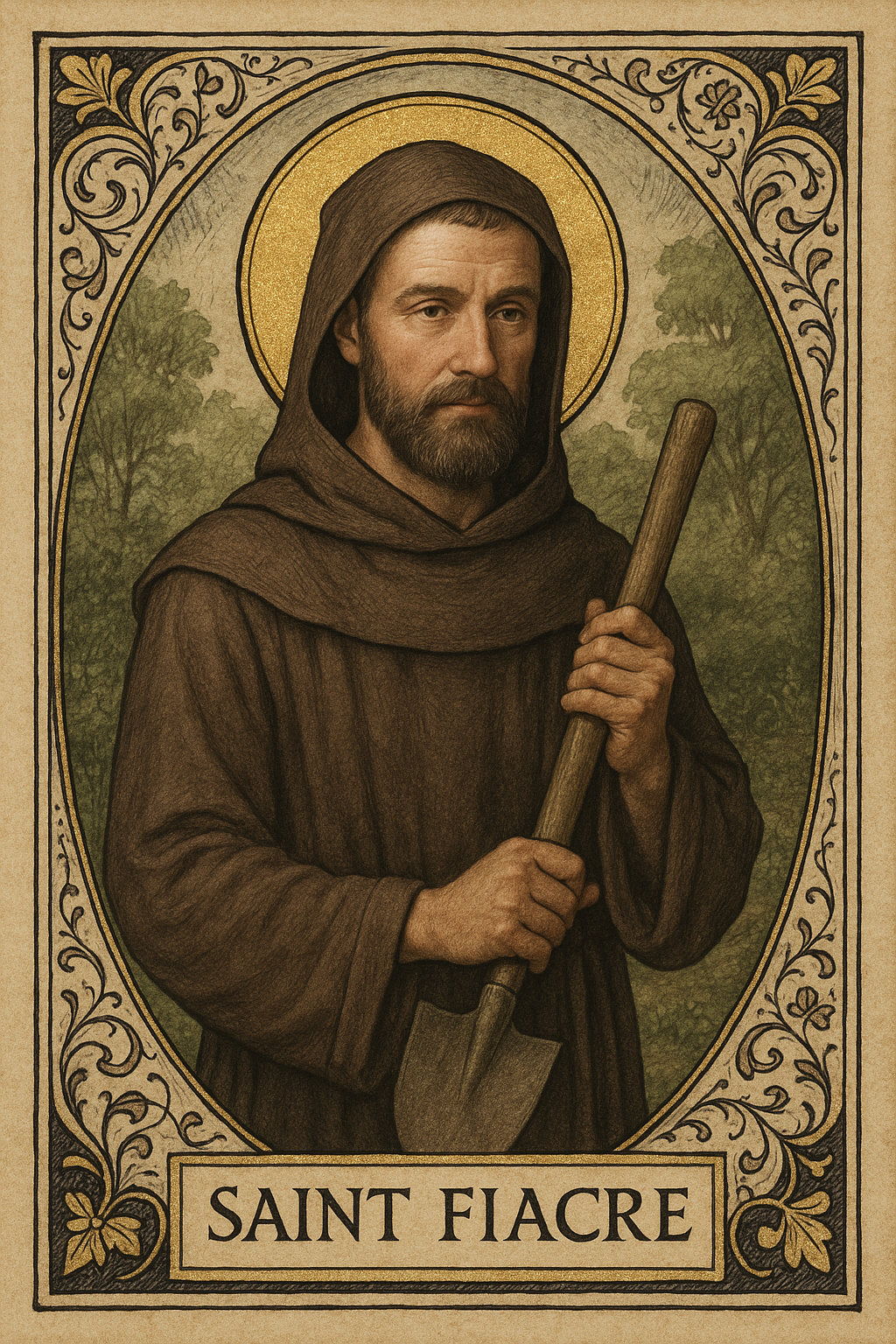
Saint Fiacre Prayer Card – Patron for Digestive Healing, Fertility & Gardening Blessings
-
The Life & Story
From Irish Pilgrim to French Hermit
Saint Fiacre was born in Ireland during a time when monastic spirituality was flourishing. Drawn to solitude and prayer, he eventually left his homeland and traveled to France seeking a quieter life devoted entirely to God.
He settled near Breuil, where he constructed a small hermitage beside a forest. With his own hands, Fiacre cleared land, planted gardens, and built a hospice for travelers and the sick.
His days followed a simple rhythm:
prayer
manual labor
service to strangersHe became especially skilled in herbal remedies, using plants grown in his garden to treat illnesses. His reputation slowly spread.
The Miracle of the Spade
Local tradition recounts that when Fiacre requested land from the bishop, he was told he could have as much as he could clear in a single day.
Fiacre knelt in prayer, then dragged his spade across the ground. Wherever the blade touched, trees and roots fell away effortlessly, leaving fertile soil behind.
Those who witnessed it knew God had intervened.
The hermitage expanded, welcoming pilgrims and the sick.
A Saint for Hidden Suffering
Fiacre never sought fame. Yet people came to him with deeply personal afflictions: digestive disorders, rectal pain, infertility, and chronic weakness. He prayed over them, applied herbal treatments, and trusted God for healing.
Many experienced relief.
Some conceived children after years of barrenness.
Others were freed from painful conditions they had silently endured.
Fiacre’s life teaches that holiness does not always roar.
Sometimes it grows quietly in gardens.
He reposed peacefully around the year 670, but devotion to him continued to increase long after his death.
-
Miracles & Patronage
Saint Fiacre is especially sought by those dealing with bodily ailments that are difficult to discuss openly.
Patron Saint Of:
Digestive and rectal healing (including hemorrhoids)
Fertility and difficulty conceiving
Gardening, agriculture, and land blessings
Herbalists and healers
Pilgrims and travelers
Those suffering chronic physical discomfort
Families seeking children
Miracles and Ongoing Intercession
Historical accounts and centuries of devotion record numerous healings attributed to Saint Fiacre’s intercession.
Pilgrims reported relief from severe rectal pain after praying at his shrine.
Women struggling with infertility conceived after invoking his prayers.
Gardeners and farmers sought his blessing for fertile soil and successful harvests.
Even today, devotees testify to:
sudden easing of digestive distress
healing of painful hemorrhoids
unexpected pregnancies after long waiting
renewed peace while tending land or gardens
Saint Fiacre’s miracles often arrive quietly, restoring dignity to bodies and hope to families.
He intercedes especially for ailments carried in silence.
-
Traditional Invocation (French Catholic devotion)
Saint Fiacre, faithful servant of Christ and healer of the afflicted, pray for us. Obtain for us healing of body and soul, fertility of land and family, and perseverance in humble labor.
Personal Prayer
Holy Saint Fiacre, gentle hermit and healer of hidden wounds, pray for me.
Intercede for my body in its weakness. Bring relief to every place of pain and restore what has been damaged or exhausted. Pray especially for healing of digestive suffering and all ailments carried in silence.
If I desire children, present this longing before Christ. Bless my home, my garden, and all the work of my hands.
Teach me patience in waiting, humility in labor, and trust in God’s timing.
You who found holiness in simplicity, help me sanctify ordinary days and small tasks.
By your prayers, may healing flow, hope rise, and God be glorified in my life. Amen.
-
Q: What is Saint Fiacre known for?
Saint Fiacre is known as a hermit-healer who cared for the sick through prayer and herbal medicine. He is especially invoked for digestive and rectal healing, fertility, and blessings over gardens and land.Q: When is Saint Fiacre’s feast day?
Saint Fiacre is commemorated on August 30.Q: Which Christian traditions venerate Saint Fiacre?
Saint Fiacre is venerated within the Catholic Church, particularly in France and regions influenced by Irish monastic spirituality.Q: Why is Saint Fiacre depicted holding a spade or garden tools?
The spade symbolizes both the miracle by which he cleared land through prayer and his lifelong labor cultivating gardens for healing. It represents humility, provision, and God’s blessing on honest work.