 Image 1 of 1
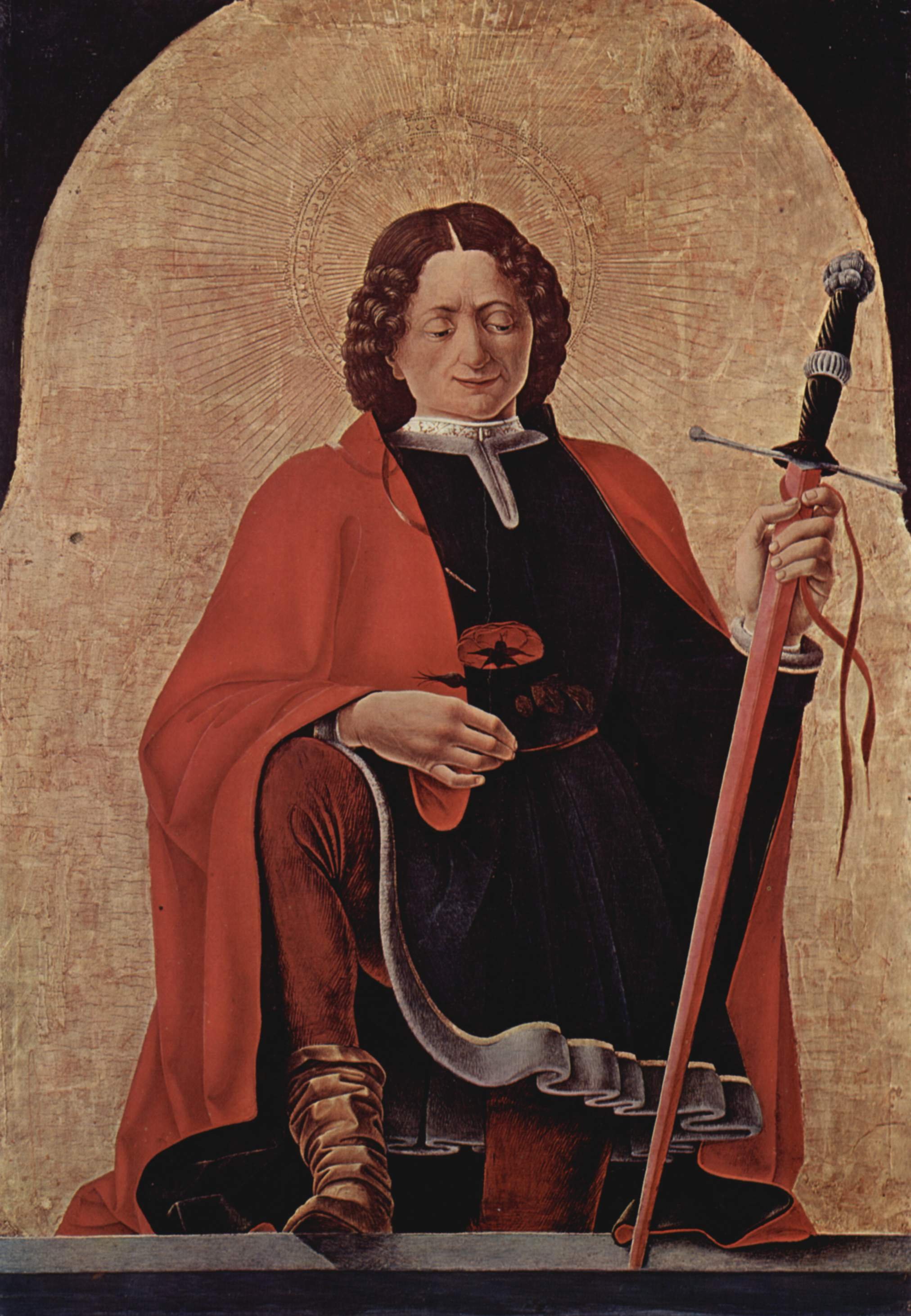
Saint Florian Prayer Card | Patron of Firefighters, Protection From Fire & Courage
Saint Florian of Lorch was an early fourth-century Christian martyr from Roman Noricum, in present-day Austria, whose courage and willingness to place himself in danger for fellow Christians eventually made him one of Europe's most beloved patron saints of firefighters, first responders, protection from fire, floods, and other emergencies. During the persecution under Emperor Diocletian, Florian learned that a group of Christians had been arrested at Lauriacum, modern Lorch near Enns, and deliberately went to help them. When authorities discovered that he too was Christian, he refused to sacrifice to the Roman gods and was condemned to death. On May 4, 304 AD, a heavy stone was tied around his neck and he was thrown from a bridge into the River Enns.
Saint Florian is especially meaningful for firefighters, volunteer firefighters, first responders, rescue workers, soldiers, emergency personnel, people threatened by fire or flooding, families praying for the safe return of someone working in a dangerous profession, and Christians who need courage to help others even when doing so creates personal risk. The Catholic Diocese of Linz officially calls him the special patron of firefighters and a patron of helpers and emergency services, noting that Christians have long invoked him particularly in dangers involving fire and water.
His patronage of firefighters is especially fitting because the defining action of Florian's life was running toward people in danger rather than away from them. He was apparently safe when he heard that Christians at Lauriacum had been arrested, yet he voluntarily went to assist them and ultimately joined them in martyrdom. The Diocese of Linz highlights this solidarity as the reason Florian remains such a powerful model for firefighters today: he made the distress of others his own concern, even at the cost of his life.
Traditional images of Saint Florian usually show him dressed as a Roman officer or soldier pouring water from a bucket or vessel onto a burning building. This is not a depiction of the way he died, but an iconographic expression of the centuries-old devotion that developed around him as protector against destructive fire. His image became especially widespread in Central Europe, where statues of Florian were placed on homes, churches, town squares, fire stations, and city gates as prayers for protection against fire.
This prayer card makes an especially meaningful gift for firefighters graduating from an academy, firefighters beginning a new assignment, volunteer departments, fire chiefs, paramedics, rescue personnel, military members, families of first responders, and anyone asking for protection over a home or property threatened by wildfire, house fire, flooding, or severe storms. It can also be carried by a firefighter on duty as a reminder that courage is not merely willingness to face danger, but willingness to enter danger for the sake of another human being.
Each 2.5" x 4.25" prayer card is handmade in Austin, Texas and prepared prayerfully with each order. It is printed on museum-quality photo paper rather than cardstock, double-laminated for durability, and made while the recipient and their intentions are lifted before Christ in prayer, with Saint Florian asked to intercede for them.
THE LIFE & STORY
Saint Florian lived during the late third and early fourth centuries in the Roman province of Noricum, which included substantial territory within modern Austria. The Vatican's 2026 account places his birth in the second half of the third century and preserves the tradition that he served first as a Roman military officer and later as a senior official in the provincial administration.
The Diocese of Linz describes him more specifically as head of the administration in Noricum Ripense, while the ancient Passion portrays him as a man with previous connections to military personnel. The safest historical description is therefore that Florian was a high-ranking Roman official with a military or administrative background, rather than repeating the popular modern claim that he commanded a Roman fire brigade as though that detail were securely established in the earliest source.
HOW HISTORICAL IS SAINT FLORIAN?
Saint Florian has considerably stronger historical grounding than many legendary saints of Late Antiquity. The Augustinian Abbey of St. Florian notes that he is considered the only named and historically identifiable martyr from early Christian Austria, although the surviving written Passion was composed several centuries after his death.
The oldest Passio Floriani appears to have been written during the late eighth century, perhaps using an older late-antique source. The German historical-source repertory describes its account as fundamentally reliable, while the Abbey itself carefully notes that the Passion mixes historical tradition with biblical language, prayer, and later miracle material.
For a product page, the strongest wording is therefore that Saint Florian was an early Christian martyr at Lauriacum whose martyrdom on May 4, 304 is preserved by an ancient local tradition, while some details surrounding his career and later miracles belong to hagiographic tradition.
THE GREAT PERSECUTION UNDER DIOCLETIAN
In 303 AD, Emperor Diocletian began what became the most severe empire-wide persecution Christianity had yet experienced. Imperial decrees targeted churches, sacred books, clergy, and eventually Christians generally, requiring sacrifice to the gods as a test of religious and political loyalty.
By 304, persecution had reached Lauriacum, an important Roman settlement and military center on the Danube frontier. The Passion says roughly forty Christians were arrested, tortured, and imprisoned because they refused to abandon their faith.
FLORIAN HEARS THAT CHRISTIANS HAVE BEEN ARRESTED
Florian was not initially among the prisoners. According to the ancient Passion, when he heard what was happening at Lauriacum he decided that he had to go there and stand with the persecuted Christians.
This is one of the most important details of his story because Florian deliberately moved toward danger. He could have stayed away, hidden his Christianity, and possibly survived the persecution, but the suffering of other Christians became something he believed he could not ignore.
A SAINT FOR FIRST RESPONDERS
That decision explains why Saint Florian fits firefighters and emergency personnel on a level much deeper than his later association with water and fire. A first responder hears that another person is in danger and moves toward the emergency while everyone else is being told to move away.
The Diocese of Linz makes precisely this connection in its contemporary presentation of Florian. It describes his willingness to make the distress of his companions his own concern as a model for people who enter emergency service in order to help others.
“I AM A CHRISTIAN”
The Passion says Florian encountered men with whom he had previously served and learned that authorities were searching for Christians. Instead of hiding his identity, Florian reportedly told them openly that he too was a Christian and instructed them to inform the governor.
That confession transformed Florian from a respected Roman official into a condemned member of the persecuted Church. His social position no longer protected him because he had placed his allegiance to Christ above the religious demands of the empire.
BROUGHT BEFORE GOVERNOR AQUILINUS
Florian was taken before the provincial governor Aquilinus, who commanded him to offer sacrifice to the Roman gods. Florian refused.
The confrontation shows why martyrdom was understood as a form of witness rather than simply passive victimhood. Florian had a clear route back to safety through religious compromise, but he chose confession of Christ even when he understood the consequences.
TORTURED FOR HIS FAITH
The Passio Floriani says Florian was beaten repeatedly after refusing sacrifice and later subjected to further torture with iron implements. The governor's goal was to break his resistance rather than immediately execute him.
Florian remained faithful. The former public official who had possessed status under Roman government discovered that when everything visible was stripped away, his identity as a Christian could not be taken from him without his consent.
THE MILLSTONE
The governor eventually sentenced Florian to death by drowning. According to the ancient Passion, a large stone was tied around his neck and he was led to a bridge over the Enns River.
Later Christian art often depicts this object specifically as a millstone, which became one of Florian's recognizable attributes. A millstone shown near his feet therefore refers to his martyrdom rather than his patronage of firefighters.
FLORIAN ASKS TO PRAY
The extended Passion preserves a striking detail before the execution. Florian asked for a short period in which to pray, and his guards allowed him to do so while he stood at the bridge.
The scene creates a profound contrast with the later images of Florian fighting fire. At the decisive moment of his own life, he does not attempt to fight his executioners physically because his final preparation is prayer.
THROWN INTO THE RIVER ENNS
On May 4, 304 AD, Florian was thrown from the bridge into the River Enns with the stone attached to him. The Vatican, the Diocese of Linz, the St. Florian Abbey tradition, and the ancient Passion all preserve the same basic martyrdom setting at Lauriacum.
Because he died in water and later became a protector against fire, Florian eventually became associated with both of the great destructive elements of water and flame. Christians came to seek his prayers not only against house fires but against floods, storms, drowning, and other dangers involving water.
SAINT FLORIAN & THE MARTYRS OF LORCH
Florian was not the only Christian remembered from the persecution at Lauriacum. His Passion speaks of approximately forty Christians imprisoned there, and the Diocese of Linz commemorates Florian in connection with the martyrs of Lorch.
Twentieth-century archaeological work beneath the Basilica of St. Lawrence at Lorch uncovered human remains associated with the ancient Christian site. The Diocese of Linz connects these discoveries with the remembered community of early Christian martyrs, though archaeology cannot identify every individual named or implied by the later Passion.
VALERIA & THE BURIAL OF SAINT FLORIAN
The ancient Passion continues by saying that Florian's body was recovered and that he appeared in a vision to a devout Christian woman traditionally named Valeria, showing her where he should be buried. The Vatican likewise preserves this tradition in its contemporary account of the martyr.
The place associated with his burial later developed into the great religious center known today as St. Florian Abbey in Upper Austria. Whatever uncertainties remain about the later movements of his relics, the geographic connection between Florian's cult and this region is extraordinarily old.
ST. FLORIAN ABBEY
The Augustinian Canons' St. Florian Abbey stands near the traditional burial place of the martyr and remains one of the principal centers of his veneration. The town itself bears his name, showing how deeply the martyr became woven into the Christian identity of Upper Austria.
The Abbey continues celebrating Florian's May 4 feast with solemn liturgy. In 2026, Austrian Catholic authorities again described him officially as patron of firefighters, patron of the Diocese of Linz, and patron of the federal state of Upper Austria.
WHY IS SAINT FLORIAN THE PATRON OF FIREFIGHTERS?
Saint Florian's firefighter patronage developed over centuries rather than because the earliest Passion says he operated a Roman fire department. The original martyrdom story centers upon his Christian confession, his assistance to persecuted believers, and his death by drowning.
By the later Middle Ages, however, Florian had become widely invoked in Central Europe against destructive fire, and his image began showing him pouring water onto flames. The association became particularly powerful in Austria, southern Germany, and Poland, and today the Catholic Diocese of Linz explicitly identifies him as the special patron of firefighters.
DID SAINT FLORIAN REALLY COMMAND A ROMAN FIRE BRIGADE?
This claim appears frequently in modern firefighter materials, but it is not the strongest historical tradition. Some modern retellings say Florian commanded a Roman firefighting unit and once extinguished a fire with a single bucket of water, but those details are absent from the earliest Passio Floriani.
The historically safer description is that Florian was a Roman official, probably with military experience, who later became a patron of firefighters through centuries of Christian devotion. This does not weaken the firefighter connection because that patronage is itself deeply established and officially recognized by the Church.
THE GREAT FIRE OF KRAKÓW
Saint Florian's connection with protection from fire became especially strong in Poland. Relics of the martyr had been brought to Kraków during the twelfth century, and devotion to him became deeply rooted in the city.
In 1528, a devastating fire swept through the Kleparz district of Kraków. The church containing Florian's relics was damaged but survived, and local tradition credited its preservation to the martyr's intercession. Afterward, devotion to Florian as protector against fire expanded dramatically, and his image appeared increasingly on buildings and in public places.
WHY DOES SAINT FLORIAN POUR WATER ON A BURNING HOUSE?
The familiar image of Florian pouring a surprisingly small amount of water onto a burning house communicates his patronage against fire, not a literal scene recorded in the earliest account of his life. The burning building became a visual shorthand immediately recognizable to generations of Christians in areas frequently devastated by urban fires.
The image also provides a natural spiritual lesson. Firefighters know that human beings can be completely overwhelmed by the destructive power of fire, so the tiny vessel in Florian's hand can remind the Christian that protection ultimately depends upon God's providence rather than human control alone.
A SAINT FOR FIREFIGHTERS
Saint Florian is one of the clearest examples of a genuinely established patron saint of firefighters. The Diocese of Linz describes him as the special protector of the fire service, while Austrian Catholic sources continue honoring him annually with firefighters prominently represented at his feast.
A Saint Florian prayer card can therefore be given without qualification to professional firefighters, volunteers, fire academy recruits, fire chiefs, wildland firefighters, rescue personnel, and their families.
A SAINT FOR VOLUNTEER FIREFIGHTERS
The Diocese of Linz particularly connects Florian's witness with people who freely make themselves available to serve others in emergency situations. That makes him especially fitting for volunteer fire departments, where ordinary men and women make extraordinary commitments to protect neighbors they may barely know.
Florian's defining action followed the same pattern. He learned that other people were in danger and decided their suffering had become his responsibility.
A SAINT FOR FIRST RESPONDERS
Although firefighters are Florian's strongest formal patronage, the Diocese of Linz also describes him more broadly as a patron of helpers and emergency services. This gives a sound devotional basis for paramedics, rescue workers, emergency medical personnel, and others whose vocation repeatedly places them close to human crisis.
The connection should not be reduced simply to protection from physical harm. Florian's example also asks first responders to preserve compassion, courage, and readiness to serve when constant exposure to tragedy could otherwise produce exhaustion or detachment.
A SAINT FOR WILDFIRES & HOUSE FIRES
Families threatened by wildfire or recovering after a devastating house fire can naturally seek Saint Florian's intercession. For centuries Christians have invoked him precisely when fire threatens homes, communities, and human life.
His prayer card can therefore be especially meaningful during wildfire season, for families living in fire-prone regions, or as a devotional image kept near a home fire alarm, fireplace, workshop, or fire station.
A SAINT FOR FLOODS & DROWNING
Florian's association with water is rooted directly in his martyrdom because he died in the River Enns. Austrian Catholic tradition accordingly invokes him not only against fire but in dangers arising from water and flooding.
That makes his card meaningful during floods, severe storms, dangerous river conditions, or other emergencies involving water. The saint who died by drowning became an intercessor for people facing the very danger through which he received his martyr's crown.
A SAINT FOR COURAGE
Florian's courage was not simply the ability to endure torture. His first courageous act was deciding that another person's danger was worth entering voluntarily.
This makes him an excellent Christian model for firefighters because courage begins before the flames. It begins with the decision that another person's life is valuable enough to justify personal risk.
A SAINT FOR CHRISTIAN SOLIDARITY
The Diocese of Linz repeatedly emphasizes solidarity when presenting Florian to contemporary Christians. He did not remain safe while other Christians suffered at Lauriacum but made their need his own.
This gives his story a meaning that extends far beyond emergency services. Christian love becomes most visible when another person's suffering stops being regarded as somebody else's problem.
A SAINT FOR SOLDIERS & PUBLIC SERVANTS
Sources differ somewhat regarding Florian's precise early career, but Vatican sources preserve a tradition of military service followed by high administrative responsibility. He therefore remains meaningful for soldiers, public officials, and people working within government institutions.
His martyrdom also presents the familiar Christian tension between legitimate obedience and conscience. Florian served the Roman state, but when the state demanded an act incompatible with Christianity, his final allegiance belonged to Christ.
A SAINT FOR PEOPLE WHO MUST DISOBEY AN IMMORAL ORDER
Florian's refusal to sacrifice teaches that no earthly authority possesses an unlimited claim over conscience. A lawful command may deserve obedience, but idolatry, persecution, or direct betrayal of faith crosses a boundary the Christian cannot surrender.
This can make Saint Florian meaningful to military members, police, government employees, and professionals in hierarchical organizations. His life demonstrates that integrity sometimes becomes most costly precisely when obedience would be easiest.
SAINT FLORIAN IN POLAND
Saint Florian became particularly beloved in Poland after relics were brought to Kraków during the twelfth century. Vatican News records relics at Wawel Cathedral and at the Basilica of Saint Florian in Kleparz, and for centuries he was counted among important patrons of Poland and Kraków.
His Polish devotion grew even stronger after the 1528 fire. This is one reason Florian remains so prominent in Polish firehouses, churches, public statues, banners, and firefighter insignia today.
HIS RELICS
Tradition connects Florian's burial with the site of modern St. Florian Abbey in Austria, while significant relics have been venerated in Kraków since the Middle Ages. The Vatican records relics today at Wawel Cathedral, the Basilica of Saint Florian, and the Austrian center associated with his cult.
The exact history of the relics is complicated because portions were transferred and distributed over many centuries. For product copy, it is therefore safest to say that important relics of Saint Florian are venerated particularly in Austria and Kraków, rather than claiming his entire body remains intact in one location.
PATRON OF UPPER AUSTRIA & THE DIOCESE OF LINZ
Saint Florian has been principal patron of the Diocese of Linz since 1971 and was declared patron of the Austrian federal state of Upper Austria in 2004. His annual May 4 celebration remains one of the region's prominent Catholic observances.
This official regional patronage reflects something deeper than folklore. Florian represents the earliest roots of Christianity in a part of Europe where Christian communities existed long before the medieval kingdoms that later defined the region.
OTHER TRADITIONAL PATRONAGES
Vatican sources also list Florian as patron of potters, blacksmiths, soap makers, and brewers, while other Central European traditions strongly associate him with chimney sweeps and workers whose occupations involve fire.
For product SEO, however, firefighters, protection from fire, first responders, floods, and courage are his strongest and most recognizable devotional associations.
FEAST DAY
Saint Florian's feast is celebrated on May 4, the traditional anniversary of his martyrdom in 304 AD. The date remains his principal liturgical commemoration in Austria, Poland, and other parts of Central Europe.
May 4 has consequently become an especially meaningful day for Christian firefighters. Fire departments and firefighter chaplains in several countries celebrate Masses, blessings, memorial services, and ceremonies asking Saint Florian's intercession for those who serve.
ICONOGRAPHY
Saint Florian is normally shown as a Roman officer in armor, often carrying a military banner or cross while pouring water from a vessel onto a burning house or church. A millstone may also appear near him, recalling the stone tied around his neck at his martyrdom.
The combination tells almost his entire story. The armor recalls his Roman public service, the Cross identifies the faith for which he died, the water and flames proclaim his protection of firefighters, and the stone recalls the death through which he entered the Church's memory.
PRAYERS
Saint Florian has an established Catholic devotional and liturgical tradition, so there is no need to invent a prayer for him. The Diocese of Linz, where he is diocesan patron, publishes a Florian litany and prayers specifically for firefighters and those who seek his intercession.
A short official invocation from the Diocese of Linz is especially appropriate for a firefighter prayer card:
“Holy Florian, special patron of the fire service, pray for the women and men on duty.”
The same diocesan litany repeatedly answers simply:
“Saint Florian, pray for us.”
A firefighter may use the card before a shift and ask specifically for protection, clear judgment, courage, teamwork, and a safe return home. Families can likewise seek Saint Florian's intercession for someone entering a burning structure or responding to emergencies, while remembering that Christian prayer entrusts the person to God's providence rather than promising freedom from every danger.
FAQ
Who was Saint Florian? Saint Florian was an early fourth-century Christian martyr from Roman Noricum, in modern Austria. He was a high-ranking Roman official with military connections who was drowned in the River Enns on May 4, 304 after refusing to abandon Christianity.
Is Saint Florian the patron saint of firefighters? Yes. This is a firmly established Catholic patronage, and the Diocese of Linz officially describes him as the special patron of firefighters.
Why is Saint Florian the patron of firefighters? His patronage developed through centuries of devotion seeking his protection against destructive fire, particularly in Central Europe. His willingness to place himself in danger for others also gives his story a powerful natural connection with the firefighter vocation.
Was Saint Florian actually a firefighter? The oldest surviving Passion does not say that he commanded a Roman firefighting brigade, although this appears frequently in modern retellings. The safer historical description is that he was a Roman official with military connections who later became the Church's great patron of firefighters.
Did Saint Florian put out a fire with one bucket of water? That story belongs to later popular legend rather than Florian's earliest surviving Passion. His image pouring water onto a burning building represents his established patronage against fire rather than a securely documented event from his lifetime.
When did Saint Florian live? He lived during the latter part of the third century and beginning of the fourth century. His martyrdom is traditionally dated precisely to May 4, 304 AD.
When is Saint Florian's feast day? His feast is May 4. Catholic communities in Austria and elsewhere continue celebrating him on that date, especially in association with firefighters.
Where did Saint Florian live? He lived in the Roman province of Noricum, corresponding substantially to modern Austria. His martyrdom occurred at Lauriacum, modern Lorch near Enns in Upper Austria.
Why was Saint Florian arrested? He voluntarily went to Lauriacum after learning that Christians there had been arrested during the Diocletian persecution. When his own Christianity became known, Governor Aquilinus ordered him to sacrifice to the gods, and Florian refused.
Was Saint Florian tortured? According to the ancient Passion, yes. He was beaten and subjected to further torture after refusing pagan sacrifice, but he remained faithful to Christianity.
How did Saint Florian die? A heavy stone was tied around his neck and he was thrown from a bridge into the River Enns. Later iconography commonly depicts the stone as a millstone.
Why is Saint Florian associated with water if he is patron of firefighters? Water is directly connected with his martyrdom because he died by drowning. Over time Christians came to invoke him against dangers involving both destructive fire and destructive water.
Is Saint Florian invoked against floods? Yes. Austrian Catholic tradition specifically identifies him as an intercessor in dangers involving water as well as fire.
Can Saint Florian be prayed to during wildfires? Yes. Protection against destructive fire is one of his most established traditional patronages. His intercession is therefore particularly appropriate during wildfire emergencies or when homes and communities are threatened by fire.
Can firefighters carry a Saint Florian prayer card? Yes. Saint Florian is one of the principal Christian patron saints of firefighters, making a prayer card especially appropriate for carrying during duty, training, deployment, or dangerous emergency response.
Can I give a Saint Florian card to a new firefighter? Yes. It makes a particularly appropriate gift for fire academy graduation, joining a department, promotion, or beginning volunteer service because his patronage is officially established within Catholic tradition.
Is Saint Florian good for volunteer firefighters? Yes. The Diocese of Linz specifically presents Florian's willingness to help people in distress as an example for men and women who voluntarily enter fire service.
Is Saint Florian good for first responders generally? Yes. The Diocese of Linz describes him more broadly as patron of helpers and emergency services in addition to firefighters.
Can paramedics pray to Saint Florian? Yes, particularly through his broader connection with emergency service and helping people in danger. Firefighters remain his strongest formal patronage, but the devotion naturally extends to rescue and emergency personnel.
Can soldiers pray to Saint Florian? Yes. Vatican tradition remembers Florian as having military service before entering high Roman administration, and his story strongly concerns courage, obedience, and conscience.
What is Saint Florian's connection with Kraków? Significant relics were brought to Kraków during the twelfth century, where Florian became deeply venerated and eventually an important patron of the city and Poland. His fire patronage increased dramatically after the great Kraków fire of 1528.
What happened in the Kraków fire of 1528? A devastating fire swept through the Kleparz district, but the church dedicated to Saint Florian survived rather than being completely destroyed. Local Christians attributed the preservation to Florian's intercession, greatly strengthening devotion to him as protector against fire.
Where are Saint Florian's relics? Important relics associated with Saint Florian are venerated in Austria and particularly in Kraków, including at Wawel Cathedral and the Basilica of Saint Florian. The history of their distribution is complicated, so it is safer not to claim that his entire body remains in one location.
Why does Saint Florian wear Roman armor? His armor recalls his connection with Roman military and government service. It also allows Christian art to present him visually as a courageous martyr and “soldier of Christ.”
Why does Saint Florian carry a bucket? The bucket or pitcher is filled with water that he pours onto a burning building, symbolizing his traditional protection against fire. This became one of his most recognizable iconographic attributes in Central Europe.
Why is a millstone shown with Saint Florian? The millstone represents the heavy stone tied around his neck before he was thrown into the Enns River. It refers directly to the traditional manner of his martyrdom.
Is Saint Florian a patron of chimney sweeps? Yes. Central European Catholic tradition associates him with chimney sweeps and other occupations historically connected with fire.
Is Saint Florian a patron of blacksmiths? Yes. Vatican sources list blacksmiths among professions traditionally placed under his patronage, along with firefighters and several other fire-associated trades.
Is Saint Florian a patron of brewers? Vatican sources also list brewers among his traditional patronages. His dominant modern devotion, however, remains firefighters and protection from fire.
Is there a traditional prayer to Saint Florian? Yes. The Diocese of Linz publishes an established Florian litany and prayers used in firefighter ministry and liturgical observances, so there is no reason to invent a prayer for him.
What does Saint Florian teach about courage? His Life teaches that courage means more than surviving danger. Florian voluntarily entered a dangerous situation because other Christians needed help, showing the kind of courage that places another person's welfare above personal safety.
What does Saint Florian teach firefighters? His story gives a deeply Christian meaning to the firefighter instinct to run toward danger. Skill and physical courage matter, but Florian's example adds solidarity, self-sacrifice, fidelity to conscience, and love for people in distress.
What is the main message of Saint Florian's life? Saint Florian's life teaches that Christian courage moves toward the person who needs help. When Christians at Lauriacum were arrested during the Diocletian persecution, Florian could have stayed safely away, yet he went to stand with them, openly confessed Christ, refused pagan sacrifice, endured torture, and was thrown into the River Enns on May 4, 304. Centuries later, Christians began placing his image beside homes, churches, city gates, and eventually fire stations, asking the martyr who had risked himself for others to intercede for those who do the same. His bucket of water and burning house have become familiar symbols of firefighters everywhere, but the heart of his story remains even stronger: when other people were in danger, Florian chose not to leave them alone.
Saint Florian of Lorch was an early fourth-century Christian martyr from Roman Noricum, in present-day Austria, whose courage and willingness to place himself in danger for fellow Christians eventually made him one of Europe's most beloved patron saints of firefighters, first responders, protection from fire, floods, and other emergencies. During the persecution under Emperor Diocletian, Florian learned that a group of Christians had been arrested at Lauriacum, modern Lorch near Enns, and deliberately went to help them. When authorities discovered that he too was Christian, he refused to sacrifice to the Roman gods and was condemned to death. On May 4, 304 AD, a heavy stone was tied around his neck and he was thrown from a bridge into the River Enns.
Saint Florian is especially meaningful for firefighters, volunteer firefighters, first responders, rescue workers, soldiers, emergency personnel, people threatened by fire or flooding, families praying for the safe return of someone working in a dangerous profession, and Christians who need courage to help others even when doing so creates personal risk. The Catholic Diocese of Linz officially calls him the special patron of firefighters and a patron of helpers and emergency services, noting that Christians have long invoked him particularly in dangers involving fire and water.
His patronage of firefighters is especially fitting because the defining action of Florian's life was running toward people in danger rather than away from them. He was apparently safe when he heard that Christians at Lauriacum had been arrested, yet he voluntarily went to assist them and ultimately joined them in martyrdom. The Diocese of Linz highlights this solidarity as the reason Florian remains such a powerful model for firefighters today: he made the distress of others his own concern, even at the cost of his life.
Traditional images of Saint Florian usually show him dressed as a Roman officer or soldier pouring water from a bucket or vessel onto a burning building. This is not a depiction of the way he died, but an iconographic expression of the centuries-old devotion that developed around him as protector against destructive fire. His image became especially widespread in Central Europe, where statues of Florian were placed on homes, churches, town squares, fire stations, and city gates as prayers for protection against fire.
This prayer card makes an especially meaningful gift for firefighters graduating from an academy, firefighters beginning a new assignment, volunteer departments, fire chiefs, paramedics, rescue personnel, military members, families of first responders, and anyone asking for protection over a home or property threatened by wildfire, house fire, flooding, or severe storms. It can also be carried by a firefighter on duty as a reminder that courage is not merely willingness to face danger, but willingness to enter danger for the sake of another human being.
Each 2.5" x 4.25" prayer card is handmade in Austin, Texas and prepared prayerfully with each order. It is printed on museum-quality photo paper rather than cardstock, double-laminated for durability, and made while the recipient and their intentions are lifted before Christ in prayer, with Saint Florian asked to intercede for them.
THE LIFE & STORY
Saint Florian lived during the late third and early fourth centuries in the Roman province of Noricum, which included substantial territory within modern Austria. The Vatican's 2026 account places his birth in the second half of the third century and preserves the tradition that he served first as a Roman military officer and later as a senior official in the provincial administration.
The Diocese of Linz describes him more specifically as head of the administration in Noricum Ripense, while the ancient Passion portrays him as a man with previous connections to military personnel. The safest historical description is therefore that Florian was a high-ranking Roman official with a military or administrative background, rather than repeating the popular modern claim that he commanded a Roman fire brigade as though that detail were securely established in the earliest source.
HOW HISTORICAL IS SAINT FLORIAN?
Saint Florian has considerably stronger historical grounding than many legendary saints of Late Antiquity. The Augustinian Abbey of St. Florian notes that he is considered the only named and historically identifiable martyr from early Christian Austria, although the surviving written Passion was composed several centuries after his death.
The oldest Passio Floriani appears to have been written during the late eighth century, perhaps using an older late-antique source. The German historical-source repertory describes its account as fundamentally reliable, while the Abbey itself carefully notes that the Passion mixes historical tradition with biblical language, prayer, and later miracle material.
For a product page, the strongest wording is therefore that Saint Florian was an early Christian martyr at Lauriacum whose martyrdom on May 4, 304 is preserved by an ancient local tradition, while some details surrounding his career and later miracles belong to hagiographic tradition.
THE GREAT PERSECUTION UNDER DIOCLETIAN
In 303 AD, Emperor Diocletian began what became the most severe empire-wide persecution Christianity had yet experienced. Imperial decrees targeted churches, sacred books, clergy, and eventually Christians generally, requiring sacrifice to the gods as a test of religious and political loyalty.
By 304, persecution had reached Lauriacum, an important Roman settlement and military center on the Danube frontier. The Passion says roughly forty Christians were arrested, tortured, and imprisoned because they refused to abandon their faith.
FLORIAN HEARS THAT CHRISTIANS HAVE BEEN ARRESTED
Florian was not initially among the prisoners. According to the ancient Passion, when he heard what was happening at Lauriacum he decided that he had to go there and stand with the persecuted Christians.
This is one of the most important details of his story because Florian deliberately moved toward danger. He could have stayed away, hidden his Christianity, and possibly survived the persecution, but the suffering of other Christians became something he believed he could not ignore.
A SAINT FOR FIRST RESPONDERS
That decision explains why Saint Florian fits firefighters and emergency personnel on a level much deeper than his later association with water and fire. A first responder hears that another person is in danger and moves toward the emergency while everyone else is being told to move away.
The Diocese of Linz makes precisely this connection in its contemporary presentation of Florian. It describes his willingness to make the distress of his companions his own concern as a model for people who enter emergency service in order to help others.
“I AM A CHRISTIAN”
The Passion says Florian encountered men with whom he had previously served and learned that authorities were searching for Christians. Instead of hiding his identity, Florian reportedly told them openly that he too was a Christian and instructed them to inform the governor.
That confession transformed Florian from a respected Roman official into a condemned member of the persecuted Church. His social position no longer protected him because he had placed his allegiance to Christ above the religious demands of the empire.
BROUGHT BEFORE GOVERNOR AQUILINUS
Florian was taken before the provincial governor Aquilinus, who commanded him to offer sacrifice to the Roman gods. Florian refused.
The confrontation shows why martyrdom was understood as a form of witness rather than simply passive victimhood. Florian had a clear route back to safety through religious compromise, but he chose confession of Christ even when he understood the consequences.
TORTURED FOR HIS FAITH
The Passio Floriani says Florian was beaten repeatedly after refusing sacrifice and later subjected to further torture with iron implements. The governor's goal was to break his resistance rather than immediately execute him.
Florian remained faithful. The former public official who had possessed status under Roman government discovered that when everything visible was stripped away, his identity as a Christian could not be taken from him without his consent.
THE MILLSTONE
The governor eventually sentenced Florian to death by drowning. According to the ancient Passion, a large stone was tied around his neck and he was led to a bridge over the Enns River.
Later Christian art often depicts this object specifically as a millstone, which became one of Florian's recognizable attributes. A millstone shown near his feet therefore refers to his martyrdom rather than his patronage of firefighters.
FLORIAN ASKS TO PRAY
The extended Passion preserves a striking detail before the execution. Florian asked for a short period in which to pray, and his guards allowed him to do so while he stood at the bridge.
The scene creates a profound contrast with the later images of Florian fighting fire. At the decisive moment of his own life, he does not attempt to fight his executioners physically because his final preparation is prayer.
THROWN INTO THE RIVER ENNS
On May 4, 304 AD, Florian was thrown from the bridge into the River Enns with the stone attached to him. The Vatican, the Diocese of Linz, the St. Florian Abbey tradition, and the ancient Passion all preserve the same basic martyrdom setting at Lauriacum.
Because he died in water and later became a protector against fire, Florian eventually became associated with both of the great destructive elements of water and flame. Christians came to seek his prayers not only against house fires but against floods, storms, drowning, and other dangers involving water.
SAINT FLORIAN & THE MARTYRS OF LORCH
Florian was not the only Christian remembered from the persecution at Lauriacum. His Passion speaks of approximately forty Christians imprisoned there, and the Diocese of Linz commemorates Florian in connection with the martyrs of Lorch.
Twentieth-century archaeological work beneath the Basilica of St. Lawrence at Lorch uncovered human remains associated with the ancient Christian site. The Diocese of Linz connects these discoveries with the remembered community of early Christian martyrs, though archaeology cannot identify every individual named or implied by the later Passion.
VALERIA & THE BURIAL OF SAINT FLORIAN
The ancient Passion continues by saying that Florian's body was recovered and that he appeared in a vision to a devout Christian woman traditionally named Valeria, showing her where he should be buried. The Vatican likewise preserves this tradition in its contemporary account of the martyr.
The place associated with his burial later developed into the great religious center known today as St. Florian Abbey in Upper Austria. Whatever uncertainties remain about the later movements of his relics, the geographic connection between Florian's cult and this region is extraordinarily old.
ST. FLORIAN ABBEY
The Augustinian Canons' St. Florian Abbey stands near the traditional burial place of the martyr and remains one of the principal centers of his veneration. The town itself bears his name, showing how deeply the martyr became woven into the Christian identity of Upper Austria.
The Abbey continues celebrating Florian's May 4 feast with solemn liturgy. In 2026, Austrian Catholic authorities again described him officially as patron of firefighters, patron of the Diocese of Linz, and patron of the federal state of Upper Austria.
WHY IS SAINT FLORIAN THE PATRON OF FIREFIGHTERS?
Saint Florian's firefighter patronage developed over centuries rather than because the earliest Passion says he operated a Roman fire department. The original martyrdom story centers upon his Christian confession, his assistance to persecuted believers, and his death by drowning.
By the later Middle Ages, however, Florian had become widely invoked in Central Europe against destructive fire, and his image began showing him pouring water onto flames. The association became particularly powerful in Austria, southern Germany, and Poland, and today the Catholic Diocese of Linz explicitly identifies him as the special patron of firefighters.
DID SAINT FLORIAN REALLY COMMAND A ROMAN FIRE BRIGADE?
This claim appears frequently in modern firefighter materials, but it is not the strongest historical tradition. Some modern retellings say Florian commanded a Roman firefighting unit and once extinguished a fire with a single bucket of water, but those details are absent from the earliest Passio Floriani.
The historically safer description is that Florian was a Roman official, probably with military experience, who later became a patron of firefighters through centuries of Christian devotion. This does not weaken the firefighter connection because that patronage is itself deeply established and officially recognized by the Church.
THE GREAT FIRE OF KRAKÓW
Saint Florian's connection with protection from fire became especially strong in Poland. Relics of the martyr had been brought to Kraków during the twelfth century, and devotion to him became deeply rooted in the city.
In 1528, a devastating fire swept through the Kleparz district of Kraków. The church containing Florian's relics was damaged but survived, and local tradition credited its preservation to the martyr's intercession. Afterward, devotion to Florian as protector against fire expanded dramatically, and his image appeared increasingly on buildings and in public places.
WHY DOES SAINT FLORIAN POUR WATER ON A BURNING HOUSE?
The familiar image of Florian pouring a surprisingly small amount of water onto a burning house communicates his patronage against fire, not a literal scene recorded in the earliest account of his life. The burning building became a visual shorthand immediately recognizable to generations of Christians in areas frequently devastated by urban fires.
The image also provides a natural spiritual lesson. Firefighters know that human beings can be completely overwhelmed by the destructive power of fire, so the tiny vessel in Florian's hand can remind the Christian that protection ultimately depends upon God's providence rather than human control alone.
A SAINT FOR FIREFIGHTERS
Saint Florian is one of the clearest examples of a genuinely established patron saint of firefighters. The Diocese of Linz describes him as the special protector of the fire service, while Austrian Catholic sources continue honoring him annually with firefighters prominently represented at his feast.
A Saint Florian prayer card can therefore be given without qualification to professional firefighters, volunteers, fire academy recruits, fire chiefs, wildland firefighters, rescue personnel, and their families.
A SAINT FOR VOLUNTEER FIREFIGHTERS
The Diocese of Linz particularly connects Florian's witness with people who freely make themselves available to serve others in emergency situations. That makes him especially fitting for volunteer fire departments, where ordinary men and women make extraordinary commitments to protect neighbors they may barely know.
Florian's defining action followed the same pattern. He learned that other people were in danger and decided their suffering had become his responsibility.
A SAINT FOR FIRST RESPONDERS
Although firefighters are Florian's strongest formal patronage, the Diocese of Linz also describes him more broadly as a patron of helpers and emergency services. This gives a sound devotional basis for paramedics, rescue workers, emergency medical personnel, and others whose vocation repeatedly places them close to human crisis.
The connection should not be reduced simply to protection from physical harm. Florian's example also asks first responders to preserve compassion, courage, and readiness to serve when constant exposure to tragedy could otherwise produce exhaustion or detachment.
A SAINT FOR WILDFIRES & HOUSE FIRES
Families threatened by wildfire or recovering after a devastating house fire can naturally seek Saint Florian's intercession. For centuries Christians have invoked him precisely when fire threatens homes, communities, and human life.
His prayer card can therefore be especially meaningful during wildfire season, for families living in fire-prone regions, or as a devotional image kept near a home fire alarm, fireplace, workshop, or fire station.
A SAINT FOR FLOODS & DROWNING
Florian's association with water is rooted directly in his martyrdom because he died in the River Enns. Austrian Catholic tradition accordingly invokes him not only against fire but in dangers arising from water and flooding.
That makes his card meaningful during floods, severe storms, dangerous river conditions, or other emergencies involving water. The saint who died by drowning became an intercessor for people facing the very danger through which he received his martyr's crown.
A SAINT FOR COURAGE
Florian's courage was not simply the ability to endure torture. His first courageous act was deciding that another person's danger was worth entering voluntarily.
This makes him an excellent Christian model for firefighters because courage begins before the flames. It begins with the decision that another person's life is valuable enough to justify personal risk.
A SAINT FOR CHRISTIAN SOLIDARITY
The Diocese of Linz repeatedly emphasizes solidarity when presenting Florian to contemporary Christians. He did not remain safe while other Christians suffered at Lauriacum but made their need his own.
This gives his story a meaning that extends far beyond emergency services. Christian love becomes most visible when another person's suffering stops being regarded as somebody else's problem.
A SAINT FOR SOLDIERS & PUBLIC SERVANTS
Sources differ somewhat regarding Florian's precise early career, but Vatican sources preserve a tradition of military service followed by high administrative responsibility. He therefore remains meaningful for soldiers, public officials, and people working within government institutions.
His martyrdom also presents the familiar Christian tension between legitimate obedience and conscience. Florian served the Roman state, but when the state demanded an act incompatible with Christianity, his final allegiance belonged to Christ.
A SAINT FOR PEOPLE WHO MUST DISOBEY AN IMMORAL ORDER
Florian's refusal to sacrifice teaches that no earthly authority possesses an unlimited claim over conscience. A lawful command may deserve obedience, but idolatry, persecution, or direct betrayal of faith crosses a boundary the Christian cannot surrender.
This can make Saint Florian meaningful to military members, police, government employees, and professionals in hierarchical organizations. His life demonstrates that integrity sometimes becomes most costly precisely when obedience would be easiest.
SAINT FLORIAN IN POLAND
Saint Florian became particularly beloved in Poland after relics were brought to Kraków during the twelfth century. Vatican News records relics at Wawel Cathedral and at the Basilica of Saint Florian in Kleparz, and for centuries he was counted among important patrons of Poland and Kraków.
His Polish devotion grew even stronger after the 1528 fire. This is one reason Florian remains so prominent in Polish firehouses, churches, public statues, banners, and firefighter insignia today.
HIS RELICS
Tradition connects Florian's burial with the site of modern St. Florian Abbey in Austria, while significant relics have been venerated in Kraków since the Middle Ages. The Vatican records relics today at Wawel Cathedral, the Basilica of Saint Florian, and the Austrian center associated with his cult.
The exact history of the relics is complicated because portions were transferred and distributed over many centuries. For product copy, it is therefore safest to say that important relics of Saint Florian are venerated particularly in Austria and Kraków, rather than claiming his entire body remains intact in one location.
PATRON OF UPPER AUSTRIA & THE DIOCESE OF LINZ
Saint Florian has been principal patron of the Diocese of Linz since 1971 and was declared patron of the Austrian federal state of Upper Austria in 2004. His annual May 4 celebration remains one of the region's prominent Catholic observances.
This official regional patronage reflects something deeper than folklore. Florian represents the earliest roots of Christianity in a part of Europe where Christian communities existed long before the medieval kingdoms that later defined the region.
OTHER TRADITIONAL PATRONAGES
Vatican sources also list Florian as patron of potters, blacksmiths, soap makers, and brewers, while other Central European traditions strongly associate him with chimney sweeps and workers whose occupations involve fire.
For product SEO, however, firefighters, protection from fire, first responders, floods, and courage are his strongest and most recognizable devotional associations.
FEAST DAY
Saint Florian's feast is celebrated on May 4, the traditional anniversary of his martyrdom in 304 AD. The date remains his principal liturgical commemoration in Austria, Poland, and other parts of Central Europe.
May 4 has consequently become an especially meaningful day for Christian firefighters. Fire departments and firefighter chaplains in several countries celebrate Masses, blessings, memorial services, and ceremonies asking Saint Florian's intercession for those who serve.
ICONOGRAPHY
Saint Florian is normally shown as a Roman officer in armor, often carrying a military banner or cross while pouring water from a vessel onto a burning house or church. A millstone may also appear near him, recalling the stone tied around his neck at his martyrdom.
The combination tells almost his entire story. The armor recalls his Roman public service, the Cross identifies the faith for which he died, the water and flames proclaim his protection of firefighters, and the stone recalls the death through which he entered the Church's memory.
PRAYERS
Saint Florian has an established Catholic devotional and liturgical tradition, so there is no need to invent a prayer for him. The Diocese of Linz, where he is diocesan patron, publishes a Florian litany and prayers specifically for firefighters and those who seek his intercession.
A short official invocation from the Diocese of Linz is especially appropriate for a firefighter prayer card:
“Holy Florian, special patron of the fire service, pray for the women and men on duty.”
The same diocesan litany repeatedly answers simply:
“Saint Florian, pray for us.”
A firefighter may use the card before a shift and ask specifically for protection, clear judgment, courage, teamwork, and a safe return home. Families can likewise seek Saint Florian's intercession for someone entering a burning structure or responding to emergencies, while remembering that Christian prayer entrusts the person to God's providence rather than promising freedom from every danger.
FAQ
Who was Saint Florian? Saint Florian was an early fourth-century Christian martyr from Roman Noricum, in modern Austria. He was a high-ranking Roman official with military connections who was drowned in the River Enns on May 4, 304 after refusing to abandon Christianity.
Is Saint Florian the patron saint of firefighters? Yes. This is a firmly established Catholic patronage, and the Diocese of Linz officially describes him as the special patron of firefighters.
Why is Saint Florian the patron of firefighters? His patronage developed through centuries of devotion seeking his protection against destructive fire, particularly in Central Europe. His willingness to place himself in danger for others also gives his story a powerful natural connection with the firefighter vocation.
Was Saint Florian actually a firefighter? The oldest surviving Passion does not say that he commanded a Roman firefighting brigade, although this appears frequently in modern retellings. The safer historical description is that he was a Roman official with military connections who later became the Church's great patron of firefighters.
Did Saint Florian put out a fire with one bucket of water? That story belongs to later popular legend rather than Florian's earliest surviving Passion. His image pouring water onto a burning building represents his established patronage against fire rather than a securely documented event from his lifetime.
When did Saint Florian live? He lived during the latter part of the third century and beginning of the fourth century. His martyrdom is traditionally dated precisely to May 4, 304 AD.
When is Saint Florian's feast day? His feast is May 4. Catholic communities in Austria and elsewhere continue celebrating him on that date, especially in association with firefighters.
Where did Saint Florian live? He lived in the Roman province of Noricum, corresponding substantially to modern Austria. His martyrdom occurred at Lauriacum, modern Lorch near Enns in Upper Austria.
Why was Saint Florian arrested? He voluntarily went to Lauriacum after learning that Christians there had been arrested during the Diocletian persecution. When his own Christianity became known, Governor Aquilinus ordered him to sacrifice to the gods, and Florian refused.
Was Saint Florian tortured? According to the ancient Passion, yes. He was beaten and subjected to further torture after refusing pagan sacrifice, but he remained faithful to Christianity.
How did Saint Florian die? A heavy stone was tied around his neck and he was thrown from a bridge into the River Enns. Later iconography commonly depicts the stone as a millstone.
Why is Saint Florian associated with water if he is patron of firefighters? Water is directly connected with his martyrdom because he died by drowning. Over time Christians came to invoke him against dangers involving both destructive fire and destructive water.
Is Saint Florian invoked against floods? Yes. Austrian Catholic tradition specifically identifies him as an intercessor in dangers involving water as well as fire.
Can Saint Florian be prayed to during wildfires? Yes. Protection against destructive fire is one of his most established traditional patronages. His intercession is therefore particularly appropriate during wildfire emergencies or when homes and communities are threatened by fire.
Can firefighters carry a Saint Florian prayer card? Yes. Saint Florian is one of the principal Christian patron saints of firefighters, making a prayer card especially appropriate for carrying during duty, training, deployment, or dangerous emergency response.
Can I give a Saint Florian card to a new firefighter? Yes. It makes a particularly appropriate gift for fire academy graduation, joining a department, promotion, or beginning volunteer service because his patronage is officially established within Catholic tradition.
Is Saint Florian good for volunteer firefighters? Yes. The Diocese of Linz specifically presents Florian's willingness to help people in distress as an example for men and women who voluntarily enter fire service.
Is Saint Florian good for first responders generally? Yes. The Diocese of Linz describes him more broadly as patron of helpers and emergency services in addition to firefighters.
Can paramedics pray to Saint Florian? Yes, particularly through his broader connection with emergency service and helping people in danger. Firefighters remain his strongest formal patronage, but the devotion naturally extends to rescue and emergency personnel.
Can soldiers pray to Saint Florian? Yes. Vatican tradition remembers Florian as having military service before entering high Roman administration, and his story strongly concerns courage, obedience, and conscience.
What is Saint Florian's connection with Kraków? Significant relics were brought to Kraków during the twelfth century, where Florian became deeply venerated and eventually an important patron of the city and Poland. His fire patronage increased dramatically after the great Kraków fire of 1528.
What happened in the Kraków fire of 1528? A devastating fire swept through the Kleparz district, but the church dedicated to Saint Florian survived rather than being completely destroyed. Local Christians attributed the preservation to Florian's intercession, greatly strengthening devotion to him as protector against fire.
Where are Saint Florian's relics? Important relics associated with Saint Florian are venerated in Austria and particularly in Kraków, including at Wawel Cathedral and the Basilica of Saint Florian. The history of their distribution is complicated, so it is safer not to claim that his entire body remains in one location.
Why does Saint Florian wear Roman armor? His armor recalls his connection with Roman military and government service. It also allows Christian art to present him visually as a courageous martyr and “soldier of Christ.”
Why does Saint Florian carry a bucket? The bucket or pitcher is filled with water that he pours onto a burning building, symbolizing his traditional protection against fire. This became one of his most recognizable iconographic attributes in Central Europe.
Why is a millstone shown with Saint Florian? The millstone represents the heavy stone tied around his neck before he was thrown into the Enns River. It refers directly to the traditional manner of his martyrdom.
Is Saint Florian a patron of chimney sweeps? Yes. Central European Catholic tradition associates him with chimney sweeps and other occupations historically connected with fire.
Is Saint Florian a patron of blacksmiths? Yes. Vatican sources list blacksmiths among professions traditionally placed under his patronage, along with firefighters and several other fire-associated trades.
Is Saint Florian a patron of brewers? Vatican sources also list brewers among his traditional patronages. His dominant modern devotion, however, remains firefighters and protection from fire.
Is there a traditional prayer to Saint Florian? Yes. The Diocese of Linz publishes an established Florian litany and prayers used in firefighter ministry and liturgical observances, so there is no reason to invent a prayer for him.
What does Saint Florian teach about courage? His Life teaches that courage means more than surviving danger. Florian voluntarily entered a dangerous situation because other Christians needed help, showing the kind of courage that places another person's welfare above personal safety.
What does Saint Florian teach firefighters? His story gives a deeply Christian meaning to the firefighter instinct to run toward danger. Skill and physical courage matter, but Florian's example adds solidarity, self-sacrifice, fidelity to conscience, and love for people in distress.
What is the main message of Saint Florian's life? Saint Florian's life teaches that Christian courage moves toward the person who needs help. When Christians at Lauriacum were arrested during the Diocletian persecution, Florian could have stayed safely away, yet he went to stand with them, openly confessed Christ, refused pagan sacrifice, endured torture, and was thrown into the River Enns on May 4, 304. Centuries later, Christians began placing his image beside homes, churches, city gates, and eventually fire stations, asking the martyr who had risked himself for others to intercede for those who do the same. His bucket of water and burning house have become familiar symbols of firefighters everywhere, but the heart of his story remains even stronger: when other people were in danger, Florian chose not to leave them alone.