 Image 1 of 1
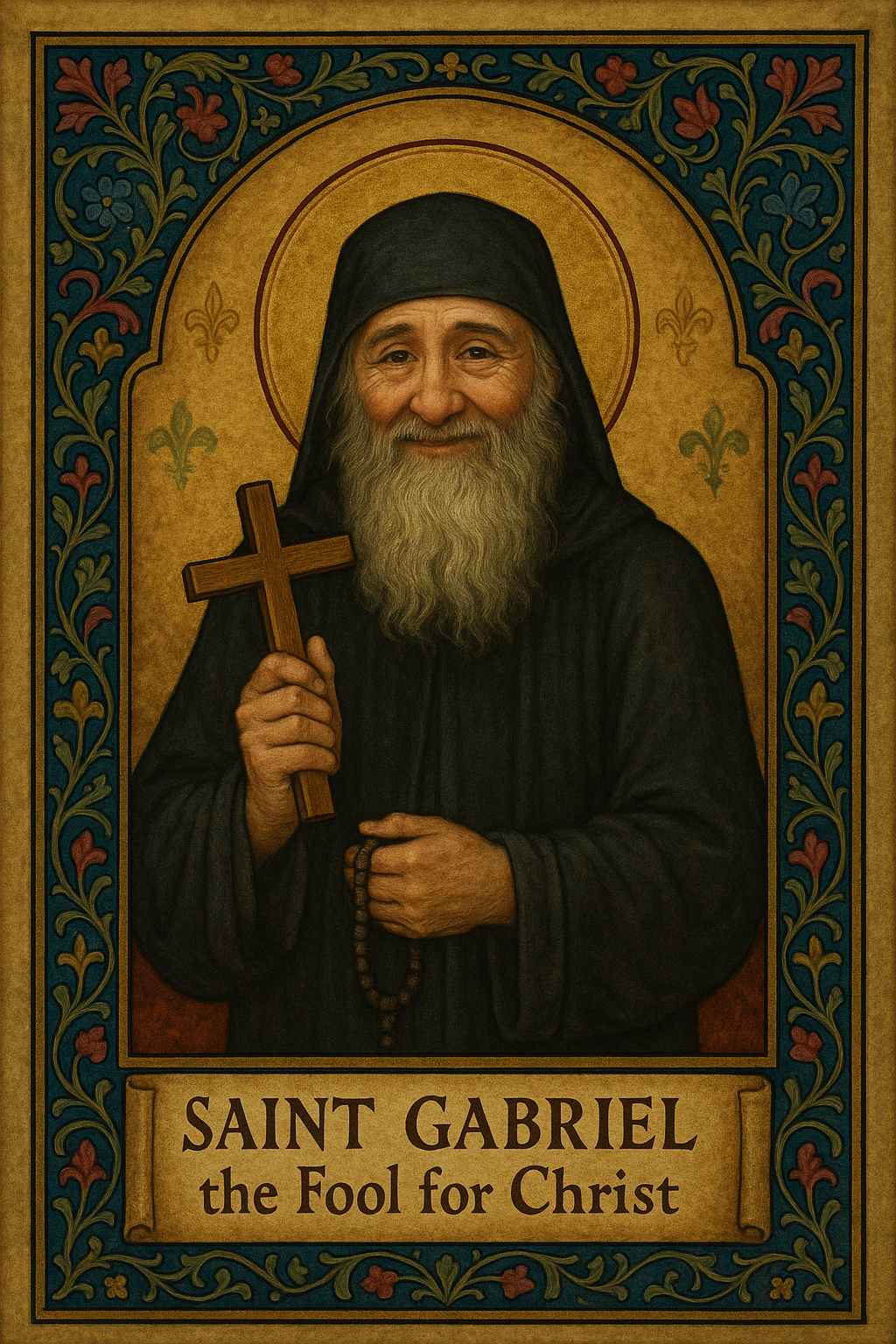
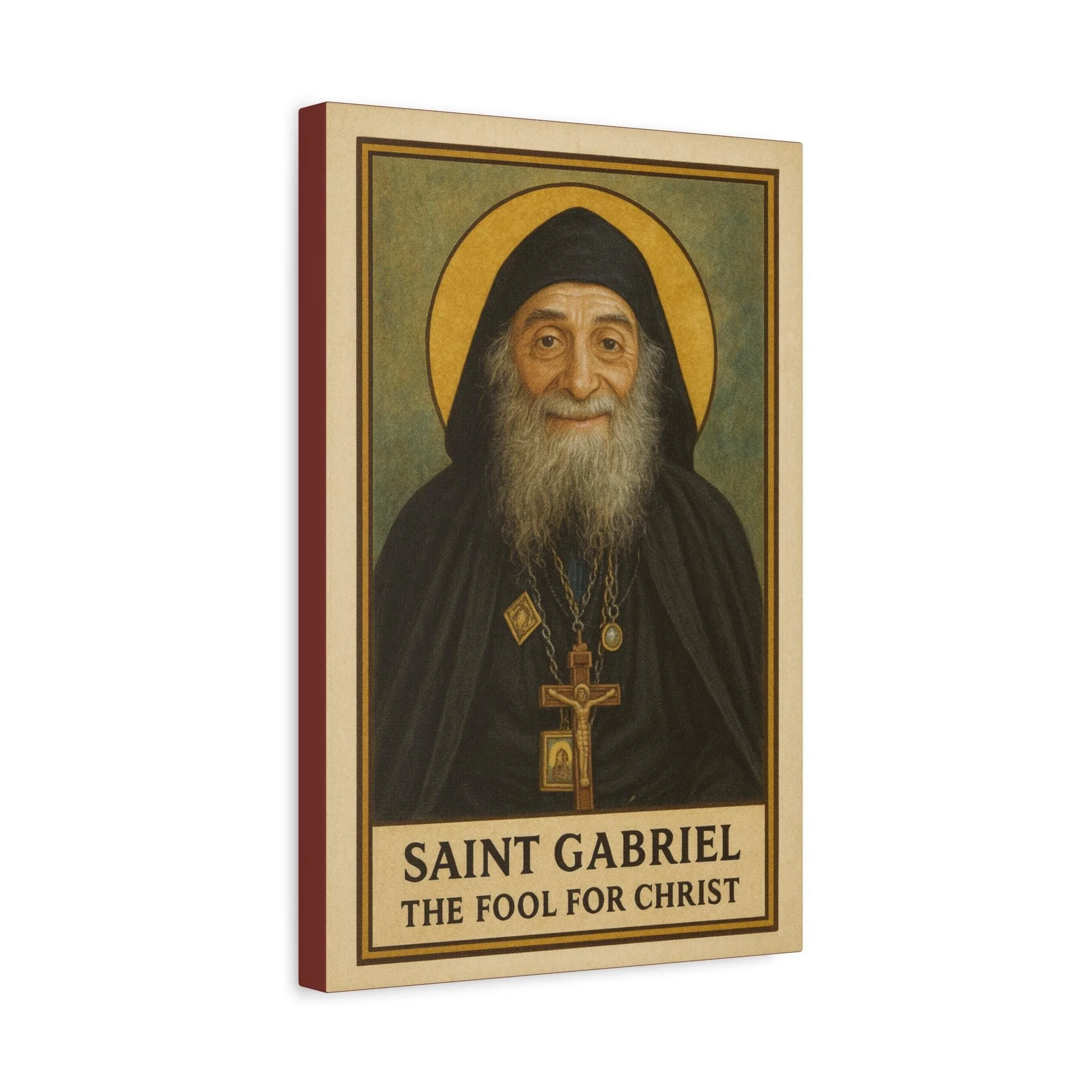
Saint Gabriel the Fool for Christ Prayer Card – Patron for Emotional Healing, Freedom from Fear & Inner Peace After Trauma

-
Saint Gabriel was born in Tbilisi, Georgia, in 1929 and grew up amid instability, loss, and political oppression. His childhood was marked by poverty and grief, yet even as a boy he gravitated toward prayer. While other children played, Gabriel built small hidden shrines and spoke to Christ quietly, sensing from an early age that his life would not follow ordinary paths.
As he entered adulthood, he pursued monastic life despite fierce resistance from Soviet authorities who actively suppressed Christianity. Churches were monitored. Believers were mocked or punished. Faith was treated as psychological weakness.
Gabriel entered monasticism anyway.
His early years were filled with hidden fasting, long nights of prayer, and complete detachment from material comfort. He desired anonymity, yet suffering found him regardless. Over time, emotional trauma, physical hardship, and social rejection became constant companions.
Rather than protecting himself from humiliation, Gabriel leaned into it.
He adopted the ancient path of holy foolishness, intentionally appearing unstable so that pride could be stripped away and Christ could be exalted without self-glory. He wandered barefoot. He lived among ruins. He spoke in paradoxes. He allowed ridicule to shape his humility.
Yet beneath this outward disorder lived extraordinary spiritual discipline.
He prayed for hours daily. He secretly baptized people. He reconciled broken families. He counseled those crushed by despair. Visitors who approached him respectfully found piercing spiritual insight and deep tenderness.
His interior struggle was immense. He carried memories of persecution, long seasons of hunger, and years of isolation. He wrestled with exhaustion and emotional wounds, yet he transformed every ache into intercession. He believed suffering purified love.
In his later years, he lived quietly at Samtavro Monastery, where nuns witnessed his gentleness and prophetic sensitivity. People arrived burdened by anxiety, spiritual oppression, and emotional collapse. Many left lighter than they arrived.
He reposed in peace in 1995.
After his death, testimonies of healing multiplied, particularly involving emotional restoration, release from fear, and renewed faith after trauma. He was glorified as a saint in 2012.
Saint Gabriel did not teach theology.
He taught surrender.
-
Saint Gabriel the Fool for Christ is widely known as an intercessor for emotional healing and spiritual peace after trauma.
He speaks especially to those whose suffering lives beneath the surface.
Patron Saint Of:
Emotional healing after trauma
Anxiety relief
Freedom from fear
Spiritual exhaustion
Intrusive thoughts
Inner peace after persecution
Courage to live authentically for Christ
Miracles and Ongoing Intercession
Many who pray through Saint Gabriel describe profound emotional shifts rather than dramatic external signs. Anxiety softens. Fear loosens its grip. Sleep returns after long disturbance. Others speak of sudden clarity following years of confusion.
Some experience reconciliation within families. Others find courage to return to prayer after long spiritual dryness.
His miracles move quietly.
They arrive as calm replacing panic.
They arrive as hope entering wounded memories.
They arrive as peace settling into overstimulated hearts.Saint Gabriel teaches that Christ heals the soul before He heals circumstances.
-
Traditional Prayer
Holy Father Gabriel, Fool for Christ and servant of divine love, pray for us. Heal our wounded hearts, deliver us from fear, and lead us into Christ’s peace. Amen.
Personal Prayer
Saint Gabriel, companion of the wounded and guardian of broken hearts, pray for me.
You understand fear that lives inside the body. You know what it is to carry trauma quietly while continuing to love.
I bring you my anxiety.
I bring you my memories.
I bring you the places where peace feels distant.Intercede for my healing.
If fear still governs my reactions, ask Christ to calm me.
If trauma still echoes in my thoughts, ask Christ to restore me.
If emotional exhaustion weighs on my spirit, ask Christ to renew me.Teach me how to surrender control. Teach me how to trust when life feels unsafe. Teach me how to remain gentle even when I am wounded.
Stand beside those overwhelmed by anxiety.
Stand beside those recovering from spiritual abuse.
Stand beside anyone longing for rest but unsure how to receive it.Saint Gabriel, you carried divine peace through unimaginable hardship.
By your prayers, may Christ quiet my nervous system, heal my heart, and surround me with His presence.
Amen.
-
Common Questions (FAQ)
Q: What is Saint Gabriel the Fool for Christ known for?
He is known for holy foolishness, deep humility, and powerful intercession for emotional healing, freedom from fear, and spiritual restoration.Q: When is Saint Gabriel’s feast day?
He is commemorated on November 2 in the Eastern Orthodox calendar.Q: Which Christian traditions venerate Saint Gabriel?
He is venerated in the Eastern Orthodox Church, especially within the Georgian tradition.Q: Why do people pray to Saint Gabriel for anxiety or trauma?
Because he endured profound persecution and emotional suffering himself, and many experience peace, courage, and inner healing through his intercession.