 Image 1 of 1
Saint Giovanni Calabria Prayer Card – For Trust in Divine Providence, Financial Worry, Caregivers & Those Who Feel Abandoned
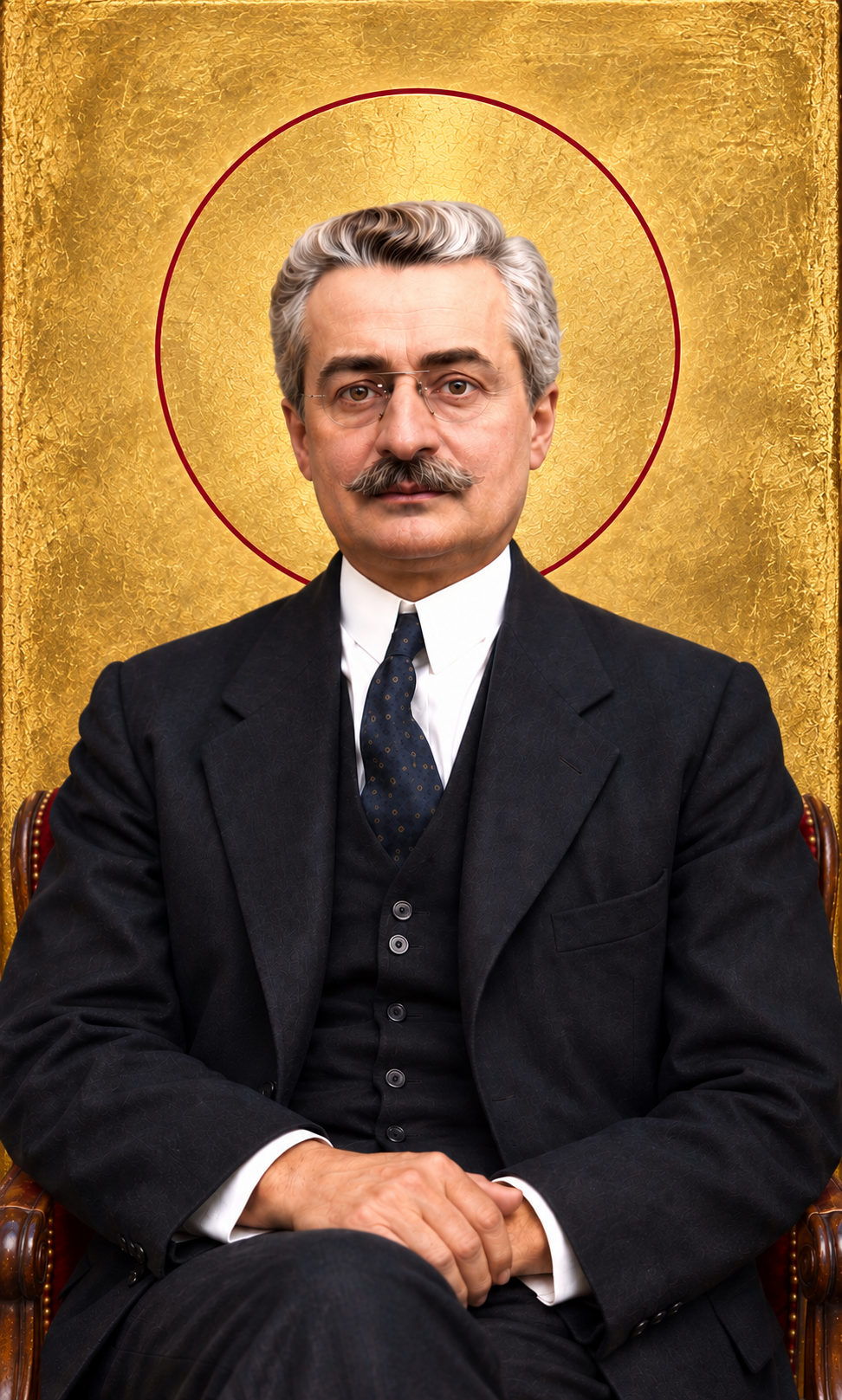
Saint Giovanni Calabria, also known in English as Saint John Calabria, was an Italian priest, founder, spiritual father, and extraordinary apostle of Divine Providence whose life proclaimed one central truth: God is not distant from His children. He is a Father who knows them, loves them, and remains present even when the future appears uncertain.
Born into severe poverty, Giovanni understood from childhood what it meant to worry about money, education, work, and an uncertain future. Those experiences did not disappear when he became a priest. Instead, they helped form a spirituality of radical confidence in God that eventually inspired religious communities, homes for abandoned children, care for the sick and elderly, missionary work, priestly formation, and assistance to people whom society had pushed aside.
Saint Giovanni Calabria can be especially meaningful for those carrying financial worries, caregivers exhausted by responsibility, families facing uncertainty, people who feel forgotten or abandoned, those discerning a vocation, and anyone struggling to trust that God is still working when circumstances seem impossible. His spirituality did not deny real problems. It taught Christians to face those problems while remembering that they remain in the hands of a loving Father.
Each prayer card measures 2.5" x 4.25", is handmade in Austin, Texas, printed on museum-quality photo paper rather than ordinary cardstock, and double laminated for durability. Every card is made to order and prepared prayerfully, with the recipient and their intentions brought before Christ while asking Saint Giovanni Calabria to intercede for their needs.
THE LIFE & STORY OF SAINT GIOVANNI CALABRIA
Giovanni Calabria was born in Verona, Italy, on October 8, 1873, the seventh and youngest child of Luigi Calabria and Angela Foschio. His father worked as a cobbler, while his mother worked as a domestic servant and was remembered as a woman of deep Christian faith.
Poverty shaped Giovanni's childhood from the beginning. After his father's death, the family's circumstances became so difficult that Giovanni had to interrupt his elementary education and find work rather than simply continue toward the future he desired.
Yet he already felt drawn toward the priesthood. That calling appeared difficult to pursue for a boy whose family could barely provide ordinary necessities, but the course of his life would repeatedly demonstrate the principle that later became the foundation of his spirituality: God can open a path where human resources appear insufficient.
POVERTY BECAME HIS TEACHER
Giovanni never treated poverty as an abstract theological subject because he had experienced it personally. He understood the frustration of having a future interrupted because there was not enough money, and he knew how easily poverty could leave a child or family dependent upon the generosity of others.
Father Pietro Scapini, rector of San Lorenzo, recognized Giovanni's potential and helped prepare him privately for the examinations necessary to continue his studies. Through that assistance, a path toward the seminary opened again.
The experience left a permanent mark on Giovanni. Someone had noticed him when circumstances might easily have ended his vocation, and later he would spend his own life noticing people whom others might overlook.
HIS PATH TOWARD THE PRIESTHOOD
Giovanni's education was interrupted again when he was required to perform military service. Even there, accounts of his life emphasize his willingness to perform humble and difficult duties while remaining open about his Christian faith.
After completing military service, he returned to his theological studies. His path toward priesthood had already been filled with delays and obstacles, but those interruptions helped teach him that a vocation does not depend upon everything unfolding according to a perfect human timetable.
For people whose own lives seem delayed, redirected, or financially impossible, Giovanni's story offers an important perspective. A closed door at one stage of life does not necessarily mean that God's call has disappeared.
THE ABANDONED BOY AT HIS DOOR
One of the defining moments of Giovanni Calabria's life occurred in November 1897 while he was still a theology student. Returning after visiting sick people in a hospital, he found a young boy outside his home who had nowhere safe to go.
Giovanni brought the child inside and shared his small room with him. There was no established institution, organized charity, or large financial reserve behind the decision. There was simply a vulnerable child in front of him and a Christian who believed that love required a response.
That encounter became the beginning of Giovanni's lifelong work for abandoned and vulnerable children. What eventually became a major charitable mission began with the willingness to make room for one person.
SERVING THE SICK
Only months later, Giovanni gathered clerics and laypeople into an association dedicated to helping poor people who were sick. His developing spirituality already joined intense confidence in God with practical care for human suffering.
This balance is essential for understanding Saint Giovanni Calabria. Trusting Divine Providence did not mean refusing to act because God would somehow take care of everything. Giovanni believed that Providence frequently works through people who make themselves available to serve someone else's need.
A sick person still required care, an abandoned child still needed a home, and a hungry person still needed food. Giovanni trusted God while simultaneously doing the work placed before him.
ORDAINED TO THE PRIESTHOOD
Giovanni Calabria was ordained a priest on August 11, 1901. He subsequently served as a parish priest and seminary confessor while continuing the charitable work that had already become central to his life.
He devoted particular attention to Confession, spiritual direction, the poor, and people pushed toward the margins of society. Priesthood did not separate him from the problems of ordinary people. Instead, it gave those encounters an even deeper place within his vocation.
The charitable priest of Verona gradually attracted others who wanted to share his vision. A personal response to individual needs began developing into a permanent work.
CASA BUONI FANCIULLI
In 1907, Giovanni formally established the Casa Buoni Fanciulli, commonly translated as the Good Children's Home. The work began with seven poor and abandoned boys and eventually became centered at San Zeno in Monte in Verona.
Giovanni did not see these children merely as social problems requiring management. He understood them as sons of the same heavenly Father in whose Providence he placed his own life.
This conviction shaped the atmosphere of his work. Children who had experienced abandonment were to encounter not simply institutional care but evidence that their lives still possessed dignity, purpose, and value before God.
THE POOR SERVANTS OF DIVINE PROVIDENCE
Men began joining Giovanni and sharing his life of prayer, fraternity, poverty, and service. From this community developed the Poor Servants of Divine Providence, a congregation devoted particularly to the poor, abandoned, marginalized, sick, and elderly.
A corresponding community of women eventually developed as the Poor Women Servants of Divine Providence. Together, these communities carried Giovanni's spirituality beyond the limits of what one priest could accomplish personally.
The name of his congregation reveals the heart of the entire mission. They were servants of Divine Providence because Giovanni wanted their lives themselves to become evidence that God's fatherly care remains active in the world.
“GOD IS NOT A STRANGER”
Giovanni expressed the mission of his work with remarkable clarity when he said that it existed “to show the world that Divine Providence exists, that God is not a stranger, but that He is a Father.” This was not a secondary devotion in his spiritual life but the lens through which he understood the Gospel.
He returned continually to Christ's command to seek first the Kingdom of God and His righteousness. Giovanni believed that Christians should take those words seriously enough to structure their lives around them.
The Christian, in his understanding, is not an orphan attempting to survive in an indifferent universe. The Christian lives beneath the gaze of a Father whose Providence may remain mysterious but is never absent.
“WE ARE ALWAYS IN GOD'S HANDS”
One of Saint Giovanni Calabria's most memorable sayings captures this confidence beautifully: “We are always in God's hands, therefore in good hands.” The simplicity of the statement hides the difficulty of actually living according to it.
Giovanni had known poverty, uncertainty, responsibility for vulnerable people, the financial demands of charitable institutions, war, illness, spiritual suffering, and the burden of leading communities. His trust was therefore not based upon a life in which nothing went wrong.
He believed that difficulty did not remove a person from God's hands. Even when he could not see how a situation would be resolved, the Father remained Father.
FOR FINANCIAL WORRY
Saint Giovanni Calabria can be particularly meaningful for someone experiencing financial stress. His childhood poverty and the enormous practical demands of his later charitable work meant that questions of resources were present throughout his life.
His confidence in Providence should not be confused with irresponsibility or indifference toward ordinary obligations. Giovanni believed people should work, discern, serve, and use the abilities God had given them while refusing to allow fear about material security to become greater than faith.
Someone worried about employment, bills, housing, business difficulties, family expenses, or an uncertain financial future may therefore find a powerful spiritual companion in Saint Giovanni Calabria. His example encourages responsible action while continually returning the heart to the conviction that our lives remain within God's Providence.
FOR THOSE WHO FEEL ABANDONED
A large part of Giovanni's ministry was directed toward people who had been abandoned, marginalized, or easily forgotten. His homes received children without stable families, while his communities eventually cared for the sick, elderly, and others who required sustained assistance.
This makes his spirituality especially meaningful for someone struggling with rejection or loneliness. Giovanni's entire mission insisted that being overlooked by other people does not mean being overlooked by God.
For a person carrying wounds from abandonment, family breakdown, social isolation, or the belief that no one sees what they are enduring, Saint Giovanni Calabria points toward the fatherhood of God. Human relationships may fail, but God's knowledge of His children does not disappear.
FOR CAREGIVERS
Giovanni's spirituality also speaks powerfully to caregivers because his confidence in God continually became practical service. His communities cared for children, sick people, elderly people, and those whose needs could not be solved through a single act of generosity.
Long-term caregiving requires patience that is very different from performing one dramatic act of charity. Someone must continue preparing food, cleaning rooms, administering care, listening, teaching, comforting, and returning the next day when the same needs remain.
Parents, nurses, physicians, hospice workers, teachers, clergy, religious, social workers, and family caregivers may therefore recognize something of their own vocation in Giovanni's life. His example shows that hidden and repetitive acts of care can become a profound expression of the Gospel.
FORMING PRIESTS WITHOUT CLAIMING THEM FOR HIMSELF
Giovanni was deeply concerned for young men whose poverty made priestly formation difficult or impossible. He opened his houses to candidates who lacked the financial resources ordinarily required to pursue their vocation.
What makes this work especially revealing is that he did not insist that those men eventually join his own congregation. They could continue toward diocesan priesthood or another religious community according to the vocation they discerned.
Giovanni was therefore not simply building an organization. He wanted people to become what God was calling them to become, even when another part of the Church would ultimately receive the fruits of his assistance.
MISSIONARY EXPANSION
Giovanni's vision eventually extended far beyond Verona. In 1934, four members of his community were sent to Vijayawada in India, beginning an international missionary dimension that continued expanding after his death.
The movement outward reflected his understanding of Providence. If every human being is a child of the same Father, Christian charity cannot remain permanently enclosed within familiar geographical boundaries.
His religious family would eventually serve in numerous countries and cultures. The small work that began with abandoned children in Verona became an international expression of the spirituality he had received.
THE CITADEL OF CHARITY
Giovanni's concern eventually expanded to elderly and sick people through works associated with the Cittadella della Carità, or Citadel of Charity. Once again, his spiritual confidence produced practical institutions rather than remaining merely devotional language.
This aspect of his life is important because it prevents a misunderstanding of Divine Providence. Giovanni did not respond to sickness by simply telling people to pray harder, nor did he respond to poverty by telling people that God would provide while leaving them unaided.
He built places where people could actually be cared for. Providence, in Giovanni's spirituality, frequently acquired human hands.
HIDING A JEWISH DOCTOR DURING THE NAZI-FASCIST PERSECUTION
During the Nazi-Fascist persecution of Jews, Giovanni's commitment to human dignity took a particularly courageous form. A Jewish physician, Dr. Mafalda Pavia, was sheltered among the women of his religious family and concealed under the identity of a religious sister known as Sister Beatrice.
The danger involved was real. Giovanni and those cooperating with him were not performing symbolic acts of solidarity but helping protect a woman whose Jewish identity placed her life in danger.
Mafalda Pavia survived the persecution. She later wrote to Pope Paul VI during Giovanni Calabria's cause for sainthood and described his life in language recalling Saint Paul's great hymn to charity.
This episode reveals the seriousness of Giovanni's belief that every person is a child of God. The principle became costly precisely when another person's safety required courage.
SAINT GIOVANNI CALABRIA AND C. S. LEWIS
One of the most fascinating and unexpected parts of Giovanni Calabria's life was his friendship with C. S. Lewis, the Anglican Christian writer who would become famous for The Chronicles of Narnia, Mere Christianity, and The Screwtape Letters.
In 1947, Giovanni read an Italian translation of The Screwtape Letters and decided to write to Lewis. Giovanni did not know English, while Lewis did not know enough Italian for an extended correspondence, so the two men found a remarkable solution.
They wrote to one another in Latin.
What began as a letter from an Italian Catholic priest to an Anglican Oxford scholar developed into a genuine Christian friendship. Their correspondence continued until Giovanni's death in 1954 and included reflections on Christianity, the condition of the modern world, prayer, Christian unity, and the responsibilities of believers during troubled times.
A CANONIZED SAINT WRITING TO THE AUTHOR OF NARNIA
The correspondence is especially striking today because Giovanni Calabria would later be canonized. C. S. Lewis was therefore exchanging spiritual letters with a man whom the Catholic Church would eventually formally recognize as a saint.
The relationship reveals something important about both men. Neither abandoned his convictions, yet their theological differences did not prevent genuine affection, mutual prayer, and recognition of the Christianity they shared.
Their letters were later collected and published, preserving an unusual twentieth-century conversation between one of Catholicism's modern saints and one of the English-speaking world's most influential Christian writers.
CHRISTIAN UNITY
Giovanni's friendship with Lewis belonged to a much broader concern for Christian unity. He corresponded and maintained relationships with Protestant and Orthodox Christians and prayed intensely for the healing of divisions among followers of Christ.
Accounts of his life summarize his method with a revealing description: he wrote, spoke, and loved rather than turning every encounter into an argument. Giovanni believed that truth mattered deeply, but he also believed Christians could begin building unity by loving one another as Christians before every theological disagreement had been resolved.
His approach makes him especially meaningful for Christians living within families divided between Catholic, Orthodox, Protestant, or other Christian traditions. Giovanni demonstrates that fidelity to one's own faith does not require treating every Christian outside one's communion as an enemy.
THE OUR FATHER AND HIS SPIRITUALITY
The prayer that perhaps best summarizes Giovanni Calabria's spirituality is the Our Father. He described it as “the holy Gospel in miniature,” because its opening words contain the truth around which his entire life revolved.
God is Father, and Christians are His children. From that truth comes trust, prayer, dependence, forgiveness, care for others, and confidence that human history has not escaped God's Providence.
Giovanni did not want Christians merely to recite the words “Our Father.” He wanted them to live as though God truly were their Father.
DIVINE PROVIDENCE DOES NOT MEAN PASSIVITY
Giovanni's trust in Providence was radical, but it was never passive. His life was extraordinarily active, filled with priestly ministry, charitable institutions, correspondence, care for the poor, formation of religious communities, assistance to vocations, missionary expansion, ecumenical relationships, and service during periods of political upheaval.
This is what makes his spirituality useful for people facing difficult decisions. Trusting God does not necessarily mean waiting without acting. It means acting faithfully without pretending that everything ultimately depends upon our ability to control the outcome.
Giovanni worked intensely while entrusting results to God. He offers a spirituality capable of holding responsibility and surrender together.
WHEN GOD'S PROVIDENCE IS HARD TO SEE
Confidence in Divine Providence becomes most difficult precisely when events do not appear providential. Giovanni's later life included profound spiritual suffering, and those close to him recognized periods in which his participation in Christ's suffering seemed particularly intense.
His faith was therefore tested not only by poverty or practical difficulties but by interior darkness. The saint who taught others to trust the Father's Providence also had to continue trusting when consolation was not immediately available.
That part of his life makes his message more credible. He did not teach trust because trust was always easy for him, but because he believed the Father remained faithful even in darkness.
HIS FINAL OFFERING FOR POPE PIUS XII
Near the end of Giovanni's life, Pope Pius XII became gravely ill. The official account of Giovanni's life preserves the tradition that he offered his own life to God for the suffering Pope.
Giovanni died on December 4, 1954. Pius XII, whose condition had been extremely serious, unexpectedly recovered and lived for almost another four years.
The Vatican biography recounts this episode as Giovanni's final act of charity. Pius XII, who did not know about Giovanni's private offering when news of the priest's death reached him, sent condolences and described him as a “champion of evangelical charity.”
HIS DEATH
By the time Giovanni Calabria died in 1954, the small acts of charity that had begun decades earlier had developed into communities and institutions capable of continuing without him. Yet the deepest inheritance he left was not a collection of buildings.
It was a way of understanding God.
God is Father, Providence is real, the poor belong to us, charity must become practical, and Christians should not live as though they have been abandoned.
Large crowds accompanied Giovanni's funeral in Verona. The poor priest who had once struggled to continue his own education had become a spiritual father to thousands.
BEATIFICATION AND CANONIZATION
Pope Saint John Paul II beatified Giovanni Calabria in Verona on April 17, 1988. The Church's recognition focused upon the heroic Christian charity, faith, sacrifice, poverty, and confidence in Divine Providence that had characterized his life.
John Paul II later canonized him in Rome on April 18, 1999. Saint Giovanni Calabria was thereby formally presented to the universal Church as an example of holiness rooted in the Gospel and expressed through concrete love for those most in need.
His canonization did not transform an obscure devotional idea into his message. It confirmed the life of a priest who had spent decades insisting that Christians must trust the fatherhood of God and make that trust visible through charity.
HIS MOST BEAUTIFUL QUOTES
Saint Giovanni Calabria left many letters, reflections, and spiritual teachings. His words repeatedly return to God the Father, abandonment to Providence, Christian hope, charity, prayer, and the conviction that fear should never become greater than faith.
One of the clearest summaries of his spirituality is: “We are always in God's hands, therefore in good hands.” He also taught, “There is no mother who loves her creature as much as God loves every one of us,” expressing the extraordinary tenderness with which he understood the Father's care.
During difficulties he encouraged confidence rather than fear, saying, “At the helm of the ship is our heavenly Father, what is there to be afraid of? Storms will come, difficulties will come; no fear.” These words do not promise a life without storms. They proclaim that the storm does not remove God from the helm.
THE QUOTE ON THE PRAYER CARD
The prayer card features the words “We are always in God's hands, therefore in good hands.” This short statement captures the heart of Giovanni Calabria's spirituality because it transforms Divine Providence from an abstract doctrine into a personal act of trust.
The statement can be particularly powerful during periods of uncertainty when someone does not know what will happen next. It does not claim that every outcome will be easy, but it reminds the Christian that no circumstance places a person outside the hands of God.
OFFICIAL INTERCESSORY PRAYER TO SAINT GIOVANNI CALABRIA
The spiritual family founded by Saint Giovanni Calabria continues to use an official intercessory prayer asking God for the grace to live according to his example. The prayer beautifully joins trust in Providence with love for the poor and abandonment of anxiety.
“O God, our Father, we praise you for your Providence, with which you govern the universe and our lives. We thank you for the gift of evangelical holiness that you granted to your servant, St. John Calabria. On his example, desirous only of the coming of your Kingdom, we abandon to you all our worries. Grant us your Spirit to make our hearts simple and available to your will. Enable us to love our brothers and sisters, above all the poorest and most abandoned, that one day, together with them, we may reach the unending joy, where You await us with your Son, our Lord Jesus Christ. Through the intercession of St. John Calabria grant us the grace we now ask you with confidence. Amen.”
This prayer is especially appropriate when someone is carrying a specific intention involving uncertainty, financial difficulty, family needs, caregiving, vocation, abandonment, or the desire to trust God more completely.
FOR SOMEONE WHO IS WORRIED ABOUT THE FUTURE
Giovanni Calabria's prayer card can make a meaningful gift for someone entering a period in which the future feels unstable. A job loss, business problem, move, family crisis, unexpected expense, caregiving responsibility, or vocational decision can quickly create the impression that everything depends upon finding the perfect solution immediately.
Giovanni's spirituality provides another foundation. Christians still discern, work, plan, and make responsible decisions, but they do so while remembering that the future belongs first to God.
His words, “We are always in God's hands, therefore in good hands,” can serve as a simple daily reminder when the mind continually returns to everything that might go wrong.
FOR PARENTS AND FAMILIES
The history of Giovanni's work with abandoned children gives his prayer card particular meaning for parents, foster parents, adoptive families, grandparents, teachers, and anyone responsible for the well-being of children. His ministry repeatedly affirmed that children should never be treated as inconveniences or forgotten because their circumstances are difficult.
Families carrying financial pressure may also find his life especially encouraging. Giovanni knew what it meant for poverty to affect a child's education and future, yet his own story demonstrates how God's Providence can work through unexpected people, relationships, and opportunities.
His intercession may therefore be sought for children in difficult circumstances, families under financial strain, young people without stable support, and parents trying to provide faithfully when resources feel inadequate.
FOR PRIESTS, SEMINARIANS AND THOSE DISCERNING VOCATION
Because poverty repeatedly threatened Giovanni's own path toward priesthood, his later concern for poor seminarians had a deeply personal foundation. He understood that financial circumstances should not automatically silence a genuine vocation.
Saint Giovanni Calabria can therefore be especially meaningful for seminarians, priests, religious, and people discerning whether God may be calling them toward consecrated life or ministry. His story also offers encouragement to anyone whose vocation has taken longer or followed a more complicated route than expected.
A delayed path is not necessarily a failed path. Giovanni's life demonstrates that Providence may work through delays, benefactors, interruptions, and circumstances that are impossible to understand while they are occurring.
A SAINT FOR ORDINARY TRUST
Many saints are remembered primarily because of dramatic martyrdoms, extraordinary mystical experiences, or spectacular miracles. Giovanni Calabria's particular strength lies in showing how radical holiness can grow from repeatedly trusting God amid ordinary responsibilities.
Children still had to be fed, institutions still required leadership, sick people still needed attention, letters still needed answers, and difficult decisions still had to be made. Giovanni's holiness developed within the pressure of those responsibilities rather than apart from them.
That makes him particularly accessible to people whose spiritual lives are being lived inside work, family responsibility, financial pressure, caregiving, and uncertainty. His message is not that ordinary problems disappear, but that ordinary problems can be lived within extraordinary confidence in the Father.
FAQ
Who was Saint Giovanni Calabria? Saint Giovanni Calabria, also called Saint John Calabria, was an Italian Catholic priest born in Verona in 1873. He founded the Poor Servants and Poor Women Servants of Divine Providence and devoted his life especially to abandoned children, the poor, sick people, elderly people, priestly formation, Christian unity, and trust in God the Father.
Why is Saint Giovanni Calabria associated with Divine Providence? Divine Providence stood at the center of his spirituality and the mission he entrusted to his religious family. Giovanni wanted the world to understand that God is not a stranger but a loving Father whose care remains active even when human circumstances are uncertain.
Is Saint Giovanni Calabria a patron saint of financial problems? The Church has not formally designated him as an official patron saint of financial problems. However, his childhood poverty and lifelong spirituality of trusting Divine Providence make him especially meaningful for Christians praying during financial hardship, employment uncertainty, business difficulties, or anxiety about material needs.
Why is Saint Giovanni Calabria meaningful for caregivers? Much of his life's work involved caring for abandoned children, poor people, the sick, elderly people, and others who needed sustained assistance. His spirituality joined prayer and confidence in God with concrete acts of care, making his example especially meaningful for people whose vocation involves serving vulnerable others.
Did Giovanni Calabria really correspond with C. S. Lewis? Yes. Their correspondence began in 1947 after Giovanni read an Italian translation of The Screwtape Letters, and because of their language limitations they corresponded in Latin. Their letters discuss Christianity, prayer, Christian unity, the state of the world, and their shared desire for deeper fidelity to Christ.
Was C. S. Lewis Catholic? No. Lewis was an Anglican Christian, while Giovanni Calabria was a Catholic priest. Their friendship is significant precisely because they remained members of different Christian communions while developing genuine spiritual affection, mutual prayer, and dialogue centered on Christ.
Did Saint Giovanni Calabria help Jews during World War II? Yes. During the Nazi-Fascist persecution, the Jewish physician Mafalda Pavia was hidden among the women of his religious community and given the identity of Sister Beatrice. She survived and later testified to Giovanni's extraordinary charity.
What did Saint Giovanni Calabria teach about worry? His spirituality continually returned to confidence in God's fatherly Providence. His saying, “We are always in God's hands, therefore in good hands,” summarizes his conviction that fear about the future should never become greater than trust in God.
What did Saint Giovanni Calabria teach about the Our Father? He described the Our Father as “the holy Gospel in miniature.” For Giovanni, calling God “Father” was not merely a form of words but the foundation for understanding Providence, prayer, trust, forgiveness, and Christian charity.
Did Saint Giovanni Calabria work with abandoned children? Yes. His lifelong work for abandoned children grew from his personal encounter with a vulnerable boy whom he sheltered while still studying for the priesthood. The work later developed into the Casa Buoni Fanciulli and became one of the foundations of his religious mission.
What religious order did Saint Giovanni Calabria found? He founded the Poor Servants of Divine Providence, and a women's community developed as the Poor Women Servants of Divine Providence. Their mission reflects his spirituality of faith in God the Father, confidence in Divine Providence, Gospel simplicity, and preferential care for the poor and abandoned.
Can I ask Saint Giovanni Calabria to pray for financial help? Christians may ask any saint to intercede for their needs, including financial difficulties. Giovanni is particularly appropriate for these intentions because his spirituality focused so intensely upon Divine Providence and because he personally experienced poverty and responsibility for works that depended upon God's provision.
Can I ask Saint Giovanni Calabria to pray for someone who feels abandoned? Yes. His ministry was repeatedly directed toward people whom others had overlooked, especially abandoned children, the poor, sick people, and those living on society's margins. Asking his intercession can be especially meaningful when praying for someone suffering from loneliness, rejection, insecurity, or lack of support.
Who would this Saint Giovanni Calabria prayer card make a meaningful gift for? It can be especially meaningful for someone facing financial worry, employment uncertainty, caregiving responsibilities, family hardship, vocational discernment, loneliness, or fear about the future. It is also a thoughtful card for admirers of C. S. Lewis, people devoted to Divine Providence, priests and seminarians, foster or adoptive families, healthcare workers, and anyone trying to develop greater trust in God.
THE MAIN MESSAGE OF SAINT GIOVANNI CALABRIA'S LIFE
Saint Giovanni Calabria's life asks Christians to reconsider what they really mean when they say that God is their Father. If God is truly Father, then trust cannot exist only when circumstances are comfortable and predictable.
Giovanni knew poverty, uncertainty, responsibility, suffering, war, spiritual darkness, and the tremendous practical demands of caring for vulnerable people. Yet he continued returning to the conviction that Providence had not disappeared.
His response was not passive. He opened homes, cared for children, served the sick, formed priests, founded religious communities, sent missionaries abroad, protected a Jewish woman from persecution, worked for Christian unity, and encouraged people throughout the world to trust the Father more completely.
That combination of radical trust and practical charity is the heart of his witness. Saint Giovanni Calabria reminds us that faith in Divine Providence does not mean ignoring the needs directly in front of us. It means serving those needs faithfully while remembering that the final weight of the world does not rest upon our shoulders.
For anyone carrying financial worry, responsibility for another person, an uncertain future, a difficult vocation, or the fear of being forgotten, Giovanni's message remains remarkably simple: we are still in God's hands, and therefore we are still in good hands.