 Image 1 of 1
Saint Giuseppe Moscati Prayer Card | For Doctors, Medical Workers, Healing & the Sick
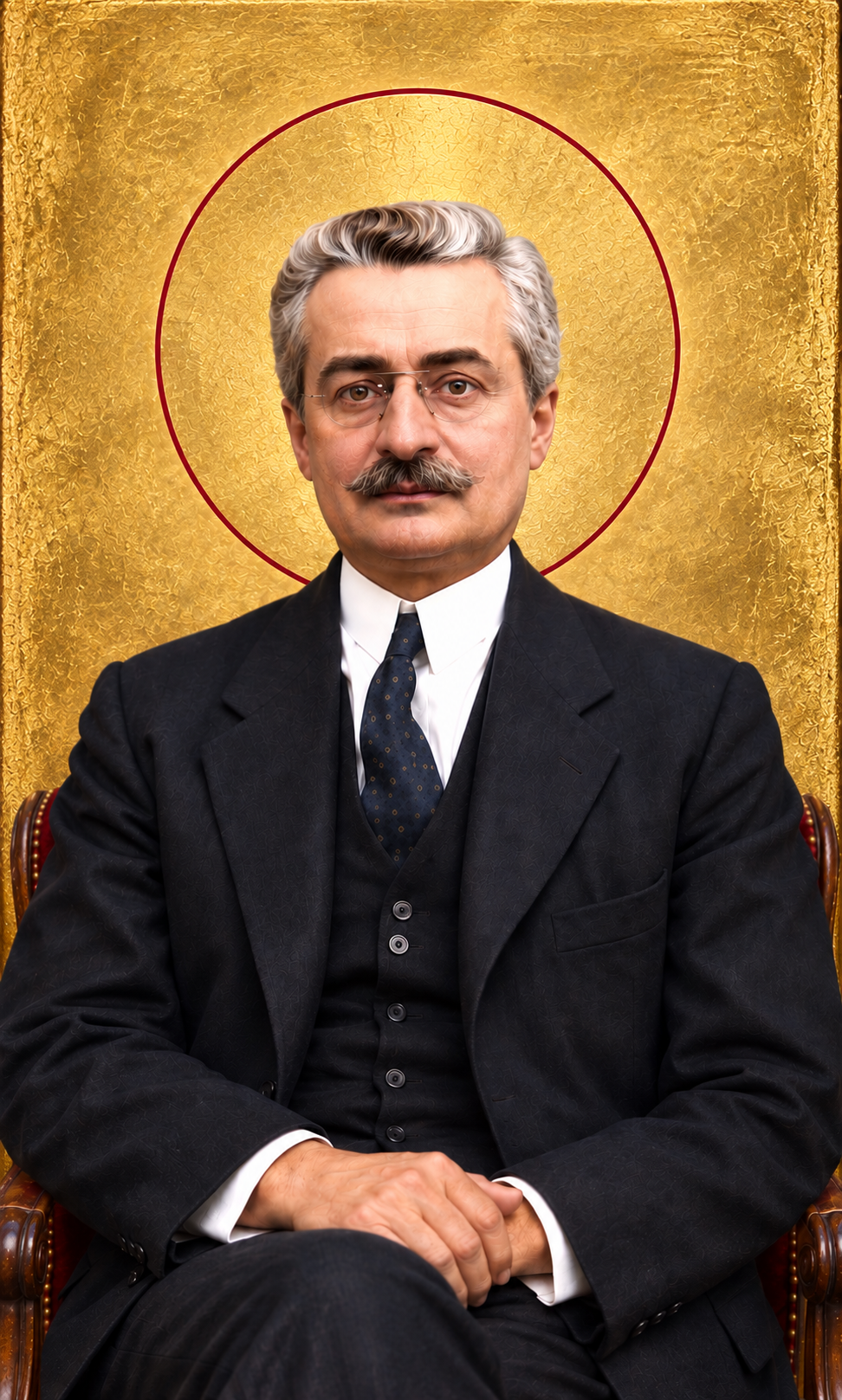
Saint Giuseppe Moscati was an Italian physician, medical researcher, university professor, and Catholic layman whose life demonstrated an extraordinary union of scientific excellence, care for the sick, devotion to the Eucharist, and practical charity toward the poor. Born in 1880 and dying unexpectedly in 1927 at only forty-six, Moscati became so widely known for the holiness with which he practiced medicine that news of his death spread through Naples with the words, “The holy doctor has died.”
Saint Giuseppe is especially meaningful for doctors, physicians, nurses, medical students, researchers, pharmacists, hospital workers, caregivers, people facing serious illness, families praying for healing, the poor, and Christians trying to remain faithful while working in scientific or professional environments. Pope Saint John Paul II specifically presented him as a model for doctors, nurses, volunteers, and everyone involved in caring for the sick.
His life is particularly powerful for Christians working in medicine because Moscati refused to treat science and faith as enemies. He was a respected researcher and professor who approached scientific truth seriously while also maintaining a deeply sacramental Catholic life. The Vatican biography describes him as a first-rate scientist for whom there was no contradiction between faith and scientific investigation.
For people who are sick, Moscati offers something equally personal. He did not regard patients as medical problems or collections of symptoms. He believed the physician encountered an entire human person, body and soul, and repeatedly reminded younger doctors that their responsibility extended beyond merely writing prescriptions.
Each prayer card measures 2.5" x 4.25", is handmade in Austin, Texas, printed on museum-quality photo paper rather than ordinary cardstock, and double laminated for durability. Each card is prepared prayerfully with the recipient and their intentions lifted before Christ while asking Saint Giuseppe Moscati to intercede for the person who will receive it.
THE LIFE & STORY
Giuseppe Moscati was born on July 25, 1880, in Benevento, Italy, the seventh of nine children of Francesco Moscati and Rosa De Luca. He was baptized six days later, and his family eventually settled in Naples, the city with which nearly his entire medical and spiritual life would become associated.
His childhood was not separated from suffering. In 1893, his older brother Alberto, an artillery officer, suffered severe injuries after falling from a horse. Giuseppe helped care for his brother over the following years, experiencing both the possibilities and the limitations of medicine at a formative age. The Vatican biography notes that this experience may have influenced his decision to become a physician.
BECOMING A DOCTOR
Moscati entered medical studies at the University of Naples and graduated on August 4, 1903, receiving the highest marks. Within months he began competing for hospital positions in Naples, distinguishing himself immediately in demanding public examinations.
Beginning in 1904, he served at the famous Hospital of the Incurables, one of Naples' historic medical institutions. His career eventually included hospital medicine, laboratory medicine, physiological chemistry, teaching, clinical research, and leadership responsibilities.
A REAL MEDICAL SCIENTIST
Saint Giuseppe Moscati was not merely a charitable physician remembered because he happened to be religious. He was a serious medical scientist whose research gained national and international attention.
His scientific work concentrated particularly on glycogen and related metabolic subjects, and he held academic positions involving physiological chemistry, biological chemistry, laboratory investigation, physiology, and clinical medicine. In 1911 he received authorization to teach physiological chemistry, and in 1922 he achieved qualification in general medical clinic.
This aspect of his life makes him especially meaningful for physicians and scientists who sometimes encounter the idea that intellectual rigor somehow requires religious unbelief. Moscati's career was built on the conviction that genuine scientific truth could not ultimately contradict the God who is Truth.
FAITH & SCIENCE
Pope Paul VI emphasized this dimension of Moscati's life during his beatification, describing in him a remarkable harmony between science and faith. Moscati did not solve that relationship by weakening either side. He pursued scientific knowledge seriously while allowing his Catholic faith to determine how that knowledge should be used in service to human beings.
The Vatican biography describes his faith not as an abstract intellectual opinion but as the source of his entire life. His scientific work, medical practice, charity, prayer, and sacramental devotion formed a single Christian vocation.
THE DOCTOR WHO SAW CHRIST IN HIS PATIENTS
Moscati believed that Christ Himself was present in the suffering person. This conviction transformed medicine from merely a profession into a form of Christian service.
Pope Saint John Paul II emphasized during Moscati's canonization that the suffering of a patient reached him like the cry of one brother calling another for help. Moscati did not see relieving suffering as simply a contractual professional obligation. He believed God had placed him in medicine so that scientific knowledge could become an instrument of love.
That principle shaped the way he treated rich and poor alike, but it became especially visible in his treatment of the impoverished.
THE DOCTOR OF THE POOR
Moscati became famous for treating people who could not afford him. Rather than waiting comfortably for poor patients to reach his office, the Vatican biography records that he went into Naples' poorest and most neglected neighborhoods, treated people without charge, and even used his own earnings to help them.
His charity therefore went beyond offering discounted medical services. Medicine became a means of entering directly into the suffering of another person.
For someone working in healthcare today, this aspect of Moscati's life asks a difficult question: does professional success increase the capacity to serve others, or does it gradually make the professional more distant from those who need help most?
HE DID NOT SEPARATE BODY & SOUL
Moscati strongly resisted treating a patient as merely a biological organism. In words later quoted by Pope Saint John Paul II, he reminded a young physician that medicine involved not only bodies but souls requiring counsel and spiritual care.
Another saying preserved in a Vatican health-care publication expresses the same conviction:
“Blessed are we doctors, who are so often unable to defeat an illness; blessed are we if we remember that in addition to bodies we have before us immortal souls.”
For Moscati, acknowledging the soul did not mean neglecting medicine. It meant practicing medicine more completely, because the person suffering in the hospital bed possessed fears, relationships, conscience, hope, faith, and eternal dignity in addition to physical symptoms.
THE ERUPTION OF MOUNT VESUVIUS
One of the most dramatic events of Moscati's medical career occurred during the 1906 eruption of Mount Vesuvius.
Moscati personally intervened to protect patients at the hospital in Torre del Greco, whose location placed its occupants in danger during the eruption. The official Vatican biography specifically records his courageous intervention and credits him with saving the hospitalized patients.
This episode makes Moscati meaningful not only for ordinary medical practice but also for emergency physicians, disaster-response personnel, military medical workers, paramedics, nurses, and healthcare professionals who remain with patients when circumstances themselves become dangerous.
MEDICINE DURING WORLD WAR I
Moscati's medical responsibilities continued during the First World War. The Vatican biography records that he served as director of military wards within the United Hospitals of Naples.
His medical vocation therefore touched civilians, the poor, infectious disease, hospital emergencies, scientific research, teaching, and wartime medicine within one relatively short life.
TEACHER OF FUTURE DOCTORS
Saint Giuseppe was also deeply concerned with the formation of younger physicians. He taught laboratory investigation, chemistry applied to medicine, clinical subjects, pathology, physiology, and related disciplines.
Pope Saint John Paul II emphasized that Moscati understood medical students as the doctors of tomorrow and cared deeply about the quality of their formation. He publicly resisted practices that damaged scientific standards or harmed either patients or students.
This makes him an especially meaningful saint for medical students, residents, fellows, nursing students, doctoral researchers, and anyone overwhelmed by professional education.
He understood that studying medicine was not simply preparation for earning a living. It was preparation to receive responsibility for vulnerable human lives.
FOR MEDICAL STUDENTS
The amount of material required in modern medical education can easily turn study into an exercise in survival. Saint Giuseppe Moscati provides another way to understand that burden.
Every anatomy lesson, laboratory result, examination, rotation, and difficult night of study can eventually become part of someone's healing. Moscati's life joins intellectual discipline with charity because becoming competent was itself one way he prepared to serve his patients well.
Students can therefore seek his intercession for concentration, examinations, clinical judgment, perseverance, humility, ethical courage, compassion, and the ability to remember the human being behind the diagnosis.
FOR DOCTORS
Saint Giuseppe is one of the strongest modern Catholic examples available to physicians because he actually lived inside the complicated realities of clinical medicine.
He diagnosed patients, conducted research, taught students, worked in hospitals, managed wards, confronted institutional problems, cared for the poor, and experienced the limits of medical science. Pope Saint John Paul II specifically held him up as a model for healthcare workers.
His example does not ask a Christian doctor to become less scientific. It asks the doctor to become both scientifically excellent and profoundly humane.
FOR NURSES & HEALTHCARE WORKERS
Although Moscati himself was a physician, the Church explicitly extends his example beyond doctors. Pope Saint John Paul II named nurses, volunteers, and all those directly or indirectly involved in healthcare when presenting Moscati as a model after his canonization.
A nurse, technician, therapist, paramedic, pharmacist, caregiver, or hospital volunteer can therefore find the same spiritual principle in his life: the suffering patient is never merely another task.
The person receiving care remains someone made in the image of God.
FOR PEOPLE SEEKING HEALING
Moscati is also beloved by the sick themselves. The Archdiocese of Naples describes him as a heavenly protector of the sick, the poor, and the needy, and enormous numbers of pilgrims continue to pray at his tomb in Naples.
Someone facing illness can ask Saint Giuseppe's intercession for healing while also asking for good physicians, accurate diagnosis, wise treatment decisions, compassionate caregivers, courage during uncertainty, and deeper trust in God.
His life never places medicine against prayer. Instead, medicine and prayer meet within the same concern for the suffering person.
FOR DIFFICULT DIAGNOSES
Moscati became known during his lifetime for exceptional diagnostic ability. The Vatican biography describes his clinical judgment as unusually perceptive while carefully placing those abilities inside a larger life of science, faith, and charity rather than turning him into a legendary miracle diagnostician.
This makes him a natural saint to invoke when symptoms remain unexplained, doctors disagree, tests are inconclusive, or a family is waiting anxiously for answers.
The prayer is not a substitute for appropriate medical investigation. It asks that physicians receive wisdom and that the person suffering be led toward the care they need.
EUCHARISTIC DEVOTION
The hidden center of Moscati's extraordinary workload was not professional ambition. It was prayer.
The Vatican biography records that as his external responsibilities increased, so did his prayer and his encounters with Jesus in the Blessed Sacrament. Pope Paul VI likewise emphasized that Moscati was a man of prayer whose devotion to the Eucharist supplied strength for his extraordinary charity.
This helps explain why his medical activity did not become merely humanitarian. He believed he served Christ because he first encountered Christ sacramentally and then recognized Him in those who suffered.
A LAY SAINT
Saint Giuseppe Moscati was neither a priest nor a religious brother. He was a Catholic layman.
This was an important part of Pope Saint John Paul II's message when he canonized Moscati in 1987. The pope presented him as a concrete realization of the Christian lay vocation to holiness in ordinary professional life.
His laboratory, classroom, hospital ward, office, and home became places where holiness could actually be lived.
For Christians who sometimes imagine that serious holiness belongs primarily to monasteries, convents, or clergy, Moscati offers a very different example. Professional life itself can become material for sanctity.
“LOVE TRUTH”
One of Moscati's most important surviving personal notes was written on October 17, 1922.
Pope Saint John Paul II later quoted it to Catholic doctors:
“Love truth; show yourself as you are, without pretence, fearlessly and bluntly.”
Moscati continued by saying that if truth brought persecution or suffering, it should still be accepted, and that one must remain strong even if fidelity to truth demanded personal sacrifice.
That makes this quotation unusually appropriate for modern healthcare professionals facing difficult questions involving medical ethics, institutional pressure, conscience, research integrity, or professional honesty.
MEDICAL ETHICS & CONSCIENCE
Moscati's holiness did not consist merely of being kind to patients. Pope Saint John Paul II noted that he was willing to denounce abuses and resist systems that harmed professional standards, scientific integrity, patients, or students.
This aspect of his life makes him a meaningful intercessor for healthcare workers facing situations where professional advancement, institutional expectations, conscience, and moral responsibility come into conflict.
Competence without integrity is dangerous. Moscati's life insists upon both.
HIS FINAL DAY
Saint Giuseppe remained active almost until the moment of his death.
On April 12, 1927, he attended to his ordinary responsibilities and patients before dying unexpectedly at only forty-six years old. The Vatican biography recalls that the news traveled through Naples with the simple announcement:
“The holy doctor has died.”
The phrase is striking because it existed before any ecclesiastical decree could call him blessed or saint. People who had encountered him as physician, teacher, benefactor, and Christian already understood that something extraordinary had lived among them.
BEATIFICATION
Pope Saint Paul VI beatified Giuseppe Moscati on November 16, 1975, during the Holy Year.
Paul VI emphasized the remarkable synthesis Moscati had achieved between science, faith, and charity, presenting his medical vocation as an example of how professional excellence could become Christian holiness.
CANONIZATION
Pope Saint John Paul II canonized Giuseppe Moscati in Saint Peter's Square on October 25, 1987.
The canonization occurred during the Synod of Bishops devoted to the vocation and mission of the laity. John Paul deliberately presented Moscati as evidence that the universal call to holiness could be realized within an intensely demanding secular profession.
HIS FEAST DAY
Saint Giuseppe Moscati is especially celebrated in Naples on November 16, the date of his beatification, and the Archdiocese of Naples continues to mark that day with major liturgical celebrations at Gesù Nuovo.
His earthly death occurred on April 12, 1927, which is also associated with his commemoration in the Roman Martyrology.
HIS RELICS IN NAPLES
The principal shrine of Saint Giuseppe Moscati is the magnificent Church of Gesù Nuovo in Naples, where his bodily remains are preserved and where devotion to him remains extremely active.
The Archdiocese of Naples describes pilgrims gathering continually at his tomb, especially the sick and those seeking his intercession. A bronze statue stands nearby, and the hand of the statue has famously been polished by the touch of countless pilgrims who stop to pray.
This is not merely a historical memorial to a doctor who once lived in Naples. It remains an active Catholic pilgrimage site centered around prayer for the sick.
A SAINT FOR SCIENCE & FAITH
Few modern saints embody the relationship between Catholic faith and empirical science as clearly as Giuseppe Moscati.
Pope Paul VI specifically highlighted his synthesis of the two, while the Vatican biography describes a scientist who understood research as service to truth.
A scientist, researcher, physician, medical student, or scientifically minded Christian can therefore seek Moscati's intercession without feeling that intellectual seriousness must be left outside the life of faith.
THE QUOTE ON THIS PRAYER CARD
The back of this card uses Moscati's own words:
“Love truth; show yourself as you are, without pretence, fearlessly and bluntly.”
These are not a modern inspirational saying loosely attributed to him. Pope Saint John Paul II quoted them from Moscati's own personal note dated October 17, 1922, when addressing the Italian Catholic Doctors Association.
The words summarize much of Moscati's life. Science required truth, medicine required truth, Christian conscience required truth, and charity required dealing honestly with another person's suffering.
ANOTHER AUTHENTIC MOSCATI QUOTE
One of his most important teachings to physicians concerns the whole human person:
“Blessed are we doctors, who are so often unable to defeat an illness; blessed are we if we remember that in addition to bodies we have before us immortal souls.”
For a Catholic doctor, nurse, or medical student, this may be one of the strongest devotional quotations from any modern saint because it does not diminish medicine. It reminds the medical professional what medicine is ultimately serving.
FAQ
Who was Saint Giuseppe Moscati? Saint Giuseppe Moscati was an Italian Catholic physician, medical researcher, university professor, and layman who lived from 1880 to 1927. He became renowned both for medical excellence and for extraordinary charity toward the sick and poor.
Was Giuseppe Moscati really a doctor? Yes. He graduated in medicine with highest honors in 1903 and spent his professional life practicing medicine, conducting scientific research, directing hospital departments, and teaching medical students.
Was Saint Giuseppe Moscati a scientist? Yes. His research included important work involving glycogen and metabolism, and he held academic responsibilities in physiological and biological chemistry.
Is Saint Giuseppe Moscati good for doctors to pray to? Yes. Pope Saint John Paul II explicitly presented Moscati as a model for physicians and the wider healthcare profession.
Can nurses pray to Saint Giuseppe Moscati? Yes. John Paul II specifically included nurses, volunteers, and others involved in healthcare when explaining Moscati's importance to the Church.
Can medical students pray to Saint Giuseppe Moscati? Absolutely. Moscati himself was a university professor deeply concerned with training future physicians, making him especially meaningful for students preparing for careers in medicine.
Can someone who is sick pray to Saint Giuseppe Moscati? Yes. Devotion to Moscati is especially strong among the sick, and the Archdiocese of Naples describes him as a protector of the sick, poor, and needy.
Can I pray to Saint Giuseppe Moscati for a difficult diagnosis? Yes. Someone may ask his intercession for wisdom for physicians, accurate diagnosis, effective treatment, healing, and peace while medical answers are still uncertain.
Did Giuseppe Moscati treat poor people for free? Yes. The Vatican biography records that he treated poor patients without charge and even used his own earnings to provide them with additional assistance.
Did Giuseppe Moscati save people during the eruption of Mount Vesuvius? Yes. The official Vatican biography records his courageous intervention to save hospitalized patients in Torre del Greco during the 1906 eruption.
Did Saint Giuseppe Moscati believe in both medicine and prayer? Yes. His entire life is remembered precisely for joining rigorous medical science with deep Catholic faith and Eucharistic prayer.
Was Giuseppe Moscati a priest? No. He was a lay Catholic physician, which is one reason Pope Saint John Paul II emphasized him as a model of holiness for ordinary lay Christians living professional lives.
When was Giuseppe Moscati canonized? Pope Saint John Paul II canonized him on October 25, 1987, in Saint Peter's Square.
When was Giuseppe Moscati beatified? Pope Saint Paul VI beatified him on November 16, 1975.
Where are Saint Giuseppe Moscati's relics? His principal bodily relics are preserved at the Church of Gesù Nuovo in Naples, Italy, where large numbers of pilgrims continue to pray.
What is Saint Giuseppe Moscati's feast day? The Church of Naples celebrates his liturgical feast on November 16. His death occurred on April 12, 1927.
What does Saint Giuseppe Moscati teach doctors? His life teaches that scientific competence and Christian charity belong together. A patient must receive serious medical treatment while never being reduced to a disease, test result, or hospital number.
Why is Saint Giuseppe Moscati called the holy doctor? The expression arose among the people of Naples themselves. When he suddenly died in 1927, the news reportedly spread through the city with the words that “the holy doctor” had died.
What does Saint Giuseppe Moscati teach about science and faith? His career demonstrates that rigorous scientific investigation and Catholic faith need not oppose one another. The Vatican specifically presents him as a scientist who served truth while understanding faith as the foundation of his life.
THE MAIN MESSAGE OF SAINT GIUSEPPE MOSCATI'S LIFE
Saint Giuseppe Moscati's life teaches that professional excellence can become an instrument of holiness when knowledge is placed at the service of love. He did not become holy by abandoning medicine. He became holy in large part through the way he practiced it.
He studied seriously because patients deserved competence. He conducted research because truth mattered. He taught because future doctors would someday hold other people's lives in their hands. He treated the poor because poverty did not diminish human dignity, and he prayed because no physician, however skilled, could become the ultimate master of life and death.
His example therefore belongs not only to doctors. It belongs to anyone trying to remain Christian while becoming highly competent in a demanding profession. Giuseppe Moscati shows that faith does not require escaping the modern world. It requires bringing Christ into the work that fills our ordinary days.
Saint Giuseppe Moscati was an Italian physician, medical researcher, university professor, and Catholic layman whose life demonstrated an extraordinary union of scientific excellence, care for the sick, devotion to the Eucharist, and practical charity toward the poor. Born in 1880 and dying unexpectedly in 1927 at only forty-six, Moscati became so widely known for the holiness with which he practiced medicine that news of his death spread through Naples with the words, “The holy doctor has died.”
Saint Giuseppe is especially meaningful for doctors, physicians, nurses, medical students, researchers, pharmacists, hospital workers, caregivers, people facing serious illness, families praying for healing, the poor, and Christians trying to remain faithful while working in scientific or professional environments. Pope Saint John Paul II specifically presented him as a model for doctors, nurses, volunteers, and everyone involved in caring for the sick.
His life is particularly powerful for Christians working in medicine because Moscati refused to treat science and faith as enemies. He was a respected researcher and professor who approached scientific truth seriously while also maintaining a deeply sacramental Catholic life. The Vatican biography describes him as a first-rate scientist for whom there was no contradiction between faith and scientific investigation.
For people who are sick, Moscati offers something equally personal. He did not regard patients as medical problems or collections of symptoms. He believed the physician encountered an entire human person, body and soul, and repeatedly reminded younger doctors that their responsibility extended beyond merely writing prescriptions.
Each prayer card measures 2.5" x 4.25", is handmade in Austin, Texas, printed on museum-quality photo paper rather than ordinary cardstock, and double laminated for durability. Each card is prepared prayerfully with the recipient and their intentions lifted before Christ while asking Saint Giuseppe Moscati to intercede for the person who will receive it.
THE LIFE & STORY
Giuseppe Moscati was born on July 25, 1880, in Benevento, Italy, the seventh of nine children of Francesco Moscati and Rosa De Luca. He was baptized six days later, and his family eventually settled in Naples, the city with which nearly his entire medical and spiritual life would become associated.
His childhood was not separated from suffering. In 1893, his older brother Alberto, an artillery officer, suffered severe injuries after falling from a horse. Giuseppe helped care for his brother over the following years, experiencing both the possibilities and the limitations of medicine at a formative age. The Vatican biography notes that this experience may have influenced his decision to become a physician.
BECOMING A DOCTOR
Moscati entered medical studies at the University of Naples and graduated on August 4, 1903, receiving the highest marks. Within months he began competing for hospital positions in Naples, distinguishing himself immediately in demanding public examinations.
Beginning in 1904, he served at the famous Hospital of the Incurables, one of Naples' historic medical institutions. His career eventually included hospital medicine, laboratory medicine, physiological chemistry, teaching, clinical research, and leadership responsibilities.
A REAL MEDICAL SCIENTIST
Saint Giuseppe Moscati was not merely a charitable physician remembered because he happened to be religious. He was a serious medical scientist whose research gained national and international attention.
His scientific work concentrated particularly on glycogen and related metabolic subjects, and he held academic positions involving physiological chemistry, biological chemistry, laboratory investigation, physiology, and clinical medicine. In 1911 he received authorization to teach physiological chemistry, and in 1922 he achieved qualification in general medical clinic.
This aspect of his life makes him especially meaningful for physicians and scientists who sometimes encounter the idea that intellectual rigor somehow requires religious unbelief. Moscati's career was built on the conviction that genuine scientific truth could not ultimately contradict the God who is Truth.
FAITH & SCIENCE
Pope Paul VI emphasized this dimension of Moscati's life during his beatification, describing in him a remarkable harmony between science and faith. Moscati did not solve that relationship by weakening either side. He pursued scientific knowledge seriously while allowing his Catholic faith to determine how that knowledge should be used in service to human beings.
The Vatican biography describes his faith not as an abstract intellectual opinion but as the source of his entire life. His scientific work, medical practice, charity, prayer, and sacramental devotion formed a single Christian vocation.
THE DOCTOR WHO SAW CHRIST IN HIS PATIENTS
Moscati believed that Christ Himself was present in the suffering person. This conviction transformed medicine from merely a profession into a form of Christian service.
Pope Saint John Paul II emphasized during Moscati's canonization that the suffering of a patient reached him like the cry of one brother calling another for help. Moscati did not see relieving suffering as simply a contractual professional obligation. He believed God had placed him in medicine so that scientific knowledge could become an instrument of love.
That principle shaped the way he treated rich and poor alike, but it became especially visible in his treatment of the impoverished.
THE DOCTOR OF THE POOR
Moscati became famous for treating people who could not afford him. Rather than waiting comfortably for poor patients to reach his office, the Vatican biography records that he went into Naples' poorest and most neglected neighborhoods, treated people without charge, and even used his own earnings to help them.
His charity therefore went beyond offering discounted medical services. Medicine became a means of entering directly into the suffering of another person.
For someone working in healthcare today, this aspect of Moscati's life asks a difficult question: does professional success increase the capacity to serve others, or does it gradually make the professional more distant from those who need help most?
HE DID NOT SEPARATE BODY & SOUL
Moscati strongly resisted treating a patient as merely a biological organism. In words later quoted by Pope Saint John Paul II, he reminded a young physician that medicine involved not only bodies but souls requiring counsel and spiritual care.
Another saying preserved in a Vatican health-care publication expresses the same conviction:
“Blessed are we doctors, who are so often unable to defeat an illness; blessed are we if we remember that in addition to bodies we have before us immortal souls.”
For Moscati, acknowledging the soul did not mean neglecting medicine. It meant practicing medicine more completely, because the person suffering in the hospital bed possessed fears, relationships, conscience, hope, faith, and eternal dignity in addition to physical symptoms.
THE ERUPTION OF MOUNT VESUVIUS
One of the most dramatic events of Moscati's medical career occurred during the 1906 eruption of Mount Vesuvius.
Moscati personally intervened to protect patients at the hospital in Torre del Greco, whose location placed its occupants in danger during the eruption. The official Vatican biography specifically records his courageous intervention and credits him with saving the hospitalized patients.
This episode makes Moscati meaningful not only for ordinary medical practice but also for emergency physicians, disaster-response personnel, military medical workers, paramedics, nurses, and healthcare professionals who remain with patients when circumstances themselves become dangerous.
MEDICINE DURING WORLD WAR I
Moscati's medical responsibilities continued during the First World War. The Vatican biography records that he served as director of military wards within the United Hospitals of Naples.
His medical vocation therefore touched civilians, the poor, infectious disease, hospital emergencies, scientific research, teaching, and wartime medicine within one relatively short life.
TEACHER OF FUTURE DOCTORS
Saint Giuseppe was also deeply concerned with the formation of younger physicians. He taught laboratory investigation, chemistry applied to medicine, clinical subjects, pathology, physiology, and related disciplines.
Pope Saint John Paul II emphasized that Moscati understood medical students as the doctors of tomorrow and cared deeply about the quality of their formation. He publicly resisted practices that damaged scientific standards or harmed either patients or students.
This makes him an especially meaningful saint for medical students, residents, fellows, nursing students, doctoral researchers, and anyone overwhelmed by professional education.
He understood that studying medicine was not simply preparation for earning a living. It was preparation to receive responsibility for vulnerable human lives.
FOR MEDICAL STUDENTS
The amount of material required in modern medical education can easily turn study into an exercise in survival. Saint Giuseppe Moscati provides another way to understand that burden.
Every anatomy lesson, laboratory result, examination, rotation, and difficult night of study can eventually become part of someone's healing. Moscati's life joins intellectual discipline with charity because becoming competent was itself one way he prepared to serve his patients well.
Students can therefore seek his intercession for concentration, examinations, clinical judgment, perseverance, humility, ethical courage, compassion, and the ability to remember the human being behind the diagnosis.
FOR DOCTORS
Saint Giuseppe is one of the strongest modern Catholic examples available to physicians because he actually lived inside the complicated realities of clinical medicine.
He diagnosed patients, conducted research, taught students, worked in hospitals, managed wards, confronted institutional problems, cared for the poor, and experienced the limits of medical science. Pope Saint John Paul II specifically held him up as a model for healthcare workers.
His example does not ask a Christian doctor to become less scientific. It asks the doctor to become both scientifically excellent and profoundly humane.
FOR NURSES & HEALTHCARE WORKERS
Although Moscati himself was a physician, the Church explicitly extends his example beyond doctors. Pope Saint John Paul II named nurses, volunteers, and all those directly or indirectly involved in healthcare when presenting Moscati as a model after his canonization.
A nurse, technician, therapist, paramedic, pharmacist, caregiver, or hospital volunteer can therefore find the same spiritual principle in his life: the suffering patient is never merely another task.
The person receiving care remains someone made in the image of God.
FOR PEOPLE SEEKING HEALING
Moscati is also beloved by the sick themselves. The Archdiocese of Naples describes him as a heavenly protector of the sick, the poor, and the needy, and enormous numbers of pilgrims continue to pray at his tomb in Naples.
Someone facing illness can ask Saint Giuseppe's intercession for healing while also asking for good physicians, accurate diagnosis, wise treatment decisions, compassionate caregivers, courage during uncertainty, and deeper trust in God.
His life never places medicine against prayer. Instead, medicine and prayer meet within the same concern for the suffering person.
FOR DIFFICULT DIAGNOSES
Moscati became known during his lifetime for exceptional diagnostic ability. The Vatican biography describes his clinical judgment as unusually perceptive while carefully placing those abilities inside a larger life of science, faith, and charity rather than turning him into a legendary miracle diagnostician.
This makes him a natural saint to invoke when symptoms remain unexplained, doctors disagree, tests are inconclusive, or a family is waiting anxiously for answers.
The prayer is not a substitute for appropriate medical investigation. It asks that physicians receive wisdom and that the person suffering be led toward the care they need.
EUCHARISTIC DEVOTION
The hidden center of Moscati's extraordinary workload was not professional ambition. It was prayer.
The Vatican biography records that as his external responsibilities increased, so did his prayer and his encounters with Jesus in the Blessed Sacrament. Pope Paul VI likewise emphasized that Moscati was a man of prayer whose devotion to the Eucharist supplied strength for his extraordinary charity.
This helps explain why his medical activity did not become merely humanitarian. He believed he served Christ because he first encountered Christ sacramentally and then recognized Him in those who suffered.
A LAY SAINT
Saint Giuseppe Moscati was neither a priest nor a religious brother. He was a Catholic layman.
This was an important part of Pope Saint John Paul II's message when he canonized Moscati in 1987. The pope presented him as a concrete realization of the Christian lay vocation to holiness in ordinary professional life.
His laboratory, classroom, hospital ward, office, and home became places where holiness could actually be lived.
For Christians who sometimes imagine that serious holiness belongs primarily to monasteries, convents, or clergy, Moscati offers a very different example. Professional life itself can become material for sanctity.
“LOVE TRUTH”
One of Moscati's most important surviving personal notes was written on October 17, 1922.
Pope Saint John Paul II later quoted it to Catholic doctors:
“Love truth; show yourself as you are, without pretence, fearlessly and bluntly.”
Moscati continued by saying that if truth brought persecution or suffering, it should still be accepted, and that one must remain strong even if fidelity to truth demanded personal sacrifice.
That makes this quotation unusually appropriate for modern healthcare professionals facing difficult questions involving medical ethics, institutional pressure, conscience, research integrity, or professional honesty.
MEDICAL ETHICS & CONSCIENCE
Moscati's holiness did not consist merely of being kind to patients. Pope Saint John Paul II noted that he was willing to denounce abuses and resist systems that harmed professional standards, scientific integrity, patients, or students.
This aspect of his life makes him a meaningful intercessor for healthcare workers facing situations where professional advancement, institutional expectations, conscience, and moral responsibility come into conflict.
Competence without integrity is dangerous. Moscati's life insists upon both.
HIS FINAL DAY
Saint Giuseppe remained active almost until the moment of his death.
On April 12, 1927, he attended to his ordinary responsibilities and patients before dying unexpectedly at only forty-six years old. The Vatican biography recalls that the news traveled through Naples with the simple announcement:
“The holy doctor has died.”
The phrase is striking because it existed before any ecclesiastical decree could call him blessed or saint. People who had encountered him as physician, teacher, benefactor, and Christian already understood that something extraordinary had lived among them.
BEATIFICATION
Pope Saint Paul VI beatified Giuseppe Moscati on November 16, 1975, during the Holy Year.
Paul VI emphasized the remarkable synthesis Moscati had achieved between science, faith, and charity, presenting his medical vocation as an example of how professional excellence could become Christian holiness.
CANONIZATION
Pope Saint John Paul II canonized Giuseppe Moscati in Saint Peter's Square on October 25, 1987.
The canonization occurred during the Synod of Bishops devoted to the vocation and mission of the laity. John Paul deliberately presented Moscati as evidence that the universal call to holiness could be realized within an intensely demanding secular profession.
HIS FEAST DAY
Saint Giuseppe Moscati is especially celebrated in Naples on November 16, the date of his beatification, and the Archdiocese of Naples continues to mark that day with major liturgical celebrations at Gesù Nuovo.
His earthly death occurred on April 12, 1927, which is also associated with his commemoration in the Roman Martyrology.
HIS RELICS IN NAPLES
The principal shrine of Saint Giuseppe Moscati is the magnificent Church of Gesù Nuovo in Naples, where his bodily remains are preserved and where devotion to him remains extremely active.
The Archdiocese of Naples describes pilgrims gathering continually at his tomb, especially the sick and those seeking his intercession. A bronze statue stands nearby, and the hand of the statue has famously been polished by the touch of countless pilgrims who stop to pray.
This is not merely a historical memorial to a doctor who once lived in Naples. It remains an active Catholic pilgrimage site centered around prayer for the sick.
A SAINT FOR SCIENCE & FAITH
Few modern saints embody the relationship between Catholic faith and empirical science as clearly as Giuseppe Moscati.
Pope Paul VI specifically highlighted his synthesis of the two, while the Vatican biography describes a scientist who understood research as service to truth.
A scientist, researcher, physician, medical student, or scientifically minded Christian can therefore seek Moscati's intercession without feeling that intellectual seriousness must be left outside the life of faith.
THE QUOTE ON THIS PRAYER CARD
The back of this card uses Moscati's own words:
“Love truth; show yourself as you are, without pretence, fearlessly and bluntly.”
These are not a modern inspirational saying loosely attributed to him. Pope Saint John Paul II quoted them from Moscati's own personal note dated October 17, 1922, when addressing the Italian Catholic Doctors Association.
The words summarize much of Moscati's life. Science required truth, medicine required truth, Christian conscience required truth, and charity required dealing honestly with another person's suffering.
ANOTHER AUTHENTIC MOSCATI QUOTE
One of his most important teachings to physicians concerns the whole human person:
“Blessed are we doctors, who are so often unable to defeat an illness; blessed are we if we remember that in addition to bodies we have before us immortal souls.”
For a Catholic doctor, nurse, or medical student, this may be one of the strongest devotional quotations from any modern saint because it does not diminish medicine. It reminds the medical professional what medicine is ultimately serving.
FAQ
Who was Saint Giuseppe Moscati? Saint Giuseppe Moscati was an Italian Catholic physician, medical researcher, university professor, and layman who lived from 1880 to 1927. He became renowned both for medical excellence and for extraordinary charity toward the sick and poor.
Was Giuseppe Moscati really a doctor? Yes. He graduated in medicine with highest honors in 1903 and spent his professional life practicing medicine, conducting scientific research, directing hospital departments, and teaching medical students.
Was Saint Giuseppe Moscati a scientist? Yes. His research included important work involving glycogen and metabolism, and he held academic responsibilities in physiological and biological chemistry.
Is Saint Giuseppe Moscati good for doctors to pray to? Yes. Pope Saint John Paul II explicitly presented Moscati as a model for physicians and the wider healthcare profession.
Can nurses pray to Saint Giuseppe Moscati? Yes. John Paul II specifically included nurses, volunteers, and others involved in healthcare when explaining Moscati's importance to the Church.
Can medical students pray to Saint Giuseppe Moscati? Absolutely. Moscati himself was a university professor deeply concerned with training future physicians, making him especially meaningful for students preparing for careers in medicine.
Can someone who is sick pray to Saint Giuseppe Moscati? Yes. Devotion to Moscati is especially strong among the sick, and the Archdiocese of Naples describes him as a protector of the sick, poor, and needy.
Can I pray to Saint Giuseppe Moscati for a difficult diagnosis? Yes. Someone may ask his intercession for wisdom for physicians, accurate diagnosis, effective treatment, healing, and peace while medical answers are still uncertain.
Did Giuseppe Moscati treat poor people for free? Yes. The Vatican biography records that he treated poor patients without charge and even used his own earnings to provide them with additional assistance.
Did Giuseppe Moscati save people during the eruption of Mount Vesuvius? Yes. The official Vatican biography records his courageous intervention to save hospitalized patients in Torre del Greco during the 1906 eruption.
Did Saint Giuseppe Moscati believe in both medicine and prayer? Yes. His entire life is remembered precisely for joining rigorous medical science with deep Catholic faith and Eucharistic prayer.
Was Giuseppe Moscati a priest? No. He was a lay Catholic physician, which is one reason Pope Saint John Paul II emphasized him as a model of holiness for ordinary lay Christians living professional lives.
When was Giuseppe Moscati canonized? Pope Saint John Paul II canonized him on October 25, 1987, in Saint Peter's Square.
When was Giuseppe Moscati beatified? Pope Saint Paul VI beatified him on November 16, 1975.
Where are Saint Giuseppe Moscati's relics? His principal bodily relics are preserved at the Church of Gesù Nuovo in Naples, Italy, where large numbers of pilgrims continue to pray.
What is Saint Giuseppe Moscati's feast day? The Church of Naples celebrates his liturgical feast on November 16. His death occurred on April 12, 1927.
What does Saint Giuseppe Moscati teach doctors? His life teaches that scientific competence and Christian charity belong together. A patient must receive serious medical treatment while never being reduced to a disease, test result, or hospital number.
Why is Saint Giuseppe Moscati called the holy doctor? The expression arose among the people of Naples themselves. When he suddenly died in 1927, the news reportedly spread through the city with the words that “the holy doctor” had died.
What does Saint Giuseppe Moscati teach about science and faith? His career demonstrates that rigorous scientific investigation and Catholic faith need not oppose one another. The Vatican specifically presents him as a scientist who served truth while understanding faith as the foundation of his life.
THE MAIN MESSAGE OF SAINT GIUSEPPE MOSCATI'S LIFE
Saint Giuseppe Moscati's life teaches that professional excellence can become an instrument of holiness when knowledge is placed at the service of love. He did not become holy by abandoning medicine. He became holy in large part through the way he practiced it.
He studied seriously because patients deserved competence. He conducted research because truth mattered. He taught because future doctors would someday hold other people's lives in their hands. He treated the poor because poverty did not diminish human dignity, and he prayed because no physician, however skilled, could become the ultimate master of life and death.
His example therefore belongs not only to doctors. It belongs to anyone trying to remain Christian while becoming highly competent in a demanding profession. Giuseppe Moscati shows that faith does not require escaping the modern world. It requires bringing Christ into the work that fills our ordinary days.