 Image 1 of 1
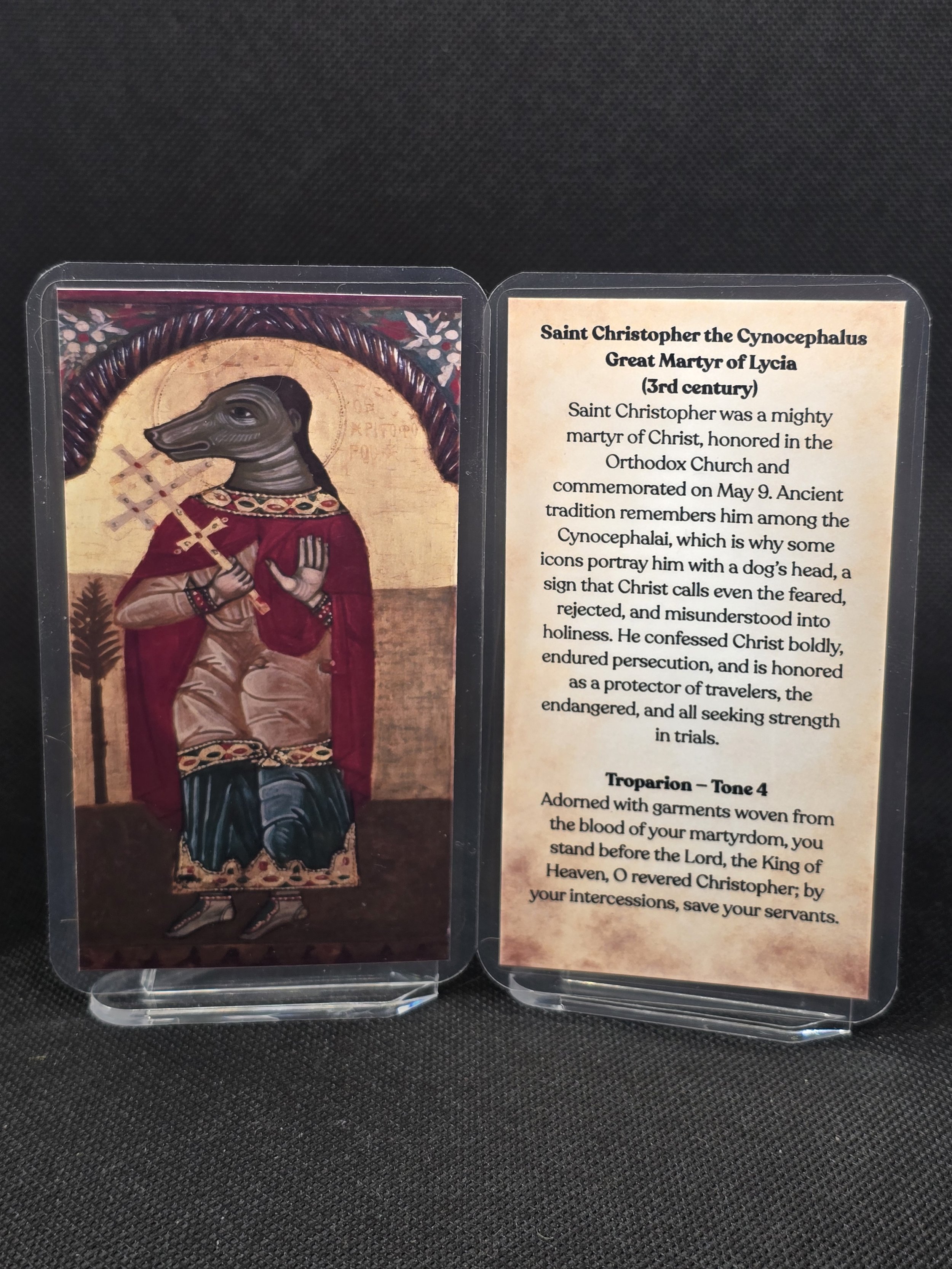
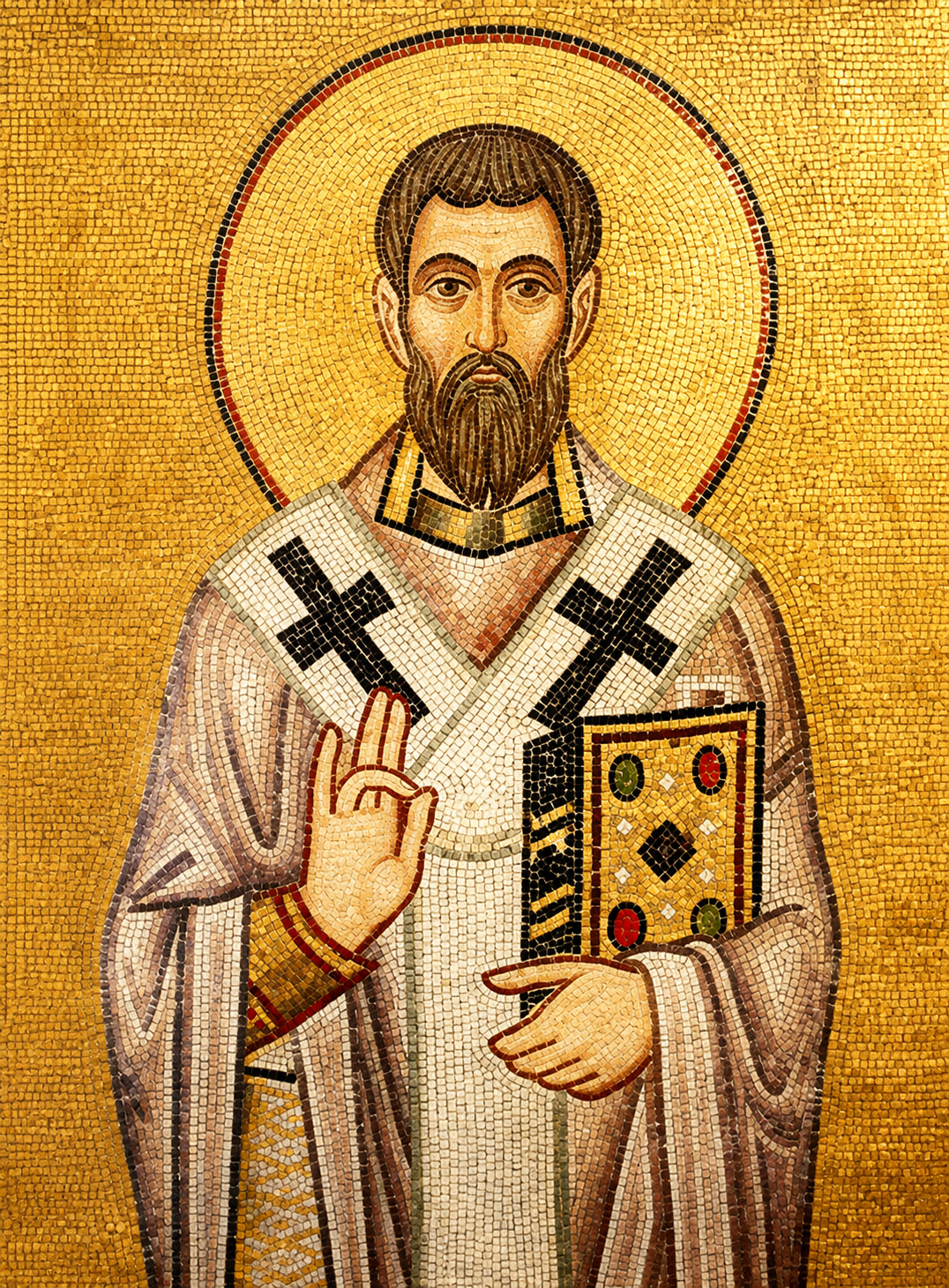
Saint Gregory of Nyssa Prayer Card – For Theologians, Teachers, Students & Spiritual Growth
Saint Gregory of Nyssa was one of the greatest theologians of the fourth-century Church, one of the three Cappadocian Fathers, a defender of the divinity of the Son and Holy Spirit, a major participant in the Second Ecumenical Council at Constantinople in 381, and one of Christianity's most profound teachers on prayer, holiness, the human person, and the soul's endless journey into God. The younger brother of Saint Basil the Great and brother of Saint Macrina the Younger, Gregory belonged to an extraordinary Christian family and eventually became Bishop of Nyssa in Cappadocia, in what is now Turkey. The Orthodox Church has called him “the Father of Fathers,” while Pope Benedict XVI described him as an original and profound Christian thinker and a great father of Christian mysticism.
Saint Gregory is especially meaningful for theologians, seminarians, philosophy students, teachers, catechists, Christian writers, people studying the Trinity, those seeking deeper prayer, Christians struggling to understand Scripture, people pursuing holiness, and anyone who feels that the more they come to know God, the more they realize how infinitely much remains to be discovered. These associations come directly from his life and writings because Gregory devoted himself to theology, biblical interpretation, pastoral teaching, defense of Nicene Christianity, prayer, contemplation, and the mystery of humanity's transformation in Christ.
His connection with spiritual growth is particularly powerful. Gregory taught that Christian perfection is not a point at which a person can finally say that the journey is finished, because the infinite God can never be exhausted. Instead, the soul continually stretches toward greater love, truth, beauty, and communion with God, a spiritual principle commonly associated with Gregory's teaching on epektasis, or continual progress toward God.
This makes Saint Gregory especially meaningful for Christians who sometimes become discouraged because they still have so far to go. Spiritual maturity does not mean reaching a place where there is nothing left to learn, repent of, love, or receive from God. Gregory's vision instead presents the Christian life as an eternal movement deeper into the inexhaustible goodness of God.
This prayer card is particularly fitting for theology students, seminarians, professors, clergy, catechists, Bible-study leaders, philosophers, writers, people entering theological study, Christians discerning difficult doctrinal questions, and anyone trying to move from simply knowing information about God toward actually living in communion with Him. Benedict XVI highlighted this distinction when explaining Gregory's spirituality, emphasizing that Gregory wanted Christians not merely to know things about God but to carry the life of God within themselves.
Each card is handmade in Austin, TX and created to order. We do not keep stock, because every prayer card is treated as a unique devotional offering. They are printed on museum-quality photo paper, not cardstock, and every card is made slowly during prayer with intentional reverence for the saint and for the person who will receive it. Names are lifted before Christ, intentions are held carefully, and each piece is handled multiple times in prayerful silence, asking God for mercy and asking Saint Gregory of Nyssa to intercede for the soul it is being made for. This is devotional craftsmanship shaped with patience, care, and spiritual responsibility because every soul and every prayer matters.
THE LIFE & STORY
Saint Gregory of Nyssa was born around 335 AD into one of the most remarkable Christian families of the ancient Church. His family lived within the Christian world of Cappadocia and Pontus in Asia Minor, and his childhood unfolded during the intense theological struggles that followed the Council of Nicaea. His older brother Saint Basil the Great and his sister Saint Macrina played particularly important roles in his spiritual formation.
Gregory received an excellent classical education and became skilled in philosophy and rhetoric. Rather than rejecting that intellectual formation after committing himself more deeply to Christianity, he eventually placed it in the service of the Gospel, using philosophical reasoning as a tool for explaining revelation without allowing philosophy to replace revelation itself. The Orthodox Church remembers him as one of the most profound Christian thinkers of the fourth century.
His path toward becoming a bishop was not simple or predictable. Gregory taught rhetoric, lived for a period within ordinary secular society, was married according to the account summarized by Pope Benedict XVI, and only later dedicated himself completely to the ascetic and ecclesiastical life.
A FAMILY FILLED WITH SAINTS
Saint Gregory's family is almost unparalleled in Christian history. His brother Saint Basil the Great, sister Saint Macrina the Younger, brother Saint Peter of Sebaste, and other members of the wider family became important figures within the Church, while their mother Saint Emmelia and grandmother Saint Macrina the Elder are likewise commemorated in Christian tradition. Greek Orthodox sources emphasize that Gregory grew up within a household remarkable both for education and holiness.
Saint Macrina had an especially deep influence upon Gregory. Benedict XVI specifically identifies both Basil and Macrina as major guides in Gregory's Christian formation, while Gregory's own writings reveal the extraordinary respect he had for his sister's spiritual wisdom.
This makes Gregory's story particularly valuable for Christian families. Holiness did not appear in his family as an isolated achievement by one extraordinary individual because spiritual influence moved between siblings, parents, teachers, and generations.
GREGORY THE RHETORICIAN
Before becoming known as one of Christianity's great theologians, Gregory worked as a teacher of rhetoric. Rhetoric in the ancient world involved far more than public speaking because it required disciplined study of language, argument, persuasion, literature, philosophy, and the intellectual culture inherited from Greece and Rome.
That education later became useful to the Church. Gregory was able to confront highly sophisticated theological opponents, explain complex doctrines about the Trinity and Incarnation, interpret Scripture at several levels, and express spiritual realities in language that has continued challenging theologians for more than sixteen centuries.
His life therefore makes him particularly meaningful for students, teachers, philosophers, debaters, writers, and people whose intellectual gifts they want to place at the service of Christ. Education itself did not become Gregory's final goal, because he believed knowledge should ultimately lead the human person toward truth, holiness, and communion with God.
MARRIAGE & THE ASCETIC LIFE
Pope Benedict XVI notes that Saint Gregory was initially married and later dedicated himself fully to the ascetic life. The surviving evidence does not allow every detail of his marriage to be reconstructed with certainty, which means devotional biographies should avoid filling the gaps with assumptions.
This detail is nevertheless important because Gregory did not begin life as someone completely separated from ordinary human relationships and responsibilities. His writings later spoke with seriousness about both asceticism and marriage, and Benedict XVI's presentation of his teaching on prayer includes Gregory describing prayer as a protection of marital fidelity as well as a support for the ascetic life.
Gregory's life therefore resists the idea that sanctity belongs only to one Christian state of life. Marriage, study, pastoral ministry, theological controversy, contemplation, and asceticism all appear within the larger movement of his life toward God.
BISHOP OF NYSSA
In 372, Saint Basil the Great consecrated his younger brother Gregory as Bishop of Nyssa, a relatively small episcopal see in Cappadocia. Basil was engaged in a difficult struggle to strengthen Nicene Christianity throughout the region and needed bishops who could defend the Church's confession of Christ's full divinity.
Gregory was intellectually brilliant but did not initially possess his brother's political and administrative skill. His opponents exploited this weakness, accused him of improperly handling Church property, and eventually succeeded in driving him from his episcopal see.
The experience placed Gregory's theology into direct contact with personal suffering. Defending the faith was no longer an intellectual exercise because theological conflict had cost him his position, separated him from his people, and forced him into a life of instability.
EXILE & FALSE ACCUSATION
Pro-Arian opponents accused Saint Gregory of financial misconduct and succeeded in having him deposed. He spent part of the following period away from Nyssa, moving from place to place while continuing to strengthen Christians who remained loyal to Nicene teaching.
The accusations against Gregory eventually collapsed with the political changes following the death of the Arian-supporting Emperor Valens in 378. Gregory returned to Nyssa and was welcomed enthusiastically by his flock.
This part of his life gives him a genuine devotional connection with people suffering from false accusations, professional humiliation, unjust removal from responsibility, or the loss of work they believed God had given them to do. Gregory's response was not to abandon his vocation but to continue serving until circumstances allowed him to return.
THE DEATH OF SAINT BASIL
Saint Basil the Great died in 379, leaving Gregory without the older brother whom he had regarded as both teacher and spiritual father. Benedict XVI records Gregory's own description of Basil as his “father and teacher,” demonstrating how significant Basil's influence had been upon him.
Gregory responded to the loss not by simply repeating everything Basil had done but by continuing and developing the theological work they had shared. He delivered a funeral oration for his brother and completed work connected with Basil's treatment of the six days of creation.
The death of Basil also marked a turning point in Gregory's public importance. After living for years partly within his brother's enormous shadow, Gregory emerged as one of the leading defenders of Nicene orthodoxy in his own right.
THE SECOND ECUMENICAL COUNCIL
Saint Gregory played a major role at the First Council of Constantinople in 381, recognized by the Church as the Second Ecumenical Council. The council defended the divinity of the Holy Spirit and helped bring the great fourth-century Trinitarian controversies toward their decisive orthodox formulation.
The Cappadocian Fathers were crucial to the theological development that allowed Christians to speak clearly about one divine essence and three divine Persons without either dividing God into three gods or collapsing Father, Son, and Holy Spirit into different appearances of one Person. Pope Leo XIV's 2025 apostolic letter on the anniversary of Nicaea specifically identified Basil, Gregory of Nyssa, and Gregory Nazianzen as the Eastern generation that helped bring Nicene Trinitarian formulation to completion.
Gregory's connection with the Creed is therefore not decorative historical trivia. Every Christian who professes the Nicene-Constantinopolitan Creed stands within a doctrinal inheritance that Gregory helped defend and articulate.
DEFENDER OF THE HOLY TRINITY
Saint Gregory wrote against theological movements that denied or diminished the divinity of the Son and Holy Spirit. His intellectual gifts became especially important in answering Eunomius and other opponents of Nicene Christianity.
For Gregory, Trinitarian theology was not abstract mathematics about how three can somehow equal one. The doctrine concerns the identity of the God Christians worship, the meaning of salvation, the work of Christ, and the Holy Spirit's ability to truly unite human beings with divine life.
This makes his prayer card especially fitting for theology students studying the Trinity, seminarians preparing for doctrinal examinations, catechists explaining the Creed, Christians encountering anti-Trinitarian arguments, and clergy preparing to teach difficult theological subjects. Gregory's intercession can be sought for both intellectual clarity and the humility to remember that divine mystery always exceeds the human concepts used to describe it.
ONE OF THE THREE CAPPADOCIAN FATHERS
Saint Gregory of Nyssa, Saint Basil the Great, and Saint Gregory Nazianzen are collectively known as the Cappadocian Fathers. Their work became foundational for later Christian language concerning the Trinity, and their influence extends throughout both Eastern and Western Christian theology.
Each possessed a distinct personality and theological style. Basil was a powerful organizer and ecclesiastical leader, Gregory Nazianzen became famous for the theological brilliance of his orations, and Gregory of Nyssa became particularly celebrated for philosophical depth, biblical interpretation, anthropology, and mystical theology.
For someone building a collection of early Church prayer cards, the three Cappadocian Fathers naturally belong together. Their combined work represents one of the most important moments in the development and defense of Nicene Christianity.
THE LIFE OF MOSES
Among Saint Gregory's most enduring works is The Life of Moses, in which the biblical journey of Moses becomes an image of the soul's movement toward God. Benedict XVI specifically highlighted this work as an important expression of Gregory's understanding of the Christian life as an ascent toward true life and encounter with God.
Gregory does not treat Moses merely as an ancient historical figure whose story ended with the Pentateuch. Moses becomes a model for every Christian who must leave spiritual slavery, cross through purification, climb toward God, enter mystery, and continue moving forward rather than imagining that God has finally been mastered.
This is one reason Saint Gregory is so important for Christians seeking deeper prayer. His theology does not offer a technique for controlling spiritual experiences because the Christian remains a creature encountering the infinite God.
NEVER-ENDING GROWTH IN GOD
One of Gregory's most distinctive teachings is commonly called epektasis, drawing upon Saint Paul's language of pressing forward toward what lies ahead. Benedict XVI explains Gregory's teaching as an unending movement toward what is greater in truth and love because the soul never reaches a point at which its likeness to the infinite God is exhausted.
This gives an unusually hopeful understanding of Christian perfection. Holiness is real, but perfection does not mean spiritual stagnation because the closer a soul comes to God, the greater its capacity becomes to receive still more of His goodness.
The idea can be especially encouraging for someone who has been Christian for many years but feels as though there should no longer be anything difficult about prayer. Gregory's answer would not be to measure spiritual maturity by how little remains to be learned, but by how deeply the soul continues stretching toward Christ.
THE HUMAN PERSON AS THE IMAGE OF GOD
Saint Gregory had an extraordinarily high understanding of human dignity. His theology of creation begins with humanity made in the image of God, possessing a dignity that cannot be measured merely by wealth, social status, physical strength, usefulness, education, or political power.
For Gregory, salvation therefore involves far more than escaping punishment. Human beings are created for transformation, holiness, communion with God, and the restoration of the beauty for which human nature was originally made.
This aspect of his theology gives Saint Gregory particular relevance for Christians struggling with shame or with a distorted understanding of their own worth. Human dignity begins not with what a person can produce but with what God intended humanity to become.
THEOSIS & BECOMING LIKE GOD
Gregory's theology belongs deeply within the Eastern Christian understanding of theosis, or participation in divine life. The creature never ceases to be a creature, yet through grace the human person is transformed into increasing likeness to God through holiness, love, virtue, prayer, and communion with Christ.
Benedict XVI summarized Gregory's vision by explaining that human fulfillment consists in holiness and in a life lived through encounter with God. This encounter then makes the Christian luminous to other people and to the world rather than closing spirituality into a private interior experience.
Saint Gregory therefore makes an especially meaningful prayer card for someone studying Eastern Christian spirituality, theosis, patristic theology, or the relationship between grace and human transformation. His work shows why salvation in the ancient Church could be described not merely in legal language but as healing, restoration, participation, and transformation.
PRAYER AS LIFE WITH GOD
Prayer occupies a central place in Saint Gregory's spirituality. Benedict XVI quotes him teaching simply that “Through prayer we succeed in being with God.”
For Gregory, prayer guards charity, restrains anger, opposes pride, supports purity, strengthens fidelity in marriage, and places the human person in communion with God. Prayer is therefore not a decorative addition to Christian life because it changes the orientation of the person who prays.
This makes Saint Gregory an especially meaningful intercessor for people who want a deeper interior prayer life. His theology can be demanding, but its purpose is never intellectual complication for its own sake because everything eventually points toward actual encounter with God.
THE LORD'S PRAYER
Saint Gregory wrote an extended interpretation of the Our Father, exploring the spiritual meaning contained within the prayer Christ Himself gave His disciples. Benedict XVI particularly highlighted Gregory's interpretation of the petition for God's Kingdom to come, in which the Christian asks to be delivered from corruption, error, evil, and domination by sinful passions.
The Lord's Prayer therefore becomes a map of spiritual transformation rather than a set of words repeated mechanically. Asking for God's Kingdom means asking that His reign become real within the person who is praying.
A Saint Gregory of Nyssa card can therefore be especially appropriate beside a prayer book or Bible. It can remind the person using it that even the most familiar Christian prayer contains depths that a lifetime of repetition will never fully exhaust.
LOVE FOR THE POOR
Gregory's mystical theology did not allow Christians to retreat into spirituality while ignoring suffering people. He preached forcefully that Christ is encountered in the poor and condemned religious practices that leave a person outwardly disciplined but inwardly selfish or unjust.
Benedict XVI highlighted Gregory's insistence that fasting becomes spiritually empty if a person simultaneously mistreats a neighbor or withholds from those in need. Love of God and love of neighbor therefore remain inseparable within Gregory's theology.
This gives Gregory particular significance for people involved in charity, social ministry, food assistance, homelessness outreach, and Christian service to the poor. Contemplation and mercy are not two competing versions of Christianity because genuine ascent toward God should make the heart increasingly capable of love.
ONE OF ANTIQUITY'S STRONGEST VOICES AGAINST SLAVERY
One of the most remarkable aspects of Saint Gregory's preaching is his attack upon the institution of human slavery. An official Greek Orthodox social document describes a sermon he preached around 379 as perhaps the first recorded attack upon slavery as an institution in Western history.
Gregory's argument flowed directly from Christian anthropology. A human being made in the image of God cannot be reduced simply to property whose worth can be assigned by another human being.
This is significant because Gregory lived within a Roman society in which slavery was deeply embedded in economic and social life. His willingness to question the institution itself demonstrates what can happen when Christian teaching about the image of God is allowed to challenge assumptions that surrounding culture treats as normal.
SAINT MACRINA & THE SOUL
Saint Gregory's sister Macrina became one of the great spiritual influences of his life. After her death, Gregory wrote The Life of Macrina and presented theological reflections surrounding death, resurrection, and the soul that remain among his important works.
The relationship between Gregory and Macrina also offers a remarkable example of a famous male bishop openly recognizing profound theological wisdom in his sister. Benedict XVI presents Macrina as one of the principal people responsible for Gregory's Christian formation and quotes the prayer Gregory preserved from her final hours.
For families, siblings, and Christians grieving the death of someone they love, this relationship provides one of the most human dimensions of Gregory's theology. Questions about resurrection and eternal life were not merely academic because Gregory had confronted the deaths of people whom he deeply loved.
THE MYSTERY OF DIVINE DARKNESS
Saint Gregory became one of the foundational figures of Christian mystical and apophatic theology, the recognition that God can truly be known while always remaining infinitely beyond complete human comprehension. Benedict XVI describes Gregory as a great father of mysticism whose theology emerged from a life of faith rather than from academic speculation detached from spiritual life.
In Gregory's interpretation of Moses, the journey toward God eventually moves beyond what can be grasped easily by ordinary intellectual sight. Divine “darkness” does not mean that God is evil or absent because it expresses the overwhelming mystery encountered when human concepts reach their limit before the infinite God.
This teaching is especially useful for someone experiencing a period in prayer when God seems less easily understandable than before. Spiritual depth does not always mean greater emotional certainty because the growing awareness of God's transcendence can itself be part of a deeper encounter.
SCRIPTURE AS A PATH INTO MYSTERY
Saint Gregory interpreted Genesis, Ecclesiastes, the Psalms, the Beatitudes, the Lord's Prayer, the Song of Songs, and the life of Moses, among other biblical texts. His biblical interpretation frequently moved from the literal history of Scripture toward its moral and spiritual meaning for the Christian soul.
This makes him particularly important for Christians studying the patristic method of reading Scripture. The Fathers did not generally treat Scripture as a collection of isolated verses because biblical events could also reveal patterns of spiritual life, Christ, salvation, and humanity's ascent toward God.
A Saint Gregory prayer card can therefore make a meaningful gift for Bible teachers, Scripture students, theological researchers, and people beginning serious study of the Church Fathers. His writings show how deeply the early Church believed Scripture could shape both doctrine and interior life.
THE GREAT CATECHETICAL DISCOURSE
Saint Gregory's Great Catechetical Discourse, sometimes called the Great Catechism, attempted to present major Christian teachings in a coherent form useful for those responsible for instructing others in the faith. Benedict XVI describes it as a framework for catechists rather than theology written only for academic specialists.
This makes Gregory especially meaningful for catechists, RCIA or OCIA teachers, Orthodox inquirers' class leaders, religious educators, parents teaching children, and clergy responsible for explaining Christianity to newcomers. Knowing the faith and knowing how to communicate it are connected but distinct gifts, and Gregory devoted himself to both.
His example also demonstrates that theology should ultimately serve the Church. Precision matters because real people will build their understanding of God upon what teachers tell them.
A THEOLOGIAN WHO WANTED HOLINESS
Saint Gregory never treated theology as a contest in intellectual sophistication. Benedict XVI emphasizes that the purpose of his study was to discover what is truly worthwhile and ultimately to lead human life toward holiness and encounter with God.
That distinction makes Gregory especially important today. It is possible to learn enormous amounts about Christianity while allowing prayer, repentance, mercy, and love to remain almost untouched.
The prayer card therefore has a natural place on the desk of a theologian or student. It can serve as a quiet reminder that Christian theology reaches its proper end when what the mind studies begins transforming the person who studies it.
THE CONTROVERSY OVER UNIVERSAL RESTORATION
Some modern discussions of Saint Gregory focus heavily upon whether he taught a form of universal restoration, often discussed under the Greek term apokatastasis. Certain passages in his writings have led theologians to argue that Gregory expected the eventual restoration of all rational creation, while other interpreters have disputed exactly how those passages should be understood within his complete theology.
The Orthodox Church has not adopted universal salvation as dogma simply because Gregory is a saint. An OCA reflection discussing the modern controversy explicitly acknowledges Gregory as an unusual patristic witness sometimes invoked in support of universalism while affirming the wider Orthodox teaching that final judgment must be taken seriously.
The important distinction is that canonization does not mean every speculative opinion expressed by a Church Father becomes dogma. Gregory remains one of the Church's greatest saints and theologians, while particular interpretations of difficult eschatological passages continue to be debated.
For a devotional product page, his secure theological legacy is much broader than this controversy. The Trinity, Incarnation, human dignity, prayer, holiness, Scripture, theosis, charity, and the endless movement of the soul toward God provide more than enough material for understanding why Christians have venerated him for centuries.
“THE FATHER OF FATHERS”
The Orthodox Life of Saint Gregory records that he has been called “the Father of Fathers.” The title reflects the extraordinary influence his theology exercised upon later Christian thought rather than suggesting that he stood above every other Father in some formal hierarchy.
Gregory's writings continued shaping Christian thought long after the Arian controversies that originally surrounded his episcopacy had ended. His theology of the Trinity, creation, human nature, spiritual ascent, prayer, and Scripture became part of a much wider patristic inheritance.
Few saints therefore fit a theological library or study desk more naturally. His card can function simultaneously as a devotional object and as a reminder that serious study of God should always remain rooted in prayer.
HIS FINAL YEARS & REPOSE
Saint Gregory continued participating in major ecclesiastical affairs after Constantinople in 381. He preached important theological and funeral orations, accepted difficult assignments on behalf of the Church, and was still present at a council in Constantinople in 394.
The exact date of his death is not securely known. He appears to have reposed around 394 or shortly afterward, leaving behind a body of theological and spiritual writing whose influence greatly exceeded the small Cappadocian city over which he had served as bishop.
His earthly life therefore ended without a dramatic martyrdom narrative or famous final miracle. His enduring legacy came instead through doctrine defended, Scripture interpreted, souls taught, and writings that continued leading Christians toward God.
HIS RELICS
Relics of Saint Gregory are preserved in more than one location, so it would be misleading to present one modern church as possessing his entire body. One especially well-documented relic in the United States is preserved at Saint Gregory of Nyssa Greek Orthodox Church in El Cajon, California. The parish records that relics of its patron saint were transferred from the Vatican and formally presented to the parish on August 21, 2000.
This is particularly meaningful for American Orthodox Christians because it provides a place within the United States where a relic of one of the great Cappadocian Fathers can be venerated. Other relic traditions connected with Gregory exist in Greece and elsewhere, but their histories are more complicated and should be described carefully rather than presenting every online claim as equally certain.
FEAST DAY
Saint Gregory of Nyssa is commemorated in the Byzantine tradition on January 10. The Orthodox Church in America lists him on that date as Saint Gregory, Bishop of Nyssa, while Vatican sources likewise commemorate Saint Gregory of Nyssa on January 10.
Because Gregory lived centuries before the division between Eastern Orthodoxy and the Catholic Church, he belongs to the common patristic inheritance of East and West. He is venerated as a saint by the Orthodox Church and recognized as Saint Gregory of Nyssa within the Catholic tradition as well.
For The Eastern Church, the most accurate product labeling is therefore Saint Gregory of Nyssa, Cappadocian Father, Bishop and Theologian, while noting his strong place within both Orthodox and Catholic Christian tradition.
PRAYERS
A simple traditional Christian invocation can be prayed throughout the day: Holy Hierarch Gregory of Nyssa, pray to God for us. It is particularly fitting before theological study, teaching, writing, Scripture reading, examinations, catechesis, difficult doctrinal conversations, or extended periods of prayer.
The Orthodox Church's liturgical hymn for January 10 asks God to guide His people in peace through the prayers of the holy hierarchs Gregory and Dometian. The importance of using this established liturgical tradition is that devotion to Gregory remains centered upon his intercession before God rather than upon a newly invented prayer or patronage.
Someone beginning theological study may ask Saint Gregory for intellectual humility as much as intellectual ability. Someone struggling with prayer may ask his intercession for perseverance and deeper communion with God, while a teacher may seek his prayers for the wisdom to make difficult truths understandable without distorting them.
A person who feels spiritually stagnant can also turn to Gregory's vision of continual growth. His teaching reminds the Christian that there is always more of God's goodness to receive, more love to learn, more selfishness to surrender, and greater holiness toward which the soul can stretch.
This prayer card is especially fitting beside a Bible, prayer rope, theology textbook, catechism, copy of The Life of Moses, notebook, classroom desk, seminary workspace, home prayer corner, or collection devoted to the Cappadocian Fathers. It can also make a meaningful gift for a seminarian, theology graduate, catechist, priest, professor, Christian author, philosophy student, Bible teacher, or someone entering a deeper season of spiritual formation.
FAQ
Who was Saint Gregory of Nyssa? Saint Gregory of Nyssa was a fourth-century bishop, theologian, biblical interpreter, and spiritual writer who lived approximately from 335 until around 394. He was the younger brother of Saint Basil the Great and became one of the three Cappadocian Fathers.
When is Saint Gregory of Nyssa's feast day? His principal feast in the Byzantine tradition is January 10. The Orthodox Church in America and Vatican sources both commemorate him on that date.
Is Saint Gregory of Nyssa Orthodox or Catholic? He lived in the fourth century, long before the later division between Eastern Orthodoxy and Catholicism. He is venerated by the Orthodox Church and recognized as a saint and major Father within Catholic tradition.
Is Saint Gregory of Nyssa one of the Cappadocian Fathers? Yes. Saint Gregory of Nyssa, his brother Saint Basil the Great, and Saint Gregory Nazianzen are the three theologians traditionally called the Cappadocian Fathers.
Was Saint Gregory of Nyssa the brother of Saint Basil the Great? Yes, Gregory was Basil's younger brother. Gregory regarded Basil not simply as a sibling but also as an important spiritual teacher.
Was Saint Macrina related to Saint Gregory of Nyssa? Yes, Saint Macrina the Younger was his sister and one of the strongest spiritual influences upon his life. Gregory later wrote about her life, death, wisdom, and prayer.
Was Saint Gregory of Nyssa married? Pope Benedict XVI's catechesis states that Gregory was initially married before later dedicating himself fully to ascetic life. The surviving historical record does not allow every detail of that marriage to be reconstructed with certainty.
Was Theosebia the wife of Saint Gregory of Nyssa? This identification has been debated, and different historical traditions have interpreted the surviving evidence differently. The OCA commemorates Blessed Theosebia as Gregory's sister, so a product page should not confidently identify her as his wife as though the question were historically settled.
What is Saint Gregory of Nyssa the patron saint of? There is no strong ancient tradition assigning Gregory a single formal patronage category in the modern sense. His most securely grounded devotional associations are theologians, students, teachers, catechists, writers, Scripture study, spiritual growth, prayer, and the defense of Trinitarian Christianity.
Is Saint Gregory a good saint for theology students? Yes, this is one of the strongest devotional uses of his card because Gregory was among the most important theologians of the fourth-century Church. His writings continue to be studied in seminaries, universities, monasteries, and theological programs throughout the Christian world.
Is Saint Gregory a good saint for teachers? Yes, Gregory himself taught rhetoric and later devoted enormous energy to theological and catechetical instruction. His writings demonstrate the importance of combining intellectual depth with the responsibility to communicate truth faithfully.
Is Saint Gregory a good saint for writers? Yes, because an enormous portion of his influence comes through theological treatises, biblical commentaries, sermons, letters, spiritual works, and biographies. Writers can especially seek his prayers for clarity, humility, intellectual discipline, and fidelity to truth.
Did Saint Gregory help write the Nicene Creed? He did not participate in the original Council of Nicaea in 325 because he had not yet been born. He was, however, a major figure at the Council of Constantinople in 381, where Nicene Trinitarian teaching was further clarified and the Church's confession concerning the Holy Spirit received its classical formulation.
What did Saint Gregory teach about the Holy Spirit? Gregory defended the full divinity of the Holy Spirit against those who attempted to treat the Spirit as inferior to the Father and Son. His work belongs to the Cappadocian theological achievement reflected in the Nicene-Constantinopolitan Creed.
What did Saint Gregory teach about the Trinity? He helped articulate how Christians can confess one God while recognizing the real distinction of Father, Son, and Holy Spirit. His theological work became foundational for later Christian Trinitarian language.
What is The Life of Moses**?** The Life of Moses is one of Gregory's most influential spiritual works, using Moses' biblical journey as an image of the soul's continual ascent toward God. Benedict XVI highlighted it as a major expression of Gregory's understanding of the journey toward true life and encounter with God.
What does epektasis mean? The term is commonly used to describe Gregory's teaching that the soul continually stretches forward toward God because the infinite divine goodness can never be exhausted. Christian perfection therefore involves continuing movement into greater truth, love, and holiness rather than spiritual stagnation.
Did Saint Gregory teach theosis? Yes, his theology strongly emphasizes humanity's transformation into greater likeness to God through grace, holiness, virtue, prayer, and communion with divine life. This places him among the most important patristic sources for the Eastern Christian understanding of theosis.
What did Saint Gregory teach about prayer? Gregory understood prayer as genuine communion with God rather than simply requesting things from Him. He taught that prayer strengthens charity, restrains anger and pride, protects faithfulness, and reorients human life toward God.
Did Saint Gregory write about the Lord's Prayer? Yes, he wrote extensively on the Our Father. He interpreted its petitions as a program of spiritual transformation in which Christians ask to be freed from sin and increasingly brought under God's reign.
Did Saint Gregory write about the Beatitudes? Yes, Gregory's works include homilies on the Beatitudes. His interpretation connects Christ's teaching with the soul's movement toward virtue and increasing likeness to God.
Did Saint Gregory write about the Song of Songs? Yes, his homilies on the Song of Songs became an important part of Christian mystical interpretation of Scripture. He understood the biblical imagery as revealing the soul's ever-deepening love and desire for God.
Why is Saint Gregory associated with mystical theology? Gregory repeatedly explored the movement from ordinary knowledge toward an encounter with God that surpasses complete intellectual comprehension. Benedict XVI therefore described him as a great father of Christian mysticism.
What is divine darkness in Saint Gregory's theology? Divine darkness describes the mystery encountered when the soul approaches the God who infinitely exceeds human concepts and comprehension. It does not mean that God is evil or absent, but that divine reality cannot be reduced to something the human mind completely possesses.
Did Saint Gregory oppose slavery? Yes, Gregory delivered an extraordinary attack upon human ownership in his preaching on Ecclesiastes. A modern official Greek Orthodox social document describes his sermon as perhaps the first recorded attack upon slavery as an institution in Western history.
Why did Saint Gregory oppose slavery? His argument was deeply theological because human beings bear God's image and cannot properly be treated merely as property belonging to another human being. His condemnation demonstrates how his theology of human dignity could challenge deeply established social assumptions.
Did Saint Gregory believe everyone would eventually be saved? Some passages have been interpreted as teaching a form of universal restoration, and the subject remains heavily debated among scholars and theologians. The Church's veneration of Gregory does not require treating every speculative interpretation of his eschatology as dogma.
Does the universal salvation controversy mean Gregory was not Orthodox? No, he is one of the most highly honored Fathers and saints of the Orthodox Church. The controversy demonstrates that sainthood does not mean every difficult or speculative sentence written by a Father automatically becomes a doctrinal definition.
Was Saint Gregory persecuted by Arians? Yes, pro-Arian opponents accused him of financial wrongdoing and succeeded in having him removed from Nyssa for a period. After the death of Emperor Valens, Gregory returned to his episcopal see and was welcomed back by his people.
What was Arianism? Arianism denied the full eternal divinity of the Son as confessed by Nicene Christianity. Gregory and the other Cappadocian Fathers became central figures in the theological struggle that clarified the Church's confession of the Trinity.
Was Saint Gregory at the Council of Constantinople in 381? Yes, and the OCA describes him as one of the council's chief figures. The council became enormously important for the Church's teaching concerning the Holy Spirit and the mature formulation of the Nicene faith.
Where was Nyssa? Nyssa was an episcopal city in Cappadocia within Asia Minor, in the territory of modern Turkey. Gregory became its bishop in 372 and remained permanently identified with the city through the title by which history remembers him.
When did Saint Gregory die? The precise date is uncertain, although he was still participating in ecclesiastical affairs in 394. He appears to have died around that time or shortly afterward.
Where are Saint Gregory of Nyssa's relics? Relics associated with him are preserved in several locations rather than one universally documented complete shrine. A well-documented relic is venerated at Saint Gregory of Nyssa Greek Orthodox Church in El Cajon, California, where the parish records that relics transferred from the Vatican were received in 2000.
Are there relics of Saint Gregory of Nyssa in the United States? Yes, Saint Gregory of Nyssa Greek Orthodox Church in El Cajon, California possesses relics of its patron saint. The parish records their formal transfer and reception on August 21, 2000.
Can I pray to Saint Gregory before an exam? Yes, especially when the examination involves theology, philosophy, Scripture, Church history, or another demanding intellectual subject. His life makes him a meaningful intercessor for wisdom, disciplined thought, clarity, and the humility to use knowledge well.
Can seminarians pray to Saint Gregory of Nyssa? Yes, his extraordinary contribution to Trinitarian theology, catechesis, Scripture, prayer, pastoral ministry, and Christian spirituality makes him especially fitting for seminarians. His card can serve as a reminder that theological education should ultimately lead toward holiness and service.
Can catechists pray to Saint Gregory? Yes, Gregory's Great Catechetical Discourse was specifically concerned with presenting the Christian faith in a form useful for instruction. His example is particularly appropriate for anyone responsible for teaching difficult truths clearly and accurately.
Can philosophers pray to Saint Gregory of Nyssa? Yes, Gregory possessed substantial philosophical training and used philosophical concepts extensively while insisting that intellectual inquiry ultimately serve divine revelation and Christian life. His card is particularly appropriate for Christians attempting to unite serious intellectual work with faith.
Can someone struggling with prayer pray to Saint Gregory? Yes, prayer stands at the heart of his spiritual theology. Gregory understood prayer as communion with God and as a means through which the Christian heart is continually reshaped in love, humility, and holiness.
Can someone experiencing spiritual dryness pray to Saint Gregory? Yes, his theology is particularly helpful because he did not measure closeness to God only by emotional consolation or intellectual certainty. His teaching on continual ascent and divine mystery can help Christians understand that spiritual growth sometimes leads deeper into mystery rather than toward easier answers.
Can I give this card to a theology student? Yes, it is one of the most natural uses of a Saint Gregory of Nyssa prayer card. It makes an especially meaningful gift at the beginning of seminary, theological graduate school, a Church history course, ordination formation, or serious independent study of the Fathers.
Can I give this card to a professor or teacher? Yes, especially to someone teaching theology, Scripture, philosophy, Church history, or religious education. Gregory's life joins intellectual brilliance with the conviction that knowledge should ultimately serve truth, holiness, and other people.
Can I give this card to someone studying the Church Fathers? Yes, Gregory is one of the foundational Greek Fathers of the fourth century. Studying him also naturally leads into Saint Basil the Great, Saint Gregory Nazianzen, Saint Macrina, the Nicene controversies, and the development of Christian Trinitarian theology.
What is the main message of Saint Gregory of Nyssa's life? Saint Gregory's life teaches that the closer a human being comes to the infinite God, the more the journey opens rather than closes. The brilliant rhetorician became a bishop, the exiled bishop became one of the great defenders of Nicene Christianity, and the theologian who helped articulate the mystery of the Trinity never reduced Christianity to ideas because his deepest concern was the transformation of the human person through prayer, virtue, love, Scripture, and communion with God. His enduring invitation is not simply to know more about God, but to spend an entire life continually moving deeper into Him.
Saint Gregory of Nyssa was one of the greatest theologians of the fourth-century Church, one of the three Cappadocian Fathers, a defender of the divinity of the Son and Holy Spirit, a major participant in the Second Ecumenical Council at Constantinople in 381, and one of Christianity's most profound teachers on prayer, holiness, the human person, and the soul's endless journey into God. The younger brother of Saint Basil the Great and brother of Saint Macrina the Younger, Gregory belonged to an extraordinary Christian family and eventually became Bishop of Nyssa in Cappadocia, in what is now Turkey. The Orthodox Church has called him “the Father of Fathers,” while Pope Benedict XVI described him as an original and profound Christian thinker and a great father of Christian mysticism.
Saint Gregory is especially meaningful for theologians, seminarians, philosophy students, teachers, catechists, Christian writers, people studying the Trinity, those seeking deeper prayer, Christians struggling to understand Scripture, people pursuing holiness, and anyone who feels that the more they come to know God, the more they realize how infinitely much remains to be discovered. These associations come directly from his life and writings because Gregory devoted himself to theology, biblical interpretation, pastoral teaching, defense of Nicene Christianity, prayer, contemplation, and the mystery of humanity's transformation in Christ.
His connection with spiritual growth is particularly powerful. Gregory taught that Christian perfection is not a point at which a person can finally say that the journey is finished, because the infinite God can never be exhausted. Instead, the soul continually stretches toward greater love, truth, beauty, and communion with God, a spiritual principle commonly associated with Gregory's teaching on epektasis, or continual progress toward God.
This makes Saint Gregory especially meaningful for Christians who sometimes become discouraged because they still have so far to go. Spiritual maturity does not mean reaching a place where there is nothing left to learn, repent of, love, or receive from God. Gregory's vision instead presents the Christian life as an eternal movement deeper into the inexhaustible goodness of God.
This prayer card is particularly fitting for theology students, seminarians, professors, clergy, catechists, Bible-study leaders, philosophers, writers, people entering theological study, Christians discerning difficult doctrinal questions, and anyone trying to move from simply knowing information about God toward actually living in communion with Him. Benedict XVI highlighted this distinction when explaining Gregory's spirituality, emphasizing that Gregory wanted Christians not merely to know things about God but to carry the life of God within themselves.
Each card is handmade in Austin, TX and created to order. We do not keep stock, because every prayer card is treated as a unique devotional offering. They are printed on museum-quality photo paper, not cardstock, and every card is made slowly during prayer with intentional reverence for the saint and for the person who will receive it. Names are lifted before Christ, intentions are held carefully, and each piece is handled multiple times in prayerful silence, asking God for mercy and asking Saint Gregory of Nyssa to intercede for the soul it is being made for. This is devotional craftsmanship shaped with patience, care, and spiritual responsibility because every soul and every prayer matters.
THE LIFE & STORY
Saint Gregory of Nyssa was born around 335 AD into one of the most remarkable Christian families of the ancient Church. His family lived within the Christian world of Cappadocia and Pontus in Asia Minor, and his childhood unfolded during the intense theological struggles that followed the Council of Nicaea. His older brother Saint Basil the Great and his sister Saint Macrina played particularly important roles in his spiritual formation.
Gregory received an excellent classical education and became skilled in philosophy and rhetoric. Rather than rejecting that intellectual formation after committing himself more deeply to Christianity, he eventually placed it in the service of the Gospel, using philosophical reasoning as a tool for explaining revelation without allowing philosophy to replace revelation itself. The Orthodox Church remembers him as one of the most profound Christian thinkers of the fourth century.
His path toward becoming a bishop was not simple or predictable. Gregory taught rhetoric, lived for a period within ordinary secular society, was married according to the account summarized by Pope Benedict XVI, and only later dedicated himself completely to the ascetic and ecclesiastical life.
A FAMILY FILLED WITH SAINTS
Saint Gregory's family is almost unparalleled in Christian history. His brother Saint Basil the Great, sister Saint Macrina the Younger, brother Saint Peter of Sebaste, and other members of the wider family became important figures within the Church, while their mother Saint Emmelia and grandmother Saint Macrina the Elder are likewise commemorated in Christian tradition. Greek Orthodox sources emphasize that Gregory grew up within a household remarkable both for education and holiness.
Saint Macrina had an especially deep influence upon Gregory. Benedict XVI specifically identifies both Basil and Macrina as major guides in Gregory's Christian formation, while Gregory's own writings reveal the extraordinary respect he had for his sister's spiritual wisdom.
This makes Gregory's story particularly valuable for Christian families. Holiness did not appear in his family as an isolated achievement by one extraordinary individual because spiritual influence moved between siblings, parents, teachers, and generations.
GREGORY THE RHETORICIAN
Before becoming known as one of Christianity's great theologians, Gregory worked as a teacher of rhetoric. Rhetoric in the ancient world involved far more than public speaking because it required disciplined study of language, argument, persuasion, literature, philosophy, and the intellectual culture inherited from Greece and Rome.
That education later became useful to the Church. Gregory was able to confront highly sophisticated theological opponents, explain complex doctrines about the Trinity and Incarnation, interpret Scripture at several levels, and express spiritual realities in language that has continued challenging theologians for more than sixteen centuries.
His life therefore makes him particularly meaningful for students, teachers, philosophers, debaters, writers, and people whose intellectual gifts they want to place at the service of Christ. Education itself did not become Gregory's final goal, because he believed knowledge should ultimately lead the human person toward truth, holiness, and communion with God.
MARRIAGE & THE ASCETIC LIFE
Pope Benedict XVI notes that Saint Gregory was initially married and later dedicated himself fully to the ascetic life. The surviving evidence does not allow every detail of his marriage to be reconstructed with certainty, which means devotional biographies should avoid filling the gaps with assumptions.
This detail is nevertheless important because Gregory did not begin life as someone completely separated from ordinary human relationships and responsibilities. His writings later spoke with seriousness about both asceticism and marriage, and Benedict XVI's presentation of his teaching on prayer includes Gregory describing prayer as a protection of marital fidelity as well as a support for the ascetic life.
Gregory's life therefore resists the idea that sanctity belongs only to one Christian state of life. Marriage, study, pastoral ministry, theological controversy, contemplation, and asceticism all appear within the larger movement of his life toward God.
BISHOP OF NYSSA
In 372, Saint Basil the Great consecrated his younger brother Gregory as Bishop of Nyssa, a relatively small episcopal see in Cappadocia. Basil was engaged in a difficult struggle to strengthen Nicene Christianity throughout the region and needed bishops who could defend the Church's confession of Christ's full divinity.
Gregory was intellectually brilliant but did not initially possess his brother's political and administrative skill. His opponents exploited this weakness, accused him of improperly handling Church property, and eventually succeeded in driving him from his episcopal see.
The experience placed Gregory's theology into direct contact with personal suffering. Defending the faith was no longer an intellectual exercise because theological conflict had cost him his position, separated him from his people, and forced him into a life of instability.
EXILE & FALSE ACCUSATION
Pro-Arian opponents accused Saint Gregory of financial misconduct and succeeded in having him deposed. He spent part of the following period away from Nyssa, moving from place to place while continuing to strengthen Christians who remained loyal to Nicene teaching.
The accusations against Gregory eventually collapsed with the political changes following the death of the Arian-supporting Emperor Valens in 378. Gregory returned to Nyssa and was welcomed enthusiastically by his flock.
This part of his life gives him a genuine devotional connection with people suffering from false accusations, professional humiliation, unjust removal from responsibility, or the loss of work they believed God had given them to do. Gregory's response was not to abandon his vocation but to continue serving until circumstances allowed him to return.
THE DEATH OF SAINT BASIL
Saint Basil the Great died in 379, leaving Gregory without the older brother whom he had regarded as both teacher and spiritual father. Benedict XVI records Gregory's own description of Basil as his “father and teacher,” demonstrating how significant Basil's influence had been upon him.
Gregory responded to the loss not by simply repeating everything Basil had done but by continuing and developing the theological work they had shared. He delivered a funeral oration for his brother and completed work connected with Basil's treatment of the six days of creation.
The death of Basil also marked a turning point in Gregory's public importance. After living for years partly within his brother's enormous shadow, Gregory emerged as one of the leading defenders of Nicene orthodoxy in his own right.
THE SECOND ECUMENICAL COUNCIL
Saint Gregory played a major role at the First Council of Constantinople in 381, recognized by the Church as the Second Ecumenical Council. The council defended the divinity of the Holy Spirit and helped bring the great fourth-century Trinitarian controversies toward their decisive orthodox formulation.
The Cappadocian Fathers were crucial to the theological development that allowed Christians to speak clearly about one divine essence and three divine Persons without either dividing God into three gods or collapsing Father, Son, and Holy Spirit into different appearances of one Person. Pope Leo XIV's 2025 apostolic letter on the anniversary of Nicaea specifically identified Basil, Gregory of Nyssa, and Gregory Nazianzen as the Eastern generation that helped bring Nicene Trinitarian formulation to completion.
Gregory's connection with the Creed is therefore not decorative historical trivia. Every Christian who professes the Nicene-Constantinopolitan Creed stands within a doctrinal inheritance that Gregory helped defend and articulate.
DEFENDER OF THE HOLY TRINITY
Saint Gregory wrote against theological movements that denied or diminished the divinity of the Son and Holy Spirit. His intellectual gifts became especially important in answering Eunomius and other opponents of Nicene Christianity.
For Gregory, Trinitarian theology was not abstract mathematics about how three can somehow equal one. The doctrine concerns the identity of the God Christians worship, the meaning of salvation, the work of Christ, and the Holy Spirit's ability to truly unite human beings with divine life.
This makes his prayer card especially fitting for theology students studying the Trinity, seminarians preparing for doctrinal examinations, catechists explaining the Creed, Christians encountering anti-Trinitarian arguments, and clergy preparing to teach difficult theological subjects. Gregory's intercession can be sought for both intellectual clarity and the humility to remember that divine mystery always exceeds the human concepts used to describe it.
ONE OF THE THREE CAPPADOCIAN FATHERS
Saint Gregory of Nyssa, Saint Basil the Great, and Saint Gregory Nazianzen are collectively known as the Cappadocian Fathers. Their work became foundational for later Christian language concerning the Trinity, and their influence extends throughout both Eastern and Western Christian theology.
Each possessed a distinct personality and theological style. Basil was a powerful organizer and ecclesiastical leader, Gregory Nazianzen became famous for the theological brilliance of his orations, and Gregory of Nyssa became particularly celebrated for philosophical depth, biblical interpretation, anthropology, and mystical theology.
For someone building a collection of early Church prayer cards, the three Cappadocian Fathers naturally belong together. Their combined work represents one of the most important moments in the development and defense of Nicene Christianity.
THE LIFE OF MOSES
Among Saint Gregory's most enduring works is The Life of Moses, in which the biblical journey of Moses becomes an image of the soul's movement toward God. Benedict XVI specifically highlighted this work as an important expression of Gregory's understanding of the Christian life as an ascent toward true life and encounter with God.
Gregory does not treat Moses merely as an ancient historical figure whose story ended with the Pentateuch. Moses becomes a model for every Christian who must leave spiritual slavery, cross through purification, climb toward God, enter mystery, and continue moving forward rather than imagining that God has finally been mastered.
This is one reason Saint Gregory is so important for Christians seeking deeper prayer. His theology does not offer a technique for controlling spiritual experiences because the Christian remains a creature encountering the infinite God.
NEVER-ENDING GROWTH IN GOD
One of Gregory's most distinctive teachings is commonly called epektasis, drawing upon Saint Paul's language of pressing forward toward what lies ahead. Benedict XVI explains Gregory's teaching as an unending movement toward what is greater in truth and love because the soul never reaches a point at which its likeness to the infinite God is exhausted.
This gives an unusually hopeful understanding of Christian perfection. Holiness is real, but perfection does not mean spiritual stagnation because the closer a soul comes to God, the greater its capacity becomes to receive still more of His goodness.
The idea can be especially encouraging for someone who has been Christian for many years but feels as though there should no longer be anything difficult about prayer. Gregory's answer would not be to measure spiritual maturity by how little remains to be learned, but by how deeply the soul continues stretching toward Christ.
THE HUMAN PERSON AS THE IMAGE OF GOD
Saint Gregory had an extraordinarily high understanding of human dignity. His theology of creation begins with humanity made in the image of God, possessing a dignity that cannot be measured merely by wealth, social status, physical strength, usefulness, education, or political power.
For Gregory, salvation therefore involves far more than escaping punishment. Human beings are created for transformation, holiness, communion with God, and the restoration of the beauty for which human nature was originally made.
This aspect of his theology gives Saint Gregory particular relevance for Christians struggling with shame or with a distorted understanding of their own worth. Human dignity begins not with what a person can produce but with what God intended humanity to become.
THEOSIS & BECOMING LIKE GOD
Gregory's theology belongs deeply within the Eastern Christian understanding of theosis, or participation in divine life. The creature never ceases to be a creature, yet through grace the human person is transformed into increasing likeness to God through holiness, love, virtue, prayer, and communion with Christ.
Benedict XVI summarized Gregory's vision by explaining that human fulfillment consists in holiness and in a life lived through encounter with God. This encounter then makes the Christian luminous to other people and to the world rather than closing spirituality into a private interior experience.
Saint Gregory therefore makes an especially meaningful prayer card for someone studying Eastern Christian spirituality, theosis, patristic theology, or the relationship between grace and human transformation. His work shows why salvation in the ancient Church could be described not merely in legal language but as healing, restoration, participation, and transformation.
PRAYER AS LIFE WITH GOD
Prayer occupies a central place in Saint Gregory's spirituality. Benedict XVI quotes him teaching simply that “Through prayer we succeed in being with God.”
For Gregory, prayer guards charity, restrains anger, opposes pride, supports purity, strengthens fidelity in marriage, and places the human person in communion with God. Prayer is therefore not a decorative addition to Christian life because it changes the orientation of the person who prays.
This makes Saint Gregory an especially meaningful intercessor for people who want a deeper interior prayer life. His theology can be demanding, but its purpose is never intellectual complication for its own sake because everything eventually points toward actual encounter with God.
THE LORD'S PRAYER
Saint Gregory wrote an extended interpretation of the Our Father, exploring the spiritual meaning contained within the prayer Christ Himself gave His disciples. Benedict XVI particularly highlighted Gregory's interpretation of the petition for God's Kingdom to come, in which the Christian asks to be delivered from corruption, error, evil, and domination by sinful passions.
The Lord's Prayer therefore becomes a map of spiritual transformation rather than a set of words repeated mechanically. Asking for God's Kingdom means asking that His reign become real within the person who is praying.
A Saint Gregory of Nyssa card can therefore be especially appropriate beside a prayer book or Bible. It can remind the person using it that even the most familiar Christian prayer contains depths that a lifetime of repetition will never fully exhaust.
LOVE FOR THE POOR
Gregory's mystical theology did not allow Christians to retreat into spirituality while ignoring suffering people. He preached forcefully that Christ is encountered in the poor and condemned religious practices that leave a person outwardly disciplined but inwardly selfish or unjust.
Benedict XVI highlighted Gregory's insistence that fasting becomes spiritually empty if a person simultaneously mistreats a neighbor or withholds from those in need. Love of God and love of neighbor therefore remain inseparable within Gregory's theology.
This gives Gregory particular significance for people involved in charity, social ministry, food assistance, homelessness outreach, and Christian service to the poor. Contemplation and mercy are not two competing versions of Christianity because genuine ascent toward God should make the heart increasingly capable of love.
ONE OF ANTIQUITY'S STRONGEST VOICES AGAINST SLAVERY
One of the most remarkable aspects of Saint Gregory's preaching is his attack upon the institution of human slavery. An official Greek Orthodox social document describes a sermon he preached around 379 as perhaps the first recorded attack upon slavery as an institution in Western history.
Gregory's argument flowed directly from Christian anthropology. A human being made in the image of God cannot be reduced simply to property whose worth can be assigned by another human being.
This is significant because Gregory lived within a Roman society in which slavery was deeply embedded in economic and social life. His willingness to question the institution itself demonstrates what can happen when Christian teaching about the image of God is allowed to challenge assumptions that surrounding culture treats as normal.
SAINT MACRINA & THE SOUL
Saint Gregory's sister Macrina became one of the great spiritual influences of his life. After her death, Gregory wrote The Life of Macrina and presented theological reflections surrounding death, resurrection, and the soul that remain among his important works.
The relationship between Gregory and Macrina also offers a remarkable example of a famous male bishop openly recognizing profound theological wisdom in his sister. Benedict XVI presents Macrina as one of the principal people responsible for Gregory's Christian formation and quotes the prayer Gregory preserved from her final hours.
For families, siblings, and Christians grieving the death of someone they love, this relationship provides one of the most human dimensions of Gregory's theology. Questions about resurrection and eternal life were not merely academic because Gregory had confronted the deaths of people whom he deeply loved.
THE MYSTERY OF DIVINE DARKNESS
Saint Gregory became one of the foundational figures of Christian mystical and apophatic theology, the recognition that God can truly be known while always remaining infinitely beyond complete human comprehension. Benedict XVI describes Gregory as a great father of mysticism whose theology emerged from a life of faith rather than from academic speculation detached from spiritual life.
In Gregory's interpretation of Moses, the journey toward God eventually moves beyond what can be grasped easily by ordinary intellectual sight. Divine “darkness” does not mean that God is evil or absent because it expresses the overwhelming mystery encountered when human concepts reach their limit before the infinite God.
This teaching is especially useful for someone experiencing a period in prayer when God seems less easily understandable than before. Spiritual depth does not always mean greater emotional certainty because the growing awareness of God's transcendence can itself be part of a deeper encounter.
SCRIPTURE AS A PATH INTO MYSTERY
Saint Gregory interpreted Genesis, Ecclesiastes, the Psalms, the Beatitudes, the Lord's Prayer, the Song of Songs, and the life of Moses, among other biblical texts. His biblical interpretation frequently moved from the literal history of Scripture toward its moral and spiritual meaning for the Christian soul.
This makes him particularly important for Christians studying the patristic method of reading Scripture. The Fathers did not generally treat Scripture as a collection of isolated verses because biblical events could also reveal patterns of spiritual life, Christ, salvation, and humanity's ascent toward God.
A Saint Gregory prayer card can therefore make a meaningful gift for Bible teachers, Scripture students, theological researchers, and people beginning serious study of the Church Fathers. His writings show how deeply the early Church believed Scripture could shape both doctrine and interior life.
THE GREAT CATECHETICAL DISCOURSE
Saint Gregory's Great Catechetical Discourse, sometimes called the Great Catechism, attempted to present major Christian teachings in a coherent form useful for those responsible for instructing others in the faith. Benedict XVI describes it as a framework for catechists rather than theology written only for academic specialists.
This makes Gregory especially meaningful for catechists, RCIA or OCIA teachers, Orthodox inquirers' class leaders, religious educators, parents teaching children, and clergy responsible for explaining Christianity to newcomers. Knowing the faith and knowing how to communicate it are connected but distinct gifts, and Gregory devoted himself to both.
His example also demonstrates that theology should ultimately serve the Church. Precision matters because real people will build their understanding of God upon what teachers tell them.
A THEOLOGIAN WHO WANTED HOLINESS
Saint Gregory never treated theology as a contest in intellectual sophistication. Benedict XVI emphasizes that the purpose of his study was to discover what is truly worthwhile and ultimately to lead human life toward holiness and encounter with God.
That distinction makes Gregory especially important today. It is possible to learn enormous amounts about Christianity while allowing prayer, repentance, mercy, and love to remain almost untouched.
The prayer card therefore has a natural place on the desk of a theologian or student. It can serve as a quiet reminder that Christian theology reaches its proper end when what the mind studies begins transforming the person who studies it.
THE CONTROVERSY OVER UNIVERSAL RESTORATION
Some modern discussions of Saint Gregory focus heavily upon whether he taught a form of universal restoration, often discussed under the Greek term apokatastasis. Certain passages in his writings have led theologians to argue that Gregory expected the eventual restoration of all rational creation, while other interpreters have disputed exactly how those passages should be understood within his complete theology.
The Orthodox Church has not adopted universal salvation as dogma simply because Gregory is a saint. An OCA reflection discussing the modern controversy explicitly acknowledges Gregory as an unusual patristic witness sometimes invoked in support of universalism while affirming the wider Orthodox teaching that final judgment must be taken seriously.
The important distinction is that canonization does not mean every speculative opinion expressed by a Church Father becomes dogma. Gregory remains one of the Church's greatest saints and theologians, while particular interpretations of difficult eschatological passages continue to be debated.
For a devotional product page, his secure theological legacy is much broader than this controversy. The Trinity, Incarnation, human dignity, prayer, holiness, Scripture, theosis, charity, and the endless movement of the soul toward God provide more than enough material for understanding why Christians have venerated him for centuries.
“THE FATHER OF FATHERS”
The Orthodox Life of Saint Gregory records that he has been called “the Father of Fathers.” The title reflects the extraordinary influence his theology exercised upon later Christian thought rather than suggesting that he stood above every other Father in some formal hierarchy.
Gregory's writings continued shaping Christian thought long after the Arian controversies that originally surrounded his episcopacy had ended. His theology of the Trinity, creation, human nature, spiritual ascent, prayer, and Scripture became part of a much wider patristic inheritance.
Few saints therefore fit a theological library or study desk more naturally. His card can function simultaneously as a devotional object and as a reminder that serious study of God should always remain rooted in prayer.
HIS FINAL YEARS & REPOSE
Saint Gregory continued participating in major ecclesiastical affairs after Constantinople in 381. He preached important theological and funeral orations, accepted difficult assignments on behalf of the Church, and was still present at a council in Constantinople in 394.
The exact date of his death is not securely known. He appears to have reposed around 394 or shortly afterward, leaving behind a body of theological and spiritual writing whose influence greatly exceeded the small Cappadocian city over which he had served as bishop.
His earthly life therefore ended without a dramatic martyrdom narrative or famous final miracle. His enduring legacy came instead through doctrine defended, Scripture interpreted, souls taught, and writings that continued leading Christians toward God.
HIS RELICS
Relics of Saint Gregory are preserved in more than one location, so it would be misleading to present one modern church as possessing his entire body. One especially well-documented relic in the United States is preserved at Saint Gregory of Nyssa Greek Orthodox Church in El Cajon, California. The parish records that relics of its patron saint were transferred from the Vatican and formally presented to the parish on August 21, 2000.
This is particularly meaningful for American Orthodox Christians because it provides a place within the United States where a relic of one of the great Cappadocian Fathers can be venerated. Other relic traditions connected with Gregory exist in Greece and elsewhere, but their histories are more complicated and should be described carefully rather than presenting every online claim as equally certain.
FEAST DAY
Saint Gregory of Nyssa is commemorated in the Byzantine tradition on January 10. The Orthodox Church in America lists him on that date as Saint Gregory, Bishop of Nyssa, while Vatican sources likewise commemorate Saint Gregory of Nyssa on January 10.
Because Gregory lived centuries before the division between Eastern Orthodoxy and the Catholic Church, he belongs to the common patristic inheritance of East and West. He is venerated as a saint by the Orthodox Church and recognized as Saint Gregory of Nyssa within the Catholic tradition as well.
For The Eastern Church, the most accurate product labeling is therefore Saint Gregory of Nyssa, Cappadocian Father, Bishop and Theologian, while noting his strong place within both Orthodox and Catholic Christian tradition.
PRAYERS
A simple traditional Christian invocation can be prayed throughout the day: Holy Hierarch Gregory of Nyssa, pray to God for us. It is particularly fitting before theological study, teaching, writing, Scripture reading, examinations, catechesis, difficult doctrinal conversations, or extended periods of prayer.
The Orthodox Church's liturgical hymn for January 10 asks God to guide His people in peace through the prayers of the holy hierarchs Gregory and Dometian. The importance of using this established liturgical tradition is that devotion to Gregory remains centered upon his intercession before God rather than upon a newly invented prayer or patronage.
Someone beginning theological study may ask Saint Gregory for intellectual humility as much as intellectual ability. Someone struggling with prayer may ask his intercession for perseverance and deeper communion with God, while a teacher may seek his prayers for the wisdom to make difficult truths understandable without distorting them.
A person who feels spiritually stagnant can also turn to Gregory's vision of continual growth. His teaching reminds the Christian that there is always more of God's goodness to receive, more love to learn, more selfishness to surrender, and greater holiness toward which the soul can stretch.
This prayer card is especially fitting beside a Bible, prayer rope, theology textbook, catechism, copy of The Life of Moses, notebook, classroom desk, seminary workspace, home prayer corner, or collection devoted to the Cappadocian Fathers. It can also make a meaningful gift for a seminarian, theology graduate, catechist, priest, professor, Christian author, philosophy student, Bible teacher, or someone entering a deeper season of spiritual formation.
FAQ
Who was Saint Gregory of Nyssa? Saint Gregory of Nyssa was a fourth-century bishop, theologian, biblical interpreter, and spiritual writer who lived approximately from 335 until around 394. He was the younger brother of Saint Basil the Great and became one of the three Cappadocian Fathers.
When is Saint Gregory of Nyssa's feast day? His principal feast in the Byzantine tradition is January 10. The Orthodox Church in America and Vatican sources both commemorate him on that date.
Is Saint Gregory of Nyssa Orthodox or Catholic? He lived in the fourth century, long before the later division between Eastern Orthodoxy and Catholicism. He is venerated by the Orthodox Church and recognized as a saint and major Father within Catholic tradition.
Is Saint Gregory of Nyssa one of the Cappadocian Fathers? Yes. Saint Gregory of Nyssa, his brother Saint Basil the Great, and Saint Gregory Nazianzen are the three theologians traditionally called the Cappadocian Fathers.
Was Saint Gregory of Nyssa the brother of Saint Basil the Great? Yes, Gregory was Basil's younger brother. Gregory regarded Basil not simply as a sibling but also as an important spiritual teacher.
Was Saint Macrina related to Saint Gregory of Nyssa? Yes, Saint Macrina the Younger was his sister and one of the strongest spiritual influences upon his life. Gregory later wrote about her life, death, wisdom, and prayer.
Was Saint Gregory of Nyssa married? Pope Benedict XVI's catechesis states that Gregory was initially married before later dedicating himself fully to ascetic life. The surviving historical record does not allow every detail of that marriage to be reconstructed with certainty.
Was Theosebia the wife of Saint Gregory of Nyssa? This identification has been debated, and different historical traditions have interpreted the surviving evidence differently. The OCA commemorates Blessed Theosebia as Gregory's sister, so a product page should not confidently identify her as his wife as though the question were historically settled.
What is Saint Gregory of Nyssa the patron saint of? There is no strong ancient tradition assigning Gregory a single formal patronage category in the modern sense. His most securely grounded devotional associations are theologians, students, teachers, catechists, writers, Scripture study, spiritual growth, prayer, and the defense of Trinitarian Christianity.
Is Saint Gregory a good saint for theology students? Yes, this is one of the strongest devotional uses of his card because Gregory was among the most important theologians of the fourth-century Church. His writings continue to be studied in seminaries, universities, monasteries, and theological programs throughout the Christian world.
Is Saint Gregory a good saint for teachers? Yes, Gregory himself taught rhetoric and later devoted enormous energy to theological and catechetical instruction. His writings demonstrate the importance of combining intellectual depth with the responsibility to communicate truth faithfully.
Is Saint Gregory a good saint for writers? Yes, because an enormous portion of his influence comes through theological treatises, biblical commentaries, sermons, letters, spiritual works, and biographies. Writers can especially seek his prayers for clarity, humility, intellectual discipline, and fidelity to truth.
Did Saint Gregory help write the Nicene Creed? He did not participate in the original Council of Nicaea in 325 because he had not yet been born. He was, however, a major figure at the Council of Constantinople in 381, where Nicene Trinitarian teaching was further clarified and the Church's confession concerning the Holy Spirit received its classical formulation.
What did Saint Gregory teach about the Holy Spirit? Gregory defended the full divinity of the Holy Spirit against those who attempted to treat the Spirit as inferior to the Father and Son. His work belongs to the Cappadocian theological achievement reflected in the Nicene-Constantinopolitan Creed.
What did Saint Gregory teach about the Trinity? He helped articulate how Christians can confess one God while recognizing the real distinction of Father, Son, and Holy Spirit. His theological work became foundational for later Christian Trinitarian language.
What is The Life of Moses**?** The Life of Moses is one of Gregory's most influential spiritual works, using Moses' biblical journey as an image of the soul's continual ascent toward God. Benedict XVI highlighted it as a major expression of Gregory's understanding of the journey toward true life and encounter with God.
What does epektasis mean? The term is commonly used to describe Gregory's teaching that the soul continually stretches forward toward God because the infinite divine goodness can never be exhausted. Christian perfection therefore involves continuing movement into greater truth, love, and holiness rather than spiritual stagnation.
Did Saint Gregory teach theosis? Yes, his theology strongly emphasizes humanity's transformation into greater likeness to God through grace, holiness, virtue, prayer, and communion with divine life. This places him among the most important patristic sources for the Eastern Christian understanding of theosis.
What did Saint Gregory teach about prayer? Gregory understood prayer as genuine communion with God rather than simply requesting things from Him. He taught that prayer strengthens charity, restrains anger and pride, protects faithfulness, and reorients human life toward God.
Did Saint Gregory write about the Lord's Prayer? Yes, he wrote extensively on the Our Father. He interpreted its petitions as a program of spiritual transformation in which Christians ask to be freed from sin and increasingly brought under God's reign.
Did Saint Gregory write about the Beatitudes? Yes, Gregory's works include homilies on the Beatitudes. His interpretation connects Christ's teaching with the soul's movement toward virtue and increasing likeness to God.
Did Saint Gregory write about the Song of Songs? Yes, his homilies on the Song of Songs became an important part of Christian mystical interpretation of Scripture. He understood the biblical imagery as revealing the soul's ever-deepening love and desire for God.
Why is Saint Gregory associated with mystical theology? Gregory repeatedly explored the movement from ordinary knowledge toward an encounter with God that surpasses complete intellectual comprehension. Benedict XVI therefore described him as a great father of Christian mysticism.
What is divine darkness in Saint Gregory's theology? Divine darkness describes the mystery encountered when the soul approaches the God who infinitely exceeds human concepts and comprehension. It does not mean that God is evil or absent, but that divine reality cannot be reduced to something the human mind completely possesses.
Did Saint Gregory oppose slavery? Yes, Gregory delivered an extraordinary attack upon human ownership in his preaching on Ecclesiastes. A modern official Greek Orthodox social document describes his sermon as perhaps the first recorded attack upon slavery as an institution in Western history.
Why did Saint Gregory oppose slavery? His argument was deeply theological because human beings bear God's image and cannot properly be treated merely as property belonging to another human being. His condemnation demonstrates how his theology of human dignity could challenge deeply established social assumptions.
Did Saint Gregory believe everyone would eventually be saved? Some passages have been interpreted as teaching a form of universal restoration, and the subject remains heavily debated among scholars and theologians. The Church's veneration of Gregory does not require treating every speculative interpretation of his eschatology as dogma.
Does the universal salvation controversy mean Gregory was not Orthodox? No, he is one of the most highly honored Fathers and saints of the Orthodox Church. The controversy demonstrates that sainthood does not mean every difficult or speculative sentence written by a Father automatically becomes a doctrinal definition.
Was Saint Gregory persecuted by Arians? Yes, pro-Arian opponents accused him of financial wrongdoing and succeeded in having him removed from Nyssa for a period. After the death of Emperor Valens, Gregory returned to his episcopal see and was welcomed back by his people.
What was Arianism? Arianism denied the full eternal divinity of the Son as confessed by Nicene Christianity. Gregory and the other Cappadocian Fathers became central figures in the theological struggle that clarified the Church's confession of the Trinity.
Was Saint Gregory at the Council of Constantinople in 381? Yes, and the OCA describes him as one of the council's chief figures. The council became enormously important for the Church's teaching concerning the Holy Spirit and the mature formulation of the Nicene faith.
Where was Nyssa? Nyssa was an episcopal city in Cappadocia within Asia Minor, in the territory of modern Turkey. Gregory became its bishop in 372 and remained permanently identified with the city through the title by which history remembers him.
When did Saint Gregory die? The precise date is uncertain, although he was still participating in ecclesiastical affairs in 394. He appears to have died around that time or shortly afterward.
Where are Saint Gregory of Nyssa's relics? Relics associated with him are preserved in several locations rather than one universally documented complete shrine. A well-documented relic is venerated at Saint Gregory of Nyssa Greek Orthodox Church in El Cajon, California, where the parish records that relics transferred from the Vatican were received in 2000.
Are there relics of Saint Gregory of Nyssa in the United States? Yes, Saint Gregory of Nyssa Greek Orthodox Church in El Cajon, California possesses relics of its patron saint. The parish records their formal transfer and reception on August 21, 2000.
Can I pray to Saint Gregory before an exam? Yes, especially when the examination involves theology, philosophy, Scripture, Church history, or another demanding intellectual subject. His life makes him a meaningful intercessor for wisdom, disciplined thought, clarity, and the humility to use knowledge well.
Can seminarians pray to Saint Gregory of Nyssa? Yes, his extraordinary contribution to Trinitarian theology, catechesis, Scripture, prayer, pastoral ministry, and Christian spirituality makes him especially fitting for seminarians. His card can serve as a reminder that theological education should ultimately lead toward holiness and service.
Can catechists pray to Saint Gregory? Yes, Gregory's Great Catechetical Discourse was specifically concerned with presenting the Christian faith in a form useful for instruction. His example is particularly appropriate for anyone responsible for teaching difficult truths clearly and accurately.
Can philosophers pray to Saint Gregory of Nyssa? Yes, Gregory possessed substantial philosophical training and used philosophical concepts extensively while insisting that intellectual inquiry ultimately serve divine revelation and Christian life. His card is particularly appropriate for Christians attempting to unite serious intellectual work with faith.
Can someone struggling with prayer pray to Saint Gregory? Yes, prayer stands at the heart of his spiritual theology. Gregory understood prayer as communion with God and as a means through which the Christian heart is continually reshaped in love, humility, and holiness.
Can someone experiencing spiritual dryness pray to Saint Gregory? Yes, his theology is particularly helpful because he did not measure closeness to God only by emotional consolation or intellectual certainty. His teaching on continual ascent and divine mystery can help Christians understand that spiritual growth sometimes leads deeper into mystery rather than toward easier answers.
Can I give this card to a theology student? Yes, it is one of the most natural uses of a Saint Gregory of Nyssa prayer card. It makes an especially meaningful gift at the beginning of seminary, theological graduate school, a Church history course, ordination formation, or serious independent study of the Fathers.
Can I give this card to a professor or teacher? Yes, especially to someone teaching theology, Scripture, philosophy, Church history, or religious education. Gregory's life joins intellectual brilliance with the conviction that knowledge should ultimately serve truth, holiness, and other people.
Can I give this card to someone studying the Church Fathers? Yes, Gregory is one of the foundational Greek Fathers of the fourth century. Studying him also naturally leads into Saint Basil the Great, Saint Gregory Nazianzen, Saint Macrina, the Nicene controversies, and the development of Christian Trinitarian theology.
What is the main message of Saint Gregory of Nyssa's life? Saint Gregory's life teaches that the closer a human being comes to the infinite God, the more the journey opens rather than closes. The brilliant rhetorician became a bishop, the exiled bishop became one of the great defenders of Nicene Christianity, and the theologian who helped articulate the mystery of the Trinity never reduced Christianity to ideas because his deepest concern was the transformation of the human person through prayer, virtue, love, Scripture, and communion with God. His enduring invitation is not simply to know more about God, but to spend an entire life continually moving deeper into Him.