 Image 1 of 1
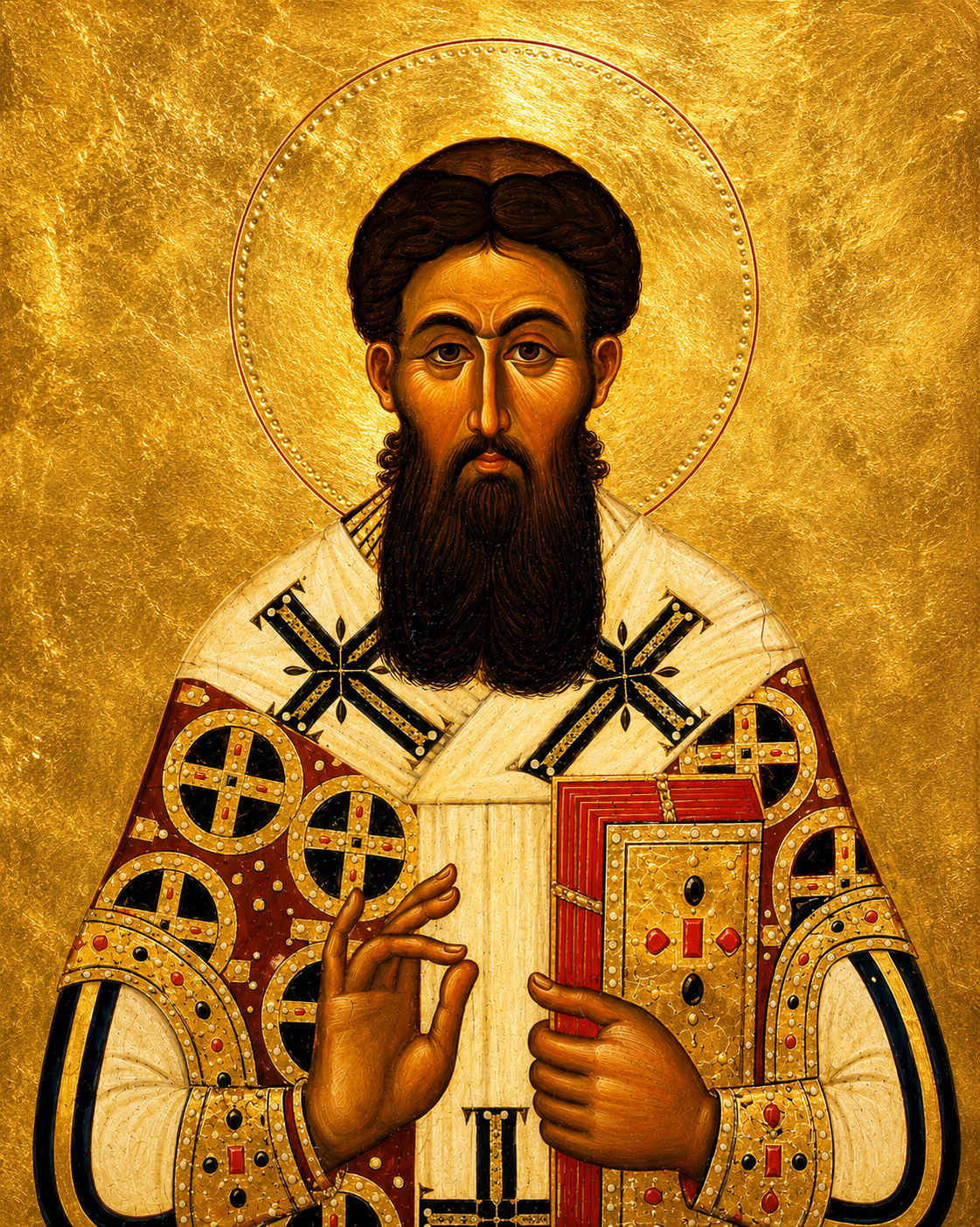
Saint Gregory Palamas Prayer Card - For Deep Prayer, the Jesus Prayer & Spiritual Discernment
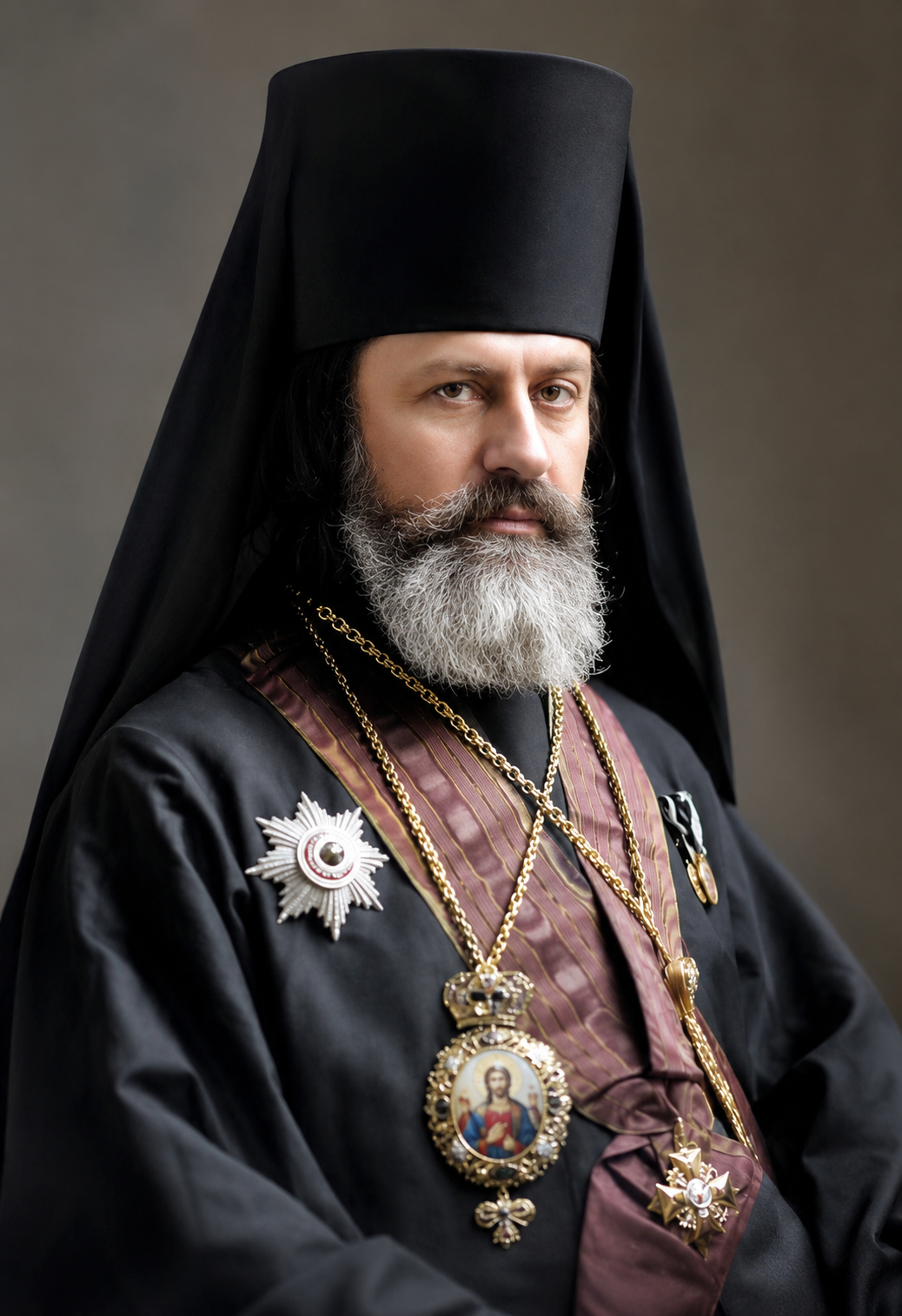
Saint Gregory Palamas, Archbishop of Thessalonica, great teacher of hesychasm, and defender of the prayer of the heart, is one of the most important theologians and spiritual fathers of the Eastern Christian tradition. A monk of Mount Athos before becoming a bishop, Saint Gregory devoted his life to prayer, asceticism, theological study, pastoral service, and the defense of the ancient Christian conviction that human beings are truly called into living communion with God. His teaching on the distinction between God's unknowable essence and His uncreated energies became an established part of Orthodox theology and is inseparably connected with the hesychast tradition and the Jesus Prayer.
Saint Gregory is especially meaningful for people seeking a deeper prayer life, those learning the Jesus Prayer, Christians struggling with distraction during prayer, monks and monastics, theologians, seminarians, clergy, people discerning authentic spiritual experiences, and anyone who wants faith to become more than intellectual knowledge about God. His theology developed precisely because he believed Christianity offers real communion with God rather than merely information about Him.
His life speaks particularly strongly to Christians who feel that prayer remains trapped in the head. Saint Gregory inherited and defended the ancient hesychast tradition in which the mind is gathered into the heart through repentance, watchfulness, silence, and continual remembrance of Jesus Christ. The familiar prayer, “Lord Jesus Christ, Son of God, have mercy on me, a sinner,” became one of the central expressions of this spiritual tradition.
Saint Gregory is also a powerful intercessor for people trying to distinguish genuine spiritual growth from imagination, emotional excitement, or intellectual pride. He was highly educated and intellectually formidable, yet his theology did not begin in the classroom alone. It grew from years of ascetic prayer on Mount Athos, where theological knowledge was tested against repentance, sacramental life, obedience, silence, and actual experience within the Church.
His story is equally important for Christians who have been criticized, misunderstood, or opposed for defending something they sincerely believe is true. Gregory endured years of controversy, theological attacks, ecclesiastical conflict, imprisonment, political instability, and even captivity by the Turks, yet he continued teaching and preaching rather than allowing opposition to turn him away from his vocation.
This prayer card is created for those seeking deeper prayer, growth in the Jesus Prayer, spiritual discernment, stillness of heart, freedom from distraction, theological understanding, perseverance during controversy, and greater awareness of God's presence. It is also especially fitting for monks, nuns, priests, deacons, seminarians, theologians, students of Eastern Christianity, people practicing hesychasm under proper spiritual guidance, and ordinary Christians trying to move from merely thinking about God toward a life increasingly centered upon Him.
Saint Gregory is primarily and profoundly associated with the Eastern Orthodox tradition, where he is commemorated on November 14 and again on the Second Sunday of Great Lent. He is also commemorated within portions of Byzantine Catholic liturgical life, including official Melkite and Ruthenian Catholic resources, making him an important point of continuity within the broader Byzantine spiritual tradition.
Each card is handmade in Austin, TX and created to order. We do not keep stock, because every prayer card is treated as a unique devotional offering. They are printed on museum-quality photo paper, not cardstock, and every card is made slowly during prayer with intentional reverence for the saint and for the person who will receive it. Names are lifted before Christ, intentions are held carefully, and each piece is handled multiple times in prayerful silence, asking God for mercy and asking Saint Gregory to intercede for the soul it is being made for. This is devotional craftsmanship shaped with patience, care, and spiritual responsibility because every soul and every prayer matters.
THE LIFE & STORY
Saint Gregory Palamas was born in Constantinople in 1296 into a prominent Byzantine family. His father served at the court of Emperor Andronikos II Palaiologos, and after his father's early death, the emperor himself took an interest in Gregory's education. Gregory received an advanced education in the intellectual disciplines of his time and demonstrated the ability that could easily have led him into an important career within the imperial government.
Instead, while still around twenty years old, Gregory turned away from the career that appeared open before him and went to Mount Athos. Around 1316, with some sources giving a slightly later date, he entered Vatopedi Monastery and placed himself under the spiritual guidance of Saint Nikodemos of Vatopedi. He received monastic tonsure and began the ascetic life that would ultimately shape everything he later wrote about theology.
His choice was not simply a rejection of education or intellectual life. Gregory brought an exceptionally trained mind into monasticism and then allowed prayer, obedience, fasting, worship, and spiritual struggle to transform the purpose for which that mind would be used. His theology would eventually become extraordinarily sophisticated, but its goal remained communion with God rather than intellectual achievement for its own sake.
After the death of his first spiritual father, Gregory continued his ascetic formation under another elder and later moved to the Great Lavra of Saint Athanasius. There he served the monastic community in ordinary forms of obedience, including work connected with the refectory and church singing, before withdrawing toward greater solitude at the skete of Glossia.
At Glossia, Gregory entered deeply into the tradition of unceasing mental prayer, or prayer of the heart. This tradition had been cultivated through generations of Eastern Christian ascetics and involved watchfulness, interior stillness, repentance, attention to God, and continual invocation of the name of Jesus. The Greek word hesychia means quiet or stillness, and the spiritual tradition built around this pursuit became known as hesychasm.
Hesychasm does not simply mean sitting in a silent room. Its deeper purpose is the purification and gathering of the person so that the mind no longer wanders endlessly among passions, anxieties, fantasies, memories, and distractions but becomes increasingly attentive to God. Saint Gregory became one of the greatest theological defenders of this spiritual tradition because he had first lived within it.
Because of the danger of Turkish raids, Gregory and other monks eventually left their location on Athos and traveled to Thessalonica, where he was ordained to the priesthood in 1326. He combined priestly ministry with a remarkably strict pattern of solitude, spending much of the week in silence and prayer while emerging on weekends to celebrate the Divine Liturgy, preach, and serve the faithful.
This pattern is important because Saint Gregory did not understand contemplation and ministry as enemies. Silence did not teach him to care less about people, and pastoral responsibility did not require abandoning the interior life. His prayer nourished his preaching, while sacramental and pastoral service kept his prayer rooted within the life of the Church.
Gregory later spent time near Bereia, where a small group of monks gathered around him, and then returned to Mount Athos. He lived at the skete of Saint Sabbas near the Great Lavra and for a period served as igumen of Esphigmenou Monastery before returning again to greater solitude and theological work.
During the 1330s, however, circumstances forced Gregory's hidden spiritual life into one of the most important theological controversies of medieval Christianity. A learned monk named Barlaam of Calabria came to Constantinople and later encountered the hesychast monks of Mount Athos. Barlaam criticized their spiritual practices and rejected their understanding of the divine light experienced by some advanced hesychasts.
The disagreement was much deeper than a dispute about techniques of prayer. At stake was the question of whether human beings can genuinely participate in and experience God's grace or whether God remains so inaccessible that Christian knowledge of Him is ultimately indirect. Gregory responded that God's essence remains absolutely transcendent and unknowable, but God truly communicates Himself through His uncreated energies.
This distinction between the divine essence and energies became central to Saint Gregory's theology. Christians do not become God by essence, nor do they comprehend the divine essence, but through grace they truly participate in God's life and can become what Scripture calls “partakers of the divine nature.” Gregory connected this directly with the Christian doctrine of theosis, or deification, in which human beings are transformed through communion with God while remaining creatures.
Gregory also defended the hesychast understanding of the Uncreated Light, particularly in connection with Christ's Transfiguration on Mount Tabor. The light seen by Peter, James, and John was not understood merely as a created symbol produced for the occasion but as a manifestation of divine glory. For Gregory, the saints' participation in divine light was therefore not an imaginary psychological experience but an expression of genuine participation in God's grace.
At the request of the Athonite monks, Gregory eventually placed his defense into writing in the work commonly known as the Triads in Defense of the Holy Hesychasts. The monks of Mount Athos also produced the Hagiorite Tome, which expressed their common defense of hesychast spirituality.
A council held in Constantinople in 1341 supported Gregory's teaching and rejected Barlaam's position. The controversy nevertheless continued through political upheaval and further theological opposition, with additional councils in 1347 and 1351 affirming Gregory's teaching as belonging to Orthodox Christian doctrine.
The controversy cost Gregory dearly. Patriarch John XIV Kalekas opposed him and in 1344 had him imprisoned, where Gregory remained for approximately four years. He was released in 1347 after ecclesiastical and political circumstances changed, and he was then chosen as Archbishop of Thessalonica.
Even becoming archbishop did not immediately bring peace. Political conflict in Thessalonica initially prevented Gregory from taking possession of his see, and he had to spend time elsewhere before finally beginning his episcopal ministry in the city. His life therefore provides a useful corrective to the idea that discovering one's vocation means circumstances will suddenly become simple.
Saint Gregory eventually served Thessalonica as bishop while continuing to preach and write. His episcopal vocation remained inseparable from the same prayer-centered spirituality he had cultivated as an Athonite monk, showing that the spirituality of the heart was not reserved exclusively for hermits living in caves.
During one journey, Gregory's ship was captured by Turkish forces, and he spent approximately a year in captivity. Even there he continued discussing and preaching the Christian faith among fellow prisoners and his Muslim captors, demonstrating that the spiritual life he had defended in monasteries remained intact even when silence and solitude were taken from him.
His captors eventually released him after a ransom was paid, and Gregory returned to Thessalonica. The OCA's traditional Life records numerous healings during the final years of his life and remembers a vision of Saint John Chrysostom shortly before his repose.
Saint Gregory fell asleep in the Lord on November 14, 1359. Only nine years later, in 1368, a council in Constantinople under Patriarch Philotheos officially glorified him, and the Second Sunday of Great Lent became a second annual commemoration of Saint Gregory in addition to his fixed November feast.
THE JESUS PRAYER & PRAYER OF THE HEART
Saint Gregory Palamas is one of the greatest saints for Christians seeking to understand the Jesus Prayer and the Eastern Christian tradition of prayer of the heart. The Orthodox Church in America explicitly connects hesychasm with continual invocation of the name of Jesus and identifies the Jesus Prayer as its characteristic expression.
The familiar form is simple: “Lord Jesus Christ, Son of God, have mercy on me, a sinner.” Its simplicity should not be confused with spiritual shallowness because within those few words the Christian confesses Jesus as Lord and Christ, acknowledges His divine Sonship, approaches Him personally, asks for mercy, and stands honestly before Him as a sinner in need of grace.
The purpose is not to repeat words mechanically until the mind enters an altered state. The Jesus Prayer belongs within repentance, humility, sacramental life, obedience, watchfulness, and life in the Church. Saint Gregory's defense of hesychasm was precisely a defense of an ecclesial spiritual tradition rather than an independent technique for manufacturing mystical experiences.
This distinction is especially important today because methods resembling meditation, breathwork, mindfulness, and repetitive prayer can easily be mixed together as though they were spiritually interchangeable. Hesychasm is specifically Christian because its center is not emptiness but Jesus Christ, and its goal is not self-absorption but repentance, purification, communion with God, and ultimately theosis.
Saint Gregory can therefore be an especially meaningful intercessor for someone who wants to begin the Jesus Prayer faithfully rather than merely experiment with a spiritual technique. His life reminds the Christian that progress in interior prayer should normally increase humility, repentance, charity, participation in the sacramental life of the Church, and dependence upon God rather than fascination with unusual experiences.
For ordinary Christians, prayer of the heart may begin very simply. A person may quietly repeat the Jesus Prayer while driving, walking, working with the hands, waiting in a hospital, sitting before an icon, or lying awake at night, allowing the name of Christ to become the place toward which the wandering mind repeatedly returns.
The goal is not perfect concentration from the first attempt. Saint Gregory's tradition teaches perseverance because the scattered mind is gradually trained through repentance and attention, and a person who becomes distracted a hundred times can return to Christ a hundred times without treating distraction itself as defeat.
HESYCHASM & INNER STILLNESS
The word hesychasm comes from the Greek hesychia, meaning stillness, quiet, or silence. Saint Gregory became its greatest theological defender because he insisted that inner stillness was not an escape from Christian doctrine but one of the environments in which the truths proclaimed by the Church can become deeply lived realities.
Outer silence can help, but hesychia ultimately concerns what is happening inside the person. Someone may live alone in a quiet house while remaining internally consumed by arguments, fantasies, resentment, fear, and constant mental noise, while another person may learn to preserve remembrance of God amid enormous external responsibility.
This is one reason Saint Gregory's spirituality is relevant beyond monasteries. The Greek Orthodox Archdiocese describes the spirituality of hesychasm associated with Gregory as important not only for monasticism but for the life of the entire Church, and the OCA has likewise encouraged ordinary believers to renew even a brief daily practice of the Jesus Prayer.
A parent caring for children, a worker in a noisy workplace, a person with a demanding schedule, or someone whose circumstances make extended silence impossible can still begin cultivating interior remembrance of Christ. The prayer may be brief, interrupted, and imperfect, but the spiritual movement remains the same: repeatedly returning the mind and heart toward Jesus.
Saint Gregory therefore becomes an especially meaningful saint for people overwhelmed by mental noise and spiritual distraction. His tradition does not promise a life without thoughts, but it offers a way of refusing to let every thought become master of the heart.
THE ESSENCE & ENERGIES OF GOD
Saint Gregory Palamas is famous for articulating the Orthodox distinction between God's essence and His energies. This teaching is often presented as though it were an obscure philosophical argument, but the OCA emphasizes that Gregory developed it while defending the concrete reality of Christian prayer and communion with God.
God's essence remains utterly beyond created comprehension. No saint, angel, theologian, or mystical experience allows a creature to grasp what God is in Himself or turn the divine mystery into something intellectually manageable.
Yet this does not mean God remains distant or inaccessible. God's energies, meaning His real divine actions and self-communication, are uncreated and truly divine, so when God gives grace He does not merely send a created substitute standing between Himself and humanity. Christians truly participate in God's life without becoming God by nature or essence.
This is the foundation of the Eastern Christian doctrine of theosis. Salvation is not simply receiving a legal declaration of forgiveness or intellectually agreeing with certain propositions, although forgiveness and right belief certainly matter. Salvation reaches toward the transformation of the entire human person through communion with the Father, through the Son, in the Holy Spirit.
For Saint Gregory, the saints are not simply people who behaved exceptionally well. They are human beings in whom divine grace has worked so deeply that the image of God becomes increasingly radiant, allowing the Christian life to become participation rather than mere imitation.
This is why his theology belongs so naturally beside the Jesus Prayer. The Christian repeatedly invokes Christ not simply to think about Him but to live increasingly from His grace, and the prayer of the heart becomes one part of a larger sacramental and ascetical life directed toward communion with God.
THE UNCREATED LIGHT & THE TRANSFIGURATION
Saint Gregory's teaching is closely connected with the Transfiguration of Christ. On Mount Tabor, Peter, James, and John saw Christ's face shine and His garments become radiant, and the hesychast tradition understood this light as a manifestation of divine glory rather than a merely created visual effect.
Gregory defended the possibility that saints purified through grace may truly participate in the same divine light, although such experiences are gifts of God rather than achievements produced through technique. This distinction guards the spiritual life against the dangerous desire to chase visions, lights, sensations, or extraordinary experiences for their own sake.
The goal of the Jesus Prayer is therefore not to “see the Uncreated Light.” The goal is Christ, repentance, purification, love, and communion with God, while whatever extraordinary gifts God may or may not give remain entirely His decision.
This makes Saint Gregory important for spiritual discernment because mystical Christianity can attract people precisely through the promise of extraordinary experiences. His teaching places experience underneath doctrine, humility, ecclesial life, and repentance rather than allowing subjective experience to become the final test of truth.
SAINT GREGORY & THEOLOGIANS
Saint Gregory is one of the most natural saints for theologians, seminarians, clergy, and serious students of Christian doctrine. His traditional Orthodox Troparion calls him a teacher of the Church and a champion of theologians, reflecting the extraordinary place his writings hold within Orthodox theology.
Yet his example carries a warning for anyone studying theology. Gregory was highly educated, but theological intelligence alone did not make him a saint, because knowledge about God can easily become another source of pride.
His theological authority grew from the union of study and prayer. Before entering major public controversy, he had spent years in monastic obedience, liturgical worship, silence, ascetic struggle, and the Jesus Prayer, allowing his understanding of theology to arise from the life of the Church rather than from intellectual speculation alone.
This makes him especially meaningful for someone in seminary or theological study who fears that academic work is beginning to dry out the spiritual life. Saint Gregory reminds the student that theology should finally return the person to prayer, worship, repentance, wonder, and love of God.
He is equally valuable for Christians who become absorbed in theological arguments online. Gregory argued vigorously because he believed truth mattered, but the truths he defended concerned communion with God, so theology that produces only anger, vanity, and contempt for other people has somehow become detached from the very spiritual life it is supposed to protect.
PERSEVERANCE THROUGH CONTROVERSY & IMPRISONMENT
Saint Gregory's life also makes him meaningful for people who must endure misunderstanding, false accusation, professional opposition, church conflict, or prolonged controversy. His teachings were attacked, his motives were questioned, powerful ecclesiastical authorities opposed him, and he eventually spent years imprisoned.
He therefore understood the exhausting reality of defending something over a long period rather than winning a single argument and moving on. Controversy can consume the interior life because a person may begin thinking about opponents more frequently than thinking about God.
Gregory's spiritual background offered protection against that danger. The theologian who argued publicly remained the monk who had learned silence, and the ability to return toward prayer prevented theological conflict from becoming his entire identity.
This is an important lesson for Christians who find themselves in disputes involving faith, family, church, work, or public life. It is possible to defend truth while gradually losing peace, humility, charity, and prayer, which may leave a person technically correct while spiritually damaged.
Saint Gregory's example invites Christians to preserve the interior life precisely when conflict becomes intense. Prayer does not require abandoning truth, but it helps prevent the defense of truth from becoming another form of self-worship.
CAPTIVITY & FAITH WHEN FREEDOM IS LOST
Saint Gregory's later captivity by Turkish forces provides another remarkable dimension to his life. He had spent years cultivating carefully structured periods of solitude and prayer, but captivity removed his control over environment, schedule, comfort, and physical security.
Yet the spiritual life did not disappear when ideal circumstances disappeared. Gregory continued speaking about Christianity among prisoners and captors, showing that years of interior prayer had formed something that could travel with him even when monastery, cell, and freedom were gone.
This makes Saint Gregory especially meaningful for Christians whose circumstances prevent the prayer life they would prefer. Illness, caregiving, military service, imprisonment, travel, demanding employment, small children, disability, or family crisis can make carefully structured silence difficult or impossible.
His captivity reminds the Christian that spiritual practices exist to form the person rather than to make the person dependent upon perfect conditions. A prayer rule may have to change, but Christ remains present.
SECOND SUNDAY OF GREAT LENT
Saint Gregory Palamas holds an unusual place in the Orthodox liturgical year because he is commemorated not only on his fixed feast of November 14 but also on the Second Sunday of Great Lent. This additional commemoration was established after his glorification and reflects the importance the Orthodox Church gives to his teaching.
The first Sunday of Great Lent celebrates the Triumph of Orthodoxy and the restoration of holy icons, while the following Sunday celebrates Saint Gregory and the defense of hesychast spirituality. Greek Orthodox resources describe this second commemoration as another triumph of Orthodox teaching because Gregory defended the possibility of genuine participation in God's grace.
His placement during Lent is especially fitting because Lent itself brings together fasting, repentance, prayer, almsgiving, watchfulness, and the movement toward deeper communion with Christ. Saint Gregory's theology explains why such practices matter: they are not religious exercises performed merely to prove discipline but part of the healing and transformation of the human person.
The Second Sunday of Great Lent therefore makes Saint Gregory an especially meaningful saint for anyone struggling to keep a prayer rule during fasting seasons. His life calls the Christian beyond simply completing religious tasks toward allowing prayer and fasting to open the heart more deeply to God.
HIS RELICS IN THESSALONIKI
Saint Gregory's holy relics remain closely associated with Thessaloniki, the city he served as archbishop. The Metropolitan Church of Saint Gregory Palamas in Thessaloniki preserves his relics, and the Holy Metropolis of Thessaloniki continues to carry his sacred remains in procession during the annual celebration of the Second Sunday of Great Lent.
In March 2026, the Metropolis again publicly processed Saint Gregory's relics through Thessaloniki during his Lenten feast, demonstrating that devotion to him remains a living part of the city's Orthodox worship rather than merely a historical memory.
The location is particularly fitting because Gregory spent years serving Thessalonica as bishop after decades of monastic and theological struggle. The monk who had sought silence on Mount Athos ultimately became permanently connected with one of the great cities of the Christian East.
For pilgrims interested in Saint Gregory, Thessaloniki therefore provides a particularly important destination. His relics connect his theology of the sanctification of the human person with the physical body of the saint himself, which the Church continues to honor within liturgical prayer.
PRAYERS
A simple traditional invocation may be used throughout the day: Holy Father Gregory Palamas, pray to God for us. This is especially fitting before theological study, during struggles with distraction in prayer, or when asking for greater humility and discernment in the spiritual life.
The traditional Orthodox Troparion honors Saint Gregory as a great teacher, monastic example, theologian, wonderworker, and herald of grace while asking his continual intercession for the salvation of the faithful. The Church's own hymnography therefore provides a firm devotional basis for seeking his prayers particularly in matters of theology, monastic life, and spiritual understanding.
For someone seeking deeper interior prayer, the traditional Jesus Prayer itself is especially appropriate in connection with Saint Gregory: “Lord Jesus Christ, Son of God, have mercy on me, a sinner.” Saint Gregory should never become the center replacing Christ, because his entire theological legacy points toward genuine communion with Jesus through the grace of the Holy Spirit.
Someone struggling with distraction may keep the card nearby while practicing a simple return to the name of Jesus whenever the mind wanders. The purpose is not to become angry at every distraction but to turn each recognition of distraction into another opportunity to return toward Christ.
The card is also especially appropriate for theologians and seminarians because Saint Gregory represents the union of serious intellectual work with deep prayer. It can remain beside theological books, a study Bible, the Philokalia, a prayer rope, or a desk as a reminder that theology reaches its proper end when knowledge produces worship.
This prayer card is especially fitting for a prayer corner, monastery cell, seminary room, theology library, Bible, prayer book, desk, or alongside a komboskini or chotki used for the Jesus Prayer. It can also be a meaningful gift for someone beginning to explore Eastern Christian spirituality, hesychasm, the Philokalia, or the theology of theosis.
FAQ
Who is Saint Gregory Palamas? Saint Gregory Palamas was a fourteenth-century Athonite monk, theologian, hesychast, and Archbishop of Thessalonica who lived from 1296 to 1359. He is especially known for defending the Jesus Prayer and hesychast tradition and for articulating the Orthodox distinction between God's essence and uncreated energies.
Is Saint Gregory Palamas an Orthodox saint? Yes, Saint Gregory is one of the most important theologians and saints of Eastern Orthodoxy. His importance is reflected by the fact that the Orthodox Church commemorates him both on November 14 and on the Second Sunday of Great Lent.
Is Saint Gregory Palamas venerated by Eastern Catholics? Yes, he is commemorated within some Byzantine Catholic traditions as well as within Orthodoxy. Official Melkite Catholic resources commemorate Saint Gregory Palamas during the Great Fast, while the Ruthenian Metropolitan Cantor Institute lists him liturgically as “our holy father Gregory Palamas, archbishop of Thessalonica.”
What is Saint Gregory Palamas known for? Saint Gregory is especially known for hesychasm, the Jesus Prayer, prayer of the heart, the theology of God's essence and energies, the Uncreated Light, and the Christian doctrine of genuine participation in divine grace. He was also an Athonite monk, priest, bishop, prolific theologian, prisoner, captive, preacher, and spiritual father.
What is Saint Gregory Palamas the patron saint of? Orthodox tradition does not define his patronage through a single universal modern list, so it is better to describe him through his established spiritual associations. He is especially appropriate as an intercessor for theologians, monks, seminarians, clergy, those practicing the Jesus Prayer, Christians seeking deeper prayer, and people seeking spiritual discernment, while Orthodox hymnography itself praises him as a teacher of the Church and champion of theologians.
Is Saint Gregory Palamas a saint for deeper prayer? Yes, deeper prayer is one of the strongest devotional reasons to seek his intercession because his life and theology centered on hesychasm and prayer of the heart. His writings defended the conviction that Christian prayer can lead toward genuine communion with God rather than merely intellectual reflection about Him.
Is Saint Gregory Palamas connected with the Jesus Prayer? Yes, very strongly. Orthodox sources place his theology directly within the hesychast tradition of continual invocation of Jesus Christ and identify the Jesus Prayer as the characteristic prayer of this spiritual practice.
What is the Jesus Prayer? The common form is “Lord Jesus Christ, Son of God, have mercy on me, a sinner.” It is a traditional Eastern Christian prayer used repeatedly as part of repentance, attention, watchfulness, and continual remembrance of Christ.
Can beginners pray the Jesus Prayer? Yes, ordinary Christians can use the Jesus Prayer simply and humbly, and the OCA has explicitly encouraged believers to renew even a brief daily practice of it. More advanced hesychast disciplines, especially those involving specialized bodily methods or intense contemplative practice, traditionally belong under experienced spiritual guidance rather than being attempted independently.
What is hesychasm? Hesychasm is the Eastern Christian spiritual tradition of inner stillness, watchfulness, repentance, and prayer of the heart associated especially with monasticism and the Jesus Prayer. Its name comes from the Greek hesychia, meaning quiet or stillness, although its deepest purpose is interior communion with God rather than external silence alone.
Was Saint Gregory Palamas a hesychast? Yes, Gregory practiced hesychasm personally on Mount Athos before becoming its greatest theological defender. His theology emerged from lived monastic experience rather than from merely studying hesychasm from the outside.
What is prayer of the heart? Prayer of the heart refers to prayer becoming increasingly interior and integrated so that attention to God moves beyond words spoken only externally or thoughts considered only intellectually. Within the hesychast tradition, the Jesus Prayer is used with repentance and watchfulness as the mind is repeatedly gathered toward the heart and toward Christ.
Can Saint Gregory Palamas help with distraction in prayer? He is a particularly fitting saint to invoke for this struggle because his entire spiritual tradition concerns watchfulness, attention, stillness, and the gathering of the mind toward God. This is a devotional application of his teaching rather than a formal patronage category, but it follows naturally from his life.
What did Saint Gregory teach about God's essence and energies? Gregory taught that God's essence is utterly transcendent and unknowable, while God's uncreated energies are truly divine and genuinely communicated to creation. Human beings can therefore really participate in God's grace without comprehending or becoming the divine essence.
What is theosis? Theosis, or deification, is the Eastern Christian teaching that human beings are called through grace into genuine participation in the life of God. Saint Gregory's essence-energies distinction helps explain how this participation can be real without confusing Creator and creature.
Did Saint Gregory Palamas teach that people become God? He did not teach that creatures become God by essence or cease to be creatures. His theology teaches real participation in God's uncreated grace while maintaining the absolute distinction between God's incomprehensible essence and created human nature.
What is the Uncreated Light? The Uncreated Light is the divine glory associated especially with Christ's Transfiguration on Mount Tabor. Saint Gregory defended the hesychast teaching that this light is not merely a created symbol but belongs to God's uncreated energies and can be genuinely participated in by grace.
Did Saint Gregory Palamas teach people to seek visions? His theology should not be reduced to seeking extraordinary mystical experiences. Hesychasm centers on repentance, prayer, purification, humility, and communion with God, while extraordinary manifestations such as divine light remain gifts of God rather than experiences a Christian should attempt to manufacture.
Who was Barlaam of Calabria? Barlaam was a learned monk and scholar from Calabria who criticized the spiritual practices and theological claims of the Athonite hesychasts. Saint Gregory became the principal defender of the monks and responded both orally and through major theological writings.
What are the Triads of Saint Gregory Palamas? The Triads in Defense of the Holy Hesychasts are Gregory's major writings defending hesychast prayer and explaining the theological foundations of genuine human participation in divine grace. They arose directly from his controversy with Barlaam and became foundational texts of Palamite theology.
Were Saint Gregory Palamas's teachings accepted by councils? Yes, councils in Constantinople in 1341, 1347, and 1351 affirmed the theological position defended by Gregory. The OCA describes the essence-energies distinction articulated through this controversy as an established part of Orthodox doctrine.
Was Saint Gregory Palamas ever imprisoned? Yes, he spent approximately four years imprisoned after Patriarch John XIV Kalekas turned against him during the continuing ecclesiastical and political controversy. He was released in 1347 and subsequently chosen as Archbishop of Thessalonica.
Was Saint Gregory Palamas ever captured by Muslims? Yes, during a later journey his ship fell into Turkish hands and Gregory spent roughly a year in captivity. He continued speaking about Christianity among both prisoners and Muslim captors until a ransom secured his release.
Was Saint Gregory Palamas a bishop? Yes, he became Archbishop of Thessalonica in 1347, although political turmoil delayed his ability to take up the see fully. He eventually served the city until his death in 1359.
Was Saint Gregory Palamas a monk on Mount Athos? Yes, Athonite monasticism formed the foundation of his spiritual life. He lived at Vatopedi, the Great Lavra, Glossia, the skete of Saint Sabbas, and for a time served as igumen of Esphigmenou.
Can I give this card to a monk or nun? Yes, Saint Gregory is one of the great teachers of Eastern monastic spirituality and is particularly associated with hesychasm, watchfulness, and the Jesus Prayer. His Orthodox hymnography itself remembers him as an example for monastics.
Can I give this card to a seminarian or theology student? Yes, it is especially appropriate because Saint Gregory represents the union of rigorous theology and deep prayer. His example reminds students that Christian theology should ultimately deepen worship, repentance, and communion with God rather than remain an academic exercise.
Can I give this card to someone learning the Jesus Prayer? Yes, Saint Gregory is one of the most appropriate saints for someone beginning serious study of the Jesus Prayer and hesychast spirituality. His life helps place the practice within its proper Orthodox context of repentance, sacramental life, humility, and spiritual guidance.
Why is Saint Gregory celebrated during Lent? The Second Sunday of Great Lent was dedicated to him after his glorification because his teaching came to be regarded as a major defense of Orthodox faith and spirituality. His feast also fits naturally within Lent because his theology emphasizes prayer, fasting, repentance, purification, and direct participation in God's grace.
When is Saint Gregory Palamas's feast day? His principal fixed feast is November 14, the date of his repose in 1359. The Orthodox Church also commemorates him every year on the Second Sunday of Great Lent, so his Lenten commemoration moves according to the date of Pascha.
Where are Saint Gregory Palamas's relics? His holy relics are preserved in the Metropolitan Church of Saint Gregory Palamas in Thessaloniki, Greece. The Holy Metropolis of Thessaloniki continues to honor them publicly, including an annual procession during the Second Sunday of Great Lent.
Are Saint Gregory Palamas's relics still venerated today? Yes, devotion to his relics remains active in Thessaloniki. In March 2026 the city's Holy Metropolis again held the liturgical procession of his sacred remains during the Second Sunday of the Fast.
What does Saint Gregory Palamas teach about prayer? His life teaches that prayer is not simply speaking religious words or thinking religious thoughts but part of the transformation of the whole human person through grace. Prayer is joined with repentance, watchfulness, sacramental life, humility, and the continual turning of the heart toward Christ.
What does Saint Gregory teach about theology? He demonstrates that true theology cannot be separated from spiritual life. Gregory was a sophisticated intellectual, but his theology grew out of years of monastic prayer and was ultimately directed toward defending the possibility of real communion with God.
What does Saint Gregory Palamas teach about spiritual discernment? His legacy teaches Christians not to confuse intellectual knowledge, emotional excitement, or unusual experiences with holiness. Authentic spiritual life remains centered on Christ and should lead toward repentance, humility, love, obedience, and deeper participation in the life of the Church.
What is the main message of Saint Gregory Palamas's life? Saint Gregory's life teaches that Christianity is not merely knowledge about God but a call to genuine communion with Him. A brilliant young scholar became an Athonite monk, the monk became a defender of the prayer of the heart, the controversial theologian endured imprisonment and captivity, and the hesychast became Archbishop of Thessalonica while remaining rooted in the same pursuit of God. His life calls Christians to move from distraction toward watchfulness, from information toward prayer, from religious theory toward lived communion, and from simply speaking about Christ toward allowing His grace to transform the heart.
Saint Gregory Palamas, Archbishop of Thessalonica, great teacher of hesychasm, and defender of the prayer of the heart, is one of the most important theologians and spiritual fathers of the Eastern Christian tradition. A monk of Mount Athos before becoming a bishop, Saint Gregory devoted his life to prayer, asceticism, theological study, pastoral service, and the defense of the ancient Christian conviction that human beings are truly called into living communion with God. His teaching on the distinction between God's unknowable essence and His uncreated energies became an established part of Orthodox theology and is inseparably connected with the hesychast tradition and the Jesus Prayer.
Saint Gregory is especially meaningful for people seeking a deeper prayer life, those learning the Jesus Prayer, Christians struggling with distraction during prayer, monks and monastics, theologians, seminarians, clergy, people discerning authentic spiritual experiences, and anyone who wants faith to become more than intellectual knowledge about God. His theology developed precisely because he believed Christianity offers real communion with God rather than merely information about Him.
His life speaks particularly strongly to Christians who feel that prayer remains trapped in the head. Saint Gregory inherited and defended the ancient hesychast tradition in which the mind is gathered into the heart through repentance, watchfulness, silence, and continual remembrance of Jesus Christ. The familiar prayer, “Lord Jesus Christ, Son of God, have mercy on me, a sinner,” became one of the central expressions of this spiritual tradition.
Saint Gregory is also a powerful intercessor for people trying to distinguish genuine spiritual growth from imagination, emotional excitement, or intellectual pride. He was highly educated and intellectually formidable, yet his theology did not begin in the classroom alone. It grew from years of ascetic prayer on Mount Athos, where theological knowledge was tested against repentance, sacramental life, obedience, silence, and actual experience within the Church.
His story is equally important for Christians who have been criticized, misunderstood, or opposed for defending something they sincerely believe is true. Gregory endured years of controversy, theological attacks, ecclesiastical conflict, imprisonment, political instability, and even captivity by the Turks, yet he continued teaching and preaching rather than allowing opposition to turn him away from his vocation.
This prayer card is created for those seeking deeper prayer, growth in the Jesus Prayer, spiritual discernment, stillness of heart, freedom from distraction, theological understanding, perseverance during controversy, and greater awareness of God's presence. It is also especially fitting for monks, nuns, priests, deacons, seminarians, theologians, students of Eastern Christianity, people practicing hesychasm under proper spiritual guidance, and ordinary Christians trying to move from merely thinking about God toward a life increasingly centered upon Him.
Saint Gregory is primarily and profoundly associated with the Eastern Orthodox tradition, where he is commemorated on November 14 and again on the Second Sunday of Great Lent. He is also commemorated within portions of Byzantine Catholic liturgical life, including official Melkite and Ruthenian Catholic resources, making him an important point of continuity within the broader Byzantine spiritual tradition.
Each card is handmade in Austin, TX and created to order. We do not keep stock, because every prayer card is treated as a unique devotional offering. They are printed on museum-quality photo paper, not cardstock, and every card is made slowly during prayer with intentional reverence for the saint and for the person who will receive it. Names are lifted before Christ, intentions are held carefully, and each piece is handled multiple times in prayerful silence, asking God for mercy and asking Saint Gregory to intercede for the soul it is being made for. This is devotional craftsmanship shaped with patience, care, and spiritual responsibility because every soul and every prayer matters.
THE LIFE & STORY
Saint Gregory Palamas was born in Constantinople in 1296 into a prominent Byzantine family. His father served at the court of Emperor Andronikos II Palaiologos, and after his father's early death, the emperor himself took an interest in Gregory's education. Gregory received an advanced education in the intellectual disciplines of his time and demonstrated the ability that could easily have led him into an important career within the imperial government.
Instead, while still around twenty years old, Gregory turned away from the career that appeared open before him and went to Mount Athos. Around 1316, with some sources giving a slightly later date, he entered Vatopedi Monastery and placed himself under the spiritual guidance of Saint Nikodemos of Vatopedi. He received monastic tonsure and began the ascetic life that would ultimately shape everything he later wrote about theology.
His choice was not simply a rejection of education or intellectual life. Gregory brought an exceptionally trained mind into monasticism and then allowed prayer, obedience, fasting, worship, and spiritual struggle to transform the purpose for which that mind would be used. His theology would eventually become extraordinarily sophisticated, but its goal remained communion with God rather than intellectual achievement for its own sake.
After the death of his first spiritual father, Gregory continued his ascetic formation under another elder and later moved to the Great Lavra of Saint Athanasius. There he served the monastic community in ordinary forms of obedience, including work connected with the refectory and church singing, before withdrawing toward greater solitude at the skete of Glossia.
At Glossia, Gregory entered deeply into the tradition of unceasing mental prayer, or prayer of the heart. This tradition had been cultivated through generations of Eastern Christian ascetics and involved watchfulness, interior stillness, repentance, attention to God, and continual invocation of the name of Jesus. The Greek word hesychia means quiet or stillness, and the spiritual tradition built around this pursuit became known as hesychasm.
Hesychasm does not simply mean sitting in a silent room. Its deeper purpose is the purification and gathering of the person so that the mind no longer wanders endlessly among passions, anxieties, fantasies, memories, and distractions but becomes increasingly attentive to God. Saint Gregory became one of the greatest theological defenders of this spiritual tradition because he had first lived within it.
Because of the danger of Turkish raids, Gregory and other monks eventually left their location on Athos and traveled to Thessalonica, where he was ordained to the priesthood in 1326. He combined priestly ministry with a remarkably strict pattern of solitude, spending much of the week in silence and prayer while emerging on weekends to celebrate the Divine Liturgy, preach, and serve the faithful.
This pattern is important because Saint Gregory did not understand contemplation and ministry as enemies. Silence did not teach him to care less about people, and pastoral responsibility did not require abandoning the interior life. His prayer nourished his preaching, while sacramental and pastoral service kept his prayer rooted within the life of the Church.
Gregory later spent time near Bereia, where a small group of monks gathered around him, and then returned to Mount Athos. He lived at the skete of Saint Sabbas near the Great Lavra and for a period served as igumen of Esphigmenou Monastery before returning again to greater solitude and theological work.
During the 1330s, however, circumstances forced Gregory's hidden spiritual life into one of the most important theological controversies of medieval Christianity. A learned monk named Barlaam of Calabria came to Constantinople and later encountered the hesychast monks of Mount Athos. Barlaam criticized their spiritual practices and rejected their understanding of the divine light experienced by some advanced hesychasts.
The disagreement was much deeper than a dispute about techniques of prayer. At stake was the question of whether human beings can genuinely participate in and experience God's grace or whether God remains so inaccessible that Christian knowledge of Him is ultimately indirect. Gregory responded that God's essence remains absolutely transcendent and unknowable, but God truly communicates Himself through His uncreated energies.
This distinction between the divine essence and energies became central to Saint Gregory's theology. Christians do not become God by essence, nor do they comprehend the divine essence, but through grace they truly participate in God's life and can become what Scripture calls “partakers of the divine nature.” Gregory connected this directly with the Christian doctrine of theosis, or deification, in which human beings are transformed through communion with God while remaining creatures.
Gregory also defended the hesychast understanding of the Uncreated Light, particularly in connection with Christ's Transfiguration on Mount Tabor. The light seen by Peter, James, and John was not understood merely as a created symbol produced for the occasion but as a manifestation of divine glory. For Gregory, the saints' participation in divine light was therefore not an imaginary psychological experience but an expression of genuine participation in God's grace.
At the request of the Athonite monks, Gregory eventually placed his defense into writing in the work commonly known as the Triads in Defense of the Holy Hesychasts. The monks of Mount Athos also produced the Hagiorite Tome, which expressed their common defense of hesychast spirituality.
A council held in Constantinople in 1341 supported Gregory's teaching and rejected Barlaam's position. The controversy nevertheless continued through political upheaval and further theological opposition, with additional councils in 1347 and 1351 affirming Gregory's teaching as belonging to Orthodox Christian doctrine.
The controversy cost Gregory dearly. Patriarch John XIV Kalekas opposed him and in 1344 had him imprisoned, where Gregory remained for approximately four years. He was released in 1347 after ecclesiastical and political circumstances changed, and he was then chosen as Archbishop of Thessalonica.
Even becoming archbishop did not immediately bring peace. Political conflict in Thessalonica initially prevented Gregory from taking possession of his see, and he had to spend time elsewhere before finally beginning his episcopal ministry in the city. His life therefore provides a useful corrective to the idea that discovering one's vocation means circumstances will suddenly become simple.
Saint Gregory eventually served Thessalonica as bishop while continuing to preach and write. His episcopal vocation remained inseparable from the same prayer-centered spirituality he had cultivated as an Athonite monk, showing that the spirituality of the heart was not reserved exclusively for hermits living in caves.
During one journey, Gregory's ship was captured by Turkish forces, and he spent approximately a year in captivity. Even there he continued discussing and preaching the Christian faith among fellow prisoners and his Muslim captors, demonstrating that the spiritual life he had defended in monasteries remained intact even when silence and solitude were taken from him.
His captors eventually released him after a ransom was paid, and Gregory returned to Thessalonica. The OCA's traditional Life records numerous healings during the final years of his life and remembers a vision of Saint John Chrysostom shortly before his repose.
Saint Gregory fell asleep in the Lord on November 14, 1359. Only nine years later, in 1368, a council in Constantinople under Patriarch Philotheos officially glorified him, and the Second Sunday of Great Lent became a second annual commemoration of Saint Gregory in addition to his fixed November feast.
THE JESUS PRAYER & PRAYER OF THE HEART
Saint Gregory Palamas is one of the greatest saints for Christians seeking to understand the Jesus Prayer and the Eastern Christian tradition of prayer of the heart. The Orthodox Church in America explicitly connects hesychasm with continual invocation of the name of Jesus and identifies the Jesus Prayer as its characteristic expression.
The familiar form is simple: “Lord Jesus Christ, Son of God, have mercy on me, a sinner.” Its simplicity should not be confused with spiritual shallowness because within those few words the Christian confesses Jesus as Lord and Christ, acknowledges His divine Sonship, approaches Him personally, asks for mercy, and stands honestly before Him as a sinner in need of grace.
The purpose is not to repeat words mechanically until the mind enters an altered state. The Jesus Prayer belongs within repentance, humility, sacramental life, obedience, watchfulness, and life in the Church. Saint Gregory's defense of hesychasm was precisely a defense of an ecclesial spiritual tradition rather than an independent technique for manufacturing mystical experiences.
This distinction is especially important today because methods resembling meditation, breathwork, mindfulness, and repetitive prayer can easily be mixed together as though they were spiritually interchangeable. Hesychasm is specifically Christian because its center is not emptiness but Jesus Christ, and its goal is not self-absorption but repentance, purification, communion with God, and ultimately theosis.
Saint Gregory can therefore be an especially meaningful intercessor for someone who wants to begin the Jesus Prayer faithfully rather than merely experiment with a spiritual technique. His life reminds the Christian that progress in interior prayer should normally increase humility, repentance, charity, participation in the sacramental life of the Church, and dependence upon God rather than fascination with unusual experiences.
For ordinary Christians, prayer of the heart may begin very simply. A person may quietly repeat the Jesus Prayer while driving, walking, working with the hands, waiting in a hospital, sitting before an icon, or lying awake at night, allowing the name of Christ to become the place toward which the wandering mind repeatedly returns.
The goal is not perfect concentration from the first attempt. Saint Gregory's tradition teaches perseverance because the scattered mind is gradually trained through repentance and attention, and a person who becomes distracted a hundred times can return to Christ a hundred times without treating distraction itself as defeat.
HESYCHASM & INNER STILLNESS
The word hesychasm comes from the Greek hesychia, meaning stillness, quiet, or silence. Saint Gregory became its greatest theological defender because he insisted that inner stillness was not an escape from Christian doctrine but one of the environments in which the truths proclaimed by the Church can become deeply lived realities.
Outer silence can help, but hesychia ultimately concerns what is happening inside the person. Someone may live alone in a quiet house while remaining internally consumed by arguments, fantasies, resentment, fear, and constant mental noise, while another person may learn to preserve remembrance of God amid enormous external responsibility.
This is one reason Saint Gregory's spirituality is relevant beyond monasteries. The Greek Orthodox Archdiocese describes the spirituality of hesychasm associated with Gregory as important not only for monasticism but for the life of the entire Church, and the OCA has likewise encouraged ordinary believers to renew even a brief daily practice of the Jesus Prayer.
A parent caring for children, a worker in a noisy workplace, a person with a demanding schedule, or someone whose circumstances make extended silence impossible can still begin cultivating interior remembrance of Christ. The prayer may be brief, interrupted, and imperfect, but the spiritual movement remains the same: repeatedly returning the mind and heart toward Jesus.
Saint Gregory therefore becomes an especially meaningful saint for people overwhelmed by mental noise and spiritual distraction. His tradition does not promise a life without thoughts, but it offers a way of refusing to let every thought become master of the heart.
THE ESSENCE & ENERGIES OF GOD
Saint Gregory Palamas is famous for articulating the Orthodox distinction between God's essence and His energies. This teaching is often presented as though it were an obscure philosophical argument, but the OCA emphasizes that Gregory developed it while defending the concrete reality of Christian prayer and communion with God.
God's essence remains utterly beyond created comprehension. No saint, angel, theologian, or mystical experience allows a creature to grasp what God is in Himself or turn the divine mystery into something intellectually manageable.
Yet this does not mean God remains distant or inaccessible. God's energies, meaning His real divine actions and self-communication, are uncreated and truly divine, so when God gives grace He does not merely send a created substitute standing between Himself and humanity. Christians truly participate in God's life without becoming God by nature or essence.
This is the foundation of the Eastern Christian doctrine of theosis. Salvation is not simply receiving a legal declaration of forgiveness or intellectually agreeing with certain propositions, although forgiveness and right belief certainly matter. Salvation reaches toward the transformation of the entire human person through communion with the Father, through the Son, in the Holy Spirit.
For Saint Gregory, the saints are not simply people who behaved exceptionally well. They are human beings in whom divine grace has worked so deeply that the image of God becomes increasingly radiant, allowing the Christian life to become participation rather than mere imitation.
This is why his theology belongs so naturally beside the Jesus Prayer. The Christian repeatedly invokes Christ not simply to think about Him but to live increasingly from His grace, and the prayer of the heart becomes one part of a larger sacramental and ascetical life directed toward communion with God.
THE UNCREATED LIGHT & THE TRANSFIGURATION
Saint Gregory's teaching is closely connected with the Transfiguration of Christ. On Mount Tabor, Peter, James, and John saw Christ's face shine and His garments become radiant, and the hesychast tradition understood this light as a manifestation of divine glory rather than a merely created visual effect.
Gregory defended the possibility that saints purified through grace may truly participate in the same divine light, although such experiences are gifts of God rather than achievements produced through technique. This distinction guards the spiritual life against the dangerous desire to chase visions, lights, sensations, or extraordinary experiences for their own sake.
The goal of the Jesus Prayer is therefore not to “see the Uncreated Light.” The goal is Christ, repentance, purification, love, and communion with God, while whatever extraordinary gifts God may or may not give remain entirely His decision.
This makes Saint Gregory important for spiritual discernment because mystical Christianity can attract people precisely through the promise of extraordinary experiences. His teaching places experience underneath doctrine, humility, ecclesial life, and repentance rather than allowing subjective experience to become the final test of truth.
SAINT GREGORY & THEOLOGIANS
Saint Gregory is one of the most natural saints for theologians, seminarians, clergy, and serious students of Christian doctrine. His traditional Orthodox Troparion calls him a teacher of the Church and a champion of theologians, reflecting the extraordinary place his writings hold within Orthodox theology.
Yet his example carries a warning for anyone studying theology. Gregory was highly educated, but theological intelligence alone did not make him a saint, because knowledge about God can easily become another source of pride.
His theological authority grew from the union of study and prayer. Before entering major public controversy, he had spent years in monastic obedience, liturgical worship, silence, ascetic struggle, and the Jesus Prayer, allowing his understanding of theology to arise from the life of the Church rather than from intellectual speculation alone.
This makes him especially meaningful for someone in seminary or theological study who fears that academic work is beginning to dry out the spiritual life. Saint Gregory reminds the student that theology should finally return the person to prayer, worship, repentance, wonder, and love of God.
He is equally valuable for Christians who become absorbed in theological arguments online. Gregory argued vigorously because he believed truth mattered, but the truths he defended concerned communion with God, so theology that produces only anger, vanity, and contempt for other people has somehow become detached from the very spiritual life it is supposed to protect.
PERSEVERANCE THROUGH CONTROVERSY & IMPRISONMENT
Saint Gregory's life also makes him meaningful for people who must endure misunderstanding, false accusation, professional opposition, church conflict, or prolonged controversy. His teachings were attacked, his motives were questioned, powerful ecclesiastical authorities opposed him, and he eventually spent years imprisoned.
He therefore understood the exhausting reality of defending something over a long period rather than winning a single argument and moving on. Controversy can consume the interior life because a person may begin thinking about opponents more frequently than thinking about God.
Gregory's spiritual background offered protection against that danger. The theologian who argued publicly remained the monk who had learned silence, and the ability to return toward prayer prevented theological conflict from becoming his entire identity.
This is an important lesson for Christians who find themselves in disputes involving faith, family, church, work, or public life. It is possible to defend truth while gradually losing peace, humility, charity, and prayer, which may leave a person technically correct while spiritually damaged.
Saint Gregory's example invites Christians to preserve the interior life precisely when conflict becomes intense. Prayer does not require abandoning truth, but it helps prevent the defense of truth from becoming another form of self-worship.
CAPTIVITY & FAITH WHEN FREEDOM IS LOST
Saint Gregory's later captivity by Turkish forces provides another remarkable dimension to his life. He had spent years cultivating carefully structured periods of solitude and prayer, but captivity removed his control over environment, schedule, comfort, and physical security.
Yet the spiritual life did not disappear when ideal circumstances disappeared. Gregory continued speaking about Christianity among prisoners and captors, showing that years of interior prayer had formed something that could travel with him even when monastery, cell, and freedom were gone.
This makes Saint Gregory especially meaningful for Christians whose circumstances prevent the prayer life they would prefer. Illness, caregiving, military service, imprisonment, travel, demanding employment, small children, disability, or family crisis can make carefully structured silence difficult or impossible.
His captivity reminds the Christian that spiritual practices exist to form the person rather than to make the person dependent upon perfect conditions. A prayer rule may have to change, but Christ remains present.
SECOND SUNDAY OF GREAT LENT
Saint Gregory Palamas holds an unusual place in the Orthodox liturgical year because he is commemorated not only on his fixed feast of November 14 but also on the Second Sunday of Great Lent. This additional commemoration was established after his glorification and reflects the importance the Orthodox Church gives to his teaching.
The first Sunday of Great Lent celebrates the Triumph of Orthodoxy and the restoration of holy icons, while the following Sunday celebrates Saint Gregory and the defense of hesychast spirituality. Greek Orthodox resources describe this second commemoration as another triumph of Orthodox teaching because Gregory defended the possibility of genuine participation in God's grace.
His placement during Lent is especially fitting because Lent itself brings together fasting, repentance, prayer, almsgiving, watchfulness, and the movement toward deeper communion with Christ. Saint Gregory's theology explains why such practices matter: they are not religious exercises performed merely to prove discipline but part of the healing and transformation of the human person.
The Second Sunday of Great Lent therefore makes Saint Gregory an especially meaningful saint for anyone struggling to keep a prayer rule during fasting seasons. His life calls the Christian beyond simply completing religious tasks toward allowing prayer and fasting to open the heart more deeply to God.
HIS RELICS IN THESSALONIKI
Saint Gregory's holy relics remain closely associated with Thessaloniki, the city he served as archbishop. The Metropolitan Church of Saint Gregory Palamas in Thessaloniki preserves his relics, and the Holy Metropolis of Thessaloniki continues to carry his sacred remains in procession during the annual celebration of the Second Sunday of Great Lent.
In March 2026, the Metropolis again publicly processed Saint Gregory's relics through Thessaloniki during his Lenten feast, demonstrating that devotion to him remains a living part of the city's Orthodox worship rather than merely a historical memory.
The location is particularly fitting because Gregory spent years serving Thessalonica as bishop after decades of monastic and theological struggle. The monk who had sought silence on Mount Athos ultimately became permanently connected with one of the great cities of the Christian East.
For pilgrims interested in Saint Gregory, Thessaloniki therefore provides a particularly important destination. His relics connect his theology of the sanctification of the human person with the physical body of the saint himself, which the Church continues to honor within liturgical prayer.
PRAYERS
A simple traditional invocation may be used throughout the day: Holy Father Gregory Palamas, pray to God for us. This is especially fitting before theological study, during struggles with distraction in prayer, or when asking for greater humility and discernment in the spiritual life.
The traditional Orthodox Troparion honors Saint Gregory as a great teacher, monastic example, theologian, wonderworker, and herald of grace while asking his continual intercession for the salvation of the faithful. The Church's own hymnography therefore provides a firm devotional basis for seeking his prayers particularly in matters of theology, monastic life, and spiritual understanding.
For someone seeking deeper interior prayer, the traditional Jesus Prayer itself is especially appropriate in connection with Saint Gregory: “Lord Jesus Christ, Son of God, have mercy on me, a sinner.” Saint Gregory should never become the center replacing Christ, because his entire theological legacy points toward genuine communion with Jesus through the grace of the Holy Spirit.
Someone struggling with distraction may keep the card nearby while practicing a simple return to the name of Jesus whenever the mind wanders. The purpose is not to become angry at every distraction but to turn each recognition of distraction into another opportunity to return toward Christ.
The card is also especially appropriate for theologians and seminarians because Saint Gregory represents the union of serious intellectual work with deep prayer. It can remain beside theological books, a study Bible, the Philokalia, a prayer rope, or a desk as a reminder that theology reaches its proper end when knowledge produces worship.
This prayer card is especially fitting for a prayer corner, monastery cell, seminary room, theology library, Bible, prayer book, desk, or alongside a komboskini or chotki used for the Jesus Prayer. It can also be a meaningful gift for someone beginning to explore Eastern Christian spirituality, hesychasm, the Philokalia, or the theology of theosis.
FAQ
Who is Saint Gregory Palamas? Saint Gregory Palamas was a fourteenth-century Athonite monk, theologian, hesychast, and Archbishop of Thessalonica who lived from 1296 to 1359. He is especially known for defending the Jesus Prayer and hesychast tradition and for articulating the Orthodox distinction between God's essence and uncreated energies.
Is Saint Gregory Palamas an Orthodox saint? Yes, Saint Gregory is one of the most important theologians and saints of Eastern Orthodoxy. His importance is reflected by the fact that the Orthodox Church commemorates him both on November 14 and on the Second Sunday of Great Lent.
Is Saint Gregory Palamas venerated by Eastern Catholics? Yes, he is commemorated within some Byzantine Catholic traditions as well as within Orthodoxy. Official Melkite Catholic resources commemorate Saint Gregory Palamas during the Great Fast, while the Ruthenian Metropolitan Cantor Institute lists him liturgically as “our holy father Gregory Palamas, archbishop of Thessalonica.”
What is Saint Gregory Palamas known for? Saint Gregory is especially known for hesychasm, the Jesus Prayer, prayer of the heart, the theology of God's essence and energies, the Uncreated Light, and the Christian doctrine of genuine participation in divine grace. He was also an Athonite monk, priest, bishop, prolific theologian, prisoner, captive, preacher, and spiritual father.
What is Saint Gregory Palamas the patron saint of? Orthodox tradition does not define his patronage through a single universal modern list, so it is better to describe him through his established spiritual associations. He is especially appropriate as an intercessor for theologians, monks, seminarians, clergy, those practicing the Jesus Prayer, Christians seeking deeper prayer, and people seeking spiritual discernment, while Orthodox hymnography itself praises him as a teacher of the Church and champion of theologians.
Is Saint Gregory Palamas a saint for deeper prayer? Yes, deeper prayer is one of the strongest devotional reasons to seek his intercession because his life and theology centered on hesychasm and prayer of the heart. His writings defended the conviction that Christian prayer can lead toward genuine communion with God rather than merely intellectual reflection about Him.
Is Saint Gregory Palamas connected with the Jesus Prayer? Yes, very strongly. Orthodox sources place his theology directly within the hesychast tradition of continual invocation of Jesus Christ and identify the Jesus Prayer as the characteristic prayer of this spiritual practice.
What is the Jesus Prayer? The common form is “Lord Jesus Christ, Son of God, have mercy on me, a sinner.” It is a traditional Eastern Christian prayer used repeatedly as part of repentance, attention, watchfulness, and continual remembrance of Christ.
Can beginners pray the Jesus Prayer? Yes, ordinary Christians can use the Jesus Prayer simply and humbly, and the OCA has explicitly encouraged believers to renew even a brief daily practice of it. More advanced hesychast disciplines, especially those involving specialized bodily methods or intense contemplative practice, traditionally belong under experienced spiritual guidance rather than being attempted independently.
What is hesychasm? Hesychasm is the Eastern Christian spiritual tradition of inner stillness, watchfulness, repentance, and prayer of the heart associated especially with monasticism and the Jesus Prayer. Its name comes from the Greek hesychia, meaning quiet or stillness, although its deepest purpose is interior communion with God rather than external silence alone.
Was Saint Gregory Palamas a hesychast? Yes, Gregory practiced hesychasm personally on Mount Athos before becoming its greatest theological defender. His theology emerged from lived monastic experience rather than from merely studying hesychasm from the outside.
What is prayer of the heart? Prayer of the heart refers to prayer becoming increasingly interior and integrated so that attention to God moves beyond words spoken only externally or thoughts considered only intellectually. Within the hesychast tradition, the Jesus Prayer is used with repentance and watchfulness as the mind is repeatedly gathered toward the heart and toward Christ.
Can Saint Gregory Palamas help with distraction in prayer? He is a particularly fitting saint to invoke for this struggle because his entire spiritual tradition concerns watchfulness, attention, stillness, and the gathering of the mind toward God. This is a devotional application of his teaching rather than a formal patronage category, but it follows naturally from his life.
What did Saint Gregory teach about God's essence and energies? Gregory taught that God's essence is utterly transcendent and unknowable, while God's uncreated energies are truly divine and genuinely communicated to creation. Human beings can therefore really participate in God's grace without comprehending or becoming the divine essence.
What is theosis? Theosis, or deification, is the Eastern Christian teaching that human beings are called through grace into genuine participation in the life of God. Saint Gregory's essence-energies distinction helps explain how this participation can be real without confusing Creator and creature.
Did Saint Gregory Palamas teach that people become God? He did not teach that creatures become God by essence or cease to be creatures. His theology teaches real participation in God's uncreated grace while maintaining the absolute distinction between God's incomprehensible essence and created human nature.
What is the Uncreated Light? The Uncreated Light is the divine glory associated especially with Christ's Transfiguration on Mount Tabor. Saint Gregory defended the hesychast teaching that this light is not merely a created symbol but belongs to God's uncreated energies and can be genuinely participated in by grace.
Did Saint Gregory Palamas teach people to seek visions? His theology should not be reduced to seeking extraordinary mystical experiences. Hesychasm centers on repentance, prayer, purification, humility, and communion with God, while extraordinary manifestations such as divine light remain gifts of God rather than experiences a Christian should attempt to manufacture.
Who was Barlaam of Calabria? Barlaam was a learned monk and scholar from Calabria who criticized the spiritual practices and theological claims of the Athonite hesychasts. Saint Gregory became the principal defender of the monks and responded both orally and through major theological writings.
What are the Triads of Saint Gregory Palamas? The Triads in Defense of the Holy Hesychasts are Gregory's major writings defending hesychast prayer and explaining the theological foundations of genuine human participation in divine grace. They arose directly from his controversy with Barlaam and became foundational texts of Palamite theology.
Were Saint Gregory Palamas's teachings accepted by councils? Yes, councils in Constantinople in 1341, 1347, and 1351 affirmed the theological position defended by Gregory. The OCA describes the essence-energies distinction articulated through this controversy as an established part of Orthodox doctrine.
Was Saint Gregory Palamas ever imprisoned? Yes, he spent approximately four years imprisoned after Patriarch John XIV Kalekas turned against him during the continuing ecclesiastical and political controversy. He was released in 1347 and subsequently chosen as Archbishop of Thessalonica.
Was Saint Gregory Palamas ever captured by Muslims? Yes, during a later journey his ship fell into Turkish hands and Gregory spent roughly a year in captivity. He continued speaking about Christianity among both prisoners and Muslim captors until a ransom secured his release.
Was Saint Gregory Palamas a bishop? Yes, he became Archbishop of Thessalonica in 1347, although political turmoil delayed his ability to take up the see fully. He eventually served the city until his death in 1359.
Was Saint Gregory Palamas a monk on Mount Athos? Yes, Athonite monasticism formed the foundation of his spiritual life. He lived at Vatopedi, the Great Lavra, Glossia, the skete of Saint Sabbas, and for a time served as igumen of Esphigmenou.
Can I give this card to a monk or nun? Yes, Saint Gregory is one of the great teachers of Eastern monastic spirituality and is particularly associated with hesychasm, watchfulness, and the Jesus Prayer. His Orthodox hymnography itself remembers him as an example for monastics.
Can I give this card to a seminarian or theology student? Yes, it is especially appropriate because Saint Gregory represents the union of rigorous theology and deep prayer. His example reminds students that Christian theology should ultimately deepen worship, repentance, and communion with God rather than remain an academic exercise.
Can I give this card to someone learning the Jesus Prayer? Yes, Saint Gregory is one of the most appropriate saints for someone beginning serious study of the Jesus Prayer and hesychast spirituality. His life helps place the practice within its proper Orthodox context of repentance, sacramental life, humility, and spiritual guidance.
Why is Saint Gregory celebrated during Lent? The Second Sunday of Great Lent was dedicated to him after his glorification because his teaching came to be regarded as a major defense of Orthodox faith and spirituality. His feast also fits naturally within Lent because his theology emphasizes prayer, fasting, repentance, purification, and direct participation in God's grace.
When is Saint Gregory Palamas's feast day? His principal fixed feast is November 14, the date of his repose in 1359. The Orthodox Church also commemorates him every year on the Second Sunday of Great Lent, so his Lenten commemoration moves according to the date of Pascha.
Where are Saint Gregory Palamas's relics? His holy relics are preserved in the Metropolitan Church of Saint Gregory Palamas in Thessaloniki, Greece. The Holy Metropolis of Thessaloniki continues to honor them publicly, including an annual procession during the Second Sunday of Great Lent.
Are Saint Gregory Palamas's relics still venerated today? Yes, devotion to his relics remains active in Thessaloniki. In March 2026 the city's Holy Metropolis again held the liturgical procession of his sacred remains during the Second Sunday of the Fast.
What does Saint Gregory Palamas teach about prayer? His life teaches that prayer is not simply speaking religious words or thinking religious thoughts but part of the transformation of the whole human person through grace. Prayer is joined with repentance, watchfulness, sacramental life, humility, and the continual turning of the heart toward Christ.
What does Saint Gregory teach about theology? He demonstrates that true theology cannot be separated from spiritual life. Gregory was a sophisticated intellectual, but his theology grew out of years of monastic prayer and was ultimately directed toward defending the possibility of real communion with God.
What does Saint Gregory Palamas teach about spiritual discernment? His legacy teaches Christians not to confuse intellectual knowledge, emotional excitement, or unusual experiences with holiness. Authentic spiritual life remains centered on Christ and should lead toward repentance, humility, love, obedience, and deeper participation in the life of the Church.
What is the main message of Saint Gregory Palamas's life? Saint Gregory's life teaches that Christianity is not merely knowledge about God but a call to genuine communion with Him. A brilliant young scholar became an Athonite monk, the monk became a defender of the prayer of the heart, the controversial theologian endured imprisonment and captivity, and the hesychast became Archbishop of Thessalonica while remaining rooted in the same pursuit of God. His life calls Christians to move from distraction toward watchfulness, from information toward prayer, from religious theory toward lived communion, and from simply speaking about Christ toward allowing His grace to transform the heart.