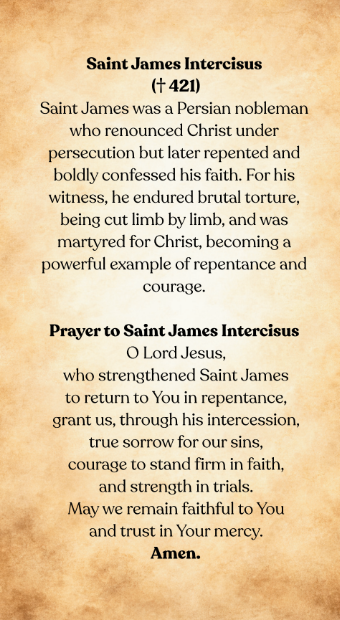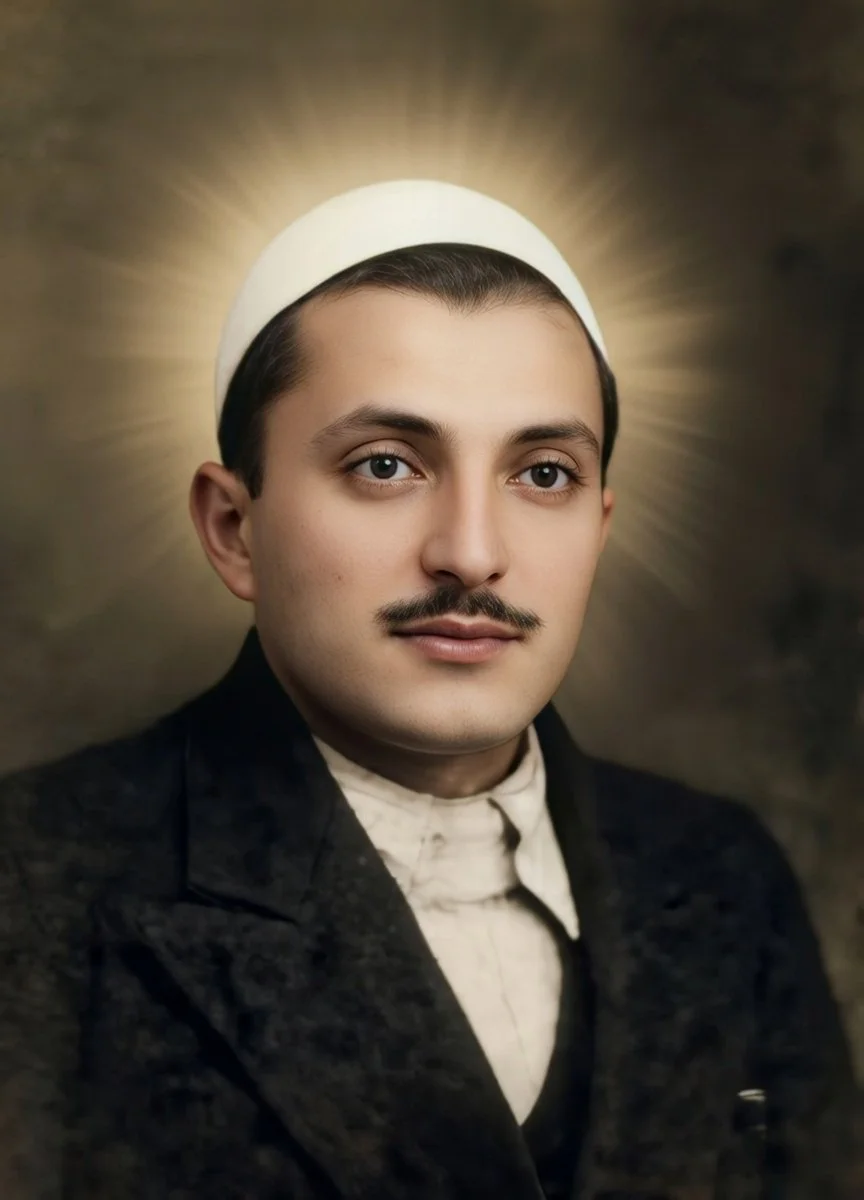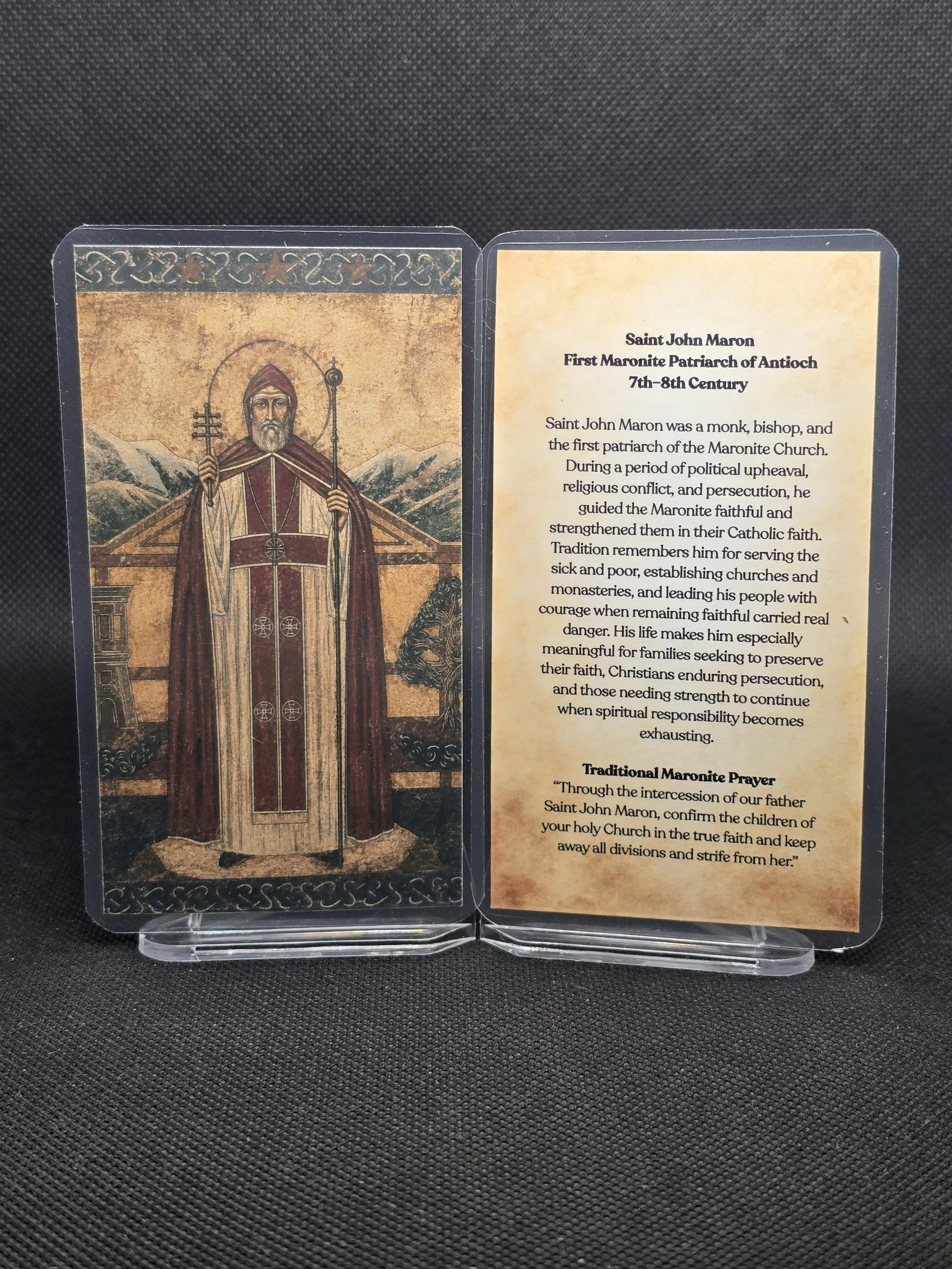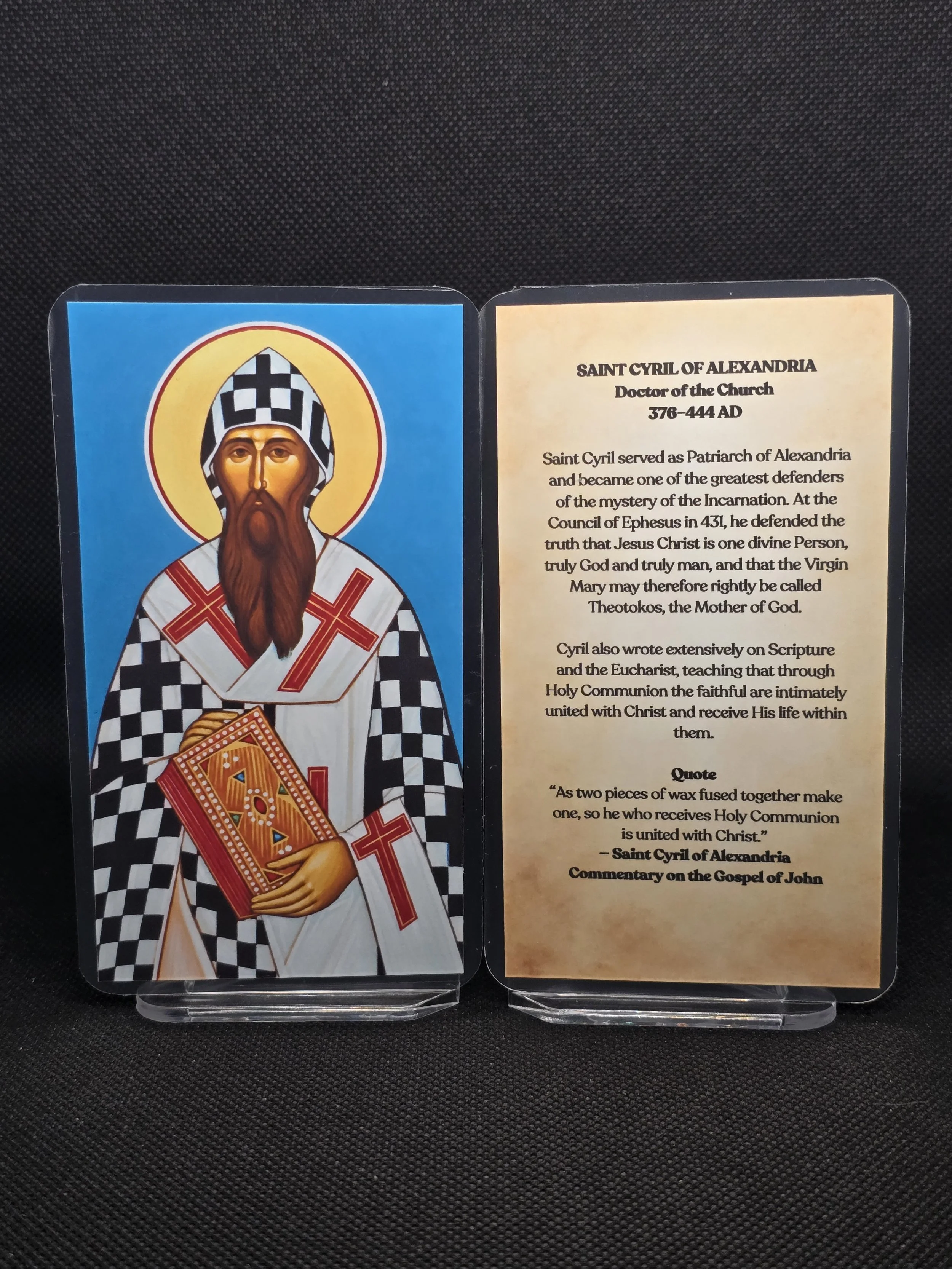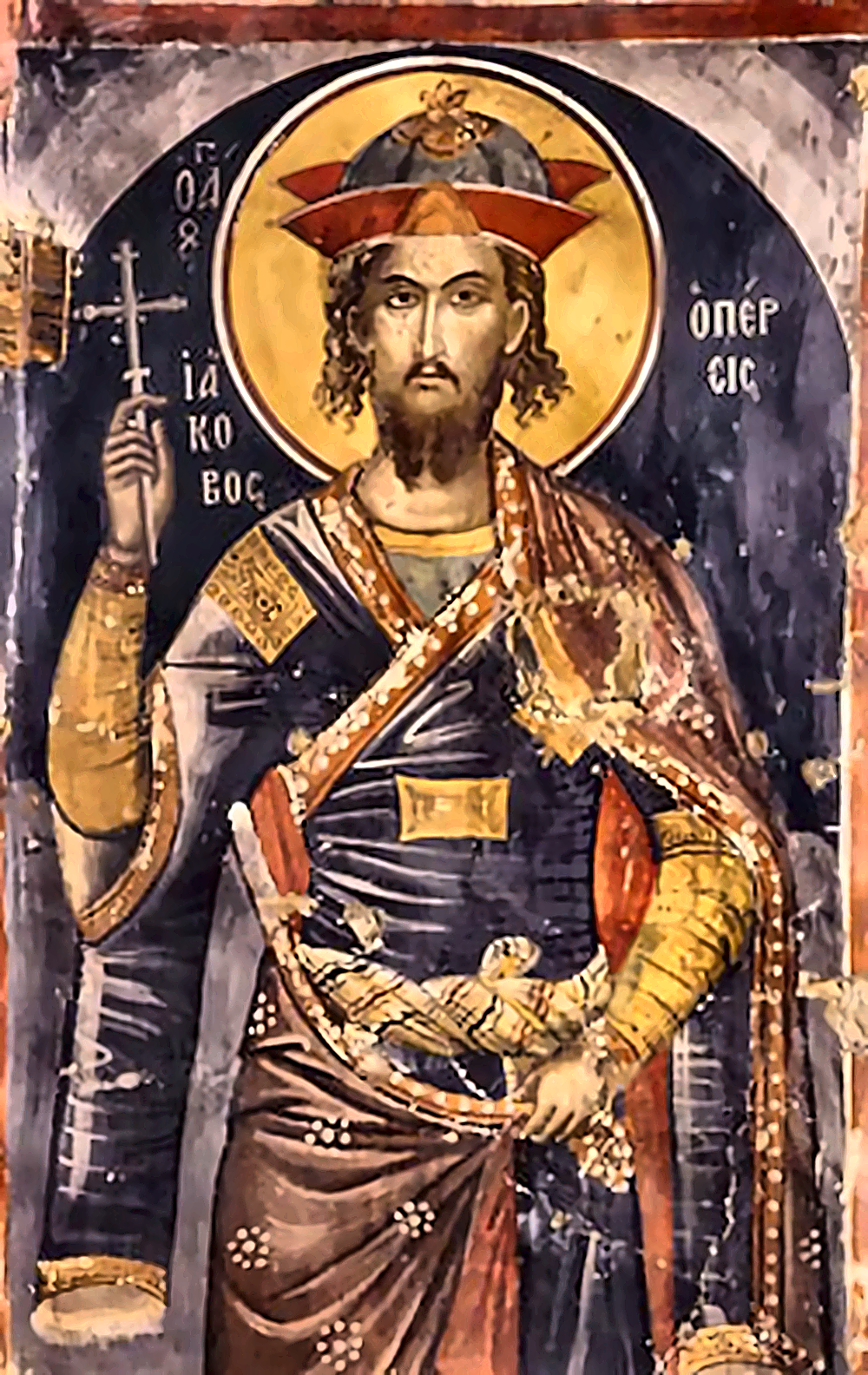
James Intercisus Prayer Card (James the Persian)– Patron for Courage Under Persecution, Repentance After Compromise & Strength in Severe Trials

$3.00

Saint James Intercisus, also known as James the Persian, lived in the fourth century during the reign of the Persian king Shapur II in modern day Iran. He was a Christian nobleman serving in the Persian court at a time when loyalty to Christ could cost everything.

His feast is commemorated on November 27 in both Eastern and Western calendars.

He belongs to the ancient Church of Persia and is venerated in the Eastern Orthodox Church, the Oriental Orthodox Churches, and the Catholic Church as a saint of the undivided era.

James’ life is not a story of immediate heroism.

It is a story of repentance.

Under pressure from the Persian king, James initially denied Christ in order to preserve his position. When news of his denial reached his mother and wife, they rebuked him with grief, urging him to return to faithfulness.

Their sorrow pierced him.

James repented publicly.

He confessed Christ openly before the same king he had once tried to please. For this confession, he was sentenced to a brutal execution, cut limb from limb over the course of a day. As each part of his body was severed, he proclaimed his faith.

He died praying.

People pray to Saint James when they feel shame over past compromise, when fear tempts them to silence, and when the cost of faith feels overwhelming. He understands weakness. He understands regret. He understands the terror of standing alone.

If you have denied your convictions, drifted under pressure, or feel haunted by failure, Saint James stands as proof that repentance restores courage.

This prayer card is created as a spiritual heirloom. It is meant to accompany seasons of repentance and renewed resolve, reminding the heart that failure does not have the final word.

Each card is handmade in Austin, TX and created to order. We do not keep stock, because every prayer card is treated as a unique devotional offering. They are printed on museum-quality photo paper, not cardstock. Every card is made slowly, during prayer, with intentional reverence for the saint or holy image and for the person who will receive it. Names are lifted before Christ. Intentions are held carefully. Each piece is handled multiple times in prayerful silence, asking God for mercy and asking the saint to intercede for the soul it is being made for. This is not production work. It is devotional craftsmanship shaped with patience, care, and spiritual responsibility, because every soul and every prayer matters.

Saint James Intercisus, also known as James the Persian, lived in the fourth century during the reign of the Persian king Shapur II in modern day Iran. He was a Christian nobleman serving in the Persian court at a time when loyalty to Christ could cost everything.

His feast is commemorated on November 27 in both Eastern and Western calendars.

He belongs to the ancient Church of Persia and is venerated in the Eastern Orthodox Church, the Oriental Orthodox Churches, and the Catholic Church as a saint of the undivided era.

James’ life is not a story of immediate heroism.

It is a story of repentance.

Under pressure from the Persian king, James initially denied Christ in order to preserve his position. When news of his denial reached his mother and wife, they rebuked him with grief, urging him to return to faithfulness.

Their sorrow pierced him.

James repented publicly.

He confessed Christ openly before the same king he had once tried to please. For this confession, he was sentenced to a brutal execution, cut limb from limb over the course of a day. As each part of his body was severed, he proclaimed his faith.

He died praying.

People pray to Saint James when they feel shame over past compromise, when fear tempts them to silence, and when the cost of faith feels overwhelming. He understands weakness. He understands regret. He understands the terror of standing alone.

If you have denied your convictions, drifted under pressure, or feel haunted by failure, Saint James stands as proof that repentance restores courage.

This prayer card is created as a spiritual heirloom. It is meant to accompany seasons of repentance and renewed resolve, reminding the heart that failure does not have the final word.

Each card is handmade in Austin, TX and created to order. We do not keep stock, because every prayer card is treated as a unique devotional offering. They are printed on museum-quality photo paper, not cardstock. Every card is made slowly, during prayer, with intentional reverence for the saint or holy image and for the person who will receive it. Names are lifted before Christ. Intentions are held carefully. Each piece is handled multiple times in prayerful silence, asking God for mercy and asking the saint to intercede for the soul it is being made for. This is not production work. It is devotional craftsmanship shaped with patience, care, and spiritual responsibility, because every soul and every prayer matters.

  • THE LIFE & STORY

    James was born into a Christian family in Persia and rose to prominence in the court of King Shapur II. At a time when Persian rulers viewed Christianity with suspicion due to its association with the Roman Empire, believers faced scrutiny and persecution.

    James held influence and status.

    He also faced fear.

    When pressured to renounce Christ, he complied, choosing safety over confession. The choice secured his position but fractured his soul. Word reached his mother and wife, who refused to soften the truth. They wrote to him, declaring that if he abandoned Christ, they would no longer recognize him.

    Their grief awakened him.

    James returned to the king and openly professed his faith in Christ. This time he did not hesitate. His repentance was public and costly.

    Shapur II ordered a methodical execution meant to terrify others. James was dismembered piece by piece, beginning with his fingers and toes. With each injury, he prayed and praised God. Witnesses recorded that he remained steadfast until the final blow.

    He died around the year 421.

    His body, though torn, became a sign of restoration. His repentance turned shame into glory. Early Christians preserved his memory as a martyr who proved that courage can follow failure.

    His life teaches that repentance is not weakness.

    It is strength reborn.

  • MIRACLES & PATRONAGE

    Patron Saint Of:

    • Courage under persecution

    • Repentance after compromise

    • Strength during severe suffering

    • Protection for those facing public trials

    • Restoration after spiritual failure

    Saint James is remembered primarily for the miracle of steadfast repentance. His witness strengthened Christians living under Persian persecution.

    After his death, devotion to him spread widely in both East and West. Churches were dedicated in his honor, and accounts of his intercession include protection during persecution and strengthening of those tempted to abandon their faith.

    He is especially invoked by those burdened by regret. Many turn to him when they feel they have failed Christ publicly or privately.

    His intercession is sought not for ease, but for courage.

    He reminds believers that confession after failure can be stronger than untested faith.

  • PRAYERS

    Short Traditional Invocation

    Holy Martyr James Intercisus, steadfast confessor of Christ, pray for us.

    Traditional Prayer to Saint James

    O holy Martyr James,
    who repented of fear and confessed Christ unto death,
    intercede for us before the Lord.

    Strengthen us when we are tempted to deny our faith.
    Restore us when we fall.
    Grant us courage to stand firm in truth.

    Teach us repentance that leads to life.
    Deliver us from shame.
    Make us bold in witness and faithful in suffering.

    Through your prayers,
    may we remain steadfast in Christ
    until the end.

    Amen.

  • FAQ

    What is Saint James Intercisus known for?
    He is known for publicly repenting after initially denying Christ and for enduring a brutal martyrdom with steadfast faith.

    When is his feast day?
    November 27 in both Eastern and Western Christian calendars.

    Which Christian traditions venerate Saint James Intercisus?
    He is venerated by the Eastern Orthodox Church, Oriental Orthodox Churches, and the Catholic Church as a fourth-century martyr.

    Why do people pray to Saint James for courage and repentance?
    Because his life demonstrates that repentance can transform failure into fearless confession and that courage can follow weakness.