 Image 1 of 1
Saint John Bosco Prayer Card – For Youth, Students, Educators, Troubled Teens & Vocational Guidance
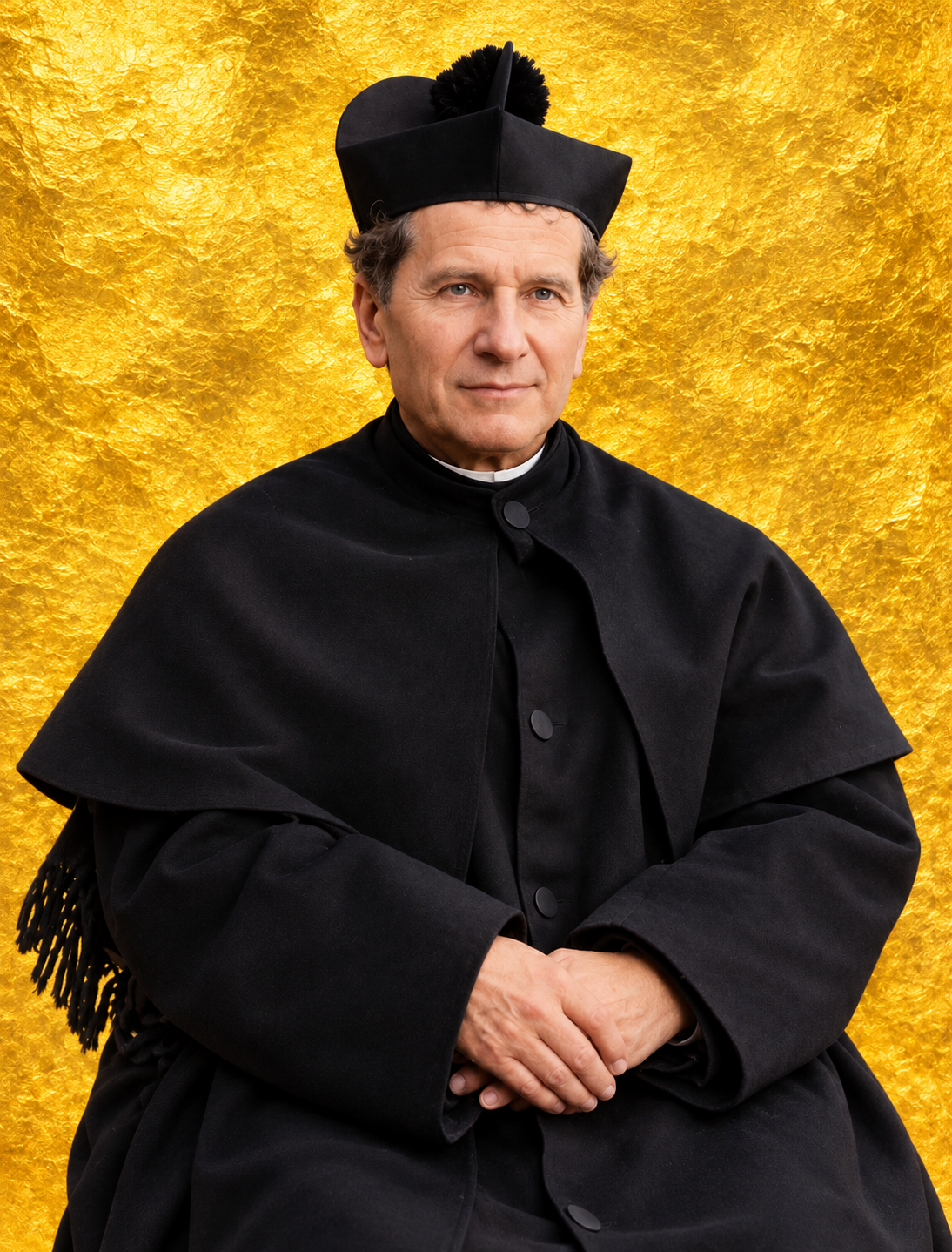
Saint John Bosco, known throughout the world simply as Don Bosco, was an Italian Catholic priest, educator, founder, writer, and extraordinary spiritual father who dedicated his life to poor, abandoned, imprisoned, and vulnerable young people. Rather than treating troubled youth as problems to be punished, he believed they could be transformed through faith, education, patience, friendship, meaningful work, and the experience of knowing that they were genuinely loved.
His approach became known as the Preventive System, built upon reason, religion, and loving kindness. Don Bosco wanted young people surrounded by adults who knew them personally, shared their lives, encouraged their gifts, corrected them without humiliation, and helped them discover both their earthly vocation and their eternal destiny.
Saint John Bosco is especially meaningful for parents praying for children, teachers, coaches, catechists, youth ministers, students, teenagers struggling with direction or behavior, young adults discerning their vocation, and families carrying concern for a child who seems to be drifting away from faith. Pope Saint John Paul II formally proclaimed him Father and Teacher of Youth, a title that captures the mission to which Don Bosco devoted virtually his entire life.
Each prayer card measures 2.5" x 4.25", is handmade in Austin, Texas, printed on museum-quality photo paper rather than ordinary cardstock, and double laminated for durability. Every card is made to order and prepared prayerfully, with the recipient and their intentions brought before Christ while asking Saint John Bosco to intercede for their needs.
THE LIFE & STORY OF SAINT JOHN BOSCO
John Melchior Bosco was born in 1815 in the countryside of Piedmont in northern Italy. His family lived modestly, and tragedy entered his life almost immediately when his father died while John was still a small child.
His mother, Margaret Occhiena, raised John and his brothers in poverty while maintaining a deep Catholic faith. She taught her children prayer, sacrifice, generosity toward people who had even less than they did, and confidence in God during hardship.
The future founder of an international movement therefore grew up without wealth, social influence, or educational privilege. His own struggle to obtain an education later helped him understand the young people whose poverty seemed to place their futures beyond reach.
THE DREAM AT NINE YEARS OLD
One of the most famous events in Don Bosco's life occurred when he was approximately nine years old. He dreamed that he was among a crowd of boys who were fighting, shouting, and behaving badly.
Young John attempted to stop them through force and angry words. In the dream, however, a mysterious man told him that he would not win these boys through blows but through gentleness and love.
A majestic woman then appeared and became associated in John's mind with the Virgin Mary. The dream left a permanent impression upon him and came to be understood as an early indication of his future vocation among young people.
Throughout his life, Don Bosco experienced numerous vivid dreams that he and those around him sometimes interpreted as spiritually significant. Yet the childhood dream remained foundational because its lesson eventually became the heart of his entire educational system.
ENTERTAINING OTHER CHILDREN
Long before he became a priest, John Bosco discovered that young people listened more readily when joy and friendship accompanied instruction. As a boy, he learned juggling, acrobatics, balancing tricks, and other forms of entertainment.
He would gather other children, perform for them, and then repeat parts of sermons he had heard at church or lead them in prayer. Entertainment became a way of creating a relationship before attempting to teach.
This instinct remained with him throughout his life. Don Bosco did not believe Christian formation required young people to become gloomy. Games, music, sports, friendship, laughter, education, and prayer could all belong together within a healthy Christian environment.
THE LONG ROAD TO THE PRIESTHOOD
John wanted to become a priest, but poverty made education difficult. He worked various jobs while pursuing his studies and learned practical trades that later became useful in his work with young apprentices.
He eventually entered seminary and was ordained to the priesthood in 1841. The young priest could have followed a conventional parish path, but his experience in Turin quickly confronted him with a growing social crisis.
Industrialization was bringing large numbers of young people into the city. Many were poor, uneducated, separated from their families, exploited as workers, sleeping in dangerous conditions, or becoming involved in crime.
Don Bosco increasingly recognized that these young people would become the center of his priesthood.
THE PRISONS OF TURIN
One of the most important influences on Don Bosco's ministry came from visiting prisons in Turin. He encountered young prisoners whose lives had deteriorated through poverty, neglect, lack of education, dangerous environments, and repeated criminal behavior.
He was deeply disturbed by seeing young people leave prison only to return again because nothing about the circumstances surrounding their lives had changed.
This experience helped shape what eventually became his Preventive System. Don Bosco increasingly believed that the most effective Christian response was not simply punishing young people after they had fallen but surrounding them with the relationships, education, faith, work, and guidance that might prevent their lives from collapsing in the first place.
BARTHOLOMEW GARELLI AND THE BEGINNING OF THE ORATORY
On December 8, 1841, Don Bosco encountered a young man named Bartholomew Garelli in the sacristy of the church of Saint Francis of Assisi in Turin. A sacristan became angry when the young man admitted that he did not know how to serve Mass and struck him.
Don Bosco intervened and asked that the frightened young man be brought back. Rather than humiliating him further, Don Bosco spoke to him kindly and discovered that he lacked even basic religious instruction.
After Mass, Don Bosco began teaching him.
Garelli returned and brought others with him. What began as a conversation with one young man gradually developed into the Oratory, the great work that would become the center of Don Bosco's mission.
THE ORATORY OF SAINT FRANCIS DE SALES
More and more boys began gathering around Don Bosco. They needed far more than catechism lessons because many required food, employment, education, friendship, safe recreation, and sometimes a place to live.
Finding a permanent home for the growing Oratory proved difficult. Neighbors complained about the noise, landlords became uneasy about the number of young people gathering, and the group moved repeatedly.
Eventually the work found a permanent home in the Valdocco district of Turin.
Valdocco became the heart of the Salesian world. There, Don Bosco developed an environment where religion, education, recreation, work, music, friendship, and family life were deliberately woven together.
THE PREVENTIVE SYSTEM
Don Bosco's educational philosophy became known as the Preventive System. Instead of waiting for wrongdoing and responding primarily through punishment, the educator should create conditions that encourage young people toward what is good before serious problems develop.
The system became associated particularly with three principles: reason, religion, and loving kindness.
Reason meant treating young people as people capable of understanding why rules existed and helping them accept responsibility rather than demanding blind obedience through fear. Religion meant forming them toward friendship with Christ through prayer, Confession, the Eucharist, moral formation, and a genuine Christian environment.
Loving kindness meant something more than simply feeling affection. Young people had to experience that affection through the presence and behavior of the educator.
“OUR BOYS MUST KNOW THEY ARE LOVED”
One of the statements that best summarizes Don Bosco's educational philosophy is the conviction that young people must not only be loved but must know that they are loved.
The distinction is enormously important. A parent or educator may sincerely care about a young person while communicating primarily through correction, demands, disappointment, or punishment.
Don Bosco believed relationship made education possible. An educator who entered the young person's world, listened, played, encouraged, corrected with patience, and remained present could gradually earn the trust necessary for deeper formation.
This philosophy explains why Don Bosco spent so much time physically among the boys rather than governing them from a distance.
REASON
The first major pillar of Don Bosco's Preventive System was reason. Rules should make sense, expectations should be understandable, and young people should gradually learn responsibility rather than simply becoming afraid of authority.
Don Bosco strongly preferred persuasion, patience, and personal relationships to harsh punishment. He knew that humiliating a young person might produce temporary compliance while damaging the relationship necessary for genuine education.
This element of his teaching continues to influence Catholic education, schools, youth programs, residential care, and Salesian ministry throughout the world.
RELIGION
Don Bosco never separated education from the ultimate purpose of human life. Academic success, employment, good citizenship, and practical skills mattered, but he believed education remained incomplete if a young person never encountered Christ.
Confession and the Eucharist occupied particularly important places within the Oratory. Don Bosco wanted young people to discover Christianity not simply as a system of restrictions but as a friendship with God capable of producing joy.
His goal was often summarized as forming good Christians and upright citizens. Spiritual formation and responsible participation in society belonged together.
LOVING KINDNESS
The third pillar of the Preventive System is often translated as loving kindness. The Italian concept carries the sense of a visible, active affection through which the young person realizes that the educator genuinely desires his good.
Don Bosco did not believe that kindness meant abandoning standards. His boys were expected to study, work, behave responsibly, participate in religious life, and respect others.
The difference was the atmosphere in which correction occurred. Authority was supposed to resemble fatherhood rather than domination.
EDUCATION AND JOB TRAINING
Don Bosco understood that young people living in poverty needed more than good advice. They needed education and the ability to earn an honest living.
He established workshops and vocational training in trades such as printing, bookbinding, carpentry, and other practical skills. Young workers also needed protection from exploitation, so Don Bosco became involved in arrangements intended to secure more humane conditions for apprentices.
This practical side of his ministry is essential to understanding him. Don Bosco did not respond to poverty merely by preaching patience. He attempted to give young people the skills necessary to build stable lives.
A HOME FOR BOYS WITHOUT ONE
Some young people simply had nowhere safe to live. Don Bosco gradually began providing housing, transforming the Oratory into not only a place for recreation and religious education but also a home.
His mother Margaret eventually joined him at Valdocco and helped create the family atmosphere he wanted his boys to experience.
The presence of Mama Margaret, as she became affectionately known, reinforced the idea that the Oratory should function less like an institution and more like a home in which young people knew they belonged.
SAINT DOMINIC SAVIO
Among the young people formed by Don Bosco, none became more famous than Saint Dominic Savio.
Dominic arrived at the Oratory as a boy with an intense desire for holiness. At one point his seriousness became so intense that Don Bosco helped him understand that holiness did not consist primarily in extraordinary penances.
Don Bosco encouraged him toward joy, fidelity to ordinary duties, prayer, friendship, and service to his companions.
Dominic died while still a teenager, and Don Bosco later wrote his biography. The young saint became one of the clearest examples of Don Bosco's belief that holiness was possible for ordinary young people.
HOLINESS AND JOY
One of the distinctive features of Salesian spirituality is the union of holiness with joy. Don Bosco did not want young people to imagine that becoming holy meant becoming miserable.
Games filled the Oratory courtyards. Music was important. Festivals, excursions, theater, friendship, and laughter all had places within the community.
This atmosphere helped form the Salesian conviction that holiness can flourish within ordinary youthful joy when that joy remains ordered toward what is good.
For parents concerned that their children see Christianity primarily as a list of restrictions, Don Bosco offers a very different model of formation.
MARY HELP OF CHRISTIANS
Don Bosco possessed an extraordinary devotion to the Blessed Virgin Mary, particularly under the title Mary Help of Christians. He repeatedly attributed the development of his work to her assistance and believed she had guided his vocation from the mysterious dream of his childhood onward.
He eventually built the Basilica of Mary Help of Christians at Valdocco, which became one of the great spiritual centers of the Salesian family.
Marian devotion in Don Bosco's spirituality always led toward Christ. He taught his young people to approach Mary as a mother who helps Christians remain faithful to her Son.
THE SALESIANS OF DON BOSCO
As Don Bosco's work expanded, he needed collaborators capable of continuing the mission beyond his own lifetime. In 1859, he founded the Society of Saint Francis de Sales, whose members became known as the Salesians of Don Bosco.
He chose Saint Francis de Sales as a patron because of the saint's gentleness, patience, pastoral wisdom, and ability to communicate Christian teaching without harshness.
The Salesians dedicated themselves particularly to the education and evangelization of young people, especially those who were poor, abandoned, or at risk.
What began among boys in Turin eventually became an international religious family.
THE DAUGHTERS OF MARY HELP OF CHRISTIANS
Don Bosco's concern for young people was not limited to boys. Together with Saint Mary Domenica Mazzarello, he helped establish the Daughters of Mary Help of Christians, commonly called the Salesian Sisters.
Their mission brought the Salesian educational spirit particularly to girls and young women.
The collaboration between Bosco and Mazzarello ensured that the movement developing around the Preventive System would serve young people far beyond the original boys of Valdocco.
THE SALESIAN COOPERATORS
Don Bosco also understood that his mission could never belong only to priests and religious. Lay men and women had essential roles to play in education, evangelization, charity, and the protection of young people.
He therefore developed the Salesian Cooperators, allowing lay Christians to participate formally in the spirituality and apostolic mission associated with his work.
This vision anticipated the enormous role laypeople would continue playing in Catholic education and youth ministry.
DON BOSCO AND THE PRINTING PRESS
Books and publishing became another important dimension of Don Bosco's mission. He understood the growing influence of print culture and wanted accessible Catholic materials placed in the hands of ordinary people.
His workshops trained young people in printing and related trades while also producing religious and educational materials. He wrote biographies, instructional works, devotional books, and material for young readers.
This publishing activity is one reason Saint John Bosco has also been associated historically with Catholic publishers and editors.
For Don Bosco, communication itself was missionary territory.
“GIVE ME SOULS, TAKE AWAY THE REST”
The spiritual motto most closely associated with Don Bosco is the Latin phrase Da mihi animas, cetera tolle, traditionally translated as “Give me souls, take away the rest.”
The words express the missionary intensity beneath his enormous practical activity. Schools, workshops, games, music, publishing, housing, job training, and youth programs were never ends in themselves.
Don Bosco wanted young people to know Christ and reach eternal life.
His educational work was pastoral because the salvation and holiness of young people remained the deepest concern beneath everything else.
“IT IS ENOUGH THAT YOU ARE YOUNG”
Don Bosco wrote directly to young people with an affection that became characteristic of his entire ministry:
“It is enough for you to be young for me to love you very much.”
The statement comes from his own writing for young people and expresses something essential about his vocation. He did not love young people only when they behaved well, succeeded academically, or displayed obvious spiritual promise.
Youth itself called forth his concern.
That attitude explains why he repeatedly sought precisely the young people others found difficult, poor, ignorant, or troublesome.
FOR PARENTS WORRIED ABOUT THEIR CHILDREN
Saint John Bosco is especially meaningful for parents carrying anxiety about a child or teenager. Some parents worry about school, friendships, behavior, addiction, faith, employment, emotional struggles, or a child who appears to be moving steadily in the wrong direction.
Don Bosco spent his life dealing with young people whose circumstances were far from ideal. Many lacked education, stable families, employment, religious formation, or positive adult influences.
His approach combined prayer with patient relationship. Rather than assuming a troubled young person's present behavior determined their future, he searched for the point within them from which something good could grow.
Parents may ask his intercession for patience, wisdom, protection, communication, conversion, and the grace to continue loving a child even when progress seems slow.
FOR TROUBLED TEENS
Don Bosco's ministry began largely among young people whom respectable society was tempted to dismiss. Some had already spent time in prison, while others lived on the streets or survived in environments where crime was an easy path.
He refused to define them entirely by their worst actions.
His Preventive System rested upon the conviction that young people could respond to reason, faith, meaningful responsibility, friendship, and genuine affection.
This makes his prayer card especially fitting for a teenager struggling with behavior, anger, discipline, school problems, poor friendships, lack of direction, or distance from the Church.
FOR STUDENTS
Education occupied an enormous part of Don Bosco's life. His schools and programs attempted to form the whole person rather than measuring success solely by academic performance.
Students may seek his intercession for concentration, perseverance, good friendships, wise decisions, examinations, vocational clarity, discipline, and the ability to use education toward something genuinely good.
His own difficult journey toward education can also encourage students whose financial circumstances, family responsibilities, or personal struggles make school harder than it appears for others.
FOR TEACHERS AND EDUCATORS
Saint John Bosco is one of Christianity's great models for educators because he understood that successful teaching begins with relationship.
Knowledge alone does not make someone a good teacher. Don Bosco believed the educator had to be present among young people, understand their world, recognize their strengths, establish reasonable expectations, correct without humiliation, and communicate genuine concern.
Pope Saint John Paul II recognized the enduring significance of this approach when he formally proclaimed Don Bosco Father and Teacher of Youth.
Teachers, school administrators, coaches, catechists, counselors, youth ministers, and parents may therefore find in him both an intercessor and a practical model of education.
FOR VOCATIONAL DISCERNMENT
Don Bosco continually encouraged young people to ask what God wanted from their lives. He helped form priests and religious, but he also prepared countless young people for trades, family life, work, and responsible citizenship.
Vocation in his spirituality was larger than simply choosing a career.
The deeper question was how a person's gifts, circumstances, faith, and responsibilities could become a life offered to God.
His prayer card can therefore be especially meaningful for teenagers or young adults trying to discern college, work, priesthood, religious life, marriage, or another major direction.
FOR YOUTH MINISTERS AND COACHES
Don Bosco understood something modern youth ministry continues rediscovering: young people are often reached through relationships long before they are reached through formal instruction.
He entered their world. He played with them, listened to them, organized activities, taught them trades, heard their Confessions, prayed with them, and remained present within ordinary daily life.
His example is especially relevant to coaches, mentors, youth ministers, Scout leaders, teachers, and volunteers who may have only a limited amount of time with a young person but can still become a significant adult presence in that person's life.
MISSIONARY EXPANSION
Don Bosco eventually sent Salesian missionaries beyond Europe, beginning an international expansion that continued rapidly after his death.
The mission remained fundamentally the same wherever the Salesians went: evangelize and educate young people, particularly those whose poverty or circumstances placed them at risk.
Today the Salesian family serves across the world through schools, vocational programs, missions, parishes, youth centers, social services, and ministries to vulnerable children.
The enormous international movement traces its origin back to a priest who began by speaking kindly to one frightened young worker in a sacristy.
HIS FINAL YEARS
Decades of relentless work gradually exhausted Don Bosco. He traveled extensively to obtain support for his foundations, maintained enormous correspondence, supervised construction projects, guided religious communities, worked with Church authorities, and remained deeply connected to young people.
By his later years his physical strength had declined significantly.
Yet even as his body weakened, the mission he had begun was clearly capable of continuing beyond him. Salesian houses and missions were spreading, religious communities had been established, and the educational spirituality he developed had taken permanent form.
Don Bosco died in Turin in 1888 at seventy-two years old.
CANONIZATION
The Church formally recognized the heroic holiness underlying Don Bosco's educational achievements when Pope Pius XI canonized him in 1934.
His influence continued expanding long after his death. Schools, parishes, youth centers, vocational institutions, missionary works, and social programs carrying the Salesian charism developed throughout the world.
In 1989, Pope Saint John Paul II formally proclaimed Saint John Bosco Father and Teacher of Youth, establishing that he should be honored and invoked under that title.
The designation beautifully summarizes his vocation. Don Bosco was not merely a theorist of education. He became a father to young people who desperately needed one.
THE QUOTE
One of Don Bosco's own statements expresses the heart of his relationship with young people:
“It is enough for you to be young for me to love you very much.”
The words reveal why his work became so different from many institutions serving troubled children in his time. Love was not a reward offered after a young person became worthy of attention.
Love was where education began.
Don Bosco believed that when young people discovered they were genuinely loved, they could begin trusting the adults trying to guide them. From that trust, discipline, faith, learning, responsibility, and deeper conversion could gradually grow.
PRAYER TO SAINT JOHN BOSCO
A traditional Salesian prayer honors Don Bosco under the title given to him by the Church and asks for his help in following Christ:
“Father and Teacher of Youth, Saint John Bosco, obedient to the gifts of the Spirit and open to the realities of your time, you were for the young, especially for the little ones and the poor, a sign of God's love and predilection. Be our guide in walking in friendship with the Lord Jesus, that we may discover in Him and in His Gospel the meaning of our lives and the source of true happiness. Help us to respond generously to the vocation we received from God and, guided by Mary Help of Christians, bring us one day into the great family of heaven. Amen.”
The prayer is especially appropriate for young people, families, educators, and anyone trying to understand and faithfully respond to their vocation.
WHO SHOULD RECEIVE A SAINT JOHN BOSCO PRAYER CARD?
A Saint John Bosco prayer card can make a meaningful gift for a child, teenager, student, parent, teacher, coach, catechist, youth minister, seminarian, vocational student, or someone working professionally with vulnerable young people. His life is particularly relevant when praying for teenagers struggling with school, discipline, friendships, direction, or faith.
It can also be given to parents carrying persistent concern for a son or daughter. Don Bosco's life offers a hopeful reminder that a difficult season in a young person's life does not determine the ending of the story and that patient love, prayer, trustworthy adults, faith, education, and meaningful responsibility can gradually transform a life.
FAQ
Who was Saint John Bosco? Saint John Bosco, commonly called Don Bosco, was an Italian Catholic priest and educator who lived from 1815 to 1888. He dedicated his life especially to poor, abandoned, imprisoned, and vulnerable young people and founded the Salesians of Don Bosco.
Why is John Bosco called Don Bosco? In Italian, “Don” is a traditional title used for priests. Giovanni Bosco therefore became widely known as Don Bosco, a name by which he remains recognized throughout the world.
What is Saint John Bosco famous for? He is especially famous for his work with disadvantaged youth, his Preventive System of education, the Oratory at Valdocco, the founding of the Salesians, his devotion to Mary Help of Christians, and his extraordinary influence upon Catholic education.
What is the Preventive System of Don Bosco? The Preventive System is Don Bosco's educational approach based particularly upon reason, religion, and loving kindness. Rather than relying primarily upon punishment after wrongdoing, it seeks to form young people proactively within an environment of trust, faith, education, positive relationships, and responsible freedom.
What are the three pillars of Don Bosco's Preventive System? They are usually identified as reason, religion, and loving kindness. Together they describe an educational relationship that respects the young person's intelligence, nurtures faith, and communicates genuine personal care.
Why is Saint John Bosco associated with young people? Virtually his entire priestly life centered upon the education, evangelization, protection, and vocational development of young people, particularly those who were poor or abandoned. Pope Saint John Paul II formally proclaimed him Father and Teacher of Youth.
Did Saint John Bosco work with juvenile offenders? Yes. Visits to prisons in Turin deeply influenced him, and he worked extensively with young people who were poor, abandoned, homeless, or at serious risk of criminal involvement.
Who was Bartholomew Garelli? Bartholomew Garelli was the young worker whom Don Bosco met in 1841 after a sacristan had treated him harshly. Don Bosco befriended him and began teaching him, and the encounter became traditionally associated with the beginning of his Oratory.
What was Don Bosco's Oratory? The Oratory developed into a community where young people could receive catechesis, education, recreation, job training, friendship, spiritual guidance, and, when necessary, housing. The permanent Oratory at Valdocco became the center of Don Bosco's work.
Was Saint Dominic Savio one of Don Bosco's students? Yes. Saint Dominic Savio was formed under Don Bosco at the Oratory and became one of the most famous examples of the holiness Don Bosco believed was possible among young people.
Who founded the Salesians? Saint John Bosco founded the Society of Saint Francis de Sales, commonly known as the Salesians of Don Bosco, in 1859. Their mission centers especially upon the education and evangelization of young people.
Who founded the Salesian Sisters? Saint John Bosco and Saint Mary Domenica Mazzarello worked together in establishing the Daughters of Mary Help of Christians, commonly called the Salesian Sisters.
Why was Don Bosco devoted to Mary Help of Christians? He believed the Virgin Mary had guided and protected his mission from childhood onward. He eventually built the Basilica of Mary Help of Christians at Valdocco and made devotion to Mary an important part of Salesian spirituality.
Did Saint John Bosco have prophetic dreams? Don Bosco reported numerous vivid dreams throughout his life, some of which he and those around him understood as carrying spiritual meaning. His best-known dream occurred when he was approximately nine years old and anticipated his mission among young people through gentleness rather than violence.
What does “Give me souls, take away the rest” mean? The phrase, traditionally expressed in Latin as Da mihi animas, cetera tolle, became the motto associated with Don Bosco and the Salesian mission. It expresses his conviction that bringing people to Christ mattered more than wealth, status, comfort, or worldly success.
Is Saint John Bosco a good saint for students? Yes. His entire ministry centered upon education and the formation of young people. Students may especially seek his intercession for perseverance, wise friendships, academic responsibilities, vocational discernment, and growth in faith.
Can parents ask Saint John Bosco to pray for their children? Yes. His lifelong ministry to young people makes him particularly meaningful for parents praying for children or teenagers, especially when they are struggling with faith, behavior, friendships, school, vocation, or direction.
Is Saint John Bosco a good saint for teachers? He is one of Christianity's most influential models of education. His Preventive System continues to influence Catholic schools and youth ministry, and Pope Saint John Paul II formally honored him as Father and Teacher of Youth.
Who would this Saint John Bosco prayer card make a meaningful gift for? It is especially appropriate for students, teenagers, teachers, parents, coaches, catechists, youth ministers, school administrators, vocational educators, seminarians, and anyone working with young people. It can also be a meaningful gift for someone praying for a troubled teenager or discerning a vocation.
THE MAIN MESSAGE OF SAINT JOHN BOSCO'S LIFE
Saint John Bosco looked at young people whom society often saw primarily as problems and saw something very different. He saw sons who needed fathers, students who needed teachers, workers who needed skills, sinners who needed Christ, and young people whose futures could still change if someone loved them enough to remain present.
His response was both spiritual and intensely practical. He taught catechism and heard Confessions, but he also found jobs, negotiated apprenticeships, opened workshops, provided housing, organized games, built schools, published books, trained educators, founded religious communities, and created places where young people could discover that Christianity included joy.
The enormous Salesian movement that followed began with a surprisingly simple conviction: young people respond differently when they know they are loved. Don Bosco's life remains a powerful witness for every parent, teacher, coach, priest, and mentor who wonders whether patient presence is really making a difference.
For anyone carrying concern for a young person, Saint John Bosco offers both hope and responsibility. Love them, remain present, teach what is true, give them something meaningful to do, lead them toward Christ, and never assume that the most difficult chapter of their life must become the final one.