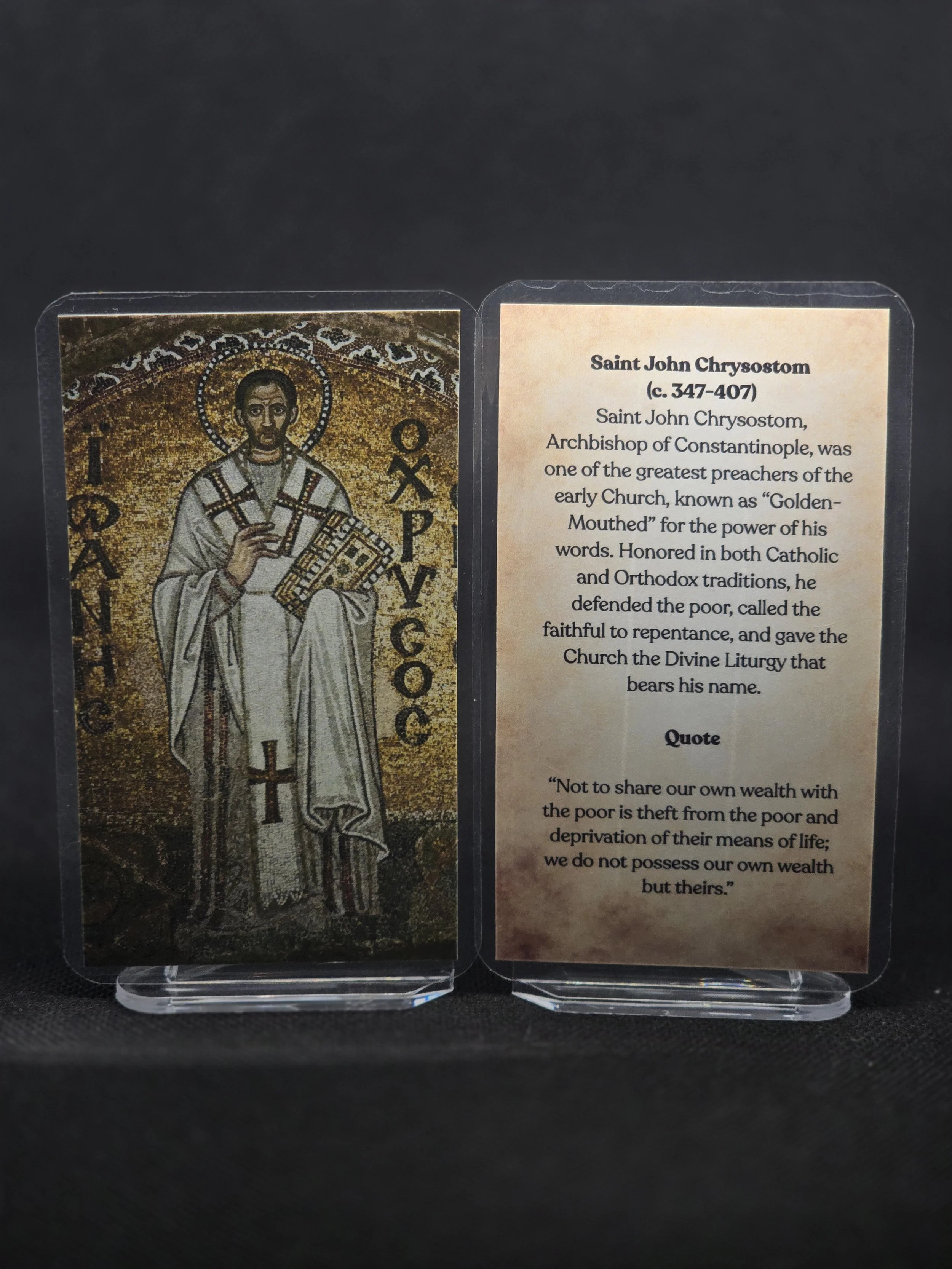
 Image 1 of 2
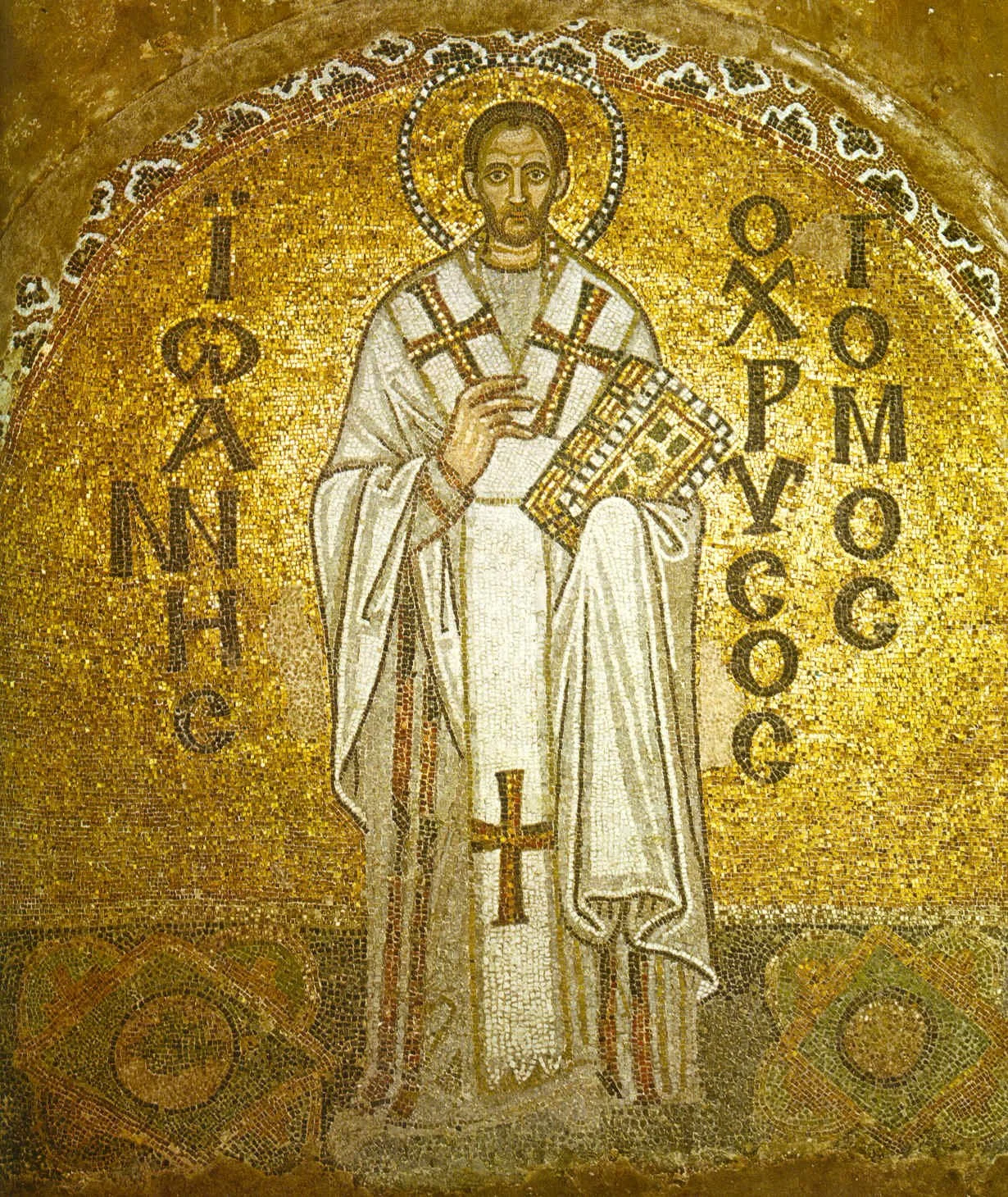 Image 2 of 2
-
Brilliant Mind, Relentless Conscience
Born around 349 in Antioch, John was educated by Libanius, the most famous rhetorician of the age. He mastered classical argument, persuasion, and public performance.
He could have become a powerful lawyer or political leader.
Instead, he chose Christ.
John entered an ascetic life of extreme fasting and Scripture memorization. Years of physical deprivation permanently damaged his health, but forged unshakable discipline.
This foundation would later shape his preaching: precise, fearless, uncompromising.
The Golden Mouth of Antioch
Ordained priest in Antioch, John began delivering homilies that shook the city.
He condemned exploitation of the poor.
He denounced lavish spending while beggars starved.
He criticized superficial Christianity.His sermons were not vague moral advice. They were direct applications of the Gospel to daily conduct. He demanded action.
Crowds filled churches to hear him.
His homilies on the Gospel of Matthew and the letters of Saint Paul remain foundational theological works today.
Reforming Constantinople
In 398, John was unexpectedly appointed Archbishop of Constantinople, capital of the Eastern Roman Empire.
He immediately:
Sold episcopal luxuries to fund hospitals
Reformed clergy discipline
Condemned extravagance at court
Redirected church wealth to social relief
This won him admiration among the poor and hatred among elites.
Empress Eudoxia felt personally attacked by his sermons criticizing vanity and corruption. Political alliances formed against him.
He was falsely accused and exiled.
The people rioted.
He was recalled.
Then exiled again.
The Martyrdom of Exhaustion
Escorted through brutal conditions across Armenia, sick and weakened, John collapsed.
His final words, spoken in surrender, were:
“Glory to God for all things.”
His body failed.
His voice did not.
His relics were later returned to Constantinople in triumph, and he was recognized universally as a saint and Doctor of the Church.
-
Saint John Chrysostom is especially invoked by those facing intellectual, moral, and public battles.
Patron Saint Of:
Public speaking and preaching with boldness
Courage to confront corruption and injustice
Self-discipline and moral strength
Teachers and professors
Clergy and seminarians
Lawyers and advocates
Writers and theologians
Those battling cowardice or compromise
Miracles and Ongoing Intercession
Many clergy report renewed confidence before preaching after invoking his intercession.
Teachers describe unexpected clarity and fluency during important lectures.
Lawyers and advocates testify to composure in high-pressure courtroom settings.
Individuals struggling with lack of discipline report increased resolve and consistency in prayer after asking for his help.
His miracles often manifest as:
clarity of thought
calm authority
moral backbone
interior conviction
freedom from fear of public failure
Saint John strengthens the voice and steadies the will.
-
Traditional Troparion (Tone 8)
Grace shining forth from your lips like a beacon has enlightened the universe; it has shone to the world the riches of poverty; it has revealed to us the heights of humility. Teaching us by your words, O Father John Chrysostom, intercede before the Word, Christ our God, to save our souls.
Personal Prayer
O holy Father John Chrysostom, golden trumpet of the Gospel, pray for me.
Grant me courage when I must speak truth.
Steady my voice when fear rises.
Purify my words from pride and bitterness.Intercede for those who teach, preach, argue, defend, and lead. Strengthen my discipline when laziness tempts me. Help me guard my tongue, govern my passions, and act with integrity.
You who suffered exile rather than compromise, obtain for me the grace to endure misunderstanding and opposition without resentment.
Teach me to glorify God in prosperity and in exile, in praise and in slander.
Through your prayers, may my speech honor Christ and my life reflect His truth. Amen.
-
Q: What is Saint John Chrysostom known for?
He is known for his powerful preaching, fearless criticism of corruption, and defense of the poor. He is especially invoked for public speaking, moral courage, and spiritual discipline.Q: When is Saint John Chrysostom’s feast day?
He is commemorated on November 13.Q: Which Christian traditions venerate Saint John Chrysostom?
Saint John Chrysostom is venerated in both the Eastern Orthodox Church and the Catholic Church, where he is honored as a Doctor of the Church.Q: Why is Saint John Chrysostom associated with the Divine Liturgy?
The most widely celebrated Eucharistic liturgy in the Byzantine tradition bears his name, reflecting his theological clarity and pastoral reforms in worship.