 Image 1 of 1
-
A Life of Poverty Chosen for Christ
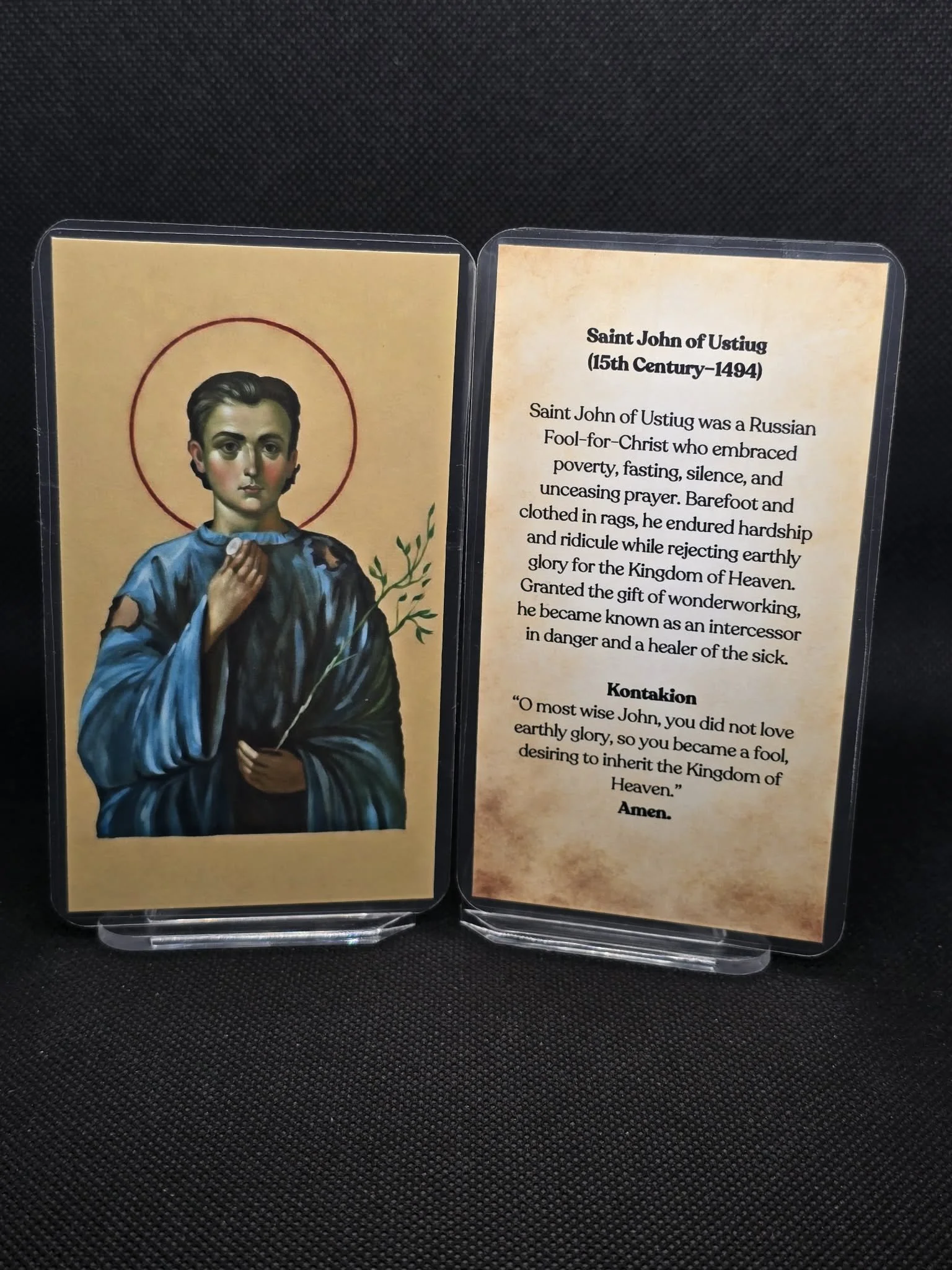
Saint John of Ustiug lived during the fifteenth century, a time of hardship and spiritual testing in northern Russia. From his youth, John showed little interest in comfort or reputation. Instead, he was drawn to fasting, prayer, and acts of mercy.
He deliberately embraced extreme poverty, owning nothing beyond what was absolutely necessary. Rejecting ordinary life, he entered the demanding path of the Fool-for-Christ, a vocation marked by public humiliation and inward sanctity.
He walked barefoot even in bitter winters. He slept outdoors or in abandoned spaces. He accepted mockery without defense. Many regarded him as insane.
But John had chosen this path intentionally.
He desired to destroy pride completely and live only for God.
Holy Foolishness and Hidden Prayer
As a Fool-for-Christ, Saint John wandered through Ustiug clothed in rags, speaking few words and often appearing strange or unpredictable. Children followed him. Adults laughed. Some treated him harshly.
Yet beneath this outward simplicity lived a soul burning with unceasing prayer.
At night, while the city slept, John withdrew to quiet places to intercede for the living and the dead. He fasted rigorously and spent long hours standing before God in repentance, offering his suffering for the salvation of others.
Gradually, people began to notice something unusual.
John possessed spiritual sight.
He warned citizens of coming dangers. He revealed hidden sins. He spoke words that pierced hearts and brought reconciliation. Those who approached him sincerely found comfort and clarity.
Though he avoided attention, God revealed his holiness.
The Miracle That Saved a City
Saint John’s most famous miracle occurred when a devastating storm approached Ustiug, threatening destruction through fire and violent winds. The townspeople panicked as flames began to spread.
John was seen running through the streets, crying out for repentance.
He then withdrew into prayer.
Suddenly, the storm ceased. The fire was extinguished. The city was spared.
Those who witnessed this understood that John’s prayers had saved them.
From that moment on, even his harshest critics recognized that he was no madman, but a servant of God carrying invisible authority.
A Quiet Departure to Heaven
Saint John continued his hidden ministry until his peaceful repose. After his death, miracles multiplied at his grave, and the faithful began venerating him as a protector of homes and a powerful intercessor in times of danger.
His life stands as a reminder that God’s strength is revealed through weakness, and that repentance opens the door to divine mercy.
-
Saint John of Ustiug is especially sought by those facing danger, family hardship, and spiritual confusion.
Patron Saint Of:
Protection from fires, storms, and disasters
Families facing hardship and uncertainty
Repentance and spiritual awakening
Deliverance from fear and despair
Those living in poverty
People seeking God’s mercy for their homes
Souls struggling with pride or emotional suffering
Recorded Miracles and Intercessions
The most well-known miracle attributed to Saint John is the saving of Ustiug from destruction by storm and fire through his prayers.
Numerous accounts speak of homes protected after families prayed to Saint John during dangerous weather.
Others testify to sudden peace and clarity after asking his intercession during emotional or spiritual crisis.
Some pilgrims report reconciliation within families after invoking Saint John during periods of conflict or estrangement.
There are also stories of people facing financial collapse or homelessness who experienced unexpected provision after praying through Saint John’s intercession, reflecting his compassion for the poor.
Saint John’s miracles are marked by quiet mercy: disasters diverted, hearts softened, and households preserved through prayer.
-
Troparion (Fool-for-Christ tradition)
O blessed John, who didst embrace holy foolishness for the sake of Christ, thou didst reveal divine power through humility and prayer. Intercede for us before the Lord, that He may grant repentance, protection, and great mercy to our souls.Personal Prayer
Holy Saint John of Ustiug, humble Fool-for-Christ and protector of the suffering, pray for me. Guard my home from danger. Intercede for my family in times of hardship. Lead my heart to repentance and awaken my soul to God’s mercy. Deliver me from fear and grant me peace. By thy prayers, may I learn humility and trust in Christ. Amen.
-
Q: What is St. John of Ustiug known for?
Saint John is known as a Fool-for-Christ who lived in radical poverty and prayer. He is especially remembered for miraculously saving the city of Ustiug from destruction by storm and fire and for calling people to repentance.
Q: When is St. John of Ustiug’s feast day?
Saint John of Ustiug is commemorated on October 25 according to the Old (Julian) Calendar, which corresponds to November 7 on the New (Gregorian) Calendar.
Q: Which Christian traditions venerate Saint John of Ustiug?
Saint John is primarily venerated within the Eastern Orthodox Church, especially in Russian spiritual tradition. Byzantine Catholics who share Orthodox devotional life sometimes honor him privately. He is not formally listed in Roman Catholic, Maronite, or Coptic calendars.
Q: Why is St. John depicted holding a cross in icons?
The cross represents his voluntary suffering and complete devotion to Christ. For Fools-for-Christ, the cross symbolizes bearing humiliation publicly while remaining united to God inwardly.