 Image 1 of 1
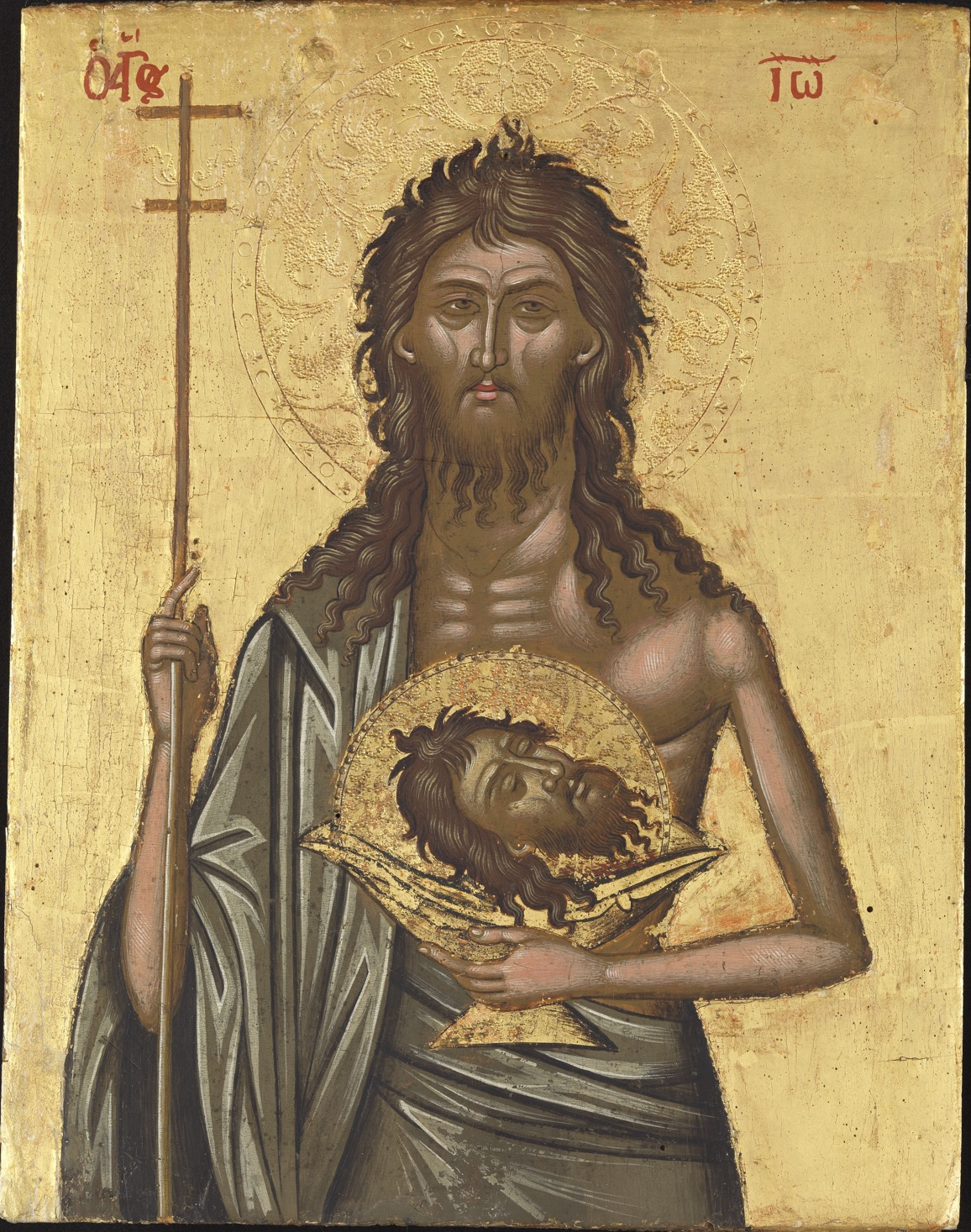
Saint John the Baptist Prayer Card – For Repentance, Conversion, Courage & Preparing the Way for Christ
Saint John the Baptist, also called Saint John the Forerunner, stands at the threshold between the Old Covenant and the coming of Jesus Christ. He was the prophet chosen to prepare the way of the Lord, the voice calling God's people to repentance, the man who baptized Christ in the Jordan, and the martyr who refused to remain silent before sin even when speaking the truth cost him his life.
Saint John the Baptist is especially meaningful for anyone trying to return to God, repent of serious sin, break with an old way of life, strengthen a weak faith, or find the courage to speak truth when doing so is difficult. His entire mission was preparation. He called people away from complacency and toward conversion so that their hearts would be ready to receive Christ.
For Christians who feel spiritually stuck, Saint John is one of Scripture's strongest witnesses that repentance is not merely feeling guilty about the past. Repentance means turning around, clearing what blocks the path to God, and beginning to live differently. John did not call people simply to say they were sorry. He called them to bear fruit worthy of repentance and to make their lives ready for the Messiah.
His life also speaks powerfully to people who struggle with fear of other people's opinions. John preached to ordinary people, religious leaders, soldiers, tax collectors, and rulers without changing the truth according to his audience. When King Herod's conduct violated God's law, John confronted him directly. He eventually suffered imprisonment and martyrdom rather than pretend that evil had become acceptable because a powerful man committed it.
John's greatness, however, came together with extraordinary humility. Crowds gathered around him. People wondered whether he himself might be the Messiah. Yet John continually pointed beyond himself toward Jesus Christ. His mission was not to build his own following, but to lead others to the One whose coming he had been sent to announce. He is therefore a powerful intercessor for anyone trying to overcome pride, become less concerned with recognition, or learn how to place Christ rather than the self at the center of life.
This prayer card is created for those seeking repentance, conversion, freedom from habitual sin, courage to confess the faith, preparation for Baptism, renewed commitment to Christ, spiritual discipline, humility, and strength to speak the truth. It is also especially fitting for converts, catechumens, people returning to the Church after years away, those preparing for confession, and anyone asking God to clear away what prevents deeper communion with Him.
Saint John the Baptist is honored throughout the Catholic and Orthodox Churches as the Forerunner, Baptist, Prophet, and Martyr. His devotional associations include repentance, conversion, Baptism, preparation for Christ, spiritual courage, truthfulness, ascetic discipline, humility, and the willingness to decrease so that Christ may become greater within the soul.
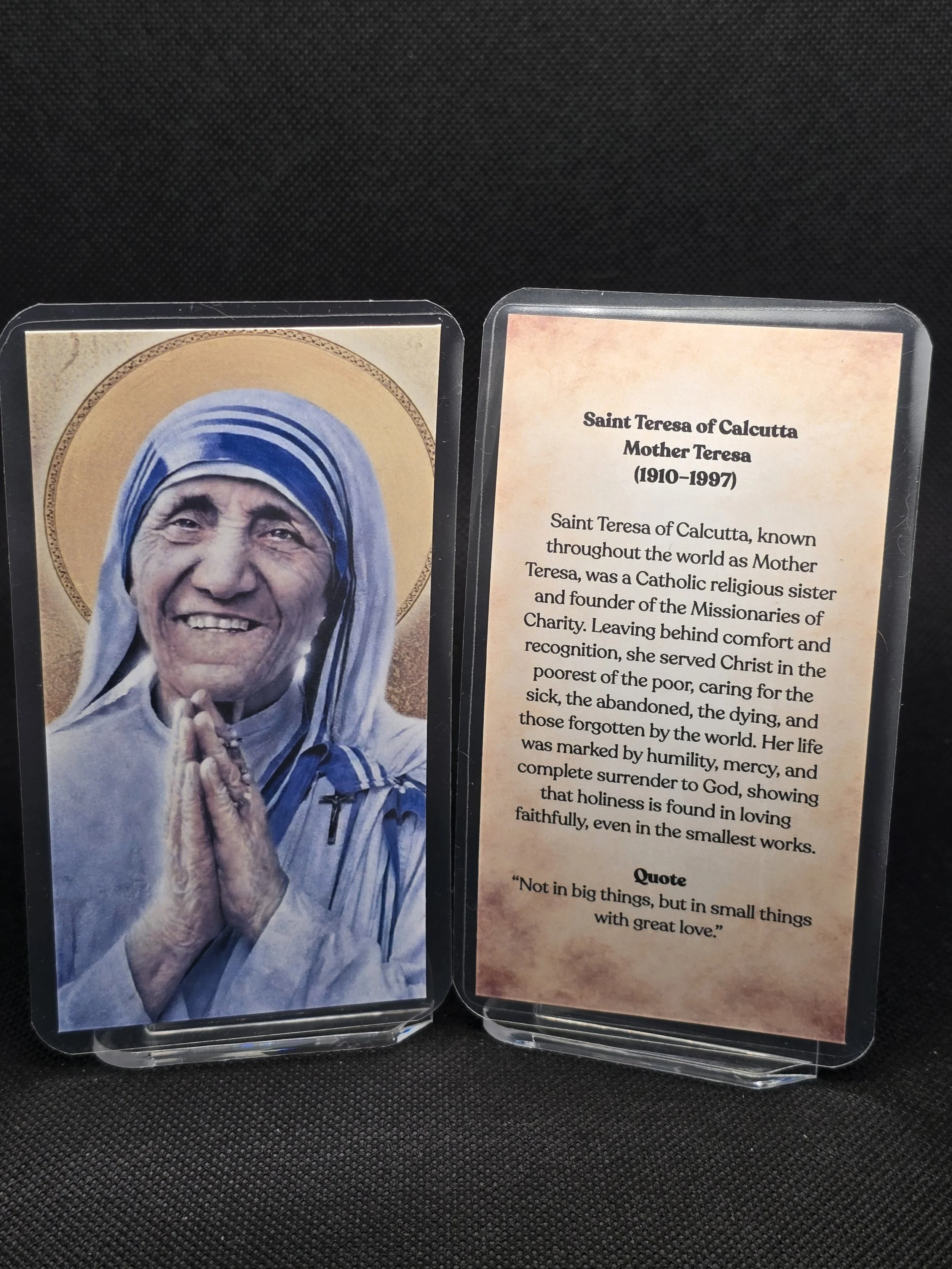
Each card is handmade in Austin, TX and created to order. We do not keep stock, because every prayer card is treated as a unique devotional offering. They are printed on museum-quality photo paper, not cardstock. Every card is made slowly, during prayer, with intentional reverence for the saint or holy image and for the person who will receive it. Names are lifted before Christ. Intentions are held carefully. Each piece is handled multiple times in prayerful silence, asking God for mercy and asking the saint to intercede for the soul it is being made for. This is not production work. It is devotional craftsmanship shaped with patience, care, and spiritual responsibility, because every soul and every prayer matters.
THE LIFE & STORY
Saint John the Baptist's birth was announced before his conception. His parents, Zechariah and Elizabeth, were righteous before God but had grown old without having a child. While Zechariah was serving as a priest in the Temple, the Archangel Gabriel appeared to him and announced that Elizabeth would bear a son who would be named John. The child would have a unique mission in God's plan and would prepare a people for the coming of the Lord.
John's life was therefore tied to Christ before either of them was born. When the pregnant Virgin Mary visited Elizabeth, the unborn John leaped in his mother's womb at the presence of Christ within Mary. Christian tradition has always seen this moment as an extraordinary sign of John's vocation as the Forerunner. Even before his birth, his life pointed toward Jesus.
John later withdrew into the wilderness, where he lived a life of extraordinary simplicity and asceticism. The Gospels describe him wearing clothing made of camel's hair with a leather belt and eating locusts and wild honey. His appearance reflected the ancient prophetic tradition and particularly recalled the Prophet Elijah.
The wilderness was not an escape from his mission. It was where John was prepared for it. Far from the noise and ambitions of ordinary society, his life became stripped down to prayer, obedience, fasting, and complete dependence upon God. When the time came for him to preach, he emerged with a message that could not be softened: the Kingdom of Heaven was drawing near, and God's people needed to repent.
People came to John from Jerusalem, Judea, and the surrounding region. He baptized them in the Jordan River as they confessed their sins. This baptism was a baptism of repentance and preparation, distinct from Christian Baptism instituted in Christ, but it powerfully expressed the need to turn away from sin and prepare for the Messiah.
John did not allow religious identity to become a substitute for conversion. When people relied upon their ancestry or outward religious status, he warned them that genuine repentance must produce fruit. A person's relationship with God had to become visible in the way he or she lived.
Different groups asked John what repentance required of them. His answers were remarkably practical. Those with excess were told to share with those who had none. Tax collectors were told not to collect more than was required. Soldiers were warned against extortion, false accusation, and dissatisfaction with their wages. For John, conversion affected money, power, speech, possessions, justice, and everyday conduct.
As John's influence grew, people began wondering whether he might be the Christ. John rejected the suggestion. He told them that One far greater was coming after him. John's baptism used water, but the One coming after him would baptize with the Holy Spirit.
Then Jesus Himself came to the Jordan and asked John to baptize Him. John immediately recognized the apparent reversal and protested that he was the one who needed to be baptized by Jesus. Yet Christ instructed him to permit it.
At the Baptism of the Lord, also called the Theophany in the Eastern Churches, Jesus entered the Jordan. The Holy Spirit descended in the form of a dove, and the voice of the Father revealed Christ as His beloved Son. John therefore became a direct witness to one of the clearest manifestations of the Holy Trinity recorded in the Gospels.
John's mission reached its fulfillment when he identified Jesus to his disciples as the Lamb of God. Some of John's own followers then began following Christ. John did not resent losing disciples. This was precisely what his entire ministry had been for. He had prepared them so that when Christ appeared, they could leave the Forerunner and follow the Lord.
This is why one of the deepest spiritual themes associated with Saint John is humility. A lesser man might have tried to hold onto influence after becoming famous. John understood that his success consisted precisely in becoming less important once Christ had been revealed.
His preaching eventually brought him into conflict with Herod Antipas. Herod had taken Herodias, the wife of his brother, and John publicly condemned the unlawful union. Herod imprisoned him, but John refused to retract the truth.
At a banquet, the daughter of Herodias danced before Herod and his guests. Herod rashly promised to give her whatever she requested. Prompted by her mother, she asked for the head of John the Baptist. Though distressed, Herod valued his oath and reputation before his guests more than justice. He ordered John's execution.
Saint John was beheaded in prison, becoming a martyr for truth and righteousness. The man who had spent his life preparing the road for Christ ultimately gave his life because he would not call sin good simply to protect himself.
Eastern Christian tradition also gives John a profound place within the mystery of Christ's descent among the dead. Just as John had been the Forerunner of Christ among the living, liturgical tradition remembers him as announcing the coming of the Savior to those who had died before Christ's victory over death.
The Church therefore honors him not merely as one saint among many. Christ Himself gave extraordinary testimony concerning John. He stands as prophet, ascetic, preacher, baptizer, martyr, and Forerunner of the Lord.
REPENTANCE, COURAGE & PATRONAGE
Saint John the Baptist is above all associated with repentance and preparation for Christ. His preaching was not centered on vague spiritual encouragement. He called people to acknowledge sin, change their conduct, and prepare their hearts because God was acting decisively in human history.
For someone who has been away from God, John's message remains intensely relevant. The first movement does not have to be complicated. Turn around. Confess what is wrong. Stop defending it. Begin producing the fruits of a changed life. Make the road straight for Christ.
This makes Saint John a particularly fitting intercessor for converts and those returning to Christianity. Conversion rarely happens all at once. There may be habits that have to be broken, relationships that need healing, wrongs that must be corrected, pride that has to be surrendered, and fears that must be faced. John's life represents the uncompromising but hopeful truth that the old road does not have to remain the road we travel.
He is also a powerful saint for those preparing for confession. John teaches that repentance requires honesty. The soul cannot be healed while constantly explaining away what it already knows is wrong. His ministry invites Christians to name sin truthfully and then place themselves before the mercy of God.
Saint John's connection with Baptism is equally central. He is called the Baptist because he baptized in the Jordan and was chosen to baptize Jesus Christ Himself. For this reason, a Saint John the Baptist prayer card can be especially fitting for someone preparing for Baptism, entering the Church, becoming a godparent or sponsor, or commemorating a baptismal anniversary.
His martyrdom also makes him one of Christianity's clearest examples of courage in speaking truth. John did not condemn Herod because confrontation was enjoyable. He spoke because God's truth does not become false when the person violating it possesses political power.
For Christians afraid to defend their faith, correct an injustice, confront destructive behavior, or refuse social pressure, Saint John offers a demanding example. Courage does not mean enjoying conflict. It means becoming more afraid of betraying truth than of losing approval.
John is also deeply associated with asceticism and spiritual discipline. His life in the wilderness was stripped of luxury, comfort, reputation, and distraction. His fasting and simplicity were not ends in themselves. They made room for undivided attention to God.
This makes him meaningful for Christians trying to fast, simplify their lives, reduce distraction, resist compulsive habits, or regain spiritual discipline. John demonstrates that the heart sometimes becomes clearer when unnecessary things are removed.
His humility provides another essential form of patronage and devotion. John knew when his task was finished. He did not compete with Christ. He wanted people to leave him and follow Jesus. This makes him a powerful intercessor for clergy, teachers, parents, spiritual mentors, business owners, artists, creators, and anyone tempted to make their vocation primarily about recognition.
The goal of Christian life is not to make ourselves unforgettable. John teaches the soul to become transparent enough that others can see Christ through what we do.
People therefore seek Saint John the Baptist's intercession for repentance, conversion, Baptism, preparation for confession, courage to speak truth, freedom from fear of human opinion, spiritual discipline, fasting, humility, overcoming habitual sin, and returning to God after a period of spiritual distance.
PRAYERS
A simple traditional invocation may be prayed throughout the day: Holy Prophet, Forerunner and Baptist John, pray to God for us.
The Eastern Church honors Saint John the Baptist with the traditional Troparion that begins by declaring that the memory of the righteous is celebrated with praise, while the Lord's own testimony is sufficient witness to John's greatness. It remembers him as more honorable than the prophets because he was found worthy to baptize Christ Himself.
A traditional short invocation may also be prayed simply and repeatedly: Saint John the Forerunner, pray for me.
When preparing for confession, one may invoke him while asking God for honest repentance. Saint John's role is not to replace direct prayer to Christ, but to intercede that the heart may become willing to confess sin without excuses and receive God's mercy.
Those returning to the faith may pray the traditional invocation while specifically bringing their struggle before God: the years spent away, the habits that remain difficult to break, the shame that makes returning difficult, or the fear that too much time has been lost.
Someone preparing for Baptism may especially ask Saint John the Baptist to intercede for a sincere conversion of heart and a life that continues after the sacrament with genuine faithfulness.
Those who must speak a difficult truth may ask Saint John's prayers for courage without hatred, truth without pride, and firmness without unnecessary cruelty. His martyrdom teaches that speaking truth faithfully is very different from seeking conflict.
The invocation of Saint John is also fitting during fasting. His entire life testifies to simplicity, restraint, and preparation. He reminds the Christian that fasting is not merely refusing food but clearing space within the heart for Christ.
This prayer card is especially fitting for a prayer corner, Bible, wallet, desk, confession preparation area, catechism book, baptismal gift, or anywhere a person needs a physical reminder to turn toward Christ and prepare the way of the Lord within the heart.
FAQ
Who is Saint John the Baptist?
Saint John the Baptist was the prophet chosen by God to prepare the way for Jesus Christ. He preached repentance, baptized people in the Jordan River, baptized Jesus Himself, identified Christ as the promised Messiah, and was eventually martyred after condemning the unlawful marriage of Herod Antipas.
Why is Saint John called the Forerunner?
Saint John is called the Forerunner because he came immediately before Christ and prepared the people to receive Him. His entire mission was to announce that the Messiah was coming and to call God's people to repentance.
Is John the Baptist a Catholic saint?
Yes. Saint John the Baptist is one of the most important saints honored in the Catholic Church. He lived before the historical divisions between Catholic and Orthodox Christianity and belongs to the common apostolic heritage of the ancient Church.
Is John the Baptist an Orthodox saint?
Yes. The Eastern Orthodox Church holds Saint John the Baptist in extraordinary honor and commonly calls him Saint John the Forerunner. He appears prominently in Orthodox churches and iconography, particularly in the Deesis, where he is often shown alongside the Mother of God interceding before Christ.
What is Saint John the Baptist the patron saint of?
Saint John is traditionally associated with Baptism and those connected with baptismal ministry, but his broader devotional associations flow directly from his biblical life. These include repentance, conversion, preparation for Christ, truthfulness, spiritual courage, fasting, asceticism, humility, and returning to God.
Is Saint John the Baptist the patron saint of repentance?
It is appropriate to associate Saint John very strongly with repentance because repentance was at the center of his preaching and mission. Rather than relying on an artificial modern patronage title, his own words and life establish him naturally as one of Christianity's greatest intercessors for repentance and conversion.
Why should I pray to Saint John the Baptist when returning to God?
Saint John's entire ministry was devoted to preparing people to encounter Christ. He called sinners to turn around, confess their sins, change their behavior, and make themselves ready for the Lord. This makes his intercession especially meaningful for someone returning to Christianity after time away.
Can I pray to Saint John the Baptist before confession?
Yes. Saint John is an especially fitting saint to invoke before confession because his preaching emphasized genuine repentance rather than outward religious appearance. His example encourages honesty, humility, sorrow for sin, and concrete change.
Can I give a Saint John the Baptist prayer card to someone being baptized?
Yes. This is an especially appropriate baptismal gift because Saint John baptized in the Jordan River and was chosen to baptize Jesus Christ Himself. A Saint John prayer card can be given to an adult catechumen, a newly baptized Christian, parents at an infant Baptism, a godparent, or a baptismal sponsor.
Can I give this prayer card to a convert?
Yes. Saint John is one of the strongest saints for converts because his entire mission concerned conversion and preparation for Christ. The card is especially fitting for someone entering Christianity, becoming Catholic or Orthodox, returning after years away, or beginning a serious period of spiritual renewal.
Why is Saint John associated with courage?
Saint John publicly confronted Herod Antipas over his unlawful relationship even though Herod possessed the power to imprison and kill him. John ultimately accepted martyrdom rather than remain silent about what he knew to be wrong.
Is Saint John the Baptist good to pray to when I am afraid to speak the truth?
Yes. His life makes him a particularly meaningful intercessor for people who need courage to speak truth faithfully. His example also reminds Christians that truth should be spoken because of obedience to God, not because we enjoy argument or confrontation.
Why is Saint John associated with humility?
Although enormous crowds followed him and some people wondered whether he might be the Messiah, John consistently directed attention away from himself and toward Christ. He understood that his mission was successful when people stopped following him and began following Jesus.
Why did Saint John live in the wilderness?
The wilderness was the place of John's ascetic preparation and prophetic ministry. He lived simply, fasted, prayed, and separated himself from ordinary comforts so that his life could be wholly directed toward God and his mission.
What did Saint John eat?
The Gospels describe Saint John as eating locusts and wild honey while living in the wilderness. His simple diet became part of the Church's image of him as one of the great ascetics and prophets.
Did Saint John the Baptist baptize Jesus?
Yes. Jesus came to John at the Jordan River and received Baptism from him. At the Baptism of Christ, the Holy Spirit descended in the form of a dove and the voice of the Father revealed Jesus as His beloved Son.
Why is the Baptism of Jesus called Theophany in the Eastern Church?
The feast is called Theophany because Christ's Baptism revealed the Holy Trinity: the Son stood in the Jordan, the Holy Spirit descended upon Him, and the Father's voice was heard from heaven.
How did Saint John the Baptist die?
Saint John was imprisoned after condemning Herod Antipas's unlawful union with Herodias. During a banquet, Herodias's daughter requested John's head after being prompted by her mother. Herod ordered John to be beheaded in prison.
Why is Saint John considered a martyr?
Saint John died because he remained faithful to God's truth. His refusal to approve Herod's sinful conduct ultimately led to his imprisonment and execution, making him a martyr for righteousness and truth.
What is the Beheading of Saint John the Baptist?
The Beheading of Saint John the Baptist is a major Christian commemoration of his martyrdom. It is observed on August 29 and is kept as a strict fast day in the Eastern Orthodox tradition.
When is the Nativity of Saint John the Baptist?
The Nativity of Saint John the Baptist is celebrated on June 24. He is one of the very small number of saints whose earthly birth is celebrated liturgically, reflecting the extraordinary place he holds in salvation history.
When does the Eastern Church celebrate Saint John the Baptist?
Saint John has several commemorations throughout the Byzantine liturgical year. Among the most prominent are his Synaxis on January 7, the Nativity of Saint John on June 24, and the Beheading of Saint John on August 29.
What does Saint John the Baptist teach about repentance?
Saint John teaches that repentance must become visible in life. Genuine conversion affects generosity, money, honesty, justice, relationships, speech, power, and the way we treat other people. Repentance is not merely regret. It is a change of direction.
What does Saint John teach about pride?
Saint John teaches that even a successful spiritual mission must ultimately point away from ourselves and toward Christ. He did not attempt to preserve his own influence when Jesus appeared. His joy was fulfilled when people recognized and followed the Lord.
What is the main message of Saint John the Baptist's life?
The main message of Saint John's life is prepare the way for Christ. Remove what obstructs Him. Repent of sin. Tell the truth. Live simply. Refuse to make yourself the center. Have courage when faithfulness becomes costly, and direct every gift, vocation, accomplishment, and relationship toward Jesus Christ.
Saint John the Baptist, also called Saint John the Forerunner, stands at the threshold between the Old Covenant and the coming of Jesus Christ. He was the prophet chosen to prepare the way of the Lord, the voice calling God's people to repentance, the man who baptized Christ in the Jordan, and the martyr who refused to remain silent before sin even when speaking the truth cost him his life.
Saint John the Baptist is especially meaningful for anyone trying to return to God, repent of serious sin, break with an old way of life, strengthen a weak faith, or find the courage to speak truth when doing so is difficult. His entire mission was preparation. He called people away from complacency and toward conversion so that their hearts would be ready to receive Christ.
For Christians who feel spiritually stuck, Saint John is one of Scripture's strongest witnesses that repentance is not merely feeling guilty about the past. Repentance means turning around, clearing what blocks the path to God, and beginning to live differently. John did not call people simply to say they were sorry. He called them to bear fruit worthy of repentance and to make their lives ready for the Messiah.
His life also speaks powerfully to people who struggle with fear of other people's opinions. John preached to ordinary people, religious leaders, soldiers, tax collectors, and rulers without changing the truth according to his audience. When King Herod's conduct violated God's law, John confronted him directly. He eventually suffered imprisonment and martyrdom rather than pretend that evil had become acceptable because a powerful man committed it.
John's greatness, however, came together with extraordinary humility. Crowds gathered around him. People wondered whether he himself might be the Messiah. Yet John continually pointed beyond himself toward Jesus Christ. His mission was not to build his own following, but to lead others to the One whose coming he had been sent to announce. He is therefore a powerful intercessor for anyone trying to overcome pride, become less concerned with recognition, or learn how to place Christ rather than the self at the center of life.
This prayer card is created for those seeking repentance, conversion, freedom from habitual sin, courage to confess the faith, preparation for Baptism, renewed commitment to Christ, spiritual discipline, humility, and strength to speak the truth. It is also especially fitting for converts, catechumens, people returning to the Church after years away, those preparing for confession, and anyone asking God to clear away what prevents deeper communion with Him.
Saint John the Baptist is honored throughout the Catholic and Orthodox Churches as the Forerunner, Baptist, Prophet, and Martyr. His devotional associations include repentance, conversion, Baptism, preparation for Christ, spiritual courage, truthfulness, ascetic discipline, humility, and the willingness to decrease so that Christ may become greater within the soul.
Each card is handmade in Austin, TX and created to order. We do not keep stock, because every prayer card is treated as a unique devotional offering. They are printed on museum-quality photo paper, not cardstock. Every card is made slowly, during prayer, with intentional reverence for the saint or holy image and for the person who will receive it. Names are lifted before Christ. Intentions are held carefully. Each piece is handled multiple times in prayerful silence, asking God for mercy and asking the saint to intercede for the soul it is being made for. This is not production work. It is devotional craftsmanship shaped with patience, care, and spiritual responsibility, because every soul and every prayer matters.
THE LIFE & STORY
Saint John the Baptist's birth was announced before his conception. His parents, Zechariah and Elizabeth, were righteous before God but had grown old without having a child. While Zechariah was serving as a priest in the Temple, the Archangel Gabriel appeared to him and announced that Elizabeth would bear a son who would be named John. The child would have a unique mission in God's plan and would prepare a people for the coming of the Lord.
John's life was therefore tied to Christ before either of them was born. When the pregnant Virgin Mary visited Elizabeth, the unborn John leaped in his mother's womb at the presence of Christ within Mary. Christian tradition has always seen this moment as an extraordinary sign of John's vocation as the Forerunner. Even before his birth, his life pointed toward Jesus.
John later withdrew into the wilderness, where he lived a life of extraordinary simplicity and asceticism. The Gospels describe him wearing clothing made of camel's hair with a leather belt and eating locusts and wild honey. His appearance reflected the ancient prophetic tradition and particularly recalled the Prophet Elijah.
The wilderness was not an escape from his mission. It was where John was prepared for it. Far from the noise and ambitions of ordinary society, his life became stripped down to prayer, obedience, fasting, and complete dependence upon God. When the time came for him to preach, he emerged with a message that could not be softened: the Kingdom of Heaven was drawing near, and God's people needed to repent.
People came to John from Jerusalem, Judea, and the surrounding region. He baptized them in the Jordan River as they confessed their sins. This baptism was a baptism of repentance and preparation, distinct from Christian Baptism instituted in Christ, but it powerfully expressed the need to turn away from sin and prepare for the Messiah.
John did not allow religious identity to become a substitute for conversion. When people relied upon their ancestry or outward religious status, he warned them that genuine repentance must produce fruit. A person's relationship with God had to become visible in the way he or she lived.
Different groups asked John what repentance required of them. His answers were remarkably practical. Those with excess were told to share with those who had none. Tax collectors were told not to collect more than was required. Soldiers were warned against extortion, false accusation, and dissatisfaction with their wages. For John, conversion affected money, power, speech, possessions, justice, and everyday conduct.
As John's influence grew, people began wondering whether he might be the Christ. John rejected the suggestion. He told them that One far greater was coming after him. John's baptism used water, but the One coming after him would baptize with the Holy Spirit.
Then Jesus Himself came to the Jordan and asked John to baptize Him. John immediately recognized the apparent reversal and protested that he was the one who needed to be baptized by Jesus. Yet Christ instructed him to permit it.
At the Baptism of the Lord, also called the Theophany in the Eastern Churches, Jesus entered the Jordan. The Holy Spirit descended in the form of a dove, and the voice of the Father revealed Christ as His beloved Son. John therefore became a direct witness to one of the clearest manifestations of the Holy Trinity recorded in the Gospels.
John's mission reached its fulfillment when he identified Jesus to his disciples as the Lamb of God. Some of John's own followers then began following Christ. John did not resent losing disciples. This was precisely what his entire ministry had been for. He had prepared them so that when Christ appeared, they could leave the Forerunner and follow the Lord.
This is why one of the deepest spiritual themes associated with Saint John is humility. A lesser man might have tried to hold onto influence after becoming famous. John understood that his success consisted precisely in becoming less important once Christ had been revealed.
His preaching eventually brought him into conflict with Herod Antipas. Herod had taken Herodias, the wife of his brother, and John publicly condemned the unlawful union. Herod imprisoned him, but John refused to retract the truth.
At a banquet, the daughter of Herodias danced before Herod and his guests. Herod rashly promised to give her whatever she requested. Prompted by her mother, she asked for the head of John the Baptist. Though distressed, Herod valued his oath and reputation before his guests more than justice. He ordered John's execution.
Saint John was beheaded in prison, becoming a martyr for truth and righteousness. The man who had spent his life preparing the road for Christ ultimately gave his life because he would not call sin good simply to protect himself.
Eastern Christian tradition also gives John a profound place within the mystery of Christ's descent among the dead. Just as John had been the Forerunner of Christ among the living, liturgical tradition remembers him as announcing the coming of the Savior to those who had died before Christ's victory over death.
The Church therefore honors him not merely as one saint among many. Christ Himself gave extraordinary testimony concerning John. He stands as prophet, ascetic, preacher, baptizer, martyr, and Forerunner of the Lord.
REPENTANCE, COURAGE & PATRONAGE
Saint John the Baptist is above all associated with repentance and preparation for Christ. His preaching was not centered on vague spiritual encouragement. He called people to acknowledge sin, change their conduct, and prepare their hearts because God was acting decisively in human history.
For someone who has been away from God, John's message remains intensely relevant. The first movement does not have to be complicated. Turn around. Confess what is wrong. Stop defending it. Begin producing the fruits of a changed life. Make the road straight for Christ.
This makes Saint John a particularly fitting intercessor for converts and those returning to Christianity. Conversion rarely happens all at once. There may be habits that have to be broken, relationships that need healing, wrongs that must be corrected, pride that has to be surrendered, and fears that must be faced. John's life represents the uncompromising but hopeful truth that the old road does not have to remain the road we travel.
He is also a powerful saint for those preparing for confession. John teaches that repentance requires honesty. The soul cannot be healed while constantly explaining away what it already knows is wrong. His ministry invites Christians to name sin truthfully and then place themselves before the mercy of God.
Saint John's connection with Baptism is equally central. He is called the Baptist because he baptized in the Jordan and was chosen to baptize Jesus Christ Himself. For this reason, a Saint John the Baptist prayer card can be especially fitting for someone preparing for Baptism, entering the Church, becoming a godparent or sponsor, or commemorating a baptismal anniversary.
His martyrdom also makes him one of Christianity's clearest examples of courage in speaking truth. John did not condemn Herod because confrontation was enjoyable. He spoke because God's truth does not become false when the person violating it possesses political power.
For Christians afraid to defend their faith, correct an injustice, confront destructive behavior, or refuse social pressure, Saint John offers a demanding example. Courage does not mean enjoying conflict. It means becoming more afraid of betraying truth than of losing approval.
John is also deeply associated with asceticism and spiritual discipline. His life in the wilderness was stripped of luxury, comfort, reputation, and distraction. His fasting and simplicity were not ends in themselves. They made room for undivided attention to God.
This makes him meaningful for Christians trying to fast, simplify their lives, reduce distraction, resist compulsive habits, or regain spiritual discipline. John demonstrates that the heart sometimes becomes clearer when unnecessary things are removed.
His humility provides another essential form of patronage and devotion. John knew when his task was finished. He did not compete with Christ. He wanted people to leave him and follow Jesus. This makes him a powerful intercessor for clergy, teachers, parents, spiritual mentors, business owners, artists, creators, and anyone tempted to make their vocation primarily about recognition.
The goal of Christian life is not to make ourselves unforgettable. John teaches the soul to become transparent enough that others can see Christ through what we do.
People therefore seek Saint John the Baptist's intercession for repentance, conversion, Baptism, preparation for confession, courage to speak truth, freedom from fear of human opinion, spiritual discipline, fasting, humility, overcoming habitual sin, and returning to God after a period of spiritual distance.
PRAYERS
A simple traditional invocation may be prayed throughout the day: Holy Prophet, Forerunner and Baptist John, pray to God for us.
The Eastern Church honors Saint John the Baptist with the traditional Troparion that begins by declaring that the memory of the righteous is celebrated with praise, while the Lord's own testimony is sufficient witness to John's greatness. It remembers him as more honorable than the prophets because he was found worthy to baptize Christ Himself.
A traditional short invocation may also be prayed simply and repeatedly: Saint John the Forerunner, pray for me.
When preparing for confession, one may invoke him while asking God for honest repentance. Saint John's role is not to replace direct prayer to Christ, but to intercede that the heart may become willing to confess sin without excuses and receive God's mercy.
Those returning to the faith may pray the traditional invocation while specifically bringing their struggle before God: the years spent away, the habits that remain difficult to break, the shame that makes returning difficult, or the fear that too much time has been lost.
Someone preparing for Baptism may especially ask Saint John the Baptist to intercede for a sincere conversion of heart and a life that continues after the sacrament with genuine faithfulness.
Those who must speak a difficult truth may ask Saint John's prayers for courage without hatred, truth without pride, and firmness without unnecessary cruelty. His martyrdom teaches that speaking truth faithfully is very different from seeking conflict.
The invocation of Saint John is also fitting during fasting. His entire life testifies to simplicity, restraint, and preparation. He reminds the Christian that fasting is not merely refusing food but clearing space within the heart for Christ.
This prayer card is especially fitting for a prayer corner, Bible, wallet, desk, confession preparation area, catechism book, baptismal gift, or anywhere a person needs a physical reminder to turn toward Christ and prepare the way of the Lord within the heart.
FAQ
Who is Saint John the Baptist?
Saint John the Baptist was the prophet chosen by God to prepare the way for Jesus Christ. He preached repentance, baptized people in the Jordan River, baptized Jesus Himself, identified Christ as the promised Messiah, and was eventually martyred after condemning the unlawful marriage of Herod Antipas.
Why is Saint John called the Forerunner?
Saint John is called the Forerunner because he came immediately before Christ and prepared the people to receive Him. His entire mission was to announce that the Messiah was coming and to call God's people to repentance.
Is John the Baptist a Catholic saint?
Yes. Saint John the Baptist is one of the most important saints honored in the Catholic Church. He lived before the historical divisions between Catholic and Orthodox Christianity and belongs to the common apostolic heritage of the ancient Church.
Is John the Baptist an Orthodox saint?
Yes. The Eastern Orthodox Church holds Saint John the Baptist in extraordinary honor and commonly calls him Saint John the Forerunner. He appears prominently in Orthodox churches and iconography, particularly in the Deesis, where he is often shown alongside the Mother of God interceding before Christ.
What is Saint John the Baptist the patron saint of?
Saint John is traditionally associated with Baptism and those connected with baptismal ministry, but his broader devotional associations flow directly from his biblical life. These include repentance, conversion, preparation for Christ, truthfulness, spiritual courage, fasting, asceticism, humility, and returning to God.
Is Saint John the Baptist the patron saint of repentance?
It is appropriate to associate Saint John very strongly with repentance because repentance was at the center of his preaching and mission. Rather than relying on an artificial modern patronage title, his own words and life establish him naturally as one of Christianity's greatest intercessors for repentance and conversion.
Why should I pray to Saint John the Baptist when returning to God?
Saint John's entire ministry was devoted to preparing people to encounter Christ. He called sinners to turn around, confess their sins, change their behavior, and make themselves ready for the Lord. This makes his intercession especially meaningful for someone returning to Christianity after time away.
Can I pray to Saint John the Baptist before confession?
Yes. Saint John is an especially fitting saint to invoke before confession because his preaching emphasized genuine repentance rather than outward religious appearance. His example encourages honesty, humility, sorrow for sin, and concrete change.
Can I give a Saint John the Baptist prayer card to someone being baptized?
Yes. This is an especially appropriate baptismal gift because Saint John baptized in the Jordan River and was chosen to baptize Jesus Christ Himself. A Saint John prayer card can be given to an adult catechumen, a newly baptized Christian, parents at an infant Baptism, a godparent, or a baptismal sponsor.
Can I give this prayer card to a convert?
Yes. Saint John is one of the strongest saints for converts because his entire mission concerned conversion and preparation for Christ. The card is especially fitting for someone entering Christianity, becoming Catholic or Orthodox, returning after years away, or beginning a serious period of spiritual renewal.
Why is Saint John associated with courage?
Saint John publicly confronted Herod Antipas over his unlawful relationship even though Herod possessed the power to imprison and kill him. John ultimately accepted martyrdom rather than remain silent about what he knew to be wrong.
Is Saint John the Baptist good to pray to when I am afraid to speak the truth?
Yes. His life makes him a particularly meaningful intercessor for people who need courage to speak truth faithfully. His example also reminds Christians that truth should be spoken because of obedience to God, not because we enjoy argument or confrontation.
Why is Saint John associated with humility?
Although enormous crowds followed him and some people wondered whether he might be the Messiah, John consistently directed attention away from himself and toward Christ. He understood that his mission was successful when people stopped following him and began following Jesus.
Why did Saint John live in the wilderness?
The wilderness was the place of John's ascetic preparation and prophetic ministry. He lived simply, fasted, prayed, and separated himself from ordinary comforts so that his life could be wholly directed toward God and his mission.
What did Saint John eat?
The Gospels describe Saint John as eating locusts and wild honey while living in the wilderness. His simple diet became part of the Church's image of him as one of the great ascetics and prophets.
Did Saint John the Baptist baptize Jesus?
Yes. Jesus came to John at the Jordan River and received Baptism from him. At the Baptism of Christ, the Holy Spirit descended in the form of a dove and the voice of the Father revealed Jesus as His beloved Son.
Why is the Baptism of Jesus called Theophany in the Eastern Church?
The feast is called Theophany because Christ's Baptism revealed the Holy Trinity: the Son stood in the Jordan, the Holy Spirit descended upon Him, and the Father's voice was heard from heaven.
How did Saint John the Baptist die?
Saint John was imprisoned after condemning Herod Antipas's unlawful union with Herodias. During a banquet, Herodias's daughter requested John's head after being prompted by her mother. Herod ordered John to be beheaded in prison.
Why is Saint John considered a martyr?
Saint John died because he remained faithful to God's truth. His refusal to approve Herod's sinful conduct ultimately led to his imprisonment and execution, making him a martyr for righteousness and truth.
What is the Beheading of Saint John the Baptist?
The Beheading of Saint John the Baptist is a major Christian commemoration of his martyrdom. It is observed on August 29 and is kept as a strict fast day in the Eastern Orthodox tradition.
When is the Nativity of Saint John the Baptist?
The Nativity of Saint John the Baptist is celebrated on June 24. He is one of the very small number of saints whose earthly birth is celebrated liturgically, reflecting the extraordinary place he holds in salvation history.
When does the Eastern Church celebrate Saint John the Baptist?
Saint John has several commemorations throughout the Byzantine liturgical year. Among the most prominent are his Synaxis on January 7, the Nativity of Saint John on June 24, and the Beheading of Saint John on August 29.
What does Saint John the Baptist teach about repentance?
Saint John teaches that repentance must become visible in life. Genuine conversion affects generosity, money, honesty, justice, relationships, speech, power, and the way we treat other people. Repentance is not merely regret. It is a change of direction.
What does Saint John teach about pride?
Saint John teaches that even a successful spiritual mission must ultimately point away from ourselves and toward Christ. He did not attempt to preserve his own influence when Jesus appeared. His joy was fulfilled when people recognized and followed the Lord.
What is the main message of Saint John the Baptist's life?
The main message of Saint John's life is prepare the way for Christ. Remove what obstructs Him. Repent of sin. Tell the truth. Live simply. Refuse to make yourself the center. Have courage when faithfulness becomes costly, and direct every gift, vocation, accomplishment, and relationship toward Jesus Christ.