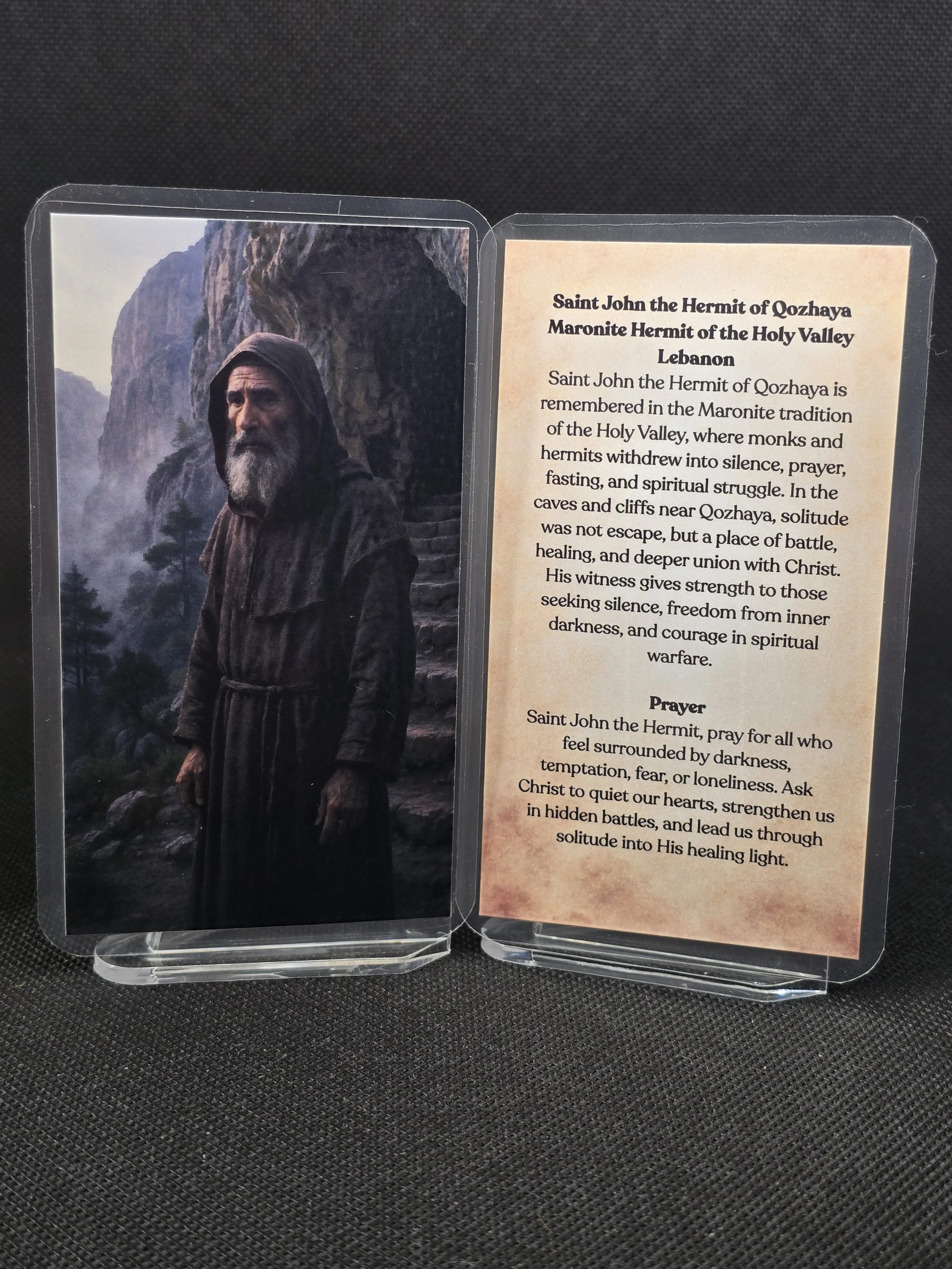
 Image 1 of 2
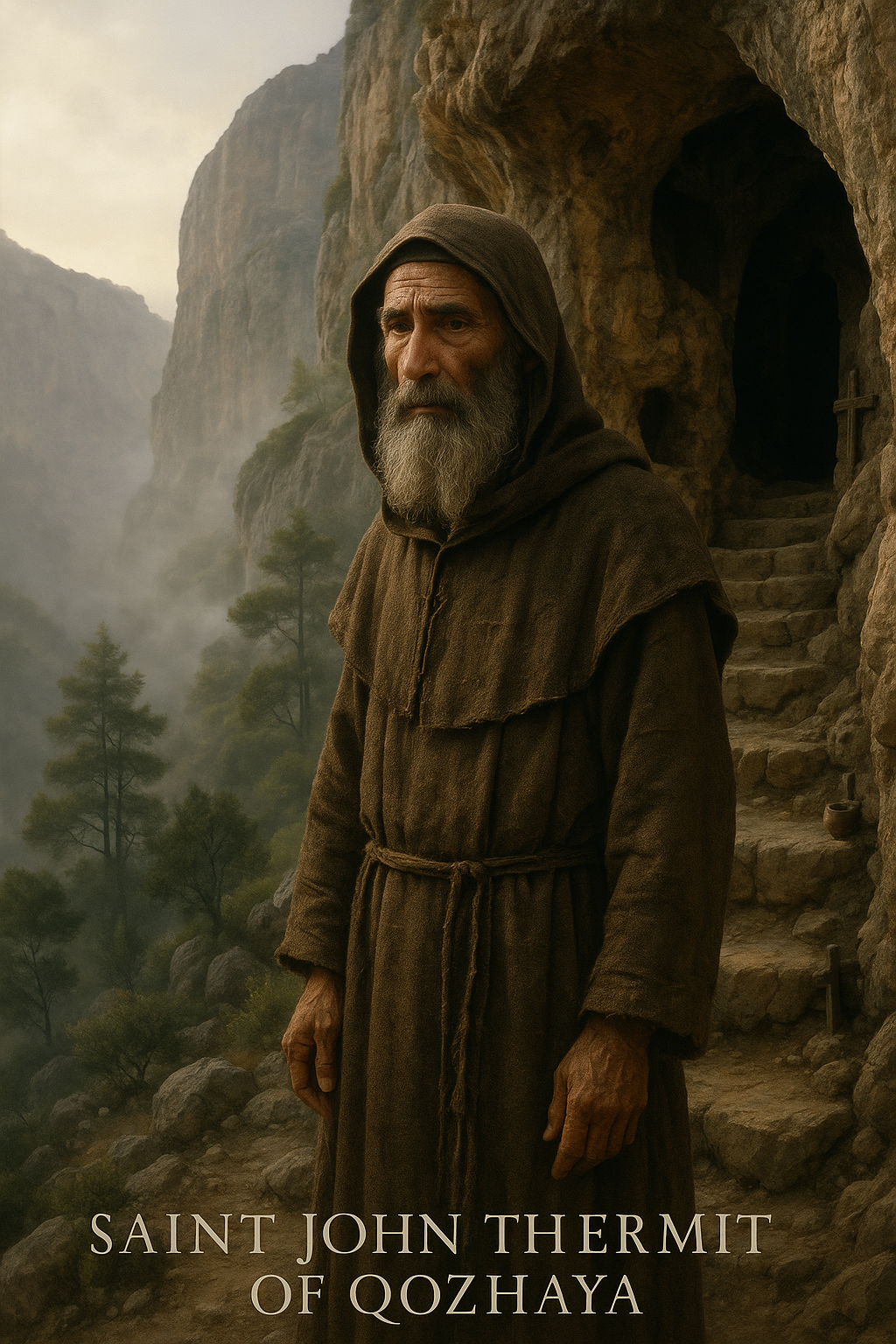 Image 2 of 2
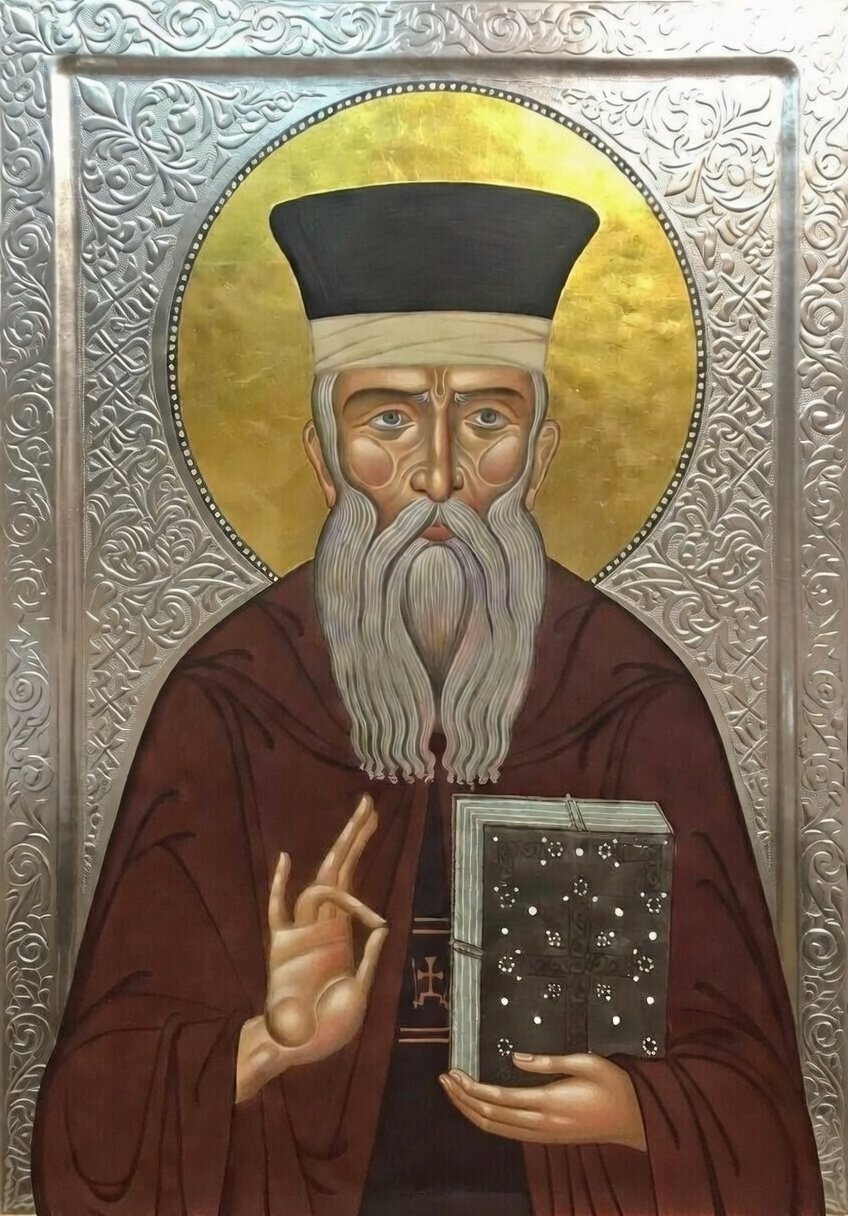
Saint John the Hermit of Qozhaya Prayer Card – Patron for Solitude Seekers, Spiritual Warfare & Freedom from Inner Darkness
-
Saint John lived as a hermit in the sacred Qozhaya Valley, part of the ancient monastic heartland of Mount Lebanon. Little is recorded about his early years, which is itself a testimony to his vocation.
He did not seek recognition.
He sought God.
He chose a life of extreme withdrawal, inhabiting a cave near the monastery, embracing poverty, hunger, exposure, and long nights of prayer. His cell was bare stone. His food was minimal. His comfort was Christ alone.
John entered the desert not to escape the world, but to confront everything inside himself that was not yet surrendered to God.
He battled temptation.
He battled despair.
He battled spiritual assault.
And he did so in silence.
Local tradition preserves that his cave became a place of intense spiritual struggle, where demonic oppression was confronted through fasting and prayer. Over time, his reputation spread quietly among nearby villagers and monks, who recognized in him a man who had crossed beyond ordinary devotion.
They sought him for counsel.
They brought the afflicted.
They asked for prayer.
John offered no speeches.
He offered presence.
His life became a living exorcism of pride, fear, and distraction.
After years of hidden asceticism, Saint John reposed in peace, leaving behind no writings, no sermons, and no institutions.
Only holiness.
His cave remains a place of pilgrimage to this day.
-
Saint John the Hermit is remembered as a guardian of interior silence and a powerful intercessor for those suffering spiritual heaviness.
He is especially beloved by people fighting unseen battles.
Patron Saint Of:
Spiritual warfare and demonic oppression
Intrusive thoughts and mental torment
Inner darkness and emotional heaviness
Returning to God through silence
Breaking destructive spiritual patterns
Ascetic strength and repentance
Solitude seekers and contemplatives
Miracles and Ongoing Intercession
During his life, people testified to deliverance from spiritual affliction after his prayers. After his repose, many who visited his cave reported peace replacing anxiety, clarity returning to confused minds, and heaviness lifting from the heart.
Some experience renewed prayer after long dryness.
Others describe sudden calm during seasons of spiritual attack.
His miracles arrive quietly.
They come as silence replacing noise.
They come as strength replacing weakness.
They come as light entering places long kept dark.Saint John teaches that not every battle is loud.
Some are won on stone floors, in caves, and in tears.
-
Traditional Prayer
Holy Father John, hermit of Qozhaya and warrior of prayer, intercede for us. Ask Christ to grant us repentance, inner peace, and freedom from every darkness. Amen.
Personal Prayer
Holy Saint John the Hermit, lover of silence and conqueror of inner storms, pray for me.
You entered the cave to meet God.
You faced darkness without fleeing.
You learned stillness while the world screamed.I bring you my restless heart.
If intrusive thoughts torment me, grant peace.
If spiritual heaviness presses on me, intercede for freedom.
If prayer feels distant, lead me back into silence.Teach me how to sit before God without distraction.
Teach me how to fight temptation without panic.
Teach me how to remain faithful when no one sees.Stand beside me in quiet battles.
Stand beside me in long nights.
Stand beside me while Christ heals what is hidden.Holy John, you surrendered everything to God.
By your intercession, may Christ quiet my mind, cleanse my heart, and restore His light within me.
Amen.
-
Q: What is Saint John the Hermit of Qozhaya known for?
He is known as a Maronite hermit who lived in extreme solitude, devoting his life to prayer, repentance, and spiritual warfare in the Qozhaya Valley of Lebanon.Q: When is Saint John the Hermit commemorated?
He is traditionally commemorated on March 20 in the Maronite calendar.Q: Which Christian traditions venerate Saint John the Hermit?
He is honored primarily in the Maronite Catholic Church and respected across Eastern Christianity.Q: Why do people pray to Saint John for spiritual darkness or intrusive thoughts?
Because he personally fought intense interior battles through silence and prayer. Many seek his intercession when experiencing spiritual heaviness, mental torment, or longing for inner stillness.