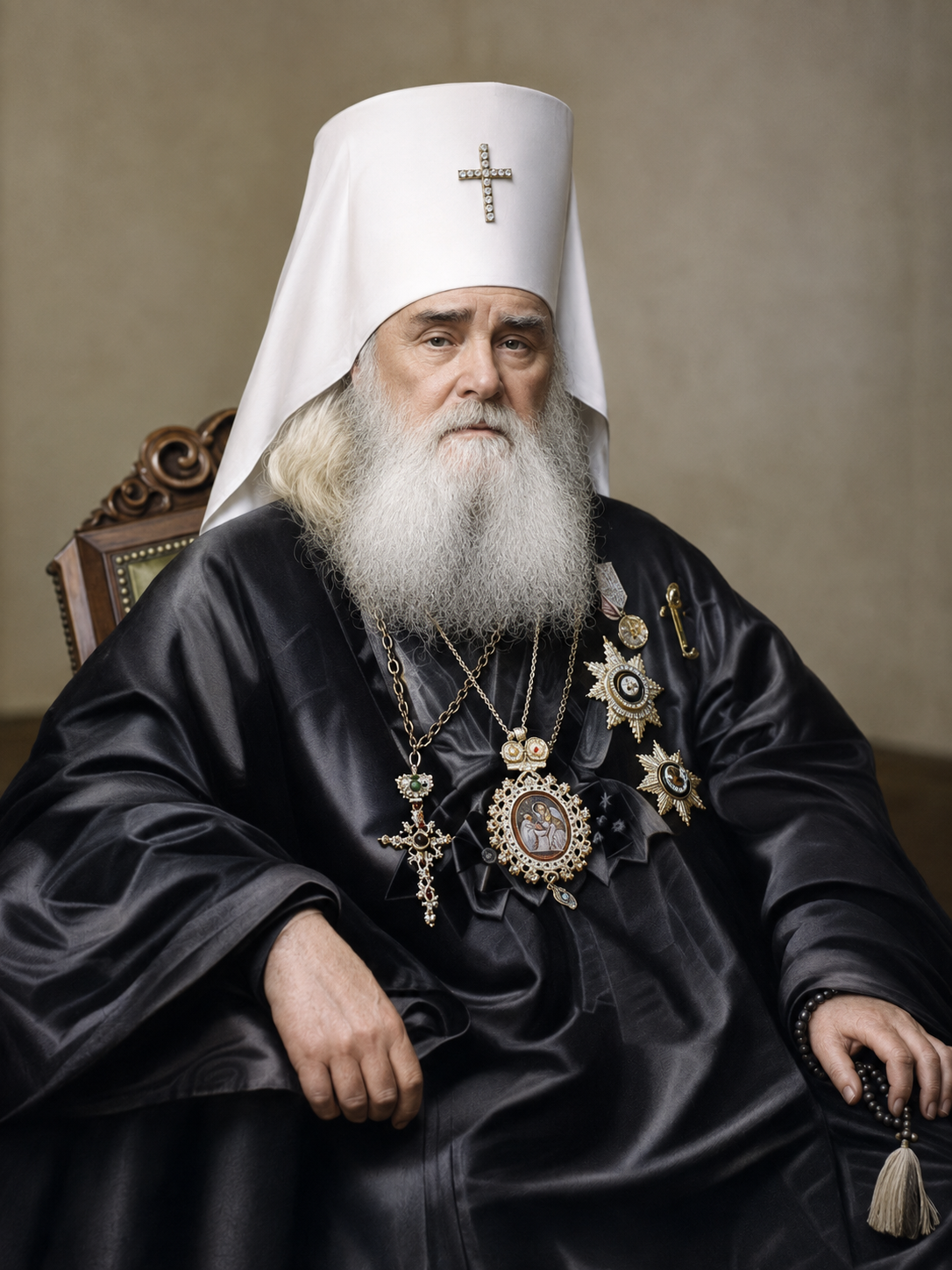
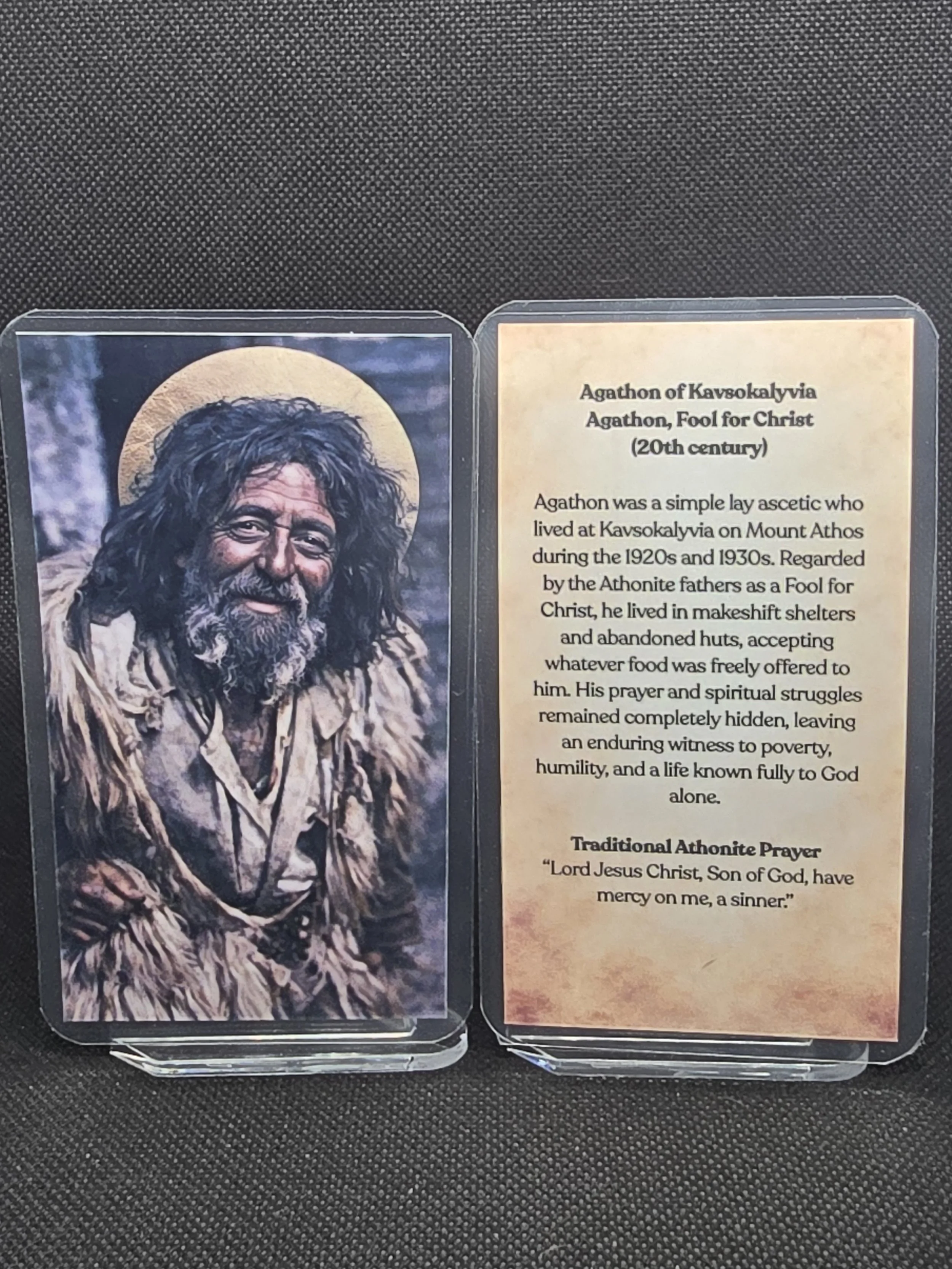
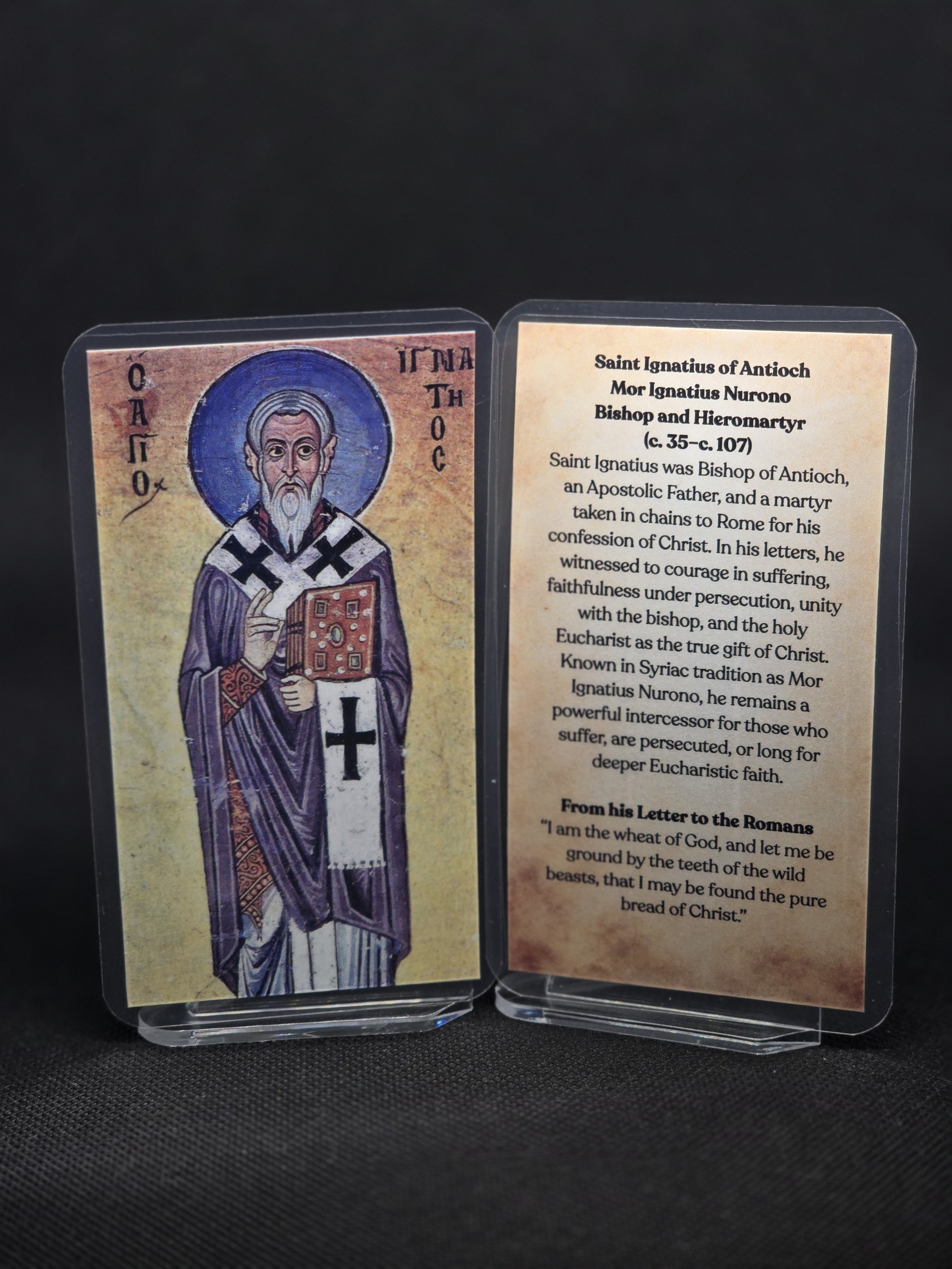
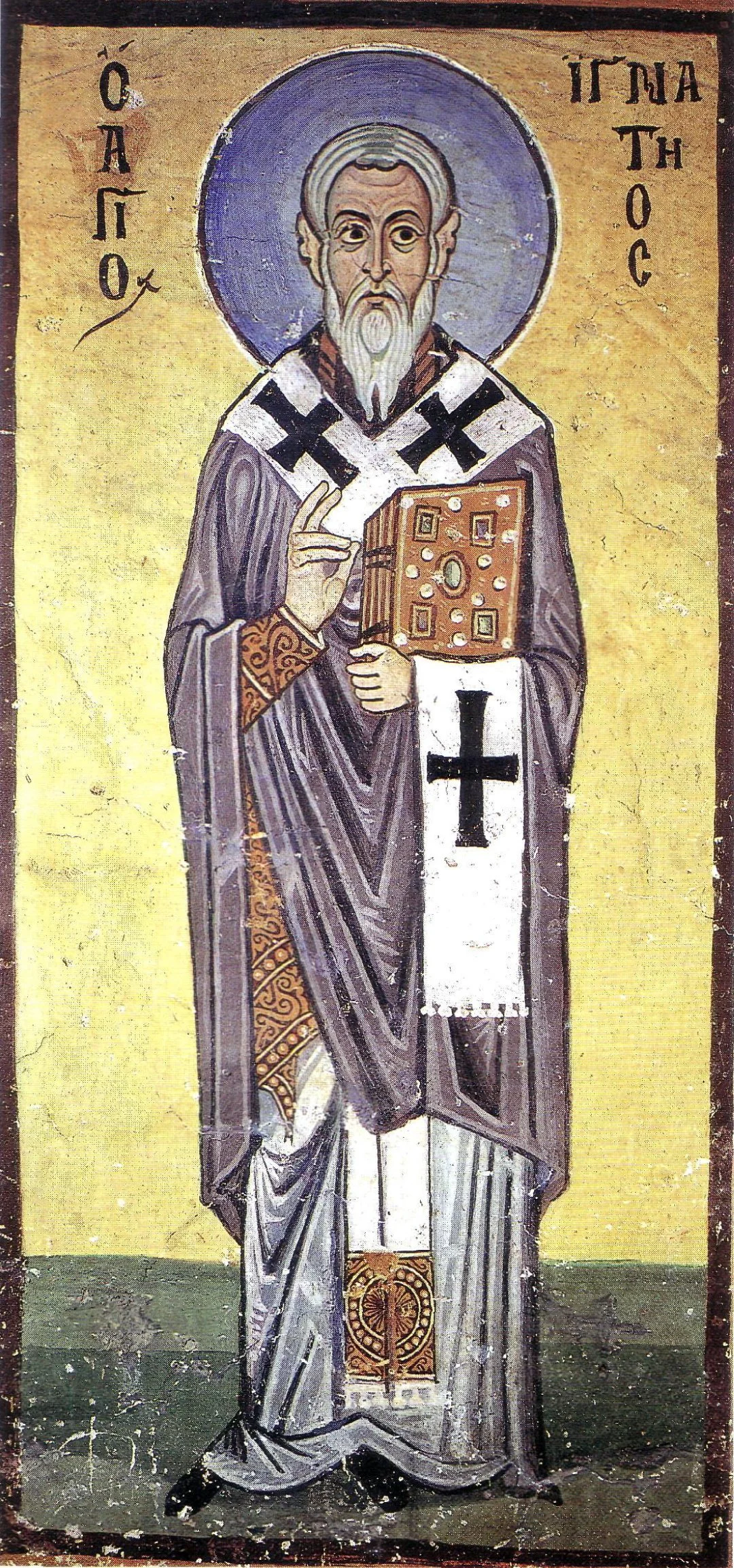
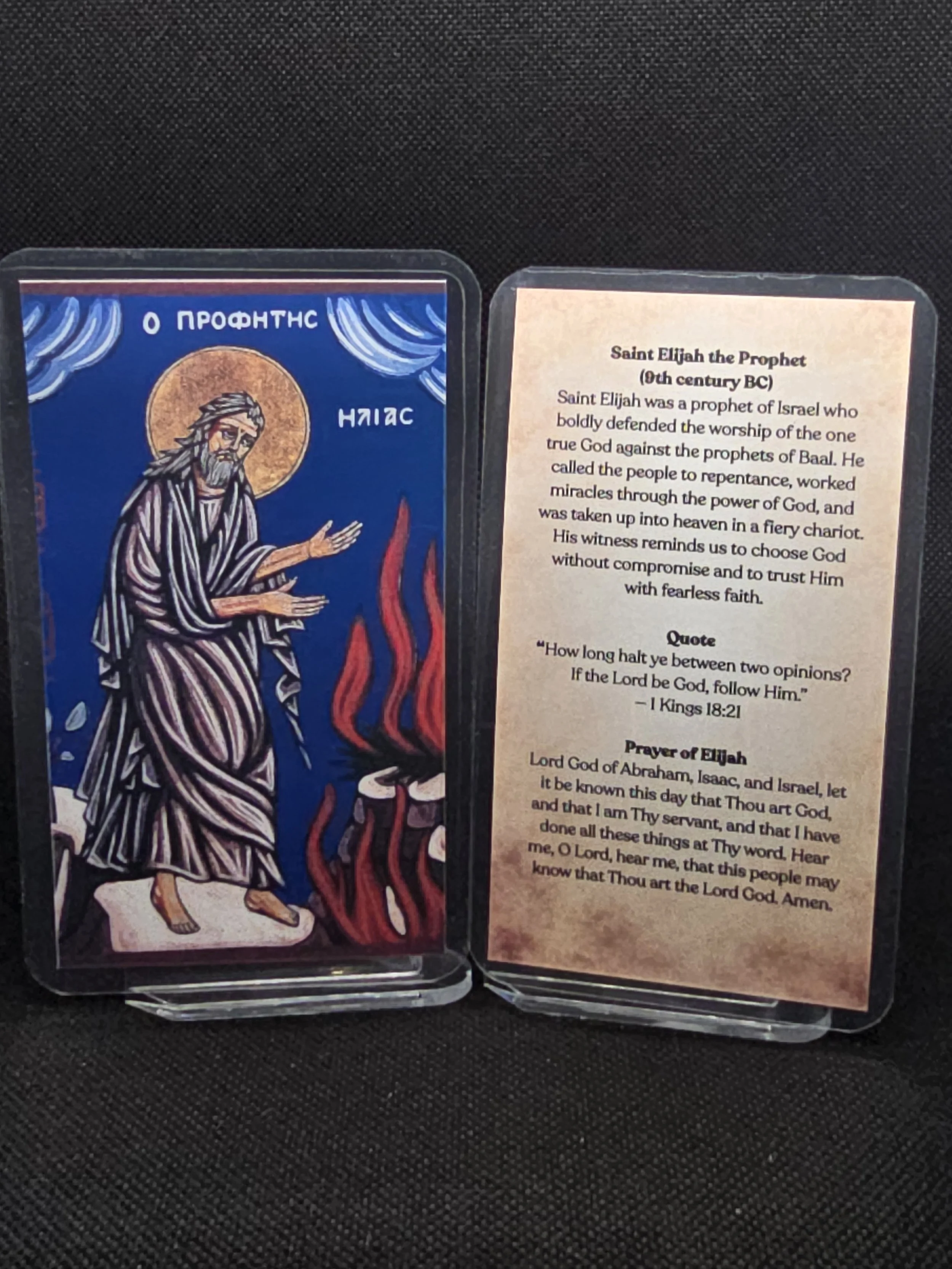
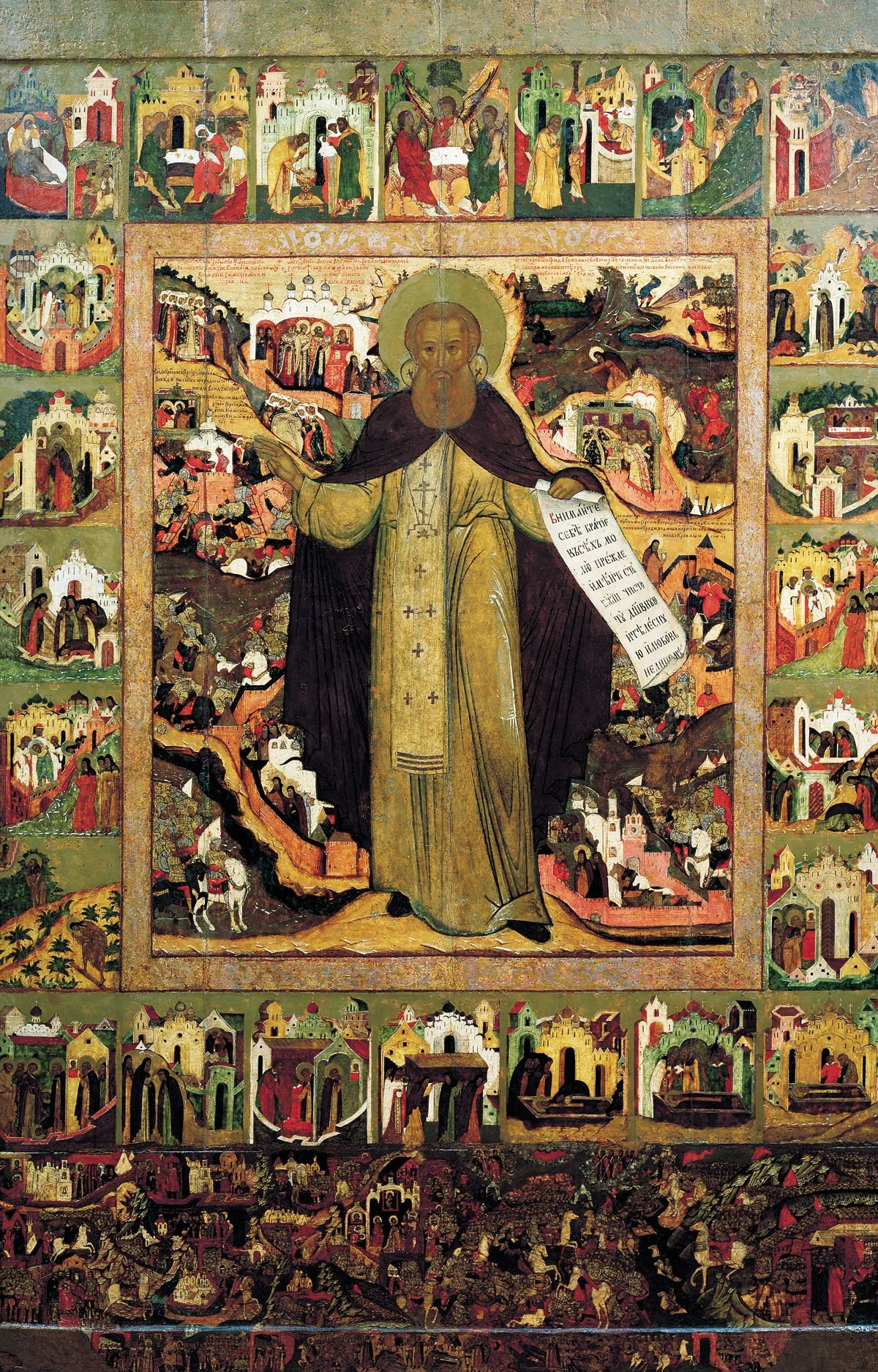
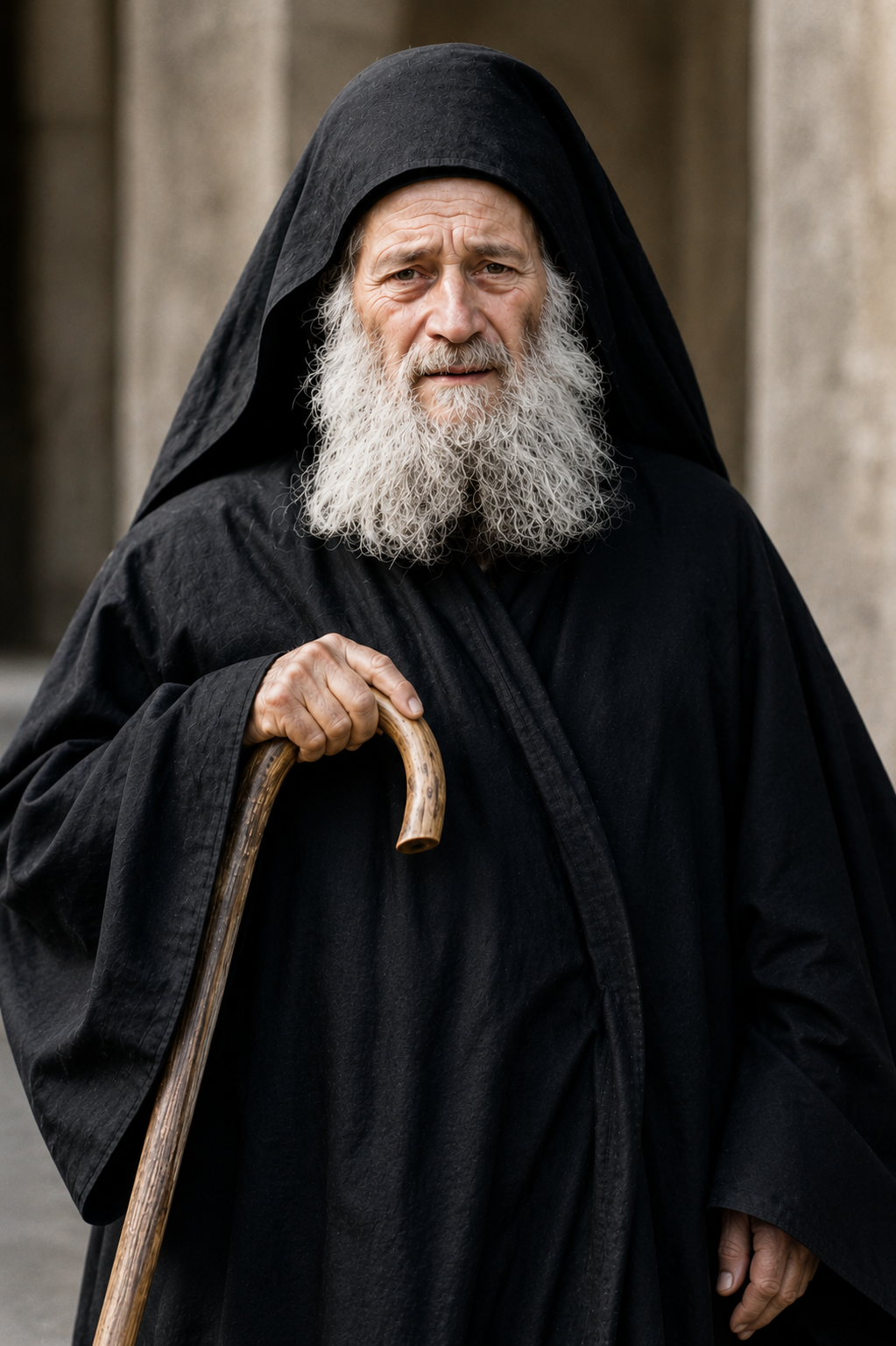
 Image 1 of 1
Saint Joseph the Hesychast Prayer Card - For the Jesus Prayer, Spiritual Warfare, Discernment & Inner Stillness
Saint Joseph the Hesychast, also known as Saint Joseph the Cave-Dweller, was one of the great Athonite spiritual fathers of the twentieth century and one of the most influential modern teachers of the Jesus Prayer, watchfulness, hesychasm, and prayer of the heart. Born Francis Kottis on the Greek island of Paros in 1897, he went to Mount Athos in 1921 searching for the kind of ascetic and contemplative Christianity he had encountered in the lives of the ancient Fathers. He eventually became a spiritual father whose small and hidden brotherhood helped renew hesychastic monasticism on Mount Athos, while his spiritual descendants carried that tradition into Greece, Europe, the United States, and Canada.
Saint Joseph is especially meaningful for Christians seeking a deeper prayer life, those learning the Jesus Prayer, people struggling with distraction during prayer, monks and monastics, those fighting persistent temptations and passions, people seeking spiritual discernment, and anyone longing for greater interior stillness and remembrance of God. These associations come directly from the defining work of his life, because he sought a spiritual guide who could teach him noetic prayer and later became known for the gift of ceaseless prayer, watchfulness, silence, obedience, and experiential Orthodox spirituality.
His story is particularly powerful for Christians who have discovered the Jesus Prayer and sense that there is something deeper within the Eastern Christian tradition than mechanically repeating words. Saint Joseph taught that prayer requires attention and watchfulness, and his entire ascetic life was directed toward gathering the wandering mind, turning continually toward Jesus Christ, purifying the passions, and allowing prayer gradually to descend from something merely spoken into something rooted within the heart.
Saint Joseph is also an especially meaningful intercessor for spiritual warfare. His writings and biography describe intense struggles with thoughts, temptations, bodily passions, discouragement, misunderstanding, loneliness, and periods when the consolation of grace seemed withdrawn. He did not teach Christians to become fascinated with demons or unusual spiritual phenomena, but to struggle through repentance, humility, obedience, watchfulness, prayer, fasting, love, and constant return to the name of Christ.
His life is equally important for anyone trying to understand discernment and obedience. Although Joseph longed intensely for solitude and advanced prayer, Saint Daniel of Katounakia warned him and Father Arsenios not to attempt the hesychastic life independently, telling them that their struggle needed to be sealed by obedience to an elder. Joseph therefore submitted himself to spiritual guidance before eventually becoming a spiritual father himself, showing that authentic hesychasm is not a self-designed mystical technique but a life formed within the Church and tested through humility.
Saint Joseph's importance reaches far beyond the small caves in which he lived. Among his close disciples were the future Elder Joseph of Vatopedi, Elder Haralambos of Dionysiou, and Elder Ephraim of Philotheou and Arizona, while Saint Ephraim of Katounakia also received spiritual guidance from him. Through these disciples, his spiritual inheritance became a major force in the renewal of Athonite monasticism and eventually influenced monasteries throughout Greece, the United States, and Canada.
For that reason, Saint Joseph has an especially important connection with Orthodox Christianity in the United States. Saint Anthony's Greek Orthodox Monastery in Arizona, founded through the missionary work of his disciple Elder Ephraim, explicitly regards Saint Joseph as its spiritual grandfather and celebrates his feast with an all-night vigil. His influence therefore connects the caves of Mount Athos directly with the remarkable revival of Athonite monastic life in the deserts of North America.
This prayer card is especially fitting for people beginning or deepening the Jesus Prayer, Christians studying the Philokalia, monks and people discerning monastic life, priests and spiritual fathers, people struggling with intrusive or distracting thoughts during prayer, those fighting persistent temptations, and Christians seeking greater interior stillness. It is also an especially meaningful gift for someone visiting Mount Athos, Saint Anthony's Monastery in Arizona, or another monastery descended spiritually from Saint Joseph's remarkable Athonite brotherhood.
Each card is handmade in Austin, TX and created to order. We do not keep stock, because every prayer card is treated as a unique devotional offering. They are printed on museum-quality photo paper, not cardstock, and every card is made slowly during prayer with intentional reverence for the saint and for the person who will receive it. Names are lifted before Christ, intentions are held carefully, and each piece is handled multiple times in prayerful silence, asking God for mercy and asking Saint Joseph to intercede for the soul it is being made for. This is devotional craftsmanship shaped with patience, care, and spiritual responsibility because every soul and every prayer matters.
THE LIFE & STORY
Saint Joseph was born Francis Kottis in Lefkes on the Cycladic island of Paros. His birth is traditionally given as February 12, 1897, and he was the fourth of seven children born to George and Maria Kottis. His parents were poor, simple, and deeply pious Christians, and the early death of his father left Maria with the difficult responsibility of supporting and raising the family.
The family possessed little money, and Francis did not receive an extensive formal education. As a teenager he left Paros and eventually worked around Piraeus and Lavrio, supporting himself through ordinary commercial work and later serving in the navy. By his early twenties he was living around Athens and had begun reading the lives and writings of the Fathers, especially the accounts of ancient ascetics whose radical dedication to God awakened something within him.
According to the monastery biographies, Francis had been engaged to a young woman, but his growing attraction toward the ascetic life eventually led him to end the engagement and prepare himself for monasticism. Before leaving for Athos, he began practicing fasting and vigils in the countryside around Athens and Mount Penteli, trying to imitate what he had read in the lives of the desert saints while still living in the world.
His movement toward monastic life was strengthened by a visionary experience preserved in the biographies of Saint Joseph. Francis dreamed that attendants of a king led him into a magnificent palace and told him that from that point forward he would serve there. He understood the dream as a summons away from worldly life and toward service to the heavenly King.
In 1921, Francis finally went to Mount Athos. He was not simply looking for the nearest monastery willing to receive him, because what he desired was a spiritual father who actually knew the interior tradition he had read about in the Fathers, especially the practice of noetic prayer and the gathering of the mind into the heart.
His early search took him to Katounakia, where he encountered Saint Daniel of Katounakia and his brotherhood. Francis retained a lifelong respect for Saint Daniel's holiness and discernment, but the more moderate ascetic rule of the community did not fully correspond with his extraordinary thirst for solitude and continual prayer. He therefore continued searching among the more isolated caves and hermitages of Athos.
This search carried genuine spiritual danger because the desire for advanced contemplative prayer can easily become self-deception when someone lacks guidance. Saint Daniel recognized both Francis's unusual spiritual thirst and the dangers of pursuing intense hesychasm independently, so he continued advising him rather than simply encouraging youthful zeal without boundaries.
During this period Francis underwent one of the defining spiritual experiences of his life. His later testimony describes how, while praying intensely and asking the Theotokos for help, he experienced divine light and discovered the prayer beginning to operate within his heart without his deliberate effort. His disciples understood this as an experience of the uncreated light accompanied by the gift of ceaseless prayer, although Joseph himself continued emphasizing struggle, purification, humility, and watchfulness rather than treating mystical experience as something spectacular for public display.
On the Feast of the Transfiguration, Francis met Father Arsenios, who became his inseparable companion in the ascetic life. The two men desired an intense life of silence and prayer, but before beginning it they went to Saint Daniel of Katounakia and asked how they should proceed. Saint Daniel told them that they needed an elder and that serious spiritual struggle should not begin without the protection of obedience, directing them away from the dangerous idea that mystical experience made spiritual authority unnecessary.
Francis and Arsenios consequently placed themselves under two elderly monks, Joseph and Ephraim, in Katounakia. After Elder Joseph reposed, they remained with Elder Ephraim, who eventually tonsured Francis into the Great Schema in the cave of Saint Athanasius the Athonite on August 31, 1925. Francis then received the monastic name Joseph, honoring the elder who had recently reposed.
This stage of his life is spiritually important because the man later famous for giving spiritual direction first spent years being directed. Saint Joseph did not regard obedience as something beginners outgrow once they become spiritually experienced, because submission of the personal will remained foundational to his understanding of the monastic life and to his protection from spiritual delusion.
After Elder Ephraim's repose, Joseph gradually became the elder of a small brotherhood himself. His approach to the spiritual life was extraordinarily demanding, and many aspirants could not endure the severity of the ascetic program he practiced. Joseph and Arsenios lived for periods around the Skete of Saint Basil, moving through secluded Athonite locations partly because they wanted to remain unknown and preserve their solitude rather than become celebrated spiritual figures.
Eventually a small brotherhood began forming around Saint Joseph despite his preference for hiddenness. His biological brother Athanasios joined him, while other monks came seeking spiritual guidance, creating the paradox that the man constantly searching for greater obscurity was gradually becoming an important spiritual father.
In 1938, seeking greater solitude, Joseph and his community moved to the rugged caves of Little Saint Anne's Skete. The environment was extremely harsh, but it became the place where some of his most important future disciples joined the brotherhood, including the future Elder Joseph of Vatopedi, Elder Haralambos of Dionysiou, and the young Father Ephraim who would later become abbot of Philotheou and the missionary elder associated with monasteries throughout Greece and North America.
The brotherhood remained at Little Saint Anne's for years, but the physical conditions gradually damaged the health of the monks. Saint Joseph eventually recognized that insisting upon the same location would no longer serve the brothers under his care, so in 1953 he sacrificed some of the solitude he personally loved and moved the community lower toward the sea at New Skete. That decision reveals an important part of his maturity because true asceticism is not simply doing the hardest thing possible, and love may require surrendering a personal preference for the sake of another person's weakness.
Saint Joseph spent his final six years at New Skete. By then illness and decades of severe ascetic life had damaged his health considerably, and his biographies describe serious heart failure and difficulty breathing during his final period. He also possessed a particularly deep devotion to the Mother of God, and his disciples preserved a tradition that she had promised to receive him on her feast.
On August 15, 1959, the Feast of the Dormition of the Theotokos, Saint Joseph received Holy Communion for the last time and peacefully reposed. His feast is celebrated on August 16, the day after the Dormition, so that his commemoration does not compete liturgically with one of the great feasts of the Mother of God.
THE JESUS PRAYER & PRAYER OF THE HEART
Saint Joseph the Hesychast is one of the most important modern saints for Christians drawn toward the Jesus Prayer. His journey to Athos was explicitly motivated by the desire to find someone who could teach him the art of noetic prayer, and his mature life became a relentless pursuit of inner prayer, watchfulness, repentance, and continual remembrance of Christ.
The familiar form of the Jesus Prayer is: “Lord Jesus Christ, Son of God, have mercy on me, a sinner.” Orthodox hesychastic tradition uses this short invocation as a means of continual remembrance of Christ, repentance, and the gathering of the wandering mind. Saint Joseph's particular emphasis was not merely repetition but attention, because the words of prayer can continue while the mind wanders everywhere else.
This makes Saint Joseph especially meaningful for anyone who sits down to pray and immediately discovers how scattered the mind actually is. Memories appear, unfinished work returns, imaginary conversations begin, worries demand attention, and the person who expected silence discovers an entire crowd of thoughts within the heart. The Jesus Prayer provides a simple place of return, so when distraction arises the Christian notices it, returns to Jesus, and gradually learns that what initially feels like repeated failure can become repeated repentance.
Saint Joseph's life demonstrates the extraordinary depths toward which this tradition can develop, but ordinary Christians should not imagine that they must reproduce his advanced mystical experiences in order to benefit from the Jesus Prayer. His own journey took place through years of obedience, severe ascetic training, sacramental life, spiritual direction, and watchfulness, so the proper goal is not unusual sensations or experiences but deeper communion with Christ.
WHAT DOES “HESYCHAST” MEAN?
The title Hesychast comes from the Greek hesychia, meaning quiet, stillness, or silence. Within Eastern Christian spirituality, hesychasm refers more deeply to the purification and stilling of the inner person through repentance, watchfulness, continual prayer, and attention to God.
Saint Joseph was therefore not called the Hesychast merely because he preferred quiet places. He deliberately sought secluded caves and hermitages because external silence supported an interior work in which thoughts, passions, desires, fears, and distractions could be confronted rather than continually hidden beneath activity.
External silence and internal silence are not identical, because someone can sit alone in a silent room while mentally arguing with a person who is not even present. Another Christian can be surrounded by ordinary family responsibilities while gradually developing a habit of returning the mind toward Christ. Saint Joseph pursued external solitude radically because of his particular monastic vocation, but the deeper lesson can be lived by Christians who cultivate periods of stillness, guard what enters the mind, pray the Jesus Prayer, and reduce unnecessary distraction without pretending to be desert hermits.
This makes his prayer card especially fitting beside a komboskini or chotki, the knotted prayer rope traditionally used with the Jesus Prayer. The card can become a visual reminder that the purpose of the prayer rope is not counting impressive quantities of prayers but continually returning toward the Person whose name is being invoked.
WATCHFULNESS & THE WANDERING MIND
Saint Joseph's spirituality cannot be separated from watchfulness, the discipline commonly called nepsis in the Philokalic tradition. Watchfulness involves paying attention to what enters the mind and heart before a thought develops into fantasy, passion, resentment, fear, or sinful action.
His teaching joined watchfulness closely with prayer because the Jesus Prayer is not intended to become religious background noise while the mind remains absorbed somewhere else. This does not mean every distraction should produce guilt, because discovering that the mind has wandered is itself an opportunity to return to Christ.
Over time, this process begins revealing which thoughts repeatedly dominate the inner life. One person may continually rehearse anger, another may anticipate disasters that have never happened, while someone else may repeatedly return toward lust, comparison, pride, imagined admiration, or old wounds. Watchfulness allows those movements to become visible before they automatically determine behavior, giving the Christian an opportunity to turn back toward Christ rather than feeding the thought until it becomes a passion.
Saint Joseph therefore makes a particularly meaningful intercessor for someone seeking discipline of the mind, but that should not be turned artificially into a medical patronage for anxiety disorders, obsessive-compulsive disorder, ADHD, or another diagnosis. His authentic spiritual connection is with watchfulness, distraction, temptation, and the disciplined return of attention toward Christ.
SPIRITUAL WARFARE & THE PASSIONS
Saint Joseph's life contained intense spiritual struggle, including battles with bodily passions, temptation, spiritual dryness, misunderstanding, and difficult periods when the consolation of grace appeared to recede. This makes him an especially strong modern saint for spiritual warfare, but his understanding of warfare is important because the enemy is not always imagined as something entirely outside the person.
Pride, anger, self-love, despair, uncontrolled desire, and even religious zeal can become spiritually destructive when they are detached from humility and obedience. Saint Joseph's response was relentless prayer and ascetic struggle, but love remained essential, preventing spiritual warfare from becoming an angry fixation upon evil. A Christian who spends all day thinking about demons may still be deeply distracted from Christ, while Saint Joseph's spirituality continually directs the attention back toward Jesus.
OBEDIENCE & PROTECTION FROM SPIRITUAL DELUSION
One of the most important lessons in Saint Joseph's life is that his desire for mystical prayer did not lead him to reject spiritual authority. When he and Father Arsenios asked Saint Daniel of Katounakia how they should proceed, Daniel insisted that they place themselves under an elder before attempting an advanced hesychastic struggle.
This matters because spiritual experiences can be misinterpreted. An unusual feeling is not automatically grace, an interior voice is not automatically God, a dream is not automatically prophecy, and a powerful personal conviction is not automatically discernment. Orthodox spirituality therefore insists upon humility because spiritual pride can imitate holiness while leading someone away from reality.
Saint Joseph's obedience belongs as much to his legacy as his mystical experiences. He did not become trustworthy by declaring himself a spiritual elder, because he first learned to obey and to place his own judgment under experienced spiritual guidance. For Christians attracted to hesychasm, visions, prophecy, or advanced mystical theology, one of the safest lessons from his life is to desire Christ rather than extraordinary experiences.
HIS EXTREME ASCETICISM & WHAT LAY CHRISTIANS SHOULD NOT COPY
Saint Joseph practiced an extraordinarily severe form of Athonite asceticism involving prolonged fasting, vigils, deprivation, solitude, and a demanding prayer rule. His regimen was so strict that many monks themselves could not sustain it, which makes it important not to turn the dramatic details of his biography into a universal prescription for Christian life.
A married person with children has a different vocation, someone with medical problems has different limitations, and a parish priest responsible for hundreds of people cannot necessarily live like a cave-dweller. Even monks normally live according to the rule and blessing given within their own community, and Saint Joseph himself sought an elder before pursuing his extreme hesychastic life. Using his biography as justification for inventing an unsupervised ascetic regimen would therefore contradict one of the most important lessons he actually taught.
What can safely be imitated is the direction of his life: seriousness about prayer, repentance, attention, simplicity, restraint, perseverance, love, and a desire for God stronger than the desire for constant entertainment. The quantity and outward form of asceticism will differ according to vocation, health, family responsibilities, and spiritual guidance, but the direction toward Christ remains the same.
SAINT JOSEPH & THE THEOTOKOS
Saint Joseph possessed an exceptionally deep devotion to the Mother of God. His biographies preserve accounts in which he believed the Theotokos had consoled and protected him during severe spiritual struggles, and his disciples remembered him placing great hope in her intercession throughout his life.
According to the tradition preserved by his disciples, Saint Joseph believed the Theotokos had promised to receive him on the Feast of her Dormition. After enduring serious heart disease and physical decline, he received Holy Communion on August 15, 1959 and reposed that same day. The timing became particularly meaningful to his disciples because August 15 is one of the greatest Marian feasts of the Orthodox liturgical year.
His feast is therefore celebrated on the following day, August 16, rather than replacing the Dormition. For Christians devoted both to the Jesus Prayer and to the Mother of God, Saint Joseph provides a particularly natural connection between the two, because his deep Christ-centered prayer did not weaken his Marian devotion and his Marian devotion never displaced Christ.
HIS DISCIPLES & THE RENEWAL OF MOUNT ATHOS
Saint Joseph spent most of his mature life attempting to remain hidden, yet the spiritual effects of his brotherhood eventually reached astonishing proportions. His spiritual descendants came to number hundreds and eventually more than a thousand monks and nuns, while his small brotherhood became one of the important roots of the modern renewal of hesychastic and cenobitic monastic life on Mount Athos.
Among his most important disciples was Joseph the Cypriot, later widely known as Elder Joseph of Vatopedi. Through him, Saint Joseph's spiritual teaching became part of the modern renewal of the Holy Great Monastery of Vatopedi. Another disciple, Father Haralambos, later became abbot of the Monastery of Dionysiou, while Saint Ephraim of Katounakia received important spiritual guidance from Joseph even though he belonged to another brotherhood.
The most far-reaching connection for many English-speaking Orthodox Christians came through Elder Ephraim of Philotheou and Arizona. The young Father Ephraim entered Saint Joseph's brotherhood and learned the Jesus Prayer, obedience, watchfulness, and Athonite monastic life directly from him before later carrying that inheritance into an enormous network of monasteries.
SAINT JOSEPH & ELDER EPHRAIM OF ARIZONA
Elder Ephraim eventually restored and repopulated monasteries on Mount Athos before carrying Athonite monastic life into North America. In 1995, Athonite monks were transferred to the Sonoran Desert in Arizona, establishing Saint Anthony's Greek Orthodox Monastery, which became one of the best-known Orthodox monasteries in the United States.
Saint Anthony's therefore regards Saint Joseph as its spiritual grandfather and celebrates his August 16 feast with an all-night vigil. The prayer and monastic tradition transmitted from Joseph to Ephraim therefore reached directly into American Orthodox life, making Saint Joseph particularly meaningful for Orthodox Christians in North America even though he never physically traveled there.
THE LETTERS & TEACHINGS OF SAINT JOSEPH
Saint Joseph possessed very little formal secular education, yet he left an important body of spiritual correspondence. His letters became widely read because they communicate the interior spiritual life in practical language formed through personal experience rather than academic abstraction, and collections of his teachings now circulate widely within the Orthodox world.
His principal subjects repeatedly include the Jesus Prayer, obedience, watchfulness, grace, temptation, spiritual warfare, repentance, patience, love, and the changing experience of consolation and abandonment within the spiritual life. His own experience teaches that the spiritual life is not a straight line of increasingly pleasant experiences, because consolation may come and later withdraw, temptation may intensify, and prayer may continue through long periods when grace is not emotionally felt.
This is one reason his teaching speaks so powerfully to someone who once experienced great warmth in prayer but later feels almost nothing. Saint Joseph's life teaches perseverance rather than dependence upon spiritual emotion, because the Christian continues praying not simply because prayer currently feels good but because Christ remains worthy of love and worship.
SAINT JOSEPH & THE PHILOKALIA
Saint Joseph belongs naturally within the modern continuation of the Philokalic tradition. His spirituality is shaped by watchfulness, noetic prayer, obedience, purification of the passions, and experiential knowledge of God, all themes that run throughout the Philokalia and the older hesychast Fathers.
His importance lies partly in demonstrating that these writings were not merely descriptions of a vanished Byzantine spirituality. Joseph lived in the twentieth century, knew modern cities, served in the navy, worked for money, and lived through an age marked by war, political upheaval, urbanization, and increasing secularization. Yet when he went to Athos, he discovered that the ancient work of purification, watchfulness, and prayer remained possible.
For someone reading the Philokalia today, Saint Joseph therefore provides a bridge between ancient texts and modern Christian history. He demonstrates that the tradition of prayer described by the Fathers did not simply disappear but continued to be practiced, tested, and transmitted within modern Orthodox monastic life.
CAN LAY PEOPLE LEARN FROM SAINT JOSEPH?
Yes, but Saint Joseph's life needs to be applied with discernment. A lay Christian does not need to sleep in a cave or reproduce an Athonite monastic fasting rule in order to learn from him, because his extreme ascetic program belonged to a particular vocation and even the monks around him sometimes became physically unable to sustain the conditions in which his brotherhood lived.
Laypeople can instead learn the fundamental principles beneath the outward severity. They can pray consistently, return to Christ when distracted, guard the mind, repent quickly, resist resentment, love other people, receive the sacramental life of the Church, seek wise guidance, refuse to chase spiritual experiences, and persevere when prayer feels dry. Those principles can be lived faithfully within a house, workplace, parish, marriage, or family.
A father quietly praying the Jesus Prayer while washing dishes may be practicing continual remembrance of Christ according to his vocation, while a mother returning repeatedly toward Jesus during an exhausting day may be doing the same. A worker who occasionally uses a commute for the Jesus Prayer rather than filling every moment with stimulation may also begin to discover a measure of interior stillness. Saint Joseph's vocation was extraordinary, but the Christ toward whom his entire life pointed is for everyone.
SAINT JOSEPH & SPIRITUAL DRYNESS
Saint Joseph's life is especially important for people who have experienced strong prayer followed by periods of dryness, darkness, or spiritual discouragement. His biographies describe not only powerful experiences of grace but fierce struggles in which consolation receded and perseverance became difficult.
Advanced spiritual life does not necessarily mean feeling God's presence constantly. Prayer may sometimes feel alive and at other times almost empty, tears may come easily for a season and then disappear, and someone may stand before God feeling very little. The temptation during the dry period is to assume prayer has stopped working, but Saint Joseph's life suggests that the absence of consolation can become an opportunity for faithfulness less dependent upon emotional reward.
The Christian therefore continues because Christ is worthy, not merely because prayer currently produces consolation. This makes Saint Joseph especially meaningful for someone who is tempted to abandon prayer simply because the spiritual warmth they once experienced has faded.
SPIRITUAL FATHERHOOD
Saint Joseph is also one of the great modern examples of spiritual fatherhood. His own formation under elders taught him the importance of obedience, and over time monks began seeking him because they recognized in him an unusually deep knowledge of prayer, discernment, and the passions.
His spiritual influence became so extensive precisely because he formed people rather than building an institution around himself. Joseph of Vatopedi, Haralambos of Dionysiou, Elder Ephraim of Arizona, and Saint Ephraim of Katounakia carried different parts of the same hesychastic inheritance into different places and communities. A genuine spiritual father does not try to turn every disciple into a copy of himself, but helps each disciple become faithful to Christ according to that person's particular vocation.
ILLNESS, WEAKNESS & HIS FINAL YEARS
Saint Joseph's extraordinary asceticism did not leave his body untouched. By his final years his health had deteriorated considerably, and his biographies record serious heart failure that made breathing extremely difficult.
This gives his story an important final correction to romantic images of extreme asceticism because the body has limits. Joseph eventually moved his brotherhood because the younger monks were becoming ill, and he himself reached a condition in which physical weakness could no longer be overcome by sheer determination. Yet weakness did not make him spiritually useless, because he continued receiving Holy Communion, blessing his spiritual children, and preparing for death.
His final days therefore show another form of asceticism: accepting that the body can no longer do what it once did. For people aging, living with chronic illness, or losing physical abilities, this aspect of Saint Joseph can be especially meaningful because his final vocation required him to receive and surrender rather than constantly accomplish.
HIS REPOSE ON THE DORMITION
Saint Joseph reposed on August 15, 1959, the Feast of the Dormition of the Mother of God. His disciples remembered that he had anticipated dying on that feast because of a promise associated with the Theotokos, toward whom he had maintained profound devotion throughout his life.
He received Holy Communion for the final time and blessed those around him before peacefully surrendering his soul to God. Because August 15 is already occupied by the great feast of the Dormition, the Church commemorates Saint Joseph on August 16, preserving both his connection with the Theotokos and the proper liturgical priority of her feast.
HIS GLORIFICATION AS A SAINT
Saint Joseph's holiness was recognized among his disciples long before his formal enrollment among the saints. His letters circulated, biographies appeared, his spiritual descendants expanded dramatically, and monasteries throughout the Orthodox world increasingly regarded him as one of the great Athonite elders of the twentieth century.
In October 2019, Ecumenical Patriarch Bartholomew publicly announced the forthcoming canonization of Saint Joseph and several other modern Athonite elders. His formal synodal glorification followed on March 9, 2020, and his first official feast after that glorification was celebrated in August 2020.
Saint Joseph is therefore specifically a modern Eastern Orthodox saint. His formal glorification occurred within the Ecumenical Patriarchate long after the medieval separation of the Churches, so he should not be described as a universally recognized Catholic saint even though Catholics interested in Eastern spirituality may certainly read and appreciate his writings.
THE HOLY RELICS OF SAINT JOSEPH
Holy relics of Saint Joseph are preserved on Mount Athos, including relics maintained by the Holy Great Monastery of Vatopedi. In 2024, relics of the saint were taken outside Mount Athos for public veneration in Athens, demonstrating how quickly public devotion to Saint Joseph has expanded since his formal glorification.
His continuing presence is also experienced strongly within the monasteries descended spiritually from his disciples. Saint Anthony's Monastery in Arizona celebrates an entire vigil for his August feast and regards him as its spiritual grandfather, giving North American Orthodox Christians a particularly close devotional connection with this modern Athonite saint.
PRAYERS
A simple traditional invocation may be prayed throughout the day: Holy Father Joseph the Hesychast, pray to God for us. This is especially fitting before beginning the Jesus Prayer, during persistent distraction, when temptation is strong, or when someone is asking God for greater discernment and interior peace.
Saint Anthony's Monastery also uses the invocation “Blessed Saint Joseph, intercede to God for us!” in connection with his feast-day vigil. The continuing liturgical celebration of Saint Joseph provides a firm Orthodox devotional basis for asking his intercession rather than inventing a modern prayer unrelated to his received cult.
Someone beginning the Jesus Prayer can invoke Saint Joseph before taking up the prayer rope and then return directly to Christ with the traditional prayer: “Lord Jesus Christ, Son of God, have mercy on me, a sinner.” Saint Joseph's entire spiritual legacy points beyond himself toward continual invocation of Jesus rather than making devotion to the elder an end in itself.
Someone struggling with distraction may also remember Saint Joseph's emphasis upon attention and watchfulness. The aim is not to become frustrated every time the mind wanders but to recognize the wandering and return again toward Christ, while those experiencing spiritual warfare may seek his prayers for humility, perseverance, freedom from the passions, and protection from deception.
This prayer card is especially fitting for a prayer corner, beside a komboskini or chotki, inside a copy of the Philokalia, near a Bible or prayer book, in a monastery cell, seminary room, or anywhere someone practices the Jesus Prayer. It can also make a meaningful gift for someone beginning to explore hesychasm, visiting Mount Athos or Saint Anthony's Monastery, discerning monastic life, or trying to establish a more disciplined daily rule of prayer.
FAQ
Who is Saint Joseph the Hesychast? Saint Joseph the Hesychast was a twentieth-century Greek Orthodox monk and spiritual father of Mount Athos who lived from 1897 to 1959. He became especially famous for his life of hesychasm, ceaseless Jesus Prayer, watchfulness, severe asceticism, and the enormous influence his disciples later exercised on Orthodox monasticism.
What was Saint Joseph the Hesychast's name before becoming a monk? His secular name was Francis Kottis. He received the name Joseph when he was tonsured in the cave of Saint Athanasius the Athonite on August 31, 1925.
Where was Saint Joseph the Hesychast born? He was born in Lefkes on the Greek island of Paros in 1897. His family was poor and deeply religious, and the death of his father placed additional responsibility upon his mother while Joseph was still young.
Was Saint Joseph highly educated? He received very little formal secular education and spent much of his youth working to help support his family. His later spiritual authority came through study of the Fathers, ascetic experience, prayer, obedience, and decades of monastic life rather than advanced academic schooling.
When did Saint Joseph go to Mount Athos? He arrived on Mount Athos in 1921 after spending time preparing himself through ascetic practice while still living in the world. He went specifically searching for spiritual fathers who knew the tradition of noetic and unceasing prayer.
Why is he called Saint Joseph the Hesychast? The title reflects his lifelong dedication to hesychia, the Eastern Christian tradition of inner stillness, watchfulness, and prayer of the heart. He repeatedly sought remote caves and hermitages where he could devote himself intensely to the Jesus Prayer and purification from the passions.
What does hesychasm mean? Hesychasm comes from the Greek word hesychia, meaning quiet or stillness. Within Orthodox spirituality, it refers more deeply to interior attention, watchfulness, repentance, purification of the passions, and continual prayer centered upon God.
Is Saint Joseph the Hesychast connected with the Jesus Prayer? Yes, extremely strongly. His arrival on Athos was motivated by a desire to learn noetic prayer, and his later life became famous for ceaseless prayer of the heart and the transmission of that tradition to his disciples.
What is the Jesus Prayer? A common traditional form is “Lord Jesus Christ, Son of God, have mercy on me, a sinner.” Orthodox hesychastic spirituality uses the prayer for continual remembrance of Christ, repentance, and the gathering of the wandering mind.
Can ordinary laypeople pray the Jesus Prayer? Yes, the Jesus Prayer is used by monastics and lay Christians. Saint Joseph's extreme ascetic methods should not be confused with the simple practice of invoking Christ's name, however, because advanced hesychastic disciplines traditionally belong within experienced spiritual guidance.
Can I pray to Saint Joseph when I struggle with distraction in prayer? Yes, this is one of the strongest devotional applications of his teaching because he consistently joined prayer with attention and watchfulness. His example encourages Christians to notice when the mind has wandered and return toward Christ without turning every distraction into despair.
Is Saint Joseph a saint for spiritual warfare? His life and teachings make him a particularly natural intercessor for spiritual warfare, temptation, passions, and discouragement. His spirituality emphasizes prayer, watchfulness, humility, obedience, love, and perseverance rather than fear or fascination with evil.
Can I pray to Saint Joseph against temptation? Yes, because intense struggle against temptation forms a major part of his life. His example directs the Christian toward repentance and attention to Christ rather than attempting to defeat temptation through confidence in personal strength.
Is Saint Joseph the patron saint of anxiety? Orthodox sources do not establish him as a formal patron saint of anxiety or anxiety disorders, so that title should not be manufactured. His authentic connection is with inner stillness, watchfulness, distraction, spiritual warfare, and continual prayer, which may still make him meaningful to someone experiencing interior unrest.
Is Saint Joseph a patron saint of the Jesus Prayer? There is no need to invent a formal exclusive patronage, but he is one of the strongest modern saints associated with the Jesus Prayer. His entire spiritual reputation centers upon noetic prayer, watchfulness, and the hesychastic life.
Can I ask Saint Joseph for help with spiritual discernment? Yes, his life makes this especially appropriate because he sought experienced elders and submitted himself to obedience. His example also teaches that spiritual experiences should be tested rather than automatically trusted.
Why was obedience so important to Saint Joseph? Saint Daniel of Katounakia specifically warned Joseph and Arsenios not to begin their intense hesychastic struggle without an elder. They consequently placed themselves under spiritual guidance, demonstrating that Joseph's contemplative spirituality was rooted in obedience rather than spiritual independence.
Did Saint Joseph experience the uncreated light? His biographies describe a visionary experience in which he was granted the vision of divine light and the gift of ceaseless prayer. Saint Joseph nevertheless did not make extraordinary experiences the center of his teaching, because his deeper emphasis remained repentance, humility, obedience, and perseverance.
Should Christians try to reproduce Saint Joseph's mystical experiences? His life points in the opposite direction from chasing experiences. Joseph sought prayer, repentance, obedience, and Christ, while extraordinary experiences came as gifts rather than something he manufactured through curiosity.
Was Saint Joseph's fasting extremely strict? Yes, he followed an extraordinarily austere program of fasting, vigils, solitude, and bodily discipline. Even many monks could not sustain his rule, so it should not be copied casually by laypeople or used as a universal model of Christian fasting.
Can laypeople imitate Saint Joseph the Hesychast? They can imitate his love for Christ, seriousness about prayer, watchfulness, repentance, perseverance, love, and humility without attempting to reproduce his extreme monastic regimen. His particular form of asceticism belonged to an unusual Athonite vocation lived under spiritual guidance.
Who was Father Arsenios? Father Arsenios became Saint Joseph's lifelong companion and fellow ascetic. The two met on Mount Athos around the Feast of the Transfiguration and subsequently pursued their spiritual struggle together under the guidance of experienced elders.
Who were Saint Joseph's main disciples? His core brotherhood included Father Arsenios, his brother Athanasios, the future Elder Joseph of Vatopedi, Elder Ephraim of Philotheou and Arizona, and Elder Haralambos of Dionysiou. Saint Ephraim of Katounakia, although belonging to another brotherhood, was also spiritually guided by Saint Joseph.
Was Elder Ephraim of Arizona a disciple of Saint Joseph? Yes, Elder Ephraim of Philotheou and Arizona belonged to Joseph's small Athonite brotherhood. He later carried that monastic and hesychastic inheritance into a large network of monasteries in Greece and North America.
What is Saint Joseph's connection with Saint Anthony's Monastery in Arizona? Elder Ephraim, Saint Joseph's disciple, founded Saint Anthony's through Athonite monks sent to the Arizona desert in 1995. The monastery therefore regards Saint Joseph as its spiritual grandfather and celebrates his feast with an all-night vigil.
Did Saint Joseph ever visit America? No evidence in the biographies indicates that he ever traveled to North America. His enormous American influence came after his death through Elder Ephraim and the monastic communities descended spiritually from Joseph's brotherhood.
How influential was Saint Joseph on Mount Athos? His small brotherhood became the spiritual root of an extraordinary number of later monks and nuns. His disciples also became major figures in several Athonite monasteries, giving his apparently hidden life an influence far beyond the size of his original community.
Was Saint Ephraim of Katounakia connected with Saint Joseph? Yes, Saint Ephraim of Katounakia received important spiritual guidance from Joseph even though he belonged formally to another brotherhood. He is therefore frequently counted among Saint Joseph's spiritual disciples.
Was Elder Joseph of Vatopedi a disciple of Saint Joseph the Hesychast? Yes, the future Elder Joseph of Vatopedi joined Saint Joseph's community at Little Saint Anne's. His later spiritual descendants became central to the modern life of Vatopedi Monastery, helping carry forward Saint Joseph's teaching.
Did Saint Joseph write books? He left a substantial body of letters and spiritual teaching rather than a conventional academic theological system. His correspondence has been published and translated because it contains practical teaching on prayer, grace, temptation, obedience, watchfulness, and the spiritual life.
Is Saint Joseph connected with the Philokalia? Very strongly in spirituality, even though he lived centuries after the primary Philokalic authors. His emphasis upon noetic prayer, watchfulness, purification of the passions, hesychia, and experiential knowledge of God represents a modern continuation of the same tradition.
Was Saint Joseph devoted to the Virgin Mary? Yes, exceptionally so, and his biographies preserve several accounts of Marian consolation. His disciples regarded the Theotokos as one of the central spiritual supports of his life and connected his final repose with her Feast of the Dormition.
Did Saint Joseph really die on the Feast of the Dormition? Yes, he reposed on August 15, 1959, the Feast of the Dormition of the Theotokos. His disciples connected the timing with a promise he believed he had received from the Mother of God.
Why is Saint Joseph's feast August 16 if he died August 15? August 15 is already occupied by the great Feast of the Dormition, so Saint Joseph is commemorated on the following day. This allows the Church to preserve his connection with the feast without replacing the Dormition itself.
When was Saint Joseph the Hesychast canonized? Ecumenical Patriarch Bartholomew announced his forthcoming canonization in October 2019, and the formal synodal glorification took place on March 9, 2020. His public liturgical veneration then spread rapidly across Orthodox communities connected with Mount Athos and his spiritual descendants.
Is Saint Joseph the Hesychast an Orthodox saint? Yes, he was formally glorified within the Ecumenical Patriarchate and is venerated throughout Eastern Orthodoxy. His August 16 feast is celebrated by communities on Mount Athos and by monasteries such as Saint Anthony's in Arizona.
Is Saint Joseph the Hesychast a Catholic saint? He is not a pre-schism saint or a saint formally canonized by the Catholic Church, so he should not be marketed as universally Catholic. He is specifically a modern Eastern Orthodox saint, although Catholics interested in Eastern monastic spirituality may certainly encounter his writings and teachings.
Where are Saint Joseph the Hesychast's relics? Holy relics of Saint Joseph are preserved on Mount Athos, including relics maintained by the Holy Great Monastery of Vatopedi. Some of his relics have also been taken outside Mount Athos for public veneration.
Can I visit places where Saint Joseph lived? His life is especially connected with Katounakia, the Skete of Saint Basil, Little Saint Anne's, and New Skete on Mount Athos. These places trace the progression of his decades-long search for solitude and prayer.
Can I give this prayer card to someone learning the Jesus Prayer? Yes, this is one of the strongest uses for a Saint Joseph the Hesychast card because prayer of the heart became the defining spiritual work of his life. The card can be kept beside a prayer rope as a reminder to return attention continually toward Christ.
Can I give this card to a monk or someone discerning monastic life? Yes, Saint Joseph is one of the major modern Athonite spiritual fathers and his disciples helped renew monasteries across the Orthodox world. His life is especially relevant to monastic discernment because it combines intense love of silence with an equally strong emphasis upon obedience.
Can I give this card to someone struggling with temptation? Yes, because the struggle against passions and temptations occupies a major place in Saint Joseph's biography and teaching. His example directs the Christian toward watchfulness, repentance, prayer, love, and perseverance rather than fear or self-reliance.
Can I give this card to someone struggling with spiritual dryness? Yes, Saint Joseph experienced both powerful consolation and difficult periods of spiritual combat. His life teaches that prayer should continue even when emotional or mystical consolation is absent.
Can priests and spiritual fathers pray to Saint Joseph? Yes, especially because his mature life became deeply connected with spiritual discernment and the formation of other monks. His extraordinary influence developed primarily through spiritual fatherhood rather than public office or institutional power.
What does Saint Joseph teach about prayer? He teaches that prayer requires attention, perseverance, repentance, and watchfulness rather than mere verbal repetition. His entire life demonstrates the movement from deliberately saying the Jesus Prayer toward increasingly continuous remembrance of Christ.
What does Saint Joseph teach about spiritual warfare? His life teaches that spiritual warfare involves confronting the passions and thoughts within ourselves as well as resisting temptation from outside. Prayer, humility, obedience, watchfulness, and love formed the central weapons of his struggle.
What does Saint Joseph teach about obedience? He teaches that serious spiritual life requires humility and that even intense desire for prayer can become dangerous when separated from guidance. His own submission to an elder before becoming a spiritual father is one of the clearest examples of this principle.
What does Saint Joseph teach about mystical experiences? His biography contains powerful accounts of divine light and ceaseless prayer, but his life does not present mystical experience as a spiritual trophy. His deeper legacy is the disciplined life of repentance, watchfulness, obedience, prayer, and perseverance within which those gifts occurred.
What does Saint Joseph teach about love? His surviving teaching emphasizes that love toward God and other people calms the passions and protects the spiritual life from destructive reactions. His understanding of spiritual warfare therefore remains inseparable from love, humility, and mercy toward other people.
What is the main message of Saint Joseph the Hesychast's life? Saint Joseph's life teaches that the ancient Christian path of watchfulness and prayer of the heart did not disappear with the Desert Fathers. A poorly educated young merchant from Paros went searching for the spiritual life he had encountered in the Fathers, submitted himself to obedience, lived for decades in caves and remote sketes, struggled relentlessly with the passions, received the gift of continual prayer, and formed a tiny group of disciples. Those disciples later renewed monasteries across Mount Athos and carried his hesychastic inheritance as far as the deserts of Arizona, demonstrating that profound spiritual influence can begin in a hidden place where almost nobody is watching.
Saint Joseph the Hesychast, also known as Saint Joseph the Cave-Dweller, was one of the great Athonite spiritual fathers of the twentieth century and one of the most influential modern teachers of the Jesus Prayer, watchfulness, hesychasm, and prayer of the heart. Born Francis Kottis on the Greek island of Paros in 1897, he went to Mount Athos in 1921 searching for the kind of ascetic and contemplative Christianity he had encountered in the lives of the ancient Fathers. He eventually became a spiritual father whose small and hidden brotherhood helped renew hesychastic monasticism on Mount Athos, while his spiritual descendants carried that tradition into Greece, Europe, the United States, and Canada.
Saint Joseph is especially meaningful for Christians seeking a deeper prayer life, those learning the Jesus Prayer, people struggling with distraction during prayer, monks and monastics, those fighting persistent temptations and passions, people seeking spiritual discernment, and anyone longing for greater interior stillness and remembrance of God. These associations come directly from the defining work of his life, because he sought a spiritual guide who could teach him noetic prayer and later became known for the gift of ceaseless prayer, watchfulness, silence, obedience, and experiential Orthodox spirituality.
His story is particularly powerful for Christians who have discovered the Jesus Prayer and sense that there is something deeper within the Eastern Christian tradition than mechanically repeating words. Saint Joseph taught that prayer requires attention and watchfulness, and his entire ascetic life was directed toward gathering the wandering mind, turning continually toward Jesus Christ, purifying the passions, and allowing prayer gradually to descend from something merely spoken into something rooted within the heart.
Saint Joseph is also an especially meaningful intercessor for spiritual warfare. His writings and biography describe intense struggles with thoughts, temptations, bodily passions, discouragement, misunderstanding, loneliness, and periods when the consolation of grace seemed withdrawn. He did not teach Christians to become fascinated with demons or unusual spiritual phenomena, but to struggle through repentance, humility, obedience, watchfulness, prayer, fasting, love, and constant return to the name of Christ.
His life is equally important for anyone trying to understand discernment and obedience. Although Joseph longed intensely for solitude and advanced prayer, Saint Daniel of Katounakia warned him and Father Arsenios not to attempt the hesychastic life independently, telling them that their struggle needed to be sealed by obedience to an elder. Joseph therefore submitted himself to spiritual guidance before eventually becoming a spiritual father himself, showing that authentic hesychasm is not a self-designed mystical technique but a life formed within the Church and tested through humility.
Saint Joseph's importance reaches far beyond the small caves in which he lived. Among his close disciples were the future Elder Joseph of Vatopedi, Elder Haralambos of Dionysiou, and Elder Ephraim of Philotheou and Arizona, while Saint Ephraim of Katounakia also received spiritual guidance from him. Through these disciples, his spiritual inheritance became a major force in the renewal of Athonite monasticism and eventually influenced monasteries throughout Greece, the United States, and Canada.
For that reason, Saint Joseph has an especially important connection with Orthodox Christianity in the United States. Saint Anthony's Greek Orthodox Monastery in Arizona, founded through the missionary work of his disciple Elder Ephraim, explicitly regards Saint Joseph as its spiritual grandfather and celebrates his feast with an all-night vigil. His influence therefore connects the caves of Mount Athos directly with the remarkable revival of Athonite monastic life in the deserts of North America.
This prayer card is especially fitting for people beginning or deepening the Jesus Prayer, Christians studying the Philokalia, monks and people discerning monastic life, priests and spiritual fathers, people struggling with intrusive or distracting thoughts during prayer, those fighting persistent temptations, and Christians seeking greater interior stillness. It is also an especially meaningful gift for someone visiting Mount Athos, Saint Anthony's Monastery in Arizona, or another monastery descended spiritually from Saint Joseph's remarkable Athonite brotherhood.
Each card is handmade in Austin, TX and created to order. We do not keep stock, because every prayer card is treated as a unique devotional offering. They are printed on museum-quality photo paper, not cardstock, and every card is made slowly during prayer with intentional reverence for the saint and for the person who will receive it. Names are lifted before Christ, intentions are held carefully, and each piece is handled multiple times in prayerful silence, asking God for mercy and asking Saint Joseph to intercede for the soul it is being made for. This is devotional craftsmanship shaped with patience, care, and spiritual responsibility because every soul and every prayer matters.
THE LIFE & STORY
Saint Joseph was born Francis Kottis in Lefkes on the Cycladic island of Paros. His birth is traditionally given as February 12, 1897, and he was the fourth of seven children born to George and Maria Kottis. His parents were poor, simple, and deeply pious Christians, and the early death of his father left Maria with the difficult responsibility of supporting and raising the family.
The family possessed little money, and Francis did not receive an extensive formal education. As a teenager he left Paros and eventually worked around Piraeus and Lavrio, supporting himself through ordinary commercial work and later serving in the navy. By his early twenties he was living around Athens and had begun reading the lives and writings of the Fathers, especially the accounts of ancient ascetics whose radical dedication to God awakened something within him.
According to the monastery biographies, Francis had been engaged to a young woman, but his growing attraction toward the ascetic life eventually led him to end the engagement and prepare himself for monasticism. Before leaving for Athos, he began practicing fasting and vigils in the countryside around Athens and Mount Penteli, trying to imitate what he had read in the lives of the desert saints while still living in the world.
His movement toward monastic life was strengthened by a visionary experience preserved in the biographies of Saint Joseph. Francis dreamed that attendants of a king led him into a magnificent palace and told him that from that point forward he would serve there. He understood the dream as a summons away from worldly life and toward service to the heavenly King.
In 1921, Francis finally went to Mount Athos. He was not simply looking for the nearest monastery willing to receive him, because what he desired was a spiritual father who actually knew the interior tradition he had read about in the Fathers, especially the practice of noetic prayer and the gathering of the mind into the heart.
His early search took him to Katounakia, where he encountered Saint Daniel of Katounakia and his brotherhood. Francis retained a lifelong respect for Saint Daniel's holiness and discernment, but the more moderate ascetic rule of the community did not fully correspond with his extraordinary thirst for solitude and continual prayer. He therefore continued searching among the more isolated caves and hermitages of Athos.
This search carried genuine spiritual danger because the desire for advanced contemplative prayer can easily become self-deception when someone lacks guidance. Saint Daniel recognized both Francis's unusual spiritual thirst and the dangers of pursuing intense hesychasm independently, so he continued advising him rather than simply encouraging youthful zeal without boundaries.
During this period Francis underwent one of the defining spiritual experiences of his life. His later testimony describes how, while praying intensely and asking the Theotokos for help, he experienced divine light and discovered the prayer beginning to operate within his heart without his deliberate effort. His disciples understood this as an experience of the uncreated light accompanied by the gift of ceaseless prayer, although Joseph himself continued emphasizing struggle, purification, humility, and watchfulness rather than treating mystical experience as something spectacular for public display.
On the Feast of the Transfiguration, Francis met Father Arsenios, who became his inseparable companion in the ascetic life. The two men desired an intense life of silence and prayer, but before beginning it they went to Saint Daniel of Katounakia and asked how they should proceed. Saint Daniel told them that they needed an elder and that serious spiritual struggle should not begin without the protection of obedience, directing them away from the dangerous idea that mystical experience made spiritual authority unnecessary.
Francis and Arsenios consequently placed themselves under two elderly monks, Joseph and Ephraim, in Katounakia. After Elder Joseph reposed, they remained with Elder Ephraim, who eventually tonsured Francis into the Great Schema in the cave of Saint Athanasius the Athonite on August 31, 1925. Francis then received the monastic name Joseph, honoring the elder who had recently reposed.
This stage of his life is spiritually important because the man later famous for giving spiritual direction first spent years being directed. Saint Joseph did not regard obedience as something beginners outgrow once they become spiritually experienced, because submission of the personal will remained foundational to his understanding of the monastic life and to his protection from spiritual delusion.
After Elder Ephraim's repose, Joseph gradually became the elder of a small brotherhood himself. His approach to the spiritual life was extraordinarily demanding, and many aspirants could not endure the severity of the ascetic program he practiced. Joseph and Arsenios lived for periods around the Skete of Saint Basil, moving through secluded Athonite locations partly because they wanted to remain unknown and preserve their solitude rather than become celebrated spiritual figures.
Eventually a small brotherhood began forming around Saint Joseph despite his preference for hiddenness. His biological brother Athanasios joined him, while other monks came seeking spiritual guidance, creating the paradox that the man constantly searching for greater obscurity was gradually becoming an important spiritual father.
In 1938, seeking greater solitude, Joseph and his community moved to the rugged caves of Little Saint Anne's Skete. The environment was extremely harsh, but it became the place where some of his most important future disciples joined the brotherhood, including the future Elder Joseph of Vatopedi, Elder Haralambos of Dionysiou, and the young Father Ephraim who would later become abbot of Philotheou and the missionary elder associated with monasteries throughout Greece and North America.
The brotherhood remained at Little Saint Anne's for years, but the physical conditions gradually damaged the health of the monks. Saint Joseph eventually recognized that insisting upon the same location would no longer serve the brothers under his care, so in 1953 he sacrificed some of the solitude he personally loved and moved the community lower toward the sea at New Skete. That decision reveals an important part of his maturity because true asceticism is not simply doing the hardest thing possible, and love may require surrendering a personal preference for the sake of another person's weakness.
Saint Joseph spent his final six years at New Skete. By then illness and decades of severe ascetic life had damaged his health considerably, and his biographies describe serious heart failure and difficulty breathing during his final period. He also possessed a particularly deep devotion to the Mother of God, and his disciples preserved a tradition that she had promised to receive him on her feast.
On August 15, 1959, the Feast of the Dormition of the Theotokos, Saint Joseph received Holy Communion for the last time and peacefully reposed. His feast is celebrated on August 16, the day after the Dormition, so that his commemoration does not compete liturgically with one of the great feasts of the Mother of God.
THE JESUS PRAYER & PRAYER OF THE HEART
Saint Joseph the Hesychast is one of the most important modern saints for Christians drawn toward the Jesus Prayer. His journey to Athos was explicitly motivated by the desire to find someone who could teach him the art of noetic prayer, and his mature life became a relentless pursuit of inner prayer, watchfulness, repentance, and continual remembrance of Christ.
The familiar form of the Jesus Prayer is: “Lord Jesus Christ, Son of God, have mercy on me, a sinner.” Orthodox hesychastic tradition uses this short invocation as a means of continual remembrance of Christ, repentance, and the gathering of the wandering mind. Saint Joseph's particular emphasis was not merely repetition but attention, because the words of prayer can continue while the mind wanders everywhere else.
This makes Saint Joseph especially meaningful for anyone who sits down to pray and immediately discovers how scattered the mind actually is. Memories appear, unfinished work returns, imaginary conversations begin, worries demand attention, and the person who expected silence discovers an entire crowd of thoughts within the heart. The Jesus Prayer provides a simple place of return, so when distraction arises the Christian notices it, returns to Jesus, and gradually learns that what initially feels like repeated failure can become repeated repentance.
Saint Joseph's life demonstrates the extraordinary depths toward which this tradition can develop, but ordinary Christians should not imagine that they must reproduce his advanced mystical experiences in order to benefit from the Jesus Prayer. His own journey took place through years of obedience, severe ascetic training, sacramental life, spiritual direction, and watchfulness, so the proper goal is not unusual sensations or experiences but deeper communion with Christ.
WHAT DOES “HESYCHAST” MEAN?
The title Hesychast comes from the Greek hesychia, meaning quiet, stillness, or silence. Within Eastern Christian spirituality, hesychasm refers more deeply to the purification and stilling of the inner person through repentance, watchfulness, continual prayer, and attention to God.
Saint Joseph was therefore not called the Hesychast merely because he preferred quiet places. He deliberately sought secluded caves and hermitages because external silence supported an interior work in which thoughts, passions, desires, fears, and distractions could be confronted rather than continually hidden beneath activity.
External silence and internal silence are not identical, because someone can sit alone in a silent room while mentally arguing with a person who is not even present. Another Christian can be surrounded by ordinary family responsibilities while gradually developing a habit of returning the mind toward Christ. Saint Joseph pursued external solitude radically because of his particular monastic vocation, but the deeper lesson can be lived by Christians who cultivate periods of stillness, guard what enters the mind, pray the Jesus Prayer, and reduce unnecessary distraction without pretending to be desert hermits.
This makes his prayer card especially fitting beside a komboskini or chotki, the knotted prayer rope traditionally used with the Jesus Prayer. The card can become a visual reminder that the purpose of the prayer rope is not counting impressive quantities of prayers but continually returning toward the Person whose name is being invoked.
WATCHFULNESS & THE WANDERING MIND
Saint Joseph's spirituality cannot be separated from watchfulness, the discipline commonly called nepsis in the Philokalic tradition. Watchfulness involves paying attention to what enters the mind and heart before a thought develops into fantasy, passion, resentment, fear, or sinful action.
His teaching joined watchfulness closely with prayer because the Jesus Prayer is not intended to become religious background noise while the mind remains absorbed somewhere else. This does not mean every distraction should produce guilt, because discovering that the mind has wandered is itself an opportunity to return to Christ.
Over time, this process begins revealing which thoughts repeatedly dominate the inner life. One person may continually rehearse anger, another may anticipate disasters that have never happened, while someone else may repeatedly return toward lust, comparison, pride, imagined admiration, or old wounds. Watchfulness allows those movements to become visible before they automatically determine behavior, giving the Christian an opportunity to turn back toward Christ rather than feeding the thought until it becomes a passion.
Saint Joseph therefore makes a particularly meaningful intercessor for someone seeking discipline of the mind, but that should not be turned artificially into a medical patronage for anxiety disorders, obsessive-compulsive disorder, ADHD, or another diagnosis. His authentic spiritual connection is with watchfulness, distraction, temptation, and the disciplined return of attention toward Christ.
SPIRITUAL WARFARE & THE PASSIONS
Saint Joseph's life contained intense spiritual struggle, including battles with bodily passions, temptation, spiritual dryness, misunderstanding, and difficult periods when the consolation of grace appeared to recede. This makes him an especially strong modern saint for spiritual warfare, but his understanding of warfare is important because the enemy is not always imagined as something entirely outside the person.
Pride, anger, self-love, despair, uncontrolled desire, and even religious zeal can become spiritually destructive when they are detached from humility and obedience. Saint Joseph's response was relentless prayer and ascetic struggle, but love remained essential, preventing spiritual warfare from becoming an angry fixation upon evil. A Christian who spends all day thinking about demons may still be deeply distracted from Christ, while Saint Joseph's spirituality continually directs the attention back toward Jesus.
OBEDIENCE & PROTECTION FROM SPIRITUAL DELUSION
One of the most important lessons in Saint Joseph's life is that his desire for mystical prayer did not lead him to reject spiritual authority. When he and Father Arsenios asked Saint Daniel of Katounakia how they should proceed, Daniel insisted that they place themselves under an elder before attempting an advanced hesychastic struggle.
This matters because spiritual experiences can be misinterpreted. An unusual feeling is not automatically grace, an interior voice is not automatically God, a dream is not automatically prophecy, and a powerful personal conviction is not automatically discernment. Orthodox spirituality therefore insists upon humility because spiritual pride can imitate holiness while leading someone away from reality.
Saint Joseph's obedience belongs as much to his legacy as his mystical experiences. He did not become trustworthy by declaring himself a spiritual elder, because he first learned to obey and to place his own judgment under experienced spiritual guidance. For Christians attracted to hesychasm, visions, prophecy, or advanced mystical theology, one of the safest lessons from his life is to desire Christ rather than extraordinary experiences.
HIS EXTREME ASCETICISM & WHAT LAY CHRISTIANS SHOULD NOT COPY
Saint Joseph practiced an extraordinarily severe form of Athonite asceticism involving prolonged fasting, vigils, deprivation, solitude, and a demanding prayer rule. His regimen was so strict that many monks themselves could not sustain it, which makes it important not to turn the dramatic details of his biography into a universal prescription for Christian life.
A married person with children has a different vocation, someone with medical problems has different limitations, and a parish priest responsible for hundreds of people cannot necessarily live like a cave-dweller. Even monks normally live according to the rule and blessing given within their own community, and Saint Joseph himself sought an elder before pursuing his extreme hesychastic life. Using his biography as justification for inventing an unsupervised ascetic regimen would therefore contradict one of the most important lessons he actually taught.
What can safely be imitated is the direction of his life: seriousness about prayer, repentance, attention, simplicity, restraint, perseverance, love, and a desire for God stronger than the desire for constant entertainment. The quantity and outward form of asceticism will differ according to vocation, health, family responsibilities, and spiritual guidance, but the direction toward Christ remains the same.
SAINT JOSEPH & THE THEOTOKOS
Saint Joseph possessed an exceptionally deep devotion to the Mother of God. His biographies preserve accounts in which he believed the Theotokos had consoled and protected him during severe spiritual struggles, and his disciples remembered him placing great hope in her intercession throughout his life.
According to the tradition preserved by his disciples, Saint Joseph believed the Theotokos had promised to receive him on the Feast of her Dormition. After enduring serious heart disease and physical decline, he received Holy Communion on August 15, 1959 and reposed that same day. The timing became particularly meaningful to his disciples because August 15 is one of the greatest Marian feasts of the Orthodox liturgical year.
His feast is therefore celebrated on the following day, August 16, rather than replacing the Dormition. For Christians devoted both to the Jesus Prayer and to the Mother of God, Saint Joseph provides a particularly natural connection between the two, because his deep Christ-centered prayer did not weaken his Marian devotion and his Marian devotion never displaced Christ.
HIS DISCIPLES & THE RENEWAL OF MOUNT ATHOS
Saint Joseph spent most of his mature life attempting to remain hidden, yet the spiritual effects of his brotherhood eventually reached astonishing proportions. His spiritual descendants came to number hundreds and eventually more than a thousand monks and nuns, while his small brotherhood became one of the important roots of the modern renewal of hesychastic and cenobitic monastic life on Mount Athos.
Among his most important disciples was Joseph the Cypriot, later widely known as Elder Joseph of Vatopedi. Through him, Saint Joseph's spiritual teaching became part of the modern renewal of the Holy Great Monastery of Vatopedi. Another disciple, Father Haralambos, later became abbot of the Monastery of Dionysiou, while Saint Ephraim of Katounakia received important spiritual guidance from Joseph even though he belonged to another brotherhood.
The most far-reaching connection for many English-speaking Orthodox Christians came through Elder Ephraim of Philotheou and Arizona. The young Father Ephraim entered Saint Joseph's brotherhood and learned the Jesus Prayer, obedience, watchfulness, and Athonite monastic life directly from him before later carrying that inheritance into an enormous network of monasteries.
SAINT JOSEPH & ELDER EPHRAIM OF ARIZONA
Elder Ephraim eventually restored and repopulated monasteries on Mount Athos before carrying Athonite monastic life into North America. In 1995, Athonite monks were transferred to the Sonoran Desert in Arizona, establishing Saint Anthony's Greek Orthodox Monastery, which became one of the best-known Orthodox monasteries in the United States.
Saint Anthony's therefore regards Saint Joseph as its spiritual grandfather and celebrates his August 16 feast with an all-night vigil. The prayer and monastic tradition transmitted from Joseph to Ephraim therefore reached directly into American Orthodox life, making Saint Joseph particularly meaningful for Orthodox Christians in North America even though he never physically traveled there.
THE LETTERS & TEACHINGS OF SAINT JOSEPH
Saint Joseph possessed very little formal secular education, yet he left an important body of spiritual correspondence. His letters became widely read because they communicate the interior spiritual life in practical language formed through personal experience rather than academic abstraction, and collections of his teachings now circulate widely within the Orthodox world.
His principal subjects repeatedly include the Jesus Prayer, obedience, watchfulness, grace, temptation, spiritual warfare, repentance, patience, love, and the changing experience of consolation and abandonment within the spiritual life. His own experience teaches that the spiritual life is not a straight line of increasingly pleasant experiences, because consolation may come and later withdraw, temptation may intensify, and prayer may continue through long periods when grace is not emotionally felt.
This is one reason his teaching speaks so powerfully to someone who once experienced great warmth in prayer but later feels almost nothing. Saint Joseph's life teaches perseverance rather than dependence upon spiritual emotion, because the Christian continues praying not simply because prayer currently feels good but because Christ remains worthy of love and worship.
SAINT JOSEPH & THE PHILOKALIA
Saint Joseph belongs naturally within the modern continuation of the Philokalic tradition. His spirituality is shaped by watchfulness, noetic prayer, obedience, purification of the passions, and experiential knowledge of God, all themes that run throughout the Philokalia and the older hesychast Fathers.
His importance lies partly in demonstrating that these writings were not merely descriptions of a vanished Byzantine spirituality. Joseph lived in the twentieth century, knew modern cities, served in the navy, worked for money, and lived through an age marked by war, political upheaval, urbanization, and increasing secularization. Yet when he went to Athos, he discovered that the ancient work of purification, watchfulness, and prayer remained possible.
For someone reading the Philokalia today, Saint Joseph therefore provides a bridge between ancient texts and modern Christian history. He demonstrates that the tradition of prayer described by the Fathers did not simply disappear but continued to be practiced, tested, and transmitted within modern Orthodox monastic life.
CAN LAY PEOPLE LEARN FROM SAINT JOSEPH?
Yes, but Saint Joseph's life needs to be applied with discernment. A lay Christian does not need to sleep in a cave or reproduce an Athonite monastic fasting rule in order to learn from him, because his extreme ascetic program belonged to a particular vocation and even the monks around him sometimes became physically unable to sustain the conditions in which his brotherhood lived.
Laypeople can instead learn the fundamental principles beneath the outward severity. They can pray consistently, return to Christ when distracted, guard the mind, repent quickly, resist resentment, love other people, receive the sacramental life of the Church, seek wise guidance, refuse to chase spiritual experiences, and persevere when prayer feels dry. Those principles can be lived faithfully within a house, workplace, parish, marriage, or family.
A father quietly praying the Jesus Prayer while washing dishes may be practicing continual remembrance of Christ according to his vocation, while a mother returning repeatedly toward Jesus during an exhausting day may be doing the same. A worker who occasionally uses a commute for the Jesus Prayer rather than filling every moment with stimulation may also begin to discover a measure of interior stillness. Saint Joseph's vocation was extraordinary, but the Christ toward whom his entire life pointed is for everyone.
SAINT JOSEPH & SPIRITUAL DRYNESS
Saint Joseph's life is especially important for people who have experienced strong prayer followed by periods of dryness, darkness, or spiritual discouragement. His biographies describe not only powerful experiences of grace but fierce struggles in which consolation receded and perseverance became difficult.
Advanced spiritual life does not necessarily mean feeling God's presence constantly. Prayer may sometimes feel alive and at other times almost empty, tears may come easily for a season and then disappear, and someone may stand before God feeling very little. The temptation during the dry period is to assume prayer has stopped working, but Saint Joseph's life suggests that the absence of consolation can become an opportunity for faithfulness less dependent upon emotional reward.
The Christian therefore continues because Christ is worthy, not merely because prayer currently produces consolation. This makes Saint Joseph especially meaningful for someone who is tempted to abandon prayer simply because the spiritual warmth they once experienced has faded.
SPIRITUAL FATHERHOOD
Saint Joseph is also one of the great modern examples of spiritual fatherhood. His own formation under elders taught him the importance of obedience, and over time monks began seeking him because they recognized in him an unusually deep knowledge of prayer, discernment, and the passions.
His spiritual influence became so extensive precisely because he formed people rather than building an institution around himself. Joseph of Vatopedi, Haralambos of Dionysiou, Elder Ephraim of Arizona, and Saint Ephraim of Katounakia carried different parts of the same hesychastic inheritance into different places and communities. A genuine spiritual father does not try to turn every disciple into a copy of himself, but helps each disciple become faithful to Christ according to that person's particular vocation.
ILLNESS, WEAKNESS & HIS FINAL YEARS
Saint Joseph's extraordinary asceticism did not leave his body untouched. By his final years his health had deteriorated considerably, and his biographies record serious heart failure that made breathing extremely difficult.
This gives his story an important final correction to romantic images of extreme asceticism because the body has limits. Joseph eventually moved his brotherhood because the younger monks were becoming ill, and he himself reached a condition in which physical weakness could no longer be overcome by sheer determination. Yet weakness did not make him spiritually useless, because he continued receiving Holy Communion, blessing his spiritual children, and preparing for death.
His final days therefore show another form of asceticism: accepting that the body can no longer do what it once did. For people aging, living with chronic illness, or losing physical abilities, this aspect of Saint Joseph can be especially meaningful because his final vocation required him to receive and surrender rather than constantly accomplish.
HIS REPOSE ON THE DORMITION
Saint Joseph reposed on August 15, 1959, the Feast of the Dormition of the Mother of God. His disciples remembered that he had anticipated dying on that feast because of a promise associated with the Theotokos, toward whom he had maintained profound devotion throughout his life.
He received Holy Communion for the final time and blessed those around him before peacefully surrendering his soul to God. Because August 15 is already occupied by the great feast of the Dormition, the Church commemorates Saint Joseph on August 16, preserving both his connection with the Theotokos and the proper liturgical priority of her feast.
HIS GLORIFICATION AS A SAINT
Saint Joseph's holiness was recognized among his disciples long before his formal enrollment among the saints. His letters circulated, biographies appeared, his spiritual descendants expanded dramatically, and monasteries throughout the Orthodox world increasingly regarded him as one of the great Athonite elders of the twentieth century.
In October 2019, Ecumenical Patriarch Bartholomew publicly announced the forthcoming canonization of Saint Joseph and several other modern Athonite elders. His formal synodal glorification followed on March 9, 2020, and his first official feast after that glorification was celebrated in August 2020.
Saint Joseph is therefore specifically a modern Eastern Orthodox saint. His formal glorification occurred within the Ecumenical Patriarchate long after the medieval separation of the Churches, so he should not be described as a universally recognized Catholic saint even though Catholics interested in Eastern spirituality may certainly read and appreciate his writings.
THE HOLY RELICS OF SAINT JOSEPH
Holy relics of Saint Joseph are preserved on Mount Athos, including relics maintained by the Holy Great Monastery of Vatopedi. In 2024, relics of the saint were taken outside Mount Athos for public veneration in Athens, demonstrating how quickly public devotion to Saint Joseph has expanded since his formal glorification.
His continuing presence is also experienced strongly within the monasteries descended spiritually from his disciples. Saint Anthony's Monastery in Arizona celebrates an entire vigil for his August feast and regards him as its spiritual grandfather, giving North American Orthodox Christians a particularly close devotional connection with this modern Athonite saint.
PRAYERS
A simple traditional invocation may be prayed throughout the day: Holy Father Joseph the Hesychast, pray to God for us. This is especially fitting before beginning the Jesus Prayer, during persistent distraction, when temptation is strong, or when someone is asking God for greater discernment and interior peace.
Saint Anthony's Monastery also uses the invocation “Blessed Saint Joseph, intercede to God for us!” in connection with his feast-day vigil. The continuing liturgical celebration of Saint Joseph provides a firm Orthodox devotional basis for asking his intercession rather than inventing a modern prayer unrelated to his received cult.
Someone beginning the Jesus Prayer can invoke Saint Joseph before taking up the prayer rope and then return directly to Christ with the traditional prayer: “Lord Jesus Christ, Son of God, have mercy on me, a sinner.” Saint Joseph's entire spiritual legacy points beyond himself toward continual invocation of Jesus rather than making devotion to the elder an end in itself.
Someone struggling with distraction may also remember Saint Joseph's emphasis upon attention and watchfulness. The aim is not to become frustrated every time the mind wanders but to recognize the wandering and return again toward Christ, while those experiencing spiritual warfare may seek his prayers for humility, perseverance, freedom from the passions, and protection from deception.
This prayer card is especially fitting for a prayer corner, beside a komboskini or chotki, inside a copy of the Philokalia, near a Bible or prayer book, in a monastery cell, seminary room, or anywhere someone practices the Jesus Prayer. It can also make a meaningful gift for someone beginning to explore hesychasm, visiting Mount Athos or Saint Anthony's Monastery, discerning monastic life, or trying to establish a more disciplined daily rule of prayer.
FAQ
Who is Saint Joseph the Hesychast? Saint Joseph the Hesychast was a twentieth-century Greek Orthodox monk and spiritual father of Mount Athos who lived from 1897 to 1959. He became especially famous for his life of hesychasm, ceaseless Jesus Prayer, watchfulness, severe asceticism, and the enormous influence his disciples later exercised on Orthodox monasticism.
What was Saint Joseph the Hesychast's name before becoming a monk? His secular name was Francis Kottis. He received the name Joseph when he was tonsured in the cave of Saint Athanasius the Athonite on August 31, 1925.
Where was Saint Joseph the Hesychast born? He was born in Lefkes on the Greek island of Paros in 1897. His family was poor and deeply religious, and the death of his father placed additional responsibility upon his mother while Joseph was still young.
Was Saint Joseph highly educated? He received very little formal secular education and spent much of his youth working to help support his family. His later spiritual authority came through study of the Fathers, ascetic experience, prayer, obedience, and decades of monastic life rather than advanced academic schooling.
When did Saint Joseph go to Mount Athos? He arrived on Mount Athos in 1921 after spending time preparing himself through ascetic practice while still living in the world. He went specifically searching for spiritual fathers who knew the tradition of noetic and unceasing prayer.
Why is he called Saint Joseph the Hesychast? The title reflects his lifelong dedication to hesychia, the Eastern Christian tradition of inner stillness, watchfulness, and prayer of the heart. He repeatedly sought remote caves and hermitages where he could devote himself intensely to the Jesus Prayer and purification from the passions.
What does hesychasm mean? Hesychasm comes from the Greek word hesychia, meaning quiet or stillness. Within Orthodox spirituality, it refers more deeply to interior attention, watchfulness, repentance, purification of the passions, and continual prayer centered upon God.
Is Saint Joseph the Hesychast connected with the Jesus Prayer? Yes, extremely strongly. His arrival on Athos was motivated by a desire to learn noetic prayer, and his later life became famous for ceaseless prayer of the heart and the transmission of that tradition to his disciples.
What is the Jesus Prayer? A common traditional form is “Lord Jesus Christ, Son of God, have mercy on me, a sinner.” Orthodox hesychastic spirituality uses the prayer for continual remembrance of Christ, repentance, and the gathering of the wandering mind.
Can ordinary laypeople pray the Jesus Prayer? Yes, the Jesus Prayer is used by monastics and lay Christians. Saint Joseph's extreme ascetic methods should not be confused with the simple practice of invoking Christ's name, however, because advanced hesychastic disciplines traditionally belong within experienced spiritual guidance.
Can I pray to Saint Joseph when I struggle with distraction in prayer? Yes, this is one of the strongest devotional applications of his teaching because he consistently joined prayer with attention and watchfulness. His example encourages Christians to notice when the mind has wandered and return toward Christ without turning every distraction into despair.
Is Saint Joseph a saint for spiritual warfare? His life and teachings make him a particularly natural intercessor for spiritual warfare, temptation, passions, and discouragement. His spirituality emphasizes prayer, watchfulness, humility, obedience, love, and perseverance rather than fear or fascination with evil.
Can I pray to Saint Joseph against temptation? Yes, because intense struggle against temptation forms a major part of his life. His example directs the Christian toward repentance and attention to Christ rather than attempting to defeat temptation through confidence in personal strength.
Is Saint Joseph the patron saint of anxiety? Orthodox sources do not establish him as a formal patron saint of anxiety or anxiety disorders, so that title should not be manufactured. His authentic connection is with inner stillness, watchfulness, distraction, spiritual warfare, and continual prayer, which may still make him meaningful to someone experiencing interior unrest.
Is Saint Joseph a patron saint of the Jesus Prayer? There is no need to invent a formal exclusive patronage, but he is one of the strongest modern saints associated with the Jesus Prayer. His entire spiritual reputation centers upon noetic prayer, watchfulness, and the hesychastic life.
Can I ask Saint Joseph for help with spiritual discernment? Yes, his life makes this especially appropriate because he sought experienced elders and submitted himself to obedience. His example also teaches that spiritual experiences should be tested rather than automatically trusted.
Why was obedience so important to Saint Joseph? Saint Daniel of Katounakia specifically warned Joseph and Arsenios not to begin their intense hesychastic struggle without an elder. They consequently placed themselves under spiritual guidance, demonstrating that Joseph's contemplative spirituality was rooted in obedience rather than spiritual independence.
Did Saint Joseph experience the uncreated light? His biographies describe a visionary experience in which he was granted the vision of divine light and the gift of ceaseless prayer. Saint Joseph nevertheless did not make extraordinary experiences the center of his teaching, because his deeper emphasis remained repentance, humility, obedience, and perseverance.
Should Christians try to reproduce Saint Joseph's mystical experiences? His life points in the opposite direction from chasing experiences. Joseph sought prayer, repentance, obedience, and Christ, while extraordinary experiences came as gifts rather than something he manufactured through curiosity.
Was Saint Joseph's fasting extremely strict? Yes, he followed an extraordinarily austere program of fasting, vigils, solitude, and bodily discipline. Even many monks could not sustain his rule, so it should not be copied casually by laypeople or used as a universal model of Christian fasting.
Can laypeople imitate Saint Joseph the Hesychast? They can imitate his love for Christ, seriousness about prayer, watchfulness, repentance, perseverance, love, and humility without attempting to reproduce his extreme monastic regimen. His particular form of asceticism belonged to an unusual Athonite vocation lived under spiritual guidance.
Who was Father Arsenios? Father Arsenios became Saint Joseph's lifelong companion and fellow ascetic. The two met on Mount Athos around the Feast of the Transfiguration and subsequently pursued their spiritual struggle together under the guidance of experienced elders.
Who were Saint Joseph's main disciples? His core brotherhood included Father Arsenios, his brother Athanasios, the future Elder Joseph of Vatopedi, Elder Ephraim of Philotheou and Arizona, and Elder Haralambos of Dionysiou. Saint Ephraim of Katounakia, although belonging to another brotherhood, was also spiritually guided by Saint Joseph.
Was Elder Ephraim of Arizona a disciple of Saint Joseph? Yes, Elder Ephraim of Philotheou and Arizona belonged to Joseph's small Athonite brotherhood. He later carried that monastic and hesychastic inheritance into a large network of monasteries in Greece and North America.
What is Saint Joseph's connection with Saint Anthony's Monastery in Arizona? Elder Ephraim, Saint Joseph's disciple, founded Saint Anthony's through Athonite monks sent to the Arizona desert in 1995. The monastery therefore regards Saint Joseph as its spiritual grandfather and celebrates his feast with an all-night vigil.
Did Saint Joseph ever visit America? No evidence in the biographies indicates that he ever traveled to North America. His enormous American influence came after his death through Elder Ephraim and the monastic communities descended spiritually from Joseph's brotherhood.
How influential was Saint Joseph on Mount Athos? His small brotherhood became the spiritual root of an extraordinary number of later monks and nuns. His disciples also became major figures in several Athonite monasteries, giving his apparently hidden life an influence far beyond the size of his original community.
Was Saint Ephraim of Katounakia connected with Saint Joseph? Yes, Saint Ephraim of Katounakia received important spiritual guidance from Joseph even though he belonged formally to another brotherhood. He is therefore frequently counted among Saint Joseph's spiritual disciples.
Was Elder Joseph of Vatopedi a disciple of Saint Joseph the Hesychast? Yes, the future Elder Joseph of Vatopedi joined Saint Joseph's community at Little Saint Anne's. His later spiritual descendants became central to the modern life of Vatopedi Monastery, helping carry forward Saint Joseph's teaching.
Did Saint Joseph write books? He left a substantial body of letters and spiritual teaching rather than a conventional academic theological system. His correspondence has been published and translated because it contains practical teaching on prayer, grace, temptation, obedience, watchfulness, and the spiritual life.
Is Saint Joseph connected with the Philokalia? Very strongly in spirituality, even though he lived centuries after the primary Philokalic authors. His emphasis upon noetic prayer, watchfulness, purification of the passions, hesychia, and experiential knowledge of God represents a modern continuation of the same tradition.
Was Saint Joseph devoted to the Virgin Mary? Yes, exceptionally so, and his biographies preserve several accounts of Marian consolation. His disciples regarded the Theotokos as one of the central spiritual supports of his life and connected his final repose with her Feast of the Dormition.
Did Saint Joseph really die on the Feast of the Dormition? Yes, he reposed on August 15, 1959, the Feast of the Dormition of the Theotokos. His disciples connected the timing with a promise he believed he had received from the Mother of God.
Why is Saint Joseph's feast August 16 if he died August 15? August 15 is already occupied by the great Feast of the Dormition, so Saint Joseph is commemorated on the following day. This allows the Church to preserve his connection with the feast without replacing the Dormition itself.
When was Saint Joseph the Hesychast canonized? Ecumenical Patriarch Bartholomew announced his forthcoming canonization in October 2019, and the formal synodal glorification took place on March 9, 2020. His public liturgical veneration then spread rapidly across Orthodox communities connected with Mount Athos and his spiritual descendants.
Is Saint Joseph the Hesychast an Orthodox saint? Yes, he was formally glorified within the Ecumenical Patriarchate and is venerated throughout Eastern Orthodoxy. His August 16 feast is celebrated by communities on Mount Athos and by monasteries such as Saint Anthony's in Arizona.
Is Saint Joseph the Hesychast a Catholic saint? He is not a pre-schism saint or a saint formally canonized by the Catholic Church, so he should not be marketed as universally Catholic. He is specifically a modern Eastern Orthodox saint, although Catholics interested in Eastern monastic spirituality may certainly encounter his writings and teachings.
Where are Saint Joseph the Hesychast's relics? Holy relics of Saint Joseph are preserved on Mount Athos, including relics maintained by the Holy Great Monastery of Vatopedi. Some of his relics have also been taken outside Mount Athos for public veneration.
Can I visit places where Saint Joseph lived? His life is especially connected with Katounakia, the Skete of Saint Basil, Little Saint Anne's, and New Skete on Mount Athos. These places trace the progression of his decades-long search for solitude and prayer.
Can I give this prayer card to someone learning the Jesus Prayer? Yes, this is one of the strongest uses for a Saint Joseph the Hesychast card because prayer of the heart became the defining spiritual work of his life. The card can be kept beside a prayer rope as a reminder to return attention continually toward Christ.
Can I give this card to a monk or someone discerning monastic life? Yes, Saint Joseph is one of the major modern Athonite spiritual fathers and his disciples helped renew monasteries across the Orthodox world. His life is especially relevant to monastic discernment because it combines intense love of silence with an equally strong emphasis upon obedience.
Can I give this card to someone struggling with temptation? Yes, because the struggle against passions and temptations occupies a major place in Saint Joseph's biography and teaching. His example directs the Christian toward watchfulness, repentance, prayer, love, and perseverance rather than fear or self-reliance.
Can I give this card to someone struggling with spiritual dryness? Yes, Saint Joseph experienced both powerful consolation and difficult periods of spiritual combat. His life teaches that prayer should continue even when emotional or mystical consolation is absent.
Can priests and spiritual fathers pray to Saint Joseph? Yes, especially because his mature life became deeply connected with spiritual discernment and the formation of other monks. His extraordinary influence developed primarily through spiritual fatherhood rather than public office or institutional power.
What does Saint Joseph teach about prayer? He teaches that prayer requires attention, perseverance, repentance, and watchfulness rather than mere verbal repetition. His entire life demonstrates the movement from deliberately saying the Jesus Prayer toward increasingly continuous remembrance of Christ.
What does Saint Joseph teach about spiritual warfare? His life teaches that spiritual warfare involves confronting the passions and thoughts within ourselves as well as resisting temptation from outside. Prayer, humility, obedience, watchfulness, and love formed the central weapons of his struggle.
What does Saint Joseph teach about obedience? He teaches that serious spiritual life requires humility and that even intense desire for prayer can become dangerous when separated from guidance. His own submission to an elder before becoming a spiritual father is one of the clearest examples of this principle.
What does Saint Joseph teach about mystical experiences? His biography contains powerful accounts of divine light and ceaseless prayer, but his life does not present mystical experience as a spiritual trophy. His deeper legacy is the disciplined life of repentance, watchfulness, obedience, prayer, and perseverance within which those gifts occurred.
What does Saint Joseph teach about love? His surviving teaching emphasizes that love toward God and other people calms the passions and protects the spiritual life from destructive reactions. His understanding of spiritual warfare therefore remains inseparable from love, humility, and mercy toward other people.
What is the main message of Saint Joseph the Hesychast's life? Saint Joseph's life teaches that the ancient Christian path of watchfulness and prayer of the heart did not disappear with the Desert Fathers. A poorly educated young merchant from Paros went searching for the spiritual life he had encountered in the Fathers, submitted himself to obedience, lived for decades in caves and remote sketes, struggled relentlessly with the passions, received the gift of continual prayer, and formed a tiny group of disciples. Those disciples later renewed monasteries across Mount Athos and carried his hesychastic inheritance as far as the deserts of Arizona, demonstrating that profound spiritual influence can begin in a hidden place where almost nobody is watching.