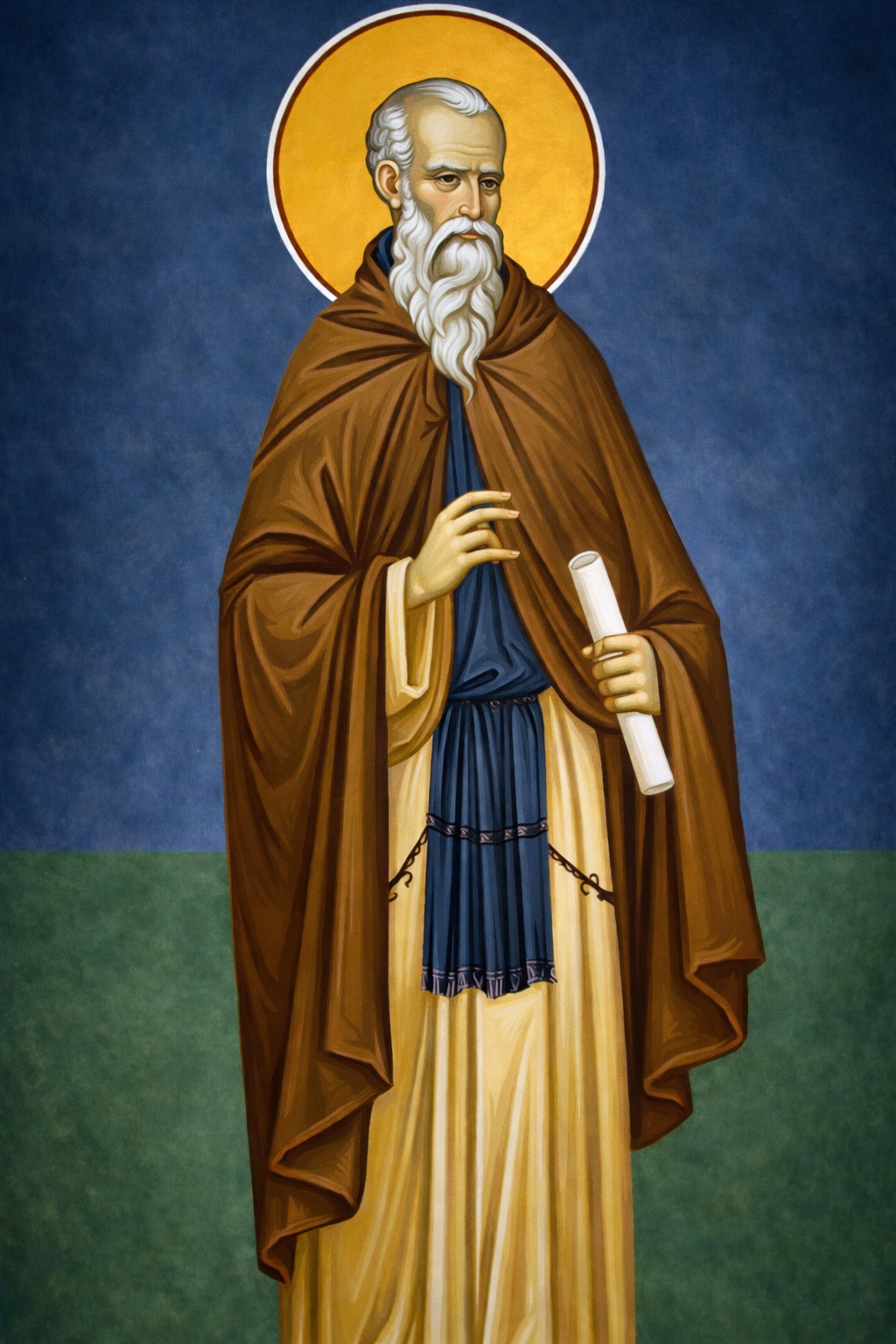
 Image 1 of 1
Saint Luke the Evangelist Prayer Card – Patron for Medical Miracles, Caregiver Strength & Peace During Chronic Illness
-
A Physician in Search of Truth
Saint Luke was born in Antioch of Syria, one of the great intellectual centers of the ancient world. He was highly educated, fluent in Greek, and trained as a physician. Though not Jewish by birth, Luke was drawn toward the God of Israel and deeply interested in spiritual truth.
His life changed when he encountered the preaching of the apostles and eventually became a companion of Saint Paul the Apostle. Paul affectionately called him “the beloved physician.” Luke traveled extensively with Paul through Asia Minor, Greece, and toward Rome, sharing in hardships, hunger, imprisonment, and constant danger.
Luke did not abandon Paul when others fled.
He stayed.
He recorded.
He served.
Historian of Salvation
Unlike the other Evangelists, Luke explicitly tells us that he carefully investigated everything from the beginning, interviewing eyewitnesses and gathering oral testimony. His Gospel is the most detailed historical account of Christ’s early life and ministry.
Through Luke we receive:
The Annunciation
The Visitation
The Magnificat
The Nativity
The Good Samaritan
The Prodigal Son
Christ’s compassion toward women, the poor, and sinners
Luke presents Jesus not merely as Teacher or King, but as Divine Physician, seeking the wounded and restoring the broken.
His second book, Acts of the Apostles, chronicles the birth of the Church: Pentecost, missionary journeys, persecutions, martyrdoms, and miracles. Without Luke, the story of Christianity’s earliest expansion would be largely lost.
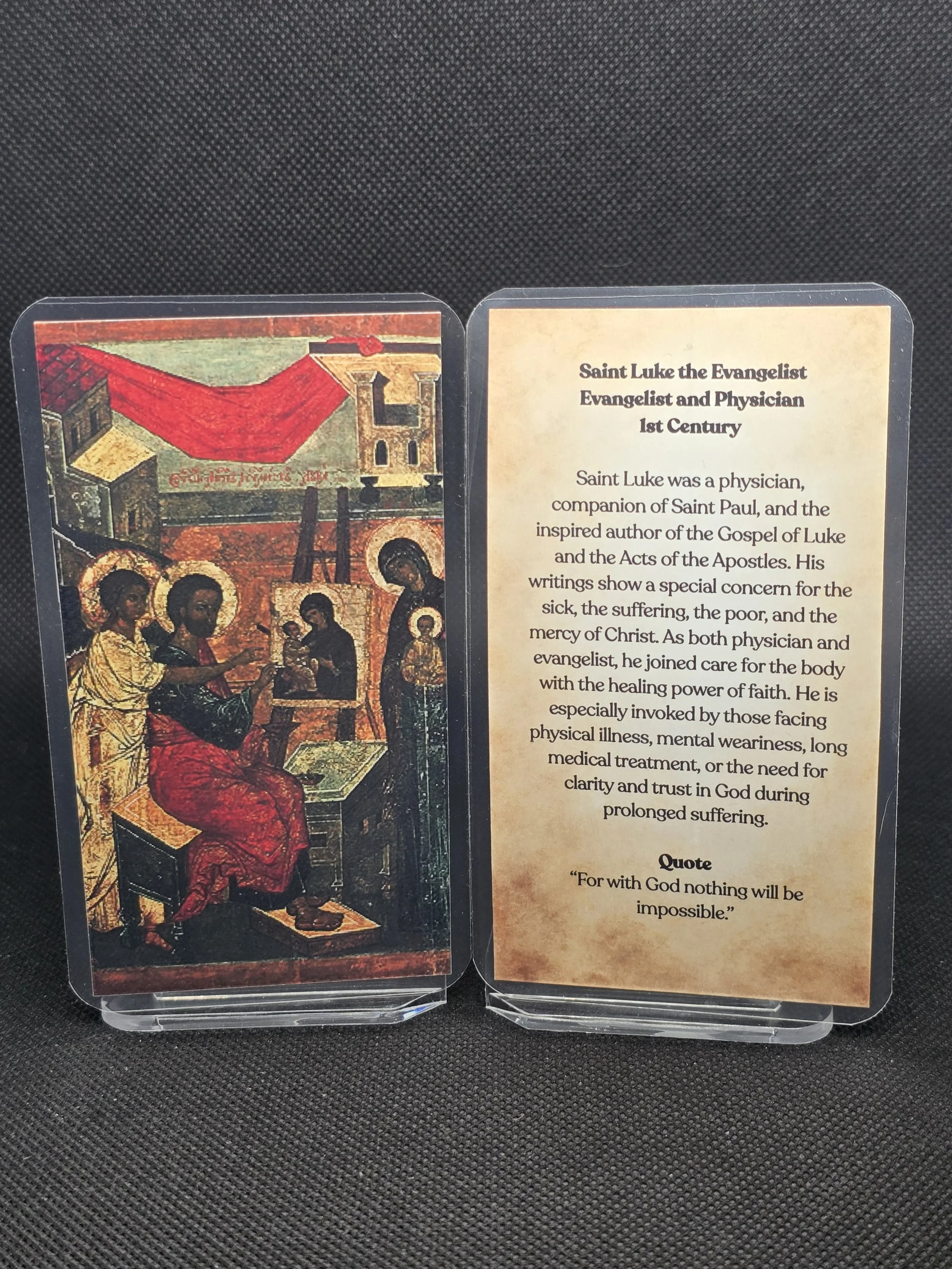
Iconographer of the Mother of God
Ancient Christian tradition holds that Luke painted the first icons of the Virgin Mary from life. These images became prototypes for Marian iconography throughout the Christian world.
Because of this, Saint Luke is revered as the spiritual father of iconography, teaching the Church that sacred beauty is theology in color and form.
He healed bodies with medicine.
He healed souls with Scripture.
He revealed holiness through art.
Faithful Until Death
After Paul’s martyrdom, Luke continued preaching and strengthening Christian communities. He eventually reposed peacefully, having poured out his life for Christ without seeking fame or authority.
Luke never sought prominence.
He sought accuracy.
He sought mercy.
He sought Christ.
His writings remain foundational to Christian faith, shaping how billions understand repentance, compassion, healing, and salvation.
-
Saint Luke the Evangelist is especially invoked by those navigating illness, medical pressure, and major life discernment.
Patron Saint Of:
Physical healing and medical recovery
Medical students, doctors, nurses, and healthcare workers
Clarity during overwhelming life decisions
Artists and iconographers
Writers and historians
Caregivers and therapists
Those preparing for surgery or receiving serious diagnoses
Miracles and Ongoing Intercession
Although Luke’s earthly miracles are not recorded in the same dramatic way as other apostles, his intercessory power has been felt continuously throughout Christian history.
Many faithful testify to:
Unexpected peace entering hospital rooms after praying to Saint Luke
Mental clarity during medical exams or licensing boards
Strength for physicians facing burnout or emotional exhaustion
Improvement during difficult recoveries following sustained prayer
Artistic inspiration for iconographers and sacred artists
Some recount sudden calm replacing panic before surgery. Others speak of receiving wisdom when forced to make complex healthcare decisions for loved ones.
Luke’s miracles tend to arrive quietly:
steady hands
clear minds
renewed courage
restored hopeHe works where science meets surrender.
Saint Luke is often called upon when medicine has limits and faith must carry the rest.
-
Traditional Troparion (Tone 5)
O holy Apostle and Evangelist Luke, intercede with the merciful God, that He may grant forgiveness of sins unto our souls. -
Q: What is Saint Luke the Evangelist known for?
Saint Luke is known as the author of the Gospel of Luke and Acts of the Apostles, as well as a physician and early iconographer. He is especially invoked for physical healing, medical recovery, guidance for healthcare workers, and clarity during major life decisions.
Q: When is Saint Luke’s feast day?
Saint Luke the Evangelist is commemorated on October 18.
Q: Which Christian traditions venerate Saint Luke?
Saint Luke is venerated within the Eastern Orthodox Church and the Catholic Church, honored as one of the Four Evangelists and a foundational witness to Christ.
Q: Why is Saint Luke depicted with a book, an ox, or painting icons?
The Gospel book represents his authorship of sacred Scripture. The ox symbolizes sacrifice and service, reflecting Luke’s emphasis on Christ’s mercy. Icons recall tradition that Luke painted the first images of the Virgin Mary, revealing his role as father of Christian iconography.