 Image 1 of 1
Saint Maria of Paris Prayer Card – For Courage Under Persecution, Radical Charity, Refugees & Serving the Forgotten
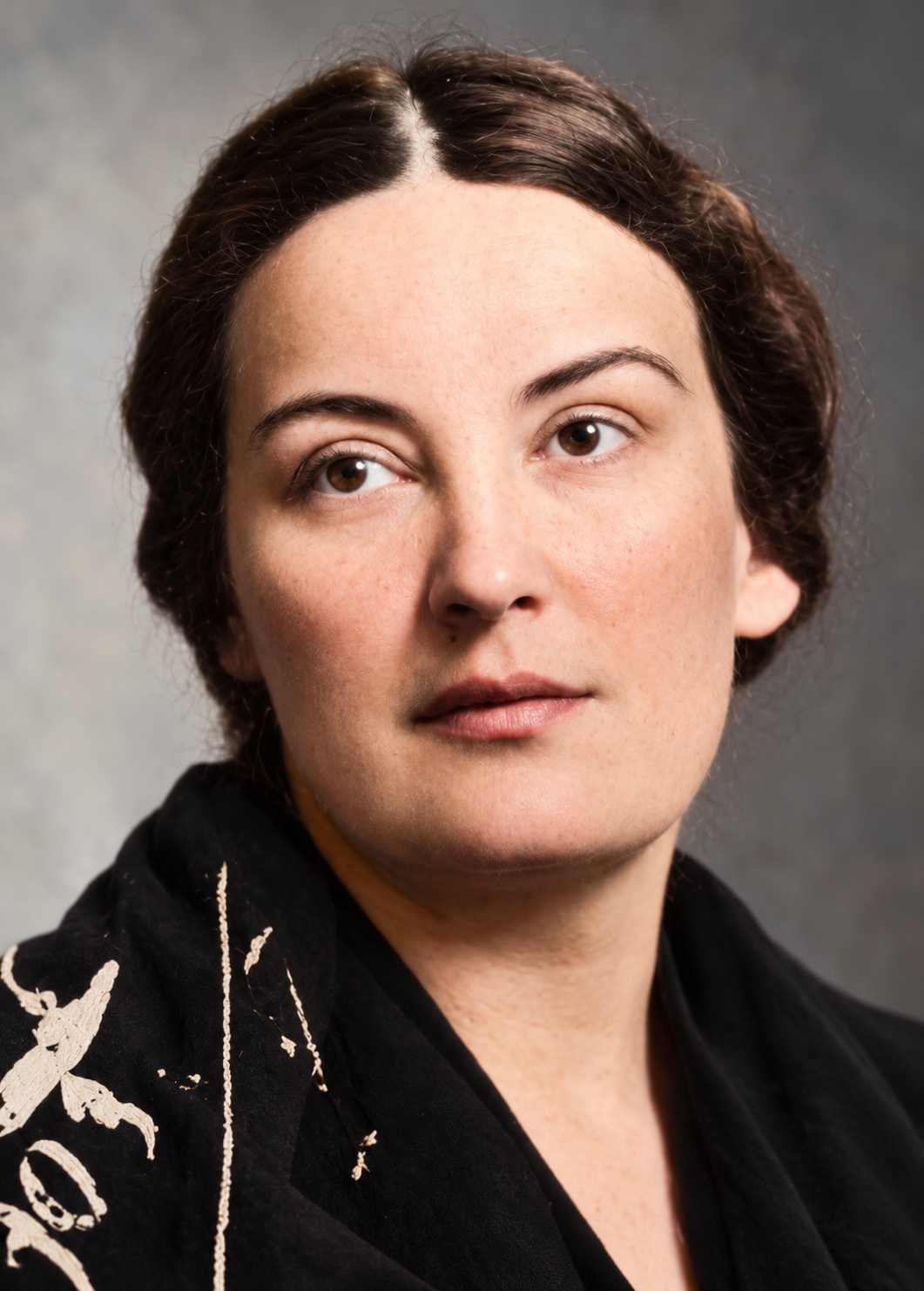
Saint Maria of Paris, also known as Mother Maria Skobtsova, was an Orthodox nun, poet, theologian, mother, social activist, rescuer of Jews, and martyr whose extraordinary life demonstrated what it means to recognize Christ in the suffering person standing directly before us. Rather than withdrawing from the world after becoming a nun, she believed her monastic calling required her to enter more deeply into the pain of others.
In the streets of Paris, Mother Maria fed the hungry, housed refugees, cared for the sick, welcomed alcoholics and people experiencing homelessness, and opened her doors to those who had nowhere else to go. When Nazi persecution placed Jewish families in mortal danger, the same theology that had driven her to feed the poor compelled her to risk her own life helping Jews hide, obtain documents, and escape arrest.
Her life is especially meaningful for those seeking courage under persecution, compassion for the forgotten, strength in caregiving, love for refugees and outsiders, perseverance in difficult service, and the courage to act when another person's suffering demands more than words. Saint Maria's witness reminds Christians that love of God cannot be separated from love of the human person who bears His image.
Each prayer card measures 2.5" x 4.25", is handmade in Austin, Texas, printed on museum-quality photo paper rather than ordinary cardstock, and double laminated for durability. Every card is made to order and prepared prayerfully, with the recipient and their intentions brought before Christ while asking Saint Maria of Paris to intercede for their needs.
THE LIFE & STORY OF SAINT MARIA OF PARIS
Saint Maria was born Elizaveta Pilenko in Riga in 1891, when the city formed part of the Russian Empire. She grew up primarily in southern Russia near the Black Sea in a family shaped by Orthodox Christianity, and from childhood she displayed both an intense spiritual imagination and an unusually strong desire to do something meaningful with her life.
Her father died when she was fourteen, and the loss profoundly affected her faith. Unable to reconcile his death with her belief in God's justice, she turned toward atheism and became increasingly involved in the intellectual, literary, and revolutionary circles of early twentieth-century Russia.
The woman who would eventually become one of Orthodoxy's remarkable modern saints therefore did not travel a simple path from childhood piety to religious life. She knew spiritual doubt, political idealism, disappointment, marriage, motherhood, revolution, exile, grief, and profound personal transformation before becoming Mother Maria.
POET, INTELLECTUAL AND REVOLUTIONARY
As a young woman in Saint Petersburg, Elizaveta became immersed in the city's literary and political world. She wrote poetry and interacted with prominent writers and intellectuals while searching for an answer to the suffering and injustice she saw around her.
She was drawn toward revolutionary politics partly because she wanted more than intellectual discussion. She wanted a life capable of confronting real human suffering, yet she gradually became disappointed by people who could speak endlessly about revolution while remaining personally distant from the sacrifices their ideals demanded.
That dissatisfaction would later become central to her Christian theology. Ideas mattered to Maria only if they became flesh in the way a person actually treated another human being.
REVOLUTION AND ANAPA
The Russian Revolution brought political upheaval directly into her life. In 1918 she became deputy mayor of Anapa, the Black Sea town closely connected with her childhood, during a period in which competing political forces were struggling for control.
Her position placed her in danger, and she was eventually arrested and brought before a tribunal. Her defense centered upon the conviction that her loyalty was not primarily to competing political factions but to people who needed justice and relief from suffering.
The experience contributed to her growing disillusionment with ideological systems that promised to transform humanity while often producing new forms of cruelty. Increasingly, she began returning to Christianity and rediscovering the Church she had rejected after her father's death.
MARRIAGE, MOTHERHOOD AND EXILE
Maria's path included two marriages and motherhood before she entered monastic life. After the Russian Civil War, she and her family joined the enormous movement of Russian refugees driven into exile by revolution and political upheaval.
Their journey eventually brought them to Paris, which had become one of the major centers of Russian Orthodox émigré life. Like thousands of other displaced Russians, they entered a world marked by poverty, homesickness, cultural displacement, unemployment, and the difficulty of rebuilding a life far from home.
Maria's own suffering increasingly connected her with the suffering of other refugees. Christianity was becoming for her not an escape from the broken world but the place from which she believed the broken world had to be loved.
THE DEATH OF HER DAUGHTER
One of the deepest turning points in Maria's life came through the death of her young daughter Anastasia. Watching her child suffer and die brought Maria into an encounter with grief that permanently changed the direction of her life.
Rather than driving her away from God as her father's death once had, this tragedy deepened her conviction that she was being called to belong more completely to Christ and to people who suffered. She later understood motherhood itself in an expanded spiritual sense, believing that her heart now had to become open to the suffering of countless people rather than only those within her own household.
Her future monastic vocation would grow from this understanding. She was not seeking isolation from human pain but a way of giving herself to it more completely.
BECOMING MOTHER MARIA
In 1932, Elizaveta was tonsured as an Orthodox nun and received the name Maria in honor of Saint Mary of Egypt. Her monastic vocation was unusual because she did not understand herself as being called to a traditional enclosed monastery.
Instead, Mother Maria believed that the streets, shelters, kitchens, hospitals, refugee neighborhoods, and homes of suffering people could become the territory of her monastic obedience. Her bishop blessed this unusual form of service, and Maria began developing what would become a radical expression of Orthodox Christian hospitality.
She sometimes described her way as an asceticism of the open door. Instead of protecting her spiritual life by keeping difficult people at a distance, she deliberately allowed those people into her life.
THE OPEN DOOR
Mother Maria rented houses in Paris where people experiencing homelessness, poverty, illness, and displacement could receive food and shelter. Her doors attracted Russian refugees, unemployed workers, alcoholics, people with mental illness, lonely elderly people, and others who often had nowhere else to turn.
The work was frequently chaotic. There was never enough money, never enough space, and rarely enough time, yet Maria believed that Christian love could not wait for ideal conditions before responding to suffering.
She begged for food, searched markets for inexpensive provisions, cooked, cleaned, traveled through poor neighborhoods, located people in hospitals and mental institutions, wrote articles, organized assistance, and listened to people whose lives had collapsed. Her monasticism was lived in continual contact with human need.
ORTHODOX ACTION
In 1935, Mother Maria helped establish Orthodox Action, an organization intended to unite Orthodox spiritual life with practical Christian service. It brought together clergy and laypeople who believed the Church had a responsibility to respond to the social suffering surrounding the Russian émigré community.
Maria rejected the idea that Christianity could be reduced either to political activism without prayer or to religious devotion without concern for suffering neighbors. She believed both distortions separated things Christ had joined together.
For her, liturgy and charity belonged to the same Christian life. The Christ encountered in the Eucharist was the same Christ encountered in the hungry, sick, imprisoned, refugee, and rejected person.
“EACH PERSON IS THE VERY ICON OF GOD”
One of Mother Maria's most powerful teachings was her insistence that “each person is the very icon of God incarnate in the world.” This conviction explains both her theology and her extraordinary behavior.
An icon is treated with reverence because it makes someone holy present to the believer. Maria believed Christians therefore had to learn to recognize something sacred in the human person standing before them, particularly when that person's appearance, poverty, addiction, illness, behavior, or circumstances made them difficult to love.
Her service to people on the margins was not simply humanitarianism added to her Christianity. She believed serving another human being could become an encounter with Christ Himself.
CHRIST IN THE HUNGRY AND HOMELESS
Mother Maria repeatedly returned to Christ's words in Matthew 25, where He identifies Himself with the hungry, thirsty, stranger, naked, sick, and imprisoned. She took these words with startling literalness.
Her famous reflection on the Last Judgment explains that she did not expect Christ to ask primarily about the quantity of her ascetic exercises. She believed the decisive question would concern whether she had fed the hungry, clothed the naked, visited the sick, and entered the suffering of prisoners.
This was not an argument against prayer, fasting, or traditional Orthodox asceticism. Maria practiced them herself, but she believed asceticism that left the heart indifferent to another person's suffering had failed to reach its purpose.
A DIFFERENT KIND OF ASCETICISM
Mother Maria sometimes challenged conventional expectations about what a nun should look like or how strictly monastic life should be structured. Her clothing could be untidy, her schedule was unpredictable, and the demands of poor people regularly disrupted plans.
Yet this disorder concealed a severe form of self-denial. Maria surrendered privacy, comfort, money, sleep, personal space, emotional security, and eventually her physical safety because other people needed her.
Her asceticism was therefore not primarily separation from people but separation from the instinct to protect herself from their demands. The open door itself became part of her spiritual discipline.
THE NAZI OCCUPATION OF PARIS
When Nazi Germany occupied France, Mother Maria's ministry entered an entirely new stage. Anti-Jewish laws transformed Jewish neighbors into targets of systematic persecution, arrest, imprisonment, and deportation.
Mother Maria and the people around her understood that ordinary charity was no longer enough. Jewish people arriving at their doors were not merely hungry or homeless. Their lives were in danger.
The house on rue de Lourmel became increasingly involved in hiding people, arranging shelter, obtaining food, securing documents, and helping Jews escape to safer areas. Mother Maria knew that this work placed her own life and the lives of her collaborators in danger.
HELPING JEWS ESCAPE PERSECUTION
Father Dimitri Klepinin, the Orthodox priest working closely with Mother Maria, issued baptismal certificates to Jews who needed Christian identities in order to survive. The records were entered into parish books so that the documents could withstand scrutiny if authorities attempted to verify them.
Mother Maria's network also helped locate hiding places, obtain forged documents, and establish routes toward areas where escape might still be possible. Her home became so filled with endangered people that the danger of discovery became increasingly obvious.
She nevertheless continued. For Maria, the question was not whether the person asking for help belonged to the Orthodox Church or even to Christianity. A human being whose life was threatened stood before her, and that was enough.
THE VÉLODROME D'HIVER ROUNDUP
One of the most dramatic episodes of her wartime ministry occurred during the massive roundup of Jews in Paris in July 1942. Thousands of men, women, and children were confined inside the Vélodrome d'Hiver under horrific conditions before deportation.
Mother Maria was able to enter the stadium and spent days among the prisoners, bringing food, water, consolation, and whatever assistance she could provide. Accounts preserved by the Orthodox Church describe her participation in rescuing children from the stadium with the assistance of garbage collectors who concealed them in trash bins.
The scene reveals how far her theology of loving the neighbor had developed. The nun who had once opened a soup kitchen now found herself entering a place of mass detention and risking arrest to help Jewish children escape Nazi custody.
RIGHTEOUS AMONG THE NATIONS
Mother Maria's rescue work was later formally recognized by Yad Vashem, which honored her as one of the Righteous Among the Nations. This title recognizes non-Jews who risked their lives or freedom to rescue Jews during the Holocaust without seeking material reward.
The recognition places Mother Maria's Christian witness within the documented history of Holocaust rescue. Her assistance to Jews was not a symbolic association created after her death but part of the dangerous resistance work for which she and her companions were eventually arrested.
Her friend and collaborator Father Dimitri Klepinin was likewise recognized for his role in helping Jews survive Nazi persecution.
ARRESTED BY THE GESTAPO
In February 1943, the Gestapo discovered evidence connecting Mother Maria's household with false documents being prepared for Jews. Her son Yuri was arrested, and Father Dimitri was subsequently taken into custody after presenting himself for interrogation.
Mother Maria was arrested shortly afterward. The network of Christian charity centered around her Paris house had finally encountered the machinery of the Nazi state directly.
Her son Yuri and Father Dimitri would both die in the concentration camp system. Mother Maria was eventually deported to Ravensbrück, the notorious concentration camp established primarily for women.
RAVENSBRÜCK
Ravensbrück exposed Maria to suffering on a scale even greater than what she had encountered in Paris. Hunger, disease, forced labor, brutality, fear, overcrowding, and death shaped daily life within the camp.
Yet survivors remembered Mother Maria continuing the same vocation she had lived before her arrest. She comforted women who were collapsing emotionally, discussed Scripture and theology, encouraged prayer, shared what she possessed, and tried to preserve hope in an environment constructed to destroy it.
The surroundings had changed completely, but her understanding of Christianity had not. The person suffering beside her remained an icon of God.
FAITH INSIDE THE CONCENTRATION CAMP
Mother Maria's usefulness could no longer be measured by institutions, kitchens, shelters, or rescue networks. Ravensbrück stripped away almost everything she had previously used in her ministry.
What remained was her presence.
She could listen, speak, pray, comfort, encourage, and refuse to allow the concentration camp to dictate the meaning of another person's life. Even there, she attempted to create small spaces in which human dignity and spiritual life could survive.
Her final years therefore became the ultimate test of the theology she had preached in Paris. Love of neighbor had to remain possible even when virtually every ordinary resource for helping the neighbor had been taken away.
HER MARTYRDOM
On March 31, 1945, only weeks before Ravensbrück was liberated, Mother Maria was killed in the gas chamber. She was fifty-three years old.
A longstanding account from survivors says that she voluntarily took the place of another prisoner who had been selected for death. Other surviving accounts do not confirm exactly how she came to be among those sent to the gas chamber, so the precise circumstances cannot be stated with certainty.
What is certain is that the woman who had spent years giving herself for the lives of others died as a prisoner of the Nazi concentration camp system. Her death completed a life increasingly shaped by her conviction that Christian love means entering another person's suffering rather than observing it from a safe distance.
“AT THE LAST JUDGMENT”
One of Mother Maria's best-known teachings summarizes the spirituality behind her entire life. She wrote that at the Last Judgment she did not expect to be asked primarily how successful she had been in her ascetic exercises or how many prostrations she had performed.
She believed she would instead be asked whether she had fed the hungry, clothed the naked, visited the sick, and entered the prisoner's suffering. Her language deliberately echoes Christ's teaching in Matthew 25.
Those words became prophetic when Maria herself entered a prison and eventually a concentration camp. The woman who had visited prisoners became one of them, and the woman who had spoken about identifying Christ in suffering humanity continued serving suffering people from inside Ravensbrück.
“OUR NEIGHBOR'S CROSS”
Mother Maria also wrote that the cross carried by another person should pierce our own soul. She believed Christian love involved more than feeling sympathy at a distance.
To love another person means allowing their suffering to matter enough that it changes what we are willing to do.
Her own life followed that principle with unusual consistency. The suffering of Russian refugees changed the way she lived in Paris, the suffering of homeless people changed the use of her home, the suffering of Jews changed the risks she was willing to take, and the suffering of fellow prisoners shaped her final years.
FOR REFUGEES AND DISPLACED PEOPLE
Mother Maria understood displacement personally. Revolution and civil war forced her family from Russia, and she spent much of her adult life among refugees attempting to rebuild their lives in foreign countries.
Her ministry therefore makes her especially meaningful for refugees, immigrants, displaced families, and those assisting them. She understood that losing a homeland involves more than changing geographical location.
People can lose language, community, status, employment, property, relationships, and the sense that they know where they belong. Mother Maria responded by attempting to create places where people could again encounter hospitality and human dignity.
FOR CAREGIVERS AND PEOPLE WHO SERVE OTHERS
Saint Maria of Paris is a powerful intercessor and example for people whose lives involve continual service to others. Her ministry demanded enormous physical and emotional energy, and the people arriving at her door often brought complex needs that could not be resolved quickly.
She therefore speaks particularly well to caregivers, clergy, nurses, social workers, volunteers, foster families, people serving the homeless, and anyone who has discovered that loving another person can become exhausting.
Her example does not romanticize service. It shows that charity can involve inconvenience, fatigue, interrupted plans, difficult personalities, uncertainty, and sacrifice while still becoming a place of profound communion with Christ.
FOR COURAGE UNDER PERSECUTION
Mother Maria's courage during the Nazi occupation was not sudden heroism disconnected from the rest of her life. Years of opening her door to suffering people had already trained her to place another person's needs ahead of her own comfort.
When helping a neighbor became illegal and dangerous, she continued doing what she had already learned to do.
Her prayer card can therefore be especially meaningful for Christians seeking courage when faithfulness carries a social, professional, political, or personal cost. Her life demonstrates that courage is often formed through many smaller acts of fidelity before the moment of dramatic decision arrives.
FOR THOSE WHO HAVE LOST FAITH
Mother Maria's story also carries unusual significance for people who have experienced doubt or walked away from Christianity. After her father's death, she rejected belief in God and spent years moving through political and intellectual circles far removed from conventional religious life.
Her return to Christianity did not erase those years. Instead, the questions she had asked about suffering, injustice, and human dignity became part of the Christianity she later lived.
She therefore provides a powerful witness that a period of unbelief does not necessarily represent the end of a person's spiritual story. God may use even rebellion, grief, disappointment, and searching within a much longer journey toward Him.
FOR GRIEF
The deaths of people she loved profoundly shaped Mother Maria. Her father's death contributed to her rejection of faith, while the later death of her daughter became part of her return toward a deeper Christian vocation.
Her life does not offer a simplistic answer to grief. Loss changed her, wounded her, confused her, and redirected her life.
For someone mourning a child, parent, spouse, friend, homeland, or former life, Saint Maria offers the witness of a woman who knew grief from the inside and eventually allowed suffering to enlarge rather than close her heart.
HER WRITINGS
Mother Maria was not only an activist and rescuer. She was also a serious poet, essayist, theologian, artist, and spiritual writer whose works continue to be read within Orthodox Christianity.
Her writings explore the relationship between prayer and service, the meaning of Christian asceticism, the Mother of God, monasticism, freedom, love of neighbor, the Church, and the mystery of encountering Christ in another human being.
This intellectual dimension is important because her charitable work did not emerge merely from instinct. She developed a deeply theological understanding of why Christians must serve others, and then she attempted to live the consequences of what she believed.
CANONIZATION
In 2004, the Holy Synod of the Ecumenical Patriarchate formally recognized Mother Maria Skobtsova as a saint together with several of her companions connected with the Russian Orthodox community in France.
Among them were her son Yuri Skobtsov and Father Dimitri Klepinin, who had shared in the dangerous work of helping Jews during the Nazi occupation and who also died within the concentration camp system.
Her canonization recognized not merely a humanitarian hero but a Christian whose service, sacrifice, prayer, theological vision, and martyrdom had become a witness to holiness.
THE QUOTE
One of the most powerful lines associated with Saint Maria captures the theological foundation behind her ministry:
“Each person is the very icon of God incarnate in the world.”
This statement explains why she could not divide spiritual life from human need. If another person bears the image of God, then feeding the hungry, receiving the stranger, caring for the sick, protecting the persecuted, and visiting prisoners are not distractions from Christianity.
They are places where Christianity is tested.
WHO SHOULD RECEIVE A SAINT MARIA OF PARIS PRAYER CARD?
A Saint Maria of Paris prayer card can be especially meaningful for someone working with refugees, immigrants, homeless people, prisoners, the sick, or people experiencing poverty. Her example is equally powerful for caregivers and volunteers who need perseverance when service becomes tiring or discouraging.
Her card can also be given to someone facing persecution, moral pressure, grief, spiritual doubt, or the challenge of acting courageously when another person is being mistreated. For anyone asking how Christian faith should respond to human suffering, Mother Maria offers one of the twentieth century's most demanding and beautiful answers.
FAQ
Who was Saint Maria of Paris? Saint Maria of Paris, also called Mother Maria Skobtsova, was a Russian Orthodox nun, poet, theologian, social worker, rescuer of Jews, and martyr who lived from 1891 to 1945. She spent much of her later life in Paris serving refugees, homeless people, the sick, and others in need before being arrested by the Nazis and sent to Ravensbrück.
What was Saint Maria of Paris's birth name? She was born Elizaveta Pilenko. Through her marriages she was also known by other surnames, including Kuzmina-Karavaeva and Skobtsova, before becoming Mother Maria in Orthodox monastic life.
Why is she called Maria Skobtsova? Skobtsova was the surname from her second marriage. When she became a nun, she received the religious name Maria, after Saint Mary of Egypt, and became widely known as Mother Maria Skobtsova.
Was Saint Maria of Paris married? Yes. Before entering monastic life she had been married twice and was a mother. Her unusual path to monasticism forms an important part of her story and distinguishes her from saints whose religious vocation began in youth.
Was Saint Maria of Paris a mother? Yes. She had children before becoming a nun, and the death of her daughter Anastasia profoundly influenced her spiritual development. Her experience of motherhood later expanded into a powerful sense of responsibility toward suffering people around her.
Did Saint Maria really help Jews during the Holocaust? Yes. Mother Maria, Father Dimitri Klepinin, her son Yuri, and their collaborators helped Jews through shelter, food, false documents, escape arrangements, and other forms of assistance during the Nazi occupation of France.
Did she rescue children from the Vélodrome d'Hiver? Orthodox accounts of her life preserve the story that she worked with garbage collectors to smuggle children out of the stadium in trash bins during the 1942 roundup. She also spent several days inside the detention site providing food, water, and consolation to prisoners.
Was Saint Maria of Paris recognized by Yad Vashem? Yes. Yad Vashem recognized Elizaveta Skobtsova, Mother Maria, as one of the Righteous Among the Nations for risking herself to rescue Jews during the Holocaust.
Why was Saint Maria arrested? The Gestapo discovered evidence connecting her community with efforts to assist Jews, including false baptismal documentation. Mother Maria, her son Yuri, Father Dimitri, and others connected with the work were arrested.
Where did Saint Maria die? She died at Ravensbrück concentration camp in Germany on March 31, 1945. She was killed in the gas chamber shortly before the end of the war in Europe.
Did Saint Maria take another woman's place in the gas chamber? A longstanding survivor tradition says that she voluntarily took the place of another prisoner selected for death. Other accounts do not establish the exact circumstances, so this detail is best understood as a respected tradition rather than something that can be historically proven with certainty.
Why is Saint Maria associated with the poor and homeless? Her Paris ministry centered heavily upon feeding, housing, and helping impoverished Russian refugees and other people who had nowhere else to go. She believed that the Christian encounter with a suffering neighbor was an encounter with Christ.
What did Saint Maria teach about charity? She taught that every human person bears the image of God and that Christian love must become concrete. Feeding the hungry, receiving strangers, caring for the sick, and entering another person's suffering were central to her understanding of the Gospel.
Was Saint Maria a theologian? Yes. In addition to her charitable work, she wrote essays, poetry, and theological reflections dealing with Christian asceticism, prayer, monasticism, the Church, the Mother of God, and love of neighbor. Collections of her writings remain available in English.
When was Saint Maria of Paris canonized? The Ecumenical Patriarchate formally recognized Mother Maria and several of her companions as saints in 2004. Their glorification took place in Paris within the Russian Orthodox tradition of Western Europe.
Who would this prayer card make a meaningful gift for? It is especially fitting for caregivers, social workers, volunteers, people serving refugees or the homeless, Christians facing persecution, Holocaust educators, those grieving, people returning to faith after doubt, and anyone seeking courage to love another person sacrificially.
THE MAIN MESSAGE OF SAINT MARIA OF PARIS
Saint Maria of Paris refused to allow Christianity to remain safely contained inside religious language. She believed that the person standing hungry at the door, the refugee without a home, the prisoner without freedom, the Jew hunted by the Nazis, and the frightened woman inside a concentration camp all presented the Christian with the same fundamental question: will you recognize the image of God in this person?
Her life shows where that conviction can lead when taken seriously. It led from poetry and political searching to prayer, from prayer to an open house in Paris, from the open house to rescue work during the Holocaust, and from rescue work to arrest and martyrdom.
For anyone tempted to separate love of God from love of neighbor, Saint Maria offers a demanding witness. She reminds us that holiness is not measured only by what happens when we close the door and pray, but also by what happens when someone suffering knocks on that door and we choose to open it.