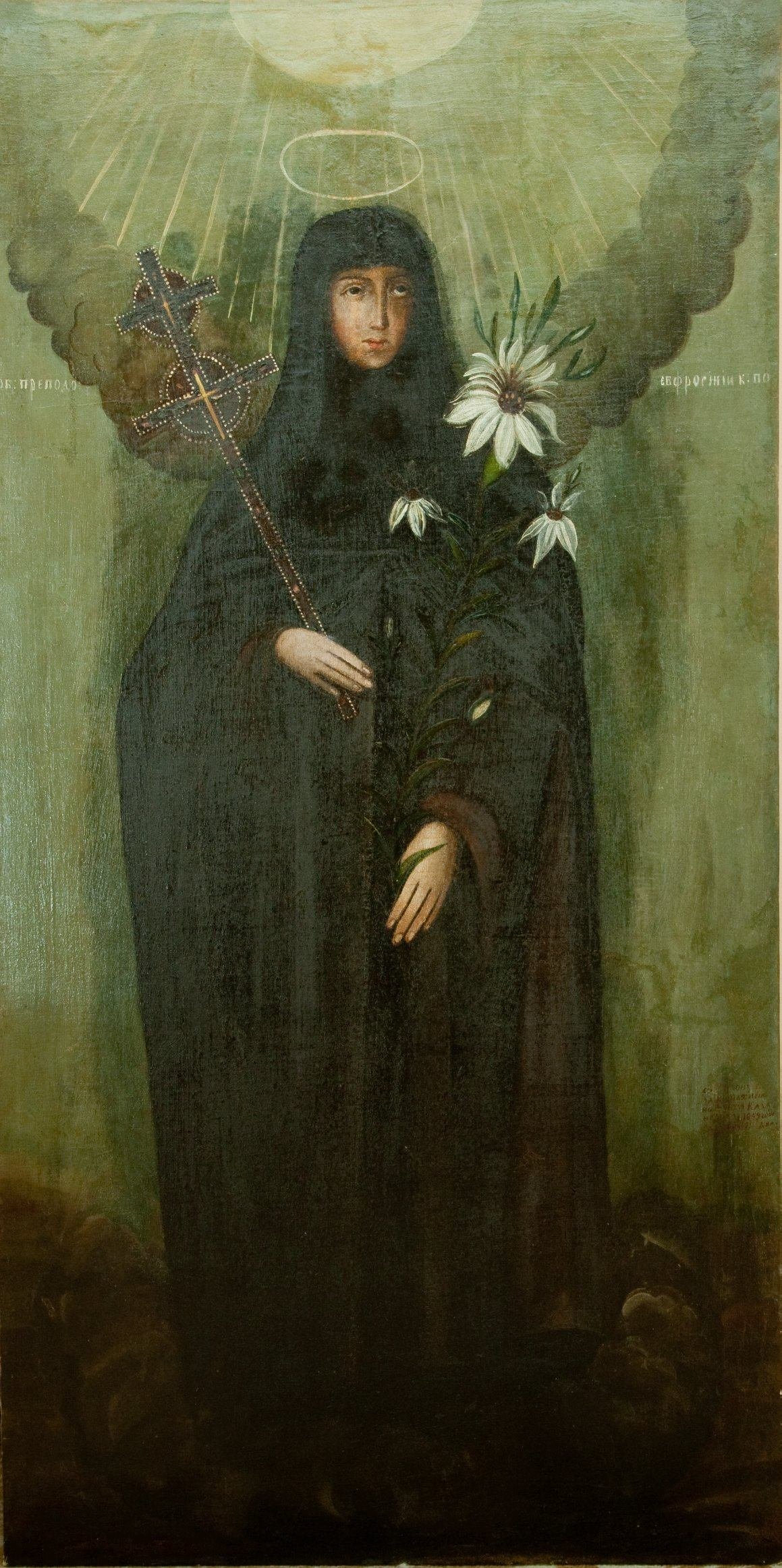
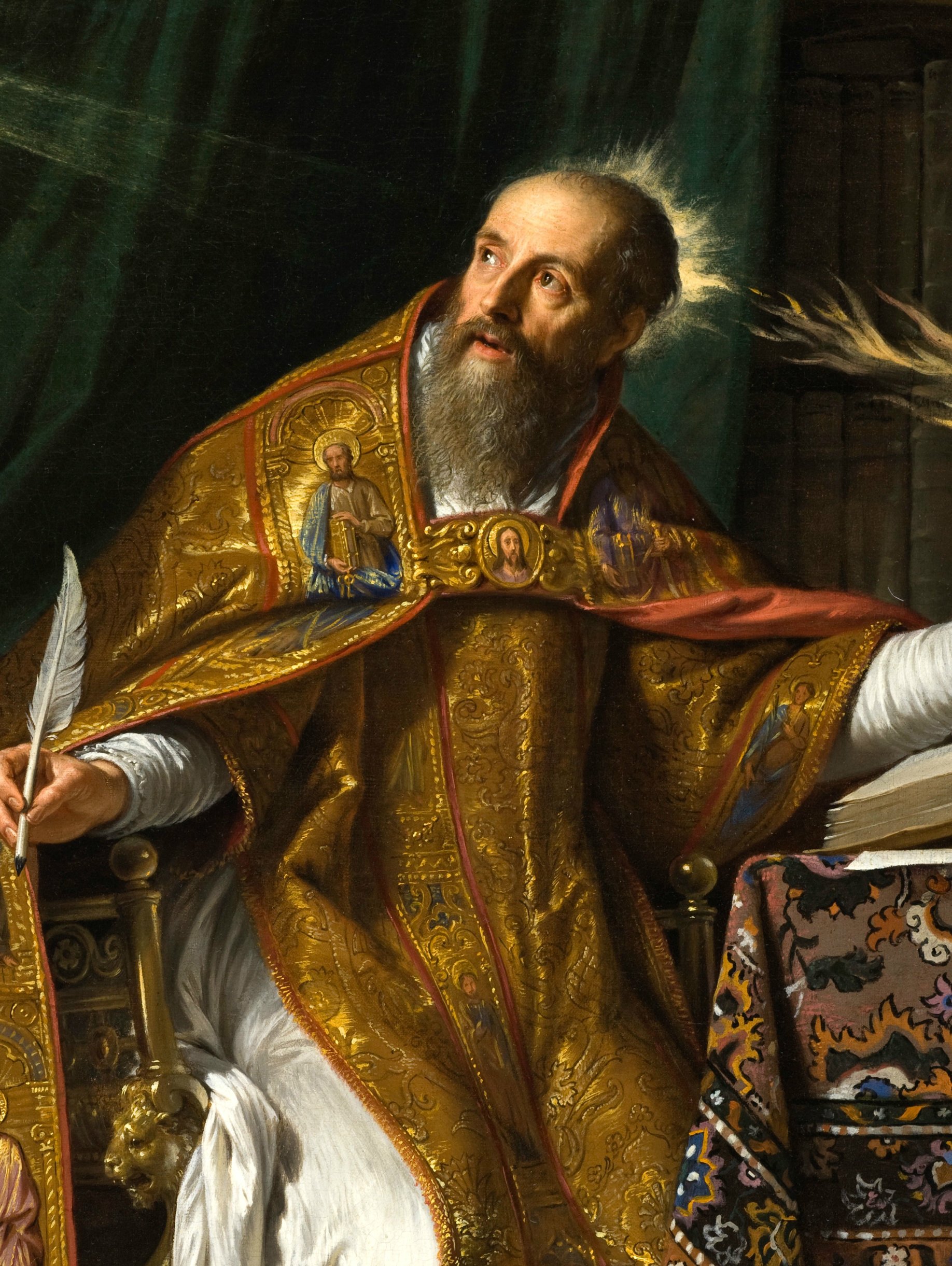
 Image 1 of 1
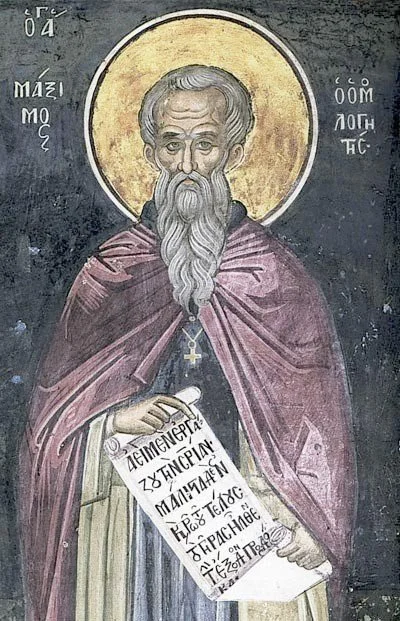
Saint Maximus the Confessor Prayer Card - For Courage, Theology, Discernment & Defending the Faith
Saint Maximus the Confessor was one of the greatest theologians of the seventh century and one of Christianity's most extraordinary witnesses to the full humanity and divinity of Jesus Christ. A highly educated monk who had moved within the highest levels of Byzantine society, Maximus ultimately stood against emperors, patriarchs, political pressure, imprisonment, exile, and torture because he refused to accept a teaching that diminished Christ's genuine human will. Imperial authorities eventually cut out his tongue and cut off his right hand in an attempt to prevent him from teaching or writing, yet the doctrine he defended was later solemnly vindicated by the Sixth Ecumenical Council.
Saint Maximus is especially meaningful for theologians, seminarians, writers, teachers, apologists, Christians facing religious pressure, people who have been punished for speaking truth, those struggling to discern God's will, and anyone who needs courage to remain faithful when compromise would be easier. His life is particularly powerful because the opposition he faced did not come only from obvious enemies of Christianity. He was pressured by Christian emperors and ecclesiastical leaders who believed theological compromise might restore political and religious unity, yet Maximus believed peace purchased by changing the truth about Christ was not genuine Christian peace.
His theology also speaks directly to Christians struggling with human freedom and surrender to God. Maximus defended the truth that Jesus possessed a complete human will because He possessed complete human nature. Christ's human will was not destroyed by His divinity but freely and perfectly united with the divine will, and Pope Benedict XVI highlighted Gethsemane as one of the clearest places where Maximus's theology becomes spiritually concrete. Christian freedom, in this understanding, reaches fulfillment not by separating ourselves from God but by freely saying yes to Him.
Saint Maximus is therefore a particularly meaningful intercessor during difficult discernment. A Christian may sincerely want God's will while simultaneously experiencing fear, grief, exhaustion, or a powerful desire for another outcome, and Maximus's theology does not require pretending those human movements do not exist. Christ Himself possessed a true human will, and in Gethsemane the human desire to avoid suffering was freely brought into perfect obedience to the Father.
He is equally important for Christians who have been silenced, censored, falsely accused, imprisoned, exiled, or punished for refusing to change what they believe. Maximus's persecutors attacked precisely the physical abilities through which he defended the faith, cutting out the tongue with which he taught and removing the right hand with which he wrote. His story therefore carries particular devotional meaning for writers, speakers, people with speech disabilities, amputees, and anyone who knows what it feels like to have a valued ability taken away, although these should be understood as natural devotional connections rather than formal universal patronages.
Saint Maximus also belongs to the shared inheritance of Orthodox and Catholic Christianity. He lived and died centuries before the final separation between Rome and Constantinople, worked closely with Pope Saint Martin I against Monothelitism, participated in the Lateran Council of 649, and is honored by both Eastern Orthodox and Catholic Christians. Pope Benedict XVI called him one of the great Fathers of the Eastern Church and emphasized that his title “Confessor” came from his courageous suffering for the integrity of faith in Jesus Christ as true God and true man.
This prayer card is especially fitting for theologians, seminarians, priests, deacons, monks, Christian writers, teachers, professors, apologists, people discerning God's will, Christians experiencing pressure to compromise their beliefs, and those enduring unjust accusation or exclusion. It can also be particularly meaningful for someone recovering from amputation, loss of speech, neurological impairment, or another physical limitation because Saint Maximus's earthly ability to speak and write was violently taken from him without taking away the truth for which he suffered.
Each card is handmade in Austin, TX and created to order. We do not keep stock, because every prayer card is treated as a unique devotional offering. They are printed on museum-quality photo paper, not cardstock, and every card is made slowly during prayer with intentional reverence for the saint and for the person who will receive it. Names are lifted before Christ, intentions are held carefully, and each piece is handled multiple times in prayerful silence, asking God for mercy and asking Saint Maximus to intercede for the soul it is being made for. This is devotional craftsmanship shaped with patience, care, and spiritual responsibility because every soul and every prayer matters.
THE LIFE & STORY
The details of Saint Maximus's earliest life require some historical care because two traditions concerning his birthplace survive. The traditional Byzantine Life used by the Orthodox Church in America says that he was born in Constantinople around 580 into a devout Christian family, received an exceptional education in philosophy, grammar, rhetoric, theology, and classical literature, and later entered imperial service. Pope Benedict XVI, drawing on another scholarly tradition, described Maximus as having been born in Palestine around 580 and formed early in monastic and scriptural study. The disagreement concerns his early biography rather than the theology, writings, persecution, and later career for which he is securely remembered.
According to the traditional Constantinopolitan account, Maximus rose to the position of first imperial secretary and chief counselor to Emperor Heraclius. Such a position placed him extraordinarily close to the political center of the Byzantine Empire and would have offered prestige, security, influence, and access to the most powerful people of his age.
Yet Maximus ultimately abandoned imperial service for monastic life. The OCA historical account places his entry into monasticism around 614, while the traditional Life associates him especially with the monastery at Chrysopolis, across the Bosphorus from Constantinople, where his wisdom and humility eventually led the monks to choose him as their igumen.
His withdrawal from court did not mean withdrawal from the theological crises shaking the Christian world. The seventh-century Byzantine Empire was trying desperately to hold together populations divided by the controversies following the Council of Chalcedon, while military threats and political fragmentation made ecclesiastical division appear dangerous to the stability of the state. In that environment, theological formulas promising compromise could appear politically attractive even when they created serious problems for Christian doctrine.
The controversy that came to dominate Maximus's life concerned Monothelitism, the teaching that although Christ possessed two natures, divine and human, He possessed only one will. The proposal was partly intended to bridge divisions that had followed earlier Christological controversies, but Maximus recognized that the attempted compromise damaged something essential in the mystery of the Incarnation.
If Jesus Christ did not possess a genuine human will, then He did not possess complete human nature. A human being without a human capacity to will would be incomplete, and therefore the humanity assumed by the Son of God would not truly be the whole humanity that needed healing and salvation. Benedict XVI summarized Maximus's reasoning by emphasizing that Christ either became truly human or He did not, and if He became truly human, then He possessed a genuine human will.
This was not philosophical hair-splitting for Saint Maximus. The entire doctrine of salvation was at stake because Christianity teaches that the eternal Son truly assumed our humanity in order to heal and redeem it. The OCA's historical explanation summarizes the principle through the patristic conviction that what Christ has not assumed cannot be healed, meaning Christ's saving Incarnation necessarily includes the human will itself.
The controversy became more severe in 638, when Emperor Heraclius and Patriarch Sergius promoted the Ekthesis, an imperial statement requiring acceptance of one will in Christ. Maximus opposed the teaching and began working with bishops, clergy, monks, government officials, and ordinary Christians to defend the doctrine of Christ's complete humanity.
Political upheaval and invasion eventually pushed Maximus westward. He spent significant periods in North Africa, especially around Carthage, where his theological influence became increasingly important. There he encountered Pyrrhus, the former Patriarch of Constantinople and a defender of Monothelitism, and the two engaged in a lengthy public theological debate.
The debate ended remarkably. Pyrrhus acknowledged that the Monothelite position was mistaken and temporarily accepted the teaching defended by Maximus, after which the two traveled to Rome. The episode demonstrates why Maximus became so influential because he could combine deep ascetic spirituality with formidable intellectual ability and patient theological argument.
The imperial government nevertheless continued trying to suppress the controversy. In 648, Emperor Constans II issued the Typos, which attempted to end the dispute by forbidding further discussion about whether Christ possessed one will or two.
To modern ears, forbidding both sides from arguing might sound like a reasonable attempt at peace. Maximus believed otherwise because remaining silent about a fundamental truth concerning Christ would effectively allow error to become protected by political authority.
He therefore supported bringing the matter before a council in Rome under Pope Saint Martin I. The Lateran Council of 649, attended by Western bishops and representatives from the Christian East, condemned both Monothelitism and the imperial attempt to silence discussion of the issue. Saint Maximus played a major role in the theological preparation and defense surrounding the council.
The emperor responded with force.
Saint Martin was arrested, taken to Constantinople, humiliated, imprisoned, and eventually exiled, where he died in 655 after severe suffering. Maximus was also arrested and brought before imperial authorities, beginning the final and most painful period of his life.
WHY CHRIST MUST HAVE TWO WILLS
Saint Maximus is most famous for defending the doctrine that Jesus Christ possesses two natural wills and two natural energies, corresponding to His divine and human natures, while remaining one divine Person. This teaching can initially sound abstract, but it is deeply connected with the Gospel itself and with the salvation of every human person.
Christ is not half God and half man. He is fully divine and fully human, and neither nature disappears into the other. His divine nature possesses the divine will proper to the Father, Son, and Holy Spirit, while His human nature possesses the genuine human capacity to will that belongs to human nature.
Two wills do not mean two competing persons inside Christ. Saint Maximus did not teach a divided Savior fighting internally between separate personalities because the subject acting through both natures is the one Person of the eternal Son.
The human will of Christ is completely human without being sinful. Sin is not part of what makes a human will human, so Christ can possess a genuine human will while that will remains perfectly ordered toward God.
This becomes especially visible in Gethsemane. Christ's prayer concerning the cup reveals a genuine human movement in the face of suffering and death, yet that human will freely conforms itself to the Father's saving will. Benedict XVI emphasized that this moment shows human freedom reaching fulfillment in a freely offered yes to God rather than in rebellion against Him.
The teaching therefore matters to ordinary Christian life. Salvation does not mean God destroying our humanity so that only His will remains, because grace heals and perfects human freedom rather than annihilating it.
A Christian gradually learns to say yes to God freely.
That is why Saint Maximus's theology is so important for discernment.
DISCERNING GOD'S WILL
Many Christians ask how they can know God's will, especially when the choice involves suffering, uncertainty, sacrifice, or two possibilities that both appear reasonable. Saint Maximus does not provide a mechanical technique for discovering answers, but his theology provides an extraordinarily important foundation for understanding what obedience actually means.
God's will is not fulfilled by turning a human person into an empty instrument without desires, intelligence, freedom, or personality. Christ's humanity demonstrates instead that genuine human freedom reaches perfection when it freely becomes aligned with God.
This distinction can relieve a common spiritual anxiety. Feeling afraid of a possible vocation does not automatically mean the vocation is wrong, while wanting something personally does not automatically mean it is opposed to God's will.
Discernment involves prayer, repentance, Scripture, the sacramental life of the Church, wise spiritual guidance, examination of motives, and increasing freedom from passions that distort judgment. The goal is not to stop being human but to become sufficiently free that love of God rather than fear, pride, anger, lust, ambition, or self-protection increasingly shapes our choices.
Saint Maximus's theology also prevents obedience from being confused with passivity. He himself opposed an emperor and powerful churchmen precisely because his conscience was formed by what he believed the Church had received concerning Christ.
Sometimes obedience to God requires agreement.
Sometimes it requires resistance.
The difficulty is discerning which situation we are actually facing.
COURAGE WHEN AUTHORITY IS WRONG
Saint Maximus's life becomes particularly challenging because the people pressuring him were not simply pagan persecutors demanding sacrifice to idols. He lived inside a Christian empire and faced authorities who considered themselves defenders of Christian civilization.
This created a much more complicated spiritual problem.
The emperor wanted religious unity.
Influential patriarchs supported compromise.
Maximus was told that continued resistance was creating division.
Under those circumstances, silence could easily have been presented as humility.
He refused.
This does not mean Christians should assume every disagreement with authority makes them another Maximus the Confessor. Pride can disguise itself as heroic resistance, and the fact that a person feels strongly does not prove that the person is correct.
Saint Maximus instead demonstrates the seriousness required before resisting legitimate authority. His position was grounded in Scripture, the earlier Ecumenical Councils, the theology of the Fathers, careful reasoning about the Incarnation, and willingness to suffer personally without gaining worldly advantage.
He was not building a following around himself.
He was defending what he believed the Church had already received.
That distinction is essential for anyone invoking Saint Maximus during conflict with religious or civil authority.
THE TRIALS OF SAINT MAXIMUS
Imperial authorities arrested Saint Maximus after the Lateran Council's condemnation of Monothelitism. He was taken to Constantinople, accused not simply of theological error but of political disloyalty and treason, and subjected to repeated interrogation, imprisonment, and exile.
The political accusation reveals how easily theological disputes can become entangled with questions of loyalty. Because imperial policy regarded doctrinal compromise as necessary for political unity, Maximus's refusal could be portrayed as opposition to the empire itself.
Yet he continued distinguishing the authority of the emperor from authority over Christian doctrine.
The state could punish him.
It could exile him.
It could imprison him.
It could not make falsehood become truth.
The OCA records an initial period of imprisonment followed by exile to Thrace and a later return to imprisonment in Constantinople. Maximus was already an elderly man, yet repeated pressure failed to make him sign a doctrinal compromise.
Eventually the authorities chose physical mutilation.
HIS TONGUE & RIGHT HAND
Saint Maximus's persecutors understood exactly how he exercised influence.
He spoke.
He wrote.
So they attacked his tongue and his hand.
The OCA records that Maximus and two disciples named Anastasius were brutally punished, with their tongues cut out and their right hands cut off before they were sent into exile.
The violence carries a chilling symbolic logic. Imperial authorities were attempting not merely to punish an elderly monk but to make continued theological witness physically impossible.
Saint Maximus therefore becomes one of the most meaningful saints for people who have experienced the loss of abilities through which they once understood their identity. An artist may lose the use of a hand, a singer may lose a voice, a writer may suffer neurological damage, or an active person may become physically disabled.
His story does not claim such losses are easy.
Something precious really has been lost.
Yet Saint Maximus demonstrates that vocation ultimately rests deeper than physical ability.
The hand could be removed without erasing what the hand had written.
The tongue could be cut out without making truth false.
This devotional connection can be especially meaningful for amputees and people with speech disabilities, although Saint Maximus should not be falsely marketed as a formally established universal patron of either group.
His story offers something more honest: a saint who actually knew the violent loss of both speech and a hand.
WHEN SOMEONE TRIES TO SILENCE YOU
Saint Maximus is also particularly meaningful for someone who has been punished for speaking about something they believe is true. This may involve religious persecution, professional retaliation, censorship, family pressure, or another situation in which remaining silent appears far safer than continuing to speak.
His example must be used carefully because not every controversial opinion is worth suffering for.
Saint Maximus did not become holy simply because he refused to change his mind.
Stubbornness is not confession.
What makes his resistance spiritually significant is the truth he was defending, the depth with which he had examined it, the absence of worldly benefit he received from continuing, and the extraordinary price he was willing to pay.
A Christian asking for Saint Maximus's intercession should therefore pray not only for courage to speak but also for humility to be corrected if wrong.
That combination is difficult.
We naturally want courage when we believe ourselves correct and humility when someone else is wrong.
Saint Maximus asks for both courage and humility to exist inside the same person.
WHY HE IS CALLED “THE CONFESSOR”
In ordinary English, the word confessor can make people think first of a priest hearing sacramental confession. That is not what Saint Maximus's title means.
Within the ancient Christian tradition, a Confessor is someone who openly confesses Christ and suffers persecution for the faith but is not killed directly as a martyr.
Maximus endured arrest, trial, imprisonment, exile, mutilation, and enormous suffering because of his confession of Orthodox Christology. Pope Benedict XVI specifically explained that his fearless witness to Jesus Christ as true God and true man earned him the Christian title of Confessor.
His title therefore stands extremely close to martyrdom.
He was not executed in a single public act, yet his final years were destroyed by persecution, and he died in distant exile after the physical mutilation inflicted upon him.
To call him Confessor is therefore to remember that his theology was ultimately written into his body.
SAINT MAXIMUS & POPE SAINT MARTIN I
Saint Maximus's relationship with Pope Saint Martin I is one of the most important examples of cooperation between Rome and the Greek-speaking Christian East in the seventh century. Both men opposed the imperial Monothelite policy and suffered intensely because of that opposition.
Maximus helped encourage the theological opposition that culminated in the Lateran Council of 649, where Pope Martin and the assembled bishops condemned Monothelitism and the imperial decree attempting to end the controversy.
The emperor then persecuted both men.
Saint Martin was arrested, transported to Constantinople, publicly humiliated, imprisoned, and sent into exile in Crimea, where he died in 655. Saint Maximus remained under imperial pressure for several additional years before his own final punishment.
For Catholics and Orthodox Christians interested in the first millennium, their shared witness is particularly important. The crisis does not fit neatly into a simplistic story in which Rome and Constantinople always stood on opposite sides because in this case a Greek monk and a Pope of Rome stood together against imperial and patriarchal pressure centered in Constantinople.
Both suffered.
Both are saints.
The doctrine they defended prevailed.
THE SIXTH ECUMENICAL COUNCIL & HIS VINDICATION
Saint Maximus died without seeing the final ecumenical vindication of his theological struggle.
The Sixth Ecumenical Council, held at Constantinople from 680 to 681, formally rejected Monothelitism and affirmed that Jesus Christ possesses two natural wills and two natural operations or energies corresponding to His two natures. The council therefore vindicated the central Christological doctrine for which Maximus had suffered.
The timing matters.
Saint Maximus died in 662.
The council came nearly two decades later.
He therefore did not live long enough to watch the Church publicly declare that the teaching for which he had been imprisoned, mutilated, and exiled was the orthodox faith.
This makes him a particularly meaningful saint for anyone who may never receive vindication during earthly life.
Faithfulness does not guarantee that other people will eventually apologize.
The institution that mistreated someone may never admit wrongdoing during that person's lifetime.
A writer may die before an argument is understood.
A Christian may suffer consequences while appearing to have lost.
Saint Maximus's life reminds the faithful that immediate vindication and ultimate truth are not the same thing.
THEOSIS & THE TRANSFORMATION OF THE HUMAN PERSON
Saint Maximus's theology reaches far beyond the controversy over Christ's wills. His writings offer one of the richest accounts in Eastern Christianity of theosis, the transformation and deification of the human person by divine grace.
Theosis does not mean human beings cease to be creatures or become God by nature. Maximus taught that deification is entirely a gift of divine grace in which the human person becomes increasingly conformed to God while remaining genuinely human.
This theology follows directly from the Incarnation.
The Son of God became truly human so that human nature might be healed, transformed, and brought into communion with God.
Salvation therefore involves much more than external religious behavior.
The passions are healed.
The will is redirected.
Love is purified.
Knowledge of God deepens.
Human freedom becomes increasingly capable of saying yes to its true good.
For Saint Maximus, theology and asceticism therefore cannot ultimately be separated.
The doctrine of Christ tells us what human beings can become.
THE CHAPTERS ON LOVE
Among Saint Maximus's most important spiritual writings are his Four Hundred Chapters on Love, commonly known as the Centuries on Love. The OCA identifies his writings on love among the especially important moral works within his enormous theological legacy.
This may surprise someone who knows Maximus primarily as a defender of complicated Christological doctrine.
The theologian who fought over the precise meaning of will and energy was also intensely concerned with love.
The two subjects belong together.
Correct theology without love can become sterile intellectual pride, while claims of love separated from truth can become sentimentality that refuses to confront what is false.
Saint Maximus's life suggests that Christian truth and Christian love must eventually become one movement.
The goal of theological knowledge is communion with God.
The person who knows more about doctrine but loves God and neighbor less has misunderstood the purpose of theology.
This makes Saint Maximus particularly meaningful for theology students and apologists who spend large amounts of time debating Christian doctrine. His intercession can be sought not merely for stronger arguments but for purification from pride, anger, contempt, and the desire to win at another person's expense.
THE MYSTAGOGIA & THE DIVINE LITURGY
Saint Maximus also wrote the Mystagogia, an important theological interpretation of the Divine Liturgy and the Church. The OCA includes it among his major exegetical and liturgical works.
For Maximus, Christian worship was not an isolated religious ceremony disconnected from creation. The Church and the liturgy reveal something about the destiny of humanity and the entire cosmos because creation is called toward unity in God.
Benedict XVI emphasized this cosmic dimension of Maximus's theology, explaining that the saint understood humanity as entrusted with a mission of helping unite creation in God, with Christ always remaining the center of that cosmic liturgy.
This gives Saint Maximus particular importance for Christians trying to understand why Eastern liturgy can feel so comprehensive.
Incense.
Light.
Bodies.
Icons.
Bread.
Wine.
Water.
Music.
Language.
Time.
Movement.
Creation itself enters worship.
The Divine Liturgy does not teach Christians to despise creation but to see creation as capable of being offered back toward its Creator in thanksgiving.
CHRIST, CREATION & THE COSMOS
Saint Maximus developed one of the most expansive Christian visions of the relationship between humanity and creation. Benedict XVI summarized his thought by explaining that human beings possess a vocation toward the unification of the cosmos, while contemporary Orthodox teaching continues to draw upon Maximus when describing humanity's spiritual responsibility within creation.
Humanity occupies a unique place because the human person belongs bodily to the material world while also possessing rational and spiritual capacities.
For Maximus, this position creates responsibility.
Human beings can fragment creation through sin, selfishness, violence, exploitation, and disordered desire.
They can also receive creation eucharistically, recognizing it as gift and returning it toward God in thanksgiving.
Christ fulfills what humanity failed to accomplish.
Because He is truly God and truly man, He joins what sin divides and becomes the center in whom creation's purpose is fulfilled.
This is why Maximus's Christology cannot be separated from his understanding of the universe.
The doctrine of Christ's complete humanity matters not only to individual salvation but to the destiny of creation itself.
SAINT MAXIMUS & CHRISTIAN FREEDOM
One of the most compelling dimensions of Saint Maximus's theology concerns the meaning of freedom. Modern culture often defines freedom primarily as the ability to choose whatever one personally desires without external interference.
Maximus offers a deeper Christian account.
A human being can freely choose something destructive.
The existence of choice does not automatically make the choice liberating.
A person enslaved by addiction may repeatedly choose the very thing destroying life.
A resentful person may freely choose hatred.
Adam's refusal of God was an exercise of choice, yet it produced slavery rather than fulfillment.
Benedict XVI used Maximus's theology to explain that the highest expression of human freedom is ultimately the yes to God. Christ's obedience reveals that divine and human freedom are not competitors because union with God allows human nature to become what it was created to be.
This makes Saint Maximus especially meaningful for Christians struggling with obedience.
God's will is not the enemy of human flourishing.
Sin is.
PERSEVERANCE WHEN YOU DO NOT SEE THE RESULT
Saint Maximus's final years contain almost none of the visible signs people normally associate with success.
He lost political influence.
He lost ecclesiastical security.
He lost freedom.
He lost his home.
He lost his ability to speak normally.
He lost his right hand.
He died in exile.
Yet the Church remembers him as Champion of Orthodoxy.
This makes Saint Maximus one of the strongest saints for Christians whose obedience appears to be producing only loss.
A person may have done what seemed right and watched relationships disappear.
A priest may defend something necessary and lose favor.
A family may choose faithfulness and suffer financially.
A writer may speak carefully and still be misunderstood.
A Christian may pray for years without seeing the result.
Saint Maximus's earthly ending reminds believers that Christian fruitfulness cannot always be measured at the moment the seed disappears into the ground.
The council that vindicated him had not yet happened.
He died anyway.
HIS DEATH IN EXILE
After his final mutilation, Saint Maximus and his companions were exiled to Skemarum in Scythia, in the Caucasian region traditionally associated with Lazica. The journey itself imposed additional suffering upon an elderly and severely injured man.
Saint Maximus died there on August 13, 662 according to the traditional Orthodox account. The OCA notes that the Greek tradition also associates August 13 with the translation of his relics and acknowledges some uncertainty about whether the date commemorates his death, the translation, or both.
His traditional Life says that three miraculous candles appeared over his grave and that healings subsequently occurred there. These accounts belong to the Church's hagiographic memory of the saint and helped strengthen devotion to Maximus not only as a theologian but as a holy intercessor.
The current history of his relics is less straightforward than the location of relics belonging to some other saints. Orthodox tradition commemorates a translation of the relics of Saint Maximus on August 13 and connects that translation with Constantinople, but the surviving relic tradition is complex enough that a product page should not claim that his complete remains presently rest in one particular shrine without stronger documentation.
FEAST DAYS OF SAINT MAXIMUS
The principal Orthodox feast of Saint Maximus the Confessor is January 21. The OCA explains that January may have become his principal commemoration because August 13 coincides with the Leavetaking of the Transfiguration, even though August 13 is traditionally associated with his repose or the translation of his relics.
August 13 therefore remains an additional important commemoration of Saint Maximus within Byzantine tradition. The existence of both dates explains why Christians may encounter the saint on different calendar pages while researching his feast.
For churches using the unrevised Julian calendar, liturgical January 21 presently corresponds to February 3 on the Gregorian civil calendar. The underlying feast remains January 21 according to the church calendar rather than representing a second saint or a separate event.
PRAYERS
A simple traditional invocation may be prayed regularly: Venerable Father Maximus the Confessor, pray to God for us. This is especially fitting before theological study, difficult conversations about the faith, vocational discernment, writing, teaching, or any situation in which a Christian needs both courage and humility.
The Orthodox Troparion honors Saint Maximus as a defender of Orthodoxy, teacher of true worship, and wise father whose teaching enlightened the Church. It concludes by asking him to “intercede before Christ God to save our souls.”
His Kontakion focuses specifically upon the doctrine for which he suffered, praising him as a lover of the Trinity who taught the Christian faith concerning Christ's two natures, wills, and energies. The Church's own hymnography therefore gives a particularly strong foundation for seeking his intercession for theologians, teachers, and Christians defending Christological truth.
Someone discerning God's will may invoke Saint Maximus while meditating upon Christ in Gethsemane and asking for the grace to distinguish personal fear from genuine moral warning, selfish desire from authentic vocation, and passive resignation from freely offered obedience. His theology reminds us that Christian surrender does not annihilate human freedom but heals it.
A writer or speaker facing pressure to remain silent may likewise ask Saint Maximus for courage, while also praying for the humility to recognize and correct error. His mutilated tongue and hand make him a uniquely compelling witness that the Christian's responsibility is not merely to speak strongly but to speak truthfully.
This prayer card is especially fitting for a seminary room, theology library, writing desk, professor's office, monastery cell, prayer corner, Bible, parish classroom, or beside books of the Church Fathers. It can also make a meaningful gift for a theologian, seminarian, writer, professor, someone discerning vocation, or a Christian enduring physical disability after losing an ability that once seemed central to their work.
FAQ
Who is Saint Maximus the Confessor? Saint Maximus was a seventh-century monk, theologian, writer, and defender of the complete humanity of Jesus Christ. He became especially famous for opposing Monothelitism, suffered imprisonment, exile, mutilation, and eventual death in exile, and was later vindicated when the doctrine he defended was affirmed ecumenically.
When did Saint Maximus the Confessor live? Saint Maximus was born around 580 and died in 662. His mature life therefore unfolded during one of the most politically and theologically turbulent periods of the Byzantine Empire.
Where was Saint Maximus born? The sources preserve different traditions. The traditional Byzantine Life used by the OCA places his birth in Constantinople, while Pope Benedict XVI presented the alternate scholarly tradition that he was born in Palestine, so it is best to acknowledge the disagreement rather than pretend the question is completely settled.
Was Saint Maximus an Orthodox saint? Yes, Saint Maximus is one of the great Fathers and theologians of Eastern Orthodoxy. His feast, writings, hymnography, and theological legacy occupy a major place in the Orthodox tradition.
Is Saint Maximus the Confessor also a Catholic saint? Yes, Saint Maximus belongs to the common first-millennium Christian inheritance and is honored within Catholic Christianity as well as Orthodoxy. Pope Benedict XVI devoted a general audience to him and called him one of the great Fathers of the Eastern Church.
What does “Confessor” mean in Saint Maximus's title? In this context, Confessor does not mean a priest hearing sacramental confession. It refers to a Christian who suffered severely because of public fidelity to the faith without being directly executed as a martyr, and Benedict XVI specifically connected Maximus's title with his courageous suffering for Christological truth.
What is Saint Maximus the patron saint of? Orthodox tradition does not define him through one universally standardized modern patronage list. His life makes him especially appropriate as an intercessor for theologians, seminarians, writers, teachers, people defending the faith, Christians under religious pressure, and those discerning how to conform their will to God.
Is Saint Maximus a patron saint of theologians? He is one of the most natural saints for theologians to invoke because his theological writings became enormously influential and his Troparion explicitly praises him as a teacher and defender of true worship. It is more accurate to describe this as a strong liturgical and historical association than to claim an exclusive universal patronage.
Can seminarians pray to Saint Maximus? Yes, especially when studying Christology, the Ecumenical Councils, theosis, human freedom, or the relationship between doctrine and spiritual life. His example reminds seminarians that theology exists for communion with God and may eventually require personal courage rather than academic knowledge alone.
Is Saint Maximus a good saint for writers? Yes, because writing was one of the principal means through which he defended the faith, and his persecutors specifically cut off his right hand to prevent him from continuing that work. Writers can seek his intercession for intellectual clarity, accuracy, courage, and humility.
Can someone with a hand injury or amputation pray to Saint Maximus? Yes, this is a natural devotional connection because Saint Maximus had his right hand cut off by his persecutors. He is not necessarily the formally designated universal patron of amputees, but his own suffering makes his intercession particularly meaningful to someone experiencing limb loss.
Can someone with a speech disability pray to Saint Maximus? Yes, especially because his persecutors cut out his tongue in an effort to stop him from teaching. His story can provide particular consolation to someone whose voice or speech has been affected by injury, disease, or disability, even though this should not be marketed as an exclusive formal patronage.
Why was Saint Maximus's tongue cut out? Imperial authorities wanted to prevent him from continuing to teach against Monothelitism. His tongue was removed as part of the brutal punishment inflicted after years of interrogation, imprisonment, and resistance to theological compromise.
Why was Saint Maximus's hand cut off? His right hand was removed so that he could no longer write theological arguments defending the doctrine for which he had been condemned. The punishment targeted the physical means through which Maximus had spread his teaching.
What is Monothelitism? Monothelitism taught that Christ possessed only one will despite the confession of His divine and human natures. Saint Maximus argued that a truly human Christ must possess a genuinely human will as well as the divine will proper to His divinity.
Why is Monothelitism considered wrong? If Christ lacks a genuine human will, then His humanity is incomplete. Maximus argued that Christ assumed and healed the whole of human nature, including the natural human capacity to will, so denying that will damages both the doctrine of the Incarnation and the Christian understanding of salvation.
Did Saint Maximus teach that Christ had two personalities? No. He taught one Person, Jesus Christ, existing in two complete natures, divine and human, with the natural will and energy proper to each nature. Two wills therefore do not mean two Christs or two competing persons.
Did Jesus have a human will according to Saint Maximus? Yes, and this was one of the central truths for which Maximus suffered. Christ possessed a complete human nature and therefore a genuine human will, while His human will remained perfectly and freely united with the divine will.
What does Gethsemane have to do with Saint Maximus? Maximus saw Christ's prayer in Gethsemane as a profound revelation of genuine human freedom. Benedict XVI explained Maximus's teaching by showing how Christ's human movement before suffering freely becomes a complete yes to the Father's will.
Can I pray to Saint Maximus when discerning God's will? Yes, this is a particularly meaningful devotional application of his theology. His teaching helps Christians understand that obedience to God is not the destruction of human freedom but its healing and fulfillment.
Does obeying God's will mean I should have no desires of my own? Saint Maximus's Christology points in another direction because genuine humanity includes a genuine will. Christian holiness gradually orders human desire toward God rather than erasing the human capacity to desire and choose.
What did Saint Maximus teach about freedom? He understood true freedom as reaching fulfillment in communion with God rather than in rebellion against Him. Benedict XVI used Maximus to explain that humanity's deepest freedom appears in the freely offered yes to God modeled perfectly by Christ.
Was Saint Maximus an imperial official? The traditional Constantinopolitan Life says yes, identifying him as first secretary and counselor under Emperor Heraclius before his departure for monastic life. Modern scholarship includes debate about aspects of his earliest biography, so this fact is best identified with that received Byzantine tradition.
Was Saint Maximus a monk? Yes, monastic life became the foundation of his mature vocation. The traditional Life associates him especially with Chrysopolis, where his wisdom eventually led the community to choose him as igumen.
Was Saint Maximus a priest or bishop? Saint Maximus is principally remembered as a monk and theologian rather than as a bishop. His extraordinary authority came from his theological, ascetic, and confessional witness rather than from holding one of the great patriarchal sees.
Did Saint Maximus know a Pope of Rome? Yes, he worked closely with the Roman Church during the Monothelite controversy and became especially associated with Pope Saint Martin I. Maximus participated in the Lateran Council of 649, where Monothelitism and the imperial attempt to silence the controversy were condemned.
Who was Pope Saint Martin I? Pope Martin was Bishop of Rome during the Monothelite controversy and presided over the Lateran Council of 649. He was arrested by imperial authorities, taken to Constantinople, humiliated, and exiled for resisting imperial religious policy, eventually dying in exile in 655.
Did Saint Maximus oppose the emperor? Yes, because emperors Heraclius and Constans II supported or attempted to impose theological policies that Maximus believed compromised the truth concerning Christ. His resistance demonstrates that imperial authority did not possess the power to redefine Christian doctrine.
Was Saint Maximus falsely accused of treason? The imperial authorities charged him with political offenses as part of the campaign against him. The OCA's account specifically describes him as accused of treason before imprisonment and exile.
Was Saint Maximus ever imprisoned? Yes, repeatedly. He experienced imprisonment in Constantinople, exile to Thrace, further imprisonment, mutilation, and final exile to the Caucasian region where he died.
How old was Saint Maximus when he was tortured? He was an elderly man, approximately eighty years old or slightly older during the final phase of persecution. Benedict XVI emphasized his advanced age when recounting the exhausting trial and suffering inflicted upon him.
How did Saint Maximus die? He died in exile in 662 after years of imprisonment, persecution, mutilation, and forced relocation. Orthodox tradition places his final exile at Skemarum in Scythia and associates August 13 with his death or the later translation of his relics.
Was Saint Maximus a martyr? He is formally called a Confessor rather than a martyr because he was not directly executed. His persecution was nevertheless extraordinarily severe, and he died in exile after authorities had removed his tongue and right hand because of his religious witness.
Did Saint Maximus live to see his teaching vindicated? No, and that is one of the most powerful aspects of his story. He died in 662, while the Sixth Ecumenical Council's definitive condemnation of Monothelitism came in 680–681.
Which Ecumenical Council vindicated Saint Maximus? The Sixth Ecumenical Council at Constantinople, held in 680–681, affirmed the doctrine of two natural wills and energies in Christ. This was the central theological position for which Maximus had suffered.
What did Saint Maximus write? His surviving works include theological treatises, scriptural commentary, letters, the Mystagogia, writings on the Lord's Prayer, discussions of theosis, and major spiritual works concerning love. The OCA describes his literary legacy as extensive and highly influential.
What are Saint Maximus's Chapters on Love? They are among his most important ascetical and moral writings and explore Christian love, purification from the passions, and the spiritual life. Their existence demonstrates that Maximus's theology was never limited to technical Christological controversy.
What is the Mystagogia of Saint Maximus? The Mystagogia is his influential theological interpretation of the Church and Divine Liturgy. It connects Christian worship with the human person, creation, and the movement of the cosmos toward unity in God.
What did Saint Maximus teach about theosis? He taught that human beings are transformed and deified by the grace of God rather than by nature. Theosis does not make a person God by essence but brings the human person into profound likeness and communion with God through divine grace.
Is Saint Maximus connected with Saint Gregory Palamas? Yes, the OCA explicitly describes Maximus's theological tradition as later continued and developed in figures including Saint Simeon the New Theologian and Saint Gregory Palamas. His theology of theosis and participation in God therefore occupies an important place in the larger Eastern Christian spiritual tradition.
Is Saint Maximus connected with the Desert Fathers? His theology drew strongly upon the ascetical tradition and spiritual experience of earlier Christian monasticism. The OCA specifically describes his theology as grounded in the spiritual knowledge of the great Desert Fathers while also making sophisticated use of philosophical reasoning.
Are miracles associated with Saint Maximus? His traditional Life says that miraculous lights appeared over his grave and that healings occurred there after his death. These accounts belong to the Orthodox hagiographic tradition surrounding his sanctity.
Where are Saint Maximus's relics? Orthodox tradition commemorates a translation of his relics on August 13 and connects that tradition with Constantinople. The later history and distribution of the relics are sufficiently complicated that it is better not to claim his complete remains presently rest in one single shrine without more definitive ecclesiastical documentation.
When is Saint Maximus the Confessor's feast day? His principal Orthodox feast is January 21. The OCA also commemorates the translation of his relics on August 13 and notes that August 13 may also preserve the traditional date of his repose.
Why does Saint Maximus have more than one feast date? January 21 is his principal commemoration, while August 13 is associated with his death or the translation of his relics. The OCA suggests the January observance may have developed because August 13 is also the Leavetaking of the Transfiguration.
Can I give this prayer card to a theology student? Yes, Saint Maximus is one of the strongest possible saints for someone studying advanced Christian theology. His example also prevents theological education from becoming merely intellectual because he ultimately suffered physically for the truths he had spent years studying.
Can I give this card to someone facing persecution for their faith? Yes, courage under religious and political pressure is one of the central themes of Saint Maximus's life. He continued confessing what he believed despite imprisonment, exile, mutilation, and the loss of nearly every form of earthly security.
Can I give this card to someone who has been falsely accused? Yes, especially because Maximus himself faced accusations of political disloyalty and treason during a controversy that was fundamentally theological. His life can be meaningful for someone seeking patience, truthfulness, and freedom from bitterness while enduring misrepresentation.
Can I pray to Saint Maximus when everyone seems to disagree with me? Yes, but his example should encourage both courage and self-examination. Maximus did not assume personal certainty was enough, so Christians seeking his intercession should ask for strength to stand firm if they are right and humility to accept correction if they are wrong.
Can I pray to Saint Maximus when I am afraid of losing something because of my faith? Yes, because his own confession cost him position, freedom, bodily integrity, and eventually his homeland. His story does not promise that fidelity will prevent loss, but it demonstrates that loss cannot make truth cease to be true.
What does Saint Maximus teach about compromise? His life teaches that compromise can be virtuous when dealing with preferences but becomes dangerous when it requires changing essential truths about Christ. He refused an apparently practical theological compromise because he believed it would undermine the reality of salvation.
What does Saint Maximus teach about Church authority? His life demonstrates that authority must remain accountable to the faith received by the Church. He did not treat every command from an emperor or patriarch as automatically equivalent to God's will, yet his resistance was grounded in theology and tradition rather than personal independence.
What does Saint Maximus teach about suffering? His life shows that Christian faithfulness can include suffering without that suffering becoming evidence of abandonment by God. Maximus died before earthly vindication arrived, making his witness particularly powerful for people whose sacrifices seem to produce no visible result.
What does Saint Maximus teach about human freedom? He teaches that human freedom reaches its fulfillment in voluntary communion with God rather than in independence from Him. Christ's genuine human will perfectly united with the divine will reveals what healed human freedom is meant to become.
What does Saint Maximus teach about Jesus Christ? At the center of his theology is the confession that Jesus Christ is one divine Person who is fully God and fully human, possessing the complete natural properties of both natures, including a genuine divine will and genuine human will. This complete humanity is essential because Christ heals the human nature He truly assumed.
What is the main message of Saint Maximus the Confessor's life? Saint Maximus's life teaches that truth about Christ can be worth defending even when defending it costs everything and vindication does not come during our lifetime. A brilliant monk who could have lived close to imperial power instead opposed theological compromise, defended Christ's complete humanity, worked with Pope Saint Martin, endured false accusations, imprisonment, exile, and the loss of his tongue and right hand, and died far from home before the Church formally vindicated the doctrine for which he suffered. His life calls Christians to unite theological precision with love, obedience with genuine freedom, courage with humility, and faithfulness with the willingness to leave the final judgment of history in the hands of God.
Saint Maximus the Confessor was one of the greatest theologians of the seventh century and one of Christianity's most extraordinary witnesses to the full humanity and divinity of Jesus Christ. A highly educated monk who had moved within the highest levels of Byzantine society, Maximus ultimately stood against emperors, patriarchs, political pressure, imprisonment, exile, and torture because he refused to accept a teaching that diminished Christ's genuine human will. Imperial authorities eventually cut out his tongue and cut off his right hand in an attempt to prevent him from teaching or writing, yet the doctrine he defended was later solemnly vindicated by the Sixth Ecumenical Council.
Saint Maximus is especially meaningful for theologians, seminarians, writers, teachers, apologists, Christians facing religious pressure, people who have been punished for speaking truth, those struggling to discern God's will, and anyone who needs courage to remain faithful when compromise would be easier. His life is particularly powerful because the opposition he faced did not come only from obvious enemies of Christianity. He was pressured by Christian emperors and ecclesiastical leaders who believed theological compromise might restore political and religious unity, yet Maximus believed peace purchased by changing the truth about Christ was not genuine Christian peace.
His theology also speaks directly to Christians struggling with human freedom and surrender to God. Maximus defended the truth that Jesus possessed a complete human will because He possessed complete human nature. Christ's human will was not destroyed by His divinity but freely and perfectly united with the divine will, and Pope Benedict XVI highlighted Gethsemane as one of the clearest places where Maximus's theology becomes spiritually concrete. Christian freedom, in this understanding, reaches fulfillment not by separating ourselves from God but by freely saying yes to Him.
Saint Maximus is therefore a particularly meaningful intercessor during difficult discernment. A Christian may sincerely want God's will while simultaneously experiencing fear, grief, exhaustion, or a powerful desire for another outcome, and Maximus's theology does not require pretending those human movements do not exist. Christ Himself possessed a true human will, and in Gethsemane the human desire to avoid suffering was freely brought into perfect obedience to the Father.
He is equally important for Christians who have been silenced, censored, falsely accused, imprisoned, exiled, or punished for refusing to change what they believe. Maximus's persecutors attacked precisely the physical abilities through which he defended the faith, cutting out the tongue with which he taught and removing the right hand with which he wrote. His story therefore carries particular devotional meaning for writers, speakers, people with speech disabilities, amputees, and anyone who knows what it feels like to have a valued ability taken away, although these should be understood as natural devotional connections rather than formal universal patronages.
Saint Maximus also belongs to the shared inheritance of Orthodox and Catholic Christianity. He lived and died centuries before the final separation between Rome and Constantinople, worked closely with Pope Saint Martin I against Monothelitism, participated in the Lateran Council of 649, and is honored by both Eastern Orthodox and Catholic Christians. Pope Benedict XVI called him one of the great Fathers of the Eastern Church and emphasized that his title “Confessor” came from his courageous suffering for the integrity of faith in Jesus Christ as true God and true man.
This prayer card is especially fitting for theologians, seminarians, priests, deacons, monks, Christian writers, teachers, professors, apologists, people discerning God's will, Christians experiencing pressure to compromise their beliefs, and those enduring unjust accusation or exclusion. It can also be particularly meaningful for someone recovering from amputation, loss of speech, neurological impairment, or another physical limitation because Saint Maximus's earthly ability to speak and write was violently taken from him without taking away the truth for which he suffered.
Each card is handmade in Austin, TX and created to order. We do not keep stock, because every prayer card is treated as a unique devotional offering. They are printed on museum-quality photo paper, not cardstock, and every card is made slowly during prayer with intentional reverence for the saint and for the person who will receive it. Names are lifted before Christ, intentions are held carefully, and each piece is handled multiple times in prayerful silence, asking God for mercy and asking Saint Maximus to intercede for the soul it is being made for. This is devotional craftsmanship shaped with patience, care, and spiritual responsibility because every soul and every prayer matters.
THE LIFE & STORY
The details of Saint Maximus's earliest life require some historical care because two traditions concerning his birthplace survive. The traditional Byzantine Life used by the Orthodox Church in America says that he was born in Constantinople around 580 into a devout Christian family, received an exceptional education in philosophy, grammar, rhetoric, theology, and classical literature, and later entered imperial service. Pope Benedict XVI, drawing on another scholarly tradition, described Maximus as having been born in Palestine around 580 and formed early in monastic and scriptural study. The disagreement concerns his early biography rather than the theology, writings, persecution, and later career for which he is securely remembered.
According to the traditional Constantinopolitan account, Maximus rose to the position of first imperial secretary and chief counselor to Emperor Heraclius. Such a position placed him extraordinarily close to the political center of the Byzantine Empire and would have offered prestige, security, influence, and access to the most powerful people of his age.
Yet Maximus ultimately abandoned imperial service for monastic life. The OCA historical account places his entry into monasticism around 614, while the traditional Life associates him especially with the monastery at Chrysopolis, across the Bosphorus from Constantinople, where his wisdom and humility eventually led the monks to choose him as their igumen.
His withdrawal from court did not mean withdrawal from the theological crises shaking the Christian world. The seventh-century Byzantine Empire was trying desperately to hold together populations divided by the controversies following the Council of Chalcedon, while military threats and political fragmentation made ecclesiastical division appear dangerous to the stability of the state. In that environment, theological formulas promising compromise could appear politically attractive even when they created serious problems for Christian doctrine.
The controversy that came to dominate Maximus's life concerned Monothelitism, the teaching that although Christ possessed two natures, divine and human, He possessed only one will. The proposal was partly intended to bridge divisions that had followed earlier Christological controversies, but Maximus recognized that the attempted compromise damaged something essential in the mystery of the Incarnation.
If Jesus Christ did not possess a genuine human will, then He did not possess complete human nature. A human being without a human capacity to will would be incomplete, and therefore the humanity assumed by the Son of God would not truly be the whole humanity that needed healing and salvation. Benedict XVI summarized Maximus's reasoning by emphasizing that Christ either became truly human or He did not, and if He became truly human, then He possessed a genuine human will.
This was not philosophical hair-splitting for Saint Maximus. The entire doctrine of salvation was at stake because Christianity teaches that the eternal Son truly assumed our humanity in order to heal and redeem it. The OCA's historical explanation summarizes the principle through the patristic conviction that what Christ has not assumed cannot be healed, meaning Christ's saving Incarnation necessarily includes the human will itself.
The controversy became more severe in 638, when Emperor Heraclius and Patriarch Sergius promoted the Ekthesis, an imperial statement requiring acceptance of one will in Christ. Maximus opposed the teaching and began working with bishops, clergy, monks, government officials, and ordinary Christians to defend the doctrine of Christ's complete humanity.
Political upheaval and invasion eventually pushed Maximus westward. He spent significant periods in North Africa, especially around Carthage, where his theological influence became increasingly important. There he encountered Pyrrhus, the former Patriarch of Constantinople and a defender of Monothelitism, and the two engaged in a lengthy public theological debate.
The debate ended remarkably. Pyrrhus acknowledged that the Monothelite position was mistaken and temporarily accepted the teaching defended by Maximus, after which the two traveled to Rome. The episode demonstrates why Maximus became so influential because he could combine deep ascetic spirituality with formidable intellectual ability and patient theological argument.
The imperial government nevertheless continued trying to suppress the controversy. In 648, Emperor Constans II issued the Typos, which attempted to end the dispute by forbidding further discussion about whether Christ possessed one will or two.
To modern ears, forbidding both sides from arguing might sound like a reasonable attempt at peace. Maximus believed otherwise because remaining silent about a fundamental truth concerning Christ would effectively allow error to become protected by political authority.
He therefore supported bringing the matter before a council in Rome under Pope Saint Martin I. The Lateran Council of 649, attended by Western bishops and representatives from the Christian East, condemned both Monothelitism and the imperial attempt to silence discussion of the issue. Saint Maximus played a major role in the theological preparation and defense surrounding the council.
The emperor responded with force.
Saint Martin was arrested, taken to Constantinople, humiliated, imprisoned, and eventually exiled, where he died in 655 after severe suffering. Maximus was also arrested and brought before imperial authorities, beginning the final and most painful period of his life.
WHY CHRIST MUST HAVE TWO WILLS
Saint Maximus is most famous for defending the doctrine that Jesus Christ possesses two natural wills and two natural energies, corresponding to His divine and human natures, while remaining one divine Person. This teaching can initially sound abstract, but it is deeply connected with the Gospel itself and with the salvation of every human person.
Christ is not half God and half man. He is fully divine and fully human, and neither nature disappears into the other. His divine nature possesses the divine will proper to the Father, Son, and Holy Spirit, while His human nature possesses the genuine human capacity to will that belongs to human nature.
Two wills do not mean two competing persons inside Christ. Saint Maximus did not teach a divided Savior fighting internally between separate personalities because the subject acting through both natures is the one Person of the eternal Son.
The human will of Christ is completely human without being sinful. Sin is not part of what makes a human will human, so Christ can possess a genuine human will while that will remains perfectly ordered toward God.
This becomes especially visible in Gethsemane. Christ's prayer concerning the cup reveals a genuine human movement in the face of suffering and death, yet that human will freely conforms itself to the Father's saving will. Benedict XVI emphasized that this moment shows human freedom reaching fulfillment in a freely offered yes to God rather than in rebellion against Him.
The teaching therefore matters to ordinary Christian life. Salvation does not mean God destroying our humanity so that only His will remains, because grace heals and perfects human freedom rather than annihilating it.
A Christian gradually learns to say yes to God freely.
That is why Saint Maximus's theology is so important for discernment.
DISCERNING GOD'S WILL
Many Christians ask how they can know God's will, especially when the choice involves suffering, uncertainty, sacrifice, or two possibilities that both appear reasonable. Saint Maximus does not provide a mechanical technique for discovering answers, but his theology provides an extraordinarily important foundation for understanding what obedience actually means.
God's will is not fulfilled by turning a human person into an empty instrument without desires, intelligence, freedom, or personality. Christ's humanity demonstrates instead that genuine human freedom reaches perfection when it freely becomes aligned with God.
This distinction can relieve a common spiritual anxiety. Feeling afraid of a possible vocation does not automatically mean the vocation is wrong, while wanting something personally does not automatically mean it is opposed to God's will.
Discernment involves prayer, repentance, Scripture, the sacramental life of the Church, wise spiritual guidance, examination of motives, and increasing freedom from passions that distort judgment. The goal is not to stop being human but to become sufficiently free that love of God rather than fear, pride, anger, lust, ambition, or self-protection increasingly shapes our choices.
Saint Maximus's theology also prevents obedience from being confused with passivity. He himself opposed an emperor and powerful churchmen precisely because his conscience was formed by what he believed the Church had received concerning Christ.
Sometimes obedience to God requires agreement.
Sometimes it requires resistance.
The difficulty is discerning which situation we are actually facing.
COURAGE WHEN AUTHORITY IS WRONG
Saint Maximus's life becomes particularly challenging because the people pressuring him were not simply pagan persecutors demanding sacrifice to idols. He lived inside a Christian empire and faced authorities who considered themselves defenders of Christian civilization.
This created a much more complicated spiritual problem.
The emperor wanted religious unity.
Influential patriarchs supported compromise.
Maximus was told that continued resistance was creating division.
Under those circumstances, silence could easily have been presented as humility.
He refused.
This does not mean Christians should assume every disagreement with authority makes them another Maximus the Confessor. Pride can disguise itself as heroic resistance, and the fact that a person feels strongly does not prove that the person is correct.
Saint Maximus instead demonstrates the seriousness required before resisting legitimate authority. His position was grounded in Scripture, the earlier Ecumenical Councils, the theology of the Fathers, careful reasoning about the Incarnation, and willingness to suffer personally without gaining worldly advantage.
He was not building a following around himself.
He was defending what he believed the Church had already received.
That distinction is essential for anyone invoking Saint Maximus during conflict with religious or civil authority.
THE TRIALS OF SAINT MAXIMUS
Imperial authorities arrested Saint Maximus after the Lateran Council's condemnation of Monothelitism. He was taken to Constantinople, accused not simply of theological error but of political disloyalty and treason, and subjected to repeated interrogation, imprisonment, and exile.
The political accusation reveals how easily theological disputes can become entangled with questions of loyalty. Because imperial policy regarded doctrinal compromise as necessary for political unity, Maximus's refusal could be portrayed as opposition to the empire itself.
Yet he continued distinguishing the authority of the emperor from authority over Christian doctrine.
The state could punish him.
It could exile him.
It could imprison him.
It could not make falsehood become truth.
The OCA records an initial period of imprisonment followed by exile to Thrace and a later return to imprisonment in Constantinople. Maximus was already an elderly man, yet repeated pressure failed to make him sign a doctrinal compromise.
Eventually the authorities chose physical mutilation.
HIS TONGUE & RIGHT HAND
Saint Maximus's persecutors understood exactly how he exercised influence.
He spoke.
He wrote.
So they attacked his tongue and his hand.
The OCA records that Maximus and two disciples named Anastasius were brutally punished, with their tongues cut out and their right hands cut off before they were sent into exile.
The violence carries a chilling symbolic logic. Imperial authorities were attempting not merely to punish an elderly monk but to make continued theological witness physically impossible.
Saint Maximus therefore becomes one of the most meaningful saints for people who have experienced the loss of abilities through which they once understood their identity. An artist may lose the use of a hand, a singer may lose a voice, a writer may suffer neurological damage, or an active person may become physically disabled.
His story does not claim such losses are easy.
Something precious really has been lost.
Yet Saint Maximus demonstrates that vocation ultimately rests deeper than physical ability.
The hand could be removed without erasing what the hand had written.
The tongue could be cut out without making truth false.
This devotional connection can be especially meaningful for amputees and people with speech disabilities, although Saint Maximus should not be falsely marketed as a formally established universal patron of either group.
His story offers something more honest: a saint who actually knew the violent loss of both speech and a hand.
WHEN SOMEONE TRIES TO SILENCE YOU
Saint Maximus is also particularly meaningful for someone who has been punished for speaking about something they believe is true. This may involve religious persecution, professional retaliation, censorship, family pressure, or another situation in which remaining silent appears far safer than continuing to speak.
His example must be used carefully because not every controversial opinion is worth suffering for.
Saint Maximus did not become holy simply because he refused to change his mind.
Stubbornness is not confession.
What makes his resistance spiritually significant is the truth he was defending, the depth with which he had examined it, the absence of worldly benefit he received from continuing, and the extraordinary price he was willing to pay.
A Christian asking for Saint Maximus's intercession should therefore pray not only for courage to speak but also for humility to be corrected if wrong.
That combination is difficult.
We naturally want courage when we believe ourselves correct and humility when someone else is wrong.
Saint Maximus asks for both courage and humility to exist inside the same person.
WHY HE IS CALLED “THE CONFESSOR”
In ordinary English, the word confessor can make people think first of a priest hearing sacramental confession. That is not what Saint Maximus's title means.
Within the ancient Christian tradition, a Confessor is someone who openly confesses Christ and suffers persecution for the faith but is not killed directly as a martyr.
Maximus endured arrest, trial, imprisonment, exile, mutilation, and enormous suffering because of his confession of Orthodox Christology. Pope Benedict XVI specifically explained that his fearless witness to Jesus Christ as true God and true man earned him the Christian title of Confessor.
His title therefore stands extremely close to martyrdom.
He was not executed in a single public act, yet his final years were destroyed by persecution, and he died in distant exile after the physical mutilation inflicted upon him.
To call him Confessor is therefore to remember that his theology was ultimately written into his body.
SAINT MAXIMUS & POPE SAINT MARTIN I
Saint Maximus's relationship with Pope Saint Martin I is one of the most important examples of cooperation between Rome and the Greek-speaking Christian East in the seventh century. Both men opposed the imperial Monothelite policy and suffered intensely because of that opposition.
Maximus helped encourage the theological opposition that culminated in the Lateran Council of 649, where Pope Martin and the assembled bishops condemned Monothelitism and the imperial decree attempting to end the controversy.
The emperor then persecuted both men.
Saint Martin was arrested, transported to Constantinople, publicly humiliated, imprisoned, and sent into exile in Crimea, where he died in 655. Saint Maximus remained under imperial pressure for several additional years before his own final punishment.
For Catholics and Orthodox Christians interested in the first millennium, their shared witness is particularly important. The crisis does not fit neatly into a simplistic story in which Rome and Constantinople always stood on opposite sides because in this case a Greek monk and a Pope of Rome stood together against imperial and patriarchal pressure centered in Constantinople.
Both suffered.
Both are saints.
The doctrine they defended prevailed.
THE SIXTH ECUMENICAL COUNCIL & HIS VINDICATION
Saint Maximus died without seeing the final ecumenical vindication of his theological struggle.
The Sixth Ecumenical Council, held at Constantinople from 680 to 681, formally rejected Monothelitism and affirmed that Jesus Christ possesses two natural wills and two natural operations or energies corresponding to His two natures. The council therefore vindicated the central Christological doctrine for which Maximus had suffered.
The timing matters.
Saint Maximus died in 662.
The council came nearly two decades later.
He therefore did not live long enough to watch the Church publicly declare that the teaching for which he had been imprisoned, mutilated, and exiled was the orthodox faith.
This makes him a particularly meaningful saint for anyone who may never receive vindication during earthly life.
Faithfulness does not guarantee that other people will eventually apologize.
The institution that mistreated someone may never admit wrongdoing during that person's lifetime.
A writer may die before an argument is understood.
A Christian may suffer consequences while appearing to have lost.
Saint Maximus's life reminds the faithful that immediate vindication and ultimate truth are not the same thing.
THEOSIS & THE TRANSFORMATION OF THE HUMAN PERSON
Saint Maximus's theology reaches far beyond the controversy over Christ's wills. His writings offer one of the richest accounts in Eastern Christianity of theosis, the transformation and deification of the human person by divine grace.
Theosis does not mean human beings cease to be creatures or become God by nature. Maximus taught that deification is entirely a gift of divine grace in which the human person becomes increasingly conformed to God while remaining genuinely human.
This theology follows directly from the Incarnation.
The Son of God became truly human so that human nature might be healed, transformed, and brought into communion with God.
Salvation therefore involves much more than external religious behavior.
The passions are healed.
The will is redirected.
Love is purified.
Knowledge of God deepens.
Human freedom becomes increasingly capable of saying yes to its true good.
For Saint Maximus, theology and asceticism therefore cannot ultimately be separated.
The doctrine of Christ tells us what human beings can become.
THE CHAPTERS ON LOVE
Among Saint Maximus's most important spiritual writings are his Four Hundred Chapters on Love, commonly known as the Centuries on Love. The OCA identifies his writings on love among the especially important moral works within his enormous theological legacy.
This may surprise someone who knows Maximus primarily as a defender of complicated Christological doctrine.
The theologian who fought over the precise meaning of will and energy was also intensely concerned with love.
The two subjects belong together.
Correct theology without love can become sterile intellectual pride, while claims of love separated from truth can become sentimentality that refuses to confront what is false.
Saint Maximus's life suggests that Christian truth and Christian love must eventually become one movement.
The goal of theological knowledge is communion with God.
The person who knows more about doctrine but loves God and neighbor less has misunderstood the purpose of theology.
This makes Saint Maximus particularly meaningful for theology students and apologists who spend large amounts of time debating Christian doctrine. His intercession can be sought not merely for stronger arguments but for purification from pride, anger, contempt, and the desire to win at another person's expense.
THE MYSTAGOGIA & THE DIVINE LITURGY
Saint Maximus also wrote the Mystagogia, an important theological interpretation of the Divine Liturgy and the Church. The OCA includes it among his major exegetical and liturgical works.
For Maximus, Christian worship was not an isolated religious ceremony disconnected from creation. The Church and the liturgy reveal something about the destiny of humanity and the entire cosmos because creation is called toward unity in God.
Benedict XVI emphasized this cosmic dimension of Maximus's theology, explaining that the saint understood humanity as entrusted with a mission of helping unite creation in God, with Christ always remaining the center of that cosmic liturgy.
This gives Saint Maximus particular importance for Christians trying to understand why Eastern liturgy can feel so comprehensive.
Incense.
Light.
Bodies.
Icons.
Bread.
Wine.
Water.
Music.
Language.
Time.
Movement.
Creation itself enters worship.
The Divine Liturgy does not teach Christians to despise creation but to see creation as capable of being offered back toward its Creator in thanksgiving.
CHRIST, CREATION & THE COSMOS
Saint Maximus developed one of the most expansive Christian visions of the relationship between humanity and creation. Benedict XVI summarized his thought by explaining that human beings possess a vocation toward the unification of the cosmos, while contemporary Orthodox teaching continues to draw upon Maximus when describing humanity's spiritual responsibility within creation.
Humanity occupies a unique place because the human person belongs bodily to the material world while also possessing rational and spiritual capacities.
For Maximus, this position creates responsibility.
Human beings can fragment creation through sin, selfishness, violence, exploitation, and disordered desire.
They can also receive creation eucharistically, recognizing it as gift and returning it toward God in thanksgiving.
Christ fulfills what humanity failed to accomplish.
Because He is truly God and truly man, He joins what sin divides and becomes the center in whom creation's purpose is fulfilled.
This is why Maximus's Christology cannot be separated from his understanding of the universe.
The doctrine of Christ's complete humanity matters not only to individual salvation but to the destiny of creation itself.
SAINT MAXIMUS & CHRISTIAN FREEDOM
One of the most compelling dimensions of Saint Maximus's theology concerns the meaning of freedom. Modern culture often defines freedom primarily as the ability to choose whatever one personally desires without external interference.
Maximus offers a deeper Christian account.
A human being can freely choose something destructive.
The existence of choice does not automatically make the choice liberating.
A person enslaved by addiction may repeatedly choose the very thing destroying life.
A resentful person may freely choose hatred.
Adam's refusal of God was an exercise of choice, yet it produced slavery rather than fulfillment.
Benedict XVI used Maximus's theology to explain that the highest expression of human freedom is ultimately the yes to God. Christ's obedience reveals that divine and human freedom are not competitors because union with God allows human nature to become what it was created to be.
This makes Saint Maximus especially meaningful for Christians struggling with obedience.
God's will is not the enemy of human flourishing.
Sin is.
PERSEVERANCE WHEN YOU DO NOT SEE THE RESULT
Saint Maximus's final years contain almost none of the visible signs people normally associate with success.
He lost political influence.
He lost ecclesiastical security.
He lost freedom.
He lost his home.
He lost his ability to speak normally.
He lost his right hand.
He died in exile.
Yet the Church remembers him as Champion of Orthodoxy.
This makes Saint Maximus one of the strongest saints for Christians whose obedience appears to be producing only loss.
A person may have done what seemed right and watched relationships disappear.
A priest may defend something necessary and lose favor.
A family may choose faithfulness and suffer financially.
A writer may speak carefully and still be misunderstood.
A Christian may pray for years without seeing the result.
Saint Maximus's earthly ending reminds believers that Christian fruitfulness cannot always be measured at the moment the seed disappears into the ground.
The council that vindicated him had not yet happened.
He died anyway.
HIS DEATH IN EXILE
After his final mutilation, Saint Maximus and his companions were exiled to Skemarum in Scythia, in the Caucasian region traditionally associated with Lazica. The journey itself imposed additional suffering upon an elderly and severely injured man.
Saint Maximus died there on August 13, 662 according to the traditional Orthodox account. The OCA notes that the Greek tradition also associates August 13 with the translation of his relics and acknowledges some uncertainty about whether the date commemorates his death, the translation, or both.
His traditional Life says that three miraculous candles appeared over his grave and that healings subsequently occurred there. These accounts belong to the Church's hagiographic memory of the saint and helped strengthen devotion to Maximus not only as a theologian but as a holy intercessor.
The current history of his relics is less straightforward than the location of relics belonging to some other saints. Orthodox tradition commemorates a translation of the relics of Saint Maximus on August 13 and connects that translation with Constantinople, but the surviving relic tradition is complex enough that a product page should not claim that his complete remains presently rest in one particular shrine without stronger documentation.
FEAST DAYS OF SAINT MAXIMUS
The principal Orthodox feast of Saint Maximus the Confessor is January 21. The OCA explains that January may have become his principal commemoration because August 13 coincides with the Leavetaking of the Transfiguration, even though August 13 is traditionally associated with his repose or the translation of his relics.
August 13 therefore remains an additional important commemoration of Saint Maximus within Byzantine tradition. The existence of both dates explains why Christians may encounter the saint on different calendar pages while researching his feast.
For churches using the unrevised Julian calendar, liturgical January 21 presently corresponds to February 3 on the Gregorian civil calendar. The underlying feast remains January 21 according to the church calendar rather than representing a second saint or a separate event.
PRAYERS
A simple traditional invocation may be prayed regularly: Venerable Father Maximus the Confessor, pray to God for us. This is especially fitting before theological study, difficult conversations about the faith, vocational discernment, writing, teaching, or any situation in which a Christian needs both courage and humility.
The Orthodox Troparion honors Saint Maximus as a defender of Orthodoxy, teacher of true worship, and wise father whose teaching enlightened the Church. It concludes by asking him to “intercede before Christ God to save our souls.”
His Kontakion focuses specifically upon the doctrine for which he suffered, praising him as a lover of the Trinity who taught the Christian faith concerning Christ's two natures, wills, and energies. The Church's own hymnography therefore gives a particularly strong foundation for seeking his intercession for theologians, teachers, and Christians defending Christological truth.
Someone discerning God's will may invoke Saint Maximus while meditating upon Christ in Gethsemane and asking for the grace to distinguish personal fear from genuine moral warning, selfish desire from authentic vocation, and passive resignation from freely offered obedience. His theology reminds us that Christian surrender does not annihilate human freedom but heals it.
A writer or speaker facing pressure to remain silent may likewise ask Saint Maximus for courage, while also praying for the humility to recognize and correct error. His mutilated tongue and hand make him a uniquely compelling witness that the Christian's responsibility is not merely to speak strongly but to speak truthfully.
This prayer card is especially fitting for a seminary room, theology library, writing desk, professor's office, monastery cell, prayer corner, Bible, parish classroom, or beside books of the Church Fathers. It can also make a meaningful gift for a theologian, seminarian, writer, professor, someone discerning vocation, or a Christian enduring physical disability after losing an ability that once seemed central to their work.
FAQ
Who is Saint Maximus the Confessor? Saint Maximus was a seventh-century monk, theologian, writer, and defender of the complete humanity of Jesus Christ. He became especially famous for opposing Monothelitism, suffered imprisonment, exile, mutilation, and eventual death in exile, and was later vindicated when the doctrine he defended was affirmed ecumenically.
When did Saint Maximus the Confessor live? Saint Maximus was born around 580 and died in 662. His mature life therefore unfolded during one of the most politically and theologically turbulent periods of the Byzantine Empire.
Where was Saint Maximus born? The sources preserve different traditions. The traditional Byzantine Life used by the OCA places his birth in Constantinople, while Pope Benedict XVI presented the alternate scholarly tradition that he was born in Palestine, so it is best to acknowledge the disagreement rather than pretend the question is completely settled.
Was Saint Maximus an Orthodox saint? Yes, Saint Maximus is one of the great Fathers and theologians of Eastern Orthodoxy. His feast, writings, hymnography, and theological legacy occupy a major place in the Orthodox tradition.
Is Saint Maximus the Confessor also a Catholic saint? Yes, Saint Maximus belongs to the common first-millennium Christian inheritance and is honored within Catholic Christianity as well as Orthodoxy. Pope Benedict XVI devoted a general audience to him and called him one of the great Fathers of the Eastern Church.
What does “Confessor” mean in Saint Maximus's title? In this context, Confessor does not mean a priest hearing sacramental confession. It refers to a Christian who suffered severely because of public fidelity to the faith without being directly executed as a martyr, and Benedict XVI specifically connected Maximus's title with his courageous suffering for Christological truth.
What is Saint Maximus the patron saint of? Orthodox tradition does not define him through one universally standardized modern patronage list. His life makes him especially appropriate as an intercessor for theologians, seminarians, writers, teachers, people defending the faith, Christians under religious pressure, and those discerning how to conform their will to God.
Is Saint Maximus a patron saint of theologians? He is one of the most natural saints for theologians to invoke because his theological writings became enormously influential and his Troparion explicitly praises him as a teacher and defender of true worship. It is more accurate to describe this as a strong liturgical and historical association than to claim an exclusive universal patronage.
Can seminarians pray to Saint Maximus? Yes, especially when studying Christology, the Ecumenical Councils, theosis, human freedom, or the relationship between doctrine and spiritual life. His example reminds seminarians that theology exists for communion with God and may eventually require personal courage rather than academic knowledge alone.
Is Saint Maximus a good saint for writers? Yes, because writing was one of the principal means through which he defended the faith, and his persecutors specifically cut off his right hand to prevent him from continuing that work. Writers can seek his intercession for intellectual clarity, accuracy, courage, and humility.
Can someone with a hand injury or amputation pray to Saint Maximus? Yes, this is a natural devotional connection because Saint Maximus had his right hand cut off by his persecutors. He is not necessarily the formally designated universal patron of amputees, but his own suffering makes his intercession particularly meaningful to someone experiencing limb loss.
Can someone with a speech disability pray to Saint Maximus? Yes, especially because his persecutors cut out his tongue in an effort to stop him from teaching. His story can provide particular consolation to someone whose voice or speech has been affected by injury, disease, or disability, even though this should not be marketed as an exclusive formal patronage.
Why was Saint Maximus's tongue cut out? Imperial authorities wanted to prevent him from continuing to teach against Monothelitism. His tongue was removed as part of the brutal punishment inflicted after years of interrogation, imprisonment, and resistance to theological compromise.
Why was Saint Maximus's hand cut off? His right hand was removed so that he could no longer write theological arguments defending the doctrine for which he had been condemned. The punishment targeted the physical means through which Maximus had spread his teaching.
What is Monothelitism? Monothelitism taught that Christ possessed only one will despite the confession of His divine and human natures. Saint Maximus argued that a truly human Christ must possess a genuinely human will as well as the divine will proper to His divinity.
Why is Monothelitism considered wrong? If Christ lacks a genuine human will, then His humanity is incomplete. Maximus argued that Christ assumed and healed the whole of human nature, including the natural human capacity to will, so denying that will damages both the doctrine of the Incarnation and the Christian understanding of salvation.
Did Saint Maximus teach that Christ had two personalities? No. He taught one Person, Jesus Christ, existing in two complete natures, divine and human, with the natural will and energy proper to each nature. Two wills therefore do not mean two Christs or two competing persons.
Did Jesus have a human will according to Saint Maximus? Yes, and this was one of the central truths for which Maximus suffered. Christ possessed a complete human nature and therefore a genuine human will, while His human will remained perfectly and freely united with the divine will.
What does Gethsemane have to do with Saint Maximus? Maximus saw Christ's prayer in Gethsemane as a profound revelation of genuine human freedom. Benedict XVI explained Maximus's teaching by showing how Christ's human movement before suffering freely becomes a complete yes to the Father's will.
Can I pray to Saint Maximus when discerning God's will? Yes, this is a particularly meaningful devotional application of his theology. His teaching helps Christians understand that obedience to God is not the destruction of human freedom but its healing and fulfillment.
Does obeying God's will mean I should have no desires of my own? Saint Maximus's Christology points in another direction because genuine humanity includes a genuine will. Christian holiness gradually orders human desire toward God rather than erasing the human capacity to desire and choose.
What did Saint Maximus teach about freedom? He understood true freedom as reaching fulfillment in communion with God rather than in rebellion against Him. Benedict XVI used Maximus to explain that humanity's deepest freedom appears in the freely offered yes to God modeled perfectly by Christ.
Was Saint Maximus an imperial official? The traditional Constantinopolitan Life says yes, identifying him as first secretary and counselor under Emperor Heraclius before his departure for monastic life. Modern scholarship includes debate about aspects of his earliest biography, so this fact is best identified with that received Byzantine tradition.
Was Saint Maximus a monk? Yes, monastic life became the foundation of his mature vocation. The traditional Life associates him especially with Chrysopolis, where his wisdom eventually led the community to choose him as igumen.
Was Saint Maximus a priest or bishop? Saint Maximus is principally remembered as a monk and theologian rather than as a bishop. His extraordinary authority came from his theological, ascetic, and confessional witness rather than from holding one of the great patriarchal sees.
Did Saint Maximus know a Pope of Rome? Yes, he worked closely with the Roman Church during the Monothelite controversy and became especially associated with Pope Saint Martin I. Maximus participated in the Lateran Council of 649, where Monothelitism and the imperial attempt to silence the controversy were condemned.
Who was Pope Saint Martin I? Pope Martin was Bishop of Rome during the Monothelite controversy and presided over the Lateran Council of 649. He was arrested by imperial authorities, taken to Constantinople, humiliated, and exiled for resisting imperial religious policy, eventually dying in exile in 655.
Did Saint Maximus oppose the emperor? Yes, because emperors Heraclius and Constans II supported or attempted to impose theological policies that Maximus believed compromised the truth concerning Christ. His resistance demonstrates that imperial authority did not possess the power to redefine Christian doctrine.
Was Saint Maximus falsely accused of treason? The imperial authorities charged him with political offenses as part of the campaign against him. The OCA's account specifically describes him as accused of treason before imprisonment and exile.
Was Saint Maximus ever imprisoned? Yes, repeatedly. He experienced imprisonment in Constantinople, exile to Thrace, further imprisonment, mutilation, and final exile to the Caucasian region where he died.
How old was Saint Maximus when he was tortured? He was an elderly man, approximately eighty years old or slightly older during the final phase of persecution. Benedict XVI emphasized his advanced age when recounting the exhausting trial and suffering inflicted upon him.
How did Saint Maximus die? He died in exile in 662 after years of imprisonment, persecution, mutilation, and forced relocation. Orthodox tradition places his final exile at Skemarum in Scythia and associates August 13 with his death or the later translation of his relics.
Was Saint Maximus a martyr? He is formally called a Confessor rather than a martyr because he was not directly executed. His persecution was nevertheless extraordinarily severe, and he died in exile after authorities had removed his tongue and right hand because of his religious witness.
Did Saint Maximus live to see his teaching vindicated? No, and that is one of the most powerful aspects of his story. He died in 662, while the Sixth Ecumenical Council's definitive condemnation of Monothelitism came in 680–681.
Which Ecumenical Council vindicated Saint Maximus? The Sixth Ecumenical Council at Constantinople, held in 680–681, affirmed the doctrine of two natural wills and energies in Christ. This was the central theological position for which Maximus had suffered.
What did Saint Maximus write? His surviving works include theological treatises, scriptural commentary, letters, the Mystagogia, writings on the Lord's Prayer, discussions of theosis, and major spiritual works concerning love. The OCA describes his literary legacy as extensive and highly influential.
What are Saint Maximus's Chapters on Love? They are among his most important ascetical and moral writings and explore Christian love, purification from the passions, and the spiritual life. Their existence demonstrates that Maximus's theology was never limited to technical Christological controversy.
What is the Mystagogia of Saint Maximus? The Mystagogia is his influential theological interpretation of the Church and Divine Liturgy. It connects Christian worship with the human person, creation, and the movement of the cosmos toward unity in God.
What did Saint Maximus teach about theosis? He taught that human beings are transformed and deified by the grace of God rather than by nature. Theosis does not make a person God by essence but brings the human person into profound likeness and communion with God through divine grace.
Is Saint Maximus connected with Saint Gregory Palamas? Yes, the OCA explicitly describes Maximus's theological tradition as later continued and developed in figures including Saint Simeon the New Theologian and Saint Gregory Palamas. His theology of theosis and participation in God therefore occupies an important place in the larger Eastern Christian spiritual tradition.
Is Saint Maximus connected with the Desert Fathers? His theology drew strongly upon the ascetical tradition and spiritual experience of earlier Christian monasticism. The OCA specifically describes his theology as grounded in the spiritual knowledge of the great Desert Fathers while also making sophisticated use of philosophical reasoning.
Are miracles associated with Saint Maximus? His traditional Life says that miraculous lights appeared over his grave and that healings occurred there after his death. These accounts belong to the Orthodox hagiographic tradition surrounding his sanctity.
Where are Saint Maximus's relics? Orthodox tradition commemorates a translation of his relics on August 13 and connects that tradition with Constantinople. The later history and distribution of the relics are sufficiently complicated that it is better not to claim his complete remains presently rest in one single shrine without more definitive ecclesiastical documentation.
When is Saint Maximus the Confessor's feast day? His principal Orthodox feast is January 21. The OCA also commemorates the translation of his relics on August 13 and notes that August 13 may also preserve the traditional date of his repose.
Why does Saint Maximus have more than one feast date? January 21 is his principal commemoration, while August 13 is associated with his death or the translation of his relics. The OCA suggests the January observance may have developed because August 13 is also the Leavetaking of the Transfiguration.
Can I give this prayer card to a theology student? Yes, Saint Maximus is one of the strongest possible saints for someone studying advanced Christian theology. His example also prevents theological education from becoming merely intellectual because he ultimately suffered physically for the truths he had spent years studying.
Can I give this card to someone facing persecution for their faith? Yes, courage under religious and political pressure is one of the central themes of Saint Maximus's life. He continued confessing what he believed despite imprisonment, exile, mutilation, and the loss of nearly every form of earthly security.
Can I give this card to someone who has been falsely accused? Yes, especially because Maximus himself faced accusations of political disloyalty and treason during a controversy that was fundamentally theological. His life can be meaningful for someone seeking patience, truthfulness, and freedom from bitterness while enduring misrepresentation.
Can I pray to Saint Maximus when everyone seems to disagree with me? Yes, but his example should encourage both courage and self-examination. Maximus did not assume personal certainty was enough, so Christians seeking his intercession should ask for strength to stand firm if they are right and humility to accept correction if they are wrong.
Can I pray to Saint Maximus when I am afraid of losing something because of my faith? Yes, because his own confession cost him position, freedom, bodily integrity, and eventually his homeland. His story does not promise that fidelity will prevent loss, but it demonstrates that loss cannot make truth cease to be true.
What does Saint Maximus teach about compromise? His life teaches that compromise can be virtuous when dealing with preferences but becomes dangerous when it requires changing essential truths about Christ. He refused an apparently practical theological compromise because he believed it would undermine the reality of salvation.
What does Saint Maximus teach about Church authority? His life demonstrates that authority must remain accountable to the faith received by the Church. He did not treat every command from an emperor or patriarch as automatically equivalent to God's will, yet his resistance was grounded in theology and tradition rather than personal independence.
What does Saint Maximus teach about suffering? His life shows that Christian faithfulness can include suffering without that suffering becoming evidence of abandonment by God. Maximus died before earthly vindication arrived, making his witness particularly powerful for people whose sacrifices seem to produce no visible result.
What does Saint Maximus teach about human freedom? He teaches that human freedom reaches its fulfillment in voluntary communion with God rather than in independence from Him. Christ's genuine human will perfectly united with the divine will reveals what healed human freedom is meant to become.
What does Saint Maximus teach about Jesus Christ? At the center of his theology is the confession that Jesus Christ is one divine Person who is fully God and fully human, possessing the complete natural properties of both natures, including a genuine divine will and genuine human will. This complete humanity is essential because Christ heals the human nature He truly assumed.
What is the main message of Saint Maximus the Confessor's life? Saint Maximus's life teaches that truth about Christ can be worth defending even when defending it costs everything and vindication does not come during our lifetime. A brilliant monk who could have lived close to imperial power instead opposed theological compromise, defended Christ's complete humanity, worked with Pope Saint Martin, endured false accusations, imprisonment, exile, and the loss of his tongue and right hand, and died far from home before the Church formally vindicated the doctrine for which he suffered. His life calls Christians to unite theological precision with love, obedience with genuine freedom, courage with humility, and faithfulness with the willingness to leave the final judgment of history in the hands of God.