 Image 1 of 1
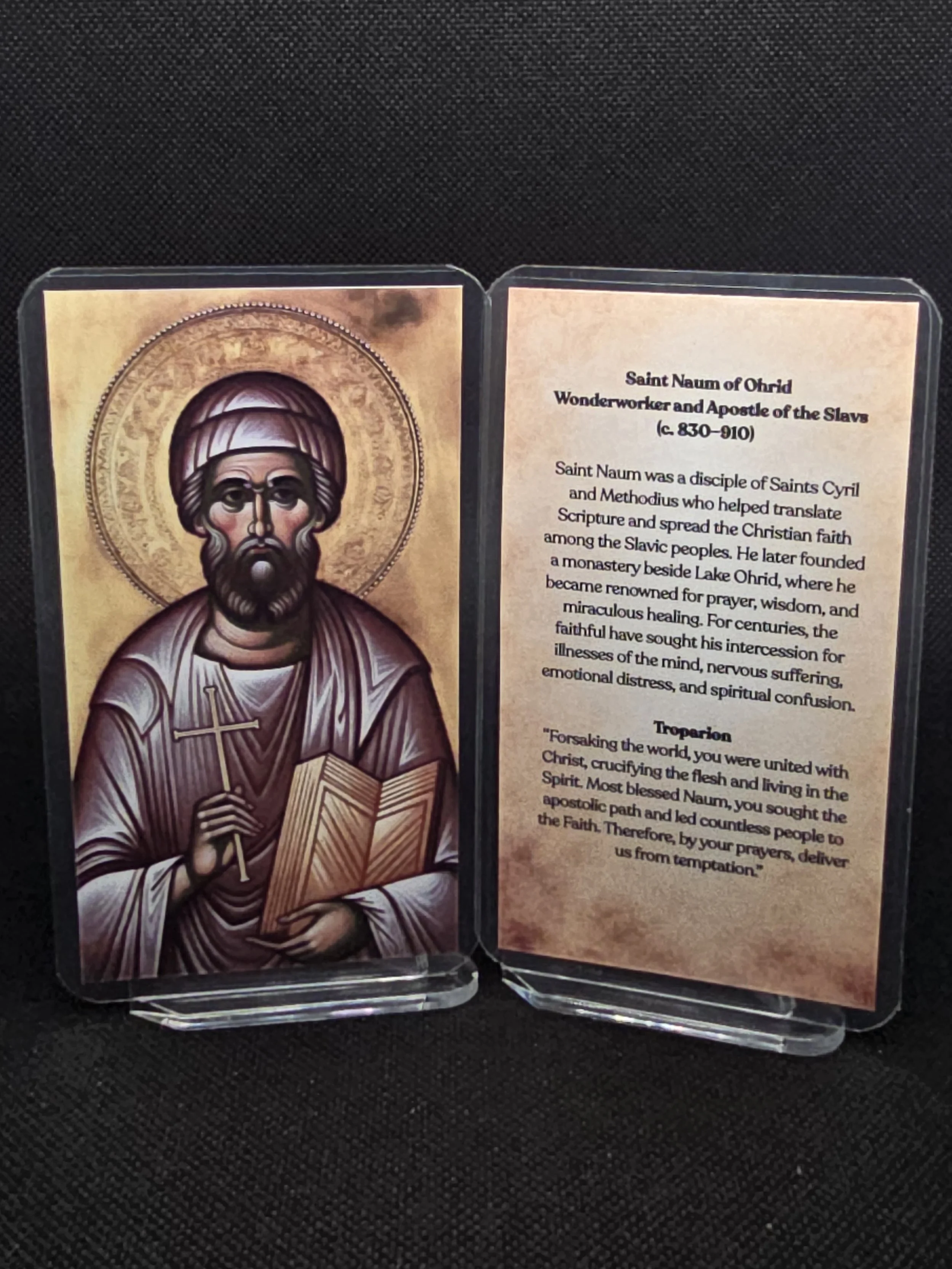
Saint Naum of Ohrid Prayer Card – Patron for Mental Illness, Nervous Disorders & Spiritual Confusion
-
Saint Naum lived during the ninth century, a time of dramatic spiritual transformation in Eastern Europe. He was one of the close disciples of Saints Cyril and Methodius, the great missionaries who brought the Gospel to the Slavic peoples and developed the liturgical language that would later become Church Slavonic.
Naum was not merely a student.
He was a co-laborer.
He endured persecution alongside his companions. When political pressure forced the missionaries out of certain regions, Naum continued their work elsewhere. He carried Scripture, liturgy, and Christian education into lands where faith was still fragile.
Eventually, he settled near Lake Ohrid, in what is now North Macedonia. There, he founded a monastery that became a spiritual center for the region. It was not simply a place of prayer. It became a place of healing.
People began bringing those afflicted with mental disturbances, uncontrollable behavior, and what today might be described as severe psychological disorders. Families who had nowhere else to turn came seeking Naum’s intercession.
He did not react with fear.
He responded with prayer.
Witnesses described his calm presence around those in distress. He fasted rigorously, prayed through the night, and laid hands on the afflicted with unwavering faith. Many were restored to clarity and peace.
Naum reposed around the year 910. His monastery remained a pilgrimage site, and reports of healing multiplied after his death. His tomb became known throughout the Balkans as a place where troubled minds found rest.
Saint Naum’s life reminds us that intellectual brilliance and tender compassion can coexist. He shaped language and healed hearts.
-
Saint Naum is remembered especially as a healer of mental and nervous disorders.
He is invoked when confusion feels overwhelming and peace seems unreachable.
Patron Saint Of:
Mental illness and emotional instability
Nervous disorders and breakdown
Spiritual confusion and disorientation
Intrusive thoughts and inner turmoil
Families caring for the mentally afflicted
Anxiety and persistent unrest
Clarity of mind and inner peace
Miracles and Ongoing Intercession
For centuries, pilgrims have traveled to his monastery at Lake Ohrid seeking healing. Numerous testimonies speak of individuals suffering severe mental disturbance who experienced calm and restoration after prayer at his tomb.
Families describe relief after long seasons of chaos.
Others report clarity returning to minds clouded by fear.
Some speak of deep emotional balance restored after years of instability.One enduring tradition says that if you place your ear near his tomb, you can hear a heartbeat, symbolizing that Saint Naum continues to pray for those who suffer.
His miracles do not shout.
They arrive as steady calm replacing agitation.
They arrive as order replacing confusion.
They arrive as hope re-entering exhausted homes.Saint Naum remains a guardian for troubled minds.
-
Traditional Prayer
Holy Father Naum, faithful disciple and healer of the afflicted, pray for us. Ask Christ to grant peace of mind, stability of heart, and healing to all who suffer in body or spirit. Amen.
Personal Prayer
Holy Saint Naum of Ohrid, compassionate healer of troubled minds, pray for me.
You saw families arrive in desperation.
You heard cries that others could not calm.
You stood steady when confusion reigned.I bring you my inner turmoil.
If anxiety overwhelms me, grant stillness.
If my thoughts race beyond control, ask Christ to quiet them.
If emotional instability shakes my life, restore balance.Intercede for my family.
If someone I love suffers mental illness, hold them in your prayers.
If we are exhausted from caregiving, strengthen us.
If hope feels fragile, renew it.Saint Naum, you shaped minds through teaching and healed minds through prayer.
Shape mine now.
Bring clarity where there is confusion.
Bring peace where there is chaos.
Bring light where darkness clouds perception.By your intercession, may Christ restore stability, calm the nervous heart, and bring healing to every afflicted soul.
Amen.
-
Q: What is Saint Naum of Ohrid known for?
He is known as a missionary disciple of Saints Cyril and Methodius and as a powerful healer of mental illness and nervous disorders, both during his life and after his repose.Q: When is Saint Naum’s feast day?
He is commemorated on December 23 in many Orthodox calendars, with some traditions also observing him on June 20.Q: Which Christian traditions venerate Saint Naum?
He is honored primarily in the Eastern Orthodox Church and deeply revered in the Balkans, especially in North Macedonia and Bulgaria.Q: Why do people pray to Saint Naum for mental illness or spiritual confusion?
Because of his long-standing reputation as a healer of troubled minds and emotional disturbance. Many seek his intercession when clarity, calm, and stability feel unreachable.