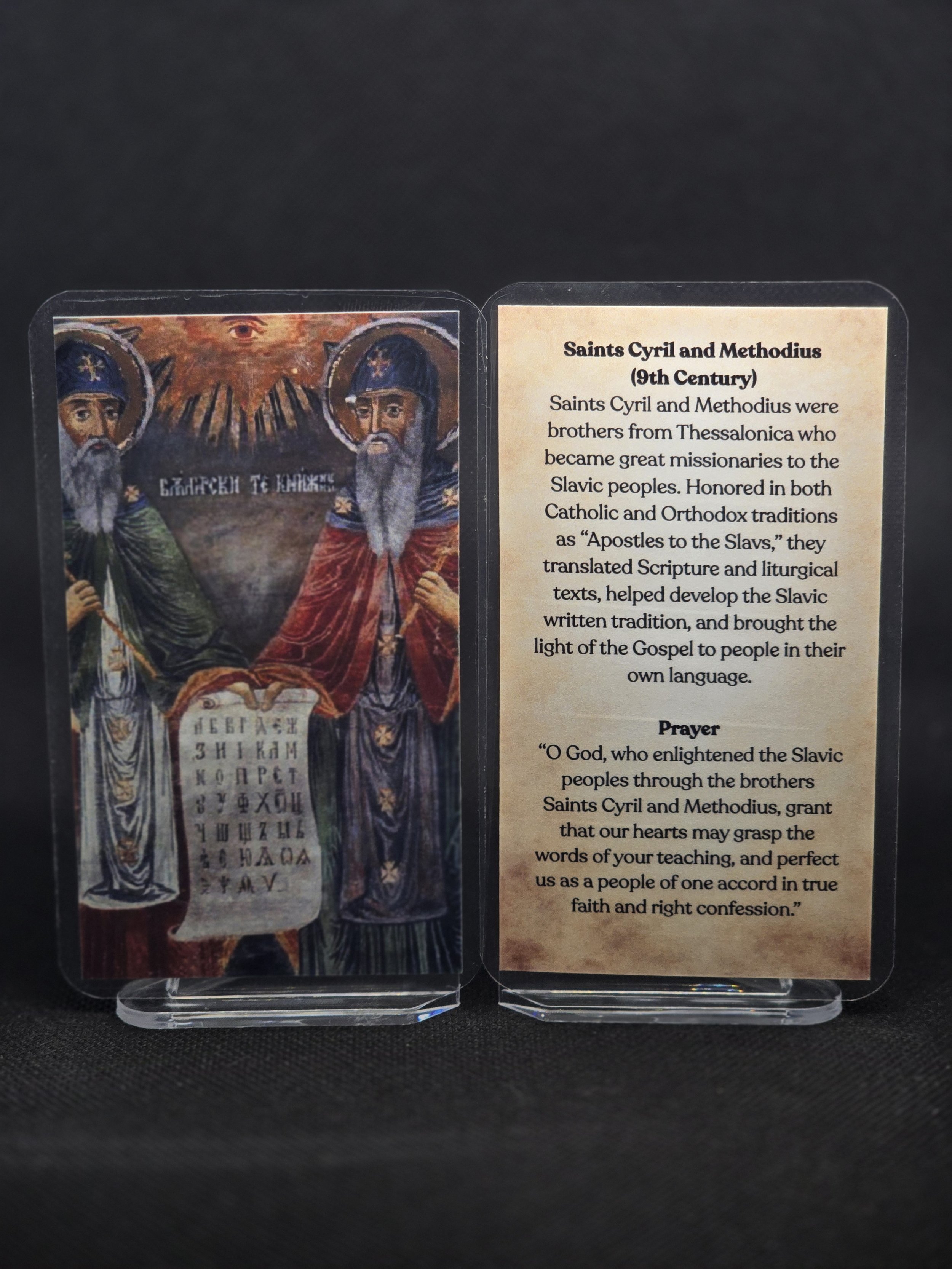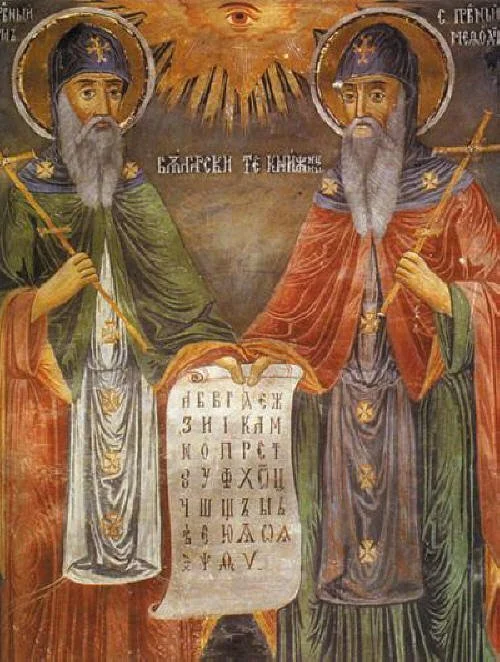
Saint Naum of Ohrid Prayer Card – Patron for Mental Healing, Spiritual Peace & Courage After Displacement

$3.00

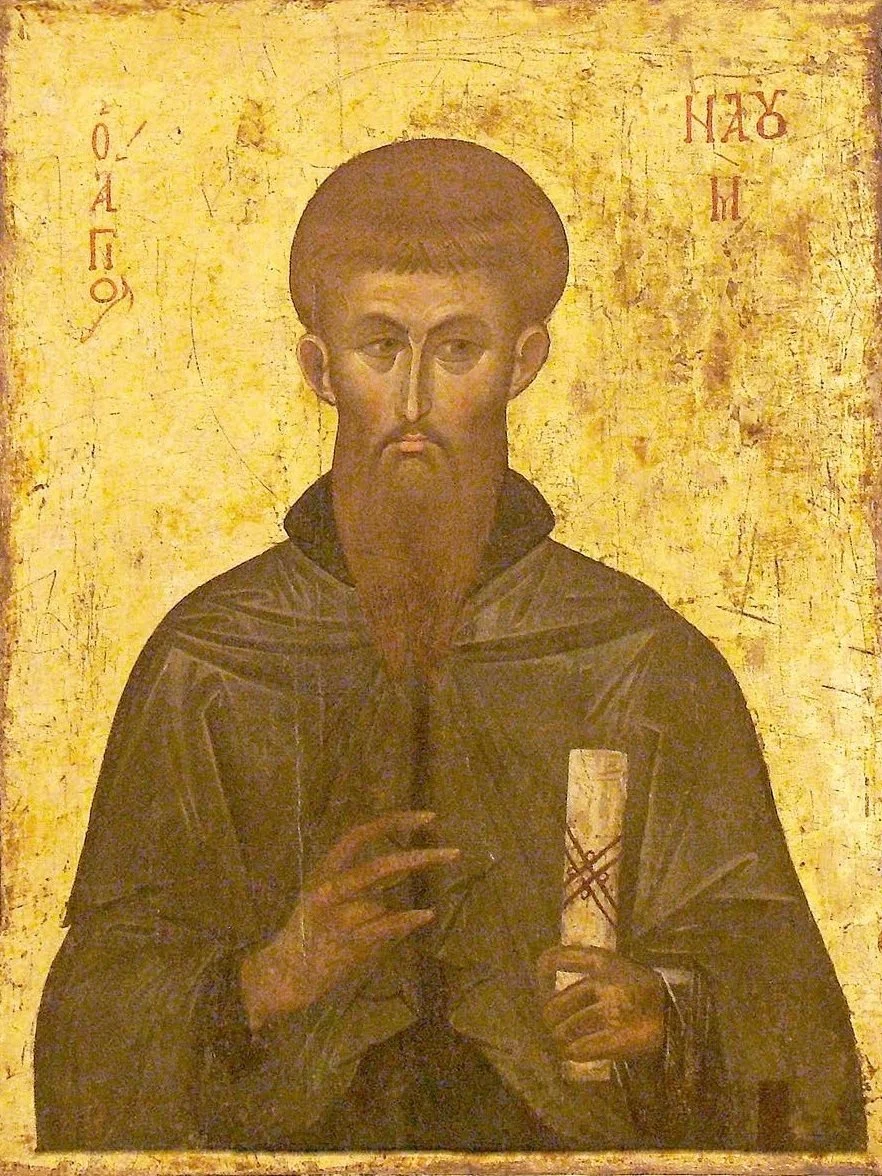
Saint Naum of Ohrid was one of the closest disciples of Saints Cyril and Methodius, a missionary monk, teacher of the Slavs, and quiet healer of troubled minds whose life was shaped by exile, perseverance, and deep interior prayer. He is venerated in the Eastern Orthodox Church and honored within Eastern Catholic devotional tradition as a faithful servant who carried the Gospel forward when political power tried to silence it.

Saint Naum is commemorated on December 23 in the Orthodox calendar. In many Slavic regions he is also honored on July 3, especially together with Saint Clement of Ohrid and the disciples of Saints Cyril and Methodius. Eastern Catholic communities that honor him observe these same dates locally.

He lived during a time when Christian mission meant imprisonment, expulsion, and uncertainty. After the death of Saint Methodius, Naum and the other disciples were driven from Great Moravia. Some were beaten. Some were enslaved. Naum survived displacement and found refuge in Bulgaria, where he devoted the rest of his life to teaching, forming clergy, and building spiritual communities rooted in prayer rather than power.

People pray to Saint Naum of Ohrid today for mental peace, emotional healing, and strength after forced change or loss. He understands what it feels like to lose home, to rebuild from nothing, and to carry faith forward while grieving what was left behind. He also became known in later tradition as an intercessor for those suffering from inner turmoil, anxiety, and disturbances of the mind.

This prayer card is for anyone carrying invisible wounds, for families navigating mental or emotional hardship, and for believers trying to rediscover peace after life has been uprooted. Saint Naum does not offer quick fixes. He offers quiet stability and spiritual grounding.

Each card is handmade in Austin, TX and created to order. We do not keep stock, because every prayer card is treated as a unique devotional offering. They are printed on museum-quality photo paper, not cardstock, and every card is made slowly during prayer. Saint Naum is venerated throughout the entire process, and prayers are intentionally offered for the person who will receive the card. Each piece is handled multiple times in prayerful silence, asking Christ to strengthen the faithful and asking Saint Naum to intercede for the soul it is being made for. These are not mass-produced items. They are created carefully, reverently, and with deep spiritual responsibility, because every soul and every prayer matters.

Saint Naum of Ohrid was one of the closest disciples of Saints Cyril and Methodius, a missionary monk, teacher of the Slavs, and quiet healer of troubled minds whose life was shaped by exile, perseverance, and deep interior prayer. He is venerated in the Eastern Orthodox Church and honored within Eastern Catholic devotional tradition as a faithful servant who carried the Gospel forward when political power tried to silence it.

Saint Naum is commemorated on December 23 in the Orthodox calendar. In many Slavic regions he is also honored on July 3, especially together with Saint Clement of Ohrid and the disciples of Saints Cyril and Methodius. Eastern Catholic communities that honor him observe these same dates locally.

He lived during a time when Christian mission meant imprisonment, expulsion, and uncertainty. After the death of Saint Methodius, Naum and the other disciples were driven from Great Moravia. Some were beaten. Some were enslaved. Naum survived displacement and found refuge in Bulgaria, where he devoted the rest of his life to teaching, forming clergy, and building spiritual communities rooted in prayer rather than power.

People pray to Saint Naum of Ohrid today for mental peace, emotional healing, and strength after forced change or loss. He understands what it feels like to lose home, to rebuild from nothing, and to carry faith forward while grieving what was left behind. He also became known in later tradition as an intercessor for those suffering from inner turmoil, anxiety, and disturbances of the mind.

This prayer card is for anyone carrying invisible wounds, for families navigating mental or emotional hardship, and for believers trying to rediscover peace after life has been uprooted. Saint Naum does not offer quick fixes. He offers quiet stability and spiritual grounding.

Each card is handmade in Austin, TX and created to order. We do not keep stock, because every prayer card is treated as a unique devotional offering. They are printed on museum-quality photo paper, not cardstock, and every card is made slowly during prayer. Saint Naum is venerated throughout the entire process, and prayers are intentionally offered for the person who will receive the card. Each piece is handled multiple times in prayerful silence, asking Christ to strengthen the faithful and asking Saint Naum to intercede for the soul it is being made for. These are not mass-produced items. They are created carefully, reverently, and with deep spiritual responsibility, because every soul and every prayer matters.

  • THE LIFE & STORY OF SAINT NAUM OF OHRID

    Saint Naum was born in the ninth century and became one of the earliest disciples of Saints Cyril and Methodius. From the beginning, his life was bound to missionary work among the Slavic peoples, helping translate Christian teaching into languages ordinary people could understand.

    After the death of Saint Cyril and the persecution of Saint Methodius’s followers, Naum entered a season of intense suffering. Along with the other disciples, he was expelled from Great Moravia. Many companions were imprisoned or sold into slavery. Naum was forced into exile, carrying sacred texts and fragile faith across unfamiliar lands.

    He eventually found refuge in the Bulgarian kingdom, where he joined Saint Clement of Ohrid in rebuilding the mission. Together they taught clergy, translated Scripture, and formed thousands of students in Orthodox Christian life.

    Naum’s calling, however, leaned more deeply toward monastic prayer.

    Near Lake Ohrid, he founded a monastery that became a spiritual center for the region. There he devoted himself to quiet ascetic life, teaching through example more than words. He welcomed pilgrims, counseled the troubled, and guided those seeking interior peace.

    His interior struggle was shaped by loss.

    He had watched his spiritual family scattered.
    He had endured displacement.
    He carried the responsibility of preserving faith for future generations.

    Yet he remained steady.

    Saint Naum died around the year 910, having poured his life into prayer, formation, and spiritual healing. His tomb at the monastery in Ohrid became a place of pilgrimage, especially for those seeking relief from mental and emotional suffering.

    Saint Naum teaches that faith does not survive through force.

    It survives through prayerful presence.

  • MIRACLES & PATRONAGE

    Saint Naum of Ohrid is traditionally approached as an intercessor for inner healing and spiritual peace, especially for those suffering from disturbances of the mind or emotional anguish.

    Over time, pilgrims began seeking his prayers for relief from anxiety, mental distress, and overwhelming fear. His monastery became associated with quiet restoration rather than dramatic spectacle.

    He is invoked especially by those rebuilding life after displacement and those seeking calm after prolonged hardship.

    Patron Saint Of:

    • Mental and emotional healing
    • Spiritual peace during anxiety or inner turmoil
    • Recovery after displacement or forced change
    • Monastic life and contemplative prayer
    • Perseverance after persecution
    • Restoring stability to troubled hearts

    Miracles associated with Saint Naum appear most often as gradual healing.

    They arrive as clarity after confusion.
    They arrive as peace after long unrest.
    They arrive as strength to begin again.

    Those who pray through his intercession often speak of softened hearts, calmer thoughts, and renewed spiritual grounding.

    Saint Naum does not promise instant relief.

    He teaches holy stillness.

  • PRAYERS TO SAINT NAUM OF OHRID

    Traditional Invocation

    Holy Saint Naum of Ohrid, faithful disciple and healer of troubled souls, pray for us.

    Grant us peace.
    Strengthen our faith.
    Calm our hearts.

    Amen.

    Personal Devotional Prayer

    Saint Naum of Ohrid, gentle servant of Christ and quiet healer of wounded minds, I come to you carrying unrest within my heart.

    You know what it means to lose everything familiar.
    You know what it feels like to rebuild from exile.
    You know how fragile peace can become.

    Stand beside me now.

    When anxiety overwhelms me, give me calm.
    When thoughts feel scattered, give me clarity.
    When sorrow lingers, help me breathe again.

    You who found stability after displacement, teach me trust.
    You who healed through prayer, teach me patience.
    You who remained faithful after persecution, teach me endurance.

    Bless my mind with peace.
    Bless my heart with courage.
    Bless my spirit with quiet strength.

    Help me rest in God’s presence even when life feels uncertain.

    Saint Naum of Ohrid, pray for me.
    Pray for my loved ones.
    Pray for every soul seeking inner peace.

    Amen.

  • FAQ

    What is Saint Naum of Ohrid known for?
    He is known as a disciple of Saints Cyril and Methodius, founder of a monastery near Lake Ohrid, and spiritual intercessor for mental peace and inner healing.

    When is Saint Naum of Ohrid commemorated?
    He is commemorated on December 23 in the Orthodox calendar, with an additional regional celebration on July 3 in many Slavic and Eastern Catholic traditions.

    Which Christian traditions venerate Saint Naum of Ohrid?
    He is venerated in the Eastern Orthodox Church and honored within Eastern Catholic devotional life.

    Why do people pray to Saint Naum for mental and emotional healing?
    Because centuries of pilgrimage tradition associate his intercession with calm of mind, spiritual stability, and restoration after inner turmoil or displacement.