 Image 1 of 1
-
THE LIFE & STORY
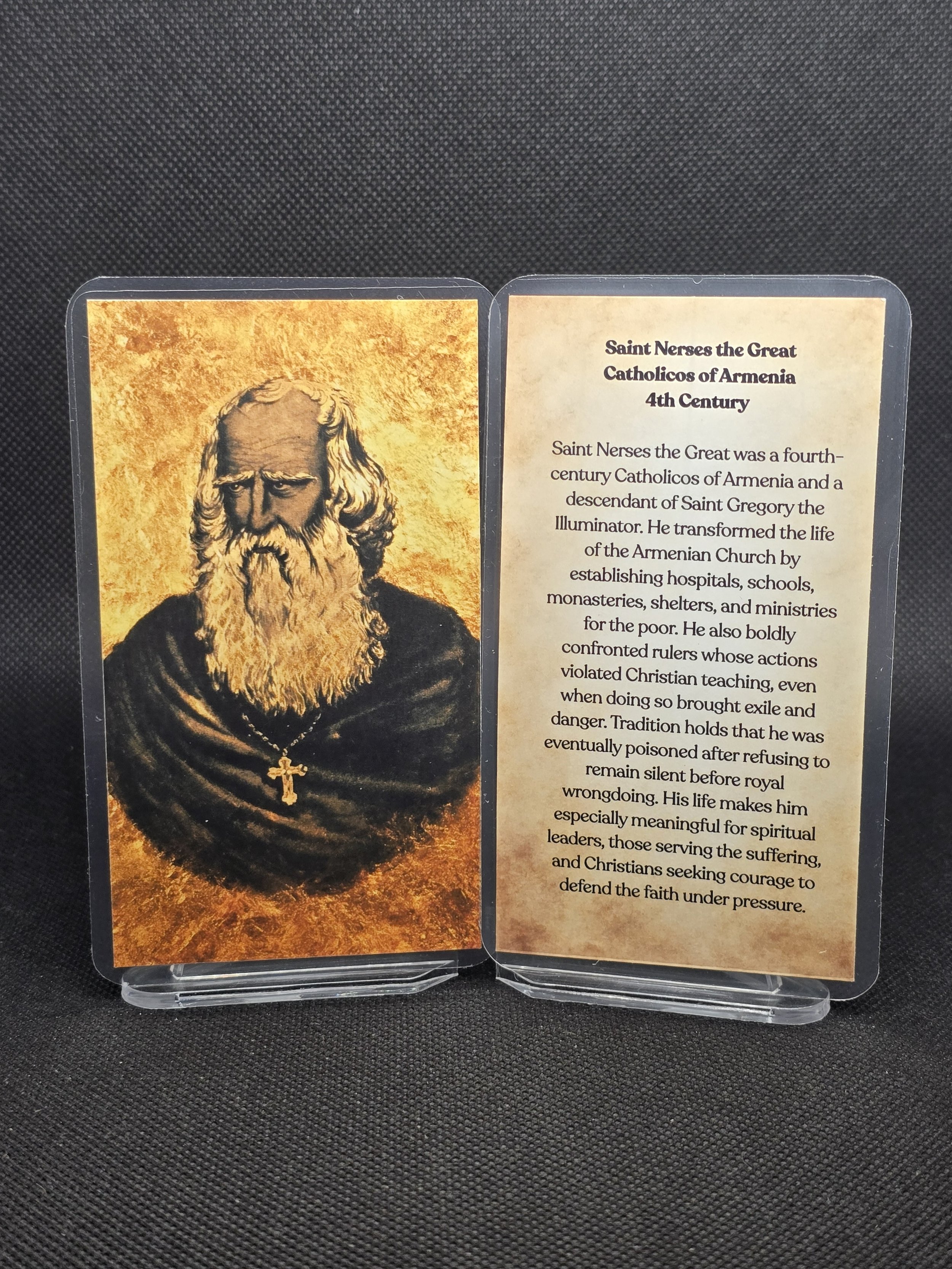
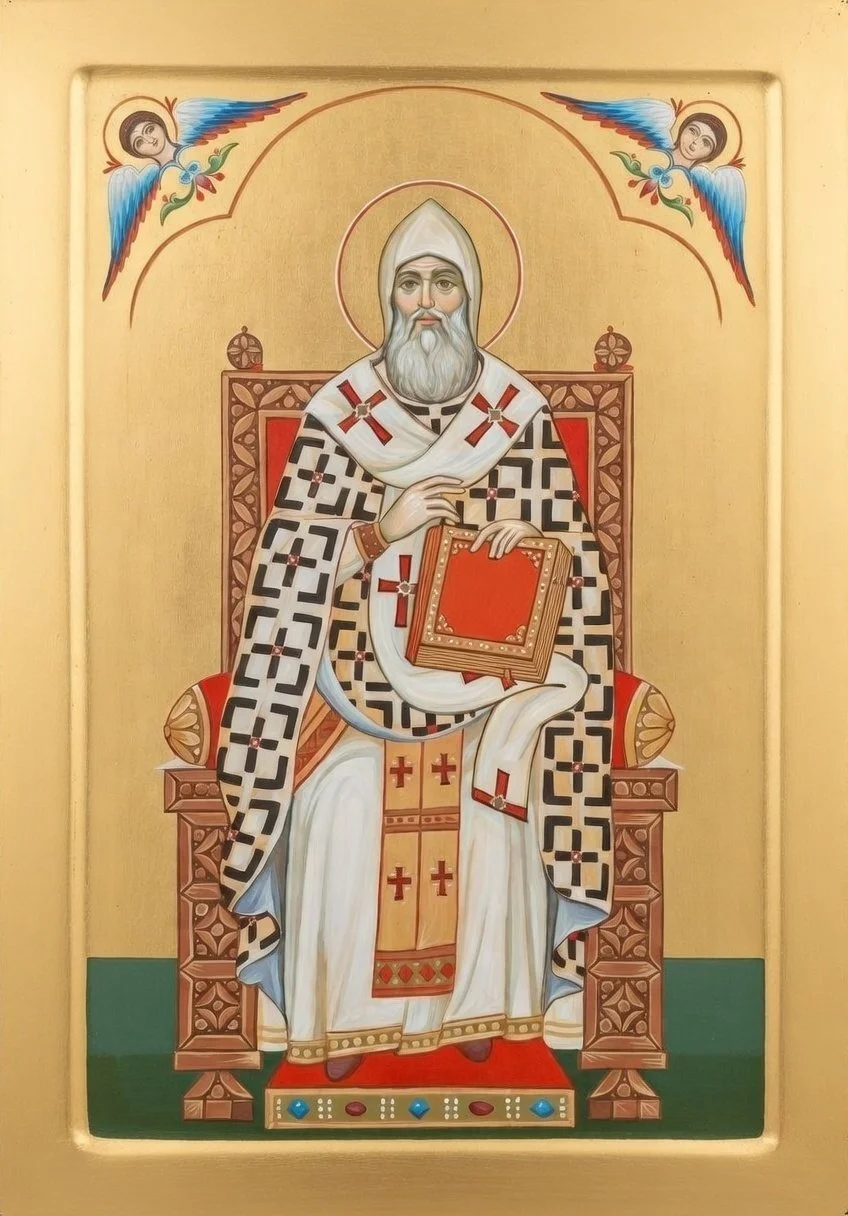
Saint Nerses IV Shnorhali was born in 1102 in the Armenian Kingdom of Cilicia, into a family deeply rooted in ecclesiastical leadership. His brother Gregory III would later serve as Catholicos before him, and from early childhood Nerses was formed within the rhythm of Church life, theological education, and liturgical devotion.
He was ordained at a young age and quickly became known for both intellectual brilliance and pastoral gentleness. His nickname, “Shnorhali,” meaning “the Gracious” or “Full of Grace,” was not given lightly. It reflected the way he spoke, wrote, and led.
When he became Catholicos in 1166, he inherited a Church navigating complex political realities. Cilician Armenia was positioned between Byzantine influence and Latin Crusader presence. Theological misunderstandings between Armenians and both Greek and Latin Christians had hardened into centuries of suspicion.
Nerses did not approach these tensions as a combative theologian.
He sought clarity without hostility.
He composed letters and theological summaries explaining Armenian Christology carefully and respectfully. He initiated dialogues with Byzantine and Roman representatives, exploring possibilities of reconciliation without compromising what he understood as apostolic faith.
Beyond diplomacy, he was a poet and mystic.
His hymns and prayers remain foundational in Armenian liturgical life. His most famous devotional work, often translated as “Jesus, Son Only Begotten” or “Confession of Faith,” reveals a soul deeply aware of human frailty and divine mercy. He wrote prayers for every hour of the day, shaping Armenian spirituality into something personal and continuous.
He also reformed aspects of church discipline, encouraged education, and strengthened monastic life. Under his leadership, Armenian Christianity experienced a spiritual flowering marked by intellectual clarity and devotional warmth.
Saint Nerses died in 1173.
His legacy was not political victory.
It was spiritual depth.
He left behind a Church steadied by prayer and a treasury of hymns that continue to shape Armenian worship nearly nine centuries later.
-
MIRACLES & PATRONAGE
Patron Saint Of:
Church unity and reconciliation
Inner peace during spiritual exhaustion
Wisdom for clergy and church leaders
Strength during theological confusion
Patience in times of division
Saint Nerses is remembered less for dramatic physical miracles and more for spiritual transformation through his writings.
During his lifetime, his prayers softened tensions within Armenian communities and fostered renewed devotion. His theological clarity helped ease misunderstandings with other Christian traditions. His pastoral approach brought stability during periods of political instability.
After his death, his hymns continued to shape Armenian prayer life. Generations testify to deep interior healing through recitation of his prayers, especially his penitential and Christ-centered hymns.
Many Armenian Christians turn to him during seasons of church tension, spiritual dryness, or leadership fatigue, asking his intercession for patience and gentleness.
His miracles are often interior.
Calm in conflict.
Humility in debate.
Peace in the midst of complexity. -
PRAYERS
From “Jesus, Son Only Begotten” (Հաւատով Խոստովանիմ / Havato Khosdovanim)
Jesus, Son Only Begotten of the Father,
have mercy upon me a sinner.You who came into the world for our salvation,
grant me repentance and forgiveness of my sins.You who are compassionate and merciful,
do not abandon the work of Your hands.Lord Jesus Christ,
strengthen my faith,
guard my mind,
and guide me in the path of Your commandments.Amen.
This prayer is part of Saint Nerses Shnorhali’s well-known penitential and confessional devotional cycle, still used in Armenian liturgical life today.
-
FAQ
What is Saint Nerses the Gracious known for?
He is known as Catholicos of the Armenian Church, a theologian, poet, and advocate for Christian unity whose prayers and hymns remain central to Armenian spirituality.When is his feast day?
August 13 in the Armenian calendar.Which Christian traditions venerate Saint Nerses?
He is venerated in the Armenian Apostolic Church within the Oriental Orthodox tradition and honored among Armenian Catholics.Why do people pray to Saint Nerses for unity and inner peace?
Because his life was dedicated to reconciliation, gentle leadership, and deep personal prayer. His writings continue to bring calm and clarity during spiritual and ecclesial tension.