 Image 1 of 1
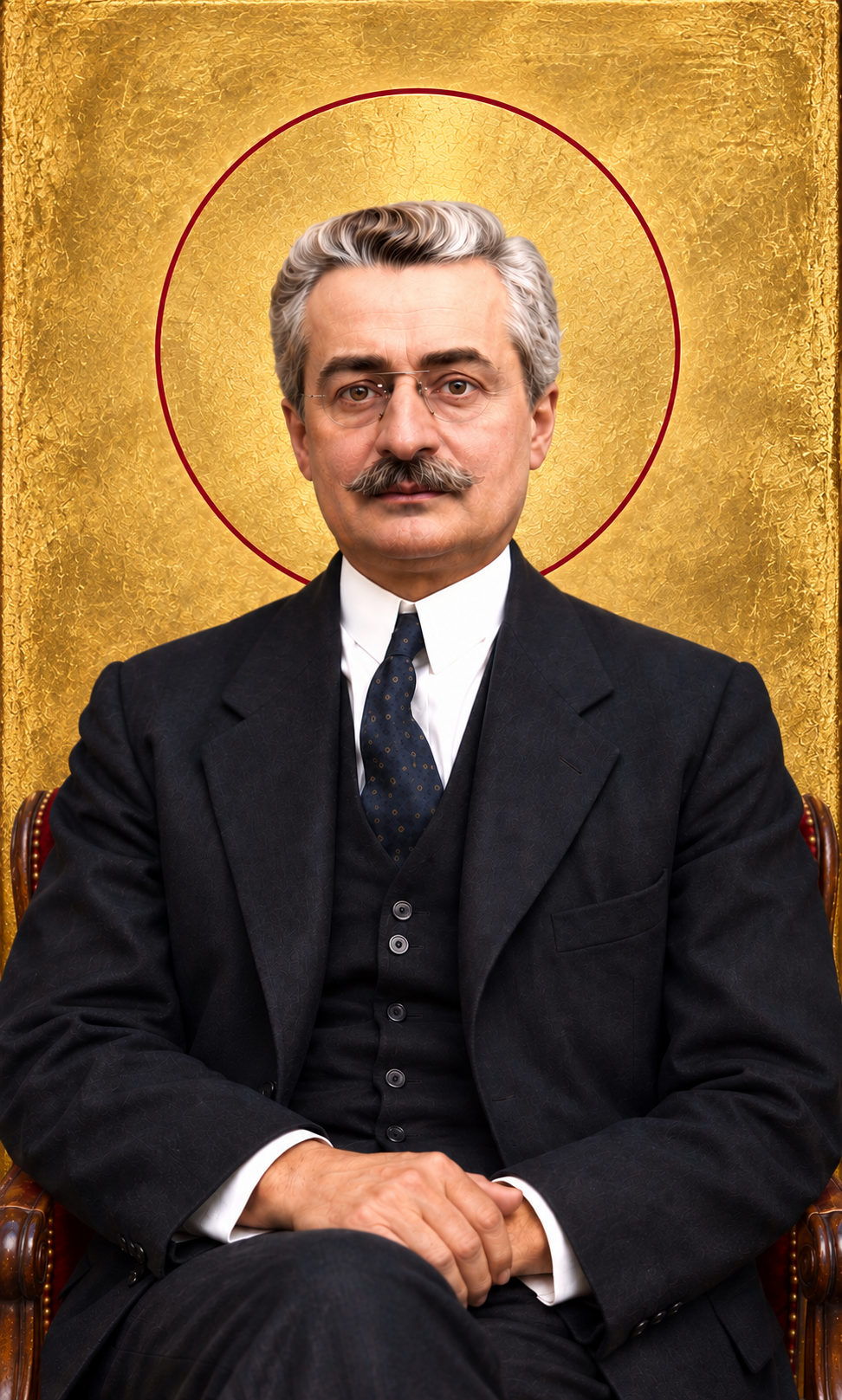
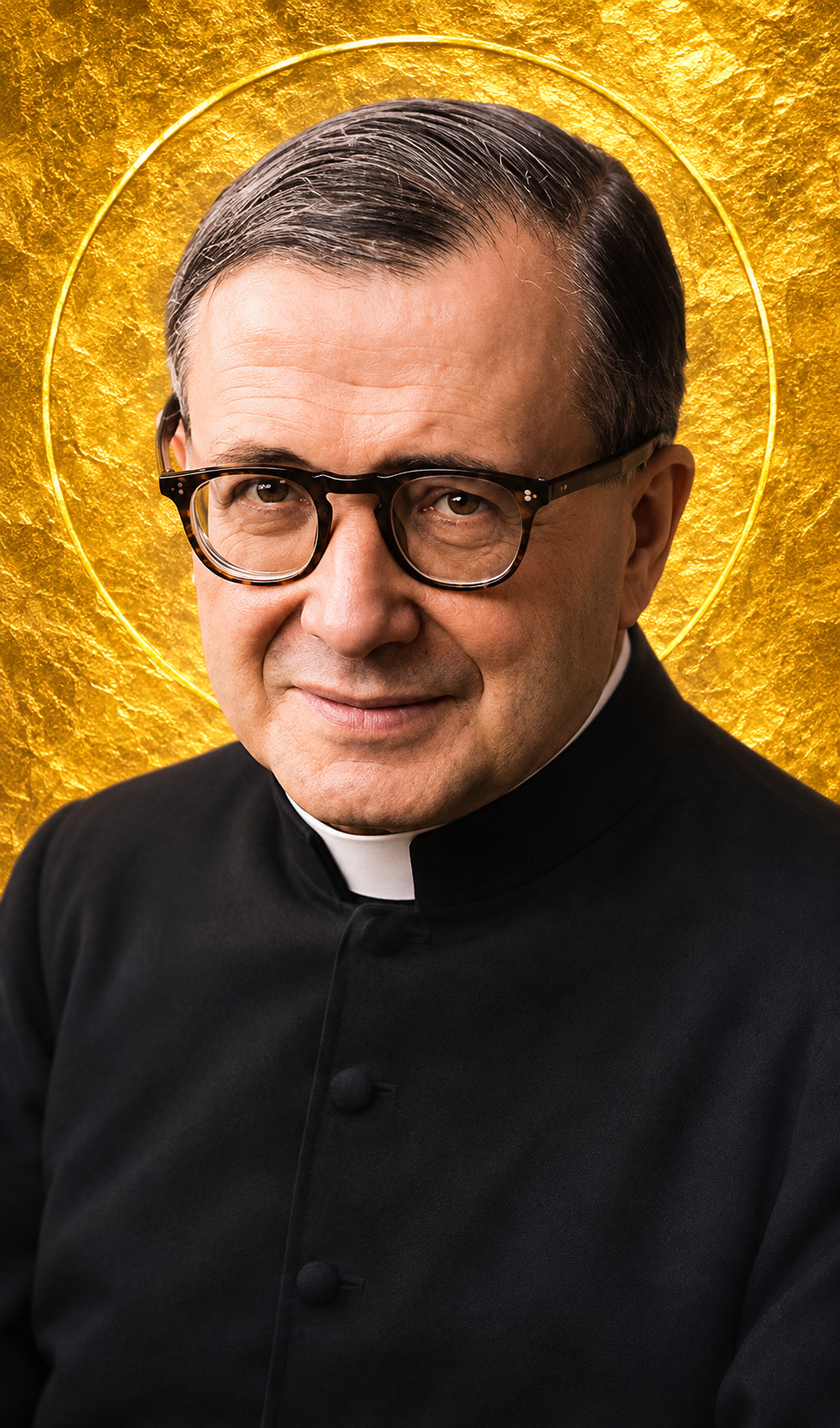
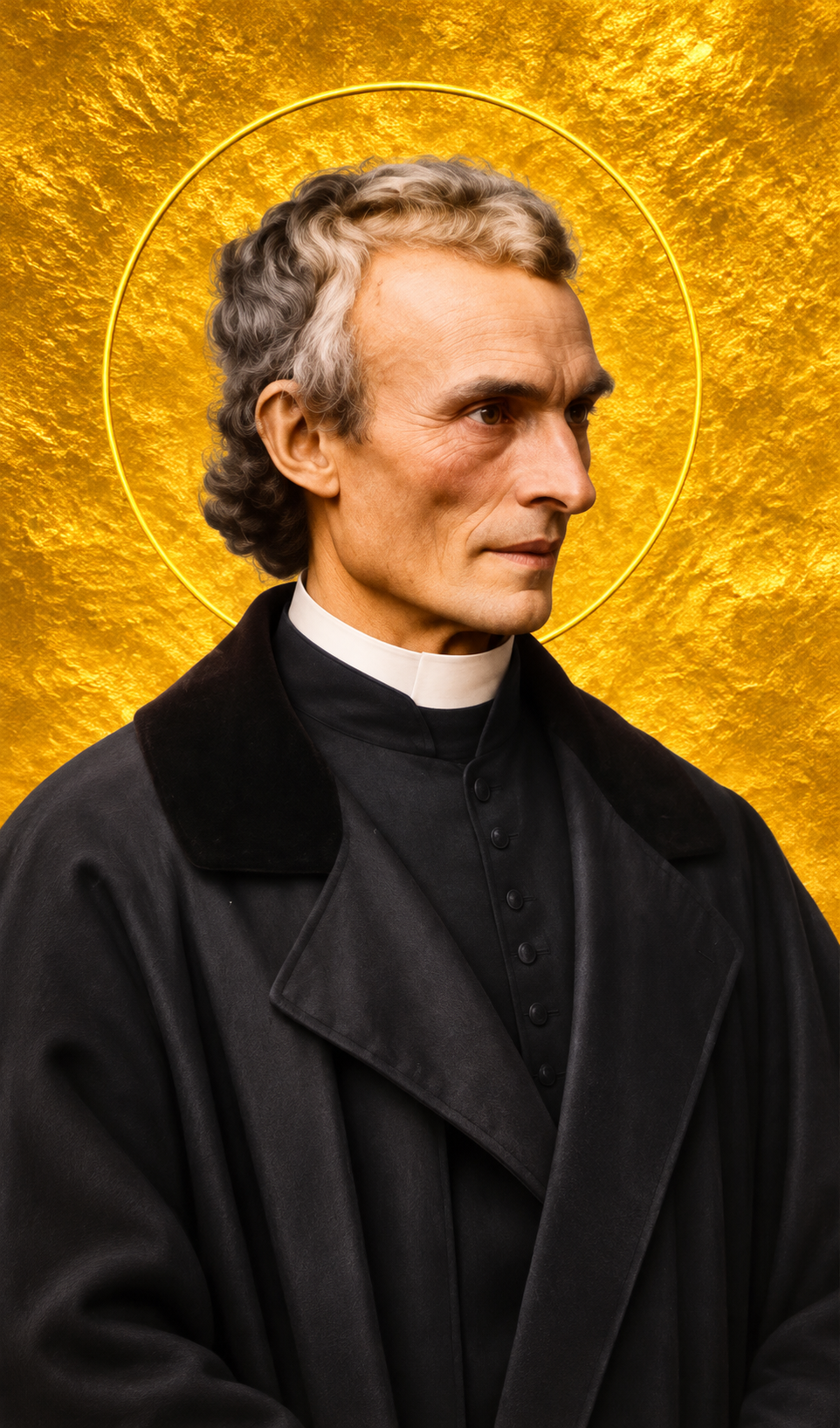
Saint Peter Julian Eymard Prayer Card – For Eucharistic Adoration, Holy Communion, Priests & Deeper Love of Jesus
Saint Peter Julian Eymard was a French Catholic priest, spiritual writer, founder of the Congregation of the Blessed Sacrament, and one of the Church's great apostles of devotion to Jesus Christ in the Eucharist. His entire spiritual journey gradually became centered upon one conviction: the Eucharist is not simply one devotion among many, but Jesus Christ Himself present among His people and offering His life for the world.
Known as the Apostle of the Eucharist, Eymard dedicated his mature priesthood to helping Catholics rediscover the Real Presence, receive Holy Communion more fruitfully, spend time in prayer before the Blessed Sacrament, and allow the Eucharist to transform the way they lived outside the church. His vision was never limited to private adoration. He believed the Christ encountered in the Eucharist sends Christians outward to evangelize, care for people in need, reconcile divisions, and offer their own lives in love.
Saint Peter Julian Eymard is especially meaningful for people beginning Eucharistic adoration, those struggling to believe more deeply in the Real Presence, priests and seminarians, extraordinary ministers of Holy Communion, people preparing for First Communion, and anyone longing for a more personal relationship with Jesus in the Blessed Sacrament. His life also speaks powerfully to people whose vocation unfolds slowly, because his own Eucharistic mission developed through years of searching, illness, changing assignments, and painful discernment.
Each prayer card measures 2.5" x 4.25", is handmade in Austin, Texas, printed on museum-quality photo paper rather than ordinary cardstock, and double laminated for durability. Every card is made to order and prepared prayerfully, with the recipient and their intentions brought before Christ while asking Saint Peter Julian Eymard to intercede for their needs.
THE LIFE & STORY OF SAINT PETER JULIAN EYMARD
Peter Julian Eymard was born in La Mure, France, in 1811 into a devout Catholic family. From childhood he displayed an unusual attraction toward the Eucharist and the tabernacle.
One of the most beloved stories from his early life tells of the five-year-old Peter Julian disappearing from home. His family eventually found him inside the parish church, standing close to the tabernacle. When asked what he was doing, the child explained that he was there listening to Jesus.
The scene became an almost prophetic image of the life that followed. Eymard would spend decades learning how to listen more deeply to Christ in the Eucharist and teaching others to do the same.
A DIFFICULT ROAD TO THE PRIESTHOOD
Peter Julian wanted to become a priest, but his father strongly opposed the vocation. His family had already experienced painful losses, and his father hoped his surviving son would remain closer to home.
Eymard also struggled with poor health. His first attempt at religious formation was interrupted by serious illness, seemingly confirming the fear that the demanding life he desired might be beyond his physical strength.
After his father's death, however, he resumed his preparation for priesthood and entered the seminary at Grenoble. He was ordained a diocesan priest in 1834 at twenty-three years old.
The young priest's journey already demonstrated a pattern that would characterize his entire life. His vocation became clearer through obstacles rather than through a perfectly straight path.
EARLY PRIESTLY MINISTRY
Father Eymard served first within the Diocese of Grenoble and became known as a serious, hardworking priest with strong gifts for preaching and pastoral ministry. He lived during a period when French Catholic spirituality had been heavily influenced by currents emphasizing sin, unworthiness, reparation, and fear of offending God.
Those influences affected Eymard personally. His early spiritual life could be demanding and austere, and he struggled intensely with the desire for perfection.
Over time, however, his understanding of God and the Eucharist became increasingly centered upon love rather than fear. This development would eventually become one of the most important features of his spirituality.
ENTERING THE MARISTS
Eymard felt drawn toward religious life and, in 1839, entered the Society of Mary, commonly called the Marists. He made profession as a Marist and served the community through preaching, formation, education, administration, and apostolic work.
His years with the Marists were crucial to his spiritual development. They deepened his devotion to the Blessed Virgin Mary while also placing him in contact with the growing Eucharistic movements of nineteenth-century France.
Eymard was effective, energetic, and capable, but another call was slowly becoming clearer within him.
CORPUS CHRISTI AND A DECISIVE GRACE
A decisive moment came on Corpus Christi in 1845 while Father Eymard was carrying the Blessed Sacrament in procession at Saint Paul's Church in Lyon.
He experienced an intense interior attraction toward Christ in the Eucharist and resolved that his life should be dedicated to making Jesus in the Eucharist better known and loved.
The experience did not immediately produce a new religious order. Eymard remained a Marist for years while the insight matured.
His vocation was therefore not a sudden mystical command followed by instant certainty. It developed gradually through prayer, ministry, discernment, and repeated attempts to understand what God was asking of him.
THE EUCHARIST AS LOVE
One of the deepest changes in Eymard's spirituality involved his movement away from an approach dominated primarily by reparation and fear toward a spirituality centered increasingly upon the love of Christ.
He came to see the Eucharist as the supreme manifestation of Jesus giving Himself to humanity.
This insight transformed Eucharistic devotion. Adoration was not simply standing before a divine King whom sinners must appease. It was the response of a person who has discovered that Christ remains present because He loves His people and desires communion with them.
Eymard famously taught that the Eucharist is the supreme proof of the love of Jesus.
THE CONGREGATION OF THE BLESSED SACRAMENT
By the 1850s, Eymard had become convinced that God was calling him to establish a community dedicated particularly to the Eucharist. The project did not fit easily within the existing mission of the Marists, and leaving the community he loved became painful.
In 1856, he received approval in Paris for what became the Congregation of the Blessed Sacrament.
The congregation was founded to promote a Eucharistic life that united celebration of the Mass, prayer before the Blessed Sacrament, preaching, evangelization, and active service.
Its spirituality continues today with the mission of making the riches of God's love manifested in the Eucharist better known and lived.
POVERTY AND DIFFICULT BEGINNINGS
The new foundation did not begin with wealth or security. Eymard and his first companions faced serious financial difficulties, limited resources, unstable housing, and difficulty attracting vocations.
At times, neighboring religious sisters helped provide food for the small community.
The founder who preached confidently about the Eucharistic kingdom often had no obvious human guarantee that his new congregation would survive.
These difficulties make Eymard especially meaningful for people trying to follow a vocation without having every practical detail solved beforehand. He knew what it meant to discern carefully, act faithfully, and then discover that obedience did not remove the struggle.
EUCHARISTIC ADORATION
Saint Peter Julian Eymard became one of the Church's great teachers of Eucharistic adoration. He encouraged Christians to approach time before the Blessed Sacrament as a personal encounter with Jesus rather than as a complicated spiritual exercise.
For Eymard, Jesus is alive and personally present in the Eucharist. The person praying before Him can speak honestly, listen, adore, give thanks, ask forgiveness, present needs, and simply remain in His presence.
He taught that the blessed person is the one who learns to find Jesus in the Eucharist and everything else in Him.
This makes Eymard an especially fitting saint for someone who wants to begin adoration but does not know what to do during the silence.
WHAT TO DO DURING EUCHARISTIC ADORATION
Eymard's spiritual counsel is reassuringly simple. The purpose of Eucharistic prayer is not to produce impressive thoughts.
The purpose is Jesus.
A person may read Scripture, meditate, pray the Rosary, offer thanksgiving, make acts of faith, speak quietly to Christ about daily life, or simply sit before Him in silence.
Eymard encouraged adorers to approach their appointed time before the Eucharist with anticipation, as though they were being given an audience with someone who genuinely desired their presence.
That perspective can transform adoration from an obligation into a relationship.
“HAPPY IS THE SOUL”
One of Eymard's most frequently preserved teachings says:
“Happy is the soul that knows how to find Jesus in the Eucharist, and in the Eucharist all things!”
The line captures his entire spiritual vision.
Eymard did not mean that every Christian problem disappears automatically inside a chapel. He meant that Christ Himself is the center from which every part of Christian life receives its proper order.
The Eucharist directs the person back toward Jesus rather than toward endless spiritual techniques.
HOLY COMMUNION
Eymard also worked tirelessly to encourage more fruitful and frequent reception of Holy Communion. In his era, many Catholics approached Communion infrequently, often because devotional culture emphasized human unworthiness more strongly than Christ's desire to nourish His people.
Eymard wanted Catholics to prepare seriously for Communion while also recognizing the extraordinary gift being offered to them.
Christ does not merely provide spiritual assistance from a distance. In Holy Communion, He gives Himself.
For people struggling to recover reverence or gratitude at Mass, Saint Peter Julian Eymard offers a powerful spiritual guide.
FIRST COMMUNION FOR ADULTS AND YOUNG WORKERS
Eymard's Eucharistic mission extended beyond established parishioners who already understood the faith. In Paris he encountered young workers and other people living with little religious formation.
His congregation became involved in preparing adults and young people for First Communion, including people whom ordinary parish structures often failed to reach.
This ministry is important because it demonstrates that Eymard's Eucharistic devotion was missionary.
He did not want Jesus adored only by people already inside the chapel. He wanted people who had never been properly catechized to discover Christ in the Eucharist for themselves.
THE POOR OF PARIS
The official Eymardian tradition remembers his particular concern for impoverished young workers in Paris, including men living on the social margins.
The Eucharist could never become an excuse for ignoring them.
Eymard understood true Eucharistic life as self-giving. Christ gives Himself to humanity, and those who receive Him are gradually called to give themselves for others.
Adoration and charity therefore belong together.
A Eucharistic spirituality that never changes the way we treat suffering people has not yet reached its full purpose.
THE GIFT OF SELF
One of the most important themes in Eymard's mature spirituality was what he called the gift of self.
God gives His Son. Christ gives Himself upon the Cross and in the Eucharist. The Christian response is therefore not merely admiration but self-offering.
Eymard increasingly came to understand holiness as giving his will, affections, abilities, future, work, and entire person to Christ.
This theme reached an important culmination during a prolonged retreat in Rome in 1865, only a few years before his death.
The Eucharist taught him not merely how to adore Christ but how to become a gift.
THE EUCHARIST AND DAILY LIFE
For Eymard, receiving Communion should gradually transform the whole Christian life.
The person who receives the Body of Christ is drawn more deeply into the Body of Christ, the Church, and therefore into responsibility for other people.
The Eucharist becomes a school of charity, unity, sacrifice, gratitude, reconciliation, and service.
His congregation continues to emphasize the Eucharist as celebrated, contemplated, proclaimed, and lived.
This is crucial to understanding Eymard. He was not simply a promoter of longer periods of adoration. He wanted entire lives to become Eucharistic.
THE MASS AND ADORATION
Eymard never intended Eucharistic adoration to compete with the celebration of Mass.
The Mass remained central because the Eucharist is the sacramental celebration of Christ's Paschal Mystery and the source from which Eucharistic devotion flows.
Adoration extends and deepens the relationship with Christ encountered sacramentally.
This balanced vision became increasingly important in the Church's later liturgical teaching and helps explain why Eymard's spirituality continues to resonate during modern Eucharistic renewal.
FOR PEOPLE WHO STRUGGLE TO BELIEVE IN THE REAL PRESENCE
Saint Peter Julian Eymard can be an especially meaningful intercessor for Catholics struggling with belief in the Real Presence of Jesus in the Eucharist.
His own devotion was not built merely upon emotional enthusiasm. He spent a lifetime contemplating what the Church means when it professes that Christ is truly present in the sacrament.
His response was wonder.
If Jesus is truly present, then the tabernacle is not an empty symbol and adoration is not imaginative prayer directed toward someone far away.
Christ is here.
That conviction reordered Eymard's entire life.
FOR PEOPLE BEGINNING ADORATION
A Saint Peter Julian Eymard prayer card can make a particularly meaningful companion for someone beginning a regular Holy Hour or weekly period of Eucharistic adoration.
Silence can initially feel uncomfortable. The mind wanders, prayers become repetitive, and a person may wonder whether sitting in a chapel is accomplishing anything.
Eymard encourages the adorer to begin with something simpler: Jesus has invited you into His presence.
The value of the hour is not measured by how extraordinary your thoughts become.
Faithful presence itself can become an act of love.
FOR FIRST COMMUNION
Because Eymard devoted significant energy to preparing people for First Communion, his prayer card can also be a meaningful gift for someone approaching the Eucharist for the first time.
Children and adults preparing for First Communion face the same fundamental mystery Eymard spent his life proclaiming: Jesus gives Himself as food.
A card bearing his image can become a lasting reminder that First Communion is meant to begin a lifelong Eucharistic relationship rather than merely complete a sacramental milestone.
FOR PRIESTS
Saint Peter Julian Eymard is especially meaningful for priests because his Eucharistic spirituality emerged directly from priestly ministry.
The priest celebrates the Eucharist, proclaims it, distributes it, reserves it, and directs people toward the Christ who gives Himself through it.
Eymard's life challenges priests not to allow familiarity with sacred things to weaken wonder.
His own priesthood increasingly became centered upon helping others encounter the mystery he celebrated at the altar.
FOR SEMINARIANS AND VOCATIONAL DISCERNMENT
Eymard's own path toward priesthood involved family opposition, illness, failed plans, diocesan ministry, Marist religious life, and eventually the founding of an entirely new religious congregation.
His vocation unfolded in stages.
For someone discerning priesthood, religious life, or another major calling, this offers valuable encouragement. Not knowing the entire future does not necessarily mean the call is false.
Sometimes God reveals enough for the next faithful step while allowing the larger vocation to mature gradually.
SAINT JOHN VIANNEY
Eymard lived during the same century as Saint John Vianney, the Curé of Ars, and the two belonged to the extraordinary spiritual renewal unfolding within nineteenth-century French Catholicism.
The official Eymardian novena remembers both priests as men who cared deeply for people through spiritual counsel, reconciliation, and sacramental ministry.
Their personalities and missions differed, but both understood priesthood as something given for others.
Eymard's particular contribution was to place the Eucharist increasingly at the center of a missionary spirituality capable of renewing the Church.
OUR LADY OF THE BLESSED SACRAMENT
Marian devotion remained important throughout Eymard's life. His Marist formation had deepened his relationship with the Mother of God, and he later promoted the title Our Lady of the Blessed Sacrament.
The title reflects Mary's relationship with the Eucharistic Christ.
She gave human flesh to the Son of God, carried Him within her, remained faithful to Him at the Cross, and directs Christians toward her Son.
Eymard therefore saw Marian and Eucharistic devotion not as competing devotions but as deeply connected ways of entering the mystery of Christ.
THE SERVANTS OF THE BLESSED SACRAMENT
Eymard also helped establish a women's religious congregation dedicated to Eucharistic spirituality, the Servants of the Blessed Sacrament, with Marguerite Guillot.
Together with the Congregation of the Blessed Sacrament, this community helped extend Eymard's vision beyond one group of religious men.
His broader dream included priests, brothers, sisters, deacons, and laypeople whose lives would all be shaped by the Eucharist.
The modern Eymardian family continues to reflect that wider vision.
THE EUCHARIST AND EVANGELIZATION
Eymard believed Eucharistic faith should create missionaries.
A Christian who has encountered Christ's self-giving love cannot keep that gift entirely private.
The Eucharist sends believers outward to proclaim the Gospel and respond to what his congregation today calls the hungers of the human family.
These hungers may be physical, spiritual, emotional, or social.
The same Christ who feeds Christians sacramentally calls them to become instruments through which others are fed.
THE EUCHARIST AND UNITY
Eymard also understood the Eucharist as a sacrament of unity.
People divided by language, class, culture, and nationality gather around the same table and receive the same Christ.
The Eucharist creates a new Christian kinship.
This dimension of his teaching makes him particularly relevant for parishes and communities struggling with division. Eucharistic devotion cannot remain authentic while Christians simultaneously nourish hatred toward one another.
Communion with Christ calls Christians toward communion with His people.
“THE EUCHARIST IS THE LIFE OF THE PEOPLE”
In his writings, Eymard described the Eucharist as the life and center of the Christian people.
He understood it as a source of charity capable of drawing people together beyond ordinary human barriers.
This vision was broader than personal devotion.
Eymard believed the Eucharist has implications for the life of the Church and for society because people transformed by Christ should begin living differently.
The Eucharistic life creates communities of thanksgiving, sacrifice, communion, and service.
PHYSICAL WEAKNESS
Poor health accompanied Eymard throughout much of his life. Illness had interrupted his earliest path toward priesthood, and physical weakness returned repeatedly during years of intense ministry.
Yet he remained remarkably active.
He preached, traveled, administered communities, wrote rules, directed souls, founded congregations, and endured the exhausting uncertainties of establishing a new religious institute.
His body repeatedly reminded him that his own strength had limits.
This gives additional depth to his spirituality of self-offering. Eymard was not giving Christ an unlimited reserve of human strength. He offered the weakness he actually possessed.
FOR PEOPLE WHO FEEL SPIRITUALLY DRY
Eucharistic devotion is sometimes associated with strong feelings of peace or consolation, but mature prayer cannot depend entirely upon emotion.
Eymard's spiritual journey included struggle, uncertainty, interior purification, and periods when clarity emerged slowly.
For someone sitting before the Blessed Sacrament and feeling nothing, his life provides important encouragement.
Christ's presence does not depend upon our emotional response.
Faith can remain real when prayer feels dry, distracted, or ordinary.
Sometimes adoration consists simply in staying.
HIS FINAL YEARS
The final years of Eymard's life were marked by intense work, physical decline, and deeper spiritual surrender.
His 1865 retreat in Rome helped bring his spirituality of the gift of self to greater maturity.
He increasingly understood the Eucharistic Christ as the One who gives Himself completely and calls disciples toward the same pattern of self-giving love.
Eymard died in his hometown of La Mure in 1868 at only fifty-seven years old.
The Eucharistic movement he had begun continued growing after his death.
CANONIZATION
The Church gradually recognized the extraordinary holiness and influence of Peter Julian Eymard.
Pope John XXIII canonized him in 1962 during the opening period of the Second Vatican Council.
His canonization was especially fitting at a moment when the Church was entering a major period of Eucharistic and liturgical renewal.
Eymard's title Apostle of the Eucharist captures the distinctive mission he brought to Catholic life: celebrate Christ in the Eucharist, contemplate Him, proclaim Him, and allow communion with Him to transform the world.
THE QUOTE
One of Saint Peter Julian Eymard's most powerful Eucharistic teachings is:
“The Eucharist is the supreme proof of the love of Jesus.”
The statement summarizes the heart of his spirituality.
Christianity proclaims that God does not love humanity only from a distance. Christ gives Himself upon the Cross and continues giving Himself sacramentally to His Church.
The proper response to such a gift is not merely theological understanding.
It is love returned for love.
ANOTHER BEAUTIFUL QUOTE
Eymard also taught:
“Happy is the soul that knows how to find Jesus in the Eucharist, and in the Eucharist all things!”
This is an especially fitting line for Eucharistic adoration because it directs the person away from preoccupation with the method of prayer and back toward Christ Himself.
The goal is not to become an expert at adoration.
The goal is Jesus.
PRAYER IN THE EYMARDIAN TRADITION
The Congregation of the Blessed Sacrament continues to publish an official novena inspired by Saint Peter Julian Eymard's life and spirituality. Its closing prayer asks God to help Christians celebrate the Eucharistic mystery worthily, adore it deeply, and proclaim it faithfully.
A simple prayer for personal use may therefore be:
Saint Peter Julian Eymard, Apostle of the Eucharist, pray that I may recognize Jesus with deeper faith in the Blessed Sacrament. Help me to receive Him with gratitude, adore Him with love, and allow the Eucharist to transform the way I serve others. Amen.
WHO SHOULD RECEIVE A SAINT PETER JULIAN EYMARD PRAYER CARD?
A Saint Peter Julian Eymard prayer card can make an especially meaningful gift for Eucharistic adorers, priests, seminarians, altar servers, extraordinary ministers of Holy Communion, people preparing for First Communion, OCIA candidates, catechists, Eucharistic revival leaders, and anyone trying to develop a deeper relationship with Jesus in the Blessed Sacrament.
It can also be meaningful for someone whose vocational path seems uncertain or delayed. Eymard spent years moving through different stages of ministry before understanding the particular Eucharistic mission that would define his life.
His story offers a reminder that the deepest calling may take time to become clear. What matters is continuing to listen.
FAQ
Who was Saint Peter Julian Eymard? Saint Peter Julian Eymard was a nineteenth-century French Catholic priest, spiritual writer, Marist, and founder of the Congregation of the Blessed Sacrament. He lived from 1811 to 1868 and became especially known for promoting Eucharistic adoration, frequent Holy Communion, and a life centered upon Christ in the Eucharist.
Why is Saint Peter Julian Eymard called the Apostle of the Eucharist? His mature priesthood was devoted particularly to making Jesus in the Eucharist better known and loved. He founded religious communities centered upon Eucharistic spirituality and promoted adoration, Communion, catechesis, and Eucharistic evangelization.
What did Saint Peter Julian Eymard found? He founded the Congregation of the Blessed Sacrament in 1856 and was also instrumental in founding the Servants of the Blessed Sacrament.
Was Saint Peter Julian Eymard a Marist? Yes. Before founding the Congregation of the Blessed Sacrament, Eymard spent many years as a member of the Society of Mary, commonly called the Marists.
What happened to Peter Julian Eymard during Corpus Christi in 1845? While carrying the Blessed Sacrament in procession in Lyon, he experienced a powerful interior attraction toward Christ in the Eucharist and increasingly understood that his life should be devoted to spreading Eucharistic love.
What did Saint Peter Julian Eymard teach about Eucharistic adoration? He taught that adoration is fundamentally a personal encounter with Jesus Christ truly present in the Blessed Sacrament. The adorer can speak with Him, listen, worship, thank Him, ask forgiveness, and simply remain in His presence.
What is a famous Saint Peter Julian Eymard quote? One of his most famous teachings is, “The Eucharist is the supreme proof of the love of Jesus.” Another widely preserved saying is, “Happy is the soul that knows how to find Jesus in the Eucharist, and in the Eucharist all things!”
Is Saint Peter Julian Eymard a good saint for Eucharistic adoration? Yes. Eucharistic adoration became central to his spiritual mission, making him one of the most fitting saints to ask for help in developing a deeper life of prayer before the Blessed Sacrament.
Is Saint Peter Julian Eymard connected with First Communion? Yes. His community worked extensively in Paris with young workers and adults who lacked proper catechesis, helping prepare them for First Communion and deeper participation in the sacramental life of the Church.
What did Saint Peter Julian Eymard teach about Holy Communion? He encouraged frequent, reverent Communion and wanted Catholics to recognize Holy Communion as Christ giving Himself personally to them rather than as a reward reserved only for people who considered themselves spiritually perfect.
What is the “gift of self” in Eymardian spirituality? Eymard taught that Christ gives Himself completely in love, especially through the Cross and Eucharist. Christians respond by offering themselves to God and allowing their talents, work, relationships, sacrifices, and lives to become gifts for others.
Who is Our Lady of the Blessed Sacrament? Our Lady of the Blessed Sacrament is a Marian title particularly associated with Saint Peter Julian Eymard and his Eucharistic spirituality. It honors Mary's unique relationship with Jesus and her role in leading Christians toward her Eucharistic Son.
Did Saint Peter Julian Eymard have health problems? Yes. Poor health affected his vocational formation and returned throughout his life, even as he maintained an extremely active ministry of preaching, organizing, traveling, writing, and founding religious communities.
When was Saint Peter Julian Eymard canonized? Pope Saint John XXIII canonized Peter Julian Eymard in 1962.
Who would this Saint Peter Julian Eymard prayer card make a meaningful gift for? It is especially fitting for Eucharistic adorers, priests, seminarians, altar servers, people preparing for First Communion, extraordinary ministers of Holy Communion, catechists, and anyone seeking deeper faith in the Real Presence of Jesus in the Eucharist.
THE MAIN MESSAGE OF SAINT PETER JULIAN EYMARD'S LIFE
Saint Peter Julian Eymard spent much of his life searching. He moved from diocesan priesthood into the Marists and eventually from the Marists into the uncertain work of founding a new religious community. Illness interrupted plans, practical problems complicated his mission, and his spiritual understanding matured slowly.
Yet one reality became increasingly clear: Jesus Christ in the Eucharist stood at the center.
Eymard eventually realized that Eucharistic devotion could not remain confined to a chapel. Christ is adored because He gives Himself, and those who receive that gift are called to become gifts themselves. Holy Communion should produce communion with others. Adoration should produce charity. Thanksgiving should become a life of thanksgiving.
His message therefore reaches far beyond people who already love Eucharistic adoration. He challenges every Catholic who approaches the altar to ask whether receiving Christ is actually changing the way they live.
For anyone longing to know Jesus more deeply in the Eucharist, Saint Peter Julian Eymard offers one of the clearest invitations in the Church: go to Him, remain with Him, listen to Him, receive Him, and allow His self-giving love to become the pattern of your own life.