 Image 1 of 1
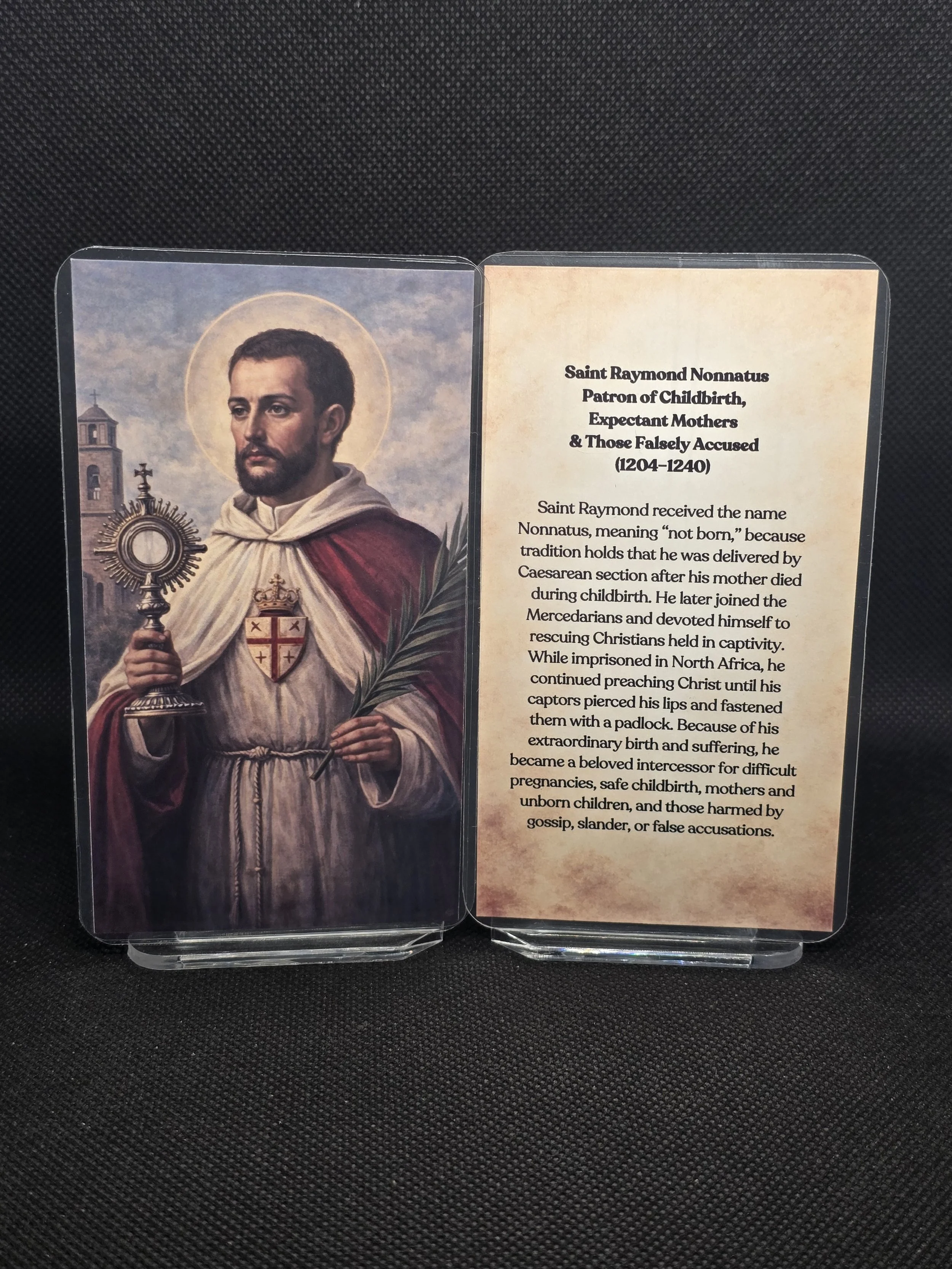
Saint Raymond Nonnatus Prayer Card – Patron for Safe Childbirth, Difficult Pregnancy & Protection from Gossip
-
A Child “Not Born”
Saint Raymond was born in 1204 in Catalonia, Spain. His mother died during labor, and he was delivered through an emergency cesarean operation, an extraordinarily dangerous procedure at the time.
Because he was “not born” in the usual way, he received the surname Nonnatus.
His life began in tragedy.
It would become one of radical mercy.
The Order of Ransom
Raymond joined the Mercedarian Order, founded to redeem Christians captured by Muslim forces in Spain and North Africa. The Mercedarians collected alms to ransom captives from slavery and torture.
Raymond distinguished himself by his compassion and courage.
On one mission to Algiers, he freed numerous captives. When funds were exhausted, he voluntarily offered himself as a hostage in exchange for others’ release.
He entered chains willingly.
The Padlock and the Silence
While imprisoned, Raymond continued preaching Christ to fellow captives. Many converted or were strengthened in faith.
Enraged, his captors attempted to silence him permanently. They bored holes through his lips and secured them with a metal padlock, preventing him from speaking.
Even bound and bleeding, he prayed silently and encouraged others through gesture and presence.
Eventually, additional ransom secured his release.
He returned to Spain weakened but spiritually triumphant.
A Life Cut Short
Raymond was later appointed a cardinal but died before reaching Rome. He was only in his thirties.
His life was brief but fierce.
From emergency birth to voluntary captivity, he embodied protection of life and fearless defense of truth.
-
Saint Raymond Nonnatus is especially invoked in matters involving birth and reputation.
Patron Saint Of:
Safe childbirth during difficult pregnancy
Protection of unborn babies in high-risk situations
Deliverance from gossip and false accusation
Midwives and obstetricians
Mothers facing emergency C-sections
Those slandered or misrepresented
People enduring unjust legal battles
Miracles and Ongoing Intercession
Devotion to Saint Raymond spread rapidly among expectant mothers. Numerous accounts describe:
safe deliveries after life-threatening complications
protection during emergency cesarean procedures
survival of premature infants
calm during traumatic labor
He is also fervently invoked by those suffering from gossip and defamation. Many testify to:
exposure of lies
restoration of damaged reputations
peace when falsely accused
unexpected vindication
His intercession often appears in two powerful ways:
protection of fragile life
protection of fragile honorSaint Raymond understands both.
-
Traditional Prayer
O Saint Raymond Nonnatus, glorious patron of those in childbirth and protector of the innocent, intercede for us. Guard mothers and babies from danger and silence every false word spoken against us.
Personal Prayer
Holy Saint Raymond Nonnatus, defender of life and guardian of truth, pray for me.
Intercede for safe childbirth in times of difficult pregnancy. Protect unborn children and grant strength to mothers facing medical complications. Stand beside surgeons and nurses during emergency deliveries.
Shield me from gossip, slander, and false accusation. Restore what has been damaged by careless or malicious words.
You who endured a padlock for preaching Christ, teach me patience when I am misunderstood and courage when silence is required.
By your prayers, may life be preserved and truth defended. Amen.
-
Q: What is Saint Raymond Nonnatus known for?
Saint Raymond is known as the patron saint of safe childbirth and protector against gossip and false accusation. He is especially invoked during high-risk pregnancies and legal or reputational attacks.Q: When is Saint Raymond Nonnatus’ feast day?
Saint Raymond Nonnatus is commemorated on August 31.Q: Which Christian traditions venerate Saint Raymond Nonnatus?
Saint Raymond Nonnatus is venerated within the Catholic Church, particularly in Spain and among Mercedarian communities.Q: Why is Saint Raymond depicted with a padlock on his lips?
The padlock represents the torture he endured when captors pierced and locked his lips to silence his preaching. It symbolizes perseverance under persecution and protection from harmful speech.