 Image 1 of 1
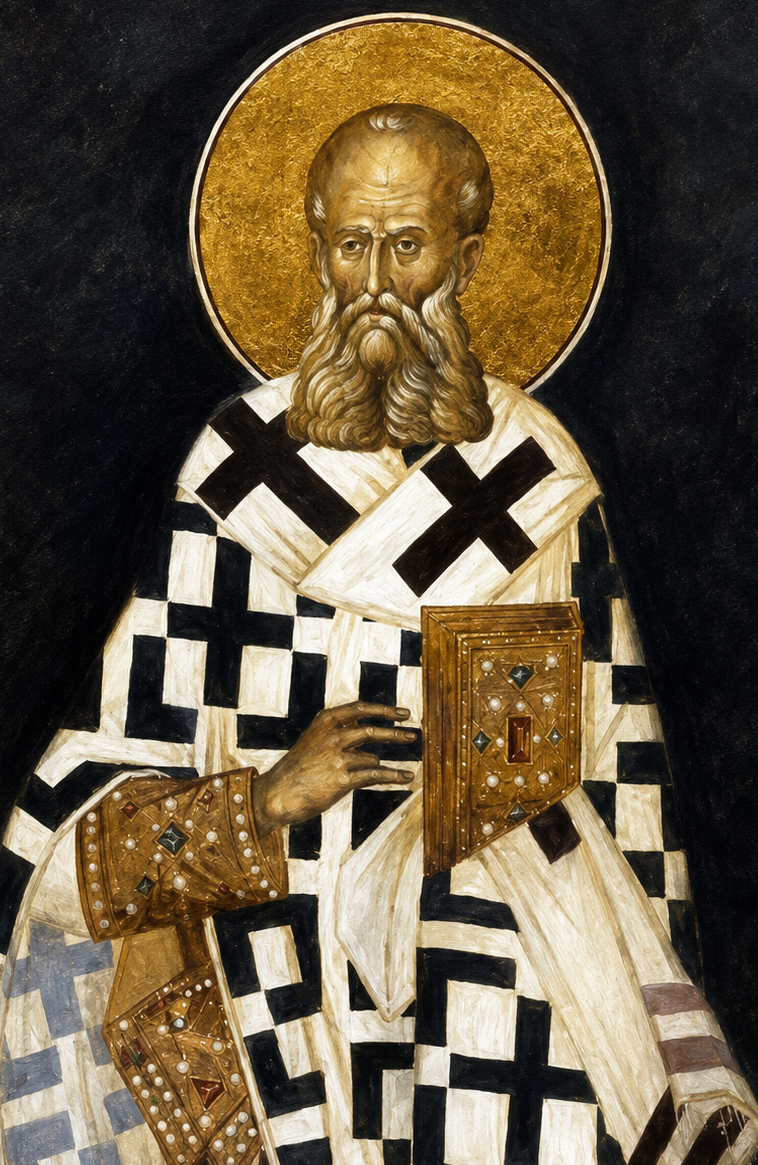
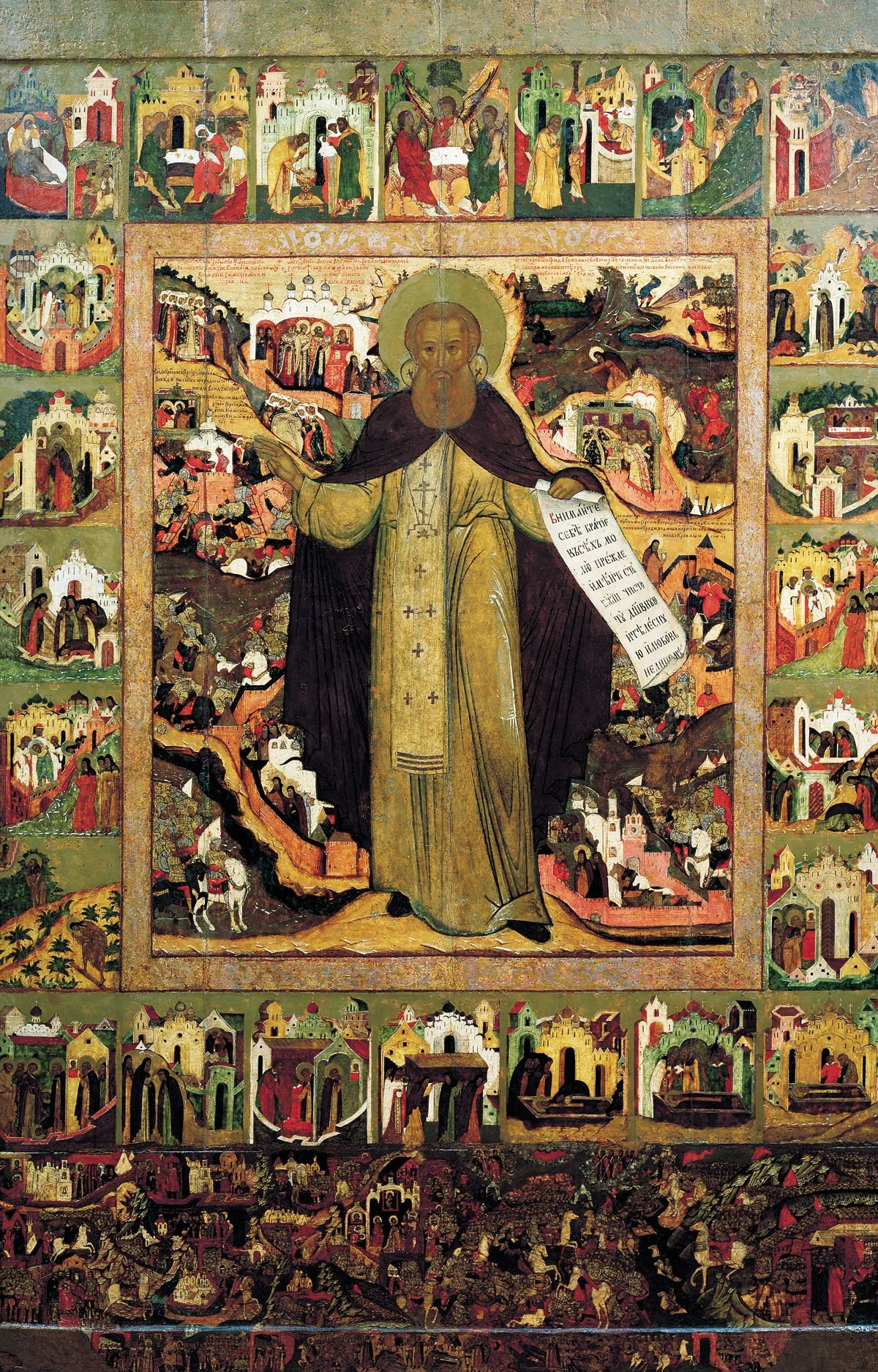
Saint Sergius of Radonezh Prayer Card - For Students, Learning, Humility & Spiritual Strength
Saint Sergius of Radonezh, the Venerable Wonderworker and Abbot of Radonezh, is one of the greatest monastic saints of the Russian Orthodox tradition and one of the most influential spiritual fathers in Eastern Christianity. Born Bartholomew near Rostov in 1314, he struggled greatly as a child to learn to read, withdrew into the wilderness as a young man, founded the monastery that became the Holy Trinity-Saint Sergius Lavra, formed generations of monks, counseled rulers and bishops, worked for peace, performed miracles, and became a spiritual father whose influence spread through countless monasteries and disciples.
Saint Sergius is especially meaningful for students who struggle with learning, children who feel behind their classmates, parents worried about a child's education, people lacking confidence in their abilities, Christians seeking humility, monastics, clergy, spiritual leaders, and anyone trying to persevere quietly when progress seems painfully slow. His childhood is particularly encouraging because the boy who would become one of the great spiritual teachers of the Orthodox world once struggled so badly with reading that his classmates mocked him and his teacher repeatedly chastised him.
According to his traditional Life, young Bartholomew prayed with tears that God would help him learn. While searching for horses one day, he encountered a mysterious monk praying beneath a tree. Bartholomew asked him to pray that God would grant him understanding, and after the elder blessed him and gave him a piece of prosphora, the child was suddenly able to read and understand what had previously seemed impossible. This beloved story makes Saint Sergius a particularly meaningful intercessor for children with learning difficulties, students facing academic frustration, and adults who have spent years believing they simply are not capable of learning.
Yet Saint Sergius is much more than a saint for academic struggles. His entire life became an example of humility without weakness, leadership without ambition, discipline without harshness, and influence without self-promotion. He repeatedly accepted the lowest forms of work within his monastery, carrying water, chopping wood, baking bread, sewing clothing, preparing meals, and building cells with his own hands even after monks began looking to him as their spiritual father.
His life also speaks strongly to Christians who are entrusted with leadership but fear becoming consumed by status. Saint Alexis of Moscow eventually asked Sergius to consider succeeding him as Metropolitan, one of the highest ecclesiastical offices available to him. Saint Sergius refused and remained an abbot, demonstrating that enormous spiritual authority can exist without a desire for increasingly important titles.
Saint Sergius is also remembered as a peacemaker and spiritual father during one of the most difficult periods of medieval Russian history. Rulers sought his counsel, monks traveled great distances to learn from him, and the monastic tradition formed under his influence spread throughout the Russian lands. His emphasis on the Holy Trinity became closely associated with a vision of Christian unity in which division, selfishness, and rivalry are overcome through sacrificial love and communion.
This prayer card is created for students, children with learning difficulties, teachers, parents, monks, seminarians, priests, spiritual fathers, people seeking humility, Christians struggling with discouragement, those beginning a difficult discipline, and anyone who needs strength to continue when progress feels slow. It is also especially fitting for Orthodox families of Russian or Slavic heritage, those devoted to the Holy Trinity, and Christians seeking the intercession of one of the great elders of the Eastern monastic tradition.
Saint Sergius is traditionally honored as a great ascetic, abbot, wonderworker, spiritual father, and founder of monasteries. His childhood experience also makes him a beloved devotional intercessor for students and those experiencing difficulty with reading or learning, though this is better understood through the longstanding tradition surrounding his life rather than as a narrowly defined universal patronage title.
Each card is handmade in Austin, TX and created to order. We do not keep stock, because every prayer card is treated as a unique devotional offering. They are printed on museum-quality photo paper, not cardstock, and every card is made slowly during prayer with intentional reverence for the saint and for the person who will receive it. Names are lifted before Christ, intentions are held carefully, and each piece is handled multiple times in prayerful silence, asking God for mercy and asking Saint Sergius to intercede for the soul it is being made for. This is devotional craftsmanship shaped with patience, care, and spiritual responsibility because every soul and every prayer matters.
THE LIFE & STORY
Saint Sergius of Radonezh was born Bartholomew on May 3, 1314, in the village of Varnitsa near Rostov. His parents, Saints Cyril and Maria, belonged to the nobility but were remembered above all for their Christian piety. The traditional Life of Saint Sergius surrounds his birth with signs of his future vocation, presenting him from infancy as a child set apart for a life of prayer and extraordinary spiritual discipline.
When Bartholomew was about seven years old, he began studying alongside his brothers Stephen and Peter. His brothers progressed successfully, but Bartholomew struggled. No matter how much attention his teacher gave him, reading did not come easily, and his difficulty became a source of embarrassment and pain. His parents corrected him, his teacher chastised him, and other children mocked him because he could not understand what they seemed to learn naturally.
This part of his life is especially important because later generations often remember saints only after they have become extraordinary. We see the finished icon and forget the frightened child who once believed he was failing. Saint Sergius's story preserves that child, which allows students and parents to see holiness developing within weakness rather than after weakness has somehow disappeared from the story.
Bartholomew responded to his difficulty by praying. According to his traditional Life, he begged God with tears to give him the ability to read, not merely so that he could compete with his brothers but because he wanted to understand the Scriptures and participate more fully in the life of the Church.
One day, while his father had sent him to look for horses, Bartholomew encountered an elder who appeared as a monk and was standing beneath an oak tree in prayer. The boy waited respectfully until the monk had finished, received his blessing, and then told him what he wanted more than anything else: the ability to understand reading and writing.
The elder prayed for him and gave him a small piece of prosphora as a sign of God's grace. He then accompanied Bartholomew home, where the boy was instructed to read from the Psalter. To the amazement of his parents, Bartholomew began reading successfully and from that time was able to understand books with a freedom he had not possessed before.
This encounter became one of the most famous scenes in the life of Saint Sergius and has frequently appeared in Orthodox art. Its meaning goes beyond academic success because Bartholomew's learning begins with prayer, Eucharistic imagery, Scripture, humility, and dependence upon God. Knowledge becomes something received with gratitude rather than something used to prove superiority over others.
As Bartholomew grew older, his desire for prayer became stronger. Around 1328 his family moved from Rostov to Radonezh, and his parents eventually entered monastic life shortly before their deaths. After burying them, Bartholomew and his widowed brother Stephen withdrew into the forest to pursue the solitary life.
The brothers constructed simple cells and then a small church dedicated to the Most Holy Trinity. Life in the wilderness was severe, and Stephen eventually left for a monastery in Moscow because he could not endure the difficulties of their isolated existence. Bartholomew remained behind, embracing solitude, prayer, fasting, physical labor, and the spiritual struggles of the wilderness.
In 1337 Bartholomew received monastic tonsure and was given the name Sergius, after the martyr Saint Sergius whose feast was celebrated at that time. The wilderness that had seemed empty slowly began drawing other people because holiness has a strange way of making even hidden places visible. Monks began seeking Sergius for guidance, and eventually a small brotherhood gathered around him.
Saint Sergius did not begin by attempting to create a famous monastery. He had gone into the forest because he wanted God. Yet other men recognized something in his life that they wanted to learn, and a monastic community developed around the small church dedicated to the Holy Trinity.
His leadership was intensely practical. Saint Sergius built cells, carried water, chopped wood, baked bread, prepared food, sewed clothing, and served his brothers with his own hands while also maintaining a severe life of prayer, fasting, and vigil. The monks eventually persuaded him to accept ordination and responsibility as their igumen, or abbot, but his title did not change his willingness to perform ordinary work.
This became one of the defining qualities of Saint Sergius's spirituality. He did not teach humility as an idea while quietly expecting other people to serve him. Leadership meant being the person willing to do what needed to be done.
As the community expanded, the monastery experienced periods of severe poverty. Food sometimes became scarce, yet the traditional Life remembers unexpected assistance arriving through providence when the monks had almost nothing. Saint Sergius continued forming his community around prayer, shared labor, obedience, poverty, and common life.
His reputation eventually reached Constantinople. Patriarch Philotheus sent Saint Sergius a blessing and encouraged the establishment of a fully cenobitic form of monasticism in which the brothers would hold their life and possessions in common. The reform created resistance among some of the monks, and Sergius eventually left rather than intensify the conflict, founding another monastery at the Kirzhach River.
The original monastery quickly began to suffer without him, and the monks appealed to Saint Alexis of Moscow to bring their spiritual father back. Sergius obeyed and returned, demonstrating once again that he did not treat the monastery as his personal possession. He had been willing to leave rather than destroy peace through a struggle for authority, and he was willing to return when obedience required it.
During his lifetime, Saint Sergius became renowned as a wonderworker and spiritual elder. The sick traveled to him, people came seeking counsel, and his Life records healings and extraordinary spiritual gifts. Yet the greater his reputation became, the more carefully the tradition emphasizes that he remained humble and uninterested in human praise.
His spiritual influence reached bishops and rulers as well as ordinary pilgrims. Saint Stephen of Perm deeply revered him, while Saint Alexis of Moscow maintained a close spiritual friendship with him. Saint Alexis eventually asked Sergius to accept the possibility of becoming Metropolitan, but Sergius humbly refused the position and remained with the monastic vocation God had given him.
SAINT SERGIUS & THE BATTLE OF KULIKOVO
Saint Sergius lived while the Russian principalities remained under the political domination of the Golden Horde, and his life became connected with one of the most important battles of the period. In 1380 Grand Prince Demetrius, later known as Saint Demetrius Donskoy, traveled to Saint Sergius before confronting the forces of Mamai and asked for his blessing.
Saint Sergius blessed the prince and sent two monks, Alexander Peresvet and Andrew Oslyabya, to accompany him. The tradition also records that Sergius foretold victory, while he and the remaining brethren prayed during the battle. The Russian forces won at Kulikovo Field on September 8, 1380, a victory that became symbolically important in the gradual movement away from Mongol-Tatar domination.
This part of Saint Sergius's life must be understood within its medieval historical setting rather than turned into a modern political slogan. His enduring spiritual importance does not depend upon nationalism. The deeper Christian theme is that rulers sought the counsel of a monk whose authority did not come from armies, wealth, or political office.
Saint Sergius had refused one of the highest offices in the Russian Church, yet princes still traveled to him because spiritual authority can possess a weight that official power cannot manufacture. His influence came from the life he had already spent in prayer, fasting, service, humility, and the disciplined pursuit of God.
THE HOLY TRINITY, UNITY & PEACE
The monastery Saint Sergius founded was dedicated from the beginning to the Life-Creating Trinity, and devotion to the Holy Trinity became inseparable from his spiritual legacy. The Orthodox tradition sees in Saint Sergius's monastic community an earthly attempt to live out unity, sacrificial love, and communion modeled upon the divine life of the Father, Son, and Holy Spirit.
This gives Saint Sergius an important place for Christians praying about division, rivalry, and broken community. His answer to the fragmentation of his age was not simply political organization. He formed communities where people had to learn to surrender selfishness, share possessions, obey one another, pray together, work together, and forgive one another.
The monastic ideal associated with Saint Sergius therefore offers a profound lesson for families, parishes, marriages, ministries, and communities. Peace is not created merely by putting people in the same building because people can live beside each other while remaining deeply divided. Christian unity requires the slow death of pride, resentment, possessiveness, and the constant need to have one's own way.
The influence of Saint Sergius's Trinitarian spirituality eventually became connected with one of the greatest works of Orthodox iconography. Saint Andrew Rublev, associated with the spiritual tradition flowing from the Trinity monastery, painted his famous icon of the Holy Trinity in memory and honor of Saint Sergius.
The icon came to express visually what Saint Sergius had attempted to embody spiritually: communion without confusion, unity without coercion, love without domination, and peace that comes from life centered upon God.
STUDENTS, READING & LEARNING DIFFICULTIES
Saint Sergius has a uniquely powerful connection with students because his own childhood learning difficulties are so central to his traditional Life. He was not remembered as a child prodigy who effortlessly surpassed everyone around him. He struggled while his brothers succeeded, endured correction from adults, and experienced ridicule from other children.
For a child with dyslexia, attention difficulties, reading problems, developmental differences, academic anxiety, or simply a subject that refuses to make sense, this story can be extraordinarily comforting. Saint Sergius understands the humiliation of watching other students succeed while feeling as though something that should be simple is impossibly difficult.
His story can be equally important for parents because a struggling child is not necessarily an incapable child. The boy who could not keep pace with his classmates eventually became the spiritual teacher of bishops, monks, rulers, and generations of Christians.
The lesson is not that every learning difficulty will disappear miraculously if someone prays hard enough. Christian prayer should never be used to blame a child when difficulties remain. The deeper message is that present weakness does not reveal the limits of a person's future, and academic struggle does not determine a soul's worth.
Saint Sergius is therefore a meaningful intercessor for students who need perseverance as much as understanding. Some prayers are answered through sudden breakthroughs, while others are answered through years of patience, good teachers, repeated practice, medical or educational support, and the grace to keep trying without being ashamed.
This prayer card is especially fitting for children beginning school, students preparing for exams, those struggling to read, homeschool families, parents of children with learning challenges, teachers, tutors, seminarians, and anyone beginning a difficult course of study.
HUMILITY, WORK & LEADERSHIP
Saint Sergius became enormously influential without building his life around being influential. This is one of the most important reasons his example remains relevant for priests, business owners, ministry leaders, parents, teachers, and anyone entrusted with responsibility.
Even after monks looked to him as their abbot, Sergius continued carrying water, preparing food, chopping wood, building cells, and performing other forms of ordinary labor. His leadership grew from service rather than from exemption from service.
His refusal of the office of Metropolitan reveals the same interior freedom. Saint Sergius was not afraid of responsibility because he already carried enormous responsibility, but he did not automatically interpret every opportunity for advancement as the will of God.
That distinction is especially valuable in a culture that frequently treats growth, visibility, promotion, and expansion as obvious goods. Saint Sergius teaches that a larger platform is not necessarily a greater vocation, and refusing status can sometimes require more spiritual courage than accepting it.
His life asks leaders a difficult question: if the title disappeared tomorrow, would the service remain?
Saint Sergius could answer yes because his spiritual identity had existed before the office. He had been the man carrying water before he was the famous abbot, and the fame never made the water beneath him.
MIRACLES & SPIRITUAL GIFTS
The Orthodox tradition remembers Saint Sergius as a wonderworker even during his earthly life. His Life records healings, extraordinary spiritual perception, and the restoration of a boy whose grieving father had believed him lost. People traveled from distant places seeking healing and spiritual counsel, yet Saint Sergius remained careful to direct praise toward God rather than himself.
The monastic community also preserved traditions of extraordinary events during his liturgical prayer. One disciple testified that an angel served with Saint Sergius during the Divine Liturgy, while other traditions surrounding the monastery describe heavenly signs associated with his prayer.
One of the most important events in his spiritual life was the appearance of the Mother of God. According to Orthodox tradition, Saint Sergius was praying late at night when the Theotokos appeared accompanied by the Apostles Peter and John. She promised her protection over his monastery and assured him that the community would continue to flourish.
The appearance became an important part of the monastery's devotional tradition, with a special commemoration kept on August 24. An icon of the event was later placed near the saint's grave, preserving the memory of the promise given to him and his disciples.
These miracles are not incidental decorations attached to the life of Saint Sergius. Within Orthodox spirituality, they flow from the same life that produced his humility, fasting, prayer, obedience, and service. The wonderworker and the monk carrying water are the same person.
HIS DISCIPLES & THE SPREAD OF MONASTIC LIFE
One of the greatest measures of Saint Sergius's influence is found not simply in what he personally accomplished but in what happened through his disciples. Monks formed under his guidance founded monasteries throughout the Russian lands, carrying his spiritual tradition into new regions and forming new generations of disciples.
The OCA's account of his legacy describes an enormous network of monasteries connected directly or indirectly with the spiritual school of Saint Sergius. These communities became centers not only of ascetic life but also of worship, education, manuscript culture, charity, missionary activity, and the formation of clergy.
This gives Saint Sergius special meaning for anyone concerned with mentorship. A spiritual father, teacher, parent, or leader does not need to accomplish everything personally because some of the greatest fruits of a life may appear through people who were formed, encouraged, corrected, or taught along the way.
Saint Sergius created something larger than himself precisely because he did not make himself the center of it. His disciples could leave, establish communities, and become spiritual fathers themselves without threatening his importance.
Healthy spiritual leadership produces other mature people rather than permanent dependents. Saint Sergius's legacy demonstrates how humility can multiply influence far beyond anything ambition could have built by itself.
HIS REPOSE & HOLY RELICS
Saint Sergius lived into old age and, according to his Life, knew months beforehand that his earthly life was approaching its end. He appointed his disciple Saint Nikon to succeed him as igumen and prepared the brotherhood to continue without him.
Before his repose, he gave the monks a final instruction centered on attention to the spiritual life, fear of God, purity of soul, and sincere love. Saint Sergius peacefully fell asleep in the Lord on September 25, 1392, the date that remains his principal liturgical commemoration.
Thirty years later, in 1422, his relics were uncovered during construction at the monastery. The Orthodox account records that his body and clothing were found preserved despite water surrounding the grave, and the relics were eventually placed in the stone Trinity Cathedral.
His relics remain associated with the Holy Trinity-Saint Sergius Lavra, which became one of the great spiritual centers of Russian Orthodoxy. The uncovering of his relics is commemorated separately on July 5.
For centuries, pilgrims have traveled to seek Saint Sergius's intercession, receive spiritual consolation, and venerate his relics. His monastery survived invasions, destruction, rebuilding, political upheaval, and enormous changes in Russian history while continuing to bear the name of the humble monk who originally entered the forest seeking solitude.
PRAYERS
A simple traditional invocation may be prayed regularly: Venerable Father Sergius, pray to God for us. Students may use this prayer before studying, while parents may pray it for children struggling with school and monastics or clergy may invoke him for humility, perseverance, and faithful service.
The Orthodox Troparion for his September feast remembers Saint Sergius as an ascetic who struggled against the passions through prayer, vigils, fasting, and virtue. It asks him to remember the spiritual flock he gathered and continue interceding for his children before the Holy Trinity.
The Troparion for the uncovering of his relics likewise remembers how he left the turmoil of the world for the wilderness, raised disciples in obedience and humility, enlightened those who approached him in faith, and became associated with healing. It concludes with the traditional petition: “Our Father Sergius, pray to Christ God that our souls may be saved.”
For a student facing a difficult subject, the prayer card can serve as a reminder of young Bartholomew's own struggle. Prayer does not replace studying, tutoring, educational support, patience, or hard work, but Saint Sergius's life reminds the student that difficulty is not shameful and that understanding can grow with time, grace, and perseverance.
For leaders, the card can serve as a reminder of the abbot who continued to work with his hands and declined higher office. For families and communities experiencing division, his devotion to the Holy Trinity points toward communion, humility, and the difficult work of overcoming selfishness for the sake of peace.
This prayer card is especially fitting for a prayer corner, school desk, backpack, homeschool area, library, seminary room, monastery cell, parish office, study Bible, or anywhere someone needs to remember that weakness can become a place where patience, humility, and grace begin their work.
FAQ
Who is Saint Sergius of Radonezh?
Saint Sergius of Radonezh was a fourteenth-century Orthodox monk, abbot, ascetic, wonderworker, and founder of the monastery that became the Holy Trinity-Saint Sergius Lavra. He is one of the most influential saints of Russian Orthodox monasticism and formed a spiritual tradition that spread through many disciples and monasteries.
What was Saint Sergius's birth name?
Saint Sergius was born with the name Bartholomew in 1314 near Rostov. He received the monastic name Sergius when he was tonsured in 1337.
Is Saint Sergius of Radonezh an Orthodox saint?
Yes. Saint Sergius is one of the great saints of the Eastern Orthodox Church and holds an especially important place within Russian Orthodox spirituality. His principal feast commemorating his repose is September 25.
Is Saint Sergius of Radonezh Catholic?
Saint Sergius lived in the fourteenth century, long after the historical division between Eastern Orthodox and Roman Catholic Christianity, and he belongs specifically to the Orthodox tradition. He should therefore be identified as an Eastern Orthodox saint, especially associated with Russian Orthodoxy.
What is Saint Sergius of Radonezh known for?
Saint Sergius is known for his wilderness asceticism, founding the Holy Trinity monastery at Radonezh, forming monks and monasteries, humility, wonderworking, devotion to the Holy Trinity, spiritual counsel, and his influence upon medieval Russian religious life. He is also remembered for his childhood struggle to learn to read and the miraculous assistance he received according to his traditional Life.
Is Saint Sergius a patron saint of students?
It is safest to say that Saint Sergius is a beloved intercessor for students and those struggling with learning rather than assign him a universal formal patronage that all Orthodox Churches define in exactly the same way. His connection with students arises naturally from the traditional account of his own childhood difficulty learning to read.
Why do students pray to Saint Sergius of Radonezh?
Saint Sergius struggled greatly with reading as a child and was mocked because he could not learn as easily as his brothers and classmates. According to his Life, after praying and receiving the blessing of a mysterious monk, he gained the ability to read and understand Scripture, making him especially meaningful to students experiencing similar frustration.
Can I pray to Saint Sergius for a child with learning difficulties?
Yes. His childhood makes his intercession particularly meaningful for parents whose children are struggling academically, though prayer should accompany whatever educational, medical, tutoring, or developmental support a child genuinely needs. Saint Sergius's life reminds families that learning difficulty does not determine a child's worth or future.
Can I give this prayer card to a child with dyslexia?
Yes. The traditional Life does not describe Saint Sergius with a modern diagnosis such as dyslexia, so it would be inaccurate to claim that he specifically had the condition. His experience of severe difficulty learning to read, however, makes this a meaningful devotional gift for a child with dyslexia or another learning challenge.
Can I pray to Saint Sergius before an exam?
Yes. Students may ask Saint Sergius to intercede for understanding, perseverance, calm, humility, and the ability to use what they have learned well. His own story also encourages students to combine prayer with diligent effort rather than treating prayer as a substitute for preparation.
Why is Saint Sergius connected with the Holy Trinity?
Saint Sergius and his brother built their wilderness church in honor of the Most Holy Trinity, and the monastery that developed there remained dedicated to the Life-Creating Trinity. His spiritual legacy later became deeply associated with Trinitarian communion, unity, and the overcoming of division through sacrificial Christian love.
What monastery did Saint Sergius found?
Saint Sergius founded the monastic community that eventually became the Holy Trinity-Saint Sergius Lavra. It grew from a small wilderness settlement into one of the most important spiritual centers of Russian Orthodoxy.
Was Saint Sergius a hermit?
Saint Sergius originally withdrew into the wilderness seeking solitude and lived an intensely ascetic life. Other monks eventually gathered around him, transforming his solitary vocation into leadership of a monastic brotherhood.
Did Saint Sergius perform ordinary work in his monastery?
Yes. His traditional Life specifically remembers him building cells, carrying water, chopping wood, baking bread, sewing clothing, preparing food, and serving the brethren. These details became an important part of his example of humble Christian leadership.
Was Saint Sergius a priest?
Yes. As the monastery grew, Saint Sergius was ordained a hieromonk and elevated to serve as igumen, or abbot, in 1354. He continued living simply and participating in ordinary monastic labor even after receiving leadership responsibilities.
Was Saint Sergius ever asked to become Metropolitan?
Yes. Saint Alexis of Moscow asked Saint Sergius to consider succeeding him as Metropolitan, but Sergius humbly declined the office. His refusal became an important example of his lack of ambition for ecclesiastical status.
What is the connection between Saint Sergius and Saint Demetrius Donskoy?
Before the Battle of Kulikovo in 1380, Prince Demetrius visited Saint Sergius and asked for his blessing. Saint Sergius blessed two monks, Alexander Peresvet and Andrew Oslyabya, to accompany the prince, and Orthodox tradition remembers the monks at Radonezh praying during the battle.
Did Saint Sergius bless the Battle of Kulikovo?
Orthodox hagiographic tradition records that Saint Sergius blessed Prince Demetrius before the battle and predicted victory. The event belongs within the historical circumstances of fourteenth-century Rus and should not be separated from that context to create modern political claims.
Did the Virgin Mary appear to Saint Sergius?
According to Orthodox tradition, yes. The Mother of God appeared to Saint Sergius accompanied by the Apostles Peter and John and promised her protection over his monastery. The event remains commemorated liturgically in connection with the Trinity monastery.
Was Saint Sergius a wonderworker?
Yes. The Orthodox Church formally venerates him as Venerable Sergius the Wonderworker, and his traditional Life records healings and other miracles during his earthly life. Miracles and healings also became associated with his relics after his repose.
What is Saint Sergius's connection with Saint Andrew Rublev?
Saint Andrew Rublev belonged to the monastic and spiritual world shaped by the Trinity-Sergius tradition. His famous icon of the Holy Trinity was painted in honor and memory of Saint Sergius, expressing visually the Trinitarian spirituality that had become central to the saint's legacy.
How did Saint Sergius die?
Saint Sergius foresaw his approaching death, appointed Saint Nikon as his successor, and prepared his monks for his departure. He peacefully reposed on September 25, 1392.
Where are Saint Sergius of Radonezh's relics?
Saint Sergius's relics were uncovered in 1422 and transferred into the Trinity Cathedral when the stone church was completed. They are venerated at the Holy Trinity-Saint Sergius Lavra.
When were Saint Sergius's relics uncovered?
His relics were uncovered on July 5, 1422, during construction of the new Trinity cathedral. The Orthodox Church commemorates the uncovering of his relics separately on July 5.
When is Saint Sergius of Radonezh's feast day?
His principal feast commemorating his repose is September 25 in the Orthodox liturgical calendar. The uncovering of his relics is also celebrated on July 5.
Why do some calendars show a different civil date for Saint Sergius?
Orthodox jurisdictions do not all use the same calendar for fixed feasts. September 25 on the Julian calendar currently corresponds to October 8 on the Gregorian civil calendar, so the civil date on which the feast is observed depends upon the calendar followed by the particular Orthodox jurisdiction.
Can I give this card to a teacher or tutor?
Yes. Although Saint Sergius's strongest educational connection comes from his own childhood struggle rather than formal patronage of teachers, his life speaks deeply to anyone helping a student move from frustration toward understanding. It can be a meaningful gift for a patient teacher, special education professional, tutor, homeschool parent, or catechist.
Can I give this card to a seminarian, monk, or priest?
Yes. Saint Sergius is one of the great monastic fathers of the Orthodox tradition, and his combination of prayer, work, humility, spiritual direction, liturgical life, and refusal of status makes him an especially appropriate intercessor for monastics and clergy.
Can I pray to Saint Sergius for humility?
Yes. Humility is one of the clearest themes of his traditional Life, shown in his manual labor, reluctance to accept authority, refusal of higher ecclesiastical office, and continued simplicity even after becoming widely revered.
Can I pray to Saint Sergius for peace in my family or church?
Yes. Peace and unity are natural devotional themes arising from Saint Sergius's Trinitarian spirituality and his emphasis on common life, humility, and overcoming division. This should be understood as an application of his spiritual legacy rather than a narrowly defined official patronage.
Why is Saint Sergius so important in Russian Orthodoxy?
His importance comes from far more than one monastery. Saint Sergius formed disciples whose monasteries spread throughout the Russian lands, influenced monasticism and Christian education, counseled important church and political figures, and became one of the great spiritual fathers of Russian Orthodox Christianity.
What does Saint Sergius teach about learning?
Saint Sergius teaches that difficulty is not the same thing as incapacity and that humiliation should not be allowed to determine a person's identity. His childhood struggle eventually became part of the very life through which generations of struggling students would find encouragement.
What does Saint Sergius teach about leadership?
He teaches that Christian leadership begins with service and does not require constant advancement. Saint Sergius continued performing ordinary work as an abbot and later declined the office of Metropolitan, demonstrating that spiritual authority can grow precisely where ambition decreases.
What is the main message of Saint Sergius of Radonezh's life?
Saint Sergius's life teaches that weakness does not determine the limits of what God can form within a person. A child who could not learn to read became a great spiritual teacher, a hermit became the father of generations of monks, and an abbot who avoided worldly status became one of the most influential saints of Eastern Christianity. His life calls Christians toward prayer, humility, perseverance, work, peace, and a faith strong enough to continue growing without needing recognition.
Saint Sergius of Radonezh, the Venerable Wonderworker and Abbot of Radonezh, is one of the greatest monastic saints of the Russian Orthodox tradition and one of the most influential spiritual fathers in Eastern Christianity. Born Bartholomew near Rostov in 1314, he struggled greatly as a child to learn to read, withdrew into the wilderness as a young man, founded the monastery that became the Holy Trinity-Saint Sergius Lavra, formed generations of monks, counseled rulers and bishops, worked for peace, performed miracles, and became a spiritual father whose influence spread through countless monasteries and disciples.
Saint Sergius is especially meaningful for students who struggle with learning, children who feel behind their classmates, parents worried about a child's education, people lacking confidence in their abilities, Christians seeking humility, monastics, clergy, spiritual leaders, and anyone trying to persevere quietly when progress seems painfully slow. His childhood is particularly encouraging because the boy who would become one of the great spiritual teachers of the Orthodox world once struggled so badly with reading that his classmates mocked him and his teacher repeatedly chastised him.
According to his traditional Life, young Bartholomew prayed with tears that God would help him learn. While searching for horses one day, he encountered a mysterious monk praying beneath a tree. Bartholomew asked him to pray that God would grant him understanding, and after the elder blessed him and gave him a piece of prosphora, the child was suddenly able to read and understand what had previously seemed impossible. This beloved story makes Saint Sergius a particularly meaningful intercessor for children with learning difficulties, students facing academic frustration, and adults who have spent years believing they simply are not capable of learning.
Yet Saint Sergius is much more than a saint for academic struggles. His entire life became an example of humility without weakness, leadership without ambition, discipline without harshness, and influence without self-promotion. He repeatedly accepted the lowest forms of work within his monastery, carrying water, chopping wood, baking bread, sewing clothing, preparing meals, and building cells with his own hands even after monks began looking to him as their spiritual father.
His life also speaks strongly to Christians who are entrusted with leadership but fear becoming consumed by status. Saint Alexis of Moscow eventually asked Sergius to consider succeeding him as Metropolitan, one of the highest ecclesiastical offices available to him. Saint Sergius refused and remained an abbot, demonstrating that enormous spiritual authority can exist without a desire for increasingly important titles.
Saint Sergius is also remembered as a peacemaker and spiritual father during one of the most difficult periods of medieval Russian history. Rulers sought his counsel, monks traveled great distances to learn from him, and the monastic tradition formed under his influence spread throughout the Russian lands. His emphasis on the Holy Trinity became closely associated with a vision of Christian unity in which division, selfishness, and rivalry are overcome through sacrificial love and communion.
This prayer card is created for students, children with learning difficulties, teachers, parents, monks, seminarians, priests, spiritual fathers, people seeking humility, Christians struggling with discouragement, those beginning a difficult discipline, and anyone who needs strength to continue when progress feels slow. It is also especially fitting for Orthodox families of Russian or Slavic heritage, those devoted to the Holy Trinity, and Christians seeking the intercession of one of the great elders of the Eastern monastic tradition.
Saint Sergius is traditionally honored as a great ascetic, abbot, wonderworker, spiritual father, and founder of monasteries. His childhood experience also makes him a beloved devotional intercessor for students and those experiencing difficulty with reading or learning, though this is better understood through the longstanding tradition surrounding his life rather than as a narrowly defined universal patronage title.
Each card is handmade in Austin, TX and created to order. We do not keep stock, because every prayer card is treated as a unique devotional offering. They are printed on museum-quality photo paper, not cardstock, and every card is made slowly during prayer with intentional reverence for the saint and for the person who will receive it. Names are lifted before Christ, intentions are held carefully, and each piece is handled multiple times in prayerful silence, asking God for mercy and asking Saint Sergius to intercede for the soul it is being made for. This is devotional craftsmanship shaped with patience, care, and spiritual responsibility because every soul and every prayer matters.
THE LIFE & STORY
Saint Sergius of Radonezh was born Bartholomew on May 3, 1314, in the village of Varnitsa near Rostov. His parents, Saints Cyril and Maria, belonged to the nobility but were remembered above all for their Christian piety. The traditional Life of Saint Sergius surrounds his birth with signs of his future vocation, presenting him from infancy as a child set apart for a life of prayer and extraordinary spiritual discipline.
When Bartholomew was about seven years old, he began studying alongside his brothers Stephen and Peter. His brothers progressed successfully, but Bartholomew struggled. No matter how much attention his teacher gave him, reading did not come easily, and his difficulty became a source of embarrassment and pain. His parents corrected him, his teacher chastised him, and other children mocked him because he could not understand what they seemed to learn naturally.
This part of his life is especially important because later generations often remember saints only after they have become extraordinary. We see the finished icon and forget the frightened child who once believed he was failing. Saint Sergius's story preserves that child, which allows students and parents to see holiness developing within weakness rather than after weakness has somehow disappeared from the story.
Bartholomew responded to his difficulty by praying. According to his traditional Life, he begged God with tears to give him the ability to read, not merely so that he could compete with his brothers but because he wanted to understand the Scriptures and participate more fully in the life of the Church.
One day, while his father had sent him to look for horses, Bartholomew encountered an elder who appeared as a monk and was standing beneath an oak tree in prayer. The boy waited respectfully until the monk had finished, received his blessing, and then told him what he wanted more than anything else: the ability to understand reading and writing.
The elder prayed for him and gave him a small piece of prosphora as a sign of God's grace. He then accompanied Bartholomew home, where the boy was instructed to read from the Psalter. To the amazement of his parents, Bartholomew began reading successfully and from that time was able to understand books with a freedom he had not possessed before.
This encounter became one of the most famous scenes in the life of Saint Sergius and has frequently appeared in Orthodox art. Its meaning goes beyond academic success because Bartholomew's learning begins with prayer, Eucharistic imagery, Scripture, humility, and dependence upon God. Knowledge becomes something received with gratitude rather than something used to prove superiority over others.
As Bartholomew grew older, his desire for prayer became stronger. Around 1328 his family moved from Rostov to Radonezh, and his parents eventually entered monastic life shortly before their deaths. After burying them, Bartholomew and his widowed brother Stephen withdrew into the forest to pursue the solitary life.
The brothers constructed simple cells and then a small church dedicated to the Most Holy Trinity. Life in the wilderness was severe, and Stephen eventually left for a monastery in Moscow because he could not endure the difficulties of their isolated existence. Bartholomew remained behind, embracing solitude, prayer, fasting, physical labor, and the spiritual struggles of the wilderness.
In 1337 Bartholomew received monastic tonsure and was given the name Sergius, after the martyr Saint Sergius whose feast was celebrated at that time. The wilderness that had seemed empty slowly began drawing other people because holiness has a strange way of making even hidden places visible. Monks began seeking Sergius for guidance, and eventually a small brotherhood gathered around him.
Saint Sergius did not begin by attempting to create a famous monastery. He had gone into the forest because he wanted God. Yet other men recognized something in his life that they wanted to learn, and a monastic community developed around the small church dedicated to the Holy Trinity.
His leadership was intensely practical. Saint Sergius built cells, carried water, chopped wood, baked bread, prepared food, sewed clothing, and served his brothers with his own hands while also maintaining a severe life of prayer, fasting, and vigil. The monks eventually persuaded him to accept ordination and responsibility as their igumen, or abbot, but his title did not change his willingness to perform ordinary work.
This became one of the defining qualities of Saint Sergius's spirituality. He did not teach humility as an idea while quietly expecting other people to serve him. Leadership meant being the person willing to do what needed to be done.
As the community expanded, the monastery experienced periods of severe poverty. Food sometimes became scarce, yet the traditional Life remembers unexpected assistance arriving through providence when the monks had almost nothing. Saint Sergius continued forming his community around prayer, shared labor, obedience, poverty, and common life.
His reputation eventually reached Constantinople. Patriarch Philotheus sent Saint Sergius a blessing and encouraged the establishment of a fully cenobitic form of monasticism in which the brothers would hold their life and possessions in common. The reform created resistance among some of the monks, and Sergius eventually left rather than intensify the conflict, founding another monastery at the Kirzhach River.
The original monastery quickly began to suffer without him, and the monks appealed to Saint Alexis of Moscow to bring their spiritual father back. Sergius obeyed and returned, demonstrating once again that he did not treat the monastery as his personal possession. He had been willing to leave rather than destroy peace through a struggle for authority, and he was willing to return when obedience required it.
During his lifetime, Saint Sergius became renowned as a wonderworker and spiritual elder. The sick traveled to him, people came seeking counsel, and his Life records healings and extraordinary spiritual gifts. Yet the greater his reputation became, the more carefully the tradition emphasizes that he remained humble and uninterested in human praise.
His spiritual influence reached bishops and rulers as well as ordinary pilgrims. Saint Stephen of Perm deeply revered him, while Saint Alexis of Moscow maintained a close spiritual friendship with him. Saint Alexis eventually asked Sergius to accept the possibility of becoming Metropolitan, but Sergius humbly refused the position and remained with the monastic vocation God had given him.
SAINT SERGIUS & THE BATTLE OF KULIKOVO
Saint Sergius lived while the Russian principalities remained under the political domination of the Golden Horde, and his life became connected with one of the most important battles of the period. In 1380 Grand Prince Demetrius, later known as Saint Demetrius Donskoy, traveled to Saint Sergius before confronting the forces of Mamai and asked for his blessing.
Saint Sergius blessed the prince and sent two monks, Alexander Peresvet and Andrew Oslyabya, to accompany him. The tradition also records that Sergius foretold victory, while he and the remaining brethren prayed during the battle. The Russian forces won at Kulikovo Field on September 8, 1380, a victory that became symbolically important in the gradual movement away from Mongol-Tatar domination.
This part of Saint Sergius's life must be understood within its medieval historical setting rather than turned into a modern political slogan. His enduring spiritual importance does not depend upon nationalism. The deeper Christian theme is that rulers sought the counsel of a monk whose authority did not come from armies, wealth, or political office.
Saint Sergius had refused one of the highest offices in the Russian Church, yet princes still traveled to him because spiritual authority can possess a weight that official power cannot manufacture. His influence came from the life he had already spent in prayer, fasting, service, humility, and the disciplined pursuit of God.
THE HOLY TRINITY, UNITY & PEACE
The monastery Saint Sergius founded was dedicated from the beginning to the Life-Creating Trinity, and devotion to the Holy Trinity became inseparable from his spiritual legacy. The Orthodox tradition sees in Saint Sergius's monastic community an earthly attempt to live out unity, sacrificial love, and communion modeled upon the divine life of the Father, Son, and Holy Spirit.
This gives Saint Sergius an important place for Christians praying about division, rivalry, and broken community. His answer to the fragmentation of his age was not simply political organization. He formed communities where people had to learn to surrender selfishness, share possessions, obey one another, pray together, work together, and forgive one another.
The monastic ideal associated with Saint Sergius therefore offers a profound lesson for families, parishes, marriages, ministries, and communities. Peace is not created merely by putting people in the same building because people can live beside each other while remaining deeply divided. Christian unity requires the slow death of pride, resentment, possessiveness, and the constant need to have one's own way.
The influence of Saint Sergius's Trinitarian spirituality eventually became connected with one of the greatest works of Orthodox iconography. Saint Andrew Rublev, associated with the spiritual tradition flowing from the Trinity monastery, painted his famous icon of the Holy Trinity in memory and honor of Saint Sergius.
The icon came to express visually what Saint Sergius had attempted to embody spiritually: communion without confusion, unity without coercion, love without domination, and peace that comes from life centered upon God.
STUDENTS, READING & LEARNING DIFFICULTIES
Saint Sergius has a uniquely powerful connection with students because his own childhood learning difficulties are so central to his traditional Life. He was not remembered as a child prodigy who effortlessly surpassed everyone around him. He struggled while his brothers succeeded, endured correction from adults, and experienced ridicule from other children.
For a child with dyslexia, attention difficulties, reading problems, developmental differences, academic anxiety, or simply a subject that refuses to make sense, this story can be extraordinarily comforting. Saint Sergius understands the humiliation of watching other students succeed while feeling as though something that should be simple is impossibly difficult.
His story can be equally important for parents because a struggling child is not necessarily an incapable child. The boy who could not keep pace with his classmates eventually became the spiritual teacher of bishops, monks, rulers, and generations of Christians.
The lesson is not that every learning difficulty will disappear miraculously if someone prays hard enough. Christian prayer should never be used to blame a child when difficulties remain. The deeper message is that present weakness does not reveal the limits of a person's future, and academic struggle does not determine a soul's worth.
Saint Sergius is therefore a meaningful intercessor for students who need perseverance as much as understanding. Some prayers are answered through sudden breakthroughs, while others are answered through years of patience, good teachers, repeated practice, medical or educational support, and the grace to keep trying without being ashamed.
This prayer card is especially fitting for children beginning school, students preparing for exams, those struggling to read, homeschool families, parents of children with learning challenges, teachers, tutors, seminarians, and anyone beginning a difficult course of study.
HUMILITY, WORK & LEADERSHIP
Saint Sergius became enormously influential without building his life around being influential. This is one of the most important reasons his example remains relevant for priests, business owners, ministry leaders, parents, teachers, and anyone entrusted with responsibility.
Even after monks looked to him as their abbot, Sergius continued carrying water, preparing food, chopping wood, building cells, and performing other forms of ordinary labor. His leadership grew from service rather than from exemption from service.
His refusal of the office of Metropolitan reveals the same interior freedom. Saint Sergius was not afraid of responsibility because he already carried enormous responsibility, but he did not automatically interpret every opportunity for advancement as the will of God.
That distinction is especially valuable in a culture that frequently treats growth, visibility, promotion, and expansion as obvious goods. Saint Sergius teaches that a larger platform is not necessarily a greater vocation, and refusing status can sometimes require more spiritual courage than accepting it.
His life asks leaders a difficult question: if the title disappeared tomorrow, would the service remain?
Saint Sergius could answer yes because his spiritual identity had existed before the office. He had been the man carrying water before he was the famous abbot, and the fame never made the water beneath him.
MIRACLES & SPIRITUAL GIFTS
The Orthodox tradition remembers Saint Sergius as a wonderworker even during his earthly life. His Life records healings, extraordinary spiritual perception, and the restoration of a boy whose grieving father had believed him lost. People traveled from distant places seeking healing and spiritual counsel, yet Saint Sergius remained careful to direct praise toward God rather than himself.
The monastic community also preserved traditions of extraordinary events during his liturgical prayer. One disciple testified that an angel served with Saint Sergius during the Divine Liturgy, while other traditions surrounding the monastery describe heavenly signs associated with his prayer.
One of the most important events in his spiritual life was the appearance of the Mother of God. According to Orthodox tradition, Saint Sergius was praying late at night when the Theotokos appeared accompanied by the Apostles Peter and John. She promised her protection over his monastery and assured him that the community would continue to flourish.
The appearance became an important part of the monastery's devotional tradition, with a special commemoration kept on August 24. An icon of the event was later placed near the saint's grave, preserving the memory of the promise given to him and his disciples.
These miracles are not incidental decorations attached to the life of Saint Sergius. Within Orthodox spirituality, they flow from the same life that produced his humility, fasting, prayer, obedience, and service. The wonderworker and the monk carrying water are the same person.
HIS DISCIPLES & THE SPREAD OF MONASTIC LIFE
One of the greatest measures of Saint Sergius's influence is found not simply in what he personally accomplished but in what happened through his disciples. Monks formed under his guidance founded monasteries throughout the Russian lands, carrying his spiritual tradition into new regions and forming new generations of disciples.
The OCA's account of his legacy describes an enormous network of monasteries connected directly or indirectly with the spiritual school of Saint Sergius. These communities became centers not only of ascetic life but also of worship, education, manuscript culture, charity, missionary activity, and the formation of clergy.
This gives Saint Sergius special meaning for anyone concerned with mentorship. A spiritual father, teacher, parent, or leader does not need to accomplish everything personally because some of the greatest fruits of a life may appear through people who were formed, encouraged, corrected, or taught along the way.
Saint Sergius created something larger than himself precisely because he did not make himself the center of it. His disciples could leave, establish communities, and become spiritual fathers themselves without threatening his importance.
Healthy spiritual leadership produces other mature people rather than permanent dependents. Saint Sergius's legacy demonstrates how humility can multiply influence far beyond anything ambition could have built by itself.
HIS REPOSE & HOLY RELICS
Saint Sergius lived into old age and, according to his Life, knew months beforehand that his earthly life was approaching its end. He appointed his disciple Saint Nikon to succeed him as igumen and prepared the brotherhood to continue without him.
Before his repose, he gave the monks a final instruction centered on attention to the spiritual life, fear of God, purity of soul, and sincere love. Saint Sergius peacefully fell asleep in the Lord on September 25, 1392, the date that remains his principal liturgical commemoration.
Thirty years later, in 1422, his relics were uncovered during construction at the monastery. The Orthodox account records that his body and clothing were found preserved despite water surrounding the grave, and the relics were eventually placed in the stone Trinity Cathedral.
His relics remain associated with the Holy Trinity-Saint Sergius Lavra, which became one of the great spiritual centers of Russian Orthodoxy. The uncovering of his relics is commemorated separately on July 5.
For centuries, pilgrims have traveled to seek Saint Sergius's intercession, receive spiritual consolation, and venerate his relics. His monastery survived invasions, destruction, rebuilding, political upheaval, and enormous changes in Russian history while continuing to bear the name of the humble monk who originally entered the forest seeking solitude.
PRAYERS
A simple traditional invocation may be prayed regularly: Venerable Father Sergius, pray to God for us. Students may use this prayer before studying, while parents may pray it for children struggling with school and monastics or clergy may invoke him for humility, perseverance, and faithful service.
The Orthodox Troparion for his September feast remembers Saint Sergius as an ascetic who struggled against the passions through prayer, vigils, fasting, and virtue. It asks him to remember the spiritual flock he gathered and continue interceding for his children before the Holy Trinity.
The Troparion for the uncovering of his relics likewise remembers how he left the turmoil of the world for the wilderness, raised disciples in obedience and humility, enlightened those who approached him in faith, and became associated with healing. It concludes with the traditional petition: “Our Father Sergius, pray to Christ God that our souls may be saved.”
For a student facing a difficult subject, the prayer card can serve as a reminder of young Bartholomew's own struggle. Prayer does not replace studying, tutoring, educational support, patience, or hard work, but Saint Sergius's life reminds the student that difficulty is not shameful and that understanding can grow with time, grace, and perseverance.
For leaders, the card can serve as a reminder of the abbot who continued to work with his hands and declined higher office. For families and communities experiencing division, his devotion to the Holy Trinity points toward communion, humility, and the difficult work of overcoming selfishness for the sake of peace.
This prayer card is especially fitting for a prayer corner, school desk, backpack, homeschool area, library, seminary room, monastery cell, parish office, study Bible, or anywhere someone needs to remember that weakness can become a place where patience, humility, and grace begin their work.
FAQ
Who is Saint Sergius of Radonezh?
Saint Sergius of Radonezh was a fourteenth-century Orthodox monk, abbot, ascetic, wonderworker, and founder of the monastery that became the Holy Trinity-Saint Sergius Lavra. He is one of the most influential saints of Russian Orthodox monasticism and formed a spiritual tradition that spread through many disciples and monasteries.
What was Saint Sergius's birth name?
Saint Sergius was born with the name Bartholomew in 1314 near Rostov. He received the monastic name Sergius when he was tonsured in 1337.
Is Saint Sergius of Radonezh an Orthodox saint?
Yes. Saint Sergius is one of the great saints of the Eastern Orthodox Church and holds an especially important place within Russian Orthodox spirituality. His principal feast commemorating his repose is September 25.
Is Saint Sergius of Radonezh Catholic?
Saint Sergius lived in the fourteenth century, long after the historical division between Eastern Orthodox and Roman Catholic Christianity, and he belongs specifically to the Orthodox tradition. He should therefore be identified as an Eastern Orthodox saint, especially associated with Russian Orthodoxy.
What is Saint Sergius of Radonezh known for?
Saint Sergius is known for his wilderness asceticism, founding the Holy Trinity monastery at Radonezh, forming monks and monasteries, humility, wonderworking, devotion to the Holy Trinity, spiritual counsel, and his influence upon medieval Russian religious life. He is also remembered for his childhood struggle to learn to read and the miraculous assistance he received according to his traditional Life.
Is Saint Sergius a patron saint of students?
It is safest to say that Saint Sergius is a beloved intercessor for students and those struggling with learning rather than assign him a universal formal patronage that all Orthodox Churches define in exactly the same way. His connection with students arises naturally from the traditional account of his own childhood difficulty learning to read.
Why do students pray to Saint Sergius of Radonezh?
Saint Sergius struggled greatly with reading as a child and was mocked because he could not learn as easily as his brothers and classmates. According to his Life, after praying and receiving the blessing of a mysterious monk, he gained the ability to read and understand Scripture, making him especially meaningful to students experiencing similar frustration.
Can I pray to Saint Sergius for a child with learning difficulties?
Yes. His childhood makes his intercession particularly meaningful for parents whose children are struggling academically, though prayer should accompany whatever educational, medical, tutoring, or developmental support a child genuinely needs. Saint Sergius's life reminds families that learning difficulty does not determine a child's worth or future.
Can I give this prayer card to a child with dyslexia?
Yes. The traditional Life does not describe Saint Sergius with a modern diagnosis such as dyslexia, so it would be inaccurate to claim that he specifically had the condition. His experience of severe difficulty learning to read, however, makes this a meaningful devotional gift for a child with dyslexia or another learning challenge.
Can I pray to Saint Sergius before an exam?
Yes. Students may ask Saint Sergius to intercede for understanding, perseverance, calm, humility, and the ability to use what they have learned well. His own story also encourages students to combine prayer with diligent effort rather than treating prayer as a substitute for preparation.
Why is Saint Sergius connected with the Holy Trinity?
Saint Sergius and his brother built their wilderness church in honor of the Most Holy Trinity, and the monastery that developed there remained dedicated to the Life-Creating Trinity. His spiritual legacy later became deeply associated with Trinitarian communion, unity, and the overcoming of division through sacrificial Christian love.
What monastery did Saint Sergius found?
Saint Sergius founded the monastic community that eventually became the Holy Trinity-Saint Sergius Lavra. It grew from a small wilderness settlement into one of the most important spiritual centers of Russian Orthodoxy.
Was Saint Sergius a hermit?
Saint Sergius originally withdrew into the wilderness seeking solitude and lived an intensely ascetic life. Other monks eventually gathered around him, transforming his solitary vocation into leadership of a monastic brotherhood.
Did Saint Sergius perform ordinary work in his monastery?
Yes. His traditional Life specifically remembers him building cells, carrying water, chopping wood, baking bread, sewing clothing, preparing food, and serving the brethren. These details became an important part of his example of humble Christian leadership.
Was Saint Sergius a priest?
Yes. As the monastery grew, Saint Sergius was ordained a hieromonk and elevated to serve as igumen, or abbot, in 1354. He continued living simply and participating in ordinary monastic labor even after receiving leadership responsibilities.
Was Saint Sergius ever asked to become Metropolitan?
Yes. Saint Alexis of Moscow asked Saint Sergius to consider succeeding him as Metropolitan, but Sergius humbly declined the office. His refusal became an important example of his lack of ambition for ecclesiastical status.
What is the connection between Saint Sergius and Saint Demetrius Donskoy?
Before the Battle of Kulikovo in 1380, Prince Demetrius visited Saint Sergius and asked for his blessing. Saint Sergius blessed two monks, Alexander Peresvet and Andrew Oslyabya, to accompany the prince, and Orthodox tradition remembers the monks at Radonezh praying during the battle.
Did Saint Sergius bless the Battle of Kulikovo?
Orthodox hagiographic tradition records that Saint Sergius blessed Prince Demetrius before the battle and predicted victory. The event belongs within the historical circumstances of fourteenth-century Rus and should not be separated from that context to create modern political claims.
Did the Virgin Mary appear to Saint Sergius?
According to Orthodox tradition, yes. The Mother of God appeared to Saint Sergius accompanied by the Apostles Peter and John and promised her protection over his monastery. The event remains commemorated liturgically in connection with the Trinity monastery.
Was Saint Sergius a wonderworker?
Yes. The Orthodox Church formally venerates him as Venerable Sergius the Wonderworker, and his traditional Life records healings and other miracles during his earthly life. Miracles and healings also became associated with his relics after his repose.
What is Saint Sergius's connection with Saint Andrew Rublev?
Saint Andrew Rublev belonged to the monastic and spiritual world shaped by the Trinity-Sergius tradition. His famous icon of the Holy Trinity was painted in honor and memory of Saint Sergius, expressing visually the Trinitarian spirituality that had become central to the saint's legacy.
How did Saint Sergius die?
Saint Sergius foresaw his approaching death, appointed Saint Nikon as his successor, and prepared his monks for his departure. He peacefully reposed on September 25, 1392.
Where are Saint Sergius of Radonezh's relics?
Saint Sergius's relics were uncovered in 1422 and transferred into the Trinity Cathedral when the stone church was completed. They are venerated at the Holy Trinity-Saint Sergius Lavra.
When were Saint Sergius's relics uncovered?
His relics were uncovered on July 5, 1422, during construction of the new Trinity cathedral. The Orthodox Church commemorates the uncovering of his relics separately on July 5.
When is Saint Sergius of Radonezh's feast day?
His principal feast commemorating his repose is September 25 in the Orthodox liturgical calendar. The uncovering of his relics is also celebrated on July 5.
Why do some calendars show a different civil date for Saint Sergius?
Orthodox jurisdictions do not all use the same calendar for fixed feasts. September 25 on the Julian calendar currently corresponds to October 8 on the Gregorian civil calendar, so the civil date on which the feast is observed depends upon the calendar followed by the particular Orthodox jurisdiction.
Can I give this card to a teacher or tutor?
Yes. Although Saint Sergius's strongest educational connection comes from his own childhood struggle rather than formal patronage of teachers, his life speaks deeply to anyone helping a student move from frustration toward understanding. It can be a meaningful gift for a patient teacher, special education professional, tutor, homeschool parent, or catechist.
Can I give this card to a seminarian, monk, or priest?
Yes. Saint Sergius is one of the great monastic fathers of the Orthodox tradition, and his combination of prayer, work, humility, spiritual direction, liturgical life, and refusal of status makes him an especially appropriate intercessor for monastics and clergy.
Can I pray to Saint Sergius for humility?
Yes. Humility is one of the clearest themes of his traditional Life, shown in his manual labor, reluctance to accept authority, refusal of higher ecclesiastical office, and continued simplicity even after becoming widely revered.
Can I pray to Saint Sergius for peace in my family or church?
Yes. Peace and unity are natural devotional themes arising from Saint Sergius's Trinitarian spirituality and his emphasis on common life, humility, and overcoming division. This should be understood as an application of his spiritual legacy rather than a narrowly defined official patronage.
Why is Saint Sergius so important in Russian Orthodoxy?
His importance comes from far more than one monastery. Saint Sergius formed disciples whose monasteries spread throughout the Russian lands, influenced monasticism and Christian education, counseled important church and political figures, and became one of the great spiritual fathers of Russian Orthodox Christianity.
What does Saint Sergius teach about learning?
Saint Sergius teaches that difficulty is not the same thing as incapacity and that humiliation should not be allowed to determine a person's identity. His childhood struggle eventually became part of the very life through which generations of struggling students would find encouragement.
What does Saint Sergius teach about leadership?
He teaches that Christian leadership begins with service and does not require constant advancement. Saint Sergius continued performing ordinary work as an abbot and later declined the office of Metropolitan, demonstrating that spiritual authority can grow precisely where ambition decreases.
What is the main message of Saint Sergius of Radonezh's life?
Saint Sergius's life teaches that weakness does not determine the limits of what God can form within a person. A child who could not learn to read became a great spiritual teacher, a hermit became the father of generations of monks, and an abbot who avoided worldly status became one of the most influential saints of Eastern Christianity. His life calls Christians toward prayer, humility, perseverance, work, peace, and a faith strong enough to continue growing without needing recognition.