 Image 1 of 1
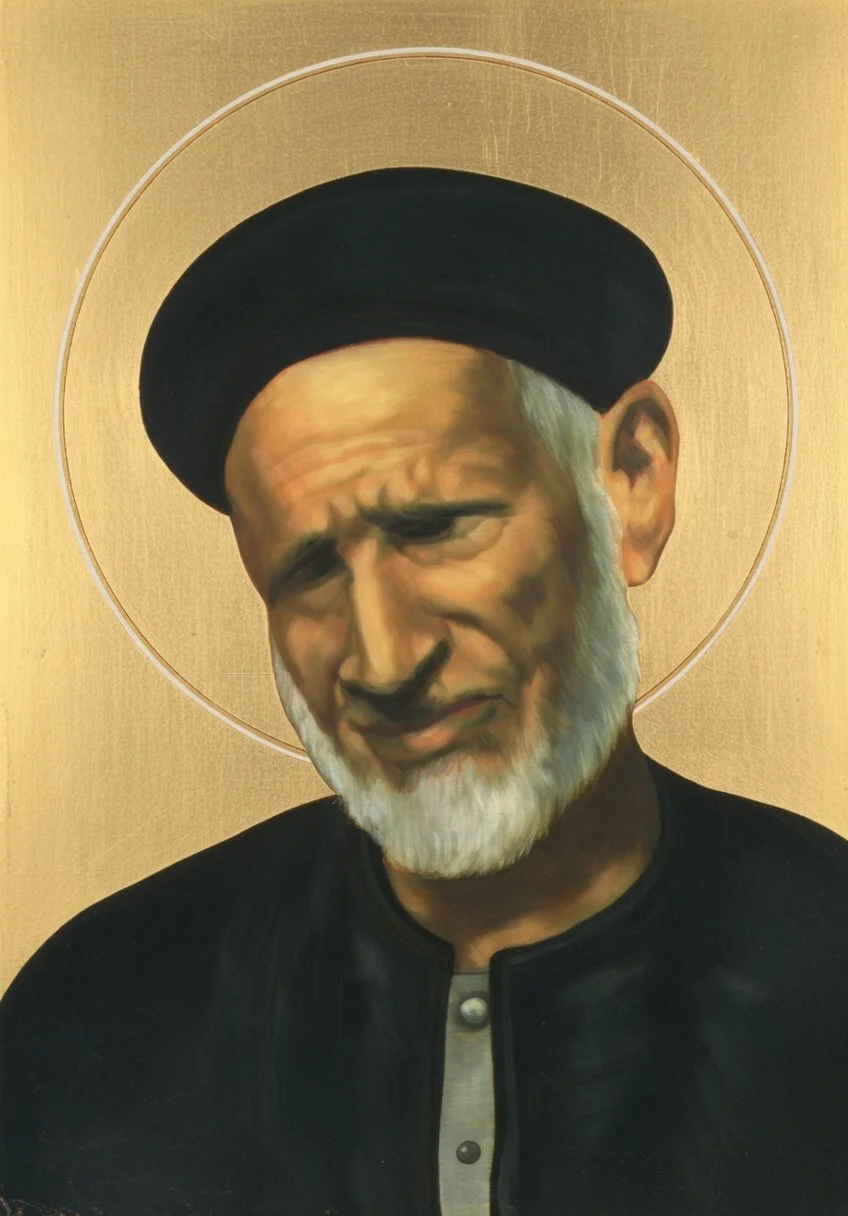
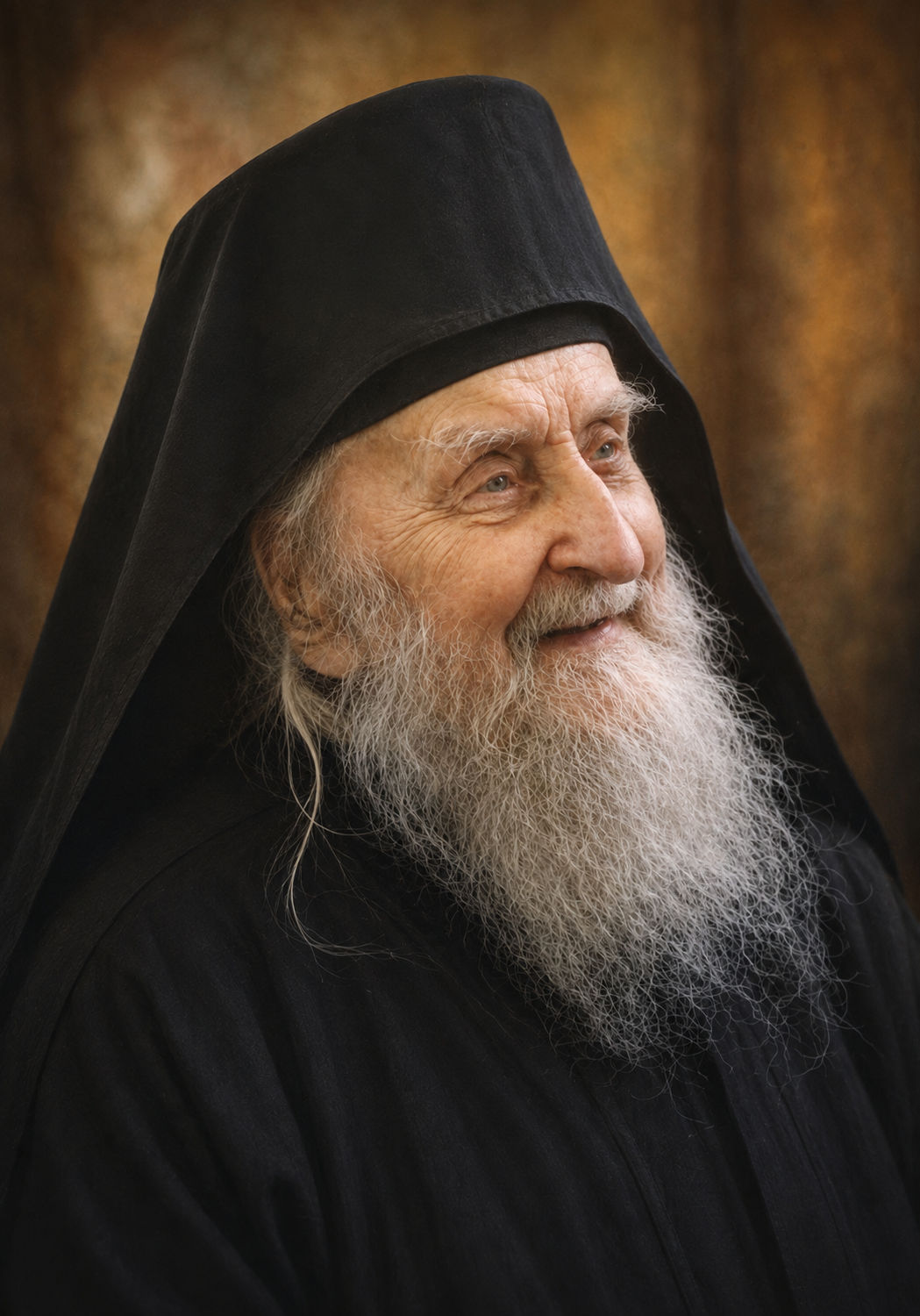
Saint Sophrony of Essex Prayer Card - For the Jesus Prayer, Repentance, Discernment & Prayer for the World
Saint Sophrony of Essex, formally glorified as Saint Sophrony the Athonite, was one of the great Orthodox spiritual fathers, theologians, hesychasts, and teachers of prayer of the twentieth century. Born Sergei Simeonovich Sakharov in Moscow in 1896, he passed through a profound spiritual crisis, studied art, briefly pursued non-Christian Eastern mysticism, returned intensely to Christ, became a monk of Mount Athos, and eventually became the close disciple of Saint Silouan the Athonite. After twenty-two years on the Holy Mountain, he carried Saint Silouan's spiritual inheritance into Western Europe and founded the Monastery of Saint John the Baptist in Essex, England, where he guided monks, nuns, clergy, and laypeople until his repose in 1993.
Saint Sophrony is especially meaningful for Christians learning the Jesus Prayer, people seeking deeper repentance, those fighting despair or intrusive thoughts, people discerning God's will, spiritual fathers and confessors, monks and those discerning monastic life, artists and iconographers, Christians praying for the whole world, and anyone longing to transform suffering into prayer rather than bitterness. These associations are not artificial patronage labels, because prayer, hesychasm, repentance, spiritual fatherhood, contemplation of the uncreated light, and bearing the suffering of others before God stand at the center of his actual life and teaching.
His life is particularly powerful for people who have experienced a period of spiritual confusion or distance from Christianity. As a young man, Sergei became preoccupied with philosophical questions about eternity and suffering and moved away from the Orthodox faith of his childhood, practicing forms of non-Christian meditation for several years. His later return to Christ was therefore not the story of someone who had never seriously questioned Christianity, but of a man who searched elsewhere, eventually became convinced that the absolute Being he sought was not an impersonal principle but the personal and living God revealed in Jesus Christ.
Saint Sophrony is also especially meaningful for Christians who feel overwhelmed by the suffering of the world. War, revolution, death, and human misery had troubled him deeply from youth, and during the Second World War he withdrew into the severe Athonite desert of Karoulia, where his prayer expanded beyond his own salvation into intense intercession for humanity. His spirituality would increasingly emphasize what he inherited from Saint Silouan: Christian prayer should eventually become large enough to carry not only one's own pain but the suffering of what he often understood as the whole Adam, the entire human family.
His connection with Saint Silouan the Athonite is impossible to separate from his identity. Sophrony later regarded meeting Silouan as one of the greatest gifts of his life, and Silouan entrusted him with handwritten notes containing the spiritual teaching that Sophrony would later edit, interpret, and publish for the wider Church. Without Saint Sophrony's work, the extraordinary teaching of Saint Silouan might have remained almost unknown outside a small Athonite circle.
Saint Sophrony is particularly important for people drawn to hesychasm and the Jesus Prayer because he provides a modern bridge between the ancient ascetic tradition and contemporary Christian life. He did not present prayer as a technique for producing calm sensations or unusual states of consciousness, but as personal encounter with Christ requiring repentance, humility, attention, obedience, sacramental life, and love for others. The monastery he founded describes him as a leading modern hesychast and theologian whose experience of the uncreated light and divine Personhood grew directly out of ascetic prayer rather than speculative theory alone.
His life is equally meaningful for artists and iconographers. Sergei was professionally trained as a painter, exhibited work in Paris during the 1920s, and later returned to visual art within the Church by designing sacred spaces and painting icons and monumental wall images at the Essex monastery. He understood iconography not merely as decoration but as another form of theological and prayerful witness, especially in his lifelong effort to depict the human face and the Face of Christ.
This prayer card is especially fitting for someone beginning the Jesus Prayer, reading Saint Silouan, studying hesychasm, entering seminary, discerning monasticism, serving as a spiritual father, struggling through spiritual dryness, trying to pray during grief or world events, returning to Christianity after searching elsewhere, or seeking to transform artistic gifts into an offering to God. It can also make a meaningful gift for iconographers, painters, theologians, priests, monks, converts, and Christians who need encouragement to continue praying when the heart feels close to despair.
Each card is handmade in Austin, TX and created to order. We do not keep stock, because every prayer card is treated as a unique devotional offering. They are printed on museum-quality photo paper, not cardstock, and every card is made slowly during prayer with intentional reverence for the saint and for the person who will receive it. Names are lifted before Christ, intentions are held carefully, and each piece is handled multiple times in prayerful silence, asking God for mercy and asking Saint Sophrony to intercede for the soul it is being made for. This is devotional craftsmanship shaped with patience, care, and spiritual responsibility because every soul and every prayer matters.
THE LIFE & STORY
Saint Sophrony was born Sergei Simeonovich Sakharov in Moscow on September 22, 1896. He grew up in a large Orthodox Christian family with four brothers and four sisters, and his monastery's official biography remembers him praying for surprisingly long periods even as a young child while attending church with his nanny.
The young Sergei also possessed considerable artistic talent. After finishing secondary school, he pursued formal artistic education and entered the Moscow School of Fine Arts in 1918, while the First World War, Russian Revolution, and civil upheaval transformed the world around him. Because he was already an art student, he was assigned to camouflage work rather than direct combat, something he later regarded providentially because military killing could have created a canonical obstacle when he was eventually called to the priesthood.
The violence surrounding him intensified questions that had troubled him since childhood. Sergei wanted to understand the meaning of existence, eternity, personality, suffering, and death, yet for a period he became convinced that ultimate reality could not be personal in the Christian sense. This philosophical conclusion gradually drew him away from the God of the Gospel and toward forms of Eastern mysticism and meditation that promised access to an impersonal absolute.
The monastery's biography says this period lasted approximately eight years. Sophrony later regarded it not as an alternative path that he continued combining with Christianity, but as a serious spiritual error from which God's mercy brought him back.
Following the Russian Revolution, Sergei left his homeland and traveled through Europe before settling in Paris at the end of 1922. He continued his artistic career there and exhibited paintings at the Salon d'Automne in 1923 and the Salon des Tuileries in 1924, placing him within the active artistic culture of Russian émigré Paris.
Yet his deepest concern increasingly ceased to be painting. In Paris he came to understand the biblical revelation of God to Moses, “I AM,” in a radically personal way and became convinced that the ultimate Being he had been seeking was the personal God revealed through Jesus Christ rather than an impersonal metaphysical absolute. His return to Christianity therefore involved not simply recovering childhood habits but a profound theological reversal in how he understood God, the human person, and eternity.
On Holy Saturday in 1924, Sophrony experienced what he later understood as a powerful visitation of the uncreated light. The experience affected him so deeply that he gradually withdrew from his previous artistic career and social environment, because the reality he had encountered in prayer had become more compelling than the artistic recognition he had once sought.
In April 1925 he entered the newly established Saint Sergius Orthodox Theological Institute in Paris. His time there was brief, however, because he became convinced that his path toward knowledge of God required monastic and ascetic life rather than academic theology alone.
That autumn he traveled to Mount Athos and entered the Russian Monastery of Saint Panteleimon. He received the monastic habit in March 1926 and was tonsured into the Small Schema in March 1927, beginning what would become more than two decades of Athonite life.
SAINT SOPHRONY & SAINT SILOUAN THE ATHONITE
Saint Sophrony had noticed Saint Silouan around Saint Panteleimon's Monastery before they ever spoke personally. He remembered seeing something remarkable in the older monk's face, but their decisive spiritual relationship began after Sophrony's ordination to the diaconate on April 30, 1930, an ordination performed by Saint Nikolai Velimirović. Saint Silouan was present.
Soon afterward, the two monks began speaking deeply about the interior spiritual life. Saint Silouan recognized that the younger deacon could understand something of the terrible struggle through which he himself had passed and eventually entrusted Sophrony with his handwritten notes.
The teaching that became especially decisive was Saint Silouan's word concerning remaining spiritually in the depths without surrendering to despair. Sophrony understood this teaching not as psychological self-hatred but as radical humility, in which a person accepts responsibility for personal sin without ever abandoning hope in the mercy of God.
Saint Sophrony later said that his meeting with Silouan was the greatest gift of God in his life. Through Silouan he encountered a spirituality in which profound repentance, humility, prayer for enemies, love for the entire world, and direct experiential knowledge of God belonged together.
This relationship also demonstrates something important about spiritual fatherhood. Sophrony was already educated, artistically accomplished, theologically serious, and experienced in prayer, yet none of those gifts made him assume he no longer needed someone spiritually older than himself.
He allowed another man to teach him.
That humility eventually made it possible for Sophrony himself to become a spiritual father capable of guiding others without simply imposing his personality upon them.
“KEEP THY MIND IN HELL AND DESPAIR NOT”
One of the phrases most closely associated with Saint Sophrony actually originated with his elder, Saint Silouan. Silouan told Sophrony that after years of severe spiritual warfare and despair, he had received the word to remain in the depths of humility without surrendering to hopelessness, and Sophrony spent the rest of his life explaining the immense spiritual meaning of that revelation.
The teaching can sound frightening when removed from context. It does not tell Christians to cultivate psychological despair, imagine themselves damned, or deliberately worsen mental suffering, because the final movement is precisely the refusal to despair.
For Sophrony, deep repentance could expose the darkness within the human heart while simultaneously revealing that God's mercy reaches farther down than human failure. The Christian can therefore confess sin without pretending it is small, yet still refuse the conclusion that sin is greater than Christ.
This makes Saint Sophrony particularly meaningful for people who oscillate between two extremes. One extreme treats repentance lightly and continually excuses personal sin, while the other becomes so consumed by failure that the person begins to believe God no longer desires them.
Sophrony learned another path from Silouan. The Christian descends through humility and repentance while holding firmly to Christ, so that awareness of sin becomes a doorway into mercy rather than a prison of hopelessness.
A SAINT FOR PEOPLE FIGHTING SPIRITUAL DESPAIR
Saint Sophrony personally knew intense existential anguish long before becoming a famous spiritual father. During his youth and early adulthood, questions about death, non-being, suffering, and eternity pressed upon him so heavily that the monastery biography describes an almost physical sense of an abyss beneath ordinary life.
His later theology therefore did not speak about despair from a purely academic distance. He knew the experience of searching for meaning, losing the faith of childhood, pursuing answers in another spiritual system, and eventually discovering that intellectual explanations alone could not satisfy the deepest question of whether human existence has eternal meaning.
This gives him an authentic devotional connection with people experiencing spiritual hopelessness, existential crisis, fear of death, and periods when faith itself feels uncertain. It would be inappropriate to market him as a formal medical patron of depression or another psychiatric condition, but his own spiritual journey makes his intercession particularly meaningful when someone feels that the darkness inside the mind has become larger than hope.
His teaching offers neither denial nor sentimentality. Darkness can be acknowledged honestly, yet Christ is not absent from the depths.
MALARIA, THE GREAT SCHEMA & PHYSICAL WEAKNESS
In early 1935, Sophrony became gravely ill with malaria and was believed to be near death. Because of the severity of his condition, he was tonsured into the Great Schema on January 18, and although he unexpectedly recovered, poor health remained a recurring feature of the rest of his life.
This physical weakness would later become even more severe. Years of deprivation and wartime hardship contributed to a serious stomach ulcer, and after returning to France he underwent a nearly complete gastrectomy in 1948, surviving only after an extended hospital stay during which he spent about eighty days receiving intravenous support.
Saint Sophrony therefore did not build his spiritual life upon physical strength. His mature ministry unfolded through a body that repeatedly failed him, and yet illness did not prevent him from writing, hearing confessions, forming a monastery, painting icons, or praying for other people.
His life can be especially meaningful for Christians who fear that chronic illness has ended their usefulness. Physical limitations may change the outward form of vocation without removing the possibility of profound service to God and neighbor.
THE ATHSSITE DESERT OF KAROULIA
After Saint Silouan reposed on September 24, 1938, Sophrony received a blessing to leave Saint Panteleimon's and withdraw into the severe Athonite desert of Karoulia. The cliffs and caves of this region are among the most physically demanding places of habitation on Mount Athos, and Sophrony lived there through much of the period overlapping the Second World War.
The world around him was being torn apart by violence, but withdrawal into the desert did not make Sophrony indifferent to what was happening outside it. His monastery's biography says that he gave himself to extraordinarily intense prayer for peace and for the suffering world.
This is one of the clearest differences between Christian hesychasm and simple escape. Sophrony withdrew geographically from the world in order to carry it more deeply before God.
Silence therefore did not narrow his concern.
It enlarged it.
A Christian learning from Saint Sophrony can ask whether personal prayer is gradually becoming spacious enough to remember people beyond one's immediate needs, including enemies, strangers, victims of war, the suffering, the forgotten, and those who may never know someone prayed for them.
PRAYER FOR THE WHOLE WORLD
Saint Sophrony's spirituality repeatedly returns to the idea that genuine Christian prayer can become universal. The human heart, when enlarged by grace, begins to experience the sorrow and salvation of other people not as abstract concerns but as realities carried personally before God.
He inherited this especially from Saint Silouan, whose love for enemies and prayer for the whole world Sophrony regarded as one of the clearest signs of authentic knowledge of God. Christianity could therefore never be reduced to securing one's own private salvation while remaining indifferent to the suffering or destruction of everyone else.
This makes Saint Sophrony especially meaningful during war, persecution, natural disaster, social division, and other situations where the scale of suffering becomes overwhelming. A person may feel powerless to solve events occurring thousands of miles away, yet Christian prayer allows the suffering of people never personally met to be brought before Christ.
The practice also changes the person praying. Someone who sincerely prays for enemies cannot indefinitely preserve hatred in exactly the same form, because prayer continually places both the injured person and the offender before the same crucified Lord.
THE JESUS PRAYER
Saint Sophrony stands firmly within the hesychastic tradition of the Jesus Prayer, but he resisted reducing the prayer to a mechanical method. His approach grew from Athonite monastic life, Saint Silouan's guidance, watchfulness, repentance, sacramental life, and personal encounter with Christ.
The familiar prayer, “Lord Jesus Christ, Son of God, have mercy on me, a sinner,” gathers the mind around the name of Jesus and places the whole person before Him in repentance. In Sophrony's spiritual world, the name is not a mantra producing an altered mental state but an invocation of the living Person of Christ.
This distinction is especially important because Sophrony had personally practiced non-Christian meditation before returning to Christianity. His mature life therefore sharply distinguished impersonal mystical techniques from Christian prayer directed toward a personal God who freely loves, speaks, reveals Himself, and enters relationship with the human person.
Someone learning the Jesus Prayer can seek Saint Sophrony's intercession for attention, repentance, perseverance, and protection from turning prayer into self-focused spiritual experimentation. His example encourages the Christian to seek Christ Himself rather than sensations associated with prayer.
THE UNCREATED LIGHT
Saint Sophrony wrote extensively about the uncreated light, a theme deeply rooted in Orthodox hesychastic theology. His monastery's account says that experiences of divine light occurred at several stages of his life, beginning in childhood, becoming particularly powerful during his conversion in Paris, and continuing during his Athonite years.
He understood this light as fundamentally different from ordinary physical illumination. His mature theological and artistic work connected the experience with direct awareness of the living God rather than with imagination, emotional excitement, or aesthetic beauty by itself.
This places Sophrony within the theological world associated with Saint Gregory Palamas, although his own writing emerged from twentieth-century experience rather than medieval controversy. The same Orthodox conviction stands behind both: human beings can truly participate in the life and grace of God without comprehending or possessing the divine essence.
Saint Sophrony's life also warns people not to chase visions. His path to the uncreated light included repentance, obedience, suffering, ecclesial life, humility, and long ascetic struggle, which means the spectacular element should never be detached from the hidden work that preceded and surrounded it.
THEOLOGY AS A SPIRITUAL STATE
One of Saint Sophrony's most important contributions is his insistence that true theology cannot finally be separated from prayer. The monastery founded by him continues to describe his theological legacy as experiential, emphasizing that knowledge of God arises from communion with God rather than from intellectual analysis alone.
This does not make academic theology useless. Sophrony himself studied theology, read deeply, wrote sophisticated works, and engaged profound philosophical and doctrinal questions, but he believed theology reaches its true purpose when the truths being studied become life within the person.
A theologian may therefore write accurately about humility while remaining proud, explain prayer while rarely praying, or produce a technically correct account of divine love while treating other people harshly. Sophrony's challenge is that theology should increasingly change the theologian.
This makes him a particularly meaningful saint for seminarians, professors, theologians, clergy, and Christian writers. His intercession can be sought not merely for intellectual brilliance but for the far more difficult unity of knowledge and holiness.
THE HUMAN PERSON & THE HYPOSTATIC PRINCIPLE
Saint Sophrony became especially known for his theology of personhood, sometimes described through the language of the hypostatic principle. His monastery identifies him as a major modern theologian of divine Personhood, a theme that developed from his lifelong search for the meaning of Being and his rediscovery that ultimate reality is personal because God Himself is personal.
This theology helps explain why he treated individual people with such extraordinary seriousness. The monastery's biography remembers him receiving visitors in a way that made each person feel uniquely valued before God rather than treated as one interchangeable member of a crowd.
For Sophrony, human individuality reaches fulfillment not through isolation but through communion. The more deeply a human person becomes united with God, the more capable that person becomes of carrying others in love rather than becoming enclosed within the self.
This gives his theology profound practical consequences. Prayer, repentance, love for enemies, and intercession for the world all become dimensions of what it means for the human person to grow toward the likeness of the personal God.
LOVE FOR ENEMIES
Saint Silouan taught that love for enemies is one of the great tests of genuine Christian life, and Saint Sophrony transmitted that teaching throughout his own ministry. The ability to pray for someone who has caused suffering reveals something deeper than natural affection because it requires participation in the love shown by Christ upon the Cross.
This does not mean pretending abuse is harmless, refusing justice, or remaining unnecessarily exposed to dangerous people. Christian love for enemies concerns the state of the heart before God and the refusal to desire another person's ultimate destruction.
Saint Sophrony can therefore be especially meaningful when resentment has become spiritually exhausting. Someone may still need boundaries, accountability, legal protection, or distance, while simultaneously asking Christ to prevent injury from hardening into hatred.
Prayer for enemies is difficult precisely because it cannot usually be produced by emotion alone. Sophrony's tradition understands it as grace that must be sought.
TURNING SUFFERING INTO PRAYER
Saint Sophrony repeatedly taught that painful human experiences can be transferred into prayer rather than allowed to remain only at the psychological level. Greek Orthodox pastoral teaching drawing directly upon him describes this as taking illness, rejection, persecution, or personal weakness and converting the pain into spiritual energy directed toward God.
This does not mean suppressing emotion. Grief remains grief, betrayal remains painful, illness remains difficult, and psychological wounds may still require human support, medical care, therapy, or time.
The spiritual movement concerns what happens next. The pain can become a reason to withdraw from God and other people, or it can gradually become material for prayer.
Someone insulted may pray while still hurt.
Someone grieving may bring the exact grief into Christ's presence.
Someone afraid may pray from inside fear rather than waiting for fear to disappear first.
Saint Sophrony's life gives this approach unusual credibility because he carried war, exile, sickness, poverty, spiritual crisis, and the suffering of others throughout his own prayer.
SAINT SOPHRONY AS AN ARTIST & ICONOGRAPHER
Before monastic life, Sergei Sakharov was a serious professional artist. His early training, exhibitions in Paris, and involvement in artistic circles formed a genuine vocation rather than a youthful hobby, and his later abandonment of exhibition painting therefore represented a major personal sacrifice.
Yet art eventually returned to his life within a transformed context. At the Essex monastery he designed liturgical spaces, painted icons and murals, worked repeatedly on images of Christ, and guided others in the development of the monastery's distinctive sacred art.
He became particularly interested in the human face. His artistic theology treated the face as revealing something of the mystery of the person, which fit naturally with his larger theological concern for personhood and communion.
This makes Saint Sophrony especially meaningful for iconographers, painters, photographers, sculptors, designers, and other Christian artists. His life suggests that artistic ability does not have to compete with prayer, but the gift may need purification so that beauty becomes service rather than self-glorification.
SAINT SOPHRONY & CHRISTIAN ARTISTS
Artists often experience a tension between creative ambition and spiritual life. Recognition, originality, beauty, self-expression, and professional accomplishment can all become powerful motivations, while religious devotion may seem to demand abandonment of creative identity.
Saint Sophrony offers a more complex example. He did abandon the public art career that had once absorbed him, but decades later his artistic gifts returned within the life of the Church and became part of the sacred environment through which other people prayed.
The gift was not destroyed.
Its purpose changed.
A Christian artist can therefore seek Saint Sophrony's intercession not simply for greater artistic skill but for discernment about why the art is being made, what it communicates, and whether beauty is drawing attention finally toward the artist or toward something greater.
ORDAINED PRIEST & SPIRITUAL FATHER
On February 2, 1941, while living on Mount Athos, Sophrony was ordained to the priesthood so that he could serve as a spiritual father. His ministry subsequently extended beyond his own hermitage to monks associated with the monasteries of Saint Paul, Simonopetra, Gregoriou, Xenophontos, and numerous cells and hermitages.
This experience formed the spiritual father who would later receive enormous numbers of people in Essex. His authority did not originate from managing a large organization but from years of prayer, confession, desert life, suffering, and direct formation under Saint Silouan.
Saint Sophrony can therefore be especially meaningful for priests, confessors, spiritual directors, and clergy carrying responsibility for souls. His life reminds spiritual fathers that another person's soul is not a problem to solve quickly but a mystery before God requiring prayer, reverence, patience, and discernment.
The same principle applies to parents, teachers, and mentors. Genuine spiritual authority should make another person more capable of standing before God rather than more dependent upon the personality of the guide.
RETURN TO PARIS & MAKING SAINT SILOUAN KNOWN
In February 1947, after twenty-two years on Mount Athos, Sophrony received a blessing to return to Paris so that he could edit and publish Saint Silouan's writings. Despite poverty and severe illness, he completed an initial Russian edition in 1948.
This work became one of the most consequential acts of his life. Sophrony did not merely compile biographical facts about Silouan but interpreted his elder's inner spiritual experience so that readers far removed from Mount Athos could understand the theological depth of his prayer, repentance, humility, and love for enemies.
The book eventually circulated in numerous languages and became instrumental in making Saint Silouan known throughout global Orthodoxy. The Ecumenical Patriarchate later glorified Silouan, and Patriarch Bartholomew has specifically acknowledged Sophrony's role in transmitting his elder's life and teaching.
This gives Saint Sophrony an unusual devotional connection with Christian writers, editors, translators, and publishers. One carefully prepared book can sometimes transmit the witness of a saint to generations and countries the writer will never personally see.
THE MONASTERY OF SAINT JOHN THE BAPTIST IN ESSEX
After years in France, younger spiritual children increasingly asked Sophrony to establish a monastic community where they could live under his guidance. His poor health initially made him hesitant, but circumstances eventually opened the way for a property at Tolleshunt Knights in Essex, England.
Sophrony arrived there on March 5, 1959 with a small group and established what became the Patriarchal Stavropegic Monastery of Saint John the Baptist. The initially obscure community gradually grew into an internationally important Orthodox monastery attracting pilgrims and spiritual seekers from many countries.
The monastery became distinctive not because Sophrony attempted to reproduce Russian or Greek culture in England exactly as he had experienced it elsewhere. The community gathered people from different nations around common Orthodox worship, prayer, repentance, and spiritual fatherhood.
As visitors increased, Sophrony devoted enormous energy to confession and personal spiritual guidance. His monastery remembers him honoring the uniqueness of each person and praying deeply for those who suffered, regarding transformation of the heart as more important than spectacular displays of miracle-working.
SAINT SOPHRONY IN THE WEST
Saint Sophrony's life is particularly important for Orthodox Christianity in Western Europe because he demonstrated that deep Athonite spirituality could take root without requiring Christians to live on Mount Athos. The monastery in Essex became a place where ancient hesychastic theology, the Jesus Prayer, iconography, liturgy, and spiritual fatherhood could be lived within modern Britain.
His influence also reached North America through his writings, disciples, and students of his theology. The Orthodox Church in America has repeatedly referenced Sophrony's teaching, and OCA clergy and hierarchs maintained relationships with him and his monastery even before his formal glorification.
This makes him especially meaningful for Orthodox Christians living far from historically Orthodox cultures. His life demonstrates that the spiritual tradition is not dependent upon ethnicity or geography, because the same prayer that formed saints in the Egyptian desert and on Mount Athos can also transform people in England, America, or an ordinary suburban home.
MIRACLES & HEALING
The monastery's official biography states that numerous miracles were associated with Saint Sophrony during his life and after his death. These include reports of people healed from serious illnesses, couples receiving children after infertility, and people suffering deeply in mind or soul receiving restoration, although the monastery deliberately emphasizes that visible miracles were not the center of his spiritual legacy.
That restraint is important for a prayer card. Saint Sophrony may certainly be invoked for healing and infertility because these associations exist within testimony preserved by his own monastery, but it would be misleading to turn him primarily into a patron saint of one medical diagnosis when his central legacy is prayer, repentance, spiritual fatherhood, and union with Christ.
The monastery itself explains that Sophrony rejoiced more deeply when someone's heart was changed through prayer or a spiritual word than when an outward miracle occurred. Healing in his spiritual world therefore includes the whole human person rather than only the removal of physical symptoms.
SAINT SOPHRONY & INFERTILITY
The monastery's biography specifically mentions women who had been unable to conceive later receiving children in connection with Saint Sophrony's intercession. This provides a genuine modern Orthodox basis for couples struggling with infertility to ask his prayers, although he should not be marketed as the exclusive or formally designated patron saint of infertility.
A couple may therefore seek his intercession while continuing appropriate medical evaluation and treatment. The prayer can include the hope for a child while also asking for protection of the marriage, freedom from blame, wisdom concerning difficult decisions, and the grace to carry uncertainty without despair.
HIS BOOKS
Saint Sophrony left a substantial body of writing that continues to shape modern Orthodox spirituality. His monastery publishes works including Saint Silouan the Athonite, We Shall See Him as He Is, On Prayer, His Life Is Mine, Striving for Knowledge of God, Letters to His Family, Words of Life, The Mystery of Christian Life, and other collections of his writings and talks.
These books cover far more than monastic technique. Sophrony writes about prayer, Christology, the Holy Trinity, personhood, repentance, spiritual suffering, death, divine light, love for enemies, the Jesus Prayer, priesthood, and the destiny of the human person.
For someone who owns a Saint Sophrony prayer card, placing it inside On Prayer or Saint Silouan the Athonite would be particularly fitting. The image then becomes not merely devotional decoration but a reminder to read his theology as something meant to become prayer and life.
“PRAYER IS INFINITE CREATION”
One securely attested description from Saint Sophrony calls prayer “infinite creation.” The OCA has cited his teaching to emphasize that prayer surpasses even artistic or scientific creativity because through prayer the human person enters personal relationship with God.
That image is especially striking considering Sophrony's background as an artist. He knew firsthand the intensity involved in creating a painting, searching for form, color, proportion, and beauty, yet came to believe that the creative work of prayer reaches deeper because the human person participates in a transformation involving eternity itself.
Prayer therefore does not mean doing nothing.
It can be among the most demanding forms of spiritual activity.
The apparent stillness of someone sitting with a prayer rope may conceal an immense inner struggle against distraction, resentment, fear, pride, and despair while the heart repeatedly turns toward Christ.
HIS FINAL YEARS
Saint Sophrony remained spiritually active into advanced age despite serious lifelong health problems. He continued guiding his community, praying for visitors, writing, planning the monastery's sacred spaces, and giving individual spiritual counsel while becoming increasingly physically weak.
Near the end of his life, he wrote to the Ecumenical Patriarch asking for continued protection of the monastery he had built through decades of prayer, suffering, and labor. He also met individually with members of the community and gave final words to them before becoming too weak to continue speaking.
For the final four days, he remained mostly silent with his eyes closed, yet continued raising his hand to bless those who approached. He reposed in prayer on Sunday, July 11, 1993, at the age of ninety-six, in the monastery he had founded.
HIS TOMB & SHRINE IN ESSEX
Saint Sophrony was buried in the crypt at the Monastery of Saint John the Baptist in Essex. After his canonization, an icon was placed above his tomb, and the crypt itself became a place of veneration and prayer for pilgrims visiting the monastery.
For someone wishing to make a pilgrimage connected directly with Saint Sophrony, the Essex monastery is therefore the principal location. It contains his tomb, the churches and sacred art he helped create, the community he formed, and the living spiritual tradition transmitted by his disciples.
In June 2025, a new church dedicated to Saint Sophrony was consecrated at the monastery in the presence of Ecumenical Patriarch Bartholomew. The Patriarch emphasized the continuity linking Saint Silouan, Saint Sophrony, and the present monastic community, describing this spiritual inheritance as a kind of succession of holiness.
HIS GLORIFICATION AS A SAINT
Saint Sophrony's holiness was widely recognized among his spiritual children long before his formal enrollment among the saints. His writings spread internationally, his monastery continued growing, and many Orthodox Christians came to regard him as one of the major spiritual fathers of the twentieth century.
The Ecumenical Patriarchate canonized Saint Sophrony in 2019, formally enrolling him among the saints of the Orthodox Church. Ecumenical Patriarch Bartholomew confirmed this directly in his 2025 address at the Essex monastery, where he referred to Sophrony's 2019 canonization during his own patriarchal tenure.
His official ecclesiastical title is often Saint Sophrony the Athonite, while English-speaking Christians frequently call him Saint Sophrony of Essex because of the monastery he founded and the final decades of his life in England. Both names refer to the same saint.
Saint Sophrony is therefore specifically a modern Eastern Orthodox saint. Because his formal glorification occurred within the Orthodox Church in 2019, he should not be marketed as a saint formally canonized by the Catholic Church, although Catholics interested in Eastern Christian spirituality may certainly read and appreciate his writings.
FEAST DAY
Saint Sophrony's principal feast is July 11, the anniversary of his repose in 1993. Orthodox communities increasingly celebrate him on this date, and the Greek Orthodox Metropolis of San Francisco specifically associates his July commemoration with his formal recognition by the Ecumenical Patriarchate.
The date is especially fitting because his life consistently interpreted Christian death through the Resurrection. His final years and writings were marked not simply by preparation to die but by longing for the eternal life of Christ toward which his entire spiritual journey had been directed.
PRAYERS
A simple traditional invocation may be prayed throughout the day: Venerable Father Sophrony, pray to God for us. This is especially fitting before beginning the Jesus Prayer, during spiritual despair, when praying for enemies, while discerning a difficult spiritual question, or when trying to carry the suffering of another person before Christ.
Someone struggling with despair may also invoke Saint Silouan and Saint Sophrony together because their spiritual relationship is inseparable. Saint Silouan received the word that became central to Sophrony's theology, while Sophrony spent decades explaining and transmitting its meaning to Christians who had never met his elder.
A person practicing the Jesus Prayer may ask Saint Sophrony for attention, repentance, and humility rather than seeking unusual experiences. His own life shows that authentic prayer is personal communion with Christ and must remain rooted in the Church rather than becoming an isolated spiritual technique.
Someone overwhelmed by war, tragedy, or the suffering of people far away may ask for the grace to pray beyond personal concerns. Saint Sophrony's years in Karoulia demonstrate that hidden prayer can become profoundly universal, allowing the suffering of the world to enter the heart without allowing despair to have the final word.
This prayer card is especially fitting beside a prayer rope, copy of Saint Silouan the Athonite, On Prayer, or We Shall See Him as He Is, as well as in an iconographer's studio, monastery cell, seminary room, priest's office, or home prayer corner. It can also make a meaningful gift for someone returning to Orthodoxy, studying hesychasm, discerning monastic life, learning to pray for enemies, or searching for a Christian response to suffering and existential fear.
FAQ
Who is Saint Sophrony of Essex? Saint Sophrony was a Russian-born Orthodox monk, priest, hesychast, theologian, artist, spiritual father, and founder of the Monastery of Saint John the Baptist in Essex, England. He lived from 1896 to 1993 and became especially known as the disciple and biographer of Saint Silouan the Athonite.
Is Saint Sophrony of Essex the same as Saint Sophrony the Athonite? Yes, both names refer to the same saint. The Ecumenical Patriarchate and his monastery commonly use the title Saint Sophrony the Athonite, while Saint Sophrony of Essex remains especially common in English-speaking Orthodox devotion.
What was Saint Sophrony's name before becoming a monk? He was born Sergei Simeonovich Sakharov in Moscow on September 22, 1896. He grew up in a large Orthodox family before eventually leaving Russia and settling in Western Europe.
Was Saint Sophrony an artist? Yes, he received serious artistic training and exhibited paintings in Paris during the 1920s. He later returned to art as an Orthodox iconographer and designer of sacred spaces at the monastery he founded in Essex.
Can artists and iconographers pray to Saint Sophrony? Yes, this is a particularly natural devotional association because art occupied an important place throughout his life. His example can help Christian artists seek beauty without allowing artistic ambition or recognition to become more important than communion with God.
Did Saint Sophrony ever leave Christianity? During his youth he became alienated from the Orthodox faith of his childhood and practiced forms of non-Christian Eastern meditation for several years. He later regarded that period as spiritual error and returned profoundly to the personal God revealed in Christ.
Is Saint Sophrony a good saint for someone returning to Christianity? Yes, because his own path included doubt, spiritual searching, experimentation outside Christianity, and a dramatic return to Christ. His life can be especially meaningful for people who fear that having wandered spiritually has permanently damaged their relationship with God.
Did Saint Sophrony study theology? Yes, he briefly studied at Saint Sergius Orthodox Theological Institute in Paris in 1925. He eventually left because he believed his own path toward theology required monastic life and direct ascetic experience, although he remained a profound theological writer throughout his life.
When did Saint Sophrony go to Mount Athos? He arrived at Saint Panteleimon's Monastery on Mount Athos in the autumn of 1925. He remained connected with the Holy Mountain for approximately twenty-two years before leaving for Paris in 1947.
Was Saint Sophrony a disciple of Saint Silouan? Yes, and this relationship is central to his entire spiritual identity. Sophrony regarded meeting Saint Silouan as one of God's greatest gifts and later became the principal editor, interpreter, and publisher of his elder's writings.
Did Saint Sophrony make Saint Silouan famous? His writings were enormously important in bringing Saint Silouan's life and teaching to the wider Orthodox world. Sophrony published his elder's biography and notes after leaving Mount Athos, and the work was eventually translated into many languages.
What does “keep your mind in hell and despair not” mean? The saying belongs originally to Saint Silouan and became one of the central teachings explained by Saint Sophrony. It points toward radical humility and awareness of sin without ever surrendering hope in the mercy and victory of Christ.
Is Saint Sophrony a saint for despair? He has a very strong spiritual connection with the struggle against despair because both his own existential suffering and Saint Silouan's teaching shaped his theology. It is better to describe this as a spiritual association rather than call him the formal medical patron of depression.
Can I pray to Saint Sophrony when I am afraid I have sinned too badly for God to forgive me? Yes, his theology is particularly powerful for this fear because deep repentance and refusal of despair belong together. His tradition insists that the Christian should take sin seriously without treating personal failure as greater than Christ's mercy.
Is Saint Sophrony associated with the Jesus Prayer? Yes, he is one of the great modern representatives of Orthodox hesychastic spirituality. His prayer life was formed on Mount Athos and through Saint Silouan, and his writings continue to be important for Christians studying interior prayer.
Can beginners in the Jesus Prayer pray to Saint Sophrony? Yes, especially for humility, attention, repentance, and protection from turning prayer into a technique or spiritual achievement. His own experience strongly emphasizes personal encounter with Christ rather than fascination with unusual states.
Did Saint Sophrony experience the uncreated light? His monastery's biography records several experiences that he understood as manifestations of the uncreated light, including a powerful experience in Paris in 1924. His mature theological and artistic work continued to reflect deeply upon this theme.
Should Christians try to reproduce Saint Sophrony's mystical experiences? No, his life provides no reason to chase visions or spiritual sensations for their own sake. His experiences occurred within repentance, obedience, sacramental life, suffering, prayer, and decades of spiritual formation.
Was Saint Sophrony a hermit? Yes, after Saint Silouan's death he withdrew into the Athonite desert of Karoulia and lived a highly ascetic hermit life. He remained there through much of the period overlapping the Second World War before later serving more widely as a spiritual father.
What did Saint Sophrony do during World War II? He lived in the Athonite desert and devoted himself to intense prayer for the suffering world and for peace. His withdrawal from society therefore became a form of intercession rather than indifference toward the suffering beyond Mount Athos.
Is Saint Sophrony a saint for prayer for the world? Yes, this is one of the strongest spiritual associations arising from his life and his inheritance from Saint Silouan. His mature spirituality emphasized prayer that gradually expands beyond private needs and carries the suffering of humanity before God.
Can I pray to Saint Sophrony during war or world crises? Yes, his own response to global violence was intense intercession rather than political indifference or hopelessness. His card can therefore be especially meaningful beside a prayer list for victims of war, persecution, displacement, and disaster.
What did Saint Sophrony teach about enemies? Through Saint Silouan, he regarded love and prayer for enemies as central signs of genuinely Christian life. This does not prohibit necessary boundaries or justice, but it does challenge the Christian not to allow injury to become a desire for another person's destruction.
Can I pray to Saint Sophrony when I cannot forgive someone? Yes, especially because love for enemies belongs so deeply to the spiritual tradition he transmitted. His intercession can be sought for the beginning of forgiveness even when emotions have not yet caught up with the Christian's desire to obey Christ.
Was Saint Sophrony a priest? Yes, he was ordained to the priesthood on February 2, 1941 so that he could serve as a spiritual father on Mount Athos. His later ministry in France and England remained deeply connected with confession and personal spiritual guidance.
Can priests and confessors pray to Saint Sophrony? Yes, his decades of spiritual fatherhood make him particularly meaningful for priests responsible for guiding other people. His life emphasizes prayer for the person being guided rather than reliance only upon intellectual advice.
Was Saint Sophrony seriously ill? Yes, illness followed him through much of his adult life. He survived malaria on Mount Athos and later underwent a nearly complete gastrectomy after developing a severe stomach ulcer, making bodily weakness an important part of his spiritual journey.
Can someone with chronic illness pray to Saint Sophrony? Yes, because he understood what it meant to continue a demanding vocation through serious physical weakness. Illness is not his primary traditional patronage, but his biography gives a genuine basis for people with long-term health problems to seek his intercession.
Is Saint Sophrony associated with healing miracles? Yes, his monastery records numerous reports of healing during and after his lifetime. The same source deliberately places greater emphasis on transformation of the heart than on spectacular miracles, which reflects Sophrony's own spiritual priorities.
Can I pray to Saint Sophrony for infertility? Yes, his monastery specifically records testimonies involving women who had been unable to conceive later receiving children. It is more accurate to describe this as a reported miracle tradition than to designate him the exclusive patron saint of infertility.
When did Saint Sophrony found the Essex monastery? He arrived in Tolleshunt Knights, Essex on March 5, 1959 with the small community from which the Monastery of Saint John the Baptist developed. The monastery remains active and continues publishing his writings and preserving his spiritual legacy.
What is the name of Saint Sophrony's monastery? It is the Patriarchal Stavropegic Monastery of Saint John the Baptist in Tolleshunt Knights, Essex, England. It was founded by Saint Sophrony and became internationally influential as a center of Orthodox monastic and spiritual life.
Can pilgrims visit Saint Sophrony's monastery? The monastery remains an active Orthodox monastic community and receives pilgrims, although current schedules and visitor arrangements should be checked directly before travel. Saint Sophrony's tomb is located there, making it the principal pilgrimage destination connected with him.
Where is Saint Sophrony buried? He is buried in the crypt at the Monastery of Saint John the Baptist in Essex. An icon was placed over his tomb following his canonization, and pilgrims venerate him there.
Is there a church dedicated to Saint Sophrony at the Essex monastery? Yes, a new church dedicated to him was consecrated in June 2025. Ecumenical Patriarch Bartholomew was present and used the occasion to reflect upon the spiritual continuity between Saints Silouan and Sophrony.
When did Saint Sophrony die? He reposed on July 11, 1993 at the monastery in Essex. He was ninety-six years old, having spent nearly seven decades in monastic life.
When was Saint Sophrony canonized? The Ecumenical Patriarchate formally canonized him in 2019. Ecumenical Patriarch Bartholomew confirmed the date directly during his 2025 visit to the monastery.
When is Saint Sophrony's feast day? His feast is celebrated on July 11, the anniversary of his repose. The date has become his principal annual commemoration within Orthodox churches and monasteries honoring him.
Is Saint Sophrony an Eastern Orthodox saint? Yes, he was formally glorified by the Ecumenical Patriarchate and is venerated throughout Eastern Orthodoxy. Orthodox parishes and missions have also begun taking him as their patron saint.
Is Saint Sophrony a Catholic saint? He was formally canonized by the Eastern Orthodox Church in 2019 rather than by the Catholic Church. Catholics may certainly read his writings and appreciate his spiritual theology, but a devotional product should identify him accurately as a modern Eastern Orthodox saint.
What books did Saint Sophrony write? His major published works include Saint Silouan the Athonite, We Shall See Him as He Is, On Prayer, His Life Is Mine, Striving for Knowledge of God, and numerous collections of letters and spiritual talks. His monastery continues publishing his works in several languages.
Which Saint Sophrony book should I read first? Saint Silouan the Athonite is especially important because it reveals both Saint Silouan and Sophrony's own theological vision, while On Prayer focuses more directly on the interior life. Readers interested in Sophrony's own mature spiritual autobiography and theology often turn to We Shall See Him as He Is.
What did Saint Sophrony mean by theology as a spiritual state? His approach insists that theology should ultimately arise from and return to living communion with God. Intellectual knowledge is valuable, but Christian theology remains incomplete when doctrine never becomes prayer, repentance, love, and holiness.
What did Saint Sophrony teach about personhood? He developed a profound theology of the human person grounded in the personal existence of God and communion within the Holy Trinity. This helped shape his conviction that every human being possesses unique and eternal significance before God.
What did Saint Sophrony teach about suffering? He taught that suffering can be brought into prayer rather than remaining only a destructive psychological experience. His own life shows this movement repeatedly as war, illness, exile, grief, and existential anguish became occasions for deeper intercession and dependence upon Christ.
What did Saint Sophrony teach about prayer? He understood prayer as creative, personal communion with God rather than merely reciting religious words. The OCA has cited his description of prayer as an extraordinary form of creation, reflecting how seriously he understood the transformation taking place when a person truly stands before God.
What did Saint Sophrony teach about despair? His teaching, deeply shaped by Saint Silouan, combines radical repentance with radical hope. The Christian may discover terrifying depths of personal weakness yet must never allow that discovery to become a denial of Christ's mercy.
What did Saint Sophrony teach about the whole world? He believed mature Christian prayer expands until the suffering and salvation of others become part of the person's own concern before God. His years in the Athonite desert during wartime became an especially intense period of prayer for humanity.
Can I give this prayer card to someone learning the Jesus Prayer? Yes, Saint Sophrony is one of the most important modern Orthodox guides to the hesychastic life. His card can be kept beside a prayer rope as a reminder that the purpose of the Jesus Prayer is communion with the living Christ rather than attainment of a particular sensation.
Can I give this card to someone struggling with spiritual darkness? Yes, particularly if the person needs a saint who understood existential darkness without romanticizing it. Saint Sophrony's life moves from spiritual alienation and fear of non-being toward deep Christian hope and prayer.
Can I give this card to an iconographer or artist? Yes, his professional artistic background and later sacred art make this one of the strongest modern devotional associations for Saint Sophrony. His life offers an especially rich example of artistic talent gradually purified and redirected toward liturgical service.
Can I give this card to a seminarian or theologian? Yes, because Saint Sophrony is one of the major modern Orthodox examples of theology inseparable from prayer and ascetic life. His intercession is especially appropriate for someone who wants theological knowledge to become holiness rather than merely information.
Can I give this card to someone discerning monastic life? Yes, because Saint Sophrony spent nearly seven decades as a monk and formed a major monastic community in Western Europe. His own path also demonstrates that monasticism requires obedience, spiritual formation, sacrifice, and prayer rather than romantic attraction to solitude.
Can I give this card to someone who has left the faith? Yes, especially because Saint Sophrony himself experienced years away from Orthodox Christian belief before returning profoundly to Christ. His life demonstrates that spiritual wandering does not place someone beyond God's ability to call them back.
Can I give this card to someone overwhelmed by world events? Yes, Saint Sophrony's own response to war and human catastrophe was increasingly universal prayer. His example can help someone move from helpless consumption of suffering toward deliberate intercession for the people caught within it.
What is the main message of Saint Sophrony of Essex's life? Saint Sophrony's life teaches that the human heart can be transformed from a place of existential fear and self-enclosure into a place large enough to receive Christ and carry the suffering of the whole world before Him. A young Moscow artist who temporarily abandoned the faith of his childhood returned to Christ, left a promising artistic career for Mount Athos, became the disciple of Saint Silouan, entered the severe desert of Karoulia, prayed through world war and illness, preserved his elder's teaching for future generations, founded an Orthodox monastery in England, and spent his final decades helping individual people discover their unique life before God. His witness joins the Jesus Prayer with love for enemies, repentance with hope, theology with experience, art with worship, solitude with universal intercession, and the awareness of human darkness with an unshakable refusal to despair.
Saint Sophrony of Essex, formally glorified as Saint Sophrony the Athonite, was one of the great Orthodox spiritual fathers, theologians, hesychasts, and teachers of prayer of the twentieth century. Born Sergei Simeonovich Sakharov in Moscow in 1896, he passed through a profound spiritual crisis, studied art, briefly pursued non-Christian Eastern mysticism, returned intensely to Christ, became a monk of Mount Athos, and eventually became the close disciple of Saint Silouan the Athonite. After twenty-two years on the Holy Mountain, he carried Saint Silouan's spiritual inheritance into Western Europe and founded the Monastery of Saint John the Baptist in Essex, England, where he guided monks, nuns, clergy, and laypeople until his repose in 1993.
Saint Sophrony is especially meaningful for Christians learning the Jesus Prayer, people seeking deeper repentance, those fighting despair or intrusive thoughts, people discerning God's will, spiritual fathers and confessors, monks and those discerning monastic life, artists and iconographers, Christians praying for the whole world, and anyone longing to transform suffering into prayer rather than bitterness. These associations are not artificial patronage labels, because prayer, hesychasm, repentance, spiritual fatherhood, contemplation of the uncreated light, and bearing the suffering of others before God stand at the center of his actual life and teaching.
His life is particularly powerful for people who have experienced a period of spiritual confusion or distance from Christianity. As a young man, Sergei became preoccupied with philosophical questions about eternity and suffering and moved away from the Orthodox faith of his childhood, practicing forms of non-Christian meditation for several years. His later return to Christ was therefore not the story of someone who had never seriously questioned Christianity, but of a man who searched elsewhere, eventually became convinced that the absolute Being he sought was not an impersonal principle but the personal and living God revealed in Jesus Christ.
Saint Sophrony is also especially meaningful for Christians who feel overwhelmed by the suffering of the world. War, revolution, death, and human misery had troubled him deeply from youth, and during the Second World War he withdrew into the severe Athonite desert of Karoulia, where his prayer expanded beyond his own salvation into intense intercession for humanity. His spirituality would increasingly emphasize what he inherited from Saint Silouan: Christian prayer should eventually become large enough to carry not only one's own pain but the suffering of what he often understood as the whole Adam, the entire human family.
His connection with Saint Silouan the Athonite is impossible to separate from his identity. Sophrony later regarded meeting Silouan as one of the greatest gifts of his life, and Silouan entrusted him with handwritten notes containing the spiritual teaching that Sophrony would later edit, interpret, and publish for the wider Church. Without Saint Sophrony's work, the extraordinary teaching of Saint Silouan might have remained almost unknown outside a small Athonite circle.
Saint Sophrony is particularly important for people drawn to hesychasm and the Jesus Prayer because he provides a modern bridge between the ancient ascetic tradition and contemporary Christian life. He did not present prayer as a technique for producing calm sensations or unusual states of consciousness, but as personal encounter with Christ requiring repentance, humility, attention, obedience, sacramental life, and love for others. The monastery he founded describes him as a leading modern hesychast and theologian whose experience of the uncreated light and divine Personhood grew directly out of ascetic prayer rather than speculative theory alone.
His life is equally meaningful for artists and iconographers. Sergei was professionally trained as a painter, exhibited work in Paris during the 1920s, and later returned to visual art within the Church by designing sacred spaces and painting icons and monumental wall images at the Essex monastery. He understood iconography not merely as decoration but as another form of theological and prayerful witness, especially in his lifelong effort to depict the human face and the Face of Christ.
This prayer card is especially fitting for someone beginning the Jesus Prayer, reading Saint Silouan, studying hesychasm, entering seminary, discerning monasticism, serving as a spiritual father, struggling through spiritual dryness, trying to pray during grief or world events, returning to Christianity after searching elsewhere, or seeking to transform artistic gifts into an offering to God. It can also make a meaningful gift for iconographers, painters, theologians, priests, monks, converts, and Christians who need encouragement to continue praying when the heart feels close to despair.
Each card is handmade in Austin, TX and created to order. We do not keep stock, because every prayer card is treated as a unique devotional offering. They are printed on museum-quality photo paper, not cardstock, and every card is made slowly during prayer with intentional reverence for the saint and for the person who will receive it. Names are lifted before Christ, intentions are held carefully, and each piece is handled multiple times in prayerful silence, asking God for mercy and asking Saint Sophrony to intercede for the soul it is being made for. This is devotional craftsmanship shaped with patience, care, and spiritual responsibility because every soul and every prayer matters.
THE LIFE & STORY
Saint Sophrony was born Sergei Simeonovich Sakharov in Moscow on September 22, 1896. He grew up in a large Orthodox Christian family with four brothers and four sisters, and his monastery's official biography remembers him praying for surprisingly long periods even as a young child while attending church with his nanny.
The young Sergei also possessed considerable artistic talent. After finishing secondary school, he pursued formal artistic education and entered the Moscow School of Fine Arts in 1918, while the First World War, Russian Revolution, and civil upheaval transformed the world around him. Because he was already an art student, he was assigned to camouflage work rather than direct combat, something he later regarded providentially because military killing could have created a canonical obstacle when he was eventually called to the priesthood.
The violence surrounding him intensified questions that had troubled him since childhood. Sergei wanted to understand the meaning of existence, eternity, personality, suffering, and death, yet for a period he became convinced that ultimate reality could not be personal in the Christian sense. This philosophical conclusion gradually drew him away from the God of the Gospel and toward forms of Eastern mysticism and meditation that promised access to an impersonal absolute.
The monastery's biography says this period lasted approximately eight years. Sophrony later regarded it not as an alternative path that he continued combining with Christianity, but as a serious spiritual error from which God's mercy brought him back.
Following the Russian Revolution, Sergei left his homeland and traveled through Europe before settling in Paris at the end of 1922. He continued his artistic career there and exhibited paintings at the Salon d'Automne in 1923 and the Salon des Tuileries in 1924, placing him within the active artistic culture of Russian émigré Paris.
Yet his deepest concern increasingly ceased to be painting. In Paris he came to understand the biblical revelation of God to Moses, “I AM,” in a radically personal way and became convinced that the ultimate Being he had been seeking was the personal God revealed through Jesus Christ rather than an impersonal metaphysical absolute. His return to Christianity therefore involved not simply recovering childhood habits but a profound theological reversal in how he understood God, the human person, and eternity.
On Holy Saturday in 1924, Sophrony experienced what he later understood as a powerful visitation of the uncreated light. The experience affected him so deeply that he gradually withdrew from his previous artistic career and social environment, because the reality he had encountered in prayer had become more compelling than the artistic recognition he had once sought.
In April 1925 he entered the newly established Saint Sergius Orthodox Theological Institute in Paris. His time there was brief, however, because he became convinced that his path toward knowledge of God required monastic and ascetic life rather than academic theology alone.
That autumn he traveled to Mount Athos and entered the Russian Monastery of Saint Panteleimon. He received the monastic habit in March 1926 and was tonsured into the Small Schema in March 1927, beginning what would become more than two decades of Athonite life.
SAINT SOPHRONY & SAINT SILOUAN THE ATHONITE
Saint Sophrony had noticed Saint Silouan around Saint Panteleimon's Monastery before they ever spoke personally. He remembered seeing something remarkable in the older monk's face, but their decisive spiritual relationship began after Sophrony's ordination to the diaconate on April 30, 1930, an ordination performed by Saint Nikolai Velimirović. Saint Silouan was present.
Soon afterward, the two monks began speaking deeply about the interior spiritual life. Saint Silouan recognized that the younger deacon could understand something of the terrible struggle through which he himself had passed and eventually entrusted Sophrony with his handwritten notes.
The teaching that became especially decisive was Saint Silouan's word concerning remaining spiritually in the depths without surrendering to despair. Sophrony understood this teaching not as psychological self-hatred but as radical humility, in which a person accepts responsibility for personal sin without ever abandoning hope in the mercy of God.
Saint Sophrony later said that his meeting with Silouan was the greatest gift of God in his life. Through Silouan he encountered a spirituality in which profound repentance, humility, prayer for enemies, love for the entire world, and direct experiential knowledge of God belonged together.
This relationship also demonstrates something important about spiritual fatherhood. Sophrony was already educated, artistically accomplished, theologically serious, and experienced in prayer, yet none of those gifts made him assume he no longer needed someone spiritually older than himself.
He allowed another man to teach him.
That humility eventually made it possible for Sophrony himself to become a spiritual father capable of guiding others without simply imposing his personality upon them.
“KEEP THY MIND IN HELL AND DESPAIR NOT”
One of the phrases most closely associated with Saint Sophrony actually originated with his elder, Saint Silouan. Silouan told Sophrony that after years of severe spiritual warfare and despair, he had received the word to remain in the depths of humility without surrendering to hopelessness, and Sophrony spent the rest of his life explaining the immense spiritual meaning of that revelation.
The teaching can sound frightening when removed from context. It does not tell Christians to cultivate psychological despair, imagine themselves damned, or deliberately worsen mental suffering, because the final movement is precisely the refusal to despair.
For Sophrony, deep repentance could expose the darkness within the human heart while simultaneously revealing that God's mercy reaches farther down than human failure. The Christian can therefore confess sin without pretending it is small, yet still refuse the conclusion that sin is greater than Christ.
This makes Saint Sophrony particularly meaningful for people who oscillate between two extremes. One extreme treats repentance lightly and continually excuses personal sin, while the other becomes so consumed by failure that the person begins to believe God no longer desires them.
Sophrony learned another path from Silouan. The Christian descends through humility and repentance while holding firmly to Christ, so that awareness of sin becomes a doorway into mercy rather than a prison of hopelessness.
A SAINT FOR PEOPLE FIGHTING SPIRITUAL DESPAIR
Saint Sophrony personally knew intense existential anguish long before becoming a famous spiritual father. During his youth and early adulthood, questions about death, non-being, suffering, and eternity pressed upon him so heavily that the monastery biography describes an almost physical sense of an abyss beneath ordinary life.
His later theology therefore did not speak about despair from a purely academic distance. He knew the experience of searching for meaning, losing the faith of childhood, pursuing answers in another spiritual system, and eventually discovering that intellectual explanations alone could not satisfy the deepest question of whether human existence has eternal meaning.
This gives him an authentic devotional connection with people experiencing spiritual hopelessness, existential crisis, fear of death, and periods when faith itself feels uncertain. It would be inappropriate to market him as a formal medical patron of depression or another psychiatric condition, but his own spiritual journey makes his intercession particularly meaningful when someone feels that the darkness inside the mind has become larger than hope.
His teaching offers neither denial nor sentimentality. Darkness can be acknowledged honestly, yet Christ is not absent from the depths.
MALARIA, THE GREAT SCHEMA & PHYSICAL WEAKNESS
In early 1935, Sophrony became gravely ill with malaria and was believed to be near death. Because of the severity of his condition, he was tonsured into the Great Schema on January 18, and although he unexpectedly recovered, poor health remained a recurring feature of the rest of his life.
This physical weakness would later become even more severe. Years of deprivation and wartime hardship contributed to a serious stomach ulcer, and after returning to France he underwent a nearly complete gastrectomy in 1948, surviving only after an extended hospital stay during which he spent about eighty days receiving intravenous support.
Saint Sophrony therefore did not build his spiritual life upon physical strength. His mature ministry unfolded through a body that repeatedly failed him, and yet illness did not prevent him from writing, hearing confessions, forming a monastery, painting icons, or praying for other people.
His life can be especially meaningful for Christians who fear that chronic illness has ended their usefulness. Physical limitations may change the outward form of vocation without removing the possibility of profound service to God and neighbor.
THE ATHSSITE DESERT OF KAROULIA
After Saint Silouan reposed on September 24, 1938, Sophrony received a blessing to leave Saint Panteleimon's and withdraw into the severe Athonite desert of Karoulia. The cliffs and caves of this region are among the most physically demanding places of habitation on Mount Athos, and Sophrony lived there through much of the period overlapping the Second World War.
The world around him was being torn apart by violence, but withdrawal into the desert did not make Sophrony indifferent to what was happening outside it. His monastery's biography says that he gave himself to extraordinarily intense prayer for peace and for the suffering world.
This is one of the clearest differences between Christian hesychasm and simple escape. Sophrony withdrew geographically from the world in order to carry it more deeply before God.
Silence therefore did not narrow his concern.
It enlarged it.
A Christian learning from Saint Sophrony can ask whether personal prayer is gradually becoming spacious enough to remember people beyond one's immediate needs, including enemies, strangers, victims of war, the suffering, the forgotten, and those who may never know someone prayed for them.
PRAYER FOR THE WHOLE WORLD
Saint Sophrony's spirituality repeatedly returns to the idea that genuine Christian prayer can become universal. The human heart, when enlarged by grace, begins to experience the sorrow and salvation of other people not as abstract concerns but as realities carried personally before God.
He inherited this especially from Saint Silouan, whose love for enemies and prayer for the whole world Sophrony regarded as one of the clearest signs of authentic knowledge of God. Christianity could therefore never be reduced to securing one's own private salvation while remaining indifferent to the suffering or destruction of everyone else.
This makes Saint Sophrony especially meaningful during war, persecution, natural disaster, social division, and other situations where the scale of suffering becomes overwhelming. A person may feel powerless to solve events occurring thousands of miles away, yet Christian prayer allows the suffering of people never personally met to be brought before Christ.
The practice also changes the person praying. Someone who sincerely prays for enemies cannot indefinitely preserve hatred in exactly the same form, because prayer continually places both the injured person and the offender before the same crucified Lord.
THE JESUS PRAYER
Saint Sophrony stands firmly within the hesychastic tradition of the Jesus Prayer, but he resisted reducing the prayer to a mechanical method. His approach grew from Athonite monastic life, Saint Silouan's guidance, watchfulness, repentance, sacramental life, and personal encounter with Christ.
The familiar prayer, “Lord Jesus Christ, Son of God, have mercy on me, a sinner,” gathers the mind around the name of Jesus and places the whole person before Him in repentance. In Sophrony's spiritual world, the name is not a mantra producing an altered mental state but an invocation of the living Person of Christ.
This distinction is especially important because Sophrony had personally practiced non-Christian meditation before returning to Christianity. His mature life therefore sharply distinguished impersonal mystical techniques from Christian prayer directed toward a personal God who freely loves, speaks, reveals Himself, and enters relationship with the human person.
Someone learning the Jesus Prayer can seek Saint Sophrony's intercession for attention, repentance, perseverance, and protection from turning prayer into self-focused spiritual experimentation. His example encourages the Christian to seek Christ Himself rather than sensations associated with prayer.
THE UNCREATED LIGHT
Saint Sophrony wrote extensively about the uncreated light, a theme deeply rooted in Orthodox hesychastic theology. His monastery's account says that experiences of divine light occurred at several stages of his life, beginning in childhood, becoming particularly powerful during his conversion in Paris, and continuing during his Athonite years.
He understood this light as fundamentally different from ordinary physical illumination. His mature theological and artistic work connected the experience with direct awareness of the living God rather than with imagination, emotional excitement, or aesthetic beauty by itself.
This places Sophrony within the theological world associated with Saint Gregory Palamas, although his own writing emerged from twentieth-century experience rather than medieval controversy. The same Orthodox conviction stands behind both: human beings can truly participate in the life and grace of God without comprehending or possessing the divine essence.
Saint Sophrony's life also warns people not to chase visions. His path to the uncreated light included repentance, obedience, suffering, ecclesial life, humility, and long ascetic struggle, which means the spectacular element should never be detached from the hidden work that preceded and surrounded it.
THEOLOGY AS A SPIRITUAL STATE
One of Saint Sophrony's most important contributions is his insistence that true theology cannot finally be separated from prayer. The monastery founded by him continues to describe his theological legacy as experiential, emphasizing that knowledge of God arises from communion with God rather than from intellectual analysis alone.
This does not make academic theology useless. Sophrony himself studied theology, read deeply, wrote sophisticated works, and engaged profound philosophical and doctrinal questions, but he believed theology reaches its true purpose when the truths being studied become life within the person.
A theologian may therefore write accurately about humility while remaining proud, explain prayer while rarely praying, or produce a technically correct account of divine love while treating other people harshly. Sophrony's challenge is that theology should increasingly change the theologian.
This makes him a particularly meaningful saint for seminarians, professors, theologians, clergy, and Christian writers. His intercession can be sought not merely for intellectual brilliance but for the far more difficult unity of knowledge and holiness.
THE HUMAN PERSON & THE HYPOSTATIC PRINCIPLE
Saint Sophrony became especially known for his theology of personhood, sometimes described through the language of the hypostatic principle. His monastery identifies him as a major modern theologian of divine Personhood, a theme that developed from his lifelong search for the meaning of Being and his rediscovery that ultimate reality is personal because God Himself is personal.
This theology helps explain why he treated individual people with such extraordinary seriousness. The monastery's biography remembers him receiving visitors in a way that made each person feel uniquely valued before God rather than treated as one interchangeable member of a crowd.
For Sophrony, human individuality reaches fulfillment not through isolation but through communion. The more deeply a human person becomes united with God, the more capable that person becomes of carrying others in love rather than becoming enclosed within the self.
This gives his theology profound practical consequences. Prayer, repentance, love for enemies, and intercession for the world all become dimensions of what it means for the human person to grow toward the likeness of the personal God.
LOVE FOR ENEMIES
Saint Silouan taught that love for enemies is one of the great tests of genuine Christian life, and Saint Sophrony transmitted that teaching throughout his own ministry. The ability to pray for someone who has caused suffering reveals something deeper than natural affection because it requires participation in the love shown by Christ upon the Cross.
This does not mean pretending abuse is harmless, refusing justice, or remaining unnecessarily exposed to dangerous people. Christian love for enemies concerns the state of the heart before God and the refusal to desire another person's ultimate destruction.
Saint Sophrony can therefore be especially meaningful when resentment has become spiritually exhausting. Someone may still need boundaries, accountability, legal protection, or distance, while simultaneously asking Christ to prevent injury from hardening into hatred.
Prayer for enemies is difficult precisely because it cannot usually be produced by emotion alone. Sophrony's tradition understands it as grace that must be sought.
TURNING SUFFERING INTO PRAYER
Saint Sophrony repeatedly taught that painful human experiences can be transferred into prayer rather than allowed to remain only at the psychological level. Greek Orthodox pastoral teaching drawing directly upon him describes this as taking illness, rejection, persecution, or personal weakness and converting the pain into spiritual energy directed toward God.
This does not mean suppressing emotion. Grief remains grief, betrayal remains painful, illness remains difficult, and psychological wounds may still require human support, medical care, therapy, or time.
The spiritual movement concerns what happens next. The pain can become a reason to withdraw from God and other people, or it can gradually become material for prayer.
Someone insulted may pray while still hurt.
Someone grieving may bring the exact grief into Christ's presence.
Someone afraid may pray from inside fear rather than waiting for fear to disappear first.
Saint Sophrony's life gives this approach unusual credibility because he carried war, exile, sickness, poverty, spiritual crisis, and the suffering of others throughout his own prayer.
SAINT SOPHRONY AS AN ARTIST & ICONOGRAPHER
Before monastic life, Sergei Sakharov was a serious professional artist. His early training, exhibitions in Paris, and involvement in artistic circles formed a genuine vocation rather than a youthful hobby, and his later abandonment of exhibition painting therefore represented a major personal sacrifice.
Yet art eventually returned to his life within a transformed context. At the Essex monastery he designed liturgical spaces, painted icons and murals, worked repeatedly on images of Christ, and guided others in the development of the monastery's distinctive sacred art.
He became particularly interested in the human face. His artistic theology treated the face as revealing something of the mystery of the person, which fit naturally with his larger theological concern for personhood and communion.
This makes Saint Sophrony especially meaningful for iconographers, painters, photographers, sculptors, designers, and other Christian artists. His life suggests that artistic ability does not have to compete with prayer, but the gift may need purification so that beauty becomes service rather than self-glorification.
SAINT SOPHRONY & CHRISTIAN ARTISTS
Artists often experience a tension between creative ambition and spiritual life. Recognition, originality, beauty, self-expression, and professional accomplishment can all become powerful motivations, while religious devotion may seem to demand abandonment of creative identity.
Saint Sophrony offers a more complex example. He did abandon the public art career that had once absorbed him, but decades later his artistic gifts returned within the life of the Church and became part of the sacred environment through which other people prayed.
The gift was not destroyed.
Its purpose changed.
A Christian artist can therefore seek Saint Sophrony's intercession not simply for greater artistic skill but for discernment about why the art is being made, what it communicates, and whether beauty is drawing attention finally toward the artist or toward something greater.
ORDAINED PRIEST & SPIRITUAL FATHER
On February 2, 1941, while living on Mount Athos, Sophrony was ordained to the priesthood so that he could serve as a spiritual father. His ministry subsequently extended beyond his own hermitage to monks associated with the monasteries of Saint Paul, Simonopetra, Gregoriou, Xenophontos, and numerous cells and hermitages.
This experience formed the spiritual father who would later receive enormous numbers of people in Essex. His authority did not originate from managing a large organization but from years of prayer, confession, desert life, suffering, and direct formation under Saint Silouan.
Saint Sophrony can therefore be especially meaningful for priests, confessors, spiritual directors, and clergy carrying responsibility for souls. His life reminds spiritual fathers that another person's soul is not a problem to solve quickly but a mystery before God requiring prayer, reverence, patience, and discernment.
The same principle applies to parents, teachers, and mentors. Genuine spiritual authority should make another person more capable of standing before God rather than more dependent upon the personality of the guide.
RETURN TO PARIS & MAKING SAINT SILOUAN KNOWN
In February 1947, after twenty-two years on Mount Athos, Sophrony received a blessing to return to Paris so that he could edit and publish Saint Silouan's writings. Despite poverty and severe illness, he completed an initial Russian edition in 1948.
This work became one of the most consequential acts of his life. Sophrony did not merely compile biographical facts about Silouan but interpreted his elder's inner spiritual experience so that readers far removed from Mount Athos could understand the theological depth of his prayer, repentance, humility, and love for enemies.
The book eventually circulated in numerous languages and became instrumental in making Saint Silouan known throughout global Orthodoxy. The Ecumenical Patriarchate later glorified Silouan, and Patriarch Bartholomew has specifically acknowledged Sophrony's role in transmitting his elder's life and teaching.
This gives Saint Sophrony an unusual devotional connection with Christian writers, editors, translators, and publishers. One carefully prepared book can sometimes transmit the witness of a saint to generations and countries the writer will never personally see.
THE MONASTERY OF SAINT JOHN THE BAPTIST IN ESSEX
After years in France, younger spiritual children increasingly asked Sophrony to establish a monastic community where they could live under his guidance. His poor health initially made him hesitant, but circumstances eventually opened the way for a property at Tolleshunt Knights in Essex, England.
Sophrony arrived there on March 5, 1959 with a small group and established what became the Patriarchal Stavropegic Monastery of Saint John the Baptist. The initially obscure community gradually grew into an internationally important Orthodox monastery attracting pilgrims and spiritual seekers from many countries.
The monastery became distinctive not because Sophrony attempted to reproduce Russian or Greek culture in England exactly as he had experienced it elsewhere. The community gathered people from different nations around common Orthodox worship, prayer, repentance, and spiritual fatherhood.
As visitors increased, Sophrony devoted enormous energy to confession and personal spiritual guidance. His monastery remembers him honoring the uniqueness of each person and praying deeply for those who suffered, regarding transformation of the heart as more important than spectacular displays of miracle-working.
SAINT SOPHRONY IN THE WEST
Saint Sophrony's life is particularly important for Orthodox Christianity in Western Europe because he demonstrated that deep Athonite spirituality could take root without requiring Christians to live on Mount Athos. The monastery in Essex became a place where ancient hesychastic theology, the Jesus Prayer, iconography, liturgy, and spiritual fatherhood could be lived within modern Britain.
His influence also reached North America through his writings, disciples, and students of his theology. The Orthodox Church in America has repeatedly referenced Sophrony's teaching, and OCA clergy and hierarchs maintained relationships with him and his monastery even before his formal glorification.
This makes him especially meaningful for Orthodox Christians living far from historically Orthodox cultures. His life demonstrates that the spiritual tradition is not dependent upon ethnicity or geography, because the same prayer that formed saints in the Egyptian desert and on Mount Athos can also transform people in England, America, or an ordinary suburban home.
MIRACLES & HEALING
The monastery's official biography states that numerous miracles were associated with Saint Sophrony during his life and after his death. These include reports of people healed from serious illnesses, couples receiving children after infertility, and people suffering deeply in mind or soul receiving restoration, although the monastery deliberately emphasizes that visible miracles were not the center of his spiritual legacy.
That restraint is important for a prayer card. Saint Sophrony may certainly be invoked for healing and infertility because these associations exist within testimony preserved by his own monastery, but it would be misleading to turn him primarily into a patron saint of one medical diagnosis when his central legacy is prayer, repentance, spiritual fatherhood, and union with Christ.
The monastery itself explains that Sophrony rejoiced more deeply when someone's heart was changed through prayer or a spiritual word than when an outward miracle occurred. Healing in his spiritual world therefore includes the whole human person rather than only the removal of physical symptoms.
SAINT SOPHRONY & INFERTILITY
The monastery's biography specifically mentions women who had been unable to conceive later receiving children in connection with Saint Sophrony's intercession. This provides a genuine modern Orthodox basis for couples struggling with infertility to ask his prayers, although he should not be marketed as the exclusive or formally designated patron saint of infertility.
A couple may therefore seek his intercession while continuing appropriate medical evaluation and treatment. The prayer can include the hope for a child while also asking for protection of the marriage, freedom from blame, wisdom concerning difficult decisions, and the grace to carry uncertainty without despair.
HIS BOOKS
Saint Sophrony left a substantial body of writing that continues to shape modern Orthodox spirituality. His monastery publishes works including Saint Silouan the Athonite, We Shall See Him as He Is, On Prayer, His Life Is Mine, Striving for Knowledge of God, Letters to His Family, Words of Life, The Mystery of Christian Life, and other collections of his writings and talks.
These books cover far more than monastic technique. Sophrony writes about prayer, Christology, the Holy Trinity, personhood, repentance, spiritual suffering, death, divine light, love for enemies, the Jesus Prayer, priesthood, and the destiny of the human person.
For someone who owns a Saint Sophrony prayer card, placing it inside On Prayer or Saint Silouan the Athonite would be particularly fitting. The image then becomes not merely devotional decoration but a reminder to read his theology as something meant to become prayer and life.
“PRAYER IS INFINITE CREATION”
One securely attested description from Saint Sophrony calls prayer “infinite creation.” The OCA has cited his teaching to emphasize that prayer surpasses even artistic or scientific creativity because through prayer the human person enters personal relationship with God.
That image is especially striking considering Sophrony's background as an artist. He knew firsthand the intensity involved in creating a painting, searching for form, color, proportion, and beauty, yet came to believe that the creative work of prayer reaches deeper because the human person participates in a transformation involving eternity itself.
Prayer therefore does not mean doing nothing.
It can be among the most demanding forms of spiritual activity.
The apparent stillness of someone sitting with a prayer rope may conceal an immense inner struggle against distraction, resentment, fear, pride, and despair while the heart repeatedly turns toward Christ.
HIS FINAL YEARS
Saint Sophrony remained spiritually active into advanced age despite serious lifelong health problems. He continued guiding his community, praying for visitors, writing, planning the monastery's sacred spaces, and giving individual spiritual counsel while becoming increasingly physically weak.
Near the end of his life, he wrote to the Ecumenical Patriarch asking for continued protection of the monastery he had built through decades of prayer, suffering, and labor. He also met individually with members of the community and gave final words to them before becoming too weak to continue speaking.
For the final four days, he remained mostly silent with his eyes closed, yet continued raising his hand to bless those who approached. He reposed in prayer on Sunday, July 11, 1993, at the age of ninety-six, in the monastery he had founded.
HIS TOMB & SHRINE IN ESSEX
Saint Sophrony was buried in the crypt at the Monastery of Saint John the Baptist in Essex. After his canonization, an icon was placed above his tomb, and the crypt itself became a place of veneration and prayer for pilgrims visiting the monastery.
For someone wishing to make a pilgrimage connected directly with Saint Sophrony, the Essex monastery is therefore the principal location. It contains his tomb, the churches and sacred art he helped create, the community he formed, and the living spiritual tradition transmitted by his disciples.
In June 2025, a new church dedicated to Saint Sophrony was consecrated at the monastery in the presence of Ecumenical Patriarch Bartholomew. The Patriarch emphasized the continuity linking Saint Silouan, Saint Sophrony, and the present monastic community, describing this spiritual inheritance as a kind of succession of holiness.
HIS GLORIFICATION AS A SAINT
Saint Sophrony's holiness was widely recognized among his spiritual children long before his formal enrollment among the saints. His writings spread internationally, his monastery continued growing, and many Orthodox Christians came to regard him as one of the major spiritual fathers of the twentieth century.
The Ecumenical Patriarchate canonized Saint Sophrony in 2019, formally enrolling him among the saints of the Orthodox Church. Ecumenical Patriarch Bartholomew confirmed this directly in his 2025 address at the Essex monastery, where he referred to Sophrony's 2019 canonization during his own patriarchal tenure.
His official ecclesiastical title is often Saint Sophrony the Athonite, while English-speaking Christians frequently call him Saint Sophrony of Essex because of the monastery he founded and the final decades of his life in England. Both names refer to the same saint.
Saint Sophrony is therefore specifically a modern Eastern Orthodox saint. Because his formal glorification occurred within the Orthodox Church in 2019, he should not be marketed as a saint formally canonized by the Catholic Church, although Catholics interested in Eastern Christian spirituality may certainly read and appreciate his writings.
FEAST DAY
Saint Sophrony's principal feast is July 11, the anniversary of his repose in 1993. Orthodox communities increasingly celebrate him on this date, and the Greek Orthodox Metropolis of San Francisco specifically associates his July commemoration with his formal recognition by the Ecumenical Patriarchate.
The date is especially fitting because his life consistently interpreted Christian death through the Resurrection. His final years and writings were marked not simply by preparation to die but by longing for the eternal life of Christ toward which his entire spiritual journey had been directed.
PRAYERS
A simple traditional invocation may be prayed throughout the day: Venerable Father Sophrony, pray to God for us. This is especially fitting before beginning the Jesus Prayer, during spiritual despair, when praying for enemies, while discerning a difficult spiritual question, or when trying to carry the suffering of another person before Christ.
Someone struggling with despair may also invoke Saint Silouan and Saint Sophrony together because their spiritual relationship is inseparable. Saint Silouan received the word that became central to Sophrony's theology, while Sophrony spent decades explaining and transmitting its meaning to Christians who had never met his elder.
A person practicing the Jesus Prayer may ask Saint Sophrony for attention, repentance, and humility rather than seeking unusual experiences. His own life shows that authentic prayer is personal communion with Christ and must remain rooted in the Church rather than becoming an isolated spiritual technique.
Someone overwhelmed by war, tragedy, or the suffering of people far away may ask for the grace to pray beyond personal concerns. Saint Sophrony's years in Karoulia demonstrate that hidden prayer can become profoundly universal, allowing the suffering of the world to enter the heart without allowing despair to have the final word.
This prayer card is especially fitting beside a prayer rope, copy of Saint Silouan the Athonite, On Prayer, or We Shall See Him as He Is, as well as in an iconographer's studio, monastery cell, seminary room, priest's office, or home prayer corner. It can also make a meaningful gift for someone returning to Orthodoxy, studying hesychasm, discerning monastic life, learning to pray for enemies, or searching for a Christian response to suffering and existential fear.
FAQ
Who is Saint Sophrony of Essex? Saint Sophrony was a Russian-born Orthodox monk, priest, hesychast, theologian, artist, spiritual father, and founder of the Monastery of Saint John the Baptist in Essex, England. He lived from 1896 to 1993 and became especially known as the disciple and biographer of Saint Silouan the Athonite.
Is Saint Sophrony of Essex the same as Saint Sophrony the Athonite? Yes, both names refer to the same saint. The Ecumenical Patriarchate and his monastery commonly use the title Saint Sophrony the Athonite, while Saint Sophrony of Essex remains especially common in English-speaking Orthodox devotion.
What was Saint Sophrony's name before becoming a monk? He was born Sergei Simeonovich Sakharov in Moscow on September 22, 1896. He grew up in a large Orthodox family before eventually leaving Russia and settling in Western Europe.
Was Saint Sophrony an artist? Yes, he received serious artistic training and exhibited paintings in Paris during the 1920s. He later returned to art as an Orthodox iconographer and designer of sacred spaces at the monastery he founded in Essex.
Can artists and iconographers pray to Saint Sophrony? Yes, this is a particularly natural devotional association because art occupied an important place throughout his life. His example can help Christian artists seek beauty without allowing artistic ambition or recognition to become more important than communion with God.
Did Saint Sophrony ever leave Christianity? During his youth he became alienated from the Orthodox faith of his childhood and practiced forms of non-Christian Eastern meditation for several years. He later regarded that period as spiritual error and returned profoundly to the personal God revealed in Christ.
Is Saint Sophrony a good saint for someone returning to Christianity? Yes, because his own path included doubt, spiritual searching, experimentation outside Christianity, and a dramatic return to Christ. His life can be especially meaningful for people who fear that having wandered spiritually has permanently damaged their relationship with God.
Did Saint Sophrony study theology? Yes, he briefly studied at Saint Sergius Orthodox Theological Institute in Paris in 1925. He eventually left because he believed his own path toward theology required monastic life and direct ascetic experience, although he remained a profound theological writer throughout his life.
When did Saint Sophrony go to Mount Athos? He arrived at Saint Panteleimon's Monastery on Mount Athos in the autumn of 1925. He remained connected with the Holy Mountain for approximately twenty-two years before leaving for Paris in 1947.
Was Saint Sophrony a disciple of Saint Silouan? Yes, and this relationship is central to his entire spiritual identity. Sophrony regarded meeting Saint Silouan as one of God's greatest gifts and later became the principal editor, interpreter, and publisher of his elder's writings.
Did Saint Sophrony make Saint Silouan famous? His writings were enormously important in bringing Saint Silouan's life and teaching to the wider Orthodox world. Sophrony published his elder's biography and notes after leaving Mount Athos, and the work was eventually translated into many languages.
What does “keep your mind in hell and despair not” mean? The saying belongs originally to Saint Silouan and became one of the central teachings explained by Saint Sophrony. It points toward radical humility and awareness of sin without ever surrendering hope in the mercy and victory of Christ.
Is Saint Sophrony a saint for despair? He has a very strong spiritual connection with the struggle against despair because both his own existential suffering and Saint Silouan's teaching shaped his theology. It is better to describe this as a spiritual association rather than call him the formal medical patron of depression.
Can I pray to Saint Sophrony when I am afraid I have sinned too badly for God to forgive me? Yes, his theology is particularly powerful for this fear because deep repentance and refusal of despair belong together. His tradition insists that the Christian should take sin seriously without treating personal failure as greater than Christ's mercy.
Is Saint Sophrony associated with the Jesus Prayer? Yes, he is one of the great modern representatives of Orthodox hesychastic spirituality. His prayer life was formed on Mount Athos and through Saint Silouan, and his writings continue to be important for Christians studying interior prayer.
Can beginners in the Jesus Prayer pray to Saint Sophrony? Yes, especially for humility, attention, repentance, and protection from turning prayer into a technique or spiritual achievement. His own experience strongly emphasizes personal encounter with Christ rather than fascination with unusual states.
Did Saint Sophrony experience the uncreated light? His monastery's biography records several experiences that he understood as manifestations of the uncreated light, including a powerful experience in Paris in 1924. His mature theological and artistic work continued to reflect deeply upon this theme.
Should Christians try to reproduce Saint Sophrony's mystical experiences? No, his life provides no reason to chase visions or spiritual sensations for their own sake. His experiences occurred within repentance, obedience, sacramental life, suffering, prayer, and decades of spiritual formation.
Was Saint Sophrony a hermit? Yes, after Saint Silouan's death he withdrew into the Athonite desert of Karoulia and lived a highly ascetic hermit life. He remained there through much of the period overlapping the Second World War before later serving more widely as a spiritual father.
What did Saint Sophrony do during World War II? He lived in the Athonite desert and devoted himself to intense prayer for the suffering world and for peace. His withdrawal from society therefore became a form of intercession rather than indifference toward the suffering beyond Mount Athos.
Is Saint Sophrony a saint for prayer for the world? Yes, this is one of the strongest spiritual associations arising from his life and his inheritance from Saint Silouan. His mature spirituality emphasized prayer that gradually expands beyond private needs and carries the suffering of humanity before God.
Can I pray to Saint Sophrony during war or world crises? Yes, his own response to global violence was intense intercession rather than political indifference or hopelessness. His card can therefore be especially meaningful beside a prayer list for victims of war, persecution, displacement, and disaster.
What did Saint Sophrony teach about enemies? Through Saint Silouan, he regarded love and prayer for enemies as central signs of genuinely Christian life. This does not prohibit necessary boundaries or justice, but it does challenge the Christian not to allow injury to become a desire for another person's destruction.
Can I pray to Saint Sophrony when I cannot forgive someone? Yes, especially because love for enemies belongs so deeply to the spiritual tradition he transmitted. His intercession can be sought for the beginning of forgiveness even when emotions have not yet caught up with the Christian's desire to obey Christ.
Was Saint Sophrony a priest? Yes, he was ordained to the priesthood on February 2, 1941 so that he could serve as a spiritual father on Mount Athos. His later ministry in France and England remained deeply connected with confession and personal spiritual guidance.
Can priests and confessors pray to Saint Sophrony? Yes, his decades of spiritual fatherhood make him particularly meaningful for priests responsible for guiding other people. His life emphasizes prayer for the person being guided rather than reliance only upon intellectual advice.
Was Saint Sophrony seriously ill? Yes, illness followed him through much of his adult life. He survived malaria on Mount Athos and later underwent a nearly complete gastrectomy after developing a severe stomach ulcer, making bodily weakness an important part of his spiritual journey.
Can someone with chronic illness pray to Saint Sophrony? Yes, because he understood what it meant to continue a demanding vocation through serious physical weakness. Illness is not his primary traditional patronage, but his biography gives a genuine basis for people with long-term health problems to seek his intercession.
Is Saint Sophrony associated with healing miracles? Yes, his monastery records numerous reports of healing during and after his lifetime. The same source deliberately places greater emphasis on transformation of the heart than on spectacular miracles, which reflects Sophrony's own spiritual priorities.
Can I pray to Saint Sophrony for infertility? Yes, his monastery specifically records testimonies involving women who had been unable to conceive later receiving children. It is more accurate to describe this as a reported miracle tradition than to designate him the exclusive patron saint of infertility.
When did Saint Sophrony found the Essex monastery? He arrived in Tolleshunt Knights, Essex on March 5, 1959 with the small community from which the Monastery of Saint John the Baptist developed. The monastery remains active and continues publishing his writings and preserving his spiritual legacy.
What is the name of Saint Sophrony's monastery? It is the Patriarchal Stavropegic Monastery of Saint John the Baptist in Tolleshunt Knights, Essex, England. It was founded by Saint Sophrony and became internationally influential as a center of Orthodox monastic and spiritual life.
Can pilgrims visit Saint Sophrony's monastery? The monastery remains an active Orthodox monastic community and receives pilgrims, although current schedules and visitor arrangements should be checked directly before travel. Saint Sophrony's tomb is located there, making it the principal pilgrimage destination connected with him.
Where is Saint Sophrony buried? He is buried in the crypt at the Monastery of Saint John the Baptist in Essex. An icon was placed over his tomb following his canonization, and pilgrims venerate him there.
Is there a church dedicated to Saint Sophrony at the Essex monastery? Yes, a new church dedicated to him was consecrated in June 2025. Ecumenical Patriarch Bartholomew was present and used the occasion to reflect upon the spiritual continuity between Saints Silouan and Sophrony.
When did Saint Sophrony die? He reposed on July 11, 1993 at the monastery in Essex. He was ninety-six years old, having spent nearly seven decades in monastic life.
When was Saint Sophrony canonized? The Ecumenical Patriarchate formally canonized him in 2019. Ecumenical Patriarch Bartholomew confirmed the date directly during his 2025 visit to the monastery.
When is Saint Sophrony's feast day? His feast is celebrated on July 11, the anniversary of his repose. The date has become his principal annual commemoration within Orthodox churches and monasteries honoring him.
Is Saint Sophrony an Eastern Orthodox saint? Yes, he was formally glorified by the Ecumenical Patriarchate and is venerated throughout Eastern Orthodoxy. Orthodox parishes and missions have also begun taking him as their patron saint.
Is Saint Sophrony a Catholic saint? He was formally canonized by the Eastern Orthodox Church in 2019 rather than by the Catholic Church. Catholics may certainly read his writings and appreciate his spiritual theology, but a devotional product should identify him accurately as a modern Eastern Orthodox saint.
What books did Saint Sophrony write? His major published works include Saint Silouan the Athonite, We Shall See Him as He Is, On Prayer, His Life Is Mine, Striving for Knowledge of God, and numerous collections of letters and spiritual talks. His monastery continues publishing his works in several languages.
Which Saint Sophrony book should I read first? Saint Silouan the Athonite is especially important because it reveals both Saint Silouan and Sophrony's own theological vision, while On Prayer focuses more directly on the interior life. Readers interested in Sophrony's own mature spiritual autobiography and theology often turn to We Shall See Him as He Is.
What did Saint Sophrony mean by theology as a spiritual state? His approach insists that theology should ultimately arise from and return to living communion with God. Intellectual knowledge is valuable, but Christian theology remains incomplete when doctrine never becomes prayer, repentance, love, and holiness.
What did Saint Sophrony teach about personhood? He developed a profound theology of the human person grounded in the personal existence of God and communion within the Holy Trinity. This helped shape his conviction that every human being possesses unique and eternal significance before God.
What did Saint Sophrony teach about suffering? He taught that suffering can be brought into prayer rather than remaining only a destructive psychological experience. His own life shows this movement repeatedly as war, illness, exile, grief, and existential anguish became occasions for deeper intercession and dependence upon Christ.
What did Saint Sophrony teach about prayer? He understood prayer as creative, personal communion with God rather than merely reciting religious words. The OCA has cited his description of prayer as an extraordinary form of creation, reflecting how seriously he understood the transformation taking place when a person truly stands before God.
What did Saint Sophrony teach about despair? His teaching, deeply shaped by Saint Silouan, combines radical repentance with radical hope. The Christian may discover terrifying depths of personal weakness yet must never allow that discovery to become a denial of Christ's mercy.
What did Saint Sophrony teach about the whole world? He believed mature Christian prayer expands until the suffering and salvation of others become part of the person's own concern before God. His years in the Athonite desert during wartime became an especially intense period of prayer for humanity.
Can I give this prayer card to someone learning the Jesus Prayer? Yes, Saint Sophrony is one of the most important modern Orthodox guides to the hesychastic life. His card can be kept beside a prayer rope as a reminder that the purpose of the Jesus Prayer is communion with the living Christ rather than attainment of a particular sensation.
Can I give this card to someone struggling with spiritual darkness? Yes, particularly if the person needs a saint who understood existential darkness without romanticizing it. Saint Sophrony's life moves from spiritual alienation and fear of non-being toward deep Christian hope and prayer.
Can I give this card to an iconographer or artist? Yes, his professional artistic background and later sacred art make this one of the strongest modern devotional associations for Saint Sophrony. His life offers an especially rich example of artistic talent gradually purified and redirected toward liturgical service.
Can I give this card to a seminarian or theologian? Yes, because Saint Sophrony is one of the major modern Orthodox examples of theology inseparable from prayer and ascetic life. His intercession is especially appropriate for someone who wants theological knowledge to become holiness rather than merely information.
Can I give this card to someone discerning monastic life? Yes, because Saint Sophrony spent nearly seven decades as a monk and formed a major monastic community in Western Europe. His own path also demonstrates that monasticism requires obedience, spiritual formation, sacrifice, and prayer rather than romantic attraction to solitude.
Can I give this card to someone who has left the faith? Yes, especially because Saint Sophrony himself experienced years away from Orthodox Christian belief before returning profoundly to Christ. His life demonstrates that spiritual wandering does not place someone beyond God's ability to call them back.
Can I give this card to someone overwhelmed by world events? Yes, Saint Sophrony's own response to war and human catastrophe was increasingly universal prayer. His example can help someone move from helpless consumption of suffering toward deliberate intercession for the people caught within it.
What is the main message of Saint Sophrony of Essex's life? Saint Sophrony's life teaches that the human heart can be transformed from a place of existential fear and self-enclosure into a place large enough to receive Christ and carry the suffering of the whole world before Him. A young Moscow artist who temporarily abandoned the faith of his childhood returned to Christ, left a promising artistic career for Mount Athos, became the disciple of Saint Silouan, entered the severe desert of Karoulia, prayed through world war and illness, preserved his elder's teaching for future generations, founded an Orthodox monastery in England, and spent his final decades helping individual people discover their unique life before God. His witness joins the Jesus Prayer with love for enemies, repentance with hope, theology with experience, art with worship, solitude with universal intercession, and the awareness of human darkness with an unshakable refusal to despair.