 Image 1 of 1
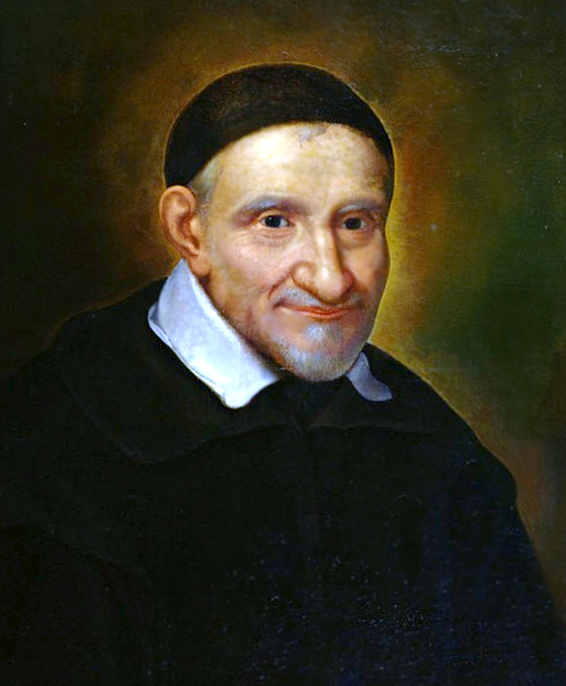
Saint Vincent de Paul Prayer Card – For Charity, Serving the Poor, Caregivers & Works of Mercy
Saint Vincent de Paul was a French Catholic priest, missionary, spiritual father, organizer of charity, founder of the Congregation of the Mission, and co-founder with Saint Louise de Marillac of the Daughters of Charity. Remembered throughout the Church as the Apostle of Charity, he transformed Christian concern for the poor from occasional generosity into organized, sustained service capable of reaching the sick, prisoners, abandoned children, impoverished families, refugees, rural communities, and countless people living at the margins of seventeenth-century French society.
Vincent's spirituality was profoundly practical. He believed Christians encounter Christ Himself in people who are poor and suffering, but he also understood that good intentions alone are not enough. Food must actually reach hungry families, sick people need caregivers, abandoned children require safe homes, prisoners deserve spiritual and material assistance, and charitable organizations need competent people capable of ensuring that help continues after the first burst of enthusiasm has passed.
Saint Vincent de Paul is especially meaningful for people serving the poor, caregivers, charitable volunteers, social-service workers, nonprofit leaders, priests, deacons, missionaries, hospital workers, people involved in prison ministry, and anyone trying to turn compassion into concrete action. Pope Leo XIII named him patron of works of charity, and later popes have repeatedly held him up as one of Christianity's greatest witnesses to the inseparable relationship between loving God and serving people in need.
Each prayer card measures 2.5" x 4.25", is handmade in Austin, Texas, printed on museum-quality photo paper rather than ordinary cardstock, and double laminated for durability. Every card is made to order and prepared prayerfully, with the recipient and their intentions brought before Christ while asking Saint Vincent de Paul to intercede for their needs.
THE LIFE & STORY OF SAINT VINCENT DE PAUL
Vincent de Paul was born in the village of Pouy in southwestern France in 1581. He grew up within a farming family and knew rural poverty from childhood, helping with livestock and the ordinary work required to sustain the household.
His family recognized his intelligence and made sacrifices so that he could receive an education. Vincent eventually pursued studies for the priesthood and was ordained in 1600 while still a very young man.
The Vincent remembered today as the great servant of the poor did not emerge fully formed from ordination. His spiritual development took years, and modern Vincentian scholarship emphasizes that his transformation was gradual rather than the result of one dramatic conversion experience.
This makes his story especially important. Holiness was something Vincent grew into.
AN AMBITIOUS YOUNG PRIEST
Vincent's early ambitions appear to have included obtaining a comfortable ecclesiastical position that could provide security for himself and assistance for his family. Such expectations were hardly unusual within the social world of his time.
Over the following years, however, encounters with spiritual directors, suffering people, rural poverty, prisoners, sick families, and neglected Catholics gradually redirected his priorities.
The priest who once hoped religion might help him escape the insecurity of his upbringing eventually devoted himself precisely to those who could offer him little worldly advantage in return.
His life therefore became not a rejection of his origins but a return to them with entirely different eyes.
THE DISPUTED STORY OF HIS CAPTIVITY
Older biographies often tell a dramatic story in which Vincent was captured by North African corsairs between 1605 and 1607, sold into slavery in Tunis, and eventually escaped after helping convert one of his masters back to Christianity.
The story comes from letters written under Vincent's name, and for centuries it was accepted as a historical episode from his life.
Modern Vincentian historians, however, have raised substantial doubts about whether the captivity actually occurred. The letters themselves are genuine, but inconsistencies within the account and other historical problems have led many contemporary specialists to conclude that the traditional story probably should not be treated as established fact.
Vincent's authentic later ministry is remarkable enough without depending upon uncertain legends. His well-documented service to prisoners, galley convicts, slaves, refugees, and other suffering people would eventually become far more important than any disputed adventure from his youth.
THE GONDI FAMILY
A major stage in Vincent's development came through his relationship with the wealthy and influential Gondi family. He served within their household and became spiritual adviser to Madame de Gondi.
The position exposed him to aristocratic society, but it also placed him in contact with rural populations living on Gondi estates.
Vincent gradually discovered that many rural Catholics had little access to serious religious instruction, Confession, preaching, or well-trained clergy. Material poverty and spiritual poverty frequently existed together.
This realization led toward the event Vincent himself regarded as foundational to his mission.
FOLLEVILLE AND THE BEGINNING OF THE MISSION
In January 1617, Vincent preached at Folleville after encountering a dying man whose spiritual condition had deeply affected Madame de Gondi and those around her.
Vincent encouraged people to make general Confessions, and the response was overwhelming.
For Vincent, the experience revealed the enormous spiritual needs of poor rural communities. He became convinced that preaching the Gospel to people neglected by ordinary pastoral structures had to become a central part of his priesthood.
He later regarded Folleville as the beginning of the mission that eventually became the Congregation of the Mission.
CHÂTILLON AND ORGANIZED CHARITY
Later in 1617, Vincent became pastor at Châtillon-les-Dombes. There he heard about a desperately sick family whose members lacked basic assistance.
He spoke about their need during Mass, and the response from parishioners was generous. Numerous people brought food and supplies.
Vincent noticed a problem, however.
Everyone had responded at once. Food arrived in abundance that day, but without organization much of it could be wasted while the family remained needy later.
The experience taught Vincent one of the principles that would define his entire legacy: charity needs organization.
Compassion must become sustainable.
THE CONFRATERNITIES OF CHARITY
Vincent organized women within the parish into what became known as the Confraternities of Charity. Members coordinated assistance so that people who were sick or impoverished could receive reliable help rather than occasional bursts of generosity.
This approach would eventually spread widely.
Vincent understood that Christian charity should be personal enough to preserve human dignity and organized enough to remain effective.
The Confraternities became one of the earliest branches of the enormous spiritual family that would later grow from his work.
“OUR LORDS AND MASTERS”
Vincent developed an extraordinary way of speaking about people who were poor. Rather than regarding them simply as unfortunate recipients of generosity, he called them “our lords and masters.”
The phrase deliberately reverses ordinary social assumptions.
The person giving assistance can easily begin imagining that generosity places them above the person receiving it. Vincent rejected that attitude.
The poor provide Christians with an opportunity to encounter Christ and learn humility, patience, mercy, and dependence upon God. The person receiving help can therefore become spiritually important to the person giving it.
Charity becomes a relationship rather than a transaction.
“WHEN YOU GO TO THE POOR, YOU ENCOUNTER JESUS”
Vincent's entire spirituality of charity was rooted in Christ. He did not serve the poor merely because society functioned better when suffering was reduced.
He believed Christ Himself was encountered there.
This conviction reflects the Gospel of Matthew, where Jesus identifies Himself with the hungry, thirsty, stranger, naked, sick, and imprisoned.
Vincent took those words with remarkable seriousness.
To visit the sick person, feed the hungry family, console the prisoner, or care for an abandoned child could become a meeting with Christ hidden beneath human suffering.
THE CONGREGATION OF THE MISSION
The rural missions inspired by Folleville gradually required a permanent community of priests.
In 1625, Vincent established the foundation that became the Congregation of the Mission, whose members became popularly known as Vincentians or Lazarists.
Their mission centered especially upon evangelizing poor rural populations and forming clergy capable of serving the Church faithfully.
Vincent understood that preaching a temporary mission could help a village enormously, but lasting renewal also required good priests.
Evangelization and clergy formation therefore became closely linked within the Congregation of the Mission.
WHY THEY ARE CALLED LAZARISTS
Members of the Congregation of the Mission are sometimes called Lazarists because the community eventually received the former priory of Saint-Lazare in Paris as its headquarters.
Saint-Lazare became one of the great centers of Vincent's charitable and priestly activity.
From there he directed missions, formation programs, correspondence, relief efforts, religious communities, and an expanding network of charitable works.
The quiet priest from rural Gascony had become the organizer of one of the most extraordinary networks of Christian charity in early modern Europe.
FORMATION OF PRIESTS
Vincent became increasingly convinced that many of the Church's pastoral problems could not be solved without better formation of clergy.
He therefore devoted enormous energy to retreats for ordinands, conferences for priests, seminaries, and other forms of clerical formation.
His concern was practical as well as theological.
A poorly formed priest could harm an entire community, while a holy and competent priest could influence generations of families.
Saint Vincent's prayer card can therefore be meaningful not only for charitable workers but also for seminarians, priests, spiritual directors, and people praying for the renewal of clergy.
CHAPLAIN TO THE GALLEY CONVICTS
In 1619, Vincent was appointed royal chaplain to the French galleys.
Conditions endured by galley convicts could be horrific. Men sentenced to row military vessels lived under brutal discipline and frequently suffered disease, physical abuse, confinement, and conditions capable of destroying both body and spirit.
Vincent worked to improve their treatment and spiritual care.
His missionaries preached to prisoners, offered Confession and the sacraments, advocated for improved conditions, and worked with charitable collaborators to provide material assistance.
This ministry reveals how far Vincent was willing to extend Christian charity. People convicted of crimes were not outside the reach of human dignity or the mercy of God.
FOR PRISON MINISTRY
Saint Vincent de Paul's concern for prisoners makes him especially meaningful for prison chaplains, volunteers, families of incarcerated people, and those involved in rehabilitation or reentry ministries.
Prison ministry demands a difficult form of Christian charity because it requires acknowledging wrongdoing without reducing the person entirely to the wrongdoing.
Vincent's approach combined moral seriousness with compassion.
A prisoner might deserve punishment under civil law while still possessing a soul worth saving, a body deserving humane treatment, and a future that need not be permanently defined by the past.
SAINT LOUISE DE MARILLAC
One of the most important relationships in Vincent's life was his collaboration with Saint Louise de Marillac.
Louise possessed exceptional administrative ability, spiritual depth, sensitivity to suffering, and a remarkable capacity to translate Vincent's charitable vision into practical systems of care.
Their partnership demonstrates that Vincent's achievements were never the work of one charismatic personality acting alone.
He recognized the gifts of other people and learned how to build structures in which those gifts could flourish.
Pope Francis has specifically praised Vincent for recognizing and encouraging the abilities of women, especially through his collaboration with Louise.
THE DAUGHTERS OF CHARITY
In 1633, Vincent de Paul and Louise de Marillac established the Daughters of Charity.
Their form of religious life was innovative because the sisters were not intended primarily to remain behind convent walls. Their vocation required going directly into streets, homes, hospitals, parishes, and places of poverty.
They cared for sick people, abandoned children, prisoners, wounded soldiers, impoverished families, and others in need.
Their cloister, Vincent famously explained in substance, would be the places where service required them to go.
This model became extraordinarily influential throughout Catholic healthcare, education, and social service.
WOMEN IN THE WORKS OF CHARITY
Vincent's charitable network depended heavily upon women.
Some were wealthy women capable of raising substantial resources. Others were Daughters of Charity performing demanding physical service among poor and sick people.
Vincent understood that different people possessed different gifts.
Effective charity required donors, administrators, organizers, nurses, spiritual directors, volunteers, clergy, and people willing to enter the homes of those suffering.
This ability to coordinate diverse people became one of his greatest organizational strengths.
ABANDONED CHILDREN
Among the most heartbreaking social problems Vincent confronted was the treatment of abandoned infants and children.
Foundlings could face neglect, exploitation, abuse, or death. Existing systems were overwhelmed and frequently incapable of providing humane long-term care.
Vincent and his collaborators mobilized significant resources on their behalf.
The Daughters of Charity and Ladies of Charity became deeply involved in caring for these children, while Vincent repeatedly appealed for financial support necessary to keep the work operating.
His concern for foundlings makes him especially meaningful for people working with foster children, orphan care, adoption, child welfare, and families serving vulnerable children.
“LOVE GOD WITH THE STRENGTH OF OUR ARMS”
Saint Vincent did not believe Christian charity could remain primarily emotional.
One of his most powerful teachings says:
“Let us love God, my brothers, let us love God, but let it be with the strength of our arms and the sweat of our brow.”
The words perfectly summarize his spirituality.
It is possible to feel sympathy for suffering without doing anything difficult to relieve it. Vincent wanted love to become action.
The hungry person needs food, the lonely person needs presence, the sick person needs care, and the exhausted caregiver may need someone willing to share the burden.
Christian love becomes visible through what the body actually does.
LOVE IS INVENTIVE TO INFINITY
Another famous Vincentian phrase is:
“Love is inventive even to infinity.”
The original context is especially beautiful. Vincent was reflecting upon the Eucharist and the extraordinary creativity of Christ's love in finding a way to remain sacramentally present to His people.
The phrase later became a guiding principle within Vincentian spirituality.
If love is genuine, it keeps searching for ways to serve.
When one method no longer works, charity does not simply surrender. It asks what else can be done.
That principle helps explain the enormous variety of institutions that grew from Vincent's ministry.
THE SICK
Care of people who were sick remained central from the beginning of Vincent's organized charity at Châtillon.
Illness can quickly expose other forms of poverty. Someone may lose employment, require expensive care, become isolated, or depend upon relatives already struggling financially.
Vincent's organizations attempted to respond to the whole situation rather than viewing illness in isolation.
Food, medicine, hygiene, spiritual care, companionship, and human dignity all mattered.
His spirituality therefore remains deeply meaningful for nurses, hospital chaplains, home-health workers, hospice volunteers, and family caregivers.
FOR CAREGIVERS
Caregiving requires a form of charity that is often repetitive and hidden.
Someone must return tomorrow.
The patient may still be sick, the elderly parent may need the same assistance, the child may require another appointment, and the person living with disability may need support that never becomes dramatic enough to attract public attention.
Vincent understood this difference between momentary generosity and sustained service.
His genius for organizing charity arose precisely from his recognition that people need reliable care rather than occasional enthusiasm.
WAR, FAMINE AND REFUGEES
Seventeenth-century France endured devastating wars, famine, disease, and displacement.
Vincent organized large-scale relief for regions suffering catastrophic conditions, including Lorraine and other areas ravaged by conflict.
His networks collected money, food, clothing, and other assistance while missionaries and charitable workers attempted to reach communities experiencing enormous deprivation.
Refugees arriving in Paris also became objects of his concern.
This dimension of Vincent's ministry shows that his charity operated both personally and structurally. He could care about one suffering family while simultaneously organizing assistance for an entire region.
CHARITY NEEDS ORGANIZATION
Vincent's extraordinary legacy comes partly from understanding a truth charitable organizations still confront today: compassion without organization can become ineffective, while organization without compassion can become cold.
He wanted both.
People needed to be loved personally, but charitable works also needed schedules, rules, funding, competent leadership, accountability, communication, and continuity.
This makes Saint Vincent especially relevant for nonprofit directors, parish outreach leaders, charitable boards, development officers, caseworkers, and anyone responsible for ensuring that limited resources reach people effectively.
FOR NONPROFIT AND CHARITABLE LEADERS
Saint Vincent de Paul can be a powerful intercessor for someone leading an organization dedicated to service.
Leadership within charitable work creates unique tensions. Resources are limited, needs are enormous, staff may become exhausted, donors expect accountability, and emotionally compelling emergencies constantly compete for attention.
Vincent faced versions of these problems centuries ago.
His solution was neither cold efficiency nor uncontrolled generosity. He sought organized charity rooted in prayer, personal encounter, good judgment, and respect for the dignity of those receiving assistance.
THE POOR AS PEOPLE, NOT PROJECTS
Vincent refused to reduce people to categories such as “the poor,” “the sick,” or “the prisoner.”
Charity has to reach an actual person.
This principle remains important whenever institutions become large enough that human beings risk becoming numbers, cases, diagnoses, applications, or statistics.
Vincent's spirituality continually brings attention back to the person in front of us.
Efficient service matters, but Christian charity loses something essential when the person receiving help no longer feels seen.
GENTLENESS
Gentleness became one of the virtues Vincent most strongly emphasized.
He understood that people experiencing poverty or suffering may already have endured humiliation, rejection, frustration, and fear.
A charitable worker who becomes impatient, harsh, or condescending can therefore deepen the very wounds they supposedly came to heal.
Vincent encouraged his followers to imitate Christ's gentleness and humility, believing that hearts are more readily opened through compassion than through domination.
HUMILITY
Vincent also placed enormous importance upon humility.
Charity can become spiritually dangerous when the giver begins believing that generosity makes them superior to the recipient.
Humility changes the relationship.
The person serving recognizes that they too are dependent upon God's mercy and that the poor may reveal Christ to them in ways they could never discover through comfort alone.
Vincent therefore understood service as mutual transformation. Christians do not simply bring Christ to the poor. They encounter Christ already waiting there.
SIMPLICITY
Another central Vincentian virtue was simplicity.
For Vincent, simplicity meant honesty, transparency, straightforward speech, and avoiding unnecessary pretension or manipulation.
This virtue shaped both preaching and charitable service.
People experiencing poverty do not need impressive language. They need trustworthy people who say what they mean and do what they promise.
Vincent believed the Gospel itself could be preached plainly without being diminished.
THE DEATH OF SAINT VINCENT DE PAUL
Vincent continued working into old age despite increasing physical weakness.
By the time of his death in Paris in 1660, the institutions and communities connected with his mission had already spread far beyond anything that could depend upon one man personally.
The Congregation of the Mission continued evangelizing and forming clergy. The Daughters of Charity continued serving people in need. Confraternities of Charity and related institutions continued organizing assistance.
Vincent had succeeded in doing something more lasting than becoming famous for generosity.
He had formed other people capable of continuing the work.
CANONIZATION AND PATRONAGE
Vincent de Paul was canonized by Pope Clement XII in 1737.
His reputation as one of Christianity's great apostles of practical charity continued growing throughout the following centuries. Numerous religious communities, hospitals, parishes, charitable organizations, schools, and social-service institutions took his name or drew inspiration from his spirituality.
Pope Leo XIII later named Saint Vincent de Paul patron of works of charity.
Saint John Paul II likewise referred to him as patron of charitable associations, while later popes have continued emphasizing his relevance whenever the Church reflects upon poverty and organized Christian service.
THE SOCIETY OF SAINT VINCENT DE PAUL
One common misunderstanding should be clarified: Saint Vincent de Paul did not personally found the Society of Saint Vincent de Paul that today operates charitable conferences throughout the world.
The Society was founded in Paris in 1833, more than 170 years after Vincent's death, by a group of young Catholic laymen led by Blessed Frédéric Ozanam and others.
They chose Saint Vincent de Paul as their patron because his spirituality provided a model for serving people who were poor through direct personal contact and organized charity.
A Daughter of Charity, Blessed Rosalie Rendu, also played an important role in guiding the young founders in practical service among poor families.
WHY THE SOCIETY TOOK HIS NAME
The founders of the Society of Saint Vincent de Paul wanted their Christianity to become concrete.
They visited poor families personally rather than limiting their charitable involvement to distant donations. In Vincent's example they found a saint who had spent his life doing precisely that.
The Society eventually spread internationally and today continues serving people in need through local conferences and volunteers in communities around the world.
Although Vincent never saw the organization that bears his name, its existence demonstrates the extraordinary reach of his spiritual legacy.
FOR SOCIETY OF SAINT VINCENT DE PAUL MEMBERS
A Saint Vincent de Paul prayer card can be particularly meaningful for members and volunteers of the Society of Saint Vincent de Paul.
The saint provides more than a recognizable name for the organization.
His spirituality challenges members to see Christ in the people they visit, protect the dignity of families receiving assistance, resist judgment, cultivate humility, and understand that personal encounter is an essential part of charity.
The person answering the door is not merely a recipient of aid but someone through whom the volunteer may encounter Christ.
FOR PEOPLE EXPERIENCING POVERTY
Saint Vincent's intercession can also be sought by people who themselves are facing financial hardship.
His ministry was not built around romanticizing poverty. Vincent knew that hunger, illness, unemployment, unsafe housing, displacement, debt, and lack of opportunity create real human suffering.
The Christian response is not to tell suffering people that poverty is spiritually good for them.
It is to serve them while recognizing that material hardship cannot erase human dignity.
Someone facing financial crisis can therefore ask Vincent both for practical assistance and for confidence that their economic circumstances do not determine their worth before God.
FOR SOCIAL WORKERS AND CASEWORKERS
Many aspects of Vincent's ministry resemble challenges encountered by modern social workers and caseworkers.
Human problems rarely arrive one at a time. Illness may accompany homelessness, family conflict may accompany unemployment, addiction may accompany trauma, and poverty may be tangled together with education, transportation, healthcare, immigration status, or criminal history.
Vincent's genius lay partly in seeing these connections.
He organized people and institutions capable of responding to complex needs while insisting that the person remained more important than the system.
CLERGY FORMATION
Vincent's legacy is sometimes reduced entirely to charitable work, but he regarded clergy formation as equally central to the mission entrusted to his Congregation.
He believed the poor deserved priests who were holy, educated, pastorally competent, and genuinely concerned for them.
The two missions belonged together.
If priests were formed well, entire communities could benefit. If clergy were poorly formed, people who already suffered material hardship could also remain spiritually neglected.
This concern continues within the Congregation of the Mission today.
EVANGELIZATION AND CHARITY
For Vincent, preaching the Gospel and serving material needs could never become competing missions.
A person is both body and soul.
Feeding someone while ignoring their spiritual dignity is incomplete, but preaching Christianity while ignoring hunger and sickness can become equally distorted.
The events of Folleville and Châtillon in 1617 became symbolic of these two inseparable dimensions of his vocation: evangelization and organized charity.
The Vincentian mission continues to hold them together.
THE QUOTE
One of Saint Vincent de Paul's strongest authentic sayings for a prayer card is:
“Let us love God, my brothers, let us love God, but let it be with the strength of our arms and the sweat of our brow.”
The words summarize a spirituality in which love becomes visible.
Prayer matters. Faith matters. Good intentions matter. Yet Christian love must eventually acquire hands.
For Vincent, serving another person was not secondary to loving God. Properly understood, it was one of the places where love of God became real.
A PRAYER IN THE VINCENTIAN SPIRIT
The official prayer of the worldwide Vincentian Family asks Christ to give His followers eyes and hearts directed toward people who are poor and to help them recognize Him in those experiencing hunger, loneliness, and suffering.
That prayer summarizes Vincent's entire spiritual legacy. Christians ask not simply for generosity but for a changed way of seeing.
Saint Vincent de Paul, pray that we may recognize Christ in those who suffer, serve without condescension, give without seeking praise, organize charity wisely, and love God not only in words but through faithful works of mercy. Help us become attentive to the poor, sick, imprisoned, abandoned, and forgotten, and teach us to serve them with humility, simplicity, gentleness, and persevering love. Amen.
WHO SHOULD RECEIVE A SAINT VINCENT DE PAUL PRAYER CARD?
A Saint Vincent de Paul prayer card can make an especially meaningful gift for charitable volunteers, Society of Saint Vincent de Paul members, priests, seminarians, deacons, social workers, nonprofit employees, nurses, caregivers, prison ministers, foster parents, hospital chaplains, missionaries, parish outreach leaders, and people serving poor or marginalized communities.
It can also be meaningful for someone facing poverty, unemployment, housing insecurity, illness, or another situation in which practical assistance is desperately needed.
His life speaks to both sides of charity. He reminds the person giving help to serve humbly and the person receiving help that need never erases dignity.
FAQ
Who was Saint Vincent de Paul? Saint Vincent de Paul was a French Catholic priest who lived from 1581 to 1660 and became famous for evangelizing poor rural communities, organizing charity, reforming clergy formation, serving prisoners, assisting abandoned children, and founding major religious and charitable institutions.
Why is Saint Vincent de Paul famous? He is remembered particularly for transforming concern for the poor into organized systems of Christian charity. He founded the Congregation of the Mission, established Confraternities of Charity, and co-founded the Daughters of Charity with Saint Louise de Marillac.
Is Saint Vincent de Paul the patron saint of charity? Pope Leo XIII named him patron of works of charity, and later popes have referred to him as patron of charitable associations. He is widely honored as the Apostle of Charity.
Was Saint Vincent de Paul poor? He grew up within a rural farming family and experienced modest circumstances from childhood. His later spirituality became centered upon serving poor people and recognizing Christ in them.
Was Saint Vincent de Paul really captured by pirates and sold as a slave? Vincent wrote letters describing a captivity in Tunis between 1605 and 1607, and older biographies generally accepted the account. Many modern Vincentian historians, however, question whether the captivity actually occurred because the narrative contains significant historical problems. It should therefore be treated as disputed rather than certain history.
What happened at Folleville in 1617? Vincent preached a mission after encountering the spiritual needs of rural people. He later regarded the event as the beginning of the missionary vocation that developed into the Congregation of the Mission.
What happened at Châtillon in 1617? Vincent organized parishioners to provide sustained help to a sick and impoverished family. The experience helped inspire the Confraternities of Charity and Vincent's conviction that Christian charity needed to be organized.
What is the Congregation of the Mission? The Congregation of the Mission is the community of priests and brothers founded by Saint Vincent de Paul in the seventeenth century. Its mission has historically emphasized evangelizing the poor and forming clergy.
Why are Vincentians called Lazarists? The name comes from Saint-Lazare, the former priory in Paris that became the headquarters of Vincent and his Congregation of the Mission.
Did Saint Vincent de Paul found the Daughters of Charity? He co-founded the Daughters of Charity with Saint Louise de Marillac in 1633. The sisters developed an active form of consecrated service centered upon poor, sick, abandoned, and marginalized people.
Did Saint Vincent de Paul help prisoners? Yes. He was appointed royal chaplain to the French galleys in 1619 and worked for the spiritual and material care of galley convicts and other prisoners.
Did Saint Vincent de Paul help abandoned children? Yes. Vincent and his charitable collaborators became deeply involved in rescuing and caring for foundlings and abandoned children whose existing conditions were often extremely dangerous.
Did Saint Vincent de Paul found the Society of Saint Vincent de Paul? No. The Society of Saint Vincent de Paul was founded in Paris in 1833 by Blessed Frédéric Ozanam and other Catholic laymen. They chose Saint Vincent as their patron because of his extraordinary spirituality of charity.
Who was Saint Louise de Marillac? Saint Louise de Marillac was Vincent's close collaborator and co-founder of the Daughters of Charity. Her spiritual wisdom and organizational ability became essential to the development of Vincentian service.
Who was Blessed Frédéric Ozanam? Frédéric Ozanam was a nineteenth-century Catholic layman and professor who helped found the Society of Saint Vincent de Paul in 1833. He lived more than a century after Vincent de Paul and deliberately chose Vincent as a model for the new organization.
What did Saint Vincent mean by calling the poor “our lords and masters”? The phrase reflects his belief that Christians should approach people in poverty with humility rather than superiority. The poor provide an encounter with Christ and can teach those who serve them about charity, patience, and dependence upon God.
What is a famous quote from Saint Vincent de Paul? One of his best-known authentic teachings says, “Let us love God, my brothers, let us love God, but let it be with the strength of our arms and the sweat of our brow.”
What did Saint Vincent mean when he said love is inventive to infinity? Vincent originally used the phrase while reflecting upon Christ's love expressed in the Eucharist. It later became a powerful Vincentian principle encouraging creative responses to human need.
Is Saint Vincent de Paul a good saint for caregivers? Yes. His entire charitable movement involved sustained care for sick, elderly, imprisoned, abandoned, and impoverished people. His spirituality is especially meaningful for people whose vocation requires repeated, practical acts of service.
Is Saint Vincent de Paul a good saint for people experiencing financial hardship? Yes. His ministry centered upon people whose poverty created real material suffering. Someone facing financial hardship may ask his intercession for assistance, dignity, hope, and the people or resources needed to move through the crisis.
Who would this Saint Vincent de Paul prayer card make a meaningful gift for? It is especially fitting for charitable volunteers, Society of Saint Vincent de Paul members, social workers, caregivers, priests, seminarians, nonprofit leaders, prison ministers, foster parents, nurses, hospital chaplains, missionaries, and anyone committed to serving people in need.
THE MAIN MESSAGE OF SAINT VINCENT DE PAUL'S LIFE
Saint Vincent de Paul's greatness did not consist simply in feeling compassion more deeply than other people. He learned how to turn compassion into action and action into institutions capable of continuing after the emotional moment had passed.
A hungry family led toward organized charity. Neglected rural communities led toward missionary priests. Poorly prepared clergy led toward formation programs. Prisoners led toward prison ministry. Abandoned children led toward systems of care. Sick people led toward active communities of women willing to enter their homes and hospitals.
Behind all of it stood one conviction: Christ is encountered in people who are poor.
Vincent therefore challenges both comfortable spirituality and impersonal philanthropy. Christians cannot claim to love God while remaining indifferent to the suffering person beside them, but assistance must also preserve the dignity of the person receiving it.
His famous instruction remains one of the clearest summaries of Christian charity ever given. Love God, certainly, but do not allow that love to remain only an idea. Let it acquire hands, effort, sacrifice, organization, perseverance, the strength of our arms, and the sweat of our brow.