 Image 1 of 1
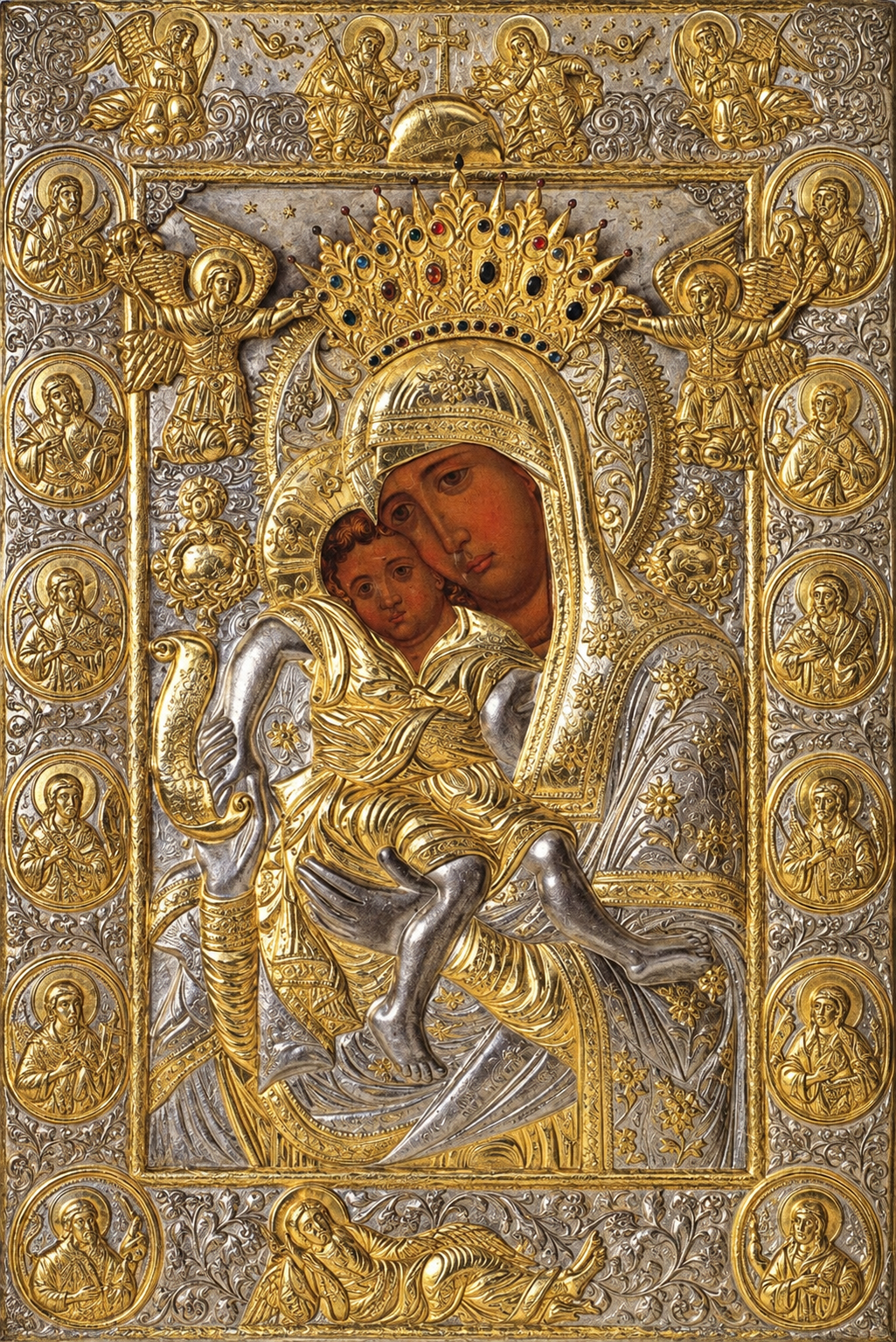
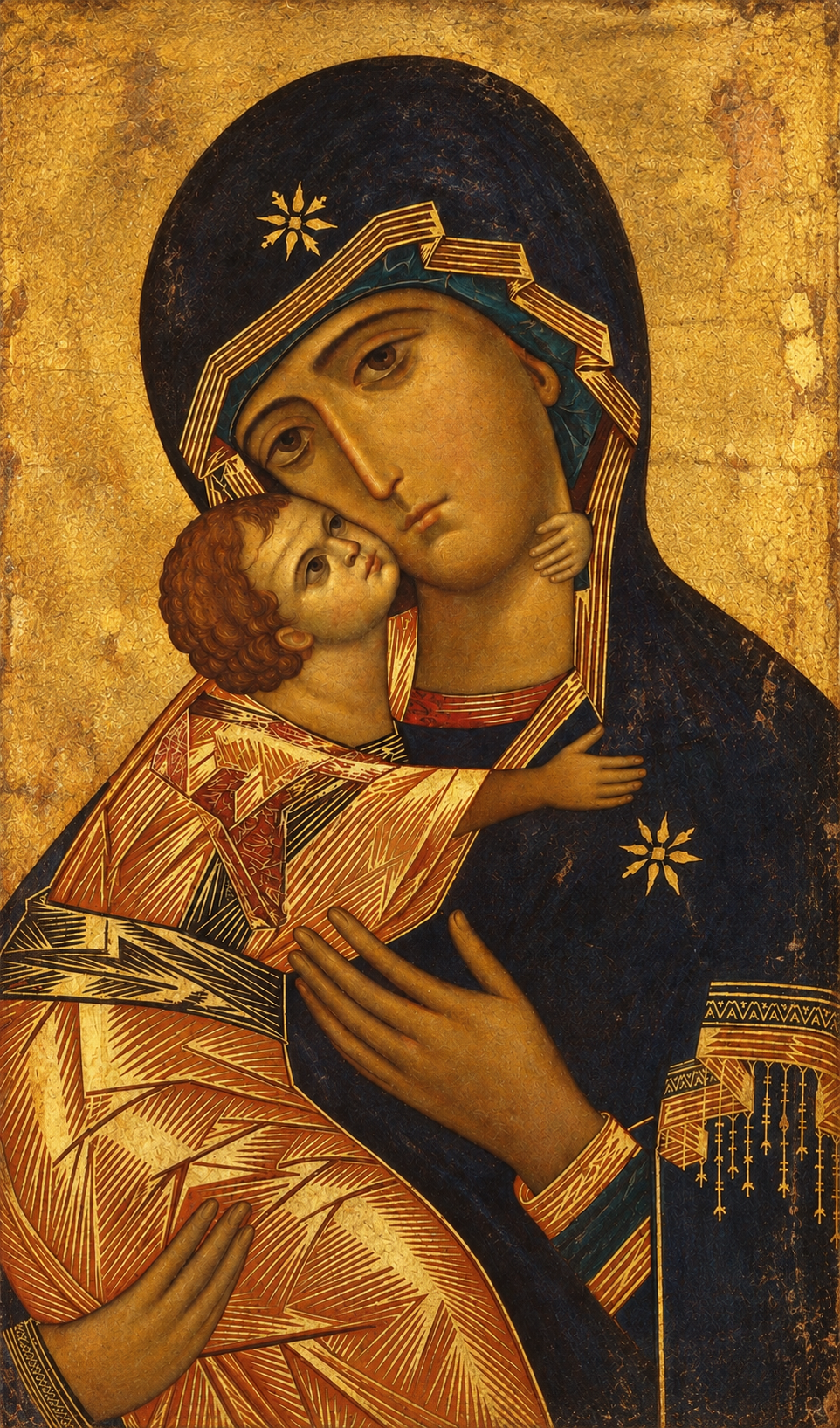
The Theotokos of Vladimir, also known as Our Lady of Vladimir or the Vladimir Icon of the Mother of God, is one of the most ancient, beloved, and historically important Marian icons in the Christian East. Painted in the Byzantine tradition, the icon presents the Blessed Virgin Mary holding the Christ Child close against her as He presses His face tenderly to hers and embraces His Mother.
The icon belongs to the Byzantine Eleousa, or “Tenderness,” tradition. Unlike more formal images of the Mother of God and Christ, the Vladimir icon emphasizes the profound love between Mother and Son. Christ reaches around His Mother's neck while their faces touch, revealing the reality of His human childhood and the tenderness of the woman who bore Him. At the same time, Mary's solemn and contemplative expression gives the image a deeper character. Her love for her Son is joined to an awareness of the suffering that awaits Him.
The original icon dates to the 12th century and was almost certainly created within the Byzantine world, traditionally associated with Constantinople. It was sent from Constantinople to the lands of Rus' and was first kept near Kyiv at Vyshhorod. In 1155, Prince Andrew Bogoliubsky brought the icon to Vladimir, where it became known as the Vladimir Icon of the Mother of God.
For centuries, Christians turned to the icon during times of invasion, danger, national crisis, and personal suffering. In 1395, when the armies of Timur, also known as Tamerlane, threatened Moscow, the icon was solemnly brought to the city while the faithful prayed for the intercession of the Mother of God. Timur's forces unexpectedly withdrew, and the deliverance became permanently associated with the Vladimir icon. Other commemorations likewise developed around occasions when the faithful believed Moscow had been protected through the prayers of the Theotokos.
The icon eventually became one of the most revered sacred images of the Russian Orthodox tradition. Rulers, bishops, patriarchs, monastics, and generations of ordinary Christians prayed before it. Today the original 12th-century icon is preserved in the Church of St. Nicholas in Tolmachi, a functioning church connected with the State Tretyakov Gallery in Moscow, where the faithful can still come before the ancient image in prayer.
Traditional Commemorations: May 21, June 23, and August 26
The Theotokos of Vladimir is especially meaningful for prayer concerning families, children, protection, peace, suffering, danger, and the intercession of the Mother of God. Its intimate image of Mary and Jesus makes it a powerful reminder that the eternal Son of God truly entered human life, received the love of His Mother, and willingly approached the Passion for the salvation of the world.
Each prayer card is handmade in Austin, Texas and made to order. The card measures approximately 2.5" × 4.25" and is printed on premium photo paper and double laminated for durability. Each card is individually prepared rather than taken from mass-produced shelf stock, and prayer accompanies the work of making it.
A meaningful devotional card for personal prayer, prayer corners, Bibles, wallets, parish ministries, Marian devotion, Eastern Christian gifts, and anyone with a particular devotion to the Most Holy Theotokos and Ever-Virgin Mary.
The Theotokos of Vladimir, also known as Our Lady of Vladimir or the Vladimir Icon of the Mother of God, is one of the most ancient, beloved, and historically important Marian icons in the Christian East. Painted in the Byzantine tradition, the icon presents the Blessed Virgin Mary holding the Christ Child close against her as He presses His face tenderly to hers and embraces His Mother.
The icon belongs to the Byzantine Eleousa, or “Tenderness,” tradition. Unlike more formal images of the Mother of God and Christ, the Vladimir icon emphasizes the profound love between Mother and Son. Christ reaches around His Mother's neck while their faces touch, revealing the reality of His human childhood and the tenderness of the woman who bore Him. At the same time, Mary's solemn and contemplative expression gives the image a deeper character. Her love for her Son is joined to an awareness of the suffering that awaits Him.
The original icon dates to the 12th century and was almost certainly created within the Byzantine world, traditionally associated with Constantinople. It was sent from Constantinople to the lands of Rus' and was first kept near Kyiv at Vyshhorod. In 1155, Prince Andrew Bogoliubsky brought the icon to Vladimir, where it became known as the Vladimir Icon of the Mother of God.
For centuries, Christians turned to the icon during times of invasion, danger, national crisis, and personal suffering. In 1395, when the armies of Timur, also known as Tamerlane, threatened Moscow, the icon was solemnly brought to the city while the faithful prayed for the intercession of the Mother of God. Timur's forces unexpectedly withdrew, and the deliverance became permanently associated with the Vladimir icon. Other commemorations likewise developed around occasions when the faithful believed Moscow had been protected through the prayers of the Theotokos.
The icon eventually became one of the most revered sacred images of the Russian Orthodox tradition. Rulers, bishops, patriarchs, monastics, and generations of ordinary Christians prayed before it. Today the original 12th-century icon is preserved in the Church of St. Nicholas in Tolmachi, a functioning church connected with the State Tretyakov Gallery in Moscow, where the faithful can still come before the ancient image in prayer.
Traditional Commemorations: May 21, June 23, and August 26
The Theotokos of Vladimir is especially meaningful for prayer concerning families, children, protection, peace, suffering, danger, and the intercession of the Mother of God. Its intimate image of Mary and Jesus makes it a powerful reminder that the eternal Son of God truly entered human life, received the love of His Mother, and willingly approached the Passion for the salvation of the world.
Each prayer card is handmade in Austin, Texas and made to order. The card measures approximately 2.5" × 4.25" and is printed on premium photo paper and double laminated for durability. Each card is individually prepared rather than taken from mass-produced shelf stock, and prayer accompanies the work of making it.
A meaningful devotional card for personal prayer, prayer corners, Bibles, wallets, parish ministries, Marian devotion, Eastern Christian gifts, and anyone with a particular devotion to the Most Holy Theotokos and Ever-Virgin Mary.