Beshara Abu-Mrad: Melkite Basilian Monk, Confessor and Missionary of Lebanon Approved for Beatification
A Melkite Greek Catholic monk of Zahle who spent his life hearing confessions and walking to remote villages
At a Glance
- Born
- May 19, 1853 in Zahle, Lebanon; baptized Selim Jabbour Abou-Mourad
- Died
- February 22, 1930 at the Holy Savior Monastery near Sidon, Lebanon
- Titles
- Venerable; Melkite Greek Catholic priest, Basilian Salvatorian monk and missionary
- Feast
- February 22 is the day of his death; an official liturgical feast is UNCERTAIN
- Veneration
- Declared Venerable in December 2010; miracle approved February 21, 2026; beatification ceremony date UNCERTAIN
- Patronage
- No formal patronage verified
- Who Was Father Beshara Abu-Mrad?
- A Child of Zahle
- Entering the Monastery of the Holy Savior
- Thirty One Years in the Mountains
- Weakness, Age and a Changing Lebanon
- Death and Burial at Holy Savior
- The Approved Healing and Other Accounts
- Sources and Open Questions
- Devotion at Holy Savior and Beyond
- Why He Matters to Eastern Christians
- Frequently Asked Questions
Who Was Father Beshara Abu-Mrad?
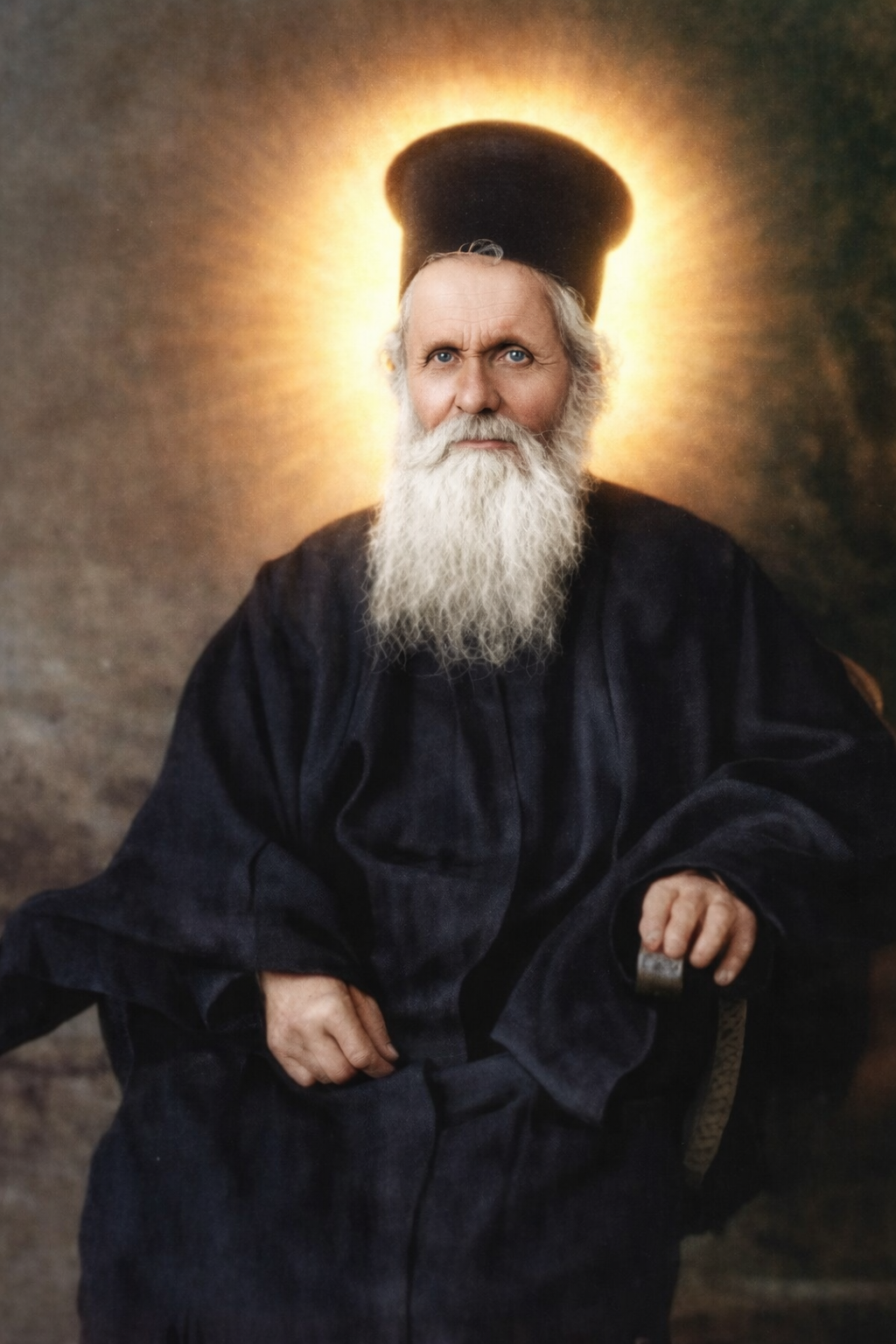
Father Beshara Abu-Mrad was a Lebanese priest of the Melkite Greek Catholic Church and a monk of the Basilian Order of the Most Holy Savior, often called the Salvatorian Order. His name appears in several spellings. In French he is Bechara Abou Mourad, and Beshara means good news. He lived from 1853 to 1930 in the last decades of Ottoman rule and the start of the French Mandate.
He is remembered as a confessor and a missionary on foot. For thirty one years he served villages in the mountains around Deir el-Qamar, and he later heard confessions in Sidon. People who knew him described a monk with almost no possessions who gave away what he was given. His Order sometimes compares him with Saint John Vianney, the Curé of Ars, though that is a devotional comparison and not an official title.
The status of his cause is important. He was declared Venerable by Benedict XVI, and Pope Leo XIV approved a miracle on February 21, 2026. Some recent reports already call him Blessed, but we could not verify the date of the beatification ceremony. Our title therefore says he was approved for beatification, and we mark the point UNCERTAIN.
A Child of Zahle
Selim Jabbour Abou-Mourad was born on May 19, 1853, in Zahle, a mostly Christian town in Lebanon's Bekaa Valley, and was baptized in the Melkite cathedral there on June 28. His father, Jabbour, was a farmer. His mother's name is given in church sources as Elisabeth Al-Qashsh, also called Sabat. The family belonged to the Melkite Greek Catholic Church, which follows the Byzantine rite in communion with Rome.
Accounts that rely on Father Constantine Bacha, a historian of the Salvatorian Order, say that the boy went to church with his mother and sometimes left games to pray. This is later biographical testimony, and it has not been independently checked. It fits the picture of a child formed in the prayer of his parish.
As he grew, he wished to become a monk. His parents, especially his father, did not agree at first. The Vatican biography records this family opposition and also his continued prayer and sacramental life. He kept asking for their consent, and in the end he was allowed to enter the monastery.
Entering the Monastery of the Holy Savior
There was no conversion from another religion. Selim was raised Melkite Catholic and his story is one of listening to a calling. He entered the Monastery of the Holy Savior near Sidon in September 1874. The Order gives September 5 for his arrival, while the Vatican biography gives September 19 for his novitiate, and the two dates may describe different steps.
He took the name Beshara and made his first profession on November 4, 1876. He was ordained a deacon on March 26, 1882, and a priest on December 26, 1883, by Archbishop Basilios Haggiar. The ordination date is given by both the Dicastery for the Causes of Saints and the Order.
The Dicastery reports that he at first hesitated to accept priesthood because of his respect for the office, and then accepted. That seriousness shaped his later life. After ordination he worked as a prefect of discipline and confessor at the Order's minor seminary, where he came to be known for confession and personal guidance.
Thirty One Years in the Mountains
From November 8, 1891, to December 4, 1922, Father Beshara served as a missionary in the mountains around Deir el-Qamar. He went from village to village, celebrated the Divine Liturgy, taught the faith, visited the sick and attended the dying. Where there was no church, he celebrated in private homes. With the help of his bishop and local benefactors, a church was later built.
TRADITION: Local accounts in the Order's biography say villagers sometimes helped him across swollen rivers on ladders in winter. The story is not dated or documented. The Vatican also reports that he founded a private charitable society to help the needy, but its date, name and later history are UNCERTAIN.
He lived in great poverty. The Order says his cell held little more than a bed and a wooden box for clothes, and that he gave gifts to the poor. He fasted and spent long hours in prayer, including before the Eucharist. No theological treatises or verified collections of letters by him are known. Sayings credited to him are transmitted by his Order.
Weakness, Age and a Changing Lebanon
Few dramatic controversies mark his life. His earliest trial was his family's reluctance to let him become a monk. Later trials were the hardships of mountain travel, severe weather and the strain of constant demands for confession and counsel. The sources we reviewed record no doctrinal dispute and no ecclesiastical censure against him.
His lifetime covered the end of Ottoman administration, the First World War, the founding of Greater Lebanon in 1920 and the start of the French Mandate. These events formed the background of his work, but the sources do not show him taking political positions. It would be wrong to present him as an activist without documents to support it.
In 1922 his health began to fail, and he was moved to the Melkite cathedral in Sidon, to the regret of the people he had served. He heard confessions there until early 1927. The Dicastery names cataracts and heart trouble among his illnesses. He then returned to the Holy Savior Monastery to live quietly in prayer.
Death and Burial at Holy Savior
Father Beshara died on Saturday, February 22, 1930, at about half past six in the morning at the Holy Savior Monastery near Sidon, at the age of 76. The Order records his funeral and burial in the monastery church. The Vatican biography adds that he was the only monk buried in the church, and that his cell was kept and became a place of pilgrimage.
We did not find a verified record of a formal exhumation or recognition of his remains. Any claim about the state of his body or about first class relics would need documents we did not see, so it is UNCERTAIN.
The path of his cause is well recorded. Rome allowed the cause to open in 1983, and it was formally opened in 1984. The diocesan inquiry ended in 1993, and his heroic virtue was recognized by Benedict XVI in December 2010. Sources differ between December 10 and 11 for that decree, and the difference is UNCERTAIN. On February 21, 2026, Pope Leo XIV authorized the decree on a miracle.
The Approved Healing and Other Accounts
The miracle approved by the Holy See concerns a Lebanese woman, born in 1934, who from about 1983 suffered severe knee pain and by 2001 often used a wheelchair. Doctors found advanced osteoarthritis and spinal problems, and she declined surgery. Around 2009 she found a booklet about Father Beshara and prayed for his help.
According to the Dicastery, one night of severe pain she kissed his photograph in the booklet and prayed. The next morning she could walk without help or pain. The Church recognized this as a miracle through his intercession after investigation. It is the only miracle that has been formally recognized, and we give it as the Church's official account.
TRADITION: The Order's brochure records other testimonies, including a recovery from typhoid in 1922, rain after prayer in a drought in 1929, an eye healing and a back healing in 1998. These are personal testimonies and the Church has not formally recognized them. They show how devotion to him grew, but they should not be treated as proven miracles.
Sources and Open Questions
The best sources are the Dicastery for the Causes of Saints, the Holy See Press Office decree of February 21, 2026, and Vatican News. The Basilian Salvatorian Order publishes a biography and a brochure with a chronology, sayings and testimonies. Father Constantine Bacha's life of him is cited in many accounts, though its publication details are UNCERTAIN.
Several points need care. The date of the beatification ceremony is not verified in the sources we reviewed, though some sources already say Blessed. February 22 is the day of his death and is listed in some directories, but an official feast in the Melkite or Roman calendar is UNCERTAIN. The Dicastery mentions his openness to other Christians, but we found no documented meetings with Orthodox leaders.
A responsible article keeps the official record apart from the pious testimony and does not make him a political or ecumenical figure without proof. His strength lies in the plain record of decades of confession, travel and service.
Devotion at Holy Savior and Beyond
Devotion centers on the Monastery of the Holy Savior, near Sidon, where he is buried and where his cell is kept. Pilgrims visit the church and his room to pray. The monastery belongs to the Basilian Salvatorian Order and is a living community, so visitors should expect a place of prayer and not a museum.
Lebanese Christians, and Melkites in the diaspora, have long asked his help for the sick, for confession and for families. We found no formal patronage declared for him. Requests for healing, for conversion of the hard hearted and for children are popular custom. The one approved miracle concerns a woman who could not walk.
The Order's historical prayer for his beatification was written by Archbishop Nicholas Nabaa of Sidon in 1935. It asks that the holiness of the servant be made known. Pilgrims often pray at his tomb for confessors and for those who need to return to the sacrament of reconciliation.
Lord Jesus Christ, Good Shepherd, You called Your servant Beshara to walk among Your people and to forgive in Your name. Through his prayers, give strength to all who heal souls, bring the weary back to confession, and comfort those who cannot walk. Father Beshara, pray for us. Amen.
This is a short original prayer written for this article. It is not an official liturgical text, and we did not verify an approved troparion for him. The Basilian Salvatorian Order publishes an official prayer for his beatification in its brochure.
Why He Matters to Eastern Christians
Father Beshara belongs to the Melkite Greek Catholic Church, an Eastern Church in communion with Rome that keeps the Byzantine liturgy and spiritual tradition. He is therefore a saint in the making of the Byzantine world and not a Latin missionary. He was not a Maronite, though he lived in Lebanon among many Eastern traditions.
His life shows how monastic prayer and parish service can go together. A monk who loved silence and fasting spent three decades walking among villages. Orthodox readers will recognize the spiritual father, the confessor, the monastic obedience and the poverty, which are shared parts of the Byzantine inheritance.
We found no evidence that any Orthodox Church has recognized him, and his cause is a Catholic process. We make no claim of Orthodox glorification. We can say that the elder who hears confession and gives away his possessions is a figure that Byzantine Christians of every communion understand.
Frequently Asked Questions
Ask His Prayers
Many Lebanese and Melkite Catholics ask Father Beshara to pray for the sick and for those who need forgiveness. If you would like a prayer card of Blessed Beshara Abu-Mrad, you can find one below. His life reminds us that the Church is built up by quiet years of faithful service.
View Prayer Card