Best Orthodox Prayer Ropes for Beginners and the Jesus Prayer
A Serious Guide for Beginners, Daily Use, and Deeper Prayer
Best Orthodox Prayer Ropes for Beginners and the Jesus Prayer
Every prayer rope on this page is made by monks from Mount Athos or by Orthodox nuns — and that matters more than anything else about them
A prayer rope is not jewelry, not a trend, and not a religious accessory meant to impress other people. It is a practical tool for prayer, attention, humility, and the repeated invocation of the holy name of Jesus through the Jesus Prayer: “Lord Jesus Christ, Son of God, have mercy on me.”
There are a lot of things online sold as prayer ropes that I would never buy. I do not care if they are cheap, popular, or easy to get. If a prayer rope is going to pass through my hands while I am calling on the name of Christ, I want it to come from hands that live a life of prayer.
That is why every rope on this page is made by monks from Mount Athos or by Orthodox nuns. These communities make prayer ropes as one of the ways they support themselves. This is part of how monasteries and convents pay their bills, sustain their life, and continue their hidden work of prayer. These ropes are not fake just because they are sold on Amazon. They are absolutely made by the holy people who created them.
Traditionally, each knot in a proper Orthodox prayer rope is itself made from seven small cross-shaped knots woven together. That alone should tell you this is not just a decorative object. Time, prayer, patience, and tradition are literally tied into it.
Top Picks at a Glance
If you do not want to read the whole guide yet, these are the strongest places to start depending on how you plan to use your prayer rope.


What a Prayer Rope Is — and What It Is Not
A prayer rope, called a komboskini in Greek or chotki in Russian and other Slavic traditions, is a loop of knots used to count repetitions of prayer, especially the Jesus Prayer. It belongs especially to the life of Eastern Orthodox monastics, but many lay Christians use them as well. Its use is deeply connected to the tradition of hesychasm — the prayer of the heart and interior stillness — which has shaped Eastern Christian spirituality for centuries.
What matters is not the object by itself, but the spirit in which it is used. The rope exists to serve prayer. It helps keep the hands occupied, the attention steady, and the mind from drifting as easily. It is a quiet tool of repetition and return. For a full account of where the prayer rope comes from, our history of the prayer rope covers the tradition from the Desert Fathers to Mount Athos.
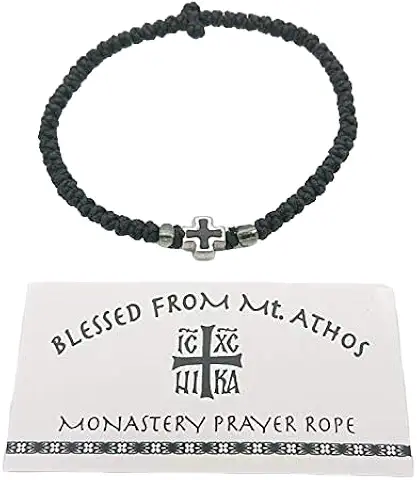
Thin Black Mount Athos Prayer Rope
Thin Black Mount Athos Prayer Rope Bracelet
The strongest all-around choice for most people who want something authentic, discreet, and easy to use every day.This is the kind of prayer rope I would tell most people to start with. It is simple, traditional, and does not try to turn prayer into a performance. It looks clean, feels practical, and comes from the right place: the prayerful labor of Mount Athos.
That matters more than people think. A rope like this does not call attention to itself. It just lets you pray. For most people, especially those learning to carry the Jesus Prayer through ordinary life, that is exactly what you want.
- Made by monks from Mount Athos
- Simple and discreet for daily use
- Strong beginner recommendation
- Easy to wear without drawing attention
33-Knot Prayer Rope from Mount Athos

33-Knot Prayer Rope from Mount Athos
The best traditional starting point for someone who wants a real prayer rope without jumping into longer formats.The 33-knot prayer rope is one of the best places to begin because it is large enough to feel truly traditional, but not so large that it becomes cumbersome. The number 33 is tied to the years of Christ’s earthly life, which makes it especially fitting for the repeated invocation of His holy name.
For a beginner, that balance matters. A 33-knot rope is enough to feel substantial, enough to help you develop rhythm, and small enough that it does not become something you avoid using. To understand how to actually build a prayer rule around it, see our beginner’s guide to the Orthodox prayer rule.
- Traditional beginner-friendly size
- 33 knots tied to Christ’s earthly years
- Made on Mount Athos
- Easy bridge between bracelet and longer rope
Why Discreet Prayer Matters
There is a real temptation to let visible religious objects become a kind of statement. Sometimes that is unavoidable, but prayer itself should remain hidden as much as possible. The Jesus Prayer is not something that needs an audience. This is one of the central lessons of the Desert Fathers, who developed many of the practices that underlie the prayer rope tradition.
That is why bracelet-style ropes can be so powerful. They let you keep prayer close without turning it into an announcement. You can wear one during the day, touch each knot quietly, and pray in a way that remains between you and God. Saint Paisios of Mount Athos — one of the most beloved modern advocates for the Jesus Prayer — always stressed that prayer should be simple, humble, and above all, hidden from display.
Simple Bracelet-Style Prayer Rope
Simple Bracelet-Style Prayer Rope
The best choice for people who want their prayer rope to remain private, personal, and easy to wear all day.This is the one that comes closest to how I personally like to use a prayer rope during the day. A bracelet-style rope with a simple bead lets the rope stay close to you without making it into something outward or performative. It looks ordinary, which is one of its strengths.
The prayer rope is regarded as a sword of the Spirit. That is right. This is not decoration. It is a tool of warfare, repentance, and repeated return to Christ.
- Quiet and understated appearance
- Very practical for daily use in public
- Strong fit for private prayer
- Closest to what I personally use
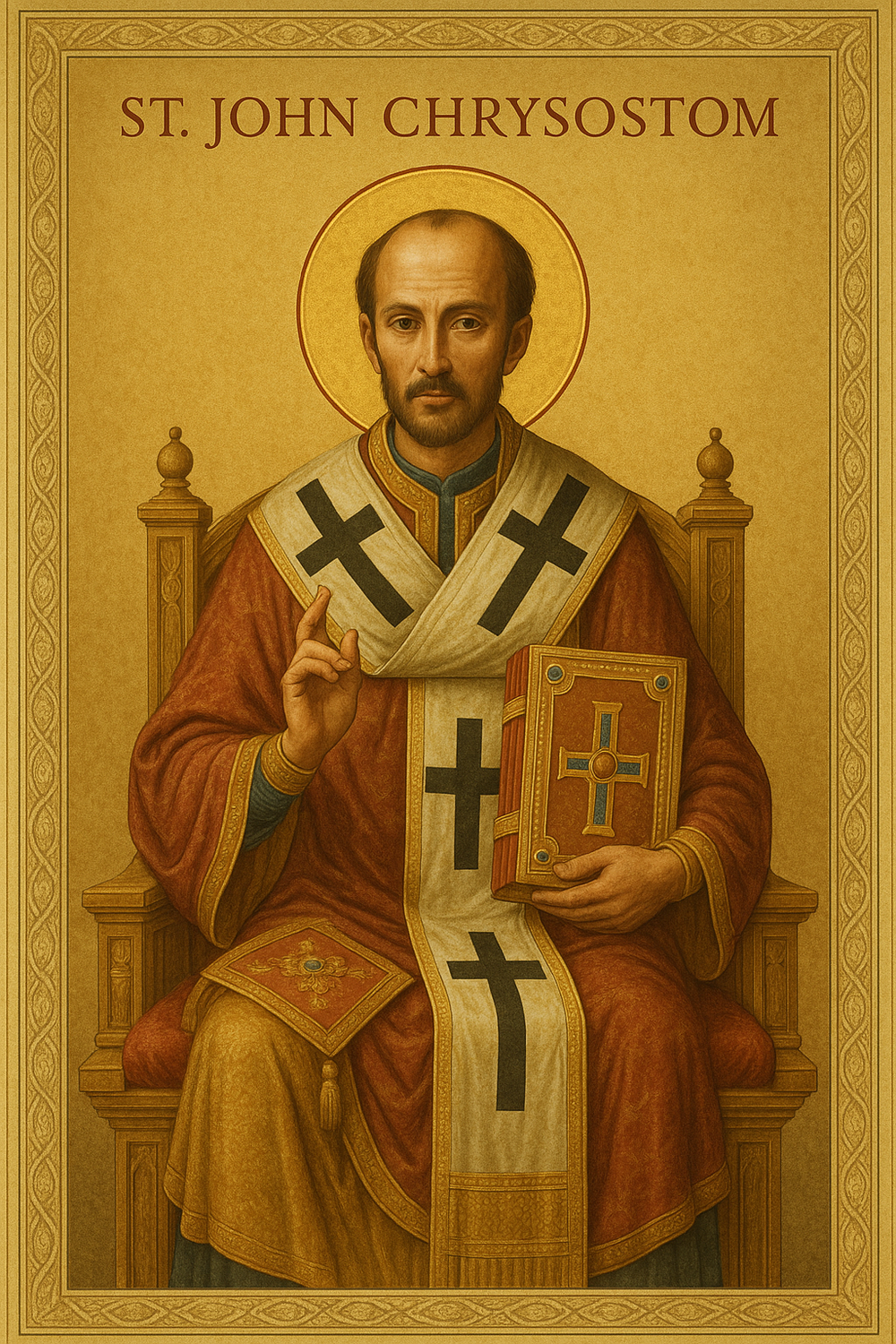
The prayer rope is a tool. The saints whose lives were defined by the Jesus Prayer and ceaseless prayer are your intercessors. These handmade prayer cards connect you to two of the greatest witnesses to hidden prayer in the Eastern Christian tradition.

At Home, Longer Ropes Make More Sense
During the day I prefer a bracelet because I want prayer to remain hidden. At home, though, that concern goes away. That is where longer ropes make more sense. They give your hands more room, they support longer repetition, and they feel more grounded when you are standing quietly at home to pray.
This is why I think most people benefit from having two kinds of prayer ropes eventually: one discreet rope for daily use, and one longer rope for home. That keeps your prayer life practical instead of forcing one object to do everything. If you are building a prayer rule around these, see our beginner’s Orthodox prayer rule for a structured approach.
100-Knot Prayer Rope with Red Beads
A strong traditional home-use option for longer sessions of the Jesus Prayer.Once you move beyond a simple bracelet or 33-knot rope, the 100-knot format becomes a natural next step. It gives you more room for longer prayer without becoming extreme. For most people who want a more traditional rope for home use, this is the sweet spot.
I especially like the red beads here. To me the red bead represents the blood of Christ. That kind of visual marker can help keep the rope grounded in remembrance, not just counting.
- Classic 100-knot format
- Red beads provide visual markers
- Made on Mount Athos
- Excellent next step after a smaller rope
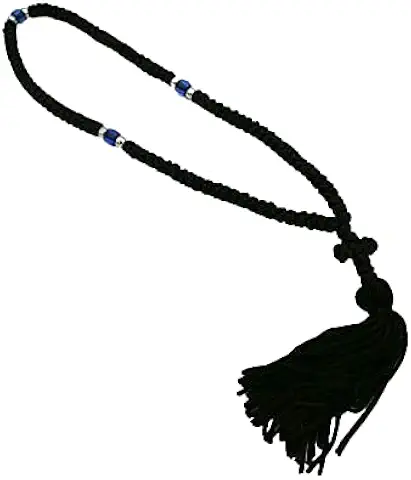
100-Knot Prayer Rope with Blue Beads
A strong alternative for readers who want a traditional 100-knot rope with a slightly different visual feel.Functionally this fills the same role as the red-bead version, but some people connect more strongly to one style than another. That is not a trivial detail. If a rope makes you want to pick it up and pray, that matters. The core strength remains: 100 knots, Mount Athos craftsmanship, a rope clearly suited for real prayer.
- Traditional 100-knot design
- Made by monks on Mount Athos
- Good for home prayer and longer use

Monastery Vodoca 100-Knot Prayer Rope
A strong choice for people who want the traditional 100-knot count with a smoother satin-cord feel.Not everyone likes the same texture in the hand, and texture matters more than people admit. If a rope feels awkward or distracting, you are simply less likely to use it. This option keeps the classic 100-knot structure while offering a smoother cord feel that some people find easier for extended prayer.
- Traditional 100-knot structure
- Smoother satin-cord texture
- Good for home prayer

Nun-Made 100-Knot Prayer Rope
A deeply fitting choice for readers who specifically want a rope made prayerfully by Orthodox nuns.There is something beautiful about knowing a rope was made by nuns whose whole life is hidden prayer. That does not magically make the rope holy by itself, but it does matter where these things come from and whose hands prepared them.
This one has a very strong traditional feel, with wooden markers after each set of 25 knots and a knotted cross at the end. It feels like a real prayer rope, because it is. An excellent gift as well as a personal choice.
- Made prayerfully by Orthodox nuns
- Wooden markers at each 25-knot section
- Excellent gift or home-use rope
Best for Serious Extended Prayer

300-Knot Prayer Rope from Mount Athos
A rope for serious extended prayer, not for beginners trying to look serious.This is where you move beyond normal daily convenience into something much more substantial. A 300-knot rope is not the rope I would hand to someone just starting out. It is better for the person who already knows why they want something long and who will actually use it privately at home.
That is the key here. A longer rope should support prayer, not spiritual theater. If that is where you truly are, this can be a beautiful and fitting option. If not, start smaller and be honest about it. The tradition of Orthodox hesychasm is clear: depth comes before length.
- Made on Mount Athos
- Very substantial 300-knot format
- Best for private home prayer
- Not necessary for most beginners
Common Mistakes People Make When Choosing a Prayer Rope
Buying the most dramatic one first
A bigger rope is not always a better rope. A longer rope only helps if you actually use it. Many people would be better served by a discreet bracelet or 33-knot rope than by buying something huge they barely touch.
Choosing based only on looks
Beauty matters, but a prayer rope is first a tool for prayer. If you pick one because it looks intense but does not fit your actual life, it will end up sitting somewhere unused.
Using public visibility as part of the appeal
This is one of the biggest mistakes. Prayer should remain hidden. That is why bracelet-style ropes can be so wise. You do not need other people to know what you are doing. For more on this interior tradition, see our guide on the prayers and practices of the Desert Fathers.
Buying ropes not made by holy people
I will say it plainly again: I refuse to buy prayer ropes not made by monks or nuns. If I am going to use something in prayer, I want it made by people whose lives are given to prayer.
What about Eastern Catholics?
Many Eastern Catholics use prayer ropes, especially those shaped by the spirituality of the Christian East. The komboskini belongs to the broader Eastern Christian tradition, not exclusively to Eastern Orthodoxy. The key is using it reverently as a tool for prayer.
Frequently Asked Questions
Keep Going Deeper
If this page helped you choose a prayer rope, these will help you actually use it well.
Beginner’s Guide to the Jesus Prayer
Learn how to start praying with a prayer rope simply, quietly, and without making it complicated.
Read the guide →Orthodoxy and Hesychasm
Go deeper into the tradition behind the Jesus Prayer: stillness, watchfulness, and the prayer of the heart.
Read the guide →Best Books on Hesychasm and the Jesus Prayer
Build a fuller spiritual foundation with books that explain the inner life behind the prayer rope.
Read the guide →History of the Prayer Rope
From the Desert Fathers to Mount Athos — how the prayer rope became one of the central tools of Eastern Christian prayer.
Read the history →Orthodox Prayer Rule for Beginners
How to build a sustainable daily prayer rule that incorporates the prayer rope without overwhelming yourself.
Read the guide →Saint Paisios of Mount Athos
The most beloved modern advocate for the Jesus Prayer and the prayer rope — his life, wisdom, and teaching on hidden prayer.
Read the biography →The best prayer rope is not the one that looks the most impressive. It is the one that quietly helps you return to the name of Jesus again and again, without display, without noise, and without pretending to be farther along than you are.
As an Amazon Associate, The Eastern Church earns from qualifying purchases.