Cardinal Josyf Slipyj: The Ukrainian Metropolitan Who Spent 18 Years in the Gulag
Church History • Ukraine • Eighteen Years in the Gulag • A Complete Deep Dive
Cardinal Josyf Slipyj: The Ukrainian Metropolitan Who Spent 18 Years in the Gulag
A pope secretly made him a cardinal while he was still a prisoner. A president intervened personally to get him out. And on his final night on Soviet soil, an old man who had just survived eighteen years of the Gulag used his last hours of freedom to secretly ordain the next bishop — inside a Moscow hotel room. This is the complete, documented story of Josyf Slipyj.
At a Glance
- Born
- February 17, 1892 • Zazdrist, Galicia
- Ordained Priest
- 1917 • by Metropolitan Andrey Sheptytsky
- Secretly Consecrated Bishop
- December 22, 1939 • foreseeing the coming catastrophe
- Head of the UGCC
- From November 1, 1944
- Arrested
- April 11, 1945 • by the NKVD
- Total Imprisonment
- Over 18 years • prisons, labor camps, Siberian exile
- Made Cardinal "In Pectore"
- March 28, 1960 • secretly, while imprisoned
- Released
- January 1963 • after John XXIII & Kennedy's intervention
- Cardinal (Public)
- February 22, 1965 • by Paul VI
- Died
- September 7, 1984 • Rome, age 92
A Life That Reads Like Fiction Because Reality Outran It
In 1963, a novel was published imagining a fictional Ukrainian cardinal, freed from a Siberian labor camp after years of imprisonment, who improbably rises to become pope. The book, The Shoes of the Fisherman, became a bestseller and later a major film. Its author did not invent the premise from nothing. He borrowed it, almost point for point, from a living man: Josyf Slipyj, Metropolitan of the Ukrainian Greek Catholic Church, who was released from a Soviet Gulag camp that same year after more than eighteen years of imprisonment — a fact so widely reported at the time that a novelist could build an entire bestseller on the premise that everyone would recognize where it came from.
Slipyj's real story does not need fiction's help. He was secretly consecrated a bishop before the catastrophe he foresaw actually arrived. He led his Church for less than six months in freedom before the state that had just occupied his homeland arrested him. He spent nearly two decades refusing, under every form of pressure a totalitarian government could apply, to sign a single document renouncing communion with Rome. A pope made him a cardinal in total secrecy while he was still a prisoner. And on the very last night before he left Soviet territory for good, he spent his remaining hours of freedom doing exactly what he had spent eighteen years in prison for doing: ensuring that his Church would still have a bishop after he was gone. The War Within the Church: Communism, Infiltration, Persecution, Resistance, and the Spiritual Battle for Catholicism references Slipyj across several chapters as one of the defining figures of this entire history. This article tells his whole story, start to finish.

Part II
A Scholar From Galicia
Josyf Slipyj was born on February 17, 1892, in the village of Zazdrist in Galicia, then part of Austria-Hungary. A gifted student, he entered the Greek Catholic Theological Seminary in Lviv in 1911, where the great Metropolitan Andrey Sheptytsky quickly recognized his talent and sent him abroad for advanced formation at the Jesuit theological faculty in Innsbruck, Austria, where he earned his doctorate in theology in 1918. Sheptytsky himself ordained Slipyj a priest on September 30, 1917. Fluent in Greek, Latin, German, Polish, French, English, and Italian, Slipyj devoted the following decades almost entirely to building the Ukrainian Greek Catholic Church's academic and scholarly institutions, eventually becoming rector of the Lviv Theological Academy — a scholar-priest whose career, up to that point, gave little outward sign of the ordeal that awaited him.
Part III
A Secret Consecration, Foreseeing Catastrophe
On December 22, 1939, with Soviet forces having already occupied eastern Poland and Galicia that September under the terms of the Molotov-Ribbentrop Pact, Metropolitan Sheptytsky secretly consecrated Slipyj a bishop. The timing was not incidental. Sheptytsky, elderly and increasingly aware of what Soviet religious policy elsewhere had already demonstrated it was capable of, was securing his Church's succession in advance of a catastrophe he could see coming clearly enough to prepare for it — the same instinct that would drive secret episcopal consecrations across Eastern Europe throughout the following decade, but here happening earlier than almost anywhere else, before the war that would make it necessary had even fully begun.
Part IV
Head of the Church, Days Before the Trap Closes
Sheptytsky died on November 1, 1944, and Slipyj succeeded him as head of the Ukrainian Greek Catholic Church at one of the worst possible moments in its entire history. Soviet forces had already recaptured Lviv from Nazi occupation months earlier, and the brief window of relative stability the Church had enjoyed under Sheptytsky's decades of leadership was closing fast. Slipyj led the largest Eastern Catholic Church in the world for less than half a year in genuine freedom before the government that now controlled his homeland decided his continued leadership could not be tolerated.
Part V
April 11, 1945: The Arrest
On April 11, 1945, Slipyj was arrested by the NKVD at St. George's Cathedral in Lviv, along with the rest of the Ukrainian Greek Catholic hierarchy — a coordinated, simultaneous decapitation of the entire Church's leadership carried out in a single sweep. He was moved through a sequence of prisons that reads like a tour of the Soviet security apparatus's most notorious sites: the jail on Lontsky Street in Lviv, the Lukianivska prison in Kyiv, and finally the Lubyanka in Moscow, headquarters of Soviet state security itself.
Part VI
A Secret Trial and Eight Years of Hard Labor
A secret military tribunal sentenced Slipyj on June 3, 1946, to eight years of hard labor in the Siberian Gulag, convicted on fabricated charges of collaboration with the Nazi regime — a grimly ironic accusation given that the Church he led had actually worked, at real risk to itself, to shelter people from Nazi persecution during the occupation years. The charge was never really about the war. It was the first calculated step in a much larger Soviet plan already underway: the complete legal liquidation of the Ukrainian Greek Catholic Church itself.
Part VII
The Synod Held Without Him
While Slipyj was still in custody awaiting his secret sentencing, Soviet authorities staged the event that would define his Church's fate for the next forty-three years. On March 8 to 10, 1946, with every legitimate Ukrainian Greek Catholic bishop already imprisoned, Soviet security organized an assembly of 216 hand-picked clergy in Lviv — the so-called "pseudo-synod" — which passed resolutions declaring the Ukrainian Greek Catholic Church "reunified" with the Russian Orthodox Church and nullifying the 1596 Union of Brest that had originally brought it into communion with Rome. The man whose signature and consent the entire operation most needed — the actual head of the Church — was, at that exact moment, sitting in a Soviet prison cell, convicted weeks later of crimes he had never committed.
Part VIII
Bishop of the Camps
After completing his initial eight-year sentence, Slipyj was taken to Kyiv and told plainly what freedom would cost him: endorsement of the Church's liquidation and formal renunciation of his own ecclesiastical rights and titles in favor of the Moscow Patriarchate. According to his Church's own official biography, when pressed to abandon those who remained united with him in spirit, Slipyj answered his interrogators directly: "You are mocking me and my Church, damaging and destroying everything that we've built up, and now you want me to oppose those who are united with me in spirit and defend themselves?" He refused, and was deported back to a labor camp rather than released.
What followed across the next years is one of the most remarkable details of his entire imprisonment: Slipyj did not simply endure the camps passively. He regularly wrote formal complaints and protests to the highest Soviet authorities, insisting on his wrongful conviction and demanding the restoration of his Church's rights. Within the camps themselves, he continued exercising as much pastoral ministry as circumstances allowed, celebrating services and administering sacraments not only for fellow Greek Catholics but for Orthodox and Protestant prisoners as well — and, most remarkably of all, personally ordaining several priests while still a prisoner, ensuring his Church's clergy would continue even from inside the Gulag itself.
Part IX
"An Especially Dangerous Recidivist"
Slipyj's refusal to bend made further imprisonment inevitable. He was arrested a second time on June 19, 1958, already living under Siberian exile at the time, and on June 17, 1959, sentenced to seven additional years of hard labor. In October 1961, the Soviet Supreme Court formally classified him as an "especially dangerous recidivist" — official language reserved for the state's most determined and unbreakable prisoners — and transferred him to the camp system in Mordovia, one of the Soviet Union's largest concentrations of political and religious prisoners. He arrived at the camp in Yavas, Mordovia, already suffering from pneumonia, at nearly seventy years old, having by that point spent well over fifteen consecutive years either imprisoned or in forced exile.
Part X
A Cardinal the Kremlin Didn't Know It Was Holding
While Slipyj sat in the Mordovian camp system, entirely unaware of it, Pope John XXIII took the same extraordinary step that would later be repeated for other imprisoned churchmen behind the Iron Curtain: on March 28, 1960, he secretly created Slipyj a cardinal "in pectore" — in the heart, without any public announcement, precisely to shield an already vulnerable prisoner from any additional retaliation the news might have provoked. The Soviet state, for years, was unknowingly holding one of the Catholic Church's most senior dignitaries in a labor camp, entirely ignorant of the honor already conferred on the man they were trying to break.
Part XI
Released by a Pope and a President
Slipyj's eventual release came only after years of appeals finally converged into direct, personal diplomatic pressure at the highest level. Pope John XXIII and United States President John F. Kennedy both intervened personally with Soviet Premier Nikita Khrushchev on Slipyj's behalf — an extraordinary combination of Cold War diplomacy and papal advocacy working toward the same single goal. Khrushchev finally relented. On January 26, 1963, after more than eighteen years of nearly continuous imprisonment and exile, Slipyj was set free and permitted to leave the Soviet Union entirely, on the explicit condition that he never return to Lviv.
Part XII
The Ordination in the Hotel Moscow
Before finally departing for Rome, Slipyj was permitted to see relatives in Moscow — and it was there, in a hotel room, that he performed one final act that captures his entire character better than almost anything else in his life. On February 4, 1963, in a room at the Hotel Moscow, Slipyj secretly consecrated the Redemptorist priest Vasyl Velychkovsky as a bishop, with Monsignor (later Cardinal) Johannes Willebrands present as witness — ensuring, in his very last hours on Soviet soil, that the underground Ukrainian Greek Catholic Church's episcopal succession would continue seamlessly even after he himself was gone. A man who had just survived eighteen years for refusing to abandon his Church spent his final hours of freedom inside that same country doing exactly what had gotten him imprisoned in the first place: making sure the Church would still have a bishop.
Part XIII
The Embrace With John XXIII, and a New Life in Rome
Slipyj arrived in Rome on February 9, 1963. The following evening, February 10, produced one of the most emotionally striking scenes of the entire Cold War: a tall, elderly man with a white beard and a face marked by nearly two decades of suffering walked the corridors of the Apostolic Palace, quickening his pace despite deep pain in his legs, and knelt to kiss the feet of Pope John XXIII, who had rushed to greet him with open arms before Slipyj had even reached his study. L'Osservatore Romano published photographs of the audience the next day, and the news of the Metropolitan's release, after eighteen years in Soviet concentration camps, moved much of the watching world.
Slipyj arrived in time to participate directly in the Second Vatican Council, then already underway. Later in 1963, Pope Paul VI granted him the historic title of Major Archbishop. The secret cardinalate John XXIII had conferred back in 1960 was formally and publicly proclaimed on February 22, 1965, making Slipyj only the fourth Ukrainian cardinal in history. He spent his remaining two decades in Rome rebuilding, from exile, what the Soviet state had spent eighteen years trying to destroy: he founded the Ukrainian Catholic University in Rome to revive Ukrainian Catholic scholarship for a Church now scattered across the diaspora, resumed the work of the Ukrainian Academic Theological Society, and oversaw the publication of religious materials for Ukrainian clergy and faithful worldwide who could no longer access anything like it inside Soviet Ukraine itself.
Part XIV
Death, Legacy, and a Character in a Bestselling Novel
Josyf Slipyj died in Rome on September 7, 1984, at the age of ninety-two, having lived to see his Church's diaspora institutions flourish in exile even though the Ukrainian Greek Catholic Church inside Soviet Ukraine itself remained officially illegal until 1989, five years after his death. His remains were eventually transferred to St. George's Cathedral in Lviv — the very cathedral where his imprisonment had begun in 1945 — once Ukrainian independence and the Church's legal restoration finally made that return possible.
His story reached an audience far beyond Catholic or Ukrainian circles during his own lifetime. Morris West's 1963 novel The Shoes of the Fisherman, later adapted into a major 1968 film starring Anthony Quinn, imagines a fictional Ukrainian cardinal freed from Siberian imprisonment who improbably becomes pope — a premise readers and critics at the time immediately recognized as drawn directly from Slipyj's own headline-making release that same year, even though the novel's plot diverges from his actual life from that point forward.
Part XV
What Eighteen Years Could Not Extract
Slipyj's entire ordeal can be reduced, in the end, to a single fact: the Soviet state wanted one thing from him — a signature renouncing communion with Rome — and despite eighteen years of prisons, labor camps, forced exile, and the total destruction of his Church's legal existence, it never got it. Everything else the state accomplished during those eighteen years — the pseudo-synod, the transferred property, the underground existence it forced on millions of believers — ultimately depended on being able to claim the Church's own legitimate head had agreed to disappear quietly. He never gave them that. And in his final hours of freedom, inside a Moscow hotel room, he made sure that even his own eventual departure from Soviet territory would not end the problem the state had spent nearly two decades failing to solve.
Part XVI
What's Inside The War Within the Church
Slipyj's story connects to the book's broader treatment of the Ukrainian Greek Catholic Church's suppression and its remarkable forty-three-year underground survival, covered alongside the Romanian, Slovak, and Lithuanian material examined in earlier articles on this site. The book's full chronology and evidence appendices allow every date and detail summarized here to be checked against its original source.
Frequently Asked Questions
Cardinal Josyf Slipyj — Q&A
They Held Him for Eighteen Years to Get One Signature. They Never Got It.
A secret consecration before the catastrophe arrived. Eighteen years of prisons, camps, and exile. A cardinal's hat conferred in total secrecy while its recipient had no idea it existed. And on his very last night of Soviet captivity, an old man spent his remaining hours of freedom ordaining the next bishop in a hotel room, because that is simply what Josyf Slipyj had spent his entire adult life doing. A novelist thought his story was compelling enough to fictionalize before it had even fully ended. The real version needs no fiction at all.
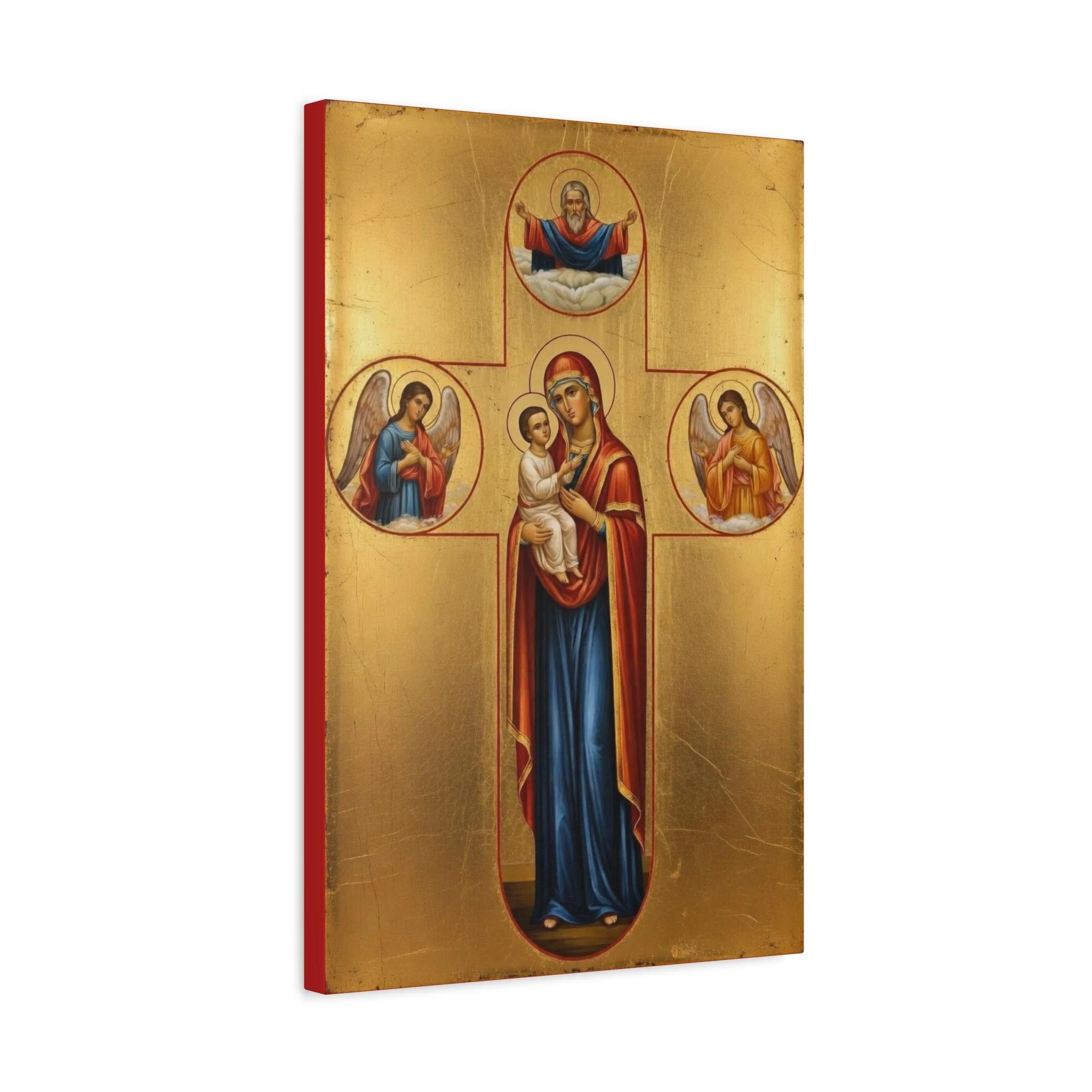
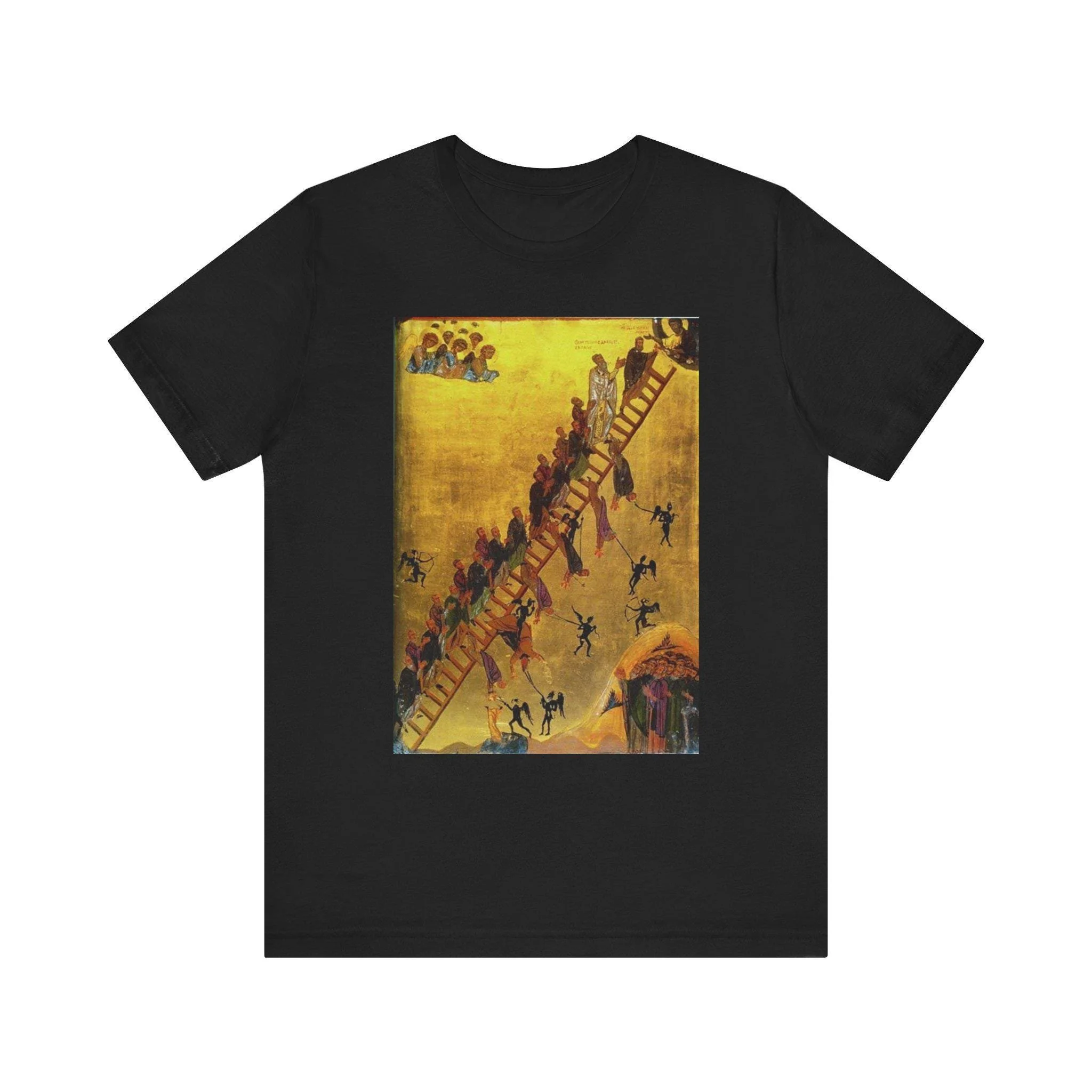
Read the full documented case. Then hang the icon of protection for the longest journeys, and wear the shirt of the ladder that reminds us some ascents take decades.
Get The War Within the Church on Amazon →