Beginner’s Guide to the Eastern Churches for Latin‑Rite Catholics and Curious Protestants
The Catholic Church is one body with two lungs, the East and the West. Alongside the Latin Church there are 23 Eastern Catholic Churches. Each of these Churches maintains its own liturgical and theological traditions while sharing the same sacraments and communion with the pope. This guide explains the differences between Eastern Catholic and Eastern Orthodox Churches, how a Latin Catholic can attend or even transfer to an Eastern Church, and offers an introductory reading list and devotional starter kit. It is designed for Latin‑rite Catholics and Protestants who are curious about the Christian East.
Understanding Eastern Catholic and Eastern Orthodox Churches
What is an Eastern Catholic Church?
The term Eastern Catholic refers to any of the 23 sui iuris Churches (self‑governing) that are in full communion with the bishop of Rome. These include the Byzantine, Maronite, Chaldean, Alexandrian and Armenian traditions. The Vatican II decree Orientalium Ecclesiarum encourages these Churches to retain their own disciplines and heritage; they are not “less Catholic” because they use leavened bread or a different liturgical calendar. Catholics may freely attend the liturgies of any of these Churches and receive the sacraments.
How do Eastern Catholics differ from Eastern Orthodox?
Both Eastern Catholics and Eastern Orthodox share the same ancient liturgical families and many outward customs. The key differences lie in ecclesiology and a few theological points:
Communion with Rome: Eastern Catholics see the papacy as an essential component of ecclesial unity, describing themselves as “Orthodox in communion with Rome”. Orthodox Churches reject universal papal jurisdiction and view the Church as a federation of local churches.
Theological accents: The Eastern Orthodox do not accept the filioque (that the Holy Spirit proceeds from the Father and the Son). An Orthodox‑Catholic consultation noted that the filioque need not be church‑dividing, and Eastern Catholic Churches do not recite it. Orthodoxy does not define the Immaculate Conception, purgatory or papal infallibility, and it allows divorce and remarriage in some cases. Eastern Catholics accept Catholic dogma, although their liturgy often highlights the work of the Holy Spirit in the epiclesis (invocation over the gifts) rather than pinpointing consecration at the words of institution.
Clerical discipline: Married men may be ordained priests in many Eastern Catholic churches, though bishops are chosen from celibate or widowed clergy. The same practice exists in Orthodoxy. Latin Catholic priests, by contrast, are generally celibate.
Liturgical expression: Eastern liturgies (often called Divine Liturgy) are sung almost entirely, with the priest facing east behind an icon screen (iconostasis). They use leavened bread, Communion is given under both kinds with a spoon, and infants receive Baptism, Chrismation and Eucharist together. The sign of the cross is made with three fingers, right to left. These practices are shared with Orthodoxy.
Unity and diversity
Despite these differences, Eastern Catholics and Latin Catholics share the same creed and sacraments. Vatican II encouraged the Eastern Churches to preserve their own traditions and to enrich the wider Church by showing that unity does not require uniformity. Pope Leo XIII praised the “inestimable treasure” of Eastern liturgies, and a 2025 Vatican guide encourages Westerners to discover the historical presence of Eastern Christians in Rome.
Attending an Eastern Catholic Divine Liturgy
Latin Catholics are welcome – and encouraged – to participate in Eastern liturgies. According to the Byzantine Catholic Church’s FAQ, any Catholic may attend the Divine Liturgy and receive Holy Communion provided they are properly disposed. This fulfills the Sunday obligation. Here is what to expect:
Music and chanting: The entire service is sung. There are few spoken parts and the congregation sings responses.
Leavened bread and communion by spoon: Bread leavened with yeast is mixed with the Precious Blood and distributed from a chalice with a small spoon.
Infant communion: Baptism, Chrismation (confirmation) and Eucharist are given together, even to infants.
Orientation and iconostasis: The priest faces east toward the altar behind an iconostasis – a screen covered with icons representing Christ, the Theotokos (Mother of God), angels and saints. Icons are not mere art; they are “witnesses to the presence of God” and make visible the unity of heaven and earth.
Sign of the cross: Worshipers make the sign of the cross with the thumb, index and middle finger together to symbolize the Trinity, moving from the right shoulder to the left.
Posture and reverence: People bow and cross themselves frequently. One normally receives Communion by folding the arms over the chest and does not respond “Amen” aloud. Modest dress is expected; women may cover their heads, though this is optional.
Visitors who are not in full communion with the Catholic Church (e.g., Protestants or Orthodox Christians) may attend the Divine Liturgy but are asked not to receive Communion, because it is a sign of unity in faith and governance.
How to Become Eastern Catholic (Transfer of Ascription)
Each Catholic is canonically “ascribed” to a particular Church at baptism, usually inherited from the parents. Attending an Eastern parish does not automatically change one’s canonical status. Many Latin Catholics happily attend an Eastern parish for years without transferring.
Those who feel called to adopt Eastern spirituality more fully may petition to transfer. Guidance from the Eparchy of Arlington explains that the process involves:
Period of discernment: The person should participate actively in the desired Eastern parish for at least a year. This allows one to experience the liturgical cycle and spiritual ethos.
Consultation with pastors: After discernment, discuss your intentions with both the Eastern pastor and your Latin pastor. Motivation should stem from attraction to the spirituality, not aversion to one’s original Church.
Formal petition: A written request outlining reasons for the transfer is sent to the bishop of your current Church and the bishop of the Church you wish to join. The file includes your letter, a supporting letter from the Eastern pastor, and sacramental records.
Consent of both bishops: Both bishops must agree; once they do, the change is effected when you publicly declare your reception into the new Church before a priest and two witnesses.
There are simpler provisions for those who marry a spouse from a different Church sui iuris or for children whose parents belong to different Churches.
Comparison of Latin Catholic, Eastern Catholic and Eastern Orthodox Practices
Below is a concise comparison of some practices and theological points. Long explanations are kept in the body of the text; the table emphasizes keywords for quick reference.
| Category | Latin Catholic | Eastern Catholic | Eastern Orthodox |
|---|---|---|---|
| Church governance | Pope is universal pastor and supreme authority | In communion with the pope; self‑governing patriarchs and bishops | Federation of autocephalous Churches; reject papal jurisdiction |
| Liturgical bread | Unleavened host | Leavened loaf | Leavened loaf |
| Communion distribution | Host placed on tongue or hand | Bread soaked in wine given by spoon | Bread soaked in wine given by spoon |
| Sacraments for infants | Baptism and Confirmation separated; First Communion at age of reason | Baptism, Chrismation and Communion together | Same as Eastern Catholic |
| Clerical celibacy | Priests ordinarily celibate (Latin discipline) | Married men may be ordained; bishops celibate | Married men may be ordained; bishops celibate |
| Filioque in Creed | Recited (“and the Son”) | Generally omitted; theology accepts Holy Spirit proceeds through the Son | Omitted; sees Filioque as unwarranted addition |
| Immaculate Conception & Purgatory | Defined dogmas | Accepted as Catholic dogma though sometimes expressed differently | Not accepted as dogmas |
| Divorce/remarriage | Not permitted (annulment process instead) | Same as Latin discipline | Permitted with penitential rite in certain cases |
| Sign of the cross | Left to right using five fingers | Right to left with three fingers | Same as Eastern Catholic |
Frequently Asked Questions (FAQ)
What is the difference between an Eastern Catholic and an Eastern Orthodox Christian?
Eastern Catholics and Eastern Orthodox share similar liturgies, spirituality and customs. The principal difference is that Eastern Catholics are in full communion with the pope, accepting his universal jurisdiction, while Eastern Orthodox regard the Church as a communion of autocephalous patriarchates and reject papal supremacy. Additionally, Orthodox theology does not formally define the Immaculate Conception, purgatory or papal infallibility, and it allows divorce and remarriage.
Can a Roman Catholic attend a Byzantine (or other Eastern Catholic) Divine Liturgy and receive Communion?
Yes. Any Catholic may attend the Divine Liturgy of any Catholic Church sui iuris and may receive Holy Communion if properly disposed. This attendance fulfills the Sunday obligation. Non‑Catholics may attend but should not receive Communion.
How do I become Eastern Catholic?
You become a member of an Eastern Catholic Church through baptism or by formal transfer of ascription. Switching from the Latin Church involves a period of participation in the desired Eastern parish, consultation with pastors, and written petitions to both bishops. The change occurs after both bishops consent and you publicly declare your transfer.
Do Eastern Catholic priests marry?
They may be married before ordination; however, once ordained, priests may not marry and bishops are chosen from celibate or widowed clergy.
Do Eastern Catholics recite the “filioque” clause?
No. Most Eastern Catholic Churches omit the “and the Son” clause from the Nicene Creed, following the Greek tradition. Catholic theology recognises that the Holy Spirit proceeds from the Father through the Son, satisfying both traditions.
Recommended Books and Resources for Beginners
Exploring Eastern Christianity can be daunting, but several accessible books introduce its history, theology and spirituality. These titles are suitable for Latin Catholics and Protestants alike:
Christ Our Pascha – Catechism of the Ukrainian Catholic Church (English edition) – This catechism, approved by the Synod of Ukrainian Bishops and first published in English in 2016, explains the faith of the Ukrainian Greek‑Catholic Church and is rooted in the mission of Saints Cyril and Methodius. It follows the structure of the Symbol of Faith and the anaphora of St Basil’s liturgy.
The Eastern Catholic Churches: An Introduction to Their Worship and Spirituality (Liturgical Press) – A concise booklet answering questions such as Who are Eastern Catholics? and How do Eastern Catholics differ from Orthodox Christians?. Ideal for parish study groups.
101 Questions & Answers on Eastern Catholic Churches by Deacon Edward Faulk – Recommended for those discerning a switch, this book addresses common misconceptions and covers history, theology and everyday practice.
The Eastern Catholic Churches: A Brief Survey by Ronald Roberson – Offers a succinct overview of each of the 23 Eastern Catholic Churches, including their origins and distinctive traditions.
The Orthodox Way by Bishop Kallistos Ware – A classic introduction to Orthodox theology and spirituality from one of its most respected teachers. Helpful for understanding similarities and differences between Eastern Catholics and Orthodoxy.
The Year of Grace of the Lord by a Monk of the Eastern Church (Fr Lev Gillette) – A meditation on the liturgical year in the Byzantine tradition.
The Eucharist by Alexander Schmemann – Explores the theological and spiritual meaning of the Eucharist in the Eastern liturgy.
His Broken Body by Laurent Cleenwerck – A comprehensive study of ecclesiology and the obstacles to unity between Catholicism and Orthodoxy.
These books can be ordered through Catholic or Orthodox publishers or your favorite bookstore. Many parishes also maintain small libraries.
Devotional Starter Pack: Prayer Ropes, Icons and Prayer Cards
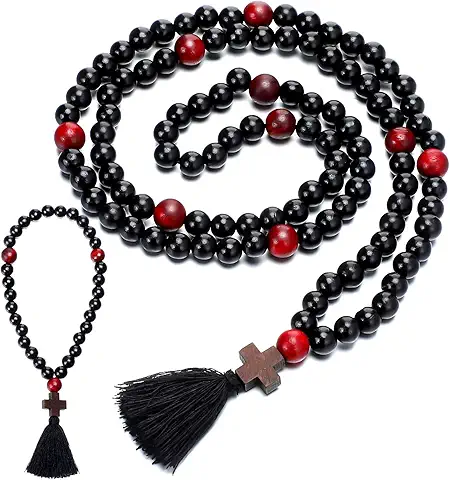
Prayer ropes

Icons and the iconostasis
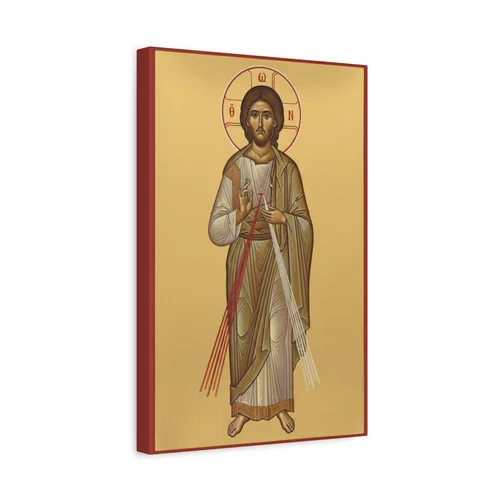
Icons are not merely religious art; they are considered “witnesses to the presence of God”. The iconostasis, a wall of icons separating the nave from the sanctuary, depicts Christ, the Theotokos, angels and saints, and shows that the Eucharistic banquet is shared with heaven. Having an icon corner at home with images of Christ and the Mother of God helps cultivate a prayerful environment. A small paper or wood icon makes an excellent gift for newcomers.

Prayer cards and liturgy books
Prayer cards with the Jesus Prayer, troparia (short hymns) and basic prayers of the Divine Liturgy help beginners learn Eastern devotional language. Many Eastern Catholic parishes offer inexpensive paperback pew books containing the text of the Divine Liturgy of St John Chrysostom along with explanations. A small starter pack might include:
A 33‑knot prayer rope (wool or cord)
Pocket‑sized icons of Christ Pantocrator and the Theotokos
A printed copy of the Divine Liturgy and Christ Our Pascha for catechesis
Prayer cards for morning and evening prayers
Acquiring these items supports artisans and monasteries who preserve traditional crafts. Many online stores operated by Eastern Catholic and Orthodox monasteries sell prayer ropes, icons and liturgy books.
Conclusion
The Eastern Catholic Churches offer a treasure of ancient liturgy, theology and spirituality within the unity of the Catholic Church. Latin‑rite Catholics and Protestants who explore them discover a different way of praying and believing that complements the Western tradition. Whether you simply attend a Byzantine Divine Liturgy or eventually seek to transfer, the Eastern Churches invite you to breathe with “both lungs” of Christianity. Begin your journey by learning the history, praying with a prayer rope, venerating icons, and reading the books listed above. In doing so, you will deepen your love for Christ and appreciate the rich tapestry of his Church.
Offer a Dedication
If this page was meaningful to you, you’re welcome to dedicate this or any educational page in memory of a loved one, for a prayer intention, or in gratitude for blessings received.
Each dedication quietly supports the continued sharing of Eastern Christian history, prayer, and the lives of the saints.